AEA-Albania Energy Association
  • Main
  • About Us
  • Services
  • Sectors
  • News
  • EventsEvents
  • PublicationPublication
  • Contact Us
AEA-Albania Energy Association
  • Main
  • About Us
  • Services
  • Sectors
  • News
  • EventsEvents
  • PublicationPublication
  • Contact Us
AEA-Albania Energy Association
  • Home Page
  • About Us
  • Sectors
  • Our Services
  • News
  • Contact Us
September 1, 2025
by AEA in News

Reverse energy flows turn Slovenian distributors into power producers

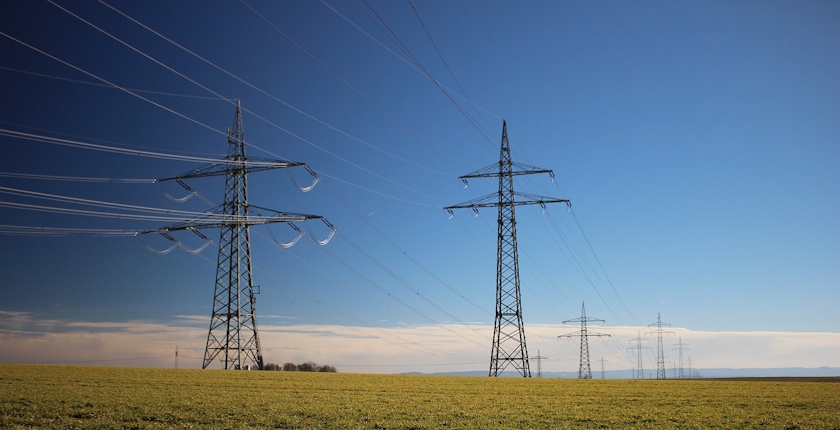
On May 1 and 2 this year, for the first time ever, five Slovenian power distribution companies fed more electricity into the transmission network than they drew from it. This shift is creating challenges for distribution grid operators while also highlighting the core reality of the energy transition.

Indeed, the circumstances were extraordinary during the first two days of May, writes Slovenia’s Naš stik. The weather was clear, but not warm enough for people to use air conditioners, while solar power plants connected to the distribution grid were generating electricity at nearly full capacity.

Industrial plants were not working due to the holiday, and many people were away from home, so electricity consumption from the transmission network fell sharply, reaching only 150 MW between 12 and 1 p.m. In winter, peak hourly consumption reaches around 2,200 MW.

Pumped storage hydropower plant Avče was operating at full capacity

Pumped storage hydropower plant Avče was operating at full capacity, receiving 157 MW from the transmission network. All Slovenian power distribution companies supplied more electricity to the transmission network than they received from it.

Elektro Ljubljana and Elektro Primorska drew energy from the transmission grid, but Elektro Maribor, Elektro Celje, and Elektro Gorenjska delivered significant amounts, resulting in a negative overall balance.

For four hours, the distribution network was a net electricity producer

The distribution network as a whole was a net producer of electricity for four hours on May 1, between 11 a.m. and 3 p.m. On the same day last year, the minimum hourly load of the transmission network was 770 MW, and power distribution companies drew 450-500 MW from the grid. The same thing happened on May 2.

It is worth noting that the total capacity of solar power plants in Slovenia is 1.4 GW, half of which was installed in 2023 and 2024, with the largest part connected to the distribution grid. The overall electricity generation capacity in Slovenia is 7.47 GW.

Managing voltage profiles on the grid poses the greatest challenge

The most pronounced change in energy flows was recorded at Elektro Celje. Boštjan Turinek, director of operations and development, said that a reverse flow of energy from the distribution network to the transmission network was first recorded in July 2022. At that time, the amount was minimal, around 4 MW.

However, in 2023, the reverse flow reached 40 MW, and this year it has already hit 100 MW. The biggest challenge, he explains, is managing voltage profiles on the grid.

The distribution network was built for one-way “traffic” – toward the end user – with the highest voltage at substations and the lowest at end consumers. The mass integration of distributed energy sources has disrupted these voltage profiles, Turinek stressed.

Distributed power plants like emergency vehicles

Ordinary consumers usually don’t notice this – perhaps only a slightly shortened lifespan of their LED bulbs, he said. However, according to him, solar power plant owners often experience automatic inverter shutdowns caused by overvoltage.

Besides holidays, changes in energy flows also occur during collective shutdowns of Slovenian industrial plants during the summer and spring breaks. If the weather is sunny at that time, the output from distributed energy sources is very high.

Turinek recalls that distributed power plants have been granted the same rights as emergency vehicles, so their output always takes priority, regardless of the state of the grid.

If the power system is to be properly managed, he adds, these plants should be placed on an equal footing with all others.

The net metering system for prosumers has had many positive effects, but it has also created numerous problems, Turinek concluded.

Post Views:67
September 1, 2025
by AEA in News

Energy Traders Europe calls for clear rules before CBAM implementation

Energy Traders Europe has sent proposals to the European Commission on how to ensure that the Carbon Border Adjustment Mechanism puts a fair price on carbon-intensive electricity imports and facilitates low-carbon flows.

On July 1, the European Commission’s Directorate-General for Taxation and Customs Union launched a public consultation on the potential downstream extension of the Carbon Border Adjustment Mechanism (CBAM), as well as additional anti-circumvention measures and rules for electricity as a CBAM good.

Energy Traders Europe participated in the call for evidence, which was open until August 26. The organization pointed out that the CBAM application to electricity imports shouldn’t start without a thorough impact assessment and a clear legislative framework.

Clarity is urgently needed for contracts for the delivery year 2026

Contracts for the delivery year 2026 are already traded on electricity markets, so clarity about how these will be treated from a customs perspective is urgently needed, the trade association stressed.

In its reaction, Energy Traders Europe argued that the inclusion of electricity imports within the scope of CBAM should respect the principle of proportionality, ensuring that European businesses face no excessive costs or administrative burdens and that a proportionate carbon price is applied.

For the calculation of the carbon price, default emission factors should reflect the actual carbon intensity of the electricity mix imported from a third country, as accurately and as close to real-time as possible.

Therefore, Energy Traders Europe insists that:

  • All generation technologies are taken into account to calculate the emission factor of third countries from which electricity is imported
  • The carbon intensity of electricity imports should be measured with an hourly granularity.

The association also proposes improvements for the utilization of the actual embedded emissions of imported electricity, to reflect the reality of electricity trading:

  • Power purchase agreement (PPA) – The definition should recognise PPAs concluded via intermediaries, such as when a CBAM declarant is reporting via an indirect representative, as well as both physical and virtual PPAs
  • Physical network congestion – Once an importer can prove the hourly matching between electricity production and capacity nomination, and that guarantees of origin (GOs) eventually issued are immediately cancelled, this criterion becomes redundant and hence should be removed
  • Capacity nomination and electricity production – Imports should be reported (and accounted for) based on the hourly confirmed scheduled quantities provided by the TSOs to each market participant, to be linked back to the hourly data of the generation plant underpinning the PPA.

According to Energy Traders Europe, the listed improvements are crucial to ensure that CBAM is fit for purpose for electricity imports, leading to more efficient use of cross-border interconnections between the EU and third countries, preventing renewable curtailments, and promoting the uptake of low-carbon electricity production in third countries.

Post Views:76
September 1, 2025
by AEA in News

Google reveals Gemini AI’s energy and water consumption

Artificial intelligence (AI) is becoming increasingly important in our daily lives, but its rapid expansion is raising concerns about how much energy it consumes. Google has become the first tech company to publish a report on the energy consumption, emissions, and water use of its AI software, Gemini.

Google estimates that the median Gemini text prompt uses 0.24 watt-hours (Wh) of energy, emits 0.03 grams of CO2 equivalent, and consumes 0.26 milliliters (or about five drops) of water. “The per-prompt energy impact is equivalent to watching TV for less than nine seconds,” according to a press release from the company.

When applying a non-comprehensive methodology, which only considers the consumption of active TPU and GPU chips, the median Gemini text prompt uses 0.10 Wh of energy, emits 0.02 gCO2e, and consumes 0.12 mL of water.

On the other hand, Google’s comprehensive methodology includes the energy and water consumption of the software itself, the operation of IT equipment in data centers, the energy used by chips while idle, as well as the amount of water used to cool the equipment.

It should be noted, however, that energy consumption depends on multiple factors, including prompt length, the number of users, and the model’s efficiency.

Google’s AI is becoming increasingly efficient thanks to innovations

Google claims that its consumption of energy and water for AI is “substantially lower than many public estimates.” It also stresses that its AI systems are becoming more efficient through research innovations and software and hardware efficiency improvements.

Over a recent 12-month period, the energy and total carbon footprint of the median Gemini Apps text prompt dropped by 33 times and 44 times, respectively, while delivering higher-quality responses, the company claims.

Google has announced that it will continue investing in technologies that reduce per-prompt energy and water use, as well as emissions associated with AI systems. By 2030, the company aims to achieve net-zero emissions and to replenish 120% of the freshwater consumed in its data centers and offices.

However, despite Google’s efforts to reduce emissions, they have soared 51% compared to 2019, driven by the expansion of data center capacities needed for training and running AI models.

By 2030, data centers could be consuming 4.5% of global electricity generation

Data centers are essential for the operation of AI systems, and the International Energy Agency (IEA) estimates that their total electricity consumption could double by 2026, reaching 1,000 TWh per year, equivalent to Japan’s entire annual electricity use.

According to research firm SemiAnalysis, the expansion of AI could lead to data centers using 4.5% of total global electricity generation by 2030.

Post Views:50
August 30, 2025
by AEA in News

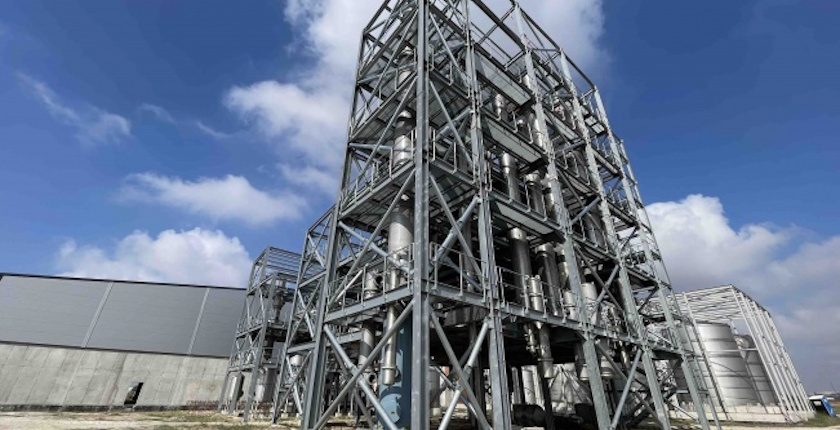
Insa Oil building Bulgaria’s first bioethanol plant

Bulgarian oil company Insa Oil plans to finish its bioethanol plant by the end of 2026. The company claims the plant under construction will be the country’s first to produce renewable fuel from biomass.

The construction of the Insa Spirit plant began in June 2022 and is already in an advanced phase, according to an announcement by Insa Oil. Bioethanol is a renewable fuel produced primarily from grains and often blended with gasoline.

The plant, estimated to cost EUR 56 million, spans about 45,000 square meters. It includes production facilities and a high-tech laboratory.

The biorefinery will produce ethyl alcohol, part of which will be converted into bioethanol for the Bulgarian energy market.

The plant’s capacity is 41,000 liters of ethyl alcohol per day

The plant’s capacity is 41,000 liters of ethyl alcohol per day, the company said, adding that the facility is expected to be operational in the second half of 2026.

Bulgaria has set the minimum required amount of bioethanol to be added to gasoline at 9%. It is regulated by the European Directive on the Promotion of the Use of Energy from Renewable Sources and the Renewable Energy Law, which came into force in the first half of this year.

“Our ambition is to turn Bulgaria into a regional factor for bioethanol production. We believe that this investment will be important for our economy and will increase our energy independence, while also taking care of environmental protection,” said Insa Oil manager Georgi Samuilov.

The plant uses technology from India

Following the launch of Insa Spirit, the company plans to develop technologies for second-generation bioethanol produced from biomass.

The technology for the plant was developed by India-based PRAJ.

The equipment was supplied by leading producers such as Bühler Group (Germany), Alfa Laval (Sweden), Bosch (Germany), Siemens (Germany), Hydro-Thermal (USA), and Solar Turbines (USA), according to Insa Oil.

Post Views:48
August 29, 2025
by AEA in News

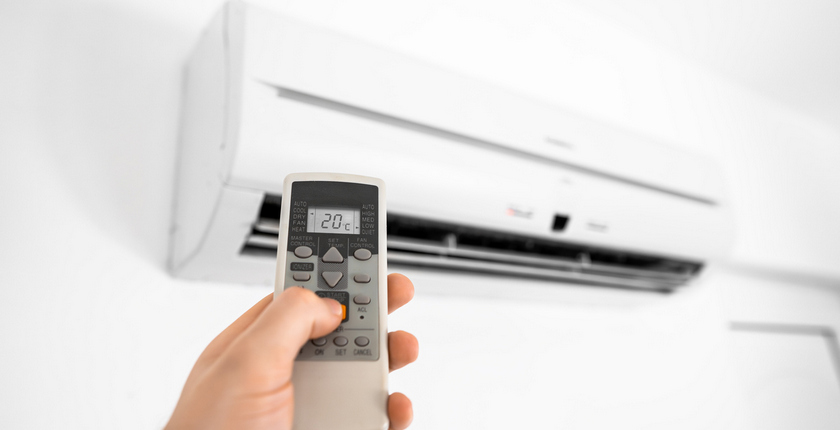
North Macedonia tackles energy poverty with free inverter air conditioners

North Macedonia’s Ministry of Energy, Mining and Mineral Resources has invited households in energy poverty to apply for free inverter air conditioners and financial aid to help cover electricity bills. The ministry issued two separate public calls under the 2025 program to assist households classified as vulnerable electricity consumers.

Inverter air conditioners (ACs) with a capacity of up to 3.5 kW and an energy class of at least A+, which improve energy efficiency, will be granted to low-income households. The aid includes free installation.

Eligible households are those whose total net monthly income in 2024 did not exceed MKD 25,000 (around EUR 406) for a single-person household, MKD 31,000 (around EUR 504) for a two-person household, MKD 37,000 (around EUR 601) for a three-person household, and MKD 43,000 (around EUR 699) for households with four or more members.

The budget allocated for inverter ACs for low-income households is MKD 120 million (around EUR 1.95 million), according to the public call.

Households whose only source of income is a pension are also eligible for this type of support, provided that in 2024 their monthly pension did not exceed MKD 15,700 (around EUR 255) for a single-person household, MKD 19,800 (around EUR 322) for a two-person household, and MKD 23,700 (around EUR 385) for households with three or more members. The total budget for this group is MKD 50 million (around EUR 813,000).

The overall budget for inverter ACs is around EUR 2.76 million

Households that have received a subsidy for purchasing an AC or a pellet stove in the past five years, and those connected to a district heating system, are not eligible for free inverter ACs, according to the public call. The application deadline is October 5, 2025.

For financial support to cover electricity bills, eligible households include those with one or more members who have severe intellectual disabilities, the most severe physical disabilities, total vision impairment, or complete hearing impairment.

The application deadline for this public call is the end of August 2025.

Post Views:54
August 28, 2025
by AEA in News

Smart meters, wildfires, rising demand push Greek distribution grid investment plan to EUR 4.8 billion

In recent years, Greece has been experiencing extreme weather events, such as wildfires and floods, which have threatened its electricity distribution network.

Due to this new reality, caused by climate change, the Hellenic Electricity Distribution Operator (HEDNO or DEDDIE) has increased its five-year development plan for 2026-2030 to EUR 4.79 billion, around 60% up compared to EUR 3 billion allocated for 2024-2028.

The plan for the 2022-2026 period was EUR 2.2 billion.

The goal is for HEDNO to reinforce the grid against these threats and ensure its pylons do not cause wildfires as easily. Moreover, Greece has been lagging behind the European Union when it comes to smart meter penetration, and it must make fast progress in the coming years.

HEDNO has included a total of 204 projects in the new five-year plan

There is also an increased need for new user connections as a result of rising demand and the ever-present need for connecting new renewable energy plants.

To achieve these goals, HEDNO has included a total of 204 projects in the new five-year plan. Smart meters will cost EUR 1.4 billion, compared to EUR 784 million in the previous plan, so as to address the problem of power theft, which has increased in recent years, and to enable dynamic pricing in the retail market.

More specifically, EUR 195 million will be invested in 2026, followed by EUR 260-270 million in the following three years and EUR 357 million in 2030.

New user connections will cost EUR 800 million

The network reinforcement will cost EUR 991 million (EUR 608 million previously), while EUR 650 million will be spent on replacing existing lines (up from EUR 619 million). This includes projects such as underground power lines and underwater connections, as well as a focus on the protection of forests.

New user connections will cost EUR 800 million to cover the projected demand from industry, ports, data centers, and other consumers. HEDNO’s plan also includes EUR 223 million for the grid control and management.

The operator said that contracting and equipment costs have risen in recent years, affecting the size of the new five-year plan.

Post Views:22
August 28, 2025
by AEA in News

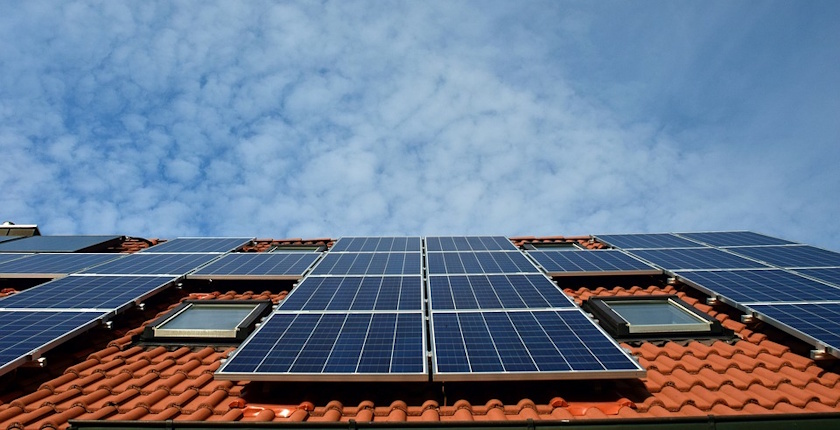
Croatia pauses applications for residential solar subsidies

High interest among Croatian citizens in subsidies for installing solar power plants for self-consumption has prompted the Environmental Protection and Energy Efficiency Fund to pause the application process.

The Environmental Protection and Energy Efficiency Fund (FZOEU) has announced that it will temporarily close the ongoing public call for incentives to install photovoltaic plants in family homes, which was opened on June 6. In just over two months, about 4,100 project applications have been received and are currently being processed, the FZOEU noted.

By mid-last year, 21,000 rooftop PV systems at households and businesses, with a total capacity of 642 MW, had been connected to the distribution network.

The large number of applications confirms that investing in renewables is a financially sound long-term decision

According to the FZOEU, the financing program encourages citizens to use renewable energy sources, reduce greenhouse gas emissions, and increase the energy independence of households.

The strong interest in this program demonstrates that citizens are taking the energy transition more seriously and want to actively participate in producing green energy, the fund claims.

With subsidies, solar installations become more accessible to the general public, and the high volume of applications confirms that investing in renewable energy sources is a financially sound long-term decision for households, FZOEU added.

Citizens can receive up to 50% of eligible costs

Only individuals—owners or co-owners of houses—who had residency at the address at the time the power plant was commissioned were eligible to apply. The fund co-finances facilities installed and commissioned from January 1, 2025, and citizens can receive up to 50% of the eligible costs, or up to EUR 600 per kW of installed power capacity.

Depending on available funds and the success rate of applications, the FZOEU will consider the possibility of relaunching the call for future prosumers.

Over the past two years, the fund has co-financed the installation of around 5,600 rooftop solar power plants in households.

In the first six months of last year alone, households and companies installed 5,504 PV facilities, according to data from Croatia’s distribution system operator, HEP-Operator Distribucijskog Sustava (HEP-ODS).

Post Views:34
August 28, 2025
by AEA in News

Bulgaria opens public consultation on subsidies for 1.9 GWh of battery projects

Bulgaria’s Ministry of Energy has launched a public consultation on a new round of its subsidy program for battery energy storage projects, aimed at facilitating the integration of renewable energy sources. The plan is to support the deployment of 1.9 GWh of new battery capacity with around EUR 118 million.

In the first round of the National Infrastructure for Storage of Electricity from Renewable Sources (RESTORE) program, Bulgaria approved EUR 587 million in subsidies for 82 battery energy storage system (BESS) projects totaling 9.71 GWh, with another 30 applicants falling below the threshold.

Draft application and implementation documents for RESTORE 2 will be available for comments and proposals until September 15, while a tentative date for inviting applications for grants is September 18.

The BESS systems are expected to be deployed throughout the country and connected to the transmission network or the distribution grid. A BESS system must have a minimum nominal AC capacity of 10 MW to qualify for the program.

The minimum required capacity is 10 MW

The maximum support is 50% of the eligible project costs, but not more than BGN 156,466 (EUR 80,000) per 1 MWh of usable energy capacity, according to the documents. In the previous round, the maximum support per 1 MWh was BGN 148,600 (around EUR 76,000), Economic.bg recalled.

The deadline to build and commission the BESS capacities is July 31, 2026. The battery systems selected in the first part of the program must come online by the end of March 2026.

The new round of RESTORE aims to finance projects in more advanced stages

Another difference from the previous call is that proposed projects must be in a much more advanced stage. In addition to a connection agreement, applicants must already have a construction permit or installation permit issued, a signed supply contract or orders and payments made for the equipment for the storage system, as well as secured financing for the investment, according to the draft documents.

Post Views:31
August 27, 2025
by AEA in News

Serbia’s power utility to take no loans in 2025, fund coal projects on its own

For the first time, Elektroprivreda Srbije (EPS) will not take out loans this year, but will finance all investments from its own resources, according to General Manager Dušan Živković. However, it has affected the financial performance of Serbia’s state-owned power utility, with profit in the first half of 2025 coming in lower than in the same period last year.

One of the major investments underway is in coal mining, including the construction of several systems needed to enable the opening of the Radljevo open pit mine in the Kolubara mining basin. However, since financial institutions are unwilling to finance fossil fuels, EPS must rely entirely on its own funds, Živković told national broadcaster RTS.

EPS is financing the coal mine on its own, as financial institutions are unwilling to invest in fossil fuels

To ensure sufficient coal supplies, EPS has contracted imports from Indonesia, which Živković explained as a strategy to diversify sources. He described it as the best way to ensure the security of supply.

He said that the installation of machinery at Radljevo is underway and that EPS expects the mine to start producing overburden and coal early next year.

EPS posted a RSD 27.4 billion (EUR 233.8 million) profit in the first half of 2025, compared to RSD 32.8 billion (EUR 280.3 million) in the same period last year.

Kostolac wind farm set to begin operation

Speaking about other key projects, Živković revealed that the commissioning of the 66 MW Kostolac wind power plant is in the final phase and expressed hope that electricity production would begin within a month. He also recalled that the 10 MW Petka solar power plant, built at the tailings dump in the Kostolac coal complex, was put into trial operation about a month ago.

He also said pumped storage hydropower plant Bistrica and the planned 1 GW of solar facilities could come online in the medium term.

Commenting on the announced 7% electricity price increase in October, Živković stressed the process has been initiated and that he expects it to be completed within one to one-and-a-half months.

Electricity consumption during the summer is lower than last year

On the surge in electricity consumption during the summer months, he said the situation this year has been “calmer” than in 2024, with consumption at around 90 GWh, compared to 114 GWh in 2024. It means total demand can be covered from EPS’s own capacities, according to him.

Post Views:95
August 27, 2025
by AEA in News

Greece raises fines for power theft

Power theft has become a major issue for the Greek electricity market in recent years. The government has been increasing fines for offenders.

The combined damage from power theft and network losses in distribution amounted to EUR 100 million per month in 2022, with 18% of the supplied energy being lost as a result of power theft or network losses in distribution.

It compared to an average loss of 8% in the European Union, meaning that lawful Greek consumers took a heavy burden through their bills.

Suppliers: HEDNO must shoulder power theft cost

For 2025, the Hellenic Electricity Distribution Operator (HEDNO or DEDDIE) estimates that losses will reach 11.08%. However, actual ones are believed to be much higher, as the initial numbers for previous years had to be revised retroactively.

Electricity suppliers have warned of severe consequences for the entire market if the problem is not solved. The Hellenic Association of Energy Suppliers (ESPEN) has asked for HEDNO to shoulder the initial cost of power theft, instead of them, to be motivated to reduce it.

Smart meters and fines to provide solution

In order to address power theft, the Ministry of Environment and Energy lifted fines a few months ago. Instead of 70%, offenders pay 100% more than the reference price for their category. The baseline is an average of the previous six months. Vulnerable consumers are fined 50% more than the reference price.

Based on the last update by the Greek Regulatory Authority for Energy, Waste and Water (RAEWW or RAAEY), an offender with a household connection will pay 49.45 eurocents per kilowatt-hour, up from 47.22 eurocents, while the tariff for businesses is 56.42 eurocents. It rose from 54.21 eurocents per kilowatt-hour.

The levels are revised every six months, taking into account the total cost of supply for each category, including taxes and network charges.

The ministry also counts on smart meters, since they significantly reduce opportunities for power theft. Greece has lagged behind all other European countries in smart meters. HEDNO finally began mass installation this year, expected to reach one million devices annually from 2026 onwards.

Post Views:60
  • 1
  • …
  • 62
  • 63
  • 64
  • 65
  • 66
  • …
  • 140

AEA – Albania Energy Association is a industry association dedicated to representing the interests of Albanian and West Balkan for energy producers and consumers. AEA works to advance the development and adoption of sustainable energy solutions in Albania and the Western Balkans, supporting the region’s transition toward a cleaner, more secure, and more competitive energy future. AEA is registered by decision of the Court of Tirana, DECISION NO. 3032, (VAT:L11827451K).

[email protected]

Address
Blv Zogu 1
Tirana
1057
ALBANIA

LinkedIn  |  Facebook
Events
May 25, 2022 Connecting Green Hydrogen Europe 2022
May 25, 2022 Energy Week Western Balkans 2022
Copyright © Albania Energy Association