AEA-Albania Energy Association
  • Main
  • About Us
  • Services
  • Sectors
  • News
  • EventsEvents
  • PublicationPublication
  • Contact Us
AEA-Albania Energy Association
  • Main
  • About Us
  • Services
  • Sectors
  • News
  • EventsEvents
  • PublicationPublication
  • Contact Us
AEA-Albania Energy Association
  • Home Page
  • About Us
  • Sectors
  • Our Services
  • News
  • Contact Us
August 27, 2025
by AEA in News

CE Oltenia to set up subsidiary to take over coal power plants slated for closure

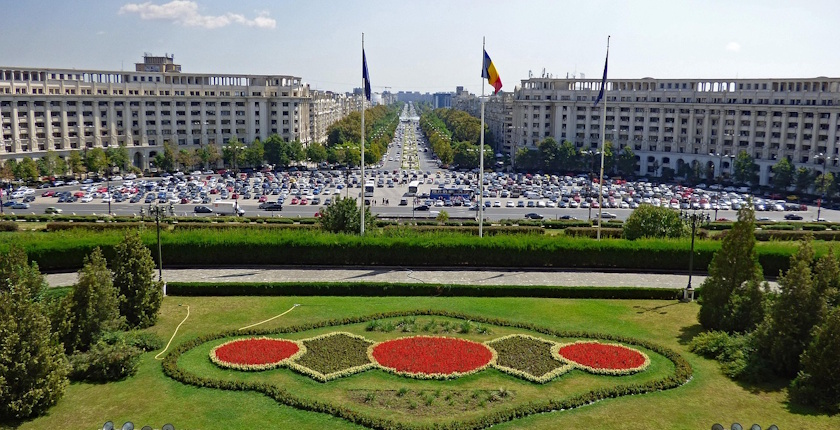
Romanian state-controlled coal power utility Complexul Energetic Oltenia (CE Oltenia) is preparing to establish a subsidiary to take over its lignite-fired thermal power plants slated for closure and the coal mining operations that supply them.

CE Oltenia’s “lignite subsidiary” is envisaged under a restructuring and decarbonization plan approved by the European Commission, according to Profit.ro.

The subsidiary will incorporate and operate the existing lignite-based power generation units and related assets that are not planned to switch to natural gas or renewable energy sources, according to the European Commission’s decision from 2022 approving state aid for CE Oltenia’s restructuring.

The state aid Romania planned to grant CE Oltenia amounted to EUR 2.66 billion.

The subsidiary will operate coal-fired plants that are not planned to switch to gas or renewables

CE Oltenia’s decision to start the separation of lignite-related activities into a separate subsidiary was adopted as early as 2023, but nothing has been done since then.

Now, the company has launched a procedure to select a consultant and intends to award a contract by winter, with a deadline of about six months for the delivery of services.

The new firm is to be created before the end of CE Oltenia’s restructuring period, i.e. before the end of 2026, according to the commission’s decision. It further states that the lignite capacities in question should decrease over time and eventually be phased out, in accordance with the national coal phase-out timetable.

CE Oltenia is building 550 MW of solar power plants at former coal mines

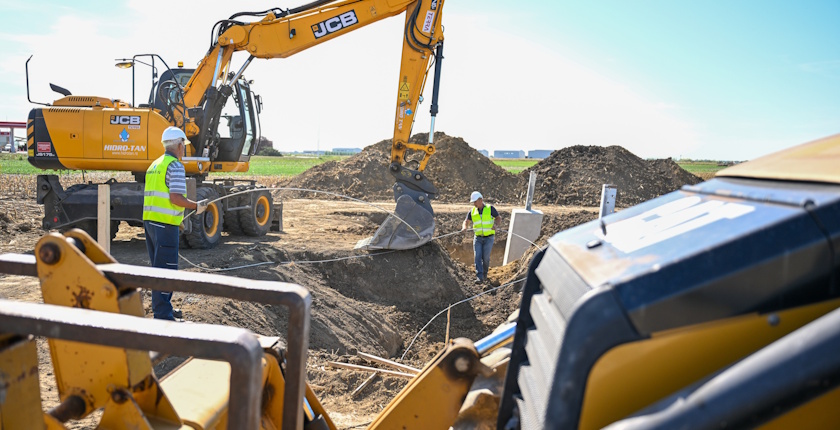
Earlier this year, a joint venture between CE Oltenia and oil and gas company OMV Petrom signed an agreement with contractors to design and install four solar power plants at former coal mines, with a combined capacity of about 550 MW.

According to Profit.ro, Romanian Energy Minister Bogdan Ivan said last month that Romania was in talks with Brussels on a 5-year postponement of the deadline for closing lignite-fired power plants, envisaged by the country’s National Recovery and Resilience Plan.
Post Views:40
August 27, 2025
by AEA in News

First feed-in tariff auction in Federation of BiH draws strong interest

Ahead of a public call for the first auction for feed-in tariffs for solar power plants, the Federation of BiH’s renewable energy authority has launched a survey to assess interest among potential participants.

The auction covers feed-in tariffs (FIT) for small solar installations with an installed capacity of up to 150 kW, according to the Operator for Renewable Energy Sources and Efficient Cogeneration (Operator za OIEiEK).

The survey aims to estimate the number of applications for the upcoming auction and will run from August 22 to September 22.

The quotas for each technology and the amounts of electricity eligible for incentives are set in the decree on quotas for renewable energy sources and efficient cogeneration. The quota for the first auction is set at 12 MW of solar, of which 1.2 MW is reserved for renewable energy communities.

Under the Law on the Use of Renewable Energy Sources and Efficient Cogeneration and the auction rulebook, the first FIT auction is also open to all existing power plants that have not previously received any kind of incentive for electricity production, Operator za OIEiEK noted.

This, along with rising inquiries from investors and electricity producers, is one of the reasons for conducting the survey. Operator za OIEiEK added that its purpose is to gather information and that it will serve solely to estimate the potential number of applications.

The auction will be launched once the e-auction system is operational

Completing the survey doesn’t constitute an application to the public call, nor does it create any legal or formal obligation. Operator za OIEiEK encourages investors to participate in the survey by completing a six-question questionnaire.

Meanwhile, in Mostar, Operator za OIEiEK organized a roundtable to present the auction rulebook.

According to the rulebook, the auction will be conducted through an e-auction system.

Currently, the e-auction system is in the trial phase, with training underway for Operator za OIEiEK staff. Once the system is operational, a public call for the first FIT auction will be launched, according to Operator za OIEiEK.


Post Views:40
August 27, 2025
by AEA in News

Bosnia and Herzegovina could set up power exchange in second half of 2026

Bosnia and Herzegovina is not expected to set up a power exchange before the second half of next year, according to economist Vjekoslav Domljan.

In April, after about ten years of discussions, Bosnia and Herzegovina (BiH) finally finished drafting a bill on the electricity regulator, transmission, and power exchange. The regulation is a prerequisite for the country – the last in the Western Balkans – to establish a power exchange, but that does not mean that it will happen soon.

The Council of Ministers of BiH adopted the bill in July. However, the regulation has not yet reached the BiH parliament, economist and university professor Vjekoslav Domljan has told Dnevni avaz.

A power exchange is important for managing electricity surpluses and shortages

It is not certain the law will be passed by the end of the year, he said, adding that, at best, Bosnia and Herzegovina could set up a power exchange in the second half of next year.

He recalled that Croatia’s power exchange, CROPEX, was established in 2014, and Serbia’s SEEPEX in 2016, while Albania, Montenegro, Kosovo*, and North Macedonia followed suit two years ago. A power exchange, he explained, plays a key role in managing electricity surpluses and shortages and, based on supply and demand, in setting electricity prices.

Once an electricity exporter, BiH is becoming an importer

Domljan is convinced that Bosnia and Herzegovina will need foreign assistance to establish a power exchange, as was the case with setting up the Sarajevo exchange, SASE.

In his opinion, citizens will not benefit directly from the power exchange, but they could benefit indirectly. However, he stressed that this will only be possible if citizens are enabled to become prosumers and aggregators are allowed to pool their generation surpluses.

However, there are no prosumers in BiH – or rather, they exist in one political entity, the Republic of Srpska, but not in the other, the Federation of BiH, according to Domljan.

He pointed out that misguided policies are turning BiH from an electricity exporter into an importer. In the first six months of 2025, he added, the country imported four times as much electricity as it did in the same period of 2024.

Post Views:70
August 27, 2025
by AEA in News

Romania considers launching new wind auctions

After completing the second round of wind and solar power auctions, Romania’s Ministry of Energy is considering launching new bidding for renewable energy projects, specifically onshore wind.

The Ministry of Energy has issued a call for expressions of interest for a third auction under the State Aid Scheme, in the form of contracts for difference (CfD), for electricity generation from onshore wind energy.

Given the results of the recently organized tendering for the award of CfDs, as well as the provisions of Government Decision 318/2024, the conditions stipulated in the State aid Scheme authorized by the European Commission Decision C (2024) 1596 final, the ministry is exploring the possibility of launching an additional tender, dedicated exclusively to onshore wind technology, according to the call.

All auction rules will be similar to those approved for the last CfD auction

The tender is to be completed by December 31, 2025, by which time the related contracts are to be signed, according to the update.

The ministry pointed out that all auction rules will be similar to those approved for the last CfD auction.

The expressions of interest should include projects that have recently reached or are about to reach a stage of maturity that would allow them to participate in the tender; projects that could not be submitted in the previous tender due to insufficient time to obtain corporate approvals, including to ensure the necessary sources of financing to cover the obligations regarding the participation/good execution guarantee.

Expressions of interest are to be submitted by August 29

The wind capacity to be auctioned will be determined following an analysis conducted by the ministry, based also on the expressions of interest received, provided that sufficient interest is expressed. Expressions of interest must be submitted by August 29.

Two weeks ago, the ministry and transmission system operator (TSO) Transelectrica conducted the country’s second wind and solar power auction for government support in the form of CfDs.

A total of 2 GW was available for wind, but the authorities selected only 1.26 GW under 23 qualified projects – those with bids below the ceiling of EUR 80 per MWh.

Post Views:87
August 27, 2025
by AEA in News

Northern Lights launches world’s first commercial carbon storage services

Northern Lights has injected the first CO2 volumes below the seabed of the Norwegian North Sea. The firm claims it is the first to offer commercial carbon storage services.

Northern Lights is owned by oil and gas giants Equinor, TotalEnergies, and Shell.

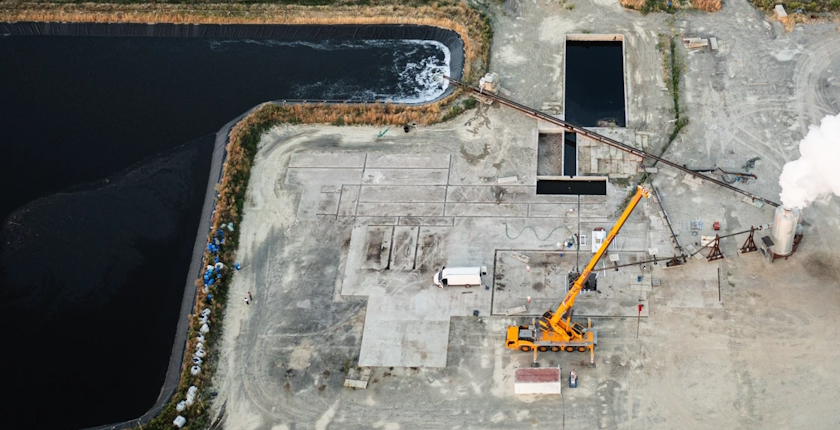
The first CO2 volumes have now been transported through the 100-kilometer pipeline and injected into the Aurora reservoir 2,600 meters below the seabed of the Norwegian North Sea, according to the company.

Northern Lights JV Managing Director Tim Heijn said the company has reached an exciting milestone – the very first CO2 volumes have now been injected and stored safely in the reservoir. “Our ships, facilities, and wells are now in operation,” he said.

From the capture sites to the injection well (photo: Northern Lights)

Northern Lights will transport and store CO₂ from Norway for the remainder of 2025, with CO2 volumes from Denmark and the Netherlands expected to be added in 2026, according to the firm.

The company will transport and store CO2 from two Norwegian industrial sites: Heidelberg Materials’ cement factory in Brevik and Hafslund Celsio’s waste-to-energy plant in Oslo. In addition, commercial agreements have been signed with Yara in the Netherlands, Ørsted in Denmark, and Stockholm Exergi in Sweden.

The operation is part of Longship, the government’s full-scale CCS project

The first phase of Northern Lights is part of Longship, the Norwegian government’s full-scale carbon capture and storage project (CCS).

According to the government’s website, Longship is Europe’s first complete value chain for the capture, transport, and storage of industrial CO2 emissions and the largest climate initiative in Norwegian industrial history.

Longship involves government support for developing the Northern Lights transport and storage infrastructure, according to the website.

CO2 is transported by specially designed ships from the capture sites to an onshore reception terminal in Øygarden. From there, it is transported by a pipeline to the injection well, where it will be pumped into the subsea reservoir.

Heidelberg Materials and Celsio are expected to deliver approximately 400,000 tons of CO2 each annually, according to the website.

The project is expanding

Storage tanks for phase 2 at the reception terminal in Øygarden (photo: Northern Lights)

In March this year, Northern Lights made the final investment decision for the expansion project, which will increase the transport and storage capacity from 1.5 million tons of CO₂ per year to a minimum of five million tons, following the signing of a commercial agreement with Stockholm Exergi.

The expansion was enabled by a EUR 131 million grant from the Connecting Europe Facility for Energy (CEF Energy) funding scheme, the company said.

The expansion leverages existing infrastructure and includes additional onshore storage tanks, pumps, a new jetty, injection wells, and more CO₂ transport ships to enable an increased injection rate and volume.

Photo: Northern Lights
Post Views:33
August 27, 2025
by AEA in News

Serbia launches construction of two transmission lines as part of BeoGrid 2025 project

Serbia has launched works as part of the BeoGrid 2025 project, aimed at improving the power transmission infrastructure in Serbia, the region, and Europe, as well as facilitating electricity offtake from renewable energy power plants in the South Banat region of Vojvodina.

The BeoGrid 2025 project, worth EUR 205 million, comprises six distinct components, according to Radoš Popadić, Assistant Minister of Mining and Energy in charge of the power engineering sector. He attended the start of works in Belgrade’s Surčin suburb together with Jelena Matejić, the general manager of Serbia’s transmission system operator, Elektromreža Srbije (EMS).

“Construction is being launched today on two new high-voltage transmission lines that will connect Belgrade and Novi Sad, with a total value of around EUR 22 million,” he said, adding that work on a substation in Belgrade is also expected to begin soon.

The project is valued at EUR 205 million

The substation will be connected to the Čibuk 1 substation [wind farm Čibuk 1] by a new 83-kilometer transmission line, ensuring a stable transmission of electricity produced from renewable energy sources in South Banat, as well as reducing strain on the existing network, Popadić explained.

Radoš Popadić and Jelena Matejić (photo: Ministry of Mining and Energy/Danilo Mijatović)

Two single-circuit 400 kV transmission lines, intended for connecting transmission line 450 (switching station Mladost – substation Novi Sad 3) to the future 400/110 kV substation Beograd 50, will have a total length of 25.5 kilometers.

EMS General Manager Jelena Matejić said that BeoGrid 2025 is of particular importance for Serbia, but also part of the broader North Continental South East (CSE) Corridor project, which includes doubling the existing 400 kV interconnection between hydropower plant Đerdap 1 and Portile de Fier in Romania.

Matejić: The North CSE Corridor is part of the European ten-year network development plan, TYNDP 2020

The North CSE Corridor project is part of the European ten-year network development plan (TYNDP 2020) and the regional investment plan (RgIP 2020). It is supported by the Romanian transmission system operator, Transelectrica, as well as the German development bank KfW, with a feasibility study.

The North CSE Corridor is of regional importance as it increases the transmission capacity between Serbia and Romania, helping create an integrated European electricity market, Matejić pointed out, adding that BeoGrid 2025 is also important for additional backup power supply for the EXPO 2027 project.

The project aims to enable the transmission of electricity generated from renewable sources in the South Banat region and to ease the load on the 220/110/35 kV Beograd 5 substation, which supplies a large part of Belgrade, particularly parts of New Belgrade and Zemun, EMS stated.

Popadić: The total value of all planned projects is EUR 1 billion

Photo: Ministry of Mining and Energy/Danilo Mijatović

Radoš Popadić recalled that large investments in the transmission network are underway.

“Serbia has recognized the importance of investing in the power transmission system to enable the integration of more renewable energy capacity, increase the exchange of electricity with neighbors, and ensure a secure, stable, and efficient supply to consumers. That is why we launched investments in interconnection with the transmission systems of eight neighboring countries, with EUR 500 million to be invested in priority projects by the end of the decade. The total value of all planned projects will amount to around one billion euros,” said Popadić.

BeoGrid 2025 is financed partly from the Serbian budget, as well as from EMS’ own funds. The project consists of six distinct components, or investments:

  • 400/110 kV substation Beograd 50;
  • Two-circuit 400 kV transmission line between substation Beograd 50 and Čibuk 1, including the installation of a 400 kV bay at switching station Čibuk 1;
  • Single-circuit 400 kV transmission lines for the integration of transmission line 450 (switching station Mladost – substation Novi Sad 3) into substation Beograd 50;
  • Two double-circuit 110 kV transmission lines for the integration of transmission line 104/8 (substation Stara Pazova – substation Inđija 2) into substation Beograd 50;
  • two double-circuit 110 kV transmission lines for the integration of transmission line 1178 AB (substation Beograd 5 – substation Beograd 9) into substation Beograd 50;
  • Double-circuit 110 kV cable between substation Beograd 50 and substation Beograd 49 (Airport).

Photo: Ministry of Mining and Energy/Danilo Mijatović

Post Views:68
August 27, 2025
by AEA in News

ENNA measures even higher temperatures at its Zagocha geothermal well

ENNA Geo completed additional production testing of the well at the site of the planned geothermal power plant GTE Zagocha in northeastern Croatia. It found even higher temperatures at the reservoir than before. In addition, drilling of the exploratory well Babina Greda GT-1 for another geothermal power plant began this week.

ENNA Geo, a member of the ENNA Group, said the additional production testing in Čađavica near Slatina was successful. It is the well for its planned 20 MW geothermal power plant GTE Zagocha. Furthermore, so-called rigless testing at the site, in northeastern Croatia, was carried out earlier this month on the well called Podravska Slatina GT-6beta (PSGT-6beta), said GTE Zagocha’s Project Manager Boris Vidoš.

The primary objective was to collect water samples from the geothermal reservoir at a depth of 4,582 metres and to measure additional production parameters essential for the development of the power plant project.

“Two downhole samples of geothermal water were collected under dynamic conditions, along with several surface samples of water and gas, which have been sent for detailed analysis to several internationally recognised geothermal laboratories (New Zealand, France, Turkey and Croatia). We are particularly pleased that the geothermal reservoir itself, only a few months after completion of the well, is showing higher measured temperature values both at reservoir level (well bottom) and at the surface,” he asserted.

Slatina 2 field’s significant potential confirmed

A maximum temperature of 211 degrees Celsius was recorded at the bottom of the PSGT-6beta well, versus 180 degrees at the surface, Vidoš said.

He explained that all downhole and surface flow measurements, geochemical analyses of water, and gas analyses would provide a broader picture of the geothermal potential of the Slatina 2 field, enabling the ENNA Geo team to begin concrete discussions with suppliers of the process equipment for the geothermal power plant.

The drilling of the well was completed in March, followed by initial production testing, which confirmed the significant geothermal potential of the Slatina 2 field. The additional rigless testing – planned petroleum engineering operations – was successfully carried out, Vidoš added.

Waiting for market premium tender for almost two years

Croatia has considerable geothermal potential, but currently not a single operational geothermal power plant. Namely, the Velika 1 facility in Ciglena near Bjelovar has been long offline due to an ownership dispute.

GTE Zagocha is the most advanced geothermal power plant project in Croatia to date. It depends on the launch of a public tender for the allocation of a market premium.

ENNA Group noted that Germany subsidizes geothermal power plants over a 20-year period with a guaranteed price of EUR 252 per MWh, and that Italy offers a guaranteed price of EUR 200 per MWh over 25 years.

The Zagocha project has been prepared for a public call since November 2023, but the Croatian Energy Market Operator (HROTE) has not issued a public call for three years, the company said in its update.

Drilling starts at Babina Greda 2 field for 15 MW geothermal power plant

ENNA Geo, through the project company Geo Power Babina Greda, is also developing a geothermal power plant project in Babina Greda in Croatia’s northeast, planning 15 MW. On the geothermal exploration field Babina Greda 2, drilling of the exploratory well Babina Greda GT-1 (BaGGT-1) began this week.

The plan is to drill the deep geothermal well Babina Greda 1 and conduct production testing over the next 110 days. Additionally, the company revealed it expects surface flow of 110 liters per second of geothermal water of 170 degrees Celsius.

ENNA Solar agreed in April to take over an 87.5 MW ready-to-build photovoltaic project in Romania from Austria-based Kraftfeld Energy.

Post Views:102
August 27, 2025
by AEA in News

Montenegro’s power utility gets EUR 25 million loan to expand Gvozd wind farm

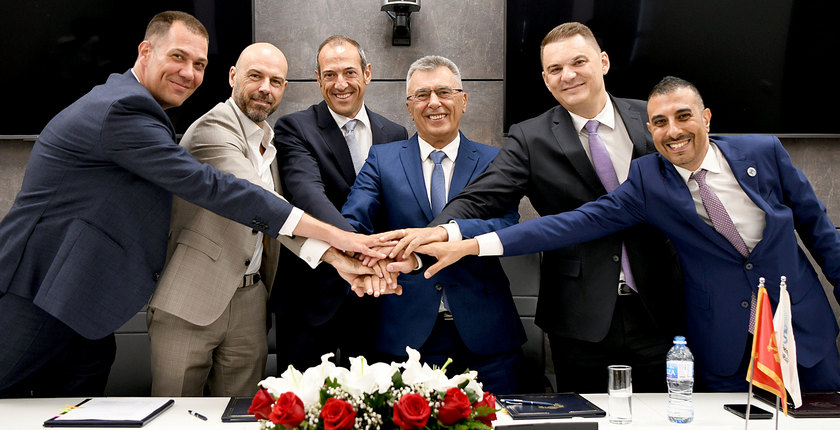
Montenegrin state-owned power utility Elektroprivreda Crne Gore (EPCG) said it signed a EUR 25 million loan contract with the European Bank for Reconstruction and Development (EBRD) for expanding the Gvozd wind farm to 75.6 MW. Once fully operational, it will be the largest wind farm in Montenegro.

The Gvozd 2 project involves the installation of three additional wind turbines, with a combined capacity of 21 MW. It will increase the wind farm’s total projected annual production to over 210 GWh, enough to cover the needs of about 36,000 households and reduce CO2 emissions by almost 137,000 tons a year, EPCG said following the signing of the loan agreement.

The expansion project involves three additional wind turbines with a combined capacity of 21 MW

An EUR 82 million loan for the first, 54.6 MW phase of the wind farm, including the grid connection infrastructure, was signed with the EBRD in June 2023. Gvozd will be EPCG’s first large-scale power generation facility built in more than 40 years.

Construction on the first phase, featuring eight turbines, began in November 2024. EPCG expects the power plant to enter trial operation by the end of this year, with a projected annual electricity output of 150 GWh.

Construction on the first, 54.6 MW phase of wind farm Gvozd was launched in late 2024

Commissioning of the full 75 MW capacity is expected by the end of 2026, according to a press release from the EBRD.

A key step in Montenegro’s energy transition

Milutin Đukanović, President of EPCG’s Board of Directors, described the expansion of Gvozd as a key step in Montenegro’s energy transition. In the press release, EPCG stated that the wind park would significantly contribute to achieving the European goal to produce electricity exclusively from clean sources by 2050 at the latest.

Minister of Energy and Mining Admir Šahmanović noted that the Gvozd project would strengthen Montenegro’s energy security, reduce CO2 emissions, and pave the way for sustainable development.

Francesco Corbo, the EBRD’s Regional Head of Energy for the Western Balkans and Croatia, recalled that the bank, through its Renewable Energy Market Accelerator (REMA) program, helped the Montenegrin authorities organize the country’s first renewable energy auction, for solar projects totaling 250 MW.

Post Views:204
August 27, 2025
by AEA in News

Enerjisa Enerji to rebuild grid, install solar in earthquake-hit region in Turkey

Turkish electricity distribution company Enerjisa Enerji has secured a USD 150 million loan to rebuild and modernize the power grid in the earthquake-hit Toroslar region in the country’s south, as well as to install solar power plants to supply corporate customers. The loan was provided by the European Bank for Reconstruction and Development (EBRD).

The Toroslar region accounts for about one-third of Enerjisa Enerji’s total operations. It was heavily affected by the earthquakes of February 2023, which caused widespread damage and more than 55,000 fatalities, the EBRD noted.

The 2023 earthquake caused heavy damage and killed more than 55,000 people

Enerjisa Enerji will use the EBRD loan to finance the reconstruction and modernization of the electricity distribution network, contributing to the overall reconstruction efforts in the region. The company will also install solar power plants offering sustainable energy solutions to its corporate customers, the bank said.

The company said in a press release that the five-year loan would be utilized to improve the quality of its electricity distribution services and expand its customer-focused renewable energy solutions.

The solar power plants will offer sustainable energy to Enerjisa’s corporate customers

Enerjisa Enerji is a subsidiary of Enerjisa Üretim, a joint venture between German E.ON and Turkey-based Sabanci.

Early this year, Enerjisa Enerji won the right to build and operate two wind farms totaling 750 MW, the largest projects available in Turkey’s auction for a total of 1.2 GW of wind.

The EBRD also stated that the project demonstrates its commitment to Turkey’s green agenda by helping to prevent distribution losses in the electricity network, as well as supporting the construction of renewable energy infrastructure, leading to significant reductions in carbon emissions.

Philipp Ulbrich, the CFO of Enerjisa Enerji, said that support from the EBRD strengthens the company’s strategic steps toward sustainable growth, reflecting investor interest in the energy transition in Turkey.

Turkey has secured over EUR 650 million in World Bank financing to support renewables integration

Earlier this month, the World Bank approved a financing package for Turkey’s transmission system upgrade project, aimed at enabling the integration of increased renewable energy capacity. The package includes a EUR 625 million loan from the International Bank for Reconstruction and Development (IBRD), a EUR 32.8 million loan from the Clean Technology Fund (CTF), and a USD 2 million CTF grant.

Post Views:101
August 27, 2025
by AEA in News

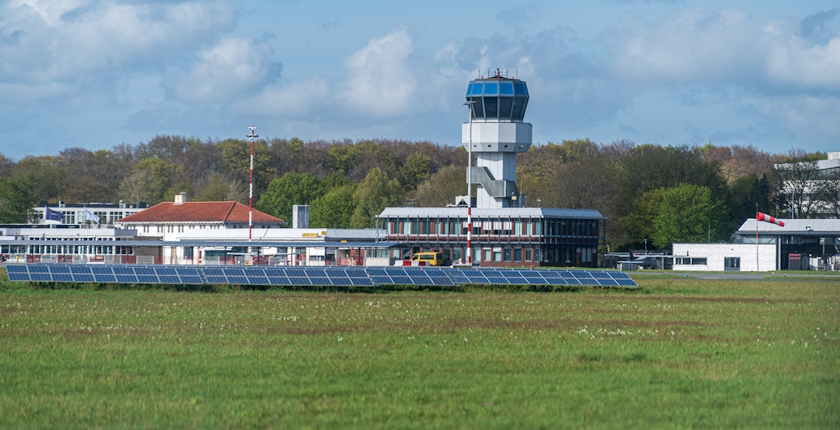
Dozens of airports in Southeastern Europe invest in solar power, energy efficiency

Airports in Istanbul and Athens are becoming completely self-reliant with their large solar power projects. Many other airports in Southeastern Europe are investing in photovoltaics as well. Together with energy efficiency, electric mobility and waste and wastewater management projects, they aim to decarbonize their operations and reduce their environmental impact.

Surfaces around infrastructure such as railways and motorways are convenient for solar power as there are few alternatives for their use and the technology can directly provide them with electricity. Airports, too, have embraced the global trend of introducing photovoltaics and electrifying operations, and Southeastern Europe is no exception, with several notable investments.

The largest ones in Istanbul and Athens are about to switch 100% to solar power, which would make them some of the first in the world. In addition, airports in the region are increasing energy efficiency and rolling out electric vehicle fleets. They are introducing resource, waste and wastewater management systems to decarbonize their operations and reduce their environmental impact.

Airport operator in Albania expanding to solar power market

In other recent news, the operator of Kukës International Airport Zayed in Albania’s northeast is in the process of obtaining a license to generate and trade electricity. Namely, the company, Global Technical Mechanics, received a concession five months ago in consortium with local construction firm Bami to build and operate a 12 MW solar power plant.

The location at the village of Shtiqen is in the municipality of Kukës. The airport, built with investments by Emaar Properties from the United Arab Emirates, was inaugurated in 2021. However, it ceased operations in the meantime as Wizz Air withdrew from the facility.

The entire Vlora International Airport, which is under construction, will be covered with solar panels, Albanian officials said earlier. The PV project is for 5.2 MW. A consortium led by Swiss-based Mabco Constructions is building and financing the construction. The firm is part of Mabetex Group, controlled by Behgjet Pacolli, Kosovar businessman and former president, deputy prime minister and foreign minister.

Zagreb Airport starts with small PV unit

Zagreb Airport, which installed a 250 kW photovoltaic unit this year, said it plans to expand it soon. In addition, it switched to 100% renewable energy supply.

Like other airports in the region, the main one in Croatia replaced conventional, halogen lighting with LED. The operator has committed to cutting its emissions in accordance with the recommendations from the Intergovernmental Panel on Climate Change (IPCC).

Zagreb Airport is renovating its buildings and increasingly using solar energy for heating water. Interestingly, it plans to switch from diesel-fueled generators to hydrogen-ready systems.

Athens to integrate strong battery with its arrays

Athens International Airport Eleftherios Venizelos commissioned an 8.05 MW solar park in 2011, followed by another one in 2023, with 15.8 MW in peak capacity.

This year two more units with a combined peak capacity of 35.5 MW are coming online, together with a battery energy storage system (BESS) of 82 MWh.

The operator of Turkey’s largest airport is completing a photovoltaic park of nearly 200 MW and aiming to cover almost all its energy needs from renewable sources by the end of the decade

IGA Istanbul Airport reported that its greenhouse gas emissions in 2024 were 10.5% lower than its goal. Moreover, its operator increased its 2030 renewable energy target from 50% to 90%.

Namely, it expects its Eskişehir solar farm of a whopping 199.3 MW to begin operations before the end of the year. The location spans 300 hectares and the investment amounts to EUR 212 million. The PV park will generate an estimated 340 GWh per year.

Dalaman Airport hosts world’s largest rooftop solar power plant among airport terminals

Several other airports in Turkey are also decarbonizing their electricity systems. TAV Airports Holding (TAV Havalimanları Holding), part of Groupe ADP, completed a solar power plant 6.7 MW in peak capacity at its Milas-Bodrum Airport in the country’s southwest. Within the same project for setting up PV systems at parking areas, the Izmir Adnan Menderes Airport is getting a 5.9 MW unit.

The Izmir Adnan Menderes Airport is getting a 5.9 MW solar power system at parking areas

Dalaman Airport, near Bodrum, operates a solar power plant of 8.3 MW in peak capacity. It is the world’s largest on the roof of an airport terminal building.

The facility now covers more than 55% of its consumption from solar energy. The investment was worth EUR 5.4 million. The operator, YDA Airport Investment and Management, has vowed to reach 100% in phase two. The airport has completely switched to electric vehicles.

In 2023, airports Milas-Bodrum, Gaziantep, Erzurum and Ordu-Giresun all commissioned smaller PV systems.

Romanian operators leaning on EU funds

Iași International Airport is about to expand its 1 MW solar power plant, installed in 2023. It was the first in Romania in the sector. The management intends to add 5 MW and a 2 MW energy storage unit.

The investment will reportedly be supported with a grant from the European Union’s Modernisation Fund. The hybrid power plant is supposed to cover a fifth of the electricity consumption of the facility in Romania’s far northeast.

Maramureş International Airport (AIM) is also seeking funding, for a system of 2.6 MW in peak capacity on parking canopies. It would include battery storage.

The PV unit would feature 25 inverters of 100 kW each. The project, worth EUR 12.1 million, should be complete by the end of next year, the management said. The facility is in Romania’s northwest, near the border with Ukraine and Hungary.

Cluj International Airport Avram Iancu said in December that it would install a PV system with batteries. It claimed it would make it energy independent in 2026. According to the facility’s website, the solar power project is for 2 MW.

Bacau International Airport George Enescu is another one that applied for funds. The management envisages a 1.25 MW solar power unit and a BESS of 2.1 MWh in capacity, to fully cover electricity consumption.

Sibiu International Airport is developing a project for a ground-mounted unit of 1.7 MW in peak capacity. The site is two kilometers from the terminal.

The management is expecting to cover the costs mainly with a grant via the Modernisation Fund. It said the PV park would be completed within a year and a half and suggested that it would introduce electric cars and buses and charging stations.

Notably, National Company Bucharest Airports (CNAB) has a geotermal energy project.

Hermes Airports equipped its two facilities with PV systems in 2023

Hermes Airports commissioned two solar power plants in Cyprus two years ago. The unit at Larnaka International Airport has 3.5 MW in peak capacity and the one at Pafos International Airport has 1.1 MW. They cover 25% and 30%, respectively, of the facilities’ electricity needs.

Belgrade Nikola Tesla Airport in Serbia commissioned a PV system of 1 MW in peak capacity in 2022. The facility’s concessionaire, Vinci Airports, has also set up solar-powered LED lighting.

International airports in Sarajevo and Tuzla in Bosnia and Herzegovina unveiled plans for PV systems a few years ago.

Post Views:188
  • 1
  • …
  • 63
  • 64
  • 65
  • 66
  • 67
  • …
  • 140

AEA – Albania Energy Association is a industry association dedicated to representing the interests of Albanian and West Balkan for energy producers and consumers. AEA works to advance the development and adoption of sustainable energy solutions in Albania and the Western Balkans, supporting the region’s transition toward a cleaner, more secure, and more competitive energy future. AEA is registered by decision of the Court of Tirana, DECISION NO. 3032, (VAT:L11827451K).

[email protected]

Address
Blv Zogu 1
Tirana
1057
ALBANIA

LinkedIn  |  Facebook
Events
May 25, 2022 Connecting Green Hydrogen Europe 2022
May 25, 2022 Energy Week Western Balkans 2022
Copyright © Albania Energy Association