AEA-Albania Energy Association
  • Main
  • About Us
  • Services
  • Sectors
  • News
  • EventsEvents
  • PublicationPublication
  • Contact Us
AEA-Albania Energy Association
  • Main
  • About Us
  • Services
  • Sectors
  • News
  • EventsEvents
  • PublicationPublication
  • Contact Us
AEA-Albania Energy Association
  • Home Page
  • About Us
  • Sectors
  • Our Services
  • News
  • Contact Us
September 9, 2025
by AEA in News

Europe’s wind installations in H1 2025 insufficient to meet EU’s 2030 targets – WindEurope

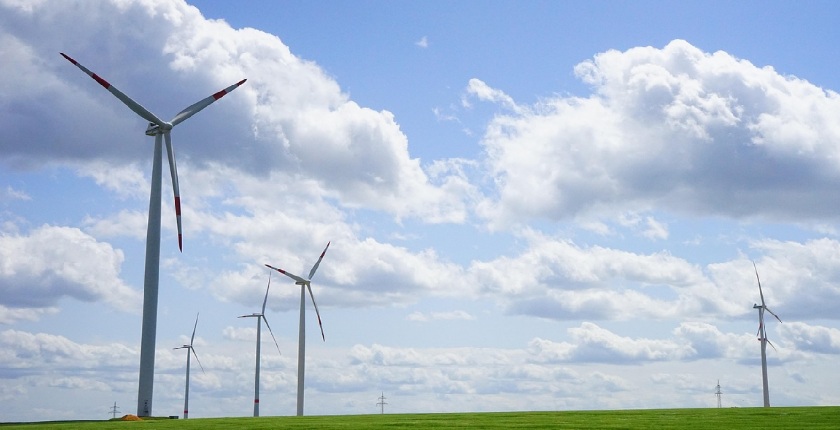
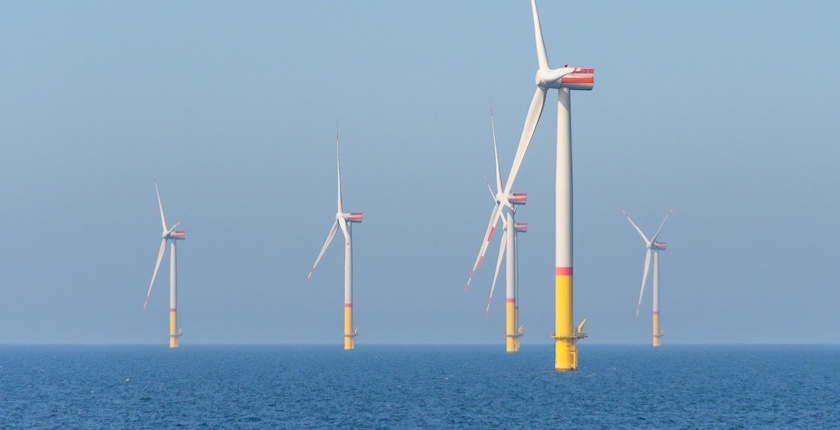
Europe installed 6.8 GW of new wind farms in the first six months of the year. According to WindEurope, it isn’t nearly enough to deliver the EU’s 2030 energy security and climate targets.

WindEurope has also reduced the 2025 outlook for wind investments. In its latest wind energy data for Europe, the organization highlighted the increase in turbine orders and investments as positive signals.

Out of 6.8 GW of new wind, 5.3 GW was in the European Union, and 89% was onshore wind. Europe now has a total of 291 GW of wind capacity – 254 GW on land and 37 GW at sea, according to the data.

In the first half of 2024, Europe installed 6.4 GW. To achieve the 2030 targets, the EU needs to install about 30 GW of wind power every year.

Germany is by far the most successful country in Europe. It is set to install 5 GW of onshore wind this year, nearly three times as much as it has been building over the last five years. WindEurope attributed the success to the fact that the country was the first to rigorously implement the EU’s excellent new permitting rules.

Germany permitted a record 15 GW of new onshore wind farms in 2024 and is on track to beat that in 2025, with 8 GW of onshore wind permits granted in the first half of 2025, the report revealed.

While on average German authorities grant permits within 18 months, none of the other 26 EU countries permits new wind farms within the REDIII deadline of 24 months. WindEurope highlighted slow expansion of electricity grids, stagnating efforts to electrify Europe’s economy, and suboptimal auction design as key obstacles for faster wind deployment.

Dickson: Governments must get their act together on wind energy

WindEurope CEO Giles Dickson said that governments must get their act together on wind energy.

“Wind is competitive – it brings down electricity costs for citizens and businesses. Wind is secure – home-grown wind turbines reduce costly and dangerous dependencies on fossil fuel imports. And wind is good for the economy – it creates jobs and tax income. Around 400,000 people in Europe work in wind already, and each new wind turbine contributes €16m to Europe’s GDP. But Governments are still failing to get wind permitted and built fast enough,” Dickson noted.

The organization stressed that Europe will build less new wind capacity in 2025 than it previously expected. At the start of the year, WindEurope estimated new wind installations at 22.5 GW, and now at 19 GW. The forecast for the EU is lowered from 17 GW to 14.5 GW.

It expects the EU to have 344 GW of wind energy capacity by 2030, compared to the 2030 target of 425 GW.

Two bright spots

Two bright spots are wind turbine orders and investments in new wind farms. Europe took EUR 34 billion worth of final investment decisions (FIDs) in new wind farms with a total capacity of 14 GW in the first half of 2025. It represented more than the total FIDs in 2024.

The majority of investments are for offshore wind, with six new projects, three of which in Poland, including the country’s largest-ever private investment, according to WindEurope.

Wind turbine orders have increased 19% and reached 11.3 GW.

According to Dickson, less new wind is bad news for Europe’s wider competitiveness. Industry in Europe is craving cheap electricity to compete with China and the US, he stressed.

“But too many governments remain half-hearted in their expansion of wind. This is not only threatening the wind sector. It’s also jeopardizing jobs and growth more widely – in steel, chemicals, and ICT. Doing business in Europe is so much harder for them if the EU can’t deliver on its energy targets”, Dickson underlined.
Post Views:60
September 9, 2025
by AEA in News

EU mulls steps to prevent bypassing of CBAM

The European Commission plans to propose measures by the end of the year to prevent exporters to the European Union from avoiding the bloc’s carbon border tax.

Brussels fears exporters from third countries could ship low-emission goods to the EU, while selling high-carbon products in other markets, without reducing their overall emissions, Reuters reported.

The Carbon Border Adjustment Mechanism (CBAM), set to come into force on January 1, 2026, will impose fees on the CO2 emissions of goods imported to the EU from countries without a carbon pricing scheme. The tax will cover cement, iron and steel, aluminum, fertilizers, electricity, and hydrogen.

The carbon border tax is expected to severely affect the EU’s neighbors, including the Western Balkan countries.

CBAM could be extended to other products

The European Commission is concerned that CBAM could be bypassed if foreign firms redirect their low-carbon products to Europe while still producing high-carbon goods for export to other markets. This way, they would avoid the EU’s carbon border tax without actually reducing their overall emissions.

To address the problem, the EU executive intends to propose extending CBAM to other products, a European Commission spokesperson has said, according to Reuters.

Imported goods could be given a fixed emissions value per country or per company

The Commission is also considering a system under which goods are given a fixed CO2 emissions value per country or per company rather than calculating specific emissions per shipment, Reuters reported, quoting an unnamed senior EU official.

According to the news agency, the official also hinted that Chinese exporters could potentially attempt to circumvent CBAM in this way.

Exporters from these countries are struggling to adjust to the new system, especially in the electricity sector, and have requested a postponement of CBAM.

However, the administration in Brussels is not willing to consider delaying its implementation date.

Post Views:55
September 9, 2025
by AEA in News

New generation of sodium-ion batteries developed in Estonia

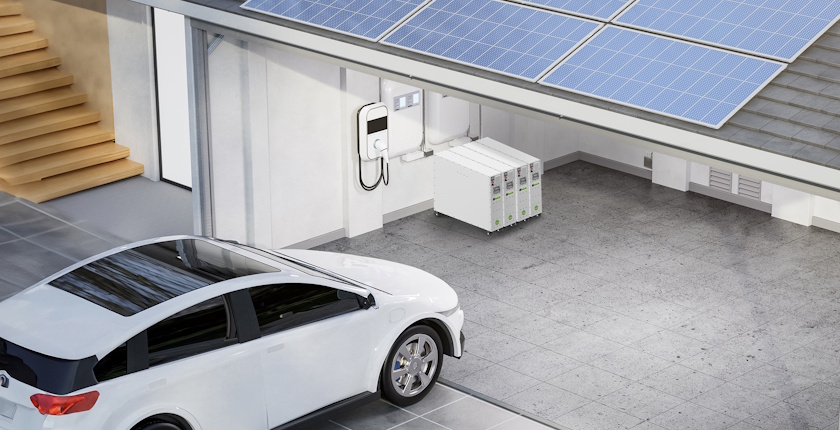
A new generation of sodium-ion batteries, developed and manufactured in Estonia, offers a safer, more sustainable, and more affordable alternative to lithium-based energy storage systems. The newly developed batteries are modular and scalable, allowing them to meet the needs of a wide range of users — from homeowners and farmers to commercial and industrial operators.

Estonian company Freen OÜ has introduced a new generation of sodium-ion battery systems. Sodium-ion batteries are presented as an alternative to lithium-based systems. Unlike lithium, sodium is one of the most abundant and widely distributed resources on Earth.

In addition to the high cost of lithium, its mining and extraction from salt flats cause significant environmental damage and deplete water reserves. In contrast, sodium can be obtained more sustainably — most commonly through the electrolysis of common salt.

Unlike lithium batteries, which are prone to overheating, Freen OÜ’s technology ensures thermal stability for sodium-ion batteries, virtually eliminating the risk of fire or explosion. The company also highlights that, unlike lithium-based systems, Freen batteries are not subject to international transportation restrictions and are cobalt-free, making them a more environmentally friendly and geopolitically secure solution.

In addition to chemical safety, Freen emphasizes the practicality of its systems. The batteries feature integrated wheels for easy handling, and their plug-and-play installation makes setup fast and straightforward.

Freen battery systems have a wide range of applications

Their modular design makes them suitable for a wide range of applications, including energy-demanding households, remote farms, telecom infrastructure, commercial facilities, EV charging stations, the oil and gas sector, and public institutions such as schools and hospitals.

“The launch of sodium-ion batteries represents a major innovation in our portfolio, following the successful development of small wind turbines. These batteries stand out for their safety, versatility, and competitive pricing — and we are ready to collaborate with partners across all sectors to accelerate the energy transition”, said Andrey Khimenkov, CEO of Freen OÜ.

Freen has developed Freen-BSH, a high-voltage system capable of storing 10.08 kWh per module, and Freen-BSL, a low-voltage system with a capacity of 7.5 kWh per module.

Freen batteries can be recharged more than 5,000 times

Both systems support over 5,000 charging cycles, offering long service life, low maintenance, and high operational safety, even under extreme weather conditions.

“Whether used for energy independence, peak shaving, or as part of a hybrid renewable energy system, Freen’s solutions deliver efficiency and reliability across a variety of scenarios,” the company noted in its statement.

Freen also highlights the potential of its batteries in the Western Balkans, where several major initiatives are driving investments in renewable energy and energy storage.

Kosovo* recently announced a EUR 1.2 billion auction for renewables and storage — one of the largest in the region. In parallel, the European Union continues to fund the green transition through instruments such as the Western Balkans Investment Framework (WBIF) and the EU Growth Plan, providing grants and technical support for projects focused on renewable energy, storage, and grid flexibility.

These initiatives create opportunities for innovative solutions, such as Freen’s sodium-ion batteries, to become an integral part of the region’s evolving energy landscape.

Post Views:82
* This designation is without prejudice to positions onstatus and is in line with UNSCR 1244/99 and the ICJ Opinion on the Kosovo declaration of independence.
September 8, 2025
by AEA in News

EDF, Westinghouse complete technical feasibility studies for Krško 2 nuclear power plant

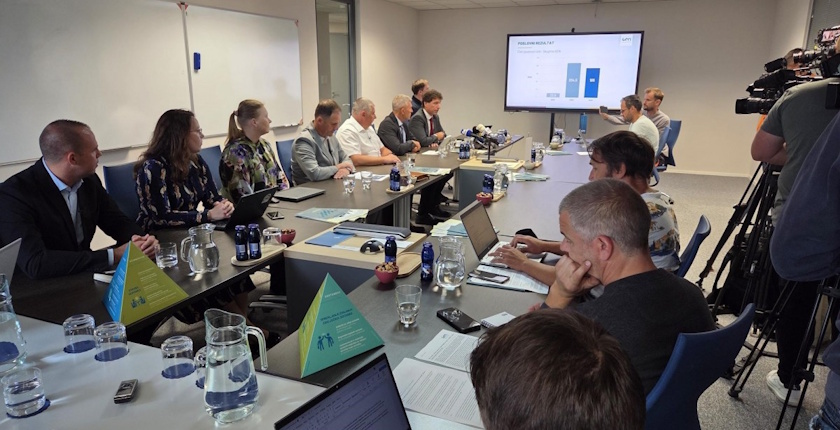
Three reactor projects offered by EDF and Westinghouse have been assessed as technically feasible for the site of the future Krško 2 nuclear power plant, according to technical feasibility studies presented by GEN Energija during the announcement of its 2024 results. GEN Group ended last year with a EUR 186 million profit, down 9% from 2023, when it posted a profit of EUR 204.5 million.

GEN Energija, the parent company of GEN Group, noted that the Krško 2 (JEK2) project is going ahead according to the previously confirmed timeline. In October 2024, Slovenia canceled a referendum on building the second nuclear unit.

In January, it was announced that Westinghouse Electric and EDF would conduct technical feasibility studies for the deployment of their reactor models.

In July, the Ministry of Natural Resources and Spatial Planning initiated the preparation of a spatial plan for the second unit of nuclear power plant Krško and invited the public to submit comments.

GEN Energija has now presented the results of the technical feasibility studies. The reactor projects – EDF’s EPR or EPR1200 and Westinghouse’s AP1000 – were found to be technically feasible for the JEK 2 site.

Planinc: Both technologies include cooling by a natural draft cooling tower

According to Vinko Planinc, head of GEN Energija’s New Nuclear Build Division, the studies confirm that the project enables safe and efficient installation within the existing environment, taking into account flood and earthquake protection requirements.

The expected operational lifespan of both proposed reactors is 60 years, but it could be extended to 80 years if conditions are met, he added.

The location will also allow for the appropriate storage of used nuclear fuel, as well as low- and intermediate-level radioactive waste. Both technologies, he said, use natural draft cooling towers – the most environmentally friendly solution, minimizing the impact on the Sava River and creating the smallest carbon footprint.

The estimated investment from the studies matches the amount in GEN Energija’s study presented in 2024, which projected that JEK 2 would cost at least EUR 9.3 billion for 1,000 MW.

The financing method significantly affects the project’s viability

Regarding an analysis of the JEK2 investment by NGO Mladi za Podnebno Pravičnost (Youth for Climate Justice), Jan Lokar, lead engineer at GEN Energija, said the company estimates the minimum electricity price needed for the project’s economic feasibility at EUR 70.2 per MWh, compared to the NGO’s estimate of EUR 107.

The differences arise primarily from varying assumptions about capital costs, he stressed. GEN Energija expects state support in financing, while the NGO estimate assumes private capital investment.

Paravan: 2024 results exceed planned targets

Photo: GEN Energija

GEN Energija CEO Dejan Paravan presented GEN Group’s business results for 2024. The group had revenues of EUR 2.2 billion, a net profit of EUR 186 million, and added value per employee of EUR 276,000, all exceeding the annual financial targets, he added.

“All our production units operated safely and without major interruptions, reflecting years of investment in knowledge, technology, and maintenance. The important role of GEN Group in Slovenia’s energy supply is confirmed by the fact that in 2024, we reliably supplied Slovenian consumers exclusively with low-carbon electricity at affordable and predictable prices,” Paravan noted.

Alongside the JEK2 project studies, the company said, a small modular reactor (SMR) study is underway, aiming to identify possible locations for this type of reactor in Slovenia.

Photo: GEN Energija
Post Views:80
September 8, 2025
by AEA in News

Wind installations in Greece remain low this year as new applications drop

WindEurope expects Greece to add 300 MW of wind capacity in 2025, after installing 152 MW during the first half of the year.

This is an improvement on the mere 108 MW added in 2024, but still far below previous years. For example, in 2023, the country added 544 MW of new wind farms.

According to the European wind industry association’s latest report, Greece is expected to install more wind farms from now on, with 490 MW in 2026 and 350-450 MW each year until 2030.

Cumulative installed capacity currently stands at 5,506 MW

Cumulative installed capacity currently stands at 5,506 MW and is projected to reach 7,480 MW by the end of this decade. This is not enough to meet the National Energy and Climate Plan’s (NECP) goal, which calls for 8,900 MW.

At the same time, WindEurope expects zero offshore installations, as efforts to develop this sector have been delayed despite a national goal of 1.9 GW by the beginning of the next decade.

The report also highlights that applications for new wind farms dropped 65% this year, from 618 MW to just 214 MW.

Support measures still absent

The Greek government has identified wind energy development as a priority from now on. Currently, the energy mix is dominated by photovoltaics, leading to high curtailments and an anomalous production curve.

The idea is to promote wind investments through regulatory changes, such as a higher priority in the connection queue. Furthermore, Greece must fully apply the European directive for a simpler licensing process. The European Commission recently announced that Greece would face referral to the European Court if it delays any further.

Recently, there have been cases of companies leaving the Greek market, which has raised concerns regarding investment profitability.

Therefore, there is much to be done for the sector in the coming months and years to reverse the course and increase installations.

Post Views:52
September 5, 2025
by AEA in News

Montenegro’s power utility seeks contractor for two battery storage systems

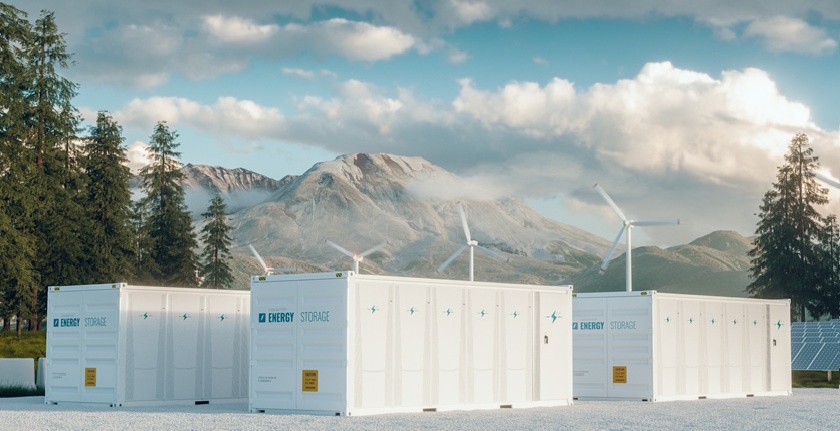
Montenegro’s state-owned power utility, Elektroprivreda Crne Gore, has launched a tender for the procurement and installation of two battery energy storage systems with a total capacity of 60 MW/240 MWh.

Elektroprivreda Crne Gore (EPCG) is seeking a partner for the design, supply, installation, testing, and commissioning of two battery energy storage systems (BESS), each with a capacity of 30 MW and 120 MWh, with an output voltage of 35 kV.

The estimated value of the procurement is EUR 48 million excluding VAT, according to the public call.

The EPC (Engineering, Procurement, and Construction) contract for the batteries is a comprehensive turnkey agreement covering all phases of project development, including design, equipment procurement and delivery, permitting, construction, and commissioning.

The contract also includes training for EPCG personnel

Technical staff training is included to ensure the proper and safe operation of the facilities, as well as to validate their performance in accordance with the contracted terms, which will be mutually confirmed by signing a technical acceptance report.

The EPC covers all technical, engineering, logistical, and construction details, workplace health and safety, environmental protection, and responsibilities for performance guarantees and technical maintenance of the facility, according to the public call.

According to previous announcements, EPCG intends to utilize existing infrastructure for connection to the transmission grid. Potential locations include the 60 MWh hydropower plant Perućica, EPCG’s steel mill Željezara Nikšić with two 60 MWh units, and the 60 MWh Pljevlja thermal power plant.

The first two battery systems will be installed at the Željezara site.

EPCG held talks with several investors

In March, the company announced it had held discussions with several companies and financiers from the region, Europe, and beyond.

EPCG initially announced its intention to install batteries in early September last year. At that time, the EPCG Board of Directors adopted a project task proposal for adding BESS capacities.

According to the project task, EPCG aims to optimize the utilization of all renewable energy sources, alongside numerous new renewable energy projects.

The company plans to secure the flexibility of the power system with energy storage systems based on lithium-ion batteries, according to EPCG.

Post Views:43
September 5, 2025
by AEA in News

Romania begins overhaul to extend operating life of Cernavodă nuclear reactor by 30 years

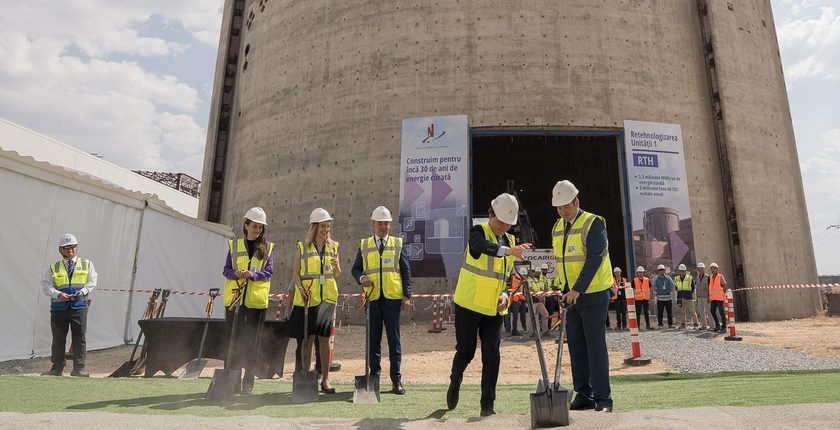
An international consortium led by South Korean state-owned Korea Hydro & Nuclear Power Co. (KHNP) has launched an overhaul of a reactor at Romania’s only nuclear power plant, Cernavodă. The refurbishment will extend the operating life of Cernavodă’s Unit 1 by 30 years.

The reactor, with a capacity of around 700 MW, has been in operation since 1996, and its 30-year license is set to expire in 2027. The reconstruction project is valued at about USD 2.01 billion, KHNP said following a groundbreaking ceremony.

Romania’s state-run Nuclearelectrica, the operator of the Cernavodă plant, signed an agreement with the consortium last December. The group of contractors includes KHNP, Canada’s AtkinsRealis, the Canadian Commercial Corporation, and Italy’s Ansaldo Nucleare, according to Romania-Insider.

The works, targeted for completion by 2030, include the complete replacement of the reactor systems and power-generating turbines, as well as the construction of new infrastructure, including radioactive waste storage facilities, said KHNP, a subsidiary of Korea Electric Power Corporation (KEPCO).

The overhaul is targeted for completion by 2030

KHNP said that four other South Korean firms – Kepco Plant Service & Engineering, Doosan Enerbility, Hyundai Engineering & Construction, and Samsung C&T- will participate as project partners.

At the groundbreaking ceremony, Romanian Minister of Energy Bogdan Ivan said the project would ensure another 30 years of on-grid, environmentally friendly electricity. According to him, it represents the future of Romania’s energy security, accoridng to a report by Profit.ro.

The overhaul will ensure another 30 years of environmentally friendly electricity

Over the last 10 years, Romania has shut down about 56% of its coal- and natural gas-fired capacity, resulting in the country now importing 22% of the electricity it consumes. According to Ivan, this has led Romania to look for alternatives, one of which is nuclear energy.

He recalled that the country was preparing to invest EUR 11 billion in the construction of Units 3 and 4 at the Cernavodă nuclear power plant, adding that “certain phases have already begun.” Ivan also said he believed that in seven years’ time, Romania could become a net exporter of electricity.

The two new reactors would each have a capacity of around 700 MW, according to earlier reports. Cernavodă’s Unit 2, which has been in operation since 2007, also has a capacity of around 700 MW.

Post Views:62
September 5, 2025
by AEA in News

Record solar panel imports in Africa: a lifeline for a continent where 600 million people lack electricity

Half of Africa’s population still lacks access to electricity, but a record surge in solar panel imports could signal a turning point. A report by the Ember research center shows a 60% increase in solar panel imports from China to Africa. Although it is too early to make forecasts, the report suggests that the solar boom could positively impact the power systems of many African countries.

As many as 570 million people in Africa still lack reliable access to electricity, which is almost half of the continent’s population. According to data from the Energy Progress Report, in 2022, 685 million people worldwide did not have access to electricity, meaning that Africa accounts for 80% of the global population without access.

While North African nations and countries like Ghana, Gabon, and South Africa have made progress, major challenges remain in Central Africa and the Sahel region (Burkina Faso, Mali, Niger, Cameroon, Guinea, Gambia, Senegal, Nigeria, Chad, and Mauritania), where entire communities remain off the grid.

Solar energy could be an opportunity for Africa to skip the phase of relying on fossil fuels and make a significant step toward an energy transition. It is still too early to say if this process is already underway, but the latest report by Ember shows that solar power is gaining serious momentum.

The total imported capacity reached 15,032 MW

According to their analysis, from June 2024 to June 2025, solar panel imports from China to Africa increased by 60%. The total imported capacity during these 12 months amounted to 15,032 MW. Ember used Chinese customs data in the report because China is the world’s largest producer and exporter of solar panels, accounting for around 80% of the global output in 2024.

The last significant increase in solar imports was recorded in 2023, when South Africa experienced a solar boom due to its energy crisis. However, new data shows that interest in solar energy is spreading to other countries as well. Solar panel imports outside South Africa nearly tripled in the last two years, rising from 3,734 MW to 11,248 MW.

The report shows that a record solar panel import was set in as many as 20 African countries, while 25 countries imported at least 100 MW of solar capacity from June 2024 to June 2025.

Increasing solar panel imports could reduce fuel imports

Ember’s analysis suggests that solar could significantly contribute to electricity production in many African countries. If Sierra Leone installed all the panels imported in the last 12 months, it could produce the equivalent of 61% of its total electricity output from 2023. Similar results are seen in Chad — 49%.

In five countries, newly imported solar panels could contribute more than 10% of total electricity production from 2023: Liberia (25%), Somalia (15%), Eritrea (15%), Togo (11%), and Benin (10%). Overall, 16 countries have the potential to increase electricity production by at least 5%, according to the report.

In addition, solar panel imports can significantly reduce fossil fuel imports, especially diesel, on which many African countries still rely. According to 2022 research by Wood Mackenzie, 17 African countries had more diesel generator capacity than grid-connected power plants.

In some countries, such as Nigeria, if diesel imports for electricity production were stopped, savings could cover the cost of solar panels in approximately six months or even less.

Although solar expansion in Africa is accelerating, experts emphasize that the process is still in its early stages and that more data and research are needed to fully understand its potential.

Post Views:56
September 5, 2025
by AEA in News

Deep Adriatic temperatures already hit end-of-century estimates

For centuries, the Adriatic Sea has cooled the Mediterranean, but today it is sending warmer waters down south as it heats up much faster than projected. Deep water temperatures forecast for the end of the century are already being recorded, threatening ecosystems, the climate, and coastal communities, according to a study by scientists from Croatia, Italy, and Slovenia.

Data collected in the South Adriatic Pit, the deepest part of the Adriatic Sea, suggest the seawater temperature at a depth of 1,000 meters has increased 0.8°C over the past decade, with salinity rising by 0.2 PSU (Practical Salinity Units), according to Croatia’s Ruđer Bošković Institute (RBI).

This may signal a permanent shift in the region’s climate patterns, RBI said. Importantly, the trend is accelerating: deep-water warming rates were once around 0.2°C per century, but between 2012 and 2024 they jumped to 0.8°C per decade, it stressed.

The Adriatic drives currents that ensure stability and oxygen supply to the depths of the Mediterranean

RBI explains that the Adriatic Sea acts as a natural “thermostat,” regulating temperature patterns throughout the Mediterranean basin. In winter, cold, dense waters in the shallow northern Adriatic sink to the seafloor and then flow through the Strait of Otranto into the deep Mediterranean. This process drives currents that ensure stability and oxygen supply to the depths of the Mediterranean Sea.

Today, however, the traditionally cold water formed along the Croatian coast is becoming increasingly warm and salty before beginning its southward journey. Instead of cooling the deep Mediterranean, the Adriatic now sends warmer waters that further heat the entire system, RBI explains.

Warmer waters threaten deep-sea fish and attract species from the eastern Mediterranean

The changes are already affecting biodiversity, particularly species adapted to life in deep, cold waters. Unlike terrestrial animals that can migrate north as the climate warms, deep-sea species remain stuck on the seafloor, according to Dr. Ivica Vilibić, co-author of a study based on the international research project.

At the same time, the warmer waters are attracting tropical species from the eastern Mediterranean, altering the entire ecosystem, he warns.

The problem is not just local – it could affect all of Europe

Moreover, these changes are not just a local Adriatic issue. They could affect the entire European climate system while contributing an additional 3.3 millimeters of sea-level rise per year, scientists estimate.

“Nature is warning us that something significant is happening,” says Vilibić, adding that scientists’ task is to understand these processes and help society prepare for the changes ahead.

Post Views:55
September 5, 2025
by AEA in News

Global solar installations soar 64% in the first half of 2025

The world’s total capacity of solar power plants has increased by 380 MW in the first half of 2025. It is a 64% increase compared to the same period last year, according to Ember.

In the first six months of 2024 the world added 232 GW. It took until September that year for new solar capacity to surpass 350 GW – a result for the entire 2023. This year the milestone of 350 GW was reached in June, according to the energy think tank Ember.

The total global cumulative installed capacity reached 2.2 TW by the end of 2024.

The rapid expansion of solar capacity in recent years has made it the fastest growing source of new electricity generation. In 2024, global solar output rose by 28% (+469 TWh) compared to 2023, more than any other source, Ember noted.

China continues to lead the world in solar growth. Global Energy Monitor said in July that three quarters of global solar, wind capacity under construction is in China.

From January until the end of June, the country’s photovoltaic installations were more than 100% higher year-over-year.”

China accounted for 67% of the global new installations – up from 54% in the first half of 2024, according to the think tank.

The result was partly driven by the developers’ intention to finish projects before new rules on wind and solar compensation came into effect in June this year.

This situation could lead to lower installation in the rest of the year, however Ember stressed new clean power procurement requirements for industry and higher full-year deployment expectations from China’s solar PV association (CPIA) as evidence that a new record volume of solar power plants would be recorded in 2025.

India follows China

All other countries together installed an estimated 124 GW in the first half of 2025 – 15% higher than the first half of 2024.

India won second place with 24 GW, a 49% increase over the already strong 16 GW added in deployment in H1-2024. The United States ranked third with 21 GW, up 4% year-on-year, despite recent moves by the US government to restrict clean power deployment.

The remaining countries added 65 GW in H1-2025, 22% more than in H1-2024. Ember pointed out data for Africa in which imports from China rose 60% in the last 12 months. But, the effects on the ground are still not unknown.

2025 is on track to become another historic year for solar power

Solar became the EU’s largest source of electricity for the first time in June 2025. However, the EU is set to install less new solar capacity in 2025 than it did last year – the first annual drop in a decade.

Ember estimated that 2025 is on track to become another historic year for solar power.

“These latest numbers on solar deployment in 2025 defy gravity, with annual solar installations continuing their sharp rise. In a world of volatile energy markets, solar offers domestically produced power that can be rolled out at record speed to meet growing demand, independent of global fossil fuel supply chains,” Senior Energy Analyst of Ember Nicolas Fulghum noted.

Post Views:37
  • 1
  • …
  • 60
  • 61
  • 62
  • 63
  • 64
  • …
  • 140

AEA – Albania Energy Association is a industry association dedicated to representing the interests of Albanian and West Balkan for energy producers and consumers. AEA works to advance the development and adoption of sustainable energy solutions in Albania and the Western Balkans, supporting the region’s transition toward a cleaner, more secure, and more competitive energy future. AEA is registered by decision of the Court of Tirana, DECISION NO. 3032, (VAT:L11827451K).

[email protected]

Address
Blv Zogu 1
Tirana
1057
ALBANIA

LinkedIn  |  Facebook
Events
May 25, 2022 Connecting Green Hydrogen Europe 2022
May 25, 2022 Energy Week Western Balkans 2022
Copyright © Albania Energy Association