AEA-Albania Energy Association
  • Main
  • About Us
  • Services
  • Sectors
  • News
  • EventsEvents
  • PublicationPublication
  • Contact Us
AEA-Albania Energy Association
  • Main
  • About Us
  • Services
  • Sectors
  • News
  • EventsEvents
  • PublicationPublication
  • Contact Us
AEA-Albania Energy Association
  • Home Page
  • About Us
  • Sectors
  • Our Services
  • News
  • Contact Us
September 10, 2025
by AEA in News

Environmentalists warn EU that Bulgaria ignores coal plants breaching pollution rules

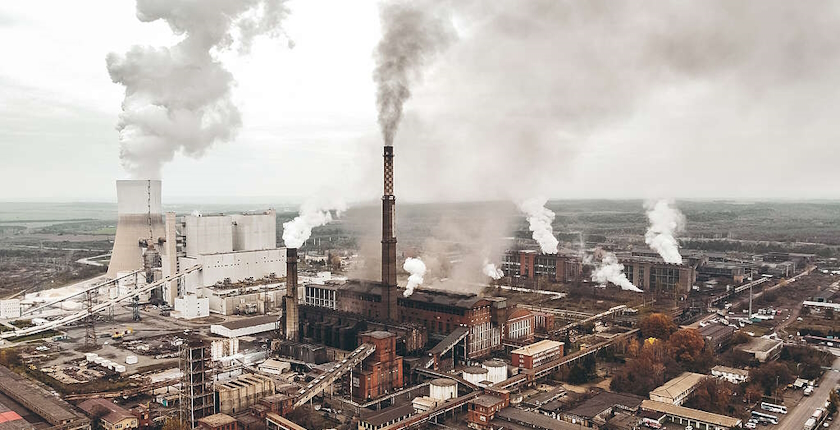
Greenpeace Bulgaria and Za Zemiata (For the Earth) said they would file a complaint today with the European Commission over repeated failures by Bulgarian authorities to enforce the European Union’s environmental law at four coal plants. They expressed the view that institutions are prioritizing financial interests over public health and the environment.

Environmental organizations Greenpeace Bulgaria and Za Zemiata wrote a complaint, to submit to the European Commission, regarding what they described as long-standing violations by four coal power plants linked to Bulgarian businessman Hristo Kovachki. “Bulgarian institutions refuse to apply EU environmental law as intended, favoring coal owners over people and nature. This complaint provides evidence for the European Commission to initiate infringement procedures,” said environmental lawyer Regina Stoilova.

Alleged breaches from 2018 to 2023 concern thermal power plants Bobov Dol in Golemo Selo, Brikel in Galabovo, Republika in Pernik, and Maritsa 3 in Dimitrovgrad. The two groups said they exhausted all national-level mechanisms for holding the polluters accountable and protecting affected citizens and the environment.

The two groups have exhausted all legal mechanisms on the national level

Instead of enforcing environmental standards, Bulgarian institutions – including the Ministry of Environment and Water, the Executive Environmental Agency and regional environmental and water inspectorates – have repeatedly issued permits to offenders, imposed weak or ineffective fines, and ignored serious pollution events that threaten public health, the environmentalists added.

“These coal plants are shielded by an institutional network protecting Kovachki’s opaque coal business. Thousands of Bulgarians living under these chimneys continue to face rampant pollution with no accountability,” said Director of Greenpeace Bulgaria Meglena Antonova.

Penalties could have been millions of euros higher

Bulgarian courts have also failed to act, according to the statement. During the legal proceedings after Brikel and Maritsa 3 were temporarily closed in 2022, the plants continued operating for three years. In the said six-year period, Kovachki-linked plants avoided nearly EUR 2.5 million in penalties, , the organizations calculated and stressed that Brikel payed only EUR 3,300 in fines.

In official documents, the businessman holds no ownership in most of the firms that media outlets regularly link him to. Kovachki has only identified himself as a consultant in some of them. Investigative journalists have obtained documents indicating that he controls a group of companies through a holding called Orion, which he denied.

Violations include illegal wastewater discharge

The violations of the permits consisted of illegal emissions into the air, illegal discharge of wastewater into rivers, and use of prohibited fuels.

“In an attempt to reduce production costs, the coal power plants associated with Kovachki have systematically co-fired waste and biomass with coal without possessing the necessary permits. Even after obtaining the required permits, the operators have significantly exceeded the biomass limits specified in them,” reads a report accompanying the announcement.

Meanwhile, the power plants have gained millions from saved carbon emission allowances, the document adds. An analysis by Za Zemiata estimates the damages for the period 2017-2021 at EUR 75 million for five plants associated with Kovachki, four of which are the subject of the new complaint.

Attack on activist living near Bobov Dol

“Not only has there been no accountability, but activists are also facing aggression for speaking out. Over the weekend, Daniela Toneva, an activist opposing the Bobov Dol TPP coal plant, was attacked after speaking out about the plant’s severe pollution and the links between Hristo Kovachki and the chairman of the Bobov Dol Municipal Council Krasimir Chavraganski,” said Beyond Fossil Fuels, a partner organization.

Namely, someone spilled paint on Toneva’s car and broke her window with a stone they threw into the house. She told Svobodna Evropa (RFE/RL) that local authorities are hostile to her because of her activism. The firm operating the nearby Bobov Dol facility condemned the attack.
Post Views:85
September 10, 2025
by AEA in News

Croatia installs one million smart meters, Serbia reaches 650,000

Croatia has so far installed one million smart meters, while Serbia has reached 650,000. They make up 40% of all power metering devices in Croatia, compared to a 17% level in Serbia.

Digital or smart meters offer numerous advantages for consumers and distribution system operators (DSOs). The devices are a cornerstone of future distribution networks – smart grids that will allow consumers, including many prosumers, to both draw electricity from the network and inject it. Smart grids also enable consumers to provide various flexibility and demand response services.

The smart meters rollout in Croatia is being implemented across the country, with about 40,000 new devices installed per month. Croatia’s DSO HEP-Operator Distribucijskog Sustava (HEP ODS), a subsidiary of state-owned power utility Hrvatska Elektroprivreda (HEP), has previously announced that it intends to replace all 2.5 million devices by the end of 2029.

Nearly all users in the business category have received new devices

Installation of new meters is completely free of charge for customers. It takes about twenty minutes. HEP underlined that smart meters offer a range of benefits – enabling simpler and remote reading of consumption, more precise consumption management, better planning, and savings.

Danijela Žaja, chief of the metering and market support sector of HEP ODS, told RTL that more than one million smart meters have been installed so far for households and firms. In the business category, almost all meters have already been replaced, she said, Poslovni Dnevnik reported.

In her words, new devices help consumption management.

Serbia is financing new meters with loans

According to Ana Pavlović, head of the electricity markets support sector of neighboring Serbia’s DSO Elektrodistribucija Srbije (EDS), so far the company has installed almost 650,000 smart meters.

EDS plans to set up another 200,000 units in the next round, financed by a loan from the European Bank for Reconstruction and Development (EBRD), she said at a conference organized by Energija Balkana.

Out of the 200,000 meters, the cities of Čačak and Kraljevo are earmarked for 30,000 each, and 140,000 are for consumers in Niš. The next project is the installation of 400,000 smart meters, to be financed by a loan from the European Investment Bank (EIB).

Niš will be one of the first cities in Serbia to be almost entirely covered by smart meters, Pavlović stressed, as quoted by Tanjug.

Post Views:56
September 10, 2025
by AEA in News

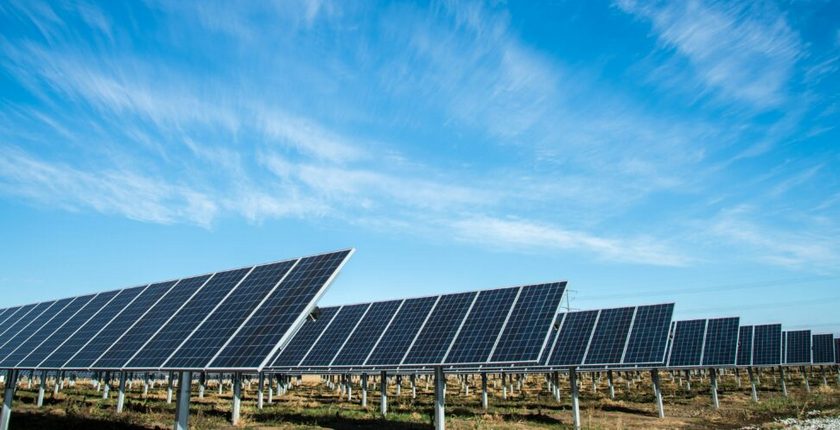
Turkey launches solar, wind power auctions with November deadlines

The Ministry of Energy and Natural Resources of Turkey issued a public call for solar and wind power auctions for 2 GW in total. It will receive the applications on November 4 and November 18, respectively. One competitive bidding process is for a floating solar power project of 35 MW.

Following the successful auctions for renewable energy projects that were completed early this year, Turkey kicked off another round. It is also for 2 GW of overall connection capacity, in light of the country’s ambition to grow its combined solar and wind power capacity to 120 GW by 2035. The two technologies reached 37.1 GW together a month ago, out of 120.2 GW in total.

Auctions are held under the Renewable Energy Zones (REZ) state support mechanism. The scheme is better known by its Turkish acronym YEKA.

Ten solar power areas in eight provinces

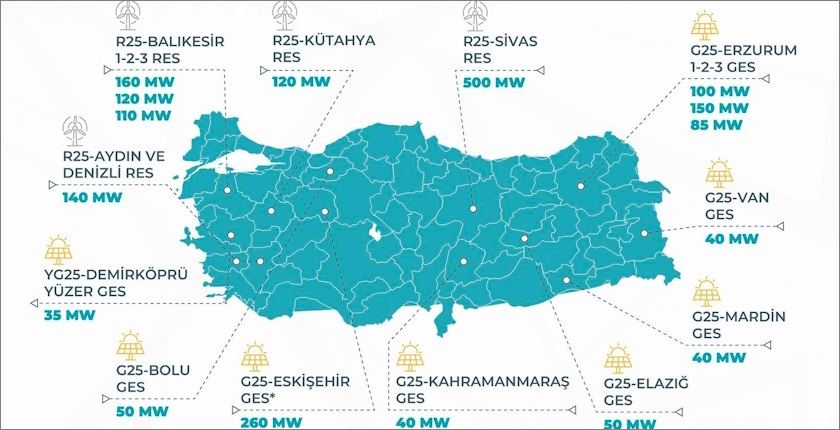
The upcoming solar energy auctions, REZ SPP 2025 (YEKA GES 2025), are for 850 MW altogether. There are ten areas in eight provinces designated for bidding: Kahramanmaraş, Mardin and Van, with 40 MW each, Bolu and Elazığ (50 MW each), Erzurum 1-3 (100 MW, 150 MW and 85 MW), Eskişehir (260 MW) and Demirköprü in Manisa province, with 35 MW.

The upcoming solar power auctions will include Turkey’s first bidding for a floating photovoltaic plant

Notably, the last one is for a planned floating solar power plant on the reservoir of the Demirköprü hydropower plant. The facility on the Gediz river, east of Izmir, is owned by state-owned Electricity Generation Corp. (EÜAŞ). Turkey now hosts only two small floating photovoltaic units, and the auction will be the first of its kind.

Applications will be received on November 4, the ministry said and added it would subsequently publish a schedule for bidding.

Wind power capacity quota is 1.15 GW

Participants can apply on November 18 for the wind energy round of auctions, REZ WPP 2025 (YEKA RES 2025). It is for an overall 1.15 GW in six areas.

Investors will compete for 500 MW in Sivas province, a 140 MW project in Aydın and Denizli, 120 MW in Kütahya and three areas in Balıkesir – 160 MW, 120 MW and 110 MW.

Winners to submit guarantees of EUR 75,000 per MW for PV projects, EUR 100,000 per MW for wind

Potential bidders will pay a fee of EUR 1,550 for each auction they apply for. They must submit letters of guarantee lasting one year and worth EUR 15,000 per MW for photovoltaics and EUR 20,000 per MW for wind power. Winners will submit 10-year guarantees before signing their contracts: EUR 75,000 per MW and EUR 100,000 per MW, respectively.

The ceiling or starting price is EUR 55 per MWh and the floor prices are EUR 32.5 per MWh for solar power and EUR 35 per MWh for wind. If bids hit the floor, another auction will be held between the competitors, like in the previous round. It is for a so-called contribution share that they are ready to pay. The minimum is EUR 10,000 per MW of planned capacity and the highest bid wins.

Successful participants can sell electricity on the free market for five years in the case of solar power plants, while the period lasts six years for wind. After that, both categories enter a 20-year scheme with a guaranteed price.

Turkey tops 120 GW in total electricity capacity

At the end of July, electricity capacity in Turkey totaled 120.2 GW, the ministry revealed. Hydropower accounted for 26.9% or 32.3 GW, compared to 23.4 GW in photovoltaics (19.5%) and 13.7 GW of wind power, translating to 11.4%.

The share of biofuel and waste was 1.9%, with 2.34 GW, and geothermal power plants had 1.73 GW altogether, which is 1.4%. Gas power plants in Turkey had 24.7 GW in combined capacity (20.6%). The remainder is coal: 21.9 GW or 18.3%.

Post Views:41
September 10, 2025
by AEA in News

Uncertain future of Greece-Cyprus Great Sea Interconnector project

Greece and Cyprus find themselves at odds when it comes to Great Sea Interconnector (GSI), their big project for a subsea electricity cable. A new investigation by the European Public Prosecutor’s Office (EPPO) further complicates things.

Great Sea Interconnector is an envisaged 1,208-kilometer power line that would connect Crete, Cyprus and Israel. Planned for 1,000 MW in capacity and doubled later, the link would provide energy security and lower energy costs for Cypriot consumers, who currently pay the highest wholesale prices in Europe. Cyprus has also been plagued by very high curtailments and rolling blackouts, meaning that a solution is needed urgently.

The EUR 1.9 billion project benefits from a EUR 657 million funding from the Connecting Europe Facility (CEF), for the Greece-Cyprus section. It is also included in the Projects of Common Interest (PCI) list.

Currently, GSI is at the stage of bathymetric surveys in the offshore region between Greece and Cyprus. Italian ships were hired, but they were stopped last year by Turkish naval forces near the island of Kasos, east of Crete. This year, the Greek government appeared ready to reinitiate the surveys, this time with military escort, but in recent days, the government in Nicosia raised new concerns.

Cyprus raises cost issues

Statements by the two governments revealed diverging views about GSI. Cyprus has raised the issue of economic viability, with Minister of Finance Makis Keravnos maintaining a hard line and saying that it is not evident whether the interconnection would benefit his country.

“No one knows how much it will cost consumers and when the project will be completed,” said Keravnos.

Greece responded by reminding the decision makers in Nicosia that an agreement was signed last year, specifying that Cyprus needs to pay EUR 25 million annually to the project promoter, the Greek Independent Power Transmission Operator (IPTO or ADMIE). The first payment is expected this year, if the project is to continue.

IPTO has said that without the remaining decrees from Cyprus Energy Regulatory Authority (CERA or RAEK), it would stop paying Nexans, the French company in charge of building the cable. At that point, the interconnector project freezes.

Essentially, Greece wants Cyprus to pay before it moves ahead with new surveys around Kasos, which could trigger a military showdown with Turkey. On the other hand, the government in Nicosia wants Greece to complete the surveys before providing the money, thus removing any geopolitical risk.

Mitsotakis: Cyprus must show it wants the project

“Cyprus is the primary beneficiary of this project, therefore it must show its commitment,” said Greek Prime Minister Kyriakos Mitsotakis.

Things have been further complicated by EPPO’s new investigation. According to leaks in the Cypriot press, the administration in Brussels is looking into potential mismanagement when EuroAsia Interconnector was the project promoter, before IPTO took over.

Geopolitics at the epicenter

However, the elephant in the room is the geopolitical issue. Greece and Cyprus have delimited their exclusive economic zones (EEZs) in the waters between them, in line with international law. However, they haven’t signed a bilateral demarcation agreement.

Turkey, on the other hand, laid a claim over the marine region. It is one of the few countries that have not signed the United Nations Convention on the Law of the Sea (UNCLOS). In 2022 it signed an EEZ agreement with Libya to solidify its claims, which Greece, Cyprus and the European Union have called illegal.

Post Views:32
September 10, 2025
by AEA in News

Romania preparing to include biomethane in gas grid

Romania has drafted a directive that would regulate the production, transportation and distribution of biomethane and its inclusion into the gas network. The change is aimed at limiting the increase in the prices of gas for household heating, expected from the upcoming introduction of the ETS 2 carbon allowance scheme in the European Union. Delaying the shift would also affect the costs of industrial production and for other non-household consumers of gas.

Biomethane produced from sustainable sources is carbon neutral under the EU Emissions Trading System (EU ETS), making it appropriate for buildings and transportation, the Romanian Ministry of Energy said in a new draft emergency ordinance. With the executive order, it intends to pave the way for utilizing the renewable fuel in the natural gas network, Profit.ro reported.

The document is set to amend several acts and regulate the production, transportation and distribution of biomethane. It would counter, to an extent, the increase in gas prices for households, which is expected from the expansion of the EU’s carbon pricing scheme to buildings and transportation, the ministry explained. Namely, ETS 2 is scheduled to be introduced in 2027.

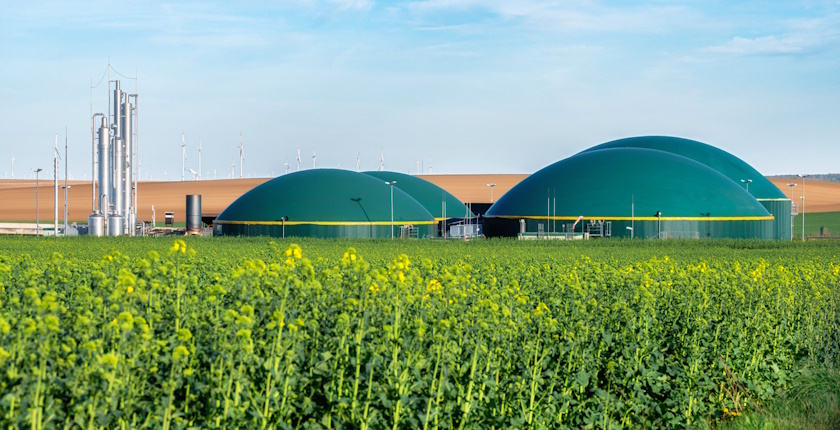
Biomethane is usually obtained by processing biogas to get methane of the same purity as in fossil gas

Any delay in allowing biomethane in the existing grid draws a risk of increasing the costs of natural gas consumption, both for non-household and household customers, the accompanying note reads.

Biomethane is usually obtained by processing biogas to get methane of the same purity as in fossil gas. The gaseous biofuel can also be produced from clean hydrogen and carbon dioxide. The EU allows incentives for biomethane facilities. Some countries in Southeastern Europe, like Greece, are developing the legal framework for embracing the technology within their energy transition.

Share in gas network planned to reach 10% by 2050

Romania is planning a 5% share of biomethane in its natural gas network in 2030 and to double it by mid-century. The sectors of waste management and agriculture can produce an estimated 501,000 tons of oil equivalent in 2050.

The EU is imposing strict requirements on the removal of biodegradable organic matter from wastewater and the reduction of food waste, the ministry noted. Together with agricultural and organic municipal waste, they are the main raw materials for the production of biogas.

According to the proposal, publicly announced business plans can secure a share of renewable gases in the grid up to 1.5%. However, without an urgent legislative intervention, the investments can’t materialize, the Ministry of Energy warned. The draft directive would update the definitions of guarantees of origin, biogas, biomethane, natural gas, renewable gases and biomethane producers.

BSOG Energy, Engie Romania at forefront of upcoming biomethane investment wave

As for other developments in the segment, BSOG Energy (BSOGE), a subsidiary of Black Sea Oil and Gas, recently hired industrial services provider Bilfinger for a biomethane facility in Alba county in Transylvania.

Earlier, BSOGE said it would invest EUR 30 million in the construction of a biomethane plant. It has signed deals with milk producer DN Agrar Group for up to 15 MW in capacity, with the possibility of exceeding 20 MW in later stages.

In April, the firm partnered with Unigrains Trading in a project for a biomethane and organic fertilizer facility. They estimated the investment at EUR 65 million, for 57 MW of biomethane capacity and over 250,000 tons of organic fertilizers per year. Parent company BSOG is controlled by controlled by investment firm Carlyle.

Engie Romania launched plans a year ago with Heineken to build a biodigester for brewery waste

Last November, French-owned Engie Romania obtained the first license in the country for biogas and biomethane supply. Earlier it established a partnership with Heineken for decarbonization projects in three breweries in Romania, including heat pumps and one biodigestion system.

The firm is the largest supplier and distributor of natural gas in the country, as well as an electricity producer and supplier.

Post Views:32
September 9, 2025
by AEA in News

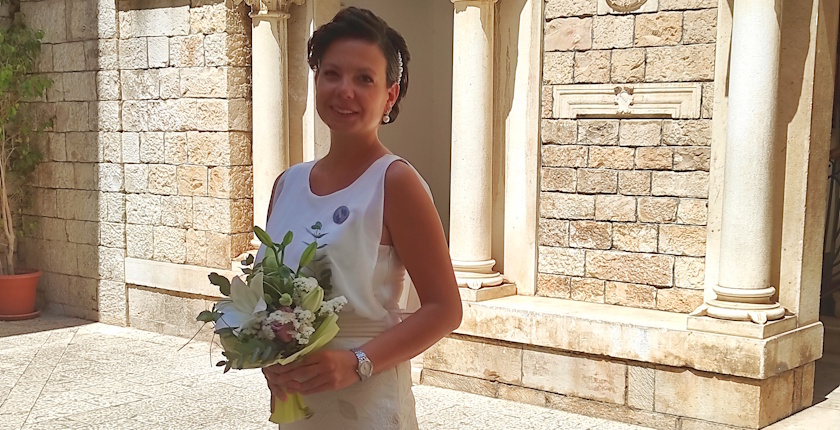
Eco bride Milica Lukić celebrates love with sustainable wedding

Weddings are often associated with celebration, luxury, and significant resource consumption. However, the example of Milica Lukić, a researcher and environmental activist, shows that a celebration of love can be just as festive and emotional while remaining sustainable — without wastefulness or harm to the environment.

For many people, a wedding is one of the most important days of their lives. Choosing a dress, a suit, a venue, food, decorations, and music are just some of the elements that require detailed planning and organization. However, bringing a large number of people together in one place, along with traditional customs, often comes with a darker side: high carbon emissions, food waste, and excessive resource use. Still, there is another way.

Milica Lukić, a researcher at the Faculty of Geography, University of Belgrade, and a member of the WISE Serbia network, has demonstrated that a wedding can be organised with sustainability and care for the planet in mind. In addition to her academic career, Milica is also known as a dedicated environmental activist and an advocate for a healthier environment.

“When we talk about adopting more eco-friendly practices in everyday life, most people start with reusable shopping bags, refillable water bottles, or separating packaging for recycling. The next step is rethinking. Rethinking whether we can do something differently, which might take a little more time and planning but ultimately brings numerous benefits — for us as individuals, for society, and for nature,” Milica emphasizes.

It was precisely this mindset that inspired Milica to make her special day sustainable while also supporting the local community.

“The thought ‘less is more’ guided me throughout the entire process. That’s why I want to inspire others with my story so that, in the future, we have more examples like this,” she says.

The dress can wait for the right moment.

Choosing the right dress, the centerpiece of the celebration and likely the most eye-catching detail, can be a challenging task. It’s common for people to spend several hundred euros on this special garment, but Milica opted for a second-hand dress instead.

“The dress is always the biggest challenge, but luckily, there’s @retro.to.the.rescue, where I’ve been buying second-hand clothes for years. I bought the dress earlier and waited for the right moment,” Milica explains.

Retro to the Rescue is a charity-driven initiative, with all proceeds from sales donated to animal welfare organizations.

Love without a golden wedding ring

A wedding outfit is often paired with carefully selected jewelry made of precious metals and gemstones. However, behind the sparkling pieces lies a darker side. The jewelry industry is linked to numerous ethical and environmental issues: child labor, human rights violations, conflict financing, pollution, and environmental destruction.

That’s why Milica decided to use what she already had. “I’m most proud that I managed to resist the pressure when it came to wedding rings because gold reminds me of exploitation, mining, pollution — everything we are fighting against. Love doesn’t need a golden ring,” says Lukić, sending her support to activists in Eastern Serbia who have long been battling the consequences of mining and the influence of mining companies.

Responsible choices in beauty products protect the environment

The eco-conscious approach to Milica’s wedding was also reflected in her choice of makeup. The cosmetics industry produces around 120 billion units of packaging every year, most of which is non-recyclable plastic. It also relies on animal-derived ingredients and toxic chemicals such as parabens and phthalates.

Sustainable makeup involves products that are not tested on animals, contain no animal-derived ingredients, use natural pigments, and come in recyclable packaging. There are even zero-waste makeup options, such as refillable lipsticks packaged in metal or glass containers.

Milica chose a minimalist, sustainable approach — using vegan mascara and lipstick — and had her hair styled at a small local salon, explaining that she enjoys supporting small businesses, especially those owned by women.

She also bought her bouquet at a local market from an elderly woman selling flowers. “The night before, I tried making my own bouquet from flowers I picked in the neighborhood, but by morning, it had wilted. Even water didn’t help. Still, it won’t go to waste — it’ll continue its life in compost,” Milica says.

Sustainability reflects respect for nature, people, and the community

Instead of hosting a big wedding celebration, Milica chose a small family lunch at a local restaurant, with a vegan and vegetarian menu.

Through her example, Milica has shown that love doesn’t have to be celebrated according to traditional norms. What matters most is making the day authentic and aligned with the values we live by. Her wedding is a reminder that sustainability isn’t about giving things up — it’s about celebrating in a way that reflects respect for nature, people, and the community.

Post Views:140
September 9, 2025
by AEA in News

Airport in Cluj-Napoca secures grant for battery-backed solar park

International Airport Avram Iancu Cluj will cover more than half of the costs for a 5 MW solar power plant, with a battery energy storage system of 12 MW, from European funds. It expects the facility to cover more than 60% of its electricity needs.

Civilian airports throughout Southeastern Europe are building dozens of solar parks and rooftop photovoltaic systems to increase their energy autonomy and achieve cost savings. Some of the capacity is backed up by battery energy storage systems (BESS). International Airport Avram Iancu Cluj in Romania is set to join the group with a project worth EUR 10.7 million including value-added tax.

The Ministry of Transport and Infrastructure declared it eligible for EUR 6 million grant from the European Union’s Modernisation Fund. The operator is controlled by the Cluj County Council.

Cluj International Airport to save EUR 1 million per year

International Airport Avram Iancu Cluj in Transylvania serves Cluj-Napoca, Romania’s second-largest city. With the green light for EU funding, it can proceed with the PV project of 5 MW with an energy storage unit of 12 MW in operating power. The airport expects the facility to cover more than 60% of its electricity consumption.

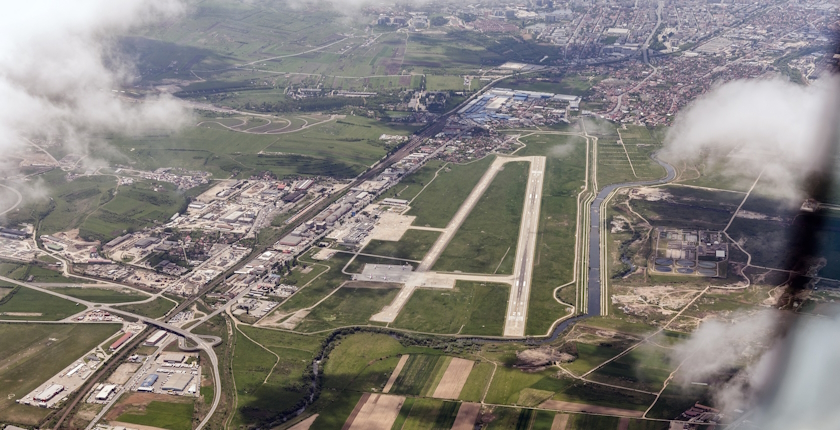
The airport in northwestern Romania serves Cluj-Napoca, the country’s second-largest city

The system would span eight hectares and include more than 7,500 solar panels. It is intended only for self-consumption. Cost savings amount to an estimated EUR 1 million per year. The initially planned capacity of the solar park was 2 MW.

“In the context of rising energy prices and budgetary constraints, energy independence is one of the major objectives we are focusing on. The investment in a photovoltaic park at Cluj Airport, from non-reimbursable funds, is a notable achievement and creates the premises for financial stability and achieving energy independence,” said Cluj County Council President Alin Tișe.

Gearing up for rising emissions costs

The airport’s General Manager David Ciceo stressed that heat pumps are also part of the plan to decarbonize and increase energy autonomy. President of the Board of Directors Viorel Federiga noted it is an important step toward meeting new international requirements.

For instance, the EU plans to extend the EU Emissions Trading System (EU ETS) to all flights from the European Economic Area (EEA). Currently it only covers the flights within the region and toward the United Kingdom and Switzerland. A scheme called EU ETS 2, to be launched in 2027, will include buildings and road transportation.

Within its efforts to reduce carbon emissions, Cluj International Airport added another electric bus to its vehicle fleet, to take passengers to and from aircraft. It can carry 110 people. The bus, which cost EUR 830,000, features a battery that allows for an autonomy of over 300 kilometers.

The airport projected the number of its passengers this year at 3.4 million.

Post Views:20
September 9, 2025
by AEA in News

Bajramović: Investments of BAM 1.4 billion needed for distribution grids in BiH

Necessary investments in Bosnia and Herzegovina’s electricity distribution grids by 2030 amount to BAM 1.4 billion (EUR 716 million), according to Zijad Bajramović, chairman of the Bosnia and Herzegovina committee of the International Council on Large Electric Systems (CIGRE).

The growing installation of power plants utilizing renewable energy sources is creating congestion in transmission and distribution networks, so the limited available capacity for their connection is an issue across the entire region, Zijad Bajramović told state news agency Fena. Nezavisne Novine republished the report.

An additional burden on the distribution network is expected from the electrification of transportation and increased electricity use for heating and cooling.

Energy storage is a solution for the problems emerging in the grid

Bajramović explained that new 110 kV substations are necessary, as is the completion of the ongoing transition to the 20 kV voltage level. Attention should also be paid to integrating prosumers, especially the households that both produce electricity, with solar panels on their roofs, and consume it.

He highlighted balancing as well as maintaining voltage conditions and supply quality as the main challenges from the rise in renewable electricity capacity on the grid. Energy storage is a solution for the issues.

Batteries can prevent renewables generation curtailments

Bajramović expects battery energy storage systems to play an increasingly significant role in relieving network congestion.

BESS, in his words, are a flexibility tool for absorbing excess generation locally, and temporarily easing the pressure on the transmission grid. They can prevent curtailments of power generation from variable renewable sources, he added.

Bajramović recalled that calculations have showed batteries of 225 MW / 450 MWh in total would be necessary to connect 1,500 MW of solar power capacity and 1,000 MW of wind power to the transmission network.

An increase in distribution network tariffs would provide funds for investment in strengthening and modernizing the distribution network, in his view.

Batteries are being installed at a rapid rate around the world as well as in the region. Not only private companies, but also state-owned utilities such as Romania’s Hidroelectrica and Montenegro’s Elektroprivreda Crne Gore (EPCG) are investing in such projects.

Post Views:23
September 9, 2025
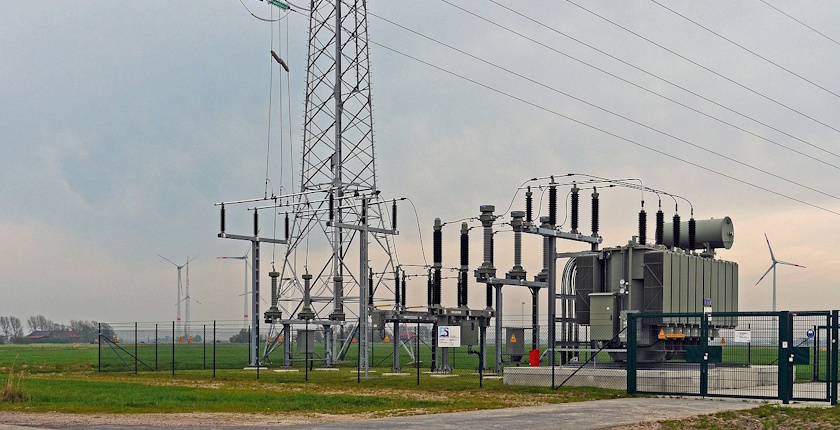
by AEA in News

Abu Dhabi’s Mubadala buys into renewables developer Rezolv Energy

Mubadala Investment Company, a sovereign investment fund from Abu Dhabi, is acquiring a stake in Rezolv Energy, a major renewable energy investor in Romania, which is developing the largest solar park in Europe.

Mubadala is setting up a joint venture with Rezolv Energy’s owner, sustainable infrastructure investment fund Actis, for joint control of the firm, whose ongoing projects in the country exceed 2 GW, according to a report by Profit.ro.

The Mubadala-Actis joint venture, which has received the green light from the European Commission, will be created through the purchase of shares and securities.

Mubadala, with assets under management of USD 300 billion as of the end of 2024, is wholly owned by the government of Abu Dhabi, the United Arab Emirates (UAE).

The transaction has been cleared by the European Commission

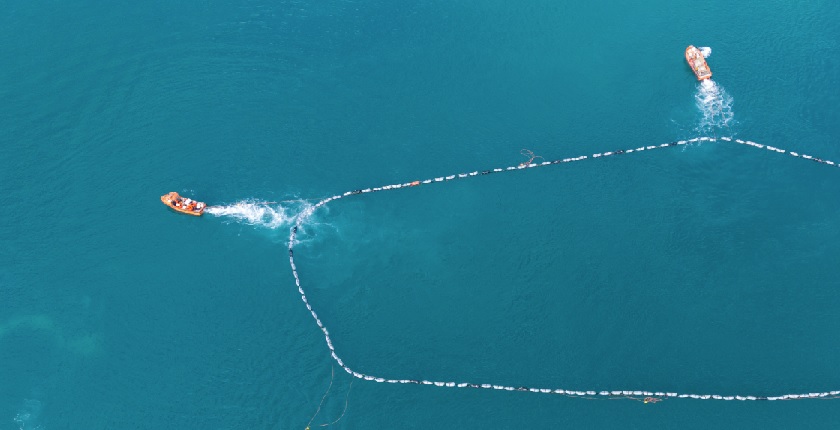
Rezolv Energy’s ongoing projects in Romania include the construction of a photovoltaic park with an installed capacity of 1,044 MW in Arad County, called Dama Solar. Once in operation, it is expected to be the largest solar park in Europe. The investment envisages a battery energy storage system (BESS) with 500 MW of operating power.

Rezolv Energy is developing the 1,044 MW Dama Solar project and over 1 GW of wind farms in Romania

Its portfolio in Romania also includes a 600 MW wind project in Constanța county and a 461 MW wind park in Buzău county. The company has already signed a grid connection agreement for the facility in Constanța.

The company won four contracts for difference (CfD), for a total capacity of 951.2 MW, in the first two auctions organized by the Romanian Ministry of Energy, according to Profit.ro.

Rezolv Energy was launched by Actis in 2022, with an initial investment of EUR 500 million. It is now active in Romania, Croatia, the Czech Republic, Luxembourg, Bulgaria, and Slovakia, with a total portfolio of 2.5 GW of solar and wind projects.

Post Views:152
September 9, 2025
by AEA in News

Serbia’s EPS plans to build 500 MW of wind farms with strategic partner

State-owned power utility Elektroprivreda Srbije (EPS) and the Government of Serbia plan to develop a 500 MW wind farm project with a strategic partner, according to Aleksandar Latinović, Head of Ancillary Services at EPS. He also noted that a 1,000 MW solar power project is expected to be online by 2029.

The Energy Infrastructure Development Plan and Energy Efficiency Measures for the period through 2028 envisage the construction of wind farms with a capacity of up to 500 MW.

The project could be similar to the 1,000 MW solar power project with 200 MW battery energy storage systems (BESS) that Serbia is implementing with strategic partners Hyundai Engineering and UGT Renewables (UGTR).

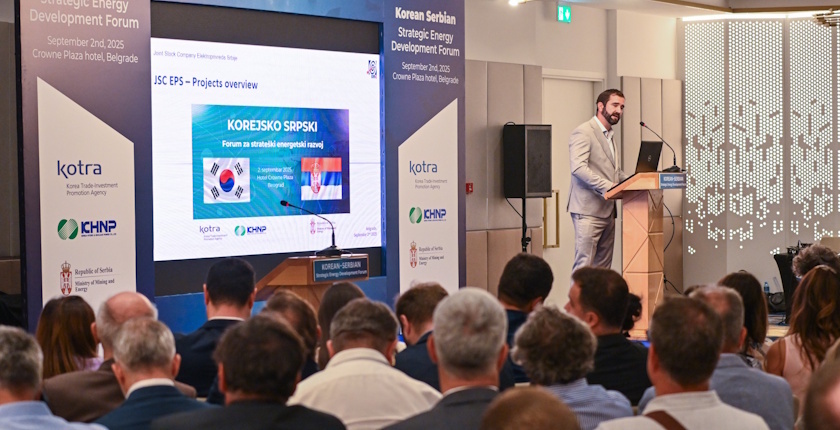
During the presentation of EPS’s development projects at the Korea-Serbia Strategic Energy Development Forum, held in Belgrade, Aleksandar Latinović recalled that the recently built Kostolac B3 power plant, as well as the pumped storage hydropower plant Bistrica, will provide energy to balance the system.

Tenders for two solar power plants are expected next year

Increasing the balancing reserve, in his words, is crucial for integrating new renewable energy sources into the power system. He particularly highlighted the Bistrica project, noting that it will have the same energy storage capacity as all currently existing BESSs in Europe. According to Latinović, the plant is expected to be operational by 2031 or 2032.

Latinović also recalled that EPS recently inaugurated Petka, its first solar power plant on a coal tailings dump. Though a small project, it is significant because EPS owns several thousand hectares of similar tailings and ash dumps.

The solar power plants Kolubara A (78 MW) and Morava (42 MW) are in the development phase, with tenders expected to be announced next year. Meanwhile, the Klenovnik project (110 MW) is undergoing a review of its preliminary feasibility study.

The 1 GW solar project is expected to be connected to the grid by 2029

Regarding wind energy, the 66 MW Kostolac wind farm is scheduled to begin trial operations next month.

For other wind farm projects, EPS and the Serbian government plan a 500 MW project with a strategic partner, he noted, stressing that EPS is willing to acquire already developed, construction-ready projects.

Latinović recalled that the preparation of a spatial plan for the 1 GW solar power project is underway. Strategic partners have already begun preparing investment and technical documentation, and a grid connection agreement with transmission system operator Elektromreža Srbije (EMS) has been signed.

A shortage of balancing energy could be an issue

According to the project timeline, this project will be operational and connected to the grid within four years, Latinović noted.

He stressed that integrating new renewable energy sources into the power system could lead to a shortage of balancing reserves. It is also possible, in his words, that there will be an excess of electricity when a significant amount of renewable energy is produced.

For this reason, EPS has initiated a study to analyze the use of hydrogen and heat storage.

The main focus of this study will be optimizing surplus electricity from intermittent renewable energy sources, increasing the system’s balancing reserve, replacing fuel oil in coal power plants with hydrogen-based fuel, and substituting gas and coal in heat production, Latinović explained.

Post Views:119
  • 1
  • …
  • 59
  • 60
  • 61
  • 62
  • 63
  • …
  • 140

AEA – Albania Energy Association is a industry association dedicated to representing the interests of Albanian and West Balkan for energy producers and consumers. AEA works to advance the development and adoption of sustainable energy solutions in Albania and the Western Balkans, supporting the region’s transition toward a cleaner, more secure, and more competitive energy future. AEA is registered by decision of the Court of Tirana, DECISION NO. 3032, (VAT:L11827451K).

[email protected]

Address
Blv Zogu 1
Tirana
1057
ALBANIA

LinkedIn  |  Facebook
Events
May 25, 2022 Connecting Green Hydrogen Europe 2022
May 25, 2022 Energy Week Western Balkans 2022
Copyright © Albania Energy Association