AEA-Albania Energy Association
  • Main
  • About Us
  • Services
  • Sectors
  • News
  • EventsEvents
  • PublicationPublication
  • Contact Us
AEA-Albania Energy Association
  • Main
  • About Us
  • Services
  • Sectors
  • News
  • EventsEvents
  • PublicationPublication
  • Contact Us
AEA-Albania Energy Association
  • Home Page
  • About Us
  • Sectors
  • Our Services
  • News
  • Contact Us
September 15, 2025
by AEA in News

ElevenEs mulls building advanced battery cells gigafactory in Poland

Battery technology developer ElevenEs, which has production facilities in Serbia, plans to build a EUR 600 million gigafactory. It revealed that it is considering locations in Poland. The company said InnoEnergy is now one of its main shareholders.

Now backed by a group of international investors including the InnoEnergy fund, ElevenEs announced its next major step. The company registered in Luxembourg said it is “seriously considering Poland” for its planned investment: a EUR 600 million gigafactory for advanced battery cells.

The battery technology developer, which operates production facilities in Serbia, has unveiled its latest product in May. It said the Edge574 blade cell charges up to 80% in 12 minutes. The cycle life translates to a range of at least 500,000 kilometers for electric cars, ElevenEs’ update reads. The company specializes in lithium iron phosphate (LFP) technology.

“ElevenEs is revolutionizing the battery market, including batteries intended for the electric vehicle industry,” according to its statement on the gigafactory project.

The company aims to begin construction by the end of 2027 and eventually employ 700 engineers.

Company shortlists Kraków, Silesia, Lower Silesia

ElevenEs hasn’t determined the exact location, but it hinted it would be in southern Poland: Kraków, Silesia or Lower Silesia. The country would benefit from technology transfer and the opportunity to further develop it within the domestic economy, it stressed.

ElevenEs’ CEO Nemanja Mikać praised the Polish labor market, supply chain and access to Western European markets

An open labor market, availability of suppliers within the supply chain, presence of many universities, and access to Western European markets are all undeniable advantages of Poland, said founder and Chief Executive Officer of ElevenEs Nemanja Mikać.

“If we add potential public sector involvement to this, we have one of the most attractive places for investment in Europe… From a technology development standpoint, we are a clear leader in Europe. One of the most significant benefits of our technology is its ability to integrate different industrial sectors and build an innovation ecosystem around it,” he stated.

InnoEnergy becomes one of main shareholders of ElevenEs

In introducing the company to Poland and securing additional investors, ElevenEs is being supported by InnoEnergy. Since its founding in 2010, it has invested in over 540 European tech companies. InnoEnergy is now one of the main shareholders of ElevenEs.

“We specialize in connecting different stakeholder groups. Our broad ecosystem includes financial and industrial investors, as well as technology providers, research institutions, and academic centers. The projects we’ve completed demonstrate our experience and ability to execute large, complex investment ventures. We see enormous potential in the ElevenEs project – not only will it help build a strong, competitive Polish economy, but it may also allow Europe to finally establish a significant presence in the global battery value chain. This is one of those projects that could change the rules of the game,” said Mikołaj Budzanowski, CEO of InnoEnergy for Central Europe.

There are investors willing to support the project, but the success of the investment depends critically on the timing and decisiveness of the public sector, he explained. He also highlighted the necessary role of financial institutions.

Serbia in scope for mass production

Of note, Mikać recently said that ElevenEs would “localize and scale” LFP battery production in Serbia over the next seven or eight years. It could become the first country in Europe to launch mass production, he added.

The company wants to participate in creating a robust supply chain in Serbia and Central and Eastern Europe, but also potentially across the continent, he asserted.
Post Views:37
September 15, 2025
by AEA in News

Croatia considering nuclear power plant on its territory – minister

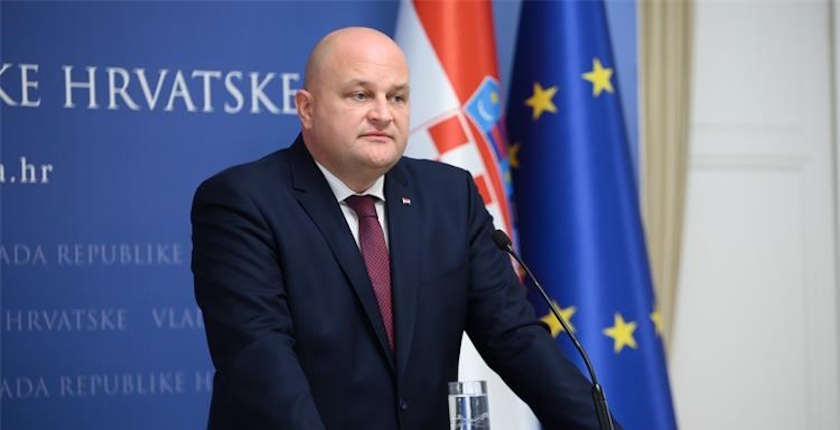
Croatia is considering the possibility of building a nuclear power plant on its territory, according to Minister of Economy Ante Šušnjar.

Experts will decide whether it will be small modular reactors (SMRs) or a conventional nuclear power plant, Ante Šušnjar stressed, as quoted by Novi List.

He opined that building a nuclear power plant is a geopolitical and security gain for a country. The minister suggested that Croatia could apply for funds from the European Union’s Multiannual Financial Framework – the seven-year budget.

Three locations were considered in former Yugoslavia

Šušnjar said multiple sites were being considered for the nuclear plant, but he wouldn’t reveal details. He recalled that when Croatia was part of the Socialist Federal Republic of Yugoslavia, which fell apart in the early 1990s, the authorities were examining locations in Ivanić Grad, Erdut, and Vir island. The last of the three was rejected due to tourism.

Croatia and Slovenia jointly operate the Krško nuclear power plant, and cooperation on building a second unit is also possible.

Meetings about cooperation have already taken place with the US

Šušnjar’s claims that everyone in the world and the EU considers nuclear energy a low-carbon source for the transition to renewables. He added it is baseload energy that can power the production of green hydrogen.

In February, the ministry established a working group for analysis and legislation that could enable the introduction of nuclear energy in the country Croatia has already held meetings with United States officials on possible cooperation in the nuclear energy sector.

Of note, just a week ago, Germany and France agreed to work together on shaping a common European energy policy that would include nuclear power as a low-carbon energy source.

Post Views:50
September 15, 2025
by AEA in News

Greece loses EU grant intended for renewable electricity for vulnerable consumers

The ambitious Apollo program, which the Greek government outlined in late 2023, is losing EUR 100 million. The European Union earlier approved the grant for investments in renewable energy and storage, intended to lower energy costs for vulnerable consumers through self-consumption.

The first phase of the Apollo program was envisaged to help vulnerable households. It aimed to support renewable energy projects, through auctions, of 400 MW to 500 MW overall, combined with battery systems.

Each of Greece’s 13 regions, also known as peripheries, would get a green power plant, and eligible consumers who join a local energy community get discounted electricity bills. Therefore, the program is in the form of virtual self-consumption. It is the first of its kind in the region that Balkan Green Energy News tracks.

Apollo fails to take off on time

The scheme was supposed to benefit from an EUR 100 million grant from the European Union’s Recovery and Resilience Facility (RRF). It is implemented via the National Recovery and Resilience Plan Greece 2.0.

However, Apollo was significantly delayed and now the deadlines are considered impossible to achieve, even if they are extended. It means RRF funds are going to be lost. Energypress reported that they have already been removed from the budget.

Namely, the issue is with the batteries. Now their costs would have to be covered entirely by the producers. In turn, they are expected to lock higher prices in Apollo’s auctions, possibly passing them on to end consumers and making the whole initiative less effective at combating energy poverty.

It should be noted that the rest of Apollo remains intact for the time being, despite the setback. The loss of funds concerns household consumers with special tariff A. Funding is still available, in theory, for the other category of vulnerable households, defined by different income criteria.

The entire initiative also aims to lower energy costs for municipal authorities, water utilities and irrigation associations. They haven’t been affected so far.

Standalone battery plants also at risk

Another Greek initiative, for subsidized standalone battery plants, faces very short deadlines. It is eligible for EUR 341 million in RRF funding. In total, projects for 900 MW overall have been selected through three auctions.

The first wave of investors should declare connection readiness this month, so their facilities can become operational by the end of 2025.

HAESS: Selected projects may not receive support

They have complained of a lengthy licensing process and logistical difficulties. The investors asked the Ministry of Environment and Energy for an extension.

In July, the Ministry of Finance submitted a request for the sixth RRF tranche, EUR 2.1 billion in grants, after completing 39 more targets. If it is approved by the administration in Brussels, Greece will have secured EUR 23.4 billion overall, or 65% of allotted funds.

Post Views:69
September 15, 2025
by AEA in News

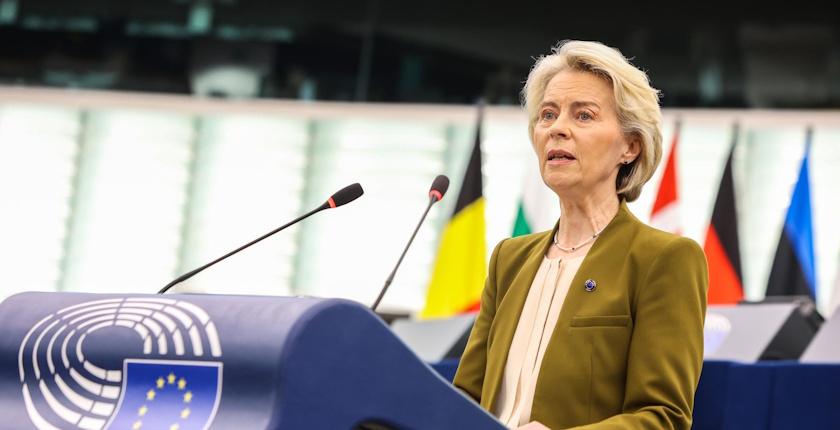
Von der Leyen: EU needs more homegrown renewables with nuclear as baseload

European Commission President Ursula von der Leyen delivered her 2025 State of the Union address at the European Parliament in Strasbourg. She said the single energy market would be completed and pointed out that clean homegrown energy is a tool to lower energy prices.

Ursula von der Leyen said the European Union’s greatest asset is the single market, but that it remains incomplete. The IMF, she noted, has estimated that the internal barriers within the single market are equivalent to a 45% tariff on goods, and 110% on services.

Most gaps are in three domains: finance, energy, and telecommunications.

“We need clear political deadlines. This is why we will present a single market roadmap to 2028. On capital, services, energy, telecoms,” she stated.

Energy bills are still a real source of anxiety for millions of Europeans

The EU’s top official said the commission would put forward a series of packages on affordability and the cost of living. One would be for energy.

Von der Leyen recalled that the EU managed to stabilize prices and secure supply during the energy crisis, and insisted that the 27-member bloc is now on the path to energy independence.

But, she told EU lawmakers, energy bills are still a real source of anxiety for millions of Europeans.

Von der Leyen unveiled an initiative called Energy Highways

“We know what drove prices up: dependency on Russian fossil fuels. So it is time to get rid of dirty Russian fossil fuels. And we know what brings prices down: clean homegrown energy. We need to generate more homegrown renewables – with nuclear as a baseload,” Von der Leyen stressed.

She reiterated that the commission would propose a grids package to strengthen infrastructure and speed up permitting.

Von der Leyen unveiled an initiative called Energy Highways. “We have identified eight critical bottlenecks in our energy infrastructure. From the Øresund Strait to the Sicilian Canal. We will now work to remove these bottlenecks one by one,” the European Commission president asserted.

Post Views:57
September 15, 2025
by AEA in News

Montenegro plans to develop LNG terminal with JERA

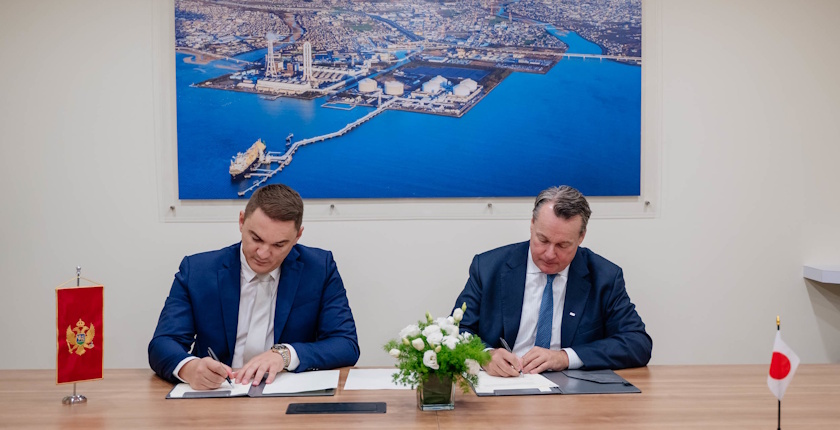
The Ministry of Energy and Mining of Montenegro and Japanese company JERA have signed a memorandum of cooperation in the development of projects for a liquefied natural gas (LNG) terminal and gas power plant.

The memorandum was signed at the Gastech 2025 conference in Italy by Minister of Energy and Mining Admir Šahmanović and Steve Winn, chief global strategist of JERA. They agreed to explore the possibilities for developing a project of an LNG terminal and associated gas power plant in Montenegro, according to the Ministry of Energy and Mining.

Within the strategic partnership, the government will use JERA’s extensive global experience to enhance its national energy mix, strengthen supply security, support decarbonization goals, and position Montenegro as an important energy hub in the Western Balkans.

The Japanese company and the ministry will conduct a feasibility study for the project

They will carry out a comprehensive feasibility study, covering the technical, commercial, and financial viability of the proposed LNG terminal and associated gas power plant, including an analysis of multiple potential locations.

According to the ministry’s press release, the study will provide detailed data on the cost-effectiveness and future expansion in the use of LNG in Montenegro, making a solid ground for strategic decisions beneficial to the country’s energy security and sustainable development.

Of note, in May 2023 Montenegro signed a cooperation memorandum on the planned LNG terminal and gas power plant with companies Enerflex Energy Systems and Wethington Energy Innovation, based in the United States. The European Union has also expressed its interest in the project.

Šahmanović: The study will provide data on the profitability of developing LNG in the country

Admir Šahmanović and Steve Winn (photo: Ministry of Energy and Mining of Montenegro)

Minister Admir Šahmanović said JERA is a renowned and credible global player in the areas of energy and LNG.

In his words, Japan is recognized for innovation and advanced technologies, and the cooperation will give Montenegro access to knowledge and experience necessary for the further development of its energy sector.

“The planned feasibility study will provide us with concrete data on potential locations and the profitability of developing liquefied natural gas in Montenegro, creating the basis for making strategic decisions in the interest of our country’s energy security and sustainable development,” Šahmanović underlined.

Winn: JERA is an ideal partner to support Montenegro in achieving its strategic energy goals

Steve Winn, JERA’s chief global strategist, said its extensive experience in LNG infrastructure and proven results in implementing complex international energy projects make it an ideal partner to support Montenegro in reaching its strategic energy objectives.

“We look forward to supporting Montenegro’s vision of strengthening energy security and decarbonization through practical and economically viable solutions,” he stressed.

Post Views:41
September 12, 2025
by AEA in News

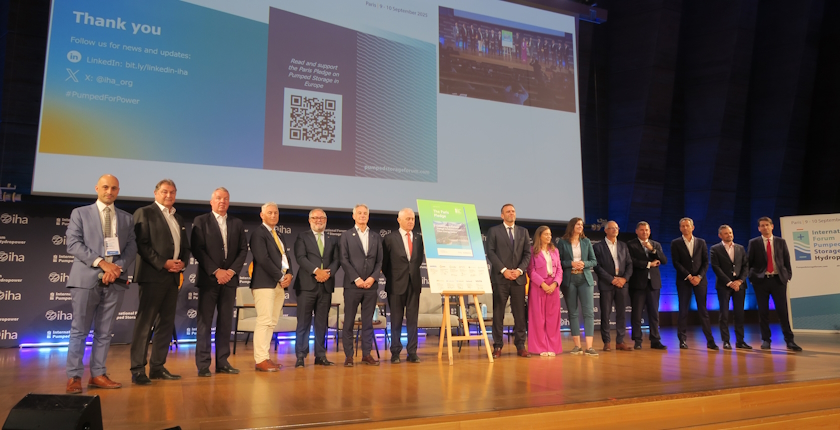
European electricity industry issues Paris Pledge on pumped storage hydropower

The International Hydropower Association (IHA) and Eurelectric launched the Paris Pledge. It is a collective call to action, aimed at unlocking the potential of pumped storage hydropower in Europe. The signatories urge the European Union and national governments to create the right conditions for long-duration storage to meet clean energy goals.

Over 50 utilities, hydropower suppliers and energy-focused associations have signed the Paris Pledge. The document’s alternative headline is Committing to Pumped Storage to Secure Europe’s Clean Energy Future.

The International Hydropower Association (IHA) and Eurelectric – Union of the Electricity Industry launched the initiative. They warned that Europe faces an urgent and growing need for long-duration electricity storage to secure a reliable, affordable and sustainable energy future.

Amid the transition to a renewables-dominated power system, the ability to store and dispatch electricity over long periods will be critical to balance variable generation from wind and solar, ensure grid stability and resilience, and reduce reliance on imported fossil fuels, the authors stressed. They called pumped storage hydropower or PSH the most important, scalable and cost-effective long-duration electricity storage solution available today. It still provides over 90% of the world’s long-duration electricity storage capacity.

PSH is currently the most important, scalable and cost-effective long-duration electricity storage solution, the industry pointed out

By 2050, around 86% of production capacity in Europe will come from variable sources, according to the material accompanying the Paris Pledge. Encouragingly, 78 pumped storage hydropower projects are under development, for 35 GW overall. The EU accounts for over 32 GW, and the rest is in Switzerland, Norway and Turkey.

The combined pipeline would provide storage capacity in excess of 700 GWh, equivalent to more than 10 hours of consumption of Italy and Spain taken together. There is 3.9 GW in the ready-to-build phase, and 2.8 GW is under construction. Of note, an earlier report showed 52.9 GW of PSH was under development.

The existing capacity amounts to 48 GW, compared to 190 GW globally. In the EU, pumped storage hydropower systems can store 1.2 TWh overall.

Photo: Types of pumped storage (IHA, Eurelectric)

Paris Pledge calls for separate legislation for long-duration energy storage

Among other proposals, the signatories are asking the EU for a dedicated initiative to boost the rollout of electricity storage. They suggested legislation to be separate for long duration, short duration and other solutions.

The Paris Pledge calls on member states to remunerate the provision of system services and security of supply for all time frames. They should eliminate double grid fees on electricity storage technologies and accelerate permitting for PSH, the document reads.

With strong political commitment, Europe can double its pumped storage hydropower capacity in the next 25 years, according to the Paris Pledge. In-person signatories represent EDP, EDF, Iberdrola, Andritz, Enel, Statkraft, Voith, Hydrogrid, Verbund, Landsvirkjun and GE Vernova.

Pumped storage hydropower’s contribution during Iberian Peninsula blackout

During the power blackout in Spain and Portugal on April 28, pumped storage played a pivotal role in balancing and supporting the recovery of the system. In Spain, PSH generated 11 GWh of electricity in the first 12 hours, instead of the planned 12 GWh recharge. Similarly, in Portugal, hydropower and pumped storage covered 80% of the demand in the first ten hours.

Such facilities also made a major contribution to restoring the electricity grid in the entire peninsula, thanks to their so-called black start capability. It allows the power plant to be restarted without relying on external power sources and to reenergise the power system.

“Very few technologies can provide this function. As a result, within a few minutes, the first pumped storage plants were ready for synchronization and awaiting dispatch instruction” from transmission system operators, notes the report published with the Paris Pledge.

Post Views:64
September 12, 2025
by AEA in News

Severe electricity price spikes in SEE in summer 2024 could have been avoided – report

If 70% of the physical capacity of all power lines had been offered for cross-zonal trade by transmission system operators, half of the most severe price spikes or 147 spikes could have been avoided in South-East Europe in the summer of 2024, according to the latest report of the EU Agency for the Cooperation of Energy Regulators (ACER).

The 2025 Monitoring Report examines the role of cross-zonal electricity trade in shaping a more integrated and efficient European Union electricity market. It also tracks progress, challenges and benefits in the implementation of the 70% requirement.

During the summer of 2024, the EU saw a significant increase in electricity prices, affecting mostly bidding zones in central and south-eastern Europe. Some countries experienced an unseen price increase on power exchanges, from 50% to 170%.

ACER noted that prices particularly spiked during the evening hours, reaching up to EUR 1,000 per MWh.

The prices were highest in Hungary, Romania, Bulgaria and Greece

Prices were the highest in Hungary, Romania, Bulgaria and Greece. At the time, Prime Minister of Greece Kyriakos Mitsotakis wrote to European Commission President Ursula von der Leyen. Greece, Romania and Bulgaria were preparing a proposal for an intervention mechanism.

According to ACER’s report, during the high-price events, spreads at several bidding zone borders in central Europe rose to unprecedented levels, signalling insufficient availability of cross-zonal capacity to accommodate the market’s need for cross-zonal exchanges.

The 70% requirement would have enabled an average reduction of peak prices by up to EUR 78 per MWh

The authors’ comparison of the average realized day-ahead prices during the evening peaks with the counterfactual scenario showed a considerable mitigation of prices.

It revealed that the implementation of the 70% requirement would have enabled an average reduction of peak prices by up to EUR 78 per MWh in central and south-east bidding zones, underlining the dampening effect of cross-zonal trade, the document reads.

According to ACER, higher availability of cross-zonal capacities in central Europe would have mitigated both the frequency and the severity of the high price events, as cross-zonal trade provides flexibility to the system.

End-2025 deadline is at risk

The 2019 Clean Energy Package introduced a legal requirement on EU electricity transmission system operators (TSOs) to offer at least 70% of their physical capacity on all lines of relevance for cross-zonal trade.

The obligation is intended to maximise cross-zonal trade and mitigate its discrimination over internal trade, ACER explained.

The 70% requirement ensures that domestic electricity flows are not prioritized over cross-border trade, mitigates price spikes, such as those seen in summer 2024 across South-East Europe, and brings significant additional welfare to EU electricity markets, it added.

The agency stressed that the end-2025 deadline is at risk.

Post Views:41
September 11, 2025
by AEA in News

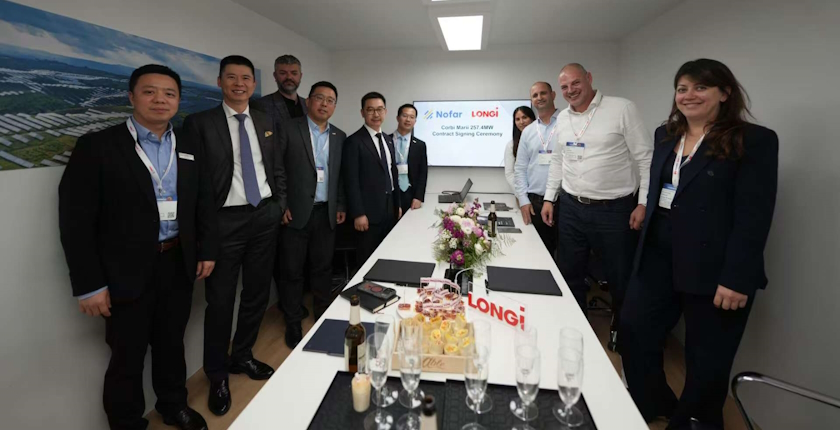
LONGi and Nofar Energy forge landmark partnership for Romania’s largest solar project using revolutionary BC technology

LONGi Solar, the global leader in solar innovation, and Israel’s premier renewable energy developer Nofar Energy have announced a historic partnership to develop one of Romania‘s largest solar installations – the 282 MW Corbii Mari project in Dâmbovița county. This pathbreaking collaboration will deploy over 430,000 Hi-MO 9 BC modules, establishing back contact technology as Europe’s definitive solution for utility-scale energy transformation while marking Nofar’s most ambitious international venture to date.

The Corbii Mari photovoltaic project of 282 MW will go into production in 2026. It represents a dual milestone in Europe’s renewable transition. As Nofar Energy’s largest overseas IPP investment, it anchors the Israeli leader’s strategic expansion into European markets. Simultaneously, the installation stands as Romania’s largest BC deployment, leveraging Hi-MO 9’s industry-leading 24.8% efficiency to overcome the region’s climatic challenges. The project’s seamless execution demonstrates how the BC technology of LONGi Solar delivers unparalleled bankability for developers navigating Europe’s complex energy landscape.

The two companies have agreed to deploy more than 430,000 Hi-MO 9 BC modules.

Leon Zhang, President of LONGi Europe, emphasized the project’s transformative impact: “Corbii Mari transcends conventional solar deployments – it’s a powerful validation that BC technology has matured into Europe’s utility-scale foundation. By choosing Hi-MO 9 for their flagship European venture, Nofar Energy demonstrates how visionary partners are accelerating the energy transition through technological leadership.”

The 282 MW Corbii Mari initiative positions back contact modules as Europe’s utility-scale standard

Mirel Jarnea, Strategic Accounts Manager SEE of LONGi Europe, added: “Nofar’s selection of Hi-MO 9 is a testament to the global energy sector’s recognition of BC technology as the ultimate frontier in solar innovation. This partnership reaffirms our commitment to delivering solutions that redefine efficiency, durability, and sustainability.”

Setting benchmark for sustainable innovation

Favi Stelian, Managing Partner Romania of Nofar Energy, stated: “The Corbii Mari project represents a defining moment for Nofar Energy’s European vision. By partnering with LONGi and deploying Hi-MO 9 BC technology, we are not only delivering Romania’s largest solar initiative but also setting a new benchmark for sustainable innovation across the continent.”

The project harnesses Hi-MO 9’s revolutionary back contact architecture to achieve exceptional performance in Romania’s variable climate. The modules’ temperature resilience and 30-year degradation guarantee ensure consistent energy generation, while the ultra-high power output minimizes land use – preserving Dâmbovița county’s agricultural ecosystems.

With an estimated annual output of 380 GWh, Corbii Mari will displace 220,000 tonnes of carbon emissions annually, equivalent to removing 48,000 combustion-engine vehicles from roads while powering over 50,000 Romanian households.

Positioned at the vanguard of Eastern Europe’s energy transition, Corbii Mari establishes a replicable model for Nofar’s expanding multi-GW European pipeline. The collaboration signals accelerating regional adoption of BC technology, with project insights informing solar development across emerging markets where efficiency and bankability are paramount.

About LONGi

Founded in 2000, LONGi is committed to being the world’s leading solar technology company, focusing on customer-driven value creation for full scenario energy transformation.

Under its mission of Making the Best of Solar Energy to Build a Green World, LONGi has dedicated itself to technology innovation and established several business sectors, covering mono silicon wafers cells and modules, commercial and industrial (C&I) distributed solar solutions, green energy solutions and hydrogen equipment. The company has honed its capabilities to provide green energy and, more recently, also embraced green hydrogen products and solutions to support global zero-carbon development.

About NOFAR Energy

Founded in 2011, Nofar Energy is a global leader in renewable energy investments. Since 2020, Nofar has been a public traded company (TASE: NOFR) at the Tel Aviv Stock Exchange. For the last 12 years, Nofar has been growing rapidly and consistently, with an extensive portfolio of projects and subsidiaries across nine territories, 200 employees worldwide, and major renewable energy and energy storage projects.

Post Views:68
September 11, 2025
by AEA in News

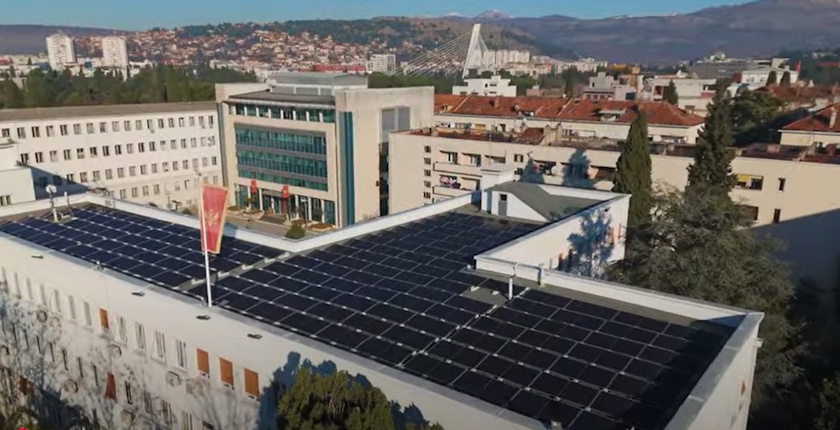
Parliament of Montenegro installs solar power plant

The solar power plant on the roof of the Parliament of Montenegro in Podgorica has started producing electricity. The plant’s total peak capacity is 81 kW, and it is expected to generate approximately 100,000 kWh per year.

Montenegro is likely the first country in the former Yugoslavia to install solar panels on the roof of its parliament. This project represents an important step towards sustainable development and the efficient use of energy resources, according to the Parliament of Montenegro.

The installed photovoltaic system consists of 150 monocrystalline solar panels, each with a capacity of 540 W. The total peak capacity of the plant is 81 kW. Electricity is delivered to the grid through a 70 kVA inverter.

The estimated annual power production of 100,000 kWh will cover a significant portion of the assembly’s consumption and contribute to reducing greenhouse gas emissions. This achievement will promote the parliament into a prosumer.

The solar plant will cover a significant part of the parliament’s consumption

The parliament underlined that the implementation of the project represents its commitment to improving energy efficiency. It recalled that the previous renovation enabled a significant decrease in the power consumption.

This year, the assembly plans to start modernizing its cooling system and boost energy efficiency with a new facade. The activities are set to be finished in 2026, further enhancing the overall energy balance of the building.

For years now Montenegro has been implementing a program for the installation of solar panels on the roofs of households and businesses

The Parliament of Montenegro said that, as a socially responsible institution, it is strategically oriented towards modern sustainability standards, rational management of public funds, and environmental protection.

For years now, Montenegro has been implementing a program for the installation of solar panels on the roofs of households and businesses. Power utility Elektroprivreda Crne Gore (EPCG) is in charge of the program. Solari 3000+ and Solari 500+ are finished, and Solari 5000+ is underway.

Of note, the Government of Serbia also announced its intention to install photovoltaic units and become a prosumer. However, there are currently no new updates regarding the implementation of this project.

Post Views:59
September 10, 2025
by AEA in News

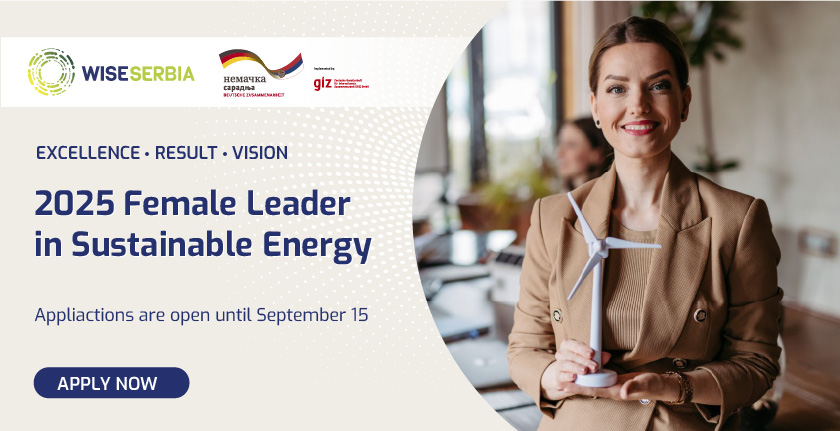
September 15 – new deadline for applications for 2025 Female Leader in Sustainable Energy

WISE Serbia, women’s network in sustainable energy, climate action, and environment, under the auspices of the German development cooperation GIZ, has extended the deadline for applications within the 2025 Female Leader in Sustainable Energy award. The new application deadline is September 15.

The call for nominations aims to recognize women who, through their leadership, outstanding achievements, and vision, have demonstrated significant contributions to the sustainable development of Serbia’s energy and related sectors, energy transition acceleration, improvement of energy efficiency, energy security, and safety, as well as the greater recognition of women in this field.

Information about the Award competition

Women professionally engaged in the energy sector, climate action, or environmental protection in Serbia are eligible to apply, both citizens of Serbia and foreign nationals working in Serbia. The candidates themselves can submit applications, as well as their employers, colleagues, or teams who wish to highlight the outstanding achievements of their associates.

The invitation is open to all profiles – decision-makers, employees in business, public enterprises, academia, civic energy, non-governmental sector, international organizations, consulting teams, legal and financial institutions, IT experts, as well as media representatives.

The application needs to be emailed by September 15, 2025, to [email protected]. It needs to include:

  1. Nomination letter presenting the candidate and listing the significant results and achievements nominating her for the selection.
  2. Professional résumé.
  3. A short nomination statement to present to the wider public on the WISE Serbia website and social media platforms. The statement should be up to 100 words.
  4. Photo portrait in high resolution.
  5. Contact info – email address, phone number, social network accounts that the candidate is actively using.

Applications should be sent by email to [email protected].

After processing the submitted applications, the candidates’ profiles will be published on the WISE Serbia network website – wisesrbija.org, and the voting will be open to the public. The candidate with the highest number of votes will be awarded the title of Female Leader in Sustainable Energy.

The announcement ceremony for the Leader in Sustainable Energy 2025 will take place during the WISE Serbia women’s network annual conference in mid-October in Belgrade.

Post Views:350
  • 1
  • …
  • 58
  • 59
  • 60
  • 61
  • 62
  • …
  • 140

AEA – Albania Energy Association is a industry association dedicated to representing the interests of Albanian and West Balkan for energy producers and consumers. AEA works to advance the development and adoption of sustainable energy solutions in Albania and the Western Balkans, supporting the region’s transition toward a cleaner, more secure, and more competitive energy future. AEA is registered by decision of the Court of Tirana, DECISION NO. 3032, (VAT:L11827451K).

[email protected]

Address
Blv Zogu 1
Tirana
1057
ALBANIA

LinkedIn  |  Facebook
Events
May 25, 2022 Connecting Green Hydrogen Europe 2022
May 25, 2022 Energy Week Western Balkans 2022
Copyright © Albania Energy Association