AEA-Albania Energy Association
  • Main
  • About Us
  • Services
  • Sectors
  • News
  • EventsEvents
  • PublicationPublication
  • Contact Us
AEA-Albania Energy Association
  • Main
  • About Us
  • Services
  • Sectors
  • News
  • EventsEvents
  • PublicationPublication
  • Contact Us
AEA-Albania Energy Association
  • Home Page
  • About Us
  • Sectors
  • Our Services
  • News
  • Contact Us
September 23, 2025
by AEA in News

Romania risks blackouts if it shuts coal plants as scheduled

Minister of Energy Bogdan Ivan claims that energy poverty or even blackouts could hit Romania if it proceeds with the closure of coal plants. Namely, the gas power projects for replacing them are suffering severe delays.

The European Commission has become flexible for the first time in the last four years, said Romania’s Minister of Energy Bogdan-Gruia Ivan. He has asked for a postponement of the deadline for shutting down a group of coal power plants.

They need to be closed by the end of the year. If the coal plants, run by state-owned Complexul Energetic Oltenia (CE Oltenia) go before gas power plants Iernut and Mintia are commissioned, Romania is jeopardized, according to the minister.

Ivan told Digi24.ro he was negotiating with the European Commission on delaying the closure by “a few months.” Romgaz decided last week to cancel the contract with Duro Felguera, the contractor for the Iernut facility.

Energy poverty risk increasing

A study conducted with Romania’s transmission system operator Transelectrica has shown that Romania can otherwise end up in energy poverty and even risk a blackout, he underscored. “Especially in the winter, when we have no solar, when we have no wind power,” Minister Ivan explained.

Furthermore, Romania would like to keep three large coal units and another two in technical reserve for replacement them in case of damage, Ivan revealed. It would ensure a 1 GW minimum coal power supply, he asserted.

Romania requires at least 1 GW in baseload energy from coal for two more years, according to Minister Bogdan Ivan

Simulations showed that the group would need to operate for two years more, at least, until Iernut and Mintia are completed.

“We are pressed for time. We need to conclude contracts for next year. We need to conclude contracts for energy supply, contracts with suppliers, coal stocks. It is a complex of factors that must be organized very well from now on. It is already late, for Romania and for our energy companies,” Ivan stated.

Gas power projects in constant delay

Additionally, gas power plants Turceni (475 MW) and Ișalnița (850 MW) are supposed to replace some of the capacity in the Oltenia complex. The two projects suffered constant delays. The deadlines in the tenders for construction have been pushed back to September 30 and November 14, respectively.

Romania has received billions of euros from the European Union for gas power plants to substitute coal, the minister noted separately. He acknowledged that the projects are still on paper. That’s why today Romanians have almost the highest electricity price in Europe, Ivan claimed.
Post Views:59
September 22, 2025
by AEA in News

Serbia in talks with Rosatom on nuclear power plant project

Serbian authorities and Rosatom have begun talks on the nuclear power plant construction project, according to the Ambassador of Serbia to Russia Momčilo Babić.

Serbia recently completed the preliminary technical study on the peaceful use of nuclear energy in the country. However, the country is still a long way away from the potential construction of a nuclear power plant, according to Minister of Mining and Energy of Serbia Dubravka Đedović Handanović.

So far, Serbia has established contacts or started cooperation on nuclear energy with China, France, Russia, Slovenia, South Korea, and the United States.

Serbia is seriously discussing the issue with Rosatom, the country’s Ambassador to Russia Momčilo Babić told Izvestia.

Babić: There’s no better company than Rosatom

He underlined that there’s no better company in the world to build a nuclear power plant. Babić is confident that there will be progress in the coming years, as he argues that Serbia needs electricity. The country will “do it anyway,” the ambassador added.

According to Igor Yushkov, an expert at the Financial University and the National Energy Security Fund, it is possible that Russia will also provide Belgrade with a preferential loan, in line with its standard practice.

Nuclear energy is experiencing a global renaissance, and the states created after the Socialist Federal Republic of Yugoslavia fell apart in the early 1990s are no exception.

US-based nuclear power startup Aalo has begun the construction of an extra-modular reactor, a type of modular reactor, which could introduce big changes in the sector.

Everyone wants to build a nuclear power plant

As for Europe, Germany has changed its mind on nuclear energy in the continent, agreeing with France to work together on shaping a common European energy policy. The strategy would include nuclear power as a low-carbon energy source.

Slovenian authorities are developing the Krško 2 project. A few days ago, news emerged that the country sent an official proposal to Croatia to jointly build the facility. However, Slovenia denied that it has made such an offer.

Croatia, on the other hand, reiterated that it is interested in building a nuclear power plant on its territory.

Serbia has recently signed a memorandum of understanding on cooperation in the field of nuclear energy with South Korean company Korea Hydro & Nuclear Power.

Post Views:43
September 22, 2025
by AEA in News

Slovenia denies sending offer to Croatia for joint construction of Krško 2 nuclear power plant

Slovenian authorities denied a report that they sent Croatia an offer for the joint construction of the Krško 2 nuclear power plant.

Earlier, Croatian Novi List reported that Slovenia has sent Croatia an official proposal to build a new unit in the existing nuclear power plant Krško.

The model is far less favorable for Croatia than the current management model of the Krško nuclear power plant, the media outlet noted.

However, the office of Slovenia’s Prime Minister Robert Golob, Minister of the Environment, Climate and Energy Bojan Kumer, and GEN Energija, the company in charge of the project, denied proposing such an offer.

Golob has recently informed Plenković about preparations for Krško 2

At the last bilateral meeting with Croatian Prime Minister Andrej Plenković in Vinica, Prime Minister Golob informed him about activities related to preparations for the decision on the construction of a new nuclear power plant in Krško, the prime minister’s office added.

Minister Kumer stressed that Slovenia hasn’t made any offer to Croatia. He noted that Slovenia has only just begun spatial planning for a potential new nuclear power plant.

Kumer: Slovenia must first do its homework

Slovenia first needs to do its homework and set a business model, and then it could begin talks about a joint venture, Kumer added.

According to Novi List, experts called the proposal inappropriate. The Slovenian side allegedly offered Croatia a 25% stake, compared to the current 50% in the Krško nuclear power plant.

Moreover, Croatia would only receive the profit from the sale of electricity equivalent to its ownership in the power plant, according to the article. The country now gets 50% of the electricity produced in the existing Krško nuclear power plant.

Slovenia’s state-owned power company GEN would control 25% of the project, while the Slovenian government would hold 51%, the news website learned.

​ Šušnjar: The country should build a nuclear power plant on its territory

Of note, Croatian Economy Minister Ante Šušnjar repeated last week that his country should build a nuclear power plant on its territory.

He noted that several sites were being considered, and recalled that when Croatia was part of the Socialist Federal Republic of Yugoslavia, which fell apart in the early 1990s, the authorities were examining locations in Ivanić Grad, Erdut, and Vir island.

Also, there is new speculation that the site of the Plomin coal-fired thermal power plant is a potential location for. Šušnjar confirmed that the facility is scheduled to be closed in 2032 or 2033.

Post Views:38
September 22, 2025
by AEA in News

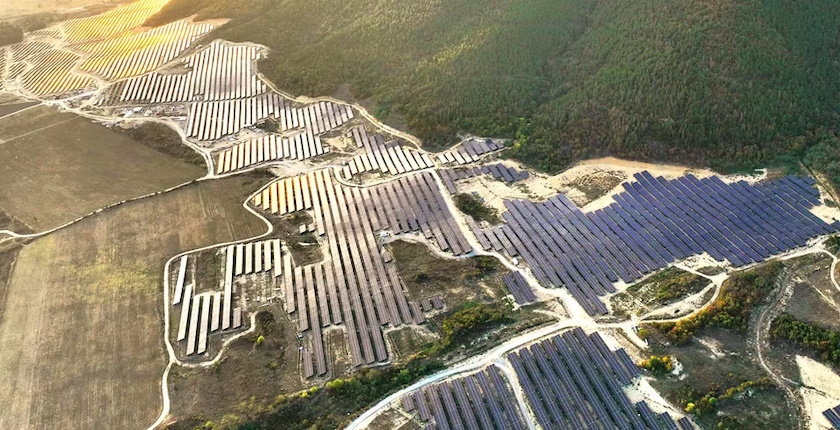
Maglizh solar power plant of 161 MW in Bulgaria enters commercial operation

Maglizh solar park in central Bulgaria has begun commercial operation, according to 360 Energy, which has built it in partnership with the majority shareholders of Eurohold (Evrohold). The facility has 160.5 MW in peak capacity. A project to add batteries is underway.

Bulgaria’s photovoltaic capacity is growing rapidly while the battery storage segment and other energy storage solutions are picking up speed. One of the biggest solar power plants, Maglizh, has just entered regular operation, 360 Energy said.

The company built the facility in parthership with the majority shareholders of Eurohold (Evrohold). Their project firm is called Belozem Solar Park 2. The project has overcome complex issues from permitting to environmental protection.

Maglizh spans 127 hectares at the foot of Mt. Stara planina in central Bulgaria. It has 160.5 MW in peak capacity.

The partners have built the grid connection facilities and handed them over to ESO

The facility cost EUR 100 million to build, according to earlier updates, of which the grid segment amounted to more than EUR 10 million. The connection facilities belong to Electricity System Operator (ESO), the country’s transmission system operator.

Bulgarian-German company Sunotec was the main contractor, under a turnkey deal. It also manufactured the metal structures for the solar panels.

Green Solar Energy was responsible for two overhead power lines and the reconstruction of another one and a substation. The companies partly covered the investment with a syndicated loan. They obtained it from UniCredit Bulbank Raiffeisen Bank International and United Bulgarian Bank Postbank (Eurobank Bulgaria).

Colocated BESS system to be completed in March

The PV plant in the municipality of Maglizh is on municipal land grade 9 and 10, the lowest levels on the agricultural scale. The project firm obtained the rights for 30 years and paid a one-off fee.

Eurohold’s subsidiary Electrohold is responsible for the sale of electricity, according to 360 Energy.

The solar park consists of Jinko Solar’s panels. The company revealed it would soon be complemented by a battery energy storage system (BESS). It expects to complete it in March.

ESCO Bulgaria is the contractor for the BESS of 80 MWh, made of Huawei batteries, the statement adds.

Biodiversity preservation efforts

After already passing environmental procedures, the investors detected a habitat of the protected European ground squirrel (Spermophilus citellus), also called European souslik. They introduced special measures including the exemption of an area of more than five hectares.

In 2023, the same partnership has commissioned Verila, Bulgaria’s biggest solar power plant at the time. The project firm is called Belozem Solar Park 3.

Post Views:51
September 19, 2025
by AEA in News

Slovenia’s Novo Mesto makes important step on path to energy independence

The Municipality of Novo Mesto has made an important step toward becoming the first major local authority in Slovenia to achieve energy independence.

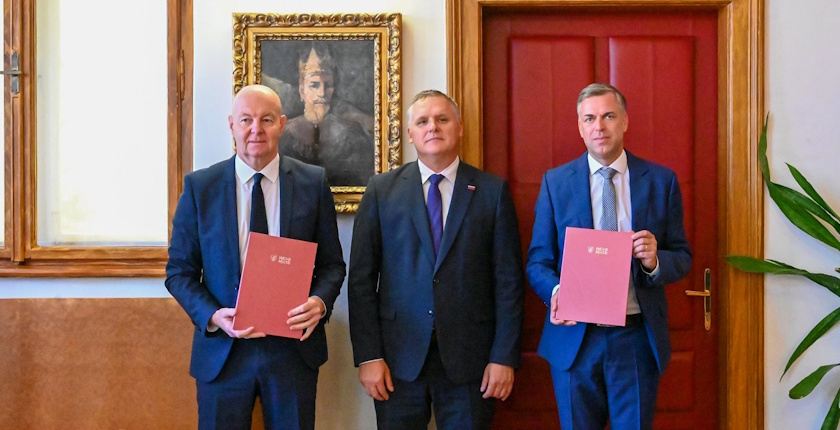
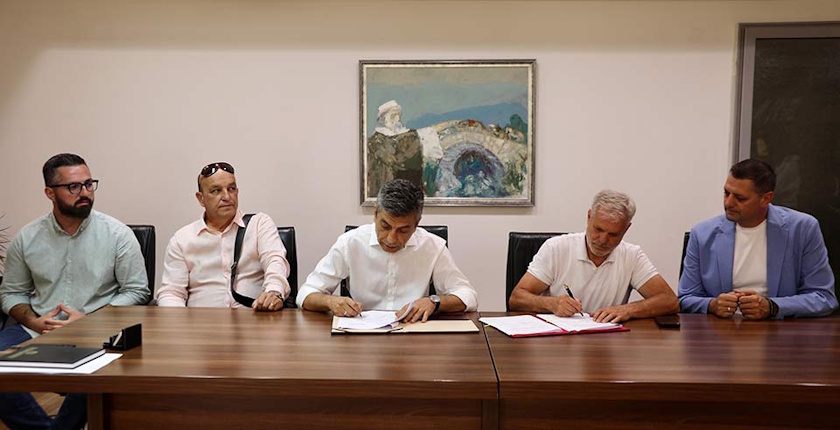
In the presence of Minister of the Environment, Climate and Energy Bojan Kumer, Mayor of Novo Mesto Gregor Macedoni and President of the Management Board of Petrol Sašo Berger signed an agreement on the construction of solar power plants on municipal land and structures.

The Municipality of Novo Mesto estimated that the new photovoltaic units would get it to a nearly 80% energy self-sufficiency.

The Ministry of the Environment, Climate, and Energy supported the project with co-financing of EUR 882,000 from the European Union’s Recovery and Resilience Facility. The total cost of the project is EUR 1.1 million. The municipality secured support from the ministry and Petrol is covering the remainder.

The collaboration will be implemented as a public-private partnership

Within the public-private partnership (PPP), Petrol will build ten new solar power plants and will also operate them.

Mayor Gregor Macedoni explained that the new investment will include the construction of solar power plants at the Portoval sports center, primary schools Stopiče, Otočec, Bršljin, Dragotin Kete, and Brusnice, as well as kindergartens Pedenjped, Ostržek, Ciciban, and Videk.

The municipality also plans to install a community solar power plant on the old CEROD landfill and additional ones on the remaining municipal facilities and parking canopies.

Total production in the municipality would be 2.5 GWh annually

“This year, we have already installed six solar power plants, and together with four facilities from 2010 and planned additional capacities, the total production in our municipality will reach 2.5 GWh per year,” Macedoni stated.

According to the mayor, the goal remains clear – to achieve complete self-sufficiency of the municipality with electricity from renewable sources

Minister Bojan Kumer underlined that the signing demonstrates that the path set by the ministry, more than three years ago, was the right one.

The projects, in his words, are primarily beneficial for the citizens. “Together, we will all be better prepared for future energy challenges,” Kumer stated.

According to him, the municipality has become a good example, and it will continue on the same path.

Post Views:29
September 19, 2025
by AEA in News

North Macedonia adopts Law on Energy Efficiency

North Macedonia’s new Law on Energy Efficiency brings a long-term strategy for the reconstruction of buildings and the obligation to set up solar collectors on public buildings. It envisages financial support for investments in solar panels, geothermal systems and smart technologies.

The Assembly of North Macedonia adopted the Law on Energy Efficiency at its last session. The new legal framework, aligned with European standards, will directly contribute to lowering bills for citizens and businesses, a cleaner environment and the creation of new green jobs, the Ministry of Energy, Mining and Minerals said.

The law is a substantial step forward in reducing energy consumption, integrating renewable sources and reducing greenhouse gas emissions, the statement reads. It will bring the country closer to fulfilling European climate goals and to a green transition, the ministry added.

The new legislation introduces the European Union’s principle “energy efficiency first,” according to the announcement. One of the novelties is a long-term strategy for the reconstruction of residential, public and commercial buildings.

At least 3% of public buildings must be reconstructed every year

The law mandates tripling energy savings in the public sector. At least 3% of public buildings must be reconstructed every year. In the construction or reconstruction of schools, kindergartens and public institutions, it will be obligatory to install solar collectors.

New measures include financial support for investments in solar panels, geothermal systems and smart technologies. The ministry said the law brings high standards in public procurement, digital transparency and professionalization of energy audits. Energy performance certificates will be included in the real estate cadastre.

The Law on Energy Efficiency is part of the package of reform laws that lay the foundation for a stable, sustainable and competitive energy sector – with energy security, better quality of life for citizens and accelerated accession to the European Union, the ministry underscored.

Of note, public calls are ongoing for households in energy poverty, for free inverter air conditioners and financial aid.

Post Views:33
September 19, 2025
by AEA in News

Murat Çinar appointed as new CEO of DRI

New Chief Executive Officer of DRI Murat Çinar is taking office on September 3, replacing Ivan Geliukh.

A change at the helm of DRI is consolidating its position in the European renewables market, particularly in its core markets of Croatia, Italy, Poland, and Romania, according to the company’s new announcement. It said it has appointed of Murat Çinar as its new CEO, effective from September 3. DRI is the renewables arm of Ukraine-based DTEK in the European Union.

Çinar succeeds Ivan Geliukh, under whose leadership the company’s business strategy and organisational structure were updated, the management team was strengthened, and the business model was refined with a strong focus on sustainable growth, profitability, and operational efficiency, the company added.

“I am pleased to announce the appointment of Murat Çinar as the new Chief Executive Officer of DRI and extend my best wishes as he takes on this important role. Murat will play a key role in strengthening DRI and reinforcing its position as an active contributor to Europe’s energy transition. I would also like to express my gratitude to Ivan for his contribution in refining DRI’s strategy and creating a resilient business. I look forward to working with Ivan as he takes on new responsibilities within the wider DTEK Group,” said DRI’s Chairman of the Supervisory Board Maxim Timchenko.

Çinar to oversee next stage of development for DRI

With over 25 years of leadership experience in the telecom and technology sectors, Murat Çinar has held senior roles across more than 10 international markets, including Sweden, Turkey, Ukraine, and Qatar.

“Drawing on my experience in growth strategies, M&A, and change management, I look forward to leading DRI through the next stage of its development – executing our strategy to be an active player in Europe’s renewable energy market. I believe DRI has a key role to play in supporting European countries to achieve important decarbonisation targets and I’m excited to work with the DRI team to make these goals a reality, Çinar stated.

The new CEO served in Ericsson, Lifecell, Vega Telecom and Korek Telecom

He began his career in Ericsson (1999-2010), leading large-scale network deployments and operations in multiple countries. Çinar later served as chief technology officer of Lifecell (2011-2015) in Ukraine, where he was responsible for overseeing major infrastructure investments and network expansion strategies.

In 2015, he was appointed CEO of Vega Telecom Group, part of DTEK’s parent SCM Group. Çinar has led organisational transformation, improved profitability, and completed the company’s sale to Vodafone Ukraine, his biography shows. In 2021, he joined Korek Telecom as the chief transformation officer and in 2022 assumed the role of CEO, driving strategic growth and operational excellence for 12 million customers.

Four core markets

DRI is dedicated to accelerating the energy transition in Central, Eastern and Southern Europe. The company’s mission is to work in underserved markets in Europe to achieve their net zero goals through the creation of a portfolio of renewable energy and battery storage across Croatia, Italy, Poland and Romania.

It has established a portfolio of onshore wind, solar and battery projects, and has three operational projects in Romania: two solar parks and one wind farm, which was the first in the country in one decade. DRI is an Amsterdam-headquartered renewables developer and operator with local offices in Zagreb, Rome, Warsaw and Bucharest.

Founded in 2021, DRI is a subsidiary of the DTEK Group. The parent company is the largest private investor in Ukraine’s energy sector, with 55,000 employees and over EUR 12 billion of capital invested since 2005.

Its businesses generate electricity at wind, solar and thermal power plants; distribute and supply power to end consumers; extract natural gas and coal; trade energy resources on Ukrainian and foreign markets; and provide domestic and commercial energy services. DTEK Group is 100% owned by SCM Holdings. The ultimate beneficiary and sole shareholder is Rinat Akhmetov, a businessman and philanthropist.

Post Views:30
September 18, 2025
by AEA in News

RES Croatia to Brussels: Renewables have no future in Croatia

RES Croatia, together with SolarPower Europe and WindEurope, has sent a letter to the European Commission to raise concerns about the crisis in Croatia’s renewable energy sector.

The three associations emphasized that for several years, 60 projects for investments in solar, wind, geothermal, and batteries have been blocked, and that if nothing is done, many of them would soon be abandoned.

Without urgent deblocking of renewable energy projects, Croatia will lose investments, increase fossil fuel imports, which already exceed 25%, and miss the European Union’s and national target of at least 42.5% of energy consumption coming from renewables by 2030, according to Renewable Energy Sources of Croatia (RES Croatia), SolarPower Europe and WindEurope.

The national organization warned that the government is gradually phasing out subsidies for electricity prices for citizens and entrepreneurs. At the same time, the development of renewable energy sources as the only sustainable solution for lower bills and lowering imports is at a complete standstill, it added.

Projects with a total capacity of 3.5 GW and investments of EUR 3 billion are blocked

Croatia is currently subject to infringement proceedings due to delays in implementing the European Union’s RED II and RED III directive. They aren’t just a piece of paper, but a mechanism to ensure energy security and independence, which is of strategic interest for Croatia and its citizens, RES Croatia underscored.

The organizations are urging the European Commission to use its tools to demand from the government to determine the grid connection fee, but at EUR 0 per kWh, open up the balancing market for renewable energy producers, and integrate battery energy storage systems (BESS) and electrification into national planning.

Currently, 60 projects for solar power plants, wind farms, geothermal power plants, and batteries with a total capacity of 3.5 GW and investments of EUR 3 billion are blocked, according to the letter, accompanied by an annex.

The domestic industry is unable to sign long-term PPAs

For these projects, the state has already charged EUR 25 million through energy approvals— the first in a series of documents that requires payment to the state, which, due to the blockage, are beginning to expire at the end of this year.

Organizations stressed that these projects are permanently losing the paid money, while local communities are losing significant revenues that would have been allocated to them from the implementation of renewable energy projects.

They also drew attention to the domestic industry’s inability to sign long-term power purchase agreements (PPAs) with renewable energy producers, securing more favorable market conditions and thereby increasing its competitiveness in European and global markets.

Of note, the European Commission advised Croatia in June to speed up the installation of renewable energy capacities.

If nothing is done, projects of as much as 2.5 GW overall will be abandoned as early as next week

The associations pointed out that the development of new projects larger than 10 MW has stalled since 2022 because the Croatian Energy Regulatory Agency (HERA) has not set a transmission network connection fee for renewable power plants.

Instead, they added, Croatia’s transmission system operator (TSO) HOPS is trying to shift the costs of network modernization – planned over ten years ago and not related to new projects – to new renewable energy projects.

The minister of economy said in March that the upcoming connection fee would be EUR 0 per kW

It is increasing the project cost by 30% to 40%, making them unprofitable, RES Croatia said.

Such a model for financing the network is not from European practice, because 80% of member states rely on EU funds and their national budgets, rather than on producers.

They also recalled that the minister of economy announced in March that a connection fee would be set at EUR 0 per kW and that developers would be offered flexible contracts to encourage investment in battery storage. But that promise has not yet been fulfilled.

The three organizations warn that if nothing is done, projects of up to 2.5 GW altogether would be abandoned as early as next week after HOPS’s decision,. It means companies would withdraw from the Croatian market and lose millions in investments that would have permanently lowered energy prices in the country, RES Croatia claimed.

The balancing market is not functional

An additional problem is the non-functional balancing market, according to the letter.

HEP Proizvodnja, a subsidiary of state-owned utility Hrvatska Elektroprivreda (HEP), is the dominant provider of balancing services, and often the only one. HOPS is legally obliged to ensure market-based procurement of these services, yet it is itself a wholly owned subsidiary of HEP.

It creates an obvious conflict of interest and undermines market competition, the signatories underlined.

“Despite the demonstrated technical ability of solar and wind power plants to provide balancing services, HOPS doesn’t allow these plants to participate in balancing markets. As a result, HOPS frequently activates extremely expensive balancing resources, often at maximum regulated prices even during hours of high renewable generation and positive market prices,” the letter reads.

Croatia has no serious electrification plan

The organizations pointed out that such pricing constitutes a clear violation of the EU principle that balancing services must reflect only the actual costs incurred by the TSO.

They also stressed that Croatia lacks a concrete electrification plan. In 2022, renewable energy accounted for only 2.4% of final energy consumption in transport, with electricity from renewables contributing just 0.2%.

The target for renewable electricity in transport by 2030 is only 5.8%, reflecting limited ambition compared to the EU ambitions, according to the letter.

Electrification of railways could significantly reduce emissions and accelerate the transition, however, it remains an untapped potential, the signatories organizations noted.

Post Views:27
September 18, 2025
by AEA in News

North Macedonia kicks off project to replace taxis with electric vehicles

North Macedonia plans to subsidize the purchase of 200 electric vehicles for taxi drivers to improve urban transportation and reduce air pollution.

The country’s first move toward electrifying public transportation was announced last year by Prime Minister Hristijan Mickoski, who said 100-120 electric buses would be purchased.

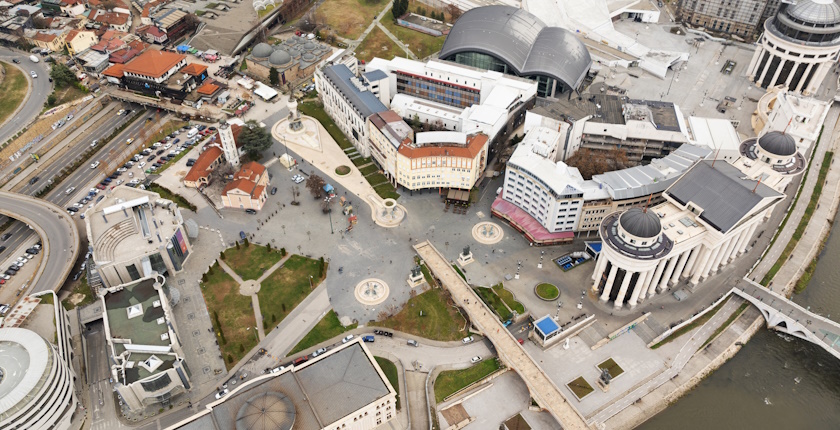
Now, in Skopje, the Ministry of Environment and Spatial Planning and an association of cab drivers have presented a project to subsidize the first 200 electric vehicles for them, as part of efforts for cleaner, quieter, and more efficient urban transportation for the citizens of Skopje and the entire country.

The two sides signed a memorandum of cooperation.

The average price of electric cars in the program would be EUR 28,000

Of note, Skopje is one of the cities with the most polluted air in the world.

According to Izet Mexhiti, First Deputy Prime Minister and Minister of Environment and Spatial Planning, the project represents a concrete and important step toward transforming urban transportation. He added it is part of the strategy to fight air pollution and improve the quality of life in urban areas.

Photo: Ministry of Environment and Spatial Planning

The ministry and the union presented an electric vehicle that meets high environmental standards – without polluting emissions or noise, and with high energy efficiency. Mexhiti stressed that such vehicles would, in several phases, replace the current diesel, petrol, or natural gas vehicles, bringing significant benefits to citizens, taxi drivers, and the environment.

The average price of the said electric cars is EUR 28,000, putting a total cost for 200 vehicles at about EUR 5.6 million. The ministry’s subsidy will be 15% or around EUR 840,000 in total.

There will be a significant reduction in noise pollution

Mexhiti asserted that the replacement of cabs would result in a reduction of more than 2,700 tons of CO2 emissions annually, an effect equivalent to planting over 120,000 trees. He claimed urban noise would be substantially decreased, especially in residential areas.

The official recalled that his ministry has launched a car-sharing system in Skopje with the first 100 electric vehicles and a public system for electric scooters and bicycles in several cities.

In cooperation with the European Union, through the EU for Clean Air program, six electric buses were donated to the City of Skopje, capacities to monitor air pollution have been increased, and tens of thousands of seedlings have been planted across the country, Mexhiti added.

According to Abdullah Rushiti, the president of the union, the greatest benefit of the project is the clean air for the citizens. Three to four thousand taxi drivers operate in Skopje every day, which adds significantly to pollution, he pointed out.

Post Views:56
September 18, 2025
by AEA in News

EU opens energy, environment cluster in accession talks with Albania

Albania officially started negotiations with the European Union on the so-called cluster 4, encompassing the green agenda and sustainable connectivity. It is joining Montenegro and Serbia, which haven’t yet closed any of the four chapters in the group: transport policy, energy, trans-European networks, and environment and climate change.

The Council of the EU held an accession conference with Albania and declared the opening of formal talks on cluster 4.

“Enlargement is at the top of our priorities as a geopolitical necessity for the EU. I am happy that we took a next step today with Albania. This is another clear proof of the country’s path towards European integration. I look forward to holding more meetings in the coming months with Albania and with other candidate countries to move forward the EU’s enlargement,” said Minister for European affairs of Denmark Marie Bjerre, who led the European Union’s delegation. Her country is currently holding the six-month presidency of the Council of the EU.

Rama: Our challenge is to reinvent ourselves

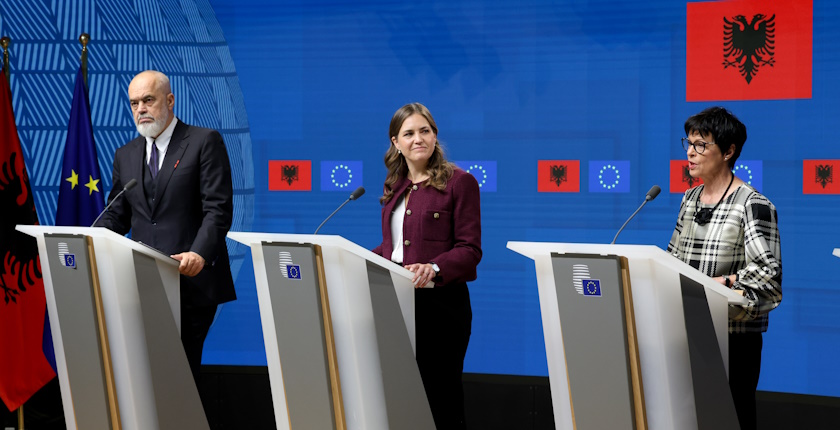
Prime Minister Edi Rama and his team represented Albania at the event, in which European Commissioner for Enlargement Marta Kos participated as well.

“Today we opened another cluster, it’s, as a matter of fact, five clusters in 11 months. In my understanding, it’s a record. And we are looking forward to opening the last cluster before this year ends… Environment is today a really pressing issue, and demands are challenging even for member states to keep the standards and to protect the standards. So, our challenge is to reinvent ourselves,” Rama said at a press conference with the two EU officials.

No chapters from cluster 4 closed yet in Western Balkans

The chapters in cluster 4, on the green agenda and sustainable connectivity, are transport policy (14), energy (15), trans-European networks (21) and environment and climate change (27). The trans-European networks comprise Trans-European Networks for Energy (TEN-E), Trans-European Networks for Transport (TEN-T) and Trans-European Networks for Telecommunications (eTEN).

As for the rest of the Western Balkans, Montenegro opened the first three in 2015 and the remaining one in 2018. It started its accession talks in 2012. The EU grouped 33 chapters into six clusters in 2020, while 34 and 35 are separate.

Albania is third in the region to open cluster 4

Serbia, which started negotiations in 2014, launched cluster 4 in late 2021. Notably, neither closed any chapters in the group. Montenegro closed seven in total, compared to just two on Serbia’s list.

Albania opened accession negotiations in 2022, as did North Macedonia. The former didn’t close any chapters yet and the latter didn’t even open a single one. Bosnia and Herzegovina is a candidate but it still didn’t start negotiations. Kosovo* is only a potential candidate.

EU urging tangible progress against environmental crimes

Among other points in its common position regarding the talks being launched, the EU urged Albania to accelerate renewable energy deployment by completing the necessary rules and regulations on permitting. The negotiators from the administration in Brussels said the Electricity Integration Package (EIP) needs to be fully implemented as well.

Albania has to align with EU acquis on environmental crimes and make tangible progress, especially against wildlife crimes, deterioration of habitats, illegal shipment or dumping of waste, pollution crimes and illegal trading in hazardous substances, the document reads.

Post Views:36
* This designation is without prejudice to positions onstatus and is in line with UNSCR 1244/99 and the ICJ Opinion on the Kosovo declaration of independence.
  • 1
  • …
  • 56
  • 57
  • 58
  • 59
  • 60
  • …
  • 140

AEA – Albania Energy Association is a industry association dedicated to representing the interests of Albanian and West Balkan for energy producers and consumers. AEA works to advance the development and adoption of sustainable energy solutions in Albania and the Western Balkans, supporting the region’s transition toward a cleaner, more secure, and more competitive energy future. AEA is registered by decision of the Court of Tirana, DECISION NO. 3032, (VAT:L11827451K).

[email protected]

Address
Blv Zogu 1
Tirana
1057
ALBANIA

LinkedIn  |  Facebook
Events
May 25, 2022 Connecting Green Hydrogen Europe 2022
May 25, 2022 Energy Week Western Balkans 2022
Copyright © Albania Energy Association