AEA-Albania Energy Association
  • Main
  • About Us
  • Services
  • Sectors
  • News
  • EventsEvents
  • PublicationPublication
  • Contact Us
AEA-Albania Energy Association
  • Main
  • About Us
  • Services
  • Sectors
  • News
  • EventsEvents
  • PublicationPublication
  • Contact Us
AEA-Albania Energy Association
  • Home Page
  • About Us
  • Sectors
  • Our Services
  • News
  • Contact Us
December 2, 2025
by AEA in News

Romania to take control of Lukoil’s assets

Romania wants to take control of Lukoil’s operations to prevent an imminent freeze from the sanctions imposed by the United States. Bulgaria is already putting the Russian company’s refinery, the largest in the Balkans, under a trusteeship. Serbia announced that similar measures have been proposed to exempt Gazprom-owned NIS and its refinery, the only one in the country, from the sanctions.

Minister of Energy of Romania Bogdan Ivan seems to have endorsed neighboring Bulgaria’s approach to the issue of US sanctions against Lukoil. He said the government has to take control of the Russian company’s operations, Profit.ro reported.

The minister didn’t clarify whether it would be a temporary trusteeship. But President Nicușor Dan, who took the helm half a year ago, said there is an option for Romania to assume control for a limited period.

“We protect Romania’s energy security and firmly enforce international sanctions targeting Lukoil. My colleagues in the Ministry of Energy continue to work, together with all relevant authorities, on creating legislation that will ensure, on the one hand, full compliance with the sanctions regime established by the United States, and on the other hand, the continuity of Petrotel Ploiești’s refining activities, as well as the placement of petroleum products, without jeopardizing the supply of the national fuel market,” Ivan stated.

Minister Ivan turns more hawkish regarding sanctions against Russia

The minister claimed he would not request an extension of the November 21 deadline from the US. “Moreover, I will support the replication and uniform application of the sanctions initiated by the US throughout the European Union,” he stressed.

It marks a shift from the stance that the ministry expressed late last month, saying that the EU needs to adopt a position before Romania decides to move. Notably, Ivan held talks on November 8 in Washington with senior US officials, the article notes.

Ivan held talks on November 8 in Washington with senior US officials

“Romania must take control of the company to guarantee the full implementation of international measures, to protect the jobs of the 5,000 employees and to ensure the stability and security of the national energy system,” Ivan said.

However, the Petrotel Lukoil refinery had 542 employees on average in 2023 and another 203 worked at the company’s gas stations. Altogether, its six firms have a total payroll of under nine hundred, the article notes.

Germany placed Rosneft under state administration in 2022.

Bulgaria, Serbia struggling to keep Russian-owned refineries in operation

Nationalization could backfire because of property rights, though imposing state management is also a complicated matter. Romania earlier signaled that nationalization would be the last option.

Bulgaria has urgently adopted a law facilitating a takeover of Lukoil’s refinery in Burgas, the largest in the region. The state administrator would be authorized to sell it. It is unclear whether the measure could postpone or prevent the sanctions.

President Rumen Radev refused to sign the law and returned it to the National Assembly. It would “undermine the legal order” through “indirect nationalization” and expose public finances to a high risk, he warned.

Oil refiner and service stations operator NIS in Serbia is already under US sanctions. Russian state-owned Gazprom holds a majority stake in the company through two subsidiaries.

Serbian Minister of Mining and Energy Dubravka Đedović Handanović said yesterday that the “Russian owners” sent a request to the US Office of Foreign Assets Control (OFAC) to renew the company’s license due to “negotiations with a third party.”

The government in Belgrade has supported the request, she added. The Russian side is prepared to cede control and influence over NIS to a third party, Đedović Handanović revealed.

According to media speculations, one of the candidates is Hungary-based MOL, given that the country managed to obtain a one-year exemption from the US for Russian oil and gas.

Lukoil is operating in Serbia as well, where it has a chain of fuel stations.

Post Views:21
December 2, 2025
by AEA in News

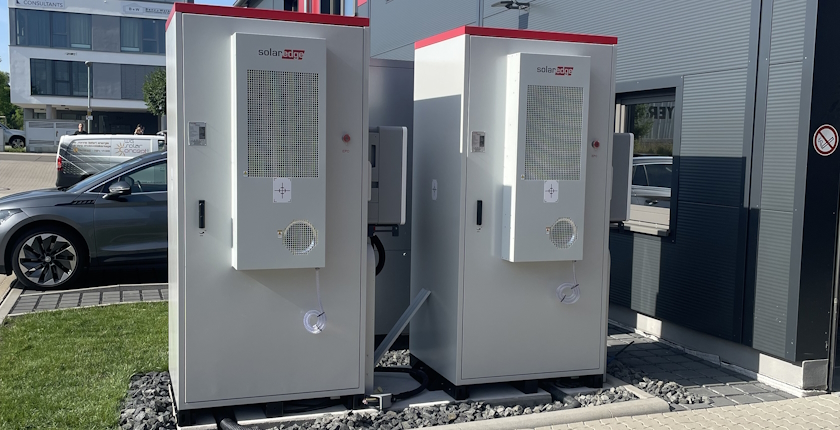
Revolutionising retail: power of real-time energy visibility with SolarEdge ONE for C&I

As retail evolves, supermarkets are under pressure to boost efficiency and sustainability. The key enabler of this transformation is SolarEdge ONE for C&I – a comprehensive platform that delivers real-time energy visibility and management for commercial and industrial (C&I) environments.

SolarEdge ONE for C&I integrates advanced solar PV, storage, and energy analytics, providing retailers with a unified “single pane of glass” to monitor, control, and optimize energy flows across their entire estate. This platform enables supermarkets to harness solar energy during peak hours, store excess power, and intelligently manage consumption, reducing reliance on the grid and lowering operational costs.

With the rise of electric vehicles and increasing electrification, supermarkets face growing energy demands. SolarEdge ONE for C&I addresses this by combining real-time data from solar panels, refrigeration, lighting, HVAC, and EV chargers. The result is a holistic view of energy usage, allowing retailers to identify inefficiencies, prevent asset failures, and take targeted actions to reduce waste and costs.

CSS-OD WG Solar Germany

Millions of sensor readings in real time

A standout feature of SolarEdge ONE for C&I is its edge-based computing, capable of processing millions of sensor readings in real time. This empowers retailers to visualize and analyze data instantly, even across hundreds of stores, warehouses, and logistics centers. The platform’s scalability means that even large retail chains can centralize energy management, ensuring consistent performance and rapid response to anomalies.

The financial benefits are significant: retailers using SolarEdge ONE for C&I have reported substantial reductions in energy costs – such as a 4.5% drop in lighting expenses – translating to millions in annual savings. The system also supports flexible energy pricing strategies, enabling retailers to shift consumption based on tariff changes, avoid penalties, and even participate in energy trading or arbitrage.

SolarEdge ONE Controller for C&I

SolarEdge ONE for C&I sets retailers on path to future

By leveraging SolarEdge ONE for C&I, supermarkets are not only meeting their sustainability goals but also gaining a competitive edge in a dynamic energy market. The platform’s advanced analytics and automation prepare retailers for the future, allowing them to optimize energy use, comply with carbon reduction targets, and unlock new revenue streams.

In summary, SolarEdge ONE for C&I is transforming retail energy management. Its real-time visibility, intelligent controls, and scalable architecture empower supermarkets to operate more efficiently, sustainably, and profitably – setting a new standard for the industry.

Find out more: SolarEdge ONE for C&I: optimizing all energy assets | SolarEdge

Post Views:20
December 2, 2025
by AEA in News

Germany gets applications for 661 GWh of BESS projects

Grid operators in Germany received requests for the connection of large battery energy storage systems with an operational power totaling 400 GW and capacity of 661 GWh overall. It is 174 times greater than the current capability of all the batteries in the country, and 206 times more than their capacity, respectively.

The Federal Network Agency, the national regulatory authority also known as Bundesnetzagentur or BNetzA, has for the first time published data on the applications for battery storage projects.

Germany has increased its total BESS capacity by 50% last year. The vast majority of the capacity is in households. In July, the category accounted for 11.5 GW out of 14.5 GW in overall operational power, the data showed.

Now BNetzA announced that in 2024, a total of 9,710 connection requests for BESS on the medium and higher voltage levels were submitted to the grid operators. They don’t include home storage systems.

Currently, 921 large-scale batteries are in operation in Germany

The applications have a combined planned operational power of approximately 400 GW and a storage capacity of around 661 GWh, according to the agency’s data.

Currently, 921 large-scale batteries are in operation. They have approximately 2.3 GW altogether and a storage capacity of about 3.2 GWh.

In 2024, grid operators issued approximately 3,800 connection commitments for applications submitted in 2024 and previous years, BNetzA underlined.

Germany is a hotspot for BESS optimization and offtake

The 3,800 applications are for a combined operational power of about 25 GW and a storage capacity of about 46 GWh, data showed.

The agency recalled that the connection commitments are an obligation only for the grid operator. It means not all applications have to be implemented, BNetzA pointed out.

Germany’s solar power plants have a total capacity of 112 GW.

The BESS dealmaking landscape in Europe has evolved dramatically over the past four to five years, according to Pexapark’s analysis. Germany and Netherlands have emerged as hotspots for optimization and offtake, after Great Britain’s convincing lead for several years.

In the first five months of 2025 alone, 11 BESS deals were announced in Germany, totaling 540 MWh.

Post Views:22
December 2, 2025
by AEA in News

Energy communities reduce power bills for members, improve electricity market

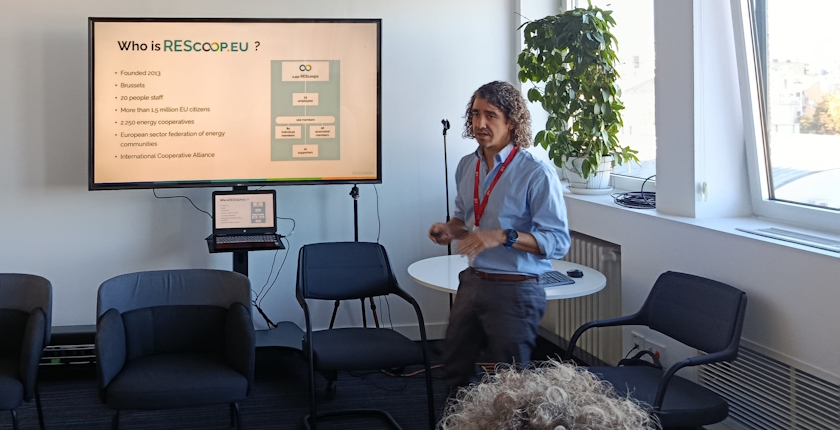
Citizen energy communities make the energy system greener and benefit society at a local level, Josh Roberts from European federation of energy communities REScoop said in his presentation, organized in Belgrade by Deutsche Gesellschaft für Internationale Zusammenarbeit (GIZ) GmbH. It is a form of association that also lowers costs for households, institutions and small firms and entrepreneurs, and contributes to the deployment of progressive technologies. Furthermore, it is a framework for democratic control.

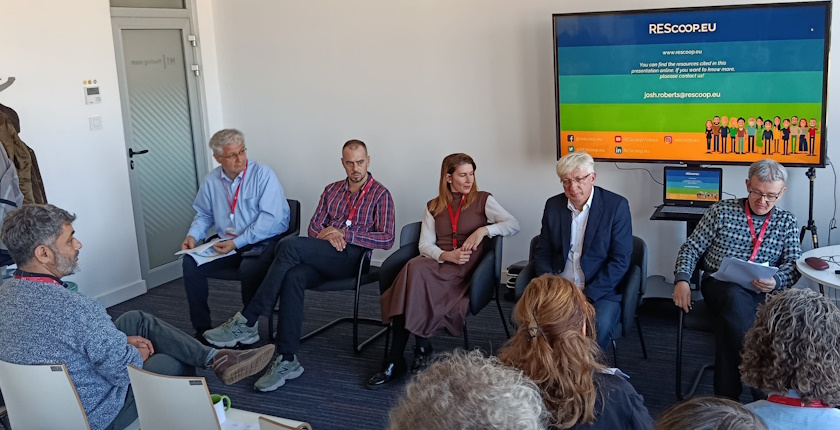
The event included developers from the emerging segment of energy communities and cooperatives in Serbia. They outlined the current initiatives and pointed to challenges regarding market entry, financing and policies.

The establishment and operation of energy communities is arranged through the European Union’s latest legislation, as well as in Serbia and other Western Balkan countries, but they are not a new concept. For instance, such entities still accounted for almost half of wind power output in Denmark in late 1990s, according to Senior Policy Advisor Josh Roberts from REScoop, the European federation of energy communities and cooperatives.

Speaking at a gathering that GIZ organized in Belgrade he pointed to the benefits for citizens, small firms and entrepreneurs and for institutions from setting up or joining energy communities. Initiatives in Serbia were also presented, and their progress in the same field, and the event included dialogue on the necessary technical solutions for connecting to the distribution grid.

Brussels-based REScoop was founded in 2013. In its membership are organizations from 22 European countries. They include Serbian energy cooperative Elektropionir. It gained the most ground regarding association and the implementation of projects.

One coal town has put up signpost for energy communities in Slovenia

Among other examples, Roberts highlighted Slovenia’s first energy community with a rooftop solar power plant for joint use. The facility is on the roof of an elementary school. The project involves aid for people living in energy poverty and it is free to join the group.

It is in the town of Hrastnik in a former coal industry area. The participants already lowered their power bills by 30%, and the gains will be even greater when they pay off the loan, Roberts said.

There are more than 1,600 energy communities in Austria

The representative of the REScoop federation stressed that municipalities in the Belgian region of Wallonia have succeeded in obtaining the right for citizens to participate in investments in green energy projects. It resulted in the foundation of a range of energy communities.

Roberts especially commended Austria’s legal framework with regard to enabling citizens to participate. The country hosts more than 1,600 energy communities.

Udruzivanje energetske zajednice smanjuje troskove trziste elektricne energije Dzos Roberts Josh REScoop GIZ

Energy community eases grid operator’s job

Energy communities are envisaged to return the invested funds to society at the local level. Subsidies are especially favorable for that, Roberts explained. Income is directed to education, infrastructure and aid against energy poverty.

The essence is that the community controls the distribution of the proceeds. In addition, grid operators can communicate more easily with one entity than with a hundred prosumers, Roberts underscored. Prosumers – or buyers-consumers, as they are formally called in Serbia, generate electricity for their own needs.

Pooling together enables providing services in the market, where energy communities can supply and store energy as well as conduct energy efficiency services, among other activities.

It means an entity of such type can ease the evening grid load, in moments of the highest demand, using energy from its batteries. That way, price peak shaving is achieved.

Registration process must be separate from defining activity

As for the procedure, Roberts said registration needs to be only for acknowledgement, rather than for approving specific activities.

“It’s about acknowledging the legal form and it’s about checking about how that legal form ensures compliance with the eligibility criteria. We have found very complex registration procedures. This does not work. It needs to be simple,” he stressed.

There are many activities that energy communities can undertake and they need to be able to enter them gradually, without complex procedures for licenses and permits

Conversely, in some jurisdictions there are simplified ways to get a supplier license. It enables an energy community to enter the activity gradually, instead of having to fulfill the requirements for all segments, even without having a comprehensive business model, the members or a business case, Roberts said.

He mentioned at the same time that one of the basic ideas is promoting inclusiveness.

“It’s already hard to set up an energy community, but it’s even harder to involve members who may have a hard time paying their bills, or have a lot less disposable income. So we found that the best models at the moment are for energy communities either to front the membership fees or for local authorities to pay for this upfront. And in energy sharing, we’re seeing more and more of energy donated to vulnerable households,” he stated.

Energy cooperatives helping improve rural areas from which people are leaving

Energy communities are giving people an opportunity for climate action and to contribute to their community, Roberts said. He added that such projects improve the area where they are conducted, stressing that it is especially important for rural areas from which many people are leaving.

A key point is that they enable participants to control their costs, production, consumption and energy sharing.

 The main challenge in Serbia is how to obtain a grid connection, alongside the matter of accessibility of incentives and loans

Importantly, energy communities are linked to the tradition of cooperatives, for which Serbia used to be known, but there is still much left to do around the legal framework.

There was word at the said gathering with representatives of institutions about the complexity of adjusting the electricity network to the production’s decentralization, as well as about the possibility to streamline the procedure for the establishment of energy communities and their operation.

Serbia is yet to address the accessibility of subsidies and financing, while currently the main issue is how to get grid connection approvals.

Energetsko zadrugarstvo smanjuje troskove trziste elektricne energije GIZ

Enterprise, association or cooperative

The speakers and other participants in the event agreed that the electricity market isn’t complete without energy communities, while that they modernize and democratize it.

When it comes to Serbian regulations, such legal entities have the right to conduct aggregation, but they need a license for it. Notably, aggregators have balancing responsibility, so they need to cover the deviations from the forecasted output.

Energy communities were introduced in the latest version of the Law on Energy. When they become regular in practice, the framework will need to be adjusted gradually to the situation. Citizens, firms and municipal authorities establish energy communities as enterprises, associations or cooperatives.

The bottom line is to enable citizens to take part in the clean energy transition and achieve local environmental, economic and social benefits, as opposed to prioritizing profits. It implies collective ownership, democratic control and reinvestment into the community with the goal of reducing energy poverty and promote energy independence.

The basic technical requirement for members is to have a smart electricity meter.

Elektropionir pioneering agrisolar in Serbia

The event’s organizers gathered the people who achieved the first steps in Serbia – from the Sunčani krovovi (Sunny Roofs) energy cooperative, created in 2019, to Platform for Energy Transition, which participated in uniting three residential buildings in Niš, which have a joint solar power plant and electric vehicle chargers. It is one of the first six prosumers in Serbia in the category of homeowner associations.

The Elektropionir energy cooperative managed through crowdfunding to install two cooperative-owned rooftop solar power systems on the territory of the City of Pirot, on the buildings of a local community council and a cultural center. As part of the Solarna Stara project, on Mt. Stara planina, the two villages receive the income from the sale of surplus electricity.

Srem is set to become the main region in Serbia for community energy

Next, the same organization built the first agrisolar power plant in Serbia. The 20 kV facility is at an organic farm, Organela, near the city of Valjevo.

Another recent undertaking is a rooftop photovoltaic unit on a school in the town of Ruma, envisaged to be the basis for an energy community. In the same area, Elektropionir is working on the installation of several prosumer power plants on house roofs and on aggregating them, inspired by the enthusiasm and the solar system of its member Nenad Maričić.

Owners and neighbors can jointly invest and they will be able to become an energy community and share energy among themselves.

Center for Sustainable Development to integrate string of energy systems of various technologies

Near Ruma, which is in the Srem (Syrmia) region, the City of Sremska Mitrovica and Regional Development Agency Srem have launched a major project. It is for the establishment of renewable energy communities (RECs), which are essentially a subset of citizen energy communities (CECs).

The local authority provided land for research and development. It is next to the regional waste landfill and a wastewater treatment plant. The plan is that the Center for Sustainable Development builds and integrates a string of energy systems.

They would include combined heat and power (CHP) production – cogeneration – from biomass, small wind turbines and a PV plant. The project also involves heat pumps and a storage facility assembled from old batteries.

There would be a facility running on biogas from the landfill within the center, and a magnet electric generator. Residents of the adjacent village of Jarak would be able to join the energy community.

Belgrade Energy Community is focused on equity, solidarity

Another group emerging in community energy is Belgrade Energy Community. It intends to apply a model of collective self-consumption in an urban area, with a focus on trust, equity and solidarity.

Its idea is to enable people to generate, share and use green energy. The plan is to map roofs and consumption and set up the first pilot installations.

According to the Belgrade Energy Community, it will donate 5% of the output to households affected by energy poverty. It consists of a cooperative, a civil society organization, two small enterprises, several prosumers and citizens.

Post Views:32
December 2, 2025
by AEA in News

3rd Conference on Advancing Renewable Investments – guarantees of origin could drive Europe’s green energy integration

As CBAM nears implementation, the Ljubljana conference highlighted market tools and partnerships to accelerate clean energy integration with the European Union, the Energy Community Secretariat said. It pointed out that as more renewables capacity is connected to the grid, storage and flexibility solutions would become increasingly vital to enable the sector’s continued growth and integration.

The rollout of national electronic registries for guarantees of origin was recognized as essential to verifying the low-carbon value of regional electricity exports and advancing market-based integration with the EU.

Ministers, regulators, investors, and private sector representatives from across South East and Eastern Europe gathered in Ljubljana for the 3rd Conference on Advancing Renewable Investments, hosted by the Energy Community Secretariat and the Government of Slovenia, to boost renewable investment and advance the region’s shift toward clean, interconnected energy systems.

“Energy Community contracting parties are advancing accelerated integration with the EU’s electricity market – a process that, thanks to the Energy Community framework, with market coupling nearing completion, can be achieved even ahead of full EU membership. Expanding renewables is central to this effort, enabling countries to align with EU policy targets and speed up decarbonisation,” the update reads.

Integration with the EU’s electricity market can be achieved ahead of full membership

The results are tangible, according to the Energy Community Secretariat’s 2025 CBAM Readiness Tracker. Renewable energy excluding large hydropower has increased by more than 50% since 2020 – reaching 5.1 GW, fuelled largely by governmental support schemes.

While it is a notable success, continued progress will depend on the contracting parties’ ability to build on this momentum and mobilize efforts beyond government support to fully meet the ambitious 2030 targets set out in their national energy and climate plans (NECPs) and achieve carbon neutrality by 2050. As more renewables capacity is connected to the grid, storage and flexibility solutions will become increasingly vital to enable the sector’s continued growth and integration, the organizers said.

Uncertanties emerging ahead of CBAM charge introduction

At the same time, as the definitive phase of the EU’s Carbon Border Adjustment Mechanism (CBAM) begins on January 1, uncertainties are emerging for renewable energy investors, the secretariat stressed.

Discussions at the conference highlighted stakeholders’ expectations for the European Commission to clarify CBAM implementation rules, while continuing to rely on the secretariat to raise concerns about potential risks to renewable energy investments arising from unintended CBAM impacts.

As a no-regret pathway, participants discussed measures to accelerate the shift toward market-driven renewable investments, strengthening the sector’s credibility and long-term financial stability. A matchmaking dialogue brought together renewables producers and corporate buyers, reflecting growing private-sector interest in long-term power purchase agreements (PPAs) to boost investment and market confidence.

Lorkowski: GOs turn transparency into trust, trust into investment

Finally, the rollout of national electronic registries for guarantees of origin (GOs) was recognized as essential to verifying the low-carbon value of regional electricity exports and advancing market-based integration with the EU.

“Guarantees of origin are the compass guiding Energy Community markets toward the EU’s clean energy future. They turn transparency into trust, and trust into investment, enabling regional producers to access new markets, attract financing, and build confidence in the energy transition,” said Energy Community Secretariat Director Artur Lorkowski.

Ongoing efforts to establish a mutual recognition framework with the EU are underway, in close coordination with the European Commission and the Association of Issuing Bodies (AIB), to enable cross-border trade in renewable electricity.

Post Views:34
December 2, 2025
by AEA in News

Europe’s energy storage capacity to reach 100 GW this year, more than double by 2030

Energy storage in Europe has been expanding rapidly since 2020, with the total installed capacity in the European Union, the United Kingdom, Norway, and Switzerland set to reach 100 GW by the end of November. Pumped hydro storage has the largest share of the existing capacity, 50.6 GW, followed by batteries, with 44.8 GW of operating power, according to an analysis by LCP Delta and Energy Storage Europe.

All energy storage technologies combined are expected to grow by 115%, to 215 GW, by 2030, expanding at a rate of 20 GW to 25 GW per year, according to the report, titled the European Market Monitor on Energy Storage. On November 1, the cumulative figure stood at 99.3 GW.

Battery storage capacity has seen stronger growth than pumped storage hydropower plants this year, with 4 GW of new utility-scale installations, and is projected to expand to 163 GW by 2030.

Battery storage capability is expected to reach 163 GW by 2030

Of the total 44.8 GW of battery capacity, large-scale systems connected to the grid (front of the meter) account for 17 GW, and systems installed on the customer’s side (behind the meter) for 27.8 GW.

According to the report, 18 million homes have a solar system, and four million have battery storage. Residential battery sales are now stabilizing following the 2022-2023 peak, with recovery expected from 2027, supported by a rebounding PV market, rising electrification of homes and transportation, dynamic tariffs, and new financing models.

Europe has 18 million solar homes and four million homes with batteries

Germany has the largest number of home battery systems, 2.1 million, followed by Italy, with 780,000, the UK, with 280,000, Austria, with 200,000, and Belgium, with 160,000.

Jacopo Tosoni, Head of Policy at Energy Storage Europe, hailed energy storage as the fastest-growing clean technology in Europe, with the potential to become the engine of its competitiveness, according to a press release from the association.

Silvestros Vlachopoulos, Energy Storage Research Lead at LCP Delta, said that reaching the 100 GW energy storage capacity marks a key moment for the industry, setting the stage for an even faster renewable energy growth in the coming years.

LCP Delta and Energy Storage Europe believe the energy storage industry is only just getting started and will continue to make a substantial contribution to Europe’s energy transition, according to a press release from the association.

Post Views:45
December 2, 2025
by AEA in News

EUSEW2026: Focus on clean, secure, competitive Energy Union

The European Sustainable Energy Week (EUSEW), Europe’s largest annual gathering dedicated to renewable energy and energy efficiency, will take place from June 9 to 11, 2026, under the theme ‘A clean, secure and competitive Energy Union’. The 20th edition of EUSEW will be held in a hybrid format, both in Brussels and online. The event will highlight the importance of building a secure, resilient Energy Union while ensuring clean and affordable energy for all.

EUSEW2026 will feature a diverse program of events, including the EUSEW Policy Conference, the EUSEW Awards, the Energy Fair, the seventh edition of the European Youth Energy Day, and Sustainable Energy Days.

The EUSEW Policy Conference will host over 60 engaging and innovative sessions organized by the clean energy community. The European Commission has opened a call for policy session proposals until January 22, inviting industry stakeholders, policymakers, civil society representatives, and academics to contribute their insights and expertise.

EUSEW Awards will be presented in three categories

The EUSEW Awards will recognize outstanding individuals and projects that drive progress in energy efficiency and renewable energy. This year, awards will be presented in three categories: Local Energy Action, Women in Energy, and, for the first time, Small and Medium-sized Enterprises (SMEs) Driving Energy Efficiency. Applications and nominations are open until January 29.

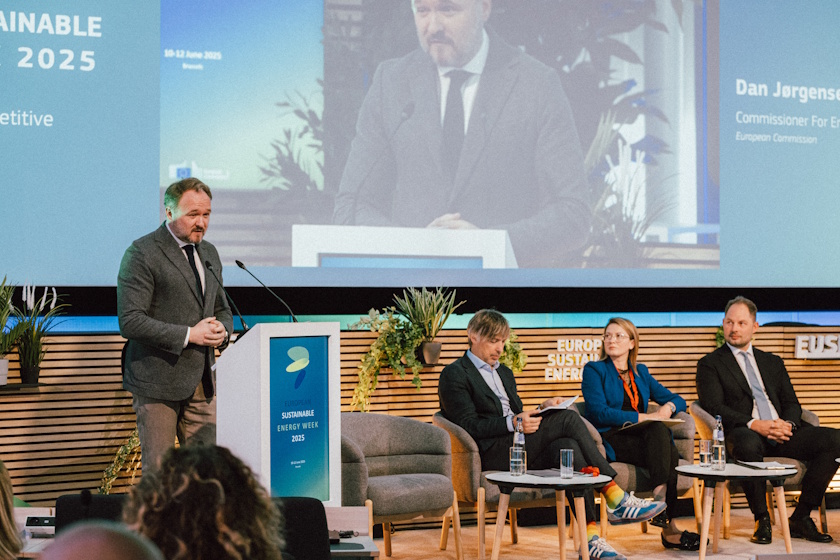
European Commissioner for Energy and Housing Dan Jørgensen at EUSEW 2025

Interested participants can also join an online info session on Wednesday, December 3, from 11:00 to 12:30 CET. Representatives of the European Commission will present this year’s theme, key milestones leading up to and during the conference, and the requirements and selection criteria for policy sessions and EUSEW Awards contributions. A timeline, Q&A, and a recording of the info session will be made available on the EUSEW2026 info page.

Additional opportunities to get involved will be announced in January and February, including options to exhibit at the Energy Fair, become a Young Energy Ambassador, or organize a local Sustainable Energy Day.

Post Views:82
November 17, 2025
by AEA in News

Romania’s Hidroelectrica struck by worst hydrology so far

Romanian state-owned hydropower operator and electricity supplier Hidroelectrica is expecting record-low output this year amid a severe drought. However, it entered the winter season with much higher water reserves than in 2024. The company projected its annual profit at EUR 590 million.

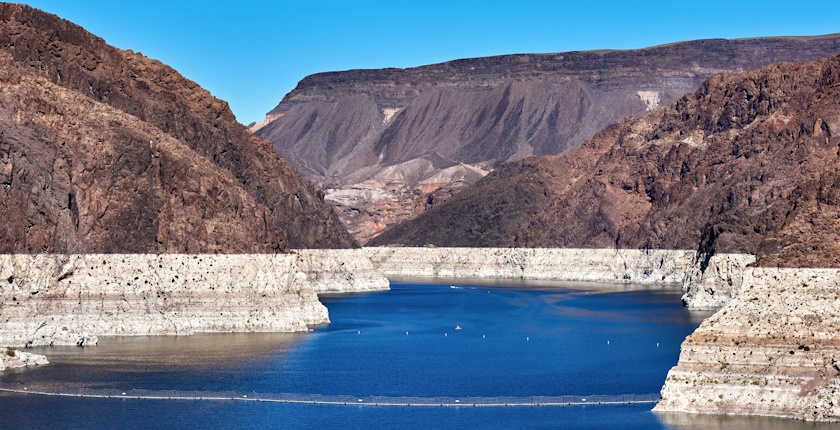
Chronic drought and heat in Southeastern Europe may require countries in the region to invest massively in desalination. Whether a result of climate change or what skeptics consider a cyclical phenomenon, it is heavily impacting the economy and nature.

There is a trend of decreasing water levels in rivers, lakes and reservoirs. It spells uncertainty for hydropower projects, especially for ones on small watercourses, very sensitive to drought. Following extreme declines in water levels in hydropower reservoirs in Bosnia and Herzegovina, Serbia and Greece, Romania’s Hidroelectrica also sounded the alarm.

The state-owned utility and electricity supplier expects record-low production in 2025, just above 11 TWh, President of the Board of Directors Bogdan Nicolae Badea said at the Focus Energetic conference, as quoted by Agerpres.

It is the driest year so far, he stressed. Output is seemingly weaker even than in 2012, when the company fell into insolvency.

Weather effect weakening, but it’s no time to relax

Conversely, Hidroelectrica expects its profit to reach RON 3 billion (EUR 590 million) this year, Badea revealed. Furthermore, he pointed out that water reserves are at around 73%, compared to 64% from the same period of 2024.

The chief executive said he has noticed a pattern change and estimated that the pressure has been reduced in terms of the impact of weather factors on the energy sector. “But I don’t think it’s time to relax. Because, from what I have observed statistically in previous years, even if there were situations in which we had milder winters, in which episodes of extreme cold lasted less, these issues can arise at any time,” he explained.

Free market is only way for correct electricity pricing

Badea said he was “extremely happy” because of the return to the free market, arguing it is the only way for correct pricing. Hidroelectrica recently announced that it has surpassed one million household and non-household customers in the end-consumer supply market.

The company has 188 hydroelectric plants with a total capacity of 6.4 GW, and the Crucea wind farm of 108 MW.

Post Views:115
November 17, 2025
by AEA in News

Desulfurization project at Kakanj thermal power plant to cut emissions by almost 100%

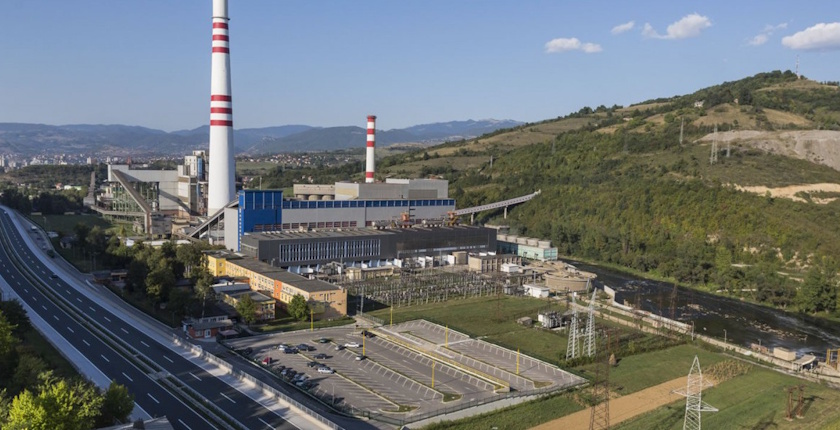
Bosnia and Herzegovina’s state power utility, Elektroprivreda BiH, is implementing a desulfurization project at units 6 and 7 of the Kakanj thermal power plant. The project is expected to reduce sulfur dioxide (SO₂) emissions by about 98.5%.

Currently, SO₂ emissions from the Kakanj plant amount to around 9,000 milligrams per cubic meter (mg/Nm3). With the construction of a joint desulfurization facility for units 6 and 7, the emissions will be cut by nearly 60 times, to below 150 mg/Nm3.

According to Bosnia and Herzegovina’s state power utility, Elektroprivreda BiH (EPBiH), the project is being implemented in line with Energy Community directives, which prohibit the operation of thermal units without desulfurization and denitrification systems after 2027, as well as with the obligations under Bosnia and Herzegovina’s National Emission Reduction Plan (NERP BiH) and EPBiH’s Energy Transition and Decarbonization Strategy until 2050.

Thanks to previously installed hybrid filters, dust emissions have already been reduced to below 10 mg/Nm3, significantly below the limits set by NERP BiH and EU directives, EPBiH said in a statement. The company also plans to build a denitrification facility to ensure nitrogen oxide (NOₓ) emissions are fully compliant with these regulations.

The denitrification project is valued at EUR 28.1 million

“Although these projects will allow the operation of our units beyond January 1, 2028 – ensuring the production of electricity from our own sources and heat for the town of Kakanj – the most important benefit for us as a socially responsible company will be the one we feel directly, in terms of improved quality of life. Cleaner air is a key factor in protecting public health and the environment, and it also strengthens our relationship with the local community. At the same time, we are ensuring continued operation of the coal mines that supply the power plant,” said EPBiH General Director Sanel Buljubašić.

The desulfurization project is worth BAM 126.4 million (EUR 62.8 million) and is financed with EPBiH’s own funds. The denitrification project will require an additional BAM 55 million (EUR 28.1 million). Upon completion, the Kakanj power plant will be fully compliant with EU directives and ready to operate for the next two decades.

Revitalization of Unit 7 underway

The desulfurization work on the 300-meter-tall chimney is expected to be completed by the end of this year. In parallel, EPBiH is carrying out the revitalization of Unit 7 – an investment worth BAM 80 million (EUR 40.9 million). These works should be completed by the end of May 2026, extending the unit’s lifespan by another 15 years.

Due to these activities, the plant’s current production is around 40% of its full capacity, according to the statement.

Preparations for desulfurization at thermal power plant Tuzla

In an effort to secure continued electricity generation from its coal-fired plants beyond the deadline set by the Energy Community, EPBiH is also preparing a desulfurization project for the Tuzla thermal power plant. The investment is estimated at BAM 170 million (EUR 86.9 million). The evaluation of bids for Unit 6 is underway, while tender documentation for units 4 and 5 is being prepared.

EPBiH’s goal is to cut overall emissions by up to 80% by 2050 by modernizing existing units and increasing generation from renewable energy sources, which will help reduce pollution significantly, improve public health, and protect ecosystems.

Sulfur dioxide emissions remain a major challenge for coal power plants across the Western Balkans. According to Comply or Close, a report by environmental organization Bankwatch, these plants emitted six times more SO₂ in 2024 than allowed, while combined PM and NOx emissions once again exceeded legal limits.

In 2024, Bosnia and Herzegovina’s thermal power plants became the region’s top sulfur dioxide polluters for the first time, releasing a total of 212,840 tonnes, or 17.1% more than in 2023 and 11.3 times above the permitted level.

Post Views:189
November 17, 2025
by AEA in News

Maćić: Exempting Serbia from CBAM for electricity would mean disastrously fast decarbonization; carbon tax will also block market coupling with EU

Obtaining an exemption from the European Union’s Carbon Border Adjustment Mechanism (CBAM) for electricity would mean a rapid and unfeasible decarbonization of Serbia’s energy sector, which would be unacceptable for households and businesses alike, according to Ljubo Maćić, special advisor at Serbia’s Economics Institute. This is why Serbia never sought an exemption. He added that the implementation of the carbon border tax will prevent the coupling of electricity markets between Serbia, other Energy Community contracting parties, and the European Union, and discourage investment in renewable energy in the region.

CBAM will apply from January 1, 2026. Although the tax was announced at least five years ago and is set to take effect in less than two months, there are still many unknowns about its implementation and impact, particularly in the electricity sector.

In preparation for its implementation, Serbia has drafted bills to tax greenhouse gas emissions and imports of carbon-intensive products, Ljubo Maćić noted at the Power Plants 2025 conference, organized by the Serbian Society of Thermal Engineers.

The law would allow electricity producers – primarily state-owned power utility Elektroprivreda Srbije (EPS), which will account for about 90% total GHG tax revenues and has the largest decarbonization needs – to receive a tax credit equal to 20% of investment in renewables.

The tax is set at EUR 4 per ton of CO2, which translates to about EUR 100 million annually in EPS’ case, not including the tax credit. The proposed rate is low compared to those in the EU, but many countries outside the bloc began with similar rates to protect the competitiveness of their industries, he said. Serbia’s tax would certainly increase in the coming years, Maćić warned.

The implementation of CBAM should not significantly affect EPS

The bill on the GHG emissions tax has two key shortcomings. First, the tax rate is set only for 2026, rather than for several years ahead. The second is that the tax revenues would not be allocated to a decarbonization fund but to the state budget. Maćić noted that tax revenues would go into the budget, but that the bill envisages the funds to be used for decarbonization. The solution is consistent with the revenue allocation model under the EU Emissions Trading System (EU ETS).

The bill is prudently designed, tailored to the circumstances and context, he said, adding that it would encourage changes in the right direction without jeopardizing energy security and energy prices.

“The implementation of CBAM should not significantly affect EPS, as the company doesn’t have the capacity for larger electricity exports and will likely seek to trade within this region, where the CBAM cost doesn’t apply. However, Serbia’s steel production will be particularly affected by CBAM, and this will be the hardest to address in terms of technology,” said Maćić.

Exemption for electricity

CBAM would reach its full effect over a transitional period from 2026 to 2034, aligned with the gradual rise in the CO2 price under the EU ETS. However, this will apply to all CBAM-covered goods except electricity, which will be subject to a full CBAM rate immediately.

This is why the Energy Community contracting parties were given the option to obtain an exemption for electricity until 2030, but only if they meet six conditions. A critical condition is that a country agrees to charge an emissions price equivalent to that under the EU ETS from 2030, according to Maćić. There is no indication that this doesn’t mean ‘the same price,’ he added.

Maćić explained how that would affect Serbia: The current CO2 price in the EU is EUR 80, but is expected to rise to above EUR 100, or even reach EUR 150, by 2030.

“Assuming that carbon emissions from power plants in Serbia decrease to about 22 million tons in 2030, the annual additional cost for EPS would be EUR 2.2 billion at a carbon price of EUR 100 per ton of CO2 and EUR 3.3 billion at EUR 150 per ton. If these costs were passed on to EPS’ consumers, the price would increase by about EUR 75 per MWh and EUR 110, respectively,” the expert stressed.

Of note, the market power price is currently around EUR 105.

However, not all of these costs can be passed on to end consumers, Maćić added. Households will likely be affected first if, by 2030, their electricity prices do not reach market levels. EPS cannot raise its electricity prices due to emissions costs above the market prices, because customers would switch to other, more competitive suppliers with lower emissions.

The European Commission is not willing to provide financial support for the region’s decarbonization

That is good for consumers, but it has its limits, because the production capacities of these suppliers are still far from sufficient, Maćić explained.

If other power companies in the region with a high coal share were to begin reducing their power generation, energy prices on the power exchanges would rise compared to the rest of the EU. This would result in faster price growth and volatility, in Maćić’s view.

These higher prices would affect power prices for businesses, further eroding their competitiveness, similar to what is already happening in the EU, he added.

Since the country must ensure enough electricity for all consumers, EPS would quickly incur huge financial losses, threatening the company’s operations and, more importantly, the security of the supply in Serbia.

“Such a rapid and costly decarbonization, even if it had begun earlier, would not be possible in Serbia without the ability to replace coal with other stable sources of supply. This is far from realistic, and the very idea of anyone undertaking such a fast and uncertain process is highly questionable,” Maćić stressed.

He underlined that the communication between the Ministry of Mining and Energy and European Commission institutions, the conclusions of the Energy Community Ministerial Council, and the documents within the Berlin Process for the Western Balkans six do not inidcate that the commission is ready to provide financial support for the region’s decarbonization above the level it has promised under the IPA and the Growth Plan, which is insufficient.

Three problems created by CBAM: market coupling will be blocked

According to Maćić, the European Commission has acknowledged that problems with applying CBAM to electricity exist, but has not yet offered solutions. There are three main problems, he added.

First, the existing solutions do not allow for the parallel functioning of CBAM and the coupled electricity markets of the Energy Community’s contracting parties and the EU, the expert claims.

“We have been talking about, preparing, and working on this integration for almost two decades. This, among other things, is one of the most important reasons why the Energy Community was established. CBAM will practically suspend the coupling,” Maćić insisted.

A second issue is that the costs of CBAM on electricity imports into the EU are based on the emissions factor of fossil fuel power plants, regardless of their share in the country’s power generation mix.

Maćić recalled that Serbia and other contracting parties have proposed that the emissions factor be equal to the national emissions factor, which corresponds to the electricity production mix. For Serbia, this factor is currently 1.04, but if the national power mix were taken into account, it would go down to 0.7, making the cost of CBAM about 40% lower, he explained.

All this will certainly affect trade and renewable energy investments in the region

Also, electricity producers in countries that export electricity to the EU cannot use either guarantees of origin or power purchase agreements (PPAs) to reduce the CBAM cost.

The third problem is that it is still unclear how electricity transit costs would be calculated, for example, from Bulgaria to Hungary via Serbia, and who would be required to cover them.

All this will certainly affect trade and renewable energy investments in the region, according to Maćić. This is already happening, and regardless of any potential solutions, the damage will remain, he warned.

Maćić also recalled that in June, similar issues were highlighted by the European Network of Transmission System Operators for Electricity (ENTSO-E), the European Federation of European Traders (EFET), and EUROPEX – Association of European Energy Exchanges.

They also proposed that the application of CBAM to electricity be postponed for at least a year, until solutions are found, he added.

Are there solutions?

A solution exists, according to Maćić, and it could be described as trivial: abolish CBAM for electricity.

He believes it is a legitimate question whether it was justified to introduce CBAM for electricity. The main reason for introducing CBAM is carbon leakage, which is not at all relevant in the case of electricity.

Second, total electricity imports from all Energy Community contracting parties are less than 1% of the EU’s production, and are declining. Ukraine was the only significant exporter, while imports from other countries are negligible.

“Applying CBAM to electricity would bring the EU modest climate and financial effects, while generating unsolvable problems, thwarting good intentions in market integration, and producing financial damage to the contracting parties and even larger damage to EU member states,” the expert asserted.

A less radical solution would be to postpone the implementation of CBAM, not by one but by ten years, to provide the power sector with additional long-term regulatory certainty and a stable business environment, in Maćić’s view.

Not everyone from the region can claim they have done everything they could

However, these issues do not concern the implementation acts, whose final versions are still pending, but for the CBAM regulation itself, whose amendments, as he understands, have already been implemented.

Maćić acknowledges that not everyone in the region can claim to have done everything in their power, but emphasizes that decarbonization ambitions and timelines must be realistic and supported by all necessary resources.

Maćić said he hopes the EU will show more understanding, a sense of reality, and a willingness to support the changes through solidarity. Such support could change the conditions and capacity for implementation, as well as the pace of decarbonization and changes to the energy mix, the expert underlined.

“The Energy Community Secretariat should also, when it comes to climate change, be more enthusiastic than it has been. It should be an advocate for the interests of the contracting parties in Brussels and more independent in its approach to the European Commission’s initiatives toward the contracting parties,” Maćić concluded.

Post Views:76
  • 1
  • …
  • 38
  • 39
  • 40
  • 41
  • 42
  • …
  • 140

AEA – Albania Energy Association is a industry association dedicated to representing the interests of Albanian and West Balkan for energy producers and consumers. AEA works to advance the development and adoption of sustainable energy solutions in Albania and the Western Balkans, supporting the region’s transition toward a cleaner, more secure, and more competitive energy future. AEA is registered by decision of the Court of Tirana, DECISION NO. 3032, (VAT:L11827451K).

[email protected]

Address
Blv Zogu 1
Tirana
1057
ALBANIA

LinkedIn  |  Facebook
Events
May 25, 2022 Connecting Green Hydrogen Europe 2022
May 25, 2022 Energy Week Western Balkans 2022
Copyright © Albania Energy Association