AEA-Albania Energy Association
  • Main
  • About Us
  • Services
  • Sectors
  • News
  • EventsEvents
  • PublicationPublication
  • Contact Us
AEA-Albania Energy Association
  • Main
  • About Us
  • Services
  • Sectors
  • News
  • EventsEvents
  • PublicationPublication
  • Contact Us
AEA-Albania Energy Association
  • Home Page
  • About Us
  • Sectors
  • Our Services
  • News
  • Contact Us
November 17, 2025
by AEA in News

Serbia’s EPS inks EUR 109.7 million deal for Vlasina HPPs revamp

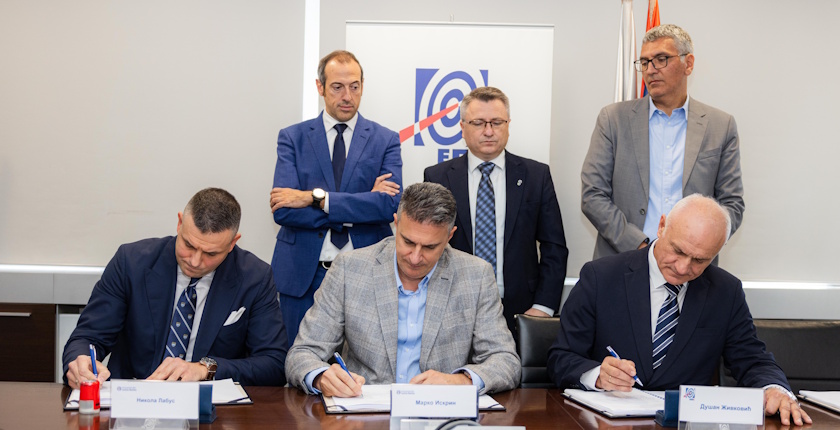
Serbia’s power utility Elektroprivreda Srbije (EPS) signed a contract for the modernization of its Vlasina hydropower plants with Energotehnika – Južna Bačka.

The contract for the reconstruction and modernization of the Vlasina (Vlasinske) hydropower plants (HPPs), with a capacity of 129 MW, was signed by Dušan Živković (sitting first from right), Chief Executive Officer of Elektroprivreda Srbije (EPS), and representatives of Energotehnika Južna Bačka – Marko Iskrin (second from left), Executive Director for Technical Affairs, and Nikola Labus (first from left), Deputy Executive Director for Financial Affairs.

Of note, in mid-July, Hungarian state-owned energy company MVM became the majority owner of Energotehnika – Južna Bačka.

The total value of the project is estimated at EUR 109.7 million. It envisages the reconstruction and modernization of generation units, auxiliary systems, and hydromechanical equipment. The main equipment suppliers are Andritz Hydro and Gamesa Electric, EPS said.

Financing has been secured through a EUR 67 million loan from the European Bank for Reconstruction and Development (EBRD), a EUR 15.4 million grant from the European Union via the Western Balkans Investment Framework (WBIF), and EPS’s own funds in the amount of EUR 27.2 million.

The capacity of the Vlasina HPPs would be increased by 8 MW

“On the day when the Vlasina HPPs celebrate their 70th anniversary, we officially start the project of their modernization. The result would be an increase in the installed capacity by 8 MW and reliable operation for the next three to four decades,” Dušan Živković underlined.

He recalled that the Vlasina HPPs are unique plants in the EPS portfolio. They operate in a cascade system, generating electricity four times one after the other and representing a significant source of peak energy.

The Vlasina HPPs began operating in 1955

According to Milan Aleksić (second from left in back row), advisor to the Minister of Mining and Energy for capital projects, investments are key to securing an electricity supply amid growing demand and the need to rely more on renewable energy sources.

Vlasina started its operations on November 6, 1955, with the commissioning of the first unit at the Vrla 1 hydropower plant.

The system consists of the Vlasina lake – reservoir, four cascade run-of-river hydropower plants, and the Lisina pumping station with the Lisina reservoir. Since the start of operation, the plants have produced more than 17 million GWh.

The signing was also attended by Francesco Corbo (first from left in back row), Regional Head of Energy for the Western Balkans and Croatia at the European Bank for Reconstruction and Development (EBRD).
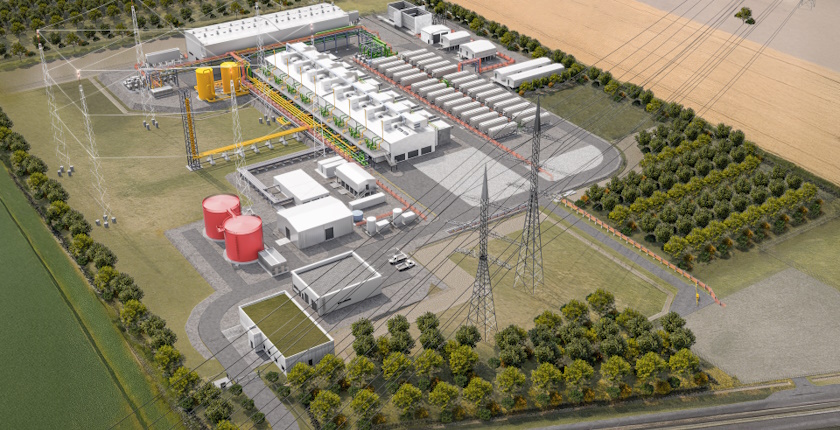
Photo: EPS/Nenad Kostić
Post Views:98
November 10, 2025
by AEA in News

OMV, Masdar to build 140 MW green hydrogen plant in Austria

OMV and Masdar are setting up a joint venture for the development and operation of the fifth-largest electrolyzer plant in Europe. The facility is already under construction in Austria. The UAE-based company would be a minority shareholder, with 49%.

Austrian integrated energy, fuels and chemicals company OMV and Masdar – Abu Dhabi Future Energy Co. signed a binding agreement to establish a joint venture for the financing, construction and operation of the 140 MW green hydrogen electrolyzer plant in Bruck an der Leitha, Austria.

It would be one of Europe’s largest green hydrogen production facilities, marking a major step in OMV’s commitment to decarbonizing its Schwechat refinery, the update adds. Construction of the facility began in September. The companies expect it to become operational in 2027.

OMV to procure electricity, own green hydrogen produced in Bruck an der Leitha

The JV will be majority-owned by OMV, with the clean energy giant from the United Arab Emirates holding 49%. The partnership combines the Austrian company’s integrated fuels and chemicals business and Masdar’s commercial, financial and technical expertise.

The two companies said they would explore opportunities for green hydrogen, e-SAF and synthetic chemicals

OMV, which is already running a 10 MW electrolyzer plant for green hydrogen in Schwechat, will procure the renewable electricity for production and own the green hydrogen produced in the new facility, the announcement reads. Bruck an der Leitha is near the borders with Hungary and Slovakia.

The partnership lays the foundation for strategic collaboration to explore green hydrogen, synthetic sustainable aviation fuels (e-SAF) and synthetic chemicals production in both the UAE and Central and Northern Europe, following the signing of a letter of intent in April. The joint venture would be set up early 2026, conditional on completion of final documentation, shareholders’ approvals and regulatory approvals.

Photo: OMV, Masdar

Hattmannsdorfer: Austria aims to become Europe’s leading hydrogen hub

The binding agreement was signed at the ADIPEC conference and exhibition in Abu Dhabi. The ceremony was held in the presence of UAE’s Minister of Industry and Advanced Technology and Chairman of Masdar Sultan Ahmed Al Jaber, Austria’s Federal Minister of Economy, Energy and Tourism Wolfgang Hattmannsdorfer, Chairman of the Executive Board and Chief Executive Officer of OMV Alfred Stern and CEO of Masdar Mohamed Jameel Al Ramahi.

“We can only secure jobs and prosperity in Austria if we stand firmly for open trade and build successful international partnerships. Together with strategic partnership between OMV and Masdar, we have brought one of the largest direct investments of recent years to Austria. OMV and Masdar are jointly constructing the fifth-largest hydrogen plant in Europe – right here in Austria. This project further strengthens Austria’s leading role in a key technology of the future. Our goal is clear: Austria aims to become Europe’s leading hydrogen hub,” Minister Wolfgang Hattmannsdorfer stated.

By combining Masdar’s global expertise in developing and scaling clean energy projects with OMV’s industrial and technological capabilities, the joint venture will accelerate the decarbonization of hard-to-abate industries, according to Masdar’s CEO Al Ramahi.

Post Views:90
November 10, 2025
by AEA in News

Cement maker Holcim gets EU grant for carbon capture project in Romania

A carbon capture and storage (CCS) project developed by cement maker Holcim Romania has been awarded financing under the European Union’s Innovation Fund. The European Commission has selected 61 cutting-edge net-zero technology projects across the EU to receive a total of EUR 2.9 billion in funding, covering sectors such as oil refining, hydrogen, transportation, chemicals, iron and steel, and the manufacture of components for renewable energy plants and batteries.

Holcim’s project at its plant in Câmpulung, Argeș county, involves capturing CO2 from cement and lime production and storing it underground. The first large-scale onshore CCS project of its kind in Eastern Europe is expected to produce an estimated two million tons of near-zero cement annually from 2032, according to a press release from Holcim.

The project will enable Holcim Romania to produce two million tons of near-zero cement annually

Carbon Hub CPT 01 will use proven carbon capture technology to separate CO2 from flue gases, which will then be compressed and transported for permanent, safe storage underground, the company said.

The Switzerland-based cement producer now has eight large-scale EU-supported carbon capture projects – in Germany, Poland, Belgium, France, Croatia, Greece, and Romania, according to the press release.

Decarbonizing energy-intensive industries across the EU

The European Commission said that the EUR 2.9 billion in grants follow its first call for net-zero technologies (IF24 Call), launched in December 2024, aiming to strengthen the EU’s technological leadership and accelerate the deployment of innovative decarbonization solutions.

The selected projects span 19 industrial sectors in 18 countries, focusing on energy-intensive industries, renewable energy and energy storage, net-zero mobility and buildings, cleantech manufacturing, and industrial carbon management.

The largest number of selected projects is in the cement and oil refining sectors

The largest number of awarded projects is in the refineries sector, with 11, followed by 10 in the cement and lime sector, 6 in the manufacturing of components for renewable energy, and 4 in the manufacturing of components for energy storage.

Other sectors on the list include chemicals, solar, maritime, road transportation, aviation, non-ferrous metals, hydrogen, buildings, construction materials, geothermal energy, and the manufacturing of components for energy-intensive industries.

The 61 selected projects have the potential to cut some 221 million tons of CO2 equivalent over their first decade of operation, supporting the EU’s objective of achieving climate neutrality by 2050, according to a press release from the European Commission.

Post Views:105
November 10, 2025
by AEA in News

Serbia’s power utility EPS adopts Decarbonization Action Plan

Power utility Elektroprivreda Srbije has developed its Decarbonization Action Plan, said Executive Director for Investments and Development Aleksandar Jakovljević.

The Decarbonization Action Plan of Elektroprivreda Srbije (EPS) involves the gradual reduction of electricity production from coal, the construction of pumped storage hydropower plants, and over 20 GW of new capacity from renewable energy sources, Aleksandar Jakovljević explained.

For EPS, the energy transition is not only a challenge but also a great opportunity to improve the company in the process of Serbia’s industrial and technological transformation, in Jakovljević’s view.

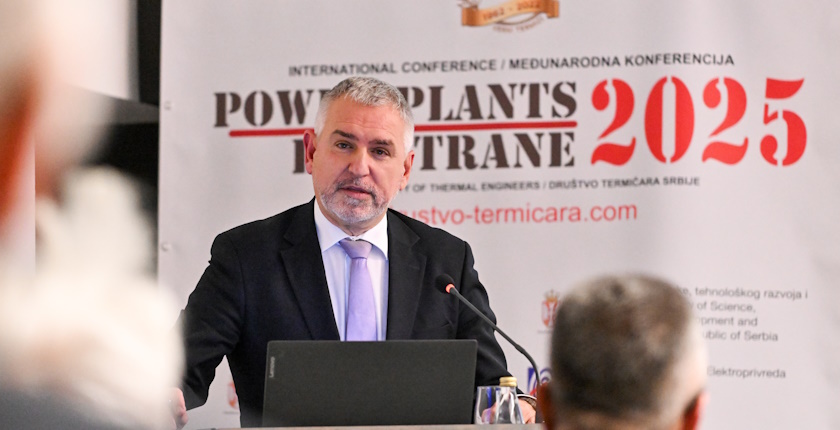
The energy transition isn’t just a matter of adaptation and transformation of one company, but the entire energy sector, the economy, as well as society, he said at the Power Plants 2025 conference, organized by the Society of Thermal Engineers of Serbia.

Jakovljević: It is important to analyze the experiences of other countries that started the energy transition before us

Jakovljević noted that it is important to analyze the experiences of countries that started the energy transition before Serbia, to apply proven solutions and avoid mistakes. However, in his words, it is also necessary to consider the characteristics of Serbia’s power sector.

Photo: EPS/Danilo Mijatović

​The decarbonization of EPS is already underway with various projects, he asserted and added that by the end of the year, the company’s green portfolio would increase by 76 MW.

The 10 MW Petka solar power plant has been completed, and soon the trial operation of EPS’s first wind farm – Kostolac, with a capacity of 66 MW, will kick off.

Jakovljević recalled that the company is preparing to build pumped storage hydropower plant Bistrica, with a capacity of 650 MW, saying it is a key facility for the integration of renewable sources and for energy stability. He added it is also developing photovoltaic projects, including one for 1 GW and a 200 MW battery energy storage system (BESS).

From 2026, every ton of CO2 produced in EPS’s plants will be priced

EPS is developing renewable energy projects at locations near mines and coal power plants, where existing infrastructure can be utilized, and connections to transmission and distribution networks are available, Jakovljević explained.

He noted that Europe has set the climate neutrality goal for 2050, and that Serbia has committed to reducing carbon dioxide emissions by at least 33% and to produce 45% of its electricity from renewable sources by 2030.

From 2026, every ton of CO2 produced in EPS plants will be priced, exposing coal production to additional challenges, Jakovljević stressed.

However, in his words, EPS’s goal remains clear – reliable and sustainable energy for Serbia and a profitable EPS as a secure support for consumers, and energy independence in the future.

Post Views:71
November 8, 2025
by AEA in News

Romania to roll out flexibility market where you get paid to consume less power

Companies and, eventually, households will be able to participate in the Romanian flexibility services market, getting compensated for cutting their electricity use at a time scheduled one day earlier. The aim is to prevent power outages during peak loads in the transmission grid.

The National Energy Regulatory Authority (ANRE) of Romania published a draft regulation that would allow payments to electricity consumers – companies or, in the future, even households – for temporarily reducing their consumption. The mechanism is called the consumption flexibility service. Its purpose is to balance the grid and prevent power outages during peak consumption.

Romania’s transmission system operator Transelectrica would be able to purchase consumption reduction services from market participants: large companies, suppliers and aggregators. They would commit to temporarily limiting energy use.

Demand response also replaces expensive emergency power imports.

Day-ahead market for demand response

Transelectrica will schedule the service through auctions organized a day earlier. Market participants would be able to bid with available consumption capacity reductions and prices.

The proposed regulation requires providers or aggregators to transfer at least half of the revenues to their end customers who contributed to the consumption cut.

Renewable electricity production – especially solar – has increased significantly over the previous years. During the day, Romania sometimes produces more energy than it consumes, but in the evening, when people return home and consumption increases sharply, production no longer covers demand.

The trend is known as the duck curve, per the shape of the daily chart of demand and solar power production. It leads to imbalances and bolsters the risk of grid overload. Through flexibility services, Transelectrica will be able to shave the peaks.

Households to eventually join through their aggregators

In the first stage, the mechanism will involve large consumers such as factories, retail chains, logistics operators and office buildings. They would be able to bid with a minimum of 500 kW. Households could join at some point through so-called flexibility aggregators.

It is also important that demand response decreases balancing costs, which spill over to electricity bills.

The draft regulation is undergoing a public consultation process until December 3. According to the schedule, the flexibility market will be established in the spring.

Post Views:101
November 8, 2025
by AEA in News

Three types of deals emerge in new PPA era – Pexapark

Hybrid power purchase agreements from co-located projects, battery offtake agreements, and stand-alone PPAs are beginning to dominate the renewable energy market, according to Luca Pedretti, Co-Founder & COO of Pexapark.

The power purchase agreement (PPA) market is going through a turbulent period. Two days ago, RE-Source Platform noted that the number of PPAs in Europe had decreased by 60% compared with the same period last year. The figure was consistent with Pexapark’s July report, which stated that the number fell 31% in the first six months of the year.

Over recent months, the analytics and advisory firm has spoken with a number of executives at independent power producers.

“Their message was consistent. The period dominated by straightforward, conventional power purchase agreements (PPAs) is transitioning into a new era,” Luca Pedretti wrote in a piece for Pexapark’s website.

While the initial phase centered on PPAs, the focus now is on more structured deals and the integration of new asset classes, such as battery energy storage systems (BESS), he noted.

Battery offtake agreements can take various forms

One of the models involves hybrid PPAs from co-located projects. Co-location is the deployment of multiple technologies at a single site. Most often, it is wind and solar, or solar with battery energy storage systems.

Previously, this kind of project included pricing based solely on energy delivered, but that has now changed.

Today, it is necessary to evaluate and price the marginal value added by co-location, the interactions between different resources, and the premium associated with reduced curtailment and improved grid capacity utilization, Pedretti wrote.

Battery offtake agreements include tolling contracts, merchant sharing agreements, and capacity-based deals. Valuation and pricing in these deals vary a lot from those used in pure energy agreements.

Stand-alone PPAs are still standing

The third model is the stand-alone PPA. These deals have managed to maintain their share of the market. However, there have been some changes in approach.

The number of “plain vanilla PPAs” has decreased, while transaction price ranges have expanded. In the new circumstances, understanding the impact of negative prices and curtailments on price and value has become crucial.

Additionally, in many markets, the balancing risk is now handled completely differently than it was just 12 months ago, according to Pedretti.

He stressed that the Pexapark Renewable Valuation Framework for PPAs continues to provide a solid foundation.

“However, the importance of the ‘middle part’– understanding risk and projecting future realized prices – has increased substantially,” he noted.

Post Views:43
November 8, 2025
by AEA in News

Green light in Greece for expansion of future photovoltaic, green hydrogen complex

Greece approved the request of a firm developing a project for a giant solar park with a green hydrogen plant to double the electrolyzer capacity. The site is in the vicinity of the village of Mantasia in the Phthiotis regional unit.

The Ministry of Environment and Energy in Athens signed off on a proposed change in the project for a complex that would consist of a photovoltaic plant of a whopping 251.9 MW in peak capacity and a system for the production of green hydrogen, Newmoney reported. Mantasia Energeiaki, the project firm, is controlled by German companies Altus and Yamko Energy and France-based Omnes Capital, according to the article.

They can build a 100 MW green hydrogen unit, instead of the initially planned 50 MW. Altus is a subsidiary of Kraftwerke Mainz-Wiesbaden AG (KMW).

The project developers are planning to produce hydrogen in PEM electrolyzers

The site, Karahasan, is near Mantasia, a village in the municipality of Domokos in the Phthiotis (Fthiotida) regional unit. Most of the area is in the territory of the community of Fyliadonos. The proton exchange membrane (PEM) electrolysis facility would comprise ten units of 10 MW.

Total area envisaged for the project in Central Greece spans ​​427 hectares, of which 1.1 hectares for green hydrogen production. It would be stored in several units of 40 tons overall.

The project includes a 400/33 kV substation, with a capacity of 600 MVA, equivalent to 600 MW, as two similar projects would be connected through it. As for the PV plant, it would have 530 W monocrystalline silicon modules and 48 Sunny Central 4600 UP inverters.

Post Views:112
November 8, 2025
by AEA in News

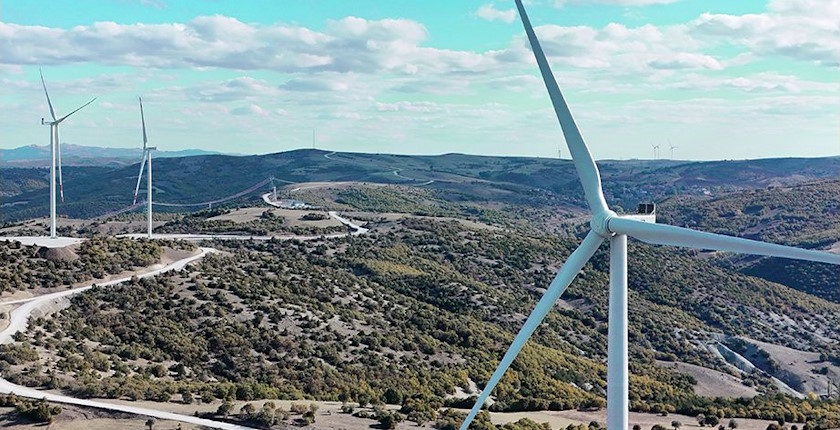
Eksim Energy launches production at its Yozgat wind park in central Turkey

Eksim Energy, which operates one of the biggest solar power plants in Turkey, commissioned the first part of its Yozgat wind farm. The company based in Istanbul has surpassed 1 GW in installed capacity.

Eksim Energy (Enerji) is accelerating its expansion in the green energy sector in Turkey – the company said it has received all permits for the first four turbines at its Yozgat wind farm in Central Anatolia. Now half of the planned 56 MW in capacity is online, less than a year since the start of construction.

The company, part of Eksim Holding and headquartered in Istanbul, revealed that 135 people worked 140,000 hours so far. Yozgat is its ninth wind power plant and thirteenth renewable energy facility, the update reads.

With the commissioning of the four turbines, Eksim Energy’s capacity topped 1 GW.

Just within the past year, the company also completed the expansion of its Gevye wind power plant, added a solar power segment to its Susurluk wind park and built the Viranşehir photovoltaic plant, one of the largest in Turkey.

Eksim Energy almost doubled its capacity since the end of 2024

Notably, Eksim Energy finished last year with only 569 MW, data from the annual MW100 Turkey report showed. The Uzundere hydropower plant accounts for 63 MW. The rest was wind power, making the company sixth in the segment in Turkey in 2024.

In the Gevye district in Sakarya in northwestern Turkey, the utility tripled its wind farm’s capacity to 150.2 MW. The additional investment amounted to EUR 80 million. The entire facility, which generated its first megawatt-hour in 2020, cost EUR 195 million in total.

The Viranşehir PV system in Şanlıurfa in the country’s southeast has 191.3 MW in peak capacity. The investment was worth USD 150 million.

“Our next focus will be to accelerate our integrated energy storage investments, in addition to our power plant projects, and to expand hybrid generation, where we combine solar and wind power in suitable locations, Chief Executive Officer Arkın Akbay.

Post Views:71
November 8, 2025
by AEA in News

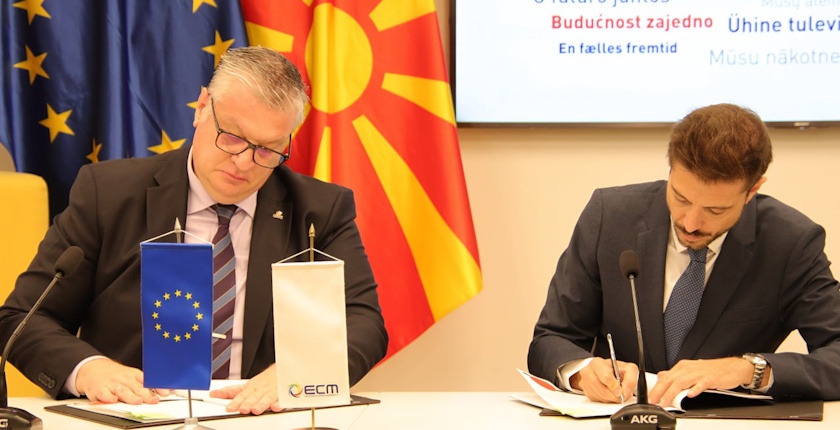
ESM secures EUR 1.5 million grant to accelerate North Macedonia’s energy transition

North Macedonia’s power utility Elektrani na Severna Makedonija has secured a EUR 1.5 million grant to strengthen its capacity and accelerate the energy transition.

Elektrani na Severna Makedonija (ESM) made a major step toward a market-driven green transformation with a grant implementing agreement with Germany’s KfW Development Bank.

The agreement formalizes a EUR 1.5 million technical assistance grant to boost the state-owned utility’s corporate and green transition processes.

The support will strengthen ESM’s institutional and commercial capacities, enable further investments in renewable energy, and prepare the company for integration into the European energy market, according to a social media post by Steffen Hudolin, Head of Cooperation at the European Union’s Delegation to North Macedonia.

Uzunčev: The grant represents a strategic cornerstone for the company’s institutional transformation

The grant is part of a wider EUR 13 million EU programme supporting the market-oriented green transformation of state-owned energy utilities across the Western Balkans and Eastern Neighbourhood, the post reads.

Lazo Uzunčev, EMS General Manager, said that the grant represents a strategic cornerstone for the company’s institutional transformation to a comprehensive, green, and market-oriented enterprise.

Hudolin, Uzunčev, Obrador (photo: ESM)

For ESM, it is a profound commitment to becoming a modern and commercially competitive force within the European energy market, he underlined.

“The funding will be instrumental in bolstering our internal capacities and corporate governance through the financing of critical modeling and strategic planning initiatives,” Uzunčev asserted.

​Hudolin: Accelerating the green transition has never been so close and so possible

According to Steffen Hudolin, accelerating the green transition has never been so close and so possible.

“With the support of the EU and the European Fund for Sustainable Development Plus (EFSD+) guarantees, the country will receive financial means and technical guidance by our partners in KfW to accelerate the transformation and decarbonisation of the energy sector,” he stated.

Pablo Obrador Alvarez, KfW Head of Division Energy and Transport for Southeast Europe and Türkiye, said the energy transition requires fit energy utilities able to cope with challenging conditions.

“With this project, KfW will support ESM’s transformation that will position and help them improve their performance and market readiness,” he added.

Post Views:74
November 8, 2025
by AEA in News

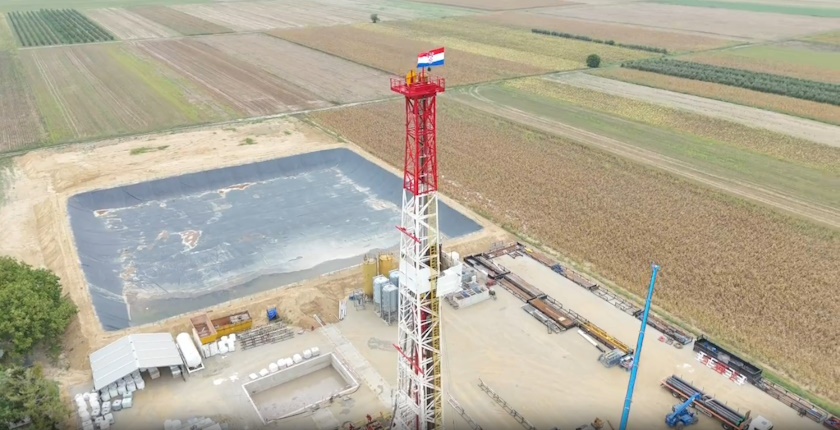
Croatia discovers series of geothermal sources suitable for heating

The results of exploration at the Vinkovci GT-1 well have confirmed the area’s significant geothermal potential, Croatian Hydrocarbon Agency said. Maximum temperature is 131 degrees Celsius.

Vinkovci is the third location in Croatia with positive results, as reservoir temperatures exceeding 100 degrees were earlier confirmed in Velika Gorica and Osijek, Croatian Hydrocarbon Agency revealed. The activities are part of a wider project to develop geothermal potential for district heating for six cities and towns.

“The positive findings of the geothermal exploration in Vinkovci, after Velika Gorica and Osijek, are proof that Croatia has significant geothermal potential and the knowledge to use it. Croatian Hydrocarbon Agency is bringing concrete results through its systematic approach and exploration investment, creating the foundations for further projects for renewable energy sources. Namely, geothermal energy is not only a stable and clean source, but a strategic resource that can contribute to the security of energy supply in Croatia. The results show at the same time that Croatian experts can independently and effectively conduct complex energy projects,” President of the Management Board Marijan Krpan said.

Success at 2,700 meters below ground

Crosco naftni servisi (Crosco Integrated Drilling and Well Services), a member of INA Group, ois conducting the works. At a depth of 2,700 meters in the Vinkovci GT-1 exploratory well, an expert team has measured a maximum temperature, 131 degrees, pointing to the possibility of commercial application of geothermal energy in the heating system.

The location is in Croatia’s northeast, in Slavonia area.

“The exploration in Vinkovci has been conducted in line with the highest technical standards and the project’s planned dynamic. Upon the completion of the exploration at the remaining location, in Zaprešić, Croatian Hydrocarbon Agency plans the development of additional wells at sites with confirmed potential. That way we will establish the production-injection pairs required for a secure and long-term geothermal energy use,” the geothermal energy sector’s Director Martina Tuschl stated.

Opportunity for improving local agriculture

Except for heating, access to heat opens up possibilities for companies. Geothermal potential could be used in agricultural production in the municipality of Jarmine, where the exploratory well is located.

The agency is conducting the project with funding from the National Recovery and Resilience Plan (NRRP or, in Croatian, NPOO), within which EUR 50.8 million was secured for exploration in four locations: in Velika Gorica, Osijek, Vinkovci and Zaprešić.

Works at the Zaprešić GT-1 (ZapGT-1) site are underway.

Post Views:56
  • 1
  • …
  • 40
  • 41
  • 42
  • 43
  • 44
  • …
  • 140

AEA – Albania Energy Association is a industry association dedicated to representing the interests of Albanian and West Balkan for energy producers and consumers. AEA works to advance the development and adoption of sustainable energy solutions in Albania and the Western Balkans, supporting the region’s transition toward a cleaner, more secure, and more competitive energy future. AEA is registered by decision of the Court of Tirana, DECISION NO. 3032, (VAT:L11827451K).

[email protected]

Address
Blv Zogu 1
Tirana
1057
ALBANIA

LinkedIn  |  Facebook
Events
May 25, 2022 Connecting Green Hydrogen Europe 2022
May 25, 2022 Energy Week Western Balkans 2022
Copyright © Albania Energy Association