AEA-Albania Energy Association
  • Main
  • About Us
  • Services
  • Sectors
  • News
  • EventsEvents
  • PublicationPublication
  • Contact Us
AEA-Albania Energy Association
  • Main
  • About Us
  • Services
  • Sectors
  • News
  • EventsEvents
  • PublicationPublication
  • Contact Us
AEA-Albania Energy Association
  • Home Page
  • About Us
  • Sectors
  • Our Services
  • News
  • Contact Us
November 17, 2025
by AEA in News

Slovenia and Italy to upgrade electricity interconnectors

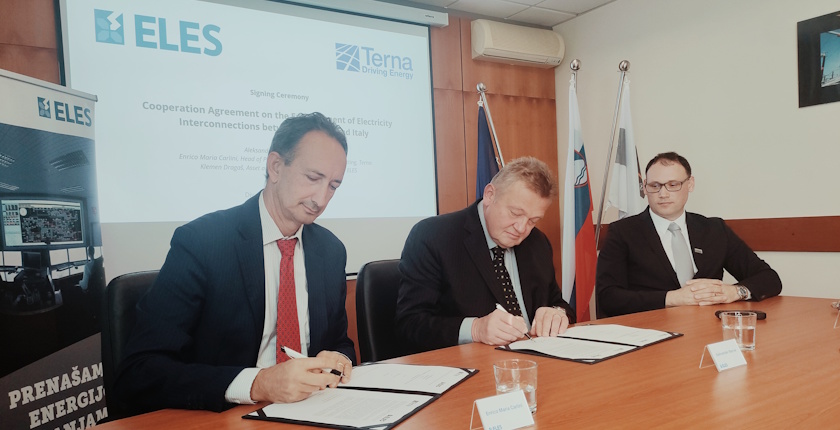
Slovenian transmission and distribution system operator ELES and Italian transmission system operator Terna agreed to upgrade their cross-border electricity network in an investment of EUR 250 million. The project aims to increase the transmission capacity between the two countries by 600 MW, strengthening supply and trade.

After a decade of coordination, ELES and Terna signed an agreement to raise the electricity transmission capacity between Slovenia and Italy by 600 MW or more than 50%. According to ELES, it is an important step in market integration and strengthening the reliability of the interconnected electricity system.

Interconnections between Slovenia and Italy are currently among the most heavily loaded ones in the Slovenian network, the country’s TSO pointed out.

As ELES further explained, with the growth of electricity imports and exports, there is an increasing need to strengthen transmission routes between the two countries. The company expects a rise in electricity imports in the countries gradually phasing out fossil fuel–based production to further increase the demand for cross-border transmission capacity.

The project consists of three upgrades

The project includes three main improvements. On the Slovenian side, the phase-shifting transformer at the Divača substation would be upgraded, alongside adding a third unit, which enables full utilization of the capacity of the 400 kV transmission line between Divača and Redipuglia (Sredipolje). The current transmission capacity, 1,200 megavolt-amperes (MVA), would be lifted to 1,800 MVA.

On the 220 kV transmission line between Divača and Padrice in Italy, low-sag conductors, capable of withstanding higher temperatures will be installed, ELES said. The transmission capacity would be doubled to 700 MVA.

On the Italian side, the existing 220 kV Padriče-Redipuglia connection and the Redipuglia substation are to be upgraded with a new phase-shifting transformer. It is crucial for managing internal power flows, the update reads.

“With an additional 600 MW of cross-border capacity, Slovenia is solidifying its role as a key electricity hub between Central and Southern Europe and as a reliable regional partner. This is a strategic investment in the future, ensuring reliability, resilience, and connectivity of our grid in the decades when electricity will become the main energy currency,” said ELES CEO Aleksander Mervar.

Slovenia’s share of the project is estimated at EUR 90 million

The total value of the project is EUR 250 million, with the Slovenian share estimated at EUR 90 million and the Italian side securing EUR 160 million. Pending all necessary permits and documentation, construction is planned to begin in 2029, and completion is expected by the end of 2031.

ELES announced it would seek European funds to finance the Slovenian side of the investment.

“The agreement not only strengthens the historic partnership between the two transmission system operators but also marks an important step toward developing and implementing innovative solutions that enhance the efficiency of transmission network investments. The agreement encourages system operators to introduce not only capital-intensive projects but also solutions with lower capital requirements that can increase net benefits and investment returns for all electricity system users,” said Enrico Maria Carlini, Head of Power System Planning and Permitting at Terna.
Post Views:78
November 17, 2025
by AEA in News

Germany seeks Bolivia’s lithium as project Jadar in Serbia stalls

Germany is rushing to secure the supply of lithium from Bolivia in talks with the new government, but also to enable domestic mining operations. At the same time, Rio Tinto’s controversial project Jadar in Serbia seems dormant despite nominal support from Brussels and Berlin.

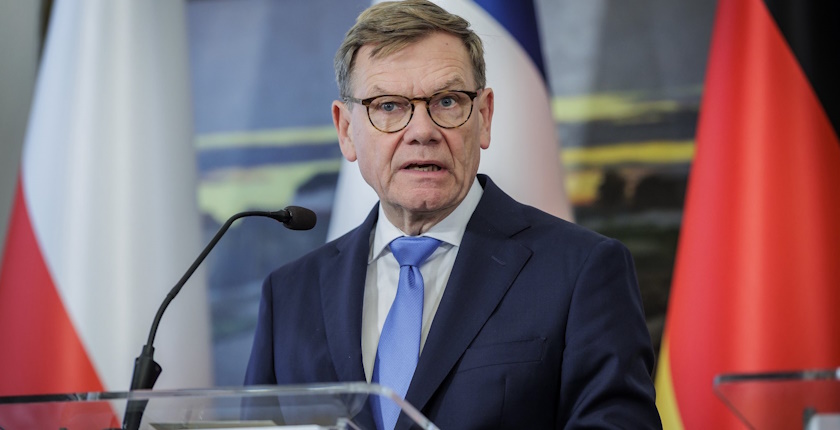
In a statement before his arrival in Bolivia, Germany’s Federal Minister of Foreign Affairs Johann Wadephul didn’t mince words.

“Our potential for cooperation is significant. Bolivia is rich in raw materials, especially lithium, which is indispensable for our energy transition, for electric mobility and for many other sectors in Germany. Bolivia also offers impressive opportunities regarding rare earth elements,” he pointed out.

First in line to speak to Bolivia’s new head of state about lithium

Wadephul noted that he is meeting the Bolivian government under President Rodrigo Paz Pereira on his third day in office “and the first real day of work.” The top German diplomat is inviting the Latin American country to join the upcoming agreement between the European Union and the Southern Common Market (Mercosur).

The race for lithium and rare earths is intensifying amid China’s dominance and the tariff wars that United States President Donald Trump’s administration is pursuing.

In Wadephul’s view, Bolivians want a way out of the ongoing economic crisis. “President Paz has announced plans to open Bolivia to the world. Bolivia has our full support in this,” he added.

Bolivia holds the world’s largest lithium reserves. Before Paz came to power, left-wing governments limited access to foreign miners for two decades.

Rio Tinto’s investment in Serbia slows down amid political turmoil

Germany has signaled that it would use its raw materials fund for support to domestic lithium mining projects that are under review. Notably, there are also investments in the extraction of the alkali metal from underground and geothermal waters, which means without excavation.

The foreign policy chief is in Bolivia at a time when Rio Tinto’s lithium mining project Jadar in western Serbia seems dormant, despite winning a strategic investment status from the European Union five months ago.

Germany was earlier very interested in the endeavor. Former Chancellor Olaf Scholz attended the signing of a memorandum of understanding in July 2024 between the EU and Serbia for a strategic partnership in sustainable raw materials, battery value chains and electric vehicles,

Serbia expects the environmental impact assessment for project Jadar to be completed in a year and a half

Speaker of the National Assembly of Serbia Ana Brnabić recently said the environmental impact assessment for project Jadar would “probably” be completed in 18 months. The next step would be to decide whether to go ahead with it.

Importantly, Serbia is in political turmoil for a whole year now.

Lithium ion batteries are necessary for electric cars, smartphones and laptops, as well as for solar and wind power plants. The demand is steadily growing.

Balkan Green Energy News has published a chronological overview of the key events in the development of the Jadar project since 2001, when Rio Tinto arrived in Serbia.

Rare earths are found in consumer goods such as smartphones and television screens, as well as in electric car engines, semiconductors and turbines.

Post Views:151
November 17, 2025
by AEA in News

Project pipeline in Greece for CO2 capture, storage nearing EUR 4 billion

Carbon capture and storage projects worth as much as EUR 3.6 billion are under development in Greece. Energean’s subsidiary EnEarth has launched a tender for drilling two wells for the Prinos site under the Aegean Sea, while DESFA won a EUR 169 million EU grant for a carbon dioxide liquefaction unit.

Investors in Greece are counting on demand from the domestic industry for carbon capture and storage (CCS), so that it can remain competitive with regard to carbon dioxide emission costs. Euro2day calculated that the project pipeline is worth up to EUR 3.6 billion as the endeavors are clearing major milestones.

The time for drilling in Prinos is approaching. EnEarth, a subsidiary of Energean, is working on the establishment of the storage facility offshore Kavala. Earlier this month it launched a tender for drilling two wells.

The Prinos project is valued at EUR 1.2 billion

Works are scheduled to begin in the first half of next year. The project is worth EUR 1.2 billion, of which the firm secured EUR 270 million in funding from the European Union. It is waiting for environmental terms (AEPO) from the Ministry of Environment and Energy, as well as for the storage permit.

Notably, a draft law covering the sector is reportedly complete.

DESFA seeks contractor to drill two wells in Prinos

Another step ahead was achieved with a project for a pipeline that would transport CO2 from energy-intensive industrial facilities to a liquefaction system in Revithoussa. The endeavor is called ApolloCO2. Greece’s National Natural Gas System Operator (DESFA) won EUR 169.3 million through the European Union’s Innovation Fund for the terminal.

The system would include temporary storage and transport by ships to permanent storage. The budget amounts to EUR 700 million in the first phase, with another EUR 60 million envisaged for an expansion.

ApolloCO2 is in a group of 61 projects in the Innovation Fund’s latest round for net zero technology, worth EUR 2.9 billion in total.

DESFA is working on the investment with Ecolog, a subsidiary of GasLog.

EU funding three major carbon capture projects that would be connected with Prinos storage site

AppoloCO2 would bring CO2 from three capture facilities also funded by the EU. There is a possibility to involve overseas customers as well.

Cement maker Heracles, part of Holcim Group, is developing the Olympus project worth EUR 400 million in Milaki, Aliveri. Its competitor Titan has a EUR 584 million endeavor underway in Kamari, Boeotia (Viotia). It is called Ifestos.

DESFA has applied for EUR 30 million from Connecting Europe Facility for the CO2 pipeline

Motor Oil Hellas aims to install a unit in its Agioi Theodoroi oil refinery costing EUR 300 million to EUR 400 million. The project is called IRIS – Innovative low caRbon hydrogen and methanol productIon by large Scale carbon capture. It is for the construction and operation of a CCUS and e-methanol production system that would cut the refinery’s CO2 emissions by a quarter. CCUS stands for carbon capture, utilization and storage.

DESFA is seeking EUR 30 million from the EU’s Connecting Europe Facility (CEF) for a 35-kilometer CO2 pipeline. The first part would go from Ifestos and branch out to HELLENiQ Energy’s oil refinery in Elefsina (Eleusis). In subsequent phases, pipelines would reach Heracles’ Olympus, Metlen’s aluminum complex in Aspra Spitia, Thisvi in Boeotia (for GEK Terna’s Heron and HELLENiQ’s subsidiary Elpedison), and eventually Motor Oil’s IRIS.

As capacities grow, larger ships would be required to lower transportation costs. According to the article, three such vessels would cost EUR 240 million overall.

Post Views:70
November 17, 2025
by AEA in News

Trial phase starts for 134 MW solar power plant in Romania

One of the biggest photovoltaic plants in Romania is due to begin commercial operation by the end of the year. China Huadian Corp., which bought 49%, is reportedly acquiring the entire 134 MW facility.

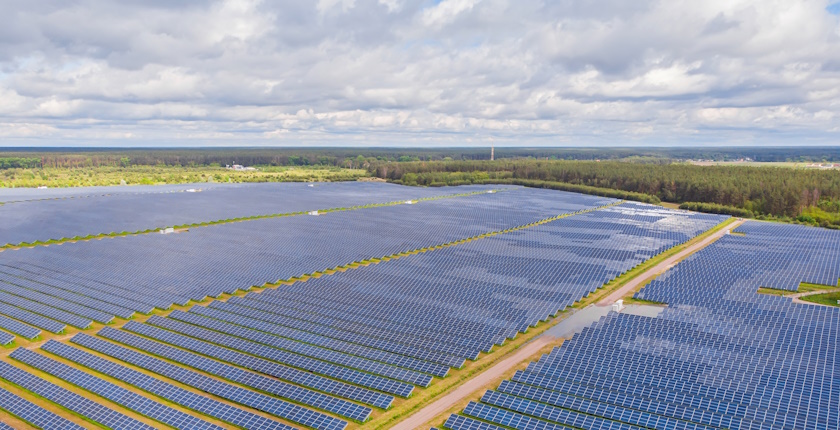
Project firm Grup Blauer București has completed the construction of a solar park in southern Romania. The 134 MW facility in the Studina commune in Olt county is one of the biggest in the country. Profit.ro reported that it is entering trial production.

The deadline for starting commercial operation is the end of 2025. Grup Blauer București is one of four developers of photovoltaic projects that China Huadian Corp. is taking over, the article adds. The conglomerate has 178 GW in operation, generating more than 640 TWh per year.

Grup Blauer București was owned until late 2022 by a group of investors including Bogdan Stelea. The Romanian national soccer team’s former goalkeeper held 21.4%. They sold the firm to CWP Europe.

Founders of Grup Blauer București included Romanian goalkeeper Bogdan Stelea

Next, in the summer of 2023, a subsidiary of Renalfa IPP bought a 50% stake. The news website found that China Huadian Hong Kong Co. currently controls 49% of the solar park. Its parent, established in 2002, is among the five largest state-owned Chinese companies.

Of note, China Huadian was interested in building a coal power plant in Romania, until the country decided to phase out the solid fossil fuel. The company also participated in a tender in 2015 for the revived Tarnița-Lăpuștești pumped storage hydropower project.

Romania’s largest solar park, Rătești, has 155 MW in peak capacity, but there several projects for larger capacities, too.

Post Views:106
November 17, 2025
by AEA in News

US torpedoes Lukoil’s deal to sell its overseas business to Gunvor

The United States Department of the Treasury said it wouldn’t allow Gunvor to “operate and profit,” calling it “the Kremlin’s puppet.” The energy trader responded that the statement is “fundamentally misinformed and false,” but it withdrew its proposal for Lukoil’s international assets.

For a minute it seemed that a potential fuel crisis in Europe – especially in the southeast – was going to be prevented. Russian oil company Lukoil, which came under US sanctions, agreed late last month to sell its foreign assets to Gunvor Group. The proposed transaction could have become a model for the resolution of sanctions against Serbia-based NIS, which operates the country’s only refinery and the largest chain of service stations.

A comprehensive reshuffling of Russian energy business in Europe apparently depends on peace negotiations for Ukraine with the administration of President Donald Trump. Amid a lack of progress, it scuttled the acquisition.

“President Trump has been clear that the war must end immediately. As long as Putin continues the senseless killings, the Kremlin’s puppet, Gunvor, will never get a license to operate and profit,” the Treasury Department said.

Gunvor scraps Lukoil deal after US threat

Gunvor, one of the largest energy traders in the world, is registered in Cyprus. The company, which operates out of Geneva and several other offices, gave up on the deal.

“The Treasury Department statement about Gunvor is fundamentally misinformed and false. Gunvor is and has always been open and transparent about its ownership and business, and has for more than a decade actively distanced itself from Russia, stopped trading in line with sanctions, sold off Russian assets, and publicly condemned the war in Ukraine. We welcome the opportunity to ensure this clear misunderstanding is corrected. In the meantime, Gunvor withdraws its proposal for Lukoil’s international assets,” the firm said.

Swedish billionaire Torbjörn Törnqvist, Gunvor’s CEO, owns a 85% share

Chief executive officer Torbjörn Törnqvist, a Swedish billionaire, owns 85% of the company. He co-founded it in 2000 with Russian businessman Gennady Timchenko, who sold his stake to his partner in 2014 after coming under US sanctions himself.

Russia reacted to the US Treasury Department’s new accusations by calling the trade restrictions illegal.

Refinery in Romania not attractive for purchase

Lukoil’s facilities up for sale include the largest oil refinery in the Balkans – Lukoil Neftohim Burgas in Bulgaria, as well as the Petrotel-Lukoil refinery in Romania. The Russian company also has fuel retail networks in Romania, Bulgaria, Turkey, North Macedonia, Croatia, Serbia, and Montenegro.

Notably, the refinery in Romania doesn’t seem to be attractive for possible buyers, Profit.ro reported. It is designed for processing the Russian Ural type of oil, rich in sulfur. Adaptation to sweeter crude would require major investments, maybe bigger than for an entirely new refinery, according to the article.

A crucial factor as well is that Lukoil’s businesses abroad were worth an estimated USD 22 billion in 2023, over three times more than Gunvor.

Post Views:157
November 17, 2025
by AEA in News

One megawatt per day: North Macedonia enjoys strong renewable energy growth

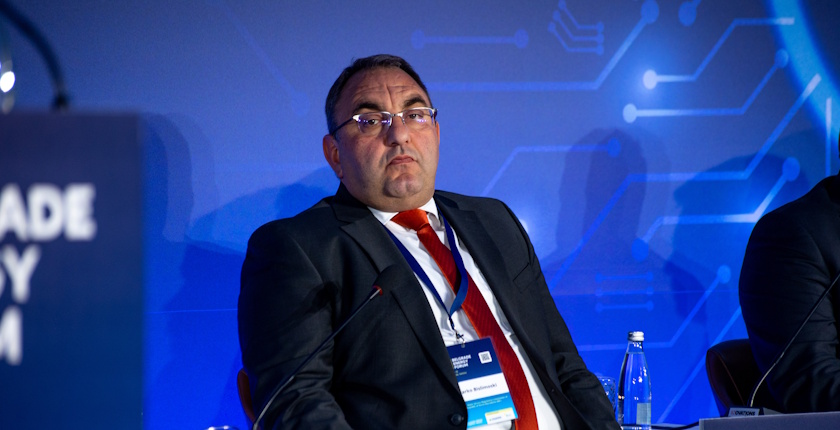
Over the past four years, North Macedonia has achieved strong growth in renewable energy sources. A total of 1,200 MW of capacity has been connected to the grid, marking a new phase of the country’s energy transition, according to Marko Bislimoski, President of the Energy, Water Services, and Municipal Waste Management Services Regulatory Commission of the Republic of North Macedonia (ERC or RKE).

According to ERC data, almost 1 MW of renewable capacity has been added to the grid every day over the past four years.

Between 2022 and October 2025, North Macedonia built 1,200 MW of renewable power generation capacity, Bislimoski said at the Regional Conference on Green Transformation of the Western Balkans, held in Tirana, Albania.

“Electricity generation from solar power has become a reality – the El Dorado of photovoltaic plants has heralded the country’s energy transition, initiating a transformation of the power sector. The figures are encouraging, but the period ahead will be full of challenges, among which is balancing the system, when it comes to renewable electricity generation,” Bislimoski said.

Solar power capacity has overtaken hydropower

At the recently held 14th International Forum on Energy for Sustainable Development (IFESD-14), Sanja Božinovska, Minister of Energy, Mining and Mineral Resources, said that renewable energy sources account for more than half of North Macedonia’s total installed electricity generation capacity – 56% as of 2024.

Solar power plants account for 28%, while large hydropower plants have a 24% share.

“For the first time in our history, solar has overtaken hydro – a symbolic and practical milestone in our path toward decarbonization,” Božinovska stated.

Need for investments in baseload generation

Bislimoski emphasized that in the current phase of the energy transition, it is necessary to encourage investments in energy facilities that produce baseload energy.

The use of battery storage has its role, but it is essential to implement projects that will replace coal-fired power generation with gas or biomass, he added

The digitalization of administrative procedures for obtaining the necessary permits and documentation was highlighted as a key prerequisite for increasing the number of green investments, according to the panel How to Create Zones for Faster Implementation of Green Projects.

Speakers, including energy experts, economists, and representatives of national and local authorities, agreed that the energy transition will only be successful if households also feel its benefits, not just industry. Policies and reforms aimed at building a smart and green energy future must be a priority for regional governments to facilitate integration into the European energy market.

Post Views:140
November 17, 2025
by AEA in News

Greece outlines long-term investment plan to solve water crisis

The Greek government presented a plan to maintain water supply as drought has reduced reserves to worrying levels in certain areas.

The Ministry of Environment and Energy outlined short-term and long-term measures, with a focus on Attica, the peninsula where Athens is located. The area consumes by far the most water in Greece. This year, the level in the nearby Mornos lake in Fokida has dropped to just 152.9 million cubic meters, with its area reduced to 8.3 square kilometers. It marks a 15-year low for the major reservoir and a steep 45% drop in reserves from 2024.

For the long term, the government has launched the Evrytos project for using water from the Evinos river in Aetolia-Acarnania. It will provide Attica with 220 million cubic meters annually, for a cost of EUR 500 million. Necessary infrastructure will become operational by 2029, according to Minister Stavros Papastavrou.

Desalination plants to increase power demand

In the meantime, the government and the Athens Water Supply and Sewerage Company (EYDAP) are examining the installation of three desalination plants: in Thisvi, Nea Peramos and Lavrion. Papastavrou said they can together provide 87.5 million cubic meters annually.

However, such units are both expensive and energy hungry. An average desalination plant consumes about 3.5 kWh of electricity for every cubic meter of water it produces. Therefore, the total for all three is about 600 GWh per year.

The new energy demand has not been anticipated in the ten year development plan of Independent Power Transmission Operator (IPTO or ADMIE) nor the National Energy and Climate Plan (NECP). The 600 GWh is not much compared to a national consumption of 52 TWh, but it would be concentrated in Attica and needs to be taken into account.

Demand is already expected to rise in the region, as a result of electrification and new large-scale construction works in places like Ellinikon.

Post Views:154
November 17, 2025
by AEA in News

Global wind installations jump 64% in H1 2025

Global wind power installations have risen by 64% in the first half of 2025 from the same period of last year, according to the latest report from the World Wind Energy Association. It expects 2025 to be a record year for new wind farms.

A total of 72.2 GW of new capacity was added between January and June, following 44.1 GW installed in the first half of the previous year, reads the World Wind Energy Association’s (WWEA) Half-year Report 2025.

By the end of June, total installed wind power capacity reached 1.25 TW, with wind energy now supplying approximately 12% of global electricity demand.

According to the report, the first half of 2025 demonstrates continued momentum and resilience of the global wind power sector.

“Driven by strong growth in China and steady expansion across major markets, wind energy is on course for its strongest year ever. With a record 150 GW expected to be installed in 2025 and a global total surpassing 1.3 TW, wind power continues to play a central role in the world’s renewable energy transformation,” WWEA said.

China continues to lead the global wind power deployment. In the first six months of the year, it installed 51.4 GW, compared to 25.8 GW from the same period of 2024 and 23.8 GW in 2023.

The country’s total capacity is over 600 GW, the report adds.

Five countries recorded more than 1 GW of new installations: India (3.5 GW), the United States (2.1 GW), Germany (1.9 GW), France (1.7 GW), and Brazil (1.3 GW).

According to WWEA President Irfan Mirza, the first half of 2025 was a defining period for the global wind energy sector – not only for its record-breaking growth but for the clarity it provides about the world’s energy direction.

“The addition of over 72 GW of new capacity globally demonstrates the sector’s resilience and the trust that governments, investors, and communities continue to place in wind power as a cornerstone of sustainable progress,” he added.

Post Views:78
November 17, 2025
by AEA in News

UAE, Montenegro establish strategic green energy partnership

A new agreement between the UAE and Montenegro will facilitate connecting the energy sector with financial technologies and artificial intelligence. The two countries are also considering to deploy solar, wind, hydropower, green hydrogen and battery projects.

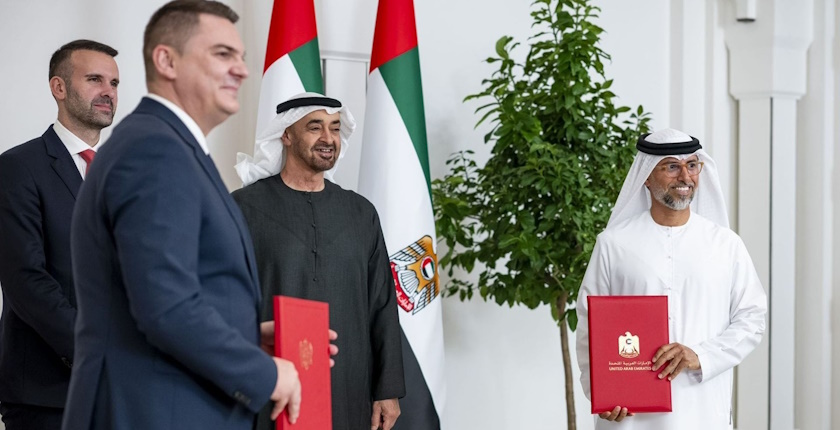
The United Arab Emirates and Montenegro agreed to cooperate in the energy sector, setting up a bilateral strategic partnership for the development of renewables, modern energy infrastructure and advanced technologies. The deal envisages joint contribution to projects of strategic significance to Montenegro from solar, wind and hydropower plants to the application of battery energy storage systems and the development of the green hydrogen technology.

Minister of Energy and Mining Admir Šahmanović signed the agreement with UAE’s Minister of Energy and Infrastructure Suhail Mohamed Al Mazrouei. Montenegrin Prime Minister Milojko Spajić and the President of the UAE Mohamed bin Zayed al-Nahyan attended the ceremony.

Montenegro aspires to become digital hub

The agreement is especially significant for connecting the energy sector with financial technologies and artificial intelligence, the Ministry of Energy and Mining of Montenegro said. The country is aspiring to position itself as a regional hub for innovation, digital transformation and the energy transition, it added.

Within their strategic partnership, the two countries are looking to establish a fintech and AI council. It would consist of representatives of the public and private sector and work on the development of innovative solutions, attracting investments and strengthening the domestic economy through the implementation of progressive technologies.

Joint vision of sustainable development, energy security

The agreement is a new step in the partnership between Montenegro and the UAE, founded on a joint vision of sustainable development, energy security and economic progress, the ministry pointed out.

“The partnership confirms that foreign partners recognize Montenegro as a safe and attractive place for investment in energy and advanced technologies. Our goal is to, through cooperation with the United Arab Emirates, open a new chapter in the development of renewable energy sources, digital infrastructure and innovation,” Šahmanović stressed.

The agreement will facilitate faster materialization of projects strengthening energy security and contributing to the decarbonization of the economy and job creation in the sector of the future, the ministry said.

Post Views:145
November 17, 2025
by AEA in News

ACER asks Greek authorities to probe power market for manipulation

The European Union Agency for the Cooperation of Energy Regulators (ACER) is warning of signs of manipulation in Greece’s day-ahead electricity market (DAM) registered during the summer of 2024.

The region of Southeastern Europe experienced several months of high electricity prices, with average monthly levels close to EUR 200 per MWh in the case of Greece.

ACER used data from the Hellenic Energy Exchange (HEnEx) to calculate the hourly day-ahead demand and supply curves for the Greek bidding zone in the said period.

It included 93 observations, meaning 93 pairs of demand and supply curves, from June 15 to September 15 of last year.

Based on the above, four scenarios were formed, simulating and analyzing market conditions on different days and times. The baseline included all the cases and the clearing price was always above EUR 100 per MWh.

The so-called stressed scenario involved 17 observations, when prices climbed close to EUR 500 per MWh, and the critical scenario had two observations, with prices of EUR 900 per MWh.

There was even an extreme scenario,  covering September 4, when at 20:00 the price reached its maximum, with EUR 942 per MWh.

650 MWh would have made enormous difference

ACER noted that if an extra 650 MWh of energy were available during that hour, it would have reduced the price by a huge EUR 630 per MWh to EUR 311 per MWh.

The extra power could have arrived either internally from peak power plants, or through interconnections with neighboring countries.

The result is similar for the stressed scenario – 420 per MWh lower, and the baseline, when the level would have come in at 100 per MWh down from the actual prices.

Capacity withholding as a possible cause

The regulator added that during times of pressure in the system, the market power of producers became much more pronounced and their bidding behavior changed.

Based on the above, ACER reaches two conclusions. One, interconnections in the region must be utilized based on the 70% European rule to bring prices down.

Secondly, Greek authorities need to initiate a probe into whether market power was used to manipulate or abuse dominant positions, for example in the form of capacity withholding.

ACER also said data from HEnEx and the Regulatory Authority for Energy, Waste and Water (RAAEY or RAEWW) are incomplete and that more transparency is necessary moving forward.

Post Views:150
  • 1
  • …
  • 39
  • 40
  • 41
  • 42
  • 43
  • …
  • 140

AEA – Albania Energy Association is a industry association dedicated to representing the interests of Albanian and West Balkan for energy producers and consumers. AEA works to advance the development and adoption of sustainable energy solutions in Albania and the Western Balkans, supporting the region’s transition toward a cleaner, more secure, and more competitive energy future. AEA is registered by decision of the Court of Tirana, DECISION NO. 3032, (VAT:L11827451K).

[email protected]

Address
Blv Zogu 1
Tirana
1057
ALBANIA

LinkedIn  |  Facebook
Events
May 25, 2022 Connecting Green Hydrogen Europe 2022
May 25, 2022 Energy Week Western Balkans 2022
Copyright © Albania Energy Association