AEA-Albania Energy Association
  • Main
  • About Us
  • Services
  • Sectors
  • News
  • EventsEvents
  • PublicationPublication
  • Contact Us
AEA-Albania Energy Association
  • Main
  • About Us
  • Services
  • Sectors
  • News
  • EventsEvents
  • PublicationPublication
  • Contact Us
AEA-Albania Energy Association
  • Home Page
  • About Us
  • Sectors
  • Our Services
  • News
  • Contact Us
December 2, 2025
by AEA in News

Energy Community calls for nominations of PECI energy infrastructure projects

Developers of cross-border energy infrastructure investments within the Energy Community or internal ones with significant cross-border dimensions can nominate them by January 19 within the selection process for projects of Energy Community Interest (PECI). In line with the Trans-European Networks for Energy (TEN-E) regulation, the mechanism is for electricity transmission and energy storage including protection, monitoring and control systems, together with smart power and gas grids, hydrogen and carbon dioxide.

The Energy Community Secretariat opened a call for promotors to submit their projects for evaluation within the 2026 PECI selection. EU regulation 2022/869 – revised TEN-E, which the Energy Community Ministerial Council adopted as 2023/02/MC-EnC, stipulates the approval of the second list of projects of Energy Community Interest (PECI) by December 31, 2026.

Nominations are received until January 19. The proposals concern the electricity and gas sectors.

In the first group are high- and extra-high-voltage overhead transmission lines and underground and submarine transmission cables. It includes equipment and installations for offshore renewable electricity.

Eligible electricity segment investments are also for energy storage, as well as protection, monitoring and control systems for all of the above and at all voltage levels.

Projects for smart power and gas grids are both in the scope of the PECI selection process. Hydrogen-based technologies, electrolyzers and CO2 projects are within the gas infrastructure list as well, the call reads.

PECIs are for cross-border energy infrastructure within the Energy Community or internal endeavors with significant cross-border dimensions.

Proposal forms are available at the call’s webpage.

Ministries, regulatory authorities and transmission system operators will be among the institutions evaluating nominated projects. The group also consists of the European Commission, Energy Community Secretariat, Energy Community Regulatory Board, the ECDSO-E entity of Energy Community distribution system operators, the European Network of Transmission System Operators for Electricity (ENTSO-E) and European Network of Transmission System Operators for Gas (ENTSOG).

The Energy Community comprises the Western Balkans, Moldova, Georgia and Ukraine.

Post Views:28
December 2, 2025
by AEA in News

Nearly 9 in 10 citizens in Serbia call for deposit return system – survey

Almost 90% of citizens in Serbia support the introduction of a deposit return scheme, according to a survey conducted by Every Can Counts. It is also the highest level of support among all 16 countries where the poll was conducted.

The report titled Global Recycling Habits and Attitudes 2025, based on the survey’s results, represents another confirmation that citizens in Serbia support the introduction of a deposit return scheme (DRS). Similar survey results were published in 2021 and 2022.

Despite officially planning it for many years, the authorities in Serbia haven’t rolled out such a deposit mechanism yet. According to one of the latest announcements, from October 2023, the introduction is set for 2027.

The benefits of a deposit system are well known. Romania is among the countries that introduced it relatively recently.

Following its 2020 and 2022 campaigns, Every Can Counts (ECC) commissioned another global research in 2025 into people’s recycling behaviours and attitudes. The study was designed and analysed by Made with Insight.

It covered 16 countries: Belgium, Brazil, the Czech Republic, France, Greece, Hungary, Ireland, Italy, the Netherlands, Poland, Romania, Serbia, Spain, the United Arab Emirates, the United Kingdom and the United States.

Plastic pollution tops global concerns

world Every Can Counts report 2025 serbia drs plastic pollution

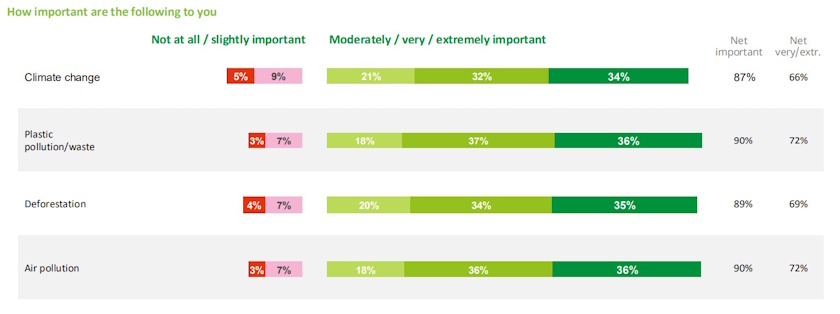
Plastic pollution tops global concerns, matching climate change, deforestation, and air pollution in public priority. Nearly 9 in 10 people worldwide see plastic waste as an important issue and 72% say it is very/extremely important.

The strong consensus highlights growing public demand for action to reduce plastic waste alongside broader climate and environmental goals, according to ECC.

Perceptions of drink cans vary notably by market but remain relatively low across all measures. For recyclability, the highest scores come from the USA (25%), Serbia (24%), and Greece (23%). Sustainability perceptions peak in the UAE (22%) while circularity scores are highest in Greece (23%) and Serbia (22%).

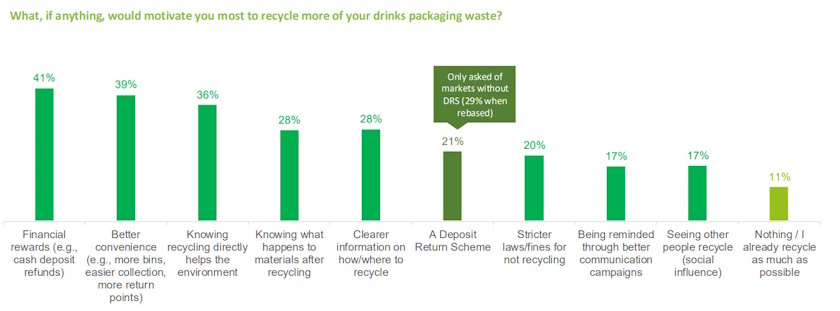
While there is no silver bullet, the strongest motivators for recycling are financial rewards such as deposit refunds (41%) and better convenience (39%), the report reads.

world Every Can Counts report 2025 serbia drs recyclng motivation

Financial incentives resonate most in Romania (53%), and convenience is the strongest in Greece. Brazil is exceptional for environmental impact (55%), followed by Romania, Serbia and the UAE – all with 46%.

Attitudes towards recycling show two clear patterns, according to the report. First, making recycling more engaging through rewards, games or interactive apps could boost participation, particularly in Brazil (83%), Greece (81%) and Serbia (88%), while interest is lower in markets such as the Netherlands (53%) and Belgium (60%).

Second, there is near universal agreement that manufacturers and brands should be required to use fully recyclable or recycled materials, the report underlines.

DRS is less supported in the USA

world Every Can Counts report 2025 serbia drs support

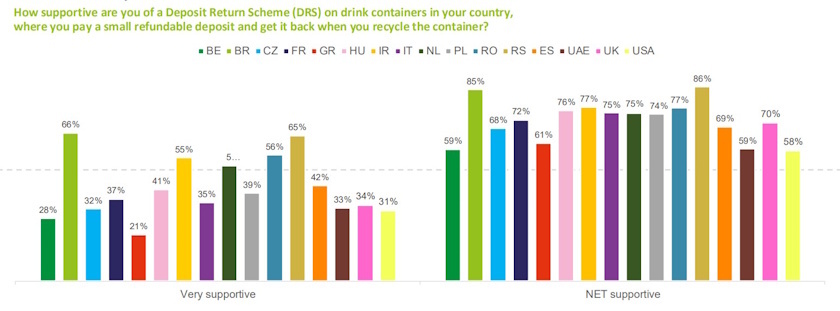
A majority supports DRS in all markets, but the intensity of support varies considerably. Net support ranges from 58% in the USA to 86% in Serbia.

Levels of strong, “very supportive” sentiment show sharper contrasts. Brazil (66%), Serbia (65%), Romania (56%), Ireland (55%) and the Netherlands (51%) stand out as markets with a majority of strong supporters.

At the other end of the spectrum, Greece (21%), Belgium (28%), the USA (31%), the Czech Republic (32%) and the UK (34%) record the lowest intensity.

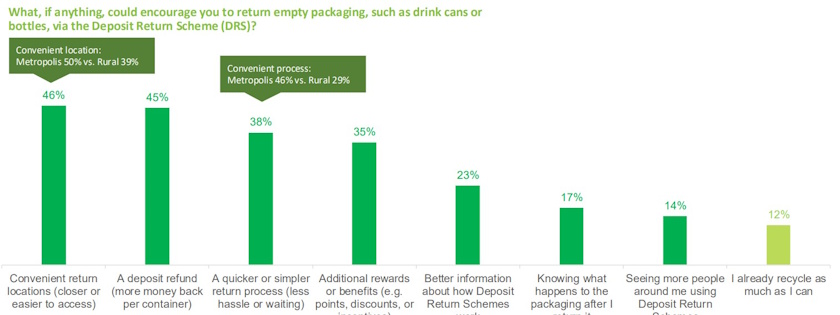
Convenience and incentives are the top drivers overall while information is generally a weaker motivator, but the mix differs by market, the report reads.


world Every Can Counts 2025 report serbia drs recyclng motivation

Higher deposit refunds are most influential in the Czech Republic and Spain, while Serbia and Greece balance convenience and refunds more evenly.

When looking only at those who “strongly agree,” support levels show sharper contrasts.

Romania and Serbia stand out with strong calls for all one-way packaging to be included (67%). Brazil scores high across most categories but is weaker on personal responsibility for returning cans.

Hungary, Ireland, Romania and Serbia show high trust that returned containers are recycled, while trust is lower in the Czech Republic, Belgium, France or Greece, ECC concluded.

Post Views:40
December 2, 2025
by AEA in News

Rio Tinto halts lithium mining project Jadar in Serbia

Rio Tinto has suspended its lithium mining project Jadar in Serbia, Bloomberg learned from the company’s internal documents.

The suspension of the Jadar project, valued at USD 2.95 billion, is among the first decisions of Rio Tinto’s new CEO Simon Trott.

Bloomberg wrote that it saw an internal company memo revealing that the investment in Serbia would be switched to a care and maintenance regime, making it dormant.

“Given the lack of progress in permitting, we are not in a position to sustain the same level of spend and resource allocation,” the document reads.

According to the same source, Rio Tinto still considers Jadar an important lithium deposit that could play a significant role in Serbia and Europe’s energy transition.

The European Union has designated the project as strategically important. The race for lithium and other rare metals is intensifying due to China’s growing dominance.

Rio Tinto confirmed the contents of the memo.

The company told Blic that it “remains in Serbia” and that the Jadar project is entering a phase involving an assessment of project costs and resources. “Our focus will be to support our employees through the transition process, and to continue fulfilling our legal obligations to the local community as responsible landowners in the Jadar valley,” it added.

New investments and company restructuring

Trott became CEO in August, and the decision to suspend the Jadar project is part of efforts to streamline the business and focus on faster growth opportunities.

He reorganized Rio Tinto by dividing it into segments for iron, aluminum and lithium, and copper.

According to the memo, the company’s current head of lithium Paul Graves will leave the company.

Last year, Rio Tinto acquired Arcadium Lithium for USD 6.7 billion, gaining access to three lithium projects in development. At the same time, it is investing heavily in the Rincon lithium project in Argentina.

Due to oversupply in the lithium market, prices remain around 85% below their 2022 peak, the article adds.

Rio Tinto is the world’s second-largest mining company by market value. The Jadar mining and processing project, based on the mineral jadarite, discovered in 2004 in the Jadar valley in western Serbia, has faced strong opposition from the country’s citizens, environmental activists, and part of the expert community for many years. Balkan Green Energy News has published a chronological overview of the key events in the development of the Jadar project since 2001, when Rio Tinto arrived in Serbia.

Trott is scheduled to deliver his first strategic presentation on the company’s further development and restructuring on December 4 in London, during Rio Tinto’s Capital Markets Day.

Post Views:70
December 2, 2025
by AEA in News

Serbia deciding whether to nationalize Gazprom-owned oil company NIS

As the United States, which imposed sanctions on Serbian oil company NIS, rejected a proposition for a change in management, difficult decisions are ahead, according to Minister of Mining and Energy Dubravka Đedović Handanović. The government in Belgrade is holding an emergency meeting tomorrow, she added and pointed out that it needs to decide whether to nationalize the business. NIS runs the country’s only refinery.

US sanctions against Serbian oil refiner and fuel distributor NIS – Naftna industrija Srbije came into force on October 9, after they were postponed several times for nine months overall. Its majority owner is Russian state-controlled Gazprom, through two subsidiaries.

The Government of Serbia didn’t succeed in securing any kind of deal that could enable a smooth transition. The company owns the only refinery in the country and the biggest chain of service stations.

Minister of Mining and Energy Dubravka Đedović Handanović said the US rejected NIS’s proposal of a contract for a change in management. “The difficult message for us is that we didn’t even get one day for Naftna industrija Srbije to continue working. Citizens, you understand that it is impossible to change ownership in seven or eight days,” she stressed, apparently referring to how long the refinery’s dwindling oil reserves would last.

There was speculation earlier that Hungary-based MOL could assume control, given that the country, Serbia’s northern neighbor, managed to obtain a one-year exemption from the US for Russian oil and gas.

US demands Russia’s complete exit from NIS

The US administration wants a complete exit of Russian ownership from NIS, according to Đedović Handanović. “There can be no hiding of any Russian associate, Gazprom or the Russian government behind that,” she added.

There is only approval for talks about a change in ownership and it expires on February 13, the minister explained.

“I believe that there are difficult decisions ahead of us. Namely, whether to conduct a takeover of the company, after which the damages would be determined and compensated. I know that President Vučić is against nationalization, as are many of us in the Government of Serbia and beyond and we repeated that several times,” Đedović Handanović stated.

Đedović Handanović: We hope that our Russian friends will understand the gravity of the situation

An emergency cabinet session is scheduled for tomorrow at 11 am local time, she announced and revealed that President Aleksandar Vučić would attend it.

“What I can tell you is that we won’t let our country come into jeopardy and that some of the most difficult decisions in our history are ahead of us in the following days. We hope that our Russian friends will understand the gravity of the situation and that they will help us overcome it. Because without any fault of our own, we have found ourselves in a dire situation. A political war is at hand, a geopolitical war is at hand, and we, as a small country, need to pay a high price. A small country that only wanted to be fair and just to everyone. Both to all our partners and all our friends,” Đedović Handanović underscored.

Oil crisis could turn to gas crisis

To make matters worse, Serbia is dependent on Russian gas, which comes via the Balkan Stream pipeline, an extension of TurkStream. The main question is whether the Kremlin would slash or even end the supply in case NIS is nationalized. Serbia is buying gas under short-term arrangements since May.

Furthermore, Lukoil, which operates a gas station network in the country, is also under US sanctions.

Post Views:25
December 2, 2025
by AEA in News

Vučić: Serbia ready to offer premium to buy oil company NIS from Russia

Potential European and Asian investors will speak about a takeover with Russian owners of Serbian oil refiner and service station chain operator NIS, President of Serbia Aleksandar Vučić said. If the talks fail, Serbia “should offer a better price… whatever it costs” to avoid “nationalization, confiscation and property usurpation,” he stressed, but also warned that “the refinery must work and the oil industry must work.”

Minister of Mining and Energy Dubravka Đedović Handanović said she doesn’t see a way to overcome the blow from US sanctions against NIS and added that she is prepared to resign.

The Government of Serbia held an emergency meeting as the sanctions that the United States imposed on NIS, the owner of the country’s sole oil refinery and the largest service station chain, are threatening to cripple the economy. Since October 9, the company has been unable to draw oil through the Croatian Jadranski naftovod (JANAF) pipeline.

Gazprom is the majority owner of NIS, also known as Naftna industrija Srbije – oil industry of Serbia. Gazprom Neft, which is the one actually under direct US sanctions, has 44.5%, while Intelligence, the Russian state-controlled gas giant’s other subsidiary, holds an 11.3% stake. Serbia owns 29.9%.

A decision must be made within seven days, according to President of Serbia Aleksandar Vučić, who attended the cabinet session. He revealed that potential European and Asian partners are about to speak with the Russian side about a takeover.

If a deal doesn’t come through, Serbia “should offer a better price,” even if it would need to pay for it on its own, he underscored and pointed out that the authorities have been planning a “special operation” for financing. “If we don’t have another solution, whatever it costs, as high as it costs, we will find the money,” the president claimed. He went on to say Serbia is ready to “overpay” to take the company back.

Reserves won’t matter as soon as the first delays become evident

Vučić told relevant ministers to obtain additional quantities of diesel, for EUR 40 million, gasoline, for EUR 60 million and fuel oil, in the meantime.

“I want to avoid nationalization, confiscation and property usurpation at any cost,” like what “the Bulgarians and the Romanians did,” the president asserted. Nevertheless, he warned, “the refinery must work and the oil industry must work.”

Fuel reserves are “full to the brink” and the country won’t feel any consequences for more than thirty days from now, in the president’s view, who urged against panic.

Vučić: Without any fault of our own, we were crushed like grass in a collision of elephants

“However, these reserves won’t save us the very second when they see that we have a delay for five trucks, when people don’t get bread in the morning in two bakeries. The destruction or closure of the refinery, the lack of fuel, pushes us to a total disaster,” Vučić stated.

The army will cede diesel to the healthcare sector if necessary, he added.

The situation with the US has nothing to do with Serbia, Vučić said. “It has to do with their relations with the Russians and geopolitics. Without any fault of our own, we were crushed like grass in a collision of elephants,” in the words of the head of state.

Vučić also highlighted the fact that Serbian financial institutions are at risk because of the government’s “relations with the Russians.” He said he asked US officials to allow seven to eight more days and that they accepted, though unofficially.

No choice but to act now, ministers warn

There is “no more time,” according to Minister of Mining and Energy Dubravka Đedović Handanović. Serbia must take necessary measures, she warned.

“Leading the energy sector in a situation where the oil industry is sanctioned is almost impossible. I am ready even to submit my resignation, because I don’t see a way to overcome this situation. Because, simply, there is no life for us without the refinery in Pančevo. It is vital for our citizens, for our companies, for our healthcare, for our police, for our schools, for our kindergartens. Because without fuel, simply, maybe even bakeries can’t get bread every day. Just to be aware of the complexity of the situation we are in. We waited for a long time. We were very patient. We were very loyal. We spoke multiple times with our Russian partners,” she stated.

Serbia has no choice but to act, said First Deputy Prime Minister and Minister of Finance Siniša Mali.

“This situation with NIS jeopardizes everything for us. But absolutely everything. Our gas. Our stability. Our credit rating,” he stressed and added that it also impacts attracting foreign investors.

Post Views:65
December 2, 2025
by AEA in News

Serbia’s Vinča Institute, EDF to cooperate in nuclear energy

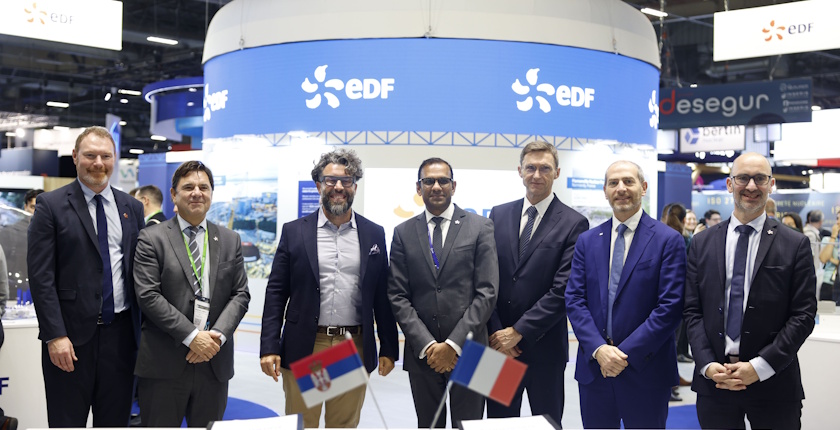
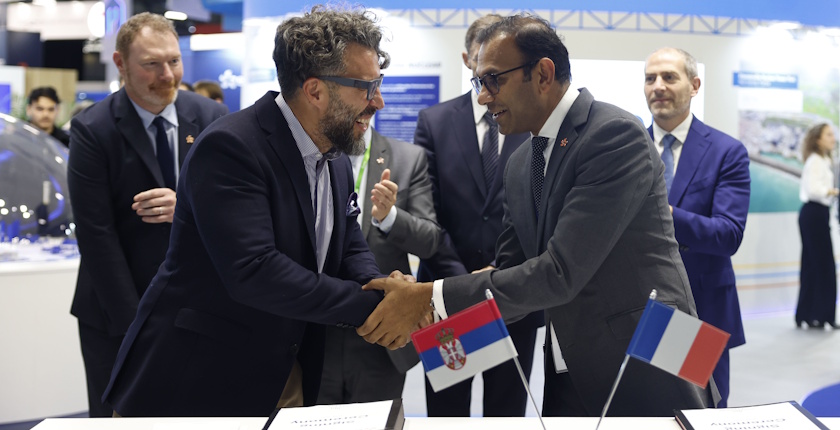
During the World Nuclear Exhibition in Paris 2025, the Vinča Institute of Nuclear Sciences signed a memorandum of cooperation with Électricité de France (EDF).

The Serbian Vinča Institute of Nuclear Sciences said its new memorandum of cooperation with French state-owned energy utility EDF establishes a framework for scientific, technological, and educational cooperation in the nuclear energy sector.

The document was signed by the Vinča Institute’s CEO Slavko Dimović and Vakisasai Ramany, EDF’s Senior Vice President for International Nuclear Development.

Four main sectors of cooperation

The deal envisages joint activities in the areas of scientific research cooperation, professional training and development of employees, international exchange, and public communication on nuclear topics, according to the institute.

The goal is to enhance knowledge, develop expertise, and promote informed public discussion about the potential role of nuclear energy in our country, the Vinča Institute revealed in a social network post.

serbia edf france nuclear energy memoradnum dimovic paris
Slavko Dimović and Vakisasai Ramany (photo: Vinča)

The International Institute of Nuclear Energy I2EN, founded by EDF, will play a key role in implementing the educational programs. It will organize joint academic projects, student exchanges, and research visits.

Dimović: The memorandum is a pledge that we are going to support the growth of young scientists and engineers

The Vinča Institute’s CEO Slavko Dimović stressed that the memorandum represents a continuation of the Serbian-French friendship and an important step toward strengthening the institute’s international cooperation and the exchange of knowledge with one of the world’s leaders in the nuclear energy sector.

The Vinča Institute has long stood as a pillar of scientific and nuclear excellence in Serbia and the region, in his view. EDF brings expertise, experience, knowledge and strong commitment to innovation and the future, Dimović added.

“This memorandum is not just a document, it’s a pledge that we are going to learn from each other, to support the growth of young scientists and engineers, and to promote and help public acceptance of nuclear energy in Serbia,” he underlined.

EDF is active in the region

The Government of Serbia and EDF signed a memorandum of cooperation in April 2024. A few months later, in September, EDF and Egis Industries were awarded a contract for a preliminary technical study for considering the peaceful use of nuclear energy.

France and EDF are very active in the energy sector in the region. The company has established cooperation with the Government of Montenegro, and with the country’s power utility Elektroprivreda Crne Gore (EPCG). France and Slovenia recently signed a declaration on cooperation in the nuclear energy sector, while EDF is in the race to build the new Krško 2 nuclear power plant.

On a bilateral level, Serbia has established contacts or started cooperation in the nuclear energy sphere with China, France, Russia, Slovenia, the United States, and South Korea.

Post Views:23
December 2, 2025
by AEA in News

Tens of thousands of tons of waste motor oil unaccounted for in Serbia

Waste motor oil is classified as hazardous waste as it can contaminate soil, water, and air. Although Serbian regulations for its management are clear, tens of thousands of tons are unaccounted for every year. Auto repair shops, obliged to dispose of it, often sell the material to individuals who use it for heating. Burning used motor oil is extremely dangerous because of the release of substances similar to chemical warfare agents into the air, warns Dejan Lekić from the National Ecological Association.

Just one liter of used motor oil can pollute up to one million liters of drinking water, making it one of the most harmful pollutants.

UAS, a Serbian association of auto repair shops, pointed out after the public debate on the draft Law on Waste Management that Serbia does not need cosmetic legal changes, but solutions to prevent the country from being buried under all types of hazardous and non-hazardous waste.

According to the latest report by the Serbian Environmental Protection Agency (SEPA), about 40,311 tons of oil were placed on the Serbian market in 2023. Of the 40,311 tons, only 440 tons of waste motor oil were processed in Serbia, and 1,660 tons were exported. It means 38,000 tons likely ended up in soil, sewage systems, waterways, or household furnaces.

Burning waste motor oil releases toxic substances

Dejan Lekić from the National Ecological Association, the creator of the xEco app for real-time air pollution monitoring, warned that waste motor oil must never be used as fuel in household stoves, nor discharged into soil or sewage.

“The only correct approach is to collect it and hand it over to licensed operators. Once the operator takes it, the oil can follow two paths: regeneration or destruction. Ideally, it is regenerated – technologically purified to produce base oil for reuse,” he explained.

Waste oil can be regenerated or destroyed

Regenerating waste oil is an example of the circular economy. From one ton of crude oil, only 2% can be turned into base oil, while 65% of collected waste oil can be processed into base oil.

“The second option is using it as a fuel, but only in specialized industrial facilities such as cement plants, which have furnaces operating above 1,200 degrees Celsius and appropriate filtration systems. Such facilities are the only ones that can safely destroy hazardous substances and prevent their release into the atmosphere,” Lekić asserted.

Using waste oil as fuel in household stoves is extremely dangerous to health

As it is cheap and easily available, waste motor oil is often used for heating in Serbia. But when burned in ordinary stoves, it releases large amounts of carcinogenic gases and heavy metals. According to Dejan Lekić, using waste oil for heating poses a serious threat to human health.

He explained that waste motor oil contains heavy metals such as lead, mercury, and cadmium, along with various additives. Regular stoves cannot reach temperatures high enough to burn these substances safely, so they are released directly into the air.

Lekić warned that incomplete combustion also produces extremely toxic compounds, including dioxins and furans – substances known to cause cancer and linked to severe neurological damage, hormonal disorders, and fertility problems. “People who burn this oil are literally releasing chemical warfare agents into their surroundings,” he said.

Serbia is among the top European countries in premature deaths caused by air pollution

Serbia is among the top European countries in premature deaths caused by air pollution, and it ranks first in Europe for lung cancer mortality linked to pollution, according to the World Health Organization. UAS, the Serbian group of car repair shops, described the situation as a “silent ecological catastrophe” that has been ongoing for decades and added that the system remains unable to stop it.

During the recent public debate on the new Law on Waste Management, the relevant ministry rejected most of the association’s proposals for managing waste oils. UAS emphasized that these suggestions were based on the best practices for reducing hazardous waste in the European Union and the region.

Post Views:35
December 2, 2025
by AEA in News

Germany’s energy and climate cooperation with Serbia improves people’s lives

Projects implemented by Deutsche Gesellschaft für Internationale Zusammenarbeit (GIZ) GmbH and the KfW Development Bank in Serbia have introduced modern heating systems to many towns, improved insulation in public buildings and promoted renewable energy to benefit citizens and local communities. Anke Konrad, the German Ambassador to Serbia highlighted these achievements during the interview with the Balkan Green Energy News, commemorating the 25th anniversary of the German Development Cooperation in the country. She emphasized that these initiatives enhance people’s quality of life, reduce emissions and contribute to environmental protection.

Ambassador Konrad also pointed out that the long-term Regional Climate Partnership with the Western Balkans is based on shared values and goals, aimed at investing in more secure and climate-resilient future.

Ambitious reductions of harmful emissions go hand in hand with a strong economy, German Ambassador to Serbia Anke Konrad says. GIZ and KfW are supporting the country’s green transition, which includes a rising solar power capacity, she noted and called it an enormous success.

Climate action is not a cost, but a strategic investment, Ambassador Konrad pointed out.

This year marks the 25th anniversary of development cooperation between the Federal Republic of Germany and the Republic of Serbia. What are the cornerstones of this partnership, and what significant achievements have been realised over the years?

This year, we look back with pride on 25 years of successful development cooperation that has delivered tangible benefits to people all over Serbia, has brought our two countries closer together, and Serbia closer to the European Union. From the outset, Germany’s support has focused on strengthening institutions, supporting economic growth, and improving living standards. Together with our Serbian partners, we have achieved progress in training and vocational education, good governance, environmental protection, and infrastructure development.

For example, thousands of students and hundreds of companies participate in dual education programmes every year. In digitalization projects, more than 2,000 small and medium-sized companies improved their productivity and competitiveness through digitalizing internal procedures. Another great example are digital services for individuals, such as the seasonal worker portal or the Register of Administrative Procedures, an online register for all administrative services with over 2.2 million registered “e-citizens”.

We look forward to continuing to implement projects that will improve the lives for people in Serbia and support Serbia on its path towards the EU

In 2022, the installed capacity for solar energy generation was at 6 MW. Now it stands at 84.4 MW. This equals a reduction of 118,000 tons of CO2 emissions per year. Where there were 400 solar energy prosumers in 2022, now there are almost 4,000. This represents an enormous success toward combating climate change and creating a sustainable economy. We have supported this transition both through technical advice by GIZ and investments by KfW.

What makes our partnership special is its continuity, reliability and spirit of co-creation. We work together with Serbian partners and citizens, building on a strong foundation of dialogue, cooperation and shared responsibility. In this spirit, we look forward to continuing to implement projects that will improve the lives for people in Serbia and support Serbia on its path towards the EU.

Let us turn our attention to energy and climate-related matters. Germany plays a vital role as one of Serbia’s primary partners in supporting the country’s energy transition and climate efforts. Which specific areas of collaboration would you like to highlight?

Combatting climate change and the transition to green energy are some of the most pressing questions of our time. As we are following the 30th UN Climate Change Conference taking place in Brazil in November, it’s clear that international partnerships, innovation and practical initiatives to reduce emissions are key to preserving our environment and, with that, our prosperity and security. Reduction of CO2 emissions will lead to significant health benefits as a result of cleaner air.

That is one of the reasons why energy and climate cooperation has become one of the most visible parts of our partnership with Serbia. Together, we are enabling Serbian citizens to use more clean energy from wind, sun and water, and to make homes, schools and businesses more sustainable and more energy efficient.

Through our projects that are implemented by GIZ and KfW, many towns now have modern heating systems, better-insulated public buildings, and new renewable energy projects that benefit local communities.

This work is not only about technology – it is about improving people’s daily lives, lowering harmful emissions, and protecting the environment for future generations.

Germany energy climate cooperation Serbia improves people lives Ambassador Anke Konrad interview
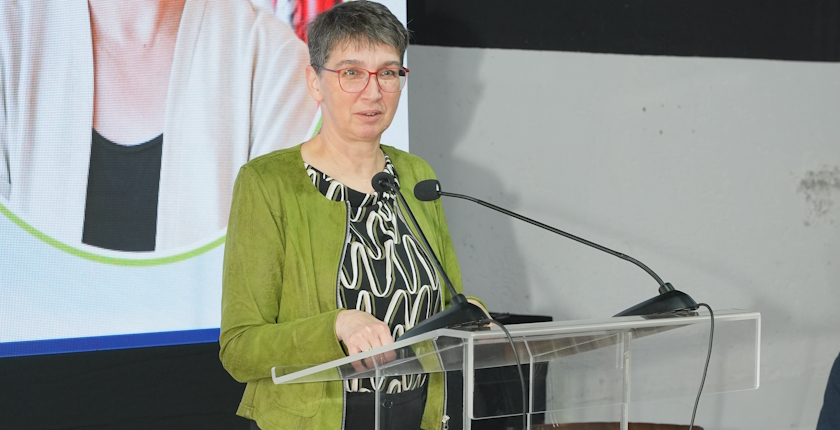
Anke Konrad, the German Ambassador to Serbia delivered a speech at the opening ceremony of the annual event of WISE Serbia network of women in sustainable energy, climate action and environmental protection (photo: Balkan Green Energy News)

What is the current landscape for German companies operating in Serbia’s energy sector? We have noticed a notable presence of technology firms compared to development companies, which raises questions about the level of interest from German investors in Serbia and the wider Western Balkan region. What factors might contribute to this observed reluctance among German investors?

German investors very much believe in Serbia, its business environment and its progress on the path towards the European Union. That is a major factor why over 900 companies with German capital are operating in Serbia.

Altogether, they account for 6% of Serbia’s GDP and provide employment to over 80,000 people. German companies in Serbia are here to stay.

Future investment decisions will depend on a wide variety of factors. Apart from global developments and trends, Serbia’s reform efforts, the efficiency of public institutions, transparency, rule of law and the fight against corruption are important factors when it comes to investment decisions. A predictable and fair investment environment and steady progress towards the EU offer the best prospects for growth and prosperity.

The ongoing efforts to decarbonise the energy sector and transform the economy towards greener and more climate-friendly solutions have been pivotal in the policies of both the European Union and the German government, which is an integral member of the EU. In light of the current economic stagnation and heightened security concerns that are impacting the budget, will Germany continue to uphold its commitment to this crucial agenda to the same extent?

The European Union aims to become climate-neutral by 2050. This binding goal is enshrined in the EU Climate Law and it is the basis for our commitment to reduce emissions and achieve climate targets. Germany will continue to lead by example. We want to demonstrate that ambitious emissions reductions go hand in hand with a strong economy. And we will continue to invest in climate action worldwide because decarbonization offers vast potential for innovation and economic development.

Here in the region, we have partnered with the Western Balkans to establish Germany’s first regional climate partnership in 2022. At the 2022 summit of the Berlin Process, Germany has pledged EUR 1.5 billion by 2030 to support the fight against climate change and the use of renewable energy in the region. Much of this support has already been commissioned.

Much of the EUR 1.5 billion in Germany’s support for climate action and renewable energy has been materialized

We see climate action not as a cost, but as a strategic investment in our future. It contributes to diversification of energy sources and helps with energy security and thus stability. It can have a positive impact on long-term economic competitiveness. Crucially, joint climate action protects our planet as a place where we can all continue to prosper.

Within the Regional Climate Partnership, we have a structured dialogue on carbon-pricing readiness, renewable energy deployment, power market integration and just transition. This long-term cooperation aims to help partners in the region to advance their energy and climate goals in line with EU standards, ensuring that the benefits of the energy transition reach citizens, communities, and businesses. For Germany, this is a long-term partnership grounded in shared values, shared goals, and an investment in a more secure and climate-resilient future considering the need for strong interconnectivity within Europe.

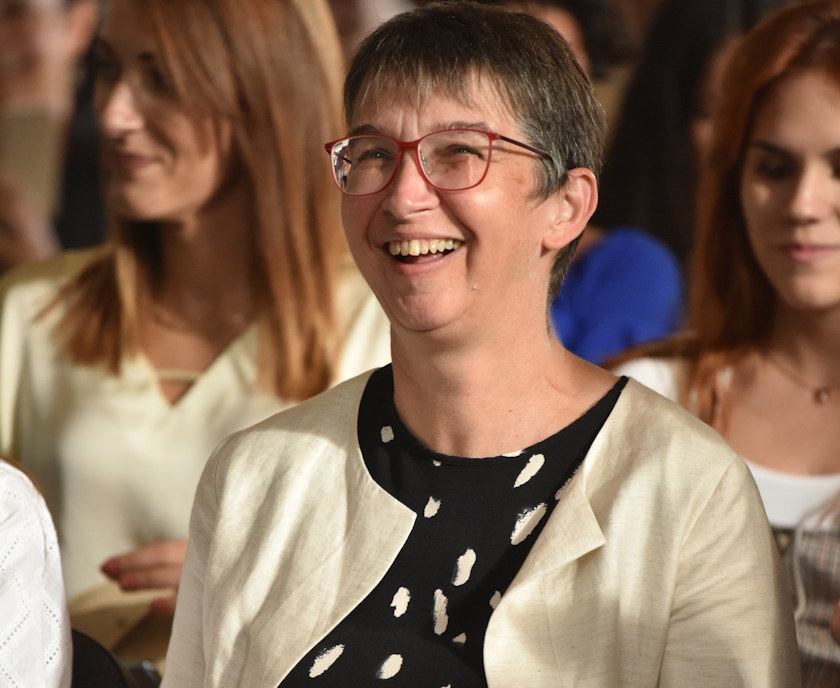
Anke Konrad, the German Ambassador to Serbia (photo: Balkan Green Energy News)

Germany is Europe’s solar and wind energy front-runner. What valuable insights can be gleaned from this experience that may be beneficial for Serbia in its pursuit of renewable energy advancements?

Germany’s experience shows that the energy transition is achievable when there is clear political will, a stable regulatory environment, and strong public participation. Success depends on combining large-scale renewable projects with opportunities for citizens and municipalities to invest and benefit directly.

Serbia has great potential to apply these insights, building on its natural resources, skilled engineers, and growing public interest in clean energy.

GIZ has been actively supporting WISE Serbia, a network dedicated to empowering women in the fields of sustainable energy, climate action, and environmental protection. In your opinion, does the energy sector provide equitable opportunities for both men and women in Serbia and globally? Also, would you advise girls and young women to pursue careers in those industries?

The energy sector is changing rapidly, and this transformation opens new doors for women to take leading roles in technology, management, and innovation. While there is still progress to be made, both in Serbia and globally, we already see many talented women engineers, researchers, and entrepreneurs shaping the transition to clean energy.

To give some perspective, change is already very visible at the university level, where around 40% of power engineering students at the University of Belgrade are women.

Initiatives such as WISE Serbia play a key role in giving visibility, confidence, and networks to women

We can look to role models in this field, such as this year’s recipient of the Female Leader in Sustainable Energy award, Ljiljana Velimirović. Initiatives such as WISE Serbia play a key role in giving visibility, confidence, and networks to women in this field, which still has great further potential.

My advice to girls and young women is clear: follow your curiosity and ambition, the energy transition needs your creativity and commitment just as much as it needs new technology.

Post Views:32
December 2, 2025
by AEA in News

Serbia plans to stop using coal, fuel oil in district heating by 2040

By 2040, Serbia intends to replace fuel oil and coal in district heating plants with solar, wood biomass, heat pumps, municipal waste and geothermal energy.

Maja Vukadinović, acting Assistant Minister of Mining and Energy for Energy Efficiency and Climate Change, has said that the goal for the district heating sector is to phase out fuel oil and coal by 2040.

She explained that the idea is to replace fossil fuels with solar energy, wood biomass, heat pumps, municipal waste and geothermal energy.

“The list of programs and projects until 2028 is defined in the draft Program for the Implementation of the Energy Development Strategy of the Republic of Serbia until 2040 with projections to 2050, for the period from 2026 to 2028,” Vukadinović told Balkan Green Energy News.

The share of renewables should increase from 2.4% to 5.5%

According to the draft, implementation of decarbonization projects in district heating systems by 2028 should lift the share of renewable energy sources in heat production from 2.4% to 5.5%.

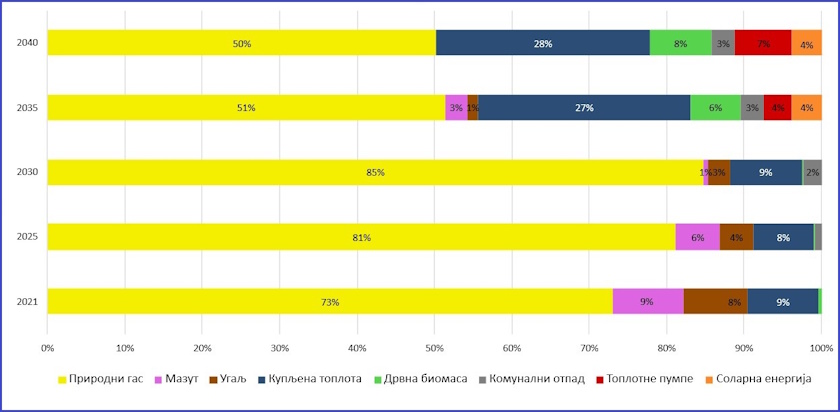
The fuel mix in 2023 was 75% natural gas, 8% petroleum products, 2% coal, 2% wood biomass, and 13% purchased heat. The structure of purchased heat production is 46.8% natural gas, 48.8% coal, 3.3% wood biomass, and 1.1% fuel oil.

serbia decarbonization district heating mix 2040

Natural gas will remain the dominant source of thermal energy, as it is today, although its share is expected to decrease from 73% to 50% by 2040, according to Vukadinović.

The decarbonization of the district heating system would reduce air pollution in cities, especially where coal or fuel oil is currently used, the ministry added.

A strategic plan for the district heating decarbonization policy is being prepared

“It’s very important that the fuels conversion is carried out in parallel with energy renovation of buildings and a reduction of the energy consumption for heating. It would significantly improve living conditions,” Vukadinović underlined.

Decarbonization would also have to lead to the improvement of the overall operation of the heating plants, as well as a reduction in network losses, the modernization of substations, and the introduction of daily and seasonal thermal energy storage, in her opinion. The operation of the district heating systems should depend less on the price volatility of imported fuels, Vukadinović stressed.

Serbia is preparing a strategic plan for the district heating decarbonization policy. The document is under development in cooperation with the European Bank for Reconstruction and Development (EBRD) and the business association of Serbian heating plants, Toplane Srbije.

The document, she explained, will outline steps to improve the district heating system, including the rollout of thermal energy storage, heat pumps, and heat production from waste, as well as the development of the country’s first district cooling systems.

Post Views:24
December 2, 2025
by AEA in News

Guarantees of origin: turning renewable ambition into action

Author: Naida Hausmann, Lead of the Renewable Energy Taskforce, Energy Community Secretariat

Far from being mere certificates, guarantees of origin (GOs) underpin the entire renewable energy value chain – building trust and accountability among producers, businesses and consumers. By ensuring transparent tracking of green electricity and enabling cross-border recognition, GOs can accelerate decarbonisation across the EU and the Energy Community, helping Europe achieve its climate targets. Mutual recognition between the EU and the Energy Community would open regional markets, attract investment, and give consumers and businesses a tangible role in the energy transition.

A guarantee of origin (GO) certifies that one megawatt-hour (MWh) of electricity was generated from renewable sources. It provides a transparent chain of information about where and how electricity was produced, allowing consumers and companies to claim the renewable origin of the electricity they use, even if they draw it from a mixed grid.

In the European Union, the national systems for guarantees of origin are well established. Cross-border transfer of certificates is enabled through the Association of Issuing Bodies (AIB), helping to build confidence among suppliers and buyers alike.

As part of the Energy Community regional project, nearly all issuing bodies have now established national electronic registries for issuing GOs

In the Energy Community, similar systems are advancing rapidly, laying the groundwork for a fully integrated regional market for renewable electricity. As part of the Energy Community regional project, nearly all issuing bodies have now established national electronic registries for issuing GOs.

Work is ongoing to finalise disclosure rules, with the goal of fully aligning these systems with EU legislation and requirements. Once fully aligned, these systems can enable seamless cross-border trade in renewable electricity – bringing the Energy Community a step closer to the EU’s internal energy market.

Empowering consumers and corporates

GOs transform energy consumers from passive users into active participants in the energy transition. When a household subscribes to a “100% renewable” tariff, or when a company purchases GOs to match its electricity use, it signals clear market demand for renewable generation. This demand translates into investment: it strengthens developers’ business cases, supports project financing, and helps accelerate the construction of new renewables capacity.

Moreover, when GOs are sold separately from electricity, they provide an additional revenue stream for developers, making projects more financially viable.

For corporates, GOs have become an essential tool to meet sustainability and reporting obligations and demonstrate that their electricity consumption is renewable. GOs therefore form the backbone of corporate energy procurement strategies and sustainability claims, particularly when coupled with long-term power purchase agreements (PPAs).

Naida Hausmann Guarantees of origin GOs turning renewable ambition into action features

Why mutual recognition matters

Under the EU’s Renewable Energy Directive, GOs can only be mutually recognised with third countries once a formal agreement is concluded – a requirement that carries significant implications. For the Energy Community contracting parties, such recognition would effectively link their systems with the EU market for renewable attributes, allowing renewable energy producers to access European buyers and investors.

Importantly, such recognition would also catalyse other mechanisms that drive the uptake of renewables, enabling regional PPAs, enhancing liquidity and sending stronger investment signals. For investors and utilities alike, a unified GO market reduces risk, increases price transparency and ensures that renewable attributes are valued consistently across borders.

For investors and utilities alike, a unified GO market reduces risk, increases price transparency and ensures that renewable attributes are valued consistently across borders

In the Energy Community region, where access to capital remains a barrier to the deployment of renewables, this is not a minor issue – it is a gateway to unlocking the private investment needed to meet regional and European decarbonisation goals.

The Energy Community Secretariat, together with the European Commission, has been advancing a decision for mutual recognition. Once in place, it will allow certificates issued in the Energy Community to be traded and recognised within the EU, provided they meet equivalent standards of reliability and verification.

Criteria for recognition

Beyond the technical criteria for establishing and maintaining a system of guarantees of origin by national competent authorities, including membership in the AIB, the draft decision on the mutual recognition of guarantees of origin, as presented by the European Commission, sets out additional requirements. These include criteria for the transposition and implementation of the acquis communautaire on electricity and renewable energy.

The Energy Community Secretariat is expected to support the assessment of compliance and monitor implementation. Together, these criteria aim to establish a credible and transparent framework for mutual recognition, ensuring that GOs issued across the region are reliable and can be confidently traded.

Way forward

With almost all issuing bodies in Energy Community contracting parties having operationalised electronic registries for GOs, the focus should now shift to implementing robust disclosure rules and meeting the remaining criteria for mutual recognition. Ensuring alignment with EU legislation and participating in the AIB will be essential to create a transparent and trusted system, unlocking cross-border trade, investment and market confidence in renewable electricity.

Issuing bodies in Albania, the Republic of Srpska (Bosnia and Herzegovina), Georgia, Kosovo*, North Macedonia, Montenegro, Serbia, and Ukraine have operationalised their registries. The issuing body in Moldova has signed an agreement with a service provider and is expected to operationalise its registry by the end of 2025, while the only issuing body without an electronic registry remains that of the Federation of BiH.

Conclusion

GOs translate environmental ambition into measurable progress toward decarbonisation. They give visibility to renewable electricity, credibility to corporate climate action and empower consumers with choice and the ability to participate in the clean energy transition. For the Energy Community and the European Union alike, mutual recognition of GOs would mark a practical and symbolic step toward a truly integrated European renewables market – one where clean electricity, investment and trust flow freely across borders.

By turning certificates into confidence and ambition into action, GOs can help bridge the remaining gap between policy objectives and market reality, ensuring that the path to decarbonisation is both transparent and inclusive.

Post Views:27
* This designation is without prejudice to positions onstatus and is in line with UNSCR 1244/99 and the ICJ Opinion on the Kosovo declaration of independence.
  • 1
  • …
  • 37
  • 38
  • 39
  • 40
  • 41
  • …
  • 140

AEA – Albania Energy Association is a industry association dedicated to representing the interests of Albanian and West Balkan for energy producers and consumers. AEA works to advance the development and adoption of sustainable energy solutions in Albania and the Western Balkans, supporting the region’s transition toward a cleaner, more secure, and more competitive energy future. AEA is registered by decision of the Court of Tirana, DECISION NO. 3032, (VAT:L11827451K).

[email protected]

Address
Blv Zogu 1
Tirana
1057
ALBANIA

LinkedIn  |  Facebook
Events
May 25, 2022 Connecting Green Hydrogen Europe 2022
May 25, 2022 Energy Week Western Balkans 2022
Copyright © Albania Energy Association