AEA-Albania Energy Association
  • Main
  • About Us
  • Services
  • Sectors
  • News
  • EventsEvents
  • PublicationPublication
  • Contact Us
AEA-Albania Energy Association
  • Main
  • About Us
  • Services
  • Sectors
  • News
  • EventsEvents
  • PublicationPublication
  • Contact Us
AEA-Albania Energy Association
  • Home Page
  • About Us
  • Sectors
  • Our Services
  • News
  • Contact Us
December 3, 2025
by AEA in News

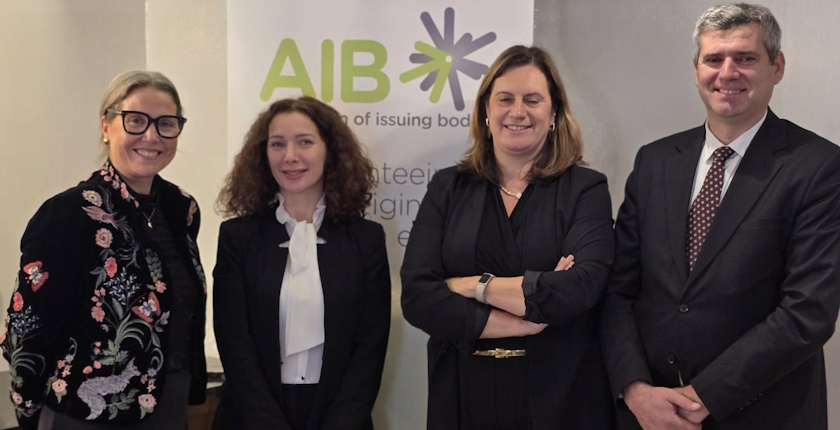
Kosovo* becomes full member of Association of Issuing Bodies

Kosovo* joined the Association of Issuing Bodies (AIB) as a full member at the last meeting of the organization’s general assembly. However, the Western Balkans and other Energy Community contracting parties require full alignment with the European Union’s regulations to enable cross-border trading in renewable electricity.

The Energy Regulatory Office (ERO or ZRrE) of Kosovo* said its request to become a full member of the Association of Issuing Bodies (AIB) has been approved. It is now part of the European platform for guarantees of origin, the update reads.

It increases the transparency and credibility of renewable energy certification, enabling more efficient cross-border trade and paving the way for new investments in the renewable energy sector, ERO pointed out. The membership also confirms Kosovo’s* commitment to the energy transition path and harmonization with the European Union’s acquis communautaire, according to the announcement.

ERO added that AIB approved the application at the latest meeting of its general assembly, in Lisbon, Portugal. By joining the organization, Kosovo* has adopted its European Energy Certificate System (EECS), ensuring that guarantees of origin issued in Kosovo* are recognized throughout Europe, the regulatory body stressed.

LuxDev assisted ERO in AIB bid

Chair of ERO’s Board Ymer Fejzullahu and Lindita Daija from LuxDev Kosovo, a branch of the Luxembourg Development Cooperation Agency, attended the event. The membership strengthens institutional capacities, increases transparency in renewable energy certification and positions Kosovo* as a reliable partner in the European energy market, Fejzullahu asserted. LuxDev supported the initiative.

In other news from Southeastern Europe, the National Energy Regulatory Authority (ANRE) of Romania obtained the status of an observer in AIB, both in the electricity and gas schemes. Albania and Bulgaria became members and applied to join the electricity scheme group last year, after which North Macedonia became an observer in the electricity segment.

Mutual recognition of GOs with EU possible in 2026

One guarantee of origin or GO certifies that 1 MWh was generated from renewable sources. Nearly all issuing bodies in the Western Balkans have established national electronic registries for issuing GOs.

However, cross-border trade in renewable energy will be enabled only when they become fully aligned with EU legislation and requirements.

Energy Community Secretariat Director Artur Lorkowski recently said in an interview with Balkan Green Energy News that he hoped for a decision on mutual recognition of GOs next year.
Post Views:68
* This designation is without prejudice to positions onstatus and is in line with UNSCR 1244/99 and the ICJ Opinion on the Kosovo declaration of independence.
December 3, 2025
by AEA in News

Econergy secures financing for 87 MW Oradea solar plant in Romania

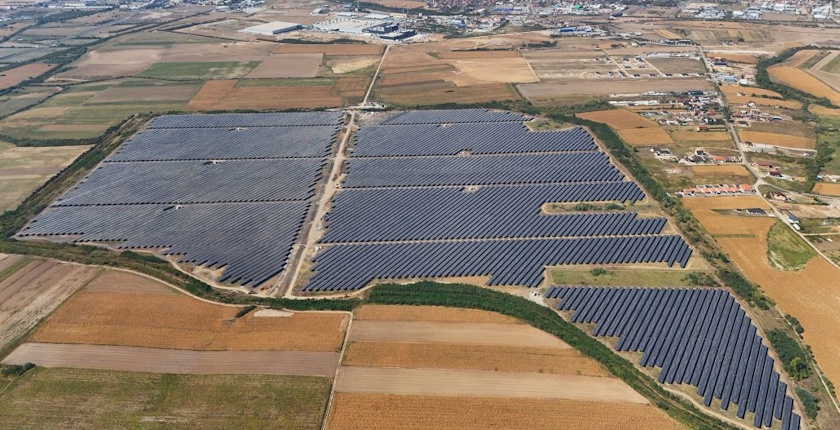
Econergy Renewable Energy has signed a EUR 40.5 million project finance agreement with UniCredit Bank for its 87 MW Oradea solar power plant in the Crișana region in north-west Romania.

The Oradea photovoltaic facility has been fully connected to the grid since August 2025, and is generating revenues, according to Israel-based Econergy.

The proceeds will be used for various purposes including refinancing of the loans spent to construct the power plant, the company explained.

Within a strategy to hybridize its Romanian solar portfolio, Econergy plans to add a 68 MW BESS component at the Oradea site.

It is the second project finance agreement secured with UniCredit

The expected investment in energy storage is about EUR 21 million, with an estimated annual contribution of EUR 8.4 million in revenues and EUR 6.7 million in EBITDA, based on the first five full operating years, the update reads.

The company said it is its second project finance agreement secured with UniCredit.

Econergy Group is operating in key European markets, including Germany, the UK, Italy, Spain, Romania, Poland, and Greece. It develops photovoltaic, wind, and energy storage projects.

The current project pipeline exceeds 14 GW, according to the company’s website.

Econergy is the owner of the largest PV facility in Romania

The company generates revenue by selling electricity, earning development and operation fees, and selling projects at various stages of development.

Of note, Econergy is the owner of the largest PV facility in Romania. In October it agreed to buy out Nofar’s 50% stake in the 155 MW Rătești solar power plant. The firm plans to add a 120 MW BESS.

Econergy has four PV plants in Romania. With the inauguration of Oradea, the company’s operational and ready-to-connect capacity in the country has reached 447 MW. It is building another 788 MW and expects to start the construction of 559 MW more by the end of 2025.

The project was developed with Phoenix Holdings.

Post Views:42
December 3, 2025
by AEA in News

Novi Sad plans to build waste-to-energy cogeneration plant

The City of Novi Sad plans to produce electricity and heat from solid municipal waste and has invited bids for a preliminary feasibility study for a cogeneration plant that would burn processed waste from a planned regional waste management center. Surplus energy could be stored within the future solar thermal system.

Serbia’s capital, Belgrade, already has a combined heat and power plant (CHP) that uses municipal waste. As such facilities exist all over Europe, Novi Sad’s district heating enterprise Novosadska toplana specified in the public call that the study must include an overview of relevant examples and best practices.

The document is to assess the feasibility of obtaining energy from waste processed into refuse-derived fuel (RDF) and solid recovered fuel (SRF). The fuel would be produced in a mechanical-biological treatment (MBT) plant for biodegradable waste within the future regional waste management center for Novi Sad and the municipalities of Bačka Palanka, Bački Petrovac, Beočin, Žabalj, Srbobran, Temerin, and Vrbas, according to the public call.

The bid submission deadline is December 15, and the study must be completed within 180 days of the contract signing. The job is valued at RSD 22 million.

The purpose of the study is to provide a preliminary assessment of the potential for and benefits of using available solid fuel from waste for high-efficiency cogeneration for the city’s needs, as well as the feasibility of building a CHP plant fueled by RDF and SRF, according to the public call.

The cogeneration plant could burn up to 40,000 tons of solid waste fuel per year

The MBT plant at the regional waste management center is expected to produce between 30,000 and 40,000 tons of solid fuel for cogeneration. The planned location of the plant, along with a fuel storage facility, is adjacent to the existing landfill in Novi Sad, according to the documentation.

The preliminary feasibility study should propose the optimal site for the cogeneration plant, taking into account the infrastructural capacity for connection to Novi Sad’s district heating system and the distance from the fuel storage facility.

The authorities suggest that the site should be in the vicinity of the TE-TO cogeneration plant in Novi Sad, Serbia’s second-largest city, due to its excellent connections to the power grid and the city’s district heating system. In addition, this site will host a planned solar thermal system, whose underground storage facility would be able to store excess energy from the waste-to-energy plant during the summer.

Surplus energy could be stored in the future solar thermal system

The project has secured an EUR 85 million loan from the European Bank for Reconstruction and Development (EBRD) and a grant of EUR 24.7 million from the Western Balkans Investment Fund (WBIF). The system will have a storage capacity of around 870,000 cubic meters, solar collectors with a total capacity of 31 MW, heat pumps with a capacity of 17 MW, and two electric boilers with a combined capacity of 60 MW, according to the EBRD website.

The bank said the launch of the public procurement is expected on November 26.

The proposed location for the cogeneration plant should also take into account Novi Sad’s newly-built heating plant, Majevica, which is expected to become operational by the end of the year.

The study should propose the optimal technology for solid fuel incineration, a preliminary design for the cogeneration plant, as well as systems for flue gas cleaning and ash management, according to the documentation.

Since the City of Novi Sad plans to apply for grants from international institutions and funds for the preparation of technical documentation and further project development, the public call states that the study should be carried out in line with the methodology of international financial institutions such as the World Bank, the German development bank KfW, and the EBRD, including a financial analysis and an assessment of CO₂ emission reductions.

Post Views:58
December 2, 2025
by AEA in News

Earth would become 2.8 degrees warmer by 2100 without additional measures

The United Nations Environment Programme (UNEP) has released its annual Emissions Gap Report 2025: Off Target, assessing the state of global greenhouse gas emissions. The document outlines the gap between where global emissions are headed – based on announced national policies and pledges – and what is needed to meet international temperature targets.

Ten years after the adoption of the Paris Agreement, UNEP claims the accord has played a key role in lowering global temperature projections and spurring the development of renewable energy, policies, and targets. Due to countries’ slow progress in reducing emissions, the world is likely to exceed the Paris Agreement’s target of limiting warming to 1.5 degrees Celsius above pre-industrial levels, possibly within this decade.

Under the Paris Agreement, countries are required to submit their nationally determined contributions (NDCs) every five years — their plans for reducing emissions and adapting to climate change.

Implementation of current policies alone would lead to a warming of 2.8 degrees

The report states that by September 30, 2025, only 64 signatory countries, responsible for 63% of global emissions,  had submitted or announced NDC plans with mitigation targets for 2035. However, just 13 countries, accounting for less than 1% of global emissions, have updated their reduction targets.

In addition to the lack of progress in commitments, the report highlights a massive implementation gap. “In addition to the lack of progress in pledges, a huge implementation gap remains, with countries not on track to meet their 2030 NDCs, let alone new 2035 targets,” the report warns.

According to the report, full implementation of all NDCs would lead to a temperature rise of between 2.3 and 2.5 degrees Celsius by the end of the century, compared to last year’s projected range of 2.6 to 2.8 degrees. Implementation of current policies alone would result in a warming of 2.8 degrees, slightly lower than the 3.1 degrees that were projected in last year’s assessment.

Implementing all NDCs by 2035 would cut emissions by 12%-15% from the 2019 levels. However, if the United States withdraws from the Paris Agreement, the reduction would drop to between 9% and 11%.

It is far below the 35% reduction needed to limit warming to two degrees and the 55% required to stay within 1.5 degrees Celsius.

Greenhouse gas emissions continue to rise

Global emissions of greenhouse gases: carbon dioxide (CO2), methane (CH4), nitrous oxide (N2O), and fluorinated gases (F-gases), reached a record 57.7 billion tons of CO2 equivalent last year or 2.3% more than in 2023.

The largest share of emissions comes from the combustion of coal, oil, and gas, about 69% of the total. Combined emissions of CH4, N2O, and F-gases make up about 24%. In addition to fossil fuels, deforestation and land use change were key drivers of the sharp rise in emissions in 2024, according to the report.

Developed countries account for 77% of global emissions

The world’s most developed countries, the G20 group (Argentina, Australia, Brazil, Canada, China, France, Germany, India, Indonesia, Italy, Japan, Mexico, Russia, Saudi Arabia, South Africa, South Korea, Turkey, the United Kingdom, the United States, and the European Union), are responsible for 77% of global emissions, while the least developed countries contribute just 3%.

The largest emitters are China, the US, India, the EU, Russia, and Indonesia. The biggest absolute increase was recorded in India, followed by China and Indonesia, which is also among the world’s most populous nations. Meanwhile, emissions in the EU fell by 2.1%.

Paris Agreement goals are still achievable – but barely

“Urgent and stringent emission reductions” are essential to achieve the goals of the Paris Agreement, yet new NDCs and the current geopolitical context offer little reassurance that such reductions will be realized, the authors stressed.

UNEP Executive Director Inger Andersen emphasized that the pace of change is insufficient, pointing out that emission reductions are “still possible – just.”

“Proven solutions already exist. From the rapid growth in cheap renewable energy to tackling methane emissions, we know what needs to be done. Now is the time for countries to go all in and invest in their future with ambitious climate action – action that delivers faster economic growth, better human health, more jobs, energy security, and resilience,” she said.

To reverse every 0.1 degrees Celsius of warming, about 220 billion tons of CO2 must be removed

To offset every 0.1 degrees Celsius of global temperature rise, approximately 220 billion tons of CO2, equivalent to five years of global emissions, would need to be removed from the atmosphere. While many impacts cannot be fully reversed, UNEP underscores that the 1.5-degree target remains a legal, moral, and political obligation for all governments.

“Scientists tell us that a temporary overshoot above 1.5 degrees is now inevitable – starting, at the latest, in the early 2030s. And the path to a livable future gets steeper by the day. But this is no reason to surrender. It’s a reason to step up and speed up. 1.5 degrees by the end of the century remains our North Star. And the science is clear: this goal is still within reach. But only if we meaningfully increase our ambition,” UN Secretary-General António Guterres said in his message on the report.

Post Views:24
December 2, 2025
by AEA in News

Air pollution spikes throughout Croatia

The Croatian Ministry of the Environment and Green Transition has warned of air pollution across most of the country in previous days. It expects improvement over the weekend.

“In recent days, with the arrival of colder weather and the start of the heating season, a significant increase in the concentrations of air pollutants has been recorded, especially particulate matter (PM10 and PM2.5) across most of Croatia,” the Ministry of Environmental Protection and Green Transition said.

Measuring stations of the State Network for Continuous Monitoring of Air Quality, as well as local stations in most of Croatia’s mainland, are recording a significant increase in the concentrations of air pollutants, including PM10 and PM2.5 particles.

Especially in Zagreb, Sisak, Kutina, Koprivnica, Bjelovar, and Slavonski Brod, monitoring stations registered levels as high as 100 micrograms per cubic meter at times. It is several times above the limit defined by the regulations, the update reads.

The increase in concentrations is primarily driven by emissions from household heating

Two to three times higher values than usual were also recorded at the station in the village of Desinić, on the border with Slovenia. It demonstrates that PM particulate air pollution in Croatia is not exclusively a local or urban issue, but a regional challenge, the ministry stressed.

The cause of the increase in concentrations are primarily emissions from household heating, particularly fueled by solid fuels: wood and coal, the update underlines. The situation is further aggravated by stable weather conditions, the lack of wind, and the occurrence of a temperature inversion.

An additional contribution to air pollution comes from traffic

In urban areas, especially in Zagreb, transportation enhances air pollution. Its impact has intensified in recent years due to the constant growth in the number of vehicles, according to the ministry.

Although wood heating remains the most significant source of PM, all emission sources, including traffic and industry, are amplified in such stable meteorological conditions, the ministry added.

Wind and warmer weather are expected to improve air quality

The ministry claims that current concentrations aren’t causing acute health problems. However, long-term exposure to excessive concentrations of PM increases the risk of respiratory and cardiovascular diseases and shortens life expectancy.

Particularly vulnerable are sensitive population groups such as the elderly, children, adolescents, pregnant women, and people suffering from respiratory and cardiovascular diseases.

The ministry advised citizens to monitor the air quality forecasts of the Croatian Meteorological and Hydrological Service (DHMZ) and the information on the Air Quality Portal. The portal offers an overview of the current air quality situation in the country with real-time data.

The ministry also recommended that citizens, particularly people with chronic illnesses, the elderly, and children, reduce outdoor activities during periods of such excessive concentrations.

In cooperation with the state institutions and local authorities, the ministry is implementing measures defined in air quality action plans to reduce emissions. DHMZ is currently implementing several projects on air protection and is preparing new ones.

An improvement in air quality is expected over the weekend, when temperatures will rise and the southwesterly wind will strengthen, the ministry said.

Post Views:26
December 2, 2025
by AEA in News

Federation of BiH to upgrade air quality monitoring with EUR 1.1 million

The Federation of Bosnia and Herzegovina is investing BAM 2.2 million to upgrade the air quality monitoring system.

Federal Minister of Environment and Tourism Nasiha Pozder has signed contracts worth BAM 2.19 million (EUR 1.1 million) for the procurement of up-to-date equipment to upgrade the measurement program of the stations in the Federal Air Quality Monitoring Network.

The units are managed by the Federal Hydrometeorological Institute (FHMZ).

The procurement of the equipment is financed by a loan from the International Bank for Reconstruction and Development (IBRD), as part of the Air Quality Improvement Project in Bosnia and Herzegovina. It is being implemented with the support of the World Bank.

The equipment will be supplied by two firms

The contracts envisage the purchase of air quality equipment worth BAM 1.8 million KM (about EUR 920,000) to be supplied by Sarajevo-based firm E3, and laboratory equipment worth BAM 142.422 KM (about EUR 73,000), to be delivered by Altium International, registered in Sarajevo. The third one – worth BAM 218,040 KM (EUR 111,500) – is for spare parts, and the supplier is also E3.

The equipment will enable the full implementation of the measurement program at all stations of the federal network, including all key parameters for assessing air quality, according to the Ministry of Environment and Tourism.

Mostar and Tuzla will get two stations

The system has been further expanded with the installation of two fixed stations in Mostar and Tuzla. FHMZ also received one mobile station for emergency field measurements in case of accidents.

The FHMZ laboratory has also been improved. Now it has the capacity to conduct analyses of polycyclic aromatic hydrocarbons (PAHs), important indicators of pollution and health risks to the population.

The equipment represents a significant step toward a more comprehensive, reliable, and modern air quality monitoring system in FBiH, the ministry underlined.

Pozder: Faster response to increases in air pollution

Minister Pozder stressed it is one of the most concrete steps toward strengthening the infrastructure for air quality monitoring.

She recalled that the public has the right to accurate information about the air it breathes and that institutions are obligated to provide reliable data and modern systems.

“Today, we are entering a new phase of modernization that will enable better planning and faster responses to increased air pollution,” Pozder said.

Almir Bijedić, director of FHMZ, pointed out that the new equipment and information system would significantly improve the accuracy and reliability of the institution’s work. It is the largest investment to date, he added.

Bijedić: It is very important that now we have the ability to analyze the concentration of PAHs

“FHMZ will be able to provide higher quality and faster information to citizens and institutions. It is very important that the new system enables the analysis of PAHs, allowing us for the first time to fully monitor the parameters critical for assessing health risks. This is a major step forward for the institute and the Federation of BiH,” Bijedić said.

The ministry noted it is completing the procurement of a new air quality information system, estimated at BAM 150,000 (EUR 77,000). It will significantly improve the digital capabilities of the monitoring system.

The new software will enable faster and more reliable validation and verification of data, real-time data display, centralized management, and more secure data storage, as well as more detailed trend analyses and automated reporting to the European Environment Agency (EEA), the Ministry of Environment and Tourism explained.

Post Views:50
December 2, 2025
by AEA in News

BYD’s electric vehicles more popular than Tesla in Croatia

Croatian companies have applied for subsidies to buy three times more electric vehicles of Chinese manufacturer BYD than of US-based Tesla.

The situation in Croatia reflects the global market. Last year, Chinese BYD surpassed Tesla, run by Elon Musk, for the first time. It has maintained the top position in electric vehicle production so far this year as well.

The data from Croatia are based on the results of a public call for subsidies for the purchase of new alternative-fuel vehicles. The program is for legal entities and is conducted by the Environmental Protection and Energy Efficiency Fund (FZOEU).

By the end of the application deadline, co-financing was requested for 2,860 vehicles, of which 78% for passenger vehicles. The data was announced at a meeting of the Motor Vehicle Trade Association, part of the Croatian Chamber of Economy (HGK).

Applications for the purchase of 2,860 units have been submitted

Aleksandar Halavanja, head of the Department for Systematic Energy Management at FZOEU, said most applications (78%) were for passenger vehicles with up to eight seats. Applications for cargo vehicles with a maximum permissible mass of 3.5 tons are second, with 12%, while mopeds have an 8% share.

BYD ranks first among brands, with 31.9%, while Tesla accounts for 10%. They are trailed by Hyundai (5.4%), Škoda (5%), Renault (4.8%), BMW (3.6%), Opel and Volkswagen (3%), Toyota (2.8%), and Peugeot (2.4%), according to Halavanja.

The fund provides subsidies of up to EUR 9,000 apiece for passenger and light commercial vehicles, but no more than 40% of the vehicle’s price. An additional condition is that the price of the EV must not exceed EUR 50,000 excluding VAT.

Miletić: Subsidies per vehicle should be reduced

Up to EUR 90,000 is for vehicles with maximum permissible mass of 3.5 tons, but no more than 40% of the vehicle’s value. Moped buyers can receive up to EUR 2,500 each.

FZOEU plans to evaluate all applications by the end of the year. If all funds are not allocated, the remainder from the EUR 21.2 million would be switched to another round until it is exhausted.

Tomislav Miletić, President of HGK’s Motor Vehicle Trade Association, underlined that its members demanded a higher amount for the co-financing of energy-efficient vehicles.

If that is not possible, the subsidy per vehicle should be reduced so that as many interested citizens and companies as possible can get funding, he stressed.

Post Views:58
December 2, 2025
by AEA in News

Slovenia’s TSO ELES joins European Network for Cyber Security

Slovenia’s transmission system operator ELES has joined the European Network for Cyber Security, reinforcing collaborative efforts to protect Europe’s electricity grid from evolving cyber threats.

The partnership will give ELES access to the European Network for Cyber Security’s (ENCS) collaborative threat intelligence, specialist training and technical expertise – strengthening its ability to detect, prevent and respond to cyber incidents targeting high-voltage networks across Slovenia and beyond, ENCS said.

The move comes amid rising pressure on Europe’s grid operators. According to the European Union Agency for Cybersecurity’s ENISA Threat Landscape 2025, operational technology – the backbone of electricity networks – faces an increasing range of cyber threats, with incidents growing in frequency and sophistication.

As nation-state activity intensifies and consumer-connected devices expand the attack surface, coordinated action to protect critical infrastructure has never been more essential, the network underlined.

Nijk: Europe’s power systems are only as strong as their weakest link

Of note, Slovenia started the development in March of a robust cybersecurity framework for the electricity sector, based on an AI system.

“Europe’s power systems are only as strong as their weakest link,” ENCS Managing Director Anjos Nijk stressed.

ELES’s new membership strengthens joint defences and brings valuable regional expertise to the table, he explained. As Slovenia’s grid underpins stability across Central Europe, its participation will help drive the shared strategies and capabilities needed to counter evolving cyber threats, Nijk added.

Rolih: Grid cybersecurity is a team effort

Gorazd Rolih, SOC Manager at ELES, recalled that grid cybersecurity is a team effort.

“Joining ENCS allows us to both contribute to and benefit from Europe-wide collaboration, sharing intelligence, best practices and operational insights that make every member stronger,” he said.

The European Network for Cyber Security is a non-profit membership organisation that brings together critical infrastructure stakeholders and security experts to deploy secure European critical energy grids and infrastructure.

Founded in 2012, ENCS provides cybersecurity solutions and counsel dedicated to the needs of national distribution system operators (DSO), transmission system operators (TSOs) and regulators.

Post Views:44
December 2, 2025
by AEA in News

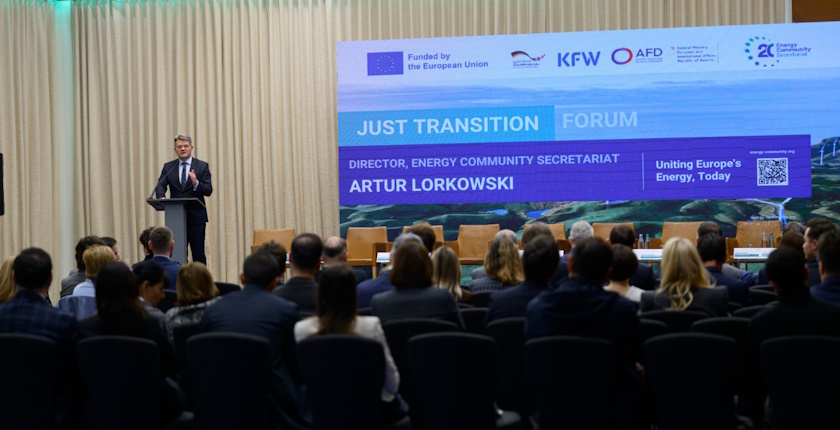
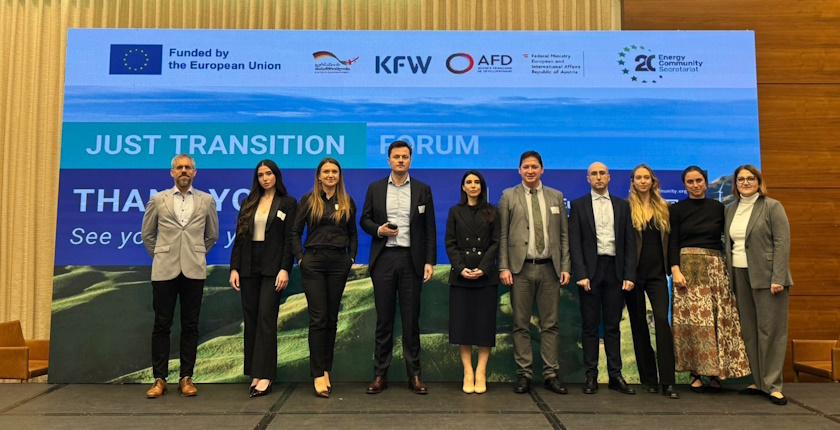
Just Transition Forum unites regional leaders to tackle energy poverty, shape fair energy future

Governments, partners, civil society and community leaders from across Europe gathered in Tbilisi for the Energy Community’s Just Transition Forum to explore how energy efficiency can help end energy poverty and strengthen public trust in the clean-energy transition.

The forum delivered a clear message: a just transition cannot succeed without meaningful dialogue with diverse civil society and non-governmental partners, whose expertise and perspectives must be integrated into planning. As contracting parties begin preparing their new national energy and climate plans (NECPs), embedding just transition in transparent frameworks and long-term strategies is key to turning decarbonization commitments into real benefits for people and communities.

This principle is further reflected in the Energy Community’s newly published Just Transition Policy Guidelines, which guide governments in integrating just transition elements into energy and climate planning – ensuring that decarbonization goes hand in hand with social protection, local opportunity, and public trust, while supporting alignment with the European Union’s clean energy and climate objectives.

Lorkowski: New NECPs should tell story of just, sustained transition

Opening the forum, Energy Community Secretariat Director Artur Lorkowski underscored the importance of the current moment for regional energy and climate planning. The new NECPs, he stressed, should tell the story of a just and sustained transition.

“We are entering a pivotal moment for the region’s energy and climate future. With just transition principles at the core, they can pave the way toward EU energy market integration and turn the green transition into an engine of investment, inclusion, and shared prosperity,” Lorkowski stated.

Critically, the Energy Community’s Governance Regulation requires contracting parties to assess and address energy poverty in their NECPs. It is an opportunity to ensure that energy-poor households receive targeted support and remain central to energy efficiency and decarbonization efforts.

Just Transition Forum unites regional leaders energy poverty fair energy future

Energy Efficiency First for Energy Poverty

To drive the agenda forward, forum participants drew on insights from the secretariat’s study Energy Efficiency First for Energy Poverty. It reveals that 30% to 40% of households in Kosovo*, Albania, North Macedonia, and Georgia face energy poverty, and shows how targeted energy efficiency investments can transform lives across the region – making homes warmer, healthier, and more affordable to run.

By prioritizing vulnerable households, establishing renovation funds, and applying the Energy Efficiency First (EE1st) principle, contracting parties could cut household energy demand by more than 60%, create up to 19 local jobs for every EUR 1 million invested, and triple the wider benefits through improved well-being, comfort, and productivity.

Energy Community contracting parties could cut household energy demand by more than 60%

Emphasizing the importance of a people-centred transition, Head of EU Delegation to Georgia Paweł Herczyński stated: “For the European Union, a just transition is not only an environmental goal. It is a commitment to people, fairness and long-term resilience. This transformation must be built through dialogue, transparency and the active participation of communities. Ensuring that this transition succeeds, it will depend on transparent governance, democratic credibility and alignment with the EU standards.”

The forum also celebrated the winners of this year’s Just Transition Young Voices Awards. Their work highlighted how listening to those most affected by the transition — and youth, who will carry it forward — is essential to understanding the diverse realities of communities navigating the shift to a greener economy.

Cooperating partners for the forum included the Delegation of the European Union to Georgia, KfW on behalf of the German government, AFD – Agence Française de Développement, and the Federal Ministry for European and International Affairs of Austria.

Post Views:82
* This designation is without prejudice to positions onstatus and is in line with UNSCR 1244/99 and the ICJ Opinion on the Kosovo declaration of independence.
December 2, 2025
by AEA in News

Šahmanović: Montenegro still in talks on CBAM postponement

Montenegro is still negotiating a postponement of the implementation of the European Union’s carbon border tax or an exemption from the levy, according to Minister of Energy and Mining Admir Šahmanović.

“We are not giving up on the request for an exemption or a postponement of the application of CBAM. The potential effects would be significant for [Montenegro’s] energy system, which is why we are negotiating at the European and regional level, while at the same time accelerating domestic energy projects,” Šahmanović said at a meeting with the management of state power utility Elektroprivreda Crne Gore (EPCG).

The EU’s Carbon Border Adjustment Mechanism (CBAM) represents a key issue for the Montenegrin energy sector, and it requires coordinated action by the government and energy companies, it was stressed at the meeting, which was also attended by Damjan Ćulafić, the minister of ecology and sustainable development.

The CBAM negotiations require joint efforts by the government and energy companies

At a meeting of the Energy Community Ministerial Council in December last year, Montenegro and Bosnia and Herzegovina asked for the application of CBAM to be postponed.

CBAM, whose implementation is scheduled for January 1, 2026, imposes a tax on CO2 emissions for goods imported into the EU from countries that do not have carbon pricing. The tax will cover cement, iron and steel, aluminum, fertilizers, electricity, and hydrogen. CBAM is expected to have a serious impact on the EU’s neighbors, including the Western Balkan countries.

At the meeting at the EPCG headquarters in Nikšić, it was agreed to continue communication with EU institutions to ensure additional flexibility for Montenegro in the process of CBAM implementation, according to a statement from EPCG.

Montenegro will highlight its investments in environmental projects and the energy transition

A particular emphasis in the talks will be placed on arguments related to investments in environmental projects and the energy transition in Montenegro, the statement added.

The EPCG management updated the ministry on the progress of its solar and wind energy projects, which play a key role in ensuring grid stability and energy security, while Šahmanović emphasized that the state strongly supports these investments and is speeding up procedures to help build new capacities as quickly as possible, according to the statement.

Post Views:39
  • 1
  • …
  • 35
  • 36
  • 37
  • 38
  • 39
  • …
  • 140

AEA – Albania Energy Association is a industry association dedicated to representing the interests of Albanian and West Balkan for energy producers and consumers. AEA works to advance the development and adoption of sustainable energy solutions in Albania and the Western Balkans, supporting the region’s transition toward a cleaner, more secure, and more competitive energy future. AEA is registered by decision of the Court of Tirana, DECISION NO. 3032, (VAT:L11827451K).

[email protected]

Address
Blv Zogu 1
Tirana
1057
ALBANIA

LinkedIn  |  Facebook
Events
May 25, 2022 Connecting Green Hydrogen Europe 2022
May 25, 2022 Energy Week Western Balkans 2022
Copyright © Albania Energy Association