AEA-Albania Energy Association
  • Main
  • About Us
  • Services
  • Sectors
  • News
  • EventsEvents
  • PublicationPublication
  • Contact Us
AEA-Albania Energy Association
  • Main
  • About Us
  • Services
  • Sectors
  • News
  • EventsEvents
  • PublicationPublication
  • Contact Us
AEA-Albania Energy Association
  • Home Page
  • About Us
  • Sectors
  • Our Services
  • News
  • Contact Us
December 19, 2025
by AEA in News

EU simplifying CBAM exemption for electricity, improving emissions calculation

The European Union is further simplifying the Carbon Border Adjustment Mechanism (CBAM), but with stricter oversight and an extension to 180 steel- and aluminium-intensive downstream products. From January 1, importers of designated goods and commodities will be paying the emissions tax.

Among the novelties, countries in the Energy Community that transposed the relevant EU regulations are getting an opportunity for exemptions for CBAM for electricity earlier than initially planned. The new legislation is tackling the hurdles for electricity transit as well. The calculation of emissions on national levels in the same sector is becoming more favorable for the payers of the cross-border CO2 tax. There is even a possibility, in theory for now, to declare the actual emissions level, which would suit renewable energy producers.

In response to feedback from industrial producers and other stakeholders, the European Commission proposed measures to prevent circumvention of CBAM and strengthen its efficacy. The next step is to expand it to 180 manufactured products with high steel or aluminum content, 79% on average. The list mostly consists of machinery and hardware, and 6% of the items are household appliances.

From January 1, importers will be paying a carbon price within the Carbon Border Adjustment Mechanism, which is tied to the Emissions Trading System (EU ETS). It concerns aluminum, cement, electricity, iron and steel, hydrogen and fertilizers, and the expenses will spill over to their suppliers in third countries such as the Western Balkans and Turkey.

The charge for downstream products is planned to be rolled out in January 2028.

Striving for level playing field

The system gradually levels the field, by the beginning 2034, with producers of the same goods and commodities in the EU. The measures are introduced in the form of delegated and implementing acts. They enter into force if other institutions responsible for them, like the European Parliament, don’t block them.

Hoekstra: Our system was too broad, too clunky and had too many loopholes.

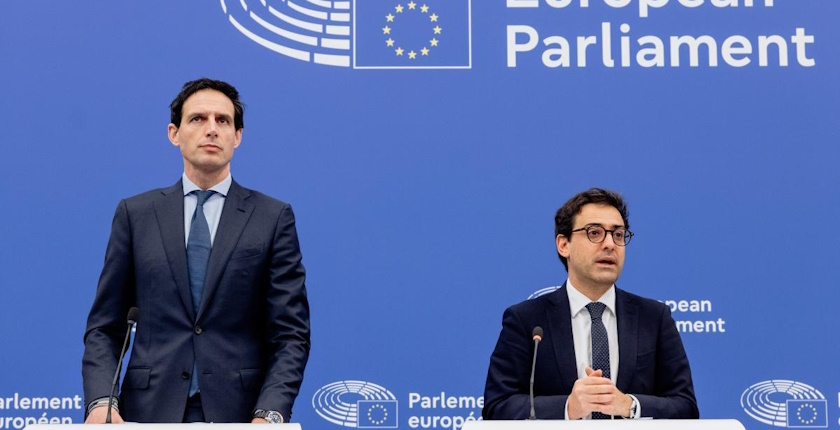
“CBAM makes sure there is a level playing field – that we’re not asking anything more, or asking anything less for those goods that come into the EU. And in doing so, we’re rewarding investments in low carbon… We’re not going to ask anything more from others, than we’re asking from ourselves. During the CBAM transition period, we learned important lessons. Our system was too broad, too clunky and had too many loopholes,” said European Commissioner for Climate, Net Zero and Clean Growth Wopke Hoekstra.

Thoroughly against evasion

The tax level is envisaged to be proportional to an established quantity of greenhouse gases released in production. However, if the authorities notice attempts to evade the levy, they can make the process of providing evidence stricter and, in the meantime, switch to a charge under the emissions factor of the particular country of origin.

“If I had to summarize these points in a few words, I would say: a simpler CBAM, more robust in its application, and fairer in its scope,” said the European Commission’s Executive Vice-President for Prosperity and Industrial Strategy Stéphane Séjourné.

Shortcut to exemption from CBAM for electricity

One of the measures is intended for easing the administrative burden for countries in the process of electricity market coupling with the EU, namely the Energy Community contracting parties.

There is going to be a possibility to sign an MoU with the European Commission with a detailed schedule

The commission may sign a memorandum of understanding with a third country, once the commission has assessed that the country has fully transposed the electricity market acquis, the proposal reads. The document would lay down details on the timeline for the CBAM exemption, including in relation to technical work still to be carried out between transmission system operators (TSOs), and for implementing a carbon pricing instrument equivalent to the EU ETS as far as electricity generation is concerned.

Hoekstra said technical adjustments to CBAM would be made to facilitate market coupling when the relevant countries are ready.

Import tax for electricity from Energy Community to be 30% lower on average

Stakeholder feedback and the experience with the implementation of CBAM during the transitional period – before the actual charge – demonstrated that the rules for electricity imports are overly rigid, the European commissioners added. In particular, they ascertained that progress in decarbonizing electricity production isn’t sufficiently acknowledged or encouraged.

Unlike with the goods, for electricity there is a default country-specific emissions value. It is based on production from fossil fuels and a five-year average. Coal is mostly dominant in the Western Balkans, except for Albania, which has a completely green mix. In addition, the conditions which must be met to declare actual emissions of electricity have proven to be almost impossible.

The proposed package is introducing solutions for electricity transit and cross-border PPAs

In the new setting, the national value will reflect the carbon intensity of all sources of electricity. The estimated taxes in the Energy Community would be over 30% lower on average.

The procedure is being streamlined for declaring actual emissions. On the other hand, at least in the Western Balkans, there has been almost no progress in that area. The proposed package is also introducing solutions for the hurdles in electricity transit through Energy Community Contracting Parties and cross-border power purchase agreements (PPAs).

Power imports from the Western Balkans account for 1% of the EU’s demand, but their share in Croatia, Bulgaria and Greece is significant, the European Commission explained. Importantly, exports of electricity to the EU represent some 58% of Montenegro’s exports to the EU, compared to 5% for Serbia and Albania.

Funds for maintaining competitiveness of domestic industrial producers in third countries

A fund has been launched to temporarily support EU producers of CBAM goods and mitigate carbon leakage risks. It addresses the competitiveness loss in third-country markets with a weaker climate policy and lower costs. Potential beneficiaries will have to demonstrate decarbonization efforts.

Th European commission is also preparing proposals for limiting scrap aluminum exports and using more scrap metal. Furthermore, it said pre-consumer metals scrap, from manufacturing, would come under CBAM.


Post Views:47
December 19, 2025
by AEA in News

Solarpro and LONGi collaborate on Europe’s largest back-contact solar plant

European leading EPC and O&M contractor of PV and BESS systems Solarpro is building what will be the largest solar power plant in Hungary, using photovoltaic modules from industry leader LONGi. Located in the northern county of Heves, the 450-megawatt project will deploy nearly 700,000 modules from LONGi’s ultra-efficient Hi-MO9 product series. The plant also marks an expansion of Solarpro’s partnership with LONGi, following a 176 MW solar park the two companies partnered on last year in Studina, Romania.

With a peak capacity of 450 MW, the new plant is expected to generate 470 gigawatt-hours (GWh) per year, enough electricity to power around 106,000 households annually.

Replacing fossil fuel use, the project’s clean energy output can reduce greenhouse gas emissions by 415,000 tons every year, the equivalent of removing over 100,000 gas-powered cars from the road.

Solarpro chooses LONGi’s back contact technology for watershed project

The Hi-MO9 solar module offers the plant the advantage of LONGi’s back contact (BC) technology, a complex engineering and design upgrade that reduces micro-cracking in the glass by 50% compared to traditional modules, increases electricity generation by up to 8%, and safeguards the module’s long-term performance – particularly under the sometimes-tough conditions present in northern rural Hungary, like high heat, dust, and cloud cover.

The 450 MW photovoltaic plant will be Hungary’s biggest

The BC module’s benefits also compound over the three decades of the product’s lifespan, meaning Solarpro’s new plant can anticipate more efficient production as well as more cost-effective, more reliable clean power for the area’s energy consumers.

Leon Zhang, President of LONGi Europe, said: “It’s an honour to supply Solarpro the modules for this landmark Hungarian project. In partnering with one of Europe’s leading project developers, we’re able to contribute to the region’s clean energy future and, at the same time, to set a new technological standard. At LONGi and Solarpro, we’re both committed to innovation and long-term sustainability, so we’re looking forward to continuing the cooperation.”

Krasen Mateev, CEO of Solarpro, said: “We are proud to join forces with LONGi once again on this major project in Hungary. At 450 MW, the solar plant will be Europe’s largest back-contact installation and a milestone in Solarpro’s mission to deliver reliable, high-efficiency clean energy across the region. The advanced technology of the Hi-MO9 was a clear choice to maximize the project’s performance and long-term reliability. By combining Solarpro’s EPC expertise with LONGi’s innovation, we are setting a new standard for utility-scale solar in Europe.”

About LONGi

Founded in 2000, LONGi is committed to being the world’s leading solar technology company, focusing on customer-driven value creation for full scenario energy transformation. Under its mission of ‘making the best of solar energy to build a green world’, LONGi has dedicated itself to technology innovation and established several business sectors, covering mono silicon wafers cells and modules, commercial & industrial distributed solar solutions, green energy solutions and hydrogen equipment.

The company has honed its capabilities to provide green energy and has more recently, also embraced green hydrogen products and solutions to support global zero carbon development.

About Solarpro

Solarpro is part of Renalfa Solarpro Group GmbH, a Vienna-based clean energy and e-mobility investment group with a focus on renewable energy generation assets.

As a multi-technology integrator, Solarpro specializes in developing and delivering hybrid projects that combine photovoltaic (PV), wind, battery energy storage systems (BESS), and hydrogen solutions. With 18 years of experience and a team of more than 1,500 professionals, the company has designed, built, and integrated over 12 GW of solar capacity and more than 4 GWh of battery storage systems.

A recognized technology innovator, Solarpro leads in the design and digitalization of renewable energy projects, turning them into flexible and manageable assets that align with the dynamic energy market. The company’s expertise has been acknowledged internationally, winning the award for Best EU Project under 100MW, for the first large-scale energy storage system in the region (55 MWh).

Driven by sustainability, Solarpro also invests in circular economy practices, advancing the recycling of PV modules and batteries to support the clean energy transition.

For more information, please contact us at [email protected]

Post Views:25
December 19, 2025
by AEA in News

Greek distribution operator slammed for wrongful power theft accusations

The Hellenic Distribution Network Operator (HEDNO or DEDDIE) has drawn severe criticism because of imposing fines for power theft in cases where no such wrongdoing took place.

Last year, HEDNO was asked by the government to step up its efforts to fight power theft, a major issue in the Greek market. In recent years, the phenomenon has worsened and is estimated to cost law-abiding consumers EUR 400 million per year. In 2022, 18% of the supplied energy was lost as a result of power theft or network losses in distribution. The number has remained high ever since.

However, the distribution system operator’s overzealous crews went over the top, fining consumers with thousands of euros, with little or no justification. In fact, there were cases where a drop in consumption as a result of irrelevant factors was considered power theft.

Households and businesses were obliged to pay, otherwise their supply would be cut off. Consequently, they must go to court to claim back the money, leading to a lengthy and costly process.

HEDNO fined by the regulator

The Regulatory Authority for Energy, Waste and Water (RAEWW or RAAEY) has stepped in to fix the problem. Ruling on a specific consumer’s complaint against HEDNO, it determined that the operator acted illegally and against provisions set by the Metering Code.

In fact, RAAEY accused HEDNO of enforcing power theft rules that it wanted added in the code, but which the regulator has not accepted. Based on the ruling, HEDNO was fined EUR 120,000.

It remains to be seen whether RAAEY will impose more fines, as the receiver of many such complaints. The body said it is not responsible for solving disputes between the operator and consumers. However, through the recent ruling it set a proper regulatory framework going forward.

Post Views:21
December 16, 2025
by AEA in News

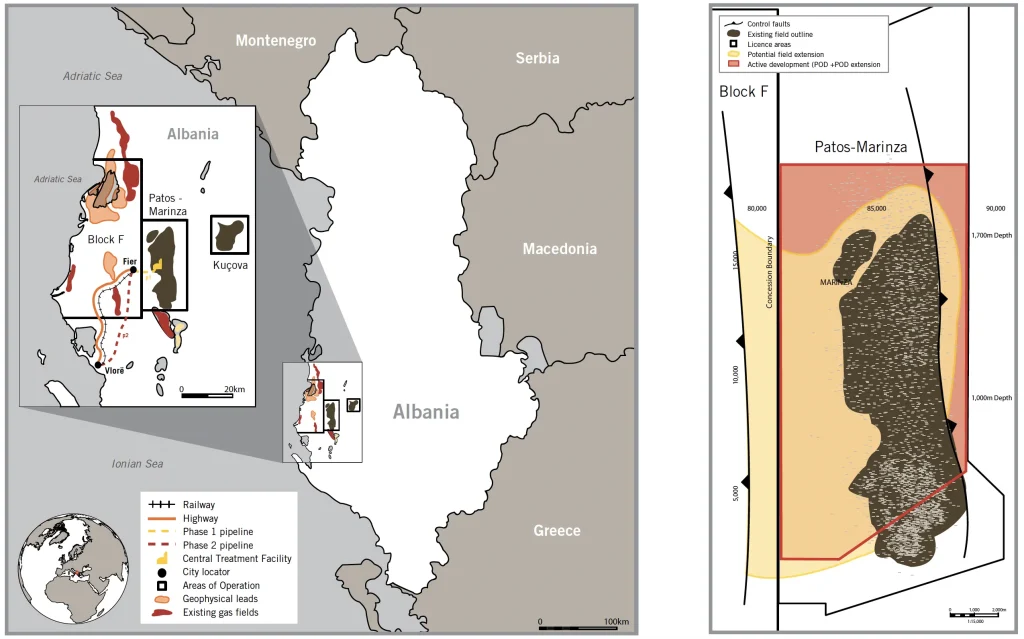
Bankers Petroleum in Albania: Production Halt, Tax Dispute, and Rising Labour Anger Converge

Bankers Petroleum Albania—operator of the Patos-Marinzë oilfield—has been hit by a fast-moving convergence of crises that now threatens both output and stability in one of Albania’s most strategic industrial zones. Within the space of roughly 24 hours, the company’s production activity was effectively frozen by customs authorities, while workers and subcontractors intensified protests over pay and working conditions, raising fears of a wider operational breakdown and renewed political escalation.

Customs blockade stops extraction at Patos-Marinzë

The most immediate shock came from the General Directorate of Customs, which—according to multiple Albanian media reports citing the company—ordered the blocking of Bankers Petroleum’s production and financial activity at the Patos-Marinzë extraction facilities. The stated trigger is an excise-tax dispute tied to the “diluent” used in heavy-oil production: customs authorities argue the company has not paid excise obligations for this input.

Bankers Petroleum

Bankers Petroleum’s response frames the action as arbitrary and procedurally unlawful, arguing that the diluent should not be subject to excise because it is not consumed in Albania and is used as a technical input in extracting and transporting crude that is exported. The company also points to a long-running legal conflict over this same issue, describing it as a matter still in court rather than one that should be enforced via an immediate operational shutdown.

Report TV links the current enforcement move to a much larger historical penalty: a fine totaling €120 million, reportedly assessed in 2019 after a customs investigation concluded Bankers had avoided at least €30 million in excise obligations related to diluent, with a further €90 million calculated as a penalty.

A technical shutdown with high-stakes consequences

Beyond the legal argument, Bankers and sector officials warn the stoppage is not a simple “pause.” Heavy crude at Patos-Marinzë requires continuous handling; once cooling begins, viscosity rises sharply and oil can solidify inside pipelines and storage infrastructure. In the company’s account—also quoted by Gazeta Shqip—Albania’s National Agency of Natural Resources (AKBN) has warned that extraction must run continuously (24/7) to avoid the crude becoming unusable in pipelines and tanks, and that storage constraints can force a full field shutdown with wider safety and environmental risks.

This is a critical point because it redefines the customs decision from a financial enforcement measure into an operational hazard: if the field is shut in abruptly, restarting can be technically difficult, expensive, and in some wells impossible—an argument Bankers uses to portray the blockade as disproportionately damaging to the Albanian state as resource owner, not only to the operator.

Labour unrest: “unpaid November” and a protest that is no longer isolated

While the customs dispute escalated at the institutional level, the social front has also heated up. The protest on 16 December 2025 did not appear in a vacuum. Earlier reporting through 2025 describes repeated mobilisations—demands for wage increases, implementation of collective agreements, improved working conditions, and recognition of oil-worker status. In October, workers were also reported to have entered a hunger strike, urging the state to mediate more actively. Bankers, for its part, previously acknowledged industrial action and union pressure but insisted production had continued normally during the strike period and pointed to planned increases in allowances while rejecting further wage hikes due to “financial pressures,” including oil-price weakness and exchange-rate effects.  The risk is that each pressure point amplifies the other: when workers fear wages are at risk, a state-ordered shutdown looks like confirmation; when the state sees instability, enforcement can harden.

A broader legal cloud hangs over the operator

Layered onto the operational and labour crisis is an expanding legal narrative around Bankers Petroleum’s finances.

Albania’s Prosecutor’s Office in Fier described an investigation alleging Bankers Petroleum Albania Ltd engaged in fraudulent schemes related to VAT, concealment of income, money laundering, and other offenses, with precautionary measures taken against multiple individuals and others declared wanted. The same source release claims the company reported losses consistently from 2004 through 2024, despite large volumes of exports and domestic sales, and alleges damages to the state budget linked particularly to fraudulent VAT claims.

This backdrop matters because it shapes how every new development is interpreted. For critics, the customs blockade and wage protests reinforce a narrative of a politically protected operator now facing overdue accountability. For the company, aggressive enforcement is portrayed as premature, legally questionable, and capable of destroying assets that ultimately belong to the Albanian public.

What is happening now—and what happens next

As of 16 December 2025, the situation around Bankers Petroleum can be summarised as a three-front confrontation:

  1. Institutional enforcement: Customs has moved to block operations over a contested excise obligation tied to diluent, with references in reporting to a much larger unresolved fine dating back to 2019.

  2. Operational risk: AKBN warnings cited in media coverage underline that halting heavy-oil production can cause technical damage and safety risks if the system is not managed carefully.

  3. Workforce instability: Protests and claims of unpaid wages—especially among subcontractors—indicate growing social stress at the field level, with political actors amplifying the message and demanding state intervention.

The immediate next steps are likely to unfold across institutions rather than at the wellhead: pressure on the Ministry of Finance to intervene, continued court and prosecutorial actions, and negotiations (formal or informal) over how the field can be kept safe and technically stable while legal disputes continue. The deeper question—still unresolved—is whether Albania’s largest onshore oil operation can sustain output and social peace while sitting at the intersection of labour conflict, tax enforcement, and criminal investigation.

If the blockade persists, the costs will not be measured only in barrels lost, but also in jobs, contractor liquidity, community safety, and the credibility of the state’s ability to regulate strategically vital assets without triggering destabilising shocks.


Bankers Petroleum Albania — operatori i fushës naftëmbajtëse Patos-Marinzë — është goditur nga një përqendrim krizash me zhvillim të shpejtë, që tashmë kërcënon si prodhimin ashtu edhe stabilitetin në një nga zonat industriale më strategjike të Shqipërisë. Brenda rreth 24 orëve, aktiviteti prodhues i kompanisë u ngrirë praktikisht nga autoritetet doganore, ndërsa punëtorët dhe nënkontraktorët intensifikuan protestat për pagat dhe kushtet e punës, duke rritur frikën për një prishje më të gjerë të operacioneve dhe një përshkallëzim të ri politik.

Bllokada doganore ndal nxjerrjen në Patos-Marinzë

Goditja më e menjëhershme erdhi nga Drejtoria e Përgjithshme e Doganave, e cila — sipas disa raportimeve të mediave shqiptare që citojnë kompaninë — urdhëroi bllokimin e aktivitetit prodhues dhe financiar të Bankers Petroleum në impiantet e nxjerrjes në Patos-Marinzë. Shkaku i deklaruar lidhet me një mosmarrëveshje për akcizën, që ka të bëjë me “diluentin” e përdorur në prodhimin e naftës së rëndë: autoritetet doganore argumentojnë se kompania nuk ka paguar detyrimet e akcizës për këtë input.

Reagimi i Bankers Petroleum e paraqet veprimin si arbitrar dhe procedurialisht të paligjshëm, duke argumentuar se diluenti nuk duhet t’i nënshtrohet akcizës, sepse nuk konsumohet në Shqipëri dhe përdoret si input teknik në nxjerrjen dhe transportin e naftës së papërpunuar që eksportohet. Kompania thekson gjithashtu se ekziston një konflikt ligjor i kahershëm për të njëjtën çështje, duke e përshkruar si një materie ende në gjykatë dhe jo diçka që duhet zbatuar përmes një mbylljeje të menjëhershme të operacioneve.

Report TV e lidh këtë lëvizje aktuale të zbatimit me një penalitet historik shumë më të madh: një gjobë totale prej 120 milionë eurosh, e cila thuhet se është vendosur në vitin 2019, pasi një hetim doganor konkludoi se Bankers kishte shmangur të paktën 30 milionë euro detyrime akcize që lidhen me diluentin, ndërsa 90 milionë euro të tjera u llogaritën si penalitet.

Një ndalim teknik me pasoja të mëdha

Përtej argumentit ligjor, Bankers dhe zyrtarë të sektorit paralajmërojnë se ndalimi nuk është një “pauzë” e thjeshtë. Nafta e rëndë në Patos-Marinzë kërkon trajtim të vazhdueshëm; sapo fillon ftohja, viskoziteti rritet ndjeshëm dhe nafta mund të ngurtësohet brenda tubacioneve dhe infrastrukturës së depozitimit. Sipas përshkrimit të kompanisë — i cituar edhe nga Gazeta Shqip — Agjencia Kombëtare e Burimeve Natyrore (AKBN) ka paralajmëruar se nxjerrja duhet të funksionojë pandërprerë (24/7) për të shmangur bërjen të papërdorshme të naftës në tubacione dhe depozita, si dhe se kufizimet e magazinimit mund të detyrojnë mbyllje të plotë të fushës, me rreziqe më të gjera për sigurinë dhe mjedisin.

Ky është një element kritik, sepse e riformulon vendimin e doganave nga një masë zbatimi financiar në një rrezik operacional: nëse fusha mbyllet papritur, rifillimi mund të jetë teknikisht i vështirë, i kushtueshëm dhe në disa puse i pamundur — një argument që Bankers e përdor për ta paraqitur bllokadën si proporcionalisht dëmtuese edhe për shtetin shqiptar si pronar i burimit, jo vetëm për operatorin.

Pakënaqësia e punës: “nëntor i papaguar” dhe një protestë që s’është më e izoluar

Ndërsa mosmarrëveshja me doganat u përshkallëzua në nivel institucional, edhe fronti social është tensionuar. Protesta e 16 dhjetorit 2025 nuk u shfaq në boshllëk. Raportime më të hershme gjatë vitit 2025 përshkruajnë mobilizime të përsëritura — kërkesa për rritje pagash, zbatim të marrëveshjeve kolektive, përmirësim të kushteve të punës dhe njohje të statusit të punëtorit të naftës. Në tetor, punëtorët raportohet se hynë edhe në grevë urie, duke i kërkuar shtetit të ndërmjetësonte më aktivisht. Bankers, nga ana e vet, më parë e pranoi ekzistencën e veprimeve industriale dhe presionin sindikal, por këmbënguli se prodhimi kishte vijuar normalisht gjatë periudhës së grevave dhe përmendi rritje të planifikuara të dietave/kompensimeve, ndërsa hodhi poshtë rritje të mëtejshme pagash për shkak të “presioneve financiare”, përfshirë dobësinë e çmimeve të naftës dhe efektet e kursit të këmbimit. Rreziku është që secili presion ta amplifikojë tjetrin: kur punëtorët druhen se pagat janë në rrezik, një mbyllje e urdhëruar nga shteti shihet si konfirmim; kur shteti sheh paqëndrueshmëri, zbatimi i masave mund të ashpërsohet.

Një re më e gjerë ligjore mbi operatorin

Mbi krizën operative dhe të punës shtresohet edhe një narrativë ligjore në zgjerim rreth financave të Bankers Petroleum.

Prokuroria e Fierit përshkroi një hetim që pretendon se Bankers Petroleum Albania Ltd është për leaving në skema mashtruese të lidhura me TVSH-në, fshehje të të ardhurave, pastrim parash dhe vepra të tjera penale, me masa sigurie ndaj disa personave dhe të tjerë të shpallur në kërkim. E njëjta deklaratë pretendon se kompania ka raportuar humbje në mënyrë të vazhdueshme nga 2004 deri në 2024, pavarësisht volumeve të mëdha të eksportit dhe shitjeve brenda vendit, dhe ngre pretendime për dëme në buxhetin e shtetit, veçanërisht të lidhura me kërkesa të rreme për rimbursim/kompensim të TVSH-së.

Ky sfond ka rëndësi, sepse formëson mënyrën se si interpretohet çdo zhvillim i ri. Për kritikët, bllokada doganore dhe protestat për paga forcojnë një narrativë se një operator i mbrojtur politikisht po përballet më në fund me llogaridhënie të vonuar. Për kompaninë, zbatimi agresiv paraqitet si i parakohshëm, i diskutueshëm ligjërisht dhe i aftë të shkatërrojë asete që në fund i përkasin publikut shqiptar.

Çfarë po ndodh tani — dhe çfarë mund të ndodhë më pas

Që nga 16 dhjetori 2025, situata rreth Bankers Petroleum mund të përmblidhet si një përballje në tre fronte:

  • Zbatim institucional: Doganat kanë lëvizur për të bllokuar operacionet mbi një detyrim të kontestuar akcize të lidhur me diluentin, me referenca në raportime për një gjobë shumë më të madhe të pazgjidhur që daton nga viti 2019.

  • Rrezik operacional: Paralajmërimet e AKBN-së të cituara në mbulim mediatik nënvizojnë se ndërprerja e prodhimit të naftës së rëndë mund të shkaktojë dëme teknike dhe rreziqe sigurie nëse sistemi nuk menaxhohet me kujdes.

  • Paqëndrueshmëri e fuqisë punëtore: Protestat dhe pretendimet për paga të papaguara — veçanërisht nga nënkontraktorët — tregojnë rritje të stresit social në nivel fushe, me aktorë politikë që e amplifikojnë mesazhin dhe kërkojnë ndërhyrje të shtetit.

Hapat e menjëhershëm ka gjasa të zhvillohen më shumë nëpër institucione sesa te pusi: presion mbi Ministrinë e Financave për të ndërhyrë, vijim i proceseve gjyqësore dhe veprimeve prokuroriale, si dhe negociata (formale ose joformale) për mënyrën se si fusha mund të mbahet e sigurt dhe teknikisht e qëndrueshme ndërsa mosmarrëveshjet ligjore vazhdojnë. Pyetja më e thellë — ende e pazgjidhur — është nëse operacioni më i madh tokësor i naftës në Shqipëri mund të ruajë prodhimin dhe paqen sociale, teksa gjendet në kryqëzimin e konfliktit të punës, zbatimit tatimor dhe hetimit penal.

Nëse bllokada vazhdon, kostot nuk do të maten vetëm me fuçi të humbura, por edhe me vende pune, likuiditet të kontraktorëve, siguri komunitare dhe me besueshmërinë e aftësisë së shtetit për të rregulluar asete strategjikisht jetike pa shkaktuar tronditje destabilizuese.

December 16, 2025
by AEA in News

MOL in talks about possibility of purchasing stake in Serbian NIS

Hungary acknowledged that state-controlled oil and gas company MOL is in discussions aimed at exploring the possibility of acquiring a stake in NIS. Based in neighboring Serbia, the oil refiner and service station chain operator is under sanctions that the United States imposed on its owner, Russian Gazprom Neft.

Gergely Gulyás, chief of staff of Hungarian Prime Minister Viktor Orbán, revealed today that integrated oil and gas company MOL, headquartered in Budapest, is conducting talks about the possibility of taking over an ownership stake in NIS – Naftna industrija Srbije. Speaking at a media briefing, he added that it is in the Serbian company’s interest to end Russian ownership, pointing out that US sanctions are jeopardizing its operations.

NIS, which runs the only refinery in the country and a service station chain, hasn’t received any oil in a month and a half. The facility, located in Pančevo near Belgrade, is about to halt its operations. NIS came under sanctions because it was majority-owned by Gazprom Neft.

Its parent company Gazprom later reduced Gazprom Neft’s stake to 44.5% and switched the remainder to another subsidiary. The US apparently demands a complete Russian exit.

MOL, not Hungarian government, is in discussions concerning NIS

Gulyás clarified that MOL, a public company, is the one in discussions about a potential stake purchase – not the government. Notably, Hungary controls the company indirectly, through several entities.

The government is ready to help neighboring Serbia with regard to a deal with MOL, the official stressed. Gulyás didn’t confirm or deny speculation that his prime minister would travel to Moscow tomorrow to meet with Vladimir Putin.

Orbán visited Serbia and met with President Aleksandar Vučić today. The Hungarian leader, who managed to get an exemption earlier from the US sanctions on Russian oil and gas, said he would engage in negotiations “in the coming days or tomorrow” to secure the actual supply and “not just papers and permits.”

Russian oil and gas will continue to flow to Hungary, so Serbia will be getting it, too, Orbán claimed.

Gulyás: Fuel export boost to Serbia not to disturb domestic supply

According to earlier media reports, Abu Dhabi National Oil Co. (ADNOC) from the United Arab Emirates is among the suitors for NIS.

Serbia has asked the US to suspend sanctions for 50 days. Vučić said the government would take over NIS if a buyer isn’t found.

Hungarian Minister of Foreign Affairs and Trade Péter Szijjártó said yesterday that MOL’s fuel deliveries to Serbia have been doubled and that they would be 2.5 higher in December on an annual scale.

Gulyás denied that the increase in exports to the neighboring country would disturb domestic supply.

Post Views:177
December 16, 2025
by AEA in News

EU presents European Grids Package: faster permitting, stronger interconnections, lower energy bills

The European Commission presented the European Grids Package, a comprehensive plan to modernise transmission infrastructure, accelerate permitting procedures, and overcome bottlenecks in Europe’s electricity networks. It also unveiled the Energy Highways initiative, which consists of eight major infrastructure projects critical for energy security, renewable energy integration, and cross-border electricity market connectivity.

Energy infrastructure is the backbone of the energy system. Yet the EU’s energy network remains insufficiently integrated, and investment levels fall short of what is needed, a situation that directly affects household energy bills.

Ageing infrastructure and limited interconnection capacity are creating bottlenecks that slow the energy transition. Although some progress has been made within the existing EU legislative framework, the level of interconnection among member states remains inadequate. Several countries are not on track to meet the 15% interconnection target by 2030.

To address these challenges, the European Commission has presented the European Grids Package and Energy Highways initiative. The aim is to enable a more efficient flow of energy across the EU, integrate greater volumes of renewable energy into the system, and accelerate electrification.

Jørgensen: A truly interconnected energy system is the foundation of a strong and independent Europe

The Grids Package is designed to speed up permitting and ensure a fairer distribution of costs for cross-border infrastructure. It should also improve the use of existing infrastructure and accelerate the development of networks and other physical energy assets across the EU.

Among the measures is a new mechanism that allows the commission to initiate the search for additional infrastructure projects when existing initiatives do not cover identified cross-border needs.

“A truly interconnected and integrated energy system is the foundation of a strong and independent Europe. To achieve it, we need an energy infrastructure network of cables, pipes and grids that is up to date, fully interconnected, and that enables clean, affordable, homegrown energy to flow freely and securely to every corner of our union. This is exactly what we are proposing today: a common European energy project that supports affordable living, economic competitiveness, security, and decarbonisation,” said Dan Jørgensen, European Commissioner for Energy and Housing.

Permitting reform

Slow permitting remains one of the biggest bottlenecks for energy infrastructure and renewable energy projects in the EU.
Obtaining permits for transmission infrastructure currently takes more than five years on average, while renewable energy projects may face delays of up to nine years.

The Grids Package introduces simplified and accelerated permitting procedures. The commissioners have proposed setting time limits within which decisions must be taken for all types of projects. If the competent authority fails to respond within the deadline, the permit would be considered granted.

Permits for smaller projects would be issued through faster and more streamlined procedures

Permits for smaller projects would be issued through faster and more streamlined procedures. All processes would have to be fully digitalised, and national administrations would be required to have adequate staffing and technical capacity to process applications.

The commission is proposing to move away from the current first-come, first-served model and introduce a system that ensures timely and non-discriminatory access to the grid, one that balances social acceptance and industrial competitiveness.

Public and private financing

According to the commission’s estimates, EUR 1.2 trillion in investment will be needed for Europe’s electricity grid by 2040. Distribution networks account for EUR 730 billion within the sum, compared to EUR 240 billion for hydrogen infrastructure.

The commission said additional financing tools are required, including cost-sharing arrangements, arguing that cross-border infrastructure generates benefits that extend beyond the territory in which a project is located.

Another suggested solution is the formation of project firms (special purpose vehicles – SPVs) to attract additional private investment.

Given that grid infrastructure is largely financed through network tariffs, part of the burden falls on consumers. To ease this pressure, the commission announced it would boost financial support through the Multiannual Financial Framework (MFF), the EU’s regular seven-year budget, including a significant expansion of the Connecting Europe Facility (CEF). The tool is designed to support investments in new cross-border energy infrastructure and upgrades or rehabilitation of existing assets.

The current 2021–2027 EU budget contained EUR 5.8 billion for cross-border projects under CEF. For the 2028–2034 period, the commission said the amount would be raised almost fivefold, to EUR 29.91 billion.

On the private side, the EU is working on its Clean Energy Investment Strategy, to launch it in 2026 by outlining measures for private sector participation including institutional investors, as well as additional support from the European Investment Bank (EIB).

Energy Highways

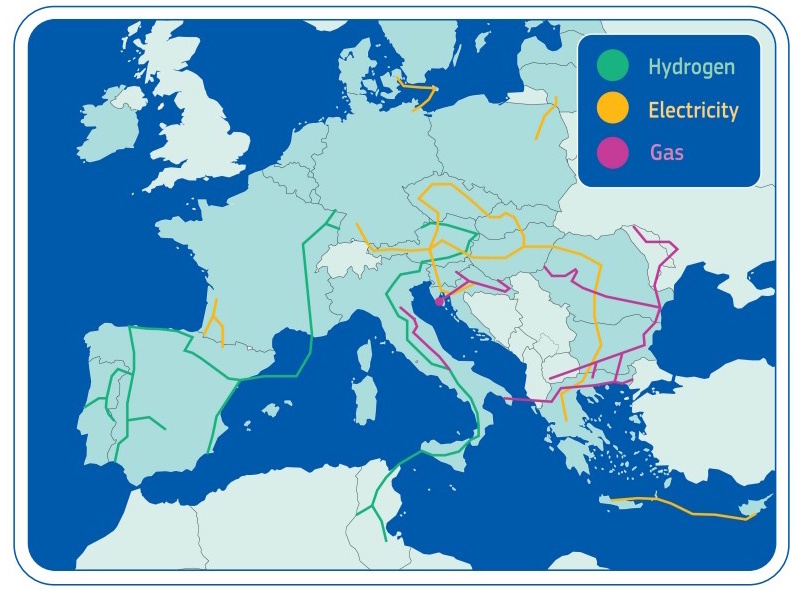
The Energy Highways initiative comprises eight of the EU’s largest and most critical infrastructure projects, essential for energy security, renewable energy integration, and cross-border electricity market connectivity.

They have already been already listed as Projects of Common Interest (PCI) or Projects of Mutual Interest (PMI), but under the new initiative, they would receive elevated political priority, accelerated financing, and faster permitting.

Energy Highways
Photo: European Commission

Among the projects are the reinforcement of interconnections across the Pyrenees to improve the integration of the Iberian Peninsula, the connection of Cyprus with continental Europe through the Great Sea Interconnector, as well as an upgrade of electricity links between the Baltic states, including the Harmony Link to Poland, which is essential for the full synchronisation of the region with the European grid.

The commission has also endorsed the establishment of Denmark’s hub on the island of Bornholm, which could, in the coming years, be connected to additional locations in the Baltic Sea.

Among the priorities are strengthening energy storage capacity in South-Eastern Europe

Among the priorities are strengthening energy storage capacity in South-Eastern Europe, as well as the modernisation of the Trans-Balkan Pipeline (TBP) for gas.

The list includes two hydrogen corridors. The southern one would connect Tunisia, Italy, Austria, and Germany, and the south-western corridor is a planned link between Portugal, Spain, France, and Germany. The commission has announced strong coordination and political support for the latter.

The commission views these projects as pillars of Europe’s future energy network, essential for lower electricity prices, greater system stability, and reduced dependence on fossil fuels.

In a regular legislative procedure, the proposals now move to the European Parliament and the Council of the EU for further deliberation.

Post Views:70
December 16, 2025
by AEA in News

Greek authorities launch electricity market probe

The Hellenic Competition Commission (HCC) and the Regulatory Authority for Energy, Waste and Water (RAAEY or RAEWW) began a double probe into the Greek electricity market.

The move follows a report by the European Union Agency for the Cooperation of Energy Regulators (ACER) concerning the formation of wholesale prices during the period between July and September 2024.

The body focused on Greece, since it is the only country in the region of Southeast Europe for which detailed market data was available from the power exchange about the offers from producers and the supply-demand curves.

ACER has called national authorities to conduct a market probe to find out whether manipulation and capacity withholding took place during the hours with the most extreme prices.

In its announcement, HCC said it was looking into possible horizontal deals or harmonized practices between companies, with the goal of preventing, limiting or degrading competition. It is focusing especially on capacity withholding and dominant market position abuse. It explained, however, that the checks do not predetermine the outcome of the procedure.

RAAEY pointed out that the goal of its probe is to protect consumers and enforce the Regulation on Wholesale Energy Market Integrity and Transparency (REMIT).

Investigation follows industry suggestions

According to Energypress, HCC conducted raids and collected data from three particular companies, namely Public Power Corporation (PPC), Heron and Enerwave (formerly Elpedison).

In fact, authorities are examining not just the three-month period of last year, but also market operations in 2025.

Industrial consumers in Greece have been claiming for the past year that there is manipulation in the market, leading to inflated prices. They have called for an investigation and interventions to restore transparency.

“ACER‘s findings are not compatible with normal market player behavior as part of the Target Model,” commented the Chairman of the Hellenic Union of Industrial Consumers of Energy (UNICEN), Antonis Kontoleon.

Post Views:59
December 16, 2025
by AEA in News

Slovenia draws up first climate vulnerability, risks assessment for energy sector

In cooperation with the Jožef Stefan Institute, the Ministry of the Environment, Climate and Energy has issued the first national assessment of climate vulnerability and risks for the energy sector. The analysis shows that the sector is moderately vulnerable under current climate conditions.

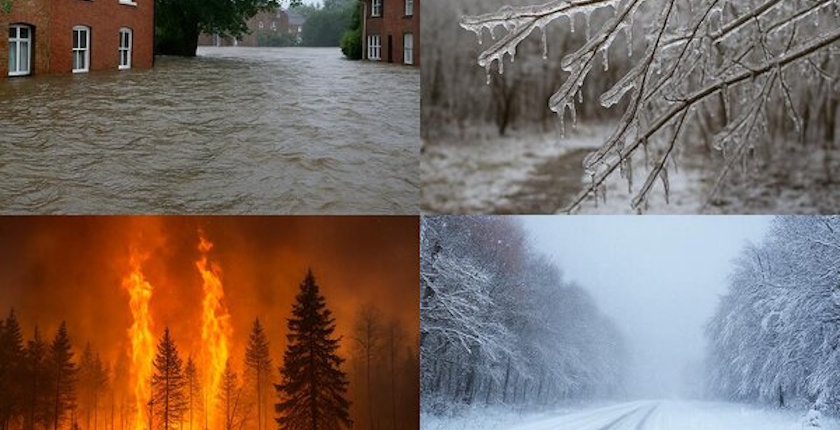
The main threats to the energy sector in Slovenia are floods, fires, storms, landslides, sleet and wet snow, heatwaves, and drought.

The assessment of climate vulnerability and risks for the energy sector was produced in line with the IPCC AR5 methodology and the national guidelines of the Faculty of Biotechnology.

The greatest threat to the energy sector are floods, which jeopardize fuel storage, substations, electricity distribution networks, and other elements of the supply chain, the ministry underscored.

The most important subsystem is liquid fuels

By using weighting and considering the current energy mix and the state of infrastructure, the most important subsystems for the functioning of the overall system are liquid fuels (34%) and electricity (33%), followed by natural gas (18%), solid fuels (10%), and heat (5%), the assessment reads.

This reflects a high dependence on imported liquid fuels and the key role of electricity in all consumption sectors, the ministry explained.
The overall weighted vulnerability score for the energy sector is 2.3 on a scale of one to five, with the electricity subsystem having the highest vulnerability, 2.6.

Electricity distribution grids, solar power plants, and fuel transport and logistic routes also show high vulnerability, according to the assessment.

Subsector ratings:

  • electricity subsector (2.6)
  • liquid fuel supply (2.2)
  • solid fuel supply (2.2)
  • natural gas supply (around 2.0)
  • heat supply (1.9)

Regarding individual elements of the sector, the most vulnerable are the electricity distribution network (3.5), electricity transmission system and imports (3), preparation of firewood, wood chips and pellets, and photovoltaic plants (3); vehicles/tanks for liquid fuels and vehicles/trucks for solid fuels, fuel stations, and other renewable energy sources (2.5).

The identified risks are expected to intensify in the future

The assessment reveals that Slovenia’s energy sector comprises critical elements whose failure could lead to significant supply disruptions.

It provides a technical basis and starting point for preparing a climate change adaptation strategy and for drafting measures such as strengthening infrastructure resilience, reviewing planning for new facilities, and incorporating climate risks into strategic documents and investment plans, according to the ministry.

Climate change scenarios indicate that the already identified risks will intensify in the future – especially floods, storms, and heatwaves.

The ministry said it would be necessary to implement adaptation measures to ensure a reliable energy supply.

Post Views:37
December 16, 2025
by AEA in News

Firms from Croatia, BiH, Serbia to build power line in North Macedonia

Croatia-based Dalekovod, Elnos from Bosnia and Herzegovina, and Serbian Kodar Energomontaža will jointly build electricity transmission infrastructure in North Macedonia.

Dalekovod said it signed a EUR 19.7 million contract with MEPSO, the transmission system operator of North Macedonia, as the lead member of a consortium that includes Elnos BL and Kodar Energomontaža.

The contracted works include the delivery and construction of a 400 kV power line from the 400/110 kV Bitola 2 substation, via the 400/110 kV Ohrid substation, to the North Macedonia – Albania border.

The project ensures long-term stability of the electricity system in the wider region

The new Ohrid substation is currently under construction, with Končar, another Croatian company, as contractor. Končar is the majority shareholder of Dalekovod since 2022.

The Croatian firm pointed out that the new power line in North Macedonia represents a significant infrastructure project ensuring long-term stability of the electricity system in the wider region.

Dalekovod: Strengthening position in the regional and European market

Construction is scheduled for completion by mid-2028.

Of note, all three companies are active on the territory of former Yugoslavia, as well as across Europe and even worldwide. The owners of Elnos and Kodar are individuals from Bosnia and Herzegovina and Serbia, respectively, while the largest shareholders of Dalekovod are the Government of Croatia and three foreign banks operating in the country.

Operations in the region, Europe, Africa

Dalekovod has subsidiaries in six countries, including Namibia. In October, the company concluded a EUR 100 million deal for the construction of a 400 kV power line in Sweden.

Elnos BL is part of Elnos Group based in Banja Luka, Bosnia and Herzegovina. The company, which recently marked a remarkable dual jubilee – 80 years of tradition and 30 years of modern business development, operates in 18 countries.

A week ago, it signed a contract with Power China Construction Group to build a connection to the transmission grid for the 300 MW Vetrozelena wind farm in Serbia.

Kodar Energomontaža, headquartered in Serbia’s capital Belgrade, has carried out numerous projects across Europe – from southeastern Balkans to Scandinavia, as well as in West Africa.

In March, the company inked a deal with Serbia’s transmission system operator Elektromreža Srbije (EMS) for the construction of a two-system 400 kV transmission line, part of the Trans-Balkan Electricity Corridor.

Post Views:49
December 16, 2025
by AEA in News

Energy system based on renewables is cheapest solution to achieve net zero by 2050 – study

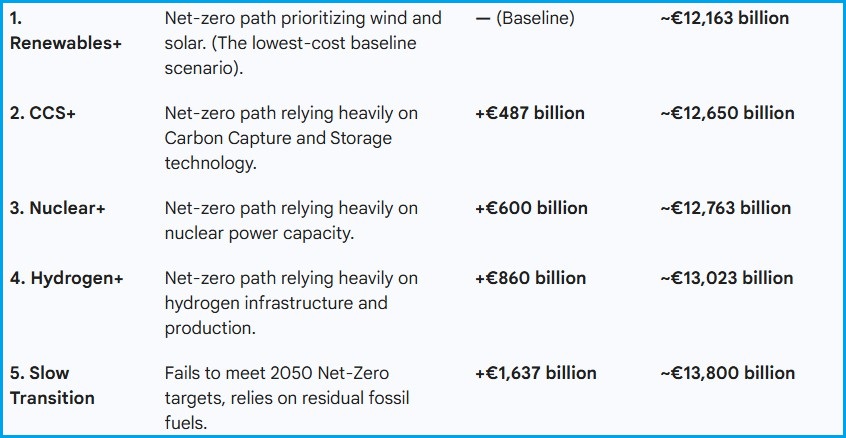
A European energy system based on a high share of renewable energy is the cheapest scenario until 2050 for achieving the net-zero goal, when compared to an increased use of nuclear capacity, or hydrogen, or carbon capture and storage, and against a delayed energy transition, according to a study produced by Hitachi Energy for WindEurope.

Costs for each scenario include not only generation facilities, but investments in grids, storage and back-up systems, according to WindEurope.

The study has mapped out the total system costs of five energy scenarios. Four scenarios deliver net zero and the remaining one is for a slow transition, where Europe doesn’t meet its climate targets, wind power advocacy group said.

The difference between the cheapest net zero path (Renewables+) and the most expensive path (Slow Transition) is EUR 1.64 trillion, the study reveals.

eu energy system 2050 scenarios costs hitachi study

The study’s authors calculated the total societal cost of building, operating, and adapting to the required energy system across electricity, transport, heat, and industry to meet or fall short of the 2050 climate targets.

The total system costs have three major groups of expenses.

The first group are new infrastructure investments in generation assets, as well as in grid, hydrogen, storage and carbon capture and storage (CCS) infrastructure.

Operational expenses are represented by fuel and CO2 costs, while the third group are electrification and demand shift costs.

The Renewables+ scenario drastically lowers import dependency

The Renewables+ scenario achieves net zero by 2050 through a massive deployment of variable renewable energy, primarily wind and solar power, leading to high electrification across the energy mix.

The renewables share reaches 85% of total electricity and nearly 70% of total gross available energy. Dependency on imported energy fuels falls drastically from 71% in 2030 to just 22% in 2050, the report reads.

“As Europe looks ahead to 2050, it is revealing to think what our energy system looked like 25 years ago. Back in 2000 the share of wind and solar in Europe’s electricity was a combined 0.8%. It’s 30% today. And Europe’s emissions are down by nearly 1/3 compared to 2000 while the economy has grown 45%. Let’s build on this success,” WindEurope stressed.

It is an inception report for the Energy System Costs Study, a project commissioned by WindEurope.

Post Views:48
  • 1
  • …
  • 30
  • 31
  • 32
  • 33
  • 34
  • …
  • 140

AEA – Albania Energy Association is a industry association dedicated to representing the interests of Albanian and West Balkan for energy producers and consumers. AEA works to advance the development and adoption of sustainable energy solutions in Albania and the Western Balkans, supporting the region’s transition toward a cleaner, more secure, and more competitive energy future. AEA is registered by decision of the Court of Tirana, DECISION NO. 3032, (VAT:L11827451K).

[email protected]

Address
Blv Zogu 1
Tirana
1057
ALBANIA

LinkedIn  |  Facebook
Events
May 25, 2022 Connecting Green Hydrogen Europe 2022
May 25, 2022 Energy Week Western Balkans 2022
Copyright © Albania Energy Association