AEA-Albania Energy Association
  • Main
  • About Us
  • Services
  • Sectors
  • News
  • EventsEvents
  • PublicationPublication
  • Contact Us
AEA-Albania Energy Association
  • Main
  • About Us
  • Services
  • Sectors
  • News
  • EventsEvents
  • PublicationPublication
  • Contact Us
AEA-Albania Energy Association
  • Home Page
  • About Us
  • Sectors
  • Our Services
  • News
  • Contact Us
December 27, 2025
by AEA in News

OX2 completes 99 MW wind farm in Romania, starts building another – for clients

Sweden-based OX2 installed the last turbine at Nala Renewables’ Green Breeze wind farm in Romania as the contractor for its former project. Earlier it launched the construction of the Ansthall Green Energy facility of 96 MW for HELLENiQ Energy, under a similar arrangement. The company has also bought three wind power projects in Romania, totaling 235 MW.

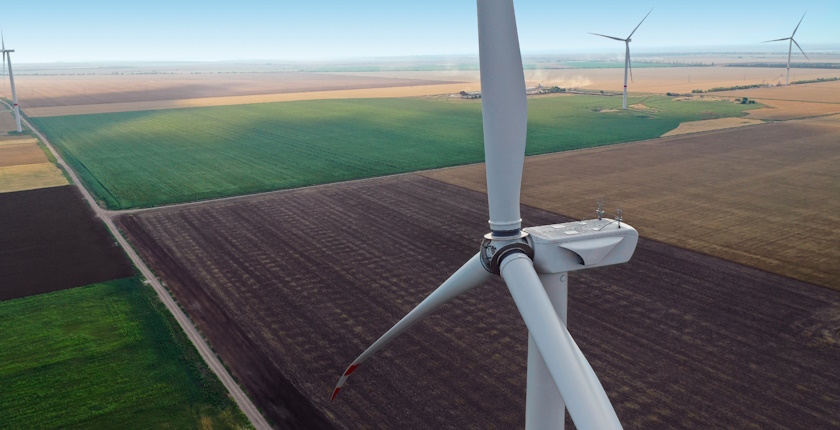
OX2 Romania, a subsidiary of Swedish OX2, completed the last wind turbine at the Green Breeze facility of 99.2 MW. Construction started just over one year ago. The company sold the project last year to Nala Renewables, but stayed on as a contractor.

It was the first project in the country for OX2, which entered it four years ago. The facility is in Galați county in eastern Romania. The Sweden-based firm will also be tasked with operating the wind park, consisting of 16 Vestas V162-6.2 MW machines.

The forecasted annual output is 312 GWh. It is equivalent to the electricity consumption of 51,000 Romanian households.

Nala Renewables claimed that Green Breeze would lower carbon dioxide emissions by 150,000 tons per year, per the United Nations Climate Change IFI Default Grid Factors. IFI stands for international financial institutions.

Apple recently expressed interest in buying electricity from Green Breeze under a long-term virtual power purchase agreement or vPPA.

Project pipeline in Romania expands by 235 MW

Earlier this month, OX2 said it acquired three wind power projects in Romania totalling 235 MW from Future Power. The sites are in Vaslui and Vrancea counties. OX2 boosted its portfolio in the country to more than 1.1 GW with the transaction.

It expects to commission the three facilities between 2028 and 2030, subject to permitting. OX2 also continues to develop additional wind projects in regions with strong wind resources including Constanța, Brăila and Galați.

The company has nine onshore wind projects under­ construction in Romania, 195 MW overall, and 766 MW in development, as well as 150 MW in solar and battery storage projects.

OX2 breaks ground for Ansthall wind farm after selling it to HELLENiQ Energy in August

Within an arrangement similar to the one with Nala Renewables, OX2 started building the Ansthall Green Energy wind farm of 96 MW in November. It is located in Galaţi, in the communes Scânteiesti, Fârţăneşti, Cuca, Schela, Cuza-Vodă, Pechea, Rediu and Slobozia-Conachi.

The wind farm is set to feature 15 Vestas V162 turbines of 6.4 MW, the largest in Romania so far. Rezolv Energy is installing the same kind in its giant project Vifor in Buzău.

HELLENiQ Renewables Romania, operating under HELLENiQ Energy, acquired the project from OX2 in August. The Greek company expects to put the facility into operation in 2027.

Total annual output is estimated at 309 GWh, equivalent to the electricity needs of 89,000 domestic households.

Earlier, OX2 signed a 12-year virtual power purchase agreement (PPA) with Koninklijke Ahold Delhaize, for 158 GWh per year. The future offtaker operates supermarket chains.

Headquartered in Stockholm, OX2 is owned by EQT, one of the world’s largest private equity firms.
Post Views:53
December 27, 2025
by AEA in News

Bislimoski urges ESM to pivot toward market procurement of electricity

State-owned power utility Elektrani na Severna Makedonija should make the most of the opportunities when prices on the power market are lower than its production costs, according to Marko Bislimoski, President of the Energy, Water Services and Municipal Waste Management Services Regulatory Commission of the Republic of North Macedonia (ERC or RKE).

​Marko Bislimoski doesn’t see the future of Elektrani na Severna Makedonija (ESM) only in production. He expressed the belief it should also be much more active in the wholesale and retail markets.

The mindset that ESM should only produce power should be abandoned, in his view.

In times when the price of electricity in the domestic and regional market is lower than its production price, it is much more logical for the company to buy it on the market, Bislimoski underlined.

This is going to reduce costs, he added.

ESM should purchase electricity when prices are lower than its costs as well as when the level is below the one at which it sells the energy to universal supplier EVN Home, Bislimoski pointed out. The firm is responsible for all households, among other categories.

North Macedonia’s solar power capacity has reached 1,200 MW

He recalled that solar power plants with a total capacity of 1,200 MW are installed in the country.

Their owners sell electricity on the market to other suppliers and traders, who then resell it to consumers.

If ESM offers them a fair price, it would have a stable and predictable cost structure in terms of purchasing and producing electricity, Bislimoski pointed out.

He noted that ESM imports coal and mixes it with domestic coal, which has caused an increase in its power production costs. In Bislimoski’s view the company can offer a fair price over a longer period, five to 10 years.

Solar power would save water in hydropower plant reservoirs and coal for thermal power plants

It would enable, especially in the summer and spring months, the purchase of electricity from domestic photovoltaic plants at a price that should be lower than EUR 65 per MWh, avoiding losses, according to Bislimoski.

Of note, the company has offered to supply electricity to EVN Home at a rate of EUR 65 per MWh for 2026.

Purchasing electricity from photovoltaic plants would allow saving water in hydropower plant reservoirs, and only one unit in the REK Bitola coal power would be required to work during some daily hours, Bislimoski concluded.

Post Views:45
December 27, 2025
by AEA in News

Hidroelectrica to set up joint venture with EDF for 1 GW pumped storage project

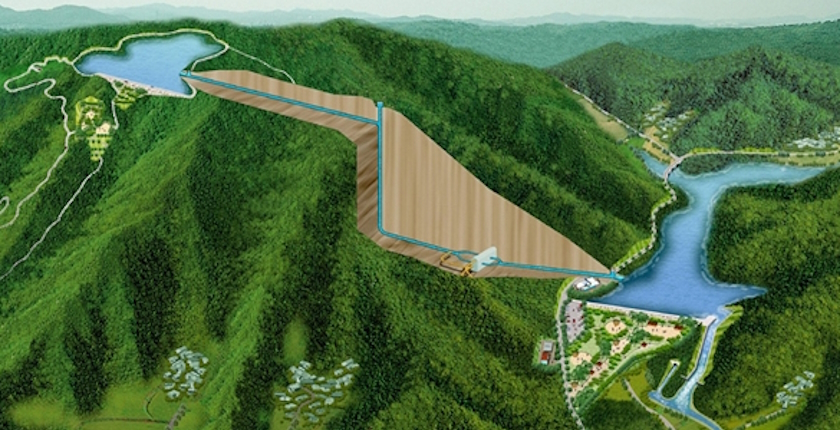
After numerous failed attempts for half a century, Romania intends to revive the Tarnița-Lăpuștești pumped storage hydropower project in tandem with France’s EDF. State-owned Hidroelectrica published a proposal to its shareholder assembly to establish a 50%-50% joint venture for the 1 GW endeavor. The utility also intends to buy the Frasin-Pângărați pumped storage facility when Hidro Blue Energy builds it.

The plans for Tarnița-Lăpuștești date back to mid-1970s. According to a feasibility study from 2008, updated in 2014, the pumped storage hydropower plant on the river Someşul Cald in Romania would consist of four units of 250 MW each. After numerous failed attempts, the Ministry of Energy sat with the representatives of Japanese Itochu and French EDF last year to discuss the project.

In November 2024, Romania signed a memorandum of understanding with Itochu. The latest update came from government-controlled hydropower plant operator Hidroelectrica. It has just scheduled an extraordinary general meeting of shareholders for January 27.

Romania may fast-track Tarnița-Lăpuștești project

In a stock exchange filing, Hidroelectrica said it is proposing a joint undertaking with EDF Power Solutions International, where both state-owned companies would have equal stakes.

The location for Tarniţa-Lăpuşteşti is 30 kilometers from Cluj-Napoca, Transylvania’s biggest city. The river is called Meleg-Szamos in Hungarian.

The old study envisages five to seven years of construction. Within a legislative push to unlock dormant hydropower projects, the project could be given a priority status. In that case, it would be exempted from some permits including the obligation to conduct the study all over again.

Hidroelectrica plans to buy Frasin-Pângărați pumped storage hydropower plant upon its commissioning

In another item for the meeting, Hidroelectrica seeks approval for obtaining advisory services with regard to its intention to acquire, upon commissioning, the Frasin-Pângărați pumped storage hydropower plant.

A company called Hidro Blue Energy is working on the project for 300 MW. The location is in Neamț County in the northeast. Lake Bicaz would be the facility’s lower reservoir.

Hidroelectrica said it would update shareholders about the upcoming refurbishment of pumped storage systems Petrimanu, Jidoaia and Lotru, downstream of the Dorin Pavel hydropower plant. The utility has awarded the contract to Electromontaj, with Elin Motoren, Voith Hydro and Butan Grup as subcontractors.

The project is worth EUR 97.9 million, excluding value-added tax.

Hidroelectrica is also rehabilitating hydroelectric plants Gogoșu, Bradișor and Stejaru.

The company has RON 56.23 billion (EUR 11.04 billion) in market capitalization, according to data from the Bucharest Stock Exchange. The government has an 80.1% share.

Post Views:55
December 27, 2025
by AEA in News

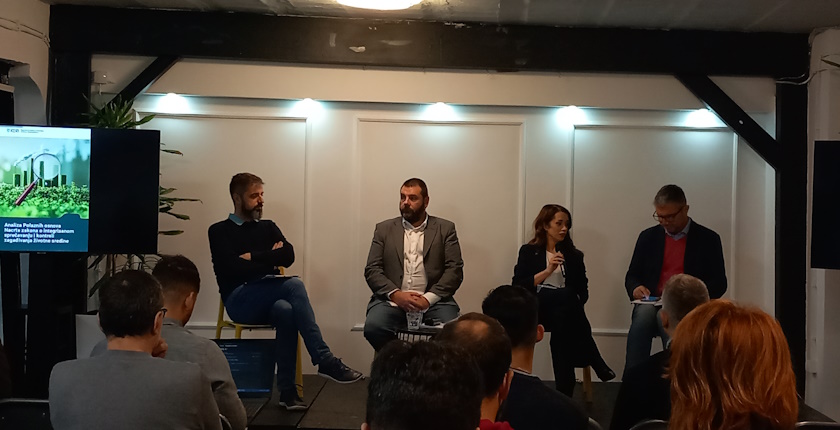
Major industrial polluters in Serbia continue to pollute air, soil, water without control

Around 150 companies in Serbia, potentially major polluters of water, air, and soil, have not obtained their integrated pollution prevention and control permits by December 31, 2024. It means they are violating the Law on Integrated Pollution Prevention and Control and, more importantly, that no one controls how much they pollute the environment, according to the analysis of the basic premises of the Draft Law on Integrated Pollution Prevention and Control, produced by the Renewables and Environmental Regulatory Institute (RERI).

About 220 operators are required to own an integrated pollution prevention and control (IPPC) permit for their industrial and intensive agricultural facilities, such as power plants, oil refineries, large chemical and metal facilities, as well as farms.

Ones that haven’t fulfilled their legal obligation include large and profitable companies such as power utility Elektroprivreda Srbije (EPS) and Serbia Zijin Copper.

The Law on Integrated Pollution Prevention and Control has been in force since 2004. Its aim was to introduce integrated pollution prevention and control, as well as to transpose the European Union’s Industrial Emissions Directive (IED).

The draft of the new law was recently published

The deadline for obtaining IPPC permits was initially the end of 2020, but it was then postponed to the end of 2024. The basic premises for the new law were published in February. The draft law, recently published as well, is in the public consultation phase.

Programme Director of RERI Mirko Popović stressed that citizens should be aware that there are major polluters and that they are the most profitable and wealthiest companies in Serbia. In his view, they are exempted from the application of the law, to the detriment of the citizens, because they pollute the environment – air, water, soil.

Popović: We want to protect people’s health, property, and rights

Citizens should be aware that when EPS emits 300,000 tons of sulfur dioxide (SO2), it goes into the atmosphere and partially turns into fine particulate matter that pollutes the air and enters the lungs, Popović noted. Some of it becomes acid rain that falls on the soil, making agricultural land less fertile, he added.

“Citizens are obliged to pay taxes, to obey the law, but these polluters aren’t,” Popović pointed out.

According to RERI’s programme director, citizens should know that RERI, an NGO dealing with these problems, doesn’t want to eliminate jobs, close factories, or hinder development.

“We want to protect the health, property, and rights of people,” Popović underscored.

Minić: Pollution reduces economic growth in the long term

serbia ippc permits reri report law
Photo: RERI

When a company has an IPPC permit, it means that it is obliged to implement best available techniques (BAT) while its operations are monitored for comprehensive reduction of air, water, and soil pollution and for compliance with strict emission limit values.

When a company doesn’t have one, the environment is exposed to greater, uncontrolled pollution, since the law doesn’t apply to it.
The legislation stipulates strict emission limit values, defined maximum levels of pollutants, including heavy metals, SO2 and nitrogen oxides (NOx) that a facility is allowed to emit into the air, water, or soil.

Pollution has a negative impact on GDP

According to Slobodan Minić, Senior Economist at Fiscal Council, everything regarding the IPPC law is based on the paradigm that investing in BAT, or technologies that minimize harm to the environment and human health, increases costs and slows growth.

“However, it has been overcome in the world at least a decade ago, because as data on air and environmental pollution became available, more and more research has been conducted on how it affects health. The public in Serbia now knows well what the impact is, between 10,000 and 15,000 premature deaths annually. According to economic literature, pollution also adversely affects GDP,” he stated.

We must think of this not as a cost, but as an investment

He recalled that an OECD study showed that an increase in the average concentration of PM2.5 by one microgram reduces GDP by 0.98%.

“If we want to break out of this vicious circle, we must think of this not as a cost, but as an investment. Not just in the production facility, but in human capital, because it contributes to economic growth, instead of hindering it. Otherwise, in the long term, society and the economy will suffer,” Minić concluded.

Vojvodić: The initial principles do not promise changes in the new law

serbia ippc permits reri report law popovic vojvodic minic
Slobodan Minić, Mirko Popović and Hristina Vojvodić (photo: RERI)

Public consultations on the draft law, which began on November 27, last until December 15.

Hristina Vojvodić, legal advisor in RERI, pointed out that core problems aren’t addressed.

The basic premises of the draft law should have identified the shortcomings of the existing law, based on the 20 years of its implementation, in her view. It isn’t good that these premises were defined without the participation of the members of the working group for the draft law, she explained.

This is a signal to the public, experts, members of the working group that the problems that have been identified were sidelined, Vojvodić asserted.

Of note, RERI produces reports on the implementation of IPPC law to help reduce pollution originating from industry. The organization also defines recommendations for improving the enforcement of regulations and sanctions for polluters.

According to RERI, the research for the latest analysis went beyond the scope of the basic premises. It decided to expand the report to include the issues in the implementation of the law and offer fact-based solutions.

Post Views:209
December 27, 2025
by AEA in News

From construction waste to circular economy: how STRABAG drives green transition

Today, the construction industry is at the crossroads between tradition and transformation. Accounting for approximately 40% of the global energy consumption and for more than 35% of the overall CO₂ emissions, this sector has a huge potential, as well as a responsibility to become one of the key leaders of change in environmental protection. It is this change where STRABAG in Serbia recognises its task and opportunity: through recycling and reuse of materials, solar energy consumption, electric vehicles and digital innovation, the company demonstrates that sustainability can be an integral part of every construction phase.

Acting responsibly, objectively and ethically, STRABAG operates in accordance with the highest integrity standards. Aiming to expand business operations to new areas, they develop innovative and creative approaches within defined frameworks, utilising resources regionally, purposefully and efficiently. Their goal is to become the market leader via automation and adoption of new technologies, while pledging to achieve climate neutrality and CO₂ emission reduction.

Circular economy in practice: second life of materials

Construction waste is no longer and must not be the end of a process, but the start of a new cycle. For instance, concrete that used to end up at a landfill is now treated as a valuable resource: after separating reinforced elements and crushing, the material is reused in construction, as an aggregate for bases, foundations or access roads. This reduces the need for exploiting natural resources, the volume of waste at landfills and CO₂ emissions resulting from transport and production of new materials. The approach confirms that the construction industry can be a generator of a circular economy, rather than just its observer.

By recycling materials, STRABAG enhances processes and rationalises costs, while setting a new benchmark in responsible resource management, thus following its strategic goal of transforming every construction site into a part of a closed, sustainable construction cycle by 2040.

“Our objective is to turn every tonne of waste into a resource in the next project – that is the essence of the circular approach,” STRABAG’s representatives say.

Solar energy and electric mobility: construction sites of the future

In line with STRABAG’s Work On Progress strategy and aiming to become climate neutral by 2040, the company is introducing photovoltaic (PV) panels at its facilities, construction sites and logistics and asphalt bases in Serbia. Solar systems enable a reduction of power consumption from the grid, as well as of CO₂ emissions, thus directly contributing to the company’s global objective.

Green transition also includes the transport segment. STRABAG is modernising its vehicle fleet and introducing e-vehicles and new-generation construction machinery, decreasing its fossil fuel consumption and overall carbon footprint. By combining solar energy sources and electric mobility, construction sites become self-sustainable, with more environmentally responsible and technologically advanced daily operations.

Digital tools – less paper, more efficiency

Not only does digital transformation in STRABAG represent the implementation of new technologies, but it also changes the method of managing each segment of a construction site. By introducing the SSO (Smart Site One) application, the process of planning, monitoring and optimising operations is fully digitalised, from asphalt transport to final installation phases. The app connects people, machinery and processes in real time, thus eliminating downtime, increasing efficiency and reducing fuel consumption and waste.

Furthermore, the company has developed the 5S application (based on the 5S principles – sort, set in order, shine, standardise, sustain), aimed at monitoring order, safety and implementation of the LEAN methods at construction sites. This digital tool enables daily on-site status monitoring, design of automatic reports in order to reduce the risk of injuries, for orderly construction sites with optimal resource use, while additional values: 6S (safety), 7S (team spirit) and 8S (sustainability), facilitate further the culture of safety, team spirit and environmental awareness.

With these applications, STRABAG connects digitalisation and sustainability, showcasing that modern construction can simultaneously be precise, efficient and environmentally responsible.

Journey to climate neutrality

STRABAG in Serbia is implementing an ambitious plan, harmonised with its global ESG strategy and climate neutrality goals. The focus is both on technological innovation and systemic change in the method of construction, use of resources and day-to-day operations.

Key objectives set by the company include the following:

  • 50% of recycled materials in construction processes by 2030
  • CO₂ emission reduction of 42% per project by 2030
  • Fully electric or hybrid vehicle fleet by 2035

Besides technical and infrastructure measures, STRABAG continuously invests in employee education via LEAN and sustainability training courses (training in environmental protection), promoting the principles of sustainable construction, energy efficiency and responsible resource management. As a result, sustainability within the company goes beyond restrictions of individual initiatives, becoming a part of the corporate culture and mindset in every segment of operations.

STRABAG’s sustainability story is more than a series of projects – it is a long-term strategy that changes the future perspective of the construction sector.

“Sustainability is not a trend, but a new foundation of quality. What we are building today must last for the generations to come,” STRABAG’s representatives concluded.

Post Views:162
December 20, 2025
by AEA in News

Serbia is first Energy Community contracting party to enter verification phase of market coupling

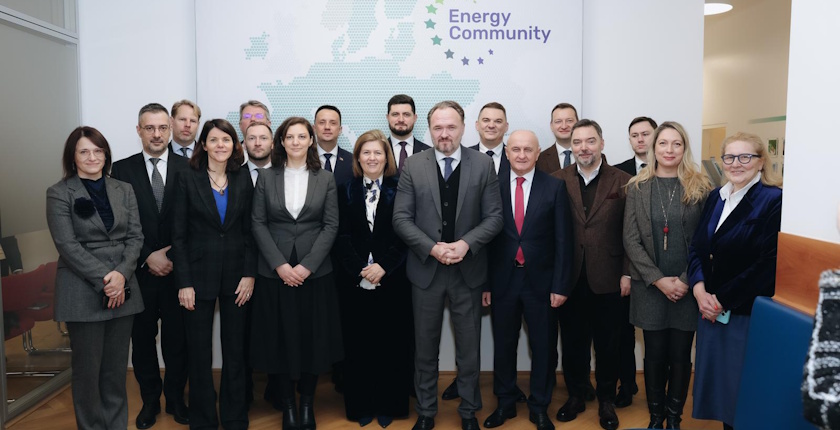
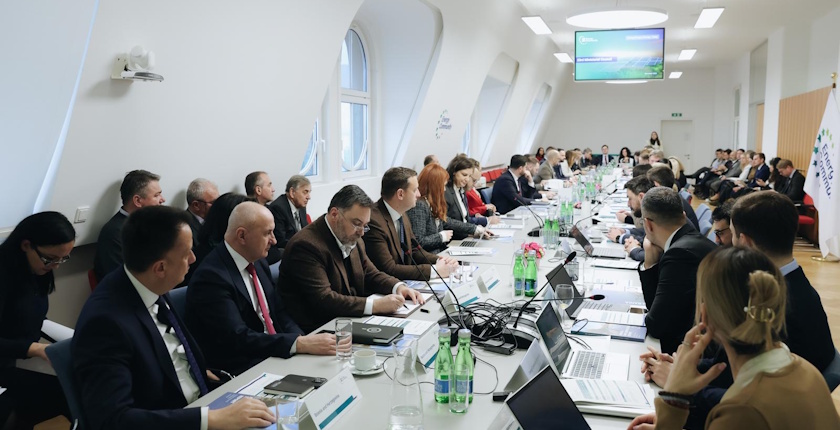
Serbia is the first Energy Community contracting party to enter the verification phase of the market coupling procedure, the Energy Community Secretariat said after the annual meeting of the Ministerial Council in Vienna.

At the Energy Community Ministerial Council, ministers addressed energy security, market integration, climate policy, and environmental protection, confirming a shared EU–contracting parties direction for Europe’s energy future, according to the secretariat.

Ministers and representatives of the secretariat also discussed the amendments to the Carbon Border Adjustment Mechanism’s regulation revealed by the European Commission yesterday. The meeting was attended by European Commissioner for Energy Dan Jørgensen.

The secretariat underlined that several contracting parties are now approaching a decisive stage in electricity market integration ahead of accession, having fully or nearly transposed the Electricity Integration Package (EIP).

The two-step verification phase for Serbia kicked off on October 22

Subject to verification of compliance by the European Commission, this progress opens the door to electricity market coupling with the EU internal market ahead of accession, it added.

“Serbia has already entered the verification phase, while Moldova has fully transposed the package. In this context, ministers underlined that the CBAM, entering into force in January,  should not pose an issue for cross-border electricity trade,” the update reads.

eu region ministerial council 2025 meeting
Photo: Energy Community Secretariat

Full electricity market integration ahead of accession offers a clear pathway to safeguarding decarbonization gains, supporting fair and efficient cross-border electricity exchanges, and attracting clean energy investment, according to the secretariat.

The two-step verification phase for Serbia kicked off on October 22. The first step is the verification by the secretariat, and the second by the commission.

The secretariat must complete the verification within three months, by January 22. The process is in the final stage, Balkan Green Energy News has learned.

The European Commission has five months to do its part

Once this is finished, the commission has five months to do its part. If the commission’s verification is positive, Serbia could meet the end-July deadline to apply for market coupling. The next phase involves technical activities, and it lasts 18 months.

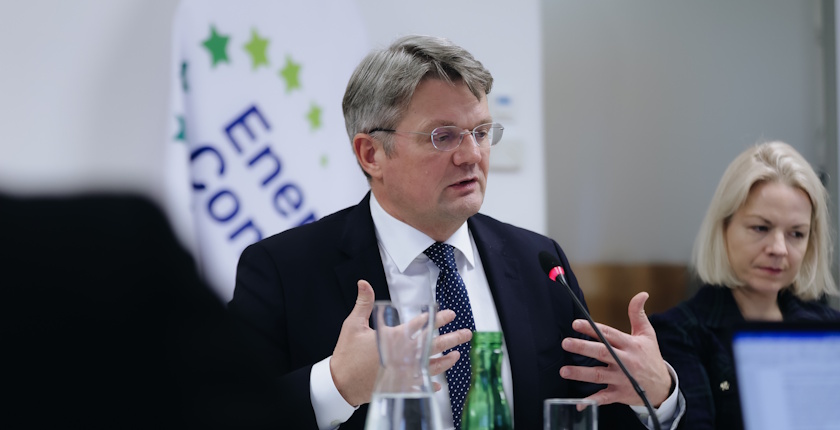
“We are very deep in the process of verifying what Serbia has adopted. Now we are about to start this process for Moldova. And soon, I hope, after the remaining elements of the legislative package are adopted by Montenegro and North Macedonia, the verification can start in these two cases,” stressed Artur Lorkowski, Director of the Energy Community Secretariat.

He added that it has taken two decades of cooperation to build the momentum toward market coupling that ministers today have consolidated.

Lorkowski: The voice of the Energy Community ministers on CBAM has been heard by the commission

eu region ministerial council 2025 artur lorkowski
Artur Lorkowski (photo: Energy Community Secretariat)

Regarding the European Commission’s amendments to the CBAM regulation, he recalled that, on behalf of the ministers, the secretariat has sent a list of 11 different issues that needed to be addressed.

“The voice of the Energy Community ministers has been heard by the commission, and the progress which has been made in the contracting parties has been recognized. We see that in different amendments which are proposed. The proposal is going in a good direction. If you ask me whether this is satisfactory and whether it solves all of the problems, no, for two reasons,” he underscored.

The first reason is that it requires time, and the damage will be done from January 1, 2026, when the CBAM implementation starts.

Jørgensen: A lot of progress has happened

“We already see that, for example, the allocations of the cross-border power lines between the contracting parties and the EU member states for next year are dropping significantly,” Lorkowski explained.

The second reason is the issue of completeness. “We are still not certain whether, for example, renewables in the contracting parties can be treated equally as those in the EU,” he said, and added that the secretariat is in communication with the commission on these issues.

According to European Commissioner for Energy Dan Jørgensen, it is clear that a lot of progress has been made in what will hopefully be future EU member states or neighbors, especially in the transposition of EU energy law.

Focus on four issues

According to the secretariat, the ministers further committed to advancing a coherent and predictable framework to sustain electricity market integration while creating the enabling conditions for the clean energy transition.

The secretariat highlighted four issues.

First, contracting parties will individually pursue national carbon pricing models according to their domestic circumstances, while work continues to explore coordination possibilities and ensure coherence between national carbon pricing systems in view of their gradual alignment with the EU ETS.

Second, the Energy Community framework will further incorporate core EU legislation on nature conservation, biodiversity, and water protection into the Energy Community Treaty.

Third, to keep momentum behind the rapid growth of renewables, the contracting parties will step up efforts to secure mutual recognition of guarantees of origin with the EU.

Finally, effective coordination and implementation of national energy and climate plans (NECPs) is critical, participants agreed.

The EU’s recent agreement on the 2040 climate targets sets a clear direction, and contracting parties must follow this pathway as they develop their long-term energy and climate policies, the update reads.

Post Views:71
December 20, 2025
by AEA in News

Enery obtains financing for 600 MWh battery project in Bulgaria

Austria-based Enery intends to commission a four-hour battery storage system of 150 MW in central Bulgaria by the end of the first quarter of next year. The project relies on a virtual power purchase agreement (PPA) with Vitol.

Enery said it has secured a green financing package from DSK Bank AD for its flagship 600 MWh battery energy storage system (BESS) in Nova Zagora, Bulgaria. It is one of the country’s most advanced storage financing deals to date, supporting its transition toward a more flexible and renewables-powered energy system, the update reads.

The facility would have 150 MW in capability, meaning it can operate at full power for four hours. It would be the biggest BESS in Bulgaria at this moment, according to available data, though there are larger projects underway as well.

The site is in a coal region centered on the Stara Zagora lignite basin, in the central part of the country.

Virtual PPAs, optimization services are key for bankability

Enery scheduled the commissioning for March. The BESS would feature its own substation, linked to a new 33/110 kV substation on the transmission grid.

The Austria-based independent power producer revealed that it has signed an innovative virtual power purchase agreement (PPA) with Vitol.

“Sophisticated instruments such as virtual financial deals, combined with Enery Portfolio Optimization’s best-in-class physical optimization services, are now key to unlocking bankable storage projects. This transaction demonstrates how innovative commercial structures, when paired with disciplined execution, can create long-term value for both lenders and project sponsors,” Chief Commercial Officer Severin Vartigov stated.

Vitol plans many more deals with Enery

Vitol expressed confidence that there would be many more deals with Enery. The global energy and commodity trader, headquartered in Geneva, has experience in developing, owning and optimizing BESS in Australia, Europe and the United States, the update adds.

Enery operates a diversified portfolio of 566 MW, generating 766 GWh of clean electricity per year. Its development pipeline is nearing 10
GW across 10 countries in Central and Eastern Europe.

The firm also manages more than 700 MWh of battery capacity across its own and third-party systems. In Bulgaria, it is present through its Enery Element joint venture as well.

Post Views:35
December 20, 2025
by AEA in News

European Commission proposes easing 2035 car emissions rules

The European Commission has proposed a new Automotive Package that aims to give carmakers greater flexibility in meeting emissions reduction requirements. The new rules would lower the emissions cut target from 100% to 90%, allowing the sale of hybrid and internal combustion vehicles after 2035.

From 2035 onwards, carmakers will need to comply with a 90% emissions reduction target, while the remaining 10% emissions will need to be compensated through the use of low-carbon steel produced in the European Union, or from e-fuels and biofuels, according to a press release from the commission.

“This will allow for plug-in hybrids (PHEV), range extenders, mild hybrids, and internal combustion engine vehicles to still play a role beyond 2035, in addition to full electric (EVs) and hydrogen vehicles,” reads the announcement.

Carmakers will be incentivized to produce affordable EVs

The commission is also proposing “super credits” to incentivize carmakers to produce small, affordable electric cars made in the European Union. This measure would be in place until 2035.

Hoekstra: The EU is staying the course towards zero-emissions mobility

European Climate Action Commissioner Wopke Hoekstra has said the EU is staying the course towards zero-emissions mobility, but introducing some flexibilities for manufacturers to meet their CO2 targets in the most cost-efficient way.

The move comes amid pressure from car manufacturers, who claim their business is threatened by competition from China and the United States, according to reports.

The move comes amid pressure from European carmakers

Several EU member states – Germany, Italy, Bulgaria, the Czech Republic, Hungary, Poland, and Slovakia – say their automakers are struggling with high energy prices, a shortage of components, including batteries, and weak demand for electric vehicles.

The proposal includes a EUR 1.8 billion package to help develop a fully EU-made battery value chain and tackle competition from outside the bloc. As part of the accompanying Battery Booster package, EUR 1.5 billion will be disbursed in interest-free loans to European battery manufacturers, according to the press release.

Post Views:34
December 19, 2025
by AEA in News

Nofar Energy launches work on Romania’s largest solar park

Israel’s Nofar Energy has begun construction of the 282 MW Corbii Mari solar park in Romania, with plans to connect it to the grid next year. The project is being financed from a recently secured EUR 192 million financing package that also covers the company’s two other large solar facilities in Romania.

The financing for Nofar’s projects was arranged by the European Bank for Reconstruction and Development (EBRD). The bank is providing a EUR 64 million loan, with the remaining EUR 128 million mobilized from commercial lenders.

In addition to Corbii Mari, the financial package covers the Iepurești II and Slobozia solar parks. The total capacity of all three projects is 531 MW, and the planned annual electricity production is 676 GWh.

Two solar parks are zero-subsidy projects, while the third has secured a contract for difference

Corbii Mari and Iepurești II will sell electricity on Romania’s competitive day-ahead market, while Slobozia will benefit from a 15-year contract for difference (CfD), according to an EBRD press release.

In late 2023, when Nofar acquired the Corbii Mari project, it was announced that the solar power plant would produce 362 GWh of electricity a year, enough to meet the needs of around 160,000 households.

There are several solar projects in Romania larger than Corbii Mari in various stage of development. These include the 1 GW Dama Solar, developed by Czech company Rezolv Energy, and the 300 MW Butimanu project, implemented by the investment division of Sweden-based Ingka Holding, the largest IKEA franchisee company.

Austria-based Enery is preparing to begin construction works early next year on a photovoltaic facility of 750 MW in peak capacity just outside of Bucharest.

Corbii Mari is set to be Romania’s biggest solar park to date

Given the longer completion timelines for these projects, Corbii Mari is expected to be Romania’s largest solar park for a time, local media reported. The top spot is currently held by Econergy’s Rătești solar power plant, with an installed capacity of 155 MW.

Nofar is also building its Ghimpați solar project near Bucharest, with an installed capacity of 146 MW. Earlier this year, the Israeli company said it had connected to the grid its solar park in Ada, the largest such system in neighboring Serbia.

Post Views:56
December 19, 2025
by AEA in News

Engie Romania to double its renewables capacity with 253.1 MW wind farm project

Engie Romania, a subsidiary of French energy giant Engie, has bought a 253.1 MW wind farm project in Ialomiţa County. The wind farm, currently under construction, will double the company’s renewable energy portfolio in Romania to over 500 MW.

The Ialomiţa Nord wind farm project was acquired from the Romanian subsidiary of Portugal-based Greenvolt, owned by US investment fund KKR. The value of the transaction was not disclosed. According to earlier reports, the project is valued at EUR 400 million.

With 42 turbines, Ialomiţa Nord will be among the largest wind farms in Romania. It is expected to become fully operational in 2027, local media reported, and sell electricity through a 15-year contract for difference (CfD).

The project will benefit from a 15-year contract for difference

Engie Romania currently owns and operates a total of 248 MW of renewable energy facilities – three wind farms, with a total capacity of 178 MW, and six solar power plants, totaling 70 MW. Ialomiţa Nord will increase its total renewables generation capacity in the country to 501.1 MW.

“With this acquisition, Engie continues to make significant progress in achieving its development plans in Romania, doubling its installed capacity for renewable energy production and consolidating its position in a market with remarkable potential,” said Cristian Buzan, Executive Vice President of Engie Romania.

The company has also secured CfDs for two other projects – one wind farm and one solar park – with a combined capacity of 224 MW. Earlier this year, it completed the acquisition of a 54 MW wind power project. The site is in Mereni in central Romania.

Engie plans to boost its renewables production and energy storage capacity in Romania to 1 GW

Engie’s objective is to increase its renewable energy production and storage capacity in Romania to 1 GW by 2030. The company supplies natural gas and electricity to over 2.3 million customers in Romania.

Post Views:32
  • 1
  • …
  • 28
  • 29
  • 30
  • 31
  • 32
  • …
  • 140

AEA – Albania Energy Association is a industry association dedicated to representing the interests of Albanian and West Balkan for energy producers and consumers. AEA works to advance the development and adoption of sustainable energy solutions in Albania and the Western Balkans, supporting the region’s transition toward a cleaner, more secure, and more competitive energy future. AEA is registered by decision of the Court of Tirana, DECISION NO. 3032, (VAT:L11827451K).

[email protected]

Address
Blv Zogu 1
Tirana
1057
ALBANIA

LinkedIn  |  Facebook
Events
May 25, 2022 Connecting Green Hydrogen Europe 2022
May 25, 2022 Energy Week Western Balkans 2022
Copyright © Albania Energy Association