AEA-Albania Energy Association
  • Main
  • About Us
  • Services
  • Sectors
  • News
  • EventsEvents
  • PublicationPublication
  • Contact Us
AEA-Albania Energy Association
  • Main
  • About Us
  • Services
  • Sectors
  • News
  • EventsEvents
  • PublicationPublication
  • Contact Us
AEA-Albania Energy Association
  • Home Page
  • About Us
  • Sectors
  • Our Services
  • News
  • Contact Us
January 1, 2026
by AEA in News

Elektroprivreda BiH to invest EUR 885 million over next three years

Government-controlled power company Elektroprivreda BiH plans to invest BAM 1.73 billion (EUR 884.6 million) over the next three years, according to its 2026-2028 business plan.

The investments would be financed through loans, and BAM 538 million (EUR 275 million) from own funds of Elektroprivreda BiH (EPBiH), which operates in the Federation of BiH. Of note, it is one of the two entities making up Bosnia and Herzegovina. The other one is the Republic of Srpska.

In line with available funds and restructuring plans, the company intends to continue investing in coal mines within the EPBiH group over the three-year period.

The goal is a stable and sustainable coal production at the volume needed for the planned operation of the thermal power plants, the utility said.

The previous business plan, for the 2025-2027 period, provided for investments of BAM 2.1 billion (EUR 1.074 billion).

The three-year period should be marked by the construction of a large number of PV plants

EPBiH has highlighted the construction of new renewable energy power plants as a long-term strategic and priority goal. The construction of several solar power plants at already identified locations are particularly significant, the plan reads.

The upcoming three-year period should be marked by the construction of a large number of PV facilities at multiple locations on mining sites, company-owned land, on the roofs of its own facilities and those of its customers, EPBiH explained.

EPBiH also plans to acquire operational renewable energy facilities as well as projects in development. The plan envisages the purchase or lease of land suitable for the construction of solar power plants.

Positive business performance and maintaining the position as the dominant electricity supplier in BiH are also outlined in the business plan, adopted by the company’s assembly.

Desulfurization and denitrification of flue gases projects are planned for two thermal power plants

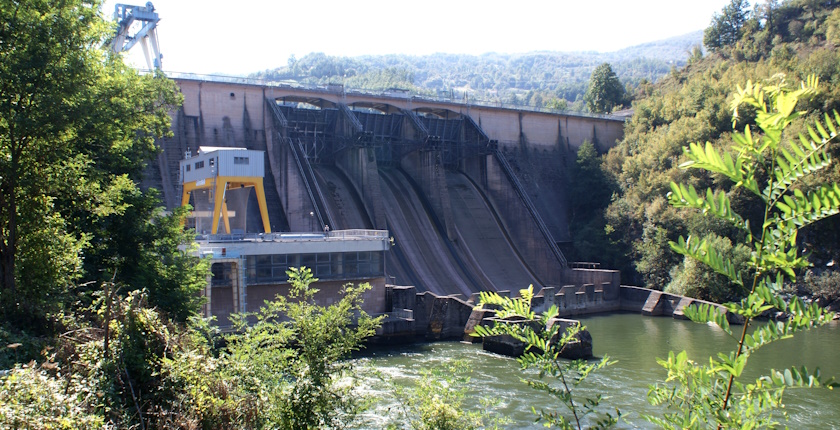
EPBiH has launched flue gas desulfurization and denitrification projects for its Tuzla and Kakanj coal-fired power plants. It would also upgrade unit 7 in Kakanj, unit 4 in Tuzla, and the Salakovac hydropower plant.

The document envisages the establishment of the distribution system operator (DSO), based on the provisions of the Law on Electricity of the Federation of BiH. It came into force in August 2023.

The law stipulates unbundling the distribution activity from EPBiH and establishing the DSO as a separate legal entity, a 100%-owned subsidiary, the company underlined.

Post Views:60
January 1, 2026
by AEA in News

Athens International Airport builds biggest photovoltaic-BESS plant

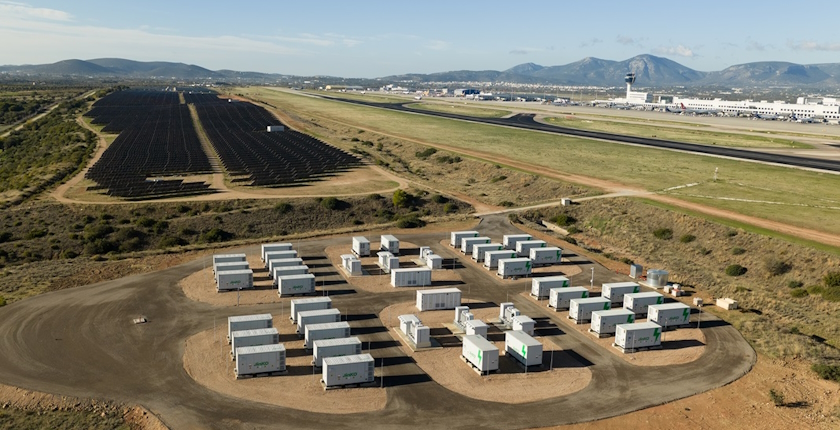
Athens International Airport (AIA) Eleftherios Venizelos completed its comprehensive energy makeover program. It is now operating a photovoltaic facility of 51.5 MW and a battery energy storage system of 82 MWh. It is the largest hybrid power plant of its kind within the premises of any airport in Europe and, reportedly, even the entire world.

At the same time, the Bucharest Henri Coandă International Airport is about to build 12.6 MW in peak PV capacity and a BESS of 17.9 MWh, in the first phase of a larger project.

Following European and global trends, airports in Southeastern Europe are introducing resource, waste and wastewater management systems. Energy is the largest segment of the decarbonization push. With the completion of its Route 2025 program, Athens International Airport Eleftherios Venizelos covered all its electricity needs with photovoltaics, becoming the only such airport in Europe.

In the groundbreaking project, the operator extended the existing solar power plant by 35.5 MW in peak capacity, reaching 51.5 MW, and added a battery energy storage system. The facility has 124 MWh in nominal capacity, of which 82 MWh is usable.

The hybrid system is the largest of its kind inside the fence of any airport in Europe, while the Greek press has even called it the largest in the world. Some of the world’s largest airports are set to follow soon. For instance, IGA Istanbul Airport is investing EUR 212 million in an external solar power plant of 199.3 MW, in Eskişehir.

Athens International Airport builds biggest photovoltaic BESS plant
Photo: Athens International Airport

Hybrid power plant to keep Athens International Airport at net zero through 2046

AIA’s PV-BESS plant will generate an estimated 88 GWh per year, which is equivalent to the consumption of 22,000 households. The storage system is only for self-consumption. Importantly, the hybrid system can cover the entire planned expansion up to 2046, when the concession period ends.

AviAlliance, which controls 50.2% of the public-private partnership, is a wholly-owned subsidiary of Public Sector Pension Investment Board (PSP Investments) from Canada. The government holds 25.6% through Superfund, officially Growthfund – The National Fund of Greece.

AIA launched Route 2025 six years ago, with the aim to cut net greenhouse gas emissions to zero by the end of this year. It compares to the 2050 net zero goal of the European airports sector.

The Route 2025 program was worth EUR 70 million

The investments totaled EUR 70 million. A significant portion was financed through loans from the European Union’s Recovery and Resilience Facility (RRF), the update adds.

Heat pumps have eliminated the need for natural gas in buildings at AIA in normal winter conditions. The electric vehicle fleet consists of 19 buses, 13 follow-me vehicles and 29 vans. A network of chargers also serves passenger cars.

“In the airport company, we operate on the basis of the principle that sustainability, and environmental responsibility in particular, are and will increasingly be prerequisites for what we call the social license to operate and grow,” said outgoing Managing Director of AIA Yiannis Paraschis.

Two airports in Romania receive EU funds for solar-BESS projects

As for other recent developments in the Balkans, operators of two airports in Romania received grants via the European Union’s Modernisation Fund for solar power plants with battery storage.

National Company Bucharest Airports (CNAB) signed a contract for RON 132.04 million (EUR 25.9 million) excluding value-added tax. It is for 12.6 MW in peak PV capacity and a BESS of 17.9 MWh at the Bucharest Henri Coandă International Airport in Otopeni.

The entire investment amounts to RON 176.9 million (EUR 34.7 million) excluding VAT. The Romanian state-owned company said it is the first phase of a project for 31.5 MW and 30 MWh overall, valued at EUR 55.7 million.

Bacău International Airport George Enescu will build a solar power plant of 1.25 MW and a BESS of 2.06 MWh. Bacău County Council will also provide support for the on-site project on 2.2 hectares, worth more than EUR 4.9 million.

Post Views:76
January 1, 2026
by AEA in News

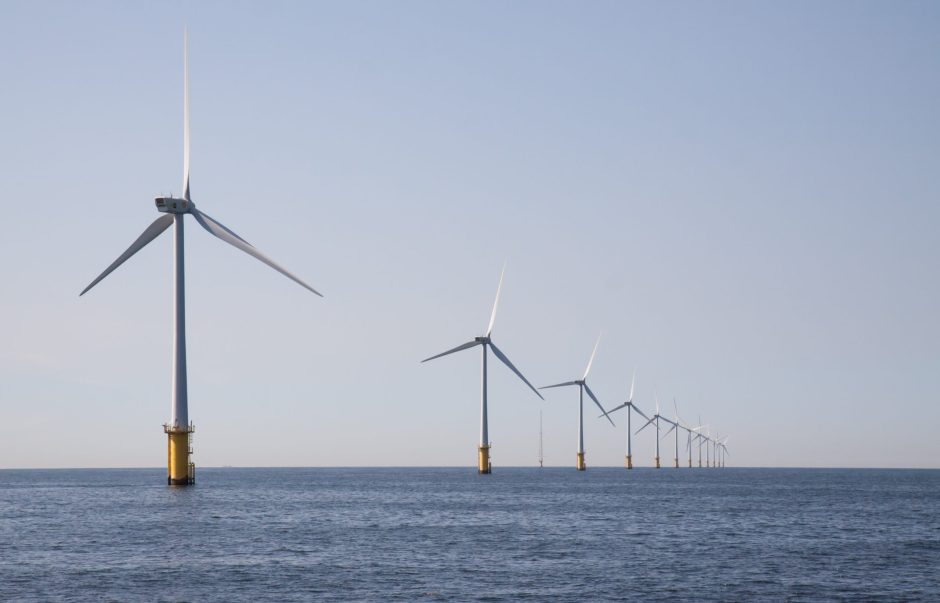
Offshore wind turbines create conditions for richer marine ecosystems

In addition to contributing to the energy transition, offshore wind power plants have a positive impact on marine life. A new study, conducted by researchers from Murdoch University in Australia and Dalian Ocean University in China, shows that offshore wind farms enhance marine ecosystems and contribute to greater diversity in aquatic food chains.

The massive steel towers of offshore wind turbines are new solid and rough surfaces on an otherwise sandy seabed and they function as artificial reefs. Together with submarine cables, they enable the formation of habitats for sessile organisms.

Sessile organisms, such as sponges, corals, sea anemones and shellfish, are permanently attached to a surface and cannot move independently. They feed by filtering particles from the water or by waiting for prey to pass by.

“These organisms act as critical food sources and habitat for other species, and this has flow-on effects for overall ecosystem diversity and health,” explained James Tweedley, one of the researchers.

Scientists from Murdoch University and Dalian Ocean University compared data collected in 2023 and 2024 at the Zhuanghe offshore wind farm in the northern Yellow Sea in China with data from a control area without wind turbines, located about six kilometers to the east.

Built between 2019 and 2021, it is the largest wind farm off the coast of northeastern China, at 1.35 GW. The researchers used the Ecopath with Ecosim software, into which they input biological and environmental data.

The results showed a greater number of functional groups and increased complexity of the marine food web in the wind farm area, particularly among macroinvertebrates and fish.

Fish in wind farm area are up to three times larger

According to the study, published in the journal Global Ecology and Conservation, more than 50% of the total biomass around wind turbine foundations consists of sessile organisms, such as blue mussels (Mytilus edulis) and other filter-feeding invertebrates.

“These benthic-dominated ecosystems are critical for nutrient cycling, diversifying food webs and even storing carbon,” said Neil Loneragan, one of Western Australia’s leading experts on fish and marine biology. According to him, these findings provide a foundation for understanding how offshore wind farms interact with ecosystem energy dynamics and fisheries resources in coastal waters.

Most fish groups exhibited significantly higher biomass in the wind farm area, particularly species that live and feed closer to the seabed. This finding is consistent with the results of other studies suggesting that offshore wind farms act as fish aggregation devices, the paper notes.

Estimates showed that the fish Hexagrammos otakii was up to twice as large in the wind farm area than outside it, while Sebastes schlegelii was more than three times larger, as was the predatory Asian rapa whelk.

While acknowledging the risks associated with exploration and construction, including habitat destruction and disturbance to birds, marine mammals, and fish, the authors pointed out that seabed disturbance can increase food availability as well.

Post Views:59
January 1, 2026
by AEA in News

Croatia’s Kermas on track to secure new concession for Trusina wind farm

The Government of the Republic of Srpska has drafted a cooperation agreement with Croatian firm Kermas Energija, which is expected to enable the awarding of a concession to build and operate the Trusina wind farm. In late November, the government adopted a decision to annul the public call for awarding the concession, launched in October, due to a lack of bids.

A concession agreement for the 50 MW Trusina wind farm in the municipality of Nevesinje was signed in 2012. However, it was terminated in 2019 after Kermas failed to provide a bank guarantee or make significant progress in implementing the project. The agreement was signed with Eol prvi, a firm owned by Serbia-based Omega plus, but Kermas later acquired a majority stake in the project.

In a statement to Nezavisne, the Ministry of Energy and Mining of the Republic of Srpska explained that the decision to conclude an agreement with Kermas was made in order to avoid arbitration proceedings that the Croatian company had planned to initiate, as well as due to the government’s interest in having a wind farm built at the site.

According to earlier reports, Kermas had planned to seek damages in the amount of BAM 200 million (around EUR 102.3 million).

The concession is expected to be awarded through a negotiated procedure

The agreement is intended to enable the concession to be awarded through a negotiated procedure, in accordance with the Law on Concessions, the newspaper reported.

Besides withdrawing from arbitration, Kermas would also have to implement the project under new technical specifications, as technology has advanced in the meantime, and wind turbines are now produced with significantly higher installed capacities, according to the Government of the Republic of Srpska, one of the two entities constituting Bosnia and Herzegovina.

According to the annulled public call, the estimated investment in the Trusina wind farm was BAM 130 million (EUR 66.5 million), with a projected annual electricity output of around 160 GWh.

The concession was to be awarded for a period of up to 50 years, and the electricity produced would have been sold on the market.

Post Views:40
January 1, 2026
by AEA in News

Greece reboots Apollo program against energy poverty

The Greek government has redesigned and rebooted the Apollo self-consumption program, aimed at reducing energy costs for vulnerable consumers.

Initially, Apollo was introduced to support households, municipalities, water utilities and local irrigation organizations. Each of Greece’s 13 regions, also known as peripheries, would have a green power plant, and eligible consumers who join a local energy community get discounted electricity bills.

However, the first part, which included households, was not realized in time to draw EUR 100 million from the European Union’s Recovery and Resilience Facility (RRF). It expires in June 2026.

Tsafos: Both segments set for completion

“Apollo was one of the plans that we could not carry out in time, therefore we excluded it from RRF and increased funding to other initiatives, such as energy efficiency in houses,” Deputy Minister of Environment and Energy Nikos Tsafos explained earlier in December.

Now the government announced that the first phase would be continued using different funding sources, according to the new joint ministerial decree. In fact, the number of beneficiaries is higher than in the original version. A second phase would follow to support remaining consumer categories, based on a different decree.

“Our goal remains to complete both segments and we are trying to find new funding tools”, Tsafos added.

New auctions and deadlines

Based on the new plan, auctions will take place for 400 MW in wind farms and 200 MW in solar farms, with the second category being combined with battery storage. Selected wind power projects must be completed by September 30, 2028, and the ones for photovoltaics have until the end of 2027.

The decree also stipulates that auction participants may not be selected for more than 25% of total capacity offered in each auction. Every project must be mature, with final connection terms from a network operator.

Last but not least, solar farms without storage may also participate in the auction, as long as they include a battery afterwards in their license.

Post Views:51
January 1, 2026
by AEA in News

Fortis kicks off construction of solar power plant in Albania

Fortis Energy has started the construction of solar power plant Ersekë with a capacity of 75 MW.

The Ersekë Solar Power Plant project in Albania has transitioned to the construction phase, featuring a total peak capacity of 75 MW, and it will be integrated with a 25 MWh battery energy storage system (BESS), Turkey-based Fortis Energy said.

Following the formal approval, the company moved to the execution stage in the village of Taç-Lartë, in the municipality of Kolonja in the country’s southeast.

Of note, in June Fortis Energy received approval from the Albanian government for the construction of a photovoltaic plant. The company is allowed to operate the facility for 49 years from the entry of the decision into force.

The PV project is set to generate 135 GWh per year

Now the company recalled that the PV facility is set to generate 135 GWh per year of clean energy. It would mark a major milestone in Albania’s green energy transition by combining solar generation with advanced storage capabilities, it added.

Fortis, which was a bronze sponsor this year at Belgrade Energy Forum 2025 (BEF 2025), organized by Balkan Green Energy News, has also invited qualified suppliers and contractors to submit their inquiries for upcoming construction and procurement packages.

“We are looking for partners who share our commitment to health, safety & environment (HSE) excellence, technical precision, timely delivery,” the company stressed.

Fortis Energy is working on renewable energy projects totaling 2 GW

The facility must be built within 36 months from the entry of the decision into force, according to the government’s approval.

The 36 months for construction, ancillary works and commissioning are included in the said 49 years of the operation of the facility.

Of note, Fortis Energy is working on renewable energy projects of 2 GW altogether in Southeast Europe. One half of the planned capacity is for solar and wind power plants in Serbia.

Three months ago the company obtained a construction permit for a solar park of 270 MW on the territory of the city of Sremska Mitrovica in Serbia. The project includes a BESS of 36 MWh.

Post Views:54
January 1, 2026
by AEA in News

EU4CAET project pre-selects 43 ideas for first renewable energy communities in BiH

A total of 43 project ideas from 28 local authorities for establishing the first renewable energy communities in Bosnia and Herzegovina have been pre-selected to receive assistance under the EU for Collective Action for Energy Transition project.

The EU for Collective Action for Energy Transition (EU4CAET) project is jointly financed by the European Union and the German Federal Ministry for Economic Cooperation and Development (BMZ). Under the slogan ‘Together for Energy Transition,’ the EUR 3 million project is implemented by GIZ.

The initiative aims to empower local municipalities, citizens, and private actors to develop sustainable energy solutions that create jobs, improve energy efficiency, and advance climate goals, according to the EU Delegation to Bosnia and Herzegovina.

A total of 51 municipalities submitted 89 project ideas

In the project’s development phase, 51 municipalities submitted a total of 89 project ideas, such as solar power plants, heat pumps, biomass heating systems, public lighting upgrades, and electric vehicle charging stations.

The proposed projects also included kindergartens, youth centers, sports halls, theaters, health centers, and other public facilities. Following the evaluation, 28 local self-governments submitted their first concept notes, and 43 ideas were pre-selected.

“The final selection, based on detailed concept notes, is currently ongoing. The number of final projects will depend on the quality of submitted concepts and available funding under EU4CAET,” the Communication Office of the Delegation of the EU to BiH & EU Special Representative in BiH told Balkan Green Energy News.

The evaluation will begin in January 2026

The deadline for the pre-selected local authorities to submit their detailed concept notes was December 20. The evaluation of the submitted concepts will begin in January 2026.

Selected local authorities will be invited to present and discuss their ideas in more detail, according to the Communication Office.

The strongest concepts will receive assistance for capacity development, business planning, feasibility studies, and the preparation of technical design documentation.

The 28 municipalities pre-selected for further evaluation are as follows: Bijeljina, Bileća, Centar Sarajevo, Doboj, Donji Vakuf, Drvar, Goražde, Ilijaš, Kakanj, Kalesija, Laktaši, Maglaj, Milići, Modriča, Mostar, Novi Grad, Novi Travnik, Novo Sarajevo, Šamac, Sokolac, Srebrenica, Teslić, Travnik, Višegrad, Vogošća, Zenica, Živinice, and Zvornik.

BiH does not yet have renewable energy communities, but one of its two entities – the Republic of Srpska – managed to adopt the necessary regulations for their establishment in May this year, becoming the first in the region to do so.

Hahr: The grant call is planned for February 2026 and 2027

Mareike Hahr, Head of EU4CAET, said the project is now focused on tailored technical assistance to further refine the ideas and prepare high-quality applications for the grant call, planned for February 2026 and 2027.

“What has been particularly encouraging is the remarkable level of interest and readiness shown by local communities from both entities to ‘enter new terrain’—to propose their own project concepts, explore innovative solutions, and actively shape their energy future,” she explained.

Post Views:49
December 27, 2025
by AEA in News

EU’s new power pricing interval boosts BESS profit potential – analysis

The rollout of the European Union’s new power pricing system in October, with prices set every 15 minutes, rather than every hour, has increased the profit potential of battery energy storage systems (BESS). In several countries, BESS profits now have the potential to rise by more than 15%, according to an analysis by research and energy intelligence company Rystad Energy.

Thanks to the 15-minute trading interval, arbitrage potential on the EU’s day-ahead power markets has increased by an average of 14%, with some countries, such as Austria and Slovakia, recording gains of over 20%, according to the analysis.

In Germany, quarter-hour arbitrage was 16% more profitable than hourly arbitrage, while in Lithuania, the improvement was 14%.

The new system brings the greatest benefits in countries with less flexibility

The new trading intervals, known as 15-minute Market Time Units (MTUs), bring the greatest benefits in countries with less flexibility in power generation and consumption, where a high share of intermittent renewables can cause large price swings, according to Sepehr Soltani, senior analyst for energy storage at Rystad.

Rystad estimates that if a battery earns around 20% more each year due to these price swings, its total return on investment can increase by about 3% over 20 years.

A 20% annual profit gain could raise return on investment by 3% over 20 years

In contrast, in places with a flexible electricity supply, such as Norway with hydropower and Portugal with hydropower and gas, prices are more stable over an hour, so the difference between profits from 15-minute and hourly trading is much smaller, he explained.

This is why in Portugal, Norway, and Sweden, the new system has brought only minor improvements in BESS profitability potential.

Rystad noted, however, that today’s unusually high arbitrage margins, of over USD 150 per MWh, are not expected to persist over the next 10–20 years. A more realistic long-term average is around USD 60 per MWh, according to the analysis.

Post Views:68
December 27, 2025
by AEA in News

All medium, large businesses in Albania are now in free electricity market

Consumers connected to the 6 kV electricity network in Albania are legally obligated to find a private supplier on the free market by January 1, 2026. The move represents the completion of a multi-year transition for industrial and commercial users.

On January 1, 2026, all medium and large businesses in Albania will be part of the liberalized electricity market.

Scheduled to join are 2,300 firms and institutions.

The newcomers in the market must find a supplier from the list of licensed entities, Albania’s Energy Regulatory Authority (ERE) said.

The liberalization process began in 2018

Those who fail to secure a contract by the deadline will be covered by the supplier of last resort for a maximum of 60 days under regulated conditions to prevent power cuts, according to the update.

The 6 kV level is the final stage of the liberalization process, which began in 2018. It started with 35 kV, followed by 20 kV in 2024 and 10 kV in 2025.

Only small businesses and households remain under regulated supply. Regulated prices are set by ERE.

There are about 40 licensed suppliers in Albania

Small businesses, connected to the 0.4 kV grid, are still the responsibility of the universal supplier. This service is provided by Furnizuesi i Shërbimit Universal, a subsidiary of OSHEE, the state-owned power distribution operator.

ERE recently confirmed that electricity prices for universal service customers would remain unchanged until December 31, 2026.

Of note, there are about 40 licensed suppliers in Albania. Businesses can compare offers using ERE’s online platform. Of note, the Albanian Power Exchange (ALPEX) started its operations in April 2023.

Energy Community Secretariat: Complete liberalization is behind schedule

In its latest Annual Implementation Report, from November, the Energy Community Secretariat said that the complete liberalization of the retail electricity market remains behind schedule.

Households and small businesses connected to the 0.4 kV network continue to be supplied under regulated tariffs by the universal supplier, the report reads.

Consumers connected to the 6 kV network are covered by the supplier of last resort (SLR), and this regime was extended until December 31, 2025, the secretariat pointed out.

Post Views:44
December 27, 2025
by AEA in News

Serbia’s EPS mulls using heat pumps at its hydropower plants

State-owned power utility Elektroprivreda Srbije intends to commission a study of the potential use of heat pumps at four hydropower plants in southwestern Serbia. The call lasts until February 10.

As technology advances, energy companies are increasingly turning to solutions based on renewable sources as well as combining them with existing systems that also don’t pollute, while emitting little to no greenhouse gases. Serbian state-owned Elektroprivreda Srbije (EPS) is heading in the same direction. It launched a tender for technical documentation – a study on the possibilities of deploying heat pumps in the structures of Limske hidroelektrane. It is a business unit operating four hydropower plants.

The aim is to improve the efficiency of the utilization of energy. Bids are accepted until February 10. Notably, the types of possible heat pumps isn’t determined.

With an estimated budget of RSD 3.8 million (EUR 32.400), the contractor will have 150 days to deliver the service.

Limske hidroelektrane, based in the town of Nova Varoš, has hydropower plants in the Lim river basin in southwestern Serbia. It is part of EPS’s branch Drinsko-limske hidroelektrane.

The contractor must propose a solution and calculate the energy efficiency and climate gains

The call is for a total of 2,450 square meters covered by climatization systems. The management building accounts for 1,300 square meters, and the rest is in the hydroelectric plants: Uvac, Kokin Brod, Bistrica and Potpeć, a machinery workshop and storage room.

EPS said the study needs to include an analysis of the current heat consumption, with an overview of available solutions for the use of alternative or renewable sources of heat or the improvement of existing systems. The goal is to increase energy efficiency and promote the utilization of renewable energy sources, the call reads.

The contractor would suggest a solution and outline the drop in greenhouse gas emissions. The task involves calculating the investment return period and delivering the list of regulations.

Post Views:42
  • 1
  • …
  • 26
  • 27
  • 28
  • 29
  • 30
  • …
  • 140

AEA – Albania Energy Association is a industry association dedicated to representing the interests of Albanian and West Balkan for energy producers and consumers. AEA works to advance the development and adoption of sustainable energy solutions in Albania and the Western Balkans, supporting the region’s transition toward a cleaner, more secure, and more competitive energy future. AEA is registered by decision of the Court of Tirana, DECISION NO. 3032, (VAT:L11827451K).

[email protected]

Address
Blv Zogu 1
Tirana
1057
ALBANIA

LinkedIn  |  Facebook
Events
May 25, 2022 Connecting Green Hydrogen Europe 2022
May 25, 2022 Energy Week Western Balkans 2022
Copyright © Albania Energy Association