AEA-Albania Energy Association
  • Main
  • About Us
  • Services
  • Sectors
  • News
  • EventsEvents
  • PublicationPublication
  • Contact Us
AEA-Albania Energy Association
  • Main
  • About Us
  • Services
  • Sectors
  • News
  • EventsEvents
  • PublicationPublication
  • Contact Us
AEA-Albania Energy Association
  • Home Page
  • About Us
  • Sectors
  • Our Services
  • News
  • Contact Us
December 27, 2025
by AEA in News

Synthos Green Energy, Blue Bird Energy join forces to deploy SMRs in Bulgaria

Warsaw-based Synthos Green Energy and Bulgarian firm Blue Bird Energy agreed to cooperate in the installation of small modular reactors.

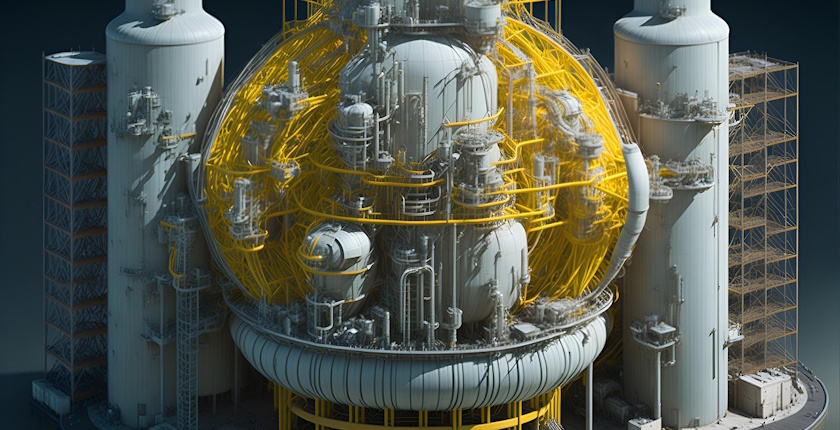
Synthos Green Energy (SGE) and Blue Bird Energy (BBE) have signed a letter of intent (LOI) to partner on the deployment of small modular reactors in Bulgaria, SGE said.

The two firms plan to establish a joint venture aimed at building a fleet of up to six BWRX-300 SMRs in Bulgaria.

The project will bring Bulgaria zero-emission, affordable baseload electricity to the power industry, support AI and other data centers, and decarbonize district heating. according to the update.

SGE: The BWRX-300 is the most commercially advanced SMR in the market today

SGE claims that the BWRX-300, designed by US company GE Vernova Hitachi Nuclear Energy, is the most commercially advanced SMR in the market today.

A 300 MW facility is currently under construction in Ontario, Canada, the Polish company added and pointed to GE Vernova Hitachi’s 65 years of experience “developing proven nuclear technology.”

The new joint venture in Bulgaria will select and prepare deployment sites, facilitate site and design licensing, manage construction and project development and coordinate project funding.

SGE CEO Rafał Kasprów said partnering with BBE would strengthen his company’s European SMR development platform and help deliver affordable energy that meets the needs of the Bulgarian people.

Kasprów: Bulgaria joins the US, Canada, Poland, Hungary, and others who are in the process of deploying US technology

“With today’s announcement, Bulgaria joins the US, Canada, Poland, Hungary, and others who are in the process of deploying this world-leading US technology,” he added.

Of note, in September, Bulgaria’s Minister of Energy Zhecho Stankov said the country should discuss the possibility of installing SMRs on its territory with companies developing the technology.

According to Kalin Peshov, Chairman of the Board of Directors of Blue Bird Energy, the company is excited to partner with energy frontrunners such as GE Vernova Hitachi (GVH) and SGE.

The 65 years of nuclear experience of GVH and the proven track record of SGE bringing the BWRX-300 technology to Europe would be invaluable in supporting the company’s mission to provide Bulgaria with a secured long-term energy supply, he explained.

Young companies

BBE and SGE were established to secure the deployment of an SMR fleet in Bulgaria, Poland, and Europe, according to their websites.

The main shareholders of BBE are construction firm Glavbolgarstroy Holding (GBS) and copper mining and processing company Asarel-Medet JSC. It was founded four years ago.

SGE was established in 2019 by Michał Sołowow, Polish tycoon and owner of the biggest privately held industry group in Poland, MS Galleon, the website reads.
Post Views:45
December 27, 2025
by AEA in News

ENNA kicks off installation of its first solar power plant outside of Croatia

Romanian ENEVO Group has started the construction of a solar power plant for Croatia-based ENNA Group.

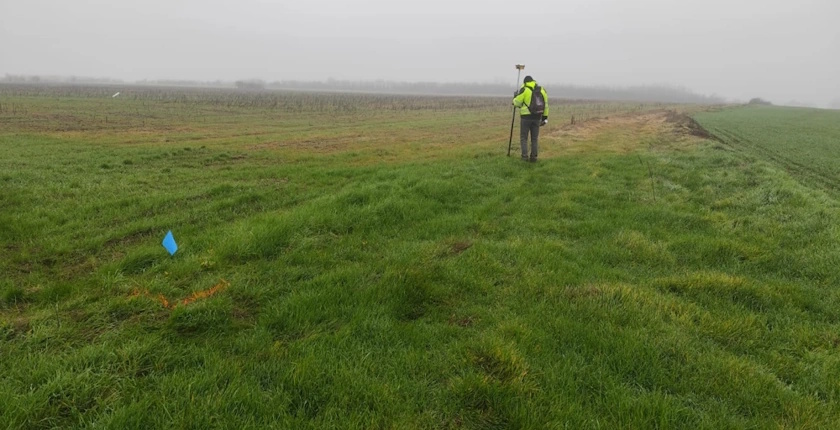
The site for the 87.5 MW photovoltaic plant is 25 kilometers southwest of Romania’s capital Bucharest. It is ENNA Group’s first major investment outside of Croatia.

Installation began after an EPC contract was signed in November between PVP Cepheus, owned by ENNA Solar, which is part of ENNA Group, and Romanian Enevo Group, ENNA said.

The Giurgiu solar power plant will be built in the Mihăilești area on 93 hectares. The expected annual electricity production is 133 GWh, the company added.

The investment is part of ENNA’s ten-year plan

The plant’s commercial operation and power delivery to the grid are scheduled for the first quarter of 2027. It is an investment of around EUR 60 million, according to the update.

“We are extremely pleased to announce the start of construction of our solar power plant just a few months after taking over the project. It is also a confirmation that we have chosen very reliable partners,” ENNA Group CEO Boštjan Napast stressed.

With this investment, the company is proving its commitment to a ten-year business plan with planned investments of EUR 330 million in solar energy in Croatia and abroad, he explained.

Under the EPC contract, Enevo is responsible for the entire solar power project – design, procurement, and construction.

Bureau Veritas is in charge of supervision services

Enevo Group Technical Director Radu Brașoveanu said it supports the expansion of the ENNA Group into the Romanian renewable energy market with this strategic solar investment.

Bureau Veritas will be in charge of supervision services in line with FIDIC standards, ENNA added.

Of note, the project in Romania was acquired in April.

It is implemented by ENNA Solar, which is part of the energy division of the ENNA Group. The parent company said it has around 50 MW in operational renewable energy plants or advanced projects, as well as about 350 MW in various stages of development.

ENNA is developing two geothermal power projects – Zagocha (Slatina) and Babina Greda.

In addition to energy, the company operates in the logistics sector.

Post Views:70
December 27, 2025
by AEA in News

Polat Enerji completes largest wind-BESS hybrid power plant in Turkey

Polat Holding’s joint venture with İş Enerji has received the license for the 12.8 MW battery energy storage system (BESS) integrated with its Ege wind power plant of 15.2 MW in western Turkey. It is the largest hybrid power plant of its kind in the country.

In cooperation with SolarToday Türkiye and iNOVAT, Polat Enerji reached another milestone in combining renewable energy plants with battery storage. The Ministry of Energy and Natural Resources of Turkey has issued an approval for its BESS with 12.8 MW in operating power and a capacity of 15.2 MWh.

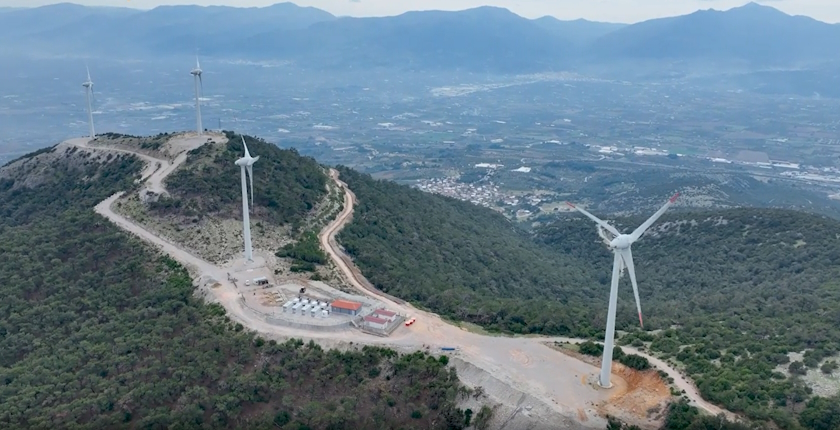
The facility is integrated with the company’s Ege wind power plant. They are located in the Kemalpaşa district of Izmir province in the country’s west. It is Turkey’s first DRES, an acronym for a licensed wind-storage system, of 10 MWh or more. The companies pointed out it is also the first hybrid power project of its kind to receive incentives.

Polat Enerji’s BESS consists of four 3.8 MWh units manufactured by Contemporary Amperex Technology Co. Ltd (CATL) from China. In the second phase, the capacity will reach 28.2 MWh, according to the update.

In the second phase, BESS capacity will reach 28.2 MWh

Electricity from wind turbines will be stored and delivered to the grid to cover production imbalances and stabilize the system. The companies signed the agreement about the battery project in January.

Ege was built in 2015. The wind park consists of eight turbines, of which the last two were connected almost two years ago. It has 15.2 MW in nameplate capacity and a 13 MW connection.

Earlier this month, Polat Enerji won a 160 MW project at a wind power auction under Turkey’s YEKA support mechanism. The company is a joint venture of Polat Holding and İş Enerji Yatirimlari, each holding 50%. The latter is a subsidiary of Türkiye İş Bankası, the largest private sector bank in Turkey.

The ministry said today that the country’s wind power capacity reached 14.5 GW in November, out of 121.8 GW in total. There was 24.7 GW of solar power in operation.

Post Views:74
December 27, 2025
by AEA in News

North Macedonia’s ESM secures loans for investments in solar, hydro

North Macedonia’s power utility Elektrani na Severna Makedonija has secured EUR 97 million for the installation of the Bitola 3 solar power plant and revitalization of hydropower plants.

Elektrani na Severna Makedonija (ESM) said today it signed the contracts for a state guarantee and loans totaling EUR 97 million for two major energy projects.

This is an important step in strengthening North Macedonia’s energy transition, ESM added.

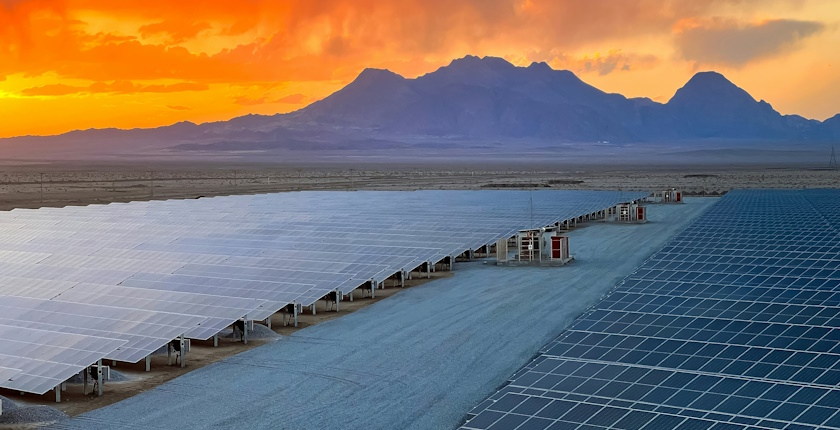
The company received EUR 87 million for the construction of the largest photovoltaic plant, Bitola 3. KfW allocated EUR 50 million, and the European Bank for Reconstruction and Development approved EUR 37 million.

The Hydropower Plants Revitalization Project is estimated at EUR 47.3 million

Another EUR 10 million from KfW will support the revitalization of ESM’s hydropower plants (HPPs), ESM explained.

According to the utility, the Hydropower Plants Revitalization Project, estimated at EUR 47.3 million and supported by a EUR 10 million EU grant, will increase annual hydropower generation by 50 GWh.

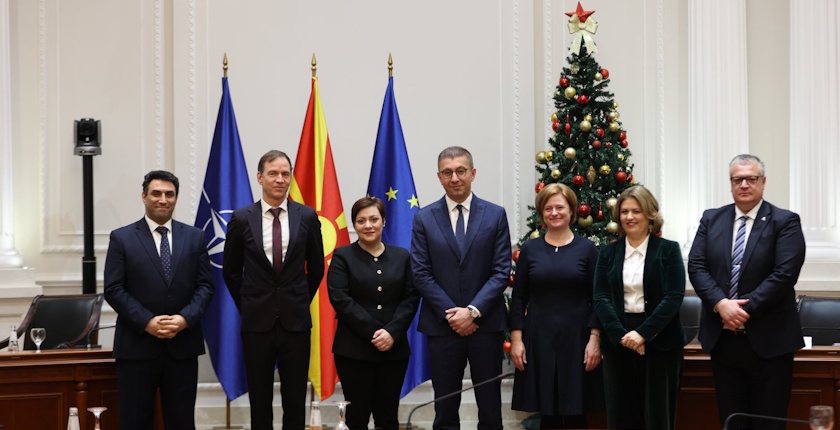
The agreements were signed by Minister of Finance Gordana Dimitrieska-Kochoska, EBRD representative Fatih Türkmenoğlu, KfW’s director for Kosovo* and North Macedonia Moritz Remé, and ESM CEO Lazo Uzunchev.

The ceremony was attended by Prime Minister Hristijan Mickoski and Minister of Energy, Mining and Mineral Resources Sanja Božinovska.

Uzunčev: We will increase domestic renewable capacity by over 200 MW

“With these capital investments, together with ESM, we are strengthening domestic energy production, ensuring stable electricity supply, and fostering sustainable economic development,” Gordana Dimitrieska-Kochoska underscored.

According to ESM CEO Lazo Uzunčev, the company’s strategic goals are being implemented with strong momentum.

“With ongoing solar and wind projects, including Bitola 3, we will increase domestic renewable capacity by over 200 MW in the next two to three years, while reducing CO₂ emissions by more than 260,000 tons annually,” he stressed.

Petra Drexler, Ambassador of Germany to North Macedonia, recalled that over the last years, Germany and the EU have continuously supported North Macedonia on its path toward a sustainable and resilient energy future.

Post Views:65
* This designation is without prejudice to positions onstatus and is in line with UNSCR 1244/99 and the ICJ Opinion on the Kosovo declaration of independence.
December 27, 2025
by AEA in News

TotalEnergies sells half of 424 MW portfolio in Greece

Paris-based TotalEnergies agreed to divest of 50% of its 424 MW wind and solar portfolio in Greece. The sale to investment management firm Asterion Industrial Partners, part of a global savings strategy, values the assets at EUR 508 million.

Multinational energy giant TotalEnergies is proceeding with a plan from last year to raise cash through renewables divestment. The company said it closed the sale of 50% of its 424 MW renewables portfolio in Greece to Asterion Industrial Partners, headquartered in Spain.

The world’s biggest fossil fuel producers have been stepping back from a major green energy push, partly pressured by the weakening of oil prices over the past year and a half. In addition, TotalEnergies has doubled its debt in the first half of this year, to USD 26 billion, after several large acquisitions.

It prompted the launch of a savings strategy involving capital and operational expenditure and share buybacks. TotalEnergies said in September that it was selling 50% of its 1.4 GW photovoltaics portfolio in the United States to KKR for USD 950 million.

TotalEnergies earlier agreed to sell 50% of its PV portfolio in the US of 1.4 GW to KKR

The transaction in Greece, which concerns wind and solar power assets, values them at EUR 508 million combined, or EUR 1.2 million per MW.

The French company clarified that it retained a 50% stake and remained the operator of the power plants. It said it intends to offtake and market most of the electricity when their regulated tariffs expire.

“TotalEnergies is building a competitive portfolio that combines renewables (solar, onshore wind, offshore wind) and flexible assets (CCGT, storage) to deliver clean firm power to its customers. To achieve its profitability objectives and share risks, TotalEnergies divests up to 50% of its interests in renewable assets, enabling the company to maximize the value of its portfolio,” the announcement reads.

Founded in 2018, Asterion Industrial Partners is an independent investment management firm focused on European infrastructure in the mid-market. With USD 10 billion under management, it invests in essential infrastructure across the energy, digital, utilities and mobility sectors.

Post Views:67
December 27, 2025
by AEA in News

Leitwind drives energy independence across Balkans

Leitwind makes wind turbines from 250 kW to 3 MW, engineered to perform efficiently under the full range of wind conditions in Southeastern Europe, from the calm Aegean islands to the stronger continental winds of Serbia, Thrace, or the Danube basin.

The Balkans are entering a new phase of wind energy development — one defined not by the largest turbines, but by smart, flexible, medium-scale solutions. Countries including Greece, Romania, Bulgaria, Serbia, Montenegro, Albania, Bosnia Herzegovina and North Macedonia are rapidly expanding their renewable portfolios while facing grid constraints, curtailment risks, and the growing need for decentralized energy supply.

Industrial zones, coastal communities, and remote mountainous regions increasingly require reliable, locally controlled generation that fits their terrain, their infrastructure, and their energy autonomy goals.

As the only Italian manufacturer of megawatt-class wind turbines, Leitwind offers an engineering approach tailor-made for this landscape — delivering advanced Direct-Drive turbines that combine efficiency, durability, and resilience in even the most demanding environments.

Smarter engineering for tougher terrains

At the center of Leitwind’s technology is its Direct-Drive generator, which eliminates the gearbox entirely — removing the single most failure-prone component in conventional wind turbines.

With fewer mechanical parts, Leitwind turbines ensure:

  • Lower energy losses
  • Minimal maintenance requirements
  • Higher availability and longer operating life

These advantages are especially important in the Balkans, where wind projects often sit atop mountain ridges, on isolated plateaus, or along rugged coastlines. Leitwind’s portfolio — from 250 kW to 3 MW — is engineered to perform efficiently under the full range of regional wind conditions, from the calm Aegean islands to the stronger continental winds of Serbia, Thrace, or the Danube basin.

Leitwind’s engineering philosophy is simple and powerful: Simplify the mechanics. Strengthen performance. Maximize lifetime.

Empowering energy autonomy in industry

A new trend is emerging across the Balkans: industrial self-generation.

Manufacturers, logistics hubs, agricultural units, and food-processing facilities are increasingly adopting on-site energy production to protect against volatile energy prices and grid interruptions.

Leitwind’s medium-scale turbines (250 kW – 2.0 MW):

  • Enable self-generation directly at the point of consumption
  • Integrate seamlessly into microgrids
  • Support both grid-connected and stand-alone operation
  • Require low maintenance, an essential benefit for industrial sites
  • Offer compact footprints suitable for constrained areas

The result is a new level of operational resilience: companies produce clean, stable, low-cost electricity while simultaneously enhancing their environmental credentials.

Leitwind2025@michaelschweigkofler-104
Photo: Leitwind2025 @michaelschweigkofler-104


Hybrid and island systems: independence by design

In island regions, remote communities, and areas with weak grid infrastructure — found in Greece, Cyprus, Croatia, and Montenegro — Leitwind turbines are increasingly deployed within hybrid systems combining wind, solar, and storage.

These systems:

  • Create independent renewable microgrids
  • Stabilize energy supply, even under poor grid conditions
  • Reduce or eliminate diesel dependency
  • Lower curtailment by absorbing excess production
  • Ensure 24-hour renewable availability

Leitwind’s modular architecture allows easy transportation, installation, and maintenance — even in locations where access is limited or environmental conditions are harsh.

Revitalizing the Balkan wind fleet: a regional repowering imperative

Across the Balkans — including Greece — a substantial portion of the wind fleet consists of early-generation turbines, typically 500 kW to 1 MW, installed between the late 1990s and mid-2000s. After 20+ years of operation, these machines face escalating maintenance needs, reduced availability, and outdated control systems. Yet the sites they occupy remain among the most promising wind locations in the region, with valuable existing grid connections.

This landscape creates one of the most attractive repowering opportunities in Europe.

Leitwind’s Direct-Drive portfolio (250 kW – 3 MW) is engineered specifically to unlock this potential:

  • Higher AEP through optimized aerodynamics
  • Superior durability thanks to gearbox-free design
  • Reduced O&M costs and fewer mechanical interventions
  • Compliance with modern Balkan grid codes, including demanding voltage-ride-through and frequency-support functions
  • Re-use of existing infrastructure, where applicable, reducing investment costs and permitting complexity

At many Balkan sites, replacing a cluster of old 660 kW–900 kW turbines with one or two modern Leitwind units can double the energy yield, significantly improve local grid stability, and extend the lifetime of the park by 20–25 years.

For developers, EPCs, and investors, modernizing these sites is not simply a technical improvement — it is a strategic and highly profitable modernization step.

With its proven direct-drive technology, adaptable tower configurations, and strong field presence across Southeastern Europe, Leitwind stands as the ideal partner for repowering projects that deliver greater performance with far fewer turbines.

Powering a regional wind renaissance

From industrial microgrids to island hybrid systems and fleet-wide repowering, Leitwind is redefining how wind energy supports energy independence across the Balkans. Its technology directly addresses the region’s three critical energy pillars:

  • Efficiency, driven by Direct-Drive simplicity and aerodynamic optimization
  • Autonomy, through on-site energy generation and decentralized solutions
  • Resilience, enabled by hybrid integration and robust engineering

As the Balkans transition toward a cleaner, more decentralized, and more self-reliant energy landscape, Leitwind stands as a strategic partner and technology enabler — not merely supplying turbines, but powering long-term independence, reliability, and economic growth.

In a region where every kilowatt counts, Leitwind delivers not just wind turbines — but energy freedom.

For further inquiries, technical information, or commercial cooperation, write to [email protected] or call +39 0472 722 000.

Leitwind is part of HTI Group.

Post Views:76
December 27, 2025
by AEA in News

OMV Petrom, CE Oltenia building solar parks of 550 MW in total

Coal land of Romanian state-owned CE Oltenia is undergoing transformation with the beginning of construction of four photovoltaic plants. The projects, which the company is conducting with OMV Petrom, are for 550 MW in combined capacity. In a separate partnership, with Tinmar Energy, 280 MW more is in development.

Almost four years after the European Union approved the grants from the Modernisation Fund and the start of negotiations between Complexul Energetic Oltenia (CE Oltenia) and OMV Petrom about a partnership, their four solar power projects of 550 MW in total peak capacity reached the construction phase. They would cover the equivalent of an estimated 410,000 Romanian households’ annual consumption, the update adds.

The largest integrated energy company in Southeastern Europe and Romania’s main coal power producer are building the photovoltaic systems in Ișalnița, Tismana, and Rovinari in the coal region in the counties of Dolj and Gorj. CE Oltenia and OMV Petrom expect the facilities to become operational next year.

OMV Petrom, CE Oltenia partnership receives first tranche of EU funding

Total investment is over EUR 400 million, with 70% financed through the Modernisation Fund. There are four joint ventures, in which the partners hold 50% each. Just this month, they received the first EUR 16 million, the announcement reveals.

The locations are on CE Oltenia’s coal land. They are aimed at partly substituting the power plants there, as Romania is heading for a coal exit by 2032.

“Through these projects, OMV Petrom reaffirms its commitment to a low-carbon energy future, contributing to Romania’s and the EU’s climate objectives. We are transforming a region with a long-standing tradition in coal-based energy into a renewable energy hub,” said Franck Neel, member of OMV Petrom’s Executive Board responsible for Gas and Power.

Ameresco and Sunel won three contracts together, and Turkey-based Girişim is in charge of the fourth one

Following tenders, contractors for the design and execution were picked in April. The consortium of United States–based Ameresco and Sunel is tasked with the projects Rovinari Est, Tismana 1, and Tismana 2. The latter company is registered in the United Kingdom, but its operational headquarters are in Athens, Greece. The capacity amounts to 460 MW.

Turkish company Girişim Elektrik is in charge of the fourth endeavor. The site is a slag deposit at the CE Ișalnița coal-fired power plant. Per earlier documentation, the contractors will operate the solar power systems for three years and transfer them to the owners.

Coal miners becoming PV installers

OMV Petrom said it is supporting the RenewAcad program in the nearby city of Târgu Jiu, where CE Oltenia is seated.

In the past two years, over 200 mining technicians have been retrained as photovoltaic system installers. The initiative is part of a broader effort. It involved training over 10,000 professionals for Romania’s energy transition, the company added.

Another 280 MW of solar power is in pipeline

CE Oltenia, also known as CEO, runs another four PV projects totaling 280 MW in planned peak capacity with its partner Tinmar Energy. They received 13 bids and the procedure is ongoing.

The partnership model is the same, and so is the share of investment that the Modernisation Fund covers. The locations are slag and ash deposits at coal plants Rovinari and Turceni, and external dumps Pinoasa and Bohorelu.

The fifth partnership between CE Oltenia and Tinmar is for a CCGT (combined-cycle gas turbine) power plant of 475 MW in Turceni. It is suffering heavy delays. The Modernisation Fund has approved a grant for 50% of the investment.

Post Views:71
December 27, 2025
by AEA in News

Greek company Aktor sets up BESS subsidiary after entering LNG trade

Power storage services are the core activity of Aktor’s new subsidiary Aktor BESS, but it could also build and operate renewable electricity and natural gas–fired plants and enter trade and distribution. The company earlier formed a business with DEPA Trade for liquefied natural gas (LNG).

Greek infrastructure and renewable energy developer and operator Aktor Group has formally positioned itself in the rapidly growing sector of electricity storage. Last week it established a 100% subsidiary called Aktor BESS, with an initial EUR 80,000 in capital.

The firm operates under Aktor Renewables and the main activity is providing electricity storage services. Aktor is apparently aiming to tap into the rapidly growing demand for batteries in Greece amid crippling wind and solar power curtailments.

In addition, battery energy storage systems or BESS are becoming a necessity because of the strengthening cannibalization effect. Operators of photovoltaics and wind parks require more predictable production profiles to for cost-effective pricing. They need to bridge the gaps between peak production and peak demand as well, as subsidies are gradually expiring.

Aktor BESS can benefit from the rapidly growing demand for battery storage in Greece

The statute of Aktor BESS points to a range of possible secondary activities. They include the construction and operation of renewable electricity and natural gas–fired plants as well as power trade and distribution and the development of technical studies.

The BESS facilities can be of the standalone type or colocated with the parent company’s production assets. Aktor Group’s Chairman and Chief Executive Officer Alexandros Exarchou is also the head of the new firm’s three-member board.

The company earlier established a joint venture for LNG and gas trade with DEPA Commercial, which controls 40%. It is also known as DEPA Emporias (in Greek), DEPA Commerce and DEPA Trading.

Post Views:87
December 27, 2025
by AEA in News

North Macedonia’s first annual construction plan for energy projects envisages EUR 1.4 billion in investments

The annual construction plan for energy projects for 2025 envisages the installation of power plants with a capacity of 1,265 MW, according to Minister of Energy, Mining and Mineral Resources Sanja Božinovska.

North Macedonia has introduced an annual construction plan for the energy projects with the new Law on Energy, adopted this year. The goal is to bring order to the approval and construction of new power plants.

According to the new regulation, October 1 was the deadline for investors to submit the documentation for their projects for the first annual plan. The review of all documents is in the final phase, according to Božinovska.

The construction of the power plants from the annual plan represents investments of around EUR 1.4 billion, Sanja Božinovska stressed, local media reported.

Solar power plants in the plan have the largest capacity – 812 MW, followed by wind farms  with 426 MW, biomass power plants with 11 MW, and hydropower plants with 15 MW.

Investors have submitted applications for the construction of energy facilities with a capacity of 10,950 MW

She recalled that for the first time, requests were received for the installation of standalone batteries and ones that would be co-located with power plants. The capacity of the standalone battery systems is 675 MW, and of the co-located is 93 MW, Božinovska added.

North Macedonia has received requests for the construction of energy facilities with a total capacity of 10,950 MW.

Investors submitted photovoltaic projects with a capacity of 4,758 MW and wind farms with a capacity of 1,697 MW. Investors were also interested in building gas-fired power plants.

Requests were also submitted for standalone battery energy storage systems (BESS) with a capacity of 2,573 MW and co-located with a capacity of 1,405 MW.

The annual plan should be adopted by January 31, 2026

Božinovska pointed out that 10,950 MW represents a large capacity. The transmission system operator (TSO) MEPSO will have to make a plan to strengthen the grid, she underlined.

The Government of North Macedonia should adopt the annual plan for the construction of energy facilities by January 31, 2026.

The minister recalled that the regulation for the construction of energy facilities has also been adopted. It precisely defines what every potential investor must submit, starting with a feasibility study, regardless of the type of facility, Bozinovska explained.

She said that the adoption of the law on renewable energy sources is expected in the first quarter of next year.

Post Views:58
December 27, 2025
by AEA in News

UAE’s Mubadala to invest EUR 300 million in Rezolv Energy

Mubadala Investment Company, a sovereign wealth fund of Abu Dhabi, has committed EUR 300 million to a joint venture with Actis that operates Rezolv Energy. The investment firm from the United Arab Emirates also owns a third of Masdar, which launched a partnership with Romania’s Hidroelectrica last year.

Independent renewable energy platform Rezolv Energy, active in Central and South Eastern Europe, is entering a new chapter.

Mubadala Investment Company, a sovereign wealth fund of Abu Dhabi, has committed EUR 300 million to a joint venture with Actis, which invests in sustainable infrastructure in emerging markets.

Rezolv has 750 MW under construction in Romania, Bulgaria

Approximately 750 MW in renewable energy projects under construction in Romania and Bulgaria are run by Rezolv Energy. The company, controlled by Actis, has 1.5 GW in advanced development. It includes Europe’s largest solar power project, Dama Solar in Romania. Notably, the start of construction is behind schedule.

“This investment is a clear reflection of our strategy to invest and scale real assets that enable the transition to a low-carbon economy. Rezolv Energy offers a great platform with scale, leadership, and market access to accelerate renewable energy deployment across Central and Eastern Europe. Our partnership with Actis ensures we are investing alongside a highly experienced player with a proven track record in sustainable infrastructure. Together, we are supporting the development of clean and reliable energy for industries and businesses while delivering long-term value for all stakeholders,” said Head of Infrastructure at Mubadala Real Assets Saed Arar.

Ambitions rising as Mubadala moves in

The management team of Rezolv Energy previously developed the largest wind farms at the time in both Croatia and the Czech Republic, and the largest independent wind farm in Romania, Fântânele-Cogealac-Gradina. Greek state-controlled Public Power Corp. (PPC) took over the facility a year ago.

Mubadala said its endeavor with Actis has the goal of seeing Rezolv Energy become the market-leading renewable energy champion in Central and Eastern Europe.

“With the financial and technical backing of Actis, Rezolv Energy has already made huge progress, with two large-scale renewable energy projects in construction in Southeastern Europe and two more about to move into the construction phase following our CfD success in Romania. Having Mubadala join as a shareholder will enable us to be even more ambitious, further accelerating the energy transition in the region,” said Chief Executive Officer of Rezolv Energy Alastair Hammond.

The European Commission approved four months ago the request to allow Mubadala to invest. The company also owns a third of Masdar, which last year agreed with Romania’s state-owned Hidroelectrica to establish a joint venture.

Private equity firm General Atlantic bought Actis in 2024.

Post Views:83
  • 1
  • …
  • 27
  • 28
  • 29
  • 30
  • 31
  • …
  • 140

AEA – Albania Energy Association is a industry association dedicated to representing the interests of Albanian and West Balkan for energy producers and consumers. AEA works to advance the development and adoption of sustainable energy solutions in Albania and the Western Balkans, supporting the region’s transition toward a cleaner, more secure, and more competitive energy future. AEA is registered by decision of the Court of Tirana, DECISION NO. 3032, (VAT:L11827451K).

[email protected]

Address
Blv Zogu 1
Tirana
1057
ALBANIA

LinkedIn  |  Facebook
Events
May 25, 2022 Connecting Green Hydrogen Europe 2022
May 25, 2022 Energy Week Western Balkans 2022
Copyright © Albania Energy Association