AEA-Albania Energy Association
  • Main
  • About Us
  • Services
  • Sectors
  • News
  • EventsEvents
  • PublicationPublication
  • Contact Us
AEA-Albania Energy Association
  • Main
  • About Us
  • Services
  • Sectors
  • News
  • EventsEvents
  • PublicationPublication
  • Contact Us
AEA-Albania Energy Association
  • Home Page
  • About Us
  • Sectors
  • Our Services
  • News
  • Contact Us
December 10, 2025
by AEA in News

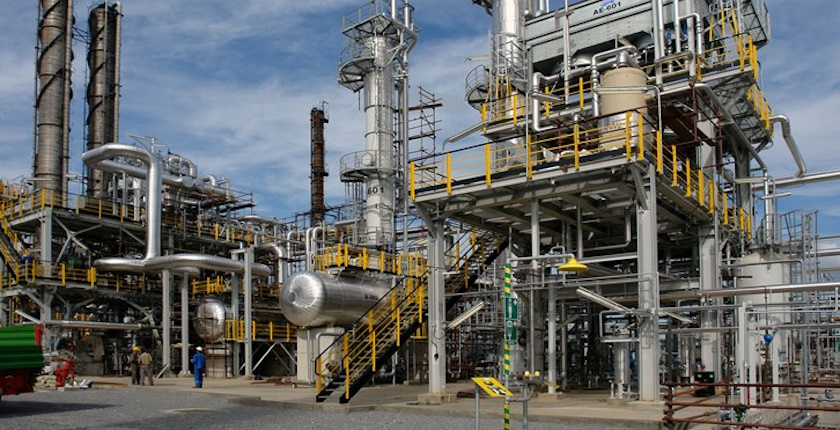
Siemens Energy, Končar to install electrolyzer, solar power plant for INA

Siemens Energy and Končar will install an electrolyzer and a solar power plant for Croatian oil and gas company INA.

INA said it has signed two important contracts for the implementation of the green hydrogen production project at its Rijeka refinery.

By signing contracts with reputable companies, with a total value of EU 33 million, INA has secured the preconditions for the implementation of the first commercial green hydrogen production plant in Croatia, according to the update.

A contract with Siemens Energy and Končar was signed for the construction of a 10 MW green hydrogen production and distribution plant. The order is estimated at EUR 22.5 million excluding VAT.

INA has already secured the delivery of the electrolyzer

The second contract, worth nearly EUR 11 million excluding VAT, was signed with Končar. It envisages the construction of a 11 MW photovoltaic plant. The facility would supply electricity to the electrolyzer.

As part of the project, INA has already secured the electrolyzer, a key system for water electrolysis and hydrogen production from renewable sources. Its majority owner, Hungarian MOL, inaugurated its first 10 MW electrolyzer in April last year.

Green hydrogen is intended for use in transportation

The green hydrogen that would be produced is intended for the market, primarily for transportation purposes, and it could also be used in the refinery’s production process. The company recalled that, by a decision of the Ministry of Economy, it received a EUR 15 million grant from the National Recovery and Resilience Plan.

The program is for the production and distribution of hydrogen in transportation.

The hydrogen market in Croatia is in an early development phase. INA’s plant could produce about 1,500 tons of green hydrogen annually.

Of note, Croatia adopted a hydrogen strategy in 2022. The government subsidizes the installation of chargers for hydrogen fueled vehicles.

Ortutay: Hydrogen could open new market opportunities for INA

INA CEO Zsuzsanna Ortutay said European and national strategies consider renewable hydrogen a technology of the future.

The renewable hydrogen that INA will produce can open new opportunities for the company in the market, but also improve the sustainability of Rijeka refinery through emission reductions, Ortutay stressed.

According to Končar CEO Gordan Kolak, green hydrogen isn’t only a technology of the future but a key element for decarbonizing industry and transport.

As the main contractor for the construction of this plant, Končar confirmed its role as a reliable partner developing key expertise for the European energy infrastructure in the decades to come, Kolak added.
Post Views:32
December 10, 2025
by AEA in News

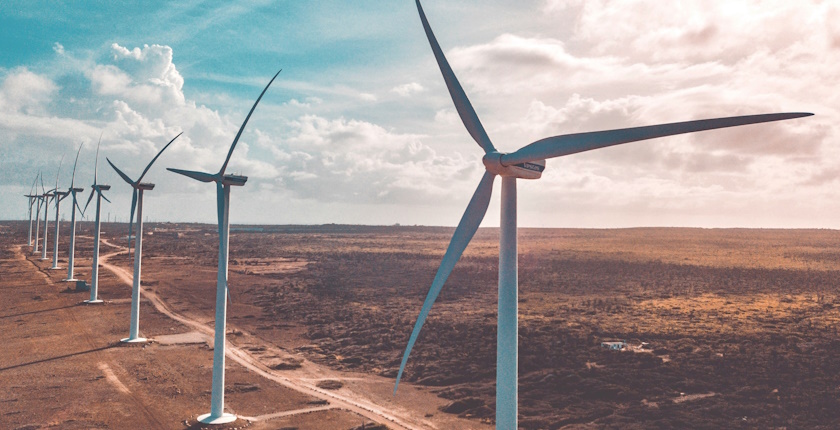
Borusan EnBW puts 80 MW Pelit wind farm online in Turkey

Borusan EnBW Enerji’s first wind investment in Central Anatolia, the Pelit wind power plant, began production. Located near Sivas, it has 80 MW in capacity.

The joint venture of Borusan Holding and Energie Baden-Württemberg increased its wind power portfolio in Turkey to 212 turbines in operation and 776 MW. Its tenth facility, Pelit, is located near Sivas and is the first in Central Anatolia.

Borusan EnBW’s new wind park consists of 14 Nordex machines, of which 13 have 5.7 MW each, according to project documentation. The remaining one is of 5.9 MW.

At 80 MW, Pelit is the firm’s fifth-largest wind park in Turkey. It said it would and prevent 178,000 tons of carbon dioxide emissions, equivalent to the carbon sequestration of 4.6 million trees.

Estimated annual output, 280 GWh, is sufficient for the needs of 122,000 households. The partners, which established the firm in 2009, initially intended to install 40 turbines of 2 MW apiece.

Due to its location, the Pelit wind farm creates seasonal and regional diversity in Borusan EnBW Enerji’s generation portfolio, the update reads. The largest wind power plant is Saros, at 143 MW, in Çanakkale. A 94 MW photovoltaic system was built and integrated with it, creating a hybrid power plant.

The joint venture has two other small solar power plants and the Yedigöl Aksu hydropower system, of 50.3 MW. It is also active in electricity sales and trading, as well as the operation of an electric vehicle charger network.

Turkey hosts wind power plants of more than 14 GW in combined capacity.

Post Views:25
December 10, 2025
by AEA in News

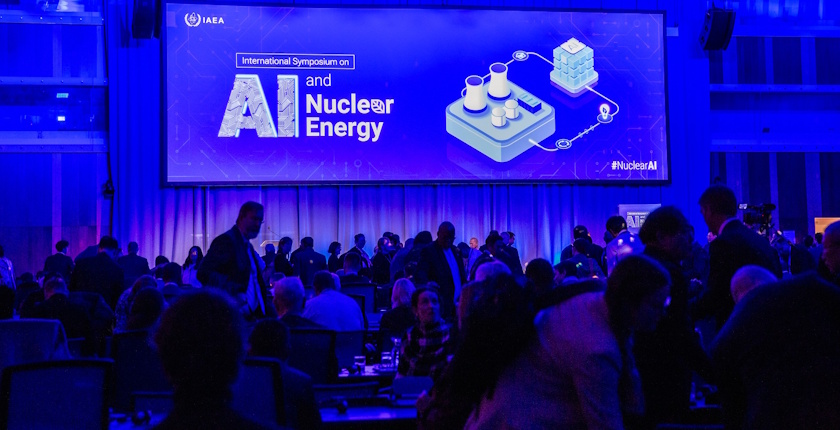
IAEA hosts landmark symposium: Nuclear, AI to forge Atoms for Algorithms alliance 

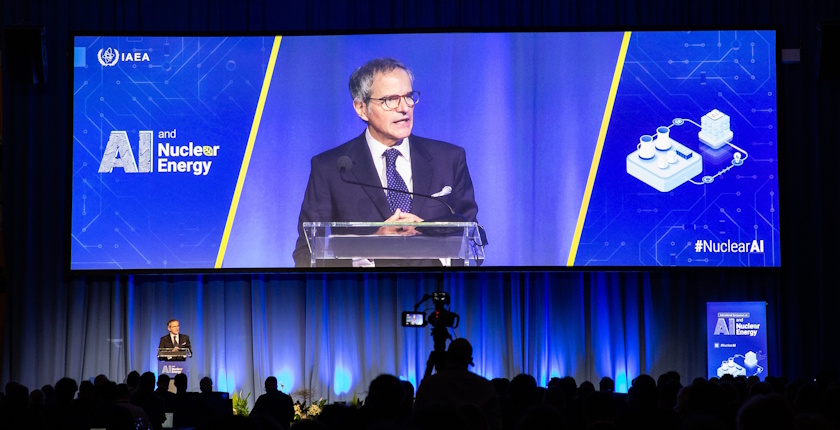
Global energy and technology leaders from over 250 organizations, including companies, nuclear operators, regulators, and research institutions, have gathered at the IAEA headquarters in Vienna for the first-ever International Symposium on Artificial Intelligence and Nuclear Energy.

The International Atomic Energy Agency (IAEA) said the two-day event brought together senior representatives from ministries, international organizations, the nuclear industry and major tech firms, including Google and Oracle.

They discussed how nuclear energy can help meet the surging electricity demand of AI data centres, and how AI can support nuclear technology development.

The first symposium on nuclear energy and AI provided a platform for governments, organizations and industry to discuss how to make the Atoms for Algorithms alliance happen, according to IAEA.

Grossi: I call it not just a partnership, but a structural alliance: Atoms for Algorithms

Director General Rafael Mariano Grossi said the two forces are reshaping humanity’s horizon at an unprecedented pace.

“The world’s energy map is being redrawn before our eyes. The essential point, our opportunity and our responsibility, is that these forces are not unfolding separately. They are converging and redefining the new global economy,” he stressed.

world iaea nuclear energy ai atoms for algorithms Rafael Mariano Grossi
Photo: IAEA

IAEA recalled that according to the International Energy Agency, data centres accounted for 1.5% of worldwide electricity demand in 2024 – a figure that could double by 2030.

“There is only one energy source that can meet combined demands of low-carbon generation, 24/7 reliability, massive power density, grid stability and genuine scalability: nuclear energy. This is why I call it not just a partnership, but a structural alliance: Atoms for Algorithms,” he stressed.

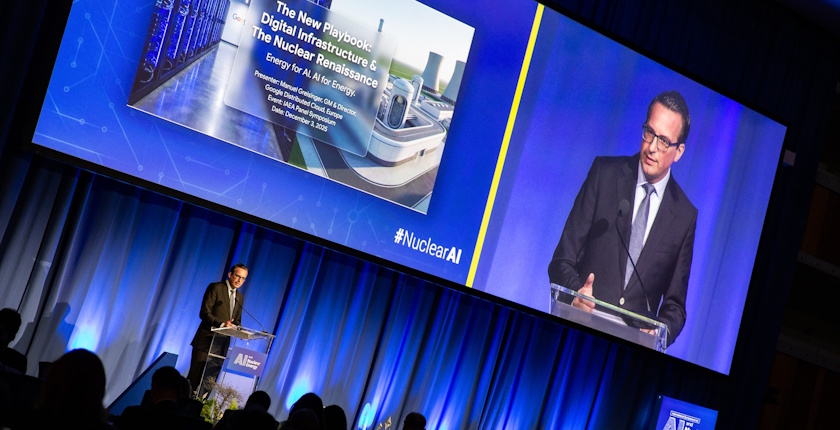
Greisinger: We are currently building the engine of the 21st century

world iaea vienna conference nuclear energy ai atoms for algorithms Manuel Greisinger
Photo: IAEA

IAEA underlined that major tech companies are weighing in on the nuclear-AI conversation. Manuel Greisinger, Google Distributed Cloud Director, shared why hyperscalers are turning to nuclear energy to power their data centres.

“We are currently building the engine of the 21st century, which is artificial intelligence. But as everyone in this room knows, an engine is pretty much useless without fuel. So the digital infrastructure community is here at the symposium because we have crunched the numbers and we have realized that nuclear energy is not just an option. It is an essential, non-negotiable component of our future fuel mix,” he stressed.

Sama Bilbao y León, Director General of World Nuclear Association, pointed out that nuclear energy is a key piece of the puzzle to electrify the world, improve quality of life, and support AI’s need for 24/7 carbon-free electricity.

She welcomed the pledge by major tech companies to support the goal to triple global nuclear energy capacity by 2050, according to IAEA.

Post Views:43
December 10, 2025
by AEA in News

Uncompetitiveness holding EU far behind green hydrogen targets

Several high-profile green hydrogen projects have been canceled in the past year, and major companies reduced their decarbonization ambitions, the European Union Agency for the Cooperation of Energy Regulators (ACER) said in its new report. The technology is four times more expensive than production from fossil gas through steam reforming.

Investments are far behind EU targets and trailing even the contracted demand. However, an acceleration of existing projects would change the picture substantially. On that note, the European Hydrogen Bank is receiving submissions for its third auction.

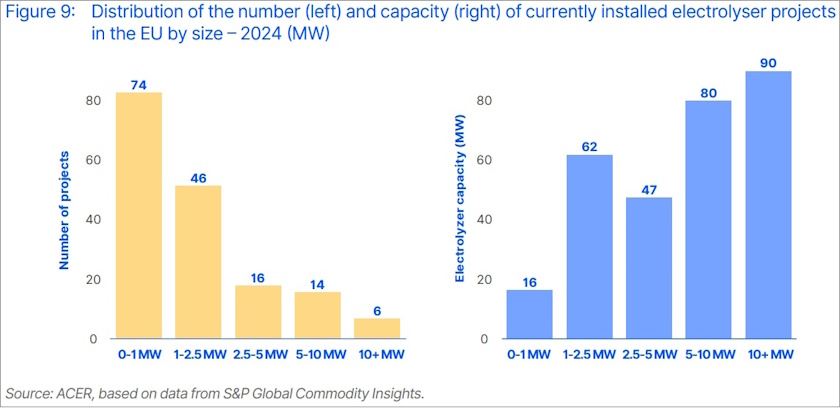
Electrolyser capacity in the EU jumped 51% last year to 308 MW, while 1.8 GW was under construction in October 2025, expected to be commissioned within two years. The numbers are from the European Hydrogen Markets – 2025 Monitoring Report, issued by the EU Agency for the Cooperation of Energy Regulators (ACER). It pointed out that the total falls well short of the trajectory toward the 2030 target of 40 GW, or the 48 GW to 54 GW range in member states’ plans.

Of note, while some other databases show similar figures, the Renewable Hydrogen Coalition has calculated that operational projects amount to 600 MW, though “across Europe,” and not just in the EU. Another 3 GW is under construction, its update reads.

The European Hydrogen Strategy aimed at 6 GW by 2024.

Sweden, Germany in strongest expansion

Sweden and Germany account for two thirds of the capacity under construction (742 MW and 414 MW, respectively), ACER said. In addition, EWE has just marked the start of construction of an electrolyzer facility of a whopping 320 MW, which would eclipse the fleet that is currently producing green or renewable hydrogen. The site is in Emden, in Germany.

Domestically produced renewable hydrogen contracted, 270,000 tons, would require 3.7 GW of electrolysers.

Several high-profile green hydrogen projects have been canceled in the past year, and major companies have reduced their decarbonization ambitions, the agency warned. Importantly, all existing projects, in any stage of development and with a 2030 target, are for 62 GW in total, indicating the potential for acceleration.

An electrolyzer under construction in Germany is set to surpass the combined capacity of the current EU fleet

As for Southeastern Europe, Romania targets 2.1 GW of electrolyzer capacity for 2030. Croatia is aiming for between 0.1 GW and 1.3 GW, while the remaining countries are at just 0.1 GW or 0.2 GW. Greece was the only country with any capacity in construction in October, 50 MW. Interconnections are planned between Greece, Bulgaria, Romania and Hungary.

Citing the European Hydrogen Observatory, ACER said Germany has added 46 MW last year. With Denmark (18 MW) and Hungary (11 MW), it was 72% of the annual growth.

Only six plants were bigger than 10 MW at the end of 2024, amounting to 90 MW altogether.

ACER Uncompetitiveness holds EU far behind green hydrogen targets

Gray hydrogen remains dominant

Steam methane reforming (SMR) remains the dominant production technology, accounting for 89% of the total capacity in the EU. It is colloquially called gray hydrogen.

The share of electrolytic hydrogen, made using electricity from all sources, not necessarily renewables, is marginal. So is the overall capacity for blue hydrogen. It is also from fossil gas, but the process involves carbon capture and storage, CCS.

Green hydrogen, one of so-called renewable fuels of non-biological origin (RFNBO), costs some EUR 8 per kilogram, against just over EUR 2 per kilogram of conventional, gray hydrogen.

Expectations for liquefied natural gas (LNG) and carbon dioxide emission allowance price levels favor fossil fuel hydrogen in the short term, the report’s authors stressed. Meanwhile, slower deployment of electrolyzers limits economies of scale, delaying the anticipated reductions in related capital costs.

Projected prices of LNG and CO2 allowances are favoring fossil fuel hydrogen

With current production cost estimates at just below EUR 3 per kilo, low-carbon hydrogen with carbon capture is more competitive than renewable hydrogen. Nevertheless, the additional costs for CO2 transport and storage are highly uncertain.

“The buildout of CO2 infrastructure may pose additional challenges. Moreover, the long-term gas offtake contracts required for such projects could lock in fossil fuel dependence and exposure to price volatility in the global natural gas market,” the authors said.

By definition, low-carbon hydrogen results in at least 70% lower emissions than the conventional one from fossil fuels. The segment includes electrolysis running on nuclear power.

The EU also counts hydrogen from biogas and biomass processing as renewable, if the technology complies with sustainability requirements.

Electricity supply costs, excluding grid tariffs, may account for up to 50% of the levelized cost of renewable hydrogen, with substantial regional variations across the EU. Regions with abundant renewable resources and strong renewables integration, such as Spain, already provide advantageous conditions for renewable hydrogen production, the document adds.

Electricity accounts for 60% to 70% of renewable hydrogen cost

The Renewable Hydrogen Coalition said electrolyzer manufacturing capacity has surged from 1 GW within a few years. It expects it to hit 15 GW in 2026.

Electricity accounts for 60% to 70% of renewable hydrogen costs, with taxes and levies reaching 30% to 40% of the electricity cost itself, according to the group. It is also urging for incentives and an improvement in the legal framework.

“With the right enabling policies put in place, altogether, our coalition members could put online close to 18 GW of renewable hydrogen production projects between 2026 and 2032,” the declaration reads.

On that note, the European Hydrogen Bank has launched the call to its third auction for hydrogen production, worth EUR 1.3 billion. Spain is adding EUR 415 million, while Germany will match the EU with another EUR 1.3 billion within the auctions-as-a-service segment.

The IF25 Hydrogen Auction is designed to provide cost-efficient support for the production of RFNBO hydrogen or electrolytic low-carbon hydrogen. Producers of hydrogen with maritime or aviation offtakers can apply as well.

The call is part of a package under the Innovation Fund, using revenues from the EU Emissions Trading System (EU ETS). A EUR 2.9 billion segment for net-zero technologies, IF25 NZT, includes hydrogen production.

Post Views:71
December 10, 2025
by AEA in News

North Macedonia’s third wind farm enters trial operation

According to the Energy Regulatory Commission (ERC or RKE) of North Macedonia, a 44 MW wind power plant has entered trial operation in Demir Kapija. Almost three years ago, Kaltun Enerji hired YEO Technology, also based in Turkey, to build the first part of the Dren wind farm. It is the third such facility in the country, but another one was built nearby and is about to be commissioned.

North Macedonia added 210 MW from renewable sources to the electricity grid this year through November, of which 44 MW is a wind power plant in Demir Kapija that entered trial operation, President of RKE Marko Bislimoski revealed. According to the body, officially called the Energy, Water Services, and Municipal Waste Management Services Regulatory Commission, the rest are photovoltaics.

Given that solar power capacity amounted to 848 MW at the end of 2024, it means that it has recently surpassed 1 GW.

The share of renewables in production capacity was 55% last year, while they generated 40% of domestic electricity, Bislimoski added.

Dren wind power plant has nine turbines

In early 2023, Kaltun Enerji hired YEO Technology (YEO Teknoloji Enerji ve Endüstri) for its 44 MW wind power plant project in Dren in North Macedonia. Both companies are based in Turkey. The eponymous village is in the municipality of Demir Kapija, but parts of the area are in the neighboring Negotino and Gevgelija, which borders Greece.

Kaltun Enerji obtained licenses this year for the trial operation of Dren 1 (33.6 MW) and Dren 2 (9.6 MW). They consist of seven and two Goldwind turbines, respectively, of 4.8 MW each.

North Macedonia’s first wind power plant, Bogdanci, is nearby.

Nearby wind park awaiting commissioning

Project firm Park na veterni elektrani Perun, formerly known as Euroing, received a temporary license from RKE in April for electricity production for a 30 MW wind power plant, also known as Rosoman facility. The location is in the Bogdanci municipality, in the same area. The wind park comprises five Siemens Gamesa turbines. According to the latest updates, it was about to be commissioned.

The country’s second wind power plant, put into operation last year, is called Bogoslovec.

Alcazar Energy Partners held a groundbreaking ceremony in July for its Štip wind farm in North Macedonia. At 400 MW, it would be the biggest in the Western Balkans.

Of note, Bislimoski said that RKE has started amending the licenses for solar power plants that added battery storage, but also pointed out that he doesn’t expect power surpluses this winter. Consumption is increasing, especially among households, as a large share uses electricity for heating, he added.

Post Views:49
December 10, 2025
by AEA in News

EU considering Montenegro’s proposals for changes to CBAM

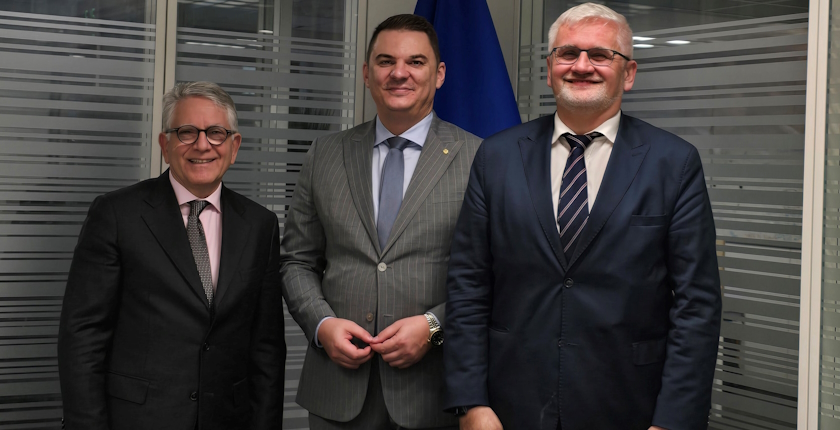
Minister of Energy and Mining of Montenegro Admir Šahmanović met with several senior officials of the European Commission. The messages in Brussels regarding the Carbon Border Adjustment Mechanism (CBAM) were encouraging – changes in the regulation are being considered, including Montenegro’s demands, according to the ministry.

Minister of Energy and Mining of Montenegro Admir Šahmanović led a delegation that visited the European Commission’s headquarters. They met with Director General for Taxation and Customs Union Thomas Gerassimos, Deputy Director-General for Climate Action Jan Dusík and Director for Western Balkans Valentina Superti and Head of the Unit for Bosnia and Herzegovina and Montenegro Barbara Jésus-Gimeno, both from the Directorate-General for Enlargement and Eastern Neighbourhood.

The focus of the discussions was on key processes in the energy sector and especially on the Carbon Border Adjustment Mechanism (CBAM), which is currently Montenegro’s main priority, the ministry said. Šahmanović presented the reforms that the country conducted and stressed that the government is almost entirely aligned with its European requirements in the legal and strategic sense.

CBAM is now Montenegro’s priority

Over the last eight months, Montenegro adopted a new Law on Energy alongside dozens of bylaws, including some tied to the Law on the Use of Energy from Renewable Sources. The government launched the first renewable energy auction, for solar power, and signed a memorandum of understanding on market coupling with Italy, with which talks continue on the construction of the second wire in the undersea cable. Laws on cross-border energy exchange and the construction of cross-border energy assets are drafted, the update adds.

The minister said Montenegro is finalizing its National Energy and Climate Plan.

More flexible models for CBAM to be considered

The European Commission’s representatives acknowledged Montenegro’s progress and asserted that it is in the lead in the region as concerns the degree of compliance in the energy sphere, the ministry said.

“Within the same context it was agreed that discussions would be continued on a technical level in the following weeks to consider the possible, more flexible models of applying CBAM and to enable candidate states to adjust to the mechanism faster and more efficiently. A special focus will be on the elaboration of compromise solutions – especially the ones that enable a gradual, just and predictable implementation, with a minimal burden on the Montenegrin energy sector, which is significantly reliant on electricity exports,” the update reads.

EU’s cross-border tax on greenhouse gases to have weaker impact than in earlier projections

The European Commission conveyed encouraging messages: a smaller impact from CBAM is expected than in earlier projections, and amendments to the regulation are being considered, including demands from Montenegro from the consultations, according to the ministry.

Minister Šahmanović said Montenegro is remaining fully dedicated to its European obligations, but that it expects an acknowledgment of the results that it achieved, so that the implementation of CBAM is harmonized with the realities of the country’s energy system and its strong renewables investment cycle.

Post Views:51
December 10, 2025
by AEA in News

Elnos Group – a night of grand jubilees at the Sava Center

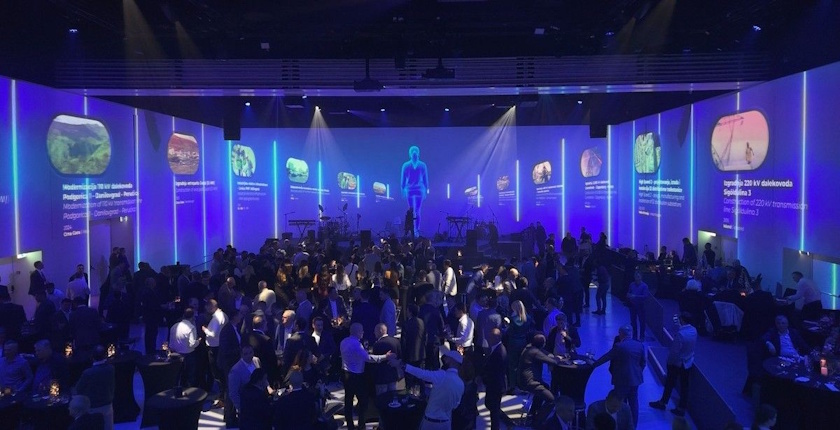
In Belgrade’s Sava Center, Elnos Group marked a remarkable dual jubilee – 80 years of tradition and 30 years of modern business development. This impressive celebration brought together partners, friends, and employees of Elnos Group, transforming the evening into a vibrant stage that reflected the company’s journey and cast a clear light on its vision for the future.

For years, the company has been pushing the boundaries of the green transition across the region, with its participation in renewable energy projects surpassing two gigawatts. With more than 900 employees and operations in 18 countries, Elnos Group today stands as a company shaping the future of modern energy.

Energy, movement, and unforgettable moments

jubilee celebration Elnos Group
Photo: Elnos Group

Instead of a traditional ceremony, guests were welcomed by an evening full of motion, emotion, and visual spectacle – showing that energy companies certainly know how to create a true celebratory atmosphere. From the very first moment, it was clear that evening would be more than protocol.

Guests from across the region and Europe gathered in a space that, thanks to a digital animation in the Immersive Hall, seemed to breathe with energy. The animation spectacularly transformed the story of the energy sector and Elnos Group into an unforgettable visual experience.

In an atmosphere of powerful symbolism and even stronger unity, Elnos Group celebrated its journey – from its earliest steps to an international company.

“Elnos is defined not by words, but by results” – a message from the heart of the celebration

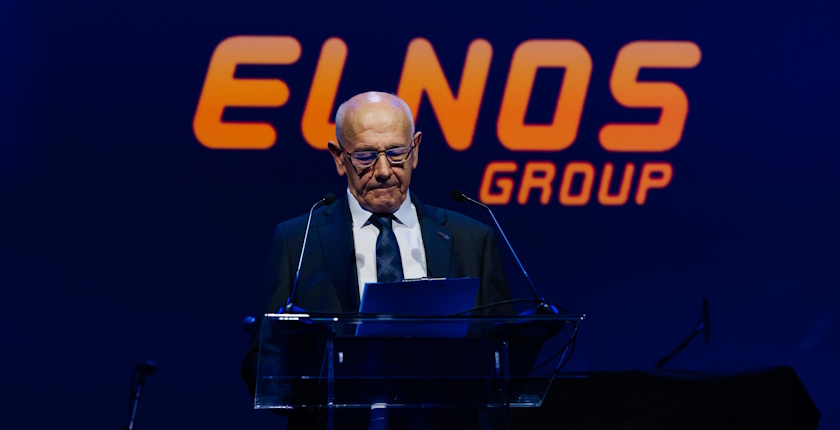
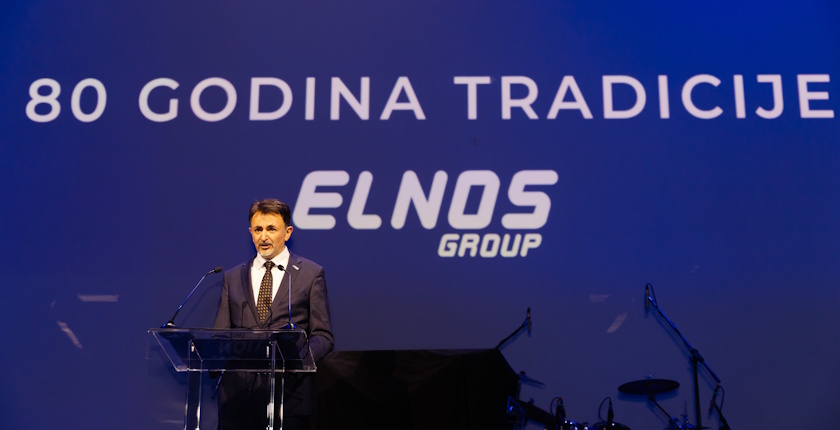
In an address that blended both emotion and vision, Dušan Torbica, President of the Management Board of Elnos Group, shared a message that became a defining tone of the entire evening.

“Elnos Group is not defined by grand words but by the results that stand behind them. These results are the measure of our work and our reputation. The energy sector of the future requires reliable and fast contractors, and we are ready to meet those demands,” he said.

Dusan Torbica, Elnos
Photo: Dušan Torbica, President of the Management Board of Elnos Group

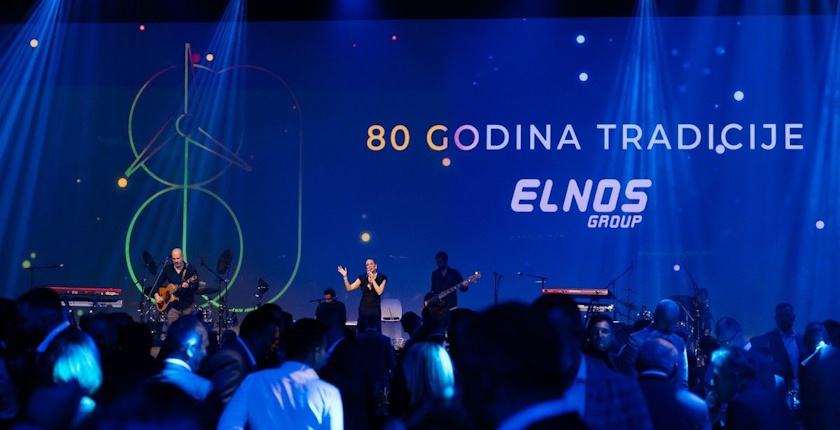
A strong energy filled the hall, while on stage Marijana Zlopaša and Tropico Band brought rhythm, color, and warmth to the celebration. Yet, at the very center of the evening remained a message of gratitude – directed toward all those who have been part of Elnos Group’s path: in the past, the present, and those who are ready to shape its future.

Elnos Group
Photo: Elnos Group

Vetrozelena – a major contract signed on the day of the jubilee

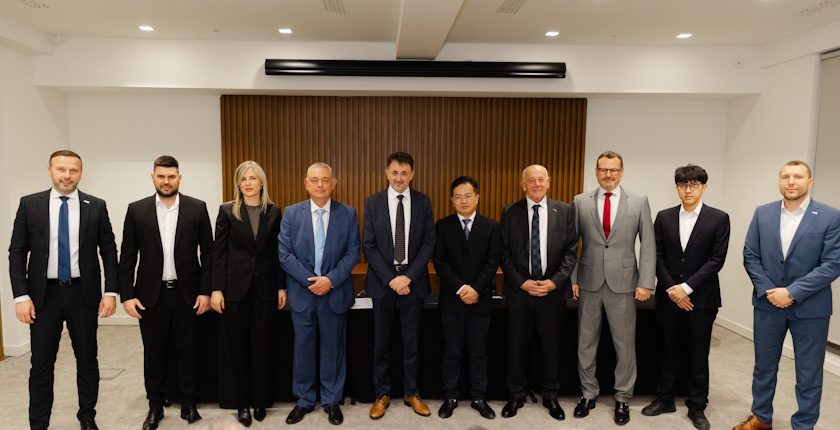
On the very day of this grand celebration, Elnos Serbia signed an EPC contract with Sinohydro Corporation Limited, a subsidiary of Power China Construction Group, for the construction of the Vetrozelena wind farm – soon to become the largest single wind project in the Balkans.

Vetrozelena will have a total capacity of 300 MW, featuring 48 turbines of 6.25 MW each. Elnos Serbia, as part of Elnos Group, will take on the task of building the complete grid connection to the transmission system of Elektromreža Srbije.

bih serbia elnos Sinohydro powerchina vetrozelena wind farm contract
Photo: Signing a contract with the Power China Construction Group for the construction of the largest wind farm in the Balkans – Vetrozelena

Company teams will construct a 35/400 kV substation with four 90 MVA transformers, a 400 kV switchyard with six bays, a 7.5-kilometer double-circuit 400 kV transmission line, as well as accompanying infrastructure upgrades within the power distribution and telecommunications networks.

This project is another EPC-based contract through which Elnos Serbia will deliver complete engineering services: design, construction, equipment procurement and installation, integration, testing, and commissioning.

People as the foundation and the future

Among the stage lights and project presentations, the message of Predrag Ćulibrk, Director of Elnos Serbia, resonated particularly strongly.

“Our employees are the heart of all our successes. Every engineer, technician, and worker has built a part of themselves into projects across Europe. Without them, no strategy could come to life,” Ćulibrk emphasized.

Predrag Culibrk, Director of Elnos Serbia
Photo: Predrag Ćulibrk, Director of Elnos Serbia

His words were a reminder that behind every project stand people – the ones who build networks and connect communities. Among them is a new generation, represented by the experience of Dalibor Šošić, an engineer whose career began alongside the modern era of Elnos.

“As part of the new generation of Elnos, I can say that we are determined to take responsibility for the next 30 years. We are inspired by the vision of those who built this company before us, and by the support we receive today to develop new ideas,” he said.

A look at the future, built on the strength of the past

With 80 years of tradition and 30 years of modern business, Elnos Group has shown not only that it knows how to celebrate, but that it knows how to plan.

Elnos Group
Photo: Elnos Group

And after this night in the Sava Center, one thing is clear: Elnos Group steps into the coming decades with confidence and purpose – with results as its measure and a strong team spirit as its signature.

Post Views:34
December 10, 2025
by AEA in News

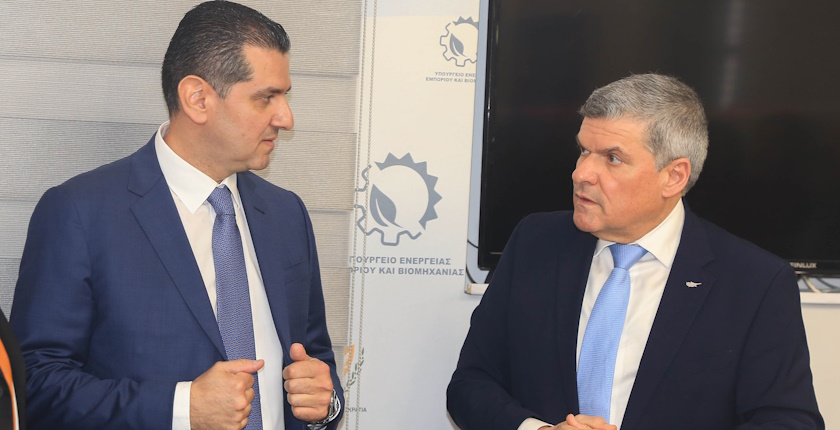
New Cypriot Minister of Energy, Commerce and Industry Michael Damianos takes office

A careful and organized course is required to achieve the energy transition in Cyprus, support the industry and strengthen the economy, ensuring sustainable solutions for the country’s energy future, new Minister of Energy, Commerce and Industry Michael Damianos said. He took over from his predecessor George Papanastasiou.

Five ministers were replaced in a cabinet reshuffle under President of Cyprus Nikos Christodoulides. Among them, the now former Minister of Health Michael Damianos took helm of the Minister of Energy, Commerce and Industry from George Papanastasiou.

Cyprus is assuming the presidency of the Council of the European Union on January 1 for six months. It means Damianos will chair the meetings of ministers responsible for the sectors in his portfolio, like the so-called Energy Council.

“We will work with innovation, excellence and sustainability in mind, to ensure that Cyprus continues to move in a direction that will serve the common good and future generations,” the new minister said at the handover ceremony.

Realistic, measurable goals for tangible results for all citizens

A careful and organized course is required to achieve the energy transition in Cyprus, support the industry and strengthen the economy, ensuring sustainable solutions for the country’s energy future, according to Damianos. He highlighted the importance of setting “realistic and measurable goals” to bring tangible results for all citizens.

Papanastasiou’s departure could be a signal from Nicosia about the fate of the Greece-Cyprus-Israel subsea power link

Some media is speculating that the switch is a signal from Cyprus about the embattled Great Sea Interconnector, a proposed underwater cable that would link Greece, via Crete, with Cyprus and Israel. Papanastasiou was apparently one of the few ardent supporters of the project in the country’s government.

The investment remains stuck over expenses and threats from Turkey.

University of Cambridge alum

Damianos studied law at the University of Southampton, from where he graduated with honours and received the best academic performance award. He earned a master of laws degree at the University of Cambridge, specializing in international law. The minister has received the best academic performance award from the Fitzwilliam College of the University of Cambridge.

The minister holds the professional title of a solicitor, granted by the Supreme Court of England and Wales. Damianos worked at the international law firms Simmons and Simmons and Hogan Lovells in London, specializing in corporate, commercial and energy matters.

In 2010 in Cyprus, he founded a law firm that bears his name. Damianos served as a municipal councillor in Strovolos Municipality from 2011 to 2016. Since 2018, he has been the vice president of the Democratic Party (DIKO).

Damianos became the minister of health in January 2024.

Post Views:29
December 10, 2025
by AEA in News

Montenegro launches second BESS tender but for drastically smaller capacity

Power utility Elektroprivreda Crne Gore has launched its second battery energy storage system procurement tender. The required capacity is drastically lower than in the first call.

The initial public procurement was canceled because state-owned energy company Elektroprivreda Crne Gore (EPCG) didn’t obtain approval from the Government of Montenegro to take a loan for a EUR 58 million project.

The new tender envisages the procurement of a battery between 100 kW and 130 kW, with 200 kWh to 260 kWh in capacity. This is a pilot project, and the procurement is valued at EUR 75,000.

The canceled purchase was for two battery energy storage systems (BESS), at 30 MW and 120 MWh each.

The battery will be used on the distribution network

Potential locations include hydropower plant (HPP) Perućica, EPCG’s steel mill Željezara Nikšić, and the Pljevlja thermal power plant.

In the new call, the winning bidder will be obliged to secure a location for installing and testing the pilot BESS, according to the documentation.

EPCG explained that over the previous three years, its projects Solari 3000+, 500+, and 5000+ enabled a strong pace of the addition of prosumer solar power plants to the low-voltage, distribution network in Montenegro.

Although distributed generation has clear financial and ecological benefits, its rapid growth simultaneously brings a string of technical challenges for the distribution network, which was historically developed solely for supplying consumers and for unidirectional energy flow, according to the tender’s documentation.

EPCG sees the installation of batteries in substations as a solution to technical challenges caused by prosumers

The company sees the installation of BESS units within 10/0.4 kV substations as the solution for these challenges.

These batteries would be charged during the hours when photovoltaic facilities have high output in order to reduce and prevent reverse power flow. The idea is to discharge BESS units during hours of peak consumption and low voltage.

The main goal is to minimize voltage deviations in areas that the substations cover, during periods of production and consumption fluctuations. It would increase the hosting capacity for new prosumers, and enhance the stability of the distribution grid under an increased PV plant integration.

Scalability of the battery is one of the conditions for the bidders set by EPCG.

Post Views:22
December 9, 2025
by AEA in News

Tax-Free for a Decade: Albania’s Mountain Incentives Raise EU Red Flags

Albania’s new Law No. 20/2025, popularly branded the “Mountain Package,” is being sold as a long-overdue fix for one of the country’s most stubborn problems: vast stretches of mountainous land occupied for decades without formal title. The state’s answer is dramatic. If you can prove at least 10 years of continuous “non-owner” possession in a designated mountain zone—and you commit to a “sustainable” investment project—the government can transfer state-owned land to you for a symbolic €1, paired with sweeping tax exemptions for up to 10 years. The promise is rural revival. The risk is that Albania may be institutionalizing a legal bargain that rewards whoever gets there first, and whoever knows how to work the system best.

From a formal standpoint, the law is not a legislative accident. It was adopted through parliament under constitutional provisions governing lawmaking and fiscal measures, including the constitutional requirement that taxes and exemptions must be established by law. In other words, the state has tried to give the incentives a proper legal foundation, especially because the benefits are unusually generous.

But legality on paper is not the same as legitimacy in practice—and this law will live or die in the gap between the two.

A law built on a simple trade: title for investment

The law’s engine is straightforward: convert informal possession into formal ownership, but only if it produces development. That development is meant to boost tourism and other economic activity in highland areas and, politically, to signal that the state is finally willing to recognize realities that have existed for generations.

The safeguards look reasonable at first glance. The land must be verified as state property. Parcels with private ownership claims or pending restitution processes are supposed to be excluded. Municipalities and the cadastre are tasked with confirming status, and there is a 45-day public notice period during which third parties can object and present ownership documentation. If a valid claim appears, the transfer should be rejected.

That’s the theory. The real-world question is whether Albania’s institutions—especially at the local level—can enforce these checks consistently, or whether the process becomes another high-value distribution scheme vulnerable to political pressure, nepotism, and quiet dealmaking.

The hidden legal trap: what happens to the “real” owner who shows up late?

The most sensitive weakness is also the most predictable: what happens when a rightful owner (or heirs) surfaces after the 45-day notice window, after a transfer has already been completed? The law leans heavily on notice-and-challenge as its due process firewall. Yet Albania knows its own reality: heirs live abroad, property files are fragmented, and public notices can be easy to miss in practice. A diaspora family might learn years later that land tied to their history was treated as “state land,” sold for €1, and folded into an investment plan.

The law does not clearly spell out a compensation pathway for these post-factum claims. That silence matters because property rights are not only constitutional; they are also protected by the European human-rights framework that Albania is expected to respect. Adverse-possession-type systems can be lawful if they serve a legitimate public interest and follow fair procedures. But the fairness test collapses if the process is realistic only for those who are physically present, locally connected, and able to monitor municipal notices.

If the state transfers land on the assumption it owns it, and later turns out to be wrong, the legal conflict doesn’t evaporate—it shifts into years of litigation, compensation demands, and distrust. The law’s “certainty” could end up creating a new category of uncertainty.

A second legal fault line: bypassing local planning, centralizing power

The law also accelerates development permissions by empowering the National Council of Territory and Water (KKTU) to approve projects even where local spatial plans are missing—or would ordinarily block development. That is not a technical tweak; it is a political reallocation of power from local planning to a centralized body.

Supporters will argue this is necessary because local planning is uneven and often paralyzed. Critics will counter that Albania is substituting one dysfunction for another: replacing local bottlenecks with a national gatekeeper that can override community-level land-use priorities. The more exceptions a system allows, the more valuable the exceptions become—and the more tempting it is to sell influence around them.

The EU problem hiding in plain sight: state aid by another name

Even though Albania is not an EU member, it is trying to align with EU standards. This law is a stress test. The incentives are not modest: land transferred for €1 plus broad tax holidays that reportedly include relief from taxes such as profit tax and even VAT for a decade, capped to a limited pool of beneficiaries.

In EU terms, transferring public assets below market value and granting selective tax advantages is the classic shape of state aid. In an EU member state, measures like these would normally trigger scrutiny, notification requirements, and legal constraints designed to prevent unfair market distortion. Albania may frame the package as regional development—and that objective is common across Europe—but the method is exceptionally blunt. It risks locking Albania into an incentive model that becomes harder to defend the closer accession gets, especially if beneficiaries include large projects or politically exposed investors.

Corruption and financial crime risks: the “perfect storm” combination

Land allocation, construction permitting, and tax breaks in one package is the kind of governance cocktail that invites abuse. The law relies on municipalities to verify who truly qualifies as a long-term possessor. Evidence may include utility bills, tax records, witness statements, and photos; the law even suggests the absence of documentation is not automatically disqualifying if no competing claim emerges. That flexibility is humane in remote areas with weak records—but it is also an open door for fabrication, collusion, and “professional” claims-building.

Then comes the permitting phase, where KKTU approvals can unlock projects that might otherwise be blocked. Any system that can override normal planning rules creates a premium on access.

Finally, there is the money problem. Real estate and construction are globally recognized as high-risk sectors for money laundering. A scheme that enables rapid land regularization, development approvals, and generous tax exemptions can become attractive not just to investors but to capital looking for a clean narrative. The fact that foreign legal entities can participate adds another layer of complexity if beneficial ownership is opaque or due diligence is weak.

Environment: the law says “sustainable,” but the incentives say “build”

The law speaks the language of ecosystem protection and sustainable development, yet it also opens the door to construction on land categories like forests, pastures, and meadows by treating them as transferable under this scheme. If implementation is aggressive, Albania could end up trading its most valuable long-term asset—intact mountain landscapes—for short-term investment headlines.

The law does not explicitly waive environmental assessments, so in principle environmental impact assessments should still apply. But fast-track political projects have a habit of turning legal requirements into box-ticking exercises. Mountain rivers, biodiversity corridors, and protected landscapes are not easily restored once damaged. If Albania is serious about EU alignment, it cannot afford a “development first, assessment later” culture—especially in its most sensitive territories.

What this law really tests

The Mountain Package is not just a development policy; it is a rule-of-law test. It asks whether Albania can run a high-value program transparently, fairly, and cleanly in regions where records are weak and governance is often personal rather than institutional.

If implemented with rigorous verification, public transparency, meaningful avenues for appeal, and strong anti-corruption and AML scrutiny, the law could finally bring order to a chaotic property reality and unlock legitimate investment.

If implemented in the familiar Albanian way—quiet decisions, selective enforcement, and political favoritism—it risks becoming a state-backed mechanism for legalizing land capture, laundering reputations along with money, and permanently scarring the very mountain regions it claims to revive.

  • 1
  • …
  • 32
  • 33
  • 34
  • 35
  • 36
  • …
  • 140

AEA – Albania Energy Association is a industry association dedicated to representing the interests of Albanian and West Balkan for energy producers and consumers. AEA works to advance the development and adoption of sustainable energy solutions in Albania and the Western Balkans, supporting the region’s transition toward a cleaner, more secure, and more competitive energy future. AEA is registered by decision of the Court of Tirana, DECISION NO. 3032, (VAT:L11827451K).

[email protected]

Address
Blv Zogu 1
Tirana
1057
ALBANIA

LinkedIn  |  Facebook
Events
May 25, 2022 Connecting Green Hydrogen Europe 2022
May 25, 2022 Energy Week Western Balkans 2022
Copyright © Albania Energy Association