AEA-Albania Energy Association
  • Main
  • About Us
  • Services
  • Sectors
  • News
  • EventsEvents
  • PublicationPublication
  • Contact Us
AEA-Albania Energy Association
  • Main
  • About Us
  • Services
  • Sectors
  • News
  • EventsEvents
  • PublicationPublication
  • Contact Us
AEA-Albania Energy Association
  • Home Page
  • About Us
  • Sectors
  • Our Services
  • News
  • Contact Us
January 22, 2026
by AEA in News

Motor Oil’s MORE completes three battery systems in Greece

MORE, standing for Motor Oil Renewable Energy, built three standalone battery energy storage systems in Greece. The company won government support for the projects two years ago at an auction.

Oil refiner Motor Oil Hellas said its green energy arm has installed 72 MW in BESS capability, with 144 MWh in total capacity. The three standalone facilities are in Phocis (Fokida), Florina, and Boeotia (Viotia).

MORE, which is an acronym of Motor Oil Renewable Energy, completed the battery systems in just three months, the update reveals. The company pointed out they are among the first of such a scale in Greece.

“The operation of these energy storage systems will lead to a substantial further reduction in electricity prices for consumers by utilizing renewable energy that is currently being curtailed. At the same time, they will contribute to grid stability and enhance the country’s energy security,” Motor Oil added.

The three projects were selected during the second competitive process of the Regulatory Authority for Energy, Waste and Water (RAAEY or RAEWW) for energy storage systems. It was held in 2024. The investments are funded through the National Recovery and Resilience Plan Greece 2.0 and the European Union’s Recovery and Resilience Facility, under the NextGenerationEU program.

According to recent reports, new BESS facilities of 300 MW in combined operating power were waiting for approvals in Greece to be able to start operating.

Athens International Airport (AIA) Eleftherios Venizelos inaugurated a large solar-BESS hybrid power plant last month. Government-controlled Public Power Corp. – PPC Group is building three standalone battery storage systems at its coal plants.

Motor Oil is also involved in hydrogen projects, wind power and carbon capture and storage.

Post Views:53
January 22, 2026
by AEA in News

Motor Oil’s MORE completes three battery systems in Greece

MORE, standing for Motor Oil Renewable Energy, built three standalone battery energy storage systems in Greece. The company won government support for the projects two years ago at an auction.

Oil refiner Motor Oil Hellas said its green energy arm has installed 72 MW in BESS capability, with 144 MWh in total capacity. The three standalone facilities are in Phocis (Fokida), Florina, and Boeotia (Viotia).

MORE, which is an acronym of Motor Oil Renewable Energy, completed the battery systems in just three months, the update reveals. The company pointed out they are among the first of such a scale in Greece.

“The operation of these energy storage systems will lead to a substantial further reduction in electricity prices for consumers by utilizing renewable energy that is currently being curtailed. At the same time, they will contribute to grid stability and enhance the country’s energy security,” Motor Oil added.

The three projects were selected during the second competitive process of the Regulatory Authority for Energy, Waste and Water (RAAEY or RAEWW) for energy storage systems. It was held in 2024. The investments are funded through the National Recovery and Resilience Plan Greece 2.0 and the European Union’s Recovery and Resilience Facility, under the NextGenerationEU program.

According to recent reports, new BESS facilities of 300 MW in combined operating power were waiting for approvals in Greece to be able to start operating.

Athens International Airport (AIA) Eleftherios Venizelos inaugurated a large solar-BESS hybrid power plant last month. Government-controlled Public Power Corp. – PPC Group is building three standalone battery storage systems at its coal plants.

Motor Oil is also involved in hydrogen projects, wind power and carbon capture and storage.

Post Views:53
January 22, 2026
by AEA in News

Kosovo’s* just energy transition: greening the Kingdom of Coal

Author: Tringë Shkodra

Kosovo’s* energy transition has great potential but key players such as small and medium-sized enterprises (SMEs) and young people are facing structural exclusion.

Our energy system is still heavily dependent on dirty fossil fuels and overburdened by frequent outages, reliance on imports, and growing costs, particularly during the winter when demand is at its highest and most households and businesses can no longer afford to pay energy bills. While infrastructure upgrades are essential, they are not enough. In order to succeed, this transition must be just, meaning it needs to be inclusive and rooted in the lived experiences of the people it aims to serve.

Understanding Kosovo’s* distinct socio-economic landscape, with the country having the youngest population in Europe as well as a large number of SMEs, is essential for addressing its development challenges and unlocking its potential.

SMEs form the backbone of the Kosovan* economy but get structurally excluded from accessing energy-saving practices. Many studies shed light on energy efficiency within Kosovo’s* private sector – particularly among SMEs, and show that these businesses face serious barriers to adopting sustainable practices. While larger firms are more likely to invest in energy-saving technologies, SMEs struggle with access to finance, lack awareness, and get minimal institutional support.

Businesses require energy efficiency for survival

Yet energy audits show that many could reduce consumption by up to 40% with low-cost interventions. This isn’t about reluctance, but structural exclusion. Energy efficiency, in this context, is not just a technical fix but a survival strategy for businesses.

With the right incentives, this sector can become a driver of Kosovo’s* green transition, creating jobs and fostering innovation.

Youth rarely invited to table

Another overlooked potential for Kosovo’s* energy transition are the youth. Over half of Kosovo’s* population is under the age of 30, yet their involvement in environmental governance remains limited. A study of youth participation in environmental and climatic concerns across ten municipalities of Kosovo* found that, while 63% of young respondents reported a strong desire to contribute to environmental policymaking, only 15% had ever participated in such processes.

Youth-led initiatives, innovation hubs, and climate advocacy networks are lacking institutional trust and real influence

This isn’t a lack of engagement; it’s again a lack of access. Youth-led initiatives, innovation hubs, and climate advocacy networks are already active, but they need to be met with institutional trust and real influence. The potential of our youth is vast – from engineers developing solar microgrids to community organizers shaping local green agendas. However, without inclusion, this potential remains untapped. We are ready to lead, but we are rarely invited to the table.

Dependence on lignite is cause of public health crisis

Advancing fundamental reforms aligned with European values is a prerequisite for sustainable development. This includes harmonizing structural reforms outlined in the Economic Reform Programmes (ERPs), strengthening the rule of law, and embedding the energy transition within the European Union’s broader green agenda. Kosovo’s* overreliance on lignite coal poses not only environmental but social risks, and the outdated mindset of living in the Kingdom of Coal clashes with the urgent need for a clean, secure, and just energy future.

Data from Riinvest Institute outlines clearly that over 90% of Kosovo’s* electricity is still produced from coal, while renewable energy accounts for less than 6%. This dependence is more than an economic liability – it is a public health crisis. Around 300,000 to 400,000 people live within 30 kilometers of lignite-fired power plants Kosovo A and Kosovo B, which lack modern emission controls.

Air pollution and outdated technology put thousands at risk every day. The urgency to diversify the energy mix isn’t only environmental – it is humanitarian. Energy, when approached with justice in mind, can become a tool for dignity and equal opportunity.

Despite a myriad of strategies and policy documents, Kosovo* has made only partial progress in aligning with EU energy and environmental standards. The Energy Community Annual Implementation Report (2024) shows that implementation across clusters such as decarbonization and energy security ranges from just 40% to 66%. True transformation demands more than technical upgrades as it requires institutional coordination, transparency, and strong evidence-based policymaking.

We are transitioning lives

In a recent conversation, a national energy expert put it simply: “We are not just transitioning technologies. We are transitioning lives.” A just energy transition must therefore encompass more than grid modernization or solar farms. It requires tailored policies – legislation that removes bureaucratic bottlenecks, the rollout of incentives for low-income households to adopt renewables, and clear pathways for communities to become prosumers.

Kosovo’s* policy frameworks, such as the forthcoming National Energy and Climate Plan and the renewable energy law, must be instruments of real transformation – practical, inclusive, and focused on impact.

Permitting procedures for renewables need to be simplified

To catalyze a just energy transition, the country requires comprehensive investments across its energy infrastructure while ensuring that reforms are socially inclusive and environmentally sound. This begins with diversifying the energy mix by prioritizing renewables – particularly solar and wind – through competitive auctions and de-risked investment environments that attract private sector participation. Kosovo* must simplify permitting procedures, build institutional expertise, and enhance the grid’s technical capacity to absorb renewable inputs.

Alongside infrastructure upgrades, investments are needed in energy efficiency for public and private buildings, especially given the country’s high winter heating demand and grid losses. Carbon-free heating solutions and retrofitting programs can help reduce both emissions and energy poverty, especially among vulnerable groups.

Subsidies must be designed for low-income households

Financing this transformation requires a blended approach – mobilizing domestic resources, securing grants from the EU and the United States, and leveraging international financial institutions through loans with state guarantees. But energy justice is not only about technology or money, it is about who benefits. Subsidies and support schemes must be designed for low-income households to participate in renewable adoption as consumers and prosumers.

A just transition brings inclusive growth and long-term climate resilience

Moreover, Kosovo* must link its investment strategies to broader social objectives, like upskilling labor for green jobs, protecting coal-reliant communities, and embedding equity and participation in every step of reform.

Kosovo* needs to make use of its strengths, and supports its young population, smaller enterprises and low-income households. Without an integrated approach, it risks reinforcing existing inequalities, but if it creates an energy transition that is just for the people, the country can turn its transition into a platform for inclusive growth, and long-term climate change resilience.

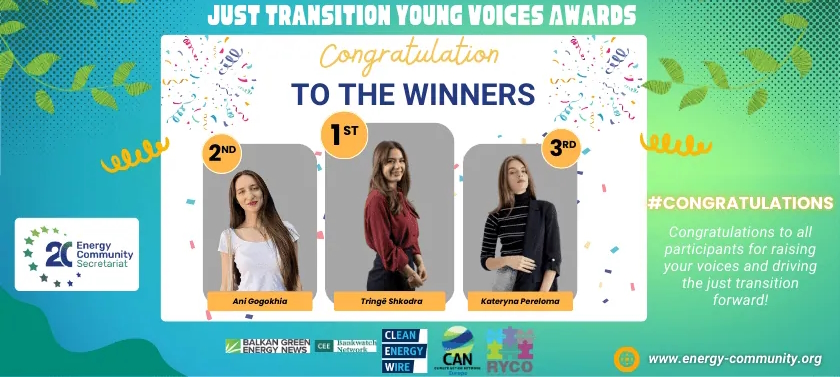
Tringe Shkodra Just Transition Young Voices Awards

Post Views:227
* This designation is without prejudice to positions onstatus and is in line with UNSCR 1244/99 and the ICJ Opinion on the Kosovo declaration of independence.
January 22, 2026
by AEA in News

Serbia to put mining strategy to parliament vote

The government passed the draft Strategy for the Management of Mineral and Other Geological Resources of the Republic of Serbia for the period from 2025 to 2040, with projections until 2050, so the National Assembly is required to put it to vote. With full appreciation of economic, environmental and social aspects, the implementation needs to contribute to improving the legal framework, establishing a balance between economic growth and environmental protection, remediation of abandoned mining facilities and securing a stable supply of critical and strategic raw materials, Minister of Mining and Energy Dubravka Đedović Handanović stressed.

After a turbulent public discussion process, the Government of Serbia adopted the draft Strategy for the Management of Mineral and Other Geological Resources of the Republic of Serbia for the period from 2025 to 2040, with projections until 2050. Several dozen objections and suggestions were accepted or partly accepted. However, the text of the strategy that will be passed on to the National Assembly for a vote hasn’t been published yet.

A special emphasis is on the development of risk management mechanisms, climate neutrality and the application of energy-efficient and low-carbon technologies, the government pointed out.

The strategy is based on the principles of sustainable utilization of natural wealth, biodiversity protection, climate resilience and the reduction of negative effects of mining activities, the announcement reads.

According to the report on the environmental impact of the strategy’s implementation, Serbia hosts many deposits of metallic, non-metallic and energy raw materials, groundwaters and geothermal energy. The authors of the accompanying document acknowledged that the exploitation of mineral raw materials in Serbia caused air, water and land pollution. Metals mining hub of Bor and Majdanpek and the Kolubara and Kostolac lignite basins are the most affected.

Another challenge highlighted in the environmental impact report are the abandoned mines, tailings dumps and mining facilities that require remediation and rehabilitation.

Strengthening state’s role in planning, oversight

The document sets a long-term framework for the responsible management of mineral resources and the strengthening the role of the state in planning, oversight and the improvement of the sector of mining and geology, in the interest of citizens and a sustainable development of local communities, the Ministry of Mining and Energy said.

A special emphasis is on critical and strategic raw materials, geothermal energy and rational utilization of natural resources

Minister Dubravka Đedović Handanović said the strategy defines programs and measures directed toward a secure supply of domestic companies and the energy system with mineral raw materials, job creation and a greater participation of the domestic industry in the value chain, as well as for reducing import dependency and strengthening the country’s economic stability.

She explained that the focus is particularly on critical and strategic raw materials, geothermal energy and rational utilization of natural resources, alongside the implementation of high environmental and security standards. This is the way, in her words, to protect the environment, improve work safeety and lower the risks for people’s health and the quality of life in local communities.

Treating protected areas responsibly

Dubravka Đedović Handanović added that the strategy clearly defines a responsible treatment of protected areas and the spaces of special natural value, through a principle of prevention and respect toward the protection regime, as well as the transparency in the processes of planning and decision making, so that the citizens would be informed timely and included in dialogue.

With full appreciation of economic, environmental and social aspects, the implementation needs to contribute to improving the legal framework, establishing a balance between economic growth and environmental protection, remediation of abandoned mining facilities and securing a stable supply of critical and strategic raw materials, the minister underscored. She said that in the long term it meant greater safety, a better quality of life and responsible development.

Post Views:232
January 22, 2026
by AEA in News

KOSTT takes over land in Kosovo* for battery system in US-funded project

Transmission, System and Market Operator (KOSTT) of Kosovo* signed a contract with the Ministry of Economy and Municipality of Ferizaj, receiving 2.3 hectares of land for a 45 MW battery project. It is funded through the Millennium Challenge Compact, initiated in 2022 by the United States, acting through its Millennium Challenge Corp. (MCC), and the government in Prishtina.

Almost a year after the prequalification call for potential contractors, KOSTT received 2.3 hectares of land from the Municipality of Ferizaj (Uroševac) for a battery energy storage system (BESS).

The transmission system operator (TSO) of Kosovo* pointed out that the Ministry of Economy is part of the deal as well, within the Millennium Challenge Compact program with the United States.

KOSTT’s battery is for its automatic frequency restoration reserve

The site for the facility for KOSTT’s automatic frequency restoration reserve (aFRR) is near the Sojeva (Sojevo) village and Camp Bondsteel. Led by the US Army, it is the seat of the Kosovo Force (KFOR).

“The batteries will store energy when there is a surplus and return it to the grid when demand increases, for a more stable supply and more affordable costs. The Kosovo-US partnership is turning into another concrete result: infrastructure that makes energy more secure for citizens,” said Acting Minister of Economy Artane Rizvanolli.

Second part of project is for 125 MW, 250 MWh

The BESS project for KOSTT, funded by the US through its Millennium Challenge Corporation (MCC), aims to strengthen energy security, promote the transition to clean energy and reduce energy costs. The battery system would have 45 MW in operating power and a two-hour duration, translating to 90 MWh.

Overall, the agreement is worth USD 236.7 million, of which the Government of Kosovo* is providing USD 34.7 million.

MCC has earmarked more than USD 200 million for the BESS endeavor

Millennium Challenge Account Kosovo (MCA-K), the contracting authority, officially launched the program last year. In September it signed an agreement with KOSTT to implement the project from design to commissioning. The arrangement was initiated in 2022.

The prequalification call was published in late 2024. It included another battery project, for 125 MW and 250 MWh, at a location in Peja (Peć). It is supposed to be managed by a public entity that would provide services such as frequency restoration and energy arbitrage – buying electricity when prices are low, to be used later.

Total investment was estimated at USD 180 million, of which USD 46 million for the smaller BESS.

Post Views:76
* This designation is without prejudice to positions onstatus and is in line with UNSCR 1244/99 and the ICJ Opinion on the Kosovo declaration of independence.
January 22, 2026
by AEA in News

Austrian EET rolls out AI-powered device to simplify home electricity metering

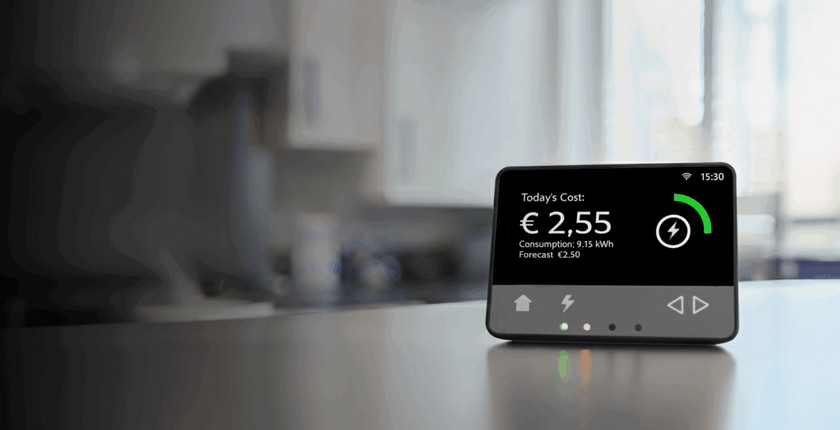
Austrian startup Efficient Energy Technology (EET) has developed an electricity metering solution called the Virtual Meter, which measures residential electricity consumption through a single connection within the home’s power network. The device, powered by artificial intelligence (AI), eliminates the need for a conventional hardwired meter, reduces system complexity for home energy storage and heat pumps, and provides real-time consumption data, the company claims.

The Virtual Meter, which can be integrated directly into any home energy device through a standard socket or any point on the home’s power network, deduces the total energy consumption accurately, reliably, and in real time, according to EET.

AI-powered Virtual Meter derives and delivers consumption data in under one second

The device uses AI-powered load identification to measure the total net electrical load of the entire home on single-phase or three-phase residential grid connections, with data delivered in under one second. It can be plugged in anywhere via a standard earthed wall socket or a wired connection, requiring a physical link to only one phase.

Instead of directly measuring current, the Virtual Meter continuously observes the voltage of one phase and detects the tiny changes that occur whenever a device switches on or off on any of the three phases of a household, the company explains. In this way, it infers the home’s total consumption.

The solution reduces the costs and complexity of home batteries and heat pumps

The Virtual Meter reduces system complexity and installation and component costs for manufacturers of devices such as home batteries, EV chargers, heat pumps, home energy management systems (HEMS), and other residential energy products, delivering a smoother, more transparent experience for end-customers.

The solution is compatible with all common grid configurations and utility meter types, and its design ensures interruption-free data availability, EET says, adding that the Virtual Meter can be integrated directly into other energy products or used as a standalone solution.

Post Views:66
January 22, 2026
by AEA in News

CBAM go-live: no electricity imports in week one

Iron and steel dominated the CBAM imports declared in the first reporting window, January 1-6, according to the European Commission.

The European Union’s Carbon Border Adjustment Mechanism entered into force on January 1. The European Commission used the January 1 to January 6 period for initial data collection to monitor and report on the CBAM go-live.

From the beginning of this year, firms in the EU that import aluminum, cement, electricity, iron and steel, hydrogen and fertilizers from non-EU countries are obliged to pay a carbon price under CBAM. But, the deadline to submit CBAM certificates for 2026 is May 31, 2027.

CBAM successfully entered into force on January 1, 2026, according to the commission.

CBAM imports declared in the first reporting window from January 1 to January 6 covered 1.655.613 tonnes

The full implementation followed a coordinated deployment across all EU member states, seamlessly integrating the CBAM Registry with national customs import systems, Taric and EU Customs Single Window, the commission explained.

This seamless interconnection ensured real-time data exchange, efficient validation of declarants, and uninterrupted import procedures at EU external borders, the EU’s executive arm claims.

CBAM imports declared in the first reporting window, from January 1 to January 6, covered 1.655.613 tonnes. This is the sectoral breakdown:

  • Iron and steel: 98%
  • Fertilizers: 1.2%
  • Cement: 0.5%
  • Aluminium: 0.3%
  • Electricity and hydrogen: 0%.

The main countries of origin of CBAM-covered imports included Turkey, China, India, Canada, Taiwan, and Vietnam. On the other hand, top importing member states are Belgium, Spain, Romania, the Netherlands, France, and Germany.

In total, more than 12,000 economic operators submitted applications for CBAM authorization by January 7.

The commission invited entities that have not yet submitted their CBAM authorization applications to do so as soon as possible via the CBAM Registry.

National authorities report stable processing times, supported by harmonized digital workflows, according to the commission.

Of note, in mid-December last year, the commission published implementing acts and amendments to the CBAM Regulation.

Post Views:120
January 22, 2026
by AEA in News

From bystanders to partners: How to ensure the new Citizens Energy Package effectively engages EU citizens in a clean energy future?

Authors:  Niklavs Tamanis, Veronica Saletti, Marco Costa, Marina Fernández-Campoamor – EUSEW  Young Energy Ambassadors

Citizens still struggle to join Europe’s clean energy transition. This article tests two practical approaches that turn hosts into partners: energy communities, where citizens co-own and share power, and community-benefit clauses, which distribute value locally. We, Young Energy Ambassadors, show how targeted One-Stop Shops (OSS), Renewable Energy Sources (RES)-ID, and interoperability among other solutions could make these mechanisms work more effectively, fairly, and at scale.

Across the EU, households still struggle to engage in energy markets. Awareness of tangible gains is low, and trust in safeguards from extractive corporations is limited. Although credible mechanisms exist, their implementation remains complex, uneven, and inaccessible.

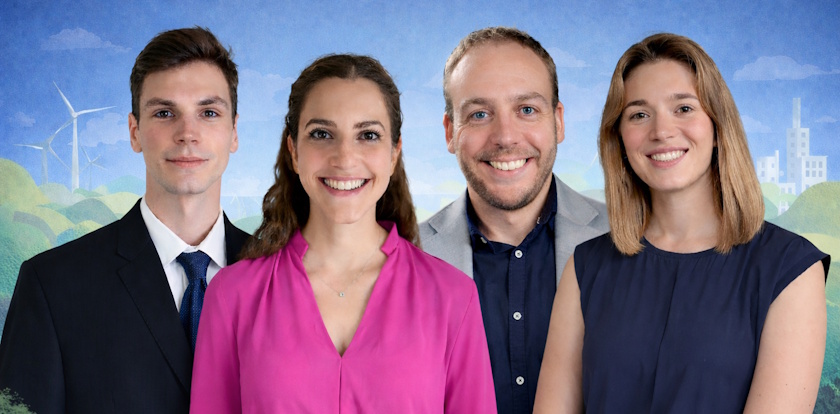
From left to right, Niklavs Tamanis, Veronica Saletti, Marco Costa, Marina Fernández-Campoamor, EUSEW Young Energy Ambassadors
Photo: From left to right: Niklavs Tamanis, Veronica Saletti, Marco Costa, Marina Fernández-Campoamor, EUSEW Young Energy Ambassadors. Illustration created using AI tools, based on original photographs.

EU momentum, Citizens Energy Package, & Our YEA inputs

The Citizens Energy Package, building on the Clean Energy Package and the 2025 Action Plan for Affordable Energy, aims to empower consumers and enable energy sharing. Our contribution to the public consultation as Young Energy Ambassadors (YEA) focused on practical delivery, through such solutions as development of targeted OSS, recognition of youth/renters as a vulnerable group, creation of audience-specific outreach, and improvements to two key levers for citizen participation in energy markets: energy communities and community-benefit clauses. In this article, we focus on the latter two.

Two practical levers

Energy Communities (EComms)

Despite clear EU direction for energy community initiatives, barriers persist: REC definition and implementation differs widely across Member States; low awareness; perceived high effort from practitioners involved in the REC creation process; complex bureaucratic set-up and operations; limited benefits for students, young workers, and low-income renters; costly, non-interoperable metering/platforms; and risks of capture by large market actors.

Our EComms Solutions

To make Energy Communities (EComms) easier to start, join, and manage, we propose a set of complementary solutions that address both organisational and technical barriers.

Primarily, energy community-focused One-Stop Shops (OSS) would act as single-entry hubs where citizens, small and medium-sized enterprises (SMEs), and local authorities can access ready-to-use documentation (statutes, by-laws, and communication templates), energy-sharing evaluations, and clear guidance on data management and regulatory steps, as well as information on how to make their homes more energy efficient.

Young people should receive formal recognition as a vulnerable group within national social frameworks

Moreover, young people, especially those renting apartments as students or early-career professionals, should receive formal recognition as a vulnerable group within national social frameworks. This would enable them to access dedicated benefits and support schemes, like other vulnerable groups, helping to remove structural barriers to their participation and ensuring that energy communities become an inclusive, rather than niche, option.

Then, a dedicated civil-service track for energy communities would also enable young professionals to gain first-hand experience while supporting communities with day-to-day management and citizen engagement activities that are otherwise costly if fully outsourced to external experts. Building on emerging examples from France and Italy, these hubs would also connect communities to grants, soft loans, and local financial partners, making investment more accessible and de-risking early-stage initiatives.

Finally, to simplify participation from a technical and bureaucratic point of view, we propose a Renewable Energy System Identifier (RES-ID): a standardised and recognized technical and administrative data set that citizens and SMEs can fill in once and then reuse across different national portals procedures, such as permit applications, grid-connection requests, EComms affiliation, and incentive schemes requests. Such a tool would store all the renewable energy systems technical data required by different national authorities and retrieve it, when necessary, at each access point, similarly to the Italian SPID or dutch DigID, personal digital identity systems.

EComms Case Studies

1) In Alto Vicentino (Italy), 16 municipalities set up an energy community, added 650 kW of photovoltaics on public buildings, made accessible national grants (up to 40% of the initial investment) for residents and small firms, and a youth team is taking it forward, organizing a buying club for building energy retrofit.

Policy takeaway: back clusters of neighbouring municipalities building from existing energy info points, keep supporting public-building solar installation as “lead by example” lever, and encourage young professionals to actively engage with local communities via dedicated support grants, civil service specific paths, and learning opportunities.

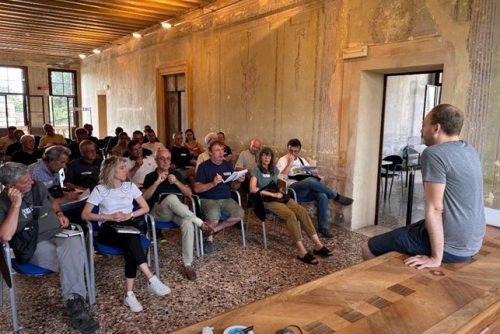
Alto Vicentino REC example, Marco Costa, Young Energy Ambassador
Photo: Marco Costa, Young Energy Ambassador, co-author of this article

2) The Hyperion Energy Community in Athens (Greece), founded in 2020 and mainly composed of families and NGOs, aims to evolve into an ESCO to support the renovation of apartments in multi-unit residential buildings. The project operates in several neighbourhoods of the capital, aiming to ensure gender balance and representation of diverse social groups among its 123 members.

Policy takeaway: Use the Citizen Energy Community (CEC) regulatory framework to create new, citizen-led business structures (ESCOs) to accelerate urban energy renovation in multi-unit buildings, ensuring broad social representation.

3) Energie Samen Rivierenland (The Netherlands): The neighbourhood association in Rivierenland, founded in 1936 and citizen-led, is revitalizing its dated housing stock (60% built before 1950) through a co-design process for interventions. The project covers 133 dwellings, with a specific focus on energy poverty and elderly residents.

Policy takeaway: Leverage existing neighbourhood associations with a long history of community trust to promote the co-design of renovation interventions, focusing specifically on the most vulnerable groups.

4) Renoss (Italy): it is the network of One Stop Shops dedicated to Renewable Energy Communities, run by public local energy agencies backed by the Environmental Ministry. It covers the whole national territory with at least one OSS per region, aligned with the Energy Performance in Building Directive. Each agency supports energy communities via dedicated services which spans from information to grant applications, feasibility studies, and member engagement campaigns.

Policy takeaway: support cluster organizations of public-led OSS to offer a structured and homogeneous technical assistance approach across Europe

Community-benefit clauses

While energy communities are a promising and innovative concept with clear environmental benefits, they don’t always address the social equity concerns from renewable energy projects, such as externalised siting costs. This is why the introduction of benefit-sharing mechanisms, such as community funds and shared equity ownership, is also building momentum among Member States.

Still, progress is uneven: many schemes are complex, opaque, and engage residents too late; youth, renters, and other underrepresented groups are barely reached; participation stays low, and legitimacy suffers. As Young Energy Ambassadors, we thus argue that just transition must go beyond compensation to create shared community value, especially where skills and alternative jobs are scarce.

Our community-benefit Solutions

To make renewable energy projects fairer and more inclusive, national governments can set out simple rules to ensure that local communities share in the benefits.

For example, benefit criteria can be built directly into auction schemes, with clear guidance on eligible uses such as local energy relief or community facilities. A “one-stop shop” (OSS) can then help communities check who qualifies, access funds or compensation, and connect to training or re-skilling opportunities.

Furthermore, governments could develop risk-sharing models that make it easier for low-income households to take part in projects without bearing financial losses.

Finally, targeted communication through youth groups, schools, community centres, and local media can raise awareness, using an EU-adapted model that considers both income and housing conditions.

Community-benefit case studies

We once again explored two national models in detail to see what fair community value-sharing can look like.

1) In Ireland’s RESS auctions, every supported project pays EUR 2/MWh into a local Community Benefit Fund and appears on a national SEAI register with guidance on eligible uses – from energy-poverty relief to community facilities. There’s also a community-led auction lane for locally developed projects.

Policy takeaway: set a fixed €/MWh payment into a local fund, keep a public register and simple annual reporting, and retain a community-led track so locals can lead and access the value.

2) Denmark’s VE-loven goes further by pairing money with ownership and protection. Developers of new onshore wind must offer 20% local shares (within 4.5 km) on equal terms, compensate any loss of property value, and pay into a Green Scheme for local amenities.

Policy takeaway: make it a package – local shares, property compensation, and a community fund – to align incentives and build durable acceptance.

Why does all of this matters

Coupling Ecomms and Community-Benefit mechanisms with functional OSS, RES-ID, interoperability, and guardrails, among other improvements, builds trust, accelerates their deployment, improves affordability, and broadens participation – especially for youth, renters, and other vulnerable groups.

As the EU’s modern citizen energy participation transitions from a consultation phase, equitable codification of mechanisms must follow: targeted OSS must be scaled, trusted tools must be standardised across the MS, mainstream risk-sharing principles must be integrated, and community-benefits must provide tangible value beyond mere compensation.

The European Commission already provides a foundation for this through tools such as the Energy Communities Facility and the Citizen-led Renovation Initiative, which help local actors access guidance, finance, and capacity-building. In parallel, EU-wide networks like REScoop.eu support renewable energy cooperatives and peer learning across Member States.

Building on and scaling these efforts will be essential to ensure our future citizens become genuine partners in Europe’s renewable energy build-out.

This opinion editorial is produced in co-operation with the European Sustainable Energy Week 2026. See ec.europa.eu/eusew for open calls.

Disclaimer: This article is a contribution from a partner. All rights reserved.

Neither the European Commission nor any person acting on behalf of the Commission is responsible for the use that might be made of the information in the article. The opinions expressed are those of the author(s) only and should not be considered as representative of the European Commission’s official position.

Post Views:125
January 22, 2026
by AEA in News

Renewables account for 99% of Turkey’s net electricity capacity additions

Electricity capacity in Turkey reached 122 GW in 2025, of which 62% was from renewable sources, according to the SHURA Energy Transition Center. Photovoltaics grew by 4.9 GW, compared to 1.7 GW in the wind power segment. Renewables made up 99% of the net additions, amounting to 6.3 GW, the think tank calculated. This year, however, the first unit of the Akkuyu nuclear power plant is scheduled to come online, adding 1.2 GW.

Gross electricity production in Turkey increased 2% last year, to 360 TWh, the SHURA Energy Transition Center estimated in a new report. The share of renewables dropped to 44.1% from 46%. Namely, hydropower output is on a downward trajectory, due to droughts. Wind, solar and geothermal power rallied to 24.6%, though. Photovoltaics and wind power together surpassed 20%.

Renewables continue to dominate the sector’s development, accounting for 99% of the overall 6.3 GW in net additions, the think tank calculated. The total reached 122 GW. Renewable sources made up 62%, compared to 59.7% in 2024.

Solar power surged by 4.9 GW and the wind power capacity jumped by 1.7 GW, while the natural gas item declined by 684 MW.

Importantly, the picture is about to change, as the first, 1.2 GW reactor in Akkuyu, Turkey’s first nuclear power plant, is scheduled to be commissioned this year. Coal plant projects remain dormant and uncertain.

Race to 2035 targets

Daily power consumption reached an all-time high of 1,244 GWh on July 29. SHURA attributed the record to cooling demand caused by rising temperatures.

To reach the 2035 targets, an average of 8 GW of combined solar and wind capacity must be commissioned each year. The high momentum is expected to continue in 2026, the report reads. The government aims to hit 120 GW altogether from the two technologies, against the current 40 GW.

However, grid constraints for self-consumption units (formally, unlicensed power plants) may slow solar energy growth, the authors warned. The plan is to resolve the issue through capacity allocations for the segment. The increasing prevalence of renewable and hybrid power plants with storage will enhance system flexibility, SHURA added.

Electricity decarbonization plan costs USD 15 billion per year

Just transition plans for coal regions are critical, the think tank said. It estimated that decarbonizing the electricity sector by 2053 would require an average annual investment of USD 15 billion.

Decisions regarding fossil fuels made for security of supply reasons must be more carefully balanced with the net zero target, SHURA stressed. Temporary solutions risk creating a permanent deadlock, it underscored.

Focus switching to grid, flexibility

Turkey has reached a critical juncture in its energy transformation, according to the update. The authors commended the rise in capacity and new tenders and investments. Nevertheless, they claim the pace cannot be sustained without strengthening the grid, flexibility and implementation capacity, while implying expansion in storage, electrification and financing.

In the view of SHURA’s Steering Committee Chair Selahattin Hakman, energy transition should no longer be considered solely as a topic of climate policy, but rather in conjunction with geopolitical developments, security and economic resilience. Clean energy investments, particularly in solar and wind power, continue to grow despite increasing global uncertainties, he noted.

“In this new era, energy transition is defined at the intersection of geopolitical independence, economic resilience and social justice. Energy policies have transcended the boundaries of the environment and have become central to foreign policy, industrial strategy and trade policies,” Hakman stated.

Post Views:135
January 22, 2026
by AEA in News

Bulgaria to host renewable electricity plants on Luxembourg’s behalf

Bulgaria joined Finland as a host country for the 2026 call through the EU Renewable Energy Financing Mechanism (RENEWFM). Luxembourg intends to fund renewable energy projects there, which will enable it to statistically attribute 80% of output to itself.

In the European Union, a member state that missed its renewable energy target can arrange a so-called statistical transfer, for a fee, from a fellow country that surpassed its own target. Another way is to fund power plant projects in another member state, via the EU Renewable Energy Financing Mechanism (RENEWFM).

In the first round, Finland agreed to host seven solar parks on behalf of Luxembourg. The grants amounted to EUR 27.5 million. Next time, also for Luxembourg, it got seven photovoltaic projects and Estonia got two for wind power. The beneficiaries won EUR 52 million in total.

This year, Bulgaria decided to participate with Finland, again on behalf of Luxembourg. Conveniently, the plan is for photovoltaic plants with battery storage in the country’s coal regions in transition: Pernik, Kyustendil and Stara Zagora. The investments are aimed at ensuring long-term employment and energy security. They complement the so-called territorial just transition plans (TJTPs) for a smooth coal phaseout.

The budget for the forthcoming round amounts to EUR 55 million

Bulgaria applied through the call that the European Commission’s Directorate-General for Energy (DG Ener) published. The overall budget is EUR 55 million.

The facilities must operate for at least 15 years. Bulgaria provides land instead of Luxembourg, which gets 80% of the green energy certificates from production.

As for Finland, solar farms are planned again, for the upcoming round.

The European Climate, Infrastructure and Environment Executive Agency (CINEA) is responsible for conducting the calls and monitoring project implementation.

Post Views:133
  • 1
  • …
  • 13
  • 14
  • 15
  • 16
  • 17
  • …
  • 140

AEA – Albania Energy Association is a industry association dedicated to representing the interests of Albanian and West Balkan for energy producers and consumers. AEA works to advance the development and adoption of sustainable energy solutions in Albania and the Western Balkans, supporting the region’s transition toward a cleaner, more secure, and more competitive energy future. AEA is registered by decision of the Court of Tirana, DECISION NO. 3032, (VAT:L11827451K).

[email protected]

Address
Blv Zogu 1
Tirana
1057
ALBANIA

LinkedIn  |  Facebook
Events
May 25, 2022 Connecting Green Hydrogen Europe 2022
May 25, 2022 Energy Week Western Balkans 2022
Copyright © Albania Energy Association