AEA-Albania Energy Association
  • Main
  • About Us
  • Services
  • Sectors
  • News
  • EventsEvents
  • PublicationPublication
  • Contact Us
AEA-Albania Energy Association
  • Main
  • About Us
  • Services
  • Sectors
  • News
  • EventsEvents
  • PublicationPublication
  • Contact Us
AEA-Albania Energy Association
  • Home Page
  • About Us
  • Sectors
  • Our Services
  • News
  • Contact Us
January 22, 2026
by AEA in News

Kosovo’s* just energy transition: greening the Kingdom of Coal

Author: Tringë Shkodra

Kosovo’s* energy transition has great potential but key players such as small and medium-sized enterprises (SMEs) and young people are facing structural exclusion.

Our energy system is still heavily dependent on dirty fossil fuels and overburdened by frequent outages, reliance on imports, and growing costs, particularly during the winter when demand is at its highest and most households and businesses can no longer afford to pay energy bills. While infrastructure upgrades are essential, they are not enough. In order to succeed, this transition must be just, meaning it needs to be inclusive and rooted in the lived experiences of the people it aims to serve.

Understanding Kosovo’s* distinct socio-economic landscape, with the country having the youngest population in Europe as well as a large number of SMEs, is essential for addressing its development challenges and unlocking its potential.

SMEs form the backbone of the Kosovan* economy but get structurally excluded from accessing energy-saving practices. Many studies shed light on energy efficiency within Kosovo’s* private sector – particularly among SMEs, and show that these businesses face serious barriers to adopting sustainable practices. While larger firms are more likely to invest in energy-saving technologies, SMEs struggle with access to finance, lack awareness, and get minimal institutional support.

Businesses require energy efficiency for survival

Yet energy audits show that many could reduce consumption by up to 40% with low-cost interventions. This isn’t about reluctance, but structural exclusion. Energy efficiency, in this context, is not just a technical fix but a survival strategy for businesses.

With the right incentives, this sector can become a driver of Kosovo’s* green transition, creating jobs and fostering innovation.

Youth rarely invited to table

Another overlooked potential for Kosovo’s* energy transition are the youth. Over half of Kosovo’s* population is under the age of 30, yet their involvement in environmental governance remains limited. A study of youth participation in environmental and climatic concerns across ten municipalities of Kosovo* found that, while 63% of young respondents reported a strong desire to contribute to environmental policymaking, only 15% had ever participated in such processes.

Youth-led initiatives, innovation hubs, and climate advocacy networks are lacking institutional trust and real influence

This isn’t a lack of engagement; it’s again a lack of access. Youth-led initiatives, innovation hubs, and climate advocacy networks are already active, but they need to be met with institutional trust and real influence. The potential of our youth is vast – from engineers developing solar microgrids to community organizers shaping local green agendas. However, without inclusion, this potential remains untapped. We are ready to lead, but we are rarely invited to the table.

Dependence on lignite is cause of public health crisis

Advancing fundamental reforms aligned with European values is a prerequisite for sustainable development. This includes harmonizing structural reforms outlined in the Economic Reform Programmes (ERPs), strengthening the rule of law, and embedding the energy transition within the European Union’s broader green agenda. Kosovo’s* overreliance on lignite coal poses not only environmental but social risks, and the outdated mindset of living in the Kingdom of Coal clashes with the urgent need for a clean, secure, and just energy future.

Data from Riinvest Institute outlines clearly that over 90% of Kosovo’s* electricity is still produced from coal, while renewable energy accounts for less than 6%. This dependence is more than an economic liability – it is a public health crisis. Around 300,000 to 400,000 people live within 30 kilometers of lignite-fired power plants Kosovo A and Kosovo B, which lack modern emission controls.

Air pollution and outdated technology put thousands at risk every day. The urgency to diversify the energy mix isn’t only environmental – it is humanitarian. Energy, when approached with justice in mind, can become a tool for dignity and equal opportunity.

Despite a myriad of strategies and policy documents, Kosovo* has made only partial progress in aligning with EU energy and environmental standards. The Energy Community Annual Implementation Report (2024) shows that implementation across clusters such as decarbonization and energy security ranges from just 40% to 66%. True transformation demands more than technical upgrades as it requires institutional coordination, transparency, and strong evidence-based policymaking.

We are transitioning lives

In a recent conversation, a national energy expert put it simply: “We are not just transitioning technologies. We are transitioning lives.” A just energy transition must therefore encompass more than grid modernization or solar farms. It requires tailored policies – legislation that removes bureaucratic bottlenecks, the rollout of incentives for low-income households to adopt renewables, and clear pathways for communities to become prosumers.

Kosovo’s* policy frameworks, such as the forthcoming National Energy and Climate Plan and the renewable energy law, must be instruments of real transformation – practical, inclusive, and focused on impact.

Permitting procedures for renewables need to be simplified

To catalyze a just energy transition, the country requires comprehensive investments across its energy infrastructure while ensuring that reforms are socially inclusive and environmentally sound. This begins with diversifying the energy mix by prioritizing renewables – particularly solar and wind – through competitive auctions and de-risked investment environments that attract private sector participation. Kosovo* must simplify permitting procedures, build institutional expertise, and enhance the grid’s technical capacity to absorb renewable inputs.

Alongside infrastructure upgrades, investments are needed in energy efficiency for public and private buildings, especially given the country’s high winter heating demand and grid losses. Carbon-free heating solutions and retrofitting programs can help reduce both emissions and energy poverty, especially among vulnerable groups.

Subsidies must be designed for low-income households

Financing this transformation requires a blended approach – mobilizing domestic resources, securing grants from the EU and the United States, and leveraging international financial institutions through loans with state guarantees. But energy justice is not only about technology or money, it is about who benefits. Subsidies and support schemes must be designed for low-income households to participate in renewable adoption as consumers and prosumers.

A just transition brings inclusive growth and long-term climate resilience

Moreover, Kosovo* must link its investment strategies to broader social objectives, like upskilling labor for green jobs, protecting coal-reliant communities, and embedding equity and participation in every step of reform.

Kosovo* needs to make use of its strengths, and supports its young population, smaller enterprises and low-income households. Without an integrated approach, it risks reinforcing existing inequalities, but if it creates an energy transition that is just for the people, the country can turn its transition into a platform for inclusive growth, and long-term climate change resilience.
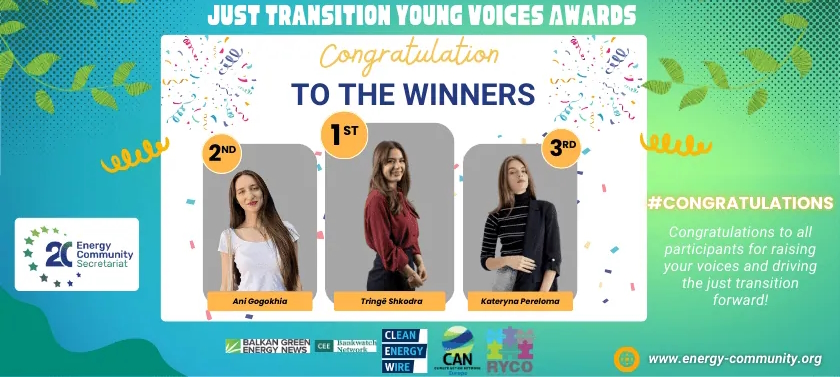
Tringe Shkodra Just Transition Young Voices Awards

Post Views:226
* This designation is without prejudice to positions onstatus and is in line with UNSCR 1244/99 and the ICJ Opinion on the Kosovo declaration of independence.
January 22, 2026
by AEA in News

IRENA: Global daily flexibility needs are quadrupling by 2050

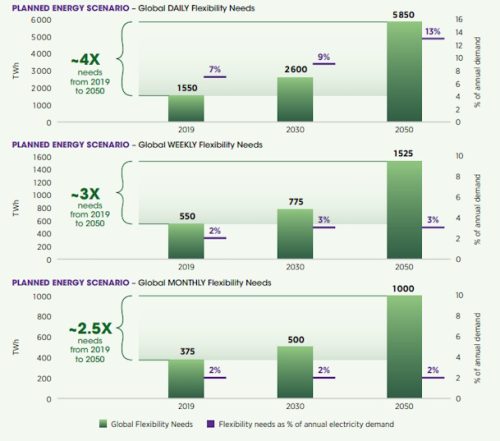
In IRENA’s Planned Energy Scenario at the global level, electricity system flexibility needs on a daily timescale are four times higher in 2050 than in 2019. In the weekly and monthly timescales, the energy required for the purpose grows by three and 2.5 times, respectively. As for the 1.5°C Scenario, implying a much higher share of renewables, the daily flexibility needs jump ten times by mid-century, versus six times for both remaining segments.

Electrification of end-use energy, large-scale deployment of distributed energy resources and the emergence of large new electricity loads from data centres are increasing demand and adding new layers of complexity. It means power systems will need stronger grids and more flexibility to ensure that electricity is available when and where needed and at the lowest possible cost, the International Renewable Energy Agency (IRENA) pointed out in a brief called Flexibility for a secure and affordable power sector transformation.

Aside from buildings and transportation, new demand is coming from the growing adoption of artificial intelligence (AI), driving the expansion of data center capacity. In 2024, data centers consumed 1.5% of electricity. The International Energy Agency expects the share to double by 2030.

The share of variable renewable energy is increasing – wind and solar power in particular. Demand patterns become more complex, so the potential for mismatches between supply and demand is likely to grow, becoming more frequent and significant. It highlights the increasing importance of system flexibility. It is the capacity to respond to expected and unexpected fluctuations in the demand for and supply of electricity in a cost-effective manner.

Some forms of flexibility act automatically to keep the system stable, while others can be scheduled and operate over hours, days or even seasons

Insufficient system flexibility can result in excessive curtailment or, in market-based systems, negative electricity prices. It can also result in shortages, jeopardising the reliable supply of electricity.

System flexibility is needed by the power system to adjust to the variability of generation and demand patterns across different timescales. Some forms of flexibility act automatically within seconds to keep the system stable, while others can be scheduled in anticipation and operate over hours, days or even seasons, through market adjustments and operational and resource planning.

Network flexibility, which isn’t covered in IRENA’s brief, is different. It is the capacity to adjust for grid availability by means of preventing or solving congestion or voltage issues.

Required flexibility depends on numerous factors

In the timescale of seconds to minutes, flexibility is needed to maintain the balance during sudden changes in demand or supply, such as the
disconnection of an interconnector or a major load or generator. The hours and days timescale has daily ups and downs of solar and wind generation alongside the peaks and troughs in demand throughout the day.

In the weeks and seasons segment, flexibility enables covering longer weather patterns caused by changes in the season or low-wind periods. In power systems mainly supplied by renewables, flexibility is also needed at inter-annual timescales. The main factors are climate-driven variations in resource availability. It especially concerns hydrology, but also wind and solar, as well as year-to-year differences in seasonal heating and cooling demand.

In power systems mainly supplied by renewables, flexibility is also needed at inter-annual timescales

Flexibility is not a single asset or function; instead it corresponds to a capability provided by a portfolio of different technologies, operational practices and market mechanisms. The required level of flexibility in a power system depends on, among other factors, the prevailing generation mix, geography, power sector structure and affected timescales.

Storage, demand-side management (DSM), interconnections and dispatchable resources each contribute differently.

Advances in forecasting and the introduction of shorter dispatch intervals, scheduled closer to real-time operation, allow more frequent and precise adjustments of generation and demand before electricity is delivered. One example are intraday markets complementing day-ahead markets.

Electricity must become main energy carrier by mid-century to keep global warming in check

In IRENA’s 1.5°C Scenario, the energy transition will be driven by the deployment of renewable energy, improvements in energy efficiency and the electrification of end-use sectors. The aim is to limit global warming to 1.5 degrees Celsius by 2100.

Electricity would need to become the main energy carrier by 2050. It would account for over half of total final energy consumption. The 2022 level was 23%.

Global electricity generation is projected to be 36% higher in 2030 and three times higher in 2050 than in 2023. Renewable resources would supply 68% of electricity in 2030 and 91% in 2050. Renewables would account for 77% of total installed power capacity in 2030 and 94% in 2050.

In the same setting, 70% of electricity generated in 2050 comes from wind and photovoltaics, taken together. In IRENA’s Planned Energy Scenario, not projecting full decarbonization, the level is 53%.

In IRENA’s 1.5°C Scenario, the share of electricity in total final energy consumption more than doubles by 2050, surpassing 50%

Flexibility needs are calculated as total cumulated annual energy deviation from the average net load (which excludes variable renewable energy generation).

In the 1.5°C Scenario, the power sector requires ten times more flexibility in 2050 than in 2019 to manage the daily variability of net load. In terms of share of annual electricity demand, the authors observed a surge to 30% from 7%. Flexibility needs for managing the variability in weekly and monthly timescales are both six times higher.

In IRENA’s Planned Energy Scenario, daily flexibility needs in 2050 are four times higher. In the weekly timescale, the level triples from 2019, and the monthly item is 2.5 times higher.

IRENA Global daily flexibility needs quadrupling by 2050
Photo: The height of bars indicates flexibility requirements in terawatt-hours per year. Purple horizontal markers show flexibility needs as a percentage of annual electricity demand. (IRENA)

Batteries perform best in daily segment

Battery energy storage is the most effective in addressing daily flexibility needs, the report finds. It is only 24% as effective at meeting weekly needs and 12% as effective for monthly needs.

Interconnections and LDES are effective on the weekly and monthly scales

Interconnections are the most effective in addressing weekly flexibility needs, but also 98% as effective for monthly needs. As for the daily segment, the coverage is just 28%.

The numbers for long-duration energy storage (LDES) solutions are similar. Compared with addressing weekly flexibility needs, LDES is 90% as effective for monthly needs and 34% as effective in the daily item.

Post Views:97
January 22, 2026
by AEA in News

Croatia’s HEP to invest EUR 157 million in HPP Varaždin

Croatian power utility Hrvatska Elektroprivreda (HEP) has contracted the reconstruction of its Varaždin hydropower plant. The project will increase the capacity of the 51-year-old facility by almost 20% and boost operational efficiency and annual production.

HEP’s power production arm HEP Proizvodnja selected Končar for the reconstruction of the generating units at the Varaždin hydropower plant. The contract was signed by the President of the Management Board of HEP Proizvodnja Šime Šimurina and Gordan Kolak, president of the Management Board of Končar.

The agreement is for the development of technical documentation, manufacturing the primary equipment and associated systems for two new generators, and delivering them. The agreed timeline for the works is 53 months, with completion expected in 2030, according to Končar.

In addition to replacing the generating units, covered by the new contract, the project entails the replacement or refurbishment of all other equipment in the machine room and dam, as well as the structures and infrastructure of HPP Varaždin, depending on their condition and in accordance with the current legal and technical requirements.

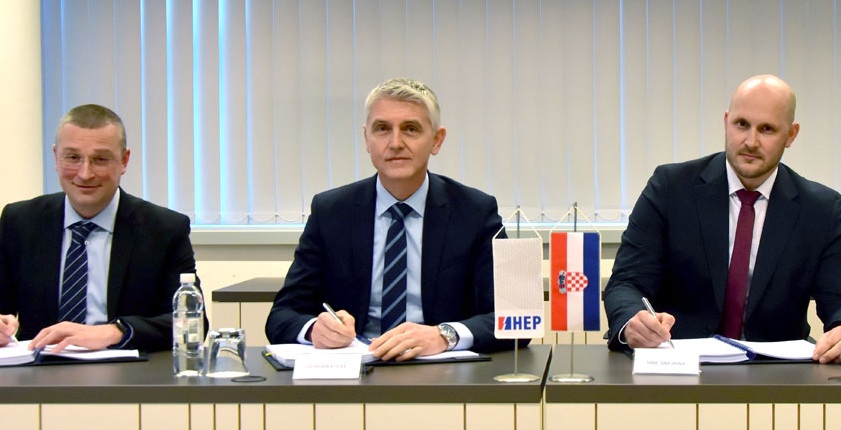
croatia hep koncar hpp varazdin contract paic kolak sipurina
Ivan Paić, member of Končar’s management board, Gordan Kolak and Šime Šimurina (photo: HEP)

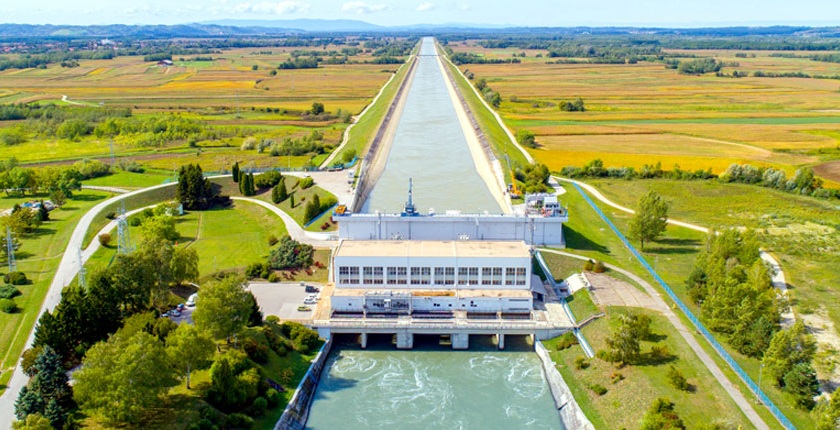
The reconstruction of the HPP is estimated at EUR 157 million, while the contract with Končar is worth EUR 95.2 million. The combined capacity of each unit would increase from 47 MW to 55 MW. The new turbines are expected to bolster operational efficiency from 86% to 93%.

The endeavor is also aimed at enhancing water flow from 250 cubic meters per second to 275 cubic meters. Together with a rise in total capacity from 94 MW to 110 MW, it is supposed to lift average annual production, currently at 450 GWh, by 6%.

HPP Varaždin’s lifespan to be extended by 50 years

HPP Varaždin is near the city of Varaždin. Its current capacity of 94 MW is the sixth-highest among HEP’s 27 HPPs. Put into operation in 1975, it was the first hydropower plant on the Drava river in Croatia. The other two in cascade are Čakovec and Dubrava.

According to Končar, the reconstruction will extend the facility’s lifespan by at least 50 years.

Post Views:81
January 22, 2026
by AEA in News

Petrović: ERS to launch construction of Trebinje 3, Hrgud this year

Power utility Elektroprivreda Republike Srpske plans to start the installation of the Trebinje 3 solar power plant and the Hrgud wind farm this year, according to CEO Luka Petrović.

Elektroprivreda Republike Srpske (ERS) already has projects in a ready-to-build phase through its subsidiary companies, Luka Petrović explained, Srpskainfo reported.

ERS is the dominant power producer and supplier in the Republic of Srpska, one of the two entities constituting Bosnia and Herzegovina.

The Trebinje 3 solar power plant, with a capacity of 53 MW, will be built first. The company has received a concession from the Government of the Republic of Srpska. The tender for construction will be launched soon, Petrović stressed.

Preparations for the Hrgud wind farm are also in the final stages, he added. Multi-year wind potential assessments and environmental studies have been completed. Petrović anticipates the start of construction this year. The planned capacity is 60 MW.

Wind energy attracts the most attention in the Republic of Srpska

The installation of the two power plants is expected to be finished by the end of 2027 or in early 2028, he asserted. The CEO added they would significantly contribute to the development of renewable energy sources.

He noted that wind energy attracts the most attention in the entity. The concessions commission of the Republic of Srpska has also awarded approvals for the construction of more than 1,200 MW of photovoltaic plants, Petrović recalled.

In his view, investments by private firms are dormant because solar power production is no longer profitable without battery energy storage systems (BESS).

Petrović: Many solar projects will not be completed

Solar energy prices are significantly lower than they were four to five years ago, Petrović added.

Many of these solar projects will not be finished, he underscored.

Of note, ERS decided late last year to revive the Hrgud wind project, which was halted after a decision by the German government.

The concession for the Trebinje 3 solar power project was awarded in April 2025.

Post Views:64
January 22, 2026
by AEA in News

From Austria to Albania: Verbund, Nordex to deploy 105 wind turbines across Europe

Verbund Green Power has forged a partnership with Nordex Group for the potential procurement of wind turbines.

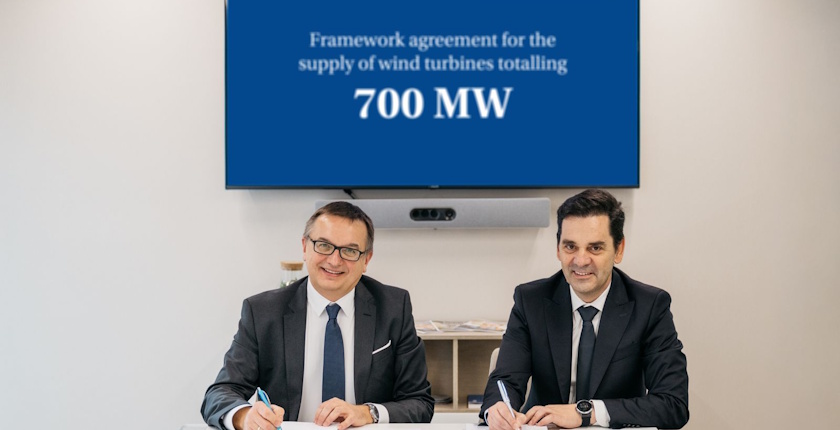
Verbund Green Power, a subsidiary of Austrian state-owned energy utility Verbund, has entered into a multiyear framework agreement with leading wind turbine producer Nordex Group for the potential procurement of wind turbines of up to 700 MW in total capacity, according to a joint press release.

The agreement runs through 2030.

The power plants are planned in six markets

The agreement was officially signed in Verbund Green Power’s Madrid office by Dietmar Reiner, Managing Director of Verbund Green Power, and José Luis Blanco, CEO of Nordex Group.

They expressed willingness to facilitate the supply and delivery of up to 105 Nordex onshore wind turbines for Verbund Green Power’s wind projects. They are are planned in Austria, Germany, Spain, Italy, Romania and Albania, the update reads.

europe verbund nordex Dietmar Reiner José Luis Blanco
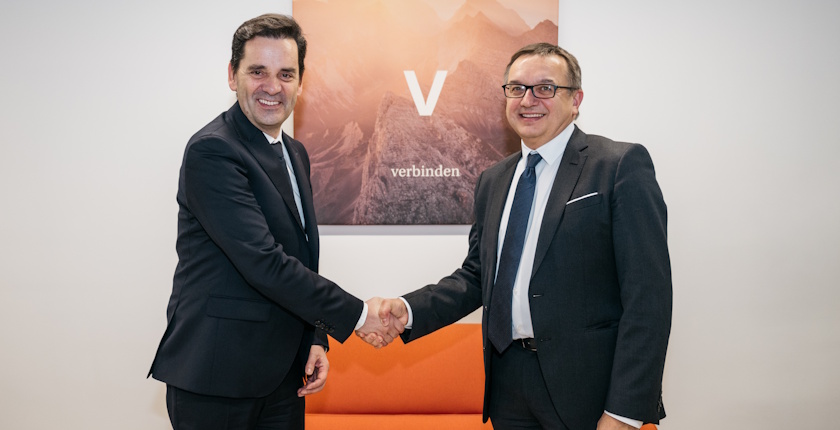
José Luis Blanco and Dietmar Reiner (photo: Verbund)

Of note, Christopher Billot, Sales Director for the Mediterranean region of Nordex Group, said at Belgrade Energy Forum 2025 that the Balkans is a key region for his company.

The deal would cover approximately 50% of Verbund Green Power’s wind project pipeline.

Blanco: We’re creating a clear path to deliver reliable, cost-efficient wind energy together with Verbund

Nordex Group CEO José Luis Blanco explained that through this multi‑year framework, the company would provide the turbine capacity to convert an ambitious pipeline into clean generation across six multi‑country markets in Europe.

“With up to 700 MW of our latest 7 MW class onshore turbines slated across Austria, Germany, Spain, Italy, Romania and Albania, we’re creating a clear path to deliver reliable, cost-efficient wind energy together with Verbund through 2030,” he stressed.

Strugl: The collaboration with Nordex strengthens our supply options as our projects mature

Blanco recalled that late last year Nordex received a first order from Verbund for nine N175/6.X turbines for Romania. “We’re expanding our footprint in this country,” he added.

According to Verbund CEO Michael Strugl, the collaboration with Nordex supports his company’s strategic objective of scaling up renewable generation across Europe.

“It strengthens our supply options as our projects mature, allowing us to secure the supply chain in a very competitive environment and deliver on Mission V targets, contributing to a secure and accelerated energy transition in our markets,” Strugl added.

Post Views:76
January 22, 2026
by AEA in News

Energy Community invites applications for 10th Summer School

The Energy Community Secretariat has invited postgraduates, researchers, and young professionals to apply for the 10th edition of the Energy Community Summer School, taking place at Polis University in Tirana, Albania, between August 22 and 29 this year. The program focuses on energy sectors in transition, in particular in South Eastern and Eastern Europe, according to the announcement.

The Energy Community Summer School, designed for postgraduate students, researchers, and early-career professionals, provides an in-depth exploration of the technical, economic, legal, political, and sustainability dimensions of the energy transition, including energy systems, markets, and geopolitics.

The course explores various aspects of the energy transition in the region

The academic program is complemented by a strong cultural component, offering first-hand insight into the energy realities of Albania and the wider Energy Community, the announcement reads.

“The strength of the Energy Community Summer School lies in bringing together the next generation of energy leaders,” stated Adrian Jasimi, who has led the Summer School since its inception. “It is a space where ideas mature, collaborations emerge, and the future of energy takes shape,” he stressed.

Jasimi: The Summer School brings together the next generation of energy leaders

The Summer School is a platform that offers cutting-edge insights and opportunities to build lasting professional connections. Many of its alumni now hold influential roles in business, policymaking, and academia, the Energy Community noted.

This year’s summer school is organized in cooperation with the he International Visegrad Fund (IVF) and Deutsche Gesellschaft für Internationale Zusammenarbeit (GIZ), within the framework of the Regional Climate Partnership (RCP) between Germany and the Western Balkans.

Applications are open until March 31

The deadline to apply is March 31. The Energy Community Secretariat covers all program-related costs, including lectures, accommodation, excursions, and most meals, while participants only need to cover the travel cost to and from Tirana, according to the Energy Community’s LinkedIn post.

Post Views:35
January 22, 2026
by AEA in News

Energy Community invites applications for 10th Summer School

The Energy Community Secretariat has invited postgraduates, researchers, and young professionals to apply for the 10th edition of the Energy Community Summer School, taking place at Polis University in Tirana, Albania, between August 22 and 29 this year. The program focuses on energy sectors in transition, in particular in South Eastern and Eastern Europe, according to the announcement.

The Energy Community Summer School, designed for postgraduate students, researchers, and early-career professionals, provides an in-depth exploration of the technical, economic, legal, political, and sustainability dimensions of the energy transition, including energy systems, markets, and geopolitics.

The course explores various aspects of the energy transition in the region

The academic program is complemented by a strong cultural component, offering first-hand insight into the energy realities of Albania and the wider Energy Community, the announcement reads.

“The strength of the Energy Community Summer School lies in bringing together the next generation of energy leaders,” stated Adrian Jasimi, who has led the Summer School since its inception. “It is a space where ideas mature, collaborations emerge, and the future of energy takes shape,” he stressed.

Jasimi: The Summer School brings together the next generation of energy leaders

The Summer School is a platform that offers cutting-edge insights and opportunities to build lasting professional connections. Many of its alumni now hold influential roles in business, policymaking, and academia, the Energy Community noted.

This year’s summer school is organized in cooperation with the he International Visegrad Fund (IVF) and Deutsche Gesellschaft für Internationale Zusammenarbeit (GIZ), within the framework of the Regional Climate Partnership (RCP) between Germany and the Western Balkans.

Applications are open until March 31

The deadline to apply is March 31. The Energy Community Secretariat covers all program-related costs, including lectures, accommodation, excursions, and most meals, while participants only need to cover the travel cost to and from Tirana, according to the Energy Community’s LinkedIn post.

Post Views:32
January 21, 2026
by AEA in News

From Austria to Albania: Verbund, Nordex to deploy 105 wind turbines across Europe

Verbund Green Power has forged a partnership with Nordex Group for the potential procurement of wind turbines.

Verbund Green Power, a subsidiary of Austrian state-owned energy utility Verbund, has entered into a multiyear framework agreement with leading wind turbine producer Nordex Group for the potential procurement of wind turbines of up to 700 MW in total capacity, according to a joint press release.

The agreement runs through 2030.

The power plants are planned in six markets

The agreement was officially signed in Verbund Green Power’s Madrid office by Dietmar Reiner, Managing Director of Verbund Green Power, and José Luis Blanco, CEO of Nordex Group.

They expressed willingness to facilitate the supply and delivery of up to 105 Nordex onshore wind turbines for Verbund Green Power’s wind projects. They are are planned in Austria, Germany, Spain, Italy, Romania and Albania, the update reads.

europe verbund nordex Dietmar Reiner José Luis Blanco
José Luis Blanco and Dietmar Reiner (photo: Verbund)

Of note, Christopher Billot, Sales Director for the Mediterranean region of Nordex Group, said at Belgrade Energy Forum 2025 that the Balkans is a key region for his company.

The deal would cover approximately 50% of Verbund Green Power’s wind project pipeline.

Blanco: We’re creating a clear path to deliver reliable, cost-efficient wind energy together with Verbund

Nordex Group CEO José Luis Blanco explained that through this multi‑year framework, the company would provide the turbine capacity to convert an ambitious pipeline into clean generation across six multi‑country markets in Europe.

“With up to 700 MW of our latest 7 MW class onshore turbines slated across Austria, Germany, Spain, Italy, Romania and Albania, we’re creating a clear path to deliver reliable, cost-efficient wind energy together with Verbund through 2030,” he stressed.

Strugl: The collaboration with Nordex strengthens our supply options as our projects mature

Blanco recalled that late last year Nordex received a first order from Verbund for nine N175/6.X turbines for Romania. “We’re expanding our footprint in this country,” he added.

According to Verbund CEO Michael Strugl, the collaboration with Nordex supports his company’s strategic objective of scaling up renewable generation across Europe.

“It strengthens our supply options as our projects mature, allowing us to secure the supply chain in a very competitive environment and deliver on Mission V targets, contributing to a secure and accelerated energy transition in our markets,” Strugl added.

Post Views:59
January 21, 2026
by AEA in News

Petrović: ERS to launch construction of Trebinje 3, Hrgud this year

Power utility Elektroprivreda Republike Srpske plans to start the installation of the Trebinje 3 solar power plant and the Hrgud wind farm this year, according to CEO Luka Petrović.

Elektroprivreda Republike Srpske (ERS) already has projects in a ready-to-build phase through its subsidiary companies, Luka Petrović explained, Srpskainfo reported.

ERS is the dominant power producer and supplier in the Republic of Srpska, one of the two entities constituting Bosnia and Herzegovina.

The Trebinje 3 solar power plant, with a capacity of 53 MW, will be built first. The company has received a concession from the Government of the Republic of Srpska. The tender for construction will be launched soon, Petrović stressed.

Preparations for the Hrgud wind farm are also in the final stages, he added. Multi-year wind potential assessments and environmental studies have been completed. Petrović anticipates the start of construction this year. The planned capacity is 60 MW.

Wind energy attracts the most attention in the Republic of Srpska

The installation of the two power plants is expected to be finished by the end of 2027 or in early 2028, he asserted. The CEO added they would significantly contribute to the development of renewable energy sources.

He noted that wind energy attracts the most attention in the entity. The concessions commission of the Republic of Srpska has also awarded approvals for the construction of more than 1,200 MW of photovoltaic plants, Petrović recalled.

In his view, investments by private firms are dormant because solar power production is no longer profitable without battery energy storage systems (BESS).

Petrović: Many solar projects will not be completed

Solar energy prices are significantly lower than they were four to five years ago, Petrović added.

Many of these solar projects will not be finished, he underscored.

Of note, ERS decided late last year to revive the Hrgud wind project, which was halted after a decision by the German government.

The concession for the Trebinje 3 solar power project was awarded in April 2025.

Post Views:46
January 21, 2026
by AEA in News

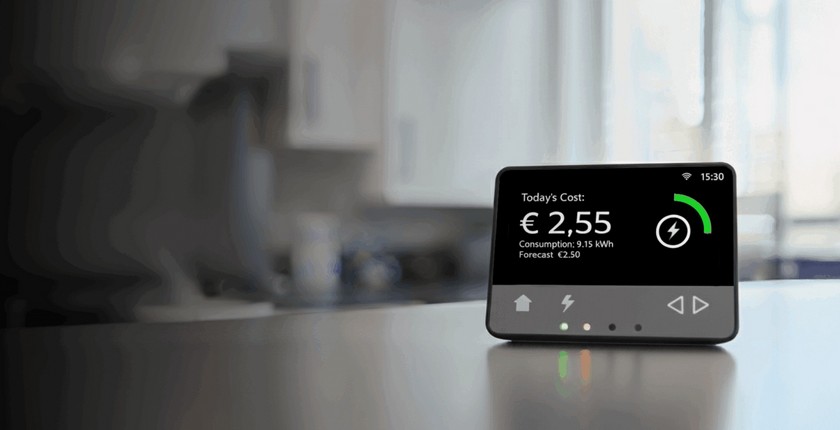
Austrian EET rolls out AI-powered device to simplify home electricity metering

Austrian startup Efficient Energy Technology (EET) has developed an electricity metering solution called the Virtual Meter, which measures residential electricity consumption through a single connection within the home’s power network. The device, powered by artificial intelligence (AI), eliminates the need for a conventional hardwired meter, reduces system complexity for home energy storage and heat pumps, and provides real-time consumption data, the company claims.

The Virtual Meter, which can be integrated directly into any home energy device through a standard socket or any point on the home’s power network, deduces the total energy consumption accurately, reliably, and in real time, according to EET.

AI-powered Virtual Meter derives and delivers consumption data in under one second

The device uses AI-powered load identification to measure the total net electrical load of the entire home on single-phase or three-phase residential grid connections, with data delivered in under one second. It can be plugged in anywhere via a standard earthed wall socket or a wired connection, requiring a physical link to only one phase.

Instead of directly measuring current, the Virtual Meter continuously observes the voltage of one phase and detects the tiny changes that occur whenever a device switches on or off on any of the three phases of a household, the company explains. In this way, it infers the home’s total consumption.

The solution reduces the costs and complexity of home batteries and heat pumps

The Virtual Meter reduces system complexity and installation and component costs for manufacturers of devices such as home batteries, EV chargers, heat pumps, home energy management systems (HEMS), and other residential energy products, delivering a smoother, more transparent experience for end-customers.

The solution is compatible with all common grid configurations and utility meter types, and its design ensures interruption-free data availability, EET says, adding that the Virtual Meter can be integrated directly into other energy products or used as a standalone solution.

Post Views:46
  • 1
  • …
  • 14
  • 15
  • 16
  • 17
  • 18
  • …
  • 140

AEA – Albania Energy Association is a industry association dedicated to representing the interests of Albanian and West Balkan for energy producers and consumers. AEA works to advance the development and adoption of sustainable energy solutions in Albania and the Western Balkans, supporting the region’s transition toward a cleaner, more secure, and more competitive energy future. AEA is registered by decision of the Court of Tirana, DECISION NO. 3032, (VAT:L11827451K).

[email protected]

Address
Blv Zogu 1
Tirana
1057
ALBANIA

LinkedIn  |  Facebook
Events
May 25, 2022 Connecting Green Hydrogen Europe 2022
May 25, 2022 Energy Week Western Balkans 2022
Copyright © Albania Energy Association