AEA-Albania Energy Association
  • Main
  • About Us
  • Services
  • Sectors
  • News
  • EventsEvents
  • PublicationPublication
  • Contact Us
AEA-Albania Energy Association
  • Main
  • About Us
  • Services
  • Sectors
  • News
  • EventsEvents
  • PublicationPublication
  • Contact Us
AEA-Albania Energy Association
  • Home Page
  • About Us
  • Sectors
  • Our Services
  • News
  • Contact Us
January 21, 2026
by AEA in News

Voice from beyond the centre

Balkan Green Energy News, the media partner of the 2025 Just Transition Young Voices Awards, is publishing the three winning articles. The Energy Community Secretariat organized the contest in collaboration with Bankwatch, CAN Europe, the CLEW Network, and the Regional Youth Cooperation Office. The aim is to promote young adults set to shape the climate, energy, and social landscape in the years ahead in the Energy Community region. 

Author: Ani Gogokhia

It is the summer of 2045  – unusually hot compared to previous years – but the unbearable heat is not the only problem. I wake up in my small apartment in western Georgia, open the window, and immediately see clouds of exhaust fumes. For me, this is just another part of everyday life.

After a quick breakfast, I step outside for a short walk to wake myself up. The buildings in the city are the only things that remain unchanged. The number of people on the streets is declining. I feel lonely – most of my peers have either moved to the capital, Tbilisi, or left for European countries.

Thinking of them inevitably leads me to reflect on my own career path. Unfortunately, I haven’t had the opportunity to make a meaningful impact in my region.

Not much choice for young woman

With those thoughts weighing on me, I walk quickly to my first job. I call it my first job because I’ll head to another one later in the afternoon. The commute is long, and public transport only slows me down – so I walk. As I pass the local market, I see vendors, most of them women, standing in the scorching sun.

My job is house cleaning. The pay is just enough to cover groceries and utility bills, but with the cost of living rising daily, I rush to a second cleaning job in the afternoon. Floors, windows, walls – it’s all the same. If you wonder why I chose this line of work, the answer is simple: there wasn’t much choice, especially for a young woman.

The scenario described above could become a regular part of life if we halt progress toward a just transition and neglect it

There’s little to say about the workday. I return home as the sun begins to set, carrying groceries in both hands. As I unpack, I wait for my family. Everyone works – my mother and father in a factory, and my sister at a hospital. We gather for dinner and talk about current events: rising tensions, protests over low wages, unemployment, and deepening poverty.

But these conversations always end the same way – with my mother’s cancer. She developed the disease after years of exposure to harmful substances at the factory, yet she still can’t stop working. We simply can’t afford her treatment otherwise.

The scenario described above could become a regular part of life if we halt progress toward a just transition and neglect it. For the energy transition to be truly just, it must include rural areas, too, creating fair opportunities for people across Georgia.

A just transition refers to a series of policies that ensure fair and equal opportunities for everyone as we shift to a greener economy in the fight against climate change. It’s a process meant to align energy systems with modern, sustainable standards. Local governments play a vital role, though many factors – such as geography and ethnicity – can affect how smoothly this transition occurs.

Just transition in Georgia

Georgia is working to stay aligned with global green trends through international cooperation. Hydropower dominates its energy sector, but the country is slowly incorporating wind and solar systems. Since joining the Energy Community in 2017, Georgia has made notable strides toward harmonizing its legislation with the European Union’s energy standards.

This alignment has attracted major investments in renewable energy. Projects like the Kartli wind farm and a national roadmap for a circular economy – supported by the EU4Environment program – are steps in the right direction.

The city of Zugdidi is among the trailblazers in Georgia in the energy efficiency segment, youth engagement and environmental education

These national achievements are significant, but what about rural areas far from the capital? Each region presents unique challenges and opportunities in the just transition. In western Georgia, Zugdidi has started participating in this process. Although large-scale renewable projects remain concentrated elsewhere, the city has seen pilot initiatives in energy efficiency, youth engagement, and environmental education supported by the EU.

The rural development programs of the United Nations Development Programme (UNDP) in Zugdidi focus on inclusive economic participation, especially for youth, and promote eco-tourism and sustainable agriculture to curb outward migration. One noteworthy initiative involved using hazelnut shells to heat school greenhouses – a clever use of a crop central to local livelihoods. Educational projects and international partnerships have also helped raise awareness about the green economy, yet challenges remain.

Chiatura craves economic diversification away from mining

Take, for example, Chiatura – a mining town east of Zugdidi, known for its manganese industry since Soviet times. Chiatura’s economy has long depended on mining, with consequences such as environmental degradation, poor working conditions, and economic stagnation when mining activity declines. Without economic diversification, residents remain vulnerable and largely excluded from sustainable development benefits.

In 2024, Georgian news outlets reported: “The hunger strike entered its 22nd day on July 10, involving eight miners, three of whom have sewn their mouths shut.“ The unrest stems from decisions to shut down underground mining operations, leaving workers desperate and uncertain about their futures.

While Zugdidi explores decentralized, eco-friendly solutions like biomass heating, Chiatura still lags in implementing alternatives – clean industries, green technologies, or renewable energy – deepening the divide between regions.

Youth massively moving to capital Tbilisi

Unfortunately, Georgia’s development remains overly centralized. Most opportunities are clustered in Tbilisi, causing a massive youth outflow from other regions into the capital.

Geographic and infrastructural limitations in rural and mountainous areas also pose serious barriers. For example, eastern Georgia has high solar radiation – perfect for photovoltaic panels – but varied terrain complicates installation. Wind energy prospects are greater in the east, as western regions are less windy.

A just transition also demands inclusive participation, especially from women. As of 2024, women make up just 28% of the global STEM (science, technology, engineering and mathematics) workforce – a glaring underrepresentation. In Georgia, the meaningful inclusion of women in the just transition remains a significant challenge. Empowering women – politically, economically, and socially – is key.

A difficult past marked by political instability and conflict has left its mark, but the more women engage in public life, the greater their chances of economic empowerment, entry into traditionally male-dominated professions and establishing decent place in economy.

What must be done

While Georgia has made substantial headway towards its climate goals, it is key for the country to create a unified national policy that addresses all regions equitably. We need robust educational campaigns, targeted support for rural areas, and most importantly, greater inclusion of women and minority groups in the just transition.

Only then can we build a fair, resilient society capable of meeting the challenges of the 21st century.
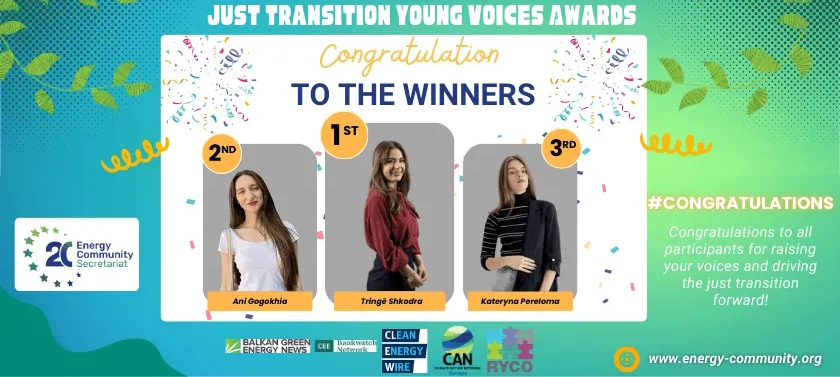
Just transition Young Voices Awards articles Ani Gogokhia
Photo: Just Transition Young Voices Awards
Post Views:226
January 20, 2026
by AEA in News

IRENA: Global daily flexibility needs are quadrupling by 2050

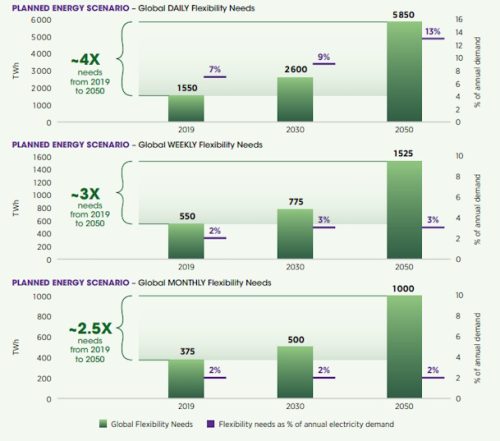
In IRENA’s Planned Energy Scenario at the global level, electricity system flexibility needs on a daily timescale are four times higher in 2050 than in 2019. In the weekly and monthly timescales, the energy required for the purpose grows by three and 2.5 times, respectively. As for the 1.5°C Scenario, implying a much higher share of renewables, the daily flexibility needs jump ten times by mid-century, versus six times for both remaining segments.

Electrification of end-use energy, large-scale deployment of distributed energy resources and the emergence of large new electricity loads from data centres are increasing demand and adding new layers of complexity. It means power systems will need stronger grids and more flexibility to ensure that electricity is available when and where needed and at the lowest possible cost, the International Renewable Energy Agency (IRENA) pointed out in a brief called Flexibility for a secure and affordable power sector transformation.

Aside from buildings and transportation, new demand is coming from the growing adoption of artificial intelligence (AI), driving the expansion of data center capacity. In 2024, data centers consumed 1.5% of electricity. The International Energy Agency expects the share to double by 2030.

The share of variable renewable energy is increasing – wind and solar power in particular. Demand patterns become more complex, so the potential for mismatches between supply and demand is likely to grow, becoming more frequent and significant. It highlights the increasing importance of system flexibility. It is the capacity to respond to expected and unexpected fluctuations in the demand for and supply of electricity in a cost-effective manner.

Some forms of flexibility act automatically to keep the system stable, while others can be scheduled and operate over hours, days or even seasons

Insufficient system flexibility can result in excessive curtailment or, in market-based systems, negative electricity prices. It can also result in shortages, jeopardising the reliable supply of electricity.

System flexibility is needed by the power system to adjust to the variability of generation and demand patterns across different timescales. Some forms of flexibility act automatically within seconds to keep the system stable, while others can be scheduled in anticipation and operate over hours, days or even seasons, through market adjustments and operational and resource planning.

Network flexibility, which isn’t covered in IRENA’s brief, is different. It is the capacity to adjust for grid availability by means of preventing or solving congestion or voltage issues.

Required flexibility depends on numerous factors

In the timescale of seconds to minutes, flexibility is needed to maintain the balance during sudden changes in demand or supply, such as the
disconnection of an interconnector or a major load or generator. The hours and days timescale has daily ups and downs of solar and wind generation alongside the peaks and troughs in demand throughout the day.

In the weeks and seasons segment, flexibility enables covering longer weather patterns caused by changes in the season or low-wind periods. In power systems mainly supplied by renewables, flexibility is also needed at inter-annual timescales. The main factors are climate-driven variations in resource availability. It especially concerns hydrology, but also wind and solar, as well as year-to-year differences in seasonal heating and cooling demand.

In power systems mainly supplied by renewables, flexibility is also needed at inter-annual timescales

Flexibility is not a single asset or function; instead it corresponds to a capability provided by a portfolio of different technologies, operational practices and market mechanisms. The required level of flexibility in a power system depends on, among other factors, the prevailing generation mix, geography, power sector structure and affected timescales.

Storage, demand-side management (DSM), interconnections and dispatchable resources each contribute differently.

Advances in forecasting and the introduction of shorter dispatch intervals, scheduled closer to real-time operation, allow more frequent and precise adjustments of generation and demand before electricity is delivered. One example are intraday markets complementing day-ahead markets.

Electricity must become main energy carrier by mid-century to keep global warming in check

In IRENA’s 1.5°C Scenario, the energy transition will be driven by the deployment of renewable energy, improvements in energy efficiency and the electrification of end-use sectors. The aim is to limit global warming to 1.5 degrees Celsius by 2100.

Electricity would need to become the main energy carrier by 2050. It would account for over half of total final energy consumption. The 2022 level was 23%.

Global electricity generation is projected to be 36% higher in 2030 and three times higher in 2050 than in 2023. Renewable resources would supply 68% of electricity in 2030 and 91% in 2050. Renewables would account for 77% of total installed power capacity in 2030 and 94% in 2050.

In the same setting, 70% of electricity generated in 2050 comes from wind and photovoltaics, taken together. In IRENA’s Planned Energy Scenario, not projecting full decarbonization, the level is 53%.

In IRENA’s 1.5°C Scenario, the share of electricity in total final energy consumption more than doubles by 2050, surpassing 50%

Flexibility needs are calculated as total cumulated annual energy deviation from the average net load (which excludes variable renewable energy generation).

In the 1.5°C Scenario, the power sector requires ten times more flexibility in 2050 than in 2019 to manage the daily variability of net load. In terms of share of annual electricity demand, the authors observed a surge to 30% from 7%. Flexibility needs for managing the variability in weekly and monthly timescales are both six times higher.

In IRENA’s Planned Energy Scenario, daily flexibility needs in 2050 are four times higher. In the weekly timescale, the level triples from 2019, and the monthly item is 2.5 times higher.

IRENA Global daily flexibility needs quadrupling by 2050
Photo: The height of bars indicates flexibility requirements in terawatt-hours per year. Purple horizontal markers show flexibility needs as a percentage of annual electricity demand. (IRENA)

Batteries perform best in daily segment

Battery energy storage is the most effective in addressing daily flexibility needs, the report finds. It is only 24% as effective at meeting weekly needs and 12% as effective for monthly needs.

Interconnections and LDES are effective on the weekly and monthly scales

Interconnections are the most effective in addressing weekly flexibility needs, but also 98% as effective for monthly needs. As for the daily segment, the coverage is just 28%.

The numbers for long-duration energy storage (LDES) solutions are similar. Compared with addressing weekly flexibility needs, LDES is 90% as effective for monthly needs and 34% as effective in the daily item.

Post Views:61
January 20, 2026
by AEA in News

Croatia’s HEP to invest EUR 157 million in HPP Varaždin

Croatia-based power utility Hrvatska Elektroprivreda (HEP) has contracted the reconstruction of its Varaždin hydropower plant. The project will increase the capacity of the 51-year-old facility by almost 20% and boost operational efficiency and annual production.

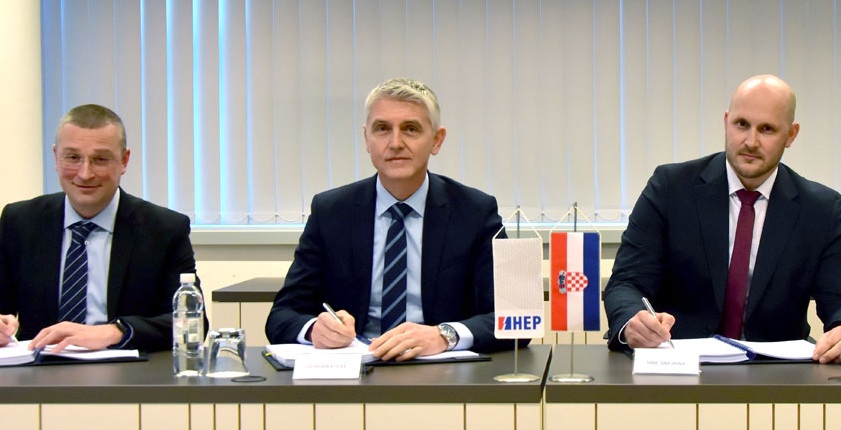
HEP’s power production arm HEP Proizvodnja selected Končar for the reconstruction of the generating units at the Varaždin hydropower plant. The contract was signed by the President of the Management Board of HEP Proizvodnja Šime Šimurina and Gordan Kolak, president of the Management Board of Končar.

The agreement is for the development of technical documentation, manufacturing the primary equipment and associated systems for two new generators, and delivering them. The agreed timeline for the works is 53 months, with completion expected in 2030, according to Končar.

In addition to replacing the generating units, covered by the new contract, the project entails the replacement or refurbishment of all other equipment in the machine room and dam, as well as the structures and infrastructure of HPP Varaždin, depending on their condition and in accordance with the current legal and technical requirements.

croatia hep koncar hpp varazdin contract paic kolak sipurina
Ivan Paić, member of Končar’s management board, Gordan Kolak and Šime Šimurina (photo: HEP)

The reconstruction of the HPP is estimated at EUR 157 million, while the contract with Končar is worth EUR 95.2 million. The combined capacity of each unit would increase from 47 MW to 55 MW. The new turbines are expected to bolster operational efficiency from 86% to 93%.

The endeavor is also aimed at enhancing water flow from 250 cubic meters per second to 275 cubic meters. Together with a rise in total capacity from 94 MW to 110 MW, it is supposed to lift average annual production, currently at 450 GWh, by 6%.

HPP Varaždin’s lifespan to be extended by 50 years

HPP Varaždin is near the city of Varaždin. Its current capacity of 94 MW is the sixth-highest among HEP’s 27 HPPs. Put into operation in 1975, it was the first hydropower plant on the Drava river in Croatia. The other two in cascade are Čakovec and Dubrava.

According to Končar, the reconstruction will extend the facility’s lifespan by at least 50 years.

Post Views:44
January 20, 2026
by AEA in News

KOSTT takes over land in Kosovo* for battery system in US-funded project

Transmission, System and Market Operator (KOSTT) of Kosovo* signed a contract with the Ministry of Economy and Municipality of Ferizaj, receiving 2.3 hectares of land for a 45 MW battery project. It is funded through the Millennium Challenge Compact, initiated in 2022 by the United States, acting through its Millennium Challenge Corp. (MCC), and the government in Prishtina.

Almost a year after the prequalification call for potential contractors, KOSTT received 2.3 hectares of land from the Municipality of Ferizaj (Uroševac) for a battery energy storage system (BESS).

The transmission system operator (TSO) of Kosovo* pointed out that the Ministry of Economy is part of the deal as well, within the Millennium Challenge Compact program with the United States.

KOSTT’s battery is for its automatic frequency restoration reserve

The site for the facility for KOSTT’s automatic frequency restoration reserve (aFRR) is near the Sojeva (Sojevo) village and Camp Bondsteel. Led by the US Army, it is the seat of the Kosovo Force (KFOR).

“The batteries will store energy when there is a surplus and return it to the grid when demand increases, for a more stable supply and more affordable costs. The Kosovo-US partnership is turning into another concrete result: infrastructure that makes energy more secure for citizens,” said Acting Minister of Economy Artane Rizvanolli.

Second part of project is for 125 MW, 250 MWh

The BESS project for KOSTT, funded by the US through its Millennium Challenge Corporation (MCC), aims to strengthen energy security, promote the transition to clean energy and reduce energy costs. The battery system would have 45 MW in operating power and a two-hour duration, translating to 90 MWh.

Overall, the agreement is worth USD 236.7 million, of which the Government of Kosovo* is providing USD 34.7 million.

MCC has earmarked more than USD 200 million for the BESS endeavor

Millennium Challenge Account Kosovo (MCA-K), the contracting authority, officially launched the program last year. In September it signed an agreement with KOSTT to implement the project from design to commissioning. The arrangement was initiated in 2022.

The prequalification call was published in late 2024. It included another battery project, for 125 MW and 250 MWh, at a location in Peja (Peć). It is supposed to be managed by a public entity that would provide services such as frequency restoration and energy arbitrage – buying electricity when prices are low, to be used later.

Total investment was estimated at USD 180 million, of which USD 46 million for the smaller BESS.

Post Views:36
* This designation is without prejudice to positions onstatus and is in line with UNSCR 1244/99 and the ICJ Opinion on the Kosovo declaration of independence.
January 20, 2026
by AEA in News

EU presents European Grids Package: faster permitting, stronger interconnections, lower energy bills

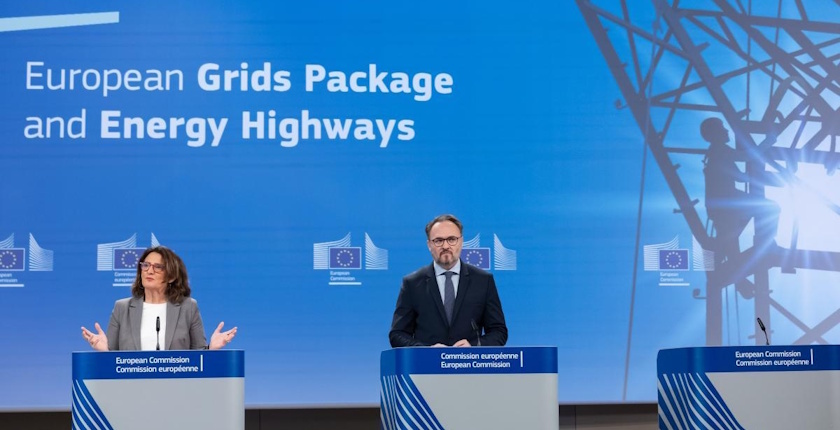
The European Commission presented the European Grids Package, a comprehensive plan to modernise transmission infrastructure, accelerate permitting procedures, and overcome bottlenecks in Europe’s electricity networks. It also unveiled the Energy Highways initiative, which consists of eight major infrastructure projects critical for energy security, renewable energy integration, and cross-border electricity market connectivity.

Energy infrastructure is the backbone of the energy system. Yet the EU’s energy network remains insufficiently integrated, and investment levels fall short of what is needed, a situation that directly affects household energy bills.

Ageing infrastructure and limited interconnection capacity are creating bottlenecks that slow the energy transition. Although some progress has been made within the existing EU legislative framework, the level of interconnection among member states remains inadequate. Several countries are not on track to meet the 15% interconnection target by 2030.

To address these challenges, the European Commission has presented the European Grids Package and Energy Highways initiative. The aim is to enable a more efficient flow of energy across the EU, integrate greater volumes of renewable energy into the system, and accelerate electrification.

Jørgensen: A truly interconnected energy system is the foundation of a strong and independent Europe

The Grids Package is designed to speed up permitting and ensure a fairer distribution of costs for cross-border infrastructure. It should also improve the use of existing infrastructure and accelerate the development of networks and other physical energy assets across the EU.

Among the measures is a new mechanism that allows the commission to initiate the search for additional infrastructure projects when existing initiatives do not cover identified cross-border needs.

“A truly interconnected and integrated energy system is the foundation of a strong and independent Europe. To achieve it, we need an energy infrastructure network of cables, pipes and grids that is up to date, fully interconnected, and that enables clean, affordable, homegrown energy to flow freely and securely to every corner of our union. This is exactly what we are proposing today: a common European energy project that supports affordable living, economic competitiveness, security, and decarbonisation,” said Dan Jørgensen, European Commissioner for Energy and Housing.

Permitting reform

Slow permitting remains one of the biggest bottlenecks for energy infrastructure and renewable energy projects in the EU.
Obtaining permits for transmission infrastructure currently takes more than five years on average, while renewable energy projects may face delays of up to nine years.

The Grids Package introduces simplified and accelerated permitting procedures. The commissioners have proposed setting time limits within which decisions must be taken for all types of projects. If the competent authority fails to respond within the deadline, the permit would be considered granted.

Permits for smaller projects would be issued through faster and more streamlined procedures

Permits for smaller projects would be issued through faster and more streamlined procedures. All processes would have to be fully digitalised, and national administrations would be required to have adequate staffing and technical capacity to process applications.

The commission is proposing to move away from the current first-come, first-served model and introduce a system that ensures timely and non-discriminatory access to the grid, one that balances social acceptance and industrial competitiveness.

Public and private financing

According to the commission’s estimates, EUR 1.2 trillion in investment will be needed for Europe’s electricity grid by 2040. Distribution networks account for EUR 730 billion within the sum, compared to EUR 240 billion for hydrogen infrastructure.

The commission said additional financing tools are required, including cost-sharing arrangements, arguing that cross-border infrastructure generates benefits that extend beyond the territory in which a project is located.

Another suggested solution is the formation of project firms (special purpose vehicles – SPVs) to attract additional private investment.

Given that grid infrastructure is largely financed through network tariffs, part of the burden falls on consumers. To ease this pressure, the commission announced it would boost financial support through the Multiannual Financial Framework (MFF), the EU’s regular seven-year budget, including a significant expansion of the Connecting Europe Facility (CEF). The tool is designed to support investments in new cross-border energy infrastructure and upgrades or rehabilitation of existing assets.

The current 2021–2027 EU budget contained EUR 5.8 billion for cross-border projects under CEF. For the 2028–2034 period, the commission said the amount would be raised almost fivefold, to EUR 29.91 billion.

On the private side, the EU is working on its Clean Energy Investment Strategy, to launch it in 2026 by outlining measures for private sector participation including institutional investors, as well as additional support from the European Investment Bank (EIB).

Energy Highways

The Energy Highways initiative comprises eight of the EU’s largest and most critical infrastructure projects, essential for energy security, renewable energy integration, and cross-border electricity market connectivity.

They have already been already listed as Projects of Common Interest (PCI) or Projects of Mutual Interest (PMI), but under the new initiative, they would receive elevated political priority, accelerated financing, and faster permitting.

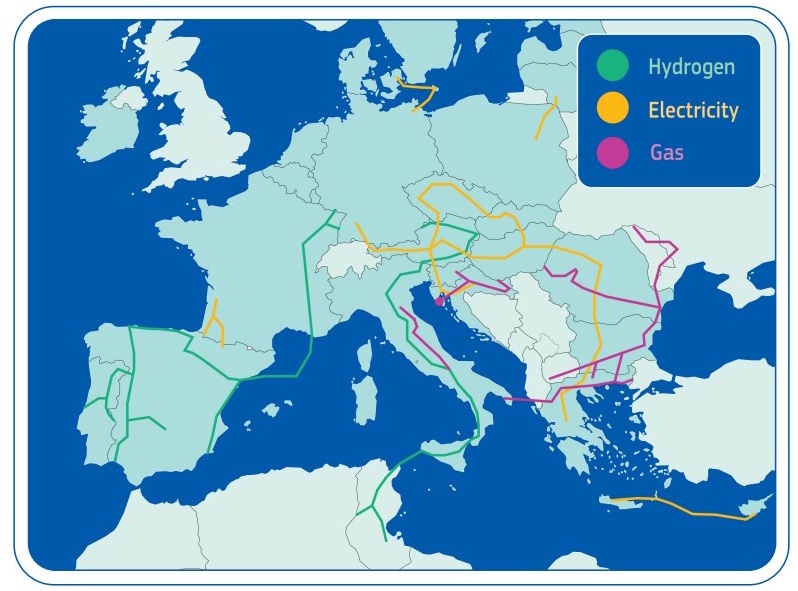
Energy Highways
Photo: European Commission

Among the projects are the reinforcement of interconnections across the Pyrenees to improve the integration of the Iberian Peninsula, the connection of Cyprus with continental Europe through the Great Sea Interconnector, as well as an upgrade of electricity links between the Baltic states, including the Harmony Link to Poland, which is essential for the full synchronisation of the region with the European grid.

The commission has also endorsed the establishment of Denmark’s hub on the island of Bornholm, which could, in the coming years, be connected to additional locations in the Baltic Sea.

Among the priorities are strengthening energy storage capacity in South-Eastern Europe

Among the priorities are strengthening energy storage capacity in South-Eastern Europe, as well as the modernisation of the Trans-Balkan Pipeline (TBP) for gas.

The list includes two hydrogen corridors. The southern one would connect Tunisia, Italy, Austria, and Germany, and the south-western corridor is a planned link between Portugal, Spain, France, and Germany. The commission has announced strong coordination and political support for the latter.

The commission views these projects as pillars of Europe’s future energy network, essential for lower electricity prices, greater system stability, and reduced dependence on fossil fuels.

In a regular legislative procedure, the proposals now move to the European Parliament and the Council of the EU for further deliberation.

Post Views:412
January 20, 2026
by AEA in News

From bystanders to partners: How to ensure the new Citizens Energy Package effectively engages EU citizens in a clean energy future?

Authors:  Niklavs Tamanis, Veronica Saletti, Marco Costa, Marina Fernández-Campoamor – EUSEW  Young Energy Ambassadors

Citizens still struggle to join Europe’s clean energy transition. This article tests two practical approaches that turn hosts into partners: energy communities, where citizens co-own and share power, and community-benefit clauses, which distribute value locally. We, Young Energy Ambassadors, show how targeted One-Stop Shops (OSS), Renewable Energy Sources (RES)-ID, and interoperability among other solutions could make these mechanisms work more effectively, fairly, and at scale.

Across the EU, households still struggle to engage in energy markets. Awareness of tangible gains is low, and trust in safeguards from extractive corporations is limited. Although credible mechanisms exist, their implementation remains complex, uneven, and inaccessible.

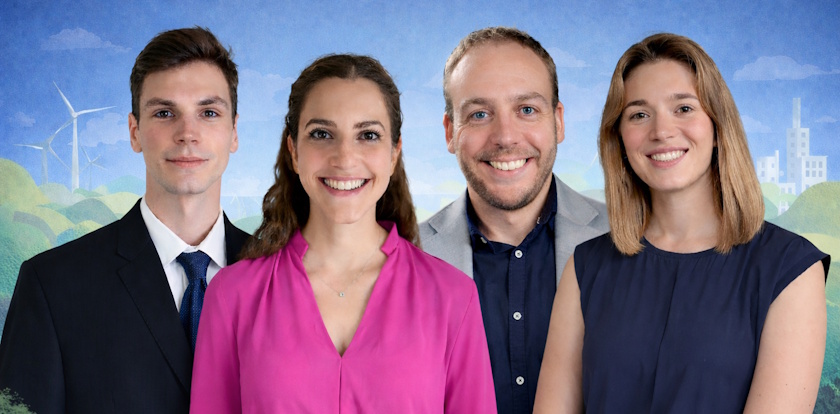
From left to right, Niklavs Tamanis, Veronica Saletti, Marco Costa, Marina Fernández-Campoamor, EUSEW Young Energy Ambassadors
Photo: From left to right: Niklavs Tamanis, Veronica Saletti, Marco Costa, Marina Fernández-Campoamor, EUSEW Young Energy Ambassadors. Illustration created using AI tools, based on original photographs.

EU momentum, Citizens Energy Package, & Our YEA inputs

The Citizens Energy Package, building on the Clean Energy Package and the 2025 Action Plan for Affordable Energy, aims to empower consumers and enable energy sharing. Our contribution to the public consultation as Young Energy Ambassadors (YEA) focused on practical delivery, through such solutions as development of targeted OSS, recognition of youth/renters as a vulnerable group, creation of audience-specific outreach, and improvements to two key levers for citizen participation in energy markets: energy communities and community-benefit clauses. In this article, we focus on the latter two.

Two practical levers

Energy Communities (EComms)

Despite clear EU direction for energy community initiatives, barriers persist: REC definition and implementation differs widely across Member States; low awareness; perceived high effort from practitioners involved in the REC creation process; complex bureaucratic set-up and operations; limited benefits for students, young workers, and low-income renters; costly, non-interoperable metering/platforms; and risks of capture by large market actors.

Our EComms Solutions

To make Energy Communities (EComms) easier to start, join, and manage, we propose a set of complementary solutions that address both organisational and technical barriers.

Primarily, energy community-focused One-Stop Shops (OSS) would act as single-entry hubs where citizens, small and medium-sized enterprises (SMEs), and local authorities can access ready-to-use documentation (statutes, by-laws, and communication templates), energy-sharing evaluations, and clear guidance on data management and regulatory steps, as well as information on how to make their homes more energy efficient.

Young people should receive formal recognition as a vulnerable group within national social frameworks

Moreover, young people, especially those renting apartments as students or early-career professionals, should receive formal recognition as a vulnerable group within national social frameworks. This would enable them to access dedicated benefits and support schemes, like other vulnerable groups, helping to remove structural barriers to their participation and ensuring that energy communities become an inclusive, rather than niche, option.

Then, a dedicated civil-service track for energy communities would also enable young professionals to gain first-hand experience while supporting communities with day-to-day management and citizen engagement activities that are otherwise costly if fully outsourced to external experts. Building on emerging examples from France and Italy, these hubs would also connect communities to grants, soft loans, and local financial partners, making investment more accessible and de-risking early-stage initiatives.

Finally, to simplify participation from a technical and bureaucratic point of view, we propose a Renewable Energy System Identifier (RES-ID): a standardised and recognized technical and administrative data set that citizens and SMEs can fill in once and then reuse across different national portals procedures, such as permit applications, grid-connection requests, EComms affiliation, and incentive schemes requests. Such a tool would store all the renewable energy systems technical data required by different national authorities and retrieve it, when necessary, at each access point, similarly to the Italian SPID or dutch DigID, personal digital identity systems.

EComms Case Studies

1) In Alto Vicentino (Italy), 16 municipalities set up an energy community, added 650 kW of photovoltaics on public buildings, made accessible national grants (up to 40% of the initial investment) for residents and small firms, and a youth team is taking it forward, organizing a buying club for building energy retrofit.

Policy takeaway: back clusters of neighbouring municipalities building from existing energy info points, keep supporting public-building solar installation as “lead by example” lever, and encourage young professionals to actively engage with local communities via dedicated support grants, civil service specific paths, and learning opportunities.

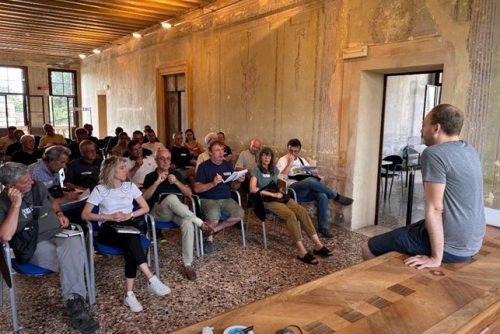
Alto Vicentino REC example, Marco Costa, Young Energy Ambassador
Photo: Marco Costa, Young Energy Ambassador, co-author of this article

2) The Hyperion Energy Community in Athens (Greece), founded in 2020 and mainly composed of families and NGOs, aims to evolve into an ESCO to support the renovation of apartments in multi-unit residential buildings. The project operates in several neighbourhoods of the capital, aiming to ensure gender balance and representation of diverse social groups among its 123 members.

Policy takeaway: Use the Citizen Energy Community (CEC) regulatory framework to create new, citizen-led business structures (ESCOs) to accelerate urban energy renovation in multi-unit buildings, ensuring broad social representation.

3) Energie Samen Rivierenland (The Netherlands): The neighbourhood association in Rivierenland, founded in 1936 and citizen-led, is revitalizing its dated housing stock (60% built before 1950) through a co-design process for interventions. The project covers 133 dwellings, with a specific focus on energy poverty and elderly residents.

Policy takeaway: Leverage existing neighbourhood associations with a long history of community trust to promote the co-design of renovation interventions, focusing specifically on the most vulnerable groups.

4) Renoss (Italy): it is the network of One Stop Shops dedicated to Renewable Energy Communities, run by public local energy agencies backed by the Environmental Ministry. It covers the whole national territory with at least one OSS per region, aligned with the Energy Performance in Building Directive. Each agency supports energy communities via dedicated services which spans from information to grant applications, feasibility studies, and member engagement campaigns.

Policy takeaway: support cluster organizations of public-led OSS to offer a structured and homogeneous technical assistance approach across Europe

Community-benefit clauses

While energy communities are a promising and innovative concept with clear environmental benefits, they don’t always address the social equity concerns from renewable energy projects, such as externalised siting costs. This is why the introduction of benefit-sharing mechanisms, such as community funds and shared equity ownership, is also building momentum among Member States.

Still, progress is uneven: many schemes are complex, opaque, and engage residents too late; youth, renters, and other underrepresented groups are barely reached; participation stays low, and legitimacy suffers. As Young Energy Ambassadors, we thus argue that just transition must go beyond compensation to create shared community value, especially where skills and alternative jobs are scarce.

Our community-benefit Solutions

To make renewable energy projects fairer and more inclusive, national governments can set out simple rules to ensure that local communities share in the benefits.

For example, benefit criteria can be built directly into auction schemes, with clear guidance on eligible uses such as local energy relief or community facilities. A “one-stop shop” (OSS) can then help communities check who qualifies, access funds or compensation, and connect to training or re-skilling opportunities.

Furthermore, governments could develop risk-sharing models that make it easier for low-income households to take part in projects without bearing financial losses.

Finally, targeted communication through youth groups, schools, community centres, and local media can raise awareness, using an EU-adapted model that considers both income and housing conditions.

Community-benefit case studies

We once again explored two national models in detail to see what fair community value-sharing can look like.

1) In Ireland’s RESS auctions, every supported project pays EUR 2/MWh into a local Community Benefit Fund and appears on a national SEAI register with guidance on eligible uses – from energy-poverty relief to community facilities. There’s also a community-led auction lane for locally developed projects.

Policy takeaway: set a fixed €/MWh payment into a local fund, keep a public register and simple annual reporting, and retain a community-led track so locals can lead and access the value.

2) Denmark’s VE-loven goes further by pairing money with ownership and protection. Developers of new onshore wind must offer 20% local shares (within 4.5 km) on equal terms, compensate any loss of property value, and pay into a Green Scheme for local amenities.

Policy takeaway: make it a package – local shares, property compensation, and a community fund – to align incentives and build durable acceptance.

Why does all of this matters

Coupling Ecomms and Community-Benefit mechanisms with functional OSS, RES-ID, interoperability, and guardrails, among other improvements, builds trust, accelerates their deployment, improves affordability, and broadens participation – especially for youth, renters, and other vulnerable groups.

As the EU’s modern citizen energy participation transitions from a consultation phase, equitable codification of mechanisms must follow: targeted OSS must be scaled, trusted tools must be standardised across the MS, mainstream risk-sharing principles must be integrated, and community-benefits must provide tangible value beyond mere compensation.

The European Commission already provides a foundation for this through tools such as the Energy Communities Facility and the Citizen-led Renovation Initiative, which help local actors access guidance, finance, and capacity-building. In parallel, EU-wide networks like REScoop.eu support renewable energy cooperatives and peer learning across Member States.

Building on and scaling these efforts will be essential to ensure our future citizens become genuine partners in Europe’s renewable energy build-out.

This opinion editorial is produced in co-operation with the European Sustainable Energy Week 2026. See ec.europa.eu/eusew for open calls.

Disclaimer: This article is a contribution from a partner. All rights reserved.

Neither the European Commission nor any person acting on behalf of the Commission is responsible for the use that might be made of the information in the article. The opinions expressed are those of the author(s) only and should not be considered as representative of the European Commission’s official position.

Post Views:100
January 20, 2026
by AEA in News

Renewables account for 99% of Turkey’s net electricity capacity additions

Electricity capacity in Turkey reached 122 GW in 2025, of which 62% was from renewable sources, according to the SHURA Energy Transition Center. Photovoltaics grew by 4.9 GW, compared to 1.7 GW in the wind power segment. Renewables made up 99% of the net additions, amounting to 6.3 GW, the think tank calculated. This year, however, the first unit of the Akkuyu nuclear power plant is scheduled to come online, adding 1.2 GW.

Gross electricity production in Turkey increased 2% last year, to 360 TWh, the SHURA Energy Transition Center estimated in a new report. The share of renewables dropped to 44.1% from 46%. Namely, hydropower output is on a downward trajectory, due to droughts. Wind, solar and geothermal power rallied to 24.6%, though. Photovoltaics and wind power together surpassed 20%.

Renewables continue to dominate the sector’s development, accounting for 99% of the overall 6.3 GW in net additions, the think tank calculated. The total reached 122 GW. Renewable sources made up 62%, compared to 59.7% in 2024.

Solar power surged by 4.9 GW and the wind power capacity jumped by 1.7 GW, while the natural gas item declined by 684 MW.

Importantly, the picture is about to change, as the first, 1.2 GW reactor in Akkuyu, Turkey’s first nuclear power plant, is scheduled to be commissioned this year. Coal plant projects remain dormant and uncertain.

Race to 2035 targets

Daily power consumption reached an all-time high of 1,244 GWh on July 29. SHURA attributed the record to cooling demand caused by rising temperatures.

To reach the 2035 targets, an average of 8 GW of combined solar and wind capacity must be commissioned each year. The high momentum is expected to continue in 2026, the report reads. The government aims to hit 120 GW altogether from the two technologies, against the current 40 GW.

However, grid constraints for self-consumption units (formally, unlicensed power plants) may slow solar energy growth, the authors warned. The plan is to resolve the issue through capacity allocations for the segment. The increasing prevalence of renewable and hybrid power plants with storage will enhance system flexibility, SHURA added.

Electricity decarbonization plan costs USD 15 billion per year

Just transition plans for coal regions are critical, the think tank said. It estimated that decarbonizing the electricity sector by 2053 would require an average annual investment of USD 15 billion.

Decisions regarding fossil fuels made for security of supply reasons must be more carefully balanced with the net zero target, SHURA stressed. Temporary solutions risk creating a permanent deadlock, it underscored.

Focus switching to grid, flexibility

Turkey has reached a critical juncture in its energy transformation, according to the update. The authors commended the rise in capacity and new tenders and investments. Nevertheless, they claim the pace cannot be sustained without strengthening the grid, flexibility and implementation capacity, while implying expansion in storage, electrification and financing.

In the view of SHURA’s Steering Committee Chair Selahattin Hakman, energy transition should no longer be considered solely as a topic of climate policy, but rather in conjunction with geopolitical developments, security and economic resilience. Clean energy investments, particularly in solar and wind power, continue to grow despite increasing global uncertainties, he noted.

“In this new era, energy transition is defined at the intersection of geopolitical independence, economic resilience and social justice. Energy policies have transcended the boundaries of the environment and have become central to foreign policy, industrial strategy and trade policies,” Hakman stated.

Post Views:97
January 20, 2026
by AEA in News

Bulgaria to host renewable electricity plants on Luxembourg’s behalf

Bulgaria joined Finland as a host country for the 2026 call through the EU Renewable Energy Financing Mechanism (RENEWFM). Luxembourg intends to fund renewable energy projects there, which will enable it to statistically attribute 80% of output to itself.

In the European Union, a member state that missed its renewable energy target can arrange a so-called statistical transfer, for a fee, from a fellow country that surpassed its own target. Another way is to fund power plant projects in another member state, via the EU Renewable Energy Financing Mechanism (RENEWFM).

In the first round, Finland agreed to host seven solar parks on behalf of Luxembourg. The grants amounted to EUR 27.5 million. Next time, also for Luxembourg, it got seven photovoltaic projects and Estonia got two for wind power. The beneficiaries won EUR 52 million in total.

This year, Bulgaria decided to participate with Finland, again on behalf of Luxembourg. Conveniently, the plan is for photovoltaic plants with battery storage in the country’s coal regions in transition: Pernik, Kyustendil and Stara Zagora. The investments are aimed at ensuring long-term employment and energy security. They complement the so-called territorial just transition plans (TJTPs) for a smooth coal phaseout.

The budget for the forthcoming round amounts to EUR 55 million

Bulgaria applied through the call that the European Commission’s Directorate-General for Energy (DG Ener) published. The overall budget is EUR 55 million.

The facilities must operate for at least 15 years. Bulgaria provides land instead of Luxembourg, which gets 80% of the green energy certificates from production.

As for Finland, solar farms are planned again, for the upcoming round.

The European Climate, Infrastructure and Environment Executive Agency (CINEA) is responsible for conducting the calls and monitoring project implementation.

Post Views:97
January 19, 2026
by AEA in News

CBAM go-live: no electricity imports in week one

Iron and steel dominated the CBAM imports declared in the first reporting window, January 1-6, according to the European Commission.

The European Union’s Carbon Border Adjustment Mechanism entered into force on January 1. The European Commission used the January 1 to January 6 period for initial data collection to monitor and report on the CBAM go-live.

From the beginning of this year, firms in the EU that import aluminum, cement, electricity, iron and steel, hydrogen and fertilizers from non-EU countries are obliged to pay a carbon price under CBAM. But, the deadline to submit CBAM certificates for 2026 is May 31, 2027.

CBAM successfully entered into force on January 1, 2026, according to the commission.

CBAM imports declared in the first reporting window from January 1 to January 6 covered 1.655.613 tonnes

The full implementation followed a coordinated deployment across all EU member states, seamlessly integrating the CBAM Registry with national customs import systems, Taric and EU Customs Single Window, the commission explained.

This seamless interconnection ensured real-time data exchange, efficient validation of declarants, and uninterrupted import procedures at EU external borders, the EU’s executive arm claims.

CBAM imports declared in the first reporting window, from January 1 to January 6, covered 1.655.613 tonnes. This is the sectoral breakdown:

  • Iron and steel: 98%
  • Fertilizers: 1.2%
  • Cement: 0.5%
  • Aluminium: 0.3%
  • Electricity and hydrogen: 0%.

The main countries of origin of CBAM-covered imports included Turkey, China, India, Canada, Taiwan, and Vietnam. On the other hand, top importing member states are Belgium, Spain, Romania, the Netherlands, France, and Germany.

In total, more than 12,000 economic operators submitted applications for CBAM authorization by January 7.

The commission invited entities that have not yet submitted their CBAM authorization applications to do so as soon as possible via the CBAM Registry.

National authorities report stable processing times, supported by harmonized digital workflows, according to the commission.

Of note, in mid-December last year, the commission published implementing acts and amendments to the CBAM Regulation.

Post Views:57
January 16, 2026
by AEA in News

Serbia to put mining strategy to parliament vote

The government passed the draft Strategy for the Management of Mineral and Other Geological Resources of the Republic of Serbia for the period from 2025 to 2040, with projections until 2050, so the National Assembly is required to put it to vote. With full appreciation of economic, environmental and social aspects, the implementation needs to contribute to improving the legal framework, establishing a balance between economic growth and environmental protection, remediation of abandoned mining facilities and securing a stable supply of critical and strategic raw materials, Minister of Mining and Energy Dubravka Đedović Handanović stressed.

After a turbulent public discussion process, the Government of Serbia adopted the draft Strategy for the Management of Mineral and Other Geological Resources of the Republic of Serbia for the period from 2025 to 2040, with projections until 2050. Several dozen objections and suggestions were accepted or partly accepted. However, the text of the strategy that will be passed on to the National Assembly for a vote hasn’t been published yet.

A special emphasis is on the development of risk management mechanisms, climate neutrality and the application of energy-efficient and low-carbon technologies, the government pointed out.

The strategy is based on the principles of sustainable utilization of natural wealth, biodiversity protection, climate resilience and the reduction of negative effects of mining activities, the announcement reads.

According to the report on the environmental impact of the strategy’s implementation, Serbia hosts many deposits of metallic, non-metallic and energy raw materials, groundwaters and geothermal energy. The authors of the accompanying document acknowledged that the exploitation of mineral raw materials in Serbia caused air, water and land pollution. Metals mining hub of Bor and Majdanpek and the Kolubara and Kostolac lignite basins are the most affected.

Another challenge highlighted in the environmental impact report are the abandoned mines, tailings dumps and mining facilities that require remediation and rehabilitation.

Strengthening state’s role in planning, oversight

The document sets a long-term framework for the responsible management of mineral resources and the strengthening the role of the state in planning, oversight and the improvement of the sector of mining and geology, in the interest of citizens and a sustainable development of local communities, the Ministry of Mining and Energy said.

A special emphasis is on critical and strategic raw materials, geothermal energy and rational utilization of natural resources

Minister Dubravka Đedović Handanović said the strategy defines programs and measures directed toward a secure supply of domestic companies and the energy system with mineral raw materials, job creation and a greater participation of the domestic industry in the value chain, as well as for reducing import dependency and strengthening the country’s economic stability.

She explained that the focus is particularly on critical and strategic raw materials, geothermal energy and rational utilization of natural resources, alongside the implementation of high environmental and security standards. This is the way, in her words, to protect the environment, improve work safeety and lower the risks for people’s health and the quality of life in local communities.

Treating protected areas responsibly

Dubravka Đedović Handanović added that the strategy clearly defines a responsible treatment of protected areas and the spaces of special natural value, through a principle of prevention and respect toward the protection regime, as well as the transparency in the processes of planning and decision making, so that the citizens would be informed timely and included in dialogue.

With full appreciation of economic, environmental and social aspects, the implementation needs to contribute to improving the legal framework, establishing a balance between economic growth and environmental protection, remediation of abandoned mining facilities and securing a stable supply of critical and strategic raw materials, the minister underscored. She said that in the long term it meant greater safety, a better quality of life and responsible development.

Post Views:177
  • 1
  • …
  • 15
  • 16
  • 17
  • 18
  • 19
  • …
  • 140

AEA – Albania Energy Association is a industry association dedicated to representing the interests of Albanian and West Balkan for energy producers and consumers. AEA works to advance the development and adoption of sustainable energy solutions in Albania and the Western Balkans, supporting the region’s transition toward a cleaner, more secure, and more competitive energy future. AEA is registered by decision of the Court of Tirana, DECISION NO. 3032, (VAT:L11827451K).

[email protected]

Address
Blv Zogu 1
Tirana
1057
ALBANIA

LinkedIn  |  Facebook
Events
May 25, 2022 Connecting Green Hydrogen Europe 2022
May 25, 2022 Energy Week Western Balkans 2022
Copyright © Albania Energy Association