AEA-Albania Energy Association
  • Main
  • About Us
  • Services
  • Sectors
  • News
  • EventsEvents
  • PublicationPublication
  • Contact Us
AEA-Albania Energy Association
  • Main
  • About Us
  • Services
  • Sectors
  • News
  • EventsEvents
  • PublicationPublication
  • Contact Us
AEA-Albania Energy Association
  • Home Page
  • About Us
  • Sectors
  • Our Services
  • News
  • Contact Us
January 16, 2026
by AEA in News

Holcim Croatia obtains strategic status for its carbon capture project

The Croatian government has granted strategic status to a carbon capture and storage project developed by cement producer Holcim Croatia. The project would create the first system of its kind in the country, paving the way for Croatia’s first decarbonized cement plant.

An agreement on preparing and implementing the strategic project was signed at the Ministry of Economy by Minister Ante Šušnjar and representatives of Holcim Croatia. The investor submitted the KOdeCO net zero project in line with Croatia’s law on strategic investment projects, according to the ministry.

Holcim Croatia was among 41 companies in the European Union selected to receive a total of EUR 3.6 billion in grants from the EU Innovation Fund in 2023 for green technology projects. The fund had received 239 applications.

Apart from Holcim’s subsidiary in Croatia, two other companies from the Balkans also received grants – Motor Oil Hellas and Titan Cement. The project in Croatia was estimated at EUR 237 million, and it received a EUR 117 million grant from the Innovation Fund.

Šušnjar: KOdeCO net zero confirms that the industry in Croatia can introduce advanced technologies that reduce emissions

Minister Šušnjar stressed that the project represents an important step forward for the domestic industry and the wider community.

“KOdeCO net zero confirms that the industry in Croatia can introduce advanced technologies that reduce emissions and make production processes more up-to-date and efficient. With this investment, we are strengthening competitiveness, contributing to environmental protection, and creating long-term economic benefits for the Istria County and Croatia,” he said.

According to Holcim Croatia CEO Dario Vrabec, KOdeCO net zero is acknowledged as the first and only major Croatian project co-financed by the Innovation Fund.

Vrabec: The goal is to implement the project in a short time

“I am proud that [the project’s] quality and importance for Croatia’s green transition have been recognized. Our goal is to implement it in a short period of time and pave the way for the first carbon-neutral cement plant in Croatia and the region, but also one of the first in the EU,” Vrabec underlined.

He believes that the strategic status will allow for a faster and more efficient implementation of all necessary steps.

The ministry recalled that the project aims to modernize industrial cement production by introducing technologies that enable the complete elimination of CO2 emissions. The plan envisages the construction of a facility for capturing, liquefying, temporarily storing, and transporting CO2, which represents one of the most advanced technological undertakings in the Croatian cement industry, the Ministry added.

The CO2 captured in Holcim’s plant in Koromačno is planned to be shipped to the first permanent offshore geological storage in the Mediterranean Sea. KOdeCO stands for Koromačno-decarbonization-ecology.

This year, Holcim Romania has also been awarded financing under the EU’s Innovation Fund.
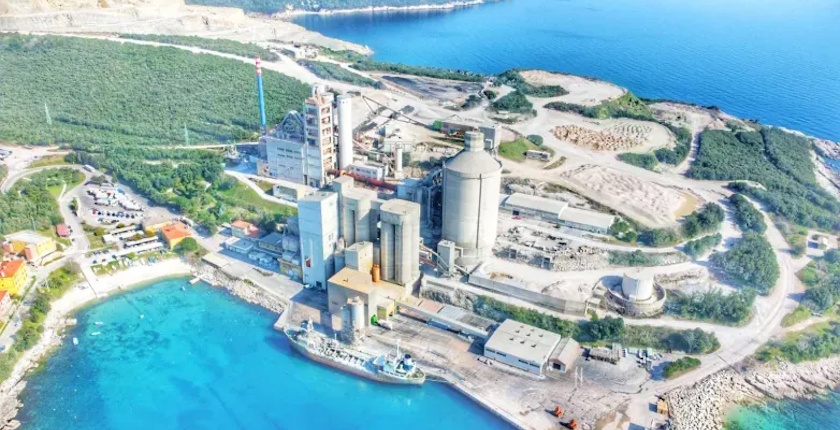
croatia holcim koromacno ccs KOdeCO net zero
Photo: Holcim Croatia
Post Views:282
January 16, 2026
by AEA in News

EPCG, Masdar sign cooperation agreement

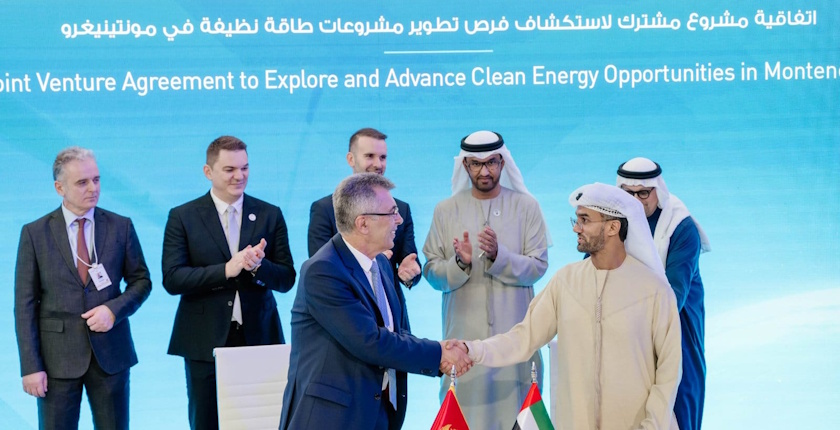
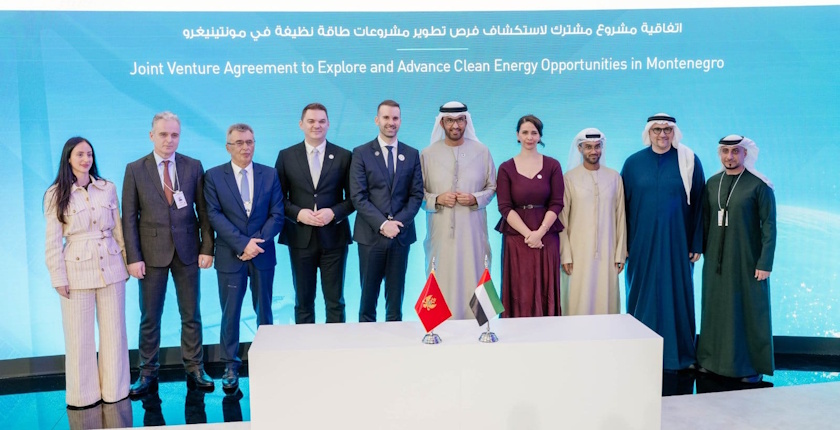
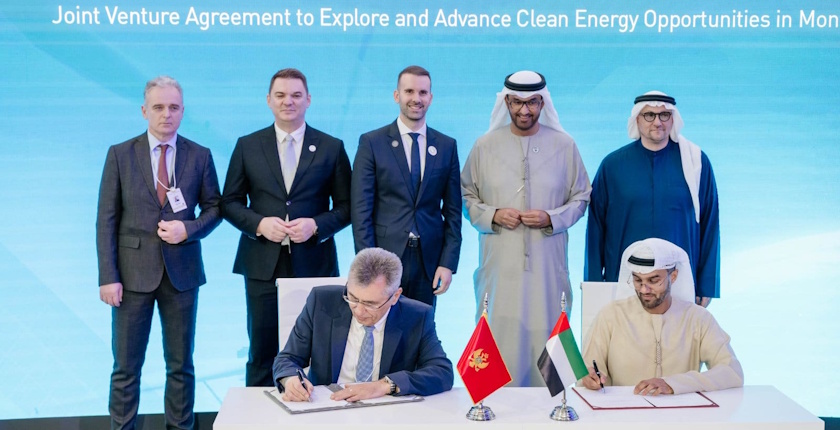
Montenegro’s power utility Elektroprivreda Crne Gore and UAE-based Masdar today signed a cooperation agreement on the sidelines of Abu Dhabi Sustainability Week.

Elektroprivreda Crne Gore (EPCG) said its agreement with Masdar sets the framework for future cooperation in the development of solar and wind projects, as well as other sustainable energy solutions, including the exchange of knowledge and experience and opportunities for joint investments.

The agreement further confirms EPCG’s strategic commitment to actively contribute to the energy transition, strengthen energy security, and support the sustainable economic development of Montenegro through partnerships with global leaders, the update reads.

Abu Dhabi Sustainability Week (ADSW) is a global forum dedicated to the energy transition, climate solutions, and sustainable development.

The agreement was signed during an official visit of the Montenegrin delegation to the United Arab Emirates, led by Prime Minister Milojko Spajić.

Đukanović: Historic agreement

Milutin Đukanović, President of EPCG’s Board of Directors, praised the agreement as historic and its strategic significance for the long-term development of Montenegro’s energy sector.

He stressed that partnering with a renowned company represents a strategic positioning of Montenegro in the modern energy environment and an important step in diversifying energy sources.

montenegro epcg masdar agreement adsw spajic djukanovic
Photo: EPCG

“In the context of the introduction of the CBAM mechanism, it is necessary to accelerate investments in energy, because along with strong development of domestic projects, cooperation with leading international partners is key to faster sector development and greater national competitiveness. Energy development represents a historic opportunity for Montenegro that we must not miss,” Đukanović stressed.

According to EPCG CEO Zdravko Dragaš, the signing of the agreement represents an important advancement in the development of Montenegro’s energy sector and a strong signal of the trust of a renowned global partner in Montenegro’s potential.

Dragaš: Montenegro to become a reliable exporter of green energy

“Our common goal is for Montenegro, in addition to meeting its own consumption, to become a reliable exporter of green energy to the region and beyond, utilizing the existing infrastructure and the country’s strategic position,” Dragaš underscored.

Montenegro and the UAE signed an agreement in November 2025 on cooperation in the energy sector.

Lately, the two countries have had a dynamic relationship in the energy sector. In December of last year, Montenegrin officials and Masdar’s management discussed potential joint projects.

montenegro epcg masdar agreement abu dhabi spajic djukanovic
Photo: EPCG
Post Views:86
January 16, 2026
by AEA in News

DNV to acquire Automa Power & Utilities, strengthening position as global end-to-end digital operations partner for energy industry

DNV has announced the proposed acquisition of Automa Power & Utilities S.A., a prominent Brazilian technology company offering integrated monitoring, control, and performance management solutions for multi-technology power plants including renewables, transmission and distribution grids.

This strategic move strengthens DNV’s position as an end-to-end digital operations partner for utilities and independent power producers (IPPs) globally covering the full energy system. Founded in 2006 and headquartered in São Paulo, Automa has built a reputation for delivering advanced supervision and control solutions for hydro, wind, and solar power plants.

Its portfolio includes SCADA platforms, operation-support tools, and substation protection and control systems, with over 60 GW of renewable capacity under management and more than 200 substations controlled by its solutions in Brazil. In 2024, Automa expanded into Europe with an office in Porto, Portugal, and has successfully deployed systems for solar plants in France, Germany, Italy, Croatia and Poland.

The transaction has been signed and submitted to Brazil’s Administrative Council for Economic Defense, CADE (Conselho Administrativo de Defesa Econômica), for review and approval. The transaction is subject to regulatory approvals and customary closing conditions.

Digitalization is among key enablers of energy transition

Remi Eriksen, Group President and CEO, DNV, said: “The energy transition is moving forward with digitalization as a key enabler. By combining Automa’s advanced digital solutions with DNV’s global domain expertise, we are creating unique digital capabilities that will help our customers manage complexity and unlock new opportunities for growth in the energy industry.”

The transaction has been signed and submitted to Brazil’s regulatory body CADE

Ditlev Engel, CEO of Energy Systems, DNV, added: “Our vision is to be the trusted partner for the entire energy value chain. Monitoring and controlling all assets and operations in the energy system will be crucial for effective and efficient use of energy, providing secure and reliable energy to society. So, I am looking forward to welcoming 300 future colleagues from Automa. By joining forces with DNV’s existing digital and data solutions teams for Energy Systems, we will have a global digital business team of 1,200 energy experts ready to work closely with our 4,950 other energy colleagues, ensuring that our customers have an energy business partner of more than 6,150 energy experts globally, covering all parts of the energy system.

“Together, we will offer utilities and independent power producers a comprehensive suite of digital tools and services, underpinned by full energy systems thinking, to optimize real-time performance and enhance resilience.”

New chapter of growth for Automa

Juan Carlos Arévalo, Executive Vice President of the new digital and data solutions unit, highlighted: “The acquisition of Automa creates an amazing opportunity to drive meaningful change across the energy industry. By combining Automa’s expertise with DNV’s advanced software capabilities and one of the strongest energy data foundations in the sector, we look forward to provide a full suite of solutions to clients. This strategic integration will enhance our ability to help customers navigate the complexity of the global energy transition with confidence and clarity.”

Marcelo Ferreira, CEO of Automa, commented: “For Automa, the transaction represents a new chapter of growth. We will connect the experience built in Brazil and Europe with a global network of experts and technologies. The strong collaborative culture combined with technical expertise will be further strengthened, creating development opportunities for customers, partners, and employees.”

Post Views:79
January 16, 2026
by AEA in News

Montenegro to renew first solar power auction call as soon as possible

After rejecting all bids within its first auction for market premiums for solar power projects, the Ministry of Energy and Mining of Montenegro vowed to tackle the shortcomings in the conditions for participation and renew the public call as soon as possible. The country intends to hold the competitive bidding process by the end of the first quarter, followed by a wind power auction in the third quarter.

Montenegro’s Ministry of Energy and Mining declined, in mid-December, all four bids in the country’s first solar power auction, for a quota of 250 MW. A report that the government adopted three weeks ago revealed that 11 entities have expressed interest by purchasing the tender documentation.

The failures in fulfilling the conditions included submitting documents that were too old and not meeting the requirements for spatial planning and grid connections, the ministry said. On the other hand, it acknowledged shortcomings regarding the auction qualification terms, vowing to tackle them and issue another call as soon as possible.

Namely, the main obligatory documents can’t be older than the public call itself. They are the urban planning and technical conditions, which the government issues, and the grid connection contract, but they are signed only once, becoming acquired legal rights.

Winners can sign 12-year CfDs

The call to auction was published in July. Under Montenegro’s legal framework, auction participants compete for market premiums in the form of 12-year contracts for difference (CfDs) for their projects.

The beneficiary has a guaranteed price, approved through the auction. When the firm sells electricity in the market at a higher price, it must return the difference. And vice versa: when the beneficiary gets less per megawatt-hour than the contract price, it is reimbursed.

Eligible projects don’t or didn’t benefit from government incentives. They can participate if construction works haven’t begun and the developers haven’t secured financing for their completion.

The lowest bids win, and the maximum allowed price was EUR 65 per MWh.

First successful projects from auctions seen for completion in 2028

Per the official plan, the solar power auction needs to be held in the first quarter of this year, followed by a wind power round, for 200 MW. Minister Admir Šahmanović earlier said that he expected the power plants to come online from 2028 to 2030.

Conducting renewable electricity auctions is one of the commitments toward the European Union that were defined by the Reform Agenda of Montenegro 2024-2027. It contains the conditions for the approval of up to EUR 383 million from the Growth Plan for the Western Balkans and the Reform and Growth Facility (RGF).

Post Views:82
January 16, 2026
by AEA in News

Zhongbo group advances in preparation for construction of Leotar wind park

Zhongbo Group has taken another step in preparing for the construction of its Leotar wind farm near Trebinje, in the southeastern part of Bosnia and Herzegovina (BiH). It would be the largest wind power plant in the Western Balkans by capacity and one of the largest in Southeast Europe.

Zhogbo Group has conducted research and preparatory works on the site and obtained approval from electricity transmission company Elektroprenos BiH. In June last year, the Assembly of the City of Trebinje approved the proposition to develop a zoning plan.

The company has now submitted a request to the Ministry of Spatial Planning, Construction, and Ecology of the Republic of Srpska, one of the two entities in BiH, to determine whether an environmental impact assessment (EIA) will be required.

“We are informing the public and interested parties that the project developer Zhogbo Group, Banja Luka, has submitted a request to the ministry for a preliminary environmental impact assessment for the Leotar wind farm project, with an installed capacity of 537.5 MW,” the ministry said.

The deadline for comments is 15 days

The public can review and send suggestions within 15 days from January 12, when the notice was published.

The construction of the Leotar wind farm is planned on Leotar mountain. The facility would consist of 86 wind turbines, each with a capacity of 6.25 MW, which will be placed on sites that depend on the terrain configuration and main wind directions, the accompanying document reads.

The expected annual production of the wind farm is 1.5 TWh per year. The plant’s utilization factor is 32.4%.

Of note, last year the owner of Zhongbo Group, registered in Banja Luka, was Everest Power Pte. Ltd., headquartered in Singapore, according to the business registry. Now, according to the registry, the owner is Zodic Energy PTE LTD, headquartered in Singapore.

The company is expected to obtain a concession for the wind farm

Back in September 2024, the Republic of Srpska signed an agreement on strategic cooperation in the field of renewable energy sources with Zhongbo Group and China Power. Zhongbo Group is expected to be awarded a concession for the Leotar project.

The largest wind farm in the Western Balkans is Čibuk 1 in Serbia, with a capacity of 158 MW. However, it won’t hold that title for long, as Alcazar Energy Partners began the construction of its Štip wind power plant, of 400 MW, in July last year in North Macedonia.

In the wider region of Southeast Europe, the largest is Romania’s Fântânele-Cogealac-Gradina, with 600 MW. In Europe, the top spot is held by Markbygden in Sweden, with a capacity of 2,000 MW.

Post Views:81
January 16, 2026
by AEA in News

Sunotec advances Germany’s largest EEG hybrid power plant

Sofia-based solar and battery developer Sunotec announced a key milestone in the construction of the Hybrid Power Plant Zerbst. The company claims it is set to become Germany’s largest solar-battery hybrid power plant under the Renewable Energy Sources Act (EEG).

Located on a 41-hectare former gravel pit, the site combines 73,000 solar modules with a capacity of 46.4 MWp and a 57 MWh battery energy storage system (BESS).

The facility is designed and built to operate as a fully co-located hybrid asset, providing grid-supportive, dispatchable renewable power, Sunotec explained.

The project is being developed by Statkraft

The project is being developed by Statkraft. The Hybrid Power Plant Zerbst will deliver 50,000 MWh of renewable electricity per year. It is sufficient for 14,000 households.

This is the company’s first hybrid power plant in Germany and a proof of concept for its fully integrated, beyond-EPC delivery model, according to Sunotec.

The model is different from a traditional EPC contract. Sunotec implemented the core phases of the Zerbst hybrid power plant internally, including engineering, geotechnical assessments, and environmental planning.

Following completion, Sunotec will continue to manage the operations and maintenance of the PV plant.

​Atanasov-Lankes: we demonstrate the strength of Sunotec’s integrated model

This integrated approach reduces interfaces, eliminates fragmentation, and guarantees high-quality delivery, the company said.

“With the Hybrid Power Plant Zerbst, we demonstrate the strength of Sunotec’s integrated model and our ability to deliver complex systems at scale,” Zharin Atanasov-Lankes, Managing Director of Sunotec Germany, stressed.

He underscored that the project reflects the engineering depth and execution capability of the firm’s teams.

Over the last six months, Sunotec has made major steps in developing its operations in Europe.

In November 2025 the company signed an agreement with oil and gas major Shell on the development of battery energy storage systems in Central Eastern Europe. In July it has agreed with China-based Sungrow to install 2.4 GWh of BESSs.

Post Views:59
January 16, 2026
by AEA in News

Self-consumption photovoltaic systems in Greece must add remote control devices

Solar power facilities for self-consumption in Greece now require set point equipment.

The Hellenic Distribution Network Operator (HEDNO or DEDDIE) announced that owners of self-consumption installations of over 400 kW have eight months, until September 15, to make necessary upgrades. Set point equipment includes specialized telemetering devices that the network operator uses for remote control and curtailment of solar power production.

Such equipment was first added in 2024 in other categories of photovoltaics, to ensure that HEDNO can dial down production at times when renewable energy production exceeds demand in the country. The effort is aimed at ensuring system stability and avoiding blackouts such as the one that happened in Spain last April.

According to Energypress, so far 4,300 MW of renewables units connected to the distribution network have added set-point equipment, out of a total of 5,500 MW deemed necessary. The authorities are aiming for the majority of the capacity to be ready by spring to avoid overcapacity. It’s a season that traditionally brings high renewable energy production and low demand in Greece. In 2024 and 2025, very low wholesale prices and high curtailments became a regular occurrence in the springtime.

As for the transmission network, all required renewable electricity plants have made the necessary upgrades.

Producers must comply or be disconnected

HEDNO said the new requirement includes units both in the net metering and virtual net metering regimes, as well as the ones with and without storage.

Once proper upgrades have taken place, producers must submit a notification form to the distribution operator, along with necessary technical documents. Owners who do not comply in time, will be subject to disconnection from the grid, HEDNO said.

Its goal is to make horizontal curtailments from now on, only reducing production levels across photovoltaics, without having to shut down some of them entirely.

Post Views:38
January 16, 2026
by AEA in News

Eurowind Energy presents solar-wind hybrid project in Romania

Eurowind Energy plans to build its Siminoc hybrid power plant in southeastern Romania by 2028. It would consist of 24.8 MW of wind power and a matching photovoltaic capacity. The company is considering battery storage as well.

Danish renewable energy developer and operator Eurowind Energy unveiled a EUR 65 million investment in Romania. The Siminoc wind and photovoltaic park project is for 49.6 MW in total.

The site for the hybrid power plant is in Constanța county in Dobruja (Dobrogea). The historical region is Romania’s wind power hub.

Eurowind Energy said it has obtained state support for the project through the country’s contracts-for-difference (CfD) mechanism.

Annual production estimated at 120 GWh

The wind and solar power segments of the future facility in the country’s southeast would each have 24.8 MW in capacity. Siminoc’s annual output is estimated at 120 GWh, equivalent to the consumption of over 50,000 households, the company said.

The company also plans to configure a BESS unit

In its portfolio, Eurowind Energy has wind, battery storage, solar, power-to-heat, hydrogen, biogas and hybrid power plants. Founded twenty years ago, it employs 700 people and is active in 16 markets in Europe, including Bulgaria, and the United States.

Completion date clings on grid connection

According to the schedule for Siminoc, it needs to obtain the construction permit in the first half of this year, and the start of works is planned for 2027. The hybrid power plant would be commissioned in 2028, though adjustments are possible, depending on administrative procedures and the grid connection.

Importantly, Eurowind Energy revealed that it would configure battery energy storage system (BESS) equipment at the procurement phase, when it also needs to select wind turbines and solar panels.

“Siminoc is our first hybrid park in Romania and marks an important step in the evolution of the local portfolio. We no longer view projects as mere production capacities, but as assets that provide real flexibility to the energy system. Combining wind with photovoltaics and, most likely, battery storage allows us to align production to demand, reduce local variability and contribute responsibly to the safe integration of renewable energies,” Country Manager Adrian Dobre said.

Eurowind Energy Romania began its activities in 2011. It has four operational solar parks – Hălchiu, Măgurele, Pufești and Teiuș. The project pipeline amounts to 7.5 GW in various stages of development. The company expects operational capacity to reach 124 MW by mid-year.

Post Views:37
January 16, 2026
by AEA in News

Eurowind Energy presents solar-wind hybrid project in Romania

Eurowind Energy plans to build its Siminoc hybrid power plant in southeastern Romania by 2028. It would consist of 24.8 MW of wind power and a matching photovoltaic capacity. The company is considering battery storage as well.

Danish renewable energy developer and operator Eurowind Energy unveiled a EUR 65 million investment in Romania. The Siminoc wind and photovoltaic park project is for 49.6 MW in total.

The site for the hybrid power plant is in Constanța county in Dobruja (Dobrogea). The historical region is Romania’s wind power hub.

Eurowind Energy said it has obtained state support for the project through the country’s contracts-for-difference (CfD) mechanism.

Annual production estimated at 120 GWh

The wind and solar power segments of the future facility in the country’s southeast would each have 24.8 MW in capacity. Siminoc’s annual output is estimated at 120 GWh, equivalent to the consumption of over 50,000 households, the company said.

The company also plans to configure a BESS unit

In its portfolio, Eurowind Energy has wind, battery storage, solar, power-to-heat, hydrogen, biogas and hybrid power plants. Founded twenty years ago, it employs 700 people and is active in 16 markets in Europe, including Bulgaria, and the United States.

Completion date clings on grid connection

According to the schedule for Siminoc, it needs to obtain the construction permit in the first half of this year, and the start of works is planned for 2027. The hybrid power plant would be commissioned in 2028, though adjustments are possible, depending on administrative procedures and the grid connection.

Importantly, Eurowind Energy revealed that it would configure battery energy storage system (BESS) equipment at the procurement phase, when it also needs to select wind turbines and solar panels.

“Siminoc is our first hybrid park in Romania and marks an important step in the evolution of the local portfolio. We no longer view projects as mere production capacities, but as assets that provide real flexibility to the energy system. Combining wind with photovoltaics and, most likely, battery storage allows us to align production to demand, reduce local variability and contribute responsibly to the safe integration of renewable energies,” Country Manager Adrian Dobre said.

Eurowind Energy Romania began its activities in 2011. It has four operational solar parks – Hălchiu, Măgurele, Pufești and Teiuș. The project pipeline amounts to 7.5 GW in various stages of development. The company expects operational capacity to reach 124 MW by mid-year.

Post Views:37
January 16, 2026
by AEA in News

Self-consumption photovoltaic systems in Greece must add remote control devices

Solar power facilities for self-consumption in Grece now require set point equipment.

The Hellenic Distribution Network Operator (HEDNO or DEDDIE) announced that owners of self-consumption installations of over 400 kW have eight months, until September 15, to make necessary upgrades. Set point equipment includes specialized telemetering devices that the network operator uses for remote control and curtailment of solar power production.

Such equipment was first added in 2024 in other categories of photovoltaics, to ensure that HEDNO can dial down production at times when renewable energy production exceeds demand in the country. The effort is aimed at ensuring system stability and avoiding blackouts such as the one that happened in Spain last April.

According to Energypress, so far 4,300 MW of renewables units connected to the distribution network have added set-point equipment, out of a total of 5,500 MW deemed necessary. The authorities are aiming for the majority of the capacity to be ready by spring to avoid overcapacity. It’s a season that traditionally brings high renewable energy production and low demand in Greece. In 2024 and 2025, very low wholesale prices and high curtailments became a regular occurrence in the springtime.

As for the transmission network, all required renewable electricity plants have made the necessary upgrades.

Producers must comply or be disconnected

HEDNO said the new requirement includes units both in the net metering and virtual net metering regimes, as well as the ones with and without storage.

Once proper upgrades have taken place, producers must submit a notification form to the distribution operator, along with necessary technical documents. Owners who do not comply in time, will be subject to disconnection from the grid, HEDNO said.

Its goal is to make horizontal curtailments from now on, only reducing production levels across photovoltaics, without having to shut down some of them entirely.

Post Views:34
  • 1
  • …
  • 16
  • 17
  • 18
  • 19
  • 20
  • …
  • 140

AEA – Albania Energy Association is a industry association dedicated to representing the interests of Albanian and West Balkan for energy producers and consumers. AEA works to advance the development and adoption of sustainable energy solutions in Albania and the Western Balkans, supporting the region’s transition toward a cleaner, more secure, and more competitive energy future. AEA is registered by decision of the Court of Tirana, DECISION NO. 3032, (VAT:L11827451K).

[email protected]

Address
Blv Zogu 1
Tirana
1057
ALBANIA

LinkedIn  |  Facebook
Events
May 25, 2022 Connecting Green Hydrogen Europe 2022
May 25, 2022 Energy Week Western Balkans 2022
Copyright © Albania Energy Association