AEA-Albania Energy Association
  • Main
  • About Us
  • Services
  • Sectors
  • News
  • EventsEvents
  • PublicationPublication
  • Contact Us
AEA-Albania Energy Association
  • Main
  • About Us
  • Services
  • Sectors
  • News
  • EventsEvents
  • PublicationPublication
  • Contact Us
AEA-Albania Energy Association
  • Home Page
  • About Us
  • Sectors
  • Our Services
  • News
  • Contact Us
January 15, 2026
by AEA in News

Montenegro’s EPCG finishes study on gas power plants

A feasibility study for gas power plants in Montenegro has shown that using natural gas for electricity generation is a cost-effective option.

State-owned power utility Elektroprivreda Crne Gore (EPCG) officially received a feasibility study for gas power plants in Montenegro. The document covered the possibility of building facilities with capacities of 50 MW to 400 MW at several locations – Bar, Podgorica, Pljevlja, and Nikšić, the company told Vijesti.

In December 2021, EPCG launched the process for the selection of a consultant that would outline technical solutions and develop a preliminary feasibility study. The contract was awarded in July 2022 to SS&A Power Consultancy from Switzerland.

Three options for gas power plants

In the tender documentation, the company has revealed its plans to build three gas power plants.

One would be a hybrid power plant with a capacity of at least 50 MW near the city of Bar, including a gas turbine and with a possibility to use renewable sources. Another possible project would be for a combined gas power plant of at least 150 MW within the now defunct KAP aluminium smelter in Podgorica, also with a potential to utilize renewables. The third gas power plant, with a capacity of up to 200 MW, was envisaged to be installed in the town of Pljevlja.

All the considered options are technically feasible and economically viable, according to the study.

Depending on the capacity of the plant and the source of the gas supply, investments are estimated in the range of EUR 233 to EUR 362 million. This assessment is for a minimum plant capacity of 150 MW and a maximum of 400 MW.

Four potential locations

The study includes a preliminary analysis of gas plants with capacities of 50 MWe, 75 MWe, 150 MWe, 200 MWe and 400 MWe at the four locations. Its authors proposed technical solutions based on the most advanced gas turbines.

They examined various options for securing natural gas: from potential offshore gas fields in Montenegro and importing gas through Serbia to a liquefied natural gas (LNG) terminal in the Port of Bar and a connection to the Adriatic-Ionian gas pipeline. EPCG explained that the further development of the project primarily depends on ensuring a stable source of gas.

However, the decisions will also be made in cooperation with the government and the Ministry of Energy and Mining in the context of the broader national energy strategy and the recently signed memorandum of cooperation with the Japanese company JERA.

Natural gas as an option to replace coal

A memorandum of understanding was signed last year for the development of projects for an LNG terminal and gas power plant as well as for studies for these projects.

The idea about a gas power plant and LNG terminal emerged in 2021 as a replacement for the Pljevlja coal-fired power plant.

In December of 2021, EPCG signed an MoU with the LNG Alliance, and the Port of Bar took a similar step six months later. In July 2023, the Government of Montenegro signed a MoU with companies Enerflex Energy Systems and Wethington Energy Innovation from the United States.
Post Views:90
January 15, 2026
by AEA in News

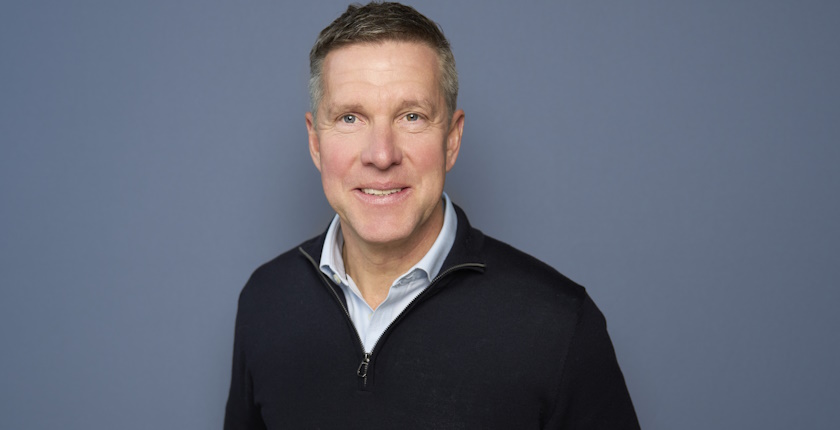
Electrification is redefining energy: Volue appoints Stephan Sieber as CEO

Volue’s new Chief Executive Officer Stephan Sieber is responsible for the expansion and transformation ahead, to unleash the company’s expertise across data and forecasting, trading, optimization and planning, and grid operations. “Volue turns complexity into advantage, and the momentum with our customers right now is just the beginning,” he stated.

Norwegian electrification software maker Volue revealed that it has appointed Stephan Sieber as CEO and stressed that it is a pivotal moment for the energy sector. In the artificial intelligence era, the company provides real-time intelligence, automation, and optimization of assets for efficiency, precision and performance, the update adds.

“Electrification is accelerating at historic speed. Weather-dependent renewable power systems are becoming more unpredictable and data-intensive, and customers face rising operational complexity. Stephan’s mandate is to extend Volue’s market leadership and drive transformation and growth, unleashing Volue’s expertise across data and forecasting, trading, optimisation and planning, and grid operations – helping energy customers turn complexity into competitive advantage,” the announcement reads.

Market at inflection point

Europe is on track to double its electrification efforts by 2030, adding as much capacity in the next five years as in the previous three decades, Volue pointed out. It noted that the surge is driven in part by the electrification of transportation and heat, and rising digital demand from AI and data centres, fundamentally reshaping energy markets.

Power systems are no longer centralized and predictable; they are becoming distributed, volatile, and data-intensive, the company underscored. Decision windows are shrinking, markets transact continuously, and success now depends on real-time intelligence, automation, and precision, Volue said. The company has more than 800 energy customers across Europe and Japan.

Volue said it had stellar organic growth last year alongside selective mergers and acquisitions.

Stephan Sieber, CEO, Volue, said: “With electrification accelerating and system complexity rising, customers need to partner with the best technology providers. Volue turns complexity into advantage, and the momentum with our customers right now is just the beginning. I’m extremely excited about where the company, the market, and our customers are, and how quickly the impact is compounding,”

Enabling performance in volatile markets

Volue operates other companies’ assets through real-time operations intelligence, enabling market anticipation and execution, and 30% of Europe’s intraday market volume is flowing through Volue Trading solutions, the company stressed. Its AI-driven optimization is influencing decisions across 500 TWh of annual generation, representing 20% of Europe’s total power production.

The company claimed it is “the dominant partner of choice” for 40% of Europe’s independent power producers in renewables integration.

“Throughout his career, Stephan has consistently delivered exceptional results, driving growth, leading complex strategic and operational transformations, and building high-performing teams in some of the most competitive markets. He has an extraordinary ability to understand customer needs, anticipate market trends, and turn opportunities into tangible, lasting outcomes, earning him a reputation as a market-proven leader,” Chairman of Volue Pete Daffern stated.

Post Views:62
January 15, 2026
by AEA in News

Hidroelectrica installs battery storage facility at its Crucea Nord wind park

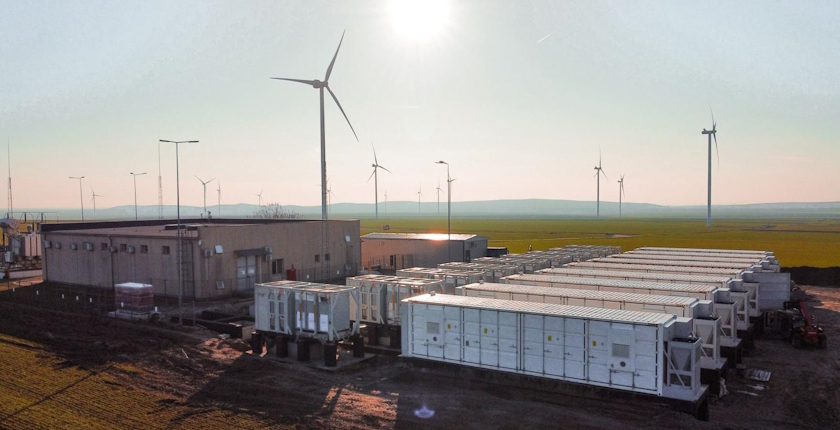
Hidroelectrica’s battery energy storage system (BESS) of 36 MW and 72 MWh, co-located with its Crucea Nord wind park in Romania’s southeast, is on track to come online more than a year earlier than initially planned.

The future energy hub around the village of Crucea in Romania’s Dobruja (Dobrogea) region will soon get its first hybrid power plant. Hidroelectrica, the country’s biggest electricity producer, said the BESS project at its only wind park, Crucea Nord, is 80% finished.

It means the battery storage facility is set to enter operation already in May, the state-owned hydropower plant operator said. It earlier planned to launch production in the summer of 2027.

The BESS will have 36 MW in operating power and a two-hour duration. It translates to 72 MWh in capacity. The system is co-located with a 108 MW wind park, built in 2014. Crucea Nord has been making significant losses due to unfavorable balancing obligations.

The contractors are Romania-based Prime Batteries Technology and Enevo Group

All nine units, supplied by domestic battery manufacturer Prime Batteries Technology (PBT), have been installed by December 30, Hidroelectrica revealed. The other contractor in the consortium is Enevo Group. After first setting up a small battery, the utility selected them in April through a tender.

Prime Batteries manufactures lithium-ion batteries and provides energy storage solutions for the automotive, smart grids, and industrial sectors. The startup is headquartered in Cernica near Bucharest. The other company is Romanian as well.

The deal is worth RON 79.8 million (EUR 15.7 million) excluding value-added tax.

Hidroelectrica operates 188 hydropower plants totaling 6.4 GW in capacity. According to Romania’s transmission system operator Transelectrica, the country hosts BESS facilities with an overall capability of 494 MW and a storage capacity of 913 MWh.

Post Views:76
January 15, 2026
by AEA in News

Slovenia again uses shortcut to meet national renewables target

Slovenia will purchase renewable energy from Croatia through a statistical transfer to meet its 2024 renewable energy target.

A statistical transfer is allowed at the European Union to help member states meet their national renewable energy targets. This will be the fourth time Slovenia has used this option in the 2020-2024 period.

Since 2020, the 25% goal for renewable energy’s share in gross final consumption has only been reached in 2023. The shortfall for 2024, when the share was 24.6%, will be covered by purchasing 207 GWh from Croatia for EUR 1.78 million, or EUR 8.60 per MWh, Žurnal24 reported.

The Czechs and Croats have benefited from Slovenia’s failure to reach the set goal

In 2020, Slovenia paid the Czech Republic EUR 5 million for a missing 465 MWh. The same country assisted it in 2021 as well, and the price for the service was EUR 2 million, for 208 MWh. According to the Ministry of Infrastructure, which was in charge of energy at the time, it did it to retain access to the EU’s Cohesion Fund for 2021-2027.

Slovenia paid the most in 2022, EUR 10.8 million for 1,193 MWh, to Croatia. In total, since 2020, nearly EUR 20 million has been spent on statistical transfers from the Czech Republic and Croatia.

EUR 20 million in total went to Czechia and Croatia

The government in Ljubljana covered the cost from renewable energy support funds, managed by electricity market operator Borzen.

The problem could become even bigger as the national target will increase to 33%

The Ministry of Environment, Climate and Energy attributed the failure to reach the 2024 goal to an increase in the consumption of fossil fuels.

It was 1 TWh higher than in 2023. However, the issue could get even worse. Slovenia faces new targets from 2030 on.

The minimum share set in the National Energy and Climate Plan (NECP) is 33%. It means that the share should increase by at least 1.6 percentage points per year on average over the next five years to avoid new payments.

Post Views:71
January 15, 2026
by AEA in News

Romania plans to lease unproductive land for renewable energy projects

Romania is drafting legislation that would enable granting concessions for the construction of renewable energy plants on unproductive and degraded state-owned agricultural land. The initiative aims to establish fast-track areas for renewable energy projects, with all necessary permitting procedures limited to 12 months.

The legislation would allow the State Domains Agency (ADS), which manages state-owned agricultural land, to grant concessions on areas of land that are not suitable for agriculture, but can be used for green energy production, according to a report by Profit.ro. The initiative is part of the RePowerEU component of Romania’s National Recovery and Resilience Plan (NRRP).

These areas should be officially designated following a mapping process to identify available land, subsurface, marine, or inland water areas needed for developing renewable energy power plants, as well as related grids and energy storage facilities, including thermal storage, to support achieving the 2030 renewable energy target.

The areas for renewable energy projects will be designated after a mapping process

The deadline to designate these areas is February 21, but it is unlikely to be met, given that a contract to procure the necessary geospatial data management software has been partially cancelled. The ADS has now launched a new tender for the geospatial data system, valuing the job at RON 7.7 million (around EUR 1.51 million), according to Profit.ro.

In the so-called “areas suitable for accelerating renewable energy projects,” the procedures for granting all necessary legal authorizations would not take more than 12 months in total, according to the report.

The Romanian Government has long planned to amend the law on the ADS to give it the authority to award concessions to public and private entities for the purpose of producing energy from renewable sources such as hydro, solar, wind, biomass, and geothermal, the news portal recalled.

State-owned power utility Hidroelectrica, the largest electricity producer in Romania, intended to build a photovoltaic park of 1.5 GW on thousands of hectares of land managed by the ADS. It would be the largest in Europe.

Post Views:156
January 15, 2026
by AEA in News

Semi-transparent solar systems not cost-efficient if transparency is above 50%

Semi-transparent solar systems are often presented as innovative and aesthetically appealing solutions. However, scientists from Spain warn that they are economically viable only up to a certain level of transparency. Levels above 50% have significantly lower system efficiency per unit area, resulting in higher electricity generation costs.

Researchers from the University of Jaén in Spain conducted a technical and economic analysis to assess the cost competitiveness of semi-transparent photovoltaic technologies (STPV). The study titled ‘Assessment of cost-competitiveness of semi-transparent photovoltaic systems’ and published in the journal Renewable Energy, shows that the costs are closely linked to the level of transparency.

“The paper introduces a cost framework that explicitly links transparency to module cost, structural cost, and system capex, using reference values from real utility-scale PV projects in Spain rather than idealized assumptions. The results explain why many STPV concepts look attractive on paper but struggle commercially, and where targeted policy instruments can realistically help without creating false expectations,” said the study’s lead author João Gabriel Bessa, in a statement to pv magazine.

The researchers analyzed a 1 MW semi-transparent ground-mounted solar system in Spain. The analysis examined total system costs, changes in module efficiency at different transparency levels, as well as the impact of increasing required surface area on the cost per watt and the levelized cost of electricity (LCOE).

Semi-transparent photovoltaic systems are commercially viable only with transparency of up to around 50%

LCOE represents the average cost of producing one unit of electricity over the entire lifetime of a power plant. It accounts for all project costs, from construction and financing to operation and maintenance, relative to total electricity generation, and is used as a key indicator for comparing the cost-effectiveness of different power generation technologies.

The researchers found that STPV remains commercially viable only up to transparency levels of about 50%. As transparency increases, the active solar cell area decreases, leading to lower electricity generation without a proportional reduction in the costs of non-cell materials.

The study’s authors also point out that balance-of-system (BOS) costs—which include all equipment, works, and infrastructure required for a photovoltaic plant to operate, excluding the solar modules themselves—increase with higher transparency levels. This is because the costs of mounting structures and direct current (DC) cabling scale with the physical area of the photovoltaic generators. By contrast, the costs of inverters, alternating current (AC) cabling, transformers, and other electrical equipment are largely independent of transparency levels.

Higher transparency, higher costs

To determine which financial and technical parameters have the greatest impact on LCOE, the researchers also conducted a sensitivity analysis.

Both analyses confirmed that total system costs rise as transparency increases. According to the study, a fully opaque system with zero transparency would have an installation cost of EUR 0.628 per W. As transparency increases, however, module efficiency declines, requiring a much larger area covered by photovoltaic modules to reach the same installed capacity.

At 50% transparency, module efficiency drops to around 10%, doubling the required surface area and increasing total system costs to EUR 0.904 per W. When transparency reaches 90%, efficiency falls to just 2%, requiring a fivefold increase in surface area and raising system costs to EUR 3.110 per W.

Bessa notes that with transparency above a band of 45% to 50%, LCOE rises sharply and exceeds typical market electricity prices, even in regions with high levels of solar irradiation, such as southern Spain.

“As transparency increases, power density declines faster than module costs, because non-cell components such as glass, encapsulation, framing, and logistics dominate the cost structure. This leads to a strong increase in EUR/W module costs, even when less silicon is used,” Bessa said.

The sensitivity analysis also showed that annual specific yield, expressed in kilowatt-hours per kilowatt of installed capacity, is the single most influential parameter affecting LCOE, outweighing even capital expenditure and financing conditions.

Post Views:103
January 15, 2026
by AEA in News

ContourGlobal installs 500 MWh standalone BESS facility in Bulgaria

A standalone battery energy storage system of 202 MW and 500 MWh is fully operational and actively participating in Bulgaria’s day-ahead and intraday electricity markets. ContourGlobal built it at its Maritsa East 3 coal plant, using the grid connection of one of its former units. Acting Minister of Energy Zhecho Stankov, who attended the inauguration, said the country added 5 GWh last year and estimated that the overall BESS capacity would hit 15 GWh by mid-2026.

Bulgaria is, with the Czech Republic, Poland and Germany, in the group of only European Union member states in which more than a fifth of electricity is still generated from coal. But the situation is rapidly changing. One of the biggest standalone battery storage installations in Eastern Europe and among the first in Bulgaria recently came online. Located within the ContourGlobal Maritsa East 3 (Maritsa iztok 3) coal power plant, the facility uses the grid connection of a former unit.

Two remained in operation, supplying electricity during periods of peak demand.

The BESS has 202 MW in operating power and a duration of 2.5 hours, translating to 500 MWh, the company said. It inaugurated the battery system in the presence of Acting Minister of Energy Zhecho Stankov.

Stankov: New BESS creates sustainable pathway for evolution of Maritsa East coal complex

The new facility is actively participating in both the day-ahead and intraday national electricity markets, supporting optimized power dispatch and improved balancing of electricity supply and demand, the update adds.

Such projects signify how innovation and existing industrial infrastructure can work together to strengthen grid stability, improve flexibility, and accelerate the integration of renewable energy sources, Stankov stressed. The investment enhances energy security, supports market-based operation, and creates a sustainable pathway for the evolution of traditional energy hubs such as Maritsa East, in his words.

According to the acting minister, Bulgaria added 5 GWh of BESS capacity last year, nearly matching the Chaira pumped storage hydropower plant. He recalled that the overall level is set to reach 15 GWh by mid-2026.

Project materialized in under nine months

The project in Maritsa East 3 received just under EUR 30 million in support through the European Union’s Recovery and Resilience Facility (RRF) and the Bulgarian National Recovery and Resilience Plan (NRRP). The company participated with EUR 44.7 million.

Spanning 2.5 hectares, the installation is part of ContourGlobal’s 3 GWh operational BESS portfolio. The company is owned by KKR.

BYD supplied the 110 battery skids for the battery system, which also includes 28 power conversion system (PCS) and transformer units. ContourGlobal progressed from the final investment decision (FID) to commercial operation date (COD) in less than nine months.

The company is developing a second BESS on the same site, with a matching capability. It has a project for a battery in combination with a solar power plant as well.

Battery energy systems allow for the storage of electricity generated from various sources, including photovoltaic and wind power plants, during periods of low demand and its release back to the grid during peak demand, which helps balance production and consumption and the stable operation of the electricity transmission system.

Coal plants switching to energy storage

AES Corp. is interested in replacing one of the boilers in its AES Maritsa East 1 (AES Maritsa iztok 1) coal plant with a molten salt reactor.

Greece’s government-controlled Public Power Corp. (PPC Group) is already building BESS facilities at its coal plants.

German utility Uniper is planning to build a battery energy storage system at its Heyden coal power plant site in western Germany with Slovenia-based energy solutions provider NGEN.

Thre months ago, International Power Supply (IPS) opened its Factory X1, with a capacity of 3 GWh per year. It is the first gigafactory in Bulgaria for battery energy storage systems. The same company is building another manufacturing facility.

Post Views:120
January 15, 2026
by AEA in News

Why CEE is one of most attractive regions for investment in new energy projects

Munir Hassan and Thomas Hamerl, partners in CMS’s world-leading energy practice, discussed the most significant developments in the renewable energy market for 2026 with Balkan Green Energy News.

There is great potential for early movers in the segments of battery storage and ancillary services, according to Munir Hassan, global head of the energy and climate change at CMS (London), and Thomas Hamerl, regional head of energy and climate change at CMS Vienna.

Interconnection and interoperability with the EU’s electricity market will enhance the region’s value for established producers and increase its attractiveness for new investors, they told Balkan Green Energy News.

Beyond grid availability and tariffs, potential investors in renewables and storage focus on the target country’s policy direction and the scalability of projects, Hassan and Hamerl explained.

Investors need advisors who are familiar with international contracts and can navigate local energy markets

Potential investors in renewables and storage do not just look for efficient support with time-sensitive grid availability and network tariffs. They appreciate legal advisors who are familiar with international contracts and can also navigate local energy markets. The current policy direction of the target country and the scalability of projects are more interesting than ever, Hassan and Hamerl asserted.

CMS’s regional footprint and its global network enable it to share expertise across jurisdictions, and its local teams contribute to regulatory initiatives. With over 70 offices worldwide, including 17 offices in CEE region, CMS supports renewable energy developers and investors. The global law firm follows policy developments that are shifting from saturated markets to the CEE region, with the aim of applying best practices and overcoming challenges and bottlenecks beforehand.

Speaking to Balkan Green Energy News, Hassan and Hamerl said companies should ride the investment wave and use opportunities as legal frameworks in Southeast Europe and the wider CEE region are advancing rapidly and opening new market segments.

At CMS’s traditional annual CEE Energy Conference (CEE Energy Conference 2025), held in London in October 2025, most investors were seriously considering to add energy storage to power plants and PPAs for industrial customers.

Data center projects are adding to demand growth in green electricity

Hassan pointed to digital infrastructure as the main driver of demand, even more in SEE than the rest of the CEE region, alongside the decommissioning of coal and gas-fired power plants.

Things are starting to move with data center projects in Slovenia, Croatia and Austria, for example, Hamerl stressed.

“Usually, data center developers are international and well-experienced, bringing technical and commercial know-how. These need not be only global hyperscalers such as Amazon, Google and Microsoft. Smaller data centre operators and telecom companies are strengthening their presence in CEE. They may all seek out the expertise and networks of local infrastructure developers,” he added.

CMS is involved in major projects throughout Southeast Europe

The changes are spurring the need for more resilience in the energy sphere and national sources. It is one of the factors behind the nuclear energy program in Poland, for shielding against geopolitical shocks, according to Hassan.

There are also nuclear power projects in Romania, including an advanced one for a small modular reactor (SMR) system, and Bulgaria, and CMS is involved in all of them. It has also contributed to deals for the giant Vifor wind power endeavor in Romania. Slovenia and Serbia are next.

Financing through debt could contribute to nuclear energy and interconnector projects

Hassan said there is a notable appetite for debt financing in CEE and suggested that the model could contribute to nuclear projects including the ones for SMRs.

“Another relevant development that we see is the development of electricity networks and even interconnectors. There’s a lot of private capital that’s looking to build electricity grids in Southeast Europe and Central and Eastern Europe. But the regimes there are designed for the existing system operators to develop these projects. The difficulty, like here in the UK and other parts of the world, is that they are unable to deliver the infrastructure quickly because they don’t have the resources and financial capability,” he asserted.

Western Europe is comfortable with the idea that private companies can own and run such assets, Hassan underscored and added that transmission upgrades in general could be financed the same way. But TSOs would typically take ownership of transmission system infrastructure including interconnectors.

EU funds would have better effect as loan guarantees

Among the investment appeal factors in CEE, Hassan highlighted the grants via the European Union’s Modernization Fund and Recovery and Resilience Facility (RRF).

“Those sorts of funds are very, very important. I think the governments need to find smart ways of effectively using that money to help create conditions in which you can get private international investment into the region, rather than simply as grant funding. If you give it as a way of, let’s say, underwriting debt, in case there’s a risk issue, that’s a better way, that kind of multiplier effect,” he stressed.

Knowhow for navigating legal frameworks in emerging market segments in CEE

The United Kingdom and other parts of Western Europe are experiencing growth of the markets for new system support services. Southeast Europe and Central and Eastern Europe may follow soon. For instance, Austria is about to introduce a capacity market. Serbia is rolling out an ancillary services market in January 2026, enabling a potential revenue stream for standalone battery energy storage systems (BESS).

“It’s not a mature market yet, but market entrants with the required experience and knowhow, will find a lot of possibilities in the region. If you want to be a first mover or an early mover, you must go there now,” said Hamerl. He added it is an opportunity for battery storage, to support the grid through the flexibility market or frequency restoration and new kinds of services, instead of just arbitrage.

It is much more expensive to expand the power grid than to use energy storage capacity available in the market

Regulatory frameworks are either in place or will very soon be in place, Hamerl noted.

“Batteries play an important role in supporting the grids and saving money because building new grids is always much more expensive than storage capacity in the market. I still see a long way to go for alternatives to batteries,” he said.

The fact is that it takes several years to build a pumped storage hydropower plant, while hydrogen and ammonia production and distribution infrastructure are not sufficiently developed yet.

Photovoltaics, BESS in sharply upward trajectory

Locations for photovoltaics in Southeast Europe are much better than in most parts of Europe, Hamerl underscored, adding that the coastal areas are particularly favorable for wind power.

For instance, experts predict the total operational solar and wind capacity in Montenegro to reach 400 MW by the end of this year. For Croatia, RES generation capacity is expected to increase from 4.7 GW in 2025 to almost 12 GW by 2040.

In Bulgaria, PV capacity jumped fivefold since 2019, to 5 GW, the law firm pointed out and emphasized the surge in both co-located and standalone BESS as well. Forecasts see the segment, currently at 600 MW, to hit 5 GW by the middle of 2026.

CMS Sofia has advised on more than 50% of all installed renewable energy capacities in Bulgaria. One of the clients, Renalfa IPP, has an investment program worth EUR 1.2 billion, involving 1.6 GW in electricity generation assets and 3.3 GWh of battery storage in Bulgaria, Romania, Hungary and North Macedonia.

CMS helping optimize regulations to suit governments as well as investors

There are obviously differences in every country of Central and Eastern Europe, but there are similarities drawing investors into the region, according to Hassan.

“They want to see the revenue risk is dealt with, the technical risks are dealt with, the political risk is kind of dealt with, et cetera. So our job as lawyers is to help people understand the frameworks, but also our local teams are helping to design some of these frameworks. To that extent, we can try and design them upfront in a way that achieves not only what the countries want, the governments want, but also what the international investors will be looking for,” he asserted.

The most important factors for investors are a clear direction of law making and scalability

In his view, the most important factors are a clear direction of lawmaking and regulation – strong policy backing, and scalability, in the sense that a company can do many more projects on the back of the first one.

Hamerl said that the waiting time for grid connection remains one of the most important elements, together with network charges. Investors seek stable grid fees or at least clarity about the pace and way of growth, he stressed.

“They are always asking us about the stability of the grid and the grid usage charges. However, in some markets there is a diversity of federal, provincial, and  local laws requiring different permits. Investors ask themselves in which province it is possible to obtain permits in time. Zoning and spatial planning is crucial too. For most of our clients, it’s nice to get subsidies, but those other issues are more important,” Hamerl asserted.

Post Views:136
January 15, 2026
by AEA in News

Belgium’s former Ministry of Energy Tinne Van der Straeten to become CEO of WindEurope next month

WindEurope’s new Chief Executive Officer Tinne Van der Straeten, member of the Chamber of Representatives of the Federal Parliament of Belgium and the country’s former minister of energy, will assume office on February 2. She is replacing Giles Dickson. The EU added 13 GW of wind capacity in 2025, less than half of what it requires.

WindEurope appointed Tinne Van der Straeten as its new CEO, effective on February 2. The organization pointed out that Belgium’s former minister of energy, from 2020 to 2025, is taking the helm at a critical time for Europe’s energy security, industrial competitiveness and climate commitments.

Tinne Van der Straeten oversaw Belgium’s wind energy expansion, including a broad consensus on Belgium’s response to the energy crisis in 2022, the announcement adds. She chaired the North Seas Energy Cooperation in 2020 and at the start of 2025 and the European Energy Council in 2024, and vice-chaired the ministerial meeting of the International Energy Agency (IEA) in 2022.

Most recently, the former minister served as a member of the Chamber of Representatives of the Federal Parliament of Belgium. She is a member of the Flemish Green Party – Groen.

Wind energy is central to Europe’s energy independence

Van der Straeten said she would take on her new responsibility with determination at a defining moment for Europe.

“Wind energy is central to Europe’s energy independence, industrial competitiveness and climate ambitions. Wind is a home-grown and scalable technology. It delivers affordable power, strengthens energy independence and sustains a competitive industrial base with high-quality jobs across Europe,” the incoming chief said.

Former CEO Giles Dickson served ten years

WindEurope’s Chairman Henrik Andersen praised Tinne Van der Straeten for passionately ensuring wind was kept high on the political agenda in her home country of Belgium and across the European Union.

“She has collaborated across industry and government to shape energy policy and build positive long-term investment frameworks that enable sustainable wind deployment. I look forward to working with Tinne as she leads WindEurope forward and supports Europe’s journey to a more competitive, homegrown energy system together with its members,” he stated.

The WindEurope Board thanked former CEO Giles Dickson for his 10 years of leadership and contribution to Europe’s wind industry.

Affordability, competitiveness, security

Van der Straeten will focus on ensuring Europe gets the most from wind to deliver affordability, industrial competitiveness and energy security, the organization said.

Faced with mounting geopolitical challenges, the continent must shake its dependence on imported fossil fuels, WindEurope stressed.

“Wind is uniquely placed to deliver that. A renewables-based energy system, with wind at its core, will save Europe up to EUR 1.6 trillion, even when counting the grid and backup costs. To reap these benefits, Europe must deliver on the Clean Industrial Deal, accelerate the buildout of homegrown and competitive renewables and ramp up the electrification of its economy,” the update reads.

Today wind energy generates 20% of all electricity consumed in Europe. With the right policies, the level will rise to 34% by 2030 and more than 50% by 2050, WindEurope estimated.

The EU installed 13 GW of new capacity in 2025. It is less than half of what Europe needs to deliver its 2030 energy security and climate targets.

“The wind sector is at a turning point. The industry is ready to accelerate and to provide more than 600,000 jobs by 2030. But it is held back by permitting issues and infrastructure delays,” said Tinne Van der Straeten.

Post Views:108
January 15, 2026
by AEA in News

Greece installs 2.5 GW of solar in 2025 as utility segment dominates

Greece is expected to reach its 2030 goal early in solar installations, according to SolarPower Europe’s latest data.

The association expects Greece to achieve the goal of 13.5 GW this year. By the end of the decade, there will be 21.5 GW in installed solar capacity, based on the most probable scenario, up from 12.22 GW, estimated for 2025.

Greece added 2.5 GW, slightly lower than the record 2.6 GW increase of 2024, the update showed. It places the country at the number seven spot, behind Germany (17.6 GW), Spain (9.2 GW), France (6.7 GW), Italy (5.2 GW), Poland (3.7 GW) and Romania (2.5 GW).

Greece was the fourth-best country in Europe in terms of solar installations per capita, with 1,223 W, trailing the Netherlands (1,582 W), Germany (1,405 W) and Estonia (1,335 W), according to the estimate.

Net billing and delays stymied the rooftops segment expansion

A significant drop took place in the Greek rooftops and commercial and industrial (C&I) segments, as a result of the switch from net metering to net billing, as well as administrative delays. Utility-scale activity offset part of this decline, resulting in only a slight contraction for the year, SolarPower Europe said in its annual outlook. In total, 72% of new capacities were of utility size, with the rest being in all other categories.

Self-consumption systems have surpassed 1 GW in total capacity. While community solar projects account for nearly 20% of total installed photovoltaic capacity, most are not used for self-consumption, and their significance in terms of new installations is declining.

Future growth depends on storage and power demand

Looking ahead, SolarPower Europe considered Greece to be on a strong growth path, with utility-scale projects driving most new additions and a large storage programme expected to ease integration challenges later in the decade.

Residential and C&I segments continue to struggle with policy delays and the shift to net billing, while rising curtailment and low-price hours weigh on investor confidence, the association noted. About 8% of potential renewable energy generation is curtailed, and this rises to over 11% for PV output. The number of hours with zero or negative prices in the day-ahead electricity market almost doubled in 2025. Still, the number of hours impacting power plant revenue remains lower than in many other European countries.

While the overall market is expected to grow in the short term, further expansion is dependent on electricity demand growth, as well on the pace of deploying storage, grid upgrades and self-consumption rules.

Post Views:110
  • 1
  • …
  • 18
  • 19
  • 20
  • 21
  • 22
  • …
  • 140

AEA – Albania Energy Association is a industry association dedicated to representing the interests of Albanian and West Balkan for energy producers and consumers. AEA works to advance the development and adoption of sustainable energy solutions in Albania and the Western Balkans, supporting the region’s transition toward a cleaner, more secure, and more competitive energy future. AEA is registered by decision of the Court of Tirana, DECISION NO. 3032, (VAT:L11827451K).

[email protected]

Address
Blv Zogu 1
Tirana
1057
ALBANIA

LinkedIn  |  Facebook
Events
May 25, 2022 Connecting Green Hydrogen Europe 2022
May 25, 2022 Energy Week Western Balkans 2022
Copyright © Albania Energy Association