AEA-Albania Energy Association
  • Main
  • About Us
  • Services
  • Sectors
  • News
  • EventsEvents
  • PublicationPublication
  • Contact Us
AEA-Albania Energy Association
  • Main
  • About Us
  • Services
  • Sectors
  • News
  • EventsEvents
  • PublicationPublication
  • Contact Us
AEA-Albania Energy Association
  • Home Page
  • About Us
  • Sectors
  • Our Services
  • News
  • Contact Us
January 15, 2026
by AEA in News

Albania gives green light to CWP Europe for 600 MW wind park

Prime Minister of Albania Edi Rama and Deputy Prime Minister and Minister of Infrastructure and Energy Belinda Balluku promoted CWP Europe’s wind power project Tropoja of 600 MW. After receiving the ministry’s preliminary approval at the event, the company’s CEO Dimitar Enchev highlighted the importance of local electricity production for a modern economy, including AI and data centers, and for energy independence. Albania still doesn’t host a single operational wind turbine.

CWP Europe will hopefully connect its future wind park Tropoja to the grid within 12 months, excluding the period of harsh winter, according to Albania’s Prime Minister Edi Rama. Speaking at the project’s presentation, he said the investment is a step toward the country’s ambition of becoming self-reliant in energy production.

“For a long time, we had complete dependence on water and rainfall. At the same time, we inherited a system with so many weaknesses that, when rainfall was lacking, we had to go to international markets and purchase large quantities at inflated prices. Meanwhile, when rainfall came in abundance, we often saw much of this potential value, water, go to waste and not only fail to be converted into energy, but at times also cause extraordinary damage,” Rama stated.

Namely, hydropower plants accounted for almost 100% of domestic electricity production until recently. By the end of the decade, the combined share of wind and solar power will reach 30%, Rama underscored.

Preparing final stages of Tropoja wind power project

CWP Global’s Co-founder and Chief Executive Officer for Europe Dimitar Enchev received a preliminary approval from the Ministry of Infrastructure and Energy at the event. He highlighted the importance of local electricity production for a modern economy and energy independence, especially with the expansion of artificial intelligence and data centers.

“The last time I was here was about three months ago, when we decided and signed a joint cooperation agreement with the EU. And now, after three months, we receive the permission that allows us to engage in preparing the final stages of our project,” Enchev stated, as quoted by CNA.

CWP Europe has more than 7 GW under development in Southeast Europe

CWP Europe has 900 MW in wind power projects under development in Albania, part of a portfolio of more than 6 GW across Southeast Europe plus more than 1 GW in photovoltaics.

The Tropoja area is in the country’s far north. Albania still doesn’t host a single operational wind turbine.

Support from European Commission

CWP Europe signed a joint declaration in October with the European Commission, the Albanian Investment Development Agency and the Montenegrin Investment Agency, in support of the Tropoja project and the Montechevo solar farm with battery storage in Montenegro, respectively.

In September, the company’s subsidiary Eralb Invest submitted its wind power project to the Ministry of Infrastructure and Energy, for 603.9 MW. It is not subject to concession and doesn’t benefit from state support measures.

In 2023, the firm sent a proposal to the Strategic Investment Committee (SIC or KIS) in which the project was for a wind and solar park of 826 MW in total capacity. It is an interministerial panel chaired by Prime Minister Edi Rama.

The entire designated area in Tropoja municipality reportedly spanned 385 hectares, encompassing the territories of the villages Viçidol, Berisha, Luzha and Pac, and the investment was valued at EUR 1.2 billion.

In October 2023, CWP and GE Vernova’s Onshore Wind business agreed to develop a large-scale hybrid wind and solar project in Albania. They estimated the investment at more than EUR 1 billion.

Fântânele-Cogealac-Gradina, the biggest onshore wind park in Southeastern Europe and, until recently, in entire Europe, has 600 MW in capacity. It is located in Romania. CWP developed the project and sold it in 2008.

Balluku: Diversification is strategic necessity

Albania is moving to a modern, balanced energy model, where diversification of sources is no longer a solution, but a strategic necessity, according to Deputy Prime Minister and Minister of Infrastructure and Energy Belinda Balluku.

“The Tropoja wind farm is not just an energy investment. It is a symbol of the transformation that Albania is experiencing, a transformation towards a sustainable, stronger and more innovation-friendly economy. This project proves that the Albanian energy sector is entering a new phase, where private investment and foreign direct investment are becoming engines of growth, thanks to serious partnerships and long-term visions,” she stated.

Wind and solar power projects totaling 1.5 GW are under development in Albania

In recent years, Albania added over 700 MW of photovoltaic capacity, and another 400 MW for self-supply, Balluku revealed. Wind and solar power projects totaling 1.5 GW are under development, she added. Future pumped storage hydropower capacity in the Drin (Drim) cascade and Statkraft’s project in Moglica amount to 1.6 GW, Balluku stressed.

Since 2013, losses in the power distribution network have dropped to 16.9% from more than 45%, while total electricity capacity increased by 1.5 GW, the deputy prime minister added. She said outages have been reduced to an all-time low and that they usually only last a few minutes.

The Special Court Against Corruption and Organized Crime suspended Balluku in late November amid an investigation, but the Constitutional Court soon reinstated her.

Post Views:122
January 15, 2026
by AEA in News

Why financial risk is the real challenge for battery storage in Europe

As battery energy storage systems (BESS) move from pilot projects to core infrastructure across Europe, the conversation is changing. Technology and costs still matter, but for investors and lenders the decisive question is increasingly financial: how resilient are BESS projects when revenue is delayed, disrupted, or degraded?

Across Central and Eastern Europe as well as mature Western markets, storage projects are entering a phase of tighter margins, more complex financing structures and lower tolerance for uncertainty. In this environment, insurance is no longer just about protecting equipment; it is becoming a central tool for managing financial risk and preserving bankability.

Financial continuity defines bankability

For storage projects, technical performance is only half the equation. The other half, the one that ultimately determines financing terms, is financial continuity. Every phase of a BESS or hybrid PV+BESS project carries exposure to income loss: during transportation, construction, commissioning, and operation.

Even short disruptions can have disproportionate consequences. A damaged transformer during shipping, a fire incident during testing or a commissioning delay before grid connection can postpone the start of revenues, while debt service, contractual obligations, and operating costs continue to accrue.

This is why Renewable Energy Insurance Broker (REIB) structures insurance programs around financial outcomes, not just physical damage. The objective is simple: ensure that delays or performance issues do not automatically escalate into financial stress.

ALOP: From overlooked add-on to financing safeguard

One of the most underestimated insurance covers in the BESS sector today is Advance Loss of Profit (ALOP). Traditionally seen as optional, ALOP is rapidly becoming essential, particularly for large-scale storage and hybrid projects with tight financing schedules.

ALOP protects expected revenues when construction or commissioning is delayed due to insured physical damage. In practice, it bridges the critical gap between construction risk and future cash flow. In 2025, REIB observed multiple projects where even short delays could have triggered penalty clauses, refinancing pressure, or delayed revenue start.

When structured correctly, ALOP ensures that delays do not automatically translate into financial crises. For lenders, it increasingly functions as a bankability safeguard, providing confidence that revenue projections remain protected even if timelines slip.

DSU and logistics: When delays start before construction

Financial risk does not begin on site. For BESS projects, it often starts much earlier – during transport. Batteries, inverters and transformers travel thousands of kilometers before installation, making logistics one of the most exposed phases of the project lifecycle.

A single cargo incident can delay commissioning by months, increasing financing costs and contractual exposure. REIB addresses this risk through Delay in Start-Up (DSU) insurance combined with Cargo coverage, ensuring that if a critical shipment is damaged, stolen, or delayed, the project is compensated not only for the physical loss but also for the income lost during the resulting downtime.

For investors and lenders, this closes one of the most dangerous financial gaps in project planning: the period before operations even begin.

Construction and commissioning: The most fragile phase

The construction and commissioning stage is where technical and financial risks converge. Fires, installation accidents or testing failures can delay grid connection, pushing revenue timelines back while expenses continue.

Many traditional insurance policies either exclude this phase or cover it only partially. REIB structures construction-phase DSU coverage that runs from installation through commissioning, responding not only with repair costs but also with compensation for lost income.

This transforms insurance from a reactive instrument into a strategic financial stabilizer, keeping debt service, investor expectations, and project schedules aligned even when delays occur.

Business Interruption: Insuring the ability to earn

Once operational, BESS and hybrid projects depend on consistent performance to meet financial models. Yet standard Business Interruption (BI) insurance often fails to reflect the complexity of storage revenues.

REIB structures BI coverage around the project’s actual revenue mechanism – whether tolling, profit-sharing or hybrid arrangements. The focus is on protecting total income, not just net profit, with coverage that includes partial degradation and extended indemnity periods of up to 18 months.

In short, insurance protects the project’s ability to earn, because that is what sustains investor confidence and lender support.

Design decisions are financial decisions

Across Europe, particularly in fast-evolving markets, investors often underestimate how deeply design choices affect bankability. Decisions related to battery suppliers, container layouts, or control-system design can materially influence insurance availability, scope and pricing.

REIB’s role is to ensure these risks are identified and addressed early, when corrections are technically simpler, financially cheaper, and far more effective. Projects that integrate insurance expertise from the outset consistently achieve broader coverage and more favorable financing terms. When insurance input comes too late, exclusions, higher deductibles, or gaps in ALOP protection are far more common.

Conclusion: Financial risk will shape Europe’s storage rollout

Battery storage is no longer a technical experiment; it has become a financial asset class. Its success now depends on how effectively revenue risks are managed across the entire project lifecycle.

As Europe accelerates BESS deployment, insurance is evolving from a compliance requirement into a core element of financial structuring. By focusing on income protection, early risk assessment, and coverage aligned with real revenue models, insurance is increasingly influencing which storage projects move forward, and which stall at the financing stage.

For BESS in Europe, managing financial risk is no longer optional; it is the foundation of bankability. In 2025 alone, REIB insured more than 8 GWh of BESS capacity across Europe, demonstrating how revenue-focused risk management can turn financial uncertainty into long-term resilience.

Post Views:88
January 15, 2026
by AEA in News

Bulgaria proposes changes to electricity trading rules to include new market participants

The Energy and Water Regulatory Commission of has proposed its amendments to Bulgaria’s electricity trading rules.

The changes aim to align electricity trading rules with recent updates to the country’s Energy Act and a legal and operational framework for new categories of market participants, according to law firm CMS Bulgaria.

New categories include active customers (active buyers), citizen energy communities, self-consumers (prosumers) of electricity from renewable sources, and renewable energy communities.

The Energy and Water Regulatory Commission (EWRC) held a public consultation event today on its draft changes in electricity trading rules. Representatives of the three distribution system operators (DSOs), the Sofia Municipality and the Bulgarian Association for Electrical Engineering and Electronics (BASEL) participated in the discussion.

These changes are designed to encourage electricity production for self-consumption

These changes are designed to encourage electricity production for self-consumption, minimize distribution losses, and foster more predictable energy pricing, a CMS e-alert reads. Furthermore, the amendments would ensure the Bulgarian rules comply with EU law, specifically directives 2018/2001 and 2019/944 and Regulation 2019/943.

The proposed draft introduces several specific provisions to facilitate the participation of the said new entities, CMS stressed.

It explicitly defines how new participants can join the market and the types of contracts they are permitted to conclude.

The new rules allow for the grouping of different sites for joint electricity production or consumption. They also set technical mandates for commercial metering devices, including remote reading capabilities.

The new rules also define calculation of generated, shared and sold electricity

The authors outlined procedures for registering or deregistering participants and groups with network operators. The update would impose an obligation to maintain a public register of these participants.

The proposed rules define the calculation of generated, shared and sold electricity. The framework guarantees that data is exchanged between suppliers, network operators, and group members, ensuring it is reflected in monthly bills.

Stakeholders were invited to submit their proposals from January 8 until January 22, CMS underscored.

Post Views:88
January 15, 2026
by AEA in News

Electrification is redefining energy: Volue appoints Stephan Sieber as CEO

Volue’s new Chief Executive Officer Stephan Sieber is responsible for the expansion and transformation ahead, to unleash the company’s expertise across data and forecasting, trading, optimization and planning, and grid operations. “Volue turns complexity into advantage, and the momentum with our customers right now is just the beginning,” he stated.

Norwegian electrification software maker Volue revealed that it has appointed Stephan Sieber as CEO and stressed that it is a pivotal moment for the energy sector. In the artificial intelligence era, the company provides real-time intelligence, automation, and optimization of assets for efficiency, precision and performance, the update adds.

“Electrification is accelerating at historic speed. Weather-dependent renewable power systems are becoming more unpredictable and data-intensive, and customers face rising operational complexity. Stephan’s mandate is to extend Volue’s market leadership and drive transformation and growth, unleashing Volue’s expertise across data and forecasting, trading, optimisation and planning, and grid operations – helping energy customers turn complexity into competitive advantage,” the announcement reads.

Market at inflection point

Europe is on track to double its electrification efforts by 2030, adding as much capacity in the next five years as in the previous three decades, Volue pointed out. It noted that the surge is driven in part by the electrification of transportation and heat, and rising digital demand from AI and data centres, fundamentally reshaping energy markets.

Power systems are no longer centralized and predictable; they are becoming distributed, volatile, and data-intensive, the company underscored. Decision windows are shrinking, markets transact continuously, and success now depends on real-time intelligence, automation, and precision, Volue said. The company has more than 800 energy customers across Europe and Japan.

Volue said it had stellar organic growth last year alongside selective mergers and acquisitions.

Stephan Sieber, CEO, Volue, said: “With electrification accelerating and system complexity rising, customers need to partner with the best technology providers. Volue turns complexity into advantage, and the momentum with our customers right now is just the beginning. I’m extremely excited about where the company, the market, and our customers are, and how quickly the impact is compounding,”

Enabling performance in volatile markets

Volue operates other companies’ assets through real-time operations intelligence, enabling market anticipation and execution, and 30% of Europe’s intraday market volume is flowing through Volue Trading solutions, the company stressed. Its AI-driven optimization is influencing decisions across 500 TWh of annual generation, representing 20% of Europe’s total power production.

The company claimed it is “the dominant partner of choice” for 40% of Europe’s independent power producers in renewables integration.

“Throughout his career, Stephan has consistently delivered exceptional results, driving growth, leading complex strategic and operational transformations, and building high-performing teams in some of the most competitive markets. He has an extraordinary ability to understand customer needs, anticipate market trends, and turn opportunities into tangible, lasting outcomes, earning him a reputation as a market-proven leader,” Chairman of Volue Pete Daffern stated.

Post Views:60
January 15, 2026
by AEA in News

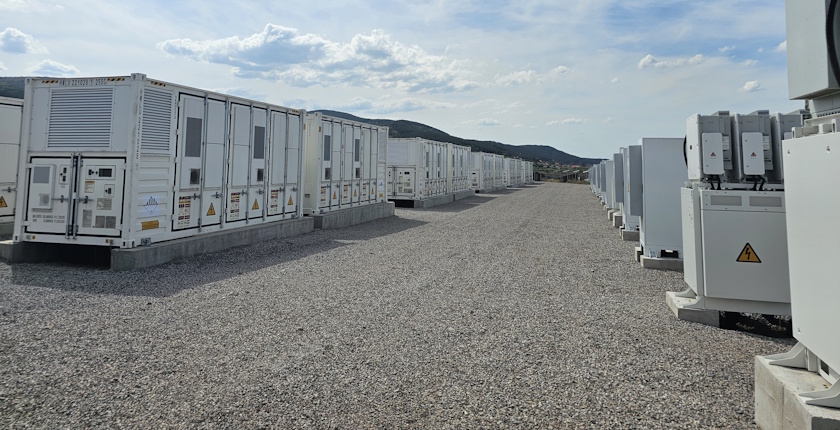
Hidroelectrica installs battery storage facility at its Crucea Nord wind park

Hidroelectrica’s battery energy storage system (BESS) of 36 MW and 72 MWh, co-located with its Crucea Nord wind park in Romania’s southeast, is on track to come online more than a year earlier than initially planned.

The future energy hub around the village of Crucea in Romania’s Dobruja (Dobrogea) region will soon get its first hybrid power plant. Hidroelectrica, the country’s biggest electricity producer, said the BESS project at its only wind park, Crucea Nord, is 80% finished.

It means the battery storage facility is set to enter operation already in May, the state-owned hydropower plant operator said. It earlier planned to launch production in the summer of 2027.

The BESS will have 36 MW in operating power and a two-hour duration. It translates to 72 MWh in capacity. The system is co-located with a 108 MW wind park, built in 2014. Crucea Nord has been making significant losses due to unfavorable balancing obligations.

The contractors are Romania-based Prime Batteries Technology and Enevo Group

All nine units, supplied by domestic battery manufacturer Prime Batteries Technology (PBT), have been installed by December 30, Hidroelectrica revealed. The other contractor in the consortium is Enevo Group. After first setting up a small battery, the utility selected them in April through a tender.

Prime Batteries manufactures lithium-ion batteries and provides energy storage solutions for the automotive, smart grids, and industrial sectors. The startup is headquartered in Cernica near Bucharest. The other company is Romanian as well.

The deal is worth RON 79.8 million (EUR 15.7 million) excluding value-added tax.

Hidroelectrica operates 188 hydropower plants totaling 6.4 GW in capacity. According to Romania’s transmission system operator Transelectrica, the country hosts BESS facilities with an overall capability of 494 MW and a storage capacity of 913 MWh.

Post Views:72
January 15, 2026
by AEA in News

Slovenia again uses shortcut to meet national renewables target

Slovenia will purchase renewable energy from Croatia through a statistical transfer to meet its 2024 renewable energy target.

A statistical transfer is allowed at the European Union to help member states meet their national renewable energy targets. This will be the fourth time Slovenia has used this option in the 2020-2024 period.

Since 2020, the 25% goal for renewable energy’s share in gross final consumption has only been reached in 2023. The shortfall for 2024, when the share was 24.6%, will be covered by purchasing 207 GWh from Croatia for EUR 1.78 million, or EUR 8.60 per MWh, Žurnal24 reported.

The Czechs and Croats have benefited from Slovenia’s failure to reach the set goal

In 2020, Slovenia paid the Czech Republic EUR 5 million for a missing 465 MWh. The same country assisted it in 2021 as well, and the price for the service was EUR 2 million, for 208 MWh. According to the Ministry of Infrastructure, which was in charge of energy at the time, it did it to retain access to the EU’s Cohesion Fund for 2021-2027.

Slovenia paid the most in 2022, EUR 10.8 million for 1,193 MWh, to Croatia. In total, since 2020, nearly EUR 20 million has been spent on statistical transfers from the Czech Republic and Croatia.

EUR 20 million in total went to Czechia and Croatia

The government in Ljubljana covered the cost from renewable energy support funds, managed by electricity market operator Borzen.

The problem could become even bigger as the national target will increase to 33%

The Ministry of Environment, Climate and Energy attributed the failure to reach the 2024 goal to an increase in the consumption of fossil fuels.

It was 1 TWh higher than in 2023. However, the issue could get even worse. Slovenia faces new targets from 2030 on.

The minimum share set in the National Energy and Climate Plan (NECP) is 33%. It means that the share should increase by at least 1.6 percentage points per year on average over the next five years to avoid new payments.

Post Views:69
January 14, 2026
by AEA in News

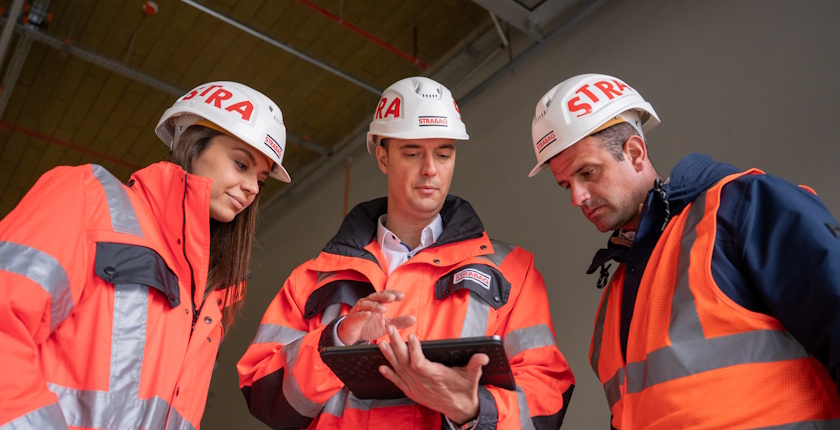
From construction waste to circular economy: how STRABAG drives green transition

Today, the construction industry is at the crossroads between tradition and transformation. Accounting for approximately 40% of the global energy consumption and for more than 35% of the overall CO₂ emissions, this sector has a huge potential, as well as a responsibility to become one of the key leaders of change in environmental protection. It is this change where STRABAG in Serbia recognises its task and opportunity: through recycling and reuse of materials, solar energy consumption, electric vehicles and digital innovation, the company demonstrates that sustainability can be an integral part of every construction phase.

Acting responsibly, objectively and ethically, STRABAG operates in accordance with the highest integrity standards. Aiming to expand business operations to new areas, they develop innovative and creative approaches within defined frameworks, utilising resources regionally, purposefully and efficiently. Their goal is to become the market leader via automation and adoption of new technologies, while pledging to achieve climate neutrality and CO₂ emission reduction.

Circular economy in practice: second life of materials

Construction waste is no longer and must not be the end of a process, but the start of a new cycle. For instance, concrete that used to end up at a landfill is now treated as a valuable resource: after separating reinforced elements and crushing, the material is reused in construction, as an aggregate for bases, foundations or access roads. This reduces the need for exploiting natural resources, the volume of waste at landfills and CO₂ emissions resulting from transport and production of new materials. The approach confirms that the construction industry can be a generator of a circular economy, rather than just its observer.

By recycling materials, STRABAG enhances processes and rationalises costs, while setting a new benchmark in responsible resource management, thus following its strategic goal of transforming every construction site into a part of a closed, sustainable construction cycle by 2040.

“Our objective is to turn every tonne of waste into a resource in the next project – that is the essence of the circular approach,” STRABAG’s representatives say.

Solar energy and electric mobility: construction sites of the future

In line with STRABAG’s Work On Progress strategy and aiming to become climate neutral by 2040, the company is introducing photovoltaic (PV) panels at its facilities, construction sites and logistics and asphalt bases in Serbia. Solar systems enable a reduction of power consumption from the grid, as well as of CO₂ emissions, thus directly contributing to the company’s global objective.

Green transition also includes the transport segment. STRABAG is modernising its vehicle fleet and introducing e-vehicles and new-generation construction machinery, decreasing its fossil fuel consumption and overall carbon footprint. By combining solar energy sources and electric mobility, construction sites become self-sustainable, with more environmentally responsible and technologically advanced daily operations.

Digital tools – less paper, more efficiency

Not only does digital transformation in STRABAG represent the implementation of new technologies, but it also changes the method of managing each segment of a construction site. By introducing the SSO (Smart Site One) application, the process of planning, monitoring and optimising operations is fully digitalised, from asphalt transport to final installation phases. The app connects people, machinery and processes in real time, thus eliminating downtime, increasing efficiency and reducing fuel consumption and waste.

Furthermore, the company has developed the 5S application (based on the 5S principles – sort, set in order, shine, standardise, sustain), aimed at monitoring order, safety and implementation of the LEAN methods at construction sites. This digital tool enables daily on-site status monitoring, design of automatic reports in order to reduce the risk of injuries, for orderly construction sites with optimal resource use, while additional values: 6S (safety), 7S (team spirit) and 8S (sustainability), facilitate further the culture of safety, team spirit and environmental awareness.

With these applications, STRABAG connects digitalisation and sustainability, showcasing that modern construction can simultaneously be precise, efficient and environmentally responsible.

Journey to climate neutrality

STRABAG in Serbia is implementing an ambitious plan, harmonised with its global ESG strategy and climate neutrality goals. The focus is both on technological innovation and systemic change in the method of construction, use of resources and day-to-day operations.

Key objectives set by the company include the following:

  • 50% of recycled materials in construction processes by 2030
  • CO₂ emission reduction of 42% per project by 2030
  • Fully electric or hybrid vehicle fleet by 2035

Besides technical and infrastructure measures, STRABAG continuously invests in employee education via LEAN and sustainability training courses (training in environmental protection), promoting the principles of sustainable construction, energy efficiency and responsible resource management. As a result, sustainability within the company goes beyond restrictions of individual initiatives, becoming a part of the corporate culture and mindset in every segment of operations.

STRABAG’s sustainability story is more than a series of projects – it is a long-term strategy that changes the future perspective of the construction sector.

“Sustainability is not a trend, but a new foundation of quality. What we are building today must last for the generations to come,” STRABAG’s representatives concluded.

Post Views:331
January 14, 2026
by AEA in News

Why financial risk is the real challenge for battery storage in Europe

As battery energy storage systems (BESS) move from pilot projects to core infrastructure across Europe, the conversation is changing. Technology and costs still matter, but for investors and lenders the decisive question is increasingly financial: how resilient are BESS projects when revenue is delayed, disrupted, or degraded?

Across Central and Eastern Europe as well as mature Western markets, storage projects are entering a phase of tighter margins, more complex financing structures and lower tolerance for uncertainty. In this environment, insurance is no longer just about protecting equipment; it is becoming a central tool for managing financial risk and preserving bankability.

Financial continuity defines bankability

For storage projects, technical performance is only half the equation. The other half, the one that ultimately determines financing terms, is financial continuity. Every phase of a BESS or hybrid PV+BESS project carries exposure to income loss: during transportation, construction, commissioning, and operation.

Even short disruptions can have disproportionate consequences. A damaged transformer during shipping, a fire incident during testing or a commissioning delay before grid connection can postpone the start of revenues, while debt service, contractual obligations, and operating costs continue to accrue.

This is why Renewable Energy Insurance Broker (REIB) structures insurance programs around financial outcomes, not just physical damage. The objective is simple: ensure that delays or performance issues do not automatically escalate into financial stress.

ALOP: From overlooked add-on to financing safeguard

One of the most underestimated insurance covers in the BESS sector today is Advance Loss of Profit (ALOP). Traditionally seen as optional, ALOP is rapidly becoming essential, particularly for large-scale storage and hybrid projects with tight financing schedules.

ALOP protects expected revenues when construction or commissioning is delayed due to insured physical damage. In practice, it bridges the critical gap between construction risk and future cash flow. In 2025, REIB observed multiple projects where even short delays could have triggered penalty clauses, refinancing pressure, or delayed revenue start.

When structured correctly, ALOP ensures that delays do not automatically translate into financial crises. For lenders, it increasingly functions as a bankability safeguard, providing confidence that revenue projections remain protected even if timelines slip.

DSU and logistics: When delays start before construction

Financial risk does not begin on site. For BESS projects, it often starts much earlier – during transport. Batteries, inverters and transformers travel thousands of kilometers before installation, making logistics one of the most exposed phases of the project lifecycle.

A single cargo incident can delay commissioning by months, increasing financing costs and contractual exposure. REIB addresses this risk through Delay in Start-Up (DSU) insurance combined with Cargo coverage, ensuring that if a critical shipment is damaged, stolen, or delayed, the project is compensated not only for the physical loss but also for the income lost during the resulting downtime.

For investors and lenders, this closes one of the most dangerous financial gaps in project planning: the period before operations even begin.

Construction and commissioning: The most fragile phase

The construction and commissioning stage is where technical and financial risks converge. Fires, installation accidents or testing failures can delay grid connection, pushing revenue timelines back while expenses continue.

Many traditional insurance policies either exclude this phase or cover it only partially. REIB structures construction-phase DSU coverage that runs from installation through commissioning, responding not only with repair costs but also with compensation for lost income.

This transforms insurance from a reactive instrument into a strategic financial stabilizer, keeping debt service, investor expectations, and project schedules aligned even when delays occur.

Business Interruption: Insuring the ability to earn

Once operational, BESS and hybrid projects depend on consistent performance to meet financial models. Yet standard Business Interruption (BI) insurance often fails to reflect the complexity of storage revenues.

REIB structures BI coverage around the project’s actual revenue mechanism – whether tolling, profit-sharing or hybrid arrangements. The focus is on protecting total income, not just net profit, with coverage that includes partial degradation and extended indemnity periods of up to 18 months.

In short, insurance protects the project’s ability to earn, because that is what sustains investor confidence and lender support.

Design decisions are financial decisions

Across Europe, particularly in fast-evolving markets, investors often underestimate how deeply design choices affect bankability. Decisions related to battery suppliers, container layouts, or control-system design can materially influence insurance availability, scope and pricing.

REIB’s role is to ensure these risks are identified and addressed early, when corrections are technically simpler, financially cheaper, and far more effective. Projects that integrate insurance expertise from the outset consistently achieve broader coverage and more favorable financing terms. When insurance input comes too late, exclusions, higher deductibles, or gaps in ALOP protection are far more common.

Conclusion: Financial risk will shape Europe’s storage rollout

Battery storage is no longer a technical experiment; it has become a financial asset class. Its success now depends on how effectively revenue risks are managed across the entire project lifecycle.

As Europe accelerates BESS deployment, insurance is evolving from a compliance requirement into a core element of financial structuring. By focusing on income protection, early risk assessment, and coverage aligned with real revenue models, insurance is increasingly influencing which storage projects move forward, and which stall at the financing stage.

For BESS in Europe, managing financial risk is no longer optional; it is the foundation of bankability. In 2025 alone, REIB insured more than 8 GWh of BESS capacity across Europe, demonstrating how revenue-focused risk management can turn financial uncertainty into long-term resilience.

Post Views:56
January 14, 2026
by AEA in News

Bulgaria proposes changes to electricity trading rules to include new market participants

The Energy and Water Regulatory Commission of has proposed its amendments to Bulgaria’s electricity trading rules.

The changes aim to align electricity trading rules with recent updates to the country’s Energy Act and a legal and operational framework for new categories of market participants, according to law firm CMS Bulgaria.

New categories include active customers (active buyers), citizen energy communities, self-consumers (prosumers) of electricity from renewable sources, and renewable energy communities.

The Energy and Water Regulatory Commission (EWRC) held a public consultation event today on its draft changes in electricity trading rules. Representatives of the three distribution system operators (DSOs), the Sofia Municipality and the Bulgarian Association for Electrical Engineering and Electronics (BASEL) participated in the discussion.

These changes are designed to encourage electricity production for self-consumption

These changes are designed to encourage electricity production for self-consumption, minimize distribution losses, and foster more predictable energy pricing, a CMS e-alert reads. Furthermore, the amendments would ensure the Bulgarian rules comply with EU law, specifically directives 2018/2001 and 2019/944 and Regulation 2019/943.

The proposed draft introduces several specific provisions to facilitate the participation of the said new entities, CMS stressed.

It explicitly defines how new participants can join the market and the types of contracts they are permitted to conclude.

The new rules allow for the grouping of different sites for joint electricity production or consumption. They also set technical mandates for commercial metering devices, including remote reading capabilities.

The new rules also define calculation of generated, shared and sold electricity

The authors outlined procedures for registering or deregistering participants and groups with network operators. The update would impose an obligation to maintain a public register of these participants.

The proposed rules define the calculation of generated, shared and sold electricity. The framework guarantees that data is exchanged between suppliers, network operators, and group members, ensuring it is reflected in monthly bills.

Stakeholders were invited to submit their proposals from January 8 until January 22, CMS underscored.

Post Views:59
January 13, 2026
by AEA in News

Greece’s IPTO mulls capital increase with existing shareholders

Greece’s Ministry of Environment and Energy is reportedly nearing a final decision regarding a capital increase for Independent Power Transmission Operator. The state-controlled transmission system operator (TSO) needs EUR 1.1 billion to continue its investment projects. The government is said to be in favor of existing shareholders providing the funds. There were rumors earlier that the government was going to sell a stake, where it would become a minority co-owner but remain in the driver’s seat, like it did before with Public Power Corp.

Independent Power Transmission Operator (IPTO) needs a capital injection of some EUR 1.1 billion to keep the ten-year core growth plan worth EUR 7.8 billion on track, according to Greek media reports. The government holds a 51% stake through two entities, and the only other major shareholder is State Grid Corp. of China. It acquired 24% in 2017.

The company, also known for its Greek acronym Admie, is said to require an urgent capital increase as it can’t get loans anymore. The last one amounted to EUR 300 million, from the National Bank of Greece.

Greece aiming to keep 51% stake amid geopolitical uncertainty

Energypress learned, citing unnamed sources in the Ministry of Environment and Energy, that the government is about to make a decision. The latest unofficial information was that, due to unprecedented geopolitical uncertainty, Greece wants to keep its majority stake and raise the capital in tandem with other existing shareholders.

China’s State Grid holds 24% of IPTO since 2017

Earlier reports have indicated that the government was considering a sale of a stake and a stock market listing. It would keep some 34%, allowing it to continue running the Independent Power Transmission Operator, like it did in 2021 with Public Power Corp. – PPC Group.

Major tender already underway for Dodecanese Interconnection

Most of the capital expenditure through 2034 is scheduled for before the end of the decade, EUR 6.5 billion. The biggest projects on the current ten-year list, updated in September, are the Dodecanese Interconnection, North Aegean Interconnection and the one for the second line to Italy. They amount to EUR 5.2 billion in total. All three are for submarine cables.

Last month the TSO published a tender for a bidirectional undersea link between the mainland grid, in Corinth, and the Dodecanese island of Kos. The cable system would be 1,290 kilometers long and have 1 GW in total transmission capacity. The budget is EUR 1.35 billion.

Notably, the company froze another major tender last year after receiving the bids in April.

Interconnections with Egypt and Saudi Arabia are planned in the longer term. The Crete-Cyprus link, part of the Great Sea Interconnector endeavor, is also separate.

BlackRock, Meridiam, Fortress, Fidelity, KKR and Abu Dhabi National Energy Co. (TAQA) were rumored to have expressed interest in entering ownership, among others.

Post Views:48
  • 1
  • …
  • 19
  • 20
  • 21
  • 22
  • 23
  • …
  • 140

AEA – Albania Energy Association is a industry association dedicated to representing the interests of Albanian and West Balkan for energy producers and consumers. AEA works to advance the development and adoption of sustainable energy solutions in Albania and the Western Balkans, supporting the region’s transition toward a cleaner, more secure, and more competitive energy future. AEA is registered by decision of the Court of Tirana, DECISION NO. 3032, (VAT:L11827451K).

[email protected]

Address
Blv Zogu 1
Tirana
1057
ALBANIA

LinkedIn  |  Facebook
Events
May 25, 2022 Connecting Green Hydrogen Europe 2022
May 25, 2022 Energy Week Western Balkans 2022
Copyright © Albania Energy Association