by in News

European day-ahead power market rolls out 15-minute trading intervals

The Single Day-Ahead Coupling area split its hourly units into 15-minute intervals for electricity trading. The change, affecting most European markets, is aimed at enhancing the integration of renewables by making flexibility and balancing more efficient.

After delays and intensive testing, the European wholesale electricity market switched to a 15-minute market time unit (MTU) from hourly blocks within the Single Day-Ahead Coupling (SDAC) mechanism. The transition was implemented across all bidding zones and bidding zone borders, according to the All NEMOs Committee, gathering nominated electricity market operators.

Thirty transmission system operators were involved in the move, aimed at creating an integrated pan-European cross-zonal day-ahead electricity market. Only Great Britain, Switzerland, the Western Balkans, Turkey and Cyprus, the European Union’s only non-interconnected member state, are outside of the SDAC region.

The first trading sessions were held at power exchanges yesterday, for delivery today. So far there were no indications of glitches with the quarter-hourly products.

A more than a year-long testing campaign for the 15-minute MTU solution included the validation of local, regional and cross-border functionalities, verification of connectivity between parties and confirmation of overall system readiness, the Market Coupling Steering Committee, MCSC, said last month.

Also of note, Cyprus launched its electricity exchange yesterday, with day-ahead, forward and balancing markets. In spot trading, the interval is 30 minutes.

Benefits from trading blocks with shorter intervals

The European Union is pushing the electricity market to improve efficiency by matching production and consumption more accurately. With the rising shares of solar and wind power in the energy mix, the frequency and intensity of fluctuations from weather changes are growing as well.

As the energy transition and digitalization progress, market time units could get shorter and shorter

The 15-minute interval captures the changes better than the one-hour block, reducing balancing needs and costs and freeing up capacity. As the energy transition and digitalization progress, market time units could get shorter and shorter. Importantly, it implies an exponential rise in computing power.

Wind and clouds aren’t very predictable, so unmatched production forecasts cause imbalances. It can burden the intraday market, where they are corrected. Shorter intervals lower the deviations.

Opportunity for battery storage deployment

With 15-minute products, more short-term fluctuations will already be captured in the day-ahead auction, Vattenfall said in a comment.

“Generation and demand can now be mapped much more precisely. We can submit more accurate forecasts, market renewables more effectively, deploy batteries and pumped storage more efficiently, and significantly increase system flexibility,” the company’s Head of Short-Term Asset Optimization Jörg Seidel pointed out.

Consumers could also benefit, according to the Swedish energy producer and supplier. More precise price signals open new savings potential through dynamic tariffs and smart meters, enabling households to use electricity when it is cheapest, it explained. It could make heat pumps, photovoltaic systems, batteries, and electric vehicle charging more efficient and affordable.

“Flexibility is becoming the currency of the energy transition,” Seidel stressed.

Nevertheless, nothing changes for small consumers including households until they get an electricity meter that can track quarter-hourly blocks.

With higher fluctuations in shorter intervals, opportunities arise for operators of battery energy storage systems (BESS) and other storage and balancing technologies, which stabilizes the electricity system. The switch to the 15-minute MTU is mostly beneficial for aggregators as well, reducing their exposure to penalties for failing to meet forecasted levels of production.
by in News

Cyprus TSO favored in national battery storage tender

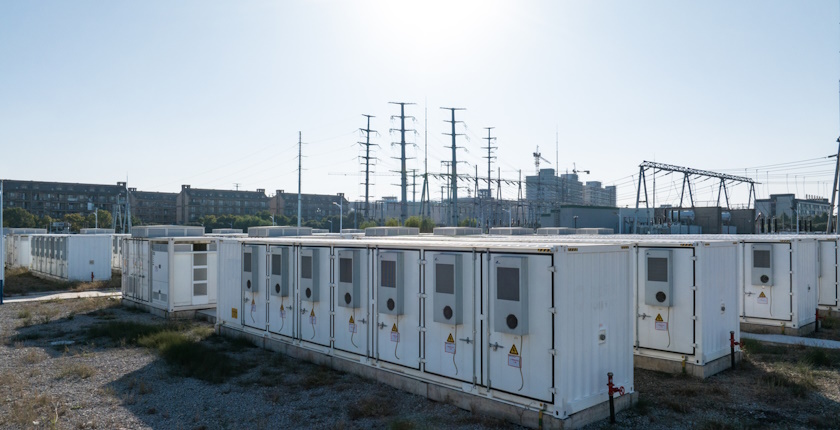
Pressed by the lack of electricity system flexibility, Cyprus is rushing to deploy battery storage facilities under indirect state control. Private companies are complaining that Transmission System Operator Cyprus (TSOC) is favored at a current tender for three units of 40 MW each.

EMA, the electricity market association of private companies has been trying to hinder or delay the installation of a central battery storage system within the network of state-owned Electricity Authority of Cyprus (EAC), but to no avail, philenews reported.

After several complaints, including to the European Commission, the group urged the Cyprus Energy Regulatory Authority (CERA) to reconsider the approval that it issued in June to Transmission System Operator Cyprus (TSOC). A tender is underway for the same three facilities with 400 MWh in total capacity, to be installed at three EAC’s substations.

The one in Athalassa would have 40 MW in operating power and a duration of two hours, translating to 80 MWh. The battery energy storage systems (BESS) at the substations in Anatoliko in Paphos (Pafos) and the free industrial zone in Larnaca would each have 40 MW and 160 MWh.

EU gave green light for rushed procedure

EAC owns TSOC, which has raised the issue of transparency. However, the government has obtained a derogation from the European Commission. In its request, it cited the delays in interconnecting with the European electricity grid, lack of energy storage and the instability affecting the island country’s electricity system.

The project for centralized BESS capacities on the transmission grid is an emergency measure to prevent blackouts and curtailments

The Great Sea Interconnector project for a subsea cable to Crete is late and even jeopardized due to breach deadlines. The Cypriot grid is constantly strained as it needs flexibility systems, while a huge part of solar and wind power is curtailed.

There were several major rolling outages and load-shedding events this summer on the island. One last week occurred amid a breakdown in one of the fuel oil–fired power plants, which the country relies on for baseload energy. Two new units of 400 MW overall are designed to use gas, but there is still no gas. Namely, the project for a liquefied natural gas (LNG) terminal is suffering delays as well.

BESS tender is worth EUR 41 million excluding VAT

As for the tender, applications last until September 19. The cost is estimated at EUR 41 million altogether, excluding value-added tax. The BESS facilities need to operate at least 128 months.

AEC said in the documentation that it expects the European Regional Development Fund (ERDF) to support the investment. Earlier reports suggest that EUR 30 million is available.

The government said the three battery energy storage systems are planned to be commissioned by June. EAC’s two power stations are also planned to be equipped with BESS units, it added.

In addition, the government is funding battery storage projects for renewable electricity plants, prosumers and even the army.

Power market liberalization in one month

Notably, Cyprus is liberalizing its power market on September 15 for independent producers and retail suppliers. The change is scheduled to come fully into force on October 1, the first day for transactions.

In a separate article, the same media outlet stressed that the country’s energy policy in the electricity segment is inadequate, uncoordinated and fragmented, with the cost of wrong decisions being passed on to consumers.

by in News

Heatwave strains European grid, brings profit to energy storage operators

Record solar power production, backed by yet insufficient energy storage capacity, helped maintain the stability of the electricity system in Europe during the latest heatwave, Ember said. Many nuclear and other thermal power plants reduced their activity as river water temperature wasn’t low enough for efficient cooling. Intraday price spreads at European power exchanges landed a windfall for owners of battery energy storage systems and pumped storage hydropower plants.

The heatwave since late June has caused stress for European power systems, driving electricity demand and doubling daily power prices. Yet grids remained stable, fueled by record volumes of solar, think tank Ember pointed out in a report.

Outside temperatures jumped to more than 40 degrees Celsius, triggering an increase in electricity demand as the use of air conditioners soared. Outages in nuclear and thermal power plants exacerbated the challenges.

Daily electricity demand on July 1 was by up to 6% higher in Germany, 9% in France and 14% in Spain than on June 24. As for peak demand, it jumped by 12% in France, 15% in Spain, and 5% in Germany and Poland.

A bigger electricity price spread within one day means higher income for operators of battery energy storage systems

The average daily price surged 15% in Spain, 106% in Poland, 108% in France and 175% in Germany.

“Despite the huge pressure, European grids passed the stress test, and solar electricity played a major role in keeping them running. The surplus of solar energy during the day helped prevent blackouts. However, the use of energy storage is still insufficient, leading to reduced energy supply after sunset. This translated into a sharp increase in electricity prices,” said Ember’s Europe Programme Director Paweł Czyżak.

Record EU solar generation helps keep power supply stable

June saw the highest solar generation on record in the European Union – 45 TWh, which kept the grid well-supplied during daytime hours. The result was 22% up from one year before.

“Heatwaves will not go away – they will only get more severe in the future. Solutions that can help mitigate their impacts, such as battery storage, interconnection, demand flexibility and dynamic tariffs, should become a key part of grid planning and power market design,” Czyżak added. The biggest opportunity is to store solar electricity, to help power air conditioning well into the evening, he stressed.

Outages limited but still posing concern

The overheating of cables is the likely cause of power outages in Italy on July 1. With rising air and water temperatures, the cooling of thermal power plants becomes more challenging as well. It led to forced reductions in electricity generation from nuclear power plants in France and Switzerland.

The French nuclear fleet has been impacted the most, with all but one of the 18 facilities experiencing some type of capacity reduction. According to the update, up to 15% of the capacity may have been impacted.

A blackout of several hours struck large parts of the Czech Republic including Prague on July 4. However, the authorities only blamed it on a transmission cable in the country’s northwest falling, and the resulting domino effect. Notably, the air temperature was much lower than in previous days.

Sun brings power alongside heat

In the peak days of the heatwave in Germany, solar delivered 50 GW and even more, generating 33% to 39% of Germany’s electricity. The country hosts 14 GW of battery energy storage systems (BESS) and 10 GW of pumped storage, which partly bridged the gap between the peaks of production and consumption.

The rallies in electricity prices in the evenings are getting passed on to consumers, so using air conditioners gets more expensive upon sunset. It is a business case for clean flexibility solutions. Due to a high supply of solar electricity during the day, and a cooling-related demand peak in the late afternoon hours, the daily electricity price spreads skyrocketed.

The spread in Poland in the day-ahead segment almost reached EUR 500 per MWh on July 1. Namely, the daily low was EUR 21.04 per MWh below zero, and the peak amounted to EUR 471 per MWh. In Germany, the benchmark went from EUR 0.16 per MWh in negative territory to EUR 404.91 per MWh.

Storage assets charge at low prices and discharge during peak time, reducing the need for costly imported fossil fuels in the evening, and supporting the balancing of the grid, the analysts underscored.

Interconnection played a role as well. The heatwave peaked in different countries on different days, so interconnectors moved electricity to where it was needed most, dissipating the price peaks in the process.

by in News

Hitachi Energy: Game-changing solutions for a sustainable energy future

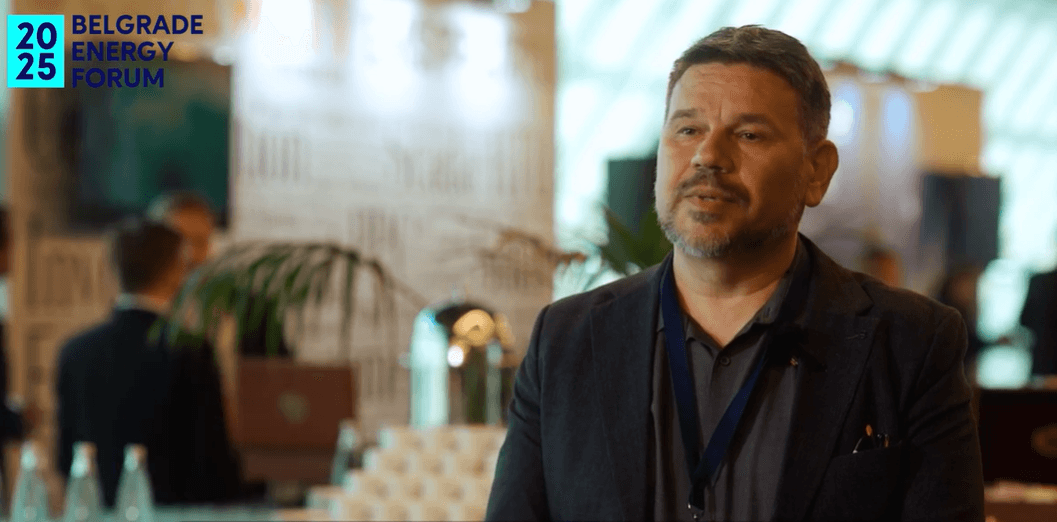
Hitachi Energy, a global leader in energy technology, develops system solutions and offers products and services that actively contribute to sustainable energy and a better future, Igor Anđelković, the company’s Country Marketing and Sales Leader in Serbia, said at Belgrade Energy Forum 2025. Game-changing technologies for high-voltage grids and transportation, along with solutions for renewables integration, support decarbonization efforts and deliver added value to both clients and local communities.

Multinational company Hitachi Energy, a silver sponsor of the BEF 2025 conference, is present in the Southeast Europe region through its Balkan Cluster, which covers seven markets – Albania, Bosnia and Herzegovina, Montenegro, Croatia, Kosovo*, North Macedonia, and Serbia.

[wpcc-iframe title=”Igor Andjelkovic, Country Lead Serbia, Hitachi Energy at the Belgrade Energy Forum 2025″ width=”500″ height=”281″ src=”https://www.youtube.com/embed/KVbO8HI5oLk?feature=oembed” frameborder=”0″ allow=”accelerometer; autoplay; clipboard-write; encrypted-media; gyroscope; picture-in-picture; web-share” referrerpolicy=”strict-origin-when-cross-origin” allowfullscreen=””]

Inspiring the next era of sustainable energy

Since 2010, Hitachi Energy has implemented eco-efficient solutions for high-voltage grids of up to 550kV. The company’s innovative and eco-efficient EconiQ® high-voltage portfolio applies revolutionary technology free of sulfur hexafluoride (SF6) and proven to significantly reduce carbon footprint throughout the life cycle.

The high-voltage EconiQ® roadmap demonstrates the scalability of this technology, which allows customers and industry to quickly transition to eco-efficient solutions.

Photo (Hitachi Energy): Hitachi Energy has implemented eco-efficient solutions for high-voltage grids of up to 550kV

Now more than ever, pioneering technologies like EconiQ are needed to advance a sustainable energy future, says Anđelkovic.

Efficient renewables integration

In the renewable energy segment, Hitachi Energy offers a range of substation solutions that help to efficiently integrate renewable energy into the transmission grid and distribution network. This includes grid connection solutions for all types of renewables power plants.

Hitachi solutions are used in a large number of wind projects in Southeast Europe

The major projects in Southeast Europe, completed or in the implementation phase, which use Hitachi Energy’s technology are wind farms Pupin and Crni Vrh in Serbia, Gvozd in Montenegro, Komanje Brdo and Ivan Sedlo in Bosnia and Herzegovina, and Pometeno Brdo and Korlat in Croatia.

Photo (Hitachi Energy): Hitachi Energy offers a range of substation solutions that help to efficiently integrate renewable energy into the transmission grid and distribution network

Driving transportation and energy towards carbon neutrality

Hitachi Energy is also committed to decarbonizing the transportation sector. Its revolutionary ‘grid-to-plug’ electric vehicle charging system, called Grid-eMotion® Fleet, is a smart mobility solution that enables operators to efficiently scale up their operations and is expected to contribute to sustainable society for millions living in urban areas.

Grid-eMotion® Fleet marks a game-changing shift from a charger-product based approach to a charging-system based approach, which helps to accelerate the future of smart mobility.

Hitachi Energy has been pioneering EV charging solutions since 2013, when it first introduced innovative flash-charging eBus solutions in Geneva and Nantes.

Advanced technologies for smart airports

With its innovative solutions, Hitachi Energy has made significant advancements in air traffic as well, with the development of smart airports being one of its key innovations. This includes advanced technologies such as artificial intelligence (AI), video analytics, and 3D LiDAR to improve the passenger experience and improve airport operational efficiency.

Hitachi Energy also helps airport to decarbonize and become more sustainable with its electrification and digitization solutions.

* This designation is without prejudice to positions onstatus and is in line with UNSCR 1244/99 and the ICJ Opinion on the Kosovo declaration of independence.
by in News

North Macedonia, Kosovo* planning 400 kV power interconnection

The transmission system operators (TSOs) of North Macedonia and Kosovo* are developing a project for a 400 kV interconnection line between Tetovo and Prizren. The investment would include other grid upgrades and expansion.

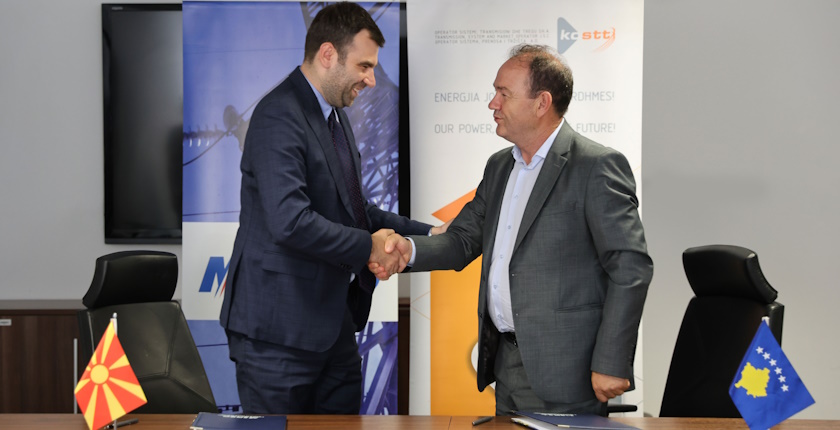
Director-General of North Macedonia’s MEPSO Burim Latifi and Acting Chief Executive Officer of Transmission, System and Market Operator (KOSTT) of Kosovo* Shaban Neziri signed a memorandum of cooperation in Skopje. The two transmission system operators intend to jointly upgrade the high-voltage network. The emphasis is on a strategic project for a 400 kV interconnection line from Tetovo to Prizren.

The endeavor aligns with the European Union’s energy transition goals by 2050, North Macedonia’s TSO said. The project is nominated through the planning platform of the European Network of Transmission System Operators for Electricity (ENTSO-E) for increasing transmission capacities.

New interconnection to encourage investments in renewables

North Macedonia and Kosovo* have only one interconnection now, of 220 kV. According to ENTSO-E, Southeastern Europe needs to at least double transmission capacities and, in some cases, increase them even more than that, MEPSO stressed.

On that note, the bilateral project includes additional investments in the transmission network, such as the construction of a 400/110 kV transformer station in Tetovo, in North Macedonia’s northwest, and 400 kV transmission lines from Tetovo to Ohrid and Skopje.

“The 400 kV Tetovo-Prizren transmission line project will not only increase the system’s capacity and reliability but also enable greater electricity exchange, encouraging new investments in renewable energy sources,” Latifi said.

Investment to bolster East-West energy corridor

Regarding the other benefits, the heads of the two TSOs agreed that the project would bolster the transmission infrastructure in the region, strengthen the so-called East-West energy corridor and improve system flexibility.

The new document confirms the joint commitment to creating a modern and reliable energy infrastructure, Neziri stressed. “With this project, we are enhancing energy connectivity in the region and contributing to achieving the energy goals of the Western Balkans,” he added.

Strong interconnections are essential for the integration of the electricity market in the Western Balkans

The project is in the planning and technical preparation phase. The start of construction depends on securing financial resources and coordination with all relevant stakeholders, MEPSO explained.

Strong interconnections are essential for the integration of the electricity systems and markets in the region with the EU, through market coupling. Together with Albania and Greece, North Macedonia and Kosovo* are part of one such regional project, which has been suffering delays.

Market coupling is a prerequisite for the exemption of the power markets in the Western Balkans and the rest of the Energy Community from the EU’s Carbon Border Adjustment Mechanism, or CBAM, under which a CO2 tax is set to start being charged on January 1.

* This designation is without prejudice to positions onstatus and is in line with UNSCR 1244/99 and the ICJ Opinion on the Kosovo declaration of independence.
by in News

Spain’s voltage control was insufficient at time of April blackout

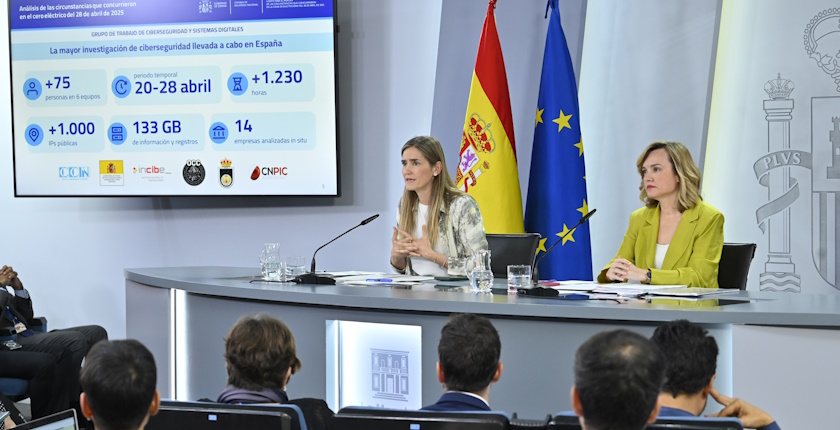
The Government of Spain said the total blackout in the Iberian Peninsula, which occurred on April 28, was caused by overvoltage, with several factors contributing to the crash. Notably, the system run by the country’s TSO Red Eléctrica de España lacked sufficient voltage control. Deputy Prime Minister Sara Aagesen even said the point of no return could have been avoided if voltage control action had been taken earlier.

In a long-awaited document, a government committee that investigated the April 28 collapse of the Iberian electricity network ruled out that a cyberattack caused it. The panel analyzed more than 300 gigabytes of data related to the total blackout, which was one of the worst ever in Europe.

“In 49 days, practically half the timeframe established by the EU, the committee has provided a rigorous and verified diagnosis that will allow us to strengthen the electricity system, a solid foundation on which we can work to design rapid responses to prevent this from happening again. Next week’s Council of Ministers will approve several relevant measures,” said Third Vice-President of the Government of Spain and Minister for Ecological Transition and Demographic Challenge Sara Aagesen.

The cybersecurity investigation, the largest ever undertaken in the country, did identify vulnerabilities that could expose networks or systems to future risks, she asserted.

The blame game is continuing as citizens and businesses are demanding accountability for the massive damage. The European Network of Transmission System Operators for Electricity (ENTSO-E) issued a preliminary report two weeks after the incident.

Overvoltage caused the blackout, according to the new analysis. The committee attributed it to multiple factors. The system had insufficient voltage control capacity, there were frequency oscillations, and power plants were disconnected, “in some cases in an apparently improper manner,” the document reads.

Renewables accounted for 82% of power generation mix just before blackout

The Iberian grid crashed at 12:33. Restoration began with energy from France and Morocco and with self-starting hydroelectric plants in the Duero basin and other locations, which formed energy islands. By 22:00, nearly 50% of demand in Spain was met, reaching 99.95% by 7:00 the next day.

At 12:30 on April 28, renewable energy sources accounted for 82% of the electricity generation mix, followed by nuclear power (10%). Gas plants had a 3% share, coal contributed 1%, while cogeneration and waste amounted to a combined 4%.

Data show a drop in solar generation as prices at the power exchange were going negative, and it coincided with a rise in voltages

There was significant voltage volatility in the transmission system in the morning on the day of the blackout, the document’s authors noted, pointing out that such a situation was also registered on April 22 and 24.

The rise in voltages between 10:30 and 11:10 coincided with a drop in solar generation, probably due to the power market signals, as wholesale prices went negative, the report adds. At the same time, the direction of the exchange with France switched from exports to imports.

Voltage control fleet failed to contain chain reaction

At 12:03, there was an atypical frequency oscillation, by 0.6 hertz, causing large voltage fluctuations for 4.42 minutes. Another one, of 0.2 hertz, occurred at 12:16, followed by an equivalent one at 12:19.

Red Eléctrica de España, the transmission system operator (TSO), conducted mitigation measures, which contributed to the rise in voltages, the committee underscored.

Aagesen said the point of no return could have been avoided if voltage control action had been taken earlier. The government controls 20% of the company, which is listed on the Bolsa de Madrid stock exchange.

At 12:32, voltage began to rise rapidly and steadily, and numerous progressive disconnections of generation facilities were recorded. The names of all power plants in the document are blacked out.

A number of units responsible for voltage control produced reactive power, the opposite of what they were supposed to

The chain reaction could not be contained, as each disconnection contributed to further voltage increases, the analysis showed. A drop in frequency resulted in the loss of synchronization with France, tripping the interconnection with the rest of the continent.

The committee stressed that the number of synchronous plants regulating voltage on the day of the incident was the lowest since the beginning of the year. One of the 10 units that Red Eléctrica scheduled the day before experienced an outage on the same afternoon, and the TSO didn’t replace it in time, the analysis reveals.

Moreover, several units in the group did not respond adequately to the TSO’s instructions to reduce the voltage. Some even produced reactive power, the opposite of what was required, contributing to the issue, the committee added.

Some power plants went offline too early

There were disconnections of the generating power plants that occurred before the voltage thresholds in the 400 kV system were exceeded (380 kV and 435 kV), the report finds.

Among the committee’s recommendations is to allow asynchronous installations to apply power electronics solutions to manage voltage fluctuations. The panel proposed boosting demand, flexibility, storage and interconnection capacities.

Photovoltaics with grid-forming inverters, storage can contribute to voltage control

Photovoltaics are already capable of controlling voltage, but regulations did not allow the application of the technology, according to the Spanish Photovoltaic Union (UNEF), Portuguese Renewable Energy Association (APREN), SolarPower Europe, Global Solar Council and Global Renewables Alliance.

In a joint statement that they issued as a reaction to the report, they called for accelerated investment in grid resilience and system flexibility – especially through grid-forming inverters and battery storage.

The associations recalled that Spain ranked 14th last year in Europe in new battery capacity. Less than 250 MWh came online and nearly all were smaller-scale batteries, not at a utility level. It compares to 9 GW of solar power capacity that the country added in 2024.

by in News

Serbia’s EMS starts construction of third section of Trans-Balkan Corridor

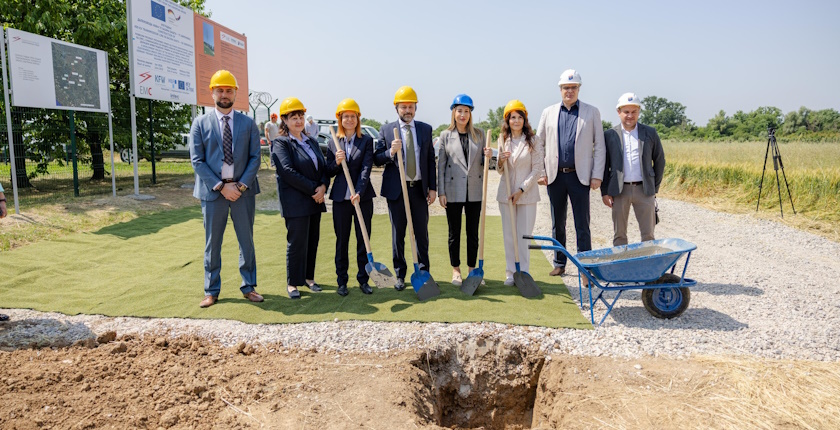
The foundation stone was laid today in Serbia for the third section of the Trans-Balkan Electricity Corridor. The investment amounts to EUR 100 million. It entails a high-voltage overhead power line of 109 kilometers between Obrenovac and Bajina Bašta, equipping two new switchyards in the Obrenovac transformer substation and upgrading the Bajina Bašta substation to 400 kV. The fourth and last section, with the interconnections with Bosnia and Herzegovina and Montenegro, is planned to be completed in 2028.

Serbian Minister of Mining and Energy Dubravka Đedović Handanović said at the groundbreaking ceremony for the third section of the Trans-Balkan Corridor that it is the most important project for the transmission system not only in the country but in Southeastern Europe.

“What highways are for transportation, high-voltage power lines are for energy, and today we are beginning the works on the new part of the most important energy highway,” she said in Obrenovac and added that the segment would enhance the security of supply for consumers in western Serbia.

The third section of the Trans-Balkan Electricity Corridor involves the construction of an overhead power line of 109 kilometers on 309 towers, equipping two new switchyards in the Obrenovac substation and lifting the voltage level in the Bajina Bašta substation to 400 kV.

The project is financed with a EUR 64.5 million loan from Germany’s KfW Development Bank, a grant from the European Union via its Western Balkans Investment Framework (WBIF) of approximately EUR 21 million, and own funds of the Serbian transmission system operator Elektromreža Srbije (EMS), according to the state-owned company’s announcement. The third section is worth EUR 100 million, of which EUR 71 million is for the overhead power line.

“With the completion of the entire project, we will additionally strengthen the links with Bosnia and Herzegovina and Montenegro and beyond, with Italy,” Đedović Handanović stated.

She recalled that significant transmission grid investments are planned in the next five years, including the construction of the Pannonian Corridor toward neighboring Hungary. The priority projects in the segment are worth EUR 500 million in total, the minister revealed.

“I expect the contractors not to be late with the works, so that the project is completed within two and a half years, as it is planned,” Đedović Handanović stressed.

Matejić: Final section to be finished in 2028

General Manager of EMS Jelena Matejić said the construction of the entire Trans-Balkan Corridor is worth more than EUR 200 million. She noted that it includes 323 kilometers of 400 kV power lines, voltage level upgrades for two transformer stations and switchyards in three of them.

The investments in the Trans-Balkan Corridor are estimated at more than EUR 200 million altogether

“Except this section, the third one, we will also have the fourth, for which the funds have been secured, and it will be finished in 2028,” Matejević asserted.

The old lines in western Serbia of 220 kV will be replaced with new, 400 kV systems, which will create possibilities for connecting the planned Bistrica pumped storage hydropower plant to the grid, according to EMS. The contractor is Kodar Energomontaža, and the works are expected to be completed by 2027.

EU donated EUR 38.3 million for Trans-Balkan Electricity Corridor

Head of the EU Delegation in Serbia Emanuele Giaufret pointed out that the funds the EU has earmarked for the current section are part of wider support.

“The EU has secured a EUR 38.3 million donation for the whole Trans-Balkan Corridor, together with KfW’s favorable loans. Over the years, the EU has earmarked more than EUR 1 billion for the energy sector in Serbia. This project is important for the rest of Europe as well, because it will contribute to the creation of a wider, integrated system, which will enable a more stable supply to consumers on the entire continent, as well as to avoid problems in the future,” he stated, as quoted by EMS.

The first section of the Trans-Balkan Corridor, from the city of Pančevo near Belgrade to the Romanian border, was finished in 2017. The second one, between Kragujevac and Kraljevo in central Serbia, is operational since 2022. It included substation upgrades in the two cities. The fourth section needs to connect Bajina Bašta with nearby Višegrad in Bosnia and Herzegovina, and with Pljevlja in Montenegro.

by in News

ACER’s Zinglersen: Integrate electricity markets to bolster flexibility as new era is already here

The surge in the number of hours with negative wholesale electricity prices in Europe made 2024 the second consecutive record year. According to ACER’s Director Christian Zinglersen, it means a new era is here. Speaking at Belgrade Energy Forum – BEF 2025, he called on governments, regulators and system operators to tackle the issue with more flexibility and reap the benefits of integrated electricity markets.

At EUR 81 per MWh, the average day-ahead power price in the European Union and Norway was lower last year than in 2021, when the energy crisis began. This is good news, but there are significant differences in price averages across the continent, Director of the EU Agency for the Cooperation of Energy Regulators (ACER) Christian Zinglersen asserted.

In a keynote speech at Belgrade Energy Forum, BEF 2025, he also pointed out that the percentage of days with significant price swings remained elevated. “This suggests that we need much more short-term flexibility in the system,” Zinglersen said.

[wpcc-iframe title=”Belgrade Energy Forum 2025 Christian Zinglersen, Director, ACER” width=”500″ height=”281″ src=”https://www.youtube.com/embed/c2JGLvLEInQ?feature=oembed” frameborder=”0″ allow=”accelerometer; autoplay; clipboard-write; encrypted-media; gyroscope; picture-in-picture; web-share” referrerpolicy=”strict-origin-when-cross-origin” allowfullscreen=””]

Prices in Romania, Bulgaria, Greece, Hungary among highest in Europe

In 2024, the share of time when prices were above EUR 150 per MWh landed at 6.1%, compared to 11.3% in the previous year and 66.7% in 2022. The number of days with price swings greater than EUR 50 per MWh accounted for a strong 70.4% of the total, though down from 77.1% in 2023 and 87.8% one year before.

The average price in Romania was virtually unchanged in 2024. It fell only 1% in Bulgaria and 5% in Hungary. Conversely, the drop was the strongest in Sweden, Norway, France and Belgium: 22% to 39%.

The average day-ahead electricity price in Romania was virtually unchanged last year, while in several countries it tumbled by at least 22%

Last year, prices were the highest across Italy, between EUR 106 per MWh and EUR 112 MWh, in Ireland (EUR 109 per MWh), Romania (EUR 104 per MWh), Bulgaria (EUR 103 per MWh) and Greece and Hungary (both EUR 101 per MWh).

Importantly, 2024 was the second consecutive record year in the number of hours with negative wholesale prices. Their share jumped to 2.8% from 1.9%.

“This is very significant and it shows we are already, in my view, in a new era. We’re not just embarking upon it. We’re there,” Zinglersen stressed.

Photo: ACER

Share of very low wholesale prices rallies back to level from 2020

As for the share of time with very low wholesale prices, it surged last year to 8.8%. The level was last seen in 2020, when the pandemic erupted and resulted in an unprecedented demand shock, ACER’s chief noted. He called on governments, regulators and system operators to tackle the issues with more flexibility.

Grid tariffs increasingly need to show what the system needs, in his view: more time nuance and more locational nuance. “That combination of an energy signal and a tariff signal should hopefully enable us to build more of what we need in the right places, as opposed to build what we don’t need, in the wrong places,” Zinglersen stated.

Integrated markets bring benefits

A policy brief that Brussels-based think tank Bruegel published last year pointed to the benefits of the integration of electricity markets. Among other factors, there is more security with fewer backup power plants and more flexibility with less investment in energy storage, together with lower capital costs. In 2022, ACER, based in Ljubljana, estimated benefits from cross-border trade alone at EUR 34 billion in the EU.

“It has very significant security of supply implications as well, to be in a very integrated-type jurisdiction,” Zinglersen underscored. But integrated markets come with tradeoffs, he said.

One of the examples is an incident in 2021 that split the Continental Europe synchronous area into two parts for an hour and reserves were pulled from across the continent. “But you can also bring the system much more quickly back together again,” Zinglersen said at the conference.

The same goes for the June 2024 blackout in the Balkans.

There are many solutions in Europe, but they are not evenly distributed

ACER’s director also recalled the power price decorrelation that affected Southeastern Europe and Hungary from July to September. He attributed some of the spikes in day-ahead prices to the lack of short-term flexibility, for instance batteries.

There are lots of technical solutions and frameworks in place across Europe, but they are not very evenly distributed, he added.

Zinglersen pointed to the opportunities and benefits of further integrating the electricity market of the Western Balkans region and the EU.

by in News

Greece launches Attica-Crete subsea power interconnector

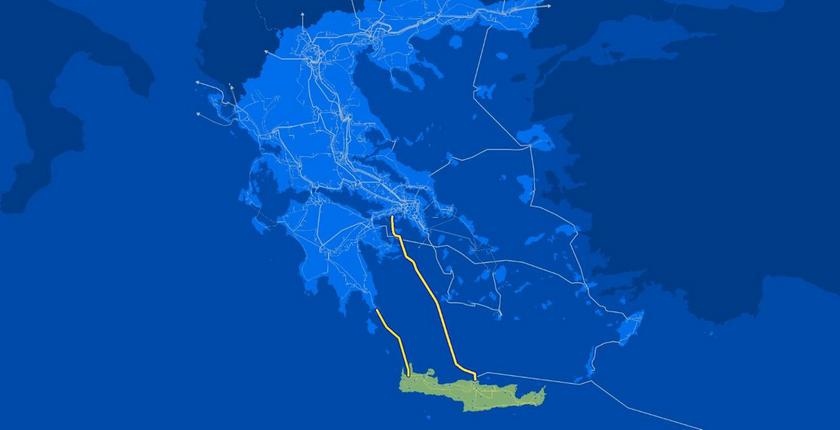
The Attica-Crete subsea power interconnector has been put into trial operation, marking a milestone for Greece’s transmission system. The country now has a high-voltage direct current (HVDC) interconnection, and its largest island is fully integrated into the national electricity system, according to an announcement by the Independent Power Transmission Operator (IPTO or Admie).

The Ariadne subsea power interconnector entered into operation on May 24 with the successful transfer of direct current electricity, said IPTO, whose subsidiary Ariadne implemented the project. The trial operation phase is expected to last throughout the summer, IPTO added.

The two submarine power links have ended Crete’s electrical isolation

Combined with the existing interconnection via the Peloponnese peninsula, the new cable has completely ended Crete’s electrical isolation, making it an energy hub with significant environmental and economic benefits for the country and the local community, according to IPTO.

The first power link between Crete and the mainland is the 174-kilometer alternating current (AC) cable linking the island with the Peloponnese. It was completed in 2021, following an investment of EUR 380 million.

The EUR 1.1 billion Ariadne interconnector is among the deepest in the world

The Ariadne interconnector, which cost over EUR 1.1 billion to build, is one of the deepest subsea power cables in the world. It consists of two 500 kV cables of 500 MW each, laid at depths of up to 1,200 meters. The construction lasted 4.5 years.

Greek Minister of Environment and Energy Stavros Papastavrou stated that the new power link has made Crete a “central pillar in the country’s energy transition,” and IPTO CEO Manos Manousakis claimed it is opening “a new chapter for the island’s energy security.”

The project was co-financed through the National Strategic Reference Framework (NSRF 2014-2020 and NSRF 2021-2027), via the European Union, with up to EUR 535.5 million.

IPTO recalled that the project consisted of many large subprojects, with contractors including Siemens, Terna, Nexans, Prysmian, NKT, and Hellenic Cables.

by in News

Decarbonization of Southeastern European region: both renewables and nuclear are speeding up

Energy transition in Southeastern Europe is accelerating, and the progress depends on individual countries’ strategies and legal frameworks. At the Belgrade Energy Forum (BEF 2025), representatives of state-owned power utilities and private producers discussed the different approaches to decarbonization. The domination of investments in renewable energy is unquestionable, but there are also ambitions to develop nuclear capacities, spearheaded by Slovenia. The country is already operating one nuclear reactor and is developing a project for another one.

The electricity sector in Southeast Europe still depends for a large part on thermal power plants that burn fossil fuels. In 2023, they accounted for 43% of overall output, of which two-thirds were from lignite and the rest from gas. There is a need for accelerated decarbonization, and the speed of the transition will depend on financial possibilities and the political will and decisions, said the panel’s moderator and Director of Zagreb-based Energy Institute Hrvoje Požar Dražen Jakšić.

The acceleration trend in decarbonization is also evident in the electricity market projections for the region until 2030. The plans for the period until the end of the decade include shutting down 6.2 GW of thermal power plant capacity and installing 42.3 GW from renewable sources. Greece, Romania, Serbia and Bulgaria are expected to add the most.

Top executives of state-owned utilities in Serbia, Slovenia and Montenegro and independent power producers that invest in renewables in the region gathered at a panel called Decarbonisation strategies for power generation in Southeast Europe 2040/2050 at Belgrade Energy Forum 2025.

They agreed that decarbonization is well underway and an unstoppable process already speeding up significantly. The participants in the discussion presented the different strategies their companies will act upon in the following years and decades, leading the process to fulfilment.

Among the messages that they shared is that they expect each government to promote investments and make the legal framework clear and certain, while the countries strengthen their ties and exchange experiences. Green energy is the pillar of the energy transition and decarbonization in the region, but several states are also interested in building their first nuclear power plants—conventional ones or small modular reactors (SMRs)—or expanding the existing capacity.

EPS’s Živković: Decarbonization requires energy storage, nuclear plants

Chief Executive Officer of Serbia’s Elektroprivreda Srbije (EPS) Dušan Živković pointed out that the state-controlled electricity producer is committed to its goals regarding green energy and emission reductions as well as to the country’s targets. “We will work on that, of course, believing in these objectives, but without compromising energy security and the energy sovereignty of Serbia. It was proven to be the only sustainable path,” he asserted.

The company particularly counts on the project for solar power plants with a total connection capacity of 1 GW, with batteries of 200 MW in combined capability. The investment is conducted through a strategic partnership with Hyundai Engineering and UGT Renewables (UGTR).

A study is underway in Serbia on the potential for the construction of large nuclear power plants and small modular reactors

The decarbonization process won’t be easily feasible without serious energy storage capacity, Živković warned and added that nuclear energy wouldn’t be unrealistic. A study is underway on the possibilities of building large nuclear plants and small modular reactors in Serbia.

The head of EPS expressed the belief that “the quality of that energy needs to be visualized” for citizens of every country and that they should be explained that it is necessary to provide energy for the economy and its security.

CEOs Dejan Paravan of GEN energija, Dušan Živković of EPS and Eric Scotto of Akuo

No dilemma in Serbia about energy transition

Country Manager of WV-International in Serbia Neda Lazendić highlighted the said strategic partnership for solar power plants with battery energy storage systems (BESS), saying Hyundai Engineering is a world-renowned company.

In her view, the endeavor will be a milestone for the entire region and it is exceptionally important for gaining experience at the domestic level.

The recent second round of auctions for electricity from renewable sources showed that Serbia opted for the energy transition “and there is not any dilemma about it anymore,” Lazendić stressed and said the country is an example for the region. The prices from the bidding that were accepted are appealing and they match European trends, she noted.

Country Manager of WV-International Neda Lazendić

Lignite is highly unprofitable

Slovenia and GEN energija, one of the state-owned power utilities, are relying on both renewable sources and nuclear energy in their decarbonization investments, the company’s CEO Dejan Paravan pointed out.

“We want to get rid of coal as soon as possible. And in the short term, renewables are the only option. Why get rid of coal? The current production of domestic lignite is highly unprofitable, and because of climate goals,” he explained.

Nevertheless, it is exceptionally complicated to get permits for renewables and place them in the environment, Paravan added. On the other hand, nuclear energy is emissions-free and very stable and reliable, he asserted. The technology takes up the least space and enables the production of huge amounts of electricity, the head of GEN energija said.

Nuclear power plant Krško 2 could come online in 2040

Paravan recalled that two years ago nuclear power plant Krško marked four decades since it was commissioned and that its operating life was extended by 20 years. GEN energija is working on the Krško 2 project. The chief executive expects construction to begin in 2022 or 2023 and that the reactor could be connected to the grid in 2040.

In parallel, the company is studying SMRs. Still, the development of the technology will take a long time and, importantly, such facilities won’t have the advantage of scale like large reactors, he said. One who expects electricity from SMRs to be cheaper than from big nuclear plants is wrong, in Paravan’s view.

As for the dilemma between renewable sources and nuclear energy, he expressed the belief that they are not mutually exclusive. “We need renewables and they can provide us a lot of CO2-free electricity in the short run. But let’s make it clear that once we come to 70%, 80%, 90% based on renewables, that we have a problem of seasonal storage, that things will get very difficult,” Paravan stated.

Batteries are ten times cheaper than ten years ago

Conversely, Akuo Energy’s CEO Eric Scotto pointed out that nuclear power is expensive. “It’s over. We won the race. Renewable is the cheapest way to produce energy,” he underscored.

The price of energy storage capacity is ten times lower than ten years ago, the head of the French company noted. Moreover, operating power of a battery system in a standard TEU container, twenty feet or 6.1 meters long, now reaches 6 MW, which is three times more than three years ago, according to Scotto.

To attract investments, stability is necessary, he stressed. Scotto went on to highlight some “simple things” that could help Akuo, which was one of the winners at the last auction round in Serbia, to materialize its projects for two wind parks. He mentioned the speed of permitting for telecommunication systems and road construction, for power plants.

Turning to the slowness of the energy transition in Balkan countries, he emphasized its positive side. “We are late. Then we will benefit from the cheapest resource, the cheapest way to produce energy,” Scotto concluded.

EPCG’s Solari project kicked off energy transition in Montenegro

Technical Director of Elektroprivreda Crne Gore (EPCG) Ljubiša Đurković called the state-owned power utility’s projects Solari 3000+ and Solari 500+ the start of the energy transition in Montenegro. Since the beginning of 2023 and including Solari 5000+, launched later, the company set up photovoltaic systems on 7,380 structures, he revealed.

Total peak capacity reached 76 MW and another 125 MW will be installed by the end of the year, EPCG’s official said.

Among its projects, the company is building the Gvozd wind farm, and the Kapino polje solar park near Nikšić.

Technical Director of EPCG Ljubiša Đurković

There is already 10 MW on roofs in the former Željezara steel plant in Nikšić, and before the end of the year another 15.5 MW will be connected to the grid, Đurković said. A contract has been signed for the construction of the eighth generator in the Perućica hydropower plant, of 58 MW. It is scheduled for completion in 2027.

Đurković: A realistic date for the closure of the Pljevlja thermal power plant is between 2045 and 2050

The energy transition is about a single and connected system, including storage capacities and measures to improve energy efficiency, he underscored. “You have to create the conditions for a swift integration of renewable energy sources into the distribution and transmission networks. We were supposed to do that already. We didn’t do it, particularly in the Western Balkans. We didn’t reconstruct the distribution and transmission networks,” he stated.

As for the current reconstruction of the coal-fired Pljevlja thermal power plant, the only one in Montenegro, Đurković said the project wouldn’t make sense if the facility were to keep operating only for a short while longer.

žAccording to the National Energy and Climate Plan (NECP), which is almost complete, it will remain active at least until 2041, although the realistic date for its closure is only between 2045 and 2050, in the opinion of EPCG’s technical director. The main phase of the reconstruction began at the end of March.