by in News

New Cypriot Minister of Energy, Commerce and Industry Michael Damianos takes office

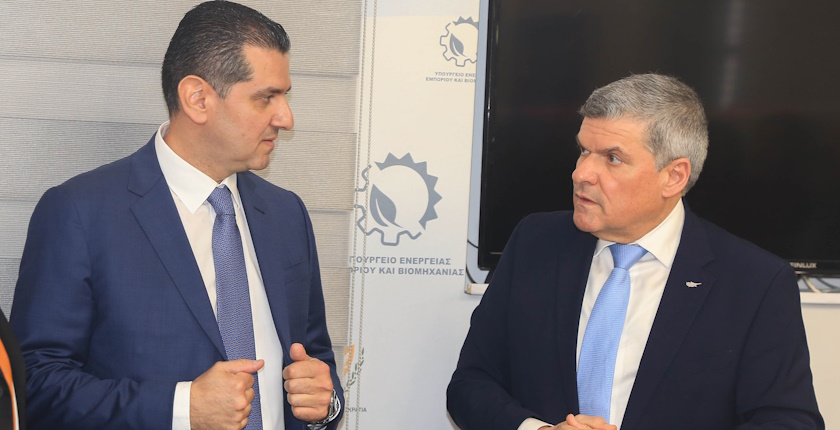
A careful and organized course is required to achieve the energy transition in Cyprus, support the industry and strengthen the economy, ensuring sustainable solutions for the country’s energy future, new Minister of Energy, Commerce and Industry Michael Damianos said. He took over from his predecessor George Papanastasiou.

Five ministers were replaced in a cabinet reshuffle under President of Cyprus Nikos Christodoulides. Among them, the now former Minister of Health Michael Damianos took helm of the Minister of Energy, Commerce and Industry from George Papanastasiou.

Cyprus is assuming the presidency of the Council of the European Union on January 1 for six months. It means Damianos will chair the meetings of ministers responsible for the sectors in his portfolio, like the so-called Energy Council.

“We will work with innovation, excellence and sustainability in mind, to ensure that Cyprus continues to move in a direction that will serve the common good and future generations,” the new minister said at the handover ceremony.

Realistic, measurable goals for tangible results for all citizens

A careful and organized course is required to achieve the energy transition in Cyprus, support the industry and strengthen the economy, ensuring sustainable solutions for the country’s energy future, according to Damianos. He highlighted the importance of setting “realistic and measurable goals” to bring tangible results for all citizens.

Papanastasiou’s departure could be a signal from Nicosia about the fate of the Greece-Cyprus-Israel subsea power link

Some media is speculating that the switch is a signal from Cyprus about the embattled Great Sea Interconnector, a proposed underwater cable that would link Greece, via Crete, with Cyprus and Israel. Papanastasiou was apparently one of the few ardent supporters of the project in the country’s government.

The investment remains stuck over expenses and threats from Turkey.

University of Cambridge alum

Damianos studied law at the University of Southampton, from where he graduated with honours and received the best academic performance award. He earned a master of laws degree at the University of Cambridge, specializing in international law. The minister has received the best academic performance award from the Fitzwilliam College of the University of Cambridge.

The minister holds the professional title of a solicitor, granted by the Supreme Court of England and Wales. Damianos worked at the international law firms Simmons and Simmons and Hogan Lovells in London, specializing in corporate, commercial and energy matters.

In 2010 in Cyprus, he founded a law firm that bears his name. Damianos served as a municipal councillor in Strovolos Municipality from 2011 to 2016. Since 2018, he has been the vice president of the Democratic Party (DIKO).

Damianos became the minister of health in January 2024.

by in News

Renewables investors are seeking tailored financing services as they add BESS, adapt to risks

Market conditions have become challenging for renewables in the CEE region, alongside uncertainties in the regulatory sphere, which calls for advanced and tailored financing solutions, according to participants in UniCredit Serbia’s workshop on navigating capital flows in the segment, including mergers and acquisitions (M&A). Investors, UniCredit’s clients, highlighted the growing importance of battery energy storage systems – and especially adding co-located storage to photovoltaics.

The renewable energy market is evolving in Central and Eastern Europe, as large players join the game and developers emerge as producers. With its surge in photovoltaic capacity and the revival in the construction of wind power plants, Romania has become a frontrunner. In neighboring Bulgaria, the first power purchase agreements (PPAs) are indicating a strong perspective, while Serbia might become more relevant soon, investors agreed at an event that UniCredit Bank Serbia organized in Belgrade.

M&A and financing trends in the region were the central topics. The idea was to have an open discussion with industry players active in the region about their investment strategies and the bank support, said the Head of Specialized Lending in UniCredit Serbia Svetlana Cerović, who moderated a panel within the conference.

A stable top line and a legal framework is the key driver for investments, with a particular emphasis on grid connections

Cerović pointed out that volatility has been on the rise for the last couple of years, after a huge wave of investments that followed the Paris Agreement and the European Green Deal. Sound and predictable regulatory framework along with stable revenues is key. To assure market flexibility and grid stability, new investments in western Europe and in the region are supported with the government programs including investments in battery energy storage systems (BESS). Thus, one of the prerequisites for the execution of future projects in local market will be certainty regarding the third auction timeline and availability of the longer term PPAs.

The participants at the workshop on navigating capital flows in renewables said a stable legal framework is the key driver for investments – grid connections especially, and permitting as a whole. On that note, developers will lean on the slowly maturing PPA market, though support from banks is necessary in the equation. Battery energy storage systems are a game changer, particularly colocated with solar parks for the optimization of the project returns.

UniCredit is strongest player in renewables financing in Serbia

UniCredit has a wide set of tailor-made project finance loans as well as a full range of services from advisory to various financing solutions, Head of Project and Structured Finance in Serbia Jelena Nestorović said.

The Italy-based bank has financed a string of major wind power and photovoltaic projects in the region, including facilities with colocated BESS, like Sunterra RE’s Galabovo in Bulgaria.

As for Serbia, it is the strongest player in the renewable energy segment. UniCredit financed six wind parks in the country, of 430 MW in total, and of which three as the sole lender. Notably, Čibuk 1 and 2 are the largest in Serbia.

UniCredit Bank Serbia is financing the country’s biggest wind power plants – Čibuk 1 and 2

Some of the participants and winners at the first two domestic auctions for contracts for difference (CfDs) are among the bank’s clients as well. Nestorović stressed that Bank is financing in total 30MW of smaller scale solar power plants .

She pointed to one of the largest industrial rooftop solar power plants in the region. UniCredit provided EUR 3.1 million facility and acts as a hedging and account bank for CWP Europe and Resalta’s project company. It built a PV system of 6 MW on a rooftop of Henkel Serbia facility in Kruševac, under an ESCO (energy service company) model.

Since 2019, the bank has participated in the financing of first waste-to-energy cogeneration plant,  located just outside of Belgrade. UniCredit is financing energy efficiency projects in the country, too.

Jelena Nestorovic UniCredit Renewables investors tailored financing services BESS adapt risks
Photo: UniCredit’s Jelena Nestorović presenting

Priority in Europe shifted from energy transition to energy security

Maria Vastola, Managing Director of UniCredit’s Energy Advisory Team covering Power & Utilities across the Group’s core countries, said valuations for renewable energy stocks on public markets are strongly down compared to 2021-2022 period and below the 3Y historical average. Independent power producers (IPPs) are factoring in a great uncertainty related to the permitting process, the regulatory framework in certain countries and the macroeconomic environment, she explained.

The bottom line is the shift in the European paradigm from the energy transition to energy security, due to geopolitical tensions, Vastola underscored. On the other hand, M&A still has good valuations, she said at the panel discussion.

Investors are focusing on operational quality, meaning high-quality assets, returns and value creation, as opposed to growing at any cost, Vastola added.

“There are more investors ready to put capital in projects and in the region. Private capital flow is a good bridge and a complementary tool for banks’ balance sheets,” she asserted and placed an emphasis on large corporations, private equity and M&A.

Scale creates efficiency, and efficiency and flexibility create value in a challenging market, Vastola stressed, highlighting investments in hybrid power plants that include battery storage. Over the past few years, corporates, traders and utilities are flocking into the renewables realm in “a big shift from big oil to big energy,” she said.

Actis to invest in infrastructure projects across region

Vice President for Energy Charles Lachapelle from Actis agreed with the other panelists about the significance of hybrid power plants and underscored that the sustainable infrastructure investment firm is mostly doing very large projects as they are much more competitive.

“Definitely, for solar, I think having a BESS is a must,” he said and added that “it goes without saying at this point.” As for batteries with wind parks, they enable flexibility for offtake, Lachapelle noted.

Actis is a growth market investor in the infrastructure and energy space, best known in the region for Rezolv Energy. In Romania, the company obtained a financing package for the first phase of its giant Vifor wind farm via PPAs with companies in the commercial and industrial (C&I) sector. The second part was secured thanks to the CfD from a renewable energy auction.

The next chapter for Actis could involve more than a billion euros

Among other investments in Romania, Rezolv has the Dama Solar project for 1.2 GW in peak capacity. It would currently be one of the biggest in Europe. The company is also active in Bulgaria.

Actis is looking at a pipeline of projects across the region, including in Serbia, Lachapelle revealed. Asked about the next auction that the country is planning, he said a wind power project in the 200 MW range would be suitable.

Lachapelle specified that the next chapter may involve over EUR 1 billion and that Actis would require support in financing.

On the subject of power purchase agreements, he said the optimal tenure is longer than ten years, with more than 70% of output contracted. “However, we’ve done cross-border PPAs. We’ve looked at solutions, in the past, combining wind, solar and BESS. We can be creative on that front,” Lachapelle stated.

Regulatory stability is essential for investor-friendly countries

While the PPAs of 70% and at least 10 years are necessary for non-EU countries, banks in the EU are more risk-hungry, according to CWP Europe’s General Counsel Jovana Rubežić.

One of the most important factors is how investor-friendly a country is, she added. “When I say investor-friendly, I mean the regulatory framework… The next thing we look at is whether we can connect our project and can the power markets absorb the power,” Rubežić said.

The rules have basically stayed the same in all of CWP Europe’s key markets, except with respect to grid connection, as transmission system operators are becoming stricter, she underscored. The company is transitioning from project development to the IPP sector, Rubežić said. She pointed to the need for support in regulatory matters, especially in sleeved PPAs, both from the government and government-owned utilities such as Elektroprivreda Srbije (EPS) in Serbia.

Structured portfolio transactions are facilitating growth for companies with multiple projects

Bankers generally seem to prefer co-located batteries to standalone ones, UniCredit’s Head of Infrastructure and Export Financing Lazar Nikolić said.

The main reason is the more diversified revenue stack, as a combination of BESS and a renewable electricity plant is effectively a single asset. With global battery storage capacity on a steep growth trajectory, banks and investors will need to look for bankable solutions to enable that.

Firstcomers in the standalone battery segment may have an extremely short payoff period ahead, but the bank needs a revenue stack

Nikolić stressed that developers need advanced capital solutions such as structured portfolio transactions, saying that they pave the way for renewables platforms to grow. Namely, firstcomers in the standalone battery segment may have an extremely short payoff period ahead, however a solid revenue stack remains key for the bank to take on risk. Countries with strong state support schemes will enable standalone BESS faster, he added.

In structured portfolio financing, the client company has different BESS, power plants and projects grouped.

“The assets can be different in terms of technology, they can be different in terms of location, they can be different in terms of offtake, in terms of also the cycle of the assets. We pack them together, bundle assets and structure debt solution on top of them, significantly enhancing portfolio diversification,” Nikolić said.

Lazar Nikolic UniCredit
Photo: UniCredit’s Lazar Nikolić presenting structured portfolio financing options

Battery storage is natural hedge for green power production

Enery, headquartered in Austria, decided at one point to add battery storage across its power plants as well as both mature and greenfield projects in Romania, Vice President for Financing Sebastian Staicu said. BESS is “a natural hedge” and it has become very cheap, he noted.

UniCredit acted as the lead bank for the company’s 230 MW portfolio of wind, photovoltaics and battery storage in the country. “That’s a smart structure where, instead of having to negotiate financing for each project, you have this wholesale facility and you just bring in new projects, which contribute to the diversification element,” Staicu said.

by in News

Energy Community calls for nominations of PECI energy infrastructure projects

Developers of cross-border energy infrastructure investments within the Energy Community or internal ones with significant cross-border dimensions can nominate them by January 19 within the selection process for projects of Energy Community Interest (PECI). In line with the Trans-European Networks for Energy (TEN-E) regulation, the mechanism is for electricity transmission and energy storage including protection, monitoring and control systems, together with smart power and gas grids, hydrogen and carbon dioxide.

The Energy Community Secretariat opened a call for promotors to submit their projects for evaluation within the 2026 PECI selection. EU regulation 2022/869 – revised TEN-E, which the Energy Community Ministerial Council adopted as 2023/02/MC-EnC, stipulates the approval of the second list of projects of Energy Community Interest (PECI) by December 31, 2026.

Nominations are received until January 19. The proposals concern the electricity and gas sectors.

In the first group are high- and extra-high-voltage overhead transmission lines and underground and submarine transmission cables. It includes equipment and installations for offshore renewable electricity.

Eligible electricity segment investments are also for energy storage, as well as protection, monitoring and control systems for all of the above and at all voltage levels.

Projects for smart power and gas grids are both in the scope of the PECI selection process. Hydrogen-based technologies, electrolyzers and CO2 projects are within the gas infrastructure list as well, the call reads.

PECIs are for cross-border energy infrastructure within the Energy Community or internal endeavors with significant cross-border dimensions.

Proposal forms are available at the call’s webpage.

Ministries, regulatory authorities and transmission system operators will be among the institutions evaluating nominated projects. The group also consists of the European Commission, Energy Community Secretariat, Energy Community Regulatory Board, the ECDSO-E entity of Energy Community distribution system operators, the European Network of Transmission System Operators for Electricity (ENTSO-E) and European Network of Transmission System Operators for Gas (ENTSOG).

The Energy Community comprises the Western Balkans, Moldova, Georgia and Ukraine.

by in News

Slovenia and Italy to upgrade electricity interconnectors

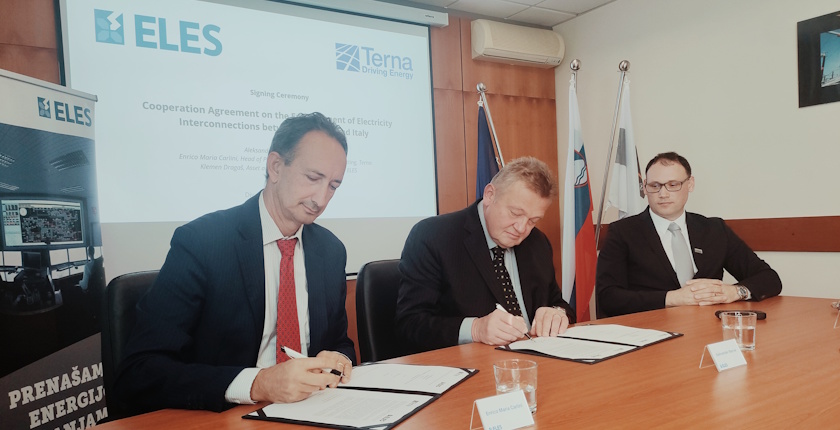
Slovenian transmission and distribution system operator ELES and Italian transmission system operator Terna agreed to upgrade their cross-border electricity network in an investment of EUR 250 million. The project aims to increase the transmission capacity between the two countries by 600 MW, strengthening supply and trade.

After a decade of coordination, ELES and Terna signed an agreement to raise the electricity transmission capacity between Slovenia and Italy by 600 MW or more than 50%. According to ELES, it is an important step in market integration and strengthening the reliability of the interconnected electricity system.

Interconnections between Slovenia and Italy are currently among the most heavily loaded ones in the Slovenian network, the country’s TSO pointed out.

As ELES further explained, with the growth of electricity imports and exports, there is an increasing need to strengthen transmission routes between the two countries. The company expects a rise in electricity imports in the countries gradually phasing out fossil fuel–based production to further increase the demand for cross-border transmission capacity.

The project consists of three upgrades

The project includes three main improvements. On the Slovenian side, the phase-shifting transformer at the Divača substation would be upgraded, alongside adding a third unit, which enables full utilization of the capacity of the 400 kV transmission line between Divača and Redipuglia (Sredipolje). The current transmission capacity, 1,200 megavolt-amperes (MVA), would be lifted to 1,800 MVA.

On the 220 kV transmission line between Divača and Padrice in Italy, low-sag conductors, capable of withstanding higher temperatures will be installed, ELES said. The transmission capacity would be doubled to 700 MVA.

On the Italian side, the existing 220 kV Padriče-Redipuglia connection and the Redipuglia substation are to be upgraded with a new phase-shifting transformer. It is crucial for managing internal power flows, the update reads.

“With an additional 600 MW of cross-border capacity, Slovenia is solidifying its role as a key electricity hub between Central and Southern Europe and as a reliable regional partner. This is a strategic investment in the future, ensuring reliability, resilience, and connectivity of our grid in the decades when electricity will become the main energy currency,” said ELES CEO Aleksander Mervar.

Slovenia’s share of the project is estimated at EUR 90 million

The total value of the project is EUR 250 million, with the Slovenian share estimated at EUR 90 million and the Italian side securing EUR 160 million. Pending all necessary permits and documentation, construction is planned to begin in 2029, and completion is expected by the end of 2031.

ELES announced it would seek European funds to finance the Slovenian side of the investment.

“The agreement not only strengthens the historic partnership between the two transmission system operators but also marks an important step toward developing and implementing innovative solutions that enhance the efficiency of transmission network investments. The agreement encourages system operators to introduce not only capital-intensive projects but also solutions with lower capital requirements that can increase net benefits and investment returns for all electricity system users,” said Enrico Maria Carlini, Head of Power System Planning and Permitting at Terna.

by in News

Romania to roll out flexibility market where you get paid to consume less power

Companies and, eventually, households will be able to participate in the Romanian flexibility services market, getting compensated for cutting their electricity use at a time scheduled one day earlier. The aim is to prevent power outages during peak loads in the transmission grid.

The National Energy Regulatory Authority (ANRE) of Romania published a draft regulation that would allow payments to electricity consumers – companies or, in the future, even households – for temporarily reducing their consumption. The mechanism is called the consumption flexibility service. Its purpose is to balance the grid and prevent power outages during peak consumption.

Romania’s transmission system operator Transelectrica would be able to purchase consumption reduction services from market participants: large companies, suppliers and aggregators. They would commit to temporarily limiting energy use.

Demand response also replaces expensive emergency power imports.

Day-ahead market for demand response

Transelectrica will schedule the service through auctions organized a day earlier. Market participants would be able to bid with available consumption capacity reductions and prices.

The proposed regulation requires providers or aggregators to transfer at least half of the revenues to their end customers who contributed to the consumption cut.

Renewable electricity production – especially solar – has increased significantly over the previous years. During the day, Romania sometimes produces more energy than it consumes, but in the evening, when people return home and consumption increases sharply, production no longer covers demand.

The trend is known as the duck curve, per the shape of the daily chart of demand and solar power production. It leads to imbalances and bolsters the risk of grid overload. Through flexibility services, Transelectrica will be able to shave the peaks.

Households to eventually join through their aggregators

In the first stage, the mechanism will involve large consumers such as factories, retail chains, logistics operators and office buildings. They would be able to bid with a minimum of 500 kW. Households could join at some point through so-called flexibility aggregators.

It is also important that demand response decreases balancing costs, which spill over to electricity bills.

The draft regulation is undergoing a public consultation process until December 3. According to the schedule, the flexibility market will be established in the spring.

by in News

Several EU member states face uncertainty amid looming Russian gas ban

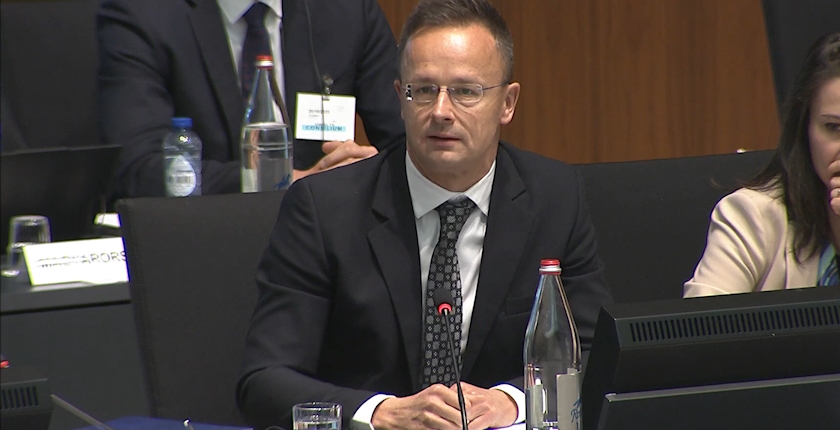
The European Union’s proposed measures to phase out imports of Russian oil and gas would destroy Hungary’s security of supply, according to Minister of Foreign Affairs and Trade Péter Szijjártó, who spoke at the meeting of energy ministers in Luxembourg. Slovakia is in a similar situation, while Romania pointed to the difficulty of proving the origin of foreign gas.

The draft regulation that the Council of the EU adopted doesn’t explicitly call for a ban on the transit of gas to third countries, while it foresees a temporary suspension for member states in case of supply disruption. The proposal also allows the possibility of importing non-Russian gas through the TurkStream pipeline.

The meeting of the so-called Energy Council highlighted several issues and concerns among EU member states about the proposed ban on Russian natural gas, including liquefied natural gas (LNG). Energy ministers in the Council of the EU adopted their position ahead of negotiations with the European Parliament on measures that they plan to introduce on January 1.

There would be a transition period for existing contracts for Russian fossil gas. Short-term ones concluded before June 17 this year would remain in force until June 17, 2026. Long-term contracts may run until January 1, 2028. It is also the targeted date for ending imports of Russian oil.

Szijjártó: The remaining infrastructure, physically and capacity-wise, is not able to supply Hungary

“The real impact of this regulation is that our safe supply of energy in Hungary is gonna be killed,” the country’s Minister of Foreign Affairs and Trade Péter Szijjártó stressed at the meeting.

He clarified that he wasn’t speaking about prices, and warned of damage from the proposed regulation – in the name of diversification.

“As now we are phasing out supply routes towards Hungary, the remaining infrastructure, physically and capacity-wise, is not able to supply the country. This has nothing to do with politics. This has nothing to do with Russia. This has nothing to do with the war in Ukraine. This is mathematics and physics,” Szijjártó stressed.

He also reiterated that his country would be left dependent on one oil supply route, via Croatia. It would leave Hungary “totally defenseless to a monopoly” as the transit fee doubled since the start of the war and it is five times higher than the current European benchmark, the minister underscored.

Bulgaria asks for protection from arbitration for gas TSOs

Slovak Deputy Prime Minister and Minister of Economy Denisa Saková said the supply of gas to her country is limited. There are interconnections with all neighbors, but external capacity bottlenecks remain, she argued. Bulgaria asked for provisions protecting gas transmission system operators (TSOs) from arbitration and financial penalties.

Romania voted for the draft regulation, but warned that identifying the origin of imported gas would be difficult

Secretary of State in Romania’s Ministry of Energy Cristian Bușoi urged for a workable and harmonized verification system and for the development of clear guidelines.

“This is not a matter of energy policy, but of strategic autonomy and European solidarity. At the same time, as we move from political vision to implementation, we believe it is important that the new authorization and verification system remains practical, transparent and proportionate. The additional requirements to demonstrate the exact country of production represent a new level of responsibility that, while understandable, and we support this in principle, may be difficult to fulfill in practice, particularly for pipeline [and] natural gas traded on hubs, and shipments transport, including LNG cargos that involve multiple sources and blending,” Bușoi told the ministers.

Council of EU proposes suspension clause

Notably, the Energy Council’s position, part of the REPowerEU plan and sanctions against Russia, is that the regulation should contain a suspension clause. The European Commission could temporarily lift the ban on Russian gas and LNG in case of significant disruptions of supply.

Another important element is the possibility of importing non-Russian gas through the TurkStream pipeline if the fuel’s origin is proven.

Gas transit through EU not subject to prohibition

Energy ministers said the EU should ensure that natural gas which crosses the 27-member bloc under a transit procedure is not ultimately entering into free circulation in the union.

It would imply that Serbia, Bosnia and Herzegovina and North Macedonia, non-EU countries, could continue to buy Russian gas that is delivered through Balkan Stream. It is the extension of TurkStream running through Bulgaria and Serbia to Hungary.

“Any gas which, before its import into the EU, was exported from the Russian Federation, either via direct export from Russia to the EU or via indirect export through a third country, should, except in case of transit, be subject to the prohibition”, the document reads.

Serbia still hasn’t signed a long-term gas supply contract with the Russian side, and the previous one expired in May. Moreover, the United States have imposed sanctions on Gazprom-controlled NIS, Serbia’s national oil importer, refiner and operator of a chain of service stations.

On top of it all, hydropower output is at a record low due to chronic drought, while coal is being imported as domestic mines don’t produce enough lignite.

by in News

Domac: No energy transition without much stronger grid investments

Croatia is investing only half as much in the electricity network as Slovenia and Austria, said Managing Director of North-West Croatia Regional Energy and Climate Agency (REGEA) Julije Domac. He warned that without an acceleration in grid investments, there are no renewable sources and no energy transition.

Croatia is about to overcome one of the biggest obstacles to investments in green energy, with its proposed methodology for the grid connection fee. However, there are several more bottlenecks in the sector, and they mostly also concern the electricity network.

The grid is apparently not among priority segments in Croatia, which depends to a large extent on electricity imports. The situation is similar throughout the Balkans and Europe, and beyond, and the basic question is who will cover the expenses as well as which projects are the most important for enabling the deployment of renewables. Among other difficulties, the administrative capacity for permitting for grid improvements and expansion is too weak, alongside complex environmental and spatial planning requirements.

Managing Director of REGEA Julije Domac outlined his view on the matter in a LinkedIn post. “Without an electricity network, there are no grid connections, no RES, no transition… There is more than 13 GW of solar and wind power projects under development today, but the network cannot integrate it without accelerated investments,” he wrote.

Photo: Julije Domac (REGEA)

Grid operators reacting with emergency measures instead of long-term strategy

The free capacity in the power distribution grid is estimated at 3.7 GW, but a large part is in areas with low interest for investing, Domac pointed out. Of note, he is also Croatian President Zoran Milanović’s special advisor on energy and climate.

“In the coastal area and Dalmatia, where the resources are the best, the network is near the maximum load in many parts – it means a malfunction of one element could jeopardize the system’s stability. To avoid that, the operators are already often turning to emergency measures in dispatching now: shutting down parts of the network, redirecting flows, pausing works. It is ‘putting out fires’ – and not a long-term strategy,” the head of REGEA said.

The regulated income from tariffs limits investments as the transition’s urgency isn’t acknowledged

Domac stressed that Croatia is investing less than EUR 20 per customer per year, only half as much as Slovenia and Austria. In his opinion, the tariff-based methodology is limiting investments. Namely, Croatian Transmission System Operator (HOPS) and HEP-ODS, the national distribution system operator, are funded through regulated income under the Croatian Energy Regulatory Agency (HERA), and the mechanism doesn’t acknowledge the urgency of the transition, according to the energy expert.

Another point is delayed digitalization, as Croatia has a much lower share of smart meters than neighboring Slovenia, where it surpassed 99%, or Italy, where the level is around 95%, he underscored. There is no domestic market for flexibility and no contracts with batteries and with consumers that could help ease the pressure on the grid, Domac claims.

In addition, he highlighted the sluggish grid connection procedure, saying it lasts ten years for wind power plants and four years for photovoltaics, the most in all European Union.

Grid connection costs can be covered with EU funding, green bonds

Domac is recommending to the authorities to introduce temporary connection points, with a controlled power delivery – limited until network enhancements are completed. HERA did envisage such a possibility in its draft methodology.

The grid connection fee for renewable electricity plants should be abolished, which was already promised, Domac recalled. It is an obstacle blocking 60 projects for 3.5 GW in total, he noted. It is the grid operator that should bear the cost and, aside from the tariff items, it can finance them through EU funds and green bonds, like most member states do, Domac added.

He expressed the belief that ten or so most important grid interventions should be accelerated – transformer stations and transmission lines in particular and especially in Dalmatia. Pilot projects for batteries and flexibility would pave the way for more grid connections without the wires, and public procurements need to be streamlined as well for works worth up to EUR 1 million, for instance, so that the replacement of one transformer doesn’t last twelver months, Domac asserted.

by in News

Montenegro, Italy sign memorandum on electricity market coupling

A memorandum of understanding on Italy and Montenegro’s electricity market coupling was signed in Rome. It also paves the way for the installation of the second cable of the Monita interconnector, which runs under the Adriatic Sea.

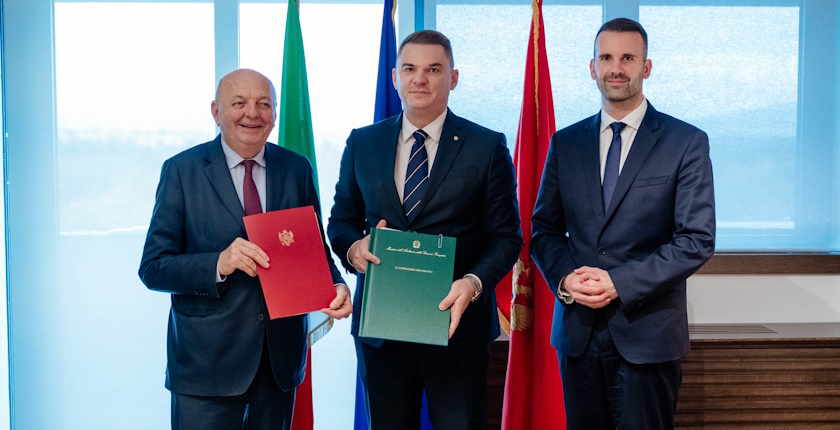
Minister of Energy and Mining of Montenegro Admir Šahmanović (pictured middle) and Italian Minister of the Environment and Energy Security Gilberto Pichetto Fratin (left) pointed out that energy links mean a more secure future, more stable supply and more development possibilities. They signed a bilateral memorandum of understanding on electricity market coupling.

Montenegrin Prime Minister Milojko Spajić (right) attended the ceremony together with Minister of Public Works, Spatial Planning and State Property Majda Adžović. The agreement is opening a new chapter in cooperation between the two countries and further strengthens Montenegro’s position on the European energy map, the Ministry of Energy and Mining said.

Market coupling alongside strengthening interconnection with second cable

Montenegro and Italy are linked with the Monita electricity interconnector, laid below the Adriatic Sea. In the new phase of their cooperation, they intend to couple their electricity markets for a freer power flow and safer functioning of the system, the ministry’s announcement reads.

“With this agreement, Montenegro is confirming its status as a reliable partner and energy bridge between the region and Europe. After several years of stagnation, this is a bit step forward, as it enables us to initiate the continuation of the project and the construction of the second wire of the subsea cable toward Italy. It opens the possibilities for our green, clean energy to become a distinguished export product, which means new income for companies and greater competitiveness in the European market. Today we once again confirmed good neighborly relations with Italy and we are showing that Montenegro is, slowly but firmly, entering the European family through concrete projects and partnerships. This is a step that brings our citizens long-term energy security and new opportunities for development to our companies,” Šahmanović stated.

Trade at Montenegro’s wholesale electricity market is expected to triple

There are 29 companies from 13 countries participating in Montenegro’s electricity market. Since the day-ahead market was established at the Montenegrin Power Exchange (MEPX or Belen) in April 2023, some 900 GWh of electricity changed hands, while the entire volume, together with the long-term market, amounts to about 3 TWh, the statement adds.

The memorandum’s implementation will create the conditions for at least three times higher trading volume, clearer price signal for new investments and a direct contribution to improving the security of supply, the ministry claimed.

National transmission system operators (TSOs) Terna and CGES have commissioned the first part of the interconnection in 2019. The current plan is to double the capacity to 1.2 GW. Šahmanović recently said the second line should be installed by 2031.

The project is valued at EUR 500 million. A double cable enables a two-way exchange at the same time.

by in News

Montenegrin TSO CGES buying power transmission lines from its Serbian counterpart EMS

Serbian transmission system operator (TSO) Elektromreža Srbije (EMS) and Montenegrin TSO CGES agreed that each would become the owner of the parts of overhead transmission lines on its country’s territory, and signed a contract.

EMS and CGES signed a contract on the purchase of electricity infrastructure. The two state-owned TSOs said it is the confirmation of their many years of cooperation and of their joint commitment to the development of a stable and reliable regional electricity system.

The reason for such an arrangement is that maintenance and utilization of transmission lines on the other country’s territory is complex and demanding, both from the technical and legal perspectives, the announcement reads.

Contract was signed by CEOs Jelena Matejić, Ivan Asanović

CGES will become the owner of the parts of EMS’s interconnector power lines of 220 kV and 110 kV that are located in Montenegro, they said, without revealing the purchase sum.

CGES is taking over the parts of EMS’s interconnector power lines that are on the territory of Montenegro

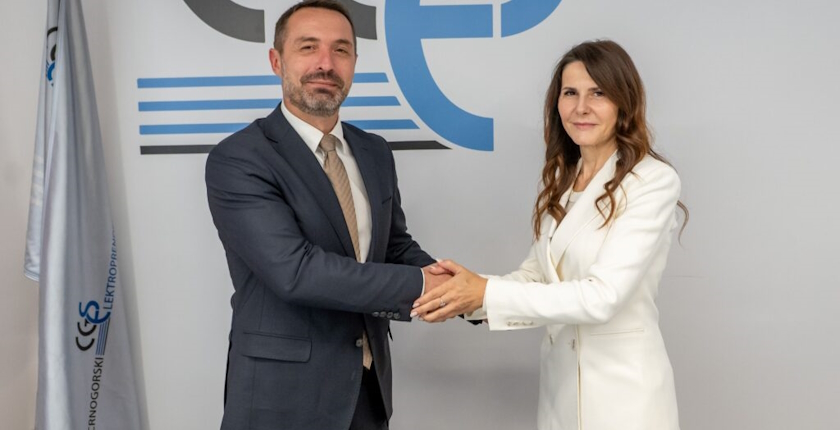
The contract was signed by General Manager of EMS Jelena Matejić and Executive Director of CGES Ivan Asanović. The two companies explained that they have initiated the search for a sustainable solution for interconnector power lines of 220 kV from Pljevlja in Montenegro to Bajina Bašta in Serbia and from Pljevlja to Bistrica in Serbia, and the one from Pljevlja 1 to Potpeć in Serbia, of 110 kV, all owned by EMS, and for CGES’s internal overhead power line Mojkovac-Pljevlja of 220 kV, which has a section in neighboring Serbia.

Deal aimed at simplifying operations, greater legal clarity

They adopted a model under which each TSO is becoming the owner of transmission lines on the territory of its country. It is a principle enabling simpler management, more efficient maintenance and greater legal and operational clarity for transmission systems, the operators said.

“With this contract we are creating a more stable basis for a technically and legally regulated transmission system, additionally strengthening the reliability and safety of the electricity grid in the region,” Jelena Matejić stated.

The companies showed that they are able to solve complex issues jointly and in the interest of both countries and all users of the electricity system, according to CGES head Ivan Asanović.

Of note, EMS has a 15% share in CGES, while the Government of Montenegro controls 55.4%. Jelena Matejić is a member of the board of directors. Italian TSO Terna owns 22.1%.

by in News

Software maker Volue acquires power trading, battery optimization platform smartPulse

Volue took over smartPulse, accelerating the expansion into Central and Eastern Europe, Southern Europe and Turkey, with its power trading and battery optimization capabilities.

Software maker Volue said it has completed a deal to acquire smartPulse, a full-suite short-term power trading and battery optimization platform for asset owners and aggregators across Europe. It significantly accelerates the expansion into Central and Eastern Europe (CEE), Southern Europe and Türkiye, according to the announcement.

The takeover will expand the offering with a comprehensive suite that now covers forecasting, position management, scheduling and nomination, day-ahead bidding, intraday trading, battery optimization and asset connectivity, Volue said. The company said it provides solutions and systems powering the green transition as well as insights to industries critical to society. Headquartered in Oslo, Norway, it is active in more than 40 countries.

Volue pointed out that it is strengthening its capabilities with smartPulse’s proven platform and seasoned team, adding that they bring decades of expertise in one of Europe’s fastest-growing power markets.

SmartPulse to benefit from Volue’s resources, expertise, commercial team

Founded in 2018 in Turkey, smartPulse is a certified independent software vendor (ISV) at EPEX Spot, Nord Pool and various other European energy exchanges, with more than 80 energy market specialists.

The firm expressed confidence it would benefit from Volue’s resources, expertise and commercial team to further accelerate its development and geographic expansion while also strengthening its end-to-end value proposition.

Jointly connecting assets to markets

“With this acquisition, we accelerate our expansion into new European markets and strengthen our position as a full-suite provider for renewable asset operators. The move directly enhances our battery storage and optimisation capabilities, deepens our presence across regions, and supports our ambition of becoming the leading global independent energy software player,” said Volue’s Interim Chief Executive Officer and Chief Transformation Officer Martin Vieider.

The transaction enables smartPulse to accelerate its European rollout of transmission system operator (TSO) connections and broaden its suite internationally, while giving customers the confidence of a market-leading global partner, according to CEO and co-founder Önder Akar

“We share Volue’s ambition of connecting assets to markets, and we’re excited to scale that vision together,” he stated.