by in News

North Macedonia launches decarbonization guide for small businesses

The Economic Chamber of North Macedonia has developed the country’s first decarbonization guide for small businesses. The digital tool is intended to help North Macedonia’s economy adapt to international climate rules, including the European Union’s carbon border tax (CBAM).

The decarbonization guide provides detailed instructions on the most effective ways for local companies to reduce their carbon footprint as part of the global fight against climate change, according to the Economic Chamber of North Macedonia.

The key feature is a carbon footprint calculator that covers nearly 60 different energy sources and refrigerants. Information is also available on EU and domestic climate regulations, as well as funding opportunities, such as subsidies.

The platform offers practical case studies and success stories of leading companies to highlight the benefits of clean energy, according to the chamber.

Božinovska: The decarbonization guide marks a turning point in the country’s green transition

The guide was developed in cooperation with the advisory team of the European Investment Bank (EIB) and the Delegation of the EU to North Macedonia.

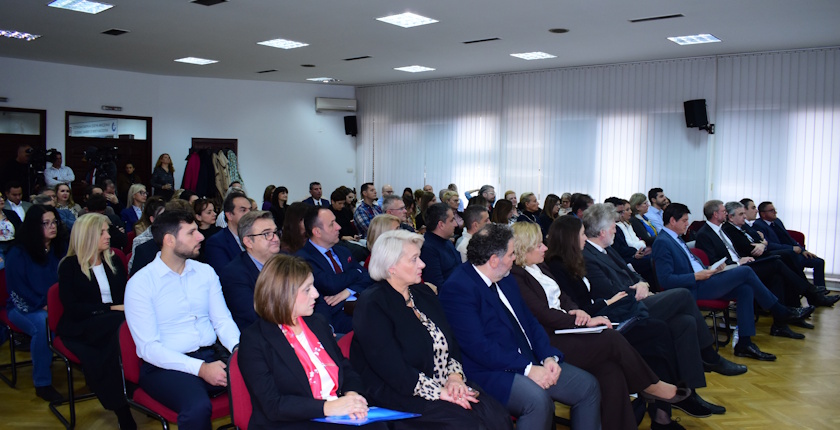
The guide was presented in the country’s capital, Skopje, at a gathering attended by more than a hundred entrepreneurs from all sectors of the North Macedonian economy.

Sanja Božinovska (photo: Economic Chamber of North Macedonia)

“The decarbonization guide is a turning point in our country’s green transition, equipping businesses with the tools they need to act now,” said Sanja Božinovska, North Macedonia’s Minister of Energy, Mining and Mineral Resources.

The guide is designed to help companies reduce greenhouse gas emissions and adapt to international climate rules, while, as the chamber says, preserving competitiveness.

One of these rules is the EU’s tax on the import of carbon-intensive goods, the Carbon Border Adjustment Mechanism (CBAM), which is set to take effect on January 1, 2026.

The guide is available on the website of the Economic Chamber of North Macedonia

This digital tool will help North Macedonia move towards a low-carbon economy, the chamber added.

The guide is available on the chamber’s website in the form of an interactive platform. Its development was financed by EIB Global.

Björn Gabriel, Head of EIB Representation in North Macedonia, has said that the guide comes at a crucial time as North Macedonia advances its green transition and prepares for upcoming carbon regulations.

According to Head of the Delegation of the EU to North Macedonia Michalis Rokas, decarbonization, energy efficiency, and renewable energy sources are powerful tools for building a more innovative, resilient, and competitive economy.

If every small and medium-sized enterprise (SME) takes at least a few significant steps toward greener business practices, the combined impact on more than 68,000 firms will be truly transformative, claims Rokas.

Michalis Rokas (photo: Economic Chamber of North Macedonia)
by in News

Greek regulator steps in to prevent energy communities misuse

Legitimate energy communities have suffered in Greece, as private investors have been taking advantage of the status to promote disguised commercial projects.

Normally, energy communities are set up to help citizens, businesses and other special consumer groups to benefit from lower energy costs using renewable energy.

There are two categories: renewable energy communities (RECs) and citizens energy communities (CECs). They have priority in obtaining licenses compared to commercial investments. They are exempt from letters of guarantee and have access to national and European funding and a higher feed-in tariff.

A law was adopted in 2023 to restrict production licenses for energy communities. It also had the goal of excluding other market actors from participating. However, it appears that the attempt was unsuccessful.

A gap in the regulatory framework allowed private companies and individuals to create energy communities and benefit from the various licensing and financial benefits to promote projects that would otherwise not be eligible. In short, such investors appear as legitimate small participants, while actually representing larger private companies.

Psomas: Just 2.8% of installations are for self-consumption

By April 2025, energy communities installed facilities totaling 2.24 GW, of which just 62 MW (or 2.8%) for self-consumption. They also held about 22% of total licensed capacity for photovoltaics in the country, according to energy consultant Stelios Psomas.

The law stipulates that legal entities participating in REC and CEC management boards must be mutually independent and not connected directly or indirectly through other businesses or natural persons.

According to the Regulatory Authority for Energy, Waste and Water (RAAEY or RAEWW), the minimum of 15 legal entities to set up a community refers to 15 independent entities. Otherwise, there is no guarantee they would act towards the benefit of local communities and not as a vehicle to promote the commercial interests of individuals or business groups, it pointed out.

RAAEY said it would intervene to enforce the essence of the law more aggressively. It added that if irregularities are discovered, an energy community may lose its production license. The regulator revealed it would conduct investigations both due to complaints and on its own.

Greece downgraded because of lost EU funds

The government recently lost of EUR 100 million from the European Union’s Recovery and Resilience Facility (RRF), aimed at promoting self-consumption for vulnerable households through forming an energy community.

The loss of funds for the Apollo program triggered a downgrade by REScoop, the European federation of energy communities. It said there were no more dedicated European funds to support energy communities in Greece.

EECF to provide a second chance

Greek energy communities may gain another source of European funding through the European Energy Communities Facility (EECF).

More than 140 of them across Europe will be supported through the program with EUR 45,000 per project. Greece submitted 29 proposals in the recent first call that took place at the end of September. The final list of beneficiaries will be announced in December, with a second call expected in May 2026.

by in News

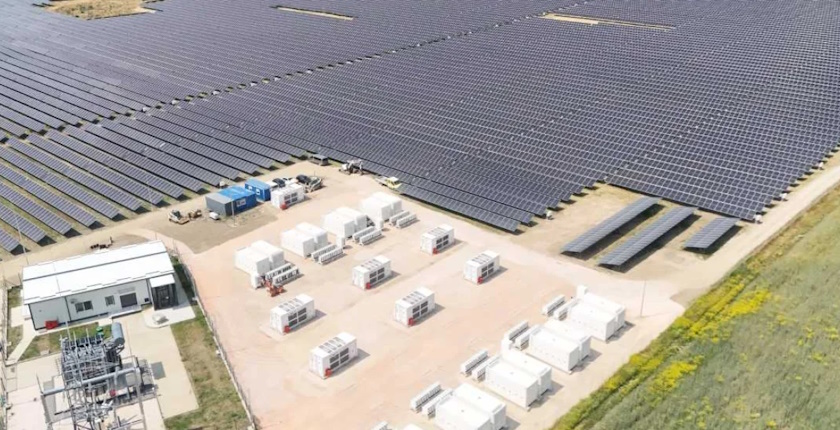
Sunterra RE equips its PV plants in Bulgaria with batteries totaling 156 MW

Bulgarian solar power plant operator Sunterra RE added co-located energy storage to its operational portfolio. The company’s three photovoltaic systems, with 524 MW in combined peak capacity, now also have batteries of 156 MW and 312 MWh in total.

With the ongoing solar boom in Bulgaria, investors have lately also been rushing to set up co-located and standalone battery energy storage systems (BESS). Bridging the gap between the peaks of daily photovoltaic production and power consumption is one of the key factors for the energy transition – stabilizing prices and the electricity system’s stability. Sunterra RE – Santera RE in Bulgarian – stands out with a large new operational solar and battery portfolio.

In its latest updates, the company revealed that it has put three BESS facilities into operation. They are co-located with its photovoltaic plants of 524 MW in total peak capacity.

There are 77 lithium-iron-phosphate (LFP) battery units now online. They have an overall capability of 156 MW and a duration of two hours. It translates to 312 MWh in storage capacity.

The investments received support through the National Recovery and Resilience Plan (NRRP), funded from the European Union’s Recovery and Resilience Facility – RRF. Sunterra RE said it completed them in less than a year.

Galabovo BESS accounts for half of battery operating power

The Kaloyan solar power plant of 208 MW, also known as Dalgo Pole, was the biggest in Bulgaria for a short while. It is backed with a 47 MW / 94 MWh facility, comprising 23 battery units.

The BESS investment at the site just north of Plovdiv was worth BGN 31.7 million (EUR 16.2 million).

The three subsidized battery projects were completed in less than a year

Accompanying the Galabovo solar power plant (201 MW) is a BESS with 75 MW in operating power. Sunterra RE said it consists of 37 battery containers. The Galabovo municipality is east of Plovdiv, Bulgaria’s second-largest city.

The remaining seventeen units, of 34 MW, make up the battery energy storage system at the Karlovo solar power plant. The PV facility in the eponymous municipality north of Kaloyanovo, has 115 MW.

The company’s fourth photovoltaic plant, in Pleven in the north, has only 9.6 MW.

Sunterra RE to expand its three new energy storage facilities by over 1 GWh altogether

Sunterra RE recently entered into a strategic partnership with Sungrow to expand the three BESS by more than 1 GWh in total. The deal is for the China-based partner’s MV-Power Titan 2.0 LFP units and accompanying equipment and software.

The city of Lovech, northeast of Sofia, hosts the strongest BESS in the Balkans – of 124.1 MW and 496.4 MWh. It is a standalone battery facility, part of a closed power distribution system.

Renalfa IPP and Eurowind Energy are installing a 315 MW / 760 MWh BESS at their Tenevo PV plant. They plan to turn it into the largest and most complex hybrid power plant in Bulgaria.

by in News

Serbia proposes taxes on greenhouse gas emissions, imported carbon-intensive products

The Ministry of Finance of Serbia launched public consultations on the draft Law on Greenhouse Gas Emissions Tax and Law on Carbon-Intensive Product Imports Tax, both at EUR 4 per ton of CO2 equivalent.

On January 1, importers of electricity, cement, iron and steel, aluminum, hydrogen and fertilizers to the European Union will start paying the CBAM carbon dioxide tax. If the country of origin also has a CO2 pricing system and the EU recognizes it, the sum will be deducted from CBAM.

The greenhouse gas emissions tax won’t be a new fiscal burden, but an incentive for modern and cleaner production, the Ministry of Finance of Serbia stressed in its public consultation call on what it said would be two key laws for the country’s green transition. It intends to charge producers and importers of certain goods EUR 4 per ton of CO2 equivalent.

The draft Law on Greenhouse Gas Emissions Tax and draft Law on Carbon-Intensive Product Imports Tax are intended to lower pollution, improve energy efficiency and secure a more equal position for the Serbian industry in the domestic and international markets, according to the announcement.

The public consultation process lasts until October 21, the deadline for submitting comments and suggestions. Presentations and discussions are scheduled for October 8 and October 15 in Belgrade, and online meetings are to be held on October 10 and October 17.

Both laws to enter into force on January 1, when EU also starts charging CBAM

The first of the two taxes is for big industrial emitters in the sectors of cement, fertilizers, iron and steel, aluminum and electricity. The ministry added that it is targeting January 1 for both laws to come into effect.

On the same date, the EU is set to start charging its Carbon Border Adjustment Mechanism (CBAM) tax on imported electricity, the other said goods as well as hydrogen. If the country of origin also taxes CO2 and the EU recognizes its system, the sum that was paid will be deducted from CBAM.

The CBAM tax is envisaged to rise every year until in 2034 it becomes equal as the prices of grenhouse gas emission certificates in the EU’s Emissions Trading System (EU ETS). Of note, the plan is also to expand the mechanism to other segments that EU ETS covers. The price has held above EUR 75 per ton of CO2 equivalent in the past month.

Institutional infrastructure isn’t sufficiently developed to roll out domestic ETS

The draft Law on Carbon-Intensive Product Imports Tax, envisaged as an equivalent to CBAM on the home market, doesn’t include hydrogen (and neither does the other draft), due to negligible production, while electricity wasn’t included because of technical limitations and a lack of a precise taxing methodology, the ministry explained.

The tax on imported carbon-intensive products would cover only the entities that import more than five tons of the designated products per year

Importers would be taxed based on emissions embedded in the production of the goods from abroad, but they will be able to use tax credits if an emissions levy has already been paid in the country of origin, similar to the EU system. The obligation is only for companies importing more than five tons of designated products per year.

The government opted for a tax instead of an ETS because “an emissions trading system requires a developed institutional infrastructure and market mechanisms that currently aren’t completely established,” an accompanying document reads.

Importantly, an independent verification system is under development.

The taxes would cover CO2, nitrous oxide (N2O) and perfluorocarbons (PFCs).

CO2 tax scope limited to certain larger producers

The ministry pointed out that the draft law wasn’t made to be applied extensively, but only to the firms obligated to have a license for emissions from their plants. Mostly they are large and medium-sized companies. The increase in administrative expenses would be limited, as the entities in the group already measure emissions data, in line with the Law on Climate Change, and send them to the Ministry of Environmental Protection.

The production of synthetic fertilizers and nitrogen compounds, cement, pig iron, steel and ferroalloys, aluminum and electricity accounts for over 57% of emissions in Serbia and more than 90% within the national monitoring and reporting system.

Tax deductions for large electricity producers that invest in decarbonization

A payer of the greenhouse emissions tax that predominantly generates electricity, accounting for at least 80% of its income in the previous annual tax period, is eligible for a tax credit amounting to 20% of the sum that it invested in decarbonization measures, the draft shows.

The deduction wouldn’t exceed 80% of the due tax. The government determines the said measures.

The draft greenhouse gas emissions tax envisages incentives for the taxpayers to finance green projects, the just transition and protection of vulnerable households

In addition, entities that pay the tax would be eligible for incentives, from the state budget, for financing climate and energy transformation through investing in renewables and energy efficiency, innovative low-carbon technologies, decarbonization of industrial production, green construction and support to the just transition and protection of vulnerable households.

In the short term, the new fiscal obligation can cause a moderate increase in production costs for facilities with significantly high emissions, the ministry said. Then there is a possibility, over the long term, for a moderate indirect effect on prices of some products, like construction materials and energy, but it would be limited and gradual, the law’s authors claim.

by in News

Greece mulls subsidizing green energy as loan to energy-intensive industry

The Greek government intends to support energy-intensive industries through a new mechanism involving renewable energy.

In recent days, discussions took place between the Hellenic Federation of Enterprises (SEV) and the ministries of environment and energy, finance, and development. The employers’ organization presented a so-called Italian plan. It is based on Italy’s Energy Release 2.0 scheme.

The assistance would be provided in the form of a green energy loan. Around 400 industrial consumers would benefit from lower power prices, at EUR 60 per MWh, for three years. In return, they would be obliged to invest in renewable energy and return twice as much cheap electricity within a period of 20 years.

Based on the proposal, the industries are expected to add about 1.75 GW, of which 80% in photovoltaics and 20% in wind power capacity. The estimated amount of low-cost electricity that they would be entitled to is 10 TWh, and the cost of the scheme is seen at EUR 285 million per year for three years.

Brussels approval critical

SEV expressed the belief that the European Commission would easily accept the plan, after Italy got partial approval. However, another industry association, the Hellenic Union of Industrial Consumers of Energy (UNICEN), warned that the other country’s scheme has not yet formally obtained a green light from the administration in Brussels.

Namely, the EU sent a letter to the Italian authorities, listing the changes they needed to make. According to UNICEN, the Greek model would be approved if it follows the proposed revised version.

The ministers consider SEV’s proposal acceptable, but they said they needed to figure out the financing details. Other mechanisms are not yet off the table. Importantly, they cannot include direct state support because of restrictions set by European competition law. It stipulates that a government cannot simply provide money to a sector unless the scheme implies investments, such as in green energy.

“We are interested in a fair intervention with a holistic view, in order to focus on the most heavily affected businesses. Also, the scheme should not cause fiscal problems,” Deputy Prime Minister Kostis Hatzidakis stated.

by in News

Eurowind Energy’s solar power project in Romania gets CfD thanks to auction list dropouts

Eurowind Energy’s Ewe Solar Project in Romania, of 110 MW, is now eligible for government support in the form of a contract for difference (CfD), even though it landed just below the line in the last renewable energy auction. It got upgraded from the reserve list as the developer of two winning photovoltaic endeavors has decided to exclude some sections.

Depending on the policy framework and market conditions, renewable energy investors sometimes opt for power purchase agreements (PPAs) or the electricity exchange instead of locking in a fixed price for the long term in a government support scheme. Enery Element, which won CfDs in Romania’s last solar power auction, decided not to sign some of the contracts. It means Eurowind Energy, the first in the reserve list with its Ewe Solar Project, can now fill the quota instead of its competitor.

Enery Element has obtained the rights to the CfDs with two projects that it conveniently split into several sections each. It enabled it to withdraw only parts of the future photovoltaic plants.

Enery Element cancels three sections of 46 MW altogether

Enery Element pulled away two of the 11 lots that its subsidiary Baboia Solar Plant won for a facility in Ogrizeni in Giurgiu county.

They were the lowest strike prices in the entire auction: EUR 35.77 per MWh and EUR 36.33 per MWh. The proposed two sections, for a combined capacity of 25.9 MW, lowered the total to 324.2 MW.

According to an earlier update, the solar power plant would have 535 MW in peak capacity. The project firm also won a grant of EUR 6.1 million for a 121.9 MWh battery energy storage system.

Baboia Solar Plant, also known as Ogrizeni, would include a subsidized BESS of 121.9 MWh

Enery Element is a joint venture between Austrian renewable energy company Enery Development and its Bulgarian partner Element Power Group.

Conversely, with Siret Solar Plant, Enery Element canceled the part with the highest strike price of the four that were selected. The levels were from EUR 38.76 per MWh to EUR 38.79 per MWh.

It slashed the part of the capacity qualified for CfDs in the Dumbrava 2 project to 88.5 MW from 108.6 MW. The developer didn’t reveal the reason for its move.

Eurowind Energy lifts auction’s highest strike price to EUR 46 per MWh

The Ministry of Energy said it would replace the canceled capacity with Ewe Solar Project of 110 MW. It is a special purpose vehicle, working under Denmark-based Eurowind Energy.

The accepted price is EUR 46 per MWh, while the new lowest level on the list is EUR 36.69 per MWh, for a segment of the Baboia Solar Plant.

by in News

Croatia to get EUR 44 million in green transition grants

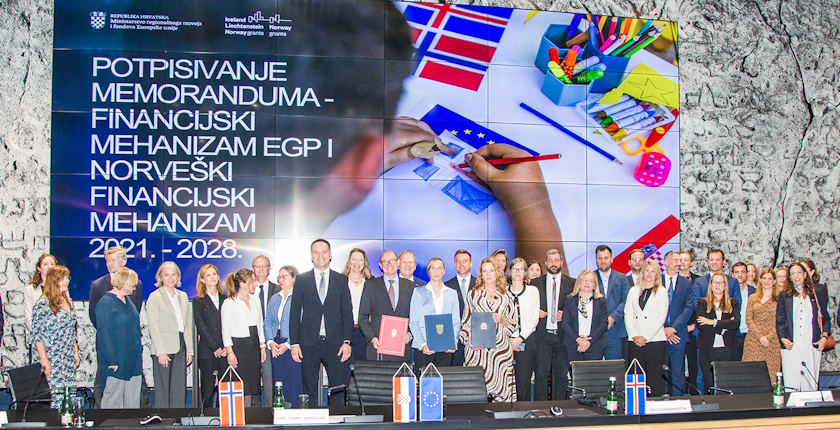
Under the European Economic Area and Norway Grants, Croatia is entitled to EUR 21.6 million from the Green Transition Programme and EUR 22 million from the Green and Blue Business Innovation Programme in the period until 2028. The funding is part of a EUR 111 million mechanism, which includes support for local development and the judiciary.

Minister of Regional Development and European Union Funds Nataša Mikuš Žigman, Ambassador of Iceland Helga Hauksdóttir and Ambassador of Norway Arne Sannes Bjørnstad signed memoranda of understanding on the implementation of the European Economic Area (EEA) and Norway Grants for the period until 2028.

Croatia is entitled to EUR 111 million for investments in the green transition, local development, innovation in green and blue business, and the judiciary.

EEA Financial Mechanism to bolster transition to more sustainable society

It confirms the country’s continuous and successful cooperation with Norway, Iceland, and Liechtenstein, Mikuš Žigman asserted.

“Through projects funded by the EEA and Norway Grants, we are strengthening institutional capacities, supporting sustainable development, inclusiveness, and innovation, and contributing long-term to improving the quality of life of our citizens. These mechanisms also enable us to jointly develop solutions for key social and economic challenges and to build the foundations for further cooperation with partner countries,” she stated.

Projects worth more than EUR 103 million were implemented in Croatia in the previous funding period

In the new programming period, the EEA Financial Mechanism is set to fund projects worth EUR 21.6 million under the Green Transition Programme, aimed at accelerating the transition towards a more sustainable society. A further EUR 33 million would be invested through the Local Development Programme, including projects to improve access to STEM education in less developed regions. STEM is an acronym for integrated science, technology, engineering and mathematics.

Hauksdóttir said the cooperation reflects solidarity and helps support equal opportunities and living standards across the EEA. She added that such projects strengthen public institutions, support vulnerable communities, encourage innovation, and establish lasting ties between researchers, local communities, civil society and artists across borders.

Norway Grants helping foster low-carbon circular economy

From the Norway Grants segment, EUR 22 million is earmarked for the Green and Blue Business Innovation Programme, fostering sustainable and competitive development of Croatia’s economy through green and blue innovation, including low-carbon circular economy models.

Through the Justice Programme, there is EUR 21.55 million for improving access to an independent, accountable and efficient judicial system, as well as to enhance correctional institutions in line with international and European standards.

“For many years, Croatia and Norway have been working side by side to build a stronger Europe – one that is more competitive, but also more inclusive and greener, and thus more technologically and economically efficient. In a world marked by uncertainties such as the war in Ukraine, climate change, and global instability, it is clear that European countries are stronger when we act together, in solidarity, defending shared interests and values,” Ambassador Bjørnstad stressed.

In the previous funding period, projects worth more than EUR 103 million were implemented in Croatia, including the establishment of four regional science centres and the construction of a major geothermal well in Bjelovar. The Energy and Climate Change Programme was for a cleaner environment, strengthening energy security and resilience, reducing costs in public institutions and buildings, and raising awareness of energy efficiency.

Norway Grants and EEA Grants are segments of the EEA Financial Mechanism. Its beneficiaries are in EU member states with a gross national income (GNI) per capita below 90% of the average. The current seven-year funding period began in May 2021 and it lasts until April 2028.

by in News

Aurora: Romania’s third CfD auction is key for 2030 targets as solar outpaced wind

Aurora Energy Research expects strike prices at the additional renewable energy auction in Romania, for the remaining wind power quota, to land near the ceiling, set at EUR 80 per MWh. In the previous round, there was strong competition between the bidders for the photovoltaic segment, while developers of wind energy projects may have seen more value in PPAs and merchant options.

Increased costs and stricter eligibility rules constrained wind participation in Romania’s second contracts-for-difference (CfD) round in August, which fell short of the 2 GW wind target. Developers may have seen more value outside the CfD framework, according to Aurora experts, who stressed that power purchase agreements (PPAs) and merchant options offer higher returns than the capped CfD strike prices.

Solar projects showed stronger economics, with strike prices between EUR 35 per MWh and EUR 45 per MWh, compared to wind at EUR 65 per MWh to EUR 79.5 per MWh.

“Using the same commercial operation date for both PV and wind projects has disincentivised wind participation in CfD rounds, since wind developments are far more complex. Their permitting, grid connection, and EPC timelines are significantly longer than solar, making the uniform deadline misaligned with project realities,” said Project Leader at Research Associate at Aurora Energy Research Filippos Falieros.

Dedicated auctions can influence market dynamics

As wind is essential for achieving 2030 renewable targets, the Romanian Ministry of Energy invited developers to submit expressions of interest for mature wind projects only, with contracts expected to be signed by the end of 2025. The third auction will focus on wind energy solely, with a maximum strike price set at EUR 80 per MWh, and Aurora expects strike prices near the ceiling.

In the second auction, accepted wind power bids were between EUR 65 per MWh and EUR 79.5 per MWh

The move underscores the growing divergence in Romania between solar’s strong economics and wind’s slower progress, while also showing how policy adjustments – such as dedicated auctions – can influence market dynamics.

CfD state aid scheme was approved through Modernisation Fund

The overall CfD scheme is supported by EUR 3 billion in total state aid that the European Union approved through the Modernisation Fund, aiming to keep costs low for consumers.

Established in 2013, Aurora Energy Research provides power market forecasting and analytics for critical investment and financing decisions. Headquartered in Oxford, it operates out of 17 offices worldwide covering Europe, North and South America, Asia and Australia.

The firm’s comprehensive services include market outlook packages for energy industry participants, advisory support, and software solutions. Aurora fosters diversity with a team of one thousand experts with backgrounds in energy, finance, and consulting, offering expertise across power, renewables, storage, hydrogen, carbon, and fossil commodities.

by in News

EPBiH receives EUR 2 million from KfW for green, market-oriented transformation

Germany’s KfW Development Bank is donating EUR 2 million to Elektroprivreda Bosne i Hercegovine (EPBiH). The funding is for the acceleration of the energy transition and strengthening market mechanisms in Bosnia and Herzegovina’s state-owned power utility. The grants cover monitoring carbon dioxide emissions and related reporting as well as the development of a decarbonization roadmap and a virtual power plant project.

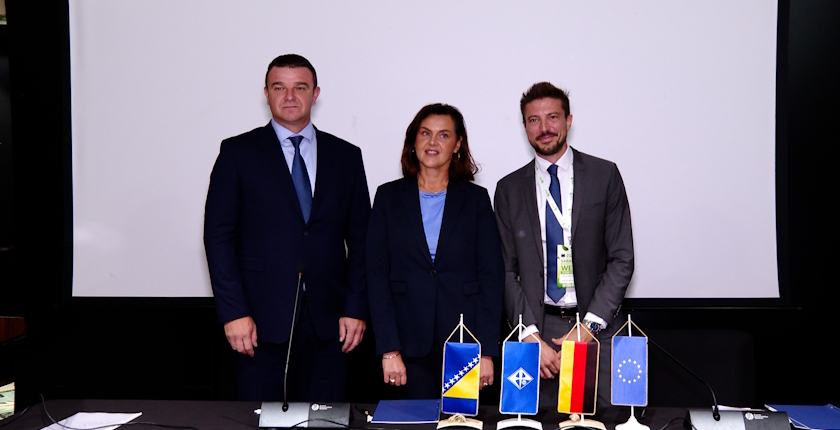
General Manager of Elektroprivreda BiH Sanel Buljubašić and the company’s Executive Director for Economic Affairs Sanela Jurišić signed an agreement with KfW’s Head of the Division of Energy and Transport in Southeast Europe and Turkey, Pablo Obrador, on EUR 2 million in grants.

Germany’s development bank approved the funds within the program Supporting Market-Oriented Green Transformation in the Eastern Neighbourhood and Western Balkans, on behalf of the European Union. It is supported by European Fund for Sustainable Development Plus.

EPBiH committed to sustainable decarbonization

The deal is aimed at supporting the institutional capacities of EPBiH for managing its green transition and corporate transformation.

The funding is part of the program Supporting Market-Oriented Green Transformation in the Eastern Neighbourhood and Western Balkans

“The project that we are developing with KfW bank represents an important step toward speeding up the energy transition and strengthening sustainable market mechanisms in our company. With this milestone, Elektroprivreda BiH confirms its commitment to sustainable decarbonization as well as strengthening competitiveness through investments in green technology,” CEO Buljubašić stated.

Experts to participate in development of CO2 emissions tracking plan, establishment of virtual power plant

The grants are earmarked for technical support, which includes financing the services of expert consultants for a plan for monitoring CO2 emissions and related reporting, their support in producing a decarbonization roadmap, in corporate sustainability reporting and the establishment of a virtual power plant. Additionally, a part of the funds will be for technical support in the materialization of strategic guidelines defined in EPBiH’s energy transition and decarbonization strategy until 2050.


“We have invested in renewable energy sources before, and the signing of the contract represents a new chapter in our cooperation. I express hope that the new systems will be implemented soon and I express the bank’s preparedness to support Elektroprivreda BiH’s new green energy business models,” KfW’s representative Pablo Obrador said, as quoted by Bosnia and Herzegovina’s state-owned utility.

Alongside supporting EPBiH’s corporate reforms, the grant funding will be used for improving the company’s commercial efforts aimed at strengthening market preparedness and the improvement in strategic positioning within the rapidly developing energy sector.

by in News

Prime Batteries expanding battery storage manufacturing capacity in Romania

Prime Batteries Technology started the works on multiplying the capacity of its battery storage factory in Bucharest, despite the deteriorating prospects for its industry segment in Romania. Czechia-based Tesla Group has given up on a manufacturing facility project worth almost EUR 100 million, even with state aid approved. The government’s renegotiation of a funding package with the European Union resulted in erasing EUR 150 million in grants.

Prime Batteries Technology or PBT got a major investor on board and launched the works on the expansion of its factory in Romania. Earlier this month, the company obtained the building permit for boosting the capacity in Bucharest to 8.5 GWh per year from the current 2.5 GWh, Chief Executive Officer Vicențiu Ciobanu revealed at a conference organized by Energynomics.

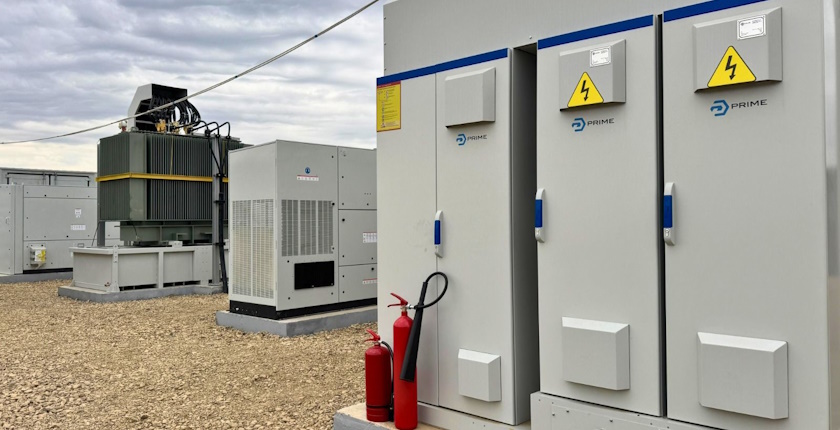
Prime Batteries expects to grow its operational portfolio to 226 MWh this month. The facilities are within existing renewable electricity plants – mainly photovoltaics. The company expects to deliver another 152 MWh in the same segment and another 227.8 MWh in standalone battery energy storage systems (BESS) before the end of 2025.

The rest of the 800 MWh target for this year is due by the end of March. PBT also manufactures batteries for electric vehicles, industrial production and electricity grids.

Private equity firm T2Y steps in, confident in manufacturing investment bet

Prime Batteries has just welcomed private equity firm T2Y on board. According to the announcement, their goal is to surpass 8 GWh in annual capacity by 2030. T2Y became the second-largest shareholder, while Prime Batteries Technology’s Founder Adrian Polec controls the largest stake, Handelsblatt reported.

The company has a supply chain independent of China, T2Y’s Founder Patrick Bettscheider pointed out. He noted that PBT’s machines are Korean while the suppliers are Japanese, Korean and European.

The battery manufacturer has also agreed a partnership with Monsson for the development of projects for 1.07 GWh of storage capacity in Romania and Europe. In addition, Prime Batteries introduced a battery-as-a-service (BaaS) offer for the commercial and industrial segment.

Tesla Group backs out with major loss as EU fails to address Chinese subsidies

Launching the construction of another factory occurred at a hard time for investors in battery manufacturing in the country, but also Europe.

Tesla Group from the Czech Republic recently canceled a project in Romania estimated at almost EUR 100 million, including EUR 39.4 million in state aid. The company acknowledged that it already spent EUR 10 million before the pullout: on land in Brăila for the planned factory, technology, procurement and tenders.

Among other headwinds, Tesla Group cited the significant decline BESS equipment prices and the bankruptcy of major players

Namely, the situation worsened in June 2024 as global competition intensified, Tesla Group stressed, as quoted by Profit.ro. It cited “heavily subsidized Chinese manufacturers” together with “the lack of effective trade protection policies at the EU level,” the significant decline in prices of BESS and the bankruptcy of major players such as Northvolt in Sweden.

The Czech firm said it has become “impossible to sustain or expand battery production operations in Europe.”

Lyten, headquartered in the United States, agreed in July to take over Northvolt.

Romania folds plan to make BESS manufacturing its strategic sector

On top of it all, Romania has lost EUR 150 million in EU grants for battery production, assembly and recycling, according to a document from the Ministry of Energy that the same media outlet saw. The sum was from the National Recovery and Resilience Plan (NRRP or, in Romanian, PNRR), which the government is renegotiating with the administration in Brussels.

Two beneficiaries have requested that their funding contracts be canceled. The ministry will scrap another three, the article reads.

Notably, several contracts for hydrogen production and manufacturing facilities for solar panels have been suspended. Financial support for two cogeneration plants was reduced. Greece, Bulgaria and Romania have been breaching deadlines for reforms and procedures for EU subsidies for batteries, but also other investments essential for the energy transition.