by in News

3rd Conference on Advancing Renewable Investments – guarantees of origin could drive Europe’s green energy integration

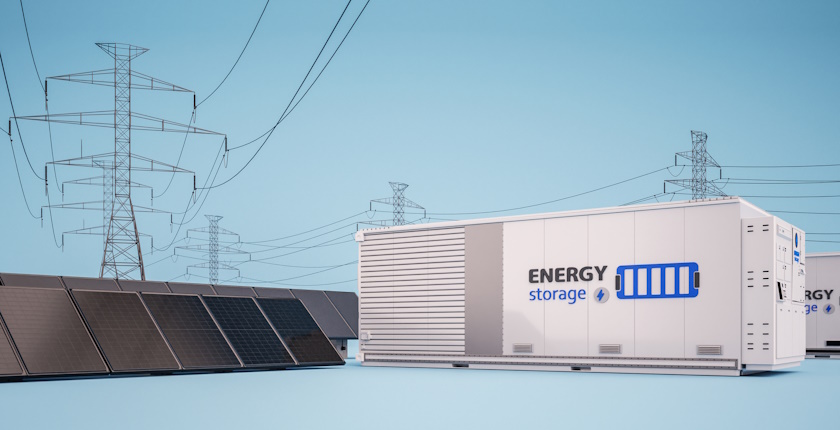
As CBAM nears implementation, the Ljubljana conference highlighted market tools and partnerships to accelerate clean energy integration with the European Union, the Energy Community Secretariat said. It pointed out that as more renewables capacity is connected to the grid, storage and flexibility solutions would become increasingly vital to enable the sector’s continued growth and integration.

The rollout of national electronic registries for guarantees of origin was recognized as essential to verifying the low-carbon value of regional electricity exports and advancing market-based integration with the EU.

Ministers, regulators, investors, and private sector representatives from across South East and Eastern Europe gathered in Ljubljana for the 3rd Conference on Advancing Renewable Investments, hosted by the Energy Community Secretariat and the Government of Slovenia, to boost renewable investment and advance the region’s shift toward clean, interconnected energy systems.

“Energy Community contracting parties are advancing accelerated integration with the EU’s electricity market – a process that, thanks to the Energy Community framework, with market coupling nearing completion, can be achieved even ahead of full EU membership. Expanding renewables is central to this effort, enabling countries to align with EU policy targets and speed up decarbonisation,” the update reads.

Integration with the EU’s electricity market can be achieved ahead of full membership

The results are tangible, according to the Energy Community Secretariat’s 2025 CBAM Readiness Tracker. Renewable energy excluding large hydropower has increased by more than 50% since 2020 – reaching 5.1 GW, fuelled largely by governmental support schemes.

While it is a notable success, continued progress will depend on the contracting parties’ ability to build on this momentum and mobilize efforts beyond government support to fully meet the ambitious 2030 targets set out in their national energy and climate plans (NECPs) and achieve carbon neutrality by 2050. As more renewables capacity is connected to the grid, storage and flexibility solutions will become increasingly vital to enable the sector’s continued growth and integration, the organizers said.

Uncertanties emerging ahead of CBAM charge introduction

At the same time, as the definitive phase of the EU’s Carbon Border Adjustment Mechanism (CBAM) begins on January 1, uncertainties are emerging for renewable energy investors, the secretariat stressed.

Discussions at the conference highlighted stakeholders’ expectations for the European Commission to clarify CBAM implementation rules, while continuing to rely on the secretariat to raise concerns about potential risks to renewable energy investments arising from unintended CBAM impacts.

As a no-regret pathway, participants discussed measures to accelerate the shift toward market-driven renewable investments, strengthening the sector’s credibility and long-term financial stability. A matchmaking dialogue brought together renewables producers and corporate buyers, reflecting growing private-sector interest in long-term power purchase agreements (PPAs) to boost investment and market confidence.

Lorkowski: GOs turn transparency into trust, trust into investment

Finally, the rollout of national electronic registries for guarantees of origin (GOs) was recognized as essential to verifying the low-carbon value of regional electricity exports and advancing market-based integration with the EU.

“Guarantees of origin are the compass guiding Energy Community markets toward the EU’s clean energy future. They turn transparency into trust, and trust into investment, enabling regional producers to access new markets, attract financing, and build confidence in the energy transition,” said Energy Community Secretariat Director Artur Lorkowski.

Ongoing efforts to establish a mutual recognition framework with the EU are underway, in close coordination with the European Commission and the Association of Issuing Bodies (AIB), to enable cross-border trade in renewable electricity.
by in News

Romania’s Hidroelectrica struck by worst hydrology so far

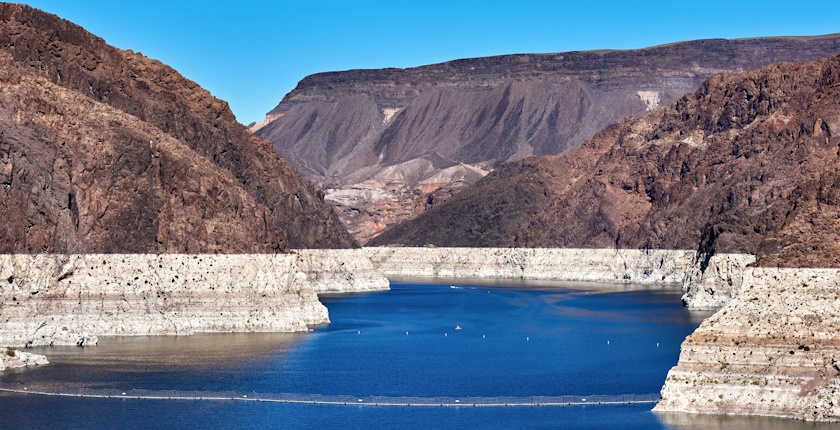
Romanian state-owned hydropower operator and electricity supplier Hidroelectrica is expecting record-low output this year amid a severe drought. However, it entered the winter season with much higher water reserves than in 2024. The company projected its annual profit at EUR 590 million.

Chronic drought and heat in Southeastern Europe may require countries in the region to invest massively in desalination. Whether a result of climate change or what skeptics consider a cyclical phenomenon, it is heavily impacting the economy and nature.

There is a trend of decreasing water levels in rivers, lakes and reservoirs. It spells uncertainty for hydropower projects, especially for ones on small watercourses, very sensitive to drought. Following extreme declines in water levels in hydropower reservoirs in Bosnia and Herzegovina, Serbia and Greece, Romania’s Hidroelectrica also sounded the alarm.

The state-owned utility and electricity supplier expects record-low production in 2025, just above 11 TWh, President of the Board of Directors Bogdan Nicolae Badea said at the Focus Energetic conference, as quoted by Agerpres.

It is the driest year so far, he stressed. Output is seemingly weaker even than in 2012, when the company fell into insolvency.

Weather effect weakening, but it’s no time to relax

Conversely, Hidroelectrica expects its profit to reach RON 3 billion (EUR 590 million) this year, Badea revealed. Furthermore, he pointed out that water reserves are at around 73%, compared to 64% from the same period of 2024.

The chief executive said he has noticed a pattern change and estimated that the pressure has been reduced in terms of the impact of weather factors on the energy sector. “But I don’t think it’s time to relax. Because, from what I have observed statistically in previous years, even if there were situations in which we had milder winters, in which episodes of extreme cold lasted less, these issues can arise at any time,” he explained.

Free market is only way for correct electricity pricing

Badea said he was “extremely happy” because of the return to the free market, arguing it is the only way for correct pricing. Hidroelectrica recently announced that it has surpassed one million household and non-household customers in the end-consumer supply market.

The company has 188 hydroelectric plants with a total capacity of 6.4 GW, and the Crucea wind farm of 108 MW.

by in News

Trial phase starts for 134 MW solar power plant in Romania

One of the biggest photovoltaic plants in Romania is due to begin commercial operation by the end of the year. China Huadian Corp., which bought 49%, is reportedly acquiring the entire 134 MW facility.

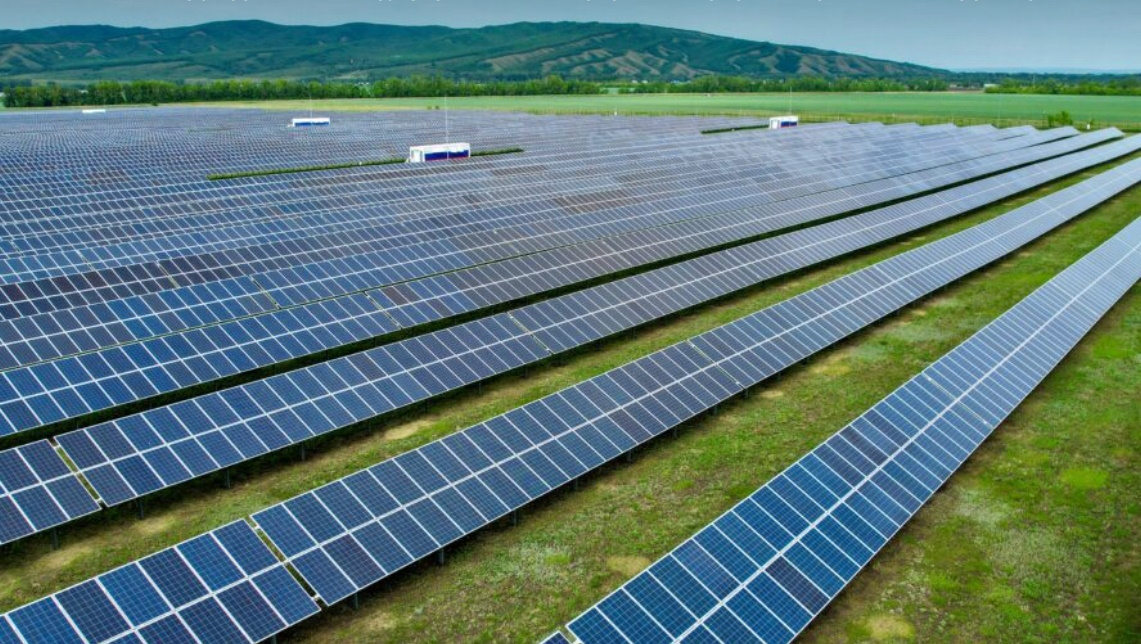
Project firm Grup Blauer București has completed the construction of a solar park in southern Romania. The 134 MW facility in the Studina commune in Olt county is one of the biggest in the country. Profit.ro reported that it is entering trial production.

The deadline for starting commercial operation is the end of 2025. Grup Blauer București is one of four developers of photovoltaic projects that China Huadian Corp. is taking over, the article adds. The conglomerate has 178 GW in operation, generating more than 640 TWh per year.

Grup Blauer București was owned until late 2022 by a group of investors including Bogdan Stelea. The Romanian national soccer team’s former goalkeeper held 21.4%. They sold the firm to CWP Europe.

Founders of Grup Blauer București included Romanian goalkeeper Bogdan Stelea

Next, in the summer of 2023, a subsidiary of Renalfa IPP bought a 50% stake. The news website found that China Huadian Hong Kong Co. currently controls 49% of the solar park. Its parent, established in 2002, is among the five largest state-owned Chinese companies.

Of note, China Huadian was interested in building a coal power plant in Romania, until the country decided to phase out the solid fossil fuel. The company also participated in a tender in 2015 for the revived Tarnița-Lăpuștești pumped storage hydropower project.

Romania’s largest solar park, Rătești, has 155 MW in peak capacity, but there several projects for larger capacities, too.

by in News

UAE, Montenegro establish strategic green energy partnership

A new agreement between the UAE and Montenegro will facilitate connecting the energy sector with financial technologies and artificial intelligence. The two countries are also considering to deploy solar, wind, hydropower, green hydrogen and battery projects.

The United Arab Emirates and Montenegro agreed to cooperate in the energy sector, setting up a bilateral strategic partnership for the development of renewables, modern energy infrastructure and advanced technologies. The deal envisages joint contribution to projects of strategic significance to Montenegro from solar, wind and hydropower plants to the application of battery energy storage systems and the development of the green hydrogen technology.

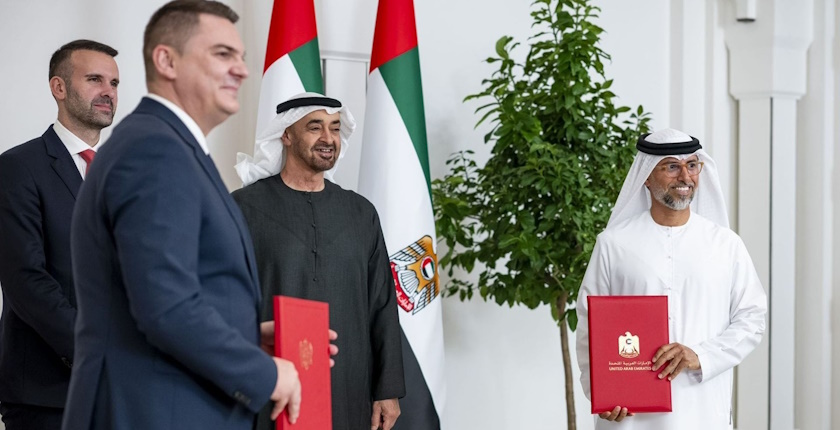
Minister of Energy and Mining Admir Šahmanović signed the agreement with UAE’s Minister of Energy and Infrastructure Suhail Mohamed Al Mazrouei. Montenegrin Prime Minister Milojko Spajić and the President of the UAE Mohamed bin Zayed al-Nahyan attended the ceremony.

Montenegro aspires to become digital hub

The agreement is especially significant for connecting the energy sector with financial technologies and artificial intelligence, the Ministry of Energy and Mining of Montenegro said. The country is aspiring to position itself as a regional hub for innovation, digital transformation and the energy transition, it added.

Within their strategic partnership, the two countries are looking to establish a fintech and AI council. It would consist of representatives of the public and private sector and work on the development of innovative solutions, attracting investments and strengthening the domestic economy through the implementation of progressive technologies.

Joint vision of sustainable development, energy security

The agreement is a new step in the partnership between Montenegro and the UAE, founded on a joint vision of sustainable development, energy security and economic progress, the ministry pointed out.

“The partnership confirms that foreign partners recognize Montenegro as a safe and attractive place for investment in energy and advanced technologies. Our goal is to, through cooperation with the United Arab Emirates, open a new chapter in the development of renewable energy sources, digital infrastructure and innovation,” Šahmanović stressed.

The agreement will facilitate faster materialization of projects strengthening energy security and contributing to the decarbonization of the economy and job creation in the sector of the future, the ministry said.

by in News

OMV, Masdar to build 140 MW green hydrogen plant in Austria

OMV and Masdar are setting up a joint venture for the development and operation of the fifth-largest electrolyzer plant in Europe. The facility is already under construction in Austria. The UAE-based company would be a minority shareholder, with 49%.

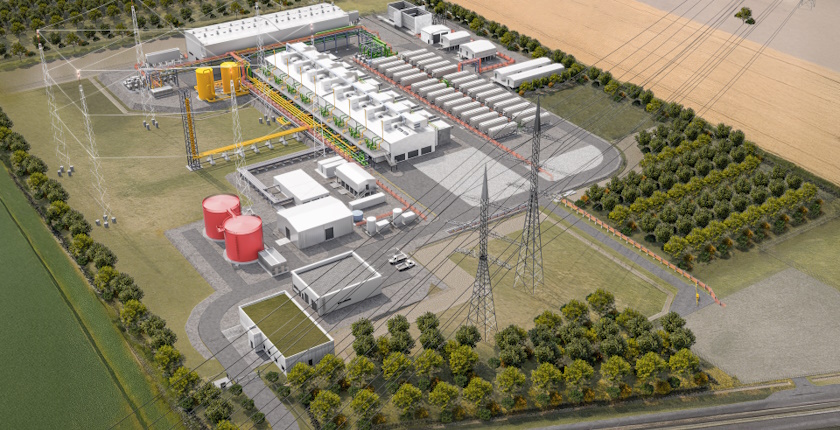
Austrian integrated energy, fuels and chemicals company OMV and Masdar – Abu Dhabi Future Energy Co. signed a binding agreement to establish a joint venture for the financing, construction and operation of the 140 MW green hydrogen electrolyzer plant in Bruck an der Leitha, Austria.

It would be one of Europe’s largest green hydrogen production facilities, marking a major step in OMV’s commitment to decarbonizing its Schwechat refinery, the update adds. Construction of the facility began in September. The companies expect it to become operational in 2027.

OMV to procure electricity, own green hydrogen produced in Bruck an der Leitha

The JV will be majority-owned by OMV, with the clean energy giant from the United Arab Emirates holding 49%. The partnership combines the Austrian company’s integrated fuels and chemicals business and Masdar’s commercial, financial and technical expertise.

The two companies said they would explore opportunities for green hydrogen, e-SAF and synthetic chemicals

OMV, which is already running a 10 MW electrolyzer plant for green hydrogen in Schwechat, will procure the renewable electricity for production and own the green hydrogen produced in the new facility, the announcement reads. Bruck an der Leitha is near the borders with Hungary and Slovakia.

The partnership lays the foundation for strategic collaboration to explore green hydrogen, synthetic sustainable aviation fuels (e-SAF) and synthetic chemicals production in both the UAE and Central and Northern Europe, following the signing of a letter of intent in April. The joint venture would be set up early 2026, conditional on completion of final documentation, shareholders’ approvals and regulatory approvals.

Photo: OMV, Masdar

Hattmannsdorfer: Austria aims to become Europe’s leading hydrogen hub

The binding agreement was signed at the ADIPEC conference and exhibition in Abu Dhabi. The ceremony was held in the presence of UAE’s Minister of Industry and Advanced Technology and Chairman of Masdar Sultan Ahmed Al Jaber, Austria’s Federal Minister of Economy, Energy and Tourism Wolfgang Hattmannsdorfer, Chairman of the Executive Board and Chief Executive Officer of OMV Alfred Stern and CEO of Masdar Mohamed Jameel Al Ramahi.

“We can only secure jobs and prosperity in Austria if we stand firmly for open trade and build successful international partnerships. Together with strategic partnership between OMV and Masdar, we have brought one of the largest direct investments of recent years to Austria. OMV and Masdar are jointly constructing the fifth-largest hydrogen plant in Europe – right here in Austria. This project further strengthens Austria’s leading role in a key technology of the future. Our goal is clear: Austria aims to become Europe’s leading hydrogen hub,” Minister Wolfgang Hattmannsdorfer stated.

By combining Masdar’s global expertise in developing and scaling clean energy projects with OMV’s industrial and technological capabilities, the joint venture will accelerate the decarbonization of hard-to-abate industries, according to Masdar’s CEO Al Ramahi.

by in News

Green light in Greece for expansion of future photovoltaic, green hydrogen complex

Greece approved the request of a firm developing a project for a giant solar park with a green hydrogen plant to double the electrolyzer capacity. The site is in the vicinity of the village of Mantasia in the Phthiotis regional unit.

The Ministry of Environment and Energy in Athens signed off on a proposed change in the project for a complex that would consist of a photovoltaic plant of a whopping 251.9 MW in peak capacity and a system for the production of green hydrogen, Newmoney reported. Mantasia Energeiaki, the project firm, is controlled by German companies Altus and Yamko Energy and France-based Omnes Capital, according to the article.

They can build a 100 MW green hydrogen unit, instead of the initially planned 50 MW. Altus is a subsidiary of Kraftwerke Mainz-Wiesbaden AG (KMW).

The project developers are planning to produce hydrogen in PEM electrolyzers

The site, Karahasan, is near Mantasia, a village in the municipality of Domokos in the Phthiotis (Fthiotida) regional unit. Most of the area is in the territory of the community of Fyliadonos. The proton exchange membrane (PEM) electrolysis facility would comprise ten units of 10 MW.

Total area envisaged for the project in Central Greece spans ​​427 hectares, of which 1.1 hectares for green hydrogen production. It would be stored in several units of 40 tons overall.

The project includes a 400/33 kV substation, with a capacity of 600 MVA, equivalent to 600 MW, as two similar projects would be connected through it. As for the PV plant, it would have 530 W monocrystalline silicon modules and 48 Sunny Central 4600 UP inverters.

by in News

Eksim Energy launches production at its Yozgat wind park in central Turkey

Eksim Energy, which operates one of the biggest solar power plants in Turkey, commissioned the first part of its Yozgat wind farm. The company based in Istanbul has surpassed 1 GW in installed capacity.

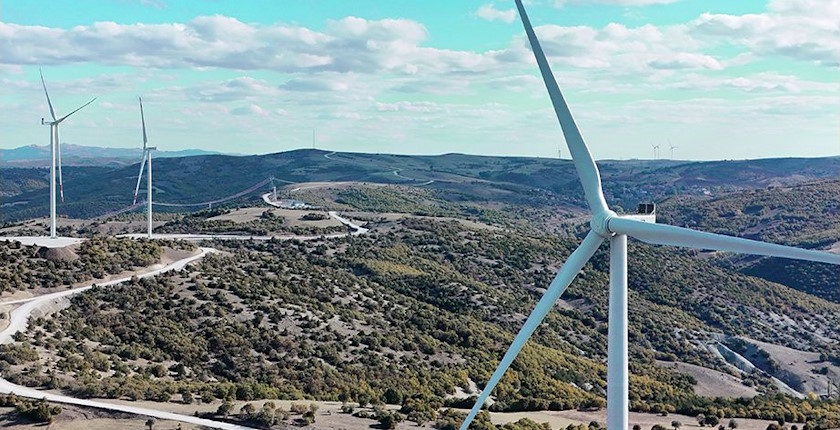
Eksim Energy (Enerji) is accelerating its expansion in the green energy sector in Turkey – the company said it has received all permits for the first four turbines at its Yozgat wind farm in Central Anatolia. Now half of the planned 56 MW in capacity is online, less than a year since the start of construction.

The company, part of Eksim Holding and headquartered in Istanbul, revealed that 135 people worked 140,000 hours so far. Yozgat is its ninth wind power plant and thirteenth renewable energy facility, the update reads.

With the commissioning of the four turbines, Eksim Energy’s capacity topped 1 GW.

Just within the past year, the company also completed the expansion of its Gevye wind power plant, added a solar power segment to its Susurluk wind park and built the Viranşehir photovoltaic plant, one of the largest in Turkey.

Eksim Energy almost doubled its capacity since the end of 2024

Notably, Eksim Energy finished last year with only 569 MW, data from the annual MW100 Turkey report showed. The Uzundere hydropower plant accounts for 63 MW. The rest was wind power, making the company sixth in the segment in Turkey in 2024.

In the Gevye district in Sakarya in northwestern Turkey, the utility tripled its wind farm’s capacity to 150.2 MW. The additional investment amounted to EUR 80 million. The entire facility, which generated its first megawatt-hour in 2020, cost EUR 195 million in total.

The Viranşehir PV system in Şanlıurfa in the country’s southeast has 191.3 MW in peak capacity. The investment was worth USD 150 million.

“Our next focus will be to accelerate our integrated energy storage investments, in addition to our power plant projects, and to expand hybrid generation, where we combine solar and wind power in suitable locations, Chief Executive Officer Arkın Akbay.

by in News

Croatia discovers series of geothermal sources suitable for heating

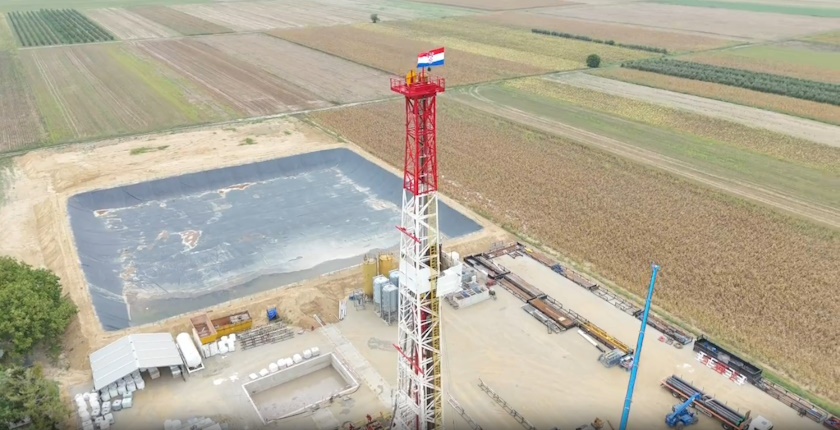
The results of exploration at the Vinkovci GT-1 well have confirmed the area’s significant geothermal potential, Croatian Hydrocarbon Agency said. Maximum temperature is 131 degrees Celsius.

Vinkovci is the third location in Croatia with positive results, as reservoir temperatures exceeding 100 degrees were earlier confirmed in Velika Gorica and Osijek, Croatian Hydrocarbon Agency revealed. The activities are part of a wider project to develop geothermal potential for district heating for six cities and towns.

“The positive findings of the geothermal exploration in Vinkovci, after Velika Gorica and Osijek, are proof that Croatia has significant geothermal potential and the knowledge to use it. Croatian Hydrocarbon Agency is bringing concrete results through its systematic approach and exploration investment, creating the foundations for further projects for renewable energy sources. Namely, geothermal energy is not only a stable and clean source, but a strategic resource that can contribute to the security of energy supply in Croatia. The results show at the same time that Croatian experts can independently and effectively conduct complex energy projects,” President of the Management Board Marijan Krpan said.

Success at 2,700 meters below ground

Crosco naftni servisi (Crosco Integrated Drilling and Well Services), a member of INA Group, ois conducting the works. At a depth of 2,700 meters in the Vinkovci GT-1 exploratory well, an expert team has measured a maximum temperature, 131 degrees, pointing to the possibility of commercial application of geothermal energy in the heating system.

The location is in Croatia’s northeast, in Slavonia area.

“The exploration in Vinkovci has been conducted in line with the highest technical standards and the project’s planned dynamic. Upon the completion of the exploration at the remaining location, in Zaprešić, Croatian Hydrocarbon Agency plans the development of additional wells at sites with confirmed potential. That way we will establish the production-injection pairs required for a secure and long-term geothermal energy use,” the geothermal energy sector’s Director Martina Tuschl stated.

Opportunity for improving local agriculture

Except for heating, access to heat opens up possibilities for companies. Geothermal potential could be used in agricultural production in the municipality of Jarmine, where the exploratory well is located.

The agency is conducting the project with funding from the National Recovery and Resilience Plan (NRRP or, in Croatian, NPOO), within which EUR 50.8 million was secured for exploration in four locations: in Velika Gorica, Osijek, Vinkovci and Zaprešić.

Works at the Zaprešić GT-1 (ZapGT-1) site are underway.

by in News

Cypriot firm preparing to build several solar parks with batteries

Public consultation is underway in Cyprus for environmental impact assessment (EIA) studies for three projects for photovoltaic units, of 14.5 MW in total peak capacity, with 40 MWh in battery storage. The developer, SAOLA, plans several such investments. It is facing opposition from the local population and environmentalists.

The electricity system in Cyprus is severely strained due to the lack of interconnections and energy storage and amid a photovoltaics boom and power demand surge. Even though the installation of the required battery capacity depends on substantial grid investments as well, investors are lining up to seize the opportunity in the budding market as soon as possible. Larnaca-based SAOLA opted for a group of hybrid power plants consisting of small photovoltaic units and battery energy storage systems (BESS) with a matching operating power.

Public consultation is underway for environmental impact assessment (EIA) studies that the firm submitted to the Department of Environment for three such projects. The sites are on the territory of the Agios Theodoros community, in Larnaca district.

SAOLA has vowed to apply a range of mitigation measures

One investment would involve the installation of a solar park of 5 MW in peak capacity together with a 5 MW / 15 MWh BESS. The second project is for 5.5 MW in photovoltaic panels and a battery system with a 5.5 MW capability and 15 MWh in storage capacity. The remaining facility would have 4 MW in peak PV capacity and BESS operating power, and 10 MWh of storage capacity.

The company owns the land. Suggestions and comments will be received until November 26.

Earlier, residents from the affected area raised concerns because the facilities would be on agricultural land, as well as about the impact on the rural landscape. Environmental groups and hunters pointed out that wildlife habitats would be affected.

SAOLA has vowed to conduct mitigation measures. According to the EIA studies, it would plant trees, preserve animal migration corridors and, after decommissioning, recycle equipment and return the area to its original state.

The company is preparing several other investments in photovoltaics with BESS, including in Alaminos and Anafotia in the same district.

by in News

R.Power completing its first solar parks in Romania while more assets enter construction phase

Poland-based R.Power began work on its Lazuri photovoltaic plant of 55 MW in peak capacity in Satu Mare county in northwestern Romania. The company is energizing four solar parks of more than 23 MW overall, its first operational assets in the country. In addition, it is about to break ground on its 254 MWh Scornicești battery energy storage system.

Notably, Electrica recently commissioned its Satu Mare 2 solar power plant, of 21.7 MW.

Romania is set to appear on the map of renewable energy plants and battery energy storage systems (BESS) operated by Poland-based R.Power. The company also has such assets in its home market and Portugal and projects under development in Germany, Spain and Italy. In line with the schedule, R.Power is energizing its first photovoltaic plants in Romania – Stâlpu, Suseni, Dudești and Punghina – and is preparing to begin the construction its first BESS in the country, in Scornicești.

The four solar parks in central and eastern Romania have more than 23 MW altogether in peak capacity. R.Power’s contractors are Nomad Electric and Waldevar. The former has also just begun the construction of the Lazuri solar park in northwestern Romania for the same client.

The PV park in the commune of the same name in Satu Mare county would have 55 MW in peak capacity. The company won a 15-year contract for difference (CfD) for 48 MW in connection terms at Romania’s first renewable energy auction.

Lazuri was part of a group of five solar power projects with support approved for 73.1 MW, or 85 MW in peak capacity. Its annual output is estimated at 70 GWh, equivalent to the consumption of more than 48,000 households in the country.

Major BESS project up for sale

The Scornicești project in Olt county, west of Bucharest, is for 127 MW in operating power. The BESS would have a duration of two hours, translating to 254 MWh in capacity. The project received EUR 15 million in funding via the National Recovery and Resilience Plan (NRRP or, in Romanian, PNRR).

R.Power has sold a 49.99% stake last month to Eiffel Investment Group. The transaction follows the two companies’ previous cooperation in photovoltaic projects.

The Polish firm recently said it would divest of a ready-to-build project for a battery energy storage system of 200 MW and 400 MWh. The move is part of an asset rotation and portfolio diversification strategy, according to the update.

The company added that the future facility near Bucharest would provide flexibility for the grid. It is known as Project Tessara.

Solar-battery hybrids in project pipeline

As of August, R.Power had over 1.2 GW of projects for standalone BESS in Romania. It said it would set up PV-BESS hybrid configurations as well.

“The start of construction of the Lazuri solar farm highlights our commitment to expanding operations in Romania, which is one of our key markets. Alongside Lazuri, we are developing additional photovoltaic and battery energy storage (BESS) projects there,” the company’s Chief Executive Officer and Co-founder Przemek Pięta said.

Satu Mare county also hosts several new solar parks. Romanian power supplier and distributor Electrica recently commissioned its Satu Mare 2 unit of 27.1 MW in peak capacity, in the Botiz commune.

The company partially funded the investment, worth more than EUR 20 million, from NRRP. The project included a 110/20 kV transformer station and grid connections.