by in News

SANY International takes over large PV-BESS project in southwestern Romania

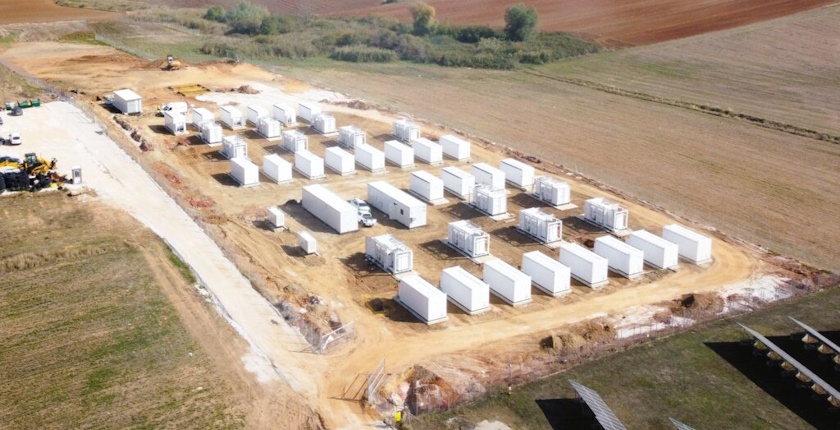
Renewable energy company Sany International (Singapore) has completed the acquisition of a project for a solar power plant of 95 MW in peak capacity combined with 218 MWh in battery storage. The location is in Romania’s Dolj county.

SANY Renewable Energy signed power purchase agreements (PPAs) and contracts for difference (CfD) earlier this year in Serbia for its wind power projects Alibunar 1 and Alibunar 2. Just before that, and through another subsidiary, SANY Group secured its entry into the European market for solar power plants with energy storage

Renewable energy company SANY International (Singapore) is now the owner of a project for a solar power plant of 95 MW in peak capacity combined with 218 MWh in battery storage. The location is in Dobrești in Romania’s southwest.

Deal was signed in April

The shares transfer ceremony took place in Bucharest on October 15 in the presence of representatives of domestic developer Enero and local energy officials, the company said, as quoted by Economica.net. It is its first acquisition of such a project outside China.

SANY Singapore’s representative Xu Zhongtian signed the share purchase agreement in April. After that, the Commission for the Examination of Foreign Direct Investments (CEFDI or CEISD) approved the transaction.

Dobrești project is at ready-to-build stage

The project at a site 45 kilometers from Craiova in southwestern Romania is at a ready-to-build stage, Sany International (Singapore) revealed.

It is one of the largest hybrid projects integrating photovoltaics with a battery energy storage system (BESS) in Romania, the company added. Of note, Dolj is one of Romania’s coal regions, which are transitioning to cleaner energy sources.

“This investment reflects the growing interest in the clean energy sector in Central and Eastern Europe, in a context in which countries in the region accelerate efforts to achieve EU energy and climate targets. At the same time, SANY strengthens its strategic focus on renewable energy investments at the European level, aiming to expand its presence in fast-growing green energy markets,” the announcement reads.

SANY Group is an industrial conglomerate, established in 1989 in China. It is mostly known for construction machinery, but SANY Renewable Energy is one of the world’s biggest wind turbine manufacturers, too.
by in News

Two large photovoltaic parks commissioned in Albania in 2025

In the first eight months of this year, Albania added two solar power plants of an overall 150 MW and a hydropower facility of 48.9 MW to its transmission grid.

Hydropower plants account for almost all electricity production in Albania, but the share of photovoltaics is gradually growing. Several major solar parks already online – the Karavasta facility is the biggest in the Western Balkans. Conversely, there is not a single wind turbine in operation in the country.

According to the Energy Regulatory Authority (ERE), renewable electricity plants of 225 MW in total capacity have been put into operation in the first eight months of this year.

Project Blue completed

Five solar parks came online, with 156 MW altogether. The largest one is Sunny Side Solar (100 MW). The domestic Kastrati Group, which is active in construction and the oil business, built the facility in the Fier area in western Albania.

The Spv Blue 2 solar power plant has 50 MW. It is a joint project of Blessed Investment and Matrix Konstruksion. The location is in Sheq Marinas in Fier. Their Blue 1 PV park, in the same area, is the first fully privately financed solar park in Albania. The two companies commissioned it last year.

Sunny Side Solar and Blue 2 both began operating in August, as did one of the three remaining new units, of 2 MW each. The other two started generating electricity in April and June.

Gostimat hydropower complex launches production

Of the overall 69.2 MW in new hydropower plants, the Gostimat facility has 48.9 MW. Notably, ERE’s earlier updates show the project was for a complex of seven units on the river Gostima in the Shkumbin basin. The operator is Egnatia Hydropower.

MC Inerte’s project firm M.C. Energji Gojan built its 15 MW hydropower plant Gojan in the Puka area in northern Albania.

In addition, the regulatory body said nine hydropower plants of 26.4 MW in combined capacity have switched to the free market.

The country’s total electricity generation capacity was 3.2 GW at the end of last year.

by in News

Romania’s coal town Turceni starts EUR 380 million green energy transformation

Turceni is dependent on the local coal power plant, so the municipal authority is turning to agrivoltaics, energy storage and green hydrogen to replace it. The small town in southwestern Romania is kickstarting a EUR 380 million project.

The coal plant in Turceni used to be one of the biggest in Europe, at 2.3 GW. Located next to the eponymous town in Romania’s Gorj coal region, only two units of 660 MW in total are still operational. At the same time, dozens of such facilities across Europe are shutting down ahead of schedule. The power plant and its associated mines within Complexul Energetic Turceni have been essential for the local economy, which is under threat of devastation amid the country’s coal phaseout.

As with other coal regions in the European Union, the solution is in green energy and new technologies. The town hall has signed a contract with the European Investment Bank for agrisolar parks, energy storage units and the production and storage of green hydrogen.

Turceni town hall secures municipal land for green energy projects

The project is worth a whopping EUR 380 million, Mayor Constantin Popescu revealed. Turceni and its administrative area have fewer than seven thousand inhabitants.

More than 123 hectares of municipal land (pastures) and more than 200 hectares of private land were designated for the renewable energy hub, the mayor stressed.

Bankwatch: The coal region is transitioning to a future based on innovation, sustainability and strong partnerships

Partners in the project are Bankwatch Romania and GAL Sudul Gorjului, the so-called local action group for southern Gorj. Bankwatch said over 370 hectares would be switched to clean and sustainable energy production.

“We are glad that we had an important role in developing the project plan and aligning it with European environmental policies, as well as in applying for technical assistance. For a region that has been, for decades, a pillar of coal-fired energy, this project marks a strategic transformation: a transition to a future based on innovation, sustainability and strong partnerships,” the organization added.

Investments to start in 2026

Implementation is scheduled to begin next year. The project will contribute to a just transition of the region by increasing the production of electricity from renewable energy sources, Popescu asserted. In his words, it will be complementary to the local authority’s other ongoing and future decarbonization investments.

The mayor also highlighted the plans to use geothermal energy for district heating and agriculture.

Complexul Energetic Turceni is part of state-owned Complexul Energetic Oltenia (CE Oltenia). According to the company’s restructuring and decarbonization plan, the coal business will be separated from green energy and other investments.

They include projects for CCGT (combined-cycle gas turbine) power plants of 475 MW in Turceni and 800 MW in nearby Ișalnița, as the main replacement for coal plants. Both are suffering heavy delays.

Minister of Energy Bogdan Ivan said last week that CE Oltenia’s Ișalnița coal plant in neighboring Dolj county would be closed on January 1. Romania has asked the European Commission to delay the closure of several coal plant units, scheduled for this year, until 2030.

Earlier this year, a joint venture between CE Oltenia and OMV Petrom hired contractors for four solar power plants at former coal land, with a combined capacity of about 550 MW. One of the sites is in Ișalnița.

by in News

Principia builds CfD-backed battery storage facility in Greece

Principia built its first battery system in just six months. The Themelio facility in Chalkidiki in northern Greece, with 49 MW in operating power, will help reduce curtailments from wind and solar power plants and contribute to grid stability.

One of the first standalone battery energy storage systems (BESS) in Greece is coming online in December. Principia said it built the Themelio facility in the Vouno area of Chalkidiki peninsula, aligned with the national plan for grid stability and electrification.

The BESS has 49 MW in capability and a two-hour duration, translating to a guaranteed capacity of 98 MWh, while the nominal capacity is 127 MWh.

Principia is an equally-owned joint venture of Italy-based Enel and funds managed by Macquarie Asset Management, headquartered in Australia. The company said the name Themelio, foundation, symbolizes the beginning of its new era, diversifying beyond renewables.

The construction of the battery system near the town of Polygyros in the Central Macedonia region began in April. It will help reduce curtailments from wind and solar plants, especially in grid-congested areas, by absorbing excess electricity and injecting it back into the system when needed, Principia explained.

The battery energy storage system features a guaranteed capacity of 98 MWh

BESS also enhances system stability by providing power during peak demand and ensuring smooth grid operation. In addition, the unit promotes energy decentralization, as it is located close to renewable energy production sites, contributing to the creation of a more flexible and intelligent energy environment, the joint venture pointed out.

Eurobank financed half of the EUR 28 million project.

The new system in northern Greece consists of 26 Sungrow battery containers, each with a maximum capacity of 5 MWh and equipped with advanced CALB 314 Ah cells. Themelio includes 13 Sungrow power stations, containing 5,140 kW transformers and 33 kV medium-voltage switchgear, as well as two medium-voltage terminal substations.

The project won government support last year, in the form of a contract for difference (CfD), in Greece’s second auction for standalone energy storage systems. Almost all other beneficiaries of the program are struggling with strict deadlines.

by in News

Romanian company to build geothermal hydroponic greenhouses on 50 hectares

Geothermal well developer and operator Green Tech International started the construction of a geothermal hydroponic greenhouse complex on ten hectares in western Romania. It is part of a five-year plan to reach 50 hectares.

Green Tech International, listed this year on the Bucharest Stock Exchange (BSE or BVB), said it has started the works on the largest hydroponic greenhouse complex in Romania, heated with geothermal water.

The company’s strategy is to develop at least 50 hectares over the next five years. It has 12 years of experience in the development and operation of geothermal wells. Green Tech International, which is also a platform for geothermal energy solutions, directly owns 42 wells and operates another 41. It is one of the largest portfolios in Europe.

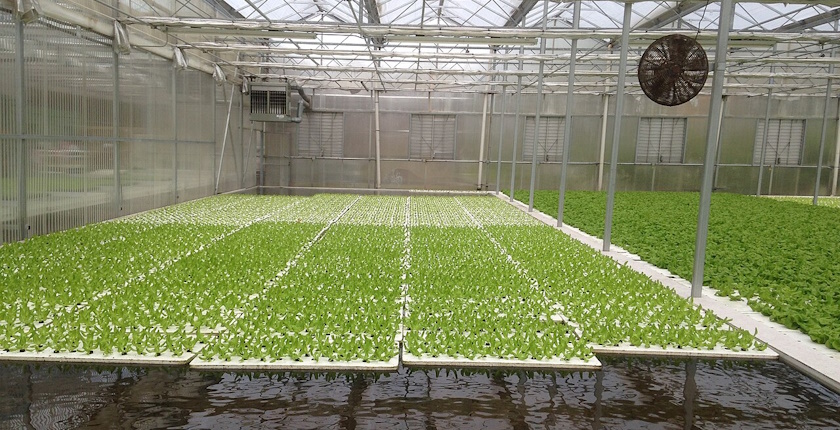
The company is conducting the current project through its subsidiary Horti Green Invest. Hydroponics are a method of growing plants without soil. The roots are suspended in a nutrient solution or in an inert medium retaining the nutrients.

Geothermal heat has significant competitive advantage

Geothermal energy has a significant competitive advantage to traditional sources, with renewable heat available 24 hours a day, regardless of the weather, and with a predictable cost in the long term, Green Tech International noted.

Gavriluță: The project will position Green Tech International among the top three greenhouse vegetable producers in Romania

“We are well-positioned to capitalize on our geothermal resources and generate value in complementary sectors with high growth potential. Our strategy focuses on investments in synergistic industries such as sustainable agriculture, where geothermal energy provides a major competitive advantage due to lower costs and supply stability,” Chief Operating Officer Dragoș Gavriluță said in a stock exchange filing.

First phase to cover ten hectares

Green Tech International has started the construction of its first modern geothermal hydroponic greenhouse project, covering an area of 10 hectares in western Romania, he stressed. The project will position Green Tech International among the top three greenhouse vegetable producers in Romania, Gavriluță claimed.

The update reveals that the company intends to invest in the rehabilitation of existing geothermal wells in the area and in the modernization of a thermal power plant to supply heat to the greenhouses. Green Tech International Group also includes Geotherm Distribution and Apoterm Nădlac.

According to an earlier news report, the company is interested in subsidies via the European Union’s Modernisation Fund for the production and transport of geothermal energy for district heating or cooling systems.

As for the rest of the region that Balkan Green Energy News covers, Turkey is one of the world’s biggest geothermal energy producers, including the greenhouses segment.

by in News

Renalfa IPP expands its Tenevo, Kaolinovo PV plants in Bulgaria with batteries

Vienna-based Renalfa IPP commissioned a 65 MW / 260 MWh battery energy storage system within its hybrid power plant project in Tenevo. Also in Bulgaria, the joint venture expanded its Kaolinovo solar power plant to 33 MW and added a BESS of 33 MW in operating power and 110 MWh in capacity.

One of the biggest hybrid power plants in Southeastern Europe is gradually coming together. Renalfa IPP, which last year marked the start of the BESS boom in Bulgaria, said it added a battery system of 65 MW in capability and 110 MWh in capacity to the Tenevo solar power plant.

Project firm Tenevo Solar Technologies is a joint venture with Denmark-based Eurowind Energy. Renalfa IPP, headquartered in Austria’s capital city, is itself a joint venture, established by clean energy and e-mobility company Renalfa Solarpro Group and French renewable energy infrastructure fund manager RGreen Invest.

Ultimately, the plan is to build a 250 MW wind farm at the Tenevo site, in Yambol province in Bulgaria’s southeast. The first 69 MW in peak capacity of the solar power plant came online two months ago, within a 237.6 MW project.

Tenevo BESS to grow to 315 MW

Tenevo is one of the biggest co-located BESS projects in Europe to date, according to Renalfa IPP, which added that it surpassed 1 GWh of energy storage in operation.

The firm aims to increase the battery facility to 315 MW and 760 MWh by early next year, when it expects to complete the solar park as well.

Solarpro Bulgaria builds both battery storage facilities

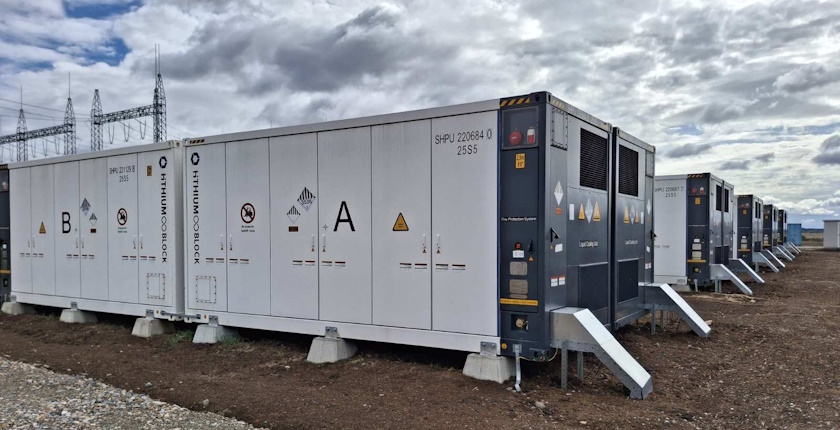
The project manager for the Tenevo BESS is Solarpro Bulgaria, part of Renalfa Solarpro Group, while Hithium and Kehua supplied the equipment. Solarpro and Hithium established cooperation two years ago and recently expanded it.

The same affiliate was the project manager and engineering, procurement and construction (EPC) contractor for the expansion of the Kaolinovo photovoltaic park in northeastern Bulgaria. Renalfa IPP said it grew to 33 MW in peak capacity from 10 MW, while a BESS of 33 MW and 110 MWh was also added. The facility was built in 2012.

Renalfa IPP is also active in Hungary, Romania, and North Macedonia, where it is about to add batteries to its Oslomej PV plant. In the last update, it said it has 554 MW in operational generating assets, BESS of 455 MW and 1.01 GWh in total, and over 1 GW of projects in late-stage development.

by in News

Türk Telekom puts solar power plant into operation as part of 530 MW project

Telecommunications operator Türk Telekom has inaugurated the first part of a solar power plant of 128 MW in peak capacity. The facility in Sivas province in Central Anatolia is one of the company’s three planned photovoltaic systems, totaling 530 MW.

Solar power, affordable and easy to install, is cost-effective for nearly all social and economic activity. In Southeastern Europe and beyond, it has become a mainstream technology, from municipal authorities and local institutions to industrial production. Türk Telekom stands out in the region as a major telecommunications company investing massively in photovoltaics.

The Turkish state-owned firm commissioned the first part of a solar power plant of 128 MW in peak capacity. Earlier it integrated 1.2 MW of solar energy with its 370 base stations and reached 5.5 MW overall.

The new solar park is on 130 hectares in the Zara district in Sivas province, Central Anatolia. When completed, it will cover 15% of the company’s consumption with its estimated annual output of 196 GWh.

Bayraktar: Many companies transformed from energy consumers to producers

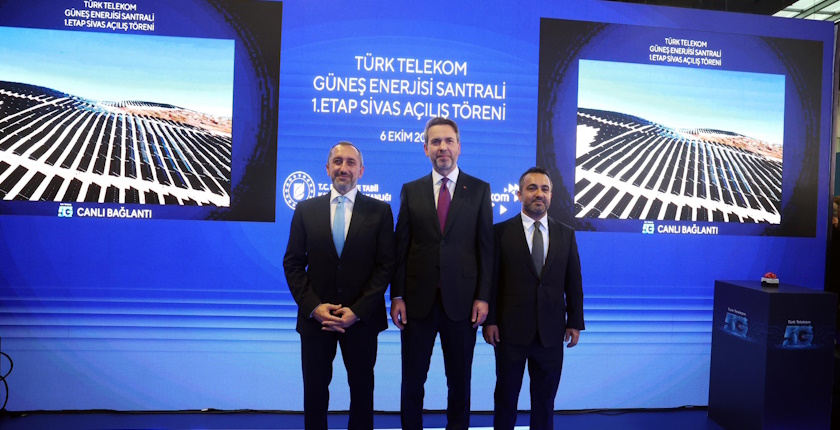
At a ceremony at the 11th Energy Efficiency Forum and Exhibition in Istanbul, Minister of Energy and Natural Resources Alparslan Bayraktar put the completed segment into operation using a remote-controlled 5G wireless system. The energy revolution in Turkey has transformed many companies from energy consumers to producers, he pointed out.

Recalling that renewable electricity plants of more than 6 GW in total were completed last year, the minister expressed confidence that 2025 would be a record year. Turkey is heading toward 9 GW or 10 GW, striving to increase the newly installed capacity every year, Bayraktar said.

Türk Telekom to cover two thirds of its electricity needs with photovoltaics

ZTE won the tender late last year for the 128 MW project. The contractor installed mono-crystalline bifacial double-glass N-type PV panels and 350 kW inverters.

According to Türk Telekom’s Chief Executive Officer Ümit Önal, the Sivas plant and two other future solar parks, in Malatya and Ağrı, would meet 65% of the company’s electricity demand. Spanning 600 hectares, they would have 530 MW in combined peak capacity and generate an estimated 800 GWh per year.

Together with its affiliate TT Ventures, Türk Telekom has set up 114 electric vehicle charging units in 40 locations in 11 provinces. The number, within their E4 Charging project, is estimated to grow to more than two hundred this year, at more than 90 sites in 33 provinces.

by in News

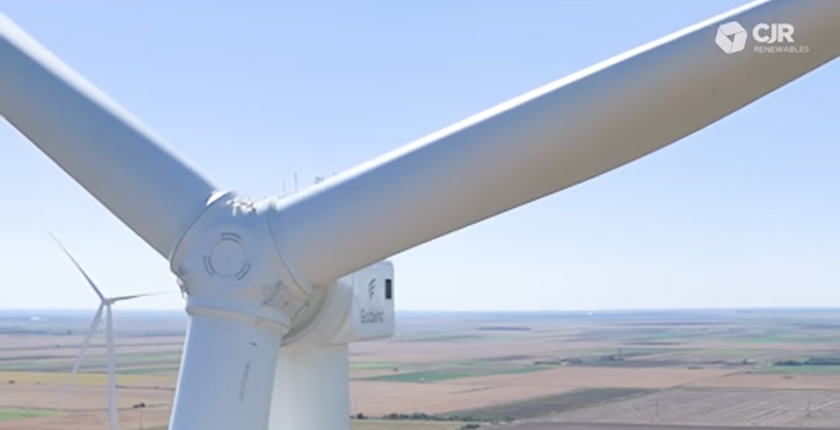
CJR Renewables completes construction of 102 MW Urleasca wind farm in Romania

The Urleasca wind farm in Brăila county in eastern Romania is complete, contractor CJR Renewables said. The 102 MW facility owned by BIG Mega Renewable Energy will generate an estimated 277 GWh.

Wind power investments are returning to full speed in Romania, following a decade-long break and a stellar expansion in the photovoltaics segment over the past several years. Portugal-based CJR Renewables, the contractor in the Urleasca project, announced that the 102 MW facility is complete.

Urleasca is a village in Traian commune, in the vicinity of the city of Brăila, northeast of Bucharest. The developer, BIG Mega Renewable Energy, secured EUR 92 million in financing last year from the European Bank for Reconstruction and Development (EBRD) and OTP Bank. It earlier valued the investment at EUR 109 million,

The Israeli firm achieved a deal in 2021 to purchase the project in Romania. CJR Renewables pointed out that the wind farm would generate an estimated 277 GWh per year, which would displace 115,000 tons of CO2 emissions.

Urleasca consists of 17 wind turbines, Goldwind GW 165-6.0, each of 6 MW. The contractor also built 20.2 kilometers of internal and local roads.

BIG Mega Renewable Energy is fully owned by BIG Energia Holdings, established in Hungary, which is in turn a subsidiary of BIG Shopping Centers and Mega OR.

A different wind power project for a site in Urleasca won state support in August at Romania’s second renewable energy auction.

by in News

Romania’s Hidroelectrica to equip hydropower plants with battery storage

Romanian state-owned power utility Hidroelectrica will install storage on all its run-of-river hydropower plants, to be able to switch the supply of surplus electricity to the evening peak, according to interim CEO Bogdan Nicolae Badea.

Hybrid power plants are all the rage. Two- and even three-way combinations between batteries and solar and wind power plants have become more and more popular over the past few years, as they enable steadier and more predictable supply. But energy storage can have a meaningful role in tandem with hydropower as well, and interim President of the Board of Directors of Hidroelectrica Bogdan Nicolae Badea revealed plans for such investments.

Namely, impoundment hydroelectric plants control the flow from the reservoir through the dam, so much of their production can be adjusted to demand. Run-of-river facilities can store little to no water, which is why the Romanian state-owned hydropower plant operator intends to add energy storage to its entire operational portfolio in the segment, Badea explained.

Goal is to lower daily price spreads at power exchange

The idea is to switch the supply of electricity from times of surplus within the day to the evening peak, the interim CEO stressed at the Profit Energy.forum. There are seven to eight slots a day at the electricity exchange with very low or negative prices, and others with excessive prices, Badea pointed out.

“Even in free market conditions and affected by external crises, the cost borne by consumers could be somewhat lower than today if Romania had energy storage capacities, so that daily consumption peaks are in balance with production peaks,” the interim CEO underscored.

Price caps hurting Romanian state budget

Romania caps power prices, which harms the state budget, Badea noted and said there are two ways to achieve a balance.

“The first solution is a systemic one – and here all the important participants in the energy sector must invest – and Hidroelectrica is doing this, investing primarily in diversification. We have a wind farm in operation today. We are investing a lot in the storage area and we are trying to combine renewable sources, hydro, photovoltaics, floating photovoltaics,” he stated.

Hidroelectrica signed a contract in April with a consortium of Romanian companies Prime Batteries Technology and Enevo Group, for a lithium ion battery energy storage system at its Crucea Nord wind farm.

Hidroelectrica is investing in storage, solar power and hybrid power plant projects

The company also plans to integrate a BESS with hydropower plant Iron Gate 2 (Porţile de Fier 2) on the Danube. The project is valued at EUR 61.2 million. Some hydropower plants are set to be equipped with rooftop photovoltaic systems.

Badea was also the company chief from 2017 to 2023. He was recently reappointed, after he was the chief investment officer for almost two years.

For the first six months of this year, hydrological data shows a situation reminiscent of the critical moment when the company entered insolvency, in 2015, Badea added. However, unlike that period, today Hidroelectrica is a profitable, stable company and a pillar of the energy system, he stressed.

by in News

Powering the Future with Sustainable Energy – North Macedonia to host 14-IFESD forum on October 28-30

Over 300 officials, policymakers, experts, business leaders, scholars and civil society representatives are gathering in Skopje on October 28 at the three-day International Forum on Energy for Sustainable Development (14-IFESD). Key topics include energy connectivity, energy security, a just energy transition and international energy cooperation.

The 14th International Forum on Energy for Sustainable Development (14-IFESD) will be held from October 28 to 30 at the Hotel Holiday Inn Skopje in North Macedonia. This year’s theme, From Goals to Action: Powering the Future with Sustainable Energy, will guide discussions among more than 300 participants, including officials, policymakers, energy experts, business leaders, scholars and civil society representatives.

They will discuss critical topics such as energy connectivity, energy security, just energy transition, international energy cooperation and collective efforts to accelerate the implementation of the United Nations 2030 Agenda for Sustainable Development.

The forum will serve as a platform for shaping actionable strategies to accelerate progress toward global sustainable energy goals

The Ministry of Energy, Mining and Mineral Resources is organizing the event in collaboration with the UN Development Programme (UNDP) Country Office in North Macedonia and the five regional commissions: UN Economic Commission for Europe (UNECE), UN Economic and Social Commission for Asia and the Pacific (UNESCAP), UN Economic Commission for Latin America and the Caribbean (UNECLAC), UN Economic Commission for Africa (UNECA) and Economic and Social Commission for Western Asia (ESCWA).

Last year’s IFESD was held in Bangkok.

The speakers list includes Prime Minister Hristijan Mickoski, Minister of Energy, Mining and Mineral Resources Sanja Božinovska, Energy Community Secretariat Director Artur Lorkowski and Minister of Energy and Mining of Montenegro Admir Šahmanović.

The forum will serve as a platform for shaping actionable strategies to accelerate progress toward global sustainable energy goals, the organizers said.

One of the segments on the first day of 14-IFESD is dedicated to opportunities for the mitigation of methane emissions from the coal sector. It will take place in a hybrid format – onsite and online.