by in News

Electricity Production and Exports Rise Sharply in Albania in Q1 2026

Electricity production and exports increased significantly in the first quarter of 2026, while imports fell by more than half, according to data published by INSTAT on the country’s electricity balance.

Net domestic electricity production reached 3,647 GWh in the first three months of the year, compared with 2,234 GWh in the same period a year earlier, marking an increase of 63.2%. The growth was driven mainly by public hydropower plants, as well as private and concessionary hydropower producers, which together accounted for more than 93% of domestic production. Other producers, mainly photovoltaic plants, represented around 7% of total generation.

Gross electricity exports, including exchanges, rose to 1,503 GWh, up from 732 GWh in the first quarter of 2025, representing a year-on-year increase of 105.4%. At the same time, gross imports fell to 327 GWh, from 767 GWh, reflecting a decline of 57.4%.

As a result, the electricity exchange balance was positive at 1,177 GWh, while domestic production covered most of the country’s demand.

Public hydropower plants generated 1,667 GWh during the period, up 63% compared with the same quarter of the previous year. Production from private and concessionary hydropower plants reached 1,726 GWh, an annual increase of 66.8%. Meanwhile, other electricity producers, including photovoltaic plants, generated 254 GWh in the first quarter, compared with 176 GWh a year earlier, recording growth of 44%.

Electricity available for consumption increased by 8.9% compared with the first quarter of 2025, while final consumption reached 1,954 GWh, up 9.1% year-on-year.

Household electricity consumption increased by 8.8%, while consumption by businesses and other non-household consumers expanded by 9.5%. INSTAT also reported that network losses reached 516 GWh, or 8% higher than a year earlier. However, the share of losses in relation to electricity available for consumption declined slightly to 20.9%, from 21.1% in the first quarter of 2025.

Transmission losses increased by 31.9%, while distribution losses rose by 5.1%, according to official data.

TAB. 1 Electricity Energy Balance
MWh
Indicators Q1 2025 Q1 2026
A Available energy (A=1+2-3) 2.269.259 2.470.192
1 Domestic net production (1=1.1+1.2+1.3) 2.233.905 3.646.805
1.1 Thermal power plants 0 0
1.2 Hydropower plants (1.2=a+b) 2.057.523 3.392.739
a Public (a=a.1-a.2) 1.022.784 1.666.663
a.1 Gross production of public hydropower plants 1.032.261 1.679.355
a.2 Losses and own consumption 9.477 12.693
b Independent private and concessionary producers 1.034.740 1.726.076
1.3 Other producers — other renewable energy sources 176.381 254.066
2 Gross imports — energy received 767.187 326.815
3 Gross exports — energy delivered 731.833 1.503.429
B Electricity consumption (B=1+2) 2.269.259 2.470.192
1 Network losses (1.1+1.2) 477.816 515.817
1.1 Losses and own consumption in transmission 51.088 67.361
1.2 Distribution losses (1.2=a+b)1 426.728 448.456
a Technical losses in distribution 312.071 336.635
b Non-technical losses in distribution2 114.657 111.821
2 Use by consumers (2=2.1+2.2) 1.791.443 1.954.375
2.1 Household consumers 1.064.956 1.158.522
2.2 Non-household consumers 726.487 795.853
1 The breakdown of technical and non-technical losses consists of estimates carried out by operators active in the electricity sector.
2 Non-technical losses also include statistical differences arising from non-declarations of production and changes resulting from the timing of production measurement, which is shifted in relation to sales or consumption data.
⚡ Albania Electricity Balance · Q1 2026

Electricity Production and Exports Surge in Q1 2026

Official INSTAT data show that Albania’s electricity available for consumption increased by 8.9% year-on-year, supported by a strong rise in domestic generation and a sharp increase in exports.

Energy available 2,470 GWh ▲ +8.9% vs Q1 2025
🏭
Net domestic production 3,647 GWh ▲ +63.2% vs Q1 2025
🔌
Gross exports 1,503 GWh ▲ +105.4% vs Q1 2025
⬇️
Gross imports 327 GWh ▼ -57.4% vs Q1 2025

Q1 2025 vs Q1 2026: Electricity Balance

Indicator Q1 2025 Q1 2026 Change
by in News

North Macedonia Moves Closer to European Green Electricity Certification System

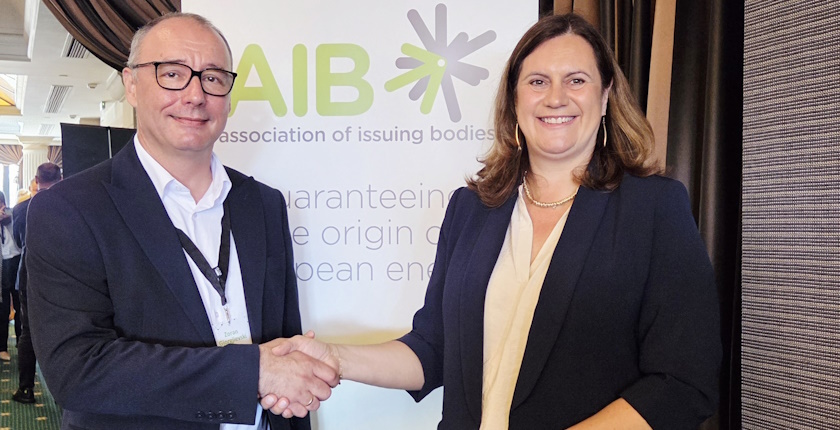
North Macedonia’s National Electricity Market Operator, MEMO, has officially joined the Association of Issuing Bodies (AIB), marking an important step toward deeper integration with the European framework for guarantees of origin and cross-border renewable electricity trade.

The decision was confirmed during the General Assembly of the Association of Issuing Bodies, where MEMO became a full member of the Brussels-based European energy certification organization. The move comes as the Ministry of Energy, Mining and Mineral Resources and the Energy Community Secretariat continue efforts to advance the mutual recognition of guarantees of origin between the European Union and Energy Community countries.

Guarantees of origin are electronic certificates proving that a specific quantity of electricity has been generated from renewable energy sources. They are increasingly important for transparent energy markets, renewable energy producers, suppliers and companies seeking to demonstrate the use of green electricity in line with ESG and decarbonisation standards.

MEMO introduced its electronic registry for guarantees of origin in April last year, in cooperation with energy certificate company Grexel and in line with European Energy Certificate System rules and AIB standards. Since then, North Macedonia has issued around 500,000 guarantees of origin, with each certificate representing 1 MWh of electricity produced from renewable sources.

According to MEMO Chief Executive Officer Zoran Gjorgjievski, AIB membership enables the Macedonian guarantees of origin system to implement the procedures required for future accession to the European Energy Certificate System. This will allow the secure, transparent and internationally recognized issuance and trading of green electricity certificates.

He emphasized that further integration of North Macedonia’s electricity market with the European energy market is essential, as it creates new opportunities for renewable energy producers, suppliers and businesses while strengthening trust, competitiveness and investment attractiveness in the country’s renewable energy sector.

Denko Rafajlovski, Head of MEMO’s Renewable Energy Support Department, noted that guarantees of origin play a key role in promoting renewable energy and giving consumers greater transparency and choice over the source of the electricity they use. Through the AIB Hub, national registries are connected, enabling the efficient cross-border transfer of green certificates between countries.

MEMO became an observer member of AIB last year as a first step toward full membership. Its accession now represents a significant milestone in the development of a modern, transparent and European-aligned electricity market in North Macedonia.

Cross-border trade in guarantees of origin will become possible once national legislation and technical requirements are fully harmonized with European Union standards.

by in News

EPCG Expands Generation and Storage Portfolio with 639 MW of New Projects

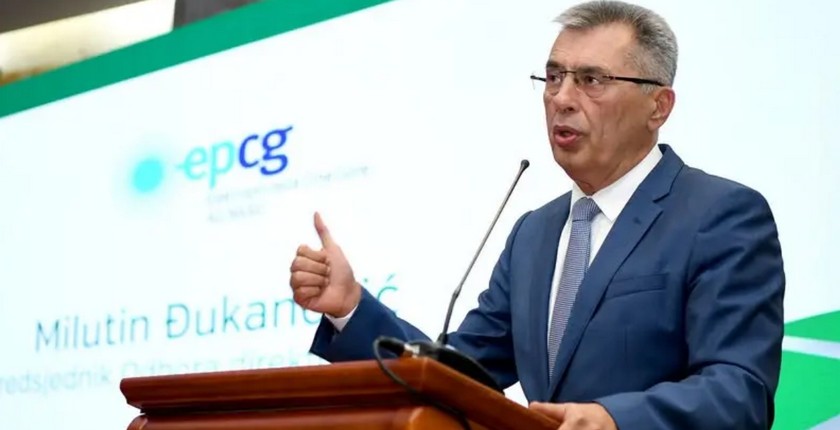
Montenegro’s state-owned utility Elektroprivreda Crne Gore (EPCG) is advancing a broad portfolio of solar, wind, battery storage, and hydropower projects with a combined capacity of 639 MW, and an expected annual electricity output of more than 1 TWh, according to Milutin Đukanović, President of EPCG’s Board of Directors.

In an opinion piece, Đukanović said the company has already completed part of a major investment cycle, including rooftop solar projects, the Gvozd 1 wind farm, the ecological reconstruction of the Pljevlja thermal power plant, and part of the modernization works at the Piva and Perućica hydropower plants. He added that new generation capacities, battery storage systems, hydropower upgrades, rooftop solar, wind projects, and strategic partnerships are EPCG’s response to the operational and market challenges it faced in 2025.

EPCG’s direct project pipeline amounts to around 639 MW/MWp, with estimated investments of approximately EUR 646.5 million and an expected annual output of about 1,024 GWh. Đukanović noted that the investment framework also includes reconstruction and upgrade projects that cannot always be expressed in megawatts.

When strategic and potential private partners are included, the company’s total portfolio rises above 4,636 MW/MWp, with a potential annual electricity generation of more than 8,176 GWh. Đukanović said EPCG is positioning itself for a larger role in Montenegro’s energy transition and in the broader regional power market.

The portfolio includes EPCG-owned solar power plants with a combined capacity of 221.1 MW and projected annual production of 299 GWh, rooftop solar systems for prosumers totaling 209.1 MW and 245 GWh in annual generation, the Gvozd 1 and Gvozd 2 wind farms with a combined capacity of 75.6 MW and expected output of 227 GWh, hydropower projects totaling 71.7 MW and 135 GWh annually, and battery energy storage facilities with an operating power of 60 MW.

A battery energy storage system is also planned at EPCG’s steel plant Željezara Nikšić. The project is estimated at around EUR 48 million and is designed as a 60 MW / 240 MWh system, with an expected annual electricity output of about 118.3 GWh, Đukanović said.

Among the completed investments, EPCG has already added 143.66 MW of new generation capacity, corresponding to around 268 GWh of annual electricity production. The value of these completed projects stands at approximately EUR 258.87 million.

These include rooftop solar systems installed under the Solari 3000+ and Solari 500+ programs, with a total peak capacity of 34.34 MW and expected annual generation of 40.18 GWh, as well as the completed portion of the Solari 5000+ project, which has a total peak capacity of 54.72 MW and expected annual output of 64.02 GWh. A further 20 MW of rooftop solar remains to be installed under the same program.

The 54.6 MW Gvozd 1 wind farm has also been completed, with an investment of EUR 82 million and projected annual output of 163.8 GWh. Together with the second phase, Gvozd 2, the project will raise total wind capacity by about 75.6 MW.

Additional completed investments include the ecological reconstruction of the Pljevlja thermal power plant, valued at EUR 75 million, along with the second phase of reconstruction and modernization works at the Piva hydropower plant, worth EUR 10.83 million, and the second phase at the Perućica hydropower plant, worth EUR 33 million.

Đukanović also noted that the Pljevlja coal mine carried out the diversion of the Ćehotina River during the power plant reconstruction, in a project worth EUR 20 million. The intervention was necessary to secure continued coal mining operations, as available reserves were close to exhaustion.

He said the main reasons for EPCG’s EUR 92.1 million loss in 2025 were the eight-month outage at the Pljevlja thermal power plant due to ecological reconstruction, as well as unfavorable hydrological conditions.

According to Đukanović, once production at Pljevlja resumed, EPCG’s energy balance returned to positive territory. The company then posted a profit of EUR 36.47 million in the first quarter of this year.

by in News

Gramos Hashani appointed as permanent head of KEK in Kosovo

Kosovo Energy Corp. (KEK) has officially appointed Gramos Hashani as its Chief Executive Officer, following a fourteen-month period during which he served as interim head of the state-owned power utility. The decision was confirmed by the company’s Board of Directors after the completion of what it described as an open, transparent, and competitive selection process.

According to the board, the appointment procedure was conducted in full compliance with Kosovo’s Law on Public Enterprises and included the evaluation and interviewing of all candidates who satisfied the requirements outlined in the public vacancy announcement.

Hashani initially assumed the role of interim CEO in February last year, at a time when KEK was facing increasing pressure to improve operational efficiency, strengthen corporate governance, and accelerate modernization efforts within Kosovo’s electricity sector.

His permanent appointment is viewed as a move aimed at ensuring management continuity at one of the country’s most strategically important energy companies, particularly as Kosovo advances energy transition policies, regional market integration, and investment planning for generation and infrastructure upgrades.

Hashani graduated from the Faculty of Economics at the University of Prishtina – Hasan Prishtina and completed his master’s studies at the University of the Incarnate Word in San Antonio, Texas, in the United States.

His professional credentials include certification as an accountant and internal auditor through the Society of Certified Accountants and Auditors of Kosovo (SCAAK), while he is also a member of the United Kingdom-based Association of Chartered Certified Accountants (ACCA).

According to KEK’s Board of Directors, Hashani brings extensive expertise in strategic financial management, corporate governance, energy transition investments, and the implementation of international accounting standards, including IFRS and US GAAP.

The board also highlighted his professional experience across both the energy and financial sectors in Kosovo and the United States, where he has held senior management positions in international and domestic companies.

The appointment comes at a critical period for KEK and Kosovo’s broader energy sector, as authorities seek to modernize aging lignite-based generation assets, strengthen energy security, improve environmental performance, and attract investment into renewable energy and transmission infrastructure.

As Kosovo continues aligning its energy market framework with regional and European standards, KEK is expected to play a central role in balancing legacy thermal generation with the country’s long-term decarbonization and market reform objectives.

by in News

North Macedonia Launches Intraday Electricity Market as Regional Power Trading Evolves

North Macedonia has taken another significant step toward deeper integration with the European electricity market following the launch of its intraday power market by the National Electricity Market Operator (MEMO). The development represents a major advancement in the country’s electricity market liberalization process and strengthens operational flexibility within the regional energy system.

The official launch ceremony gathered senior representatives from the government, energy institutions, market participants, and international partners. The intraday trading platform and clearing infrastructure were delivered by Slovenia’s BSP Energy Exchange, continuing its cooperation with MEMO after supporting the establishment of North Macedonia’s day-ahead market. Intraday trading operates through Deutsche Börse’s M7 trading system, one of Europe’s widely adopted electricity trading platforms.

The introduction of intraday trading comes three years after the launch of the country’s day-ahead market and reflects the increasing sophistication of North Macedonia’s power sector. Intraday markets play a critical role in modern electricity systems by enabling market participants to adjust positions closer to the actual delivery hour. This improves balancing efficiency, reduces imbalance costs, and enhances the integration of variable renewable energy sources such as solar and wind.

Prime Minister Hristijan Mickoski described the launch as evidence of tangible reform progress in the national energy sector. According to him, energy security and resilience have become strategic priorities for all European economies amid accelerating market transformation and geopolitical uncertainty.

“At a time when energy is one of the most critical issues for every country, our obligation is to create a system that is secure, competitive, and resilient to global challenges,” Mickoski stated during the event.

He emphasized that North Macedonia intends to actively participate in European energy flows and policy frameworks rather than remain on the periphery of the continent’s ongoing energy transition.

Minister of Energy, Mining and Mineral Resources Sanja Božinovska underlined that the intraday market is only one phase of a broader market integration strategy. She reiterated the government’s commitment to future market coupling with the European Union and the continued development of regional electricity trading mechanisms.

“This is just the starting point for our full integration into the European energy family,” Božinovska said, adding that authorities will continue advancing regional cooperation and aligning domestic market structures with EU standards.

MEMO Chief Executive Officer Zoran Gjorgjievski highlighted the operational significance of intraday trading in a rapidly changing electricity environment increasingly shaped by renewable generation and real-time balancing requirements.

“From today, our market not only plans for tomorrow – it operates in real time. The intraday market is a direct response to the dynamics of the modern energy sector,” Gjorgjievski noted.

He stressed that transparent and efficient price formation remains essential for optimal resource allocation, prudent investment decisions, and effective risk management across the electricity value chain.

Gjorgjievski also warned that emerging European regulatory frameworks, particularly the Carbon Border Adjustment Mechanism (CBAM), could introduce additional pressure on domestic electricity producers and potentially affect regional market liquidity. While supporting decarbonization objectives, he argued that the energy transition must remain economically sustainable and carefully managed to avoid undermining market competitiveness.

The launch of the intraday market is also viewed as an important preparatory step toward integration into the single European electricity market. Chairman of the Management Board of ADEX Group and CEO of BSP Energy Exchange Anže Predovnik said the project reflects strong institutional cooperation, strategic government support, and MEMO’s operational commitment.

“What lies ahead is integration into the single European market. Together, we will build a more connected and competitive future,” Predovnik stated.

North Macedonia’s intraday market currently includes 21 participants, demonstrating growing interest among regional traders and electricity companies.

According to Martin Martinovski, electricity and statistics expert at the Energy Community Secretariat, the operational intraday market strengthens North Macedonia’s role within the regional balancing framework. As integration with the EU electricity market progresses, the country could increasingly contribute low-carbon flexibility to neighboring systems while benefiting from cross-border balancing support.

Market growth figures indicate a rapid expansion in trading activity since the launch of organized electricity trading in the country. Trading volumes increased from 335 GWh by the end of 2023 to nearly 970 GWh in 2024, before surpassing 1.37 TWh last year. MEMO currently counts forty active market members, while first-quarter 2026 trading volumes were 19% higher compared to the same period a year earlier. 

by in News

Renalfa Advances Oslomej Solar Project with 50 MW Battery Storage Installation

Austria-based developer and independent power producer Renalfa IPP has commenced the installation of a battery energy storage system (BESS) at its solar power plant in Oslomej, North Macedonia. The system will have an operating power of 50 MW and a storage capacity of 200 MWh, marking a significant step in enhancing grid flexibility and renewable integration.

The co-located BESS is being deployed alongside the 65.8 MW Oslomej solar power plant, which is situated on the site of a former coal mine. The project reflects ongoing efforts to repurpose legacy fossil fuel infrastructure into clean energy assets. The solar facility was developed through a public-private partnership with state-owned utility Elektrani na Severna Makedonija (ESM).

Financing for the solar plant was provided by the Green for Growth Fund, which has also committed €24 million to support the deployment of the battery storage system. The combined investment forms part of a broader initiative to transition North Macedonia’s coal-based energy complex toward sustainable generation.

In 2025, Renalfa secured a €315 million loan facility from a consortium led by the European Bank for Reconstruction and Development. The financing underpins the company’s €1.2 billion regional investment program, which targets the development of approximately 1.6 GW of renewable generation capacity and 3.3 GWh of co-located battery storage across Bulgaria, Hungary, Romania, and North Macedonia.

These assets are expected to produce around 2.3 TWh of green electricity annually—sufficient to meet the energy needs of approximately 920,000 households—while supporting grid stability through integrated storage solutions.

Beyond North Macedonia, Renalfa is also advancing a major hybrid renewable project in Hungary. The company is developing a 450 MW solar power plant in Szihalom, complemented by a BESS with an operating power of 250 MW and a capacity of 1 GWh. The battery system is being supplied by HiTHIUM.

According to Renalfa, the Szihalom project represents the largest hybrid renewable energy development undertaken in Hungary to date and ranks among the most significant such projects in Europe.

by in News

Zatriq Wind Farm Nears Completion as Kosovo Expands Renewable Capacity

Turkey-based Çalık Renewables, in partnership with Kosovo’s domestic firm Eurokos, is advancing the construction of a 72 MW wind power plant in Kosovo, with commissioning targeted for July.

During a recent site visit to the Zatriq wind park, Acting Prime Minister Albin Kurti and Minister of Economy Artane Rizvanolli reviewed progress on the project. The development is led by Çalık Enerji, part of Çalık Holding, which secured €112 million in financing last year. The project marks the group’s first renewable energy investment outside Turkey and represents the first wind initiative backed by Swiss Export Risk Insurance.

Construction is progressing steadily, with four of the planned twelve turbines already installed. According to Prime Minister Kurti, the Zatriq project underscores Kosovo*’s growing attractiveness for foreign direct investment, supported by an improving legal and regulatory framework. The construction workforce totals 175 personnel, including 130 local workers, highlighting its domestic economic contribution.

The total investment is estimated at €124.4 million, as confirmed by Eurokos. Minister Rizvanolli noted that two additional turbines are expected to be completed within weeks, keeping the project on track for full completion by July. Once operational, the wind farm is expected to enhance energy security, reduce reliance on imports, and generate annual savings exceeding €27 million.

With an anticipated annual output of 185 GWh, the Zatriq wind park will be capable of supplying electricity to approximately 45,000 households. The facility will be connected to the transmission network via a 110 kV overhead line.

Located near the village of Zatriq, the site benefits from one of the strongest wind resources in Kosovo*. The country’s existing wind capacity remains limited, comprising projects such as Selac Wind Farm (104.1 MW), Kitka Wind Farm (32.4 MW), and Golesh Wind Farm (1.35 MW).

For the Zatriq project, Çalık Enerji has partnered with GE Vernova to supply wind turbines featuring 79-meter blades. Beyond Kosovo*, the company operates two wind farms in Turkey with a combined capacity of 72 MW and is developing additional projects in Poland totaling 170 MW.

In the broader energy sector, Çalık Holding, together with Limak, jointly controls Kosovo’s electricity distribution operator KEDS and supplier KESCO.

by in News

Albania’s Hydropower Surge Strengthens Its Position in Regional and EU Energy Markets

The first three months of 2026 marked a substantial increase in electricity generation in Albania, driven primarily by a sharp rise in hydropower output. Production from hydropower plants was 70% higher in January–March 2026 compared to the same period a year earlier.

According to data published in the report of the Energy Community on the Carbon Border Adjustment Mechanism (CBAM), Albania gained a clear advantage over other regional countries in exporting electricity generated from renewable sources.

Specifically, the first quarterly report on CBAM implementation highlights that Albania’s hydropower generation increased significantly, positioning the country as a far more aggressive net exporter of electricity to both the regional market and the European Union.

“Hydropower production in Albania increased by 1.34 TWh (+70%) in the first quarter of 2026 compared to the same period in 2025, rising from 1.93 TWh to 3.27 TWh,” the report states. This growth was concentrated in January and February, with increases of +72% and +84% respectively, reflecting exceptionally favorable hydrological conditions.

This surplus translated directly into higher exports. Albania increased scheduled electricity exports by approximately 4,100 MWh per day to Greece, 3,700 MWh per day to Kosovo, and 2,000 MWh per day to Montenegro.

The report estimates that “these shifts in trade flows represent a net movement of approximately 1.2 TWh of Albanian electricity exported in the first quarter of 2026,” a volume that closely matches the incremental increase in hydropower generation.

The economic impact is further amplified by how CBAM treats Albanian electricity. Unlike Serbia, Bosnia and Herzegovina, or Montenegro, Albania benefits from a zero emissions factor. This means its electricity exports to the European Union are not subject to additional carbon costs.

“Electricity imported into the European Union from Albania was not financially affected by CBAM,” the report notes, adding that this “created a commercial incentive to import Albanian electricity into EU markets.”

Such dynamics position Albania as a preferential energy corridor դեպի the European market, particularly through Greece and onward to Italy. The report observes that exports from Albania to Greece intensified, with Albanian electricity—combined with strong Greek domestic production—subsequently redirected toward Bulgaria and Italy.

The Energy Community further warns that hydropower-dominated systems like Albania’s “appear to be in a structurally more competitive position,” suggesting that CBAM is already creating long-term winners and losers in the region. In contrast, countries with higher coal-based generation face substantial financial penalties.

For example, Montenegro pays approximately €73.8 per MWh of electricity exported to the European Union, while Albania pays zero. “The contrast between Albania and Montenegro illustrates how country-level emission factors shape cross-border electricity trade,” the report concludes, placing Albania firmly on the side of Europe’s evolving energy transition.

by in News

The Border Wall of Carbon: How CBAM Rewrote Balkan Power Trade in Q1 2026

Q1 2026 marked an abrupt break in Southeast Europe’s electricity market structure. Exceptional hydro output pushed WB6 prices down, but CBAM prevented the old price convergence mechanism from doing its job. The result was a wider-than-usual spread of more than €30/MWh between WB6 and EU benchmarks, a 25% drop in scheduled cross-border commercial exchanges, and a visible re-routing of trade toward CBAM-free corridors. The data suggest that CBAM did not merely tax imports; it changed the geography of trade.

Origin of imported electricity Default value (tCO2eq/MWh) CBAM cost per imported MWh (€)
Albania 0 0
Bosnia and Herzegovina 1.148 86.513
Kosovo* 0.984 74.154
Moldova 0.530 39.941
Montenegro 0.979 73.777
North Macedonia 0.887 66.844
Serbia 1.041 78.450
Ukraine 0.907 68.352

Table 1. CBAM default factors and implied import costs in Q1 2026

The Hydro Paradox

The irony of Q1 2026 is that the region’s own luck partly disguised CBAM’s first-quarter damage. Hydro generation surged across the WB6 and neighbouring markets, rising regionally by 33% year on year, with Albania alone up 70%. That flood of carbon-free output softened domestic prices and kept some markets liquid, which made the underlying CBAM shock look less severe than it would have in a normal hydrological quarter. The report itself warns that these results are preliminary and heavily shaped by exceptional water conditions, not just the new carbon border regime.

Figure 1. Hydro vs coal generation in Q1 2026 versus Q1 2025

Figure 1. Hydro vs coal generation in Q1 2026 versus Q1 2025

But the same hydro boom also exposed a second vulnerability: it showed how quickly the region can swing from shortage to surplus, which matters for solar and wind investment signals. The Energy Community Secretariat notes that growing solar capacity may generate renewed surplus conditions in spring and summer, even as hydro declines. That means renewable developers are now financing into a market where merchant upside can be sharply altered by a carbon border charge on exports, especially in systems that are not as clean as Albania.

Technical Deep-Dive: Trade Diverges from Physics

The most unsettling finding in the report is the widening gap between commercial schedules and physical reality. Commercially, WB6-EU trade contracted and transit-based trading weakened. Physically, however, electricity still moved according to network physics, not trader preferences. The report gives concrete examples: Albanian export schedules to Greece rose strongly, yet physical flows did not align proportionally; power continued to move through Albania toward Montenegro and Bosnia and Herzegovina and onward to EU border countries.

That divergence is not just a bookkeeping issue. It creates operational risk. The report links the pattern to unscheduled and loop flows, less efficient transmission capacity use, and a growing burden on balancing and security management. It also explicitly recalls the June 21, 2024 blackout, when near-simultaneous outages on 400 kV lines in Montenegro and Albania exposed the fragility of the South-North corridor and the costs of weak cross-border coordination. In the current setting, the same corridor could again become heavily loaded, but with less predictable commercial schedules to guide system operation.

Market Fragmentation: The Rise of CBAM-Free Routing

The report reads like a map of avoidance behaviour. Intra-WB6 exchanges intensified, while trade moved toward routes that do not trigger CBAM exposure. Albania’s zero default emission factor made it a natural winner, with export routes to Greece gaining importance. Greece then became a bridge to Bulgaria and Italy, effectively allowing some power to bypass the more exposed WB6 transit geography.

Figure 2. Average day-ahead prices across the region

Figure 2. Average day-ahead prices across the region

This is why the Secretariat’s “CBAM-free route” language matters. It suggests that the market is not simply shrinking; it is reorganising itself around carbon liability. Transit-based trading through the WB6 is becoming less attractive, and that is a structural problem for regional integration because the WB6 has historically functioned not only as a set of markets, but also as a corridor between larger EU systems.

Financial Outlook

For project finance, the message is straightforward: ETS-linked carbon costs are now a core merchant-risk variable in the Western Balkans. The report states that the relevant Q1 2026 CBAM certificate price was based on an EU ETS quarterly weighted average of €75.36/tCO2eq, and that this price fell sharply after an initial increase as political debate over ETS reform intensified. That level of volatility matters because it directly changes export economics quarter by quarter.

Figure 3. Scheduled commercial exchanges between the WB6 and the EU

For EBRD-style underwriting, this means more conservative assumptions are unavoidable. Revenue cases for new renewable projects in the WB6 should be stress-tested not only against power-price volatility and hydrology, but also against CBAM-induced basis risk on export routes. Projects that depend on merchant access to EU markets will need stronger carbon-risk sensitivity, more robust route diversification, and a clearer view of whether they are selling into a CBAM-exposed corridor or a CBAM-free one. The report’s core warning is that low-carbon systems may send stronger investment signals, while more carbon-intensive systems face a worsening structural handicap.

Strategic Recommendations

The Secretariat’s own policy direction is the right one: better clarity in CBAM electricity rules, stronger coordination between market participants and TSOs, and continued alignment of carbon pricing and market design across the region. Building on that, the practical priorities are clear. WB6 TSOs need tighter coordinated capacity calculation, stronger congestion management, and more transparent handling of transit flows. Policymakers should also close the information gap around proof of transit and improve rules that currently reward route avoidance over efficient system use.

The deeper objective is to stop the region from sliding into transit-based trading collapse. That means preserving market integration even as carbon policy changes the economics of exchange. If WB6 markets are left to fragment into isolated hydro winners and carbon-heavy losers, the region will not simply lose trade; it will lose the very interoperability that made its system valuable in the first place.

by in News

Albania’s Green Finance Push: A Strategic Step Toward Energy Transition and Financial Stability

Albania is taking a structured step toward aligning its financial system with climate and energy transition goals. The initiative led by the Bank of Albania reflects a broader shift underway across emerging European economies: embedding sustainability into financial architecture rather than treating it as a parallel policy track.

At the core of this effort is the development of a national Green Taxonomy, a classification system designed to define which economic activities can be considered environmentally sustainable. This is not merely a technical exercise. In energy terms, such taxonomies directly influence capital allocation—determining whether investments flow into renewable energy, grid modernization, energy efficiency, or continue supporting carbon-intensive assets.

The article emphasizes that the central bank, in cooperation with the European Investment Bank, is working on a first draft of this taxonomy through an inclusive consultation process involving ministries, regulators, financial institutions, and private-sector stakeholders. This multi-layered approach is critical. Green finance frameworks fail when they are designed in isolation; success depends on alignment between policy, regulation, and market implementation.

From an energy expert perspective, one of the most important elements highlighted is the role of the taxonomy in building a climate information architecture. This is often underestimated. Reliable data on emissions, energy use, and climate risks is the backbone of any credible transition strategy. Without it, financial institutions cannot price risk properly, and investors cannot differentiate between genuinely green projects and “greenwashed” ones.

The initiative is also explicitly linked to financial stability, which is a notable shift in central banking priorities. Climate risks—whether physical (extreme weather affecting hydropower, for example) or transition-related (stranded fossil assets)—are increasingly seen as systemic financial risks. By promoting green financing, the central bank is not only supporting environmental goals but also preemptively managing future balance-sheet vulnerabilities in the banking sector.

Another key dimension is EU alignment. The taxonomy is being designed to approximate European Union standards, which is essential for Albania’s accession process. In practical terms, this alignment lowers barriers for international capital, particularly from EU-based investors who are already bound by sustainability disclosure regulations. It also creates a common language for cross-border energy investments, especially in renewable generation and regional interconnection projects.

The consultation process described in the article—bringing together institutions such as finance, energy, agriculture, and environmental ministries, alongside banks and corporations—signals recognition that the green transition is inherently cross-sectoral. For the energy sector specifically, this is crucial. Decarbonization pathways depend not only on energy policy but also on financing conditions, industrial policy, and infrastructure planning.

Importantly, the article notes that the next step will be the formalization of cooperation through a memorandum of understanding and the finalization of the taxonomy framework. This institutionalization phase will determine whether the initiative translates into real investment flows. Many countries develop green taxonomies, but only a subset manage to operationalize them effectively within lending practices and capital markets.

From a broader energy transition standpoint, Albania’s move reflects three structural realities:

First, finance is becoming the primary lever of the energy transition. Regulatory signals alone are insufficient; capital must be directed at scale toward low-carbon assets.

Second, emerging markets face a dual challenge—they must expand energy systems to support growth while simultaneously decarbonizing them. This makes efficient capital allocation even more critical.

Third, regional integration matters. Aligning with EU frameworks is not just about compliance; it is about accessing larger pools of capital and integrating into a wider low-carbon energy system.

In conclusion, the Bank of Albania’s initiative is more than a policy announcement—it is a foundational step toward reshaping how capital flows into the Albanian economy. If effectively implemented, the Green Taxonomy could accelerate investment in sustainable energy infrastructure, improve risk management in the financial sector, and strengthen Albania’s position within the European energy transition landscape.