by in News

Germany, France move to bridge nuclear divide with joint EU energy policy

Germany and France have agreed to work together on shaping a common European energy policy that would include nuclear power as a low-carbon energy source. The deal could help resolve the two countries’ long-standing division over the role of nuclear energy in Europe’s green transition.

Paris and Berlin might offer joint proposals for the European Union’s energy policy through 2040 that would “ensure non-discrimination among all net-zero and low-carbon energy technologies in their respective contribution to European energy, sustainability, and climate goals,” according to a joint economic agenda adopted at a meeting in Toulon, France.

The common EU policy would ensure non-discrimination among all net-zero and low-carbon energy technologies

In Europe, nuclear power is widely considered a low-carbon technology that provides reliable energy while also supporting climate goals and reducing dependence on fossil fuels, with France advocating for its revival. However, Germany shut down its last remaining reactors in 2023 and is focusing on renewables as a way to achieve climate neutrality.

The two countries have now agreed to promote technology neutrality and try to harmonize their respective energy policies in the interests of Europe, said French President Emmanuel Macron.

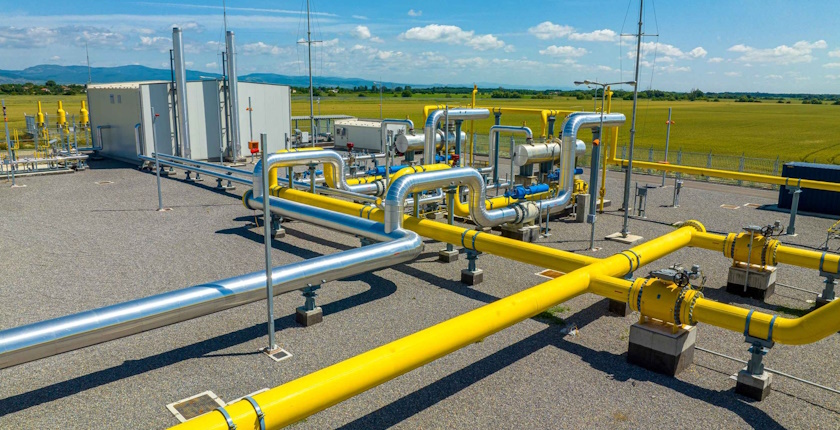
In turn, France will support Germany’s plans to establish hydrogen interconnections to southwestern Europe. This includes the long-stalled Southwestern Hydrogen Corridor, which connects Spain, Portugal, France, and Germany, according to reports. The corridor comprises the pipeline projects H2Med and HY-FEN.”

Germany and France will support hydrogen interconnections with Spain and Portugal

The initiative will be continuously supported through a Franco-German working group on hydrogen, according to the Franco-German Economic Agenda.

The two countries’ deal to jointly lead the way in shaping a competitive, secure, sustainable, and decarbonized European energy market also involves supporting a potential new electricity interconnector that transmission system operators Amprion, TransnetBW, and RTE are assessing, reads the document.
by in News

Agios Efstratios becomes Greece’s first energy-autonomous island

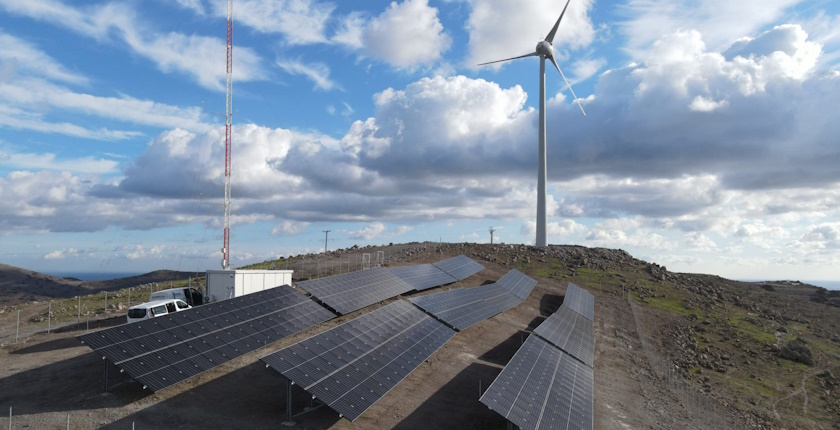
A hybrid energy project transforming Agios Efstratios into the first energy-autonomous island in Greece is in trial operation. The system consists of a wind turbine, solar power plant, batteries, electric boilers and a district heating network.

It is a benchmark for the non-interconnected islands that won’t be connected to the mainland grid with undersea power cables.

Agios Efstratios is no longer renowned only for its history and natural beauty. It is an example of energy autonomy and sustainability. The island, also known as Ai Stratis, became the first non-interconnected Greek island with a 100% electricity supply from renewables. And more.

A pioneering energy complex is in trial operation. Agios Efstratios, which has only some 250 permanent residents, is in a group of small islands undergoing transformation through projects launched at the national level and benefiting from European Union funding.

Terna Energy completed hybrid energy system in Agios Efstratios

The Centre for Renewable Energy Sources and Saving (CRES or KAPE), an independent public entity, is responsible for the endeavor, on behalf of the Municipality of Agios Efstratios. Terna Energy, owned by Masdar, is the contractor for the works in the small North Aegean island.

The new hybrid energy system includes a 900 kW Enercon E44 wind turbine and a solar power unit of 225 kW. Their combined annual output is estimated at above 3 GWh.

Excess electricity is stored. One unit is a Tesla Megapack battery energy storage system (BESS) of 1.25 MW in operating power and a two-hour duration. It means the capacity is 2.5 MWh. There is also an electric boiler facility of 1 MW with hot water storage tanks that can hold 500 cubic meters of water at 120 degrees Celsius. It corresponds to 25 MWh.

The district heating network in Agios Efstratios is four kilometers long. It will be tested in the winter.

An oil-fired generator operated by state-controlled Public Power Corp. (PPC) remains as backup. It can work alongside the hybrid power plant.

Greece is connecting many islands to mainland power grid

The solutions from Agios Efstratios can be applied in other islands or in microgrids, CRES noted and said residents are getting cheaper energy.

The government launched its Islands Decarbonization Fund last year, with financing from the European Investment Bank (EIB). Together they aim to provide at least EUR 1.6 billion, and mobilize total investments of EUR 3 billion to EUR 5 billion.

In the hot summer months, there are many non-interconnected islands that can’t meet their power demand, especially because of the tourist season. Some are also struggling with water supply, prompting the need for desalination, which requires electricity. They rely on fuel oil generators.

The country’s Independent Power Transmission Operator (IPTO or, in Greek, Admie) is investing in major interconnection projects. A link to the mainland grid has improved the living conditions in the Cyclades islands of Syros, Paros and Mykonos. Together with a project for the western part of the archipelago, the transmission system operator is planning subsea cables to the Dodecanese and the Northeast Aegean.

by in News

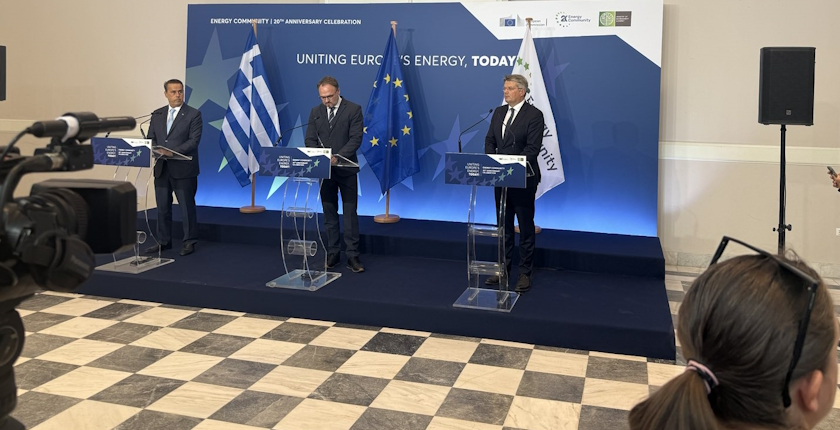
Energy Community marks 20th anniversary as integration pillar for Southeastern Europe

The Energy Community Ministerial Council held its annual informal meeting in Athens, where the organization was founded twenty years ago. No contracting party is expected to meet the criteria for exemption from the Carbon Border Adjustment Mechanism (CBAM) in the electricity sector – the European Union is due to start charging the CO2 tax on January 1 – but the European Commission could propose amendments.

The Energy Community promotes integration, reforms and investments across the region, top officials stressed.

Ministers from the Energy Community contracting parties convened today at the Informal Ministerial Council in Athens to mark the organization’s 20th anniversary. The Energy Community Treaty, establishing the Energy Community, was also signed in the Greek capital. The purpose of the organization is to create a more integrated market, help attract investment and speed up decarbonization by aligning with the European Union’s rules on energy, environment and competitiveness.

In recent years, close cooperation has enabled the contracting parties to strengthen the security of supply, particularly against the backdrop of the ongoing Russian war in Ukraine, the Energy Community Secretariat said. During the annual gathering, hosted by the Greek Ministry of the Environment and Energy, the ministers underlined the need for an accelerated integration with the EU, grounded in delivering a secure, resilient energy transition.

Ministers agreed to revise capacity calculation regions

Many contracting parties are close to completing the reforms needed to launch the 18-month countdown to electricity market coupling – including full legal alignment under the Energy Community’s Electricity Integration Package and the appointment of nominated electricity market operators (NEMOs). If transposition is verified as compliant by the European Commission and the Energy Community Secretariat, integration will be initiated with the EU’s Single Day-Ahead Coupling (SDAC) and Single Intraday Market Coupling (SIDC).

Ministers made a breakthrough in regional coordination, backing a proposal by EU transmission system operators to revise capacity calculation regions (CCRs), now under review by the EU energy regulator ACER – Agency for the Cooperation of Energy Regulators. Recognizing the proposal’s importance for an effective operation of the interconnected grid, they called for swift follow-up, including the operationalization of regional coordination centers (RCCs) and system operation regions (SORs).

The aim is to boost electricity flows and grid security, especially along the north-south corridor of the Balkans, while laying the groundwork for full EU market coupling.

Decarbonization must accelerate ahead of CBAM implementation in 2026

To avoid disruptions to regional electricity trade, clarifying CBAM rules for electricity is a priority for the ministers, the secretariat pointed out. The EU is set to begin charging the carbon border tax on January 1.

Lorkowski: Electricity market integration and decarbonisation are two sides of the same coin

As no contracting party is expected to meet the exemption criteria by then, a proportionate and context-sensitive application of the mechanism is essential, as supported by active engagement in the European Commission’s ongoing call for evidence that precedes the future amendments of the CBAM regulation to be possibly proposed by the European Commission, in the secretariat’s view.

“Electricity market integration and decarbonisation are two sides of the same coin. The green energy transition unlocks meaningful integration with the EU market – and vice versa. Only by aligning policy, infrastructure, and pricing can contracting parties fully realise the benefits of clean, secure, and affordable energy,” said Energy Community Secretariat Director Artur Lorkowski.

The ministers called for carbon revenues to support vulnerable communities and mobilize investment in clean energy, stressing that just transition financing must go hand in hand with policy reforms.

Energy Community Treaty is now cornerstone of Europe’s energy architecture

Born out of crisis and shaped by cooperation, the Energy Community Treaty has become a cornerstone of Europe’s energy architecture, Lorkowski stressed. What began as an unlikely experiment in regional integration has grown into a dynamic framework – extending the EU’s internal energy market, strengthening energy security, and advancing the clean energy transition across South-Eastern and Eastern Europe, he asserted.

Energy Community contracting parties can fully integrate their electricity markets with the EU before joining it

“Our contracting parties are now on the cusp of a major breakthrough: full electricity market integration with the EU – even ahead of accession. This is the product of two decades of reform, dialogue, and trust-building. With the right political will, we can move from transposition to transformation,” Lorkowski stated.

In his view, Greece is the window for the Energy Community contracting parties to the liquefied natural gas (LNG) market and the access point to the European electricity system. Close cooperation with the Western Balkans has economic benefits for Greece – but beyond the economy, it is also about security and stability, Lorkowski said at the event.

Energy Community pioneered extension of EU energy market

Over the past two decades, the Energy Community has brought the EU closer to its neighbours, pioneering the extension of the trade bloc’s energy market across its borders, promoting integration, reforms and investments across the region, according to European Commissioner for Energy and Housing Dan Jørgensen.

“Now it is time to look ahead at our shared future based on a greener, sustainable and resilient system which will bring cheaper energy and more security to all,” he said.

Separately, in an interview with Kathimerini, Jørgensen noted that Southeastern Europe experienced electricity price spikes last summer, mainly in the evening hours, due to a lack of cross-border capacity and sufficient flexibility. The only solution is further infrastructure and market integration, as costs are separated and benefits are multiplied, he opined.

For every EUR 2 billion invested annually in cross-border infrastructure, the potential benefits reach up to EUR 5 billion, the commissioner added.

Papastavrou: Southeastern Europe’s is at disadvantage as its electricity market is not fully integrated with EU

Southeastern Europe is still not fully integrated with the EU, which is a structural disadvantage for citizens, said Minister of Environment and Energy of Greece Stavros Papastavrou.

“I am very optimistic after the first session of the meeting, because all the contracting parties expressed commitment, a strong commitment, to market coupling,” he stated. Papastavrou said a lot of work is required in the electricity sphere to bridge the gap for the prosperity of citizens and the entire region.

Energy integration is one of the pillars of EU accession

Energy integration is not just a technical issue – it is one of the fundamental pillars of the EU accession process, the minister told his counterparts from the Energy Community.

“Greece, too, has faced the same challenges that many of you are experiencing today. Back in 2005, our energy system was almost entirely dependent on lignite, by more than 60%. Today, we have reduced lignite use by an impressive 91% – a clear demonstration of our strong commitment to a clean, sustainable, and resilient energy future,” he stated.

Serbia’s Đedović Handanović sees possibility for market coupling with Hungary already next year

Serbia was the first in the region to fulfill the conditions for market coupling with the EU, the country’s Minister of Mining and Energy Dubravka Đedović Handanović said. She urged for the verification process to be accelerated, so that Serbia can connect with the Hungarian market in 2026 and, through it, with the other EU member states.

The minister acknowledged the challenge of the upcoming full implementation of CBAM.

Photo: Minister Dubravka Đedović Handanović (Nenad Kostić / Ministry of Mining and Energy)

Serbian institutions analyzed the available options from the study that the European Commission published. “We think that carbon pricing should be introduced gradually, in phases and fairly, with support from funds from the European Union,” she said.

The minister stressed that revenues from carbon taxes would be directed, like in the EU, to decarbonization, renewables, energy efficiency, just transition and support to companies.

“Without an adequate period of time for the transition from coal to renewable energy sources, without modernizing the network, increasing RES capacities and adjusting the industry, higher carbon costs can only increase the financial pressure on our industry and consumers, which is already happening in the EU, instead of resulting in a significant emissions reduction in the short term. Solving these issues requires careful planning, a phasein and the EU’s targeted financial support, so that climate goals would be aligned with the economic reality,” Đedović Handanović said.

She recalled that EU member states had more than two decades to gradually adjust to carbon emission levies. Đedović Handanović affirmed that Serbia is willing to continue its alignment with the EU’s energy and climate policy.

“All the reform measures that we are conducting are primarily for the benefit of our citizens and companies, and we won’t make decisions overnight that would jeopardize our energy stability,” she said.

by in News

Market assessment underway for expansion of gas Interconnector Greece-Bulgaria

The Interconnector Greece-Bulgaria (IGB) natural gas pipeline is planned to be expanded to five billion cubic meters per year from three billion. The non-binding assessment phase is underway.

ICGB, the operator of the IGB interconnection, targets an expansion in technical annual capacity to five billion cubic meters per year from the current three billion. The company launched the non-binding phase of a process to assess market interest.

The procedure is conducted under Regulation (EU) 2017/459 (NC CAM), the network code on capacity allocation mechanisms for the sector. It marks a key step toward reinforcing long-term energy security in the region, ICGB pointed out.

Interested market participants are invited to submit their non-binding demand indications by September 1. All relevant documents and participation guidelines are available at ICGB’s public consultations page.

The market demand assessment also includes a binding phase, to determine the feasibility of the potential capacity increase. The process is being carried out in close coordination with adjacent gas transmission system operators (TSOs), according to the company.

Expanding IGB’s capacity is a strategic move for the entire region, the heads of ICGB pointed out

Expanding IGB’s capacity is a strategic move for the entire region, said ICGB’s executive officers George Satlas and Teodora Georgieva. “As the first route for diversified natural gas supplies to Bulgaria, IGB plays a critical role in ensuring secure, sustainable energy for Southeast Europe. We remain firmly committed to this process and to delivering enhanced connectivity and resilience across the region with our partners,” they added.

Following the current phase, ICGB and adjacent TSOs need to compile demand assessment reports for each interconnection point. They would form the basis for possible future steps, including project proposals, consultations and regulatory approval, the announcement reads.

Serbia, Hungary, Bosnia and Herzegovina and North Macedonia largely depend on Russian gas, delivered through the TurkStream and Balkan Stream pipeline corridor. IGB and the Serbia-Bulgaria interconnector enable access to Azerbaijani gas and Greece’s liquefied natural gas (LNG) terminals.

by in News

Solar power exceeds Bulgaria’s entire electricity demand for first time

For the first time, photovoltaic production alone surpassed power consumption in Bulgaria – for two hours. Interestingly, even more electricity was exported at the same time.

On Friday, June 20, the active photovoltaic capacity in Bulgaria between 10:00 and 11:00 before noon was 2,935 MW, and in the following hour it grew to 3,230 MW, state news agency BTA reported. According to data from the Electricity System Operator (ESO) and the European Network of Transmission System Operators for Electricity (ENTSO-E), it exceeded the country’s entire consumption for the first time ever, by 17 MW and 313 MW, respectively.

Even more electricity was exported at the same time, as total domestic production amounted to 6,567 MW and 6,736 MW.

Of note, not all solar power went to Bulgarian consumers, given that some traders and customers have long-term contracts with other suppliers, like the National Electricity Co. (NEK) and nuclear power plant Kozloduy, the article adds.

“This is a significant event and a great success for Bulgaria and the Bulgarian energy sector. Positioning us this way – as a leading country in the production of photovoltaic energy – not only supports the implementation and fulfillment of the commitments that Bulgaria has made for decarbonization, but it also has a positive effect on the country’s investment climate. Thanks to the solar energy that we transform into electricity, we are modernizing the entire Bulgarian energy sector,” Chairwoman of the Bulgarian Photovoltaic Association Meglena Rusenova commented.

Photovoltaics are perhaps the fastest-growing private investment sector in Bulgaria, she said.

Photovoltaics are biggest factor lowering prices at the electricity exchange

Over the past two years, over EUR 2 billion have been invested in electricity production, according to Rusenova. On top of that there are capital investments in energy storage and infrastructure, she pointed out.

Solar energy contributes to reducing prices for end users, and in practice, photovoltaics are the most significant factor for lower prices on the Independent Bulgarian Energy Exchange (IBEX), Rusenova underscored.

According to ESO, a total of 3.5 GW of photovoltaic capacity has been connected in the last three years, bringing the total to 4.7 GW.

by in News

Ireland ends coal use – Spain, Italy, Greece set to follow

The Moneypoint power plant stopped burning coal, marking the end of Ireland’s coal era. The last such facilities in several other countries in the European Union are operating only barely or occasionally.

Ireland has ended coal power generation. It is the eleventh coal-free country in the European Union and the 15th in Europe overall. Notably, nine countries in total never hosted coal power plants, according to the Beyond Fossil Fuels database.

Slovakia and Spain officially intend to exit coal this year, followed by Greece (2026), France and Hungary (2027) and Denmark (2028). However, the dates could be pushed forward and there is a possibility that more countries will join the group in the meantime. Several of their remaining facilities are active just sporadically – in islands or to cover winter peaks or only until the district heating systems that they supply switch to cleaner sources.

For instance, the share of coal power in Finland is minuscule.

Coal power is already uncompetitive most of the time. Moreover, when such facilities are idle, their costs rise further because of salaries and the complex logistics.

Moneypoint plant switches to backup with heavy fuel oil

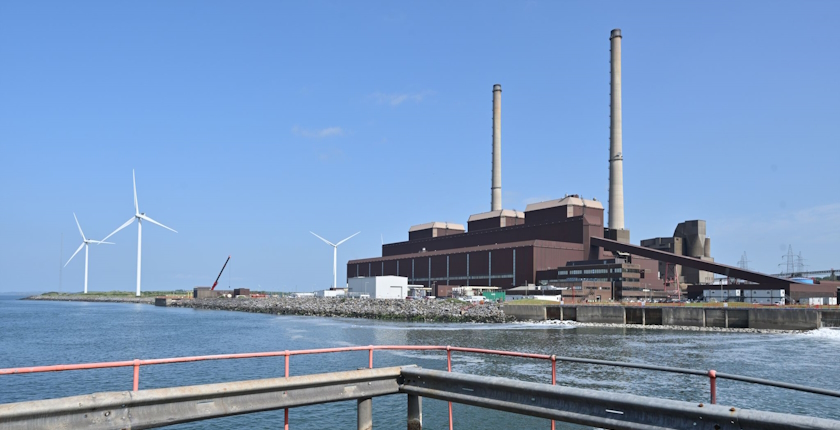
The Moneypoint plant in Ireland ceased burning coal last week earlier than planned. Its operator ESB is turning the site into a renewable energy hub.

At the turn of the millennium, wind supplied just 1% of the country’s electricity. Today, it generates more than a third.

“The government’s priority now must be building a power system fit for a renewable future; one with the storage, flexibility, and grid infrastructure needed to run fully on clean, domestic renewable electricity,” said Alexandru Mustață, campaigner on coal and gas at Beyond Fossil Fuels.

Moneypoint will serve a limited backup role until 2029, burning heavy fuel oil under emergency instruction from transmission system operator EirGrid.

Subsea interconnections to enable coal phaseout completion in Spain, Italy

Spain and Italy are set to follow suit, excluding the Balearic Islands and Sardinia, respectively.

Brindisi Sud (2 GW) and Torrevaldaliga Nord (2 GW) are expected to cease regular operations in mid-2025 and are set to be placed into a strategic reserve, pending full decommissioning. Italy’s remaining coal plants, Sulcis (590 MW) and Fiume Santo (640 MW) in Sardinia, are expected to remain online until a second undersea grid cable to the mainland is completed.

Aboño (916 MW) in Spain is being converted from coal to fossil gas. Soto de Ribera (350 MW) and Los Barrios (589 MW), are barely operating. The Alcúdia plant in the island of Mallorca has two coal units of 130 MW each. Its closure depends on the construction of the archipelago’s second interconnection with the mainland.

Slovakia’s coal phaseout was extended for a short while as a smaller unit kept using what it had left in stock

Slovakian energy company Slovenské elektrárne ended production at its combined heat and power (CHP) plant Vojany (220 MW) in March of last year, which was supposed to mark the country’s coal exit. However, the Teko facility of 121 MW continued to operate with its remaining stockpiles to cover the winter season.

The Cordemais coal plant (1.2 GW) in France is designated for closure in 2027. Émile-Huchet (600 MW), the other remaining facility in the country, should be converted to gas by then.

Turkey, Germany, Poland, Slovenia, the Czech Republic, Serbia, Montenegro, Bosnia and Herzegovina and Kosovo* have the largest shares of coal in power production in the European Union and Southeastern Europe.

* This designation is without prejudice to positions onstatus and is in line with UNSCR 1244/99 and the ICJ Opinion on the Kosovo declaration of independence.
by in News

North Macedonia, Kosovo* planning 400 kV power interconnection

The transmission system operators (TSOs) of North Macedonia and Kosovo* are developing a project for a 400 kV interconnection line between Tetovo and Prizren. The investment would include other grid upgrades and expansion.

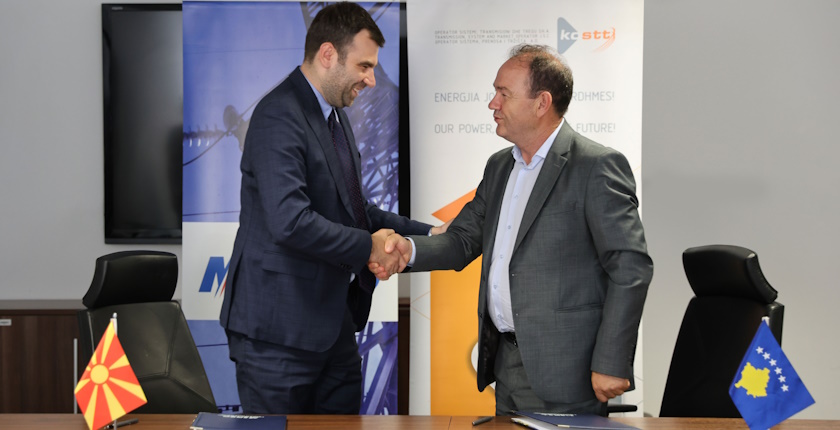
Director-General of North Macedonia’s MEPSO Burim Latifi and Acting Chief Executive Officer of Transmission, System and Market Operator (KOSTT) of Kosovo* Shaban Neziri signed a memorandum of cooperation in Skopje. The two transmission system operators intend to jointly upgrade the high-voltage network. The emphasis is on a strategic project for a 400 kV interconnection line from Tetovo to Prizren.

The endeavor aligns with the European Union’s energy transition goals by 2050, North Macedonia’s TSO said. The project is nominated through the planning platform of the European Network of Transmission System Operators for Electricity (ENTSO-E) for increasing transmission capacities.

New interconnection to encourage investments in renewables

North Macedonia and Kosovo* have only one interconnection now, of 220 kV. According to ENTSO-E, Southeastern Europe needs to at least double transmission capacities and, in some cases, increase them even more than that, MEPSO stressed.

On that note, the bilateral project includes additional investments in the transmission network, such as the construction of a 400/110 kV transformer station in Tetovo, in North Macedonia’s northwest, and 400 kV transmission lines from Tetovo to Ohrid and Skopje.

“The 400 kV Tetovo-Prizren transmission line project will not only increase the system’s capacity and reliability but also enable greater electricity exchange, encouraging new investments in renewable energy sources,” Latifi said.

Investment to bolster East-West energy corridor

Regarding the other benefits, the heads of the two TSOs agreed that the project would bolster the transmission infrastructure in the region, strengthen the so-called East-West energy corridor and improve system flexibility.

The new document confirms the joint commitment to creating a modern and reliable energy infrastructure, Neziri stressed. “With this project, we are enhancing energy connectivity in the region and contributing to achieving the energy goals of the Western Balkans,” he added.

Strong interconnections are essential for the integration of the electricity market in the Western Balkans

The project is in the planning and technical preparation phase. The start of construction depends on securing financial resources and coordination with all relevant stakeholders, MEPSO explained.

Strong interconnections are essential for the integration of the electricity systems and markets in the region with the EU, through market coupling. Together with Albania and Greece, North Macedonia and Kosovo* are part of one such regional project, which has been suffering delays.

Market coupling is a prerequisite for the exemption of the power markets in the Western Balkans and the rest of the Energy Community from the EU’s Carbon Border Adjustment Mechanism, or CBAM, under which a CO2 tax is set to start being charged on January 1.

* This designation is without prejudice to positions onstatus and is in line with UNSCR 1244/99 and the ICJ Opinion on the Kosovo declaration of independence.
by in News

Spain’s voltage control was insufficient at time of April blackout

The Government of Spain said the total blackout in the Iberian Peninsula, which occurred on April 28, was caused by overvoltage, with several factors contributing to the crash. Notably, the system run by the country’s TSO Red Eléctrica de España lacked sufficient voltage control. Deputy Prime Minister Sara Aagesen even said the point of no return could have been avoided if voltage control action had been taken earlier.

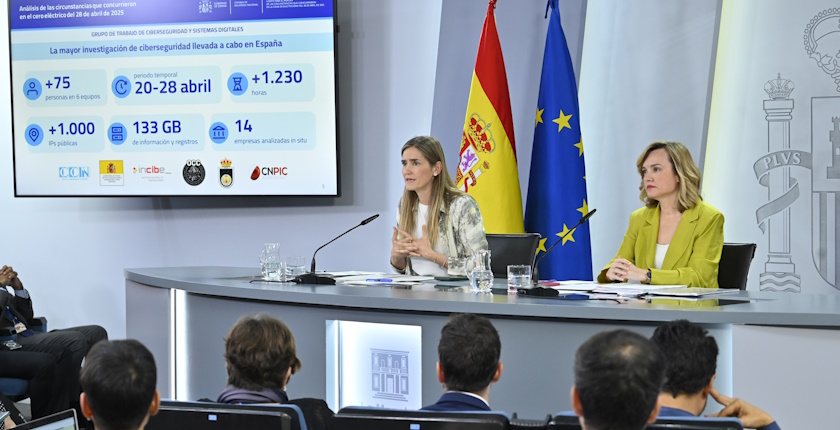
In a long-awaited document, a government committee that investigated the April 28 collapse of the Iberian electricity network ruled out that a cyberattack caused it. The panel analyzed more than 300 gigabytes of data related to the total blackout, which was one of the worst ever in Europe.

“In 49 days, practically half the timeframe established by the EU, the committee has provided a rigorous and verified diagnosis that will allow us to strengthen the electricity system, a solid foundation on which we can work to design rapid responses to prevent this from happening again. Next week’s Council of Ministers will approve several relevant measures,” said Third Vice-President of the Government of Spain and Minister for Ecological Transition and Demographic Challenge Sara Aagesen.

The cybersecurity investigation, the largest ever undertaken in the country, did identify vulnerabilities that could expose networks or systems to future risks, she asserted.

The blame game is continuing as citizens and businesses are demanding accountability for the massive damage. The European Network of Transmission System Operators for Electricity (ENTSO-E) issued a preliminary report two weeks after the incident.

Overvoltage caused the blackout, according to the new analysis. The committee attributed it to multiple factors. The system had insufficient voltage control capacity, there were frequency oscillations, and power plants were disconnected, “in some cases in an apparently improper manner,” the document reads.

Renewables accounted for 82% of power generation mix just before blackout

The Iberian grid crashed at 12:33. Restoration began with energy from France and Morocco and with self-starting hydroelectric plants in the Duero basin and other locations, which formed energy islands. By 22:00, nearly 50% of demand in Spain was met, reaching 99.95% by 7:00 the next day.

At 12:30 on April 28, renewable energy sources accounted for 82% of the electricity generation mix, followed by nuclear power (10%). Gas plants had a 3% share, coal contributed 1%, while cogeneration and waste amounted to a combined 4%.

Data show a drop in solar generation as prices at the power exchange were going negative, and it coincided with a rise in voltages

There was significant voltage volatility in the transmission system in the morning on the day of the blackout, the document’s authors noted, pointing out that such a situation was also registered on April 22 and 24.

The rise in voltages between 10:30 and 11:10 coincided with a drop in solar generation, probably due to the power market signals, as wholesale prices went negative, the report adds. At the same time, the direction of the exchange with France switched from exports to imports.

Voltage control fleet failed to contain chain reaction

At 12:03, there was an atypical frequency oscillation, by 0.6 hertz, causing large voltage fluctuations for 4.42 minutes. Another one, of 0.2 hertz, occurred at 12:16, followed by an equivalent one at 12:19.

Red Eléctrica de España, the transmission system operator (TSO), conducted mitigation measures, which contributed to the rise in voltages, the committee underscored.

Aagesen said the point of no return could have been avoided if voltage control action had been taken earlier. The government controls 20% of the company, which is listed on the Bolsa de Madrid stock exchange.

At 12:32, voltage began to rise rapidly and steadily, and numerous progressive disconnections of generation facilities were recorded. The names of all power plants in the document are blacked out.

A number of units responsible for voltage control produced reactive power, the opposite of what they were supposed to

The chain reaction could not be contained, as each disconnection contributed to further voltage increases, the analysis showed. A drop in frequency resulted in the loss of synchronization with France, tripping the interconnection with the rest of the continent.

The committee stressed that the number of synchronous plants regulating voltage on the day of the incident was the lowest since the beginning of the year. One of the 10 units that Red Eléctrica scheduled the day before experienced an outage on the same afternoon, and the TSO didn’t replace it in time, the analysis reveals.

Moreover, several units in the group did not respond adequately to the TSO’s instructions to reduce the voltage. Some even produced reactive power, the opposite of what was required, contributing to the issue, the committee added.

Some power plants went offline too early

There were disconnections of the generating power plants that occurred before the voltage thresholds in the 400 kV system were exceeded (380 kV and 435 kV), the report finds.

Among the committee’s recommendations is to allow asynchronous installations to apply power electronics solutions to manage voltage fluctuations. The panel proposed boosting demand, flexibility, storage and interconnection capacities.

Photovoltaics with grid-forming inverters, storage can contribute to voltage control

Photovoltaics are already capable of controlling voltage, but regulations did not allow the application of the technology, according to the Spanish Photovoltaic Union (UNEF), Portuguese Renewable Energy Association (APREN), SolarPower Europe, Global Solar Council and Global Renewables Alliance.

In a joint statement that they issued as a reaction to the report, they called for accelerated investment in grid resilience and system flexibility – especially through grid-forming inverters and battery storage.

The associations recalled that Spain ranked 14th last year in Europe in new battery capacity. Less than 250 MWh came online and nearly all were smaller-scale batteries, not at a utility level. It compares to 9 GW of solar power capacity that the country added in 2024.

by in News

ENTSO-E proposes delaying CBAM on electricity by one year

The European Network of Transmission System Operators for Electricity suggested to the European Commission to prolong the transitional period of the Carbon Border Adjustment Mechanism (CBAM) for electricity by one year, to January 1, 2027. It recommended an additional impact assessment, an analysis of possible exemptions for third countries as well as to exempt transmission system operators (TSOs).

In its new position paper, ENTSO-E supported the general principles of CBAM, but it warned against creating disproportionate administrative burdens and costs for TSOs. The pan-European body recommended exempting TSO activities from the CBAM scope, arguing there is a minimal risk of carbon leakage and pointing to their role in keeping the lights on and ensuring the security of the power system.

Moreover, ENTSO-E said an additional impact assessment is needed before the completion of the transitional period for electricity overall. The European Commission should also review in depth the list of third countries eligible for exemption, pending their adjustment to the European Union’s Emissions Trading System (EU ETS), it added.

The current criteria to calculate the actual emissions embedded in electricity production are impossible for importers to implement

“ENTSO-E encourages policy makers to use the targeted revision of CBAM part of the Omnibus simplification package on sustainability to postpone the definitive period as of 1 January 2027. It should also be noted that in its current form, the application of the provisions under CBAM regulation would have a major impact on the Energy Community countries and the UK imports,” the update reads.

Carbon leakage occurs when companies based in the EU move carbon-intensive production to countries with less stringent climate policies, or when EU products get replaced by more carbon-intensive imports.

CBAM was devised to bring CO2 prices for imported cement, iron and steel, aluminum, fertilizers, hydrogen and electricity to the same level as in EU ETS. Under the current rules, the EU will start charging CBAM at the beginning of January next year and gradually increase the tariffs to reach 100% at the start of 2034.

No provisions regulating implicit electricity trading

ENTSO-E acknowledged the role of the carbon border tax in putting a fair price on carbon emissions from carbon-intensive goods entering the EU, and to promote cleaner industrial production globally. Nevertheless, there are still many questions even about the current reporting obligations, it pointed out.

“TSOs adjacent to EU external borders are the most exposed to the concerns raised in this paper. It concerns a significant number of ENTSO-E members, almost one third of the EU members of the association,” the paper adds. In specific cases, the measures may also lead to efficiency losses, reduce EU competitiveness and reduce incentives for building and connecting offshore wind, it underscored.

Obstacles to importing electricity from third countries could contradict the goal of efficiently importing cheap green electricity

CBAM only assumes that electricity is traded with third countries through explicit allocation, not taking into account implicit trading. Like implicit electricity trading within the internal electricity market, there is no nomination on the interconnectors, only anonymous trading between markets, ENTSO-E explained.

“These obstacles to importing electricity from third countries could contradict the goal of efficiently importing cheap green electricity into the EU if applied also to third countries with robust decarbonisation policies and renewable energy sources. The current criteria to calculate the actual emissions embedded in electricity production make it impossible for importers to implement, mainly due to impossibility to trace the origin of the electricity,” the TSO network stressed.

CBAM would tax historical instead of actual emissions

The current default CO2 levels are based upon the carbon intensity of the five-year average through 2020, even though third countries made tremendous efforts in decarbonising their energy mix in the meantime, according to ENTSO-E. It suggested allowing such countries to be exempted if they verify their progress through proper data platforms.

ENTSO-E invited the European Commission to envisage a revision aligned with the current delay in CBAM implementing acts, stressing that it is impossible for the market to digest them before the end of the year.

Energy Community contracting parties, including the Western Balkans, are eligible for exemption from CBAM on electricity until 2030. The condition for each one is to couple its electricity market with an EU neighbor.

by in News

Serbia’s EMS starts construction of third section of Trans-Balkan Corridor

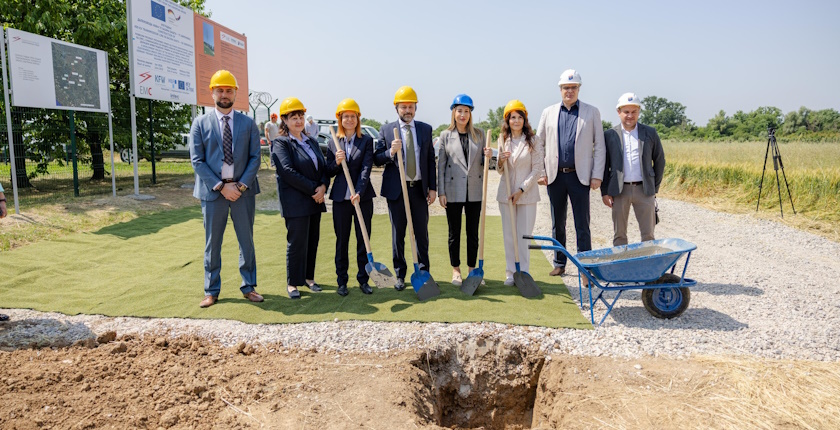
The foundation stone was laid today in Serbia for the third section of the Trans-Balkan Electricity Corridor. The investment amounts to EUR 100 million. It entails a high-voltage overhead power line of 109 kilometers between Obrenovac and Bajina Bašta, equipping two new switchyards in the Obrenovac transformer substation and upgrading the Bajina Bašta substation to 400 kV. The fourth and last section, with the interconnections with Bosnia and Herzegovina and Montenegro, is planned to be completed in 2028.

Serbian Minister of Mining and Energy Dubravka Đedović Handanović said at the groundbreaking ceremony for the third section of the Trans-Balkan Corridor that it is the most important project for the transmission system not only in the country but in Southeastern Europe.

“What highways are for transportation, high-voltage power lines are for energy, and today we are beginning the works on the new part of the most important energy highway,” she said in Obrenovac and added that the segment would enhance the security of supply for consumers in western Serbia.

The third section of the Trans-Balkan Electricity Corridor involves the construction of an overhead power line of 109 kilometers on 309 towers, equipping two new switchyards in the Obrenovac substation and lifting the voltage level in the Bajina Bašta substation to 400 kV.

The project is financed with a EUR 64.5 million loan from Germany’s KfW Development Bank, a grant from the European Union via its Western Balkans Investment Framework (WBIF) of approximately EUR 21 million, and own funds of the Serbian transmission system operator Elektromreža Srbije (EMS), according to the state-owned company’s announcement. The third section is worth EUR 100 million, of which EUR 71 million is for the overhead power line.

“With the completion of the entire project, we will additionally strengthen the links with Bosnia and Herzegovina and Montenegro and beyond, with Italy,” Đedović Handanović stated.

She recalled that significant transmission grid investments are planned in the next five years, including the construction of the Pannonian Corridor toward neighboring Hungary. The priority projects in the segment are worth EUR 500 million in total, the minister revealed.

“I expect the contractors not to be late with the works, so that the project is completed within two and a half years, as it is planned,” Đedović Handanović stressed.

Matejić: Final section to be finished in 2028

General Manager of EMS Jelena Matejić said the construction of the entire Trans-Balkan Corridor is worth more than EUR 200 million. She noted that it includes 323 kilometers of 400 kV power lines, voltage level upgrades for two transformer stations and switchyards in three of them.

The investments in the Trans-Balkan Corridor are estimated at more than EUR 200 million altogether

“Except this section, the third one, we will also have the fourth, for which the funds have been secured, and it will be finished in 2028,” Matejević asserted.

The old lines in western Serbia of 220 kV will be replaced with new, 400 kV systems, which will create possibilities for connecting the planned Bistrica pumped storage hydropower plant to the grid, according to EMS. The contractor is Kodar Energomontaža, and the works are expected to be completed by 2027.

EU donated EUR 38.3 million for Trans-Balkan Electricity Corridor

Head of the EU Delegation in Serbia Emanuele Giaufret pointed out that the funds the EU has earmarked for the current section are part of wider support.

“The EU has secured a EUR 38.3 million donation for the whole Trans-Balkan Corridor, together with KfW’s favorable loans. Over the years, the EU has earmarked more than EUR 1 billion for the energy sector in Serbia. This project is important for the rest of Europe as well, because it will contribute to the creation of a wider, integrated system, which will enable a more stable supply to consumers on the entire continent, as well as to avoid problems in the future,” he stated, as quoted by EMS.

The first section of the Trans-Balkan Corridor, from the city of Pančevo near Belgrade to the Romanian border, was finished in 2017. The second one, between Kragujevac and Kraljevo in central Serbia, is operational since 2022. It included substation upgrades in the two cities. The fourth section needs to connect Bajina Bašta with nearby Višegrad in Bosnia and Herzegovina, and with Pljevlja in Montenegro.