by in News

New Cypriot Minister of Energy, Commerce and Industry Michael Damianos takes office

A careful and organized course is required to achieve the energy transition in Cyprus, support the industry and strengthen the economy, ensuring sustainable solutions for the country’s energy future, new Minister of Energy, Commerce and Industry Michael Damianos said. He took over from his predecessor George Papanastasiou.

Five ministers were replaced in a cabinet reshuffle under President of Cyprus Nikos Christodoulides. Among them, the now former Minister of Health Michael Damianos took helm of the Minister of Energy, Commerce and Industry from George Papanastasiou.

Cyprus is assuming the presidency of the Council of the European Union on January 1 for six months. It means Damianos will chair the meetings of ministers responsible for the sectors in his portfolio, like the so-called Energy Council.

“We will work with innovation, excellence and sustainability in mind, to ensure that Cyprus continues to move in a direction that will serve the common good and future generations,” the new minister said at the handover ceremony.

Realistic, measurable goals for tangible results for all citizens

A careful and organized course is required to achieve the energy transition in Cyprus, support the industry and strengthen the economy, ensuring sustainable solutions for the country’s energy future, according to Damianos. He highlighted the importance of setting “realistic and measurable goals” to bring tangible results for all citizens.

Papanastasiou’s departure could be a signal from Nicosia about the fate of the Greece-Cyprus-Israel subsea power link

Some media is speculating that the switch is a signal from Cyprus about the embattled Great Sea Interconnector, a proposed underwater cable that would link Greece, via Crete, with Cyprus and Israel. Papanastasiou was apparently one of the few ardent supporters of the project in the country’s government.

The investment remains stuck over expenses and threats from Turkey.

University of Cambridge alum

Damianos studied law at the University of Southampton, from where he graduated with honours and received the best academic performance award. He earned a master of laws degree at the University of Cambridge, specializing in international law. The minister has received the best academic performance award from the Fitzwilliam College of the University of Cambridge.

The minister holds the professional title of a solicitor, granted by the Supreme Court of England and Wales. Damianos worked at the international law firms Simmons and Simmons and Hogan Lovells in London, specializing in corporate, commercial and energy matters.

In 2010 in Cyprus, he founded a law firm that bears his name. Damianos served as a municipal councillor in Strovolos Municipality from 2011 to 2016. Since 2018, he has been the vice president of the Democratic Party (DIKO).

Damianos became the minister of health in January 2024.
by in News

Energy Community calls for nominations of PECI energy infrastructure projects

Developers of cross-border energy infrastructure investments within the Energy Community or internal ones with significant cross-border dimensions can nominate them by January 19 within the selection process for projects of Energy Community Interest (PECI). In line with the Trans-European Networks for Energy (TEN-E) regulation, the mechanism is for electricity transmission and energy storage including protection, monitoring and control systems, together with smart power and gas grids, hydrogen and carbon dioxide.

The Energy Community Secretariat opened a call for promotors to submit their projects for evaluation within the 2026 PECI selection. EU regulation 2022/869 – revised TEN-E, which the Energy Community Ministerial Council adopted as 2023/02/MC-EnC, stipulates the approval of the second list of projects of Energy Community Interest (PECI) by December 31, 2026.

Nominations are received until January 19. The proposals concern the electricity and gas sectors.

In the first group are high- and extra-high-voltage overhead transmission lines and underground and submarine transmission cables. It includes equipment and installations for offshore renewable electricity.

Eligible electricity segment investments are also for energy storage, as well as protection, monitoring and control systems for all of the above and at all voltage levels.

Projects for smart power and gas grids are both in the scope of the PECI selection process. Hydrogen-based technologies, electrolyzers and CO2 projects are within the gas infrastructure list as well, the call reads.

PECIs are for cross-border energy infrastructure within the Energy Community or internal endeavors with significant cross-border dimensions.

Proposal forms are available at the call’s webpage.

Ministries, regulatory authorities and transmission system operators will be among the institutions evaluating nominated projects. The group also consists of the European Commission, Energy Community Secretariat, Energy Community Regulatory Board, the ECDSO-E entity of Energy Community distribution system operators, the European Network of Transmission System Operators for Electricity (ENTSO-E) and European Network of Transmission System Operators for Gas (ENTSOG).

The Energy Community comprises the Western Balkans, Moldova, Georgia and Ukraine.

by in News

Slovenia and Italy to upgrade electricity interconnectors

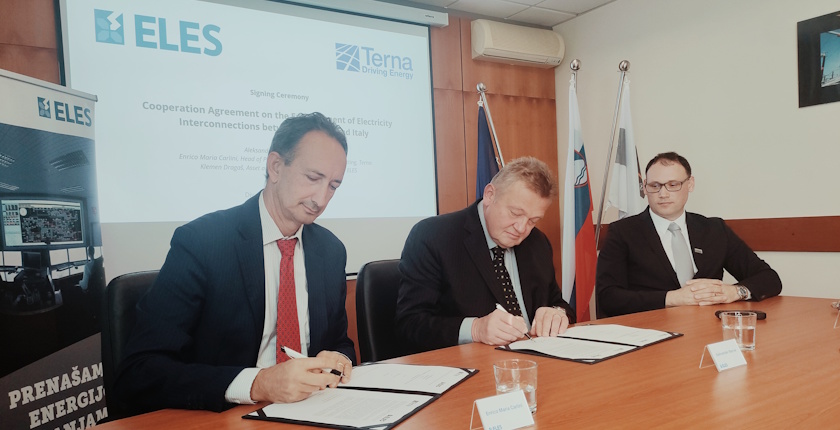
Slovenian transmission and distribution system operator ELES and Italian transmission system operator Terna agreed to upgrade their cross-border electricity network in an investment of EUR 250 million. The project aims to increase the transmission capacity between the two countries by 600 MW, strengthening supply and trade.

After a decade of coordination, ELES and Terna signed an agreement to raise the electricity transmission capacity between Slovenia and Italy by 600 MW or more than 50%. According to ELES, it is an important step in market integration and strengthening the reliability of the interconnected electricity system.

Interconnections between Slovenia and Italy are currently among the most heavily loaded ones in the Slovenian network, the country’s TSO pointed out.

As ELES further explained, with the growth of electricity imports and exports, there is an increasing need to strengthen transmission routes between the two countries. The company expects a rise in electricity imports in the countries gradually phasing out fossil fuel–based production to further increase the demand for cross-border transmission capacity.

The project consists of three upgrades

The project includes three main improvements. On the Slovenian side, the phase-shifting transformer at the Divača substation would be upgraded, alongside adding a third unit, which enables full utilization of the capacity of the 400 kV transmission line between Divača and Redipuglia (Sredipolje). The current transmission capacity, 1,200 megavolt-amperes (MVA), would be lifted to 1,800 MVA.

On the 220 kV transmission line between Divača and Padrice in Italy, low-sag conductors, capable of withstanding higher temperatures will be installed, ELES said. The transmission capacity would be doubled to 700 MVA.

On the Italian side, the existing 220 kV Padriče-Redipuglia connection and the Redipuglia substation are to be upgraded with a new phase-shifting transformer. It is crucial for managing internal power flows, the update reads.

“With an additional 600 MW of cross-border capacity, Slovenia is solidifying its role as a key electricity hub between Central and Southern Europe and as a reliable regional partner. This is a strategic investment in the future, ensuring reliability, resilience, and connectivity of our grid in the decades when electricity will become the main energy currency,” said ELES CEO Aleksander Mervar.

Slovenia’s share of the project is estimated at EUR 90 million

The total value of the project is EUR 250 million, with the Slovenian share estimated at EUR 90 million and the Italian side securing EUR 160 million. Pending all necessary permits and documentation, construction is planned to begin in 2029, and completion is expected by the end of 2031.

ELES announced it would seek European funds to finance the Slovenian side of the investment.

“The agreement not only strengthens the historic partnership between the two transmission system operators but also marks an important step toward developing and implementing innovative solutions that enhance the efficiency of transmission network investments. The agreement encourages system operators to introduce not only capital-intensive projects but also solutions with lower capital requirements that can increase net benefits and investment returns for all electricity system users,” said Enrico Maria Carlini, Head of Power System Planning and Permitting at Terna.

by in News

Several EU member states face uncertainty amid looming Russian gas ban

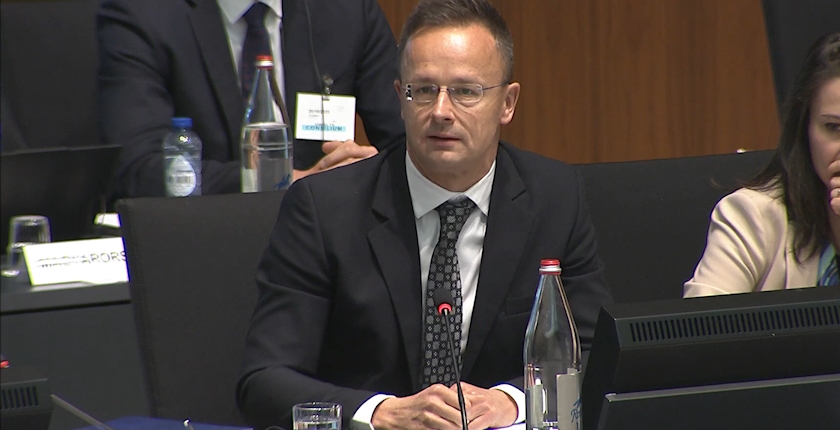
The European Union’s proposed measures to phase out imports of Russian oil and gas would destroy Hungary’s security of supply, according to Minister of Foreign Affairs and Trade Péter Szijjártó, who spoke at the meeting of energy ministers in Luxembourg. Slovakia is in a similar situation, while Romania pointed to the difficulty of proving the origin of foreign gas.

The draft regulation that the Council of the EU adopted doesn’t explicitly call for a ban on the transit of gas to third countries, while it foresees a temporary suspension for member states in case of supply disruption. The proposal also allows the possibility of importing non-Russian gas through the TurkStream pipeline.

The meeting of the so-called Energy Council highlighted several issues and concerns among EU member states about the proposed ban on Russian natural gas, including liquefied natural gas (LNG). Energy ministers in the Council of the EU adopted their position ahead of negotiations with the European Parliament on measures that they plan to introduce on January 1.

There would be a transition period for existing contracts for Russian fossil gas. Short-term ones concluded before June 17 this year would remain in force until June 17, 2026. Long-term contracts may run until January 1, 2028. It is also the targeted date for ending imports of Russian oil.

Szijjártó: The remaining infrastructure, physically and capacity-wise, is not able to supply Hungary

“The real impact of this regulation is that our safe supply of energy in Hungary is gonna be killed,” the country’s Minister of Foreign Affairs and Trade Péter Szijjártó stressed at the meeting.

He clarified that he wasn’t speaking about prices, and warned of damage from the proposed regulation – in the name of diversification.

“As now we are phasing out supply routes towards Hungary, the remaining infrastructure, physically and capacity-wise, is not able to supply the country. This has nothing to do with politics. This has nothing to do with Russia. This has nothing to do with the war in Ukraine. This is mathematics and physics,” Szijjártó stressed.

He also reiterated that his country would be left dependent on one oil supply route, via Croatia. It would leave Hungary “totally defenseless to a monopoly” as the transit fee doubled since the start of the war and it is five times higher than the current European benchmark, the minister underscored.

Bulgaria asks for protection from arbitration for gas TSOs

Slovak Deputy Prime Minister and Minister of Economy Denisa Saková said the supply of gas to her country is limited. There are interconnections with all neighbors, but external capacity bottlenecks remain, she argued. Bulgaria asked for provisions protecting gas transmission system operators (TSOs) from arbitration and financial penalties.

Romania voted for the draft regulation, but warned that identifying the origin of imported gas would be difficult

Secretary of State in Romania’s Ministry of Energy Cristian Bușoi urged for a workable and harmonized verification system and for the development of clear guidelines.

“This is not a matter of energy policy, but of strategic autonomy and European solidarity. At the same time, as we move from political vision to implementation, we believe it is important that the new authorization and verification system remains practical, transparent and proportionate. The additional requirements to demonstrate the exact country of production represent a new level of responsibility that, while understandable, and we support this in principle, may be difficult to fulfill in practice, particularly for pipeline [and] natural gas traded on hubs, and shipments transport, including LNG cargos that involve multiple sources and blending,” Bușoi told the ministers.

Council of EU proposes suspension clause

Notably, the Energy Council’s position, part of the REPowerEU plan and sanctions against Russia, is that the regulation should contain a suspension clause. The European Commission could temporarily lift the ban on Russian gas and LNG in case of significant disruptions of supply.

Another important element is the possibility of importing non-Russian gas through the TurkStream pipeline if the fuel’s origin is proven.

Gas transit through EU not subject to prohibition

Energy ministers said the EU should ensure that natural gas which crosses the 27-member bloc under a transit procedure is not ultimately entering into free circulation in the union.

It would imply that Serbia, Bosnia and Herzegovina and North Macedonia, non-EU countries, could continue to buy Russian gas that is delivered through Balkan Stream. It is the extension of TurkStream running through Bulgaria and Serbia to Hungary.

“Any gas which, before its import into the EU, was exported from the Russian Federation, either via direct export from Russia to the EU or via indirect export through a third country, should, except in case of transit, be subject to the prohibition”, the document reads.

Serbia still hasn’t signed a long-term gas supply contract with the Russian side, and the previous one expired in May. Moreover, the United States have imposed sanctions on Gazprom-controlled NIS, Serbia’s national oil importer, refiner and operator of a chain of service stations.

On top of it all, hydropower output is at a record low due to chronic drought, while coal is being imported as domestic mines don’t produce enough lignite.

by in News

Von der Leyen: EU is guarantee that Serbian families will be warm in winter

The European Union is connecting Serbia to its energy market, and it is the true guarantee that Serbian families will be safe and warm in winter, European Commission President Ursula von der Leyen said in Belgrade. She expressed preparedness to invest further in the country’s gas interconnector with Bulgaria.

In her speech during the visit to Serbia, European Commission President Ursula von der Leyen didn’t address the looming energy crisis caused by the sanctions that the United States imposed on Russian-owned oil company NIS. Moreover, she demanded greater alignment with the EU foreign policy from President of Serbia Aleksandar Vučić, including on sanctions against Russia.

“The EU membership offer is an opportunity. It is the promise of peace. Of prosperity. And of solidarity. Especially in times of crisis. You have seen this in practice,” she stated and pointed to the energy crisis of 2022.

EU showed equal solidarity with Western Balkans

After Russia invaded Ukraine, the EU introduced the same measures of solidarity to its Western Balkan partners as to its own member states, Von der Leyen stressed. “This is what it means to be a reliable partner. You can continue to count on us. We are connecting Serbia to the EU’s energy market. This is the true guarantee that Serbian families will be safe and warm in winter,” she stated.

The head of the 27-member bloc’s executive body pointed to ongoing investments like the Trans-Balkan Electricity Corridor. The mostly completed route stretches from Romania to Bosnia and Herzegovina and Montenegro and its MONITA undersea link with Italy.

Von der Leyen: Collective market power to secure better energy prices

Von der Leyen highlighted the Serbia-Bulgaria gas interconnector as well. The pipeline was completed almost two years ago. “We are prepared to invest further in it. We also invited Serbia to join the EU’s joint gas procurement mechanism. Together we are using our collective market power to secure better energy prices,” she said.

The administration in Brussels introduced the AggregateEU platform for joint procurement of gas in 2023. It expired earlier this year, but the EU is preparing another mechanism.

Serbia is planning an oil interconnector with Hungary and gas links with Romania and North Macedonia. Vučić said the upcoming winter would not be an easy one for Serbia.

by in News

Montenegro, Italy sign memorandum on electricity market coupling

A memorandum of understanding on Italy and Montenegro’s electricity market coupling was signed in Rome. It also paves the way for the installation of the second cable of the Monita interconnector, which runs under the Adriatic Sea.

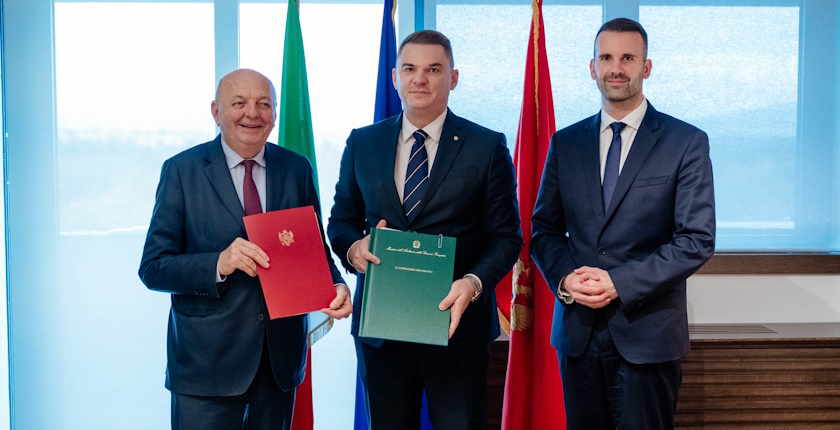
Minister of Energy and Mining of Montenegro Admir Šahmanović (pictured middle) and Italian Minister of the Environment and Energy Security Gilberto Pichetto Fratin (left) pointed out that energy links mean a more secure future, more stable supply and more development possibilities. They signed a bilateral memorandum of understanding on electricity market coupling.

Montenegrin Prime Minister Milojko Spajić (right) attended the ceremony together with Minister of Public Works, Spatial Planning and State Property Majda Adžović. The agreement is opening a new chapter in cooperation between the two countries and further strengthens Montenegro’s position on the European energy map, the Ministry of Energy and Mining said.

Market coupling alongside strengthening interconnection with second cable

Montenegro and Italy are linked with the Monita electricity interconnector, laid below the Adriatic Sea. In the new phase of their cooperation, they intend to couple their electricity markets for a freer power flow and safer functioning of the system, the ministry’s announcement reads.

“With this agreement, Montenegro is confirming its status as a reliable partner and energy bridge between the region and Europe. After several years of stagnation, this is a bit step forward, as it enables us to initiate the continuation of the project and the construction of the second wire of the subsea cable toward Italy. It opens the possibilities for our green, clean energy to become a distinguished export product, which means new income for companies and greater competitiveness in the European market. Today we once again confirmed good neighborly relations with Italy and we are showing that Montenegro is, slowly but firmly, entering the European family through concrete projects and partnerships. This is a step that brings our citizens long-term energy security and new opportunities for development to our companies,” Šahmanović stated.

Trade at Montenegro’s wholesale electricity market is expected to triple

There are 29 companies from 13 countries participating in Montenegro’s electricity market. Since the day-ahead market was established at the Montenegrin Power Exchange (MEPX or Belen) in April 2023, some 900 GWh of electricity changed hands, while the entire volume, together with the long-term market, amounts to about 3 TWh, the statement adds.

The memorandum’s implementation will create the conditions for at least three times higher trading volume, clearer price signal for new investments and a direct contribution to improving the security of supply, the ministry claimed.

National transmission system operators (TSOs) Terna and CGES have commissioned the first part of the interconnection in 2019. The current plan is to double the capacity to 1.2 GW. Šahmanović recently said the second line should be installed by 2031.

The project is valued at EUR 500 million. A double cable enables a two-way exchange at the same time.

by in News

Bulgaria’s BEH wants direct link to future Black Sea cable to participate in project

Executive Director of Bulgarian Energy Holding (BEH) Valentin Nikolov hinted that the country would opt for the alternative electricity corridor to the Caucasus, via Turkey, if the proposed interconnector under the Black Sea doesn’t include a direct link to the Bulgarian grid.

Turkey, Azerbaijan, Georgia and Bulgaria formalized an initiative in April for an electricity corridor that would run through Turkey. It appeared to rival the Black Sea Submarine Cable (BSSC) project for a submarine cable between Georgia and Romania. The investment is managed by the Green Energy Corridor Power Co. (GECO), founded by transmission system operators of Romania, Georgia, Azerbaijan and Hungary.

Bulgaria has expressed the intention to join the project for the link under the Black Sea. However, state-owned BEH wants a direct connection to the country’s grid, Executive Director Valentin Nikolov says, hinting that otherwise Bulgaria wouldn’t participate.

Nikolov: Political interests are beginning to prevail

The options are for the cable to branch out and land in both countries or only in Romania, Economic.bg reported.

It is important for deciding whether to participate in the project, Nikolov pointed out. “There is no great interest” for Bulgaria if the interconnector enters Romania and extends to Bulgaria from there, and to Hungary, he claimed. Then it is better to go through Turkey, the power utility’s CEO said.

Route through Bulgaria would enable access to European funds for national grid

The feasibility study underway will lay out options and information on where it would be most profitable to lay the cable. According to Nikolov, it is through Bulgaria.

“If we want to develop our grid and use European funding, it must go through Bulgaria, and the connection with Romania can be paid for with European funds,” he added.

“Political interests are beginning to prevail,” in his words.

Black Sea interconnector to consist of three cables

Azerbaijan is planning to export 4 GW through the corridor from the Caspian Sea via the Black Sea to Europe. The idea is for the link to consist of three cables, in fact, the article reads. Only a handful of manufacturers in the world can manufacture them for depths of up to 2,000 meters, and the number of ships that can lay them is limited, the news website added.

Kazakhstan and Turkmenistan and other Central Asian countries are interested in producing renewable electricity for exports to Europe, too.

The Black Sea submarine link project is valued at EUR 3.5 billion and it is expected to require up to four years, the media outlet noted. The European Commission is considering to fund the investment with EUR 2.3 billion.

by in News

Montenegrin TSO CGES buying power transmission lines from its Serbian counterpart EMS

Serbian transmission system operator (TSO) Elektromreža Srbije (EMS) and Montenegrin TSO CGES agreed that each would become the owner of the parts of overhead transmission lines on its country’s territory, and signed a contract.

EMS and CGES signed a contract on the purchase of electricity infrastructure. The two state-owned TSOs said it is the confirmation of their many years of cooperation and of their joint commitment to the development of a stable and reliable regional electricity system.

The reason for such an arrangement is that maintenance and utilization of transmission lines on the other country’s territory is complex and demanding, both from the technical and legal perspectives, the announcement reads.

Contract was signed by CEOs Jelena Matejić, Ivan Asanović

CGES will become the owner of the parts of EMS’s interconnector power lines of 220 kV and 110 kV that are located in Montenegro, they said, without revealing the purchase sum.

CGES is taking over the parts of EMS’s interconnector power lines that are on the territory of Montenegro

The contract was signed by General Manager of EMS Jelena Matejić and Executive Director of CGES Ivan Asanović. The two companies explained that they have initiated the search for a sustainable solution for interconnector power lines of 220 kV from Pljevlja in Montenegro to Bajina Bašta in Serbia and from Pljevlja to Bistrica in Serbia, and the one from Pljevlja 1 to Potpeć in Serbia, of 110 kV, all owned by EMS, and for CGES’s internal overhead power line Mojkovac-Pljevlja of 220 kV, which has a section in neighboring Serbia.

Deal aimed at simplifying operations, greater legal clarity

They adopted a model under which each TSO is becoming the owner of transmission lines on the territory of its country. It is a principle enabling simpler management, more efficient maintenance and greater legal and operational clarity for transmission systems, the operators said.

“With this contract we are creating a more stable basis for a technically and legally regulated transmission system, additionally strengthening the reliability and safety of the electricity grid in the region,” Jelena Matejić stated.

The companies showed that they are able to solve complex issues jointly and in the interest of both countries and all users of the electricity system, according to CGES head Ivan Asanović.

Of note, EMS has a 15% share in CGES, while the Government of Montenegro controls 55.4%. Jelena Matejić is a member of the board of directors. Italian TSO Terna owns 22.1%.

by in News

Bulgaria to start talks with developers of small modular reactors

Bulgaria should discuss the possibility of installing small modular reactors on its territory with companies developing the technology, according to Minister of Energy Zhecho Stankov. In his view, it is a logical step after the country signed a memorandum of understanding with the United States on nuclear energy and assistance in preliminary studies.

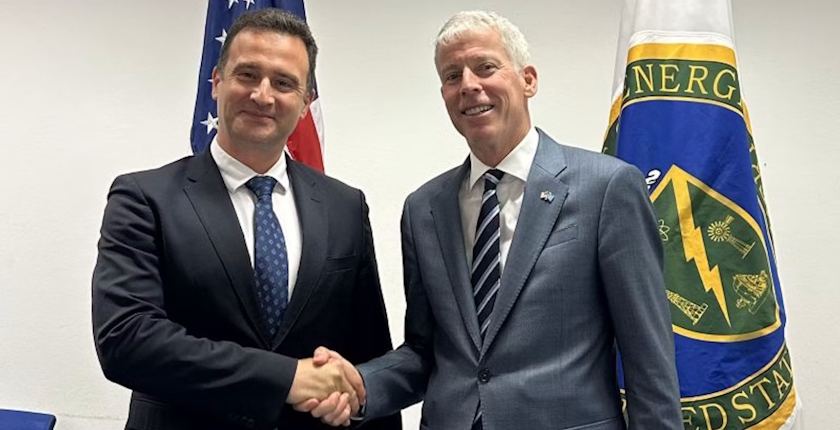
Minister of Energy of Bulgaria Zhecho Stankov said that during his forthcoming visit to Ontario, Canada, he is going to a site where the first four small modular reactors (SMRs) are being built. Last week, he signed a memorandum of understanding with United States Secretary of Energy Chris Wright reaffirming the objectives of the bilateral agreement to strengthen cooperation in civil nuclear energy use.

Bulgaria’s government considers the SMR technology a tool for long-term stability, predictability and affordable low-emission electricity production.

“After signing a joint statement last week with the US Secretary of Energy Chris Wright on that country’s assistance for sites on Bulgarian territory for small modular reactors – it is a new, modern technology, very flexible, which attracts investments in data centers and artificial intelligence centers – the normal next step for the Bulgarian side is to start talks with potential companies that develop this type of technology,” Stankov told reporters in New York City.

US to assist Bulgaria in prefeasibility studies

The memorandum envisages cooperation in the development and deployment of innovative technologies for nuclear reactors, aimed at enhancing Bulgaria’s economic security and energy resilience with the support of the US Department of Energy’s Office of Nuclear Energy.

Minister Stankov called for regional cooperation to reduce vulnerabilities and form a sustainable energy market

The Balkan country would benefit from the expertise of US laboratories in conducting preliminary studies of the feasibility and suitability of potential sites for the deployment of small modular reactors. The US Trade and Development Agency has said it is prepared to fund the assessment of SMR technologies to identify the ones most adequate for Bulgaria, the ministry added.

Speaking in New York City, Stankov also outlined the priorities – new energy corridors, investments in green energy and balancing capacities including pumped storage hydropower plants and battery energy storage systems (BESS), the projects for units 7 and 8 at the Kozloduy nuclear power plant, and regional cooperation for reducing vulnerabilities and forming a sustainable energy market.

Prime Minister Zhelyazkov endorses both rival projects for electricity corridors

Notably, Prime Minister Rosen Zhelyazkov said that he spoke with President of Azerbaijan Ilham Aliyev about the supply of green energy from the Caspian region to Europe. The plans involve 6 GW from Azerbaijan or, potentially, 10 GW if Kazakhstan and Turkmenistan are involved, he added

The proposed subsea power interconnector under the Black Sea is increasingly realistic and so is an onshore corridor from Armenia and Georgia through Turkey, according to Zhelyazkov.

by in News

Uncertain future of Greece-Cyprus Great Sea Interconnector project

Greece and Cyprus find themselves at odds when it comes to Great Sea Interconnector (GSI), their big project for a subsea electricity cable. A new investigation by the European Public Prosecutor’s Office (EPPO) further complicates things.

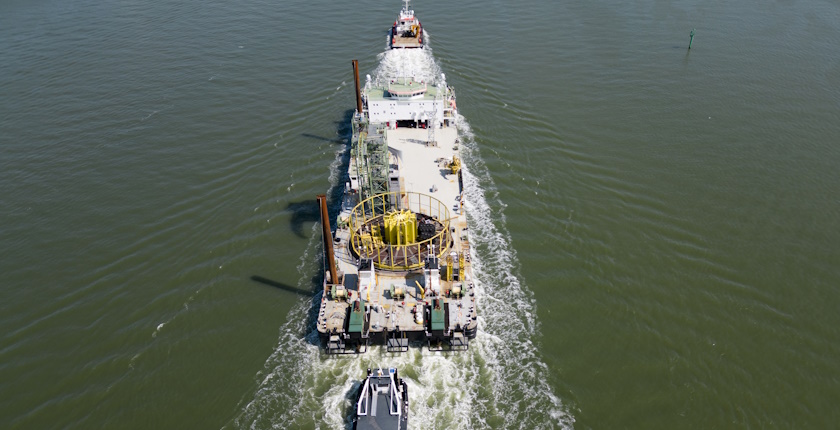
Great Sea Interconnector is an envisaged 1,208-kilometer power line that would connect Crete, Cyprus and Israel. Planned for 1,000 MW in capacity and doubled later, the link would provide energy security and lower energy costs for Cypriot consumers, who currently pay the highest wholesale prices in Europe. Cyprus has also been plagued by very high curtailments and rolling blackouts, meaning that a solution is needed urgently.

The EUR 1.9 billion project benefits from a EUR 657 million funding from the Connecting Europe Facility (CEF), for the Greece-Cyprus section. It is also included in the Projects of Common Interest (PCI) list.

Currently, GSI is at the stage of bathymetric surveys in the offshore region between Greece and Cyprus. Italian ships were hired, but they were stopped last year by Turkish naval forces near the island of Kasos, east of Crete. This year, the Greek government appeared ready to reinitiate the surveys, this time with military escort, but in recent days, the government in Nicosia raised new concerns.

Cyprus raises cost issues

Statements by the two governments revealed diverging views about GSI. Cyprus has raised the issue of economic viability, with Minister of Finance Makis Keravnos maintaining a hard line and saying that it is not evident whether the interconnection would benefit his country.

“No one knows how much it will cost consumers and when the project will be completed,” said Keravnos.

Greece responded by reminding the decision makers in Nicosia that an agreement was signed last year, specifying that Cyprus needs to pay EUR 25 million annually to the project promoter, the Greek Independent Power Transmission Operator (IPTO or ADMIE). The first payment is expected this year, if the project is to continue.

IPTO has said that without the remaining decrees from Cyprus Energy Regulatory Authority (CERA or RAEK), it would stop paying Nexans, the French company in charge of building the cable. At that point, the interconnector project freezes.

Essentially, Greece wants Cyprus to pay before it moves ahead with new surveys around Kasos, which could trigger a military showdown with Turkey. On the other hand, the government in Nicosia wants Greece to complete the surveys before providing the money, thus removing any geopolitical risk.

Mitsotakis: Cyprus must show it wants the project

“Cyprus is the primary beneficiary of this project, therefore it must show its commitment,” said Greek Prime Minister Kyriakos Mitsotakis.

Things have been further complicated by EPPO’s new investigation. According to leaks in the Cypriot press, the administration in Brussels is looking into potential mismanagement when EuroAsia Interconnector was the project promoter, before IPTO took over.

Geopolitics at the epicenter

However, the elephant in the room is the geopolitical issue. Greece and Cyprus have delimited their exclusive economic zones (EEZs) in the waters between them, in line with international law. However, they haven’t signed a bilateral demarcation agreement.

Turkey, on the other hand, laid a claim over the marine region. It is one of the few countries that have not signed the United Nations Convention on the Law of the Sea (UNCLOS). In 2022 it signed an EEZ agreement with Libya to solidify its claims, which Greece, Cyprus and the European Union have called illegal.