by in News

Montenegro to bring in international partner for HPP Komarnica project

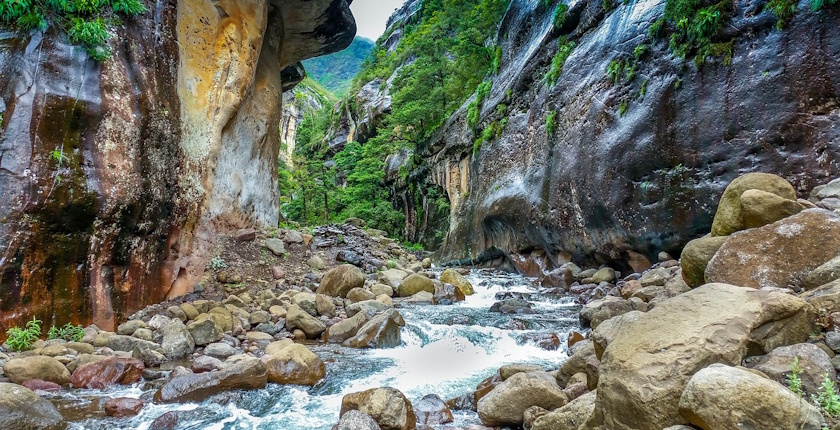
Montenegro’s state-owned power utility Elektroprivreda Crne Gore plans to include an international partner in the development of the Komarnica hydropower project. The company cited the experiences of Norway, Austria, and France. The plant, with a proposed capacity of 172 MW, is expected to have an annual production of around 213 GWh.

Elektroprivreda Crne Gore (EPCG) has four hydropower plants in the pipeline: Komarnica, Kruševo, Ćehotina, and Sutorina. The Komarnica and Kruševo projects have made the most progress, but challenges remain. Environmental organizations oppose the Komarnica project, while in September last year, President of EPCG’s Board of Directors Milutin Đukanović noted that the project has been on hold for two years.

Importantly, Kruševo and Ćehotina have been mentioned as investments that could be implemented within a partnership with French state-owned power utility EDF.

EPCG now told Vijesti that it has temporarily withdrawn the environmental impact assessment (EIA) for the Komarnica project because the Environmental Protection Agency of Montenegro set a short deadline to revise it.

EPCG  intends to prepare a study on the project’s impact on Durmitor National Park, a UNESCO site

The plan is to include a renowned international partner, in cooperation with the Government of Montenegro, to ensure transparent and professional project implementation, particularly considering the experiences and best practices of countries like Austria, France, and Norway, according to EPCG, which claimed the three countries have successfully aligned environmental standards with energy development.

In addition to supplementing the EIA report, the company plans to conduct a study on HPP Komarnica’s impact on Durmitor National Park, a UNESCO site, in line with the international organization’s methodology. EPCG also intends to prepare the required environmental studies in a way that would match the rules of one of international financial institutions.

EPCG expressed the belief that, due to the differing views on hydropower plant construction, not only in Montenegro but worldwide, the best solution is to implement the projects together with a reputable international partner, and in cooperation with the government. The utility said it would prove its commitment to transparency and adherence to all European Union standards.

If Austria, France, and Norway could achieve compromise, so can Montenegro

EPCG expects to make a decision on the project and continue the process later this year.

The company pointed out that countries such as Austria, France, and Norway succeeded in finding a compromise between environmental protection, development, and necessary investments. Since they did it, EPCG sees no reason why Montenegro could not do the same in cooperation with companies from these countries.

Turning to the benefits of HPPs, EPCG recalled that they ensure the technical reliability and stability of the power system and integration of a significant number of planned solar power plants and wind farms.

by in News

Investment risk highest for nuclear power, lowest for solar

Nuclear power plants have the highest construction cost overrun and the longest time delays of all energy projects. In the clean energy sector, the worst marks for violation of set construction cost and timelines go to hydrogen, carbon capture and storage as well as gas power plants, according to a study by the Boston University Institute for Global Sustainability.

The average project costs 40% more than expected for construction and takes almost two years longer than planned, the Boston University Institute for Global Sustainability (IGS) said.

Its researchers used an original dataset 50% larger than the ones in previous literature. They examined cost overrun risks for 662 energy infrastructure projects across 83 countries built between 1936 and 2024, covering USD 1.358 trillion in investment and a total capacity of more than 400 GW.

In total, the study evaluated ten types of projects: coal-, oil-, and natural gas–fueled power plants; nuclear reactors; hydropower plants; utility-scale wind farms; utility-scale solar photovoltaic and concentrated solar power (CSP) facilities; high-voltage transmission lines; bioenergy and geothermal power plants; hydrogen production units; and carbon capture and storage (CCS) facilities.

Both hydrogen and CCS projects exhibited significant time and cost overruns

“We found that more than three fifths of the projects experienced cost overruns, with these overruns being particularly prominent in projects exceeding 1,561 MW in capacity. Positively, the escalation rate in cost overruns has been declining since 1976,” reads the study, published in the Energy Research & Social Science journal.

However, the findings show patterns of cost overruns varied by fuel source. Nuclear and fossil thermal projects exhibited higher cost escalation rates over time, whereas solar power projects showed a decline.

Critically, both hydrogen and CCS projects exhibited significant time and cost overruns, casting doubt on their ability to be rapidly scaled up, to address climate change or meet energy and climate policy priorities, the authors underlined.

The average nuclear power plant has a construction cost overrun of 102.5% and ends up costing USD 1.56 billion more than expected, IGS said.

Red flag for efforts to substantially push forward a hydrogen economy

“Worryingly, these findings raise a legitimate red flag concerning efforts to substantially push forward a hydrogen economy,” said Benjamin Sovacool, lead and first author of the study, director of IGS, and professor at Boston University’s Department of Earth and Environment.

In the results, solar energy and electricity grid transmission projects have the best construction track record and that they are often completed ahead of schedule or below expected cost.

Wind farms also performed favorably in the financial risk assessment, according to the study, called ‘Beyond economies of scale: Learning from construction cost overrun risks and time delays in global energy infrastructure projects’.

“Low-carbon sources of energy such as wind and solar not only have huge climatic and energy security benefits, but also financial advantages related to less construction risk and less chance of delays,” Sovacool stated.

For him, it’s further evidence that such technologies have an array of underrated and underappreciated social and economic value.

by in News

PV plant built next to Slovenia’s only pumped storage hydropower plant Avče

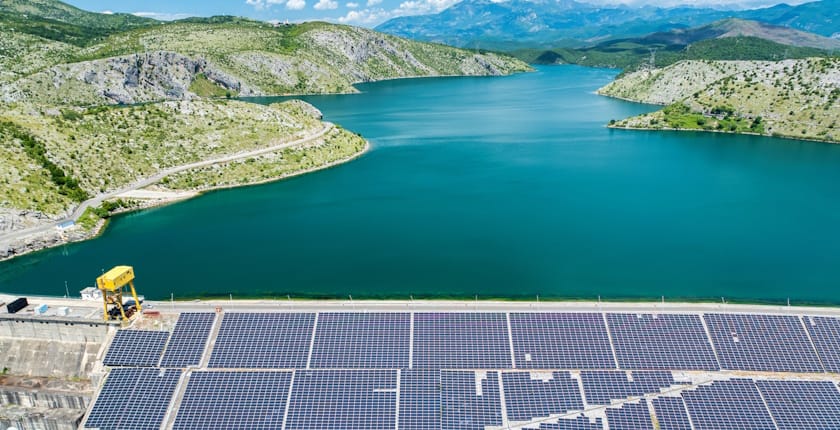
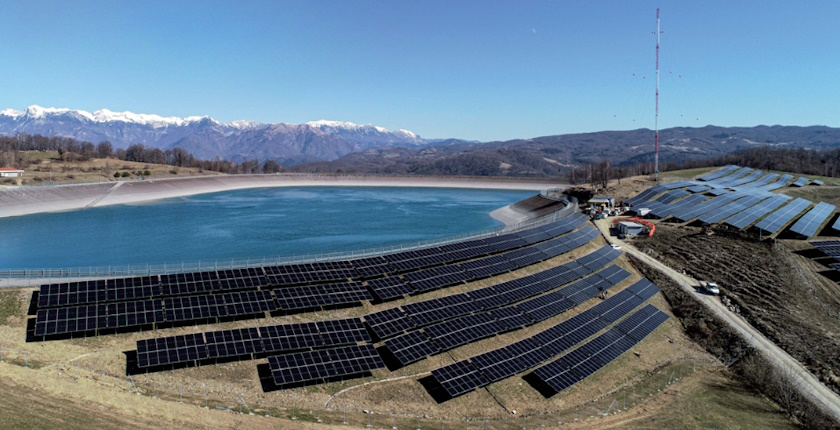
Slovenian company Soške elektrarne Nova Gorica (SENG) commissioned its first solar power plant – Kanalski Vrh. The facility is at its Avče pumped storage hydropower plant, the only one in the country.

Surfaces around large infrastructure such as railways are convenient for photovoltaics as there are very few options for the utilization of such sites. Existing power plants, including hydropower plant reservoirs, are even better locations, as they provide access to strong grid connections and transformers.

With its strict environmental and social regulations and standards, Slovenia is struggling to determine suitable locations for wind turbines, but also larger ground-mounted solar power plants. But state-owned power utility Soške elektrarne Nova Gorica (SENG) managed to fit a photovoltaic system on the banks of the upper reservoir of its Avče pumped storage hydropower plant, in cooperation with the local community.

Kanalski Vrh solar power plant hooked to existing power line

The 2.9 MW solar power plant north of the village of Kanalski Vrh is connected to an existing 20 kV power line. The hydropower operator estimated the annual output at 3.3 GWh. It plans to expand the PV facility to 8 MW by the end of next year.

The first phase was worth EUR 2.2 million. The firm, part of Holding Slovenske elektrarne – HSE Group, used its own funds and won government subsidies.

Area gets natural science park, cycling paths together with PV facility

In the local spatial planning process, Kanalski Vrh got a natural science park and walking and cycling paths. SENG’s first solar power plant spans two hectares and consists of 4,736 modules.

“We have witnessed increasing opposition to the construction of new energy facilities for the production of electricity from renewable sources, but the Kanalski Vrh solar power plant is proof that projects can be successfully completed in an open and transparent dialogue with the local community,” Managing Director of HSE Tomaž Štokelj said.

Avče is the only pumped storage hydroelectric plant in Slovenia. It has 180 MW in pumping mode and 185 MW for production. Avče and four out of five SENG’s hydropower plants on the Soča river are in the municipality of Kanal ob Soči. The first one, Doblar 1, was built in 1939.

Kanal ob Soči is at Slovenia’s western border, with Italy. The firm also operates a group of small hydropower plants.

If the operation of a solar power plant is integrated with a hydroelectric facility, as a hybrid power plant, it can help save water on sunny days.

Slovenia hosts two other PV facilities next to hydropower plants: Brežice and Zlatoličje-Formin.

by in News

North Macedonia issues first guarantees of origin for renewables

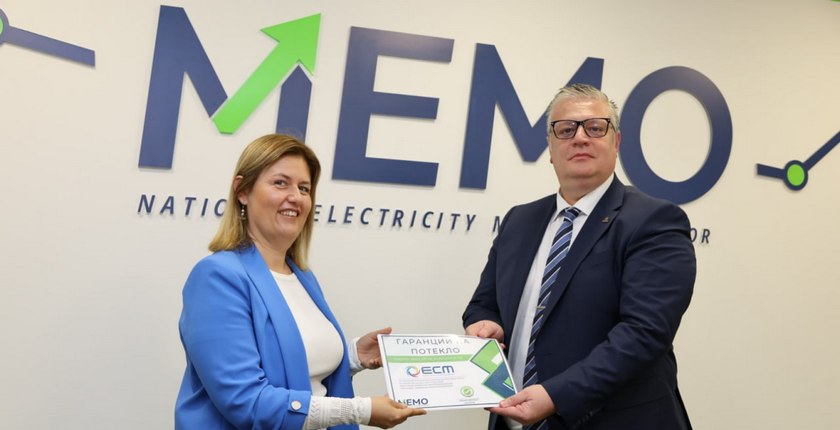
North Macedonia’s National Electricity Market Operator MEMO has issued the country’s first guarantees of origin (GOs), certificates verifying that electricity is generated from renewable energy sources. The guarantees were awarded to state power utility Elektrani na Severna Makedonija (ESM) for electricity produced from hydropower. With this step, North Macedonia joins virtually all other countries in the region, which already have GO schemes in place.

The issuance of the first guarantees of origin represents a step forward in the implementation of the green transition in North Macedonia, in line with European standards and sustainable energy development goals, said Minister of Energy, Mining and Mineral Resources Sanja Božinovska, who handed over the GOs to ESM General Director Lazo Uzunčev.

Božinovska underlined that the GOs would help create a transparent and sustainable energy market in the country.

Earlier this year, MEMO adopted the rules for administering guarantees of origin for electricity in line with the Law on Energy, the guarantees of origin decree, and the standards of the Association of Issuing Bodies (AIB), a Brussels-based organization that standardizes GOs. The operator is responsible for managing the GO registry and issuing and revoking GOs.

MEMO’s GO rules will ensure full acceptance in the European market

The rules are also harmonized with the principles of the European Energy Certificate System (EECS) and will ensure full acceptance in the European market, MEMO said in a press release.

More companies are joining the GO registry

Zoran Gjorgjievski, MEMO’s CEO, said that a large number of other companies are already in the process of joining the GO registry. “As the responsible operator, we are actively working on issuing, recording, and recognizing them,” he stressed.

The management of ESM emphasized that the company is continuing its efforts to increase electricity production from renewable sources, including the construction of new wind farms and photovoltaic power plants, for which it also plans to obtain GOs.

by in News

Decarbonization of Southeastern European region: both renewables and nuclear are speeding up

Energy transition in Southeastern Europe is accelerating, and the progress depends on individual countries’ strategies and legal frameworks. At the Belgrade Energy Forum (BEF 2025), representatives of state-owned power utilities and private producers discussed the different approaches to decarbonization. The domination of investments in renewable energy is unquestionable, but there are also ambitions to develop nuclear capacities, spearheaded by Slovenia. The country is already operating one nuclear reactor and is developing a project for another one.

The electricity sector in Southeast Europe still depends for a large part on thermal power plants that burn fossil fuels. In 2023, they accounted for 43% of overall output, of which two-thirds were from lignite and the rest from gas. There is a need for accelerated decarbonization, and the speed of the transition will depend on financial possibilities and the political will and decisions, said the panel’s moderator and Director of Zagreb-based Energy Institute Hrvoje Požar Dražen Jakšić.

The acceleration trend in decarbonization is also evident in the electricity market projections for the region until 2030. The plans for the period until the end of the decade include shutting down 6.2 GW of thermal power plant capacity and installing 42.3 GW from renewable sources. Greece, Romania, Serbia and Bulgaria are expected to add the most.

Top executives of state-owned utilities in Serbia, Slovenia and Montenegro and independent power producers that invest in renewables in the region gathered at a panel called Decarbonisation strategies for power generation in Southeast Europe 2040/2050 at Belgrade Energy Forum 2025.

They agreed that decarbonization is well underway and an unstoppable process already speeding up significantly. The participants in the discussion presented the different strategies their companies will act upon in the following years and decades, leading the process to fulfilment.

Among the messages that they shared is that they expect each government to promote investments and make the legal framework clear and certain, while the countries strengthen their ties and exchange experiences. Green energy is the pillar of the energy transition and decarbonization in the region, but several states are also interested in building their first nuclear power plants—conventional ones or small modular reactors (SMRs)—or expanding the existing capacity.

EPS’s Živković: Decarbonization requires energy storage, nuclear plants

Chief Executive Officer of Serbia’s Elektroprivreda Srbije (EPS) Dušan Živković pointed out that the state-controlled electricity producer is committed to its goals regarding green energy and emission reductions as well as to the country’s targets. “We will work on that, of course, believing in these objectives, but without compromising energy security and the energy sovereignty of Serbia. It was proven to be the only sustainable path,” he asserted.

The company particularly counts on the project for solar power plants with a total connection capacity of 1 GW, with batteries of 200 MW in combined capability. The investment is conducted through a strategic partnership with Hyundai Engineering and UGT Renewables (UGTR).

A study is underway in Serbia on the potential for the construction of large nuclear power plants and small modular reactors

The decarbonization process won’t be easily feasible without serious energy storage capacity, Živković warned and added that nuclear energy wouldn’t be unrealistic. A study is underway on the possibilities of building large nuclear plants and small modular reactors in Serbia.

The head of EPS expressed the belief that “the quality of that energy needs to be visualized” for citizens of every country and that they should be explained that it is necessary to provide energy for the economy and its security.

CEOs Dejan Paravan of GEN energija, Dušan Živković of EPS and Eric Scotto of Akuo

No dilemma in Serbia about energy transition

Country Manager of WV-International in Serbia Neda Lazendić highlighted the said strategic partnership for solar power plants with battery energy storage systems (BESS), saying Hyundai Engineering is a world-renowned company.

In her view, the endeavor will be a milestone for the entire region and it is exceptionally important for gaining experience at the domestic level.

The recent second round of auctions for electricity from renewable sources showed that Serbia opted for the energy transition “and there is not any dilemma about it anymore,” Lazendić stressed and said the country is an example for the region. The prices from the bidding that were accepted are appealing and they match European trends, she noted.

Country Manager of WV-International Neda Lazendić

Lignite is highly unprofitable

Slovenia and GEN energija, one of the state-owned power utilities, are relying on both renewable sources and nuclear energy in their decarbonization investments, the company’s CEO Dejan Paravan pointed out.

“We want to get rid of coal as soon as possible. And in the short term, renewables are the only option. Why get rid of coal? The current production of domestic lignite is highly unprofitable, and because of climate goals,” he explained.

Nevertheless, it is exceptionally complicated to get permits for renewables and place them in the environment, Paravan added. On the other hand, nuclear energy is emissions-free and very stable and reliable, he asserted. The technology takes up the least space and enables the production of huge amounts of electricity, the head of GEN energija said.

Nuclear power plant Krško 2 could come online in 2040

Paravan recalled that two years ago nuclear power plant Krško marked four decades since it was commissioned and that its operating life was extended by 20 years. GEN energija is working on the Krško 2 project. The chief executive expects construction to begin in 2022 or 2023 and that the reactor could be connected to the grid in 2040.

In parallel, the company is studying SMRs. Still, the development of the technology will take a long time and, importantly, such facilities won’t have the advantage of scale like large reactors, he said. One who expects electricity from SMRs to be cheaper than from big nuclear plants is wrong, in Paravan’s view.

As for the dilemma between renewable sources and nuclear energy, he expressed the belief that they are not mutually exclusive. “We need renewables and they can provide us a lot of CO2-free electricity in the short run. But let’s make it clear that once we come to 70%, 80%, 90% based on renewables, that we have a problem of seasonal storage, that things will get very difficult,” Paravan stated.

Batteries are ten times cheaper than ten years ago

Conversely, Akuo Energy’s CEO Eric Scotto pointed out that nuclear power is expensive. “It’s over. We won the race. Renewable is the cheapest way to produce energy,” he underscored.

The price of energy storage capacity is ten times lower than ten years ago, the head of the French company noted. Moreover, operating power of a battery system in a standard TEU container, twenty feet or 6.1 meters long, now reaches 6 MW, which is three times more than three years ago, according to Scotto.

To attract investments, stability is necessary, he stressed. Scotto went on to highlight some “simple things” that could help Akuo, which was one of the winners at the last auction round in Serbia, to materialize its projects for two wind parks. He mentioned the speed of permitting for telecommunication systems and road construction, for power plants.

Turning to the slowness of the energy transition in Balkan countries, he emphasized its positive side. “We are late. Then we will benefit from the cheapest resource, the cheapest way to produce energy,” Scotto concluded.

EPCG’s Solari project kicked off energy transition in Montenegro

Technical Director of Elektroprivreda Crne Gore (EPCG) Ljubiša Đurković called the state-owned power utility’s projects Solari 3000+ and Solari 500+ the start of the energy transition in Montenegro. Since the beginning of 2023 and including Solari 5000+, launched later, the company set up photovoltaic systems on 7,380 structures, he revealed.

Total peak capacity reached 76 MW and another 125 MW will be installed by the end of the year, EPCG’s official said.

Among its projects, the company is building the Gvozd wind farm, and the Kapino polje solar park near Nikšić.

Technical Director of EPCG Ljubiša Đurković

There is already 10 MW on roofs in the former Željezara steel plant in Nikšić, and before the end of the year another 15.5 MW will be connected to the grid, Đurković said. A contract has been signed for the construction of the eighth generator in the Perućica hydropower plant, of 58 MW. It is scheduled for completion in 2027.

Đurković: A realistic date for the closure of the Pljevlja thermal power plant is between 2045 and 2050

The energy transition is about a single and connected system, including storage capacities and measures to improve energy efficiency, he underscored. “You have to create the conditions for a swift integration of renewable energy sources into the distribution and transmission networks. We were supposed to do that already. We didn’t do it, particularly in the Western Balkans. We didn’t reconstruct the distribution and transmission networks,” he stated.

As for the current reconstruction of the coal-fired Pljevlja thermal power plant, the only one in Montenegro, Đurković said the project wouldn’t make sense if the facility were to keep operating only for a short while longer.

žAccording to the National Energy and Climate Plan (NECP), which is almost complete, it will remain active at least until 2041, although the realistic date for its closure is only between 2045 and 2050, in the opinion of EPCG’s technical director. The main phase of the reconstruction began at the end of March.

by in News

Hidroelectrica picks contractor for PV systems on 20 hydropower plants

Romanian state-owned hydropower plant operator Hidroelectrica signed a deal with Servelect and subcontractor Electroplus, which need to install solar panels on the roofs of 20 hydroelectric plants. They are on the middle and downstream parts of the Olt river.

Combining hydropower with photovoltaics including floating solar power plants is becoming popular. The two sources are compatible, especially if there is a dam, as it can save water in reservoirs. The grid infrastructure for PV panels is already there and there are usually no land ownership issues. Hidroelectrica, which mostly operates hydropower plants, is about to solarize its existing facilities.

The Romanian state-owned company pursuing diversification signed an agreement with Servelect and its subcontractor Electroplus. There were four bids in the tender.

First solar power project for Hidroelectrica

Solar power systems will be on the roofs of 20 hydropower units on the middle and downstream sections of the Olt river. Hidroelectrica, listed at the Bucharest Stock Exchange since 2023, turnkey deal, said it aims to optimize production costs. However, it didn’t reveal whether it would operate the colocated assets jointly, as hybrid power plants.

Hidroelectrica is the largest electricity producer in the country, but it will be its first solar power units. The deal, for an overall 2.96 MW, is worth EUR 1.77 million excluding value-added tax. The deadline is 24 months, of which four months for the design.

Servelect, Electroplus responsible for all phases from procurement to commissioning

The utility also tasked the two firms, based in Cluj-Napoca, with manufacturing and procurement, transportation, testing and commissioning. The PV systems would consist of 620 W panels and 100 kW inverters. Hidroelectrica estimated the combined annual output at 3.71 GWh.

The company operates 188 hydropower plants, 6.4 GW overall, and the Crucea Nord wind park of 108 MW. Earlier, Hidroelectrica and Masdar were considering a pilot project, under an upcoming joint venture, for floating solar power plants on seven reservoirs, also on the Olt.

Servelect is active in engineering and energy services. It was founded in 2005. Electroplus, which handles electrical installations, operates since 2001.

by in News

Army joins forces with municipality, energy company, road firm to install solar panels in Slovenia

The Sunčana Vipava solar power project has brought together several key stakeholders in Slovenia – state electricity producer Soške Elektrarne Nova Gorica (SENG), the Ministry of Defense of the Republic of Slovenia (MORS), road management firm Družba za Avtoceste v Republiki Sloveniji (DARS), and the Municipality of Vipava.

The Sunčana (Sunny) Vipava project envisages installing solar power plants with a total capacity of 20 MW along highways, near military barracks, and on municipal land.

The initiative is seen as a strategic move towards achieving greater energy independence, enhancing energy supply security, and promoting sustainable development through advanced photovoltaic solutions, in both military and civilian areas, according to SENG.

The company operates 28 hydropower plants, with a combined capacity of 346 MW, on the Soča River and its tributaries, and is part of the Holding Slovenske Elektrarne (HSE) group.

In the Vipava municipality, SENG has identified several potential sites for harnessing solar energy, located adjacent to military barracks, along highways, and on municipal land.

The Vipava municipality intends to establish business zones in the vicinity of the future solar plants

The primary objective for all parties involved in the agreement is to maximize the utilization of solar potential, in conjunction with modern technologies such as hydrogen, SENG underlined.

The estimated potential at these sites is substantial, and it is currently financially viable to install solar panels with a total capacity of 20 MW. Additionally, the Municipality of Vipava plans to develop business zones in the vicinity of the future photovoltaic plants.

SENG and DARS have had a longstanding collaboration, initiated in July 2023, when the two state-owned companies agreed to develop solar power plants next to highways and signed a contract to build the first one in the southern region of Primorska.

SENG stressed the Sunčana Vipava project is one of its several green initiatives. The company plans to open its largest solar power plant at Kanalski Vrh before summer. The plant, located near the Avče pumped storage hydropower plant, will have a total capacity of 8 MW, and its first, 2.9 MW phase is nearing completion.

The official opening of the first phase is scheduled for early June.

Slovenia’s army involved in various energy projects

Photo: SENG

The involvement of the Ministry of Defense of the Republic of Slovenia (MORS) and Slovenian Armed Forces in energy projects is not a surprise.

In April 2023, a public-private partnership was initiated to build photovoltaic plants at the Edvard Peperko military barracks in Slovenia’s capital, Ljubljana. A year later, MORS launched the Defense Resilience Hub Network in Europe (RESHUB) project, which envisages establishing self-sufficient energy hubs.

In addition to highways and military barracks, Slovenia plans to install solar panels along railways, demonstrating its commitment to placing solar energy facilities in degraded or underutilized locations.

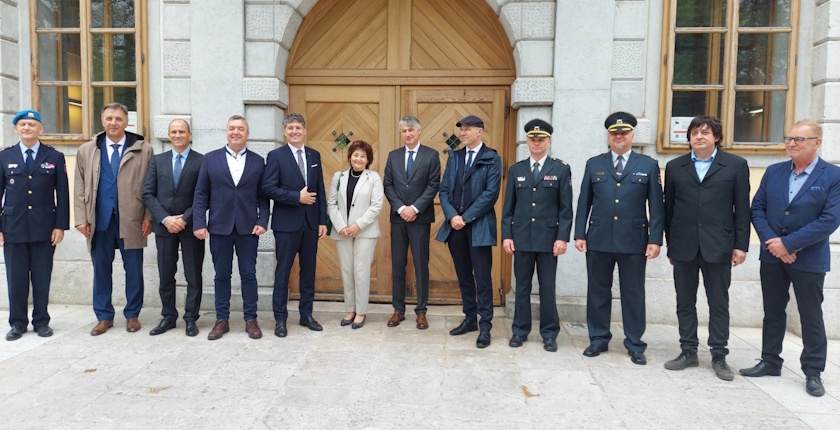
A cooperation agreement for this project was signed by Vipava Mayor Anton Lavrenčič, Slovenian Minister of Defense Borut Sajovic, DARS Board Member David Skornšek, and SENG CEO Mitja Gorjan.

Gorjan explained that SENG’s responsibilities include preparing project and investment documentation for the installation and construction of solar power plants at the Mlake military training ground, along military infrastructure and the highway, and in other locations within the Municipality of Vipava.

According to HSE CEO Tomaž Štokelj, the locations for energy facilities in the Vipava region present excellent opportunities for the multifunctional use of space.

by in News

Bulgaria grants EUR 587 million to 82 battery storage projects

Developers of 82 standalone battery storage projects in Bulgaria, for an overall 9.71 GWh in capacity, got approval for EUR 587 million in subsidies from the Ministry of Energy. Another 30 landed below the line, but the government intends to boost the program by EUR 120 million.

More than four months after the deadline for applications, the Ministry of Energy of Bulgaria ranked 112 projects for standalone battery energy storage systems (BESS). Through the RESTORE call for grants, it approved EUR 587 million for 82 of them, exhausting the budget.

The scheme is part of the National Recovery and Resilience Plan (NRRP), under the Recovery and Resilience Facility (RRF), which the European Commission controls.

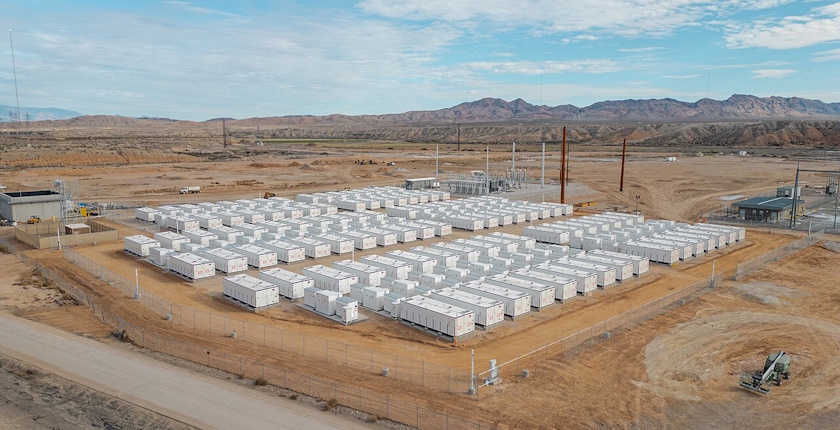
The selected investments envisage an overall 9.71 GWh of storage capacity, compared to the target of at least 3 GWh. The aim is to provide balancing to enable a significant increase in the share of wind and solar power in the energy mix, as well as to ensure the security and stability of the country’s electricity system. The facilities will be connected to the grid at both the transmission and distribution levels.

Notably, Bulgaria is struggling to meet the conditions and deadlines for NRRP funding, including for battery projects. Moreover, the ministry apparently decided not to move forward with a second call for subsidies for households for solar panels with or without batteries, and for solar collectors. It risks losing the European Union’s funding.

Project underway for 125 MW battery system in Burgas

The largest selected investment is BESS Burgas. The project is worth EUR 90 million, of which the grant would cover 26.5%. The proposed facility would have 125 MW in operating power and a four-hour duration, translating to 500 MWh.

The list lacks data on planned capacities for many of the projects. Among them is the one from ContourGlobal Maritsa East 3 (Maritsa iztok 3), the operator of a coal power plant that recently ceased operations. The company intends to invest EUR 74.5 million, the fifth-highest amount. The ministry said it would provide 40% of the total.

The owner of the recently closed Maritsa East 3 coal power plant won a 40% subsidy for its EUR 74.5 million BESS proposal

Weapons and ammunition producer Arsenal 2000 won a 44% subsidy for its EUR 48.9 million project. It intends to install a BESS of 80 MW and 350 MWh. One of the selected proposals is called Verila Solar Park 2. The share of the approved grant in the EUR 65.7 million investment is 32%.

Toki Storage stands out among the beneficiaries with 11 approved projects of the same size and valuation: 10 MW, 40 MWh and EUR 6 million each. The grants would cover 30% to 39.3%.

NEK fails to qualify with its project for battery system at Topolnitsa hydropower plant

Out of 151 applications, 118 initially passed to the ranking stage. The ministry said they were worth a combined EUR 838 million. The 30 projects in reserve are worth EUR 212 million, it added.

They include proposals from coal plant operators Toplofikatsiya Pernik and Bobov Dol. The ministry rejected four projects, of which one from state-owned National Electricity Co. (NEK), for a 20 MWh battery unit at its Topolnitsa hydropower plant.

According to consulting firm New I, involved in more than 40% of the winners in the call, they are worth EUR 1.59 billion altogether, Bulgarian language EU Funds website reported. Requested support ranges between just below EUR 40,000 per MWh and EUR 80,000 per MWh, and the weighted average came in at EUR 60,000 per MWh, it revealed.

Many of the 151 projects were duplicated, the article adds.

Importantly, the government has proposed increasing the RESTORE program by EUR 120.6 million, which would be sufficient for at least 20 projects in the reserve group.

The ministry was supposed to select the beneficiaries by January. The deadline for drawing the EU funds is June next year, so the developers must rush to install their battery systems – but first they need to sign contracts with the government.

by in News

Three hydropower plants on Bistrica river to be finished by end-2026

Three hydropower plants on the Bistrica river near Foča are expected to be completed by the end of 2026, according to Petar Đokić, the Minister of Energy and Mining of the Republic of Srpska, one of the two entities of Bosnia and Herzegovina.

Chinese company AVIC is in charge of building the three hydropower plants, with a total capacity of 39 MW. State power utility Elektroprivreda Republike Srpske (ERS) will operate the facilities once they are completed, according to public broadcaster RTRS.

The three small hydropower plants on the Bistrica river, a tributary of the Drina, are being intensively built, with all works targeted for completion by the end of 2026, said Minister Petar Đokić, who will be among the speakers at Belgrade Energy Forum 2025 (BEF 2025).

The Hidroelektrane Bistrica hydropower system will consist of three cascading plants installed in the river canyon along the Foča-Sarajevo road. The construction of the facilities officially began in December 2021.

The total project cost is estimated at EUR 103 million

Once completed, the system will have a total installed capacity of 39 MW and an annual electricity output of 152 GWh. Đokić also said that the signed contract values the project at EUR 102.8 million.

Last year, the Government of the Republic of Srpska and the Chinese contractor AVIC signed an agreement on financing the construction of the three hydropower plants on the Bistrica.

Photo: The Ministry of Energy and Mining of the Republic of Srpska

During a visit to the construction site, Đokić revealed that there may be certain changes during implementation, but noted that the project will provide exceptional value for the energy system of the Republic of Srpska.

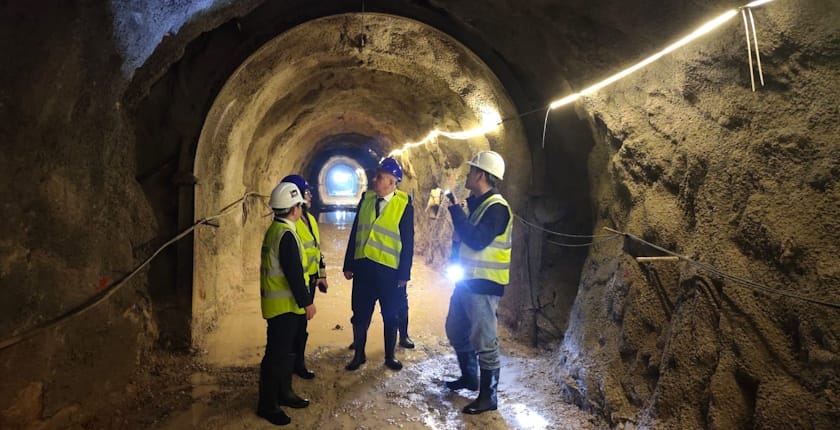
The three hydropower plants include nearly ten kilometers of tunnels

Site manager Feng Xiong from AVIC noted that the project encompasses three hydropower plants with a total of 9,800 meters of tunnels. Only 600 meters of tunnel work remains unfinished, he said, adding that he believes the project will be completed as scheduled.

Dejan Pavlović, CEO of Hidroelektrane Bistrica, stated that 9.2 kilometers of tunnels has been completed. Bistrica’s high water levels have slowed down the construction, he noted.

The companies investing in the three hydropower plants include Hidroelektrane Bistrica and Hidroelektrane na Drini, the majority owner of the project. The financial backing was secured by ERS.

by in News

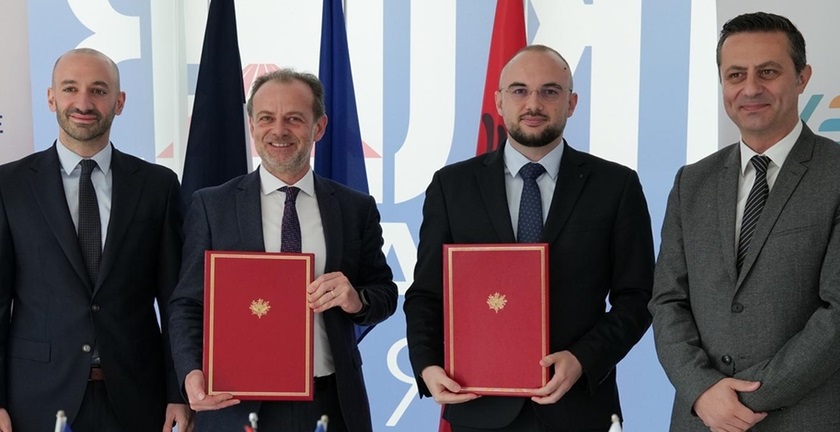
Albania’s KESH, France’s AFD sign MoU on hydropower management, energy storage 

Albania’s state-owned power company, KESH, and France’s development agency, Agence Française de Développement (AFD), have signed a memorandum of understanding on the Drin river cascade management and advanced energy storage planning.

Albania’s three biggest hydropower plants, with a combined capacity of 1.35 GW, are located on the Drin (Drim) river. The Drin cascade consists of the Fierza Hydropower Plant (500 MW), the Koman Hydropower Plant (600 MW), and the Vau i Dejës Hydropower Plant (250 MW).

As part of French Minister for Europe Benjamin Haddad’s visit to Tirana, Albania and France have solidified their action-oriented partnership in the energy sector, agreeing on AFD’s support to KESH in line with Albania’s priorities under its Green Agenda and EU accession roadmap, according to AFD.

With EUR 800,000 in financial support, AFD will mobilize French technical expertise in hydropower infrastructure modernization and digitalization and initiate a peer-to-peer exchange between KESH and Electricité de France (EDF), its French counterpart.

The technical assistance will help upgrade and digitalize KESH’s discharge management

Cooperation between KESH and French hydropower experts sets the stage for cutting-edge cooperation in energy storage and digital modeling, reads the press release.

AFD explained that the technical assistance would support the improvement and digitalization of KESH’s discharge management.

This will optimize electricity generation, mitigate flooding risks in the lower part of the Drin cascade, and develop storage capacity through the assessment and identification of the most suitable energy storage technologies for integration within the existing infrastructure, the agency added.

Haddad: the MoU demonstrates that Albania is a priority for France

Haddad underlined that the MoU demonstrates that Albania is a priority for France, but also the French government’s willingness to mobilize all its operators and financing tools to help the country in its European convergence and EU integration process, he noted.

According to Albania’s Deputy Minister of Infrastructure and Energy, Ceno Klosi, France’s support in the energy sector has been steadily growing over the past five years. It already encompasses both structural reforms and flagship projects with different power utilities, he stressed.

The signing was attended by Erald Elezi, Administrator of KESH, Arnaud Dauphin, Director of AFD’s Western Balkans Regional Office, and Catherine Suard, France’s Ambassador to Albania.

In June 2023, Albania’s government signed a EUR 100 million loan agreement for energy sector reforms with AFD and German development bank KfW. Lately, AFD has been very active in the region. In November 2024, it signed agreements in Montenegro, and in August 2024 in Serbia.