by in News

KESH partners with France’s EDF and AFD to develop Albania’s Energy Storage Roadmap

Tirana — In a decisive move toward modernizing its national grid, the Albanian state-owned power utility, KESH (Albanian Electric Power Corp), has finalized a strategic partnership with Électricité de France (EDF) and the French Development Agency (AFD). The collaboration focuses on the development of a comprehensive energy storage strategy, underpinned by a €400,000 grant earmarked by the AFD.

This initiative arrives at a critical juncture for Albania. While the country boasts a near-total reliance on renewable hydropower for domestic production, its lack of grid-scale energy storage remains a significant structural vulnerability. As the global energy transition demands higher flexibility, the partnership aims to bridge the gap between Albania’s current hydro-centric model and a diversified, resilient future.

Engineering Flexibility: The Scope of the Partnership

The primary objective of the agreement is to identify and evaluate the most effective storage technologies suited for Albania’s existing infrastructure. The resulting study will serve as a technical blueprint for the nation’s Energy Storage Strategy, focusing on several key pillars:

  • Renewable Integration: Facilitating the entry of solar and wind energy into a grid historically dominated by water power.

  • System Modernization: Increasing the security of supply and enhancing operational flexibility.

  • Climate Resilience: Improving the long-term sustainability and management of Albania’s vital water resources and assets.

The technical expertise for this transition will be provided by the French state-owned giant EDF, a global leader in low-carbon energy, while the AFD continues to expand its financial and developmental footprint across the Western Balkans.

High-Level Diplomatic Support

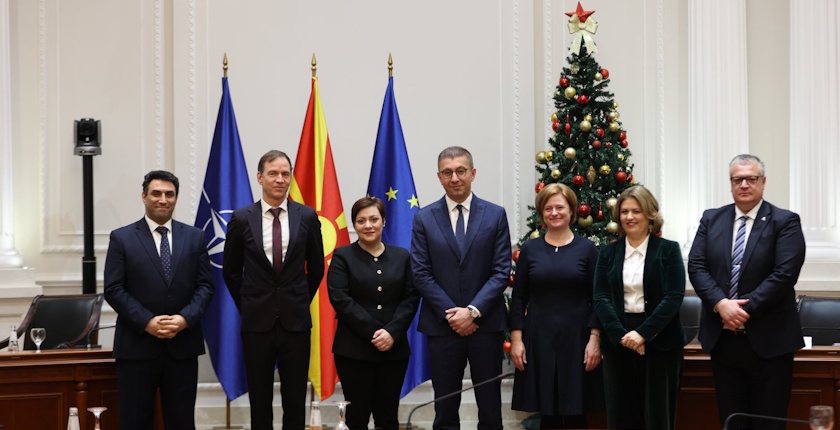
The signing ceremony was attended by Nicolas Forissier, the French Minister Delegate for Foreign Trade and Economic Attractiveness. Minister Forissier emphasized that this agreement underscores Albania’s status as a priority partner for France, reflecting Paris’s commitment to supporting the country’s integration into the European Union through the mobilization of technical and financial instruments.

Under the leadership of Viola Haxhiademi, who assumed the role of CEO in late December, KESH is positioning itself to manage significant future capacities. Currently, planned projects—including KESH’s pumped storage capacity in the Drin (Drim) cascade and Statkraft’s Moglica project—represent a potential 1.6 GW of storage capacity.

A Continuing Collaboration

This latest deal builds upon an existing relationship between KESH and the AFD. Last year, the two entities signed an agreement focused on the advanced management of the Drin River cascade, the backbone of Albania’s energy sector. By adding a formal storage strategy to this framework, Albania is taking a sophisticated step toward aligning its energy sector with EU standards and the exigencies of the green transition.
by in News

Montenegro’s EPCG signs contract for Otilovići small hydropower plant

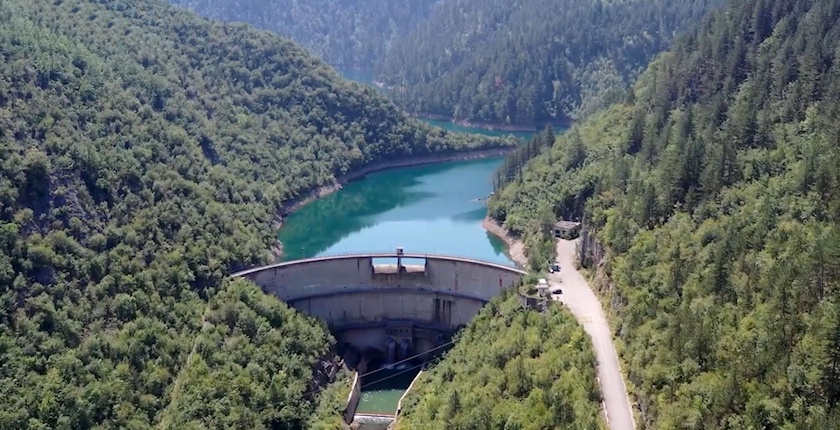
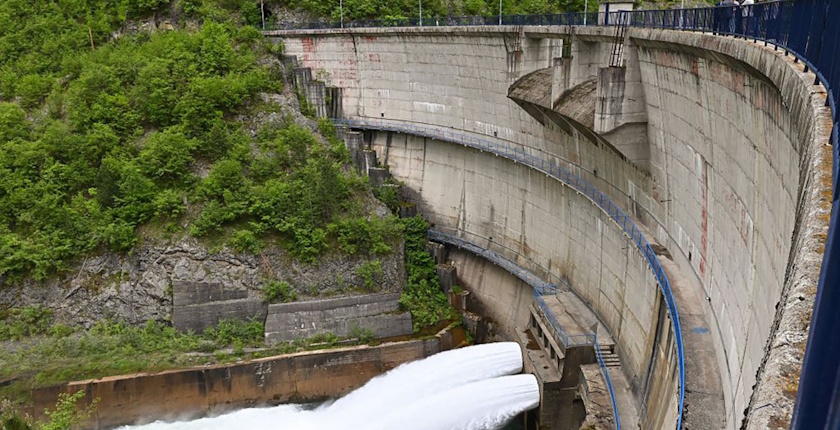
Montenegro’s Elektroprivreda Crne Gore signed a contract today with Vigoris Ecotech for the construction of the Otilovići small hydropower plant near Pljevlja, in the northern part of the country.

The agreement between state-owned power utility Elektroprivreda Crne Gore (EPCG) and Vigoris Ecotech is for project design, construction, the delivery and installation of electro-mechanical equipment, testing, and commissioning, on a turnkey basis.

The contract, worth EUR 6.8 million excluding VAT, was concluded following an open tender, according to the update. The project involves the installation of two units with horizontal Francis turbines, with a total installed capacity of 3.2 MW. The planned annual production is 11 GWh.

The Otilovići SHPP is a priority in hydropower development

In July 2023, EPCG obtained urban planning and technical requirements for the project. At the time, the company said it worked two years on the documentation and announced that it would soon launch a tender.

montenegro epcg vigoris shpp otilovici dragas visnjic dam
Photo: EPCG

The small hydropower plant (SHPP) will utilize surplus water from an existing reservoir on the Ćehotina river. The facility is used for the needs of the Pljevlja thermal power plant and to supply drinking water to Pljevlja.

EPCG said Otilovići has been recognized as a priority hydropower project within the strategic plans of both the company and Montenegro.

Dragaš: Strengthening production stability and flexibility

EPCG CEO Zdravko Dragaš stressed that SHPP Otilovići represents another step in the company’s investment plan and the strengthening of domestic production capacities.

The contract confirms EPCG’s development orientation toward investing in reliable, sustainable, and domestic energy sources, with the full application of modern standards and procedures, he added.

“The Otilovići SHPP is a project that adds new value to Montenegro’s energy system and strengthens our overall production stability and flexibility,” Dragaš underscored.

Višnjić: We aim to deliver a solution that justifies trust

According to Vigoris Ecotech CEO Siniša Višnjić, the project’s implementation will be guided by high standards of quality and safety, with strictly defined deadlines and obligations.

“Our goal is to deliver a solution that justifies EPCG’s trust, from the main design to the final testing and commissioning,” Višnjić stressed.

by in News

Twin pumped storage hydropower projects in Greece get environmental approval

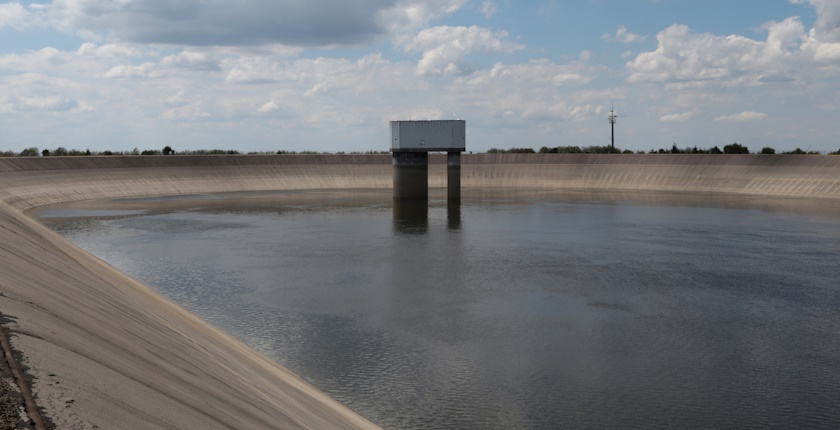
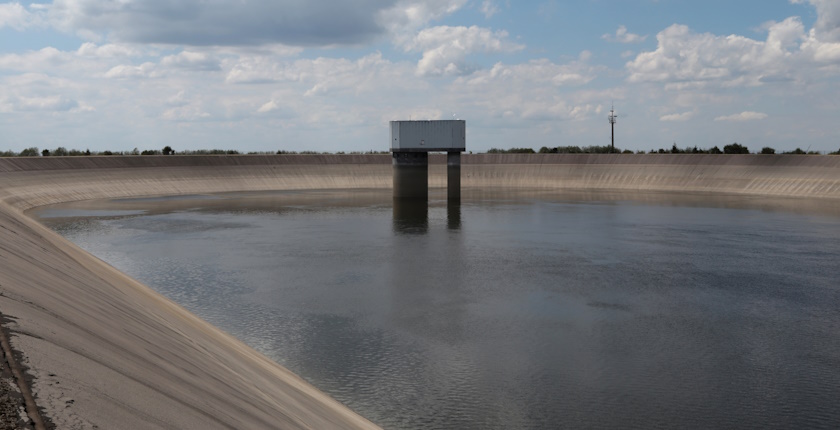
Proposals for two pumped storage hydropower plants next to each other in northern Greece received the environmental conditions. The Flampouro project is for 450 MW in both modes while Trani Rachi would be able to generate 594 MW and consume up to 600 MW.

Greece has an ambition to become a Mediterranean and European hub for renewable energy and energy transmission. Among other important segments, energy storage is rising in popularity among investors. Such technologies have a major role in accommodating the deployment of renewables and balancing supply and demand.

Within a string of proposed investments in pumped storage hydropower, twin projects Flampouro and Trani Rachi have just passed an important point in development. Both locations are next to the reservoir of the Ilarion dam and hydropower plant, near Kozani in the Western Macedonia province.

The projects were developed by investors from the Katselis family, the country’s media pointed out. The Ministry of Environment and Energy issued environmental terms (AEPO) for the two investment proposals in the north of Greece, under special purpose vehicles Aliakmonas 1 and Aliakmonas 2.

Public Power Corp. (PPC Group) operates the existing facility, of 154 MW, which consists of two turbines. Commissioned in 2014, it is part of a hydropower cascade of 1 GW on the Haliacmon (Aliakmonas) river, the longest in Greece. Government-controlled PPC Group is working on several pumped storage endeavors.

Storage capacity would total 6.2 GWh

The Flampouro pumped storage hydropower plant would work at up to 450 MW both in the generation and pumping modes. In storage capacity terms, it is seen holding 2.7 GWh. The upper reservoir would be at an altitude of 1,065 meters, four kilometers from the lower one.

The location is in municipal units Ventzio, Deskati and Kamvounia in the municipalities of Grevena, Deskati and Servia, respectively.

Trani Rachi is for 594 MW in production capacity and 600 MW in the pumping mode, for 3.5 GWh in storage. The site for the upper reservoir is at 1,380 meters above sea level and three kilometers from the lower reservoir.

Documentation shows that the facility would be in the municipal units of Deskati and Kamvounia.

Combined production estimated at 1.34 TW per year

The developers estimated annual output at 1.34 TWh, of which Flampouro would account for 581 MWh and Trani Rachi for 763 GWh.

Both projects involve road repair and construction, water tunnels and the installation of transformers, substations and 400 kV transmission lines. The investments envisage machine rooms underground.

by in News

Twin pumped storage hydropower projects in Greece get environmental approval

Proposals for two pumped storage hydropower plants next to each other in northern Greece received the environmental conditions. The Flampouro project is for 450 MW in both modes while Trani Rachi would be able to generate 594 MW and consume up to 600 MW.

Greece has an ambition to become a Mediterranean and European hub for renewable energy and energy transmission. Among other important segments, energy storage is rising in popularity among investors. Such technologies have a major role in accommodating the deployment of renewables and balancing supply and demand.

Within a string of proposed investments in pumped storage hydropower, twin projects Flampouro and Trani Rachi have just passed an important point in development. Both locations are next to the reservoir of the Ilarion dam and hydropower plant, near Kozani in the Western Macedonia province.

The projects were developed by investors from the Katselis family, the country’s media pointed out. The Ministry of Environment and Energy issued environmental terms (AEPO) for the two investment proposals in the north of Greece, under special purpose vehicles Aliakmonas 1 and Aliakmonas 2.

Public Power Corp. (PPC Group) operates the existing facility, of 154 MW, which consists of two turbines. Commissioned in 2014, it is part of a hydropower cascade of 1 GW on the Haliacmon (Aliakmonas) river, the longest in Greece. Government-controlled PPC Group is working on several pumped storage endeavors.

Storage capacity would total 6.2 GWh

The Flampouro pumped storage hydropower plant would work at up to 450 MW both in the generation and pumping modes. In storage capacity terms, it is seen holding 2.7 GWh. The upper reservoir would be at an altitude of 1,065 meters, four kilometers from the lower one.

The location is in municipal units Ventzio, Deskati and Kamvounia in the municipalities of Grevena, Deskati and Servia, respectively.

Trani Rachi is for 594 MW in production capacity and 600 MW in the pumping mode, for 3.5 GWh in storage. The site for the upper reservoir is at 1,380 meters above sea level and three kilometers from the lower reservoir.

Documentation shows that the facility would be in the municipal units of Deskati and Kamvounia.

Combined production estimated at 1.34 TW per year

The developers estimated annual output at 1.34 TWh, of which Flampouro would account for 581 MWh and Trani Rachi for 763 GWh.

Both projects involve road repair and construction, water tunnels and the installation of transformers, substations and 400 kV transmission lines. The investments envisage machine rooms underground.

by in News

Workplace Safety Under Scrutiny After Years of Fatal Accidents in Albania’s Energy Sector

A spate of workplace accidents over the past decade has claimed dozens of lives in Albania’s energy and natural resources industries, highlighting persistent safety shortcomings. From high-voltage electrical lines to deep chrome mines, workers have faced deadly hazards with distressing regularity. Recent incidents – including a landslide that killed two hydropower construction workers in May 2025 and a string of mining accidents in Bulqizë – underscore the ongoing risks and have prompted calls for stronger safety enforcement.

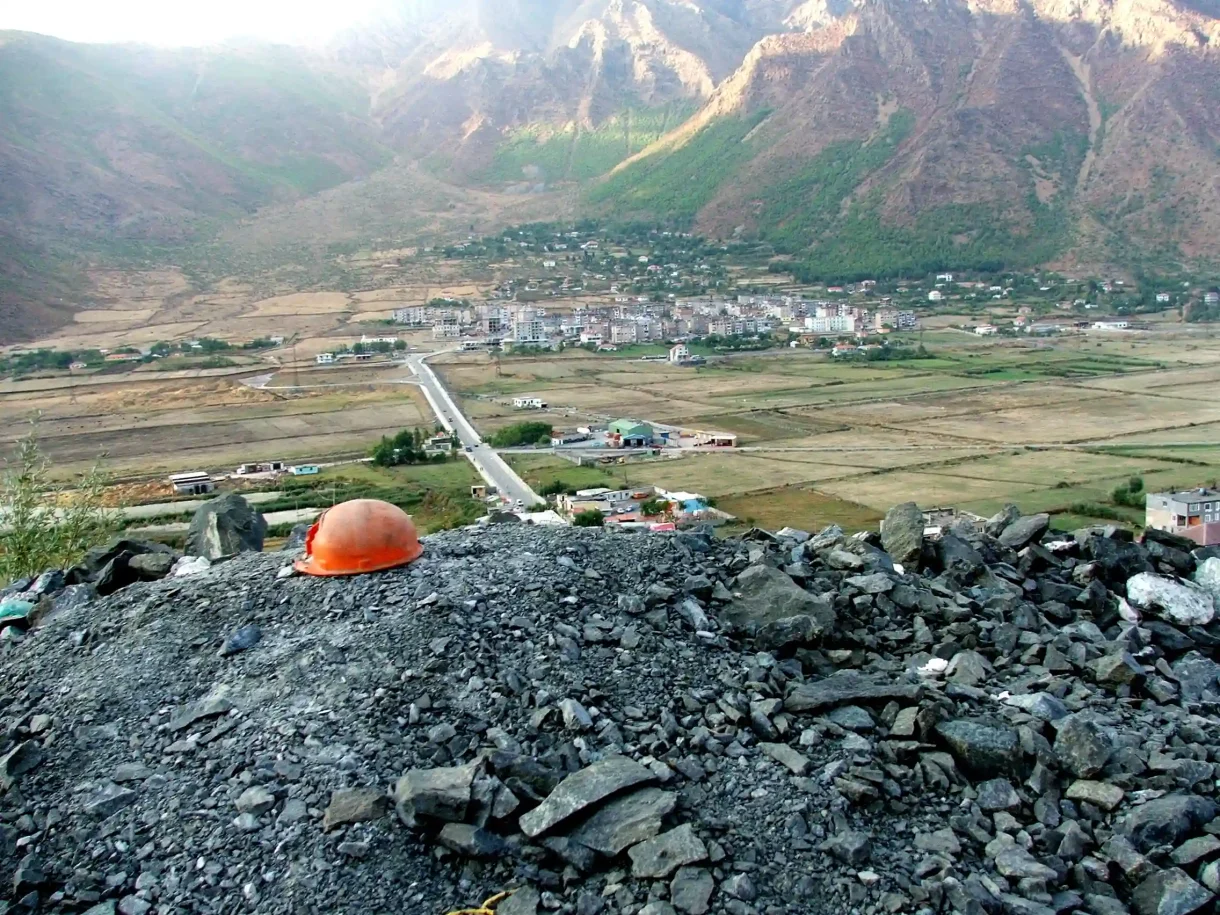
In the chrome mining hub of Bulqizë, northeastern Albania, fatal accidents have become tragically routine. Miners working in unstable underground galleries have been victims of rock falls and gas explosions. In one concession alone, six miners died within a seven-month period (2017–2018) due to collapsing rock or asphyxiating blast. More recently, in September 2025, a 38-year-old miner was killed in Bulqizë’s Zone D galleries while working for a private chrome company. Such incidents illustrate what union leaders call chronic neglect of safety standards in the mining sector. Although police often arrest lower-level supervisors after deadly incidents, higher-level accountability is rare – no mine owners were prosecuted in the last three years despite numerous deaths.

The energy sector has seen its own share of tragedy. HV line workers with Albania’s public power company (OSHEE) regularly perform perilous maintenance on the country’s aging electrical grid. In one case, a 23-year-old electrician fell to his death from a power pole in 2016. During 2024 another foreign Egyptian worker, working for DOKO shpk died during construction of 400kV transmission line Fier-Elbasan-Qafe Thane.  During half of 2021 six electrical workers died during their work where two OST workers died in Roskovec HV tower demolition, and in April–May 2025, two OSHEE technicians were fatally electrocuted in separate incidents (in Mirditë and Divjakë) while attempting to restore electricity. Two other crew members were injured in the Mirditë accident, which occurred as they worked on a high-voltage line to supply a voting center. Investigations blamed lapses in safety protocols and protective equipment, pointing to the need for better training and oversight for electrical workers. OSHEE currently tops the list for workplace accidents among Albanian companies, according to official data.

Industrial projects backed by foreign investors have not been immune either. In 2014, three workers (two Albanians and an Italian) died when a rockslide struck the Moglicë hydropower project site in southern Albania. The project’s Norwegian developer, Statkraft, halted work to review safety after the incidents. Likewise, at the Ballsh oil refinery  a major energy installation a massive explosion in November 2016 killed one operator and badly burned five others.  Authorities suspect that inadequate maintenance and a failure to observe safety rules led to the blast in a fuel processing unit. These disasters highlight that even large-scale energy operations, which are expected to follow international standards, can falter on safety measures in Albania.

Despite each tragedy, systemic improvements have lagged. Over the five years alone (2016–2021), 133 people lost their lives to workplace accidents in Albania,  roughly half of them in construction, mining, or energy jobs. Government inspectors have handed out fines to companies for more than 600 penalties in that period and in some cases police have detained site managers after fatal accidents. Yet enforcement is widely seen as ineffective. Observers point to political connections and economic pressures that lead to corners being cut. For example, a 2019 accident in which an 18-year-old off-the-books worker was electrocuted at a small hydropower plant in Tamara was initially covered up as a “natural death”, allegedly to protect the concession owner. Such cases fuel public skepticism about regulators’ commitment to worker safety.

An electrical lineman in Albania working on power lines. OSHEE and OST field workers face high risks from falls and electrocution if safety protocols are not strictly followed.

Officials acknowledge the problem: The State Labour Inspectorate cites poor safety culture and lack of training as major issues, and only specific high-risk professions (miners, oil drillers) are required by law to carry life insurance. In response to recent accidents, the Ministry of Energy and infrastructure companies have promised new measures ranging from better protective gear for workers at height, to stricter monitoring of mining operations. There are some signs of progress: major foreign-led projects like the Trans-Adriatic Gas Pipeline were completed in 2020 without publicized fatalities, and Albania’s onshore oilfields have ramped up safety drills after the 2016 refinery blast.

However, critics say these efforts remain piecemeal.

Worker advocates and unions are urging a comprehensive overhaul of workplace safety enforcement. They want more surprise inspections, tougher fines and legal consequences for negligent executives, and greater empowerment of workers to refuse unsafe work. “Every Albanian who leaves for work in the morning deserves to come home safely,” one miners’ representative said at a recent vigil in Bulqizë. As Albania continues to develop its energy and mining resources  building roads, dams, power lines, and extracting minerals  the stakes are high. The country’s ambitious economic plans depend on these sectors, but each incident erodes public trust and devastates families.

For now, the rash of accidents has cast a spotlight on an uncomfortable reality: economic growth in Albania has been built on risky, sometimes deadly labor. The challenge ahead is translating the lessons of each tragedy into preventive action. Observers note that 2025, marked by multiple high-profile accidents, could be a turning point. The government has pledged to bolster the Work Inspectorate and update safety regulations in line with EU standards. Albania’s workforce, meanwhile, is watching closely to see if those promises result in safer conditions on the ground  in the mines, on the power lines, and at all hazardous job sites  so that such workplace tragedies become a thing of the past.

by in News

North Macedonia’s ESM secures loans for investments in solar, hydro

North Macedonia’s power utility Elektrani na Severna Makedonija has secured EUR 97 million for the installation of the Bitola 3 solar power plant and revitalization of hydropower plants.

Elektrani na Severna Makedonija (ESM) said today it signed the contracts for a state guarantee and loans totaling EUR 97 million for two major energy projects.

This is an important step in strengthening North Macedonia’s energy transition, ESM added.

The company received EUR 87 million for the construction of the largest photovoltaic plant, Bitola 3. KfW allocated EUR 50 million, and the European Bank for Reconstruction and Development approved EUR 37 million.

The Hydropower Plants Revitalization Project is estimated at EUR 47.3 million

Another EUR 10 million from KfW will support the revitalization of ESM’s hydropower plants (HPPs), ESM explained.

According to the utility, the Hydropower Plants Revitalization Project, estimated at EUR 47.3 million and supported by a EUR 10 million EU grant, will increase annual hydropower generation by 50 GWh.

The agreements were signed by Minister of Finance Gordana Dimitrieska-Kochoska, EBRD representative Fatih Türkmenoğlu, KfW’s director for Kosovo* and North Macedonia Moritz Remé, and ESM CEO Lazo Uzunchev.

The ceremony was attended by Prime Minister Hristijan Mickoski and Minister of Energy, Mining and Mineral Resources Sanja Božinovska.

Uzunčev: We will increase domestic renewable capacity by over 200 MW

“With these capital investments, together with ESM, we are strengthening domestic energy production, ensuring stable electricity supply, and fostering sustainable economic development,” Gordana Dimitrieska-Kochoska underscored.

According to ESM CEO Lazo Uzunčev, the company’s strategic goals are being implemented with strong momentum.

“With ongoing solar and wind projects, including Bitola 3, we will increase domestic renewable capacity by over 200 MW in the next two to three years, while reducing CO₂ emissions by more than 260,000 tons annually,” he stressed.

Petra Drexler, Ambassador of Germany to North Macedonia, recalled that over the last years, Germany and the EU have continuously supported North Macedonia on its path toward a sustainable and resilient energy future.

* This designation is without prejudice to positions onstatus and is in line with UNSCR 1244/99 and the ICJ Opinion on the Kosovo declaration of independence.
by in News

North Macedonia’s first annual construction plan for energy projects envisages EUR 1.4 billion in investments

The annual construction plan for energy projects for 2025 envisages the installation of power plants with a capacity of 1,265 MW, according to Minister of Energy, Mining and Mineral Resources Sanja Božinovska.

North Macedonia has introduced an annual construction plan for the energy projects with the new Law on Energy, adopted this year. The goal is to bring order to the approval and construction of new power plants.

According to the new regulation, October 1 was the deadline for investors to submit the documentation for their projects for the first annual plan. The review of all documents is in the final phase, according to Božinovska.

The construction of the power plants from the annual plan represents investments of around EUR 1.4 billion, Sanja Božinovska stressed, local media reported.

Solar power plants in the plan have the largest capacity – 812 MW, followed by wind farms  with 426 MW, biomass power plants with 11 MW, and hydropower plants with 15 MW.

Investors have submitted applications for the construction of energy facilities with a capacity of 10,950 MW

She recalled that for the first time, requests were received for the installation of standalone batteries and ones that would be co-located with power plants. The capacity of the standalone battery systems is 675 MW, and of the co-located is 93 MW, Božinovska added.

North Macedonia has received requests for the construction of energy facilities with a total capacity of 10,950 MW.

Investors submitted photovoltaic projects with a capacity of 4,758 MW and wind farms with a capacity of 1,697 MW. Investors were also interested in building gas-fired power plants.

Requests were also submitted for standalone battery energy storage systems (BESS) with a capacity of 2,573 MW and co-located with a capacity of 1,405 MW.

The annual plan should be adopted by January 31, 2026

Božinovska pointed out that 10,950 MW represents a large capacity. The transmission system operator (TSO) MEPSO will have to make a plan to strengthen the grid, she underlined.

The Government of North Macedonia should adopt the annual plan for the construction of energy facilities by January 31, 2026.

The minister recalled that the regulation for the construction of energy facilities has also been adopted. It precisely defines what every potential investor must submit, starting with a feasibility study, regardless of the type of facility, Bozinovska explained.

She said that the adoption of the law on renewable energy sources is expected in the first quarter of next year.

by in News

Hidroelectrica to set up joint venture with EDF for 1 GW pumped storage project

After numerous failed attempts for half a century, Romania intends to revive the Tarnița-Lăpuștești pumped storage hydropower project in tandem with France’s EDF. State-owned Hidroelectrica published a proposal to its shareholder assembly to establish a 50%-50% joint venture for the 1 GW endeavor. The utility also intends to buy the Frasin-Pângărați pumped storage facility when Hidro Blue Energy builds it.

The plans for Tarnița-Lăpuștești date back to mid-1970s. According to a feasibility study from 2008, updated in 2014, the pumped storage hydropower plant on the river Someşul Cald in Romania would consist of four units of 250 MW each. After numerous failed attempts, the Ministry of Energy sat with the representatives of Japanese Itochu and French EDF last year to discuss the project.

In November 2024, Romania signed a memorandum of understanding with Itochu. The latest update came from government-controlled hydropower plant operator Hidroelectrica. It has just scheduled an extraordinary general meeting of shareholders for January 27.

Romania may fast-track Tarnița-Lăpuștești project

In a stock exchange filing, Hidroelectrica said it is proposing a joint undertaking with EDF Power Solutions International, where both state-owned companies would have equal stakes.

The location for Tarniţa-Lăpuşteşti is 30 kilometers from Cluj-Napoca, Transylvania’s biggest city. The river is called Meleg-Szamos in Hungarian.

The old study envisages five to seven years of construction. Within a legislative push to unlock dormant hydropower projects, the project could be given a priority status. In that case, it would be exempted from some permits including the obligation to conduct the study all over again.

Hidroelectrica plans to buy Frasin-Pângărați pumped storage hydropower plant upon its commissioning

In another item for the meeting, Hidroelectrica seeks approval for obtaining advisory services with regard to its intention to acquire, upon commissioning, the Frasin-Pângărați pumped storage hydropower plant.

A company called Hidro Blue Energy is working on the project for 300 MW. The location is in Neamț County in the northeast. Lake Bicaz would be the facility’s lower reservoir.

Hidroelectrica said it would update shareholders about the upcoming refurbishment of pumped storage systems Petrimanu, Jidoaia and Lotru, downstream of the Dorin Pavel hydropower plant. The utility has awarded the contract to Electromontaj, with Elin Motoren, Voith Hydro and Butan Grup as subcontractors.

The project is worth EUR 97.9 million, excluding value-added tax.

Hidroelectrica is also rehabilitating hydroelectric plants Gogoșu, Bradișor and Stejaru.

The company has RON 56.23 billion (EUR 11.04 billion) in market capitalization, according to data from the Bucharest Stock Exchange. The government has an 80.1% share.

by in News

New round of talks between Montenegro and Masdar on strategic partnership

Representatives of the Government of Montenegro and Masdar discussed potential joint projects in the energy sector. The focus of the meeting was on solar energy, energy storage, and hydropower.

Minister of Energy and Mining of Montenegro Admir Šahmanović and the Minister of Public Works Majda Adžović met today at Villa Gorica in Montenegro’s capital Podgorica with Masdar CEO Mohamed Jameel Al Ramahi and his team.

It was the second meeting between Al Ramahi and Šahmanović in a short period. They met in early September.

The discussions now continued on top priority projects for the Government of Montenegro, ones that could be of mutual interest, according to the Ministry of Energy and Mining.

Priority should be given to projects that are the most technically advanced

Discussions will be intensified to define collaboration models, potential investments, and the selection of first projects to be implemented, the update reads.

Solar projects, including for floating solar power plants, alongside battery energy storage systems (BESS) and hydropower plants, have been identified as segments of special interest. These are also the areas where Masdar has significant engineering and technical experience, the ministry said.

montenegro masdar sahmanovic
Al Ramahi and Šahmanović (photo: Government of Montenegro/Saša Matić)

The two sides agreed to focus on projects that are the most technically advanced, environmentally sustainable, and aligned with the development of the power grid, to ensure their sustainable and efficient implementation.

Šahmanović: Montenegro’s strategic and long-term goal is to establish itself as a reliable and competitive player in the European energy market

Minister Šahmanović pointed out that the country’s strategic and long-term goal is to establish itself as a reliable and competitive player in the European energy market. He underscored that the development of energy infrastructure and renewable energy sources are among the government’s key priorities.

Officials participating in the meeting praised the planned construction of a second submarine cable line with Italy. It is an extremely wise and strategic investment that ensures Montenegro a stronger and more stable position in the European electricity market, they added.
Montenegro’s vision as an energy hub is fully aligned with the government’s development plans, Šahmanović stressed.

Minister of Public Works Majda Adžović highlighted the extensive experience of the United Arab Emirates in energy and infrastructure development in the public sector. It is of great importance for Montenegro’s activities in increasing renewable energy capacities, she added.

Masdar’s expert teams will continue technical talks with the management of EPCG and CGES

Masdar’s representatives have expressed readiness to continue technical discussions with the management of power utility Elektroprivreda Crne Gore (EPCG) and transmission system operator (TSO) Crnogorski Elektroprenosni Sistem (CGES).

The company’s expert teams will aim to identify priority and mature projects for joint implementation, the ministry said.

EPCG’s CEO Zdravko Dragaš and Ivan Mrvaljević, Executive Officer of EPCG’s Directorate for Development and Engineering, pointed out that the development of green energy is the company’s top priority.

A total of 200 MW in renewable energy projects are currently in development, they added.

Ivan Asanović, CEO of CGES, presented projects that are in the final stages of implementation.

by in News

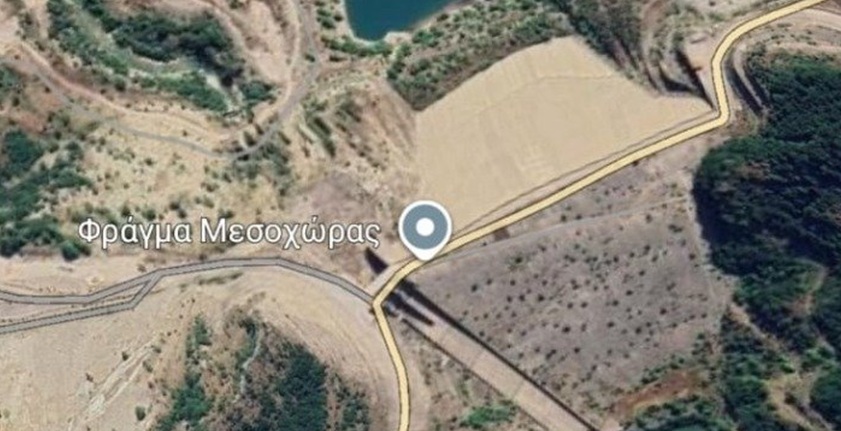
PPC receives funds for stalled Mesochora hydropower project 

Public Power Corporation has received funds to speed up its Mesochora hydropower project, stalled for 24 years.

The Greek Ministry of Environment and Energy announced that the procedures to complete the Mesochora hydropower plant (HPP) in Trikala would be significantly accelerated, ending a 24-year period of judicial deadlock and construction suspension.

Of note, the project was revived in 2021–2022.

The ministry said it signed an agreement with government-controlled Public Power Corporation (PPC or DEI), the project’s developer and operator, on the necessary studies required to finalize the 161.6 MW facility.

PPC is now responsible for commissioning the necessary relocation studies

The deal directly addresses the most sensitive issue: the relocation of residents from the affected settlement of Mesochora, the announcement revealed.

PPC is now responsible for commissioning the necessary relocation studies, with a budget of EUR 1,313,160.00, the update reads.

The ministry claimed that the government is committed to ensuring the safe relocation of the population with full compensation for property owners.

It recalled that the construction of the Mesochora HPP, located on the upper Acheloos River, started in 1986 and that the dam structure was largely finished by 2001. However, its operation was halted due to repeated appeals and long-standing legal battles at the Council of State, the country’s supreme administrative court, initiated by environmental groups and affected local communities.

Over EUR 300 million has already been invested in the project

Now a task force has been established to push forward the project and start the final construction activities by the end of 2026. The expropriation process for all necessary areas will also begin to ensure the safe and efficient functioning of the dam, the ministry underlined.

Of note, over EUR 300 million has already been invested in the project or EUR 500 million in current value.

Once operational, the plant is expected to generate approximately 360 GWh of renewable energy annually, contributing substantially to the country’s energy mix and the targets set by the revised National Energy and Climate Plan (NECP), according to the ministry.

The HPP would also provide balancing for renewable energy generation.

The meeting was attended by Minister of Environment and Energy Stavros Papastavrou, Minister of Digital Governance Dimitris Papastergiou, Mayor of Pyli Konstantinos Maravas, members of Parliament representing Trikala – Konstantinos Skrekas, Thanasis Lioutas and Katerina Papakosta-Palioura, the ministry’s General Secretary of Spatial Planning and Urban Environment Efthimios Bakogiannis and the PPC’s President and CEO Georgios Stassis and Deputy CEO Alexios Paizis.

greece Mesochora hydropower ppc relocation study
Photo: Ministry of Environment and Energy