by in News

IRENA: 91% of new renewables units are more cost-effective than fossil fuel alternatives

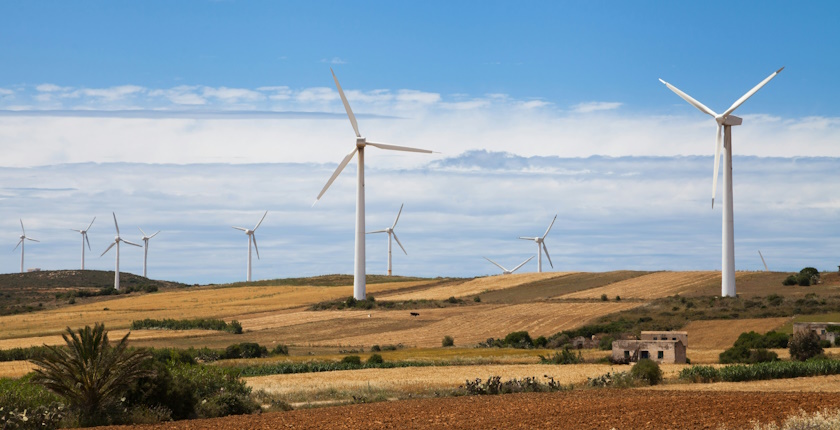
The fossil fuel age is crumbling, according to UN Secretary-General António Guterres. Renewables maintained their cost leadership in global power markets, the International Renewable Energy Agency said in an annual report. In 2024, onshore wind farms were the cheapest of all versus the lowest-cost fossil fuel alternatives, by 53% on average, while photovoltaic systems were 41% cheaper.

Onshore wind power was also the cheapest in levelized cost of electricity (LCOE) terms, followed by solar power. At the same time, 91% of newly commissioned utility-scale capacity was delivering power at a cost lower than for the cheapest electricity from new fossil fuel–fired units.

The Renewable Power Generation Costs in 2024 report confirmed the price advantage of renewables over fossil fuels, with cost declines driven by technological innovation, competitive supply chains and economies of scale, the International Renewable Energy Agency said. IRENA expects cost reductions to continue, but highlighted the short-term challenges.

Geopolitical shifts including trade tariffs, raw material bottlenecks, and evolving manufacturing dynamics, particularly in China, could temporarily raise costs.

Asia, Africa and South America, with stronger learning rates and high renewable potential, could see pronounced cost declines.

Higher costs are likely to persist in Europe and North America, driven by structural challenges such as permitting delays, limited grid capacity, and higher balance-of-system expenses, according to the update. In contrast, regions like Asia, Africa and South America, with stronger learning rates and high renewable potential, could see pronounced cost declines.

The organization pointed to the need for stable and predictable revenue frameworks to lower investment risk and attract capital.

“Clean energy is smart economics – and the world is following the money,” United Nations Secretary-General António Guterres stressed. In his view, the fossil fuel age is crumbling.

Capital costs inflating LCOE in developing countries

Mitigating financing risk is central to scaling renewables in both mature and emerging markets. Instruments such as power purchase agreements (PPAs) play a pivotal role in accessing affordable finance, while inconsistent policy environments and opaque procurement processes undermine investor confidence, IRENA added.

In many developing countries of the Global South, high capital costs, influenced by macroeconomic conditions and perceived investment risks, significantly inflate the levelized cost of electricity (LCOE) of renewables.

Onshore wind power production cheapest by far of all kinds of electricity

In 2024, onshore wind farms were the cheapest of all versus the lowest-cost fossil fuel alternatives, by 53% on average, while photovoltaic facilities were 41% cheaper. Of note, the cost of battery energy storage systems (BESS) declined by 93% from 2010 to 2024, to USD 192 per kWh.

Onshore wind remained the most affordable source of new renewable electricity, with a global weighted average LCOE at USD 0.034 per kWh (USD 34 per MWh), followed by new solar, at USD 0.043 per kWh, and new hydropower plants, USD 0.057 per kWh.

Again per the levelized cost of electricity, 91% of newly commissioned utility-scale renewables capacity was delivering power at a lower cost than the most affordable new fossil fuel–based units.

That said, LCOE increased slightly for solar power, by 0.6%. Onshore wind power was 3% more expensive than in 2023, compared to 4% for offshore wind and 13% for the bioenergy segment. Meanwhile, costs declined for concentrated solar power (CSP), by 46%, followed by electricity from geothermal units, 16%, and hydropower, which slipped 2%.

Solar and wind energy prices have begun to stabilize, which is a natural sign of market maturity, the authors underscored.

Photo: Renewable energy LCOE 2010-2024, in United States dollars per kilowatt-hour (IRENA)

Clear path to affordable, secure, sustainable energy

The addition of 582 GW of renewables capacity in 2024 led to significant cost savings, avoiding fossil fuel use valued at about USD 57 billion, new data shows. Looking at all renewables in operation, the avoided fossil fuel costs in 2024 reached up to USD 467 billion, IRENA’s Director-General Francesco La Camera stated.

New renewable power outcompetes fossil fuels on cost, offering a clear path to affordable, secure and sustainable energy, he pointed out.
by in News

Google signs world’s largest corporate power purchase agreement for hydropower

Global investment firm Brookfield and tech giant Google signed an agreement to deliver up to 3,000 MW of carbon-free hydropower capacity in the United States.

Brookfield said the Hydro Framework Agreement (HFA) is the first of its kind and “the world’s largest corporate clean power deal for hydroelectricity.”

Brookfield Asset Management, together with Brookfield Renewable, and Google said the deal is for 3,000 MW of carbon-free hydroelectric capacity across the US.

Fast development of AI and digitalization is making power supply crucial for tech companies. Goldman Sachs Research forecasted that global power demand from data centers would increase 165% by 2030 from the 2023 level.

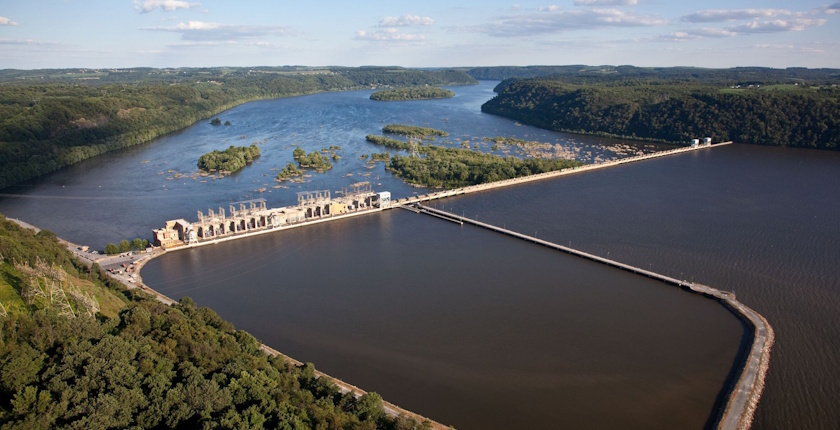
The first contracts include Brookfield’s Holtwood and Safe Harbor hydropower plants in Pennsylvania

Google has recently signed similar first-of-kind agreements for advanced nuclear and next-generation geothermal energy as well as for fusion energy.

Under HFA, the first contracts are for Brookfield’s Holtwood and Safe Harbor hydropower plants in Pennsylvania, representing more than USD 3 billion of power and 670 MW of capacity.

The 20-year power purchase agreements (PPAs) for the two facilities will support Google’s operations across PJM. The transaction structure allows Brookfield to maintain existing commitments to power consumers, such as Amtrak, from the Safe Harbor facility.

Brookfield said HFA is a significant step forward in its strategy to deliver flexible, dispatchable clean energy solutions to the technology sector and that the deal supports Google’s ambition to power its operations with 24/7 carbon-free energy.

Google can procure carbon-free electricity from up to 3,000 MW of HPPs

According to Brookfield, under the HFA, Google can procure electricity from up to 3,000 MW of hydropower assets that will be relicensed, overhauled, or upgraded to extend their useful life and continue adding power to the grid.

Amanda Peterson Corio, Google’s Head of Data Center Energy, said the collaboration with Brookfield is a significant step forward, ensuring clean energy supply in the PJM region (parts of 13 states and the District of Columbia) where her company operates. Hydropower is a proven low-cost technology, offering dependable, homegrown, carbon-free electricity that creates jobs and builds a stronger grid for all, she added.

According to Connor Teskey, President of Brookfield Asset Management, the partnership with Google demonstrates the critical role that hydropower can play in helping hyperscale customers meet their energy goals.

Delivering power at scale and from a range of sources will be required to meet the growing electricity demands from digitalization and artificial intelligence, he pointed out.

Of note, Brookfield owns power plants with a combined capacity of almost 46,000 MW.

Google to invest over USD 25 billion in data center and AI infrastructure

The deal is part of Google’s planned investments in the area in data center and artificial intelligence (AI) infrastructure. At the Pennsylvania Energy & Innovation Summit in Pittsburgh, the company revealed that it earmarked more than USD 25 billion for the next two years.

President and Chief Investment Officer of Alphabet and Google Ruth Porat joined President Donald Trump, Senator Dave McCormick and government and business leaders at the summit.

To support the investment, Google is expanding energy capacity and innovation in three ways, the company said.

by in News

Bulgarian firm to install pilot hydropower plant on pontoon on Danube

With the ambition to build several hydroelectric plants on pontoons on the Danube river in Bulgaria, a local company intends to install a 20 kW pilot facility in Vidin.

An initiative is underway for the deployment of an environmentally friendly energy production technology on Europe’s second-largest river. Vidin-based company Tyfun intends to build a pontoon hydroelectric plant near the Telegraph kapia (Telegraph Gate) of the town’s Kaleto (Baba Vida) fortress.

It is the first phase of its ambition to install several such facilities in the Bulgarian section of the Danube river, according to an investment proposal that it submitted to the Regional Inspectorate for Environmental Protection of Montana.

The firm said the 20 kW micro hydropower plant would not affect any area of ​​the Danube in ​​Bulgaria or its coast.

The construction of the prototype will allow testing of the new source of renewable energy, using a significantly more efficient technology and ensuring a continuous supply of clean energy, Tyfun added. In addition, it will demonstrate the viability of hydrokinetic technology as a reliable renewable energy source from the Danube river, with significant benefits, due to the low cost of energy and minimal adverse environmental impacts, the company said.

The facility would be operational 24 hours a day, all year round. During the first month after commissioning, the efficiency of the technology will be analyzed, as well as its volume, productivity and scope, the project shows.

The machine would be three meters long and 1.5 meters wide, placed on a pontoon of 20 times ten meters.

by in News

Heatwave strains European grid, brings profit to energy storage operators

Record solar power production, backed by yet insufficient energy storage capacity, helped maintain the stability of the electricity system in Europe during the latest heatwave, Ember said. Many nuclear and other thermal power plants reduced their activity as river water temperature wasn’t low enough for efficient cooling. Intraday price spreads at European power exchanges landed a windfall for owners of battery energy storage systems and pumped storage hydropower plants.

The heatwave since late June has caused stress for European power systems, driving electricity demand and doubling daily power prices. Yet grids remained stable, fueled by record volumes of solar, think tank Ember pointed out in a report.

Outside temperatures jumped to more than 40 degrees Celsius, triggering an increase in electricity demand as the use of air conditioners soared. Outages in nuclear and thermal power plants exacerbated the challenges.

Daily electricity demand on July 1 was by up to 6% higher in Germany, 9% in France and 14% in Spain than on June 24. As for peak demand, it jumped by 12% in France, 15% in Spain, and 5% in Germany and Poland.

A bigger electricity price spread within one day means higher income for operators of battery energy storage systems

The average daily price surged 15% in Spain, 106% in Poland, 108% in France and 175% in Germany.

“Despite the huge pressure, European grids passed the stress test, and solar electricity played a major role in keeping them running. The surplus of solar energy during the day helped prevent blackouts. However, the use of energy storage is still insufficient, leading to reduced energy supply after sunset. This translated into a sharp increase in electricity prices,” said Ember’s Europe Programme Director Paweł Czyżak.

Record EU solar generation helps keep power supply stable

June saw the highest solar generation on record in the European Union – 45 TWh, which kept the grid well-supplied during daytime hours. The result was 22% up from one year before.

“Heatwaves will not go away – they will only get more severe in the future. Solutions that can help mitigate their impacts, such as battery storage, interconnection, demand flexibility and dynamic tariffs, should become a key part of grid planning and power market design,” Czyżak added. The biggest opportunity is to store solar electricity, to help power air conditioning well into the evening, he stressed.

Outages limited but still posing concern

The overheating of cables is the likely cause of power outages in Italy on July 1. With rising air and water temperatures, the cooling of thermal power plants becomes more challenging as well. It led to forced reductions in electricity generation from nuclear power plants in France and Switzerland.

The French nuclear fleet has been impacted the most, with all but one of the 18 facilities experiencing some type of capacity reduction. According to the update, up to 15% of the capacity may have been impacted.

A blackout of several hours struck large parts of the Czech Republic including Prague on July 4. However, the authorities only blamed it on a transmission cable in the country’s northwest falling, and the resulting domino effect. Notably, the air temperature was much lower than in previous days.

Sun brings power alongside heat

In the peak days of the heatwave in Germany, solar delivered 50 GW and even more, generating 33% to 39% of Germany’s electricity. The country hosts 14 GW of battery energy storage systems (BESS) and 10 GW of pumped storage, which partly bridged the gap between the peaks of production and consumption.

The rallies in electricity prices in the evenings are getting passed on to consumers, so using air conditioners gets more expensive upon sunset. It is a business case for clean flexibility solutions. Due to a high supply of solar electricity during the day, and a cooling-related demand peak in the late afternoon hours, the daily electricity price spreads skyrocketed.

The spread in Poland in the day-ahead segment almost reached EUR 500 per MWh on July 1. Namely, the daily low was EUR 21.04 per MWh below zero, and the peak amounted to EUR 471 per MWh. In Germany, the benchmark went from EUR 0.16 per MWh in negative territory to EUR 404.91 per MWh.

Storage assets charge at low prices and discharge during peak time, reducing the need for costly imported fossil fuels in the evening, and supporting the balancing of the grid, the analysts underscored.

Interconnection played a role as well. The heatwave peaked in different countries on different days, so interconnectors moved electricity to where it was needed most, dissipating the price peaks in the process.

by in News

IHA: Turkey’s 2024 hydropower additions highest in Europe again

The world’s hydroelectric capacity increased 1.7% last year to 1.44 TW, the International Hydropower Association said in its annual report. It highlighted the sharp rise in the pumped storage hydropower segment. Turkey doesn’t host any such energy storage facilities, but the country’s additions of conventional capacity were the highest in Europe for the second time in a row.

Hydropower generation rallied 10% to 4.58 PWh in 2024. It rebounded strongly from drought-affected lows the previous year, the International Hydropower Association (IHA) calculated. Data from its 2025 World Hydropower Outlook points to strong global momentum, led by a surge in pumped storage hydropower.

The world’s largest source of renewable electricity accounted for 14.3% of supply.

Scandinavia and Central Asia may see a 5%-15% rise in hydropower output from their current fleet, while Southern Europe, North Africa and the Middle East could experience declines of up to 40% by the century’s end, the authors warned. The declines are driven by longer dry periods, reduced flows and greater evaporation. IHA expects the strongest impact in countries such as Spain, Italy and Turkey.

Notably, the last of the three achieved the highest growth in Europe in overall capacity last year, for the second time in a row. Turkey added 241 MW, making it 11th in the world, after 399 MW the year before. Then it was three notches higher on a global scale.

More than half of capacity in project pipeline is for pumped storage

Hydropower development pipeline grew 8% to 1.08 TW, including 600 GW of pumped storage.

Growth in global capacity amounted to 24.6 GW, against 22 GW in 2023. In relative terms, it rose 1.7% to 1.44 TW, of which pumped storage jumped 5% or 8.4 GW to 189 GW. The rise was 6.5 GW in the previous year. The rate in the pumped storage segment doubled in the past two years.

China continues to dominate, with 14.4 GW of capacity added in 2024, including 7.75 GW of pumped storage. It translates to shares of 59% and a head-spinning 92%, respectively, on the global scale. China reached 436 GW, which was 30.2% of the world total.

Hydropower plants in Norway generated almost two times more electricity than the ones in Turkey

The country has more than 91 GW of pumped storage capacity under construction, compared to over 105 GW in the whole world! China is planning to add a whopping 136 GW beyond that in the segment.

The overall hydropower sector faces a potential shortfall of 60 GW to 70 GW by 2030 from the International Renewable Energy Agency’s (IRENA) target in its “tripling renewables” scenario.

A clear business case for pumped storage in Europe is emerging, supported by a project pipeline of 52.9 GW in development, of which 3 GW is under construction, the report reads.

Turkey has strongest conventional hydroelectric fleet in Europe but poor utilization rate

Norway has the most hydropower capacity in Europe, as it reached 33.9 GW last year. Pumped storage hydropower had a share of 1.4 GW.

Turkey remained second in Europe in overall hydropower capacity and ninth in the world, at 32.77 GW. But there are no pumped storage hydroelectric units in the country, so in conventional terms it ranks the highest on the continent.

On the other hand, hydropower production in Norway was almost two times higher than in Turkey in 2024, 140 TWh versus 75 TWh. The latter increased its output from 66 TWh.

Interestingly, while IHA measured an increase of 241 MW in capacity last year in Turkey, IRENA’s earlier annual report showed growth of 424 MW, to 32.39 GW. There is nearly 600 MW currently under construction in the country, according to the update. It compares to 460 MW in the report released a year ago.

France is Europe’s third, with 25.45 GW at the end of 2024, of which 5.1 GW was pumped storage. Output was equivalent to Turkey’s.

Spain was next overall, at 22.75 GW. Portugal came in second-best in added capacity, at 160 MW. Germany is at the top of the chart in operational pumped storage hydropower – 9.45 GW.

As for the other markets that Balkan Green Energy News tracks, Greece had more than 3 GW of pumped storage projects in development at the end of 2024.

by in News

YEO’s Defic Globe buys projects for 219 MW in Romania amid rebranding

Defic Globe, YEO’s Istanbul-based joint venture with Emsolt Investments, acquired 15 project firms developing plans for power plants of 219 MW in total. The portfolio also brings a potential 320 MWh in battery energy storage systems (BESS). Separately, YEO launched its CALL Energy brand, which aims to build 1 GW in capacity by 2030.

Through its subsidiary Defic Globe, YEO Technology (YEO Teknoloji Enerji ve Endüstri) is continuing its expansion in Romania. The Istanbul-based joint venture with Emsolt Investments took over 15 special purpose vehicles (SPVs) or firms for particular investments. They are developing projects for power plants of 218.7 MW in overall peak capacity.

The facilities would be of different sizes and in various locations around Romania, the company said. In addition, the new portfolio brings the possibility for building BESS units with a combined capacity of 320 MWh, according to the update.

YEO, which holds 51% of Defic Globe, estimated the total investment at EUR 220 million. It said the acquisition grows its project portfolio in Romania to 590 MW in peak capacity. Some facilities are operational or under construction, and the others are in the planning phase.

The group comprises direct investments and joint endeavors with Shanghai Electric Power, Scatec and other international companies.

New brand CALL Energy investing up to USD 1 billion

YEO is active in more than 30 countries, delivering turnkey solutions in energy and industrial systems. In the Balkans, in addition to its energy expertise role, it invests in renewable energy projects.

The company carries out projects in areas from advanced energy storage solutions to power grids, high voltage transformer centers, renewable energy plants, industrial, commercial facilities and household energy conversion to hydrogen. YEO was a friend of this year’s edition of Belgrade Energy Forum, organized by Balkan Green Energy News.

Separately, the company launched its CALL Energy brand, formerly YEO Energy (YEO Enerji), and appointed Sacit Akbaş as the subsidiary’s chief executive officer. It aims to invest between USD 750 million and USD 1 billion, of which up to 70% abroad, to build 1 GW in capacity by 2030.

Projects for 1.5 GW in ten countries

Under the slogan CALL to Renewable Energy, the firm intends to develop large-scale projects, especially in Europe. The target growth markets are the eastern part of Europe and the Sub-Saharan regions of Africa, it revealed.

YEO Technology’s renewable energy arm operates 32.6 MW in peak capacity in Romania and Italy. It is about to boost the Romanian part to over 190 MW in peak capacity this year, with two power plants under construction. The project portfolio amounts to 1.5 GW.

YEO Technology’s renewable energy arm counts on growth through EPC services as well

CEO Akbaş came from Enerjisa, where he was the energy solutions director for more than two years. He said more than 30 projects are underway in ten countries on three continents.

CALL Energy also sees growth opportunities in contracting engineering, procurement and construction (EPC) services through the said endeavors. It added that it would engage in asset management as well.

The firm highlighted its preliminary licenses for nine battery-backed solar power projects in Turkey, of 346 MW in total connection capacity. It slated two of them for the start of construction next year. Furthermore, permitting is nearly complete for four hydropower projects of 32 MW altogether. The sites are on the Aras river in eastern Turkey.

by in News

Clean energy, grid upgrade projects in Western Balkans to be backed under EU’s Growth Plan

The European Commission has proposed the first support package, of EUR 87.7 million, under the European Union’s Growth Plan for the Western Balkans, to help implement EUR 487.3 million worth of hydropower, solar district heating, and grid modernization projects in Albania, Montenegro, and Serbia. The package was announced following a high-level meeting between European Commissioner for Enlargement Marta Kos and Western Balkan partners in North Macedonia’s capital, Skopje.

The package, funded from the EUR 6 billion Reform and Growth Facility (RGF), set up under the Growth Plan, will be rolled out through the Western Balkans Investment Framework (WBIF). The proposal was made to the WBIF Operational Board, according to a press release from the commission.

The eight proposed projects include building a new generation unit and upgrading existing ones at Serbia’s Potpeć hydropower plant, which would increase its annual production to 236 GWh while reducing CO2 emissions. The investment is valued at EUR 72.1 million, with the RGF support amounting to EUR 15.8 million. The project is targeted for completion in 2030, according to the commission’s fact sheet.

Serbia could get support for introducing solar energy in district heating

The other project in Serbia is the construction of a 31 MW solar-thermal plant and 17 MW heat pump in Novi Sad, which will introduce renewable energy sources to the district heating system. The project would cost a total of EUR 114.3 million, with the RGF support at EUR 25 million. The targeted completion date is 2028.

In Montenegro, the package would support three projects. The first is an EUR 18.3 million investment in building a 38-kilometer 110kV overhead transmission line between Vilusi and Herceg Novi, aimed at increasing transmission capacity and reducing energy losses. It would receive EUR 3.1 million from the RGF.

The EU plans to back Montenegro’s SCADA roll-out

The second project in Montenegro is the introduction of SCADA in the power distribution system, estimated at EUR 26.5 million, with the proposed RGF support of EUR 5 million. The third one is a planned upgrade of the Brezna substation on the Trans-Balkan Electricity Corridor. The EUR 35.6 million investment would be backed with EUR 6.3 million from the RGF.

Albania plans to digitalize its transmission network in EUR 64.2 million project

The support package also includes Albania’s EUR 95.3 million investment in upgrading the Fierza hydropower plant, aimed at increasing its capacity by 10% and extending its lifespan by at least 30 years. The support from the RGF would amount to EUR 10.5 million. The other project to be supported in Albania is the EUR 64.2 million digitalization of the transmission network, which would receive 13.6 million from the RGF.

by in News

Montenegro publishes NECP for public consultation – sole coal plant planned for shutdown in 2041

State institutions, companies, organizations, and individuals have until August 6 to deliver their suggestions and comments about the draft National Energy and Climate Plan of Montenegro. It sets the provisional date for taking the Pljevlja coal power plant, the only one in the country, at 2041, but the authors pointed out that it primarily depends on a just transition and the security of electricity supply.

Montenegro’s long-awaited draft National Energy and Climate Plan (NECP) sets out the key 2030 targets for greenhouse gas emission cuts, share of renewable energy sources in gross final energy consumption, and energy efficiency.

The document, also known for its acronym INECP, in which the first letter stands for integrated, was published for the public consultation phase. It lasts until August 6. The Ministry of Energy and Mining called on the interested public – local authorities and other state institutions, the expert and scientific communities, associations, organizations, companies and individuals, to send their comments and suggestions.

“The energy and climate policy isn’t just a task for the government – it is a joint responsibility. That is why I am inviting all stakeholders, and especially nongovernmental organizations, to use this opportunity and contribute to the creation of a realistic, ambitious and just plan,” Minister Admir Šahmanović stated.

Renewables target can be surpassed

National goals match the ones adopted within the Energy Community. The targeted primary energy consumption in 2030 amounts to 0.92 million tons of oil equivalent. Under the business-as-usual scenario (with existing measures – WEM), the benchmark is expected to land at 1.04 million. With additional measures (WEM), the trajectory moves closer to the objective, projected at 0.97 million tons of oil equivalent.

The goal for final energy consumption is 0.73 million tons of oil equivalent. Existing measures result in 0.82 million, and added ones in 0.77 million tons of oil equivalent.

The share of renewable sources in transportation could reach 24.4% instead of only 7.2%

Montenegro fares better with its expected share of renewables in gross final energy consumption, against the 50% target. In the WEM scenario, it reaches 42.5%, and the WAM projection is 53.3%.

Without additional measures, renewable sources have a 66.3% share in electricity production. The document’s authors calculated that it could grow to 79.4%. As for transportation, the range is from 7.2% to 24.4%. In heating and cooling, the possible progress from the results of current measures is only 0.4 percentage points, reaching 49.2%.

The targeted reduction in emissions is 55%, the same as in the European Union. It translates to 2.42 million tons of carbon dioxide equivalent in the final year of the current decade. With existing measures, the curve touches 3.06 million in 2030, and with added ones the result is 2.4 million tons of CO2 equivalent.

Retirement of Pljevlja coal plant depends on socio-economic situation in northern region

Oil derivatives, which are all imported, participated in the 2022 final energy consumption with 47.3%, followed by electricity, 33.3%. Wood fuel is the next item, with 18.7%. The share of coal is only 0.7%, because almost the entire output goes to thermal power plant Pljevlja, the only such facility in Montenegro.

The overall electricity production capacity at the end of 2023 was 1.07 GW. The Pljevlja coal plant, which is currently under reconstruction, has 225 MW.

According to the projection, the Pljevlja coal plant is in cold reserve after 2040

The provisional date for its shutdown is 2041, but it primarily depends on the success of the just transition process and maintaining the security of electricity supply, the NECP reads. It also shows the Pljevlja coal plant in cold reserve after 2040.

In addition, taking it offline requires supplying end consumers under favorable conditions, while minding the overall socio-economic situation in the country’s northern region, where the coal mines and the power plant are, the authors explained. They noted as well that an energy storage pilot project is under consideration for the site of the Pljevlja facility.

Electricity sector’s self-sufficiency varying due to dependence on hydrological conditions

The country’s two large hydropower plants Piva and Perućica have 342 MW and 307 MW in capacity, respectively.

There are 38 other hydroelectric units in Montenegro, of which the smallest one is 200 kW. The biggest facility, Vrbnica (6.75 MW), is owned by a firm with the same name, registered in the capital Podgorica.

The high share of hydropower plants in electricity production, implying dependence on hydrology, is the main reason of the variability of the level of self-sufficiency of the national energy balance year after year, the NECP says.

There are two wind power plants on the grid: Krnovo (72 MW) and Možura (46 MW), while the third one, called Gvozd, is under construction. The project envisages 54.6 MW in the first phase.

There are only five independent solar power plants. The biggest one, Čevo, has 4.4 MW in nominal capacity and a 3.25 MW connection. Nevertheless, units operated by prosumers reached 75 MW altogether, according to one entry, though the numbers are lower in other parts of the NECP.

by in News

Đukanović: EPCG is implementing three key strategic policies

State-owned power company Elektroprivreda Crne Gore is currently implementing three key strategic policies: producing energy at the point of consumption, utilizing existing hydropower infrastructure to connect solar power plants, and developing battery energy storage systems, the President of EPCG’s Board of Directors, Milutin Đukanović, said at the EPCG NET conference.

EPCG NET is organized by Elektroprivreda Crne Gore (EPCG) and its partners. At the event’s opening in Budva, Milutin Đukanović announced the start of trial operations at the Gvozd wind farm and the launch of tendering to install battery energy storage systems (BESS).

“Our ‘produce where you consume’ policy is, in our view, the winner of the energy transition. At the same time, hydropower infrastructure provides technical and meteorological compatibility for connecting solar power plants. However, these activities will have their full impact only with the development of BESS,” Đukanović noted.

The 10,000+ solar project is expected to begin in mid-2026

He also said that numerous investments are underway. By the end of the year, the 55 MW Gvozd wind farm, an EUR 82 million investment backed by KfW, will enter trial operation. Early next year, the company expects to start construction on the second phase of the project – Gvozd 2, with a capacity of 21–22 MW.

A few days ago, tendering was completed for the installation of the eighth unit at the Perućica hydropower plant, with a capacity of 58 MW. The new unit is expected to be online in 2027.

Đukanović recalled that the 3000+ project, featuring 35 MW of solar capacity across 3,500 facilities, has been completed, while the 5000+ project is halfway through, with 40 MW and over 4,000 consumers involved. The 10,000+ project is expected to start in mid-2026, he added.

Preparations are ongoing for the construction of several solar power plants: Krupac (50 MW), Štedim (150 MW), four plants at Kapino Polje (totaling 50 MW), as well as facilities in the Željezara Nikšić industrial complex, where 10 MW of the planned 30 MW has already been installed.

The first tendering for procuring BESS will be launched soon, covering two systems with a capacity of 30 MW each (120 MWh). By the end of 2027, EPCG plans five such systems, with a combined capacity of 600 MWh.

The energy transition is a great opportunity for progress

Đukanović also announced an upcoming call for bids for the construction of a tunnel that will connect the Krupac and Slano reservoirs, valued at EUR 12 million, as part of a broader plan to enhance the utilization of the water resources of Nikšićko polje, Montenegro’s largest karst field. Additionally, plans are underway to develop Lake Liverovići and underground waters in the Nikšićko polje, with total investments potentially exceeding EUR 1 billion and a projected capacity reaching 700 MW, he added.

“The energy transition is a great opportunity for progress, but also a serious threat if risks are overlooked. Time is of the essence – we must act immediately,” Đukanović urged, calling on forum participants to focus their discussions on concrete solutions and offer ideas for improving existing policies.

The two-day forum has brought together numerous experts, investors, and representatives of institutions from the energy sector across the region and Europe.

by in News

Serbia’s EMS starts construction of third section of Trans-Balkan Corridor

The foundation stone was laid today in Serbia for the third section of the Trans-Balkan Electricity Corridor. The investment amounts to EUR 100 million. It entails a high-voltage overhead power line of 109 kilometers between Obrenovac and Bajina Bašta, equipping two new switchyards in the Obrenovac transformer substation and upgrading the Bajina Bašta substation to 400 kV. The fourth and last section, with the interconnections with Bosnia and Herzegovina and Montenegro, is planned to be completed in 2028.

Serbian Minister of Mining and Energy Dubravka Đedović Handanović said at the groundbreaking ceremony for the third section of the Trans-Balkan Corridor that it is the most important project for the transmission system not only in the country but in Southeastern Europe.

“What highways are for transportation, high-voltage power lines are for energy, and today we are beginning the works on the new part of the most important energy highway,” she said in Obrenovac and added that the segment would enhance the security of supply for consumers in western Serbia.

The third section of the Trans-Balkan Electricity Corridor involves the construction of an overhead power line of 109 kilometers on 309 towers, equipping two new switchyards in the Obrenovac substation and lifting the voltage level in the Bajina Bašta substation to 400 kV.

The project is financed with a EUR 64.5 million loan from Germany’s KfW Development Bank, a grant from the European Union via its Western Balkans Investment Framework (WBIF) of approximately EUR 21 million, and own funds of the Serbian transmission system operator Elektromreža Srbije (EMS), according to the state-owned company’s announcement. The third section is worth EUR 100 million, of which EUR 71 million is for the overhead power line.

“With the completion of the entire project, we will additionally strengthen the links with Bosnia and Herzegovina and Montenegro and beyond, with Italy,” Đedović Handanović stated.

She recalled that significant transmission grid investments are planned in the next five years, including the construction of the Pannonian Corridor toward neighboring Hungary. The priority projects in the segment are worth EUR 500 million in total, the minister revealed.

“I expect the contractors not to be late with the works, so that the project is completed within two and a half years, as it is planned,” Đedović Handanović stressed.

Matejić: Final section to be finished in 2028

General Manager of EMS Jelena Matejić said the construction of the entire Trans-Balkan Corridor is worth more than EUR 200 million. She noted that it includes 323 kilometers of 400 kV power lines, voltage level upgrades for two transformer stations and switchyards in three of them.

The investments in the Trans-Balkan Corridor are estimated at more than EUR 200 million altogether

“Except this section, the third one, we will also have the fourth, for which the funds have been secured, and it will be finished in 2028,” Matejević asserted.

The old lines in western Serbia of 220 kV will be replaced with new, 400 kV systems, which will create possibilities for connecting the planned Bistrica pumped storage hydropower plant to the grid, according to EMS. The contractor is Kodar Energomontaža, and the works are expected to be completed by 2027.

EU donated EUR 38.3 million for Trans-Balkan Electricity Corridor

Head of the EU Delegation in Serbia Emanuele Giaufret pointed out that the funds the EU has earmarked for the current section are part of wider support.

“The EU has secured a EUR 38.3 million donation for the whole Trans-Balkan Corridor, together with KfW’s favorable loans. Over the years, the EU has earmarked more than EUR 1 billion for the energy sector in Serbia. This project is important for the rest of Europe as well, because it will contribute to the creation of a wider, integrated system, which will enable a more stable supply to consumers on the entire continent, as well as to avoid problems in the future,” he stated, as quoted by EMS.

The first section of the Trans-Balkan Corridor, from the city of Pančevo near Belgrade to the Romanian border, was finished in 2017. The second one, between Kragujevac and Kraljevo in central Serbia, is operational since 2022. It included substation upgrades in the two cities. The fourth section needs to connect Bajina Bašta with nearby Višegrad in Bosnia and Herzegovina, and with Pljevlja in Montenegro.