by in News

R.Power completing its first solar parks in Romania while more assets enter construction phase

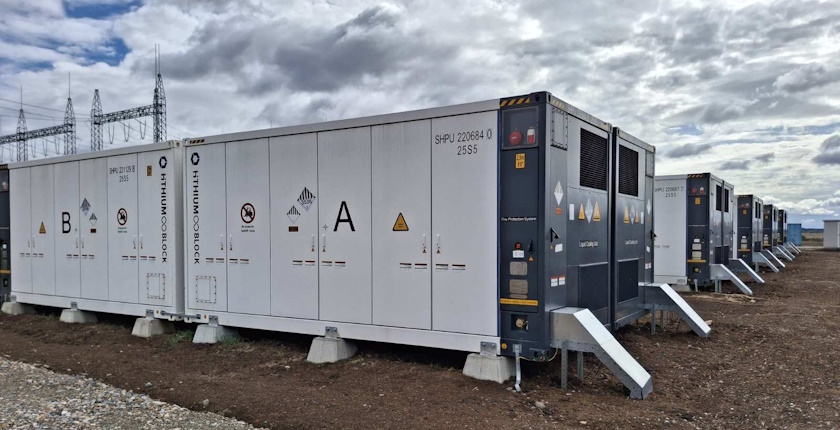
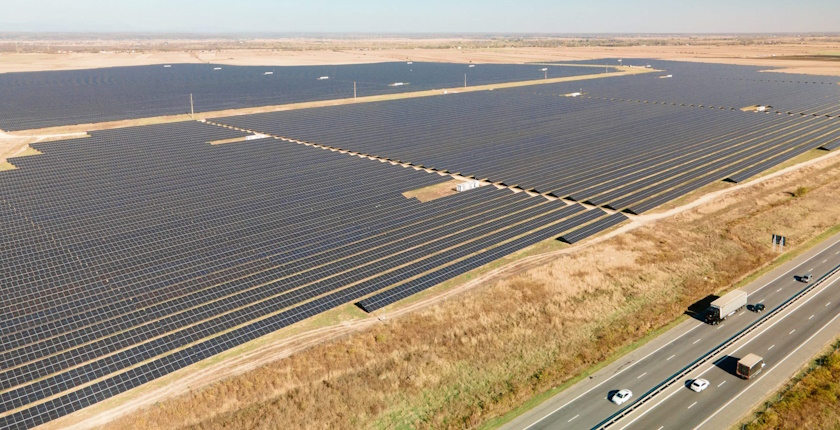
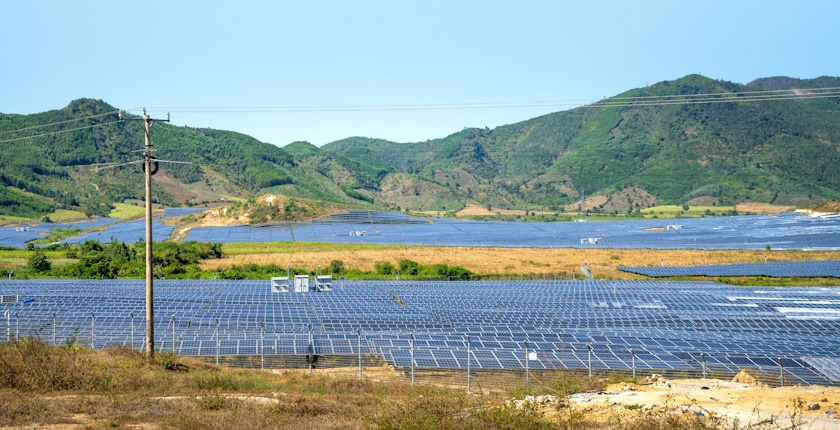
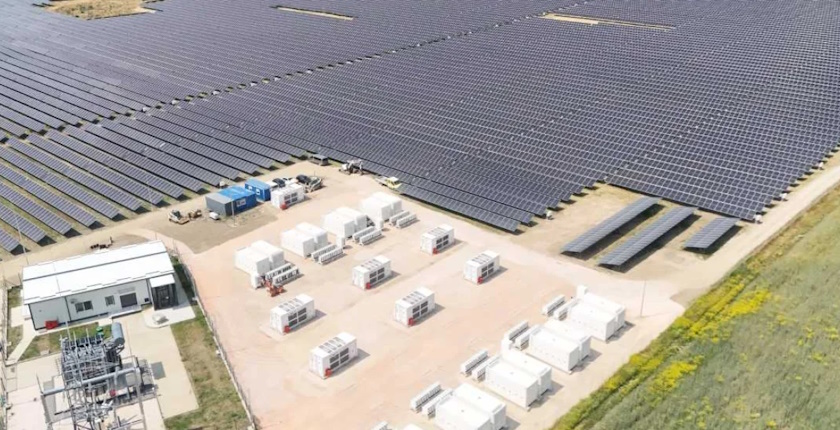
Poland-based R.Power began work on its Lazuri photovoltaic plant of 55 MW in peak capacity in Satu Mare county in northwestern Romania. The company is energizing four solar parks of more than 23 MW overall, its first operational assets in the country. In addition, it is about to break ground on its 254 MWh Scornicești battery energy storage system.

Notably, Electrica recently commissioned its Satu Mare 2 solar power plant, of 21.7 MW.

Romania is set to appear on the map of renewable energy plants and battery energy storage systems (BESS) operated by Poland-based R.Power. The company also has such assets in its home market and Portugal and projects under development in Germany, Spain and Italy. In line with the schedule, R.Power is energizing its first photovoltaic plants in Romania – Stâlpu, Suseni, Dudești and Punghina – and is preparing to begin the construction its first BESS in the country, in Scornicești.

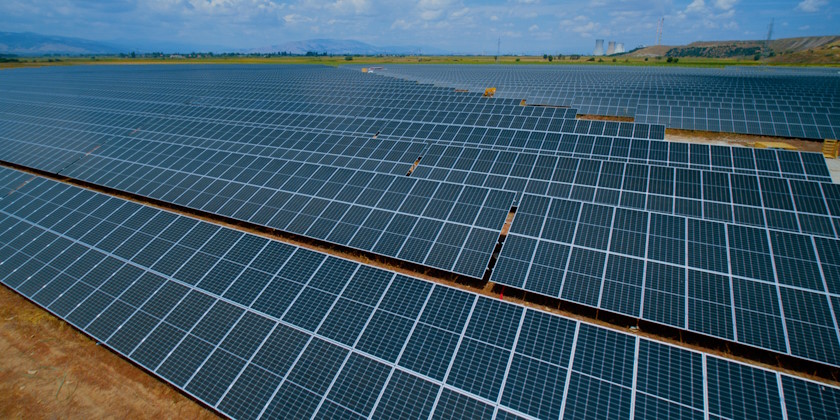
The four solar parks in central and eastern Romania have more than 23 MW altogether in peak capacity. R.Power’s contractors are Nomad Electric and Waldevar. The former has also just begun the construction of the Lazuri solar park in northwestern Romania for the same client.

The PV park in the commune of the same name in Satu Mare county would have 55 MW in peak capacity. The company won a 15-year contract for difference (CfD) for 48 MW in connection terms at Romania’s first renewable energy auction.

Lazuri was part of a group of five solar power projects with support approved for 73.1 MW, or 85 MW in peak capacity. Its annual output is estimated at 70 GWh, equivalent to the consumption of more than 48,000 households in the country.

Major BESS project up for sale

The Scornicești project in Olt county, west of Bucharest, is for 127 MW in operating power. The BESS would have a duration of two hours, translating to 254 MWh in capacity. The project received EUR 15 million in funding via the National Recovery and Resilience Plan (NRRP or, in Romanian, PNRR).

R.Power has sold a 49.99% stake last month to Eiffel Investment Group. The transaction follows the two companies’ previous cooperation in photovoltaic projects.

The Polish firm recently said it would divest of a ready-to-build project for a battery energy storage system of 200 MW and 400 MWh. The move is part of an asset rotation and portfolio diversification strategy, according to the update.

The company added that the future facility near Bucharest would provide flexibility for the grid. It is known as Project Tessara.

Solar-battery hybrids in project pipeline

As of August, R.Power had over 1.2 GW of projects for standalone BESS in Romania. It said it would set up PV-BESS hybrid configurations as well.

“The start of construction of the Lazuri solar farm highlights our commitment to expanding operations in Romania, which is one of our key markets. Alongside Lazuri, we are developing additional photovoltaic and battery energy storage (BESS) projects there,” the company’s Chief Executive Officer and Co-founder Przemek Pięta said.

Satu Mare county also hosts several new solar parks. Romanian power supplier and distributor Electrica recently commissioned its Satu Mare 2 unit of 27.1 MW in peak capacity, in the Botiz commune.

The company partially funded the investment, worth more than EUR 20 million, from NRRP. The project included a 110/20 kV transformer station and grid connections.
by in News

Shanghai Electric becomes contractor for Romania’s largest solar park with batteries

Israeli company Econergy, owner of the largest photovoltaic park in Romania, has selected Shanghai Electric as the engineering, procurement, and construction contractor for a facility with a two times higher capacity and a 150 MW battery energy storage system.

After building the solar park in Romania’s Brașov county for Econergy, Shanghai Electric also won the contract for Părău 2. “Building on our successfully completed projects in Romania, we aim to further strengthen our presence across Central and Eastern Europe and deliver tailored solutions that accelerate Romania’s energy transformation,” Chairman of Shanghai Electric Group Wu Lei said.

The company’s photovoltaics portfolio in the country has reached 550 MW, according to the update. The investor behind Părău and Părău 2 is Israel-based Econergy. The first part, of 91.4 MW in peak capacity, was commissioned a year ago.

Econergy operates Romania’s largest solar park, Rătești. It has 155 MW in peak capacity. Părău 2 is for 342 MW, together with a 150 MW battery energy storage system (BESS).

Shanghai Electric is the EPC contractor for Econergy’s four PV parks, of which two are already operational

The investment is valued at EUR 275 million altogether. Părău 2, on 337 hectares in central Romania, has won a 15-year contract for difference (CfD) in December at the country’s first round of renewable energy auctions.

Econergy bid EUR 49.4 per MWh for 125 MW in connection terms or 150 MW in peak capacity. It was the biggest project on the list. The developer expects to put it into operation in 2027.

The solar park will supply both residential and commercial users, according to Shanghai Electric. Its Romanian portfolio includes Econergy’s Scurtu Mare 56 MW photovoltaic plant, which was provisionally cleared for the start of operations in June. Another one is the Ovidiu project for the same client, with 60 MW in peak capacity under construction.

Econergy has hinted that it could invite a partner for Părău 2. The Israeli company noted that it normally holds a 49% or 50% stake in Romania. It revealed that it could pick a previous partner such as Phoenix, headquartered in Israel, or RGreen Invest, a French investment fund.

by in News

SANY International takes over large PV-BESS project in southwestern Romania

Renewable energy company Sany International (Singapore) has completed the acquisition of a project for a solar power plant of 95 MW in peak capacity combined with 218 MWh in battery storage. The location is in Romania’s Dolj county.

SANY Renewable Energy signed power purchase agreements (PPAs) and contracts for difference (CfD) earlier this year in Serbia for its wind power projects Alibunar 1 and Alibunar 2. Just before that, and through another subsidiary, SANY Group secured its entry into the European market for solar power plants with energy storage

Renewable energy company SANY International (Singapore) is now the owner of a project for a solar power plant of 95 MW in peak capacity combined with 218 MWh in battery storage. The location is in Dobrești in Romania’s southwest.

Deal was signed in April

The shares transfer ceremony took place in Bucharest on October 15 in the presence of representatives of domestic developer Enero and local energy officials, the company said, as quoted by Economica.net. It is its first acquisition of such a project outside China.

SANY Singapore’s representative Xu Zhongtian signed the share purchase agreement in April. After that, the Commission for the Examination of Foreign Direct Investments (CEFDI or CEISD) approved the transaction.

Dobrești project is at ready-to-build stage

The project at a site 45 kilometers from Craiova in southwestern Romania is at a ready-to-build stage, Sany International (Singapore) revealed.

It is one of the largest hybrid projects integrating photovoltaics with a battery energy storage system (BESS) in Romania, the company added. Of note, Dolj is one of Romania’s coal regions, which are transitioning to cleaner energy sources.

“This investment reflects the growing interest in the clean energy sector in Central and Eastern Europe, in a context in which countries in the region accelerate efforts to achieve EU energy and climate targets. At the same time, SANY strengthens its strategic focus on renewable energy investments at the European level, aiming to expand its presence in fast-growing green energy markets,” the announcement reads.

SANY Group is an industrial conglomerate, established in 1989 in China. It is mostly known for construction machinery, but SANY Renewable Energy is one of the world’s biggest wind turbine manufacturers, too.

by in News

Renalfa IPP expands its Tenevo, Kaolinovo PV plants in Bulgaria with batteries

Vienna-based Renalfa IPP commissioned a 65 MW / 260 MWh battery energy storage system within its hybrid power plant project in Tenevo. Also in Bulgaria, the joint venture expanded its Kaolinovo solar power plant to 33 MW and added a BESS of 33 MW in operating power and 110 MWh in capacity.

One of the biggest hybrid power plants in Southeastern Europe is gradually coming together. Renalfa IPP, which last year marked the start of the BESS boom in Bulgaria, said it added a battery system of 65 MW in capability and 110 MWh in capacity to the Tenevo solar power plant.

Project firm Tenevo Solar Technologies is a joint venture with Denmark-based Eurowind Energy. Renalfa IPP, headquartered in Austria’s capital city, is itself a joint venture, established by clean energy and e-mobility company Renalfa Solarpro Group and French renewable energy infrastructure fund manager RGreen Invest.

Ultimately, the plan is to build a 250 MW wind farm at the Tenevo site, in Yambol province in Bulgaria’s southeast. The first 69 MW in peak capacity of the solar power plant came online two months ago, within a 237.6 MW project.

Tenevo BESS to grow to 315 MW

Tenevo is one of the biggest co-located BESS projects in Europe to date, according to Renalfa IPP, which added that it surpassed 1 GWh of energy storage in operation.

The firm aims to increase the battery facility to 315 MW and 760 MWh by early next year, when it expects to complete the solar park as well.

Solarpro Bulgaria builds both battery storage facilities

The project manager for the Tenevo BESS is Solarpro Bulgaria, part of Renalfa Solarpro Group, while Hithium and Kehua supplied the equipment. Solarpro and Hithium established cooperation two years ago and recently expanded it.

The same affiliate was the project manager and engineering, procurement and construction (EPC) contractor for the expansion of the Kaolinovo photovoltaic park in northeastern Bulgaria. Renalfa IPP said it grew to 33 MW in peak capacity from 10 MW, while a BESS of 33 MW and 110 MWh was also added. The facility was built in 2012.

Renalfa IPP is also active in Hungary, Romania, and North Macedonia, where it is about to add batteries to its Oslomej PV plant. In the last update, it said it has 554 MW in operational generating assets, BESS of 455 MW and 1.01 GWh in total, and over 1 GW of projects in late-stage development.

by in News

Romania’s Hidroelectrica to equip hydropower plants with battery storage

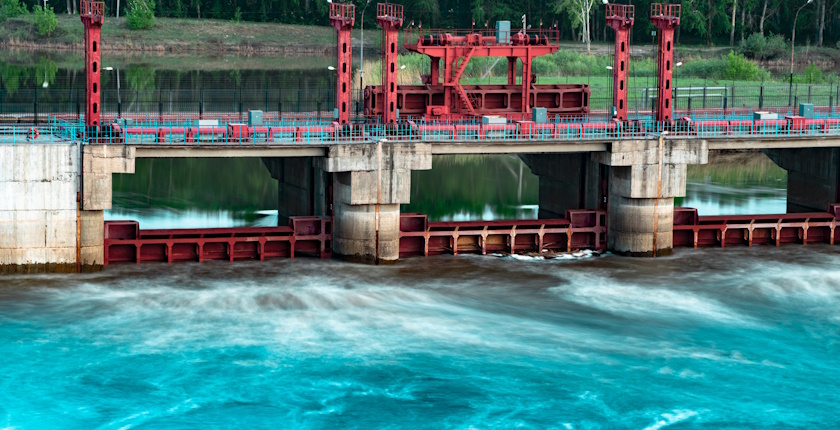
Romanian state-owned power utility Hidroelectrica will install storage on all its run-of-river hydropower plants, to be able to switch the supply of surplus electricity to the evening peak, according to interim CEO Bogdan Nicolae Badea.

Hybrid power plants are all the rage. Two- and even three-way combinations between batteries and solar and wind power plants have become more and more popular over the past few years, as they enable steadier and more predictable supply. But energy storage can have a meaningful role in tandem with hydropower as well, and interim President of the Board of Directors of Hidroelectrica Bogdan Nicolae Badea revealed plans for such investments.

Namely, impoundment hydroelectric plants control the flow from the reservoir through the dam, so much of their production can be adjusted to demand. Run-of-river facilities can store little to no water, which is why the Romanian state-owned hydropower plant operator intends to add energy storage to its entire operational portfolio in the segment, Badea explained.

Goal is to lower daily price spreads at power exchange

The idea is to switch the supply of electricity from times of surplus within the day to the evening peak, the interim CEO stressed at the Profit Energy.forum. There are seven to eight slots a day at the electricity exchange with very low or negative prices, and others with excessive prices, Badea pointed out.

“Even in free market conditions and affected by external crises, the cost borne by consumers could be somewhat lower than today if Romania had energy storage capacities, so that daily consumption peaks are in balance with production peaks,” the interim CEO underscored.

Price caps hurting Romanian state budget

Romania caps power prices, which harms the state budget, Badea noted and said there are two ways to achieve a balance.

“The first solution is a systemic one – and here all the important participants in the energy sector must invest – and Hidroelectrica is doing this, investing primarily in diversification. We have a wind farm in operation today. We are investing a lot in the storage area and we are trying to combine renewable sources, hydro, photovoltaics, floating photovoltaics,” he stated.

Hidroelectrica signed a contract in April with a consortium of Romanian companies Prime Batteries Technology and Enevo Group, for a lithium ion battery energy storage system at its Crucea Nord wind farm.

Hidroelectrica is investing in storage, solar power and hybrid power plant projects

The company also plans to integrate a BESS with hydropower plant Iron Gate 2 (Porţile de Fier 2) on the Danube. The project is valued at EUR 61.2 million. Some hydropower plants are set to be equipped with rooftop photovoltaic systems.

Badea was also the company chief from 2017 to 2023. He was recently reappointed, after he was the chief investment officer for almost two years.

For the first six months of this year, hydrological data shows a situation reminiscent of the critical moment when the company entered insolvency, in 2015, Badea added. However, unlike that period, today Hidroelectrica is a profitable, stable company and a pillar of the energy system, he stressed.

by in News

Econergy to assume 100% ownership of Romania’s biggest solar park, add batteries

Econergy agreed to buy out Nofar’s 50% stake in the 155 MW Rătești photovoltaic plant, the largest in Romania. The next step is to add a 120 MW battery energy storage system.

Econergy Renewable Energy said its subsidiary Econergy International, in which it holds 75.2%, has signed an agreement with Nofar Energy to acquire the partner company’s entire 50% stake in the Rătești solar power plant. The facility northwest of Bucharest, in Argeș county, is the largest in Romania. It has 155 MW in peak capacity.

Following the transaction, Econergy will hold 100% ownership and assume control of the shareholder loan previously provided by Nofar, of EUR 14.9 million, according to the update. The total consideration for the transaction is €45.6 million, payable in three instalments through June 2026.

Both companies are based in Israel. Econergy expects a capital gain of EUR 13 million from the deal. Like with some of its other investments in Romania, it plans to add a 120 MW battery energy storage system (BESS). The operator values the investment at EUR 32 million.

The battery storage facility is expected to enter commercial operation in the second quarter of next year, Econergy revealed. It would generate an additional EUR 15 million in annual revenue and EUR 12 million in earnings before interest, taxes, depreciation and amortization – EBITDA, the announcement reads.

Econergy said its portfolio of solar, wind and storage projects in Romania amounts to 3.5 GW. It includes 473 MW in operation or facilities that are ready to connect, 763 MW under construction and 395 MW scheduled to begin construction by the end of the year. Total project pipeline exceeds 14 GW.

by in News

Romanian town signs partnership for 200 MW solar park with BESS

A firm recently established by Turkish and Romanian investors has launched a public-private partnership with the local authority in Târgu Lăpuș in northern Transylvania. They are planning a hybrid power plant worth EUR 100 million.

A public-private partnership in the making in northern Romania is aimed at building a 200 MW photovoltaic plant, the largest in Transylvania, with a battery energy storage system, 2Mnews reported. Global Energy Asset, a firm founded by Turkish and Romanian investors less than half a year ago, has signed a deal with the municipal authority in Târgu Lăpuș.

The investors value the project at EUR 100 million. They intend to install the facility on 200 hectares on the territory of the town, also known as Magyarlápos. Târgu Lăpuș is in Maramureș County.

The seat of Global Energy Asset, formerly known as Global Finance Asset, is Tunari in Ilfov county near Bucharest. In addition to financial benefits and covering the costs of electricity for street lighting, its representatives offered the local authority scholarships for children and sponsorship of events and institutions, the article reveals.

The project firm’s largest shareholder reportedly has ties with Feridun Geçgel of Astor Enerji

Muhammed Ishak Çiftçi, who has Romanian citizenship, controls 48% of the project firm. According to the news outlet, he is associated with Turkish billionaire Feridun Geçgel, Chairman of the Board of Astor Enerji.

It is the largest manufacturer of transformers in Turkey. Astor Enerji entered the Romanian photovoltaic market this year by acquiring four projects for 279 MW in total.

In August, Swiss energy storage provider Energy Vault agreed to supply up to 2 GWh of battery capacity for the Turkish company’s future solar power plants in Romania. Astor Enerji is listed on the Istanbul Stock Exchange (Borsa Istanbul).

Head of Global Energy Asset, lawyer Cătălin Iulian Marin, holds 25%, and there are four more co-owners.

Approving the proposal for the public-private partnership, Târgu Lăpuș town hall cited the need for business ventures amid economic difficulties. Namely, furniture manufacturer Taparo, which supplied IKEA and was the biggest business in the area, has become insolvent.

by in News

Sunterra RE equips its PV plants in Bulgaria with batteries totaling 156 MW

Bulgarian solar power plant operator Sunterra RE added co-located energy storage to its operational portfolio. The company’s three photovoltaic systems, with 524 MW in combined peak capacity, now also have batteries of 156 MW and 312 MWh in total.

With the ongoing solar boom in Bulgaria, investors have lately also been rushing to set up co-located and standalone battery energy storage systems (BESS). Bridging the gap between the peaks of daily photovoltaic production and power consumption is one of the key factors for the energy transition – stabilizing prices and the electricity system’s stability. Sunterra RE – Santera RE in Bulgarian – stands out with a large new operational solar and battery portfolio.

In its latest updates, the company revealed that it has put three BESS facilities into operation. They are co-located with its photovoltaic plants of 524 MW in total peak capacity.

There are 77 lithium-iron-phosphate (LFP) battery units now online. They have an overall capability of 156 MW and a duration of two hours. It translates to 312 MWh in storage capacity.

The investments received support through the National Recovery and Resilience Plan (NRRP), funded from the European Union’s Recovery and Resilience Facility – RRF. Sunterra RE said it completed them in less than a year.

Galabovo BESS accounts for half of battery operating power

The Kaloyan solar power plant of 208 MW, also known as Dalgo Pole, was the biggest in Bulgaria for a short while. It is backed with a 47 MW / 94 MWh facility, comprising 23 battery units.

The BESS investment at the site just north of Plovdiv was worth BGN 31.7 million (EUR 16.2 million).

The three subsidized battery projects were completed in less than a year

Accompanying the Galabovo solar power plant (201 MW) is a BESS with 75 MW in operating power. Sunterra RE said it consists of 37 battery containers. The Galabovo municipality is east of Plovdiv, Bulgaria’s second-largest city.

The remaining seventeen units, of 34 MW, make up the battery energy storage system at the Karlovo solar power plant. The PV facility in the eponymous municipality north of Kaloyanovo, has 115 MW.

The company’s fourth photovoltaic plant, in Pleven in the north, has only 9.6 MW.

Sunterra RE to expand its three new energy storage facilities by over 1 GWh altogether

Sunterra RE recently entered into a strategic partnership with Sungrow to expand the three BESS by more than 1 GWh in total. The deal is for the China-based partner’s MV-Power Titan 2.0 LFP units and accompanying equipment and software.

The city of Lovech, northeast of Sofia, hosts the strongest BESS in the Balkans – of 124.1 MW and 496.4 MWh. It is a standalone battery facility, part of a closed power distribution system.

Renalfa IPP and Eurowind Energy are installing a 315 MW / 760 MWh BESS at their Tenevo PV plant. They plan to turn it into the largest and most complex hybrid power plant in Bulgaria.

by in News

YESS Power set to commission Western Balkans’ first large battery energy storage system

YESS Power said that in November it plans to commission a 60 MW battery energy storage system (BESS) in North Macedonia. The Turkey-based contractor is installing the facility for Mey Energy at the site of the client’s solar power plant in Novaci. It would be the first large BESS and hybrid power plant in the region.

While the Western Balkans still doesn’t host any utility-scale BESS, giant leaps forward are seen in North Macedonia. Fortis Energy intends to expand its Oslomej solar power plant with one such facility, while Zen Energy Group has started the installation of a hybrid energy plant of the same kind. In addition, Turkey-based engineering, procurement, installation, and commissioning contractor YESS Power is spearheading the project for the addition of a BESS to the Novaci photovoltaic plant.

When Mey Energy put the 55 MW solar park into operation two years ago, it was the biggest in the said region. Now YESS Power, in cooperation with battery manufacturer Cubenergy from China, is installing a BESS of 60 MW at the site for the client.

With the commissioning date scheduled for November, it is about to become the first large battery energy storage facility in North Macedonia and the Western Balkans.

Novaci was the biggest PV park in the region when it was built in 2023

YESS Power, Topkapı Endüstri’s new brand, is responsible for engineering, installation, technical services and maintenance of the battery segment of the future hybrid power plant.

Mey Energy’s Novaci solar power plant spans 57 hectares. It generates 85 GWh per year, equivalent to the electricity demands of 30,000 households in the country. Notably, the PV system is next to the open pit coal mines of the REK Bitola energy complex, which includes a thermal power plant.

YESS Power said it specializes in scalable, secure, turnkey energy storage solutions for solar plants, industrial facilities, grid support and microgrids. It revealed that the current project marks the beginning of a “a broader strategic partnership in the Turkish and Eastern European markets” with Cubenergy.

In the wider Southeastern European region, Romania, Bulgaria and Turkey are massively adding BESS capacity. The remaining countries remain slow with administrative changes, planning and investment.

by in News

Fortis Energy preparing to build solar-battery hybrid power plant in Serbia

Fortis Energy has obtained a construction permit for a solar park of 270 MW on the territory of the city of Sremska Mitrovica in Serbia, Mayor Branislav Nedimović said. The company plans to include a battery energy storage system (BESS) of 36 MWh.

Turkey-based Fortis Energy bought a solar power project in Serbia last year, which would have a 180 MW grid connection. At the time, the company announced that it also planned a battery energy storage system of 36 MWh. Chief Operational Officer Velimir Gavrilović said in May, at Belgrade Energy Forum (BEF 2025) that the projects Noćaj 1 and Noćaj 2 are nearing a ready-to-build status.

After his recent meeting with the representatives of Fortis Energy, Mayor of Sremska Mitrovica Branislav Nedimović said the company has obtained a construction permit for the solar park. The transmission permit is expected within three months, and the works are beginning in the spring, he revealed. Sremska Mitrovica is a city west of Belgrade.

The location is on private land just south of the river Sava, toward Drenovac village in the Mačva area, Nedimović asserted. He said the solar power plant’s capacity would be 270 MW.

Fortis Energy received a construction permit for a proposed solar park across the river from Sremska Mitrovica

In May, the company signed a contract for the connection of its planned solar park Erdevik in Šid, a municipality bordering Sremska Mitrovica. The plan is to install 110 MW in peak capacity, with a BESS system of 31.2 MWh.

The developer and engineering, procurement and construction (EPC) contractor is working on wind power projects Vranje, Gornjak and Juhor.

The company has five biogas facilities in Serbia of 21 MW altogether.

Last year in North Macedonia, Fortis Energy commissioned a photovoltaic plant of 79.9 MW in peak capacity in Oslomej in North Macedonia. The grid capacity is 68.7 MW.

The company said in February that it contracted the construction of a BESS of 62 MW at the same location. It opted for lithium ion batteries of 104 MWh in total capacity, which means that they can run at full power for two hours.