by in News

Terna Energy to make pumped storage, wind power hybrid in Amari in Crete

Greek renewable energy company Terna Energy, recently acquired by Masdar, made a step forward in its Amari hybrid power plant project in Crete.

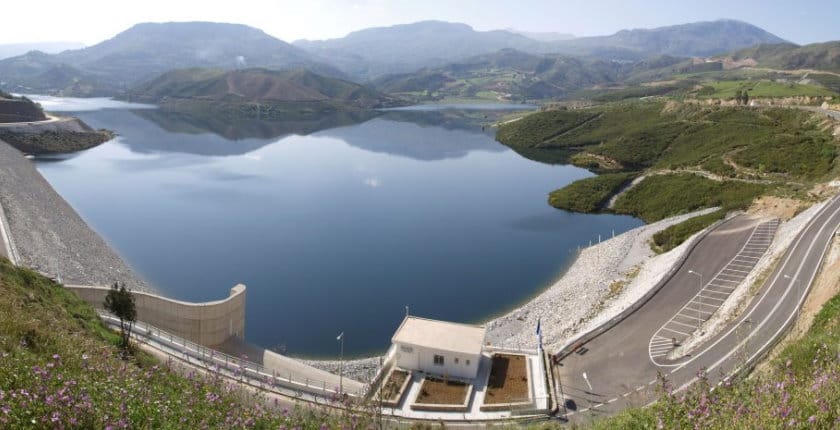
The facility in the country’s largest island would comprise two wind farms with a total capacity of 81.6 MW and a pumped storage hydropower station, at the Amari dam reservoir, of 50 MW. The Ministry of Environment and Energy approved a construction site study, advancing the investment.

It should be noted that the project has been plagued by delays. The initial environmental license was published back in 2019. The total planned capacity has been reduced from 161.1 MW to 131.6 MW.

The pumped storage system would consist of two turbines and four pumps, the update shows. The sites for the wind farms are in the municipality of Sitia.

Terna Energy has said it would be the largest hybrid power plant in Europe, valuing the investment at EUR 280 million. Masdar’s subsidiary is also building its Amfilochia pumped storage hydropower plant in mainland Greece, which will have a capacity of 680 MW.

Investors mainly interested in standalone storage, not hybrids

Interest in hybrid power plants has been low in Greece, as there are only a few small investment proposals per licensing cycle.

But companies are keen on building standalone pumped hydropower units. In the April round, Freenergy submitted seven proposals of 80 MW apiece. It follows 14 applications in March by various groups, each for more than 100 MW.

Greek authorities are eager to facilitate the first standalone storage projects, including batteries. The country faced a grid overload issue during the Easter holiday, as electricity from photovoltaics far exceeded demand and it had to be heavily curtailed. The first storage installations are expected this year. The technology is seen gradually easing the curtailments and allowing further renewable energy penetration.
by in News

Two PV parks of 117 MW in total coming online near Bucharest

Eximprod Grup is about to commission a 65 MW photovoltaic facility in Prahova county, north of Bucharest, before adding a battery system, and Simtel obtained financing for the completion of a 52 MW solar power plant in Giurgiu, south of Romania’s capital city. Additionally, the developer of a project of a similar size in Alba county in Transylvania, including energy storage, applied for an environmental permit.

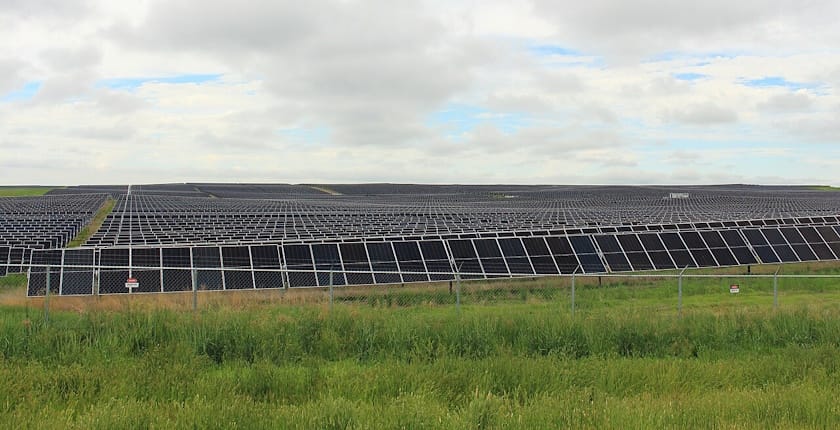
Eximprod Group said it completed a solar park of 49.5 MW in connection capacity in Ciorani, Prahova county, north of Bucharest. Commissioning and grid integration are underway.

According to its documentation, the facility has 65 MW in peak capacity. It consists of five units with 9.9 MW in grid connections each.

The PV plant is coming online through a 20/110 kV power station and a single metering point. Eximprod, controlled by investors Manole Gheorghe and Vasile Domente, thanked Transelectrica, DEER, Ostenweg Sysplan SRL and Alive Capital for cooperation in the project. The company bought 590 W solar panels.

Eximprod has won a EUR 13.4 million grant for the Ciorani project from NRRP

The EUR 56.2 million endeavor includes a grant of EUR 13.4 million from the National Recovery and Resilience Plan (NRRP or, in Romanian, PNRR). It is part of the European Union’s Recovery and Resilience Facility (RRF).

Eximprod invested in the solar park, which features trackers, through its project firm Solar System Project. The facility was built on an 89-hectare land plot. It is located next to a solar power plant of the same owners, with a 15.5 MW connection and 20 MW in peak capacity.

The company plans to add a 21 MW battery energy storage system to the Ciorani PV park. Eximprod recently completed the first of seven foundations of a 38.4 MW wind park in Galați county in the region of Western Moldavia.

Banca Transilvania approves loans for large solar power project in Giurgiu

The Giurgiu county, west and south of Romania’s capital city, is emerging as one of the country’s solar power and energy storage hubs. Major projects are being materialized in other areas around Bucharest as well. Engineering company Simtelhttps://balkangreenenergynews.com/imports-from-china-dont-exceed-26-of-pv-project-costs-in-romania/ said it has signed financing contracts for a PV plant of 52 MW in peak capacity, which is 80% finished.

Annual output is estimated at 69 GWh.

Banca Transilvania, Romania’s largest, has approved a ten-year investment loan of EUR 16 million and a bridge loan of EUR 12.2 million. The latter is denominated in local currency and matures in March 2026.

Simtel has completed its first three smaller PV plants

“Since 2023, with the completion of our first proprietary photovoltaic park in Pleșoiu, our company has entered a new stage of development, becoming an electricity producer. The Giurgiu project represents an important step in this direction, as it covers more than half of the total capacity we aim to have completed and operational in our portfolio by mid-2026,” said Simtel Team’s Chief Executive Officer Mihai Tudor.

Romania has supported the investment in Giurgiu through NRRP. The bridge loan covers the financing needs before the company collects the grant.

Simtel, which is also a contractor, has completed three of its PV projects – in Pleșoiu, Salonta, and Iacobeni. Four others are in various stages of construction or permitting – in Anina, Ianca, Mangalia, and Movilița. Together with the facility in Giurgiu, their combined peak capacity is above 83 MW. The eight units will generate an estimated 111 GWh per year.

The company is listed on the main market of the Bucharest Stock Exchange (BSE). Simtel offers consultancy services, authorization, design, engineering, construction, maintenance, operation, measurement, control, and energy supply. It was founded in 2010 by Iulian Nedea, Sergiu Bazarciuc and Radu Vilău.

Solar-BESS hybrid power plant project on monastery land in Alba is worth EUR 53.1 million

As for other relevant news in Romania, Bucharest-based Ponor Energy requested an environmental approval for a solar power project of 56.7 MW in peak capacity, which would include batteries. The site is in Ponor commune in Transylvania’s Alba county, spanning 48.6 hectares. The firm leased monastery land for 25 years.

The facility would consist of 166 Huawei inverters of 49.8 MW in total and Trina Solar’s 85,852 bifacial panels of 660 W. The battery segment would have 81.5 MWh in capacity.

Excluding value-added tax, the investment is worth an estimated EUR 53.1 million.

by in News

Solar park of 46.6 MW integrated with Turkey’s fifth-largest wind farm

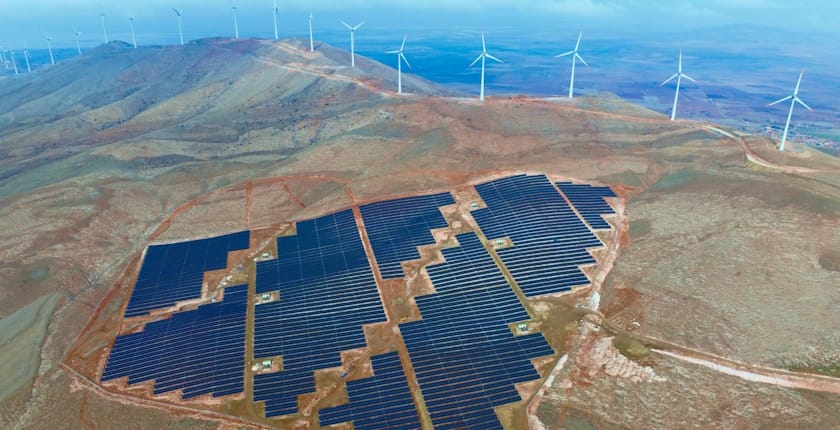
The newest hybrid power plant in Turkey consists of wind turbines of 168 MW and a solar park with 46.6 MW in capacity. Polat Enerji is about to expand the Geycek facility with a 10 MW battery energy storage system.

Hybrid power plants are all the rage in Turkey and the ones coming online are bigger and bigger. The latest addition to the fleet is Polat Enerji’s Geycek facility. It is the country’s fifth-largest wind park, and now it also features a 46.6 MW photovoltaic unit. It is classified as an auxiliary source in domestic law.

That’s not all. The company, which has been pioneering the technology in Turkey, contracted a battery energy storage system (BESS) two months ago. T Dinamik Enerji’s subsidiary Tegnatia is tasked with installing a Sungrow unit with 10 MW in operating power and 13.4 MWh in capacity.

Polat Enerji is turning Geycek into Turkey’s first utility-scale hybrid of wind, solar power and BESS

It would be the country’s first wind-solar-battery hybrid on a utility scale. Polat Enerji said it would be commissioned “in the near future.”

Geycek is in Mucur district in the province of Kırşehir, southeast of Ankara. The wind park has 168 MW.

The contractor for the solar power segment was SPI (Schmid Pekintaş Investments) Energy Solutions. The Schmid Pekintaş joint venture supplied the PV panels.

Polat also operates Turkey’s largest wind power plant – Soma. It recently expanded it by 8.4 MW in nameplate capacity, or 8 MW effectively, reaching 328.9 MW and 304.1 MW, respectively. It is the first such facility in the country with over 300 MW on the grid.

The Soma wind park includes a small BESS unit – 4 MW of capability and a one-hour duration, translating to 4 MWh.

Polat Enerji is a joint venture of Polat Holding and İş Enerji Yatirimlari, each holding 50%. The latter is a subsidiary of Türkiye İş Bankası, the largest private sector bank in Turkey.

by in News

Elektroprivreda BiH seeks contractor for three solar power projects

Power utility Elektroprivreda BiH (EPBiH) called on companies to apply for designing and building three solar power plants. Two sites are on depleted coal land and the third one could become a hybrid power plant with existing wind farm Podveležje.

Within a project called EPBiH Solar Transition Programme, Bosnia and Herzegovina’s state-owned company Elektroprivreda BiH launched a tender for three photovoltaic facilities of 28 MW in total. The public call is on the EBRD Client e-Procurement Portal (ECEPP) of the European Bank for Reconstruction and Development. The lender pointed out it is the first phase of the first tranche.

EBRD is considering financing the investment valued at EUR 80.8 million with a EUR 36.5 million loan. EPBiH would provide EUR 7.7 million and secure the rest from other sources.

The tender consists of two stages while applications are received until May 26. The company selected for the first phase would be tasked with designing and building solar power plants Gornja Breza (15 MW), Višća (8 MW) and Podveležje 3 – with 5 MW in capacity.

EPBiH has 30-year concession for its PV project Podveležje 3

Phase 2 of the second tranche, for 56 MW, would comprise the proposed facilities Potočari 1, of 16 MW, Bedrock 1-3 (two times 8 MW plus 16 MW) and Banovići Selo, of 8 MW. Combined with the second tranche, the plan envisages 13 solar power plants of 195 MW overall.

Gornja Breza is on a former dump of the Breza coal mining complex north of the capital Sarajevo. Višća is at a depleted open cast coal mine on the territory of the city of Živinice near Tuzla.

The Podveležje 3 solar power project is colocated with the Podveležje wind power plant, owned by Elektroprivreda BiH. If the two systems are connected to the same infrastructure and digitally integrated, together they will become a hybrid power plant. The company won a concession last year for 30 years for 4.8 MW in the photovoltaic segment.

Abandoned coal land to host PV plants of Elektroprivreda BiH

EPBiH intends to build its other PV units in the first tranche also at abandoned parts of its mining complexes.

EBRD and UniCredit are financing the Gračanica 1 and 2 projects, located at a former tailings dump of the Gračanica mine. They are for 25 MW each and the connection capacity of the solar park would be 45 MW.

Notably, the company has been reporting losses quarter after quarter. It concluded last year with EUR 29.4 million in the red, compared to EUR 170 million in 2023. However, the company said in December that Chinese contractors have returned the advance payment of EUR 127 million that it payed them for the failed Tuzla 7 coal-fired power plant project.

Elektroprivreda BiH is planning another two wind farms: Vlašić and Bitovnja.

by in News

Romania’s Hidroelectrica picks contractors for 36 MW battery system at its only wind farm

Prime Batteries Technology and Enevo Group won Hidroelectrica’s tender for the installation of a battery energy storage system of 36 MW with a two-hour duration at the power utility’s Crucea Nord wind park.

A renewable energy hub is in the making in the small communes of Crucea and Pantelimon in the Dobruja (Dobrogea) province in Romania’s east. The area is home to state-owned hydropower producer Hidroelectrica’s only wind farm, Crucea Nord, but it includes several sites for projects of other companies, too.

The facility has been operating at a significant loss due to unfavorable balancing requirements. Hidroelectrica launched a small battery first, only to publish a tender four months ago for contractors for a system of 36 MW in operating power and 72 MWh in capacity.

Contract is worth EUR 16 million excluding VAT

The news is that the utility signed a EUR 16 million deal with Prime Batteries Technology and Enevo Group, the consortium with the best bid. The deadline is 12 months. Hidroelectrica initially estimated the investment at EUR 20.3 million plus excluding value-added tax.

Prime Batteries manufactures lithium ion batteries and provides energy storage solutions for the automotive, smart grids, and industrial sectors. The startup is headquartered in Cernica near Bucharest. The other company is Romanian as well.

Primary idea is to reduce imbalances

Crucea Nord, commissioned in 2014, has 108 MW in capacity. The battery energy storage system needs to be built at the substation.

“The primary objective of this investment is to reduce internal imbalances at the wind farm within Hidroelectrica’s portfolio, provide system balancing services for the national energy grid, improve the performance of the wind turbines, and decrease the wear on the electromechanical systems of the turbines,” Hidroelectrica said. It would be its first lithium ion battery.

The company operates 188 hydropower plants with a combined capacity of 6.4 GW.

Romania and neighboring Bulgaria are racing to boost battery capacity within deadlines for subsidies from the European Union. Both achieved robust growth rates in the solar power sector, so balancing needs are also surging.

by in News

Turkey’s renewables failing to cover power demand growth despite solar boom

Turkey switched in 2024 from a net electricity importer to net exporter, but renewables are still not growing fast enough to meet rising domestic power demand – one of the highest in the world, Ember found. The country has become Europe’s biggest coal power producer and there are plans for more such capacity.

Wind and solar generated 18% of electricity last year or 62 TWh, according to data from Ember’s Türkiye Electricity Review 2025. Together they were higher than domestic coal again, at 47 TWh, after surpassing it for the first time in 2023. But imports account for 61% of coal power production in the country.

Solar power growth spiked 39% in Turkey or by 7.3 TWh and the capacity reached 19.8 GW by the end of 2024. It compares to the global rise of 29% in output.

Photovoltaics had a 7.5% share, after 5.7% one year earlier. The wind power item advanced by only 0.1 percentage point, to 10.7%.

Government’s ambitions for renewables would result in 49% combined solar, wind power share in production

At 5.5%, Turkey had one of the highest increases in power demand last year in the world, mostly because of record meteorological heat pushing up cooling needs. The amount was 18 TWh and the total reached 342 TWh.

The rise in domestic electricity generation totaled 23 TWh and Turkey achieved a switch from a net power importer to net exporter. Nevertheless, wind and solar are still not growing fast enough to meet rising demand, translating to costly imported fossil fuel power generation, the report points out. The situation is similar on a worldwide scale.

The 7.3 TWh increase in solar accounted for 32% of the jump in electricity generation, compared to 40.2% on a global scale. The ambitious renewables targets for 2035 would result in a share of fossil fuels of 20%, and wind and solar at 49% in combination.

“Although demand growth has slowed in recent years, it is still outpacing the rate of new wind and solar additions. Demand increased by 42 TWh in the last five years, compared to 31 TWh of additional wind and solar. The rest of demand is met by imported coal and gas,” said Ufuk Alparslan, the report’s author and the energy think tank’s regional lead for Turkey and the Caucasus.

‍Romania beats Turkey in solar power production share

In the group of 20 countries with the highest electricity demand in Europe, Turkey surpassed Switzerland in solar electricity generation in 2024. On the other hand, it fell one position behind Romania, which is ranked 12th, as it doubled its solar power share to 7.8% in 2024.

The first in the list is Hungary, with 24.9%, followed by Greece (21.5%) and Spain (21.2%).

Adding solar to hydroelectric plants with dams mitigates drought impact

From 2020, solar power plants can be installed as an auxiliary source in power plants in Turkey, which creates hybrid power plants. Making more use of solar and wind power plants, which have a complementary generation profile to hydroelectricity, will play a key role in ensuring Türkiye’s energy security, the report reads.

Terrestrial and floating solar power plants as secondary sources to existing hydroelectric power plants reduce the risk of a shortfall from hydro in dry years, it added.

Although the amount of incoming water in 2024 was very close to the previous two years, hydroelectric power generation with dams increased by 29%. Total hydropower generation was 75 TWh or 17% more than in 2023 and it was the third-highest result so far.

Turkey is largest coal power producer in Europe

Despite a jump in electricity generation from coal by 3.4% to 122 TWh, its share in electricity mix declined from 36.9% to 35.6%. With coal-fired power generation continuing to decline across Europe, Turkey overtook Germany to become number one. Meanwhile, gas power fell by 4%. It brought the share of fossil fuels in production to 55% — the lowest level since 1993.

There are no coal-fired power plants under construction, but several projects remain. There is a plan to expand the largest facility in the fleet, Afşin Elbistan A (1.36 GW), by two units of an overall 688 MW.

Germany’s coal power output fell 17% to 104 TWh while in Poland, the third in the list, it declined 8% to 91 TWh. As for the share in domestic electricity production, Poland is first, with 53.6%, followed by Czechia (36.5%), Turkey (35.6%), Germany (21.8%), Bulgaria (21.6%), Romania (13%) and Greece, with just 5.7% last year.

As for the Western Balkans, Kosovo* is ranked the highest in the world, now at 92%. Serbia and Bosnia and Herzegovina are fifth and sixth, respectively, both at 63% on a rounded basis.

* This designation is without prejudice to positions onstatus and is in line with UNSCR 1244/99 and the ICJ Opinion on the Kosovo declaration of independence.
by in News

PPC begins construction of 165 MW solar farm with BESS in Bulgaria

PPC Group is accelerating its expansion in the Balkans by laying the foundation stone for its Colosseum solar power project in Bulgaria. The facility will have 165 MW in peak capacity and include a battery energy storage system (BESS), the Greek state-controlled utility revealed. The company’s investment plan includes Italy, where it recently commissioned the first two solar parks.

Public Power Corp. – PPC Group said it commenced the construction of a photovoltaic plant in Stara Zagora in central Bulgaria. The project involves 260,000 bifacial solar panels with an expected annual power generation of more than 265 GWh. It is one of the biggest investments abroad for Greece’s government-controlled utility, which is expanding in Southeastern Europe and beyond.

The Colosseum solar park will have 165 MW in peak capacity and include a BESS facility of 25 MW in operating power and a capacity of 55 MWh. The liquid-cooled lithium iron phosphate (LFP) batteries will support the operation of the photovoltaic plant and contribute to the stability of the electricity system, the company added.

A 33/110 kV substation will be built on the site, the announcement reads. The solar power plant’s estimated output is equivalent to the electricity needs of more than 45,000 Bulgarian households.

PPC has 550 MW in project pipeline in Bulgaria

PPC Group runs an 18 MW wind farm called Garda in the country and another 550 MW in its renewables project pipeline. The company’s overall online green energy capacity is 5.5 GW.

According to its three-year strategic plan, by 2027, PPC Group will develop another 6.3 GW of renewables in Greece and the region. It revealed that more than 60% is under construction or ready for construction.

First PV units from strategic deal with Metlen in Italy came online in December

In December, PPC Group said it launched the operation of photovoltaic plants Carcarello and Luxenia, its first two facilities in Italy. They have 20 MW and 12 MW, respectively, in peak capacity. It translates to over 60 GWh of electricity per year in total from the two solar power units in central Italy.

The production can meet the demand of almost 15,000 households. The contractor for Carcarello and Luxenia was Metlen, formerly known as Mytilineos. The projects are part of a region-wide strategic agreement for photovoltaics, for 2 GW. Another 160 MW of PV capacity is under construction in the country.

Greek state-controlled power utility is largest renewables producer in Romania

PPC Group is the largest renewable energy producer in Romania, operating 25 wind, photovoltaic and hydroelectric facilities as well as battery storage units.

Its subsidiary Reţele Electrice România invested EUR 240 million last year in the expansion and modernization of its electricity distribution network. The firm plans to increase the number of smart meters in the three regions that it serves to two million by the end of 2025.

Gas-hydrogen CHP plant in Kardia to be completed by end-2026

As for its home market, the Greek utility said in January that it started the construction of a high-efficiency combined heat and power (CHP) plant. The future gas facility of 17 units is within the site of the former Kardia coal-fired power plant in the Western Macedonia province.

The company expects to complete the EUR 80 million cogeneration investment by the end of next year. According to earlier updates, the facility will have 105.3 MW in power capacity and 66.5 MW for thermal energy.

The project envisages the use of a mixture of fossil gas and hydrogen. The group is building another gas plant in Alexandroupolis.

by in News

Greek companies expand to Bulgaria with solar power investments

Greece’s government-controlled power utility PPC and Masdar’s subsidiary Terna Energy are separately building two photovoltaic plants in Bulgaria, worth an estimated EUR 190 million in total.

The biggest two renewable energy companies in Greece have taken over one major project each in neighboring Bulgaria, where domestic investors dominated the photovoltaics market until recently. Soon after government-controlled Public Power Corp. (PPC) said it began building a 165 MW solar power plant with batteries, Capital reported that Terna Energy plans to complete a 130 MW project by the end of next year.

The segment appears saturated, given the lack of energy storage capacities in Bulgaria to balance high PV output at times of abundant sunshine. Permits that the Sustainable Energy Development Agency (SEDA) issued show 4 GW in overall installed solar power capacity. Nevertheless, Executive Director of Electricity System Operator (ESO) Angelin Tsachev estimated there is as much as 5 GW, the media outlet noted.

In its annual statistics update, the International Renewable Energy Agency (IRENA) said Bulgaria hosted 3.9 GW of PV capacity at the end of 2024.

Terna Energy bought out initial developer one year ago

Terna Energy became a subsidiary of Abu Dhabi Future Energy Co. (Masdar) last year. The Greek company entered the ownership of the project firm Bio PD Solar Energy for the 130 MW facility three years ago with a 25% stake.

In mid-2024, Terna Energy Overseas Ltd., registered in Cyprus, became the sole owner. It invested some EUR 25 million and bought out Helios Construction Project. According to the article, the previous parent company is associated with businessman Ahmed Dogan. He was the founder and long-time leader of the Movement for Rights and Freedoms party, representing Muslim minorities.

Both projects are on municipal land

The project spanning more than 200 hectares was initially planned at 180 MW. The lot is on municipal land in Kameno in eastern Bulgaria.

According to the news website, the investment amounts to EUR 92 million. The location near the village of Vratitsa isn’t subject to an environmental impact assessment study except for the intended construction of a 33/110 kV substation.

Terna Energy said its former affiliate Terna, part of the GEK Terna conglomerate, is building the solar power plant in Burgas province.

New hybrid power plant in Bulgaria is part of PPC’s regional expansion

PPC is building its PV plant in the Chirpan municipality in Stara Zagora province. Having included a battery energy storage system in the project, and given the power links with its assets in Romania and Greece, the company is counting on a strategic advantage in the market with the new hybrid facility. PPC is pursuing major expansion in the region, including Italy.

The investment is valued at EUR 97 million, of which the energy storage segment accounts for EUR 10.2 million to EUR 12.8 million, the article adds.

The Colosseum site consists of 11 municipal properties formerly designated as agricultural land, on 200 hectares altogether. PPC bought the project from Enery. The company is headquartered in Austria and active in the renewables sector in Romania as well.