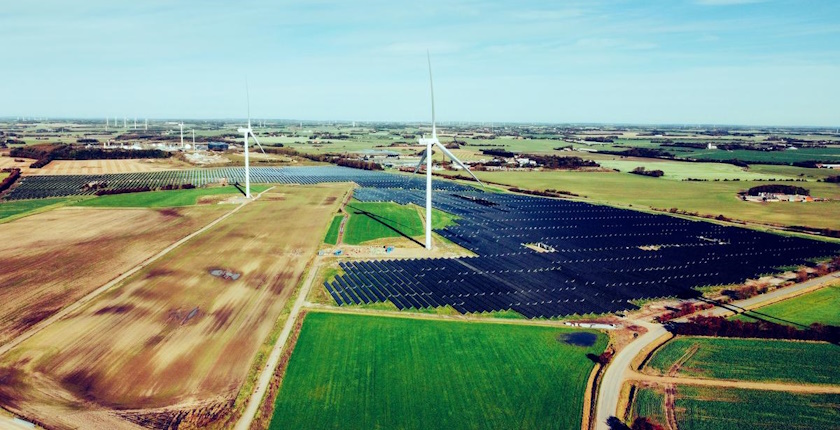
by in News

North Seas region signs landmark offshore wind deal

Seven heads of state and government and energy ministers of nine countries gathered in Hamburg today to boost the expansion of offshore wind. Together with industry and transmission system operators, the countries launched the Offshore Wind Investment Pact for the North Seas. They envisage cross-border projects totaling 100 GW.

Nine European countries committed to building 15 GW of offshore wind per year over 2031-2040 and derisking offshore wind investments. The industry, in return, pledged cost reductions, 91,000 additional jobs and EUR 1 trillion of economic activity.

Europe is charting the massive offshore wind buildout it needs to deliver on its energy security and competitiveness objectives, WindEurope said.

At the North Sea Summit in Hamburg today, Belgium, Denmark, France, Germany, Ireland, Luxembourg, the Netherlands, Norway and the United Kingdom confirmed their ambition to build 300 GW of offshore wind in the so-called North Seas by 2050.

Over one hundred companies participate in offshore wind pact

Governments, the wind industry and transmission system operators (TSOs) signed the Offshore Wind Investment Pact for the North Seas. The agreement is underpinned by separate declarations of the heads of state, energy ministers and the industry. The last of the three is an undertaking by more than 100 offshore wind companies across the value chain, the update adds.

Offshore wind has been a European success story with 37 GW installed across 13 countries, WindEurope stressed.

“That’s more than 6,000 turbines providing homegrown, clean and competitive electricity at scale. But deployment has been dragged by suboptimal auction design, increased costs of capital and lack of visibility for the supply chain due to an uncertain project pipeline,” the organization pointed out.

Two-sided CfDs to be auction standard

In the Investment Pact, governments pledge to provide planning and investment security and derisk offshore wind projects. It involves two-sided contracts for difference (CfDs) as the standard for offshore wind auction design, for visibility on revenue. The countries agreed to remove any regulatory obstacles to power purchase agreements (PPAs) – direct agreements between electricity producers and corporate end-consumers.

A steady pipeline of offshore wind projects will bring the needed confidence to invest in new capacity for manufacturing, ports infrastructure and vessels, according to WindEurope.

In return, Europe’s offshore wind industry pledges to drive down costs of offshore wind by 30% towards 2040 against the 2025 levels. The cost reduction would be driven by scale effects, lower costs of capital and further industrialization underpinned by clarity and visibility on the project pipeline.

The industry vowed to create lasting value for the economy, communities and consumers. It also said it would invest EUR 9.5 billion in the value chain including manufacturing, port infrastructure and vessels.

The TSOs intend to identify cost-effective cooperation opportunities and 20 GW of economically promising cross-border endeavors by 2027 for deployment in the 2030s. It includes offshore projects with interconnections to more than one country. The operators are about to develop cost-sharing principles.

The new partnership will secure 100 GW of joint offshore wind projects, Britain said.

by in News

Enery secures EUR 250 million for hybrid power plants in four EU states

Austrian green energy producer Enery has secured financing for hybrid power plants in Czechia, Slovakia, Bulgaria, and Slovenia.

Enery said it has successfully raised more than EUR 250 million in long-term portfolio project financing.

Československá obchodní banka, a. s. (ČSOB) is acting as the sole lender, while United Bulgarian Bank AD and Československá obchodná banka, a.s. Slovakia are subparticipants. The financing has a tenor of 22 years.

The transaction is structured as portfolio project finance, featuring a single borrower and a single lender, and supported by several operating companies as guarantors, Enery explained.

Enery currently operates a portfolio with 566 MW of installed capacity

The financing will be used to support the development and operation of a cross-border renewable energy portfolio in Czechia, Slovakia, Bulgaria, and Slovenia, according to the announcement.

It includes 300 MW of solar capacity and 100 MW / 220 MWh of co-located battery energy storage systems (BESS) assets spanning four countries.

“Securing more than EUR 250 million through this long-term portfolio financing is another strong endorsement of our strategy and execution capabilities,” Enery CEO Richard König underscored.

König: Another strong endorsement of Enery’s strategy and execution capabilities

Teodor Filip, VP Financing at Enery, pointed to this long-term financing as a major milestone for the company. It strengthens its ability to scale renewable generation and storage solutions in the region and supports its contribution to long-term decarbonization goals, he added.

In early January, the company started the construction of one of the largest photovoltaic plants and hybrid power plants in Europe. The Ogrezeni facility will feature an installed peak capacity of 761 MW, coupled with a 1 GWh battery energy storage system.

Enery also intends to commission a four-hour battery storage system of 150 MW in central Bulgaria by the end of the first quarter.

The company currently operates a portfolio of 566 MW in installed capacity, 90% which is solar.

by in News

Turkey’s first large solar-BESS power plant inaugurated

Oze Grup has built a 49 MW photovoltaic facility with a 34 MWh battery storage system southwest of Ankara. It is the first such hybrid power plant in Turkey.

Energy storage systems are indispensable for grid security and price stability, according to Chairman of Turkey’s Energy Market Regulatory Authority (EMRA or EPDK) Mustafa Yılmaz. “Energy is no longer just about production. The real issue is ensuring that the electricity produced is integrated into the system at the right time, in the right place, and safely,” he said at the inauguration of the country’s first large solar power plant with energy storage, built by Oze Grup.

The site is in Sivrihisar in Eskişehir, some one hundred kilometers southwest of Ankara. The solar power plant has 49.2 MW in peak capacity. Its 29 MW grid connection matches the capability of the battery energy storage system (BESS), which has 34.1 MWh in capacity.

Oze Grup got the first project approval and the trial permit in the DGES category. The acronym is for licensed solar-storage systems, as opposed to self-consumption facilities. It was the Ankara-based construction company’s first energy project.

PVI Enerji designed and built the facility for Oze İnşaat ve Beton Sanayi. BS Distributed Energy Systems (BS DES) was involved in all stages. The other contractors are ELIN Enerji, HMK Demir Çelik, Sunroof Enerji and Solex Energy.

The chief regulator said the new hybrid power plant marks a vision change. “The sun doesn’t always shine, the wind doesn’t always blow. Renewable energy can only become a primary driver through storage,” Yılmaz stated.

He added that Turkey is now fully prepared for investments in renewable electricity plants with storage. The process has been rather slow, as the legislation for fast-tracking such projects was issued more than three years ago.

Oze Grup completed the hybrid power plant late last year. Notably, Polat Enerji received the approval from the Ministry of Energy and Natural Resources for its licensed wind-storage system (DRES), the first in Turkey.

by in News

Bulgaria to host renewable electricity plants on Luxembourg’s behalf

Bulgaria joined Finland as a host country for the 2026 call through the EU Renewable Energy Financing Mechanism (RENEWFM). Luxembourg intends to fund renewable energy projects there, which will enable it to statistically attribute 80% of output to itself.

In the European Union, a member state that missed its renewable energy target can arrange a so-called statistical transfer, for a fee, from a fellow country that surpassed its own target. Another way is to fund power plant projects in another member state, via the EU Renewable Energy Financing Mechanism (RENEWFM).

In the first round, Finland agreed to host seven solar parks on behalf of Luxembourg. The grants amounted to EUR 27.5 million. Next time, also for Luxembourg, it got seven photovoltaic projects and Estonia got two for wind power. The beneficiaries won EUR 52 million in total.

This year, Bulgaria decided to participate with Finland, again on behalf of Luxembourg. Conveniently, the plan is for photovoltaic plants with battery storage in the country’s coal regions in transition: Pernik, Kyustendil and Stara Zagora. The investments are aimed at ensuring long-term employment and energy security. They complement the so-called territorial just transition plans (TJTPs) for a smooth coal phaseout.

The budget for the forthcoming round amounts to EUR 55 million

Bulgaria applied through the call that the European Commission’s Directorate-General for Energy (DG Ener) published. The overall budget is EUR 55 million.

The facilities must operate for at least 15 years. Bulgaria provides land instead of Luxembourg, which gets 80% of the green energy certificates from production.

As for Finland, solar farms are planned again, for the upcoming round.

The European Climate, Infrastructure and Environment Executive Agency (CINEA) is responsible for conducting the calls and monitoring project implementation.

by in News

IRENA: Global daily flexibility needs are quadrupling by 2050

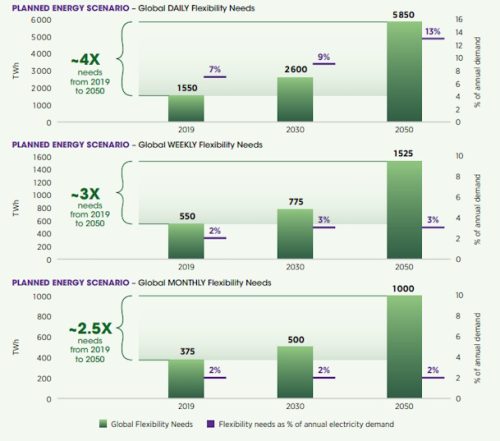
In IRENA’s Planned Energy Scenario at the global level, electricity system flexibility needs on a daily timescale are four times higher in 2050 than in 2019. In the weekly and monthly timescales, the energy required for the purpose grows by three and 2.5 times, respectively. As for the 1.5°C Scenario, implying a much higher share of renewables, the daily flexibility needs jump ten times by mid-century, versus six times for both remaining segments.

Electrification of end-use energy, large-scale deployment of distributed energy resources and the emergence of large new electricity loads from data centres are increasing demand and adding new layers of complexity. It means power systems will need stronger grids and more flexibility to ensure that electricity is available when and where needed and at the lowest possible cost, the International Renewable Energy Agency (IRENA) pointed out in a brief called Flexibility for a secure and affordable power sector transformation.

Aside from buildings and transportation, new demand is coming from the growing adoption of artificial intelligence (AI), driving the expansion of data center capacity. In 2024, data centers consumed 1.5% of electricity. The International Energy Agency expects the share to double by 2030.

The share of variable renewable energy is increasing – wind and solar power in particular. Demand patterns become more complex, so the potential for mismatches between supply and demand is likely to grow, becoming more frequent and significant. It highlights the increasing importance of system flexibility. It is the capacity to respond to expected and unexpected fluctuations in the demand for and supply of electricity in a cost-effective manner.

Some forms of flexibility act automatically to keep the system stable, while others can be scheduled and operate over hours, days or even seasons

Insufficient system flexibility can result in excessive curtailment or, in market-based systems, negative electricity prices. It can also result in shortages, jeopardising the reliable supply of electricity.

System flexibility is needed by the power system to adjust to the variability of generation and demand patterns across different timescales. Some forms of flexibility act automatically within seconds to keep the system stable, while others can be scheduled in anticipation and operate over hours, days or even seasons, through market adjustments and operational and resource planning.

Network flexibility, which isn’t covered in IRENA’s brief, is different. It is the capacity to adjust for grid availability by means of preventing or solving congestion or voltage issues.

Required flexibility depends on numerous factors

In the timescale of seconds to minutes, flexibility is needed to maintain the balance during sudden changes in demand or supply, such as the
disconnection of an interconnector or a major load or generator. The hours and days timescale has daily ups and downs of solar and wind generation alongside the peaks and troughs in demand throughout the day.

In the weeks and seasons segment, flexibility enables covering longer weather patterns caused by changes in the season or low-wind periods. In power systems mainly supplied by renewables, flexibility is also needed at inter-annual timescales. The main factors are climate-driven variations in resource availability. It especially concerns hydrology, but also wind and solar, as well as year-to-year differences in seasonal heating and cooling demand.

In power systems mainly supplied by renewables, flexibility is also needed at inter-annual timescales

Flexibility is not a single asset or function; instead it corresponds to a capability provided by a portfolio of different technologies, operational practices and market mechanisms. The required level of flexibility in a power system depends on, among other factors, the prevailing generation mix, geography, power sector structure and affected timescales.

Storage, demand-side management (DSM), interconnections and dispatchable resources each contribute differently.

Advances in forecasting and the introduction of shorter dispatch intervals, scheduled closer to real-time operation, allow more frequent and precise adjustments of generation and demand before electricity is delivered. One example are intraday markets complementing day-ahead markets.

Electricity must become main energy carrier by mid-century to keep global warming in check

In IRENA’s 1.5°C Scenario, the energy transition will be driven by the deployment of renewable energy, improvements in energy efficiency and the electrification of end-use sectors. The aim is to limit global warming to 1.5 degrees Celsius by 2100.

Electricity would need to become the main energy carrier by 2050. It would account for over half of total final energy consumption. The 2022 level was 23%.

Global electricity generation is projected to be 36% higher in 2030 and three times higher in 2050 than in 2023. Renewable resources would supply 68% of electricity in 2030 and 91% in 2050. Renewables would account for 77% of total installed power capacity in 2030 and 94% in 2050.

In the same setting, 70% of electricity generated in 2050 comes from wind and photovoltaics, taken together. In IRENA’s Planned Energy Scenario, not projecting full decarbonization, the level is 53%.

In IRENA’s 1.5°C Scenario, the share of electricity in total final energy consumption more than doubles by 2050, surpassing 50%

Flexibility needs are calculated as total cumulated annual energy deviation from the average net load (which excludes variable renewable energy generation).

In the 1.5°C Scenario, the power sector requires ten times more flexibility in 2050 than in 2019 to manage the daily variability of net load. In terms of share of annual electricity demand, the authors observed a surge to 30% from 7%. Flexibility needs for managing the variability in weekly and monthly timescales are both six times higher.

In IRENA’s Planned Energy Scenario, daily flexibility needs in 2050 are four times higher. In the weekly timescale, the level triples from 2019, and the monthly item is 2.5 times higher.

IRENA Global daily flexibility needs quadrupling by 2050
Photo: The height of bars indicates flexibility requirements in terawatt-hours per year. Purple horizontal markers show flexibility needs as a percentage of annual electricity demand. (IRENA)

Batteries perform best in daily segment

Battery energy storage is the most effective in addressing daily flexibility needs, the report finds. It is only 24% as effective at meeting weekly needs and 12% as effective for monthly needs.

Interconnections and LDES are effective on the weekly and monthly scales

Interconnections are the most effective in addressing weekly flexibility needs, but also 98% as effective for monthly needs. As for the daily segment, the coverage is just 28%.

The numbers for long-duration energy storage (LDES) solutions are similar. Compared with addressing weekly flexibility needs, LDES is 90% as effective for monthly needs and 34% as effective in the daily item.

by in News

IRENA: Global daily flexibility needs are quadrupling by 2050

In IRENA’s Planned Energy Scenario at the global level, electricity system flexibility needs on a daily timescale are four times higher in 2050 than in 2019. In the weekly and monthly timescales, the energy required for the purpose grows by three and 2.5 times, respectively. As for the 1.5°C Scenario, implying a much higher share of renewables, the daily flexibility needs jump ten times by mid-century, versus six times for both remaining segments.

Electrification of end-use energy, large-scale deployment of distributed energy resources and the emergence of large new electricity loads from data centres are increasing demand and adding new layers of complexity. It means power systems will need stronger grids and more flexibility to ensure that electricity is available when and where needed and at the lowest possible cost, the International Renewable Energy Agency (IRENA) pointed out in a brief called Flexibility for a secure and affordable power sector transformation.

Aside from buildings and transportation, new demand is coming from the growing adoption of artificial intelligence (AI), driving the expansion of data center capacity. In 2024, data centers consumed 1.5% of electricity. The International Energy Agency expects the share to double by 2030.

The share of variable renewable energy is increasing – wind and solar power in particular. Demand patterns become more complex, so the potential for mismatches between supply and demand is likely to grow, becoming more frequent and significant. It highlights the increasing importance of system flexibility. It is the capacity to respond to expected and unexpected fluctuations in the demand for and supply of electricity in a cost-effective manner.

Some forms of flexibility act automatically to keep the system stable, while others can be scheduled and operate over hours, days or even seasons

Insufficient system flexibility can result in excessive curtailment or, in market-based systems, negative electricity prices. It can also result in shortages, jeopardising the reliable supply of electricity.

System flexibility is needed by the power system to adjust to the variability of generation and demand patterns across different timescales. Some forms of flexibility act automatically within seconds to keep the system stable, while others can be scheduled in anticipation and operate over hours, days or even seasons, through market adjustments and operational and resource planning.

Network flexibility, which isn’t covered in IRENA’s brief, is different. It is the capacity to adjust for grid availability by means of preventing or solving congestion or voltage issues.

Required flexibility depends on numerous factors

In the timescale of seconds to minutes, flexibility is needed to maintain the balance during sudden changes in demand or supply, such as the
disconnection of an interconnector or a major load or generator. The hours and days timescale has daily ups and downs of solar and wind generation alongside the peaks and troughs in demand throughout the day.

In the weeks and seasons segment, flexibility enables covering longer weather patterns caused by changes in the season or low-wind periods. In power systems mainly supplied by renewables, flexibility is also needed at inter-annual timescales. The main factors are climate-driven variations in resource availability. It especially concerns hydrology, but also wind and solar, as well as year-to-year differences in seasonal heating and cooling demand.

In power systems mainly supplied by renewables, flexibility is also needed at inter-annual timescales

Flexibility is not a single asset or function; instead it corresponds to a capability provided by a portfolio of different technologies, operational practices and market mechanisms. The required level of flexibility in a power system depends on, among other factors, the prevailing generation mix, geography, power sector structure and affected timescales.

Storage, demand-side management (DSM), interconnections and dispatchable resources each contribute differently.

Advances in forecasting and the introduction of shorter dispatch intervals, scheduled closer to real-time operation, allow more frequent and precise adjustments of generation and demand before electricity is delivered. One example are intraday markets complementing day-ahead markets.

Electricity must become main energy carrier by mid-century to keep global warming in check

In IRENA’s 1.5°C Scenario, the energy transition will be driven by the deployment of renewable energy, improvements in energy efficiency and the electrification of end-use sectors. The aim is to limit global warming to 1.5 degrees Celsius by 2100.

Electricity would need to become the main energy carrier by 2050. It would account for over half of total final energy consumption. The 2022 level was 23%.

Global electricity generation is projected to be 36% higher in 2030 and three times higher in 2050 than in 2023. Renewable resources would supply 68% of electricity in 2030 and 91% in 2050. Renewables would account for 77% of total installed power capacity in 2030 and 94% in 2050.

In the same setting, 70% of electricity generated in 2050 comes from wind and photovoltaics, taken together. In IRENA’s Planned Energy Scenario, not projecting full decarbonization, the level is 53%.

In IRENA’s 1.5°C Scenario, the share of electricity in total final energy consumption more than doubles by 2050, surpassing 50%

Flexibility needs are calculated as total cumulated annual energy deviation from the average net load (which excludes variable renewable energy generation).

In the 1.5°C Scenario, the power sector requires ten times more flexibility in 2050 than in 2019 to manage the daily variability of net load. In terms of share of annual electricity demand, the authors observed a surge to 30% from 7%. Flexibility needs for managing the variability in weekly and monthly timescales are both six times higher.

In IRENA’s Planned Energy Scenario, daily flexibility needs in 2050 are four times higher. In the weekly timescale, the level triples from 2019, and the monthly item is 2.5 times higher.

IRENA Global daily flexibility needs quadrupling by 2050
Photo: The height of bars indicates flexibility requirements in terawatt-hours per year. Purple horizontal markers show flexibility needs as a percentage of annual electricity demand. (IRENA)

Batteries perform best in daily segment

Battery energy storage is the most effective in addressing daily flexibility needs, the report finds. It is only 24% as effective at meeting weekly needs and 12% as effective for monthly needs.

Interconnections and LDES are effective on the weekly and monthly scales

Interconnections are the most effective in addressing weekly flexibility needs, but also 98% as effective for monthly needs. As for the daily segment, the coverage is just 28%.

The numbers for long-duration energy storage (LDES) solutions are similar. Compared with addressing weekly flexibility needs, LDES is 90% as effective for monthly needs and 34% as effective in the daily item.

by in News

Bulgaria to host renewable electricity plants on Luxembourg’s behalf

Bulgaria joined Finland as a host country for the 2026 call through the EU Renewable Energy Financing Mechanism (RENEWFM). Luxembourg intends to fund renewable energy projects there, which will enable it to statistically attribute 80% of output to itself.

In the European Union, a member state that missed its renewable energy target can arrange a so-called statistical transfer, for a fee, from a fellow country that surpassed its own target. Another way is to fund power plant projects in another member state, via the EU Renewable Energy Financing Mechanism (RENEWFM).

In the first round, Finland agreed to host seven solar parks on behalf of Luxembourg. The grants amounted to EUR 27.5 million. Next time, also for Luxembourg, it got seven photovoltaic projects and Estonia got two for wind power. The beneficiaries won EUR 52 million in total.

This year, Bulgaria decided to participate with Finland, again on behalf of Luxembourg. Conveniently, the plan is for photovoltaic plants with battery storage in the country’s coal regions in transition: Pernik, Kyustendil and Stara Zagora. The investments are aimed at ensuring long-term employment and energy security. They complement the so-called territorial just transition plans (TJTPs) for a smooth coal phaseout.

The budget for the forthcoming round amounts to EUR 55 million

Bulgaria applied through the call that the European Commission’s Directorate-General for Energy (DG Ener) published. The overall budget is EUR 55 million.

The facilities must operate for at least 15 years. Bulgaria provides land instead of Luxembourg, which gets 80% of the green energy certificates from production.

As for Finland, solar farms are planned again, for the upcoming round.

The European Climate, Infrastructure and Environment Executive Agency (CINEA) is responsible for conducting the calls and monitoring project implementation.

by in News

Sunotec advances Germany’s largest EEG hybrid power plant

Sofia-based solar and battery developer Sunotec announced a key milestone in the construction of the Hybrid Power Plant Zerbst. The company claims it is set to become Germany’s largest solar-battery hybrid power plant under the Renewable Energy Sources Act (EEG).

Located on a 41-hectare former gravel pit, the site combines 73,000 solar modules with a capacity of 46.4 MWp and a 57 MWh battery energy storage system (BESS).

The facility is designed and built to operate as a fully co-located hybrid asset, providing grid-supportive, dispatchable renewable power, Sunotec explained.

The project is being developed by Statkraft

The project is being developed by Statkraft. The Hybrid Power Plant Zerbst will deliver 50,000 MWh of renewable electricity per year. It is sufficient for 14,000 households.

This is the company’s first hybrid power plant in Germany and a proof of concept for its fully integrated, beyond-EPC delivery model, according to Sunotec.

The model is different from a traditional EPC contract. Sunotec implemented the core phases of the Zerbst hybrid power plant internally, including engineering, geotechnical assessments, and environmental planning.

Following completion, Sunotec will continue to manage the operations and maintenance of the PV plant.

​Atanasov-Lankes: we demonstrate the strength of Sunotec’s integrated model

This integrated approach reduces interfaces, eliminates fragmentation, and guarantees high-quality delivery, the company said.

“With the Hybrid Power Plant Zerbst, we demonstrate the strength of Sunotec’s integrated model and our ability to deliver complex systems at scale,” Zharin Atanasov-Lankes, Managing Director of Sunotec Germany, stressed.

He underscored that the project reflects the engineering depth and execution capability of the firm’s teams.

Over the last six months, Sunotec has made major steps in developing its operations in Europe.

In November 2025 the company signed an agreement with oil and gas major Shell on the development of battery energy storage systems in Central Eastern Europe. In July it has agreed with China-based Sungrow to install 2.4 GWh of BESSs.

by in News

Eurowind Energy presents solar-wind hybrid project in Romania

Eurowind Energy plans to build its Siminoc hybrid power plant in southeastern Romania by 2028. It would consist of 24.8 MW of wind power and a matching photovoltaic capacity. The company is considering battery storage as well.

Danish renewable energy developer and operator Eurowind Energy unveiled a EUR 65 million investment in Romania. The Siminoc wind and photovoltaic park project is for 49.6 MW in total.

The site for the hybrid power plant is in Constanța county in Dobruja (Dobrogea). The historical region is Romania’s wind power hub.

Eurowind Energy said it has obtained state support for the project through the country’s contracts-for-difference (CfD) mechanism.

Annual production estimated at 120 GWh

The wind and solar power segments of the future facility in the country’s southeast would each have 24.8 MW in capacity. Siminoc’s annual output is estimated at 120 GWh, equivalent to the consumption of over 50,000 households, the company said.

The company also plans to configure a BESS unit

In its portfolio, Eurowind Energy has wind, battery storage, solar, power-to-heat, hydrogen, biogas and hybrid power plants. Founded twenty years ago, it employs 700 people and is active in 16 markets in Europe, including Bulgaria, and the United States.

Completion date clings on grid connection

According to the schedule for Siminoc, it needs to obtain the construction permit in the first half of this year, and the start of works is planned for 2027. The hybrid power plant would be commissioned in 2028, though adjustments are possible, depending on administrative procedures and the grid connection.

Importantly, Eurowind Energy revealed that it would configure battery energy storage system (BESS) equipment at the procurement phase, when it also needs to select wind turbines and solar panels.

“Siminoc is our first hybrid park in Romania and marks an important step in the evolution of the local portfolio. We no longer view projects as mere production capacities, but as assets that provide real flexibility to the energy system. Combining wind with photovoltaics and, most likely, battery storage allows us to align production to demand, reduce local variability and contribute responsibly to the safe integration of renewable energies,” Country Manager Adrian Dobre said.

Eurowind Energy Romania began its activities in 2011. It has four operational solar parks – Hălchiu, Măgurele, Pufești and Teiuș. The project pipeline amounts to 7.5 GW in various stages of development. The company expects operational capacity to reach 124 MW by mid-year.

by in News

Eurowind Energy presents solar-wind hybrid project in Romania

Eurowind Energy plans to build its Siminoc hybrid power plant in southeastern Romania by 2028. It would consist of 24.8 MW of wind power and a matching photovoltaic capacity. The company is considering battery storage as well.

Danish renewable energy developer and operator Eurowind Energy unveiled a EUR 65 million investment in Romania. The Siminoc wind and photovoltaic park project is for 49.6 MW in total.

The site for the hybrid power plant is in Constanța county in Dobruja (Dobrogea). The historical region is Romania’s wind power hub.

Eurowind Energy said it has obtained state support for the project through the country’s contracts-for-difference (CfD) mechanism.

Annual production estimated at 120 GWh

The wind and solar power segments of the future facility in the country’s southeast would each have 24.8 MW in capacity. Siminoc’s annual output is estimated at 120 GWh, equivalent to the consumption of over 50,000 households, the company said.

The company also plans to configure a BESS unit

In its portfolio, Eurowind Energy has wind, battery storage, solar, power-to-heat, hydrogen, biogas and hybrid power plants. Founded twenty years ago, it employs 700 people and is active in 16 markets in Europe, including Bulgaria, and the United States.

Completion date clings on grid connection

According to the schedule for Siminoc, it needs to obtain the construction permit in the first half of this year, and the start of works is planned for 2027. The hybrid power plant would be commissioned in 2028, though adjustments are possible, depending on administrative procedures and the grid connection.

Importantly, Eurowind Energy revealed that it would configure battery energy storage system (BESS) equipment at the procurement phase, when it also needs to select wind turbines and solar panels.

“Siminoc is our first hybrid park in Romania and marks an important step in the evolution of the local portfolio. We no longer view projects as mere production capacities, but as assets that provide real flexibility to the energy system. Combining wind with photovoltaics and, most likely, battery storage allows us to align production to demand, reduce local variability and contribute responsibly to the safe integration of renewable energies,” Country Manager Adrian Dobre said.

Eurowind Energy Romania began its activities in 2011. It has four operational solar parks – Hălchiu, Măgurele, Pufești and Teiuș. The project pipeline amounts to 7.5 GW in various stages of development. The company expects operational capacity to reach 124 MW by mid-year.