by in News

RES Croatia to Brussels: Renewables have no future in Croatia

RES Croatia, together with SolarPower Europe and WindEurope, has sent a letter to the European Commission to raise concerns about the crisis in Croatia’s renewable energy sector.

The three associations emphasized that for several years, 60 projects for investments in solar, wind, geothermal, and batteries have been blocked, and that if nothing is done, many of them would soon be abandoned.

Without urgent deblocking of renewable energy projects, Croatia will lose investments, increase fossil fuel imports, which already exceed 25%, and miss the European Union’s and national target of at least 42.5% of energy consumption coming from renewables by 2030, according to Renewable Energy Sources of Croatia (RES Croatia), SolarPower Europe and WindEurope.

The national organization warned that the government is gradually phasing out subsidies for electricity prices for citizens and entrepreneurs. At the same time, the development of renewable energy sources as the only sustainable solution for lower bills and lowering imports is at a complete standstill, it added.

Projects with a total capacity of 3.5 GW and investments of EUR 3 billion are blocked

Croatia is currently subject to infringement proceedings due to delays in implementing the European Union’s RED II and RED III directive. They aren’t just a piece of paper, but a mechanism to ensure energy security and independence, which is of strategic interest for Croatia and its citizens, RES Croatia underscored.

The organizations are urging the European Commission to use its tools to demand from the government to determine the grid connection fee, but at EUR 0 per kWh, open up the balancing market for renewable energy producers, and integrate battery energy storage systems (BESS) and electrification into national planning.

Currently, 60 projects for solar power plants, wind farms, geothermal power plants, and batteries with a total capacity of 3.5 GW and investments of EUR 3 billion are blocked, according to the letter, accompanied by an annex.

The domestic industry is unable to sign long-term PPAs

For these projects, the state has already charged EUR 25 million through energy approvals— the first in a series of documents that requires payment to the state, which, due to the blockage, are beginning to expire at the end of this year.

Organizations stressed that these projects are permanently losing the paid money, while local communities are losing significant revenues that would have been allocated to them from the implementation of renewable energy projects.

They also drew attention to the domestic industry’s inability to sign long-term power purchase agreements (PPAs) with renewable energy producers, securing more favorable market conditions and thereby increasing its competitiveness in European and global markets.

Of note, the European Commission advised Croatia in June to speed up the installation of renewable energy capacities.

If nothing is done, projects of as much as 2.5 GW overall will be abandoned as early as next week

The associations pointed out that the development of new projects larger than 10 MW has stalled since 2022 because the Croatian Energy Regulatory Agency (HERA) has not set a transmission network connection fee for renewable power plants.

Instead, they added, Croatia’s transmission system operator (TSO) HOPS is trying to shift the costs of network modernization – planned over ten years ago and not related to new projects – to new renewable energy projects.

The minister of economy said in March that the upcoming connection fee would be EUR 0 per kW

It is increasing the project cost by 30% to 40%, making them unprofitable, RES Croatia said.

Such a model for financing the network is not from European practice, because 80% of member states rely on EU funds and their national budgets, rather than on producers.

They also recalled that the minister of economy announced in March that a connection fee would be set at EUR 0 per kW and that developers would be offered flexible contracts to encourage investment in battery storage. But that promise has not yet been fulfilled.

The three organizations warn that if nothing is done, projects of up to 2.5 GW altogether would be abandoned as early as next week after HOPS’s decision,. It means companies would withdraw from the Croatian market and lose millions in investments that would have permanently lowered energy prices in the country, RES Croatia claimed.

The balancing market is not functional

An additional problem is the non-functional balancing market, according to the letter.

HEP Proizvodnja, a subsidiary of state-owned utility Hrvatska Elektroprivreda (HEP), is the dominant provider of balancing services, and often the only one. HOPS is legally obliged to ensure market-based procurement of these services, yet it is itself a wholly owned subsidiary of HEP.

It creates an obvious conflict of interest and undermines market competition, the signatories underlined.

“Despite the demonstrated technical ability of solar and wind power plants to provide balancing services, HOPS doesn’t allow these plants to participate in balancing markets. As a result, HOPS frequently activates extremely expensive balancing resources, often at maximum regulated prices even during hours of high renewable generation and positive market prices,” the letter reads.

Croatia has no serious electrification plan

The organizations pointed out that such pricing constitutes a clear violation of the EU principle that balancing services must reflect only the actual costs incurred by the TSO.

They also stressed that Croatia lacks a concrete electrification plan. In 2022, renewable energy accounted for only 2.4% of final energy consumption in transport, with electricity from renewables contributing just 0.2%.

The target for renewable electricity in transport by 2030 is only 5.8%, reflecting limited ambition compared to the EU ambitions, according to the letter.

Electrification of railways could significantly reduce emissions and accelerate the transition, however, it remains an untapped potential, the signatories organizations noted.
by in News

ELES, Hitachi Energy launch Next Generation Control System project

Slovenia’s transmission system operator ELES and Hitachi Energy have signed a strategic cooperation agreement for the implementation of their Next Generation Control System project.

ELES and Hitachi Energy plan to develop advanced digital solutions for transmission grid control centers, according to Slovenia’s TSO.

The Next Generation Control System project is a continuation of their cooperation within the internationally recognized and awarded NEDO project. The project has laid the foundation for collaboration between ELES and Hitachi, representing a key step in the said activities.

The companies will develop three key functionalities of the new generation

Within the project, the two companies intend to work on three core functionalities of the next generation.

An Enterprise Service Bus (ESB) is a software solution that connects various applications, enabling them to communicate and exchange data — even if they use different languages, protocols, or formats. In practice, it will be implemented for the system that determines operational limits.

Voltage Var Control is an upgrade to the existing voltage management system, introducing complex functions and advanced control methods.

The Common Information Model enhances the efficiency of network data models exchanged between different systems and organisations, particularly in the context of TSOs.

The project will last two years

The firms plan to implement and finance the two-year project by themselves. ELES would invest in improvements, while Hitachi Energy develops the agreed functions, to verify them together with the Slovenian state-owned company. Hitachi Energy intends to incorporate the new functionalities into its standard energy management system offering (Network Manager).

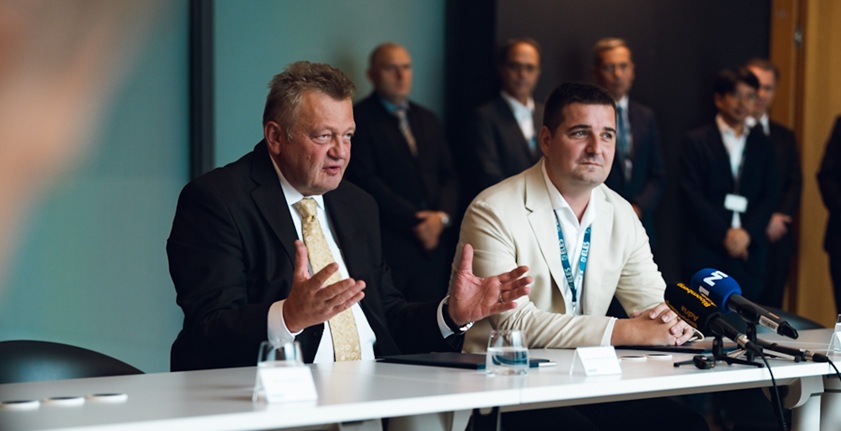
The agreement was signed by Aleksander Mervar, CEO of ELES, and Lars Wiklander, Business Operations Strategy & Planning Executive at Hitachi Energy. However, he was unable to attend the signing ceremony and conference.

The speakers at the event were Lazar Bizumić, Head of Product Management at Hitachi Energy; Jurij Klančnik, Transmission System Operation Director at ELES, and Janko Kosmač, Process Systems Manager at ELES, who is also the head of the technical part of the joint project.

Mervar: An important step in the digital transformation of the Slovenian electricity sector

Janko Kosmač, Aleksander Mervar and Lazar Bizumić (photo: ELES)

Aleksander Mervar highlighted the agreement as a significant step in the digital transformation of Slovenia’s electricity sector. At the same time, in his words, it reinforces the role of ELES and Slovenia as an innovative environment for developing advanced energy solutions.

“New digital solutions will enable better integration of various systems, smarter voltage management in the grid, and more efficient and transparent data exchange. This is a technologically advanced project that will significantly contribute to the safer, more efficient, and sustainable operation of the Slovenian electricity system. It is an important step in Slovenia’s green transition,” Mervar added.

Wiklander: The grid management software and systems ecosystem of the future must be built on a flexible, modular architecture

The grid management software and systems ecosystem of the future must be built on flexible, modular architecture to give TSOs and utilities the scale they need to manage a changing and dynamic grid, the flexibility to integrate proprietary and third-party applications, and the control and visibility necessary to manage and deliver a reliable, resilient power supply, Lars Wiklander asserted.

“This collaboration with ELES is an important proof point in our strategy to deliver the leading grid management ecosystem with Network Manager,” he pointed out.

by in News

Nine times more licenses in Greece than grid capacity

Licensed renewable energy projects in Greece currently stand at about 90 GW. New submissions have been falling sharply.

According to latest data from the Regulatory Authority for Energy, Waste and Water (RAAEY or RAEWW), a total of more than 110 GW has been licensed across all renewable technologies. Photovoltaics have the lion’s share, with 74.4 GW and wind followed with 25.1 GW.

The regulator has already paused or cancelled 41.8 GW of immature or frozen investments, bringing the active total to 76.9 GW. It includes 29.8 GW in wind farms and 44.8 GW in all types of solar.

There also also investments in renewables plus storage, which amount to about 24 GW at various stages. It means that now 92 GW of renewable electricity projects have permits. There is 15 GW in operation, 15 GW with final connection terms, and another 50 GW waiting in line after completing the first regulatory steps. The rest is still at the initial stage.

RAAEY also said available space in the grid is currently 19 GW and that is expected to reach 30 GW by 2030. Therefore, the ratio between potential projects and what the grid can accommodate is about nine to one.

Applications slow down to a trickle

The congestion has been noticed by investors, who have significantly slowed down their applications in recent years. RAAEY’s head of renewable energy and storage Ioannis Charalampidis recalled that in the licensing cycle of December 2020, projects representing 45.5 GW were submitted. This June they were only 1.2 GW.

It is especially evident in photovoltaics, where applications fell from 36.3 GW to some 50 MW. Wind is also affected, with 65% less capacity in submissions than last year

In addition to the large licensing queue, the sector faces delays and red tape. More than three years have passed since the last auction for subsidized renewables projects, from which about 1 GW has not yet been completed.

The sector raises red tape and competition issues

The issue was raised, at RAAEY’s conference last week, by Hellenic Wind Energy Association’s (HWEA or ELETAEN) General Director Panagiotis Papastamatiou. He said the problem lies with small local governing bodies, which either lack the means or the will to do their job properly. He called for centralization, so that one public body can handle the necessary permits.

POSPIEF: “Genocide” for smaller producers

The Hellenic Photovoltaics Union (POSPIEF), which represents small and medium solar investors, spoke of “genocide” in the sector. Chairman Giannis Panagis accused the government of only supporting large producers, leading to distortion of competition and a wave of smaller projects being abandoned or sold. He added that big players enjoy benefits, such as extensions, while small ones are pushed out of the market.

by in News

Europe’s wind installations in H1 2025 insufficient to meet EU’s 2030 targets – WindEurope

Europe installed 6.8 GW of new wind farms in the first six months of the year. According to WindEurope, it isn’t nearly enough to deliver the EU’s 2030 energy security and climate targets.

WindEurope has also reduced the 2025 outlook for wind investments. In its latest wind energy data for Europe, the organization highlighted the increase in turbine orders and investments as positive signals.

Out of 6.8 GW of new wind, 5.3 GW was in the European Union, and 89% was onshore wind. Europe now has a total of 291 GW of wind capacity – 254 GW on land and 37 GW at sea, according to the data.

In the first half of 2024, Europe installed 6.4 GW. To achieve the 2030 targets, the EU needs to install about 30 GW of wind power every year.

Germany is by far the most successful country in Europe. It is set to install 5 GW of onshore wind this year, nearly three times as much as it has been building over the last five years. WindEurope attributed the success to the fact that the country was the first to rigorously implement the EU’s excellent new permitting rules.

Germany permitted a record 15 GW of new onshore wind farms in 2024 and is on track to beat that in 2025, with 8 GW of onshore wind permits granted in the first half of 2025, the report revealed.

While on average German authorities grant permits within 18 months, none of the other 26 EU countries permits new wind farms within the REDIII deadline of 24 months. WindEurope highlighted slow expansion of electricity grids, stagnating efforts to electrify Europe’s economy, and suboptimal auction design as key obstacles for faster wind deployment.

Dickson: Governments must get their act together on wind energy

WindEurope CEO Giles Dickson said that governments must get their act together on wind energy.

“Wind is competitive – it brings down electricity costs for citizens and businesses. Wind is secure – home-grown wind turbines reduce costly and dangerous dependencies on fossil fuel imports. And wind is good for the economy – it creates jobs and tax income. Around 400,000 people in Europe work in wind already, and each new wind turbine contributes €16m to Europe’s GDP. But Governments are still failing to get wind permitted and built fast enough,” Dickson noted.

The organization stressed that Europe will build less new wind capacity in 2025 than it previously expected. At the start of the year, WindEurope estimated new wind installations at 22.5 GW, and now at 19 GW. The forecast for the EU is lowered from 17 GW to 14.5 GW.

It expects the EU to have 344 GW of wind energy capacity by 2030, compared to the 2030 target of 425 GW.

Two bright spots

Two bright spots are wind turbine orders and investments in new wind farms. Europe took EUR 34 billion worth of final investment decisions (FIDs) in new wind farms with a total capacity of 14 GW in the first half of 2025. It represented more than the total FIDs in 2024.

The majority of investments are for offshore wind, with six new projects, three of which in Poland, including the country’s largest-ever private investment, according to WindEurope.

Wind turbine orders have increased 19% and reached 11.3 GW.

According to Dickson, less new wind is bad news for Europe’s wider competitiveness. Industry in Europe is craving cheap electricity to compete with China and the US, he stressed.

“But too many governments remain half-hearted in their expansion of wind. This is not only threatening the wind sector. It’s also jeopardizing jobs and growth more widely – in steel, chemicals, and ICT. Doing business in Europe is so much harder for them if the EU can’t deliver on its energy targets”, Dickson underlined.

by in News

Smart meters, wildfires, rising demand push Greek distribution grid investment plan to EUR 4.8 billion

In recent years, Greece has been experiencing extreme weather events, such as wildfires and floods, which have threatened its electricity distribution network.

Due to this new reality, caused by climate change, the Hellenic Electricity Distribution Operator (HEDNO or DEDDIE) has increased its five-year development plan for 2026-2030 to EUR 4.79 billion, around 60% up compared to EUR 3 billion allocated for 2024-2028.

The plan for the 2022-2026 period was EUR 2.2 billion.

The goal is for HEDNO to reinforce the grid against these threats and ensure its pylons do not cause wildfires as easily. Moreover, Greece has been lagging behind the European Union when it comes to smart meter penetration, and it must make fast progress in the coming years.

HEDNO has included a total of 204 projects in the new five-year plan

There is also an increased need for new user connections as a result of rising demand and the ever-present need for connecting new renewable energy plants.

To achieve these goals, HEDNO has included a total of 204 projects in the new five-year plan. Smart meters will cost EUR 1.4 billion, compared to EUR 784 million in the previous plan, so as to address the problem of power theft, which has increased in recent years, and to enable dynamic pricing in the retail market.

More specifically, EUR 195 million will be invested in 2026, followed by EUR 260-270 million in the following three years and EUR 357 million in 2030.

New user connections will cost EUR 800 million

The network reinforcement will cost EUR 991 million (EUR 608 million previously), while EUR 650 million will be spent on replacing existing lines (up from EUR 619 million). This includes projects such as underground power lines and underwater connections, as well as a focus on the protection of forests.

New user connections will cost EUR 800 million to cover the projected demand from industry, ports, data centers, and other consumers. HEDNO’s plan also includes EUR 223 million for the grid control and management.

The operator said that contracting and equipment costs have risen in recent years, affecting the size of the new five-year plan.

by in News

Enerjisa Enerji to rebuild grid, install solar in earthquake-hit region in Turkey

Turkish electricity distribution company Enerjisa Enerji has secured a USD 150 million loan to rebuild and modernize the power grid in the earthquake-hit Toroslar region in the country’s south, as well as to install solar power plants to supply corporate customers. The loan was provided by the European Bank for Reconstruction and Development (EBRD).

The Toroslar region accounts for about one-third of Enerjisa Enerji’s total operations. It was heavily affected by the earthquakes of February 2023, which caused widespread damage and more than 55,000 fatalities, the EBRD noted.

The 2023 earthquake caused heavy damage and killed more than 55,000 people

Enerjisa Enerji will use the EBRD loan to finance the reconstruction and modernization of the electricity distribution network, contributing to the overall reconstruction efforts in the region. The company will also install solar power plants offering sustainable energy solutions to its corporate customers, the bank said.

The company said in a press release that the five-year loan would be utilized to improve the quality of its electricity distribution services and expand its customer-focused renewable energy solutions.

The solar power plants will offer sustainable energy to Enerjisa’s corporate customers

Enerjisa Enerji is a subsidiary of Enerjisa Üretim, a joint venture between German E.ON and Turkey-based Sabanci.

Early this year, Enerjisa Enerji won the right to build and operate two wind farms totaling 750 MW, the largest projects available in Turkey’s auction for a total of 1.2 GW of wind.

The EBRD also stated that the project demonstrates its commitment to Turkey’s green agenda by helping to prevent distribution losses in the electricity network, as well as supporting the construction of renewable energy infrastructure, leading to significant reductions in carbon emissions.

Philipp Ulbrich, the CFO of Enerjisa Enerji, said that support from the EBRD strengthens the company’s strategic steps toward sustainable growth, reflecting investor interest in the energy transition in Turkey.

Turkey has secured over EUR 650 million in World Bank financing to support renewables integration

Earlier this month, the World Bank approved a financing package for Turkey’s transmission system upgrade project, aimed at enabling the integration of increased renewable energy capacity. The package includes a EUR 625 million loan from the International Bank for Reconstruction and Development (IBRD), a EUR 32.8 million loan from the Clean Technology Fund (CTF), and a USD 2 million CTF grant.

by in News

EU preparing roadmap on digitalization, AI in energy

The European Commission has launched a public consultation to help shape its upcoming strategic roadmap for digitalization and artificial intelligence (AI) in the energy sector. The roadmap aims to support the rollout of digital solutions, including AI, in areas important for decarbonization.

The areas where the application of digital solutions and AI should be accelerated include electricity grid optimization, energy efficiency in buildings and industry, and demand-side flexibility, according to a press release from the commission.

The consultation should also address the increasingly heavy energy consumption of data centers and look at how they can be more sustainably integrated into the energy system.

The consultation should address the rising energy demand of data centers

Another area of interest is the need to implement safeguards to mitigate potential challenges linked to the large-scale deployment of AI solutions in the energy sector, according to the press release.

The initiative, part of the European Union’s Affordable Energy Action Plan, also aims to facilitate access to energy data via the Common Energy Data Space and unlock innovative services such as demand-side flexibility and bidirectional charging of electric vehicles, according to a LinkedIn post by former Smart Grids Team Leader at the European Commission Manuel Sánchez.

All individuals and organizations are welcome to contribute to the consultation, which is open until November 5. The adoption of the roadmap is planned for the first quarter of 2026.

The roadmap is expected to be adopted in Q1 2026

The target audience for the consultation and the accompanying call for evidence includes stakeholders from digital and energy value chains, such as grid operators, energy intensive industries, data center operators, building operators, car manufacturers, providers of e-mobility solutions, energy communities, aggregators, consumers, researchers, IT suppliers, digital solutions providers, cloud service providers, and appliance manufacturers.

by in News

Bulgaria to add batteries of up to 10,000 MWh in capacity within months – ESO

Bulgaria’s Electricity System Operator has received applications for the connection of batteries with 12 GW in total capability, according to the transmission system operator’s Executive Director Angelin Tsachev.

Bulgaria currently has 500 MW in battery energy storage systems (BESS), with a capacity of 1,300 MWh. The facilities are in private ownership.

Angelin Tsachev told Bulgarian National Radio that the Electricity System Operator (ESO) received applications for about 12,000 MW, with a capacity of 35,000 MWh.

The TSO’s technical council has considered each grid connection request. The operator issued its opinions on the possibilities for enabling network access to the batteries when the conditions are met, Tsachev pointed out.

BESS can now cover about 1.5% of the country’s daily consumption

BESS can now cover about 1.5% of the country’s daily consumption, he revealed. However, in the coming months, batteries with a combined capacity of 7,000 MWh to 10,000 MWh are expected to be installed, the official added. They would be a serious factor, Tsachev stressed.

No state-owned or private conventional power plants are currently equipped with energy storage systems, he asserted.

After the balancing methodology was changed, commercial developers of projects for intermittent power plants became more disciplined, and now there are no concerns about the balancing of the system, Tsachev said. Electricity exports in the first seven months of this year were higher than in the same period of 2024. Net exports reached almost 230,000 MWh, Tsachev noted.

Good investment opportunity

According to an earlier analysis by Rystad Energy, the best potential profits in battery storage in Europe in 2013 were in Greece and Bulgaria. The country’s city of Lovech, northeast of Sofia, hosts the strongest BESS in the Balkans.

The Ministry of Energy of Bulgaria is reportedly working on a public call for EUR 120 million in state aid for investments in battery energy storage systems of 1.5 GWh overall. In April, it granted EUR 587 million to 82 battery storage projects.

The pace of large photovoltaic projects in Bulgaria indicates that total capacity can reach 6 GW by the middle of next year.

However, the Association for Production, Storage and Trading of Electricity (APSTE) warned that the government’s disproportionately high fees for solar panels and energy storage batteries are preventing the possibility of having permanently low electricity prices in Bulgaria.

by in News

R. Power Renewables to start construction of 55 MW PV project in Romania

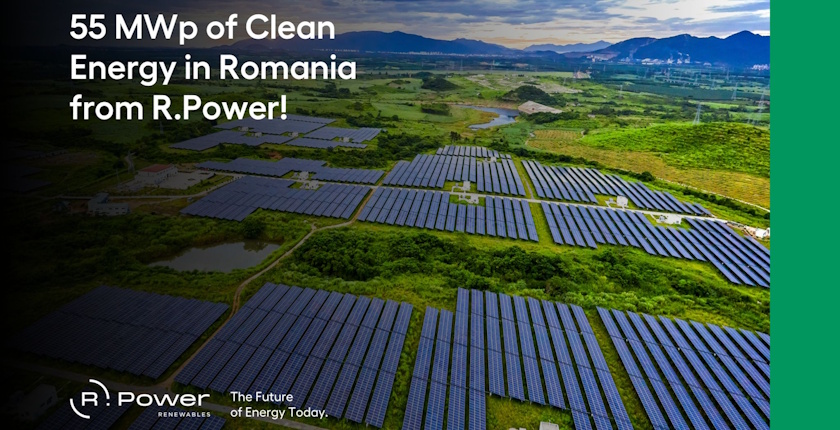
Polish company R. Power Renewables is about to build a solar power plant in Romania of 55 MW in peak capacity.

R. Power Renewables published the main details ahead of the start of construction of its Lazuri Solar Park, located in Satu Mare county in Romania.

The company said it is a major step forward in its commitment to expanding sustainable energy infrastructure in Central and Eastern Europe.

The works are set to begin before the end of September, according to the update. The facility is scheduled to come online in the third quarter of 2026.

The Lazuri Solar Park will be connected to the national grid through a newly constructed 110 kV switching station

The Lazuri Solar Park will be connected to the national grid through a newly constructed 110 kV switching station, implementing a loop-in/loop-out connection on the existing Vetiș–Abator 110 kV overhead transmission line, according to R. Power Renewables.

The project will not only contribute to Romania’s renewable energy targets but also strengthen local energy security and grid resilience, the Warsaw-based company underlined.

The solar farm of 55 MW in peak terms would generate approximately 70 GWh of clean electricity per year — enough to meet the annual needs of over 48,000 households and avoid nearly 17,000 tonnes of CO2 emissions.

Lazuri is one of five R. Power’s solar farms in Romania that secured a 15-year power purchase contract

Lazuri is one of five R. Power’s solar power projects in Romania that secured 15-year contracts-for-difference (CfDs) through the national auction scheme, the firm said and added that in total, it won support for 85 MW of installed capacity.

In December 2024, after years of delays, the Ministry of Energy finally selected projects of an overall 1.53 GW, slightly more than the quota, in the first round of auctions.

Wind and solar power projects are eligible for subsidies under the CfD scheme. The first round of auctions resulted with ten and eleven winning bids, respectively.

by in News

Visual Fan to install BESS facility of 65 MWh for Renovatio Trading

Visual Fan will install a 65 MWh energy storage for Renovatio Trading in Toplița in Romania’s Harghita county.

The batteries market in Romania is very active these days.

The battery energy storage system  (BESS) will be built by Allview Energy, Visual Fan’s division specialized in the development of large-scale photovoltaic parks, including storage capacities.

It is the first major contract for the implementation of a power storage system, Allview said.

The contract is valued at EUR 9.2 million. It is set to be implemented in association with partners Enersec Technology and TQM Services.

The implementation period for the contract is seven months

The project includes state-of-the-art technologies in terms of batteries and energy flow control, according to Allview.

The implementation period is seven months. The deal includes all stages of the project – engineering, procurement and execution, full integration into the energy system and the successful completion and testing.

The goal is to help balance the national grid and accelerate the integration of green energy into daily consumption, Allview added.

“The signing of this contract marks a defining moment in Visual Fan’s development journey, reflecting the company’s strategic maturity and the market’s growing confidence in our skills. Since the end of 2024 and the beginning of 2025, the company has entered a new stage of consolidation and expansion, by attracting major projects, which validate the management’s strategic vision, the team’s expertise and the ability to implement complex solutions on a large scale,” said Christina Munteanu, Economic Director of Visual Fan.

Peticilă: Thec ontract is a confirmation of the active role that Visual Fan has in Romania’s energy future

According to Visual Fan CEO Lucian Peticilă, the signing of the contract is a confirmation of the company’s strategic vision and the active role it has in Romania’s energy future.

Visual Fan is happy to build this path together with Renovatio Trading, guided by the same vision: a clean, balanced and sustainable energy future for Romania, he added.

Of note, a few days ago the National Energy Regulatory Authority of Romania (ANRE) approved a regulation eliminating double taxation of energy storage, to accelerate the deployment of solutions for storing electricity.