by in News

GCL Moves Knjaževac Solar Project Forward as Serbia’s Large-Scale PV Pipeline Expands

Chinese energy group GCL has advanced its plans for the Knjaževac solar power plant, a major photovoltaic project proposed for eastern Serbia and among the country’s largest developments currently in the pipeline.

The Municipal Council of Knjaževac has launched the process to draft a detailed regulation plan for the facility. A public consultation on the draft decision was held from February 3 to 5. Once the decision to prepare the plan is formally adopted, authorities will open a second public discussion lasting 15 days.

According to the draft decision, the initiative was filed by the prospective investor, Central Europe Energy Company, a Belgrade-registered entity. The company is 90% owned by China’s GCL Intelligent Energy (Suzhou), with the remaining 10% held by Central Europe Consulting Company, also based in Belgrade.

The project has already cleared an important grid-related milestone. In May 2025, Central Europe Energy Company signed a grid connection agreement with Serbia’s transmission system operator, Elektromreža Srbije (EMS). The signing was part of a broader package of 11 renewable energy projects contracted by EMS at the time. EMS said that, among nine solar projects included in that round, the Knjaževac photovoltaic plant carried the highest proposed capacity at 136 MW.

Municipality head Milan Đokić described the development as the largest investment in Knjaževac’s history, estimating its value at EUR 200 million, as reported by local outlet Knjaževačke Novine.

Planning documentation will cover roughly 267 hectares, spanning parts of the cadastral municipalities of Krenta, Ponor, Mučibaba, and Miljkovac within the municipality of Knjaževac. The preparation deadline for the detailed regulation plan is set at 12 months, and the decision also предусматривает a strategic environmental assessment.

Serbia’s solar market is growing from a relatively low base. The country’s largest operating solar park is currently the 27 MW facility installed by Nofar Energy, while the biggest project by planned capacity is CWP Europe’s 150 MW Solarina development.

GCL is active across most continents, with a core business centered on solar module and energy storage battery manufacturing, alongside the development of low-carbon energy solutions.


by in News

Shared power, shared security: Nordic lessons for Europe’s energy resilience

Author: Parvathy Sobha, Brida Mbuwir and Bart Overdevest,EUSEW Young Energy Ambassadors

Renewables are transforming Europe’s energy landscape, but the rapid green transition is testing grid stability. The Iberian blackout exposed the risks of ambition outpacing the system’s flexibility. Yet the story looks different in the north. Nordic countries have integrated vast shares of renewables while keeping the lights on, proof that reliability and decarbonisation can go hand in hand. What can the rest of Europe learn from the Nordics to safeguard its energy security in a net-zero grid?

Europe’s energy security test

As wind and solar replace conventional power plants that once provided system inertia, maintaining voltage and frequency stability grows more fragile. Recent fuel market volatility and supply shocks have also exposed the limits of isolated national grids. This is no reason to slow the green transition, but a reminder that Europe must now build a power system that combines scale, resilience and low carbon intensity.

The Nordic blueprint

The Nordic countries—Sweden, Norway, Finland and Denmark—have built one of the world’s most reliable and decarbonised power systems, known for their unique combination of resources, coordination and market integration. A complementary energy mix forms its backbone: dispatchable hydropower balances variable wind, while nuclear and bioenergy add stability and seasonal flexibility. This is further complemented by growing contributions from batteries and demand response.

Moreover, the cross-border links allow electricity to flow to where it is most needed, easing local shortages and damping price volatility. Additionally, strong regional cooperation, harmonised grid codes, shared market rules and coordinated system planning enable national operators to function as a single, interconnected network. Finally, deeply integrated day-ahead, intraday and balancing markets turn variability into an asset by smoothing prices, reducing reserve needs and strengthening reliability as renewable shares rise.

Author, Parvathy Sobha, Brida Mbuwir and Bart Overdevest, EUSEW Young Energy Ambassadors

Adapting Nordic lessons for Europe’s energy future

Adopting the Nordic model requires adaptation to Europe’s diverse realities. Not every region has the hydropower that underpins the Nordics’ flexibility. Balancing variable renewables in other parts of Europe will depend on smarter combinations of storage, flexible demand and interconnections. The Nordic example shows that strong coordination, consistent investment and shared market rules can overcome resource disparities and geography alike. Infrastructure gaps, uneven market maturity and regulatory differences remain obstacles, but none are insurmountable.

The EU must strengthen not only its physical grids but also the cooperation that connects them. Accelerating interconnectors and internal reinforcements through programmes such as TEN-E and REPowerEU will allow renewable electricity to flow across borders, turning surplus wind in one region into stability in another. Equally important is market integration. Deepening day-ahead, intraday and balancing market coupling will ensure that flexibility—whether storage, demand response, or variable renewables—reaches where it creates the greatest value. Treating flexibility as core infrastructure and valuing fast frequency response and grid-scale storage within capacity and balancing mechanisms, will anchor reliability in a cleaner and more dynamic power mix.

Operational harmony will be the glue that binds this system together. Aligning grid codes, planning standards and market rules across Member States can enable transmission and distribution operators to act as one coordinated European network. A shared digital backbone, built on real-time data, forecasting and automation will add the visibility and speed needed to manage decentralised generation. Citizens remain central to this transformation. Cross-border projects must deliver tangible local benefits: fair prices, clean air and sustainable jobs. Earning public trust through transparency and equitable outcomes will sustain momentum and legitimacy.

This opinion editorial is produced in co-operation with the European Sustainable Energy Week 2026. See ec.europa.eu/eusew for open calls.

Disclaimer: This article is a contribution from a partner. All rights reserved. Neither the European Commission nor any person acting on behalf of the Commission is responsible for the use that might be made of the information in the article. The opinions expressed are those of the author(s) only and should not be considered as representative of the European Commission’s official position.

by in News

Slovenian DSO registers enormous interest in connecting BESS to distribution grid

Applications for 400 MW have been submitted for the connection of battery energy storage systems to the distribution grid, according to Elektro Ljubljana, one of the distribution system operators in Slovenia.

Slovenia’s distribution system operators (DSOs) are getting an increasing number of requests to connect battery storage systems directly to distribution substations. Notably, in early May, the five Slovenian DSOs fed more electricity into the transmission network than they drew from it for the first time, and for two consecutive days.

Matjaž Osvald, Executive Director of Operation and Development of the Distribution Network in DSO Elektro Ljubljana, pointed out that last summer the company observed increased investor interest in directly connecting batteries to distribution substations.

It issued installation terms for 90 MW, and requests for at least as much are waiting to be processed, he added.

Installation terms were issued for batteries with 90 MW in overall capability

However, the company estimated there could be at least 300 MW more in applications. Due to the technical limitations of existing substations, much less could be connected. Substations in the Elektro Ljubljana area are already overloaded and don’t allow additional connections of larger devices, Osvald explained.

Furthermore, upgrading or constructing new facilities is a lengthy process, he pointed out. Current delivery times for transformers alone are longer than two years, with financing also being an issue.

According to Osvald, batteries would be used to store energy from solar power plants, and three types of investors have emerged. One group wants to install batteries to provide system services for system operators on the European market or for electricity trading.

Three types of investors are submitting applications

The second and third batch aim to bring their projects to a certain stage of development and then sell them – either they would purchase land, obtain permits, and install a battery, or only buy land and obtain permits for energy storage.

Osvald expressed concern about the idea of using batteries solely to provide system services in the European market. In that case, there would be no benefits for the Slovenian distribution network, but it could create problems, he stressed.

Such use would occupy all available connection capacity in substations, which, with increasing electrification, could lead to no spare capacity for other grid users, according to Osvald.

He also pointed to the value of BESS for the distribution network in reducing peak loads and consumption.

by in News

Slovenian DSO registers enormous interest in connecting BESS to distribution grid

Applications for 400 MW have been submitted for the connection of battery energy storage systems to the distribution grid, according to Elektro Ljubljana, one of the distribution system operators in Slovenia.

Slovenia’s distribution system operators (DSOs) are getting an increasing number of requests to connect battery storage systems directly to distribution substations. Notably, in early May, the five Slovenian DSOs fed more electricity into the transmission network than they drew from it for the first time, and for two consecutive days.

Matjaž Osvald, Executive Director of Operation and Development of the Distribution Network in DSO Elektro Ljubljana, pointed out that last summer the company observed increased investor interest in directly connecting batteries to distribution substations.

It issued installation terms for 90 MW, and requests for at least as much are waiting to be processed, he added.

Installation terms were issued for batteries with 90 MW in overall capability

However, the company estimated there could be at least 300 MW more in applications. Due to the technical limitations of existing substations, much less could be connected. Substations in the Elektro Ljubljana area are already overloaded and don’t allow additional connections of larger devices, Osvald explained.

Furthermore, upgrading or constructing new facilities is a lengthy process, he pointed out. Current delivery times for transformers alone are longer than two years, with financing also being an issue.

According to Osvald, batteries would be used to store energy from solar power plants, and three types of investors have emerged. One group wants to install batteries to provide system services for system operators on the European market or for electricity trading.

Three types of investors are submitting applications

The second and third batch aim to bring their projects to a certain stage of development and then sell them – either they would purchase land, obtain permits, and install a battery, or only buy land and obtain permits for energy storage.

Osvald expressed concern about the idea of using batteries solely to provide system services in the European market. In that case, there would be no benefits for the Slovenian distribution network, but it could create problems, he stressed.

Such use would occupy all available connection capacity in substations, which, with increasing electrification, could lead to no spare capacity for other grid users, according to Osvald.

He also pointed to the value of BESS for the distribution network in reducing peak loads and consumption.

by in News

H-Bridges team from Belgrade returns to IFEC: students developing bidirectional EV charger

The H-Bridges student team from the School of Electrical Engineering (ETF) of the University of Belgrade, Serbia, is once again taking part in one of the world’s most prestigious university competitions in energy innovation – the International Future Energy Challenge (IFEC). This year’s challenge focuses on the design of a bidirectional onboard charger for electric vehicles, a solution that enables not only battery charging but also energy feedback to the power grid.

The IFEC competition is organized under the patronage of the Institute of Electrical and Electronics Engineers (IEEE). Each year, the organizers define a new task aligned with the latest technological trends, allowing participating students to work on state-of-the-art solutions in electrical engineering and computer science.

The competition is held in three phases. In the first stage, teams submit conceptual design proposals to the organizers and judges. Up to 20 teams from around the world are then invited to present preliminary experimental results at the IEEE Applied Power Electronics Conference (APEC) in the United States, one of the largest global conferences in applied electrical engineering.

In July, the top ten teams advance to the final round, where their solutions are tested in laboratory and real-world conditions. The final venue changes each year depending on the competition theme and the host university.

At the beginning of each season, new students join the H-Bridges team

At the beginning of each season, new students join the H-Bridges team, motivated to go beyond traditional education and gain hands-on experience. Team members independently handle all aspects of the project, from conceptual design to prototype development and testing, as well as securing the necessary components and funding for participation in the semifinal and final stages of the competition.

The H-Bridges team is supported by the University of Belgrade’s School of Electrical Engineering (ETF). In addition, numerous companies in Belgrade and abroad recognize the value of the competition and the team’s projects, providing sponsorships and donations in the form of materials, equipment, and financial support. This assistance enables the team to attend the semifinal and final rounds of IFEC and contributes to its continued success.

Those interested in supporting the H-Bridges team can find additional information on the team’s official website. Support from partners and donors plays an important role in the team’s ongoing activities.

The team also regularly participates in other international and national competitions.

H-Bridges preparing for IFEC 2026

The H-Bridges team is led by Aleksandar Milić from the Department of Power Converters and Drives at the School of Electrical Engineering. The team is organized into several subteams focusing on hardware and PCB design, software and control, and public relations and corporate cooperation. Members come from all study programs at the School of Electrical Engineering, as well as from other faculties.

H-Bridges has achieved notable results at IFEC over the years. In 2019, the team won first place with an electric bicycle drive system and an accompanying Android application for cyclist-vehicle communication. The team also secured second place in the 2020, 2022, and 2023 editions of the competition.

This year’s IFEC task focuses on the design of a bidirectional onboard charger for electric vehicles

This year’s IFEC task focuses on the design of a bidirectional onboard charger for electric vehicles. The project addresses the growing need for innovative solutions in renewable energy integration, electric mobility and energy storage systems.

Bidirectional chargers allow vehicles not only to draw energy from the grid but also to feed it back, offering potential benefits for vehicle efficiency and grid stability without the need for additional charging infrastructure. The system is designed to feature a compact form factor, reliable control, and high power quality at the point of connection.

The team is currently working on the conceptual design of the charger and plans to present its first results at the IEEE APEC conference in March 2026 in the United States. The final stage of the competition will take place in Belgium at KU Leuven, where student-developed chargers from around the world will be tested under both laboratory and real-world conditions.

by in News

New round of talks between Montenegro and Masdar on strategic partnership

Representatives of the Government of Montenegro and Masdar discussed potential joint projects in the energy sector. The focus of the meeting was on solar energy, energy storage, and hydropower.

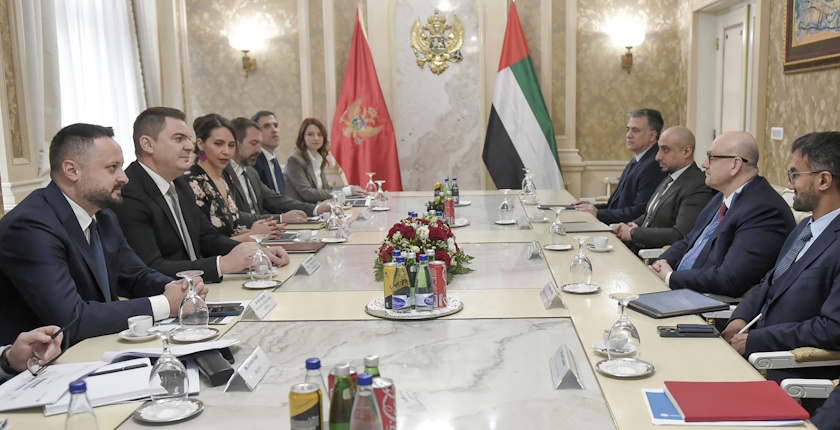
Minister of Energy and Mining of Montenegro Admir Šahmanović and the Minister of Public Works Majda Adžović met today at Villa Gorica in Montenegro’s capital Podgorica with Masdar CEO Mohamed Jameel Al Ramahi and his team.

It was the second meeting between Al Ramahi and Šahmanović in a short period. They met in early September.

The discussions now continued on top priority projects for the Government of Montenegro, ones that could be of mutual interest, according to the Ministry of Energy and Mining.

Priority should be given to projects that are the most technically advanced

Discussions will be intensified to define collaboration models, potential investments, and the selection of first projects to be implemented, the update reads.

Solar projects, including for floating solar power plants, alongside battery energy storage systems (BESS) and hydropower plants, have been identified as segments of special interest. These are also the areas where Masdar has significant engineering and technical experience, the ministry said.

montenegro masdar sahmanovic
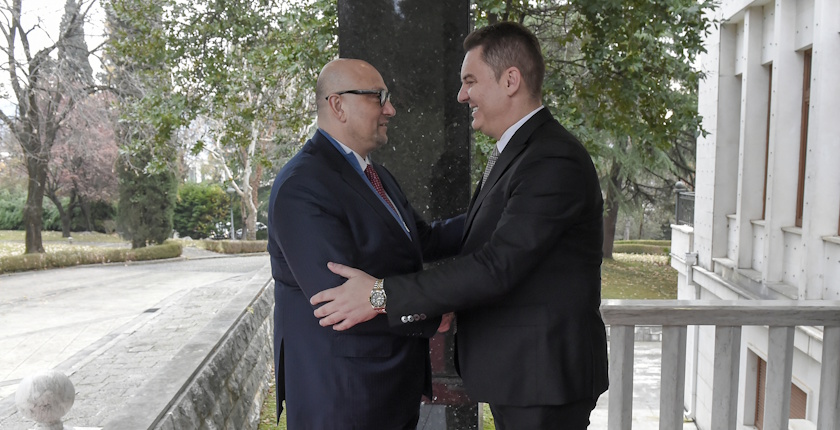
Al Ramahi and Šahmanović (photo: Government of Montenegro/Saša Matić)

The two sides agreed to focus on projects that are the most technically advanced, environmentally sustainable, and aligned with the development of the power grid, to ensure their sustainable and efficient implementation.

Šahmanović: Montenegro’s strategic and long-term goal is to establish itself as a reliable and competitive player in the European energy market

Minister Šahmanović pointed out that the country’s strategic and long-term goal is to establish itself as a reliable and competitive player in the European energy market. He underscored that the development of energy infrastructure and renewable energy sources are among the government’s key priorities.

Officials participating in the meeting praised the planned construction of a second submarine cable line with Italy. It is an extremely wise and strategic investment that ensures Montenegro a stronger and more stable position in the European electricity market, they added.
Montenegro’s vision as an energy hub is fully aligned with the government’s development plans, Šahmanović stressed.

Minister of Public Works Majda Adžović highlighted the extensive experience of the United Arab Emirates in energy and infrastructure development in the public sector. It is of great importance for Montenegro’s activities in increasing renewable energy capacities, she added.

Masdar’s expert teams will continue technical talks with the management of EPCG and CGES

Masdar’s representatives have expressed readiness to continue technical discussions with the management of power utility Elektroprivreda Crne Gore (EPCG) and transmission system operator (TSO) Crnogorski Elektroprenosni Sistem (CGES).

The company’s expert teams will aim to identify priority and mature projects for joint implementation, the ministry said.

EPCG’s CEO Zdravko Dragaš and Ivan Mrvaljević, Executive Officer of EPCG’s Directorate for Development and Engineering, pointed out that the development of green energy is the company’s top priority.

A total of 200 MW in renewable energy projects are currently in development, they added.

Ivan Asanović, CEO of CGES, presented projects that are in the final stages of implementation.

by in News

Slovenia draws up first climate vulnerability, risks assessment for energy sector

In cooperation with the Jožef Stefan Institute, the Ministry of the Environment, Climate and Energy has issued the first national assessment of climate vulnerability and risks for the energy sector. The analysis shows that the sector is moderately vulnerable under current climate conditions.

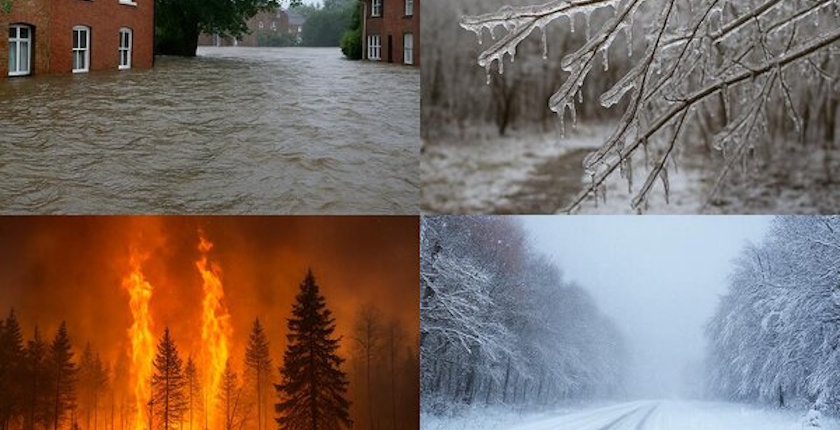
The main threats to the energy sector in Slovenia are floods, fires, storms, landslides, sleet and wet snow, heatwaves, and drought.

The assessment of climate vulnerability and risks for the energy sector was produced in line with the IPCC AR5 methodology and the national guidelines of the Faculty of Biotechnology.

The greatest threat to the energy sector are floods, which jeopardize fuel storage, substations, electricity distribution networks, and other elements of the supply chain, the ministry underscored.

The most important subsystem is liquid fuels

By using weighting and considering the current energy mix and the state of infrastructure, the most important subsystems for the functioning of the overall system are liquid fuels (34%) and electricity (33%), followed by natural gas (18%), solid fuels (10%), and heat (5%), the assessment reads.

This reflects a high dependence on imported liquid fuels and the key role of electricity in all consumption sectors, the ministry explained.
The overall weighted vulnerability score for the energy sector is 2.3 on a scale of one to five, with the electricity subsystem having the highest vulnerability, 2.6.

Electricity distribution grids, solar power plants, and fuel transport and logistic routes also show high vulnerability, according to the assessment.

Subsector ratings:

  • electricity subsector (2.6)
  • liquid fuel supply (2.2)
  • solid fuel supply (2.2)
  • natural gas supply (around 2.0)
  • heat supply (1.9)

Regarding individual elements of the sector, the most vulnerable are the electricity distribution network (3.5), electricity transmission system and imports (3), preparation of firewood, wood chips and pellets, and photovoltaic plants (3); vehicles/tanks for liquid fuels and vehicles/trucks for solid fuels, fuel stations, and other renewable energy sources (2.5).

The identified risks are expected to intensify in the future

The assessment reveals that Slovenia’s energy sector comprises critical elements whose failure could lead to significant supply disruptions.

It provides a technical basis and starting point for preparing a climate change adaptation strategy and for drafting measures such as strengthening infrastructure resilience, reviewing planning for new facilities, and incorporating climate risks into strategic documents and investment plans, according to the ministry.

Climate change scenarios indicate that the already identified risks will intensify in the future – especially floods, storms, and heatwaves.

The ministry said it would be necessary to implement adaptation measures to ensure a reliable energy supply.

by in News

Energy system based on renewables is cheapest solution to achieve net zero by 2050 – study

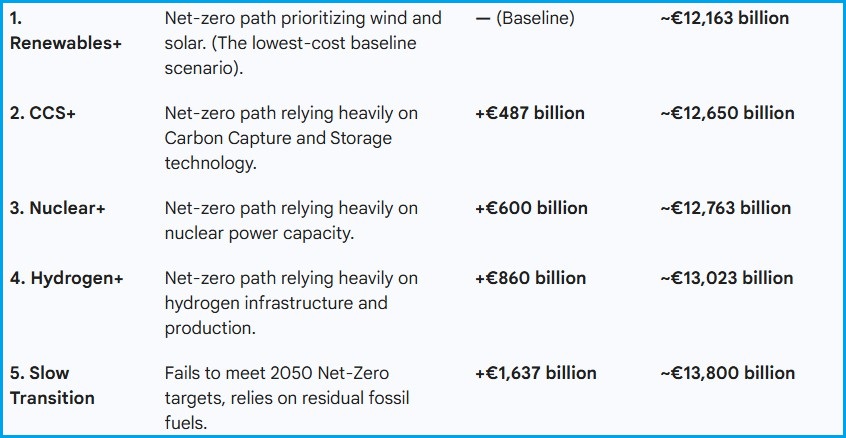
A European energy system based on a high share of renewable energy is the cheapest scenario until 2050 for achieving the net-zero goal, when compared to an increased use of nuclear capacity, or hydrogen, or carbon capture and storage, and against a delayed energy transition, according to a study produced by Hitachi Energy for WindEurope.

Costs for each scenario include not only generation facilities, but investments in grids, storage and back-up systems, according to WindEurope.

The study has mapped out the total system costs of five energy scenarios. Four scenarios deliver net zero and the remaining one is for a slow transition, where Europe doesn’t meet its climate targets, wind power advocacy group said.

The difference between the cheapest net zero path (Renewables+) and the most expensive path (Slow Transition) is EUR 1.64 trillion, the study reveals.

eu energy system 2050 scenarios costs hitachi study

The study’s authors calculated the total societal cost of building, operating, and adapting to the required energy system across electricity, transport, heat, and industry to meet or fall short of the 2050 climate targets.

The total system costs have three major groups of expenses.

The first group are new infrastructure investments in generation assets, as well as in grid, hydrogen, storage and carbon capture and storage (CCS) infrastructure.

Operational expenses are represented by fuel and CO2 costs, while the third group are electrification and demand shift costs.

The Renewables+ scenario drastically lowers import dependency

The Renewables+ scenario achieves net zero by 2050 through a massive deployment of variable renewable energy, primarily wind and solar power, leading to high electrification across the energy mix.

The renewables share reaches 85% of total electricity and nearly 70% of total gross available energy. Dependency on imported energy fuels falls drastically from 71% in 2030 to just 22% in 2050, the report reads.

“As Europe looks ahead to 2050, it is revealing to think what our energy system looked like 25 years ago. Back in 2000 the share of wind and solar in Europe’s electricity was a combined 0.8%. It’s 30% today. And Europe’s emissions are down by nearly 1/3 compared to 2000 while the economy has grown 45%. Let’s build on this success,” WindEurope stressed.

It is an inception report for the Energy System Costs Study, a project commissioned by WindEurope.

by in News

Montenegro adopts National Energy and Climate Plan

The Government of Montenegro has adopted the National Energy and Climate Plan, along with a bill on cross-border electricity and natural gas exchange.

The National Energy and Climate Plan (NECP) of Montenegro is the overarching strategy that clearly defines what the country should achieve by 2030: a 55% reduction in emissions, a renewable energy share of at least 50%, and substantial progress in energy efficiency, according to the Ministry of Energy and Mining.

“Over the past eight months, we have made a tremendous effort to finalize two key documents that have been awaited for years and are crucial for our European commitments,” Minister Admir Šahmanović stressed.

This is a plan that enables new investments, new renewable energy power plants, modern grid infrastructure, and a secure transition for the Pljevlja coal region, he explained.

Šahmanović: The latest European Commission report confirms Montenegro’s progress

The ministry noted that the bill on cross-border electricity and natural gas exchange is among the most important energy laws proposed by this government. Šahmanović recalled that this is not merely a technical issue.

The bill, in his words, opens the door to the single European market, directly impacts the closure of Chapter 15 of the accession negotiations with the EU, and gives full meaning to the electricity interconnection with Italy and the EU market.

It would provide greater energy security, better competition, more stable prices, and a stronger position for the country’s economy, he added.

“The latest report from the European Commission confirms that we have made progress. Today’s decisions by the government are the best confirmation of this. These are the foundations for a more energy-secure, modern, and European Montenegro, and we have reason to be satisfied with the progress we have achieved,” Šahmanović underscored.

The bill represents the most extensive reform of energy legislation in the past decade

According to the ministry, by adopting these two strategic documents, Montenegro has taken a significant step forward in aligning with EU energy rules.

The NECP integrates energy, climate, and development policies into a single framework for the first time, sets clear and measurable goals, and lays the foundation for Montenegro’s long-term energy transition.

The law on cross-border electricity and natural gas exchange represents the most extensive reform of energy legislation in the past decade, transitioning from a basic regulatory framework to a full European system of market, technical, and security rules.

Together, these two documents represent the most important reform package in the energy sector in recent years, fully aligned with European legislation and the EU’s strategic priorities, the ministry concluded.

by in News

RE-Source Platform: Number of PPAs in Europe drops by 60%

The number of power purchase agreements in Europe decreased by 60% compared to the same period last year, while contracted capacity has dropped by 40%, according to RE-Source Platform.

Europe’s power purchase agreement (PPA) market is facing headwinds in grid development, permitting and electrification and from negative electricity prices, RE-Source Platform warned.

RE-Source Platform facilitates corporate renewable energy sourcing in Europe. It was founded by WindEurope, SolarPower Europe, Climate Group RE100, and World Business Council for Sustainable Development, and steered by a group of corporate buyers and developers.

There are four main problems

“This slowdown is very paradoxical. Europe has no path to energy security and competitiveness unless it electrifies its economy – shielding itself from energy shocks and leveraging large scale deployment of wind and solar energy. But the market is facing headwinds,” the update reads.

The platform identified four main problems.

Europe is not expanding its grid infrastructure quickly enough. The main bottleneck is grid permitting with hundreds of gigawatts of projects awaiting grid connection.

The permitting process for renewables remains too slow. The Renewable Energy Directive has set permitting rules for acceleration, but EU member states have not implemented them.

The Clean Industrial Deal rightly names PPAs as a key solution

Direct electrification is the cheapest and most efficient way to decarbonize. It could also improve competitiveness and energy security, however Europe’s electrification rates are stagnating.

The increase of the negative price hours is making PPA negotiations harder. The way out are energy storage solutions.

The platform stressed the importance of PPAs.

“The Clean Industrial Deal rightly names PPAs as a key solution. Without them, we risk losing industrial competitiveness – and missing our climate targets. PPAs are a cornerstone of Europe’s industrial decarbonization,” the platform added.

They also give companies price certainty, help new wind and solar projects get financed and cut buyers’ exposure to volatile energy markets, according to the update.