by in News

Croatia finally close to removing major obstacle to investments in renewables

After three years of delays, Croatia is finally close to adopting a methodology for the calculation of the grid connection fee for renewable power plants. Investors have repeatedly urged the authorities to enact the document, arguing it was the main obstacle to investments in renewable energy sources.

The Croatian Energy Regulatory Agency (HERA) said it has developed a draft methodology for determining the electricity grid connection fee. The public discussion, which began on October 23, lasts until November 21.

According to HERA, the effect of required investments in the transmission network on the network usage fee depends on the share of the connection fee in the total costs of developing the high and very high voltage network, as well as on the amount of grants.

It is possible to connect to the grid even before all technical conditions are met

The effect on the network usage fee will become evident when the relevant network reinforcements are completed, for example, in 10 to 15 years, the agency said.

The costs of developing the transmission network to achieve goals from the National Energy and Climate Plan (NECP) will be financed partly from the grid connection fee and partly from the network usage fee.

HERA pointed out that the legislative framework allows network users to connect even before all technical conditions met, by signing flexible connection agreements, which envisage the possibility of operational restrictions regarding connection capacity.

Personnel decisions have delayed the process of determining the fee

The Renewable Energy Sources of Croatia (RES Croatia) association repeatedly warned that the failure to determine the grid connection fee has halted projects worth around EUR 3 billion overall.

In mid-September, together with SolarPower Europe and WindEurope, RES Croatia sent a letter to the European Commission to raise concerns about the crisis in the country’s renewable energy sector.

According to domestic media, one of the main reasons for the delay in determining the grid connection fee was that HERA’s Management Board was incomplete for two years.

by in News

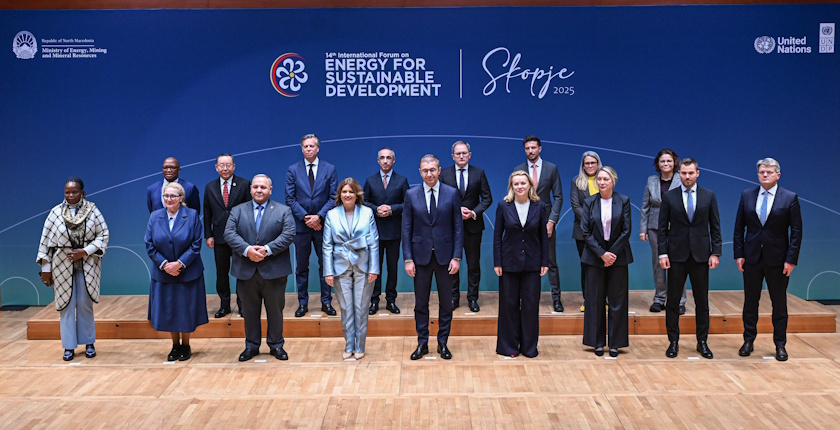
International Forum on Energy for Sustainable Development kicks off in Skopje: reliance on single supplier is risk of past

Reliance on a single source or supplier is a risk of the past – the future belongs to diversified, sustainable, and safe energy solutions, Minister of Energy, Mining and Mineral Resources of North Macedonia Sanja Božinovska said at the opening of the 14th International Forum on Energy for Sustainable Development in Skopje.

The three-day International Forum on Energy for Sustainable Development (IFESD-14), with the theme From Goals to Action: Powering the Future with Sustainable Energy, gathered more than 500 participants from more than 70 countries, including high-level representatives of international institutions, companies, as well as academics and experts.

The meeting is organized by the Ministry of Energy, Mining and Mineral Resources of North Macedonia, in cooperation with the United Nations Development Programme (UNDP) and the UN’s five regional commissions – UNECE, UNESCAP, UNECLAC, UNECA, and UNESCWA.

The Skopje Declaration will be signed at the forum. The document will remain as an important permanent record of the commitment of the participating countries to a sustainable, safe, and inclusive energy future, according to the ministry.

Sanja Božinovska, Minister of Energy, Mining and Mineral Resources, underlined that North Macedonia would be the center of the global energy dialogue for the next three days.

Božinovska: Energy transition is not a race between countries​

Energy resilience today is the ability of the system to withstand, adapt, and continue to function stably even in conditions of global uncertainty and geopolitical upheaval, she said.

“In this new era, technology and artificial intelligence are our allies, not a threat. They can help us forecast demand, optimize consumption, and improve energy accessibility. But energy must be used wisely, focusing on people, not just machines,” Božinovska stated.

Sanja Božinovska (photo: Ministry of Energy, Mining and Mineral Resources)​

​Energy transition is not a race between countries but a shared journey, in the minister’s view. No country, regardless of size, can handle climate challenges alone, she added.

“Our role, as ministers and leaders, is to create conditions for this transition to be fair, sustainable, and inclusive and to ensure that no one is left behind; no country, no community,” Božinovska stressed.

The actions of the Government of North Macedonia confirm the stance, she asserted and highlighted the construction of natural gas interconnectors with Greece and Serbia. The investment will enable supplying thousands of households and businesses and help Europe achieve better connectivity and security of gas supply, she explained.

Grid modernization and investments in digitalization and energy storage are the country’s policy as well, she added.

Mickoski: Energy is high on the government’s agenda

Hristijan Mickoski (photo: Ministry of Energy, Mining and Mineral Resources)

Prime Minister Hristijan Mickovski said the forum is an opportunity for North Macedonia to show that a small country can have a big impact – when it has a clear vision, determination, and leadership.

He highlighted the role and vision of Minister Božinovska, saying she is determined to move things forward even in the short term, to accelerate processes and not let Macedonia fall behind in the race against time.

“As someone who comes from the energy sector, I know very well how important that feeling of constant movement, change, and responsibility is. That’s why energy is high on the government agenda – not as a technical matter, but as a national priority and state strategy,” he asserted.

Every solar panel, every wind farm, every new power plant fueled by clean energy – this is part of the modern struggle for the independence of North Macedonia, he explained.

“Our vision is clear: to prepare the country for the future – for climate challenges, technological changes and global risks. To make an example in the region of a stable, clean and independent energy economy,” Mickoski said.

Molcean: The forum has developed into a leading global platform for the promotion of sustainable energy

Tatiana Molcean, United Nations Under-Secretary-General and Executive Secretary of the United Nations Economic Commission for Europe (UNECE), pointed out that the forum, which was launched in 2010, has evolved into a leading global platform for advancing sustainable energy.

“Today, we stand at a crossroads when it comes to multilateralism in energy. The global energy transition represents not only a historic opportunity for sustainable development but also a profound responsibility. We must build resilient energy systems that ensure a secure, affordable, and environmentally sustainable supply of energy,” she stressed and added: “None of us will succeed if we work in isolation.”

Tatiana Molcean (photo: Ministry of Energy, Mining and Mineral Resources)

​UNECE is here together with other UN partners to help make energy not only a driver of just transition and economic growth, but also a catalyst for sustainability and resilience, Molcean told the audience.

In the view of Resident Representative of UNDP in North Macedonia Armen Grigoryan, the forum’s theme, From Goals to Action: Powering the Future with Sustainable Energy, reflects urgency and growing consensus among nations that sustainable energy solutions are urgent.

Grigoryan: We have to move from commitments to concrete implementation

“Now we have to move from commitments to concrete implementation and steps. Sustainable energy stands as a cornerstone of our collective sustainable future. Around the world, the UNDP programme is deeply engaged in advancing this agenda,” he stressed.

Grigoryan recalled that the work of UNDP in North Macedonia, but also elsewhere, through the green finance facility and tackling air pollution initiatives, is about the people.

“By helping families heat their homes with green and affordable energy, enabling businesses to invest in green solutions, we are creating healthier communities and new opportunities for growth,” he asserted.

Photo: Ministry of Energy, Mining and Mineral Resources
by in News

Webinar summary: How to design PV and BESS in the Balkans faster and smarter with RatedPower software

RatedPower, a leading provider of software for PV plant and BESS design and engineering, has organized a webinar to present its solutions that make it faster and easier for developers and contractors to design and build PV and battery storage facilities, helping increase their efficiency and profitability. The online event included a step-by-step demonstration of how RatedPower’s cloud-based software tool creates simulations of PV plants, battery energy storage systems (BESS), and hybrid facilities to assess costs, performance, and profitability under various scenarios. The hosts also answered questions such as whether the software can be used for rooftop solar, how it accounts for terrain, what financial aspects it considers, and how user-friendly it is for non-technical staff. A recording of the webinar is available at this link.

The webinar opened with an overview of the main challenges that solar and BESS projects face in the Balkans, but also elsewhere in the world. These include a lack of collaboration between teams, difficulty finding investors for projects in the ready-to-build stage, insufficient documentation needed for permitting, lengthy manual calculations, and poor decision-making in feasibility studies.

Addressing common challenges in the Balkans

RatedPower was created precisely to address these problems, and today it provides services for a wide range of companies in the solar and BESS market, including well-known international players, it was explained at the webinar, hosted by Emil Trepin, Account Executive at RatedPower.

The company decided to expand to the Balkans because it is one of the fastest-growing regions in Europe when it comes to renewable energy projects. This, it was explained, is thanks to energy transition efforts, grid modernization, investment momentum, and state support for renewables across the region.

Much more than an engineering tool

RatedPower, part of Enverus, a global software-as-a-service (SaaS) platform for the energy sector, offers a cloud-based tool for designing ground-mounted PV plants of 1 MW and above, and up to 3-4 GW, as well as hybrid systems (PV plus BESS) and standalone battery storage projects.

The platform creates the fastest simulations in the industry, reducing design and engineering time by up to 90%, while helping increase project profitability by about 20%. It generates over 400 pages of ready-to-use documents, including bills of quantities, single-line diagrams, business plans, and much more.

The tool reduces design and engineering time by up to 90%

RatedPower’s software is much more than an engineering tool – it is a decision-making platform that combines the simulation of technical design, energy yield, and financial analysis, according to the hosts.

A step-by-step demonstration of how the platform works

During the demonstration, Matteo Menazzi, Technical Advisor at RatedPower, explained how the platform is used in practice. Since it is cloud-based, it can be accessed from any web browser and used simultaneously by several people working on the same project or on multiple projects.

The first step is to select a location on the map, taking into account various restrictions, such as roads, forests, and archaeological sites, and then add PV arrays, BESS, and other equipment.

Equipment, such as PV modules or battery containers, is selected from a pre-filled database or uploaded manually. The software then creates a full simulation in a matter of seconds, allowing users to test different modules or equipment and compare results.

Solar modules, batteries, and other equipment can be selected from a pre-filled database

In the layout phase, users can set the distance between rows, adapt the configuration to the terrain slope, and estimate the scope and cost of necessary earthworks.

The software also allows the customization of grid connection parameters, including voltage levels and line types (underground or overhead). It then automatically estimates substation size and electrical losses, and calculates the necessary cable lengths.

It calculates the amount of electricity that can be produced and injected into the grid, as well as financial performance. In addition, a large number of documents is automatically generated – from hourly energy yield and battery performance results to lists of necessary cables, bills of quantities, and 2D and 3D drawings.

Designs can be edited and saved as templates for future projects

It is important to note that any design created with the RatedPower software can be edited by moving, adding, or removing elements. Also, all inputs can be saved as a template, which can be used for another project, saving considerable time.

Designing battery storage systems with RatedPower

When it comes to batteries, users can choose a power conversion system and battery containers from the database, define the number of BESS blocks and their layout, and adjust the distances between containers to comply with fire safety regulations. They can also customize charging and discharging efficiency and use the optimization algorithm to adjust operations for maximum profitability.

It is also possible to choose between a fixed and a variable price. For variable prices, the software will upload the day-ahead price for the relevant market or allow users to upload their own price. The tool will also recommend the most profitable time to sell electricity.

Users can also choose whether to charge the batteries only from the PV plant or from the grid as well.

The software provides project cost estimates based on standard values or the user’s input

In the financial segment, RatedPower’s software will estimate the total cost of building a PV plant or battery system, based on standard values provided by the International Renewable Energy Agency (IRENA) and the US National Renewable Energy Laboratory (NREL).

However, input values can also be fully customized by the user, based on the price of solar modules, BESS units, or cables.

If you want to know more about RatedPower’s software, request a demo today.

by in News

North Macedonia receives grant from France for grid modernization

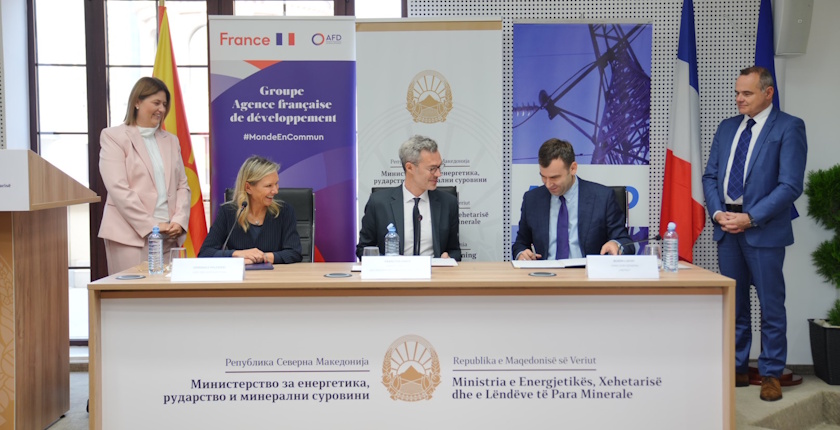
The transmission system operator of North Macedonia – MEPSO, France’s development agency Agence Française de Développement (AFD), and RTE International signed an agreement for a grant intended to support the Balkan country’s transmission system. At the same time, the Ministry of Energy, Mining, and Mineral Resources signed a joint declaration with AFD, officially welcoming the agency as a partner of North Macedonia’s Investment Platform for a Just Energy Transition.

The EUR 600,000 grant is for technical assistance for the modernization and digitalization of the transmission grid in North Macedonia, MEPSO said.

The project focuses on four areas: preparing system adequacy studies using the ANTARES market simulator, sizing system reserves, developing a methodology for calculating transmission losses and producing a feasibility study, and a project for substation digitalization.

Božinovska: AFD’s technical assistance will enable MEPSO to manage variability in the system more efficiently

As part of the project, experts from RTE International, a subsidiary of the French transmission system operator (TSO) RTE, have already held a training course for MEPSO’s engineers on the use of the ANTARES simulator, the Ministry of Energy, Mining and Mineral Resources said.

Minister Sanja Božinovska stressed that AFD‘s technical assistance would enable the company to manage more efficiently the variability resulting from increased participation of renewable sources and market fluctuations.

A more advanced and smarter grid means fewer outages, better use of clean energy, stronger regional connections, and greater system resilience – whether to weather conditions, demand fluctuations, or market instability, Božinovska noted.

Milevski: Pilot project will be launched for the digitalization of a 110 kV substation

According to RTE International CEO Veronika Milevski, the agreement combines advanced power system modeling, innovative reserve forecasting using artificial intelligence (AI), and a pilot project for the digitalization of a 110 kV substation.

This is a decisive step toward a more resilient, transparent, and competitive electricity grid, she pointed out.

MEPSO CEO Burim Latifi explained that the digital transformation pilot project is aimed at developing a fully digital substation with advanced protection, management, and monitoring systems.

Vince: AFD is committed to supporting a just and sustainable energy transition

It is a concrete step toward transforming MEPSO into a smarter, more efficient, and future-oriented TSO, he added.

Of note, AFD and RTE established collaboration with Montenegro’s TSO CGES in November last year. AFD also signed a memorandum of understanding with Albania’s power utility KESH in April.

Regarding the signing of the joint declaration, Sanja Božinovska said the partnership is improving the country’s ability to modernize its electricity system, integrate more renewables, and strengthen security of supply.

AFD is committed to supporting North Macedonia’s just and sustainable energy transition, according to the Deputy Director of the AFD Office for the Western Balkans, François Vince.

The signing of the two agreements was attended by French Ambassador Christophe Le Rigoleur.

Photo: Sanja Božinovska/Facebook
by in News

Šahmanović: Second submarine cable line with Italy to be installed by 2031

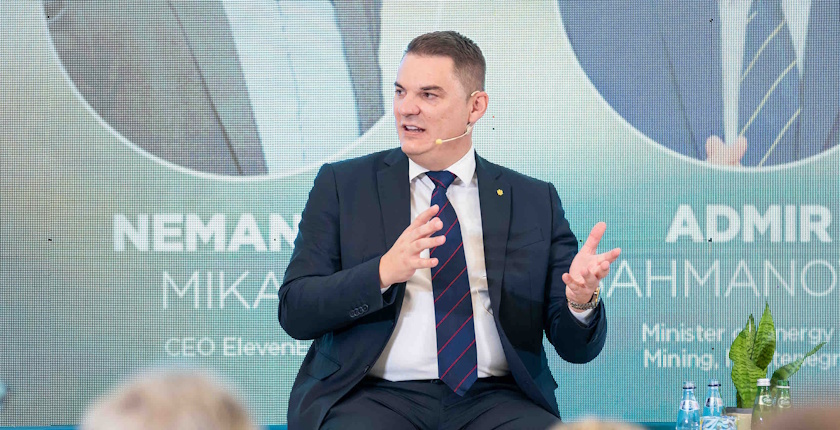
The second line of the submarine cable connecting Montenegro and Italy is expected to be completed by 2031, Montenegro’s Minister of Energy and Mining Admir Šahmanović said at the European Union – Montenegro Investment Conference.

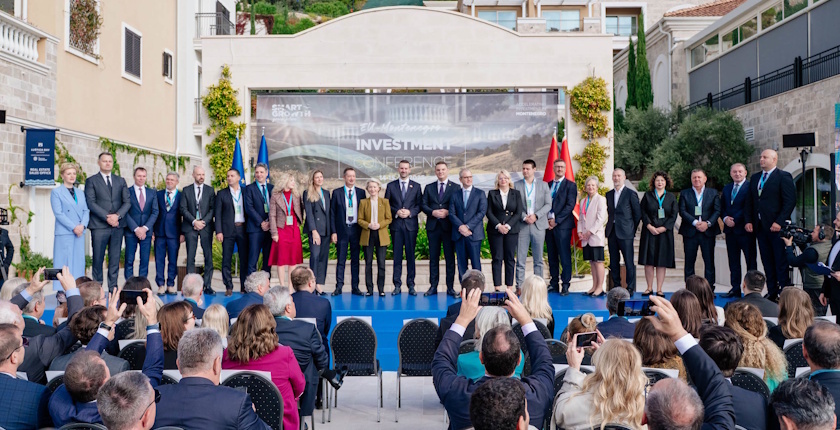
The two-day conference, titled Smart Growth, Green Future: Accelerating Investment in Montenegro, was opened yesterday in Luštica, near Tivat, by European Commission President Ursula von der Leyen and Prime Minister of Montenegro Milojko Spajić.

Fourteen cooperation projects between Montenegrin and European companies have been initiated at the conference, including investments in wind farms, solar parks, energy storage, and grids. It shows the great significance of the energy sector for investments.

A panel called Renewables: Scaling Montenegro’s Energy Transition examined the possibilities for accelerating the country’s energy transition and enhancing the sector’s attractiveness for investment in renewables.

Šahmanović: Montenegro strives to position green energy as an export product

Prominent international experts and investors took part in the discussion. Representing the Government of Montenegro, Minister of Energy and Mining Admir Šahmanović outlined the country’s renewable energy priorities and highlighted Montenegro’s role as a regional leader in clean energy.

Montenegro has fully harmonized its legislation with EU standards, creating a stable and predictable investment environment, in his words. Šahmanović highlighted the launch of the first solar power auction as a significant step forward in the development of renewables.

Photo: Đorđe Cmiljanić/Government of Montenegro

“The government invests in battery energy storage systems (BESS), ensuring the flexibility and stability of the grid. Montenegro strives to position green energy as a recognizable export product, thereby strengthening the country’s economic sustainability,” Šahmanović stated.

He revealed that Montenegro is about to sign a memorandum of understanding with Italy that would additionally position Montenegro as an energy bridge between the Western Balkans and the EU.

Montenegro is looking for strategic partners and investors ready to jointly implement capital projects in the energy sector

The government is wrapping up the work concerning the oil and gas sector to close chapter 15 in its accession negotiations with the EU, further strengthening investor trust, Šahmanović said.

“The implementation of the project for the construction of the second phase of the subsea cable link with Italy is expected by 2031, which will further strengthen Montenegro’s role in regional and European energy connectivity. Montenegro is looking for strategic partners and investors ready to jointly materialize capital projects in energy and contribute to regional energy stability,” the minister underlined. The investment is estimated at EUR 500 million, he asserted.

In a message to investors, Šahmanović said Montenegro is open for investments and added: “Now is the time for you to invest. We will be your service 24 hours a day, seven days a week.”

Participants at the panel included Daniel Calderon, Alcazar Energy Co-Founder and Managing Partner, Yann Guinard, EDF Director of Development for Europe, Louis Blanchard, Qair Energy President, and Nemanja Mikać, ElevenEs CEO.

Memorandum with EDF

Admir Šahmanović and Yann Guinard (photo: Ministry of Energy and Mining)

Within the conference, the Ministry of Energy and Mining of Montenegro and EDF International Networks signed a memorandum of understanding. It establishes a framework for future cooperation on modernizing the distribution network, digitizing smart grids, and integrating renewable energy sources, according to the ministry.

The memorandum foresees the implementation of pilot projects and feasibility studies that will contribute to the acceleration of the energy transition of Montenegro.

Admir Šahmanović said the deal is an important step towards strengthening green and innovative energy projects. Cooperation with EDF confirms the position of Montenegro as a country with a clear vision and open opportunities for investors, he underscored.

“EDF International Networks, as part of the global EDF Group, brings international expertise in the sector of power distribution, grid upgrade and digital transformation, which opens up space for new strategic partnerships and capital infrastructure projects,” the minister pointed out.

The memorandum confirmed the joint commitment to sustainability, integrity and energy security, with a clear focus on the well-being of citizens and the economy of Montenegro, the ministry said.

by in News

EU-Montenegro Investment Conference: 14 partnerships, MoUs signed for energy, sustainable projects

A total of 14 cooperation projects between Montenegrin and European companies have been initiated at the ongoing European Union-Montenegro Investment Conference, including investments in wind farms, solar parks, energy storage, and grids.

The two-day conference, titled Smart Growth, Green Future: Accelerating Investment in Montenegro, was opened today in Luštica, near Tivat, by the President of the European Commission, Ursula von der Leyen, and the Prime Minister of Montenegro, Milojko Spajić.

Montenegro’s growing potential for strategic, green, and sustainable investments was presented through new partnerships between leading Montenegrin and European companies, according to a press release by the Government of Montenegro.

The Conference was jointly organized by the government and the European Commission, with the support of the Montenegro Investment Agency (MIA).

State power utility EPCG has signed three memoranda of understanding

State-owned power utility Elektroprivreda Crne Gore (EPCG) has signed three memoranda of understanding (MoUs). One was signed with Akuo for the development of several renewable energy projects, including floating solar, a photovoltaic plant, and energy storage.

The second MoU, signed with SS&A Power Group, envisages the development, manufacture, and installation of thermal energy storage, while the third, with Wind Fisher, concerns a new technology for high-altitude wind power generation.

Alcazar Energy signed a memorandum with the government’s project management office for the development and financing of renewable energy projects. CWP Europe and the Montenegrin Investment Agency (MIA) signed a memorandum on the development of the Montečevo solar farm project with battery storage. The company signed a similar agreement for its project in Albania yesterday.

A memorandum was also signed between Čevo Solar and Grawert Jenny & Partner on battery energy storage systems (BESS). A 20 MW/60 MWh battery is being considered.

Four sustainable investment partnerships were also signed

The Ministry of Energy and Mining and EDF will further discuss the issue of modernizing Montenegro’s power distribution network.

Among the signed documents is an MoU on collaboration between the European Bank for Reconstruction and Development (EBRD) and Erste on a Regional Energy Efficiency Program (REEP), as well as cooperation in the field of wastewater management between Suez and MIA.

In addition, four sustainable investment partnerships were also signed: Farm2Fork Montenegro, Station M, Green Logistics Hub, and Northern Investments Compact for Ecology & Resilience (NICER). Green Logistics Hub refers to the Port of Bar, which aims to become the first net-zero port on the Adriatic. NICER concerns the just transition and is led by the Pljevlja Coal Mine.

Von der Leyen: Do not wait for accession to invest in Montenegro

Photo: Bojan Gnjidić/Vlada Crne Gore

The event brought together senior representatives of the Government of Montenegro, the European Union, international financial institutions, as well as prominent European and Montenegrin investors.

“My message is very clear: do not wait for accession to invest in Montenegro, because by then you may miss the opportunities that others will seize,” Ursula von der Leyen noted.

She stressed that by continuing its European journey with determination and speed, Montenegro is making its goal of EU accession attainable.

“Today, we are opening a new chapter of development—we are beginning a major investment cycle, strengthening our ties with the European market even before formally joining the European family. Today, we are bringing our vision of green and smart growth to life. We are doing this together with our most important strategic partner—the European Union, which is also the largest investor in our country,” Prime Minister Milojko Spajić said.

He recalled that the country plans to close all negotiating chapters with the EU by the end of 2026 and become its 28th member state in 2028.

Photo: Bojan Gnjidić/Vlada Crne Gore
by in News

Turkey’s TEİAŞ signs USD 750 million loan contract with World Bank

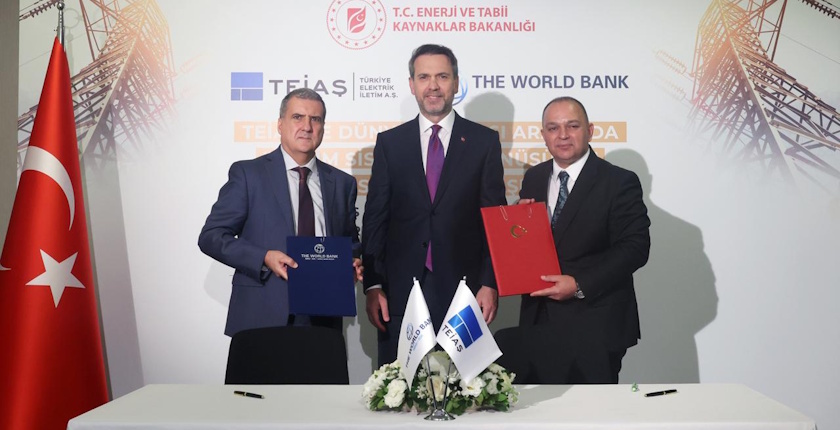
Turkish Electricity Transmission Corporation and the World Bank signed a USD 750 million loan agreement.

A USD 750 million loan will be used for the Transforming Power Transmission System Project. It would make the country’s energy future more reliable and efficient, Turkey’s transmission system operator (TSO) TEİAŞ said.

The agreement was signed in Istanbul vby the bank’s Country Director Humberto Lopez and Orhan Kaldırım, the company’s Chairman of the Board, in the presence of Minister of Energy and Natural Resources Alparslan Bayraktar, at the 11th Energy Efficiency Forum and Exhibition.

Bayraktar: Turkey plans to invest USD 28 billion in the transmission grid

“The World Bank and international financial institutions have a significant interest in Turkey’s energy infrastructure, particularly its electricity and natural gas sectors. Turkey is a hub country,” Bayraktar stated.

He recalled that the country plans to invest USD 28 billion in electricity transmission infrastructure by 2035.

The minister revealed that discussions on such projects are ongoing with financial institutions from both Asia and the West. Financing agreements can be expected in the foreseeable future, he added.

Lopez: The transition requires reliable transmission

World Bank Country Director Humberto Lopez stressed that Turkey’s clean energy ambitions depend on strong transmission infrastructure.

“Turkey has one of the most ambitious renewable energy plans, and this transition requires reliable transmission,” he said, as quoted by Anadolu Agency.

Lopez explained that it is very difficult for a new company to install solar or wind power facilities without a transmission grid connection secured. The USD 750 million investment aims to address the need and it is central to the government’s energy transition plan, he underlined.

The Transforming Power Transmission System Project marks the first phase of a USD 1.5 billion financing package aimed at expanding grid capacity, enhancing digital management, and accelerating the integration of renewable energy.

It will include feasibility studies for Turkey’s first high-voltage direct current (HVDC) transmission line, according to the article.

by in News

GridFlex to install standalone BESS in Serbia

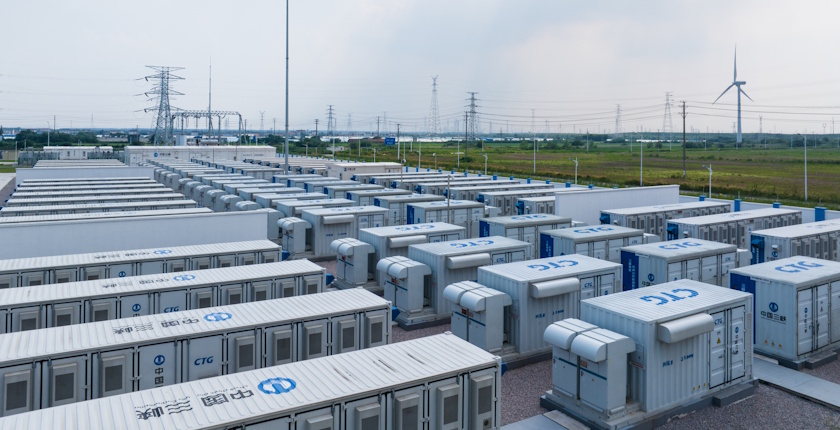
GridFlex plans to install a standalone battery energy storage system with a capacity of 125 MWh near the city of Leskovac, in southern Serbia. The investment is estimated at EUR 17 million.

Serbia doesn’t have any utility-scale batteries, but many are in the project pipeline. GridFlex is one of 11 companies in the process of obtaining approvals from transmission system operator (TSO) Elektromreža Srbije (EMS) for the connection of planned standalone battery energy storage systems (BESS) to the network.

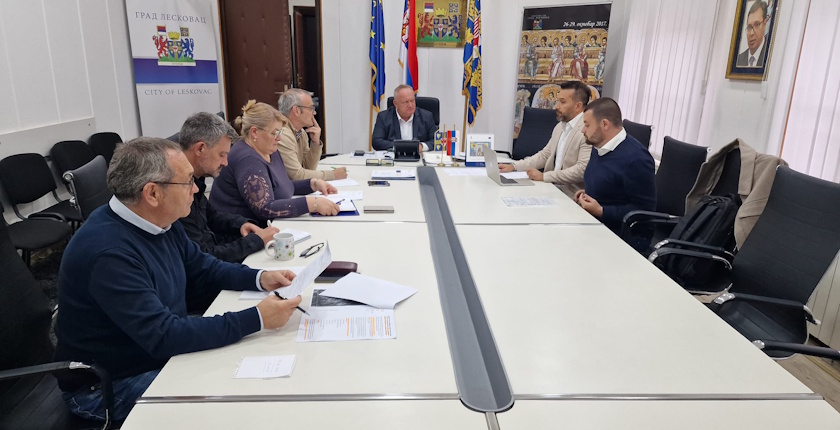
Mayor of Leskovac Goran Cvetanović met with representatives of Turkish company GridFlex, which has an office in Belgrade.

Battery systems provide flexibility to the system

The company is developing a project for a BESS that would provide system flexibility, support the integration of renewable energy sources, and contribute to the local economy, the city authority said.

GridFlex plans to invest EUR 17 million in the installation of an energy storage facility in Leskovac, the update revealed.

Owner and CEO of GridFlex Alkin Yaman participated in the meeting.

The deadline for completing the construction is the end of 2026

The planning and technical documentation for the facility is under development. The deadline for completing the facility is the end of 2026, while commissioning is expected in early 2027, the city stressed.

The battery would be installed on 1.5 hectares of privately owned land that the firm purchased near the Leskovac 2 substation.

The city will provide assistance to GridFlex for project implementation.

Three co-owners

The investment will secure numerous benefits for the city – the possibility of new investments, weakened load and voltage fluctuations in the power system, and an increase in the capacity for connecting new local consumers and producers to the grid, the local authority stressed.

According to data from the Business Registers Agency, the owners of GridFlex are Alkin Sevket Yaman, Sirin Cem, and Denis Severinov Karamov.

Of note, investors in Serbia are in the process of obtaining approvals for connecting their planned BESS facilities of an overall 2,021 MW and 5,899 MWh to the grid. They would be standalone batteries and ones co-located with power plants.

by in News

CEE Energy Conference to be held in London on October 7

Featuring a series of expert-led presentations and panel discussions, the second edition of the annual CEE Energy Conference, taking place in London on October 7, will explore the rapid evolution of the energy sector in Central and Southeast Europe.

CEE Energy Conference 2025: From Generation to Stability – Accelerating the Energy Transition in CEE is organized by international law firm CMS and is free of charge. It will bring together speakers from CMS offices across the CEE/SEE region and the UK, alongside representatives from transmission system operators (TSOs), regulators, and leading energy companies.

The conference will feature country spotlights and two panels, with speakers presenting key developments and innovations from the Czech Republic, Romania, Poland, Bulgaria, Hungary, Ukraine, Slovakia, Croatia, and Austria.

A panel titled BESS, Balancing & Grid Stability will include case studies from across the region, as the BESS market continues to attract international investors. At the second panel, PPAs & Tolling Agreements, participants will share insights into emerging and maturing markets, with perspectives from developers, investors, and legal experts.

One of the key speakers is Thomas Hamerl, an expert in renewables, energy storage, and infrastructure

One of the key speakers is Thomas Hamerl, an expert in renewables, energy storage, and infrastructure and Head of the Energy and Climate Change Group at CMS Reich-Rohrwig Hainz. He will speak at the event on regulatory developments and investment possibilities in Austria, Croatia, Montenegro and Serbia.

Participants in the second annual CMS CEE Energy Conference will have the opportunity to join industry leaders in exploring the latest trends, investment opportunities, and challenges, as well as sector developments, according to Hamerl. “On top of that, market-specific developments will be presented for Bulgaria, the Czech Republic, Croatia, Hungary, Serbia, Poland, Austria, and many more,” he stressed.

Thomas Hamerl is an attorney-at-law and a specialist in infrastructure projects, including public-private partnerships (PPP) and concessions. He is also a leading expert in energy law, public procurement law, and construction and infrastructure-related dispute resolution. CMS Reich-Rohrwig Hainz, based in Vienna, operates in Austria and the Western Balkans.

by in News

Batteries totaling 5,899 MWh in grid connection procedure in Serbia

Investors in Serbia are obtaining approvals for connecting their planned battery energy storage systems of an overall 2,021 MW and 5,899 MWh to the grid. The projects are for standalone batteries and ones that would be co-located with power plants.

Battery energy storage systems (BESS) are rapidly expanding worldwide, and Southeast Europe is no exception. European Union member states in the region such as Bulgaria and Romania are making major strides, while the other countries are trying to catch up. For example, Bosnia and Herzegovina, Montenegro, North Macedonia and Serbia.

As of September 29, Serbia’s transmission system operator (TSO) Elektromreža Srbije (EMS) received a total of 12 applications for the development of connection studies for standalone BESS, Nebojša Vučinić, manager of the Development Division of EMS, told Balkan Green Energy News.

Two applications were submitted in January for the study development interval of March 1 to June 30, 2025, and ten more were received for the current interval, which lasts from September 1 to December 31. Out of the first two applications, the one from Green BESS KV is no longer valid, because the firm didn’t submit a bank guarantee.

EMS develops connection studies every year in two intervals.

The following companies are in the process of connecting standalone BESS:

  • MKBDP Energy
  • Green Land New Energy
  • Green Mountain New Energy
  • BP WPP
  • Blue BESS KV
  • Red BESS KV
  • Yellow BESS KV
  • ENLIGHTNES PV OPERATIONS
  • ENLIGHTNES PV PARK
  • Gridflex

As for the status of their applications, MKBDP Energy has submitted a bank guarantee, and the signing of the grid connection contract is expected.

For the other ten requests, the grid connection studies are underway. They are expected to be completed by December 31.

Standalone storage facilities are planned in Valjevo, Vranje, Subotica, Kovačica, Vršac, Leskovac, Kragujevac, Kruševac, Jagodina, and Ćuprija.

A total of 55 battery projects are in the connection procedure

The 11 standalone storage projects amount to 1,072.66 MW and 2,981.98 MWh altogether, Vučinić said.

The 44 storage facilities that would be co-located with power plants utilizing variable renewable energy sources would have 948.46 MW and 2,917.31 MWh, as stipulated in the Law on the Use of Renewable Energy Sources.

All battery storage projects in the grid connection process amount to 2,021.12 MW and 5,899.29 MWh, Vučinić stressed.

MKBDP Energy’s project has advanced the most in the connection process

According to Vučinić, implementation of BESS projects depends on the progress that an investor achieves. Currently, MKBDP Energy’s investment has passed the most milestones in the connection process, he added.

EMS noted that the grid connection process for standalone battery storage is defined by the Law on Energy and bylaws.

The deployment of standalone batteries complements the integration of power plants running on variable renewable sources

The state-owned company sees no obstacles to integrating standalone BESS into the transmission system. The TSO expressed commitment to assisting investors while maintaining the safety of the entire power system’s operation.

EMS also called the increase in applications for standalone batteries a positive development.

The emergence of standalone batteries complements the integration of power plants utilizing variable renewable energy, and since a large number of such power plants are expected to be connected, the integration of standalone storage helps the power system’s flexibility and safety, Vučinić underlined.