by in News

Montenegro’s CEDIS to invest EUR 30 million in distribution grid

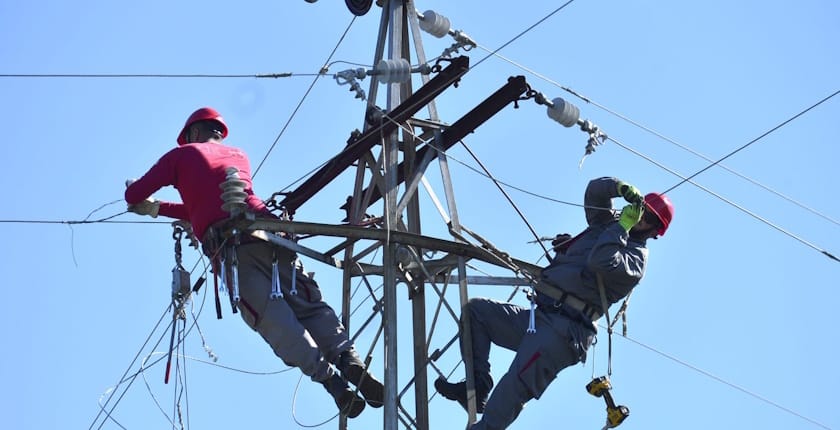
Montenegrin electricity distribution system operator CEDIS plans to invest EUR 30 million this year or EUR 6 million more than in 2024.

The increase in investments demonstrates greater ambitions year after year and that grid works are becoming more intensive and demanding, according to CEDIS.

The country’s distribution system operator (DSO) said it would increase capacity for the integration of new users, improve voltage conditions, strengthen reliability and security of power supply, and reduce losses.

The investments include projects planned to be started this year as well as ones already in motion, such as the modernization of six 35/10 kV substations.

CEDIS is building two substations

CEDIS pointed to several significant endeavors within the primary grid. The most significant ones are the construction of 35/10 kV substations Tivat 3 and Rijeka Crnojevića, and the modernization of the systems Buljarica-Kufin (110/35 kV) and Podgorica 7 (110/10 kV).

Seven 35/10 kV substations are up for reconstruction – Tuzi, Unač, Ptič, Andrijevica, Velika Plaža 1, Velika Plaža 2 and Čanj. The plan includes procuring new equipment for existing 35 kV transmission lines, worth about EUR 1.4 million.

The company is introducing SCADA and ADMS systems

CEDIS will use a EUR 35 million loan from the European Bank for Reconstruction and Development (EBRD) to roll out SCADA and ADMS systems, and to purchase smart meters.

The company highlighted SCADA and ADMS as a key step towards the modernization of the distribution network and the improvement of reliability, efficiency, and security of the power system.

Investments envisaged by the project Decarbonization of the Energy Sector of Montenegro, financed with a loan from the World Bank, are kicking off this year. Its subproject for increasing the operational efficiency of the power distribution grid comprises the reconstruction and modernization of substations, and improvement in the visibility of the distribution network.

EUR 5 million for energy infrastructure on Jaz-Tivat Boulevard

One of the largest investments is the installation of power infrastructure within the construction of the Jaz-Tivat Boulevard. The investment is estimated at EUR 5 million.

Projects within the secondary distribution grid are the construction of 268 substations of 10/0.4 kV, modernization of 10 kV transmission lines, and reconstruction of existing 10/0.4 kV substations. The planned works are valued at more than EUR 6 million.

CEDIS is continuing with the revitalization of the middle- and low-voltage grid. It earmarked EUR 9 million for this year for the purpose. The project is for the renewal of four 10 kV transmission lines and 52 substations of 10/0.4 kV and replacing 1,500 poles.

The installation of new meters and the relocation of measuring points will also be continued. The plan is to start phase 4 of the advanced metering management (AMM) project. The investment is estimated at EUR 12 million.
by in News

Croatia changing law on renewables – new rules for prosumers, decentralized power production

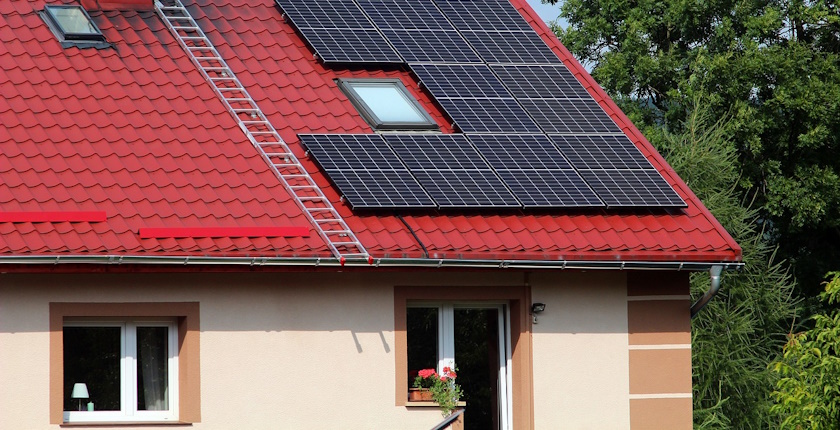
The Government of Croatia has adopted the amendments to the law on renewable energy sources and high-efficiency cogeneration. They change rules for consumers producing electricity for self-consumption, facilitate the establishment of citizen energy communities and regulate decentralized energy production.

The amendments align the Croatian legislation with the European Union’s Renewable Energy Directive and bring benefits to citizens, entrepreneurs, and investors, the Ministry of Economy said.

One of important innovations is a new scheme for the production of energy for self-consumption. Instead of the current net metering mechanism, the new law introduces net billing. It values more fairly the surplus electricity that prosumers deliver to the grid, according to the ministry.

The grid costs charged to prosumers will be aligned with the actual amount of electricity that they take from the grid

Consumers – citizens and entrepreneurs that produce energy for their own needs, will pay grid costs matching the amount of electricity they actually take from it, enabling a sustainable and fair system for all users, the ministry added.

Existing prosumers will have ten years for the transition to the new scheme.

The bill enables the production of electricity for self-consumption in remote locations, provided that all metering points are registered with the same consumer. The ministry expects the measure to pave the way for greater investments, flexibility, and decentralized energy production.

Waste separation is a condition for granting incentives for waste incineration

The rules for establishing citizen energy communities have been simplified, to further strengthen their role in the energy transition. The amendments stricten the criteria for the sustainability of biofuels and they prohibit incentivizing the incineration of waste not from a system of separate collection.

The upcoming law sets the basis for a plan for the development of electricity infrastructure and storage capacities. It will create the conditions for greater integration of renewable energy sources into the grid, the ministry stressed.

“With this law we are taking an important step forward in the energy transition, ensuring a balance between the interests of citizens, the economy, and the energy system, and creating the foundations for a sustainable development of the Croatian energy sector in the long term,” Minister Ante Šušnjar stated.

by in News

Delta Green launches platform in CEE for households to provide grid balancing

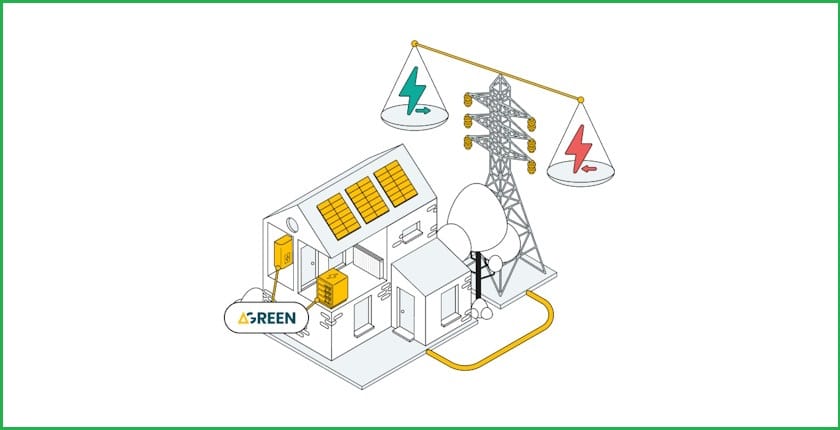
Czech energy startup Delta Green has launched a platform enabling households to provide grid balancing for transmission system operators. The company claims it is the first in Central and Eastern Europe and among the first in Europe to implement such a solution.

Delta Green said it just became the first in the CEE region to launch a platform that lets ordinary households help stabilize the energy grid, arguing it’s never been done before at this scale in the region.

The startup stressed the innovation comes at a critical time when European flexibility needs are projected to more than double, from 220 TWh in 2025 to 530 TWh by 2033, according to the latest projections by ENTSO-E.

Flexibility could bring benefits to consumers, and savings to grid operators, but also reduce electricity prices and grid investments.

The platform transforms ordinary households into active participants in the energy market

The platform transforms ordinary households into active participants in the energy market, allowing them to adjust electricity consumption or supply power in response to grid demands – a capability that directly addresses Europe’s growing flexibility challenges, the company underlined.

“A standard home solar system with battery storage can save up to EUR 40 per month. In Germany and France, where millions of homes have solar setups, 10% participation could offset the output of several power plants, reducing fossil fuel reliance and boosting grid resilience,” co-owner and Chief Product Officer of Delta Green Jan Hicl said.

Delta Green says its platform is the Airbnb of grid balancing

The company added its tech is already saving consumers money and reducing fossil fuel reliance. One can think of it as the Airbnb of grid balancing, Delta Green said.

The company is now working on expanding its services beyond the Czech Republic to both Western and Eastern Europe, for example the DACH region (Germany, Austria, and Switzerland), Italy, and Romania.

Delta Green was established in 2008 as Nano Green under the Nano Energies group. It rebranded itself last year. The company is jointly owned by David Brožík, Prokop Čech, Lukáš Beneš, and Jan Hicl.

Demand-side flexibility could deliver over EUR 300 billion in benefits for European consumers

A recent study from the Smart Energy Europe Association (smartEn) demonstrates that demand-side flexibility could deliver over EUR 300 billion in benefits for European consumers by 2030. Grid flexibility from available assets, including household systems, could contribute a projected EUR 4 billion in annual savings for European grid operators.

According to the European Agency for the Cooperation of Energy Regulators (ACER), grid expansion and flexibility measures potentially could reduce electricity prices by 11% by 2035 and by 30% in 2040 in a net zero scenario.

The European Union needs EUR 584 billion in grid upgrades by 2030. Flexibility solutions, combined with grid optimization, could lower the much needed grid investments from an anticipated EUR 67 billion to EUR 55 billion annually between 2025 and 2050.

by in News

Serbia’s TSO EMS inks contract for Obrenovac – Bajina Bašta power line within Trans-Balkan Corridor

Serbia’s transmission system operator Elektromreža Srbije signed a contract for the construction of a two-system 400 kV transmission line from the Obrenovac substation to the Bajina Bašta substation.

The power line from the Obrenovac substation to the Bajina Bašta substation is part of the third section of the Trans-Balkan Corridor for the transmission of electricity, a project of national and regional significance, TSO Elektromreža Srbija (EMS) said.

The Trans-Balkan Corridor connects Romania, Serbia, Bosnia and Herzegovina, Montenegro and Italy.

Apart from the transmission line, the third section comprises equipping two switchyards in the Obrenovac substation and upgrading the Bajina Bašta substation to 400 kV.

The job was awarded to Kodar Energomotaža at an international tender

The transmission line will be 109 kilometers long. The start of construction is planned for April, while the completion is expected in 2027.

The project is financed by EMS, a donation from the Western Balkans Investment Framework (WBIF), and a loan from Germany’s KfW Development Bank.

The EUR 71 million contract was signed by EMS CEO Jelena Matejić and Mladen Žujković, the representative of Kodar Energomontaža, the contractor. The company was selected after a complex international tender, according to Serbia’s TSO.

The first section of the Trans-Balkan Corridor, from Pančevo to the Romanian border, was completed and put online in December 2017.

The second section was finished in June 2022. It consisted of transmission lines between Kragujevac and Kraljevo and upgrading the substations in the two cities.

Matejić: Serbia is a crucial electricity hub in this part of Europe

The corridor plan also has a fourth section. It envisages a double 400 kV power line between the substations in Bajina Bašta in Serbia, Višegrad in Bosnia and Herzegovina and Pljevlja in Montenegro.

“The Trans-Balkan electricity transmission corridor is certainly one of the most important infrastructure projects to safeguard a stable supply of electricity in our country. It will also enable the integration of the electricity market and position Serbia as a crucial electricity hub in this part of Europe,” Matejić stressed.

The importance of the Trans-Balkan Corridor was demonstrated recently by the commissioning of the second system within the transmission link between Romania and Serbia. It increased the cross-border transmission capacity by 80% – from 500 MW to 900 MW.

by in News

Montenegro labels 15 energy projects as infrastructure priorities

The most valuable priority infrastructure projects in the energy sector of Montenegro are the Komarnica and Kruševo hydropower plants, the Trans-Balkan Electricity Corridor and the Ionian-Adriatic pipeline.

The Government of Montenegro has adopted a list of priority infrastructure projects for the energy sector to fulfill the final criteria of chapter 21 – Trans-European Network, of the country’s negotiations on the accession to the European Union.

The list consists of 15 projects with a total estimated value of around EUR 1.38 billion, according to the announcement.

The EU will use list to consider financial support from the Western Balkans Investment Framework

The list was updated in line with the Western Balkans Investment Framework (WBIF) methodology. In line with priorities defined at the state level, the list is for the European Commission to select projects for financial support from the scheme.

WBIF is the main mechanism for the EU’s financial support in the region in the period from 2024 to 2027, the government noted.

The following projects are on the list:

  • HPP Komarnica – EUR 315 million
  • Ionian-Adriatic Pipeline for natural gas (IAP) – EUR 210 million
  • interconnection Italy – Montenegro – Serbia – Bosnia and Herzegovina (Trans-Balkan Electricity Corridor) – EUR 163 million
  • HPP Kruševo – EUR 160 million
  • energy efficiency in public and residential buildings – EUR 104 million
  • improving the quality of power supply in tourist regions – EUR 78 million
  • creation of conditions for the integration of renewables and the construction of a new power interconnection – EUR 73.6 million
  • solar power project Solari 10,000+ – EUR 66 million
  • Slano floating solar power plant – EUR 60 million
  • Krupac photovoltaic plant – EUR 40 million
  • smart grid and smart metering system for electricity distribution system operator CEDIS – EUR 35 million
  • A8 unit at HPP Perućica – EUR 24 million
  • smart grid program of electricity transmission system operator CGES – EUR 21 million
  • decarbonization – EUR 21 million
  • reconstruction of oil storage tanks – EUR 10 million.

Montenegro also has a list of priority infrastructure projects, including energy. It was introduced in 2018 and updated in the meantime.

Compared to the list from 2021, the Gvozd wind farm and the ecological reconstruction of the Pljevlja thermal power plant were erased, while the following projects were added: HPP Kruševo, Krupac solar power plant, decarbonization and the reconstruction of oil storage tanks.

by in News

Montenegro’s DSO CEDIS secures funds for grid digitalization

Montenegrin distribution system operator (DSO) CEDIS has secured funds for the installation of an advanced grid management system and procurement of smart meters.

The EUR 40 million package consists of a EUR 35 million loan provided by the European Bank for Reconstruction and Development (EBRD) and a EUR 5 million grant under the European Union’s Western Balkans Investment Framework (WBIF).

The funds are intended for a new supervisory control and data acquisition (SCADA) system and an advanced distribution management system (ADMS), as well as the procurement of new smart meters.

Smart meters help users and utility companies monitor and manage electricity usage more efficiently

The project is expected to reduce technical losses by 10%, decrease grid outages to approximately one sixth of the current level, allow new renewable energy sources to be integrated into the grid and enhance cyber security, according to CEDIS and EBRD.

The SCADA system will be used to monitor and control medium-voltage grid networks in real time. ADMS is an advanced platform that optimizes the management and operation of the electricity distribution system.

Smart meters help users and utility companies monitor and manage electricity usage more efficiently, reducing losses and improving reliability, the update reads.

The loan agreement was signed by the EBRD’s Head of Montenegro Remon Zakaria, CEDIS CEO Vladimir Ivanović, and Ivan Bulatović, CEO of EPCG.

Ivanović: The integration of smart meters will empower consumers to better understand and optimize their energy usage

According to Zakaria, the project represents a transformative step towards the digitalisation of the electricity distribution system in Montenegro.

Citizens will experience a more reliable electricity supply, and CEDIS will achieve substantial reductions in technical losses and gain the advanced capabilities required to swiftly detect and address technical faults, he added.

Vladimir Ivanović said SCADA and ADMS would revolutionize the way the company operates the distribution network. The integration of smart meters will empower consumers to better understand and optimize their energy usage, contributing to greater energy efficiency across the network, he stressed.

Last year Ivanović said CEDIS has reduced grid losses from 12.93% to 10.84% and that it planned to lower them below 10% by the end of December.

by in News

Qair signs grid connection agreement for solar project in Montenegro

Montenegro’s transmission system operator CGES and Qair Montenegro signed a contract for the connection of a 50 MW solar power plant.

An agreement on the construction of infrastructure for the Rudine photovoltaic project was signed by Ivan Asanović, CEO of CGES, and Stefan Klikovac, a representative of Qair Montenegro.

The EUR 40 million Rudine solar power plant will significantly contribute to the increase of the clean energy production and reduce harmful emissions, CGES said.

CGES has so far signed six contracts for the connection of solar and wind projects.

It is expected the project to be online until the end of 2028

Back in September 2024, France-based Qair and Montenegrin state-owned power utility Elektroprivreda Crne Gore (EPCG) signed a memorandum of understanding to enhance the pace of renewable energy project development in Montenegro.

Right after signing a cooperation agreement with Montenegro’s state-owned power utility Elektroprivreda Crne Gore (EPCG), Qair requested from the Environmental Protection Agency (EPA) to determine whether an environmental impact assessment (EIA) is necessary for its Rudine facility.

CGES now said the solar power plant is expected to become operational by the end of 2028, when it would be connected to the transmission system. The connection point is the Vilusi substation.

Qair operates power plants with a capacity of 1,000 MW

Qair Montenegro is part of the Qair company, which has production capacities with an installed capacity of 1,000 MW. The French company has a portfolio with a total planned capacity of 34 GW across 20 countries in Europe, Latin America, and Africa, according to CGES.

On the occasion of the MoU signing with EPCG, CEO of Qair Louis Blanchard said the company is pleased to establish a partnership with EPCG, stressing it is a significant event for Qair in the Montenegrin market.

The signing of the contract with CGES was attended by Aleksa Knežević, head of the CGES CEO office, and investor representatives Magdalena Kolanowska, Krzysztof Wajtysiak and Miloš Jovanović.

by in News

Montenegro’s EPCG to install 200 MW of solar power plants

Power utility Elektroprivreda Crne Gore plans to install solar power plants with a total capacity of 200 MW over the next three years, CEO Ivan Bulatović announced.

State-owned power company Elektroprivreda Crne Gore (EPCG) intends to start production at the Gvozd wind farm by the end of the year and connect photovoltaic plants with a total capacity of 200 MW to the grid over the next three years.

With small rooftop solar systems of an overall 70 MW already online, Montenegro is a leader in the region in the development of the prosumer concept, Bulatović claimed and added that by the end of the year the capacity would reach 100 MW.

He also pointed to the importance of the Kruševo hydropower project, which is being developed in cooperation with French partners. In December last year, EPCG signed a contract for project design. The company’s partner in the endeavor is EDF.

Montenegro’s grid is relatively well developed thanks to the investments made in former Yugoslavia

Bulatović underlined that the problem of insufficient development of the transmission system is not a case only in Montenegro, but in the entire region and Europe. Simply, the grid wasn’t prepared for the sudden introduction of renewable energy, according to him.

The utility’s chief recalled that investors in Montenegro have the opportunity in the country’s legal framework to build a grid connection themselves.

The Montenegrin network, as he emphasized, is relatively well developed thanks to investments from former Yugoslavia, Bulatović noted.

Everything is ready for the installation of the second line of the submarine electricity interconnection to Italy

Turning to the undersea interconnection with Italy, he said the second cable is expected to be laid as the required infrastructure has been built on both sides. The first link has 600 MW.

Another cable to Italy and the planned new interconnections are creating transmission capacities enabling Montenegro and the entire region a better connection with the European electricity market, according to Bulatović.

The construction of the Trans-Balkan Corridor is underway and interconnectors with Albania and Bosnia and Herzegovina are in the pipeline, he stressed at the Trebinje Energy Summit.

The development of the transmission system will continue in line with the needs of investors and for electricity production, Bulatović asserted.