by in News

Slovenia tops EU list for most smart power meters, Croatia among laggards

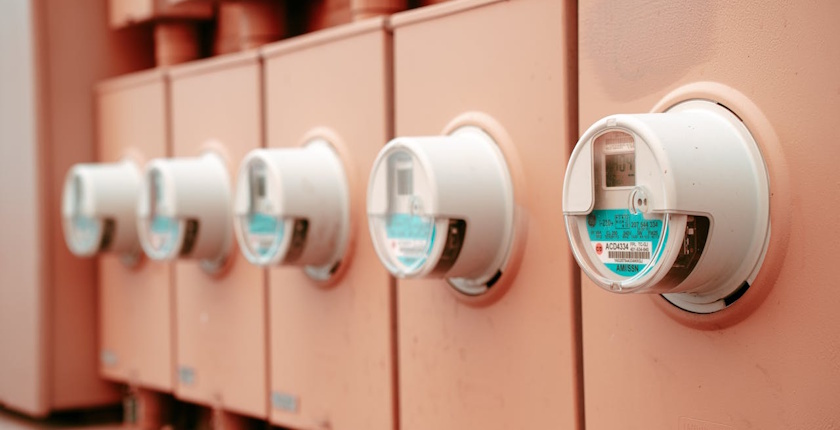
Slovenia is very close to equipping all electricity consumers with smart meters, while Croatia is within reach of achieving it in the non-home segment, but far behind in the household category, according to the latest data from the EU Agency for the Cooperation of Energy Regulators (ACER).

At the top of the list of European Union member states with the highest share of smart meters, three countries are fully equipped with modern smart meters, Naš stik reported.

All consumers in Sweden, Denmark, and Italy have such devices installed. They are followed by Finland, Estonia, Latvia, Luxembourg, Spain, and Portugal, all with 99% of households and 100% of non-household consumers equipped.

Germany is at the bottom of the table, with a rollout of just 2%

Next is Slovenia, with 97% overall. France reached 94% among households and 95% in the other category, while Malta is at 93% and 87%, respectively. Slovenia is expected to complete the process by the end of the year, the article added.

The laggards are Lithuania (51%, 95%), Belgium (46%, 79%), Poland (36%, 65%), Croatia (34%, 95%), Romania (27%, 45%), and Greece (12% altogether). Germany is at the bottom of the list, with a combined total of only 2%, according to ACER’s data.

Smart meters are one of the main components of the distribution grid upgrade

Croatia’s state-owned power utility Hrvatska Elektroprivreda (HEP) launched a tender last August worth EUR 86.5 million, for the purchase of smart meters. The company said at the time that it planned to install them at all metering points in the country by the end of 2029.

Smart meters are a crucial factor for modernizing distribution networks. It is necessary for the future power system, where consumers will play a very different role, generating electricity for self-consumption and through demand response and flexibility services.

by in News

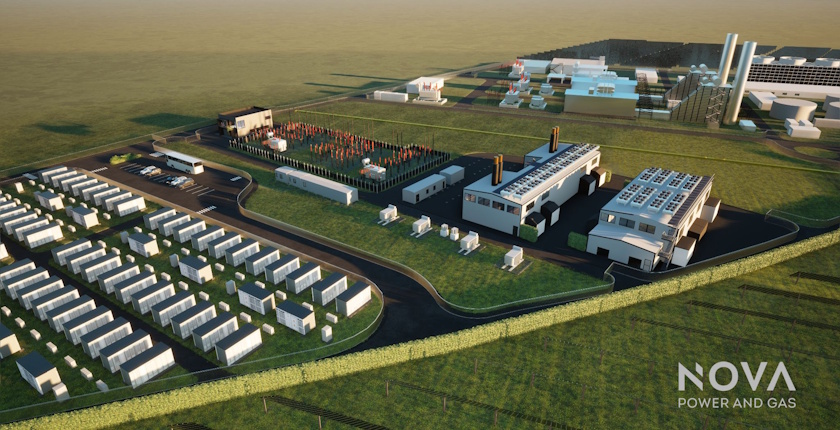
Nova Power & Gas to install 200 MW BESS in Romania

Amid a battery investment frenzy in Romania, Nova Power & Gas is about to build a battery energy storage system that would double the current total capacity in the country. In addition, the company is beginning the construction of a 150 MW gas power plant.

Nova Power & Gas claims it is currently the national leader in energy storage capacity, with 240 MWh already operational. According to the latest data published by Transelectrica, the current total battery energy storage capacity in Romania is 398.8 MWh.

Part of the Romanian E-Infra Group, Nova Power & Gas announced the launched of the largest battery energy storage project in Romania.

The installation in Florești, Cluj county, will have 200 MW in operational power and a capacity of 400 MWh, and is expected to become operational by the end of 2025, according to the firm.

The first phase of the gas power plant is scheduled to become operational by December 2026

Once completed, the facility will double Romania’s current total energy storage capacity, directly contributing to the stability of the national grid and the integration of renewable sources, the company added.

Apart from the BESS, Nova Power & Gas said it is starting to build a 150 MW gas-fired power plant in Câmpia Turzii, with the first phase set to come online by December 2026.

By 2028, the company plans to install one more gas power plant, of 200 MW, and energy storage systems of another 600 MW / 1,200 MWh overall.

Costea: Investments in gas plants to support balance and flexibility in the energy system

“Through these investments, we aim to maintain and strengthen our leadership in energy storage, while making substantial investments in gas-fired electricity generation to support balance and flexibility in the national energy system,” Septimiu Costea, CTO of Nova Power & Gas, stated.

The company is also active in the region, with subsidiaries in Bulgaria, Serbia, Hungary, and Moldova.

Contractors picked for two more investments over the last two weeks

Over the past two weeks, there were two major announcements regarding BESS investments.

Romanian engineering and technology company Simtel said it would install a 98.6 MW / 196.4 MWh system for Turkey-based Güriş.

Simtel noted that the size of the facility is significant, considering that the total battery energy storage capacity in Romania was 398.8 MWh at that moment.

Another firm, Visual Fan, plans to build a 65 MWh energy storage unit for Renovatio Trading in Toplița in Romania’s Harghita county.

by in News

China-based Envision opens world’s largest green hydrogen, ammonia plant

Green technology developer Envision Energy has commissioned the world’s largest and most advanced green hydrogen and ammonia plant. The Shanghai-based company said the production facility, developed in its hydrogen park in Chifeng, China, is also the first in the world delivering green ammonia at industrial scale and the first of its kind to be fully AI-enabled.

The plant can deliver 320,000 tons of green ammonia annually, with exports set to begin in the fourth quarter of this year, Envision said, adding that the facility represents a major leap forward in industrial decarbonization. By 2028, the output is projected to rise to 1.5 million tons a year.

Green ammonia output is expected to rise to 1.5 million tons a year by 2028

The project, powered by Envision’s proprietary off-grid renewable energy system, applies innovative energy storage and load flexibility. Surplus green power is stored in the form of liquid nitrogen, and electrolyzers intelligently respond to renewable power swings, dynamically optimizing energy absorption and ammonia production.

By leveraging green ammonia as a stable transportation and storage medium, Envision has unlocked a practical path to scaling hydrogen across heavy industries, reads the press release.

Zhang Lei, Envision’s founder and CEO, noted that scalable, green alternatives are now real and operational, adding that the world cannot reach net zero without green hydrogen.

The first offtake deal is accelerating green ammonia adoption in fertilizer production, chemicals, and shipping

Envision’s project has already concluded a long-term offtake agreement with Marubeni Corporation, one of Japan’s largest trading houses, which will accelerate green ammonia adoption in sectors including fertilizers, chemicals, and shipping.

The company announced that its Chifeng Hydrogen Net Zero Industrial Park is officially the world’s first green ammonia facility to receive the ISCC PLUS certification for green ammonia with a verified greenhouse gas footprint. Envision also noted that its plant has a replicable design that can be quickly deployed globally.

by in News

Solar beats nuclear in June, becoming EU’s biggest electricity source for first time

Solar became the EU’s largest source of electricity for the first time in June 2025. National records for both photovoltaics and wind rolled in in May and June, pushing coal to an all-time low.

Solar was the largest source of electricity in the European Union for the first time last month, with multiple countries producing record amounts of solar power, Ember found. Wind power achieved the highest ever generation for the months of May and June, the think tank said.

Solar power generated 22.1% of EU electricity (45.4 TWh) in June, more than any other power source. It was a year-over-year increase of 22%. In second place was nuclear, with 21.8% (44.7 TWh), followed by wind, with 15.8% (32.4 TWh).

The big opportunity now comes from adding battery storage and flexibility to extend the use of renewable power into mornings and evenings, where fossil fuels still set high power prices, according to Ember’s Senior Energy analyst Chris Rosslowe.

At least thirteen EU countries set monthly solar records

At least thirteen countries recorded their highest-ever month of solar generation, amid an ongoing surge in photovoltaic installations. Among them were Bulgaria, Croatia, Greece, Slovenia and Romania, all the EU countries in the region that Balkan Green Energy News is focused on except Cyprus, for which there was no data for June.

Wind power reached an all-time high shares of 16.6% (33.7 TWh) and 15.8% (32.4 TWh) in May and June, respectively

Strong photovoltaic output helped the power system to handle higher levels of demand resulting from heatwaves that gripped the continent towards the end of the month, according to the report.

Wind farms generated 16.6% (33.7 TWh) and 15.8% (32.4 TWh) of EU electricity in May and June, respectively. It was an all-time high for both months. Notably, at the start of the year, wind conditions were relatively poor. They improved, and they were the main driver, though capacity has been continuously growing over the past year. Several large offshore wind farms were commissioned.

Coal falls to record low

As a result of high renewables generation in June, coal had the lowest-ever share of EU electricity. Total fossil generation was also low, but it grew in the entire first half of the year on an annual basis.

Coal generated just 6.1% (12.6 TWh) of EU electricity in June, down from the 8.8% registered in the same month of last year.

The two countries that account for the vast majority of EU coal power (79% in June) both saw record lows in June. Namely, Germany generated just 12.4% (4.8 TWh) of its power from coal, and Poland 42.9% (5.1 TWh). Four other countries recorded their lowest-ever month of coal generation in June: Czechia (17.9%), Bulgaria (16.7%), Denmark (3.3%) and Spain (0.6%), which is approaching its coal phaseout.

Fossil fuels generated 23.6% (48.5 TWh) of EU electricity in June, just above the record low of 22.9% in May 2024. Nevertheless, fossil generation in the first half of 2025 was 13% higher (by 45.7 TWh) than in the first half of 2024, mainly due to a jump in gas generation by 19% or 35.5 TWh. Lower hydropower (due to drought) and wind generation than last year, and increasing demand marked the period.

Electricity demand continued on an upward trajectory. In the first half of 2025, the EU consumed 1.31 PWh of electricity or 2.2% more than in the same period of last year.

by in News

Cyprus curtails as much renewable electricity in first half of 2025 as whole last year

According to data compiled by the CyprusGrid tracking platform, the island country curtailed more than 167 GWh of renewable electricity in the first six months of 2025. It was equivalent to last year’s entire cuts. On average, two thirds of the potential green energy production was lost per day in March.

In addition to being the only European Union member state without an interconnection with another power system, Cyprus only has oil-fired generators, a surging solar power capacity, wind parks and some biomass-fired facilities. Other countries, like Greece, also must curtail renewable electricity units, but maintaining system stability requires more drastic cuts in the isolated island nation. Notably, it still lacks energy storage, while the conventional power plants lack flexibility.

According to a statistical report from a few months ago, Cyprus hosted almost 850 MW of solar power, of which less than 400 MW was in commercial photovoltaic plants. Prosumers operated the rest. Licensed projects amounted to 2.8 GW. Wind power amounts to 155 MW.

Rapid growth of solar power capacity brings more episodes of overloads, when grid operators have to curtail photovoltaic and wind power production. At the same time, sudden weather changes can push production to a critically low level, which can also cause outages before conventional facilities step in to cover the deficit.

Curtailments to double this year

Founder of the CyprusGrid tracking platform Andreas Procopiou said on LinkedIn that more than 167 GWh of renewable energy was curtailed in the first half of the year. It’s how much was lost whole last year, he pointed out.

The conventional power plants in Cyprus aren’t able to lower or boost production fast enough to balance the changes in renewables

The cuts will almost certainly exceed 300 GWh in 2025, doubling the all-time high in just one year, Procopiou estimated. The average monthly growth rate has actually more than doubled from 2024, according to the developer of the electricity generation tracker.

Cuts boost emission costs by EUR 8 million

Curtailments erased 20.8 GWh in June alone. The daily average was 29.3% of total renewables output. It compares to May’s 33.9 GWh and 50.3%, respectively, after 37.9 GWh and 61.4% in April. March was the worst, with 38.2 GWh lost, or a whopping 67.9% of potential production, CyprusGrid data shows.

“Solar energy that could reduce costs and pollutants ends up being lost. For 2025 alone, the cuts already amount to more than 100,000 tons of additional CO₂ emissions and an additional burden of around EUR 8 million for emission allowances. A cost that we all ultimately pay,” Procopiou stressed.

Without storage, flexibility and serious planning, the energy transition remains just an empty slogan, the renewable energy expert pointed out.

Nevertheless, French giant TotalEnergies isn’t intimidated by the curtailments. It won the environmental approval a month ago for a photovoltaic park of 100 MW in peak capacity. But the company is planning to include energy storage.

by in News

Heatwave strains European grid, brings profit to energy storage operators

Record solar power production, backed by yet insufficient energy storage capacity, helped maintain the stability of the electricity system in Europe during the latest heatwave, Ember said. Many nuclear and other thermal power plants reduced their activity as river water temperature wasn’t low enough for efficient cooling. Intraday price spreads at European power exchanges landed a windfall for owners of battery energy storage systems and pumped storage hydropower plants.

The heatwave since late June has caused stress for European power systems, driving electricity demand and doubling daily power prices. Yet grids remained stable, fueled by record volumes of solar, think tank Ember pointed out in a report.

Outside temperatures jumped to more than 40 degrees Celsius, triggering an increase in electricity demand as the use of air conditioners soared. Outages in nuclear and thermal power plants exacerbated the challenges.

Daily electricity demand on July 1 was by up to 6% higher in Germany, 9% in France and 14% in Spain than on June 24. As for peak demand, it jumped by 12% in France, 15% in Spain, and 5% in Germany and Poland.

A bigger electricity price spread within one day means higher income for operators of battery energy storage systems

The average daily price surged 15% in Spain, 106% in Poland, 108% in France and 175% in Germany.

“Despite the huge pressure, European grids passed the stress test, and solar electricity played a major role in keeping them running. The surplus of solar energy during the day helped prevent blackouts. However, the use of energy storage is still insufficient, leading to reduced energy supply after sunset. This translated into a sharp increase in electricity prices,” said Ember’s Europe Programme Director Paweł Czyżak.

Record EU solar generation helps keep power supply stable

June saw the highest solar generation on record in the European Union – 45 TWh, which kept the grid well-supplied during daytime hours. The result was 22% up from one year before.

“Heatwaves will not go away – they will only get more severe in the future. Solutions that can help mitigate their impacts, such as battery storage, interconnection, demand flexibility and dynamic tariffs, should become a key part of grid planning and power market design,” Czyżak added. The biggest opportunity is to store solar electricity, to help power air conditioning well into the evening, he stressed.

Outages limited but still posing concern

The overheating of cables is the likely cause of power outages in Italy on July 1. With rising air and water temperatures, the cooling of thermal power plants becomes more challenging as well. It led to forced reductions in electricity generation from nuclear power plants in France and Switzerland.

The French nuclear fleet has been impacted the most, with all but one of the 18 facilities experiencing some type of capacity reduction. According to the update, up to 15% of the capacity may have been impacted.

A blackout of several hours struck large parts of the Czech Republic including Prague on July 4. However, the authorities only blamed it on a transmission cable in the country’s northwest falling, and the resulting domino effect. Notably, the air temperature was much lower than in previous days.

Sun brings power alongside heat

In the peak days of the heatwave in Germany, solar delivered 50 GW and even more, generating 33% to 39% of Germany’s electricity. The country hosts 14 GW of battery energy storage systems (BESS) and 10 GW of pumped storage, which partly bridged the gap between the peaks of production and consumption.

The rallies in electricity prices in the evenings are getting passed on to consumers, so using air conditioners gets more expensive upon sunset. It is a business case for clean flexibility solutions. Due to a high supply of solar electricity during the day, and a cooling-related demand peak in the late afternoon hours, the daily electricity price spreads skyrocketed.

The spread in Poland in the day-ahead segment almost reached EUR 500 per MWh on July 1. Namely, the daily low was EUR 21.04 per MWh below zero, and the peak amounted to EUR 471 per MWh. In Germany, the benchmark went from EUR 0.16 per MWh in negative territory to EUR 404.91 per MWh.

Storage assets charge at low prices and discharge during peak time, reducing the need for costly imported fossil fuels in the evening, and supporting the balancing of the grid, the analysts underscored.

Interconnection played a role as well. The heatwave peaked in different countries on different days, so interconnectors moved electricity to where it was needed most, dissipating the price peaks in the process.

by in News

Coal power plant Maritsa East 3 plans to build solar plant, 200 MW battery system

Coal-fired power plant ContourGlobal Maritsa East 3, which operates only sporadically to ensure the stability of supply for Bulgaria’s power system, plans to repurpose the grid infrastructure of its units 1 and 2 for solar and battery storage capacities. Units 3 and 4 will remain on standby to generate electricity during peak demand periods in the summer and winter months, but the plant will need state support to cover maintenance and workforce costs.

Maritsa East 3 (Maritsa iztok 3), majority owned by the US-based ContourGlobal, plans to use the existing grid infrastructure, including transformers and switchgear, to speed up the green energy project within the complex, according to Vassil Shtonov, Executive Director of ContourGlobal Bulgaria.

The central element is a 200 MW standalone battery energy storage system (BESS), the largest of its kind in Bulgaria, which would improve the flexibility and stability of the national power system, Shtonov explained in an interview with Capital.bg.

The project involves a 200 MW standalone battery system and a solar power plant

The planned battery system at Maritsa East 3 was among 82 projects selected to receive a total of EUR 587 million in subsidies from Bulgaria’s Ministry of Energy in April this year.

“In parallel, we are considering the development of an additional hybrid solar park with a battery at the same site,” he said. This will allow for faster deployment of new clean energy capacity, while preserving all options for future use of the coal-fired plant and its original infrastructure, Shtonov added.

ContourGlobal plans to build 400MW to 500 MW of renewable energy capacity combined with batteries

ContourGlobal plans to invest hundreds of millions of euros to develop 400 MW to 500 MW of renewable energy capacity combined with storage systems, he said, adding that nearly half of this target is under construction or final approval. The company’s goal is to phase out coal by 2027 and achieve carbon neutrality by 2040, he stressed, recalling that Bulgaria’s targeted coal phaseout date is 2038.

Keeping coal plants on standby requires state support

Bulgaria’s state-owned National Electricity Co. (NEK) holds a minority stake in Maritsa East 3. After the plant’s 15-year power purchase contract with NEK expired in February 2024, it has only been able to operate on the free market for a few months a year. This year, units 3 and 4 were online from January to the end of March to maintain energy security.

Shtonov: Key coal-fired power plants should get a fixed amount from the state

However, to be on standby for system security, the plant needs to keep workers on the payroll even when it is not operating. For this reason, strategically important coal-fired power plants should receive a fixed amount from the state to cover ongoing personnel and maintenance costs, and then be switched on when necessary to protect consumers from sharp increases in electricity prices, as happened last year in July and November, according to Shtonov.

by in News

Virtual power plants: How they work and who can benefit from extra income

Virtual power plants, aggregators, and flexibility are gaining increasing attention, and not just within the energy sector. The growth and volatility of electricity prices have forced many businesses and institutions to install solar panels to cut costs. Virtual power plants – set up by aggregators to provide flexibility services – can generate additional income for new electricity producers and consumers capable of reducing or increasing consumption or storing energy.

The deployment of solar panels across Europe, including the Western Balkans, is experiencing remarkable growth, bringing numerous benefits to all who choose to produce electricity for self-consumption and become prosumers. Two of the four D’s of the energy transition are already underway – democratization and decentralization – resulting in increasing numbers of small energy producers and growing amounts of distributed (decentralized) production from renewable energy sources.

This has led to the emergence of aggregators – firms that connect multiple small producers, or even large-scale solar power plants or wind farms, with energy consumers capable of reducing or increasing consumption on demand, and with energy storage systems. The result is the virtual power plant, which functions like a real power plant thanks to software that connects and harmonizes all these actors.

Such a system can “iron out” the variability of renewable energy sources – solar or wind, and offer a more predictable energy delivery to the market as well as auxiliary services and on-demand flexibility to the system.

Naturally, this brings revenue, which is distributed among the members. For all this to work in practice, a lot of regulation is needed, and it is slowly being adopted in this region. Although they have not yet reached their full potential, there are already virtual power plants and aggregators in Bosnia and Herzegovina, Croatia, Hungary… But how does it all look in practice?

Energy Institute Hrvoje Požar joins virtual power plant KOER

By concluding an aggregation agreement, Energy Institute Hrvoje Požar (EIHP) has joined the KOER virtual power plant. Specifically, EIHP made available its 50 kW solar power plant, installed on the roof of its office building, to KOER, an aggregator on the Croatian electricity market.

Minea Skok, head of the Scientific Council and senior researcher at EHIP, explains to Balkan Green Energy News that KOER has conducted preparations for including the EIHP solar power plant in the virtual power plant.

The aggregator has installed control and metering equipment that enables the reading of electricity production from the existing electricity meter, along with software that enables data aggregation and forwarding to the transmission system operator, real-time 24/7 monitoring and alerting, reporting to the operator and the owner, and cost calculation.

It also conducted internal tests of the EIHP solar power plant’s balancing energy.

KOER provides services to Croatia’s transmission system operator HOPS

KOER’s virtual power plant, along with eight other providers on the Croatian market (aggregators and network users), provides services to the Croatian Transmission System Operator (HOPS), which is responsible for organizing the balancing market throughout Croatia, Skok explains.

Currently, the service involves balancing through the activation of balancing energy from a contracted mFRR (manual frequency restoration reserve), and soon also from aFRR (automatic frequency restoration reserve), according to her.

These system services are essential for any country’s transmission system operator to maintain power system balance, ensuring that all consumers have enough electricity at all times. These services also provide flexibility, which is increasingly in demand due to the growing share of solar power plants and wind farms – energy sources that are not flexible, since they only generate electricity when the sun is shining or the wind is blowing.

KOER and EIHP split the earnings 50-50

As for EHIP’s compensation for providing these services, Skok revealed that the contract defines the compensation received by KOER, as the aggregator, is split 50-50 with EHIP.

For the provision of these services, HOPS organizes tenders in which KOER competes with other service providers.

Skok emphasizes that EHIP’s solar power plant is profitable on its own, as it brings savings through lower electricity bills, which means the service fee is additional income.

On top of all that, gaining practical experience is an added value for EIHP, says Skok.

EIHP will also install a heat pump and a battery

The 50 kW photovoltaic power plant, matching the maximum available roof space of the EIHP building, was put into operation nearly a year ago.

Its average annual output is about 50,000 kWh. The EIHP building’s electricity consumption used to be 186,539 kWh, but thanks to energy renovation and the option of working from home, it was reduced. As a result, in the first ten months of operation, the power plant covered 53% of EIHP’s electricity consumption.

Following the energy renovation and the installation of solar panels, EHIP now plans to install a heat pump and a battery.

With its solar power plant, EIHP makes an additional contribution to power system balancing. By adding flexibility on the consumption side through the planned installation of a battery system and a heat pump, and in cooperation with KOER, the aggregator, EIHP contributes to system stability and the integration of new renewable energy sources, according to Skok.

by in News

WEF: Global energy transition picks up pace

The global energy transition is picking up pace, with the World Economic Forum’s (WEF) latest report showing the fastest progress since before the COVID-19 pandemic. Overall improvement on the WEF’s Energy Transition Index (ETI) was recorded in 65% of the countries observed, with the Emerging Europe region posting the strongest growth.

The report, titled Fostering Effective Energy Transition 2025, tracks the performance of energy systems of 118 countries across three dimensions – security, sustainability, and equity.

The equity segment showed the strongest gains, thanks to stable energy prices and subsidy cuts, while sustainability improved thanks to increased renewable energy adoption and improvements in energy efficiency. However, energy security stagnated due to inflexible power systems, reliance on imports, and limited diversification, highlighting the need for resilient grids, digitalization, and investment.

Energy security stagnated due to a lack of flexibility and diversification

The WEF also noted that despite USD 2 trillion in clean energy investment in 2024, global emissions hit a record 37.8 billion tons in the hottest year on record, as energy demand rose 2.2%, driven by artificial intelligence (AI), data centers, cooling, and electrification.

Global carbon emissions hit a record 37.8 billion tons in 2024 despite investment in clean energy

In 2025, 77 out of 118 countries recorded an increase in their overall ETI scores, with an average gain of 1.1%, as 28% achieved gains across all three dimensions, according to the report.

Advanced European economies top ETI rankings

Advanced economies continued to lead the rankings, accounting for 16 of the top 20 performers. The top five positions are occupied by Sweden, Finland, Denmark, Norway, and Switzerland, thanks to their strong performance in energy diversification, clean energy adoption, robust policy frameworks, and reliable infrastructure.

Also among the top 10 are Austria, Latvia, the Netherlands, Germany, and Portugal. China rose to a record 12th place, while the United Kingdom ranked 16th, and the US ended in the 17th spot.

Bosnia and Herzegovina posts strongest growth

The Emerging Europe region, which includes former Soviet republics and Southeast European countries, recorded the highest score increase in 2025, of 2.8% year on year. Latvia scored the highest on the ETI index, while Bosnia and Herzegovina posted the strongest growth.

The highest-ranking countries in the region tracked by Balkan Green Energy News are Bulgaria and Romania, with an overall score of 63.7 each, occupying the 29th and 30th spots, respectively.

Albania took 37th place with a score of 61.5. North Macedonia was 66th, with an overall score of 54.2, and Bosnia and Herzegovina came in 72nd, with 53.1. They are followed by Serbia, in 81st place, and Montenegro, which is 83rd.

by in News

Spain’s voltage control was insufficient at time of April blackout

The Government of Spain said the total blackout in the Iberian Peninsula, which occurred on April 28, was caused by overvoltage, with several factors contributing to the crash. Notably, the system run by the country’s TSO Red Eléctrica de España lacked sufficient voltage control. Deputy Prime Minister Sara Aagesen even said the point of no return could have been avoided if voltage control action had been taken earlier.

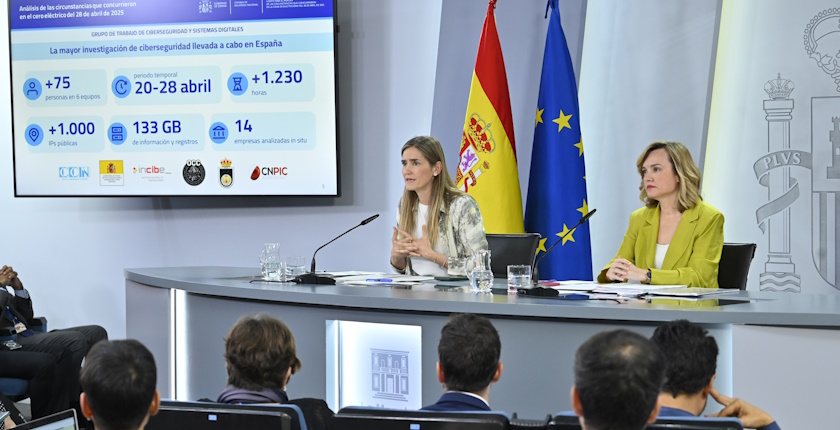
In a long-awaited document, a government committee that investigated the April 28 collapse of the Iberian electricity network ruled out that a cyberattack caused it. The panel analyzed more than 300 gigabytes of data related to the total blackout, which was one of the worst ever in Europe.

“In 49 days, practically half the timeframe established by the EU, the committee has provided a rigorous and verified diagnosis that will allow us to strengthen the electricity system, a solid foundation on which we can work to design rapid responses to prevent this from happening again. Next week’s Council of Ministers will approve several relevant measures,” said Third Vice-President of the Government of Spain and Minister for Ecological Transition and Demographic Challenge Sara Aagesen.

The cybersecurity investigation, the largest ever undertaken in the country, did identify vulnerabilities that could expose networks or systems to future risks, she asserted.

The blame game is continuing as citizens and businesses are demanding accountability for the massive damage. The European Network of Transmission System Operators for Electricity (ENTSO-E) issued a preliminary report two weeks after the incident.

Overvoltage caused the blackout, according to the new analysis. The committee attributed it to multiple factors. The system had insufficient voltage control capacity, there were frequency oscillations, and power plants were disconnected, “in some cases in an apparently improper manner,” the document reads.

Renewables accounted for 82% of power generation mix just before blackout

The Iberian grid crashed at 12:33. Restoration began with energy from France and Morocco and with self-starting hydroelectric plants in the Duero basin and other locations, which formed energy islands. By 22:00, nearly 50% of demand in Spain was met, reaching 99.95% by 7:00 the next day.

At 12:30 on April 28, renewable energy sources accounted for 82% of the electricity generation mix, followed by nuclear power (10%). Gas plants had a 3% share, coal contributed 1%, while cogeneration and waste amounted to a combined 4%.

Data show a drop in solar generation as prices at the power exchange were going negative, and it coincided with a rise in voltages

There was significant voltage volatility in the transmission system in the morning on the day of the blackout, the document’s authors noted, pointing out that such a situation was also registered on April 22 and 24.

The rise in voltages between 10:30 and 11:10 coincided with a drop in solar generation, probably due to the power market signals, as wholesale prices went negative, the report adds. At the same time, the direction of the exchange with France switched from exports to imports.

Voltage control fleet failed to contain chain reaction

At 12:03, there was an atypical frequency oscillation, by 0.6 hertz, causing large voltage fluctuations for 4.42 minutes. Another one, of 0.2 hertz, occurred at 12:16, followed by an equivalent one at 12:19.

Red Eléctrica de España, the transmission system operator (TSO), conducted mitigation measures, which contributed to the rise in voltages, the committee underscored.

Aagesen said the point of no return could have been avoided if voltage control action had been taken earlier. The government controls 20% of the company, which is listed on the Bolsa de Madrid stock exchange.

At 12:32, voltage began to rise rapidly and steadily, and numerous progressive disconnections of generation facilities were recorded. The names of all power plants in the document are blacked out.

A number of units responsible for voltage control produced reactive power, the opposite of what they were supposed to

The chain reaction could not be contained, as each disconnection contributed to further voltage increases, the analysis showed. A drop in frequency resulted in the loss of synchronization with France, tripping the interconnection with the rest of the continent.

The committee stressed that the number of synchronous plants regulating voltage on the day of the incident was the lowest since the beginning of the year. One of the 10 units that Red Eléctrica scheduled the day before experienced an outage on the same afternoon, and the TSO didn’t replace it in time, the analysis reveals.

Moreover, several units in the group did not respond adequately to the TSO’s instructions to reduce the voltage. Some even produced reactive power, the opposite of what was required, contributing to the issue, the committee added.

Some power plants went offline too early

There were disconnections of the generating power plants that occurred before the voltage thresholds in the 400 kV system were exceeded (380 kV and 435 kV), the report finds.

Among the committee’s recommendations is to allow asynchronous installations to apply power electronics solutions to manage voltage fluctuations. The panel proposed boosting demand, flexibility, storage and interconnection capacities.

Photovoltaics with grid-forming inverters, storage can contribute to voltage control

Photovoltaics are already capable of controlling voltage, but regulations did not allow the application of the technology, according to the Spanish Photovoltaic Union (UNEF), Portuguese Renewable Energy Association (APREN), SolarPower Europe, Global Solar Council and Global Renewables Alliance.

In a joint statement that they issued as a reaction to the report, they called for accelerated investment in grid resilience and system flexibility – especially through grid-forming inverters and battery storage.

The associations recalled that Spain ranked 14th last year in Europe in new battery capacity. Less than 250 MWh came online and nearly all were smaller-scale batteries, not at a utility level. It compares to 9 GW of solar power capacity that the country added in 2024.