by in News

Croatia allocates EUR 50 million for prosumers in business sector to install BESS

Croatia has allocated EUR 50 million to support businesses in installing batteries for storing energy from their existing solar power plants or ones they plan to install.

In recent years, many companies all over Europe have installed solar panels for self-consumption to reduce electricity costs. But battery energy storage systems (BESS) offer additional benefits for such prosumers.

Now Croatia’s Ministry of Economy and Sustainable Development has launched a public call for the allocation of grants to firms.

Small, medium, and large entrepreneurs are eligible to apply

The goal is to enable entrepreneurs to store the energy produced in their power plants and use it when it is most needed – delivering it to the grid later or for their own consumption.

The call is financed by funds from the National Recovery and Resilience Plan (NRRP). Small, medium, and large entrepreneurs are eligible to submit applications. The deadline is January 31, 2026.

The ministry’s goal is to continue investments in the power system, thereby ensuring the integration of an increasing amount of energy from renewable sources.

BESS has numerous advantages over other technologies: high efficiency, adaptability, reliability, economic viability, and fast response, the call reads.

The call targets installation of batteries with a total capacity of 60 MWh

All applicants must specify concrete benefits that would be achieved by implementing the project in their bids.

BESS projects with a total capacity of at least 60 MWh could be installed by the end of the second quarter of 2026, according to the call.

New energy storage capacities would significantly increase the flexibility and resilience of the domestic power system, the ministry said.

The minimum subsidy amount per project is EUR 60,000, and the highest is EUR 1.5 million. The minimum storage capacity eligible for grant is 1 MWh per facility.

Of note, Croatia has already implemented a call for the installation of batteries in firms.

However, the subsidies were allocated for joint installation of renewable power plants and batteries.
by in News

Romanian power distributor Electrica to build 15 battery systems totaling 1 GWh

Romanian power supplier and distributor Electrica has initiated a permitting procedure for the construction of 15 battery energy storage parks, with a combined capacity of about 1 GWh, aimed at providing flexibility to the national grid and supporting the integration of renewable energy sources.

The battery energy storage systems (BESS) would boost Electrica’s ability to respond dynamically to fluctuations in consumption and production within the national energy system. It should also enable the efficient integration of growing renewable capacities in Romania, significantly reducing price volatility and dependence on imports, according to a press release from Electrica.

Electrica’s new battery capacity is expected to reduce price volatility and dependence on energy imports

“Developing this 1 GWh storage infrastructure is a strategic pillar in Electrica’s transformation into a leader of the energy transition,” the company said, adding that the battery systems would be built on Electrica’s own land, leveraging assets from its existing portfolio.

“This project is not just about technology or capacity; it is about redefining how Romania manages energy security for the decades ahead,” said Alexandru Chirița, Electrica’s CEO. He also stated that the timeline for the project was “ambitious,” according to the press release.

The BESS capacities will be distributed across Romania

The project, part of Electrica’s 2030 strategy, will be developed in phases, with BESS installations distributed across Romania. The first phase is expected to bring a significant portion of the storage capacity online already in 2025, according to a report by PVknowhow.com.

Battery energy storage is on track to become another pillar of Romania’s energy transition, as investors increasingly develop BESS capacities combined with solar, hydropower, and wind, or as standalone energy storage facilities.

Romania is supporting BESS projects for renewables integration with subsidies provided from its national recovery and resilience plan (NRRP). In September last year, the Ministry of Energy awarded grants to 13 projects.

by in News

Šahmanović: Second submarine cable line with Italy to be installed by 2031

The second line of the submarine cable connecting Montenegro and Italy is expected to be completed by 2031, Montenegro’s Minister of Energy and Mining Admir Šahmanović said at the European Union – Montenegro Investment Conference.

The two-day conference, titled Smart Growth, Green Future: Accelerating Investment in Montenegro, was opened yesterday in Luštica, near Tivat, by European Commission President Ursula von der Leyen and Prime Minister of Montenegro Milojko Spajić.

Fourteen cooperation projects between Montenegrin and European companies have been initiated at the conference, including investments in wind farms, solar parks, energy storage, and grids. It shows the great significance of the energy sector for investments.

A panel called Renewables: Scaling Montenegro’s Energy Transition examined the possibilities for accelerating the country’s energy transition and enhancing the sector’s attractiveness for investment in renewables.

Šahmanović: Montenegro strives to position green energy as an export product

Prominent international experts and investors took part in the discussion. Representing the Government of Montenegro, Minister of Energy and Mining Admir Šahmanović outlined the country’s renewable energy priorities and highlighted Montenegro’s role as a regional leader in clean energy.

Montenegro has fully harmonized its legislation with EU standards, creating a stable and predictable investment environment, in his words. Šahmanović highlighted the launch of the first solar power auction as a significant step forward in the development of renewables.

Photo: Đorđe Cmiljanić/Government of Montenegro

“The government invests in battery energy storage systems (BESS), ensuring the flexibility and stability of the grid. Montenegro strives to position green energy as a recognizable export product, thereby strengthening the country’s economic sustainability,” Šahmanović stated.

He revealed that Montenegro is about to sign a memorandum of understanding with Italy that would additionally position Montenegro as an energy bridge between the Western Balkans and the EU.

Montenegro is looking for strategic partners and investors ready to jointly implement capital projects in the energy sector

The government is wrapping up the work concerning the oil and gas sector to close chapter 15 in its accession negotiations with the EU, further strengthening investor trust, Šahmanović said.

“The implementation of the project for the construction of the second phase of the subsea cable link with Italy is expected by 2031, which will further strengthen Montenegro’s role in regional and European energy connectivity. Montenegro is looking for strategic partners and investors ready to jointly materialize capital projects in energy and contribute to regional energy stability,” the minister underlined. The investment is estimated at EUR 500 million, he asserted.

In a message to investors, Šahmanović said Montenegro is open for investments and added: “Now is the time for you to invest. We will be your service 24 hours a day, seven days a week.”

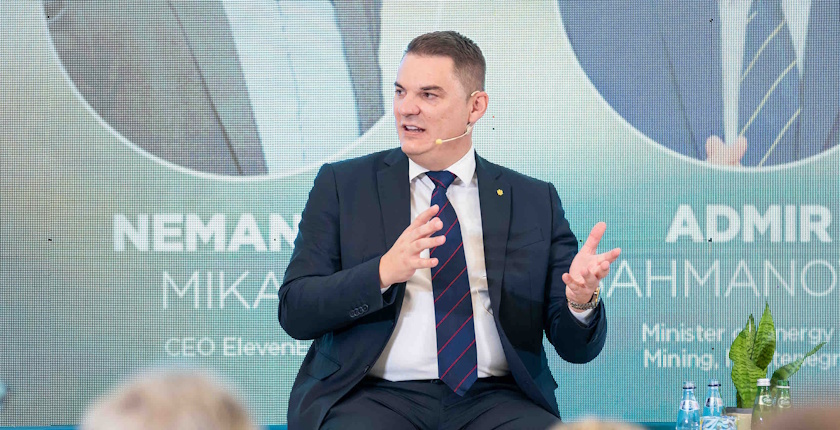
Participants at the panel included Daniel Calderon, Alcazar Energy Co-Founder and Managing Partner, Yann Guinard, EDF Director of Development for Europe, Louis Blanchard, Qair Energy President, and Nemanja Mikać, ElevenEs CEO.

Memorandum with EDF

Admir Šahmanović and Yann Guinard (photo: Ministry of Energy and Mining)

Within the conference, the Ministry of Energy and Mining of Montenegro and EDF International Networks signed a memorandum of understanding. It establishes a framework for future cooperation on modernizing the distribution network, digitizing smart grids, and integrating renewable energy sources, according to the ministry.

The memorandum foresees the implementation of pilot projects and feasibility studies that will contribute to the acceleration of the energy transition of Montenegro.

Admir Šahmanović said the deal is an important step towards strengthening green and innovative energy projects. Cooperation with EDF confirms the position of Montenegro as a country with a clear vision and open opportunities for investors, he underscored.

“EDF International Networks, as part of the global EDF Group, brings international expertise in the sector of power distribution, grid upgrade and digital transformation, which opens up space for new strategic partnerships and capital infrastructure projects,” the minister pointed out.

The memorandum confirmed the joint commitment to sustainability, integrity and energy security, with a clear focus on the well-being of citizens and the economy of Montenegro, the ministry said.

by in News

Croatian IE-Energy, Slovenia’s NGEN plan virtual network of smart battery storage systems

Croatian firm IE-Energy and Slovenia’s NGEN are developing a battery system for smart energy storage, with a total operating power of 60 MW and a capacity of 120 MWh. The project, valued at 60 million, marks the first step toward creating a virtual network of battery storage systems that would connect producers and consumers of renewable energy.

The project has received a EUR 19.8 million grant from the European Union’s Modernization Fund. The funds are intended for the second and crucial phase of the project, for 50 MW, while the first phase, of 10 MW, is already in an advanced stage of implementation, Croatia’s Ministry of Economy stated following the signing of the subsidy contract.

The project, located in the Croatian city of Šibenik, is expected to be completed as early as next year, according to the statement.

IE-Energy CEO Željko Šmitran told Balkan Green Energy News it would be the first battery energy storage system in Croatia connected to the transmission grid. The project is being implemented in partnership with NGEN, which is also the main engineering, procurement, and construction (EPC) contractor.

The battery modules used are Tesla Megapacks, which enable real-time grid balancing, he added. 

The virtual smart energy storage network will connect renewable power plants, industry, and households

The project represents the first step towards creating a virtual network of smart energy storage facilities that will connect renewable energy producers, industry, and households, Šmitran explained.

The entire project is connected to NGEN’s advanced technology platform, which enables participation in the markets for ancillary services, balancing, and intraday trading, as well as electricity supply, added Šmitran.

Developing a regional smart storage network

The model developed in Croatia in collaboration with NGEN is intended to be replicated in other regional markets where grid flexibility and system stability are in high demand, including Serbia, Bosnia and Herzegovina, and North Macedonia, Šmitran said.

The objective is to build a regional model of smart battery storage facilities and energy communities that will ensure sustainable, reliable, and independent energy supply across Southeast Europe in the long term, he said.

In its statement, the Ministry of Economy also said that the project in Šibenik paves the way for advanced grid services, such as virtual inertia for grid stabilization.

by in News

European day-ahead power market rolls out 15-minute trading intervals

The Single Day-Ahead Coupling area split its hourly units into 15-minute intervals for electricity trading. The change, affecting most European markets, is aimed at enhancing the integration of renewables by making flexibility and balancing more efficient.

After delays and intensive testing, the European wholesale electricity market switched to a 15-minute market time unit (MTU) from hourly blocks within the Single Day-Ahead Coupling (SDAC) mechanism. The transition was implemented across all bidding zones and bidding zone borders, according to the All NEMOs Committee, gathering nominated electricity market operators.

Thirty transmission system operators were involved in the move, aimed at creating an integrated pan-European cross-zonal day-ahead electricity market. Only Great Britain, Switzerland, the Western Balkans, Turkey and Cyprus, the European Union’s only non-interconnected member state, are outside of the SDAC region.

The first trading sessions were held at power exchanges yesterday, for delivery today. So far there were no indications of glitches with the quarter-hourly products.

A more than a year-long testing campaign for the 15-minute MTU solution included the validation of local, regional and cross-border functionalities, verification of connectivity between parties and confirmation of overall system readiness, the Market Coupling Steering Committee, MCSC, said last month.

Also of note, Cyprus launched its electricity exchange yesterday, with day-ahead, forward and balancing markets. In spot trading, the interval is 30 minutes.

Benefits from trading blocks with shorter intervals

The European Union is pushing the electricity market to improve efficiency by matching production and consumption more accurately. With the rising shares of solar and wind power in the energy mix, the frequency and intensity of fluctuations from weather changes are growing as well.

As the energy transition and digitalization progress, market time units could get shorter and shorter

The 15-minute interval captures the changes better than the one-hour block, reducing balancing needs and costs and freeing up capacity. As the energy transition and digitalization progress, market time units could get shorter and shorter. Importantly, it implies an exponential rise in computing power.

Wind and clouds aren’t very predictable, so unmatched production forecasts cause imbalances. It can burden the intraday market, where they are corrected. Shorter intervals lower the deviations.

Opportunity for battery storage deployment

With 15-minute products, more short-term fluctuations will already be captured in the day-ahead auction, Vattenfall said in a comment.

“Generation and demand can now be mapped much more precisely. We can submit more accurate forecasts, market renewables more effectively, deploy batteries and pumped storage more efficiently, and significantly increase system flexibility,” the company’s Head of Short-Term Asset Optimization Jörg Seidel pointed out.

Consumers could also benefit, according to the Swedish energy producer and supplier. More precise price signals open new savings potential through dynamic tariffs and smart meters, enabling households to use electricity when it is cheapest, it explained. It could make heat pumps, photovoltaic systems, batteries, and electric vehicle charging more efficient and affordable.

“Flexibility is becoming the currency of the energy transition,” Seidel stressed.

Nevertheless, nothing changes for small consumers including households until they get an electricity meter that can track quarter-hourly blocks.

With higher fluctuations in shorter intervals, opportunities arise for operators of battery energy storage systems (BESS) and other storage and balancing technologies, which stabilizes the electricity system. The switch to the 15-minute MTU is mostly beneficial for aggregators as well, reducing their exposure to penalties for failing to meet forecasted levels of production.

by in News

Enery, Teva sign 15-year virtual PPA for solar, BESS in Bulgaria

Renewable energy firm Enery and Teva Pharmaceutical Industries have signed a 15-year hybrid power purchase agreement.

Under a financial or virtual power purchase agreement (PPA), a future solar power plant with two battery energy storage systems (BESS) will supply 60,000 MWh of electricity annually to Teva’s two plants in Bulgaria.

The landmark agreement is the first of its kind in the region to include green electricity supply from a newly built solar power plant with BESS and the longest one in Bulgaria so far, Enery said.

It is the Austrian company’s 15th PPA signed in the last four years across Central and Eastern Europe and the second one involving a Bulgaria-based offtaker.

The PPA sets a precedent for integrating storage within virtual PPA structures

Over the 15 years, the project is expected to avoid emissions of 15,840 metric tons of CO2 equivalent per year, supporting Teva’s goal to reduce scope 1 and 2 emissions by 46.2% by 2030.

The hybrid PPA also sets a precedent for integrating energy storage within virtual PPA (vPPA) structures, enhancing grid resilience and the value of renewable energy procurement, Enery stressed.

According to the company, the agreement will facilitate the construction of a photovoltaic park of 122 MW in peak capacity, equipped with two BESS installations at the site — one with a capacity of 70 MWh and another of 130 MWh. Located on non-arable land in the villages of Knizhovnik and Dolno Voyvodino in the Haskovo municipality, south Bulgaria, the Knizhovnik solar park is projected to produce 200 GWh of clean electricity per year.

Decktor: Teva is not only securing clean energy but also enhancing grid resilience and flexibility

“This agreement represents another significant step forward in our decarbonization journey,” said Josh Decktor, Teva’s Vice President and Global Head of Environment, Health, Safety and Sustainability.

By investing in a newly built solar asset with integrated storage, Teva is not only securing clean energy but also enhancing grid resilience and flexibility – key components of its strategy to meet its science-based targets, he added.

“We are proud that our projects are being realized thanks to an innovative partnership with companies that are proven leaders in their market niche, such as Teva, and demonstrate a strong commitment to the environment and society,” Enery’s Chief Commercial Officer Severin Vartigov stated.

by in News

Bulgarian coal plant mulls replacing boiler with molten salt battery

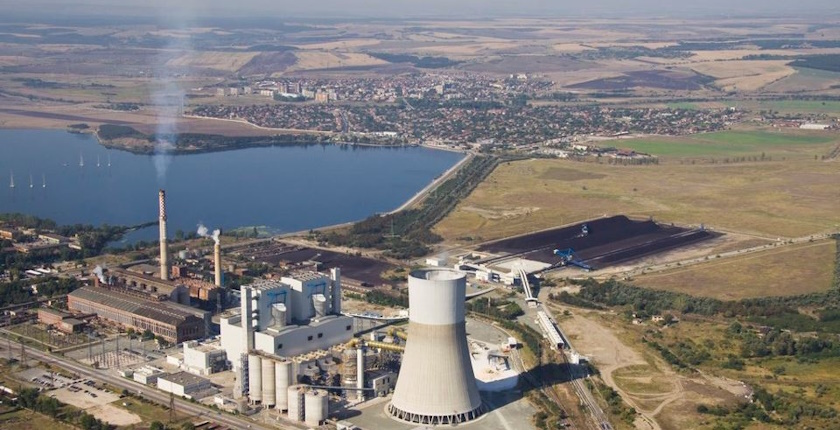
The operator of the AES Maritsa iztok 1 coal plant in Bulgaria is interested in replacing one of its boilers with a molten salt reactor. It would accumulate excess renewable energy from the power grid as heat and produce steam to drive the existing turbine.

With the surge in solar and wind power capacity throughout the world, the grid needs to match it with balancing and flexibility to handle the intermittency of the two sources. Their output varies with weather conditions, so the amount of electricity is often much higher or lower than demand.

Batteries are all the rage now, with investors racing to bridge the gaps between intraday peak production and peak consumption. Southeastern Europe is catching up with the trend, especially in Bulgaria, Romania and Turkey.

A molten salt battery could turn out to be a lifeline for AES Maritsa East 1

It opens up space for some other solutions in the emerging energy storage market which are nearing maturity. United States-based AES Corp.’s subsidiary in Bulgaria is examining one such overlooked opportunity. The molten salt reactor technology could revive the prospects of its coal power plant in Galabovo in Stara Zagora province.

The operator of the AES Maritsa iztok 1 (AES Maritsa East 1) facility is planning to transform one of the units into a so-called Carnot battery, Capital.bg reported. Such systems turn electricity into thermal energy and store it, to convert it back to electricity.

AES plans to maintain generator’s capacity

The company’s solution of choice is a molten salt reactor, which would replace the boiler. AES plans to power it with surplus renewable energy and produce steam for the existing 345 MW turbine. Importantly, among its other assets is the Saint Nikola wind power plant of 156 MW, the largest in Bulgaria.

The battery would hold enough heat to drive the unit at maximum power for five hours, translating to 1.73 GWh.

Coal plants can technically work nonstop, but the market has all but overrun most such facilities in Europe. Now they increasingly operate only when prices are high, covering peaks. It could make the business case for molten salt reactors and preserve jobs.

Molten salt is used in concentrated solar power (CSP) plants. They mostly use electrolytes such as alkali metal chlorides – sodium chloride, potassium chloride or lithium chloride – or nitrates: for instance, sodium nitrate or potassium nitrate.

Need for energy storage strengthening with rise in intraday price spreads

Market prices were negative on 2.8% of the days of last year, while they were lower than EUR 5 per MWh for 8.8% of the time. It compares to 1.9% and 5.5% in 2025, respectively, the article adds. The spread between the maximum and minimum prices is increasing. On 53% of days in the first half of this year, the difference was between EUR 100 per MWh and EUR 200 per MWh. The share of spreads above EUR 200 per MWh was 30%.

Such high amplitudes indicate both oversupply and shortages within the same day, amid the strong growth in variable renewables capacity.

by in News

Severe electricity price spikes in SEE in summer 2024 could have been avoided – report

If 70% of the physical capacity of all power lines had been offered for cross-zonal trade by transmission system operators, half of the most severe price spikes or 147 spikes could have been avoided in South-East Europe in the summer of 2024, according to the latest report of the EU Agency for the Cooperation of Energy Regulators (ACER).

The 2025 Monitoring Report examines the role of cross-zonal electricity trade in shaping a more integrated and efficient European Union electricity market. It also tracks progress, challenges and benefits in the implementation of the 70% requirement.

During the summer of 2024, the EU saw a significant increase in electricity prices, affecting mostly bidding zones in central and south-eastern Europe. Some countries experienced an unseen price increase on power exchanges, from 50% to 170%.

ACER noted that prices particularly spiked during the evening hours, reaching up to EUR 1,000 per MWh.

The prices were highest in Hungary, Romania, Bulgaria and Greece

Prices were the highest in Hungary, Romania, Bulgaria and Greece. At the time, Prime Minister of Greece Kyriakos Mitsotakis wrote to European Commission President Ursula von der Leyen. Greece, Romania and Bulgaria were preparing a proposal for an intervention mechanism.

According to ACER’s report, during the high-price events, spreads at several bidding zone borders in central Europe rose to unprecedented levels, signalling insufficient availability of cross-zonal capacity to accommodate the market’s need for cross-zonal exchanges.

The 70% requirement would have enabled an average reduction of peak prices by up to EUR 78 per MWh

The authors’ comparison of the average realized day-ahead prices during the evening peaks with the counterfactual scenario showed a considerable mitigation of prices.

It revealed that the implementation of the 70% requirement would have enabled an average reduction of peak prices by up to EUR 78 per MWh in central and south-east bidding zones, underlining the dampening effect of cross-zonal trade, the document reads.

According to ACER, higher availability of cross-zonal capacities in central Europe would have mitigated both the frequency and the severity of the high price events, as cross-zonal trade provides flexibility to the system.

End-2025 deadline is at risk

The 2019 Clean Energy Package introduced a legal requirement on EU electricity transmission system operators (TSOs) to offer at least 70% of their physical capacity on all lines of relevance for cross-zonal trade.

The obligation is intended to maximise cross-zonal trade and mitigate its discrimination over internal trade, ACER explained.

The 70% requirement ensures that domestic electricity flows are not prioritized over cross-border trade, mitigates price spikes, such as those seen in summer 2024 across South-East Europe, and brings significant additional welfare to EU electricity markets, it added.

The agency stressed that the end-2025 deadline is at risk.

by in News

Croatia installs one million smart meters, Serbia reaches 650,000

Croatia has so far installed one million smart meters, while Serbia has reached 650,000. They make up 40% of all power metering devices in Croatia, compared to a 17% level in Serbia.

Digital or smart meters offer numerous advantages for consumers and distribution system operators (DSOs). The devices are a cornerstone of future distribution networks – smart grids that will allow consumers, including many prosumers, to both draw electricity from the network and inject it. Smart grids also enable consumers to provide various flexibility and demand response services.

The smart meters rollout in Croatia is being implemented across the country, with about 40,000 new devices installed per month. Croatia’s DSO HEP-Operator Distribucijskog Sustava (HEP ODS), a subsidiary of state-owned power utility Hrvatska Elektroprivreda (HEP), has previously announced that it intends to replace all 2.5 million devices by the end of 2029.

Nearly all users in the business category have received new devices

Installation of new meters is completely free of charge for customers. It takes about twenty minutes. HEP underlined that smart meters offer a range of benefits – enabling simpler and remote reading of consumption, more precise consumption management, better planning, and savings.

Danijela Žaja, chief of the metering and market support sector of HEP ODS, told RTL that more than one million smart meters have been installed so far for households and firms. In the business category, almost all meters have already been replaced, she said, Poslovni Dnevnik reported.

In her words, new devices help consumption management.

Serbia is financing new meters with loans

According to Ana Pavlović, head of the electricity markets support sector of neighboring Serbia’s DSO Elektrodistribucija Srbije (EDS), so far the company has installed almost 650,000 smart meters.

EDS plans to set up another 200,000 units in the next round, financed by a loan from the European Bank for Reconstruction and Development (EBRD), she said at a conference organized by Energija Balkana.

Out of the 200,000 meters, the cities of Čačak and Kraljevo are earmarked for 30,000 each, and 140,000 are for consumers in Niš. The next project is the installation of 400,000 smart meters, to be financed by a loan from the European Investment Bank (EIB).

Niš will be one of the first cities in Serbia to be almost entirely covered by smart meters, Pavlović stressed, as quoted by Tanjug.

by in News

EU preparing roadmap on digitalization, AI in energy

The European Commission has launched a public consultation to help shape its upcoming strategic roadmap for digitalization and artificial intelligence (AI) in the energy sector. The roadmap aims to support the rollout of digital solutions, including AI, in areas important for decarbonization.

The areas where the application of digital solutions and AI should be accelerated include electricity grid optimization, energy efficiency in buildings and industry, and demand-side flexibility, according to a press release from the commission.

The consultation should also address the increasingly heavy energy consumption of data centers and look at how they can be more sustainably integrated into the energy system.

The consultation should address the rising energy demand of data centers

Another area of interest is the need to implement safeguards to mitigate potential challenges linked to the large-scale deployment of AI solutions in the energy sector, according to the press release.

The initiative, part of the European Union’s Affordable Energy Action Plan, also aims to facilitate access to energy data via the Common Energy Data Space and unlock innovative services such as demand-side flexibility and bidirectional charging of electric vehicles, according to a LinkedIn post by former Smart Grids Team Leader at the European Commission Manuel Sánchez.

All individuals and organizations are welcome to contribute to the consultation, which is open until November 5. The adoption of the roadmap is planned for the first quarter of 2026.

The roadmap is expected to be adopted in Q1 2026

The target audience for the consultation and the accompanying call for evidence includes stakeholders from digital and energy value chains, such as grid operators, energy intensive industries, data center operators, building operators, car manufacturers, providers of e-mobility solutions, energy communities, aggregators, consumers, researchers, IT suppliers, digital solutions providers, cloud service providers, and appliance manufacturers.