by in News

Athens International Airport builds biggest photovoltaic-BESS plant

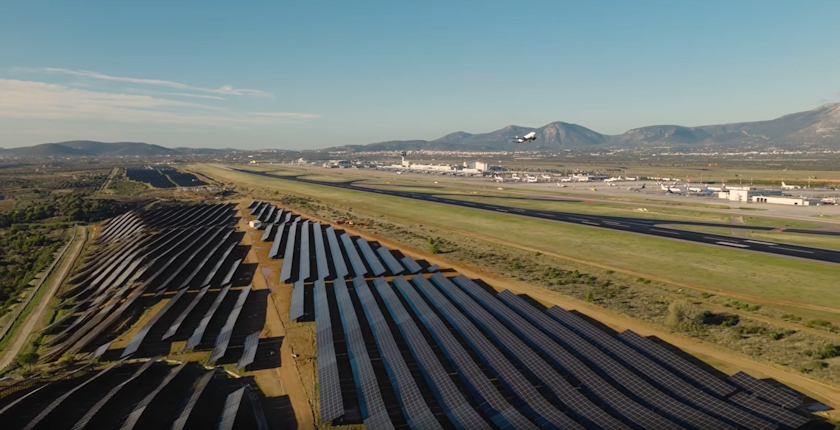
Athens International Airport (AIA) Eleftherios Venizelos completed its comprehensive energy makeover program. It is now operating a photovoltaic facility of 51.5 MW and a battery energy storage system of 82 MWh. It is the largest hybrid power plant of its kind within the premises of any airport in Europe and, reportedly, even the entire world.

At the same time, the Bucharest Henri Coandă International Airport is about to build 12.6 MW in peak PV capacity and a BESS of 17.9 MWh, in the first phase of a larger project.

Following European and global trends, airports in Southeastern Europe are introducing resource, waste and wastewater management systems. Energy is the largest segment of the decarbonization push. With the completion of its Route 2025 program, Athens International Airport Eleftherios Venizelos covered all its electricity needs with photovoltaics, becoming the only such airport in Europe.

In the groundbreaking project, the operator extended the existing solar power plant by 35.5 MW in peak capacity, reaching 51.5 MW, and added a battery energy storage system. The facility has 124 MWh in nominal capacity, of which 82 MWh is usable.

The hybrid system is the largest of its kind inside the fence of any airport in Europe, while the Greek press has even called it the largest in the world. Some of the world’s largest airports are set to follow soon. For instance, IGA Istanbul Airport is investing EUR 212 million in an external solar power plant of 199.3 MW, in Eskişehir.
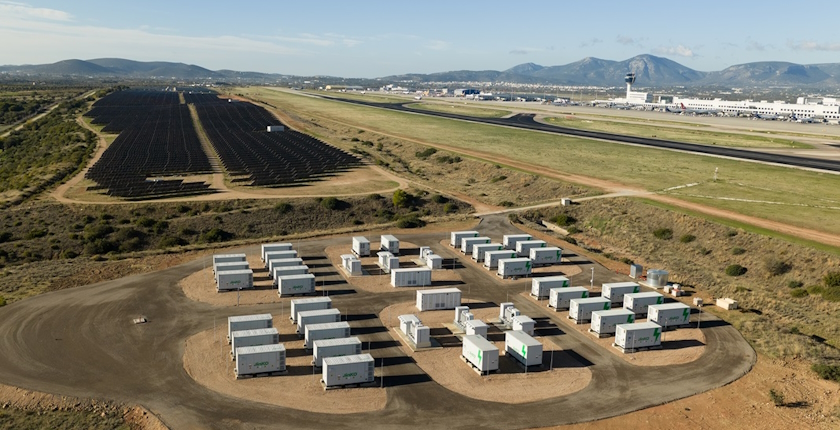
Athens International Airport builds biggest photovoltaic BESS plant
Photo: Athens International Airport

Hybrid power plant to keep Athens International Airport at net zero through 2046

AIA’s PV-BESS plant will generate an estimated 88 GWh per year, which is equivalent to the consumption of 22,000 households. The storage system is only for self-consumption. Importantly, the hybrid system can cover the entire planned expansion up to 2046, when the concession period ends.

AviAlliance, which controls 50.2% of the public-private partnership, is a wholly-owned subsidiary of Public Sector Pension Investment Board (PSP Investments) from Canada. The government holds 25.6% through Superfund, officially Growthfund – The National Fund of Greece.

AIA launched Route 2025 six years ago, with the aim to cut net greenhouse gas emissions to zero by the end of this year. It compares to the 2050 net zero goal of the European airports sector.

The Route 2025 program was worth EUR 70 million

The investments totaled EUR 70 million. A significant portion was financed through loans from the European Union’s Recovery and Resilience Facility (RRF), the update adds.

Heat pumps have eliminated the need for natural gas in buildings at AIA in normal winter conditions. The electric vehicle fleet consists of 19 buses, 13 follow-me vehicles and 29 vans. A network of chargers also serves passenger cars.

“In the airport company, we operate on the basis of the principle that sustainability, and environmental responsibility in particular, are and will increasingly be prerequisites for what we call the social license to operate and grow,” said outgoing Managing Director of AIA Yiannis Paraschis.

Two airports in Romania receive EU funds for solar-BESS projects

As for other recent developments in the Balkans, operators of two airports in Romania received grants via the European Union’s Modernisation Fund for solar power plants with battery storage.

National Company Bucharest Airports (CNAB) signed a contract for RON 132.04 million (EUR 25.9 million) excluding value-added tax. It is for 12.6 MW in peak PV capacity and a BESS of 17.9 MWh at the Bucharest Henri Coandă International Airport in Otopeni.

The entire investment amounts to RON 176.9 million (EUR 34.7 million) excluding VAT. The Romanian state-owned company said it is the first phase of a project for 31.5 MW and 30 MWh overall, valued at EUR 55.7 million.

Bacău International Airport George Enescu will build a solar power plant of 1.25 MW and a BESS of 2.06 MWh. Bacău County Council will also provide support for the on-site project on 2.2 hectares, worth more than EUR 4.9 million.

by in News

EU4CAET project pre-selects 43 ideas for first renewable energy communities in BiH

A total of 43 project ideas from 28 local authorities for establishing the first renewable energy communities in Bosnia and Herzegovina have been pre-selected to receive assistance under the EU for Collective Action for Energy Transition project.

The EU for Collective Action for Energy Transition (EU4CAET) project is jointly financed by the European Union and the German Federal Ministry for Economic Cooperation and Development (BMZ). Under the slogan ‘Together for Energy Transition,’ the EUR 3 million project is implemented by GIZ.

The initiative aims to empower local municipalities, citizens, and private actors to develop sustainable energy solutions that create jobs, improve energy efficiency, and advance climate goals, according to the EU Delegation to Bosnia and Herzegovina.

A total of 51 municipalities submitted 89 project ideas

In the project’s development phase, 51 municipalities submitted a total of 89 project ideas, such as solar power plants, heat pumps, biomass heating systems, public lighting upgrades, and electric vehicle charging stations.

The proposed projects also included kindergartens, youth centers, sports halls, theaters, health centers, and other public facilities. Following the evaluation, 28 local self-governments submitted their first concept notes, and 43 ideas were pre-selected.

“The final selection, based on detailed concept notes, is currently ongoing. The number of final projects will depend on the quality of submitted concepts and available funding under EU4CAET,” the Communication Office of the Delegation of the EU to BiH & EU Special Representative in BiH told Balkan Green Energy News.

The evaluation will begin in January 2026

The deadline for the pre-selected local authorities to submit their detailed concept notes was December 20. The evaluation of the submitted concepts will begin in January 2026.

Selected local authorities will be invited to present and discuss their ideas in more detail, according to the Communication Office.

The strongest concepts will receive assistance for capacity development, business planning, feasibility studies, and the preparation of technical design documentation.

The 28 municipalities pre-selected for further evaluation are as follows: Bijeljina, Bileća, Centar Sarajevo, Doboj, Donji Vakuf, Drvar, Goražde, Ilijaš, Kakanj, Kalesija, Laktaši, Maglaj, Milići, Modriča, Mostar, Novi Grad, Novi Travnik, Novo Sarajevo, Šamac, Sokolac, Srebrenica, Teslić, Travnik, Višegrad, Vogošća, Zenica, Živinice, and Zvornik.

BiH does not yet have renewable energy communities, but one of its two entities – the Republic of Srpska – managed to adopt the necessary regulations for their establishment in May this year, becoming the first in the region to do so.

Hahr: The grant call is planned for February 2026 and 2027

Mareike Hahr, Head of EU4CAET, said the project is now focused on tailored technical assistance to further refine the ideas and prepare high-quality applications for the grant call, planned for February 2026 and 2027.

“What has been particularly encouraging is the remarkable level of interest and readiness shown by local communities from both entities to ‘enter new terrain’—to propose their own project concepts, explore innovative solutions, and actively shape their energy future,” she explained.

by in News

YEO invests in ARC Clean Technology to pave way for SMRs in Turkey

YEO Technology’s strategic investment in ARC Clean Technology, which develops advanced small modular reactors, brings potential cooperation opportunities for the deployment of the technology in Turkey. The startup with headquarters in Canada and the United States has closed a series B financing round, with a focus on its advanced sodium-cooled fast reactor of 100 MW.

Amid its push into other sectors and markets, Istanbul-based YEO Technology (YEO Teknoloji Enerji ve Endüstri) aspires to be an early mover in advanced small modular reactor (aSMR) technologies, counting on Turkey’s upcoming investments in nuclear power. The company revealed that it invested in ARC Clean Technology, valuing the startup at USD 60.4 million.

Advanced small modular reactors are expected to become a complementary solution for baseload power demand, the update adds. YEO said it expects the transaction to open the way for cooperation with the startup, which has headquarters both in Canada and the United States, in the deployment of the technology in Turkey and the surrounding region.

The investment is strategic, in line with the company’s goals of early positioning in future energy technologies, access to carbon-free and sustainable energy solutions, and long-term value creation, according to the announcement. YEO didn’t reveal other details.

ARC counts on rising demand for AI computing

ARC Clean Technology is developing the ARC-100, a generation 4 sodium-cooled fast reactor. It originates from the Experimental Breeder Reactor-II (EBR-II), which worked for 30 years at Idaho National Laboratory.

Using metallic uranium-zirconium fuel, ARC-100 provides 100 MW of electricity capacity, from 286 MW of heat. It is also intended for supplying steam for industrial processes as well as powering electrolyzers in hydrogen production and data and artificial intelligence (AI) centers.

The ARC-100 would only need to be refueled after 20 years

The startup is targeting a 20-year refueling cycle and a design life of 60 years.

Just last week, ARC Clean Technology said it closed its series B financing round. It involved new and existing investors from the energy, infrastructure and technology sectors. The proceeds are for advancing commercialization programs for the ARC-100.

Additionally, the funding will support work with the US Department of Energy, the collaboration agreement with Korea Hydro and Nuclear Power (KHNP) for global aSMR fleet deployment, and continuation of a Canadian project supported by strategic partner Hatch.

Global search for partners for nuclear reactors in Turkey

Turkey expects to put the first reactor at the Akkuyu nuclear power plant into operation in 2026. While developing the legal framework for small modular reactors (SMRs), the government is also considering a partnership with South Korea and the US for the second conventional nuclear plant, in Sinop.

Discussions about small reactors and a large nuclear power plant in Eastern Thrace are also underway with China and Russia. Turkish officials earlier mentioned contacts with Canada, France and the United Kingdom as well. The country aims to reach 7.2 GW in nuclear power capacity by 2035 and 20 GW by 2050.

The capacity of Reap Battery’s new LFP battery production facility is 5 GWh per year

Of note, YEO’s subsidiary Reap Battery launched production in mid-December of lithium-iron-phosphate (LFP) battery energy storage systems (BESS) in Tuzla, Istanbul.

In addition to the domestic market, the facility with an annual capacity of 5 GWh is targeting the US, Europe, the Middle East, Central Asia and Africa. It manufactures systems for renewable energy projects, the power grid, mobility, commercial and industrial applications, and residential energy storage.

by in News

Athens International Airport builds biggest photovoltaic-BESS plant

Athens International Airport (AIA) Eleftherios Venizelos completed its comprehensive energy makeover program. It is now operating a photovoltaic facility of 51.5 MW and a battery energy storage system of 82 MWh. It is the largest hybrid power plant of its kind within the premises of any airport in Europe and, reportedly, even the entire world.

At the same time, the Bucharest Henri Coandă International Airport is about to build 12.6 MW in peak PV capacity and a BESS of 17.9 MWh, in the first phase of a larger project.

Following European and global trends, airports in Southeastern Europe are introducing resource, waste and wastewater management systems. Energy is the largest segment of the decarbonization push. With the completion of its Route 2025 program, Athens International Airport Eleftherios Venizelos covered all its electricity needs with photovoltaics, becoming the only such airport in Europe.

In the groundbreaking project, the operator extended the existing solar power plant by 35.5 MW in peak capacity, reaching 51.5 MW, and added a battery energy storage system. The facility has 124 MWh in nominal capacity, of which 82 MWh is usable.

The hybrid system is the largest of its kind inside the fence of any airport in Europe, while the Greek press has even called it the largest in the world. Some of the world’s largest airports are set to follow soon. For instance, IGA Istanbul Airport is investing EUR 212 million in an external solar power plant of 199.3 MW, in Eskişehir.

Athens International Airport builds biggest photovoltaic BESS plant
Photo: Athens International Airport

Hybrid power plant to keep Athens International Airport at net zero through 2046

AIA’s PV-BESS plant will generate an estimated 88 GWh per year, which is equivalent to the consumption of 22,000 households. The storage system is only for self-consumption. Importantly, the hybrid system can cover the entire planned expansion up to 2046, when the concession period ends.

AviAlliance, which controls 50.2% of the public-private partnership, is a wholly-owned subsidiary of Public Sector Pension Investment Board (PSP Investments) from Canada. The government holds 25.6% through Superfund, officially Growthfund – The National Fund of Greece.

AIA launched Route 2025 six years ago, with the aim to cut net greenhouse gas emissions to zero by the end of this year. It compares to the 2050 net zero goal of the European airports sector.

The Route 2025 program was worth EUR 70 million

The investments totaled EUR 70 million. A significant portion was financed through loans from the European Union’s Recovery and Resilience Facility (RRF), the update adds.

Heat pumps have eliminated the need for natural gas in buildings at AIA in normal winter conditions. The electric vehicle fleet consists of 19 buses, 13 follow-me vehicles and 29 vans. A network of chargers also serves passenger cars.

“In the airport company, we operate on the basis of the principle that sustainability, and environmental responsibility in particular, are and will increasingly be prerequisites for what we call the social license to operate and grow,” said outgoing Managing Director of AIA Yiannis Paraschis.

Two airports in Romania receive EU funds for solar-BESS projects

As for other recent developments in the Balkans, operators of two airports in Romania received grants via the European Union’s Modernisation Fund for solar power plants with battery storage.

National Company Bucharest Airports (CNAB) signed a contract for RON 132.04 million (EUR 25.9 million) excluding value-added tax. It is for 12.6 MW in peak PV capacity and a BESS of 17.9 MWh at the Bucharest Henri Coandă International Airport in Otopeni.

The entire investment amounts to RON 176.9 million (EUR 34.7 million) excluding VAT. The Romanian state-owned company said it is the first phase of a project for 31.5 MW and 30 MWh overall, valued at EUR 55.7 million.

Bacău International Airport George Enescu will build a solar power plant of 1.25 MW and a BESS of 2.06 MWh. Bacău County Council will also provide support for the on-site project on 2.2 hectares, worth more than EUR 4.9 million.

by in News

EU4CAET project pre-selects 43 ideas for first renewable energy communities in BiH

A total of 43 project ideas from 28 local authorities for establishing the first renewable energy communities in Bosnia and Herzegovina have been pre-selected to receive assistance under the EU for Collective Action for Energy Transition project.

The EU for Collective Action for Energy Transition (EU4CAET) project is jointly financed by the European Union and the German Federal Ministry for Economic Cooperation and Development (BMZ). Under the slogan ‘Together for Energy Transition,’ the EUR 3 million project is implemented by GIZ.

The initiative aims to empower local municipalities, citizens, and private actors to develop sustainable energy solutions that create jobs, improve energy efficiency, and advance climate goals, according to the EU Delegation to Bosnia and Herzegovina.

A total of 51 municipalities submitted 89 project ideas

In the project’s development phase, 51 municipalities submitted a total of 89 project ideas, such as solar power plants, heat pumps, biomass heating systems, public lighting upgrades, and electric vehicle charging stations.

The proposed projects also included kindergartens, youth centers, sports halls, theaters, health centers, and other public facilities. Following the evaluation, 28 local self-governments submitted their first concept notes, and 43 ideas were pre-selected.

“The final selection, based on detailed concept notes, is currently ongoing. The number of final projects will depend on the quality of submitted concepts and available funding under EU4CAET,” the Communication Office of the Delegation of the EU to BiH & EU Special Representative in BiH told Balkan Green Energy News.

The evaluation will begin in January 2026

The deadline for the pre-selected local authorities to submit their detailed concept notes was December 20. The evaluation of the submitted concepts will begin in January 2026.

Selected local authorities will be invited to present and discuss their ideas in more detail, according to the Communication Office.

The strongest concepts will receive assistance for capacity development, business planning, feasibility studies, and the preparation of technical design documentation.

The 28 municipalities pre-selected for further evaluation are as follows: Bijeljina, Bileća, Centar Sarajevo, Doboj, Donji Vakuf, Drvar, Goražde, Ilijaš, Kakanj, Kalesija, Laktaši, Maglaj, Milići, Modriča, Mostar, Novi Grad, Novi Travnik, Novo Sarajevo, Šamac, Sokolac, Srebrenica, Teslić, Travnik, Višegrad, Vogošća, Zenica, Živinice, and Zvornik.

BiH does not yet have renewable energy communities, but one of its two entities – the Republic of Srpska – managed to adopt the necessary regulations for their establishment in May this year, becoming the first in the region to do so.

Hahr: The grant call is planned for February 2026 and 2027

Mareike Hahr, Head of EU4CAET, said the project is now focused on tailored technical assistance to further refine the ideas and prepare high-quality applications for the grant call, planned for February 2026 and 2027.

“What has been particularly encouraging is the remarkable level of interest and readiness shown by local communities from both entities to ‘enter new terrain’—to propose their own project concepts, explore innovative solutions, and actively shape their energy future,” she explained.

by in News

Serbia’s EPS mulls using heat pumps at its hydropower plants

State-owned power utility Elektroprivreda Srbije intends to commission a study of the potential use of heat pumps at four hydropower plants in southwestern Serbia. The call lasts until February 10.

As technology advances, energy companies are increasingly turning to solutions based on renewable sources as well as combining them with existing systems that also don’t pollute, while emitting little to no greenhouse gases. Serbian state-owned Elektroprivreda Srbije (EPS) is heading in the same direction. It launched a tender for technical documentation – a study on the possibilities of deploying heat pumps in the structures of Limske hidroelektrane. It is a business unit operating four hydropower plants.

The aim is to improve the efficiency of the utilization of energy. Bids are accepted until February 10. Notably, the types of possible heat pumps isn’t determined.

With an estimated budget of RSD 3.8 million (EUR 32.400), the contractor will have 150 days to deliver the service.

Limske hidroelektrane, based in the town of Nova Varoš, has hydropower plants in the Lim river basin in southwestern Serbia. It is part of EPS’s branch Drinsko-limske hidroelektrane.

The contractor must propose a solution and calculate the energy efficiency and climate gains

The call is for a total of 2,450 square meters covered by climatization systems. The management building accounts for 1,300 square meters, and the rest is in the hydroelectric plants: Uvac, Kokin Brod, Bistrica and Potpeć, a machinery workshop and storage room.

EPS said the study needs to include an analysis of the current heat consumption, with an overview of available solutions for the use of alternative or renewable sources of heat or the improvement of existing systems. The goal is to increase energy efficiency and promote the utilization of renewable energy sources, the call reads.

The contractor would suggest a solution and outline the drop in greenhouse gas emissions. The task involves calculating the investment return period and delivering the list of regulations.

by in News

North Macedonia’s ESM secures loans for investments in solar, hydro

North Macedonia’s power utility Elektrani na Severna Makedonija has secured EUR 97 million for the installation of the Bitola 3 solar power plant and revitalization of hydropower plants.

Elektrani na Severna Makedonija (ESM) said today it signed the contracts for a state guarantee and loans totaling EUR 97 million for two major energy projects.

This is an important step in strengthening North Macedonia’s energy transition, ESM added.

The company received EUR 87 million for the construction of the largest photovoltaic plant, Bitola 3. KfW allocated EUR 50 million, and the European Bank for Reconstruction and Development approved EUR 37 million.

The Hydropower Plants Revitalization Project is estimated at EUR 47.3 million

Another EUR 10 million from KfW will support the revitalization of ESM’s hydropower plants (HPPs), ESM explained.

According to the utility, the Hydropower Plants Revitalization Project, estimated at EUR 47.3 million and supported by a EUR 10 million EU grant, will increase annual hydropower generation by 50 GWh.

The agreements were signed by Minister of Finance Gordana Dimitrieska-Kochoska, EBRD representative Fatih Türkmenoğlu, KfW’s director for Kosovo* and North Macedonia Moritz Remé, and ESM CEO Lazo Uzunchev.

The ceremony was attended by Prime Minister Hristijan Mickoski and Minister of Energy, Mining and Mineral Resources Sanja Božinovska.

Uzunčev: We will increase domestic renewable capacity by over 200 MW

“With these capital investments, together with ESM, we are strengthening domestic energy production, ensuring stable electricity supply, and fostering sustainable economic development,” Gordana Dimitrieska-Kochoska underscored.

According to ESM CEO Lazo Uzunčev, the company’s strategic goals are being implemented with strong momentum.

“With ongoing solar and wind projects, including Bitola 3, we will increase domestic renewable capacity by over 200 MW in the next two to three years, while reducing CO₂ emissions by more than 260,000 tons annually,” he stressed.

Petra Drexler, Ambassador of Germany to North Macedonia, recalled that over the last years, Germany and the EU have continuously supported North Macedonia on its path toward a sustainable and resilient energy future.

* This designation is without prejudice to positions onstatus and is in line with UNSCR 1244/99 and the ICJ Opinion on the Kosovo declaration of independence.
by in News

OMV Petrom, CE Oltenia building solar parks of 550 MW in total

Coal land of Romanian state-owned CE Oltenia is undergoing transformation with the beginning of construction of four photovoltaic plants. The projects, which the company is conducting with OMV Petrom, are for 550 MW in combined capacity. In a separate partnership, with Tinmar Energy, 280 MW more is in development.

Almost four years after the European Union approved the grants from the Modernisation Fund and the start of negotiations between Complexul Energetic Oltenia (CE Oltenia) and OMV Petrom about a partnership, their four solar power projects of 550 MW in total peak capacity reached the construction phase. They would cover the equivalent of an estimated 410,000 Romanian households’ annual consumption, the update adds.

The largest integrated energy company in Southeastern Europe and Romania’s main coal power producer are building the photovoltaic systems in Ișalnița, Tismana, and Rovinari in the coal region in the counties of Dolj and Gorj. CE Oltenia and OMV Petrom expect the facilities to become operational next year.

OMV Petrom, CE Oltenia partnership receives first tranche of EU funding

Total investment is over EUR 400 million, with 70% financed through the Modernisation Fund. There are four joint ventures, in which the partners hold 50% each. Just this month, they received the first EUR 16 million, the announcement reveals.

The locations are on CE Oltenia’s coal land. They are aimed at partly substituting the power plants there, as Romania is heading for a coal exit by 2032.

“Through these projects, OMV Petrom reaffirms its commitment to a low-carbon energy future, contributing to Romania’s and the EU’s climate objectives. We are transforming a region with a long-standing tradition in coal-based energy into a renewable energy hub,” said Franck Neel, member of OMV Petrom’s Executive Board responsible for Gas and Power.

Ameresco and Sunel won three contracts together, and Turkey-based Girişim is in charge of the fourth one

Following tenders, contractors for the design and execution were picked in April. The consortium of United States–based Ameresco and Sunel is tasked with the projects Rovinari Est, Tismana 1, and Tismana 2. The latter company is registered in the United Kingdom, but its operational headquarters are in Athens, Greece. The capacity amounts to 460 MW.

Turkish company Girişim Elektrik is in charge of the fourth endeavor. The site is a slag deposit at the CE Ișalnița coal-fired power plant. Per earlier documentation, the contractors will operate the solar power systems for three years and transfer them to the owners.

Coal miners becoming PV installers

OMV Petrom said it is supporting the RenewAcad program in the nearby city of Târgu Jiu, where CE Oltenia is seated.

In the past two years, over 200 mining technicians have been retrained as photovoltaic system installers. The initiative is part of a broader effort. It involved training over 10,000 professionals for Romania’s energy transition, the company added.

Another 280 MW of solar power is in pipeline

CE Oltenia, also known as CEO, runs another four PV projects totaling 280 MW in planned peak capacity with its partner Tinmar Energy. They received 13 bids and the procedure is ongoing.

The partnership model is the same, and so is the share of investment that the Modernisation Fund covers. The locations are slag and ash deposits at coal plants Rovinari and Turceni, and external dumps Pinoasa and Bohorelu.

The fifth partnership between CE Oltenia and Tinmar is for a CCGT (combined-cycle gas turbine) power plant of 475 MW in Turceni. It is suffering heavy delays. The Modernisation Fund has approved a grant for 50% of the investment.

by in News

Greek company Aktor sets up BESS subsidiary after entering LNG trade

Power storage services are the core activity of Aktor’s new subsidiary Aktor BESS, but it could also build and operate renewable electricity and natural gas–fired plants and enter trade and distribution. The company earlier formed a business with DEPA Trade for liquefied natural gas (LNG).

Greek infrastructure and renewable energy developer and operator Aktor Group has formally positioned itself in the rapidly growing sector of electricity storage. Last week it established a 100% subsidiary called Aktor BESS, with an initial EUR 80,000 in capital.

The firm operates under Aktor Renewables and the main activity is providing electricity storage services. Aktor is apparently aiming to tap into the rapidly growing demand for batteries in Greece amid crippling wind and solar power curtailments.

In addition, battery energy storage systems or BESS are becoming a necessity because of the strengthening cannibalization effect. Operators of photovoltaics and wind parks require more predictable production profiles to for cost-effective pricing. They need to bridge the gaps between peak production and peak demand as well, as subsidies are gradually expiring.

Aktor BESS can benefit from the rapidly growing demand for battery storage in Greece

The statute of Aktor BESS points to a range of possible secondary activities. They include the construction and operation of renewable electricity and natural gas–fired plants as well as power trade and distribution and the development of technical studies.

The BESS facilities can be of the standalone type or colocated with the parent company’s production assets. Aktor Group’s Chairman and Chief Executive Officer Alexandros Exarchou is also the head of the new firm’s three-member board.

The company earlier established a joint venture for LNG and gas trade with DEPA Commercial, which controls 40%. It is also known as DEPA Emporias (in Greek), DEPA Commerce and DEPA Trading.

by in News

Serbia is first Energy Community contracting party to enter verification phase of market coupling

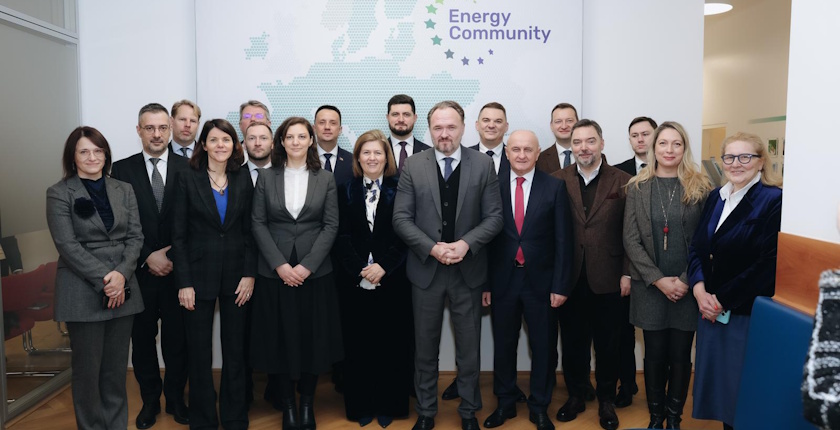
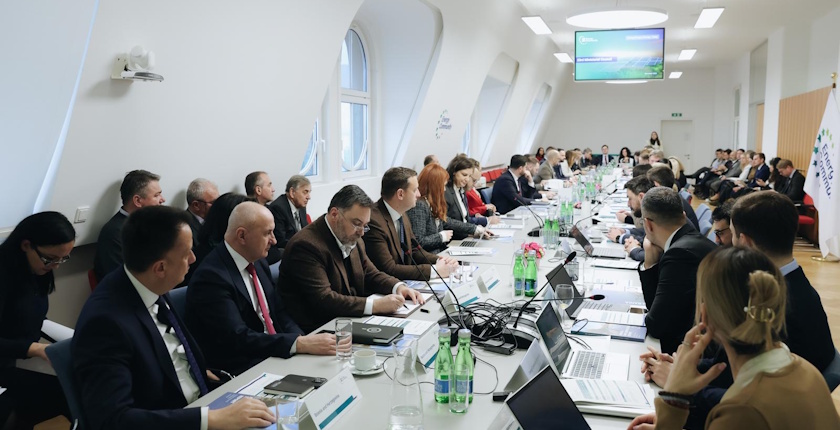
Serbia is the first Energy Community contracting party to enter the verification phase of the market coupling procedure, the Energy Community Secretariat said after the annual meeting of the Ministerial Council in Vienna.

At the Energy Community Ministerial Council, ministers addressed energy security, market integration, climate policy, and environmental protection, confirming a shared EU–contracting parties direction for Europe’s energy future, according to the secretariat.

Ministers and representatives of the secretariat also discussed the amendments to the Carbon Border Adjustment Mechanism’s regulation revealed by the European Commission yesterday. The meeting was attended by European Commissioner for Energy Dan Jørgensen.

The secretariat underlined that several contracting parties are now approaching a decisive stage in electricity market integration ahead of accession, having fully or nearly transposed the Electricity Integration Package (EIP).

The two-step verification phase for Serbia kicked off on October 22

Subject to verification of compliance by the European Commission, this progress opens the door to electricity market coupling with the EU internal market ahead of accession, it added.

“Serbia has already entered the verification phase, while Moldova has fully transposed the package. In this context, ministers underlined that the CBAM, entering into force in January,  should not pose an issue for cross-border electricity trade,” the update reads.

eu region ministerial council 2025 meeting
Photo: Energy Community Secretariat

Full electricity market integration ahead of accession offers a clear pathway to safeguarding decarbonization gains, supporting fair and efficient cross-border electricity exchanges, and attracting clean energy investment, according to the secretariat.

The two-step verification phase for Serbia kicked off on October 22. The first step is the verification by the secretariat, and the second by the commission.

The secretariat must complete the verification within three months, by January 22. The process is in the final stage, Balkan Green Energy News has learned.

The European Commission has five months to do its part

Once this is finished, the commission has five months to do its part. If the commission’s verification is positive, Serbia could meet the end-July deadline to apply for market coupling. The next phase involves technical activities, and it lasts 18 months.

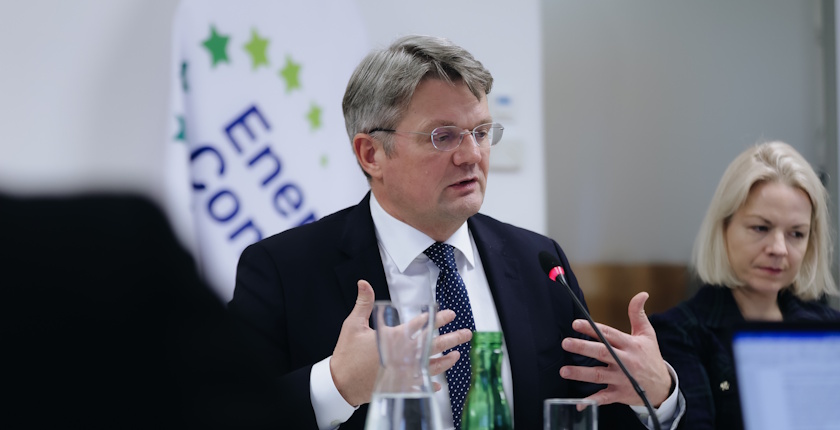
“We are very deep in the process of verifying what Serbia has adopted. Now we are about to start this process for Moldova. And soon, I hope, after the remaining elements of the legislative package are adopted by Montenegro and North Macedonia, the verification can start in these two cases,” stressed Artur Lorkowski, Director of the Energy Community Secretariat.

He added that it has taken two decades of cooperation to build the momentum toward market coupling that ministers today have consolidated.

Lorkowski: The voice of the Energy Community ministers on CBAM has been heard by the commission

eu region ministerial council 2025 artur lorkowski
Artur Lorkowski (photo: Energy Community Secretariat)

Regarding the European Commission’s amendments to the CBAM regulation, he recalled that, on behalf of the ministers, the secretariat has sent a list of 11 different issues that needed to be addressed.

“The voice of the Energy Community ministers has been heard by the commission, and the progress which has been made in the contracting parties has been recognized. We see that in different amendments which are proposed. The proposal is going in a good direction. If you ask me whether this is satisfactory and whether it solves all of the problems, no, for two reasons,” he underscored.

The first reason is that it requires time, and the damage will be done from January 1, 2026, when the CBAM implementation starts.

Jørgensen: A lot of progress has happened

“We already see that, for example, the allocations of the cross-border power lines between the contracting parties and the EU member states for next year are dropping significantly,” Lorkowski explained.

The second reason is the issue of completeness. “We are still not certain whether, for example, renewables in the contracting parties can be treated equally as those in the EU,” he said, and added that the secretariat is in communication with the commission on these issues.

According to European Commissioner for Energy Dan Jørgensen, it is clear that a lot of progress has been made in what will hopefully be future EU member states or neighbors, especially in the transposition of EU energy law.

Focus on four issues

According to the secretariat, the ministers further committed to advancing a coherent and predictable framework to sustain electricity market integration while creating the enabling conditions for the clean energy transition.

The secretariat highlighted four issues.

First, contracting parties will individually pursue national carbon pricing models according to their domestic circumstances, while work continues to explore coordination possibilities and ensure coherence between national carbon pricing systems in view of their gradual alignment with the EU ETS.

Second, the Energy Community framework will further incorporate core EU legislation on nature conservation, biodiversity, and water protection into the Energy Community Treaty.

Third, to keep momentum behind the rapid growth of renewables, the contracting parties will step up efforts to secure mutual recognition of guarantees of origin with the EU.

Finally, effective coordination and implementation of national energy and climate plans (NECPs) is critical, participants agreed.

The EU’s recent agreement on the 2040 climate targets sets a clear direction, and contracting parties must follow this pathway as they develop their long-term energy and climate policies, the update reads.