by in News

Albania gives green light to CWP Europe for 600 MW wind park

Prime Minister of Albania Edi Rama and Deputy Prime Minister and Minister of Infrastructure and Energy Belinda Balluku promoted CWP Europe’s wind power project Tropoja of 600 MW. After receiving the ministry’s preliminary approval at the event, the company’s CEO Dimitar Enchev highlighted the importance of local electricity production for a modern economy, including AI and data centers, and for energy independence. Albania still doesn’t host a single operational wind turbine.

CWP Europe will hopefully connect its future wind park Tropoja to the grid within 12 months, excluding the period of harsh winter, according to Albania’s Prime Minister Edi Rama. Speaking at the project’s presentation, he said the investment is a step toward the country’s ambition of becoming self-reliant in energy production.

“For a long time, we had complete dependence on water and rainfall. At the same time, we inherited a system with so many weaknesses that, when rainfall was lacking, we had to go to international markets and purchase large quantities at inflated prices. Meanwhile, when rainfall came in abundance, we often saw much of this potential value, water, go to waste and not only fail to be converted into energy, but at times also cause extraordinary damage,” Rama stated.

Namely, hydropower plants accounted for almost 100% of domestic electricity production until recently. By the end of the decade, the combined share of wind and solar power will reach 30%, Rama underscored.

Preparing final stages of Tropoja wind power project

CWP Global’s Co-founder and Chief Executive Officer for Europe Dimitar Enchev received a preliminary approval from the Ministry of Infrastructure and Energy at the event. He highlighted the importance of local electricity production for a modern economy and energy independence, especially with the expansion of artificial intelligence and data centers.

“The last time I was here was about three months ago, when we decided and signed a joint cooperation agreement with the EU, and now, after three months, we receive the permission that allows us to engage in preparing the final stages of our project,” he stated, as quoted by CNA.

CWP Europe has more than 7 GW under development in Southeast Europe

CWP Europe has 900 MW in wind power projects under development in Albania, part of a portfolio of more than 6 GW across Southeast Europe plus more than 1 GW in photovoltaics.

The Tropoja area is in the country’s far north. Albania still doesn’t host a single operational wind turbine.

Support from European Commission

CWP Europe signed a joint declaration in October with the European Commission, the Albanian Investment Development Agency and the Montenegrin Investment Agency, in support of the Tropoja project and the Montechevo solar farm with battery storage in Montenegro, respectively.

In September, the company’s subsidiary Eralb Invest submitted its wind power project to the Ministry of Infrastructure and Energy, for 603.9 MW. It is not subject to concession and doesn’t benefit from state support measures.

In 2023, the firm sent a proposal to the Strategic Investment Committee (SIC or KIS) in which the project was for a wind and solar park of 826 MW in total capacity. It is an interministerial panel chaired by Prime Minister Edi Rama.

The entire designated area in Tropoja municipality reportedly spanned 385 hectares, encompassing the territories of the villages Viçidol, Berisha, Luzha and Pac, and the investment was valued at EUR 1.2 billion.

In October 2023, CWP and GE Vernova’s Onshore Wind business agreed to develop a large-scale hybrid wind and solar project in Albania. They estimated the investment at more than EUR 1 billion.

Fântânele-Cogealac-Gradina, the biggest onshore wind park in Southeastern Europe and, until recently, in entire Europe, has 600 MW in capacity. It is located in Romania. CWP developed the project and sold it in 2008.

Balluku: Diversification is strategic necessity

Albania is moving to a modern, balanced energy model, where diversification of sources is no longer a solution, but a strategic necessity, according to Deputy Prime Minister and Minister of Infrastructure and Energy Belinda Balluku.

“The Tropoja wind farm is not just an energy investment. It is a symbol of the transformation that Albania is experiencing, a transformation towards a sustainable, stronger and more innovation-friendly economy. This project proves that the Albanian energy sector is entering a new phase, where private investment and foreign direct investment are becoming engines of growth, thanks to serious partnerships and long-term visions,” she stated.

Wind and solar power projects totaling 1.5 GW are under development in Albania

In recent years, Albania added over 700 MW of photovoltaic capacity, and another 400 MW for self-supply, Balluku revealed. Wind and solar power projects totaling 1.5 GW are under development, she added. Future pumped storage hydropower capacity in the Drin (Drim) cascade and Statkraft’s project in Moglica amount to 1.6 GW, Balluku stressed.

Since 2013, losses in the power distribution network have dropped to 16.9% from more than 45%, while total electricity capacity increased by 1.5 GW, the deputy prime minister added. She said outages have been reduced to an all-time low and that they usually only last a few minutes.

The Special Court Against Corruption and Organized Crime suspended Balluku in late November amid an investigation, but the Constitutional Court soon reinstated her.

by in News

ContourGlobal installs 500 MWh standalone BESS facility in Bulgaria

A standalone battery energy storage system of 202 MW and 500 MWh is fully operational and actively participating in Bulgaria’s day-ahead and intraday electricity markets. ContourGlobal built it at its Maritsa East 3 coal plant, using the grid connection of one of its former units. Acting Minister of Energy Zhecho Stankov, who attended the inauguration, said the country added 5 GWh last year and estimated that the overall BESS capacity would hit 15 GWh by mid-2026.

One of the biggest standalone battery storage installations in Eastern Europe and among the first in Bulgaria recently came online. Located within the ContourGlobal Maritsa East 3 (Maritsa iztok 3) coal power plant, the facility uses the grid connection of a former unit. Two remained in operation, supplying electricity during periods of peak demand.

The BESS has 202 MW in operating power and a duration of 2.5 hours, translating to 500 MWh, the company said. It inaugurated the battery system in the presence of Minister of Energy Zhecho Stankov.

Stankov: New BESS creates sustainable pathway for evolution of Maritsa East

The new facility is actively participating in both the day-ahead and intraday national electricity markets, supporting optimized power dispatch, improved balancing of electricity supply and demand, and the integration of renewable energy sources, while enhancing overall system stability and flexibility, the update adds.

Such projects signify how innovation and existing industrial infrastructure can work together to strengthen grid stability, improve flexibility, and accelerate the integration of renewable energy sources, Stankov stressed. The investment enhances energy security, supports market-based operation, and creates a sustainable pathway for the evolution of traditional energy hubs such as Maritsa East, in his words.

According to the acting minister, Bulgaria added 5 GWh of BESS capacity last year, nearly matching the Chaira pumped storage hydropower plant. He recalled that the overall level is set to reach 15 GWh by mid-2026.

Project materialized in under nine months

The project in Maritsa East 3 received support through the European Union’s Recovery and Resilience Facility (RRF) and the Bulgarian National Recovery and Resilience Plan (NRRP). Spanning 2.5 hectares, the installation is part of the company’s 3 GWh operational BESS portfolio. ContourGlobal is owned by KKR.

BYD supplied the 110 battery skids for the battery system, which also includes 28 power conversion system (PCS) and transformer units. ContourGlobal progressed from the final investment decision (FID) to commercial operation date (COD) in less than nine months.

The company is developing a second BESS on the same site, with a matching capability. It has a battery project in combination with a solar power plant as well.

Battery energy systems allow for the storage of electricity generated from various sources, including photovoltaic and wind power plants, during periods of low demand and its release back to the grid during peak demand, which helps balance production and consumption and the stable operation of the electricity transmission system.

Three months ago, International Power Supply (IPS) opened its Factory X1, with a capacity of 3 GWh per year. It is the first gigafactory in Bulgaria for battery energy storage systems. The same company is building another manufacturing facility.

by in News

After adding PV unit, Slovenian gas power plant TEB launches battery project

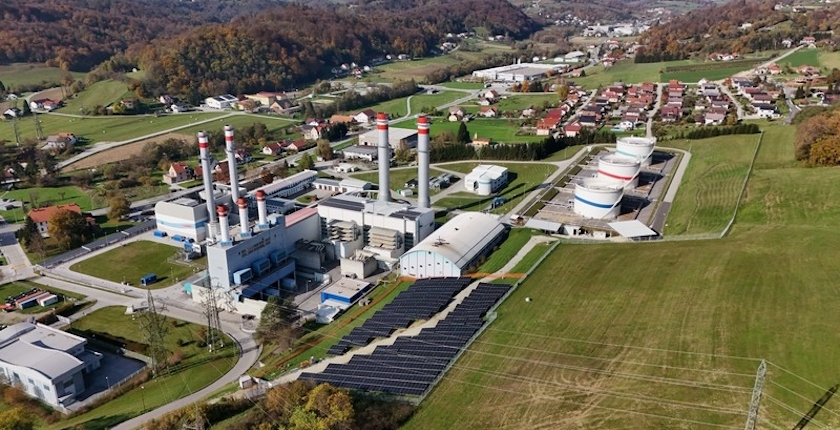
The management of the Brestanica gas power plant in Slovenia has decided to diversify its activities by installing a battery energy storage system (BESS) of 40 MW in operating power and 80 MWh in capacity. The project follows the construction of a ground-mounted solar power plant on the facility’s premises and photovoltaic units on roofs and a parking canopy.

Brestanica Thermal Power Plant – Termoelektrarna Brestanica (TEB) is contributing to the flexibility of Slovenia’s energy system with its investments, Naš stik reported. Due to preventive maintenance and rapid response, electricity output reached 35 GWh in 2025, compared to the planned 25 GWh, the report adds.

The firm issued its development strategy for 2025 to 2030 last year and, based on it, decided to launch a project for a two-hour 40 MW battery energy storage system. It translates to 80 MWh in capacity.

The project will strengthen the flexibility of the energy system, enable more efficient integration of renewable sources and confirm TEB’s focus on modern and sustainable solutions, the article adds. “With the investment in the battery storage facility, we are laying the foundations for a reliable and flexible energy future,” Brestanica Thermal Power Plant said.

Among the other priorities for this year are corporate and cybersecurity.

Brestanica Thermal Power Plant is part of state-owned GEN Group. GEN energija, their parent company, operates the Krško nuclear power plant, also known by the acronym NEK and, in Slovenian, JEK. The gas power plant is also in the municipality of Krško, near Slovenia’s border with Croatia.

TEB put into operation a ground-mounted 466 kW solar power plant on its premises last year. Before that, in 2009 and 2010, the gas plant’s operator built two rooftop PV units and one on a parking canopy. They have 170 kW in combined peak capacity.

by in News

After adding PV unit, Slovenian gas power plant TEB launches battery project

The management of the Brestanica gas power plant in Slovenia has decided to diversify its activities by installing a battery energy storage system (BESS) of 40 MW in operating power and 80 MWh in capacity. The project follows the construction of a ground-mounted solar power plant on the facility’s premises and photovoltaic units on roofs and a parking canopy.

Brestanica Thermal Power Plant – Termoelektrarna Brestanica (TEB) is contributing to the flexibility of Slovenia’s energy system with its investments, Naš stik reported. Due to preventive maintenance and rapid response, electricity output reached 35 GWh in 2025, compared to the planned 25 GWh, the report adds.

The firm issued its development strategy for 2025 to 2030 last year and, based on it, decided to launch a project for a two-hour 40 MW battery energy storage system. It translates to 80 MWh in capacity.

The project will strengthen the flexibility of the energy system, enable more efficient integration of renewable sources and confirm TEB’s focus on modern and sustainable solutions, the article adds. “With the investment in the battery storage facility, we are laying the foundations for a reliable and flexible energy future,” Brestanica Thermal Power Plant said.

Among the other priorities for this year are corporate and cybersecurity.

Brestanica Thermal Power Plant is part of state-owned GEN Group. GEN energija, their parent company, operates the Krško nuclear power plant, also known by the acronym NEK and, in Slovenian, JEK. The gas power plant is also in the municipality of Krško, near Slovenia’s border with Croatia.

TEB put into operation a ground-mounted 466 kW solar power plant on its premises last year. Before that, in 2009 and 2010, the gas plant’s operator built two rooftop PV units and one on a parking canopy. They have 170 kW in combined peak capacity.

by in News

Shared power, shared security: Nordic lessons for Europe’s energy resilience

Author: Parvathy Sobha, Brida Mbuwir and Bart Overdevest,EUSEW Young Energy Ambassadors

Renewables are transforming Europe’s energy landscape, but the rapid green transition is testing grid stability. The Iberian blackout exposed the risks of ambition outpacing the system’s flexibility. Yet the story looks different in the north. Nordic countries have integrated vast shares of renewables while keeping the lights on, proof that reliability and decarbonisation can go hand in hand. What can the rest of Europe learn from the Nordics to safeguard its energy security in a net-zero grid?

Europe’s energy security test

As wind and solar replace conventional power plants that once provided system inertia, maintaining voltage and frequency stability grows more fragile. Recent fuel market volatility and supply shocks have also exposed the limits of isolated national grids. This is no reason to slow the green transition, but a reminder that Europe must now build a power system that combines scale, resilience and low carbon intensity.

The Nordic blueprint

The Nordic countries—Sweden, Norway, Finland and Denmark—have built one of the world’s most reliable and decarbonised power systems, known for their unique combination of resources, coordination and market integration. A complementary energy mix forms its backbone: dispatchable hydropower balances variable wind, while nuclear and bioenergy add stability and seasonal flexibility. This is further complemented by growing contributions from batteries and demand response.

Moreover, the cross-border links allow electricity to flow to where it is most needed, easing local shortages and damping price volatility. Additionally, strong regional cooperation, harmonised grid codes, shared market rules and coordinated system planning enable national operators to function as a single, interconnected network. Finally, deeply integrated day-ahead, intraday and balancing markets turn variability into an asset by smoothing prices, reducing reserve needs and strengthening reliability as renewable shares rise.

Author, Parvathy Sobha, Brida Mbuwir and Bart Overdevest, EUSEW Young Energy Ambassadors

Adapting Nordic lessons for Europe’s energy future

Adopting the Nordic model requires adaptation to Europe’s diverse realities. Not every region has the hydropower that underpins the Nordics’ flexibility. Balancing variable renewables in other parts of Europe will depend on smarter combinations of storage, flexible demand and interconnections. The Nordic example shows that strong coordination, consistent investment and shared market rules can overcome resource disparities and geography alike. Infrastructure gaps, uneven market maturity and regulatory differences remain obstacles, but none are insurmountable.

The EU must strengthen not only its physical grids but also the cooperation that connects them. Accelerating interconnectors and internal reinforcements through programmes such as TEN-E and REPowerEU will allow renewable electricity to flow across borders, turning surplus wind in one region into stability in another. Equally important is market integration. Deepening day-ahead, intraday and balancing market coupling will ensure that flexibility—whether storage, demand response, or variable renewables—reaches where it creates the greatest value. Treating flexibility as core infrastructure and valuing fast frequency response and grid-scale storage within capacity and balancing mechanisms, will anchor reliability in a cleaner and more dynamic power mix.

Operational harmony will be the glue that binds this system together. Aligning grid codes, planning standards and market rules across Member States can enable transmission and distribution operators to act as one coordinated European network. A shared digital backbone, built on real-time data, forecasting and automation will add the visibility and speed needed to manage decentralised generation. Citizens remain central to this transformation. Cross-border projects must deliver tangible local benefits: fair prices, clean air and sustainable jobs. Earning public trust through transparency and equitable outcomes will sustain momentum and legitimacy.

This opinion editorial is produced in co-operation with the European Sustainable Energy Week 2026. See ec.europa.eu/eusew for open calls.

Disclaimer: This article is a contribution from a partner. All rights reserved. Neither the European Commission nor any person acting on behalf of the Commission is responsible for the use that might be made of the information in the article. The opinions expressed are those of the author(s) only and should not be considered as representative of the European Commission’s official position.

by in News

Electrica issues call for contractors for large PV parks in Romania

Romanian electricity supplier and distributor Electrica, in which the government holds almost 50%, published tenders via its subsidiaries for the second time for ready-to-build solar power projects. The peak capacities are 62.5 MW and 77.6 MW, and the second investment also involves battery storage. The company launched production in November at its Satu Mare 2 solar power plant, also known as Sunwind, of 27 MW.

Companies with the most advantageous offers from the technical and economic point of view will get the contracts for the construction of photovoltaic systems Satu Mare 3 and Bihor 1. Electrica, the investor, issued both calls a year ago, but canceled them in the meantime.

The Romanian Government owns 49.8% of the company, a power supplier and distributor, which also invests in renewables.

Electrica’s subsidiary New Trend Energy is responsible for the Satu Mare 3 project, of 62.5 MW in peak capacity. It is located in the commune of Doba in the Satu Mare county in the northwest. Inverters would enable the delivery of 57.9 MW to the grid.

The investment is estimated at RON 176.6 million (EUR 34.7 million) excluding value-added tax. Electrica expects to generate 70.2 MWh per annum. The deadline for applications is February 17.

BESS project is for 16.5 MWh in capacity and a 4 MW in operating power

Foton Power Energy, another subsidiary of Electrica, is seeking a contractor for a turnkey deal for Bihor 1. The PV plant would have 77.6 MW in peak capacity, and 77.4 MW in alternating current terms. It would consist of Trina’s bifacial solar panels of 595 W each.

The selected company will need to build a battery energy storage system as well, together with a transformer and fences, according to the document.

Both projects, with sites in northwestern Romania, have won subsidies from the Modernisation Fund

The BESS project is for 16.5 MWh in capacity and a 4 MW in operating power, earlier documents show. It would consist of eight Huawei units with a nominal size of 2.06 MWh each, the special purpose vehicle said. The project envisages the possibility of expansion of the battery storage facility to 75 MW and 150 MWh.

Total expected annual output amounts to 87.5 GWh. Foton Power Energy estimated the project at RON 220 million without VAT, which is EUR 43.2 million. Its site is in the communes of Cefa and Mădăraș in Bihor county, also in Romania’s northwest. Interested firms can submit bids by February 12.

Both Satu Mare 3 and Bihor 1 received state support via the European Union’s Modernisation Fund.

Electrica completed its third PV plant last month

In November, the company completed its Satu Mare 2 solar farm of 27 MW in peak capacity. The project firm is called Sunwind Energy. Electrica also operates PV plants Stănești and Vuturul with peak capacities at 7.5 MW and 12 MW, respectively.

The Crucea Est wind power project, worth eur 253 million, is for up to 138 MW and a BESS of 15 MW and 60 MWh.

In the report on the first nine months of 2025, Electrica wrote that it was developing four energy storage projects of 169.5 MWh altogether. In mid-October it initiated the procedures for 15 BESS facilities of 1 GWh in total.

Before that, in early September, the company signed a memorandum of understanding with Romgaz on the development of 400 MW in solar and storage. Electrica would be the main partner and the other company would hold a minority interest.

The projects are financed from a green bond issuance, which was the largest in Romania.

by in News

China completes grid connection of world’s largest open sea PV plant

CHN Energy declared a 1 GW solar power system that it built off the coast of China’s Shandong province, on the open sea, fully connected to the grid. The facility consists of steel truss platforms on bottom-fixed piles. Just in the past month, the state-owned company commissioned solar power plants of 600 MW and 425 MW, a coal power station of 4 GW and China’s largest gas power unit.

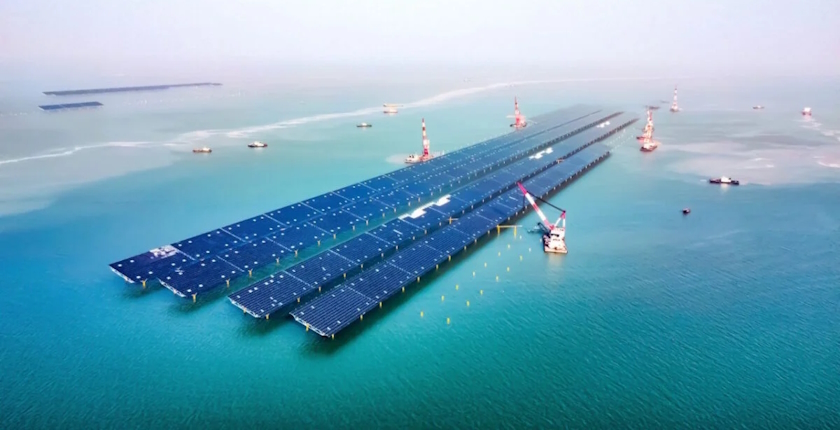
China continues to dominate the energy realm with the world’s largest projects and innovative design. The latest example, on the open sea, is eight kilometers from Kenli district in the city of Dongying in the country’s east. It is a giant solar power plant, but not a floating one.

The Shandong Dongying Kenli (Guohua HG14) facility is on steel truss platforms on bottom-fixed piles. China Energy Investment Corp., also known as CHN Energy, declared the photovoltaic system fully connected to the grid. The initial project of the state-owned enterprise was for 1 GW.

China State Construction Engineering Corp. (CSCEC) so far installed 930 platforms out of 2,934 planned. Each is on four piles, at water depth of one to four meters.

The project on the open sea off Shandong province spans 1,223 hectares. Its developer is CHN Energy’s subsidiary Guohua Energy Investment Co.

Project involves 100 MW in battery storage

According to the latest reports, Guohua HG14 consists of bifacial double-glass modules of 710 W and the annual output, when the facility is completed, is estimated at 1.78 TWh. In earlier updates, 2.37 million monocrystalline solar panels of 550 W each were planned, translating to 1.3 GW in peak capacity. Total investment was valued at CNY 8.1 billion (USD 1.16 billion).

The company reportedly switched to stronger, bifacial solar modules for the project offshore Dongying

The offshore solar power plant on the open sea is connected to the mainland grid with a 66 kV cable. Its first segment came online in November 2024. The project involves a battery energy storage system of 100 MW in capability and 200 MWh in capacity.

Giant solar plant comes online at altitude of 3,000 meters

Just in the past month, CHN Energy commissioned several landmark facilities. A new 600 MW solar power plant is in the Xinjiang province in the west, in Qitai county, near the border with Mongolia.

The company completed another PV system, of 425 MW, via Qinghai Gonghe Co. Part of a 1 GW project with storage, called Guoneng Canadian Solar Hainan, it is located in Gonghe county in Qinghai Province. It is at an altitude of 3,000 meters and above.

Just last week, CHN Energy put into operation the fourth and last 1 GW unit of its coal-fired Guangxi Beihai Power Plant. The complex in Guangxi province in southern China includes a 27.3 MW solar power plant for electric car chargers.

The utility has also launched regular production of the first of two units in its gas power plant Anji in Zhejiang province. It is the largest and most efficient in the country, CHN Energy pointed out. When the second unit comes online in early 2026, the power plant will have 1.69 GW in capacity.

by in News

Electrica issues call for contractors for large PV parks in Romania

Romanian electricity supplier and distributor Electrica, in which the government holds almost 50%, published tenders via its subsidiaries for the second time for ready-to-build solar power projects. The peak capacities are 62.5 MW and 77.6 MW, and the second investment also involves battery storage. The company launched production in November at its Satu Mare 2 solar power plant, also known as Sunwind, of 27 MW.

Companies with the most advantageous offers from the technical and economic point of view will get the contracts for the construction of photovoltaic systems Satu Mare 3 and Bihor 1. Electrica, the investor, issued both calls a year ago, but canceled them in the meantime.

The Romanian Government owns 49.8% of the company, a power supplier and distributor, which also invests in renewables.

Electrica’s subsidiary New Trend Energy is responsible for the Satu Mare 3 project, of 62.5 MW in peak capacity. It is located in the commune of Doba in the Satu Mare county in the northwest. Inverters would enable the delivery of 57.9 MW to the grid.

The investment is estimated at RON 176.6 million (EUR 34.7 million) excluding value-added tax. Electrica expects to generate 70.2 MWh per annum. The deadline for applications is February 17.

BESS project is for 16.5 MWh in capacity and a 4 MW in operating power

Foton Power Energy, another subsidiary of Electrica, is seeking a contractor for a turnkey deal for Bihor 1. The PV plant would have 77.6 MW in peak capacity, and 77.4 MW in alternating current terms. It would consist of Trina’s bifacial solar panels of 595 W each.

The selected company will need to build a battery energy storage system as well, together with a transformer and fences, according to the document.

Both projects, with sites in northwestern Romania, have won subsidies from the Modernisation Fund

The BESS project is for 16.5 MWh in capacity and a 4 MW in operating power, earlier documents show. It would consist of eight Huawei units with a nominal size of 2.06 MWh each, the special purpose vehicle said. The project envisages the possibility of expansion of the battery storage facility to 75 MW and 150 MWh.

Total expected annual output amounts to 87.5 GWh. Foton Power Energy estimated the project at RON 220 million without VAT, which is EUR 43.2 million. Its site is in the communes of Cefa and Mădăraș in Bihor county, also in Romania’s northwest. Interested firms can submit bids by February 12.

Both Satu Mare 3 and Bihor 1 received state support via the European Union’s Modernisation Fund.

Electrica completed its third PV plant last month

In November, the company completed its Satu Mare 2 solar farm of 27 MW in peak capacity. The project firm is called Sunwind Energy. Electrica also operates PV plants Stănești and Vuturul with peak capacities at 7.5 MW and 12 MW, respectively.

The Crucea Est wind power project, worth eur 253 million, is for up to 138 MW and a BESS of 15 MW and 60 MWh.

In the report on the first nine months of 2025, Electrica wrote that it was developing four energy storage projects of 169.5 MWh altogether. In mid-October it initiated the procedures for 15 BESS facilities of 1 GWh in total.

Before that, in early September, the company signed a memorandum of understanding with Romgaz on the development of 400 MW in solar and storage. Electrica would be the main partner and the other company would hold a minority interest.

The projects are financed from a green bond issuance, which was the largest in Romania.

by in News

China completes grid connection of world’s largest open sea PV plant

CHN Energy declared a 1 GW solar power system that it built off the coast of China’s Shandong province, on the open sea, fully connected to the grid. The facility consists of steel truss platforms on bottom-fixed piles. Just in the past month, the state-owned company commissioned solar power plants of 600 MW and 425 MW, a coal power station of 4 GW and China’s largest gas power unit.

China continues to dominate the energy realm with the world’s largest projects and innovative design. The latest example, on the open sea, is eight kilometers from Kenli district in the city of Dongying in the country’s east. It is a giant solar power plant, but not a floating one.

The Shandong Dongying Kenli (Guohua HG14) facility is on steel truss platforms on bottom-fixed piles. China Energy Investment Corp., also known as CHN Energy, declared the photovoltaic system fully connected to the grid. The initial project of the state-owned enterprise was for 1 GW.

China State Construction Engineering Corp. (CSCEC) so far installed 930 platforms out of 2,934 planned. Each is on four piles, at water depth of one to four meters.

The project on the open sea off Shandong province spans 1,223 hectares. Its developer is CHN Energy’s subsidiary Guohua Energy Investment Co.

Project involves 100 MW in battery storage

According to the latest reports, Guohua HG14 consists of bifacial double-glass modules of 710 W and the annual output, when the facility is completed, is estimated at 1.78 TWh. In earlier updates, 2.37 million monocrystalline solar panels of 550 W each were planned, translating to 1.3 GW in peak capacity. Total investment was valued at CNY 8.1 billion (USD 1.16 billion).

The company reportedly switched to stronger, bifacial solar modules for the project offshore Dongying

The offshore solar power plant on the open sea is connected to the mainland grid with a 66 kV cable. Its first segment came online in November 2024. The project involves a battery energy storage system of 100 MW in capability and 200 MWh in capacity.

Giant solar plant comes online at altitude of 3,000 meters

Just in the past month, CHN Energy commissioned several landmark facilities. A new 600 MW solar power plant is in the Xinjiang province in the west, in Qitai county, near the border with Mongolia.

The company completed another PV system, of 425 MW, via Qinghai Gonghe Co. Part of a 1 GW project with storage, called Guoneng Canadian Solar Hainan, it is located in Gonghe county in Qinghai Province. It is at an altitude of 3,000 meters and above.

Just last week, CHN Energy put into operation the fourth and last 1 GW unit of its coal-fired Guangxi Beihai Power Plant. The complex in Guangxi province in southern China includes a 27.3 MW solar power plant for electric car chargers.

The utility has also launched regular production of the first of two units in its gas power plant Anji in Zhejiang province. It is the largest and most efficient in the country, CHN Energy pointed out. When the second unit comes online in early 2026, the power plant will have 1.69 GW in capacity.

by in News

YEO invests in ARC Clean Technology to pave way for SMRs in Turkey

YEO Technology’s strategic investment in ARC Clean Technology, which develops advanced small modular reactors, brings potential cooperation opportunities for the deployment of the technology in Turkey. The startup with headquarters in Canada and the United States has closed a series B financing round, with a focus on its advanced sodium-cooled fast reactor of 100 MW.

Amid its push into other sectors and markets, Istanbul-based YEO Technology (YEO Teknoloji Enerji ve Endüstri) aspires to be an early mover in advanced small modular reactor (aSMR) technologies, counting on Turkey’s upcoming investments in nuclear power. The company revealed that it invested in ARC Clean Technology, valuing the startup at USD 60.4 million.

Advanced small modular reactors are expected to become a complementary solution for baseload power demand, the update adds. YEO said it expects the transaction to open the way for cooperation with the startup, which has headquarters both in Canada and the United States, in the deployment of the technology in Turkey and the surrounding region.

The investment is strategic, in line with the company’s goals of early positioning in future energy technologies, access to carbon-free and sustainable energy solutions, and long-term value creation, according to the announcement. YEO didn’t reveal other details.

ARC counts on rising demand for AI computing

ARC Clean Technology is developing the ARC-100, a generation 4 sodium-cooled fast reactor. It originates from the Experimental Breeder Reactor-II (EBR-II), which worked for 30 years at Idaho National Laboratory.

Using metallic uranium-zirconium fuel, ARC-100 provides 100 MW of electricity capacity, from 286 MW of heat. It is also intended for supplying steam for industrial processes as well as powering electrolyzers in hydrogen production and data and artificial intelligence (AI) centers.

The ARC-100 would only need to be refueled after 20 years

The startup is targeting a 20-year refueling cycle and a design life of 60 years.

Just last week, ARC Clean Technology said it closed its series B financing round. It involved new and existing investors from the energy, infrastructure and technology sectors. The proceeds are for advancing commercialization programs for the ARC-100.

Additionally, the funding will support work with the US Department of Energy, the collaboration agreement with Korea Hydro and Nuclear Power (KHNP) for global aSMR fleet deployment, and continuation of a Canadian project supported by strategic partner Hatch.

Global search for partners for nuclear reactors in Turkey

Turkey expects to put the first reactor at the Akkuyu nuclear power plant into operation in 2026. While developing the legal framework for small modular reactors (SMRs), the government is also considering a partnership with South Korea and the US for the second conventional nuclear plant, in Sinop.

Discussions about small reactors and a large nuclear power plant in Eastern Thrace are also underway with China and Russia. Turkish officials earlier mentioned contacts with Canada, France and the United Kingdom as well. The country aims to reach 7.2 GW in nuclear power capacity by 2035 and 20 GW by 2050.

The capacity of Reap Battery’s new LFP battery production facility is 5 GWh per year

Of note, YEO’s subsidiary Reap Battery launched production in mid-December of lithium-iron-phosphate (LFP) battery energy storage systems (BESS) in Tuzla, Istanbul.

In addition to the domestic market, the facility with an annual capacity of 5 GWh is targeting the US, Europe, the Middle East, Central Asia and Africa. It manufactures systems for renewable energy projects, the power grid, mobility, commercial and industrial applications, and residential energy storage.