by in News

Coal power plant Maritsa East 3 plans to build solar plant, 200 MW battery system

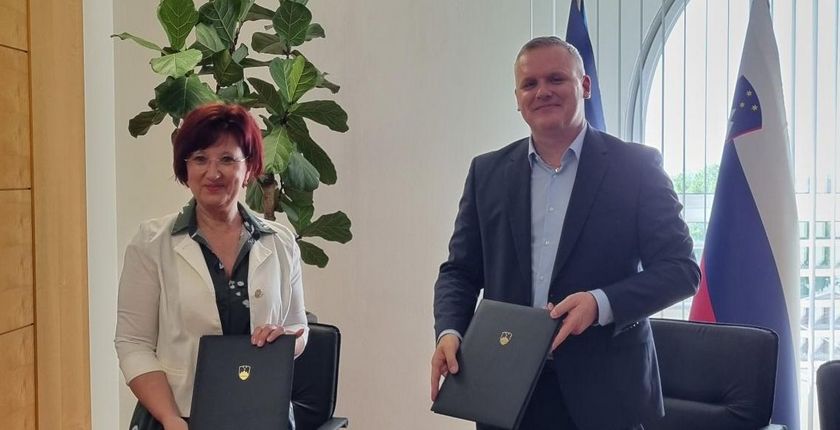
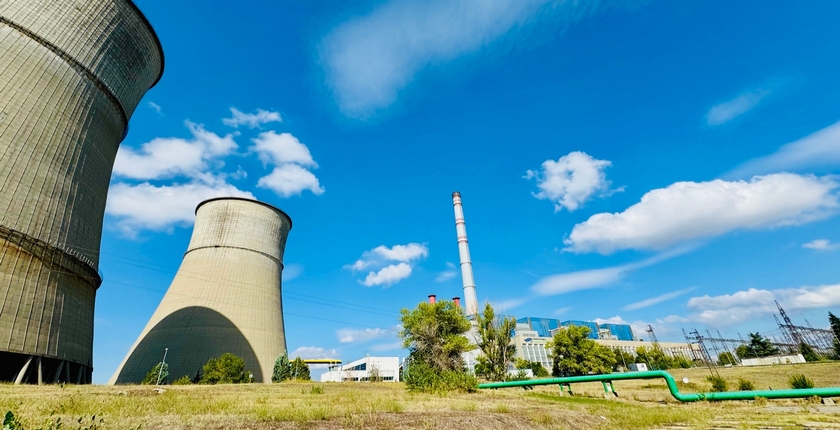
Coal-fired power plant ContourGlobal Maritsa East 3, which operates only sporadically to ensure the stability of supply for Bulgaria’s power system, plans to repurpose the grid infrastructure of its units 1 and 2 for solar and battery storage capacities. Units 3 and 4 will remain on standby to generate electricity during peak demand periods in the summer and winter months, but the plant will need state support to cover maintenance and workforce costs.

Maritsa East 3 (Maritsa iztok 3), majority owned by the US-based ContourGlobal, plans to use the existing grid infrastructure, including transformers and switchgear, to speed up the green energy project within the complex, according to Vassil Shtonov, Executive Director of ContourGlobal Bulgaria.

The central element is a 200 MW standalone battery energy storage system (BESS), the largest of its kind in Bulgaria, which would improve the flexibility and stability of the national power system, Shtonov explained in an interview with Capital.bg.

The project involves a 200 MW standalone battery system and a solar power plant

The planned battery system at Maritsa East 3 was among 82 projects selected to receive a total of EUR 587 million in subsidies from Bulgaria’s Ministry of Energy in April this year.

“In parallel, we are considering the development of an additional hybrid solar park with a battery at the same site,” he said. This will allow for faster deployment of new clean energy capacity, while preserving all options for future use of the coal-fired plant and its original infrastructure, Shtonov added.

ContourGlobal plans to build 400MW to 500 MW of renewable energy capacity combined with batteries

ContourGlobal plans to invest hundreds of millions of euros to develop 400 MW to 500 MW of renewable energy capacity combined with storage systems, he said, adding that nearly half of this target is under construction or final approval. The company’s goal is to phase out coal by 2027 and achieve carbon neutrality by 2040, he stressed, recalling that Bulgaria’s targeted coal phaseout date is 2038.

Keeping coal plants on standby requires state support

Bulgaria’s state-owned National Electricity Co. (NEK) holds a minority stake in Maritsa East 3. After the plant’s 15-year power purchase contract with NEK expired in February 2024, it has only been able to operate on the free market for a few months a year. This year, units 3 and 4 were online from January to the end of March to maintain energy security.

Shtonov: Key coal-fired power plants should get a fixed amount from the state

However, to be on standby for system security, the plant needs to keep workers on the payroll even when it is not operating. For this reason, strategically important coal-fired power plants should receive a fixed amount from the state to cover ongoing personnel and maintenance costs, and then be switched on when necessary to protect consumers from sharp increases in electricity prices, as happened last year in July and November, according to Shtonov.
by in News

North Macedonia, Kosovo* planning 400 kV power interconnection

The transmission system operators (TSOs) of North Macedonia and Kosovo* are developing a project for a 400 kV interconnection line between Tetovo and Prizren. The investment would include other grid upgrades and expansion.

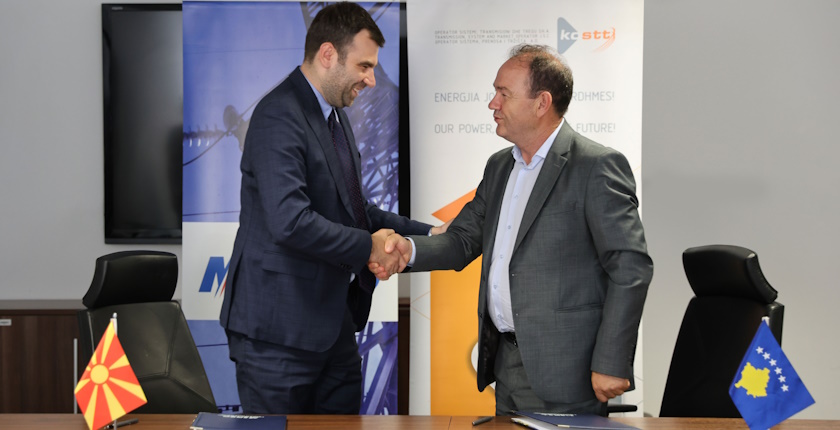
Director-General of North Macedonia’s MEPSO Burim Latifi and Acting Chief Executive Officer of Transmission, System and Market Operator (KOSTT) of Kosovo* Shaban Neziri signed a memorandum of cooperation in Skopje. The two transmission system operators intend to jointly upgrade the high-voltage network. The emphasis is on a strategic project for a 400 kV interconnection line from Tetovo to Prizren.

The endeavor aligns with the European Union’s energy transition goals by 2050, North Macedonia’s TSO said. The project is nominated through the planning platform of the European Network of Transmission System Operators for Electricity (ENTSO-E) for increasing transmission capacities.

New interconnection to encourage investments in renewables

North Macedonia and Kosovo* have only one interconnection now, of 220 kV. According to ENTSO-E, Southeastern Europe needs to at least double transmission capacities and, in some cases, increase them even more than that, MEPSO stressed.

On that note, the bilateral project includes additional investments in the transmission network, such as the construction of a 400/110 kV transformer station in Tetovo, in North Macedonia’s northwest, and 400 kV transmission lines from Tetovo to Ohrid and Skopje.

“The 400 kV Tetovo-Prizren transmission line project will not only increase the system’s capacity and reliability but also enable greater electricity exchange, encouraging new investments in renewable energy sources,” Latifi said.

Investment to bolster East-West energy corridor

Regarding the other benefits, the heads of the two TSOs agreed that the project would bolster the transmission infrastructure in the region, strengthen the so-called East-West energy corridor and improve system flexibility.

The new document confirms the joint commitment to creating a modern and reliable energy infrastructure, Neziri stressed. “With this project, we are enhancing energy connectivity in the region and contributing to achieving the energy goals of the Western Balkans,” he added.

Strong interconnections are essential for the integration of the electricity market in the Western Balkans

The project is in the planning and technical preparation phase. The start of construction depends on securing financial resources and coordination with all relevant stakeholders, MEPSO explained.

Strong interconnections are essential for the integration of the electricity systems and markets in the region with the EU, through market coupling. Together with Albania and Greece, North Macedonia and Kosovo* are part of one such regional project, which has been suffering delays.

Market coupling is a prerequisite for the exemption of the power markets in the Western Balkans and the rest of the Energy Community from the EU’s Carbon Border Adjustment Mechanism, or CBAM, under which a CO2 tax is set to start being charged on January 1.

* This designation is without prejudice to positions onstatus and is in line with UNSCR 1244/99 and the ICJ Opinion on the Kosovo declaration of independence.
by in News

Serbia preparing nuclear, hydrogen deal with South Korea’s KHNP

After contacts with Russia, Slovenia and China regarding nuclear energy, and the start of cooperation with France, Serbia is expecting to sign an agreement with South Korean state-owned power utility KHNP, involving hydrogen as well. Among the other options are joint activities in the segment of small modular reactors.

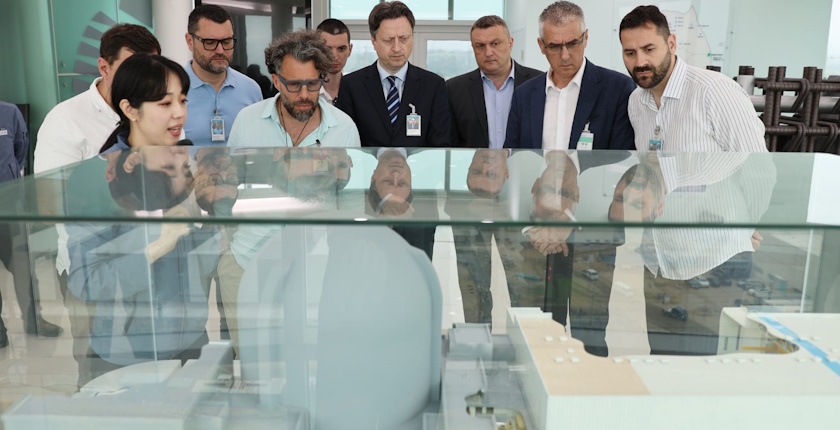
Like many countries in the Balkans, Europe and beyond that want to build their first or additional nuclear power plants, Serbia is considering the possibilities for such projects. Assistant Minister of Mining and Energy Radoš Popadić, responsible for electricity, visited the biggest nuclear power complex in the world. It is located in Ulsan in South Korea and owned by Korea Hydro and Nuclear Power (KHNP).

The Serbian official got acquainted with the technological and safety standards there, according to the announcement.

An agreement with KHNP on the exchange of knowledge and experiences concerning nuclear energy and hydrogen is expected to be finalized soon, Popadić revealed.

“The Ministry of Mining and Energy has been in contact for some time now with the representatives of KHNP and we are expecting an agreement with prestigious South Korean company KHNP to be finalized soon, regarding the exchange of knowledge and experiences in the nuclear energy segment and hydrogen, having in mind that we actually see nuclear energy as one of the key solutions for Serbia’s secure, stable and low-carbon future. Hydrogen is an energy product of the future and its use is also envisaged in our strategic documents and it is important to exchange knowledge on the application of this technology,” Popadić stated.

The assistant minister stressed that South Korean companies have proven results in the construction of nuclear facilities abroad. He highlighted the Barakah project in the United Arab Emirates, which is led by state-owned KHNP’s parent company Korea Electric Power Corp. (KEPCO). Of note, the first of four reactors entered regular operation in September.

The ministry added that Popadić also spoke to his hosts about the possibilities of cooperation regarding projects for small modular reactors (SMRs).

Serbia amended its Law on Energy in November, abolishing a moratorium on the construction of nuclear plants, imposed in 1989.

Nuclear plants are among solutions for price, grid stability, supply security

Participants in the energy markets generally anticipate strong growth in power demand due to the electrification of transport and heating and cooling as well as for future data centers and the needs for artificial intelligence.

The other major factors making the case for nuclear energy are the efforts to make prices affordable, maintain the security of supply and replace baseload energy sources. Namely, coal power plants in Europe are shutting down on a massive scale and the long-term status of fossil gas is still uncertain.

At the same time, there is the meteoric rise in wind and solar power capacity – the operation of such facilities depends on meteorological conditions, so unpredicted variations are frequent. Batteries and other balancing and flexibility solutions mitigate such disturbances affecting the grid, but the pace of their deployment is lagging.

Serbia working on national program for peaceful use of nuclear energy

Serbian President Aleksandar Vučić met in 2021 with Director General of Russia’s State Atomic Energy Corp. Rosatom, Alexey Likhachev. They discussed the possibility of building a nuclear power plant.

Likhachev visited Serbia four months ago, too. He offered help with projects, Rosatom said after he met with Vučić and other state officials. “What we can offer already today is lower than the current prices, and in the long term it will be even more appealing,” the director general stated.

Serbia established cooperation last year with France’s government-owned energy utility EDF. Together with Egis Industries, the company was then selected for the development of a technical study on the peaceful use of nuclear energy.

Minister of Mining and Energy Dubravka Đedović Handanović spoke in February with Ambassador of Slovenia Damjan Bergant about the possibilities for bilateral cooperation. The following month, state-owned public enterprise Nuclear Facilities of Serbia signed a memorandum of understanding with the China Institute of Atomic Energy (CIAE).

by in News

Slovenia to subsidize battery storage for businesses with EUR 17 million

Slovenia’s Ministry of the Environment, Climate and Energy, in cooperation with electricity market operator Borzen, has allocated nearly EUR 17 million in grants for businesses planning to install battery storage systems.

The grants are intended for the purchase and installation of battery storage units, hybrid inverters, and electrical installations and equipment. The subsidy can cover up to 45% of eligible investment costs, or a maximum of EUR 225 per kWh of battery storage capacity.

New batteries can be combined with existing energy storage capacities or solar power plants

Eligible applicants are companies, sole proprietors, and cooperatives. Grants can be combined with a solar power plant or existing storage units without restrictions.

The total amount of aid that can be granted to an individual beneficiary may not exceed EUR 300,000 over three years. More information will be available after a public call is announced, the ministry added in a LinkedIn post.

A contract on launching a public call for grants was signed by Minister of the Environment, Climate and Energy Bojan Kumer and Borzen General Manager Mojca Kert.

Slovenia is using EU funds to support new solar and wind projects, including batteries

Slovenia’s Ministry of Cohesion and Regional Development recently approved EUR 63.5 million in European Union funds for co-financing investments in new solar and wind power plants in the period until 2029. The scheme includes the possibility of storing electricity, according to the announcement.

At the same time, the ministry allocated EUR 23.5 million in EU funds for a program to tackle energy poverty in Slovenia in the 2024-2027 period.

by in News

MET Group inaugurates Hungary’s largest battery energy storage system

MET Group installed a battery energy storage system of 40 MW and a two-hour duration at its gas power plant Dunamenti near Budapest. The company said it is the largest BESS in Hungary.

Hungary’s largest standalone battery energy storage system (BESS) has been inaugurated today. MET Group put into operation a facility of 40 MW in nominal operating power and a two-hour cycle, translating to 80 MWh in capacity. The Switzerland-based company said it is part of a series of its investments in BESS throughout Europe.

MET already installed a 4 MW / 8 MWh demonstrator unit in 2022, also at its gas-fired Dunamenti Power Station in Százhalombatta, in Pest county. It is based on Tesla Megapack 2 batteries.

The combined capacity would be sufficient to supply the entire decorative and public lighting needs of Budapest for four hours, the energy company pointed out. The supplier of the new equipment is Huawei Technologies and the main contractor is Forest-Vill, MET Group added.

BESS is essential for energy transition

Battery energy storage systems are a key element for the energy transition, as they allow greater penetration of renewable sources into the power grid, Dunamenti’s Chief Executive Officer Péter Horváth said at the inauguration ceremony.

“We must strive by all possible means to exploit Hungary’s renewable energy sources as extensively as possible, using well-established, cost-effective technologies. Therefore, the Hungarian Battery Association supports the efforts of the Hungarian energy policy, which deals with the green energy transition as a top priority,” the association’s President Péter Kaderják stated.

MET Group investing in batteries colocated with solar power plants

MET Group said that with its ongoing investments in BESS projects across Europe, it aims to address the increasing need of balancing technologies to support the energy transition. The company acquired French battery storage operator and developer Comax in 2024.

A significant part of the investments is for storage facilities colocated with solar parks, the update reads.

MET is present in 17 countries, 32 national gas markets and 44 international energy trading hubs. It has more than 1,100 employees. The company’s consolidated sales revenue amounted to EUR 17.9 billion last year, with a total traded volume of natural gas amounting to 140 billion cubic meters and total traded electricity of 76 TWh.

by in News

WEF: Global energy transition picks up pace

The global energy transition is picking up pace, with the World Economic Forum’s (WEF) latest report showing the fastest progress since before the COVID-19 pandemic. Overall improvement on the WEF’s Energy Transition Index (ETI) was recorded in 65% of the countries observed, with the Emerging Europe region posting the strongest growth.

The report, titled Fostering Effective Energy Transition 2025, tracks the performance of energy systems of 118 countries across three dimensions – security, sustainability, and equity.

The equity segment showed the strongest gains, thanks to stable energy prices and subsidy cuts, while sustainability improved thanks to increased renewable energy adoption and improvements in energy efficiency. However, energy security stagnated due to inflexible power systems, reliance on imports, and limited diversification, highlighting the need for resilient grids, digitalization, and investment.

Energy security stagnated due to a lack of flexibility and diversification

The WEF also noted that despite USD 2 trillion in clean energy investment in 2024, global emissions hit a record 37.8 billion tons in the hottest year on record, as energy demand rose 2.2%, driven by artificial intelligence (AI), data centers, cooling, and electrification.

Global carbon emissions hit a record 37.8 billion tons in 2024 despite investment in clean energy

In 2025, 77 out of 118 countries recorded an increase in their overall ETI scores, with an average gain of 1.1%, as 28% achieved gains across all three dimensions, according to the report.

Advanced European economies top ETI rankings

Advanced economies continued to lead the rankings, accounting for 16 of the top 20 performers. The top five positions are occupied by Sweden, Finland, Denmark, Norway, and Switzerland, thanks to their strong performance in energy diversification, clean energy adoption, robust policy frameworks, and reliable infrastructure.

Also among the top 10 are Austria, Latvia, the Netherlands, Germany, and Portugal. China rose to a record 12th place, while the United Kingdom ranked 16th, and the US ended in the 17th spot.

Bosnia and Herzegovina posts strongest growth

The Emerging Europe region, which includes former Soviet republics and Southeast European countries, recorded the highest score increase in 2025, of 2.8% year on year. Latvia scored the highest on the ETI index, while Bosnia and Herzegovina posted the strongest growth.

The highest-ranking countries in the region tracked by Balkan Green Energy News are Bulgaria and Romania, with an overall score of 63.7 each, occupying the 29th and 30th spots, respectively.

Albania took 37th place with a score of 61.5. North Macedonia was 66th, with an overall score of 54.2, and Bosnia and Herzegovina came in 72nd, with 53.1. They are followed by Serbia, in 81st place, and Montenegro, which is 83rd.

by in News

Greece to participate in European Nuclear Alliance

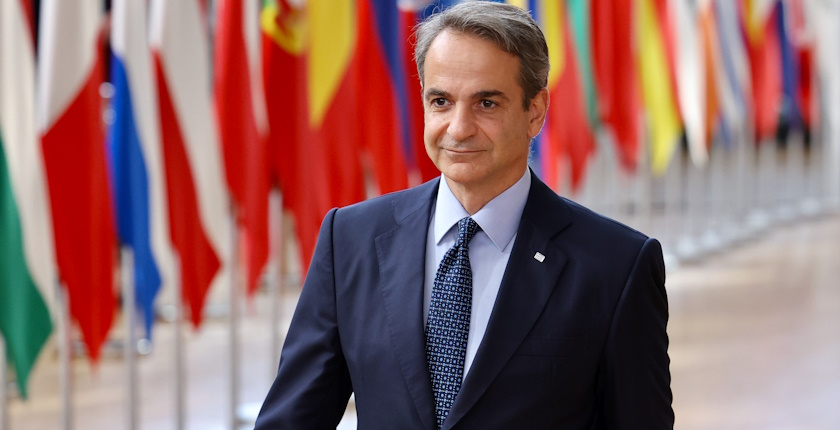
Greece is going to explore its options for the introduction of nuclear energy, according to Prime Minister Kyriakos Mitsotakis.

Speaking during the Energy Transition Summit in Athens, Mitsotakis expanded on his previous statements about nuclear energy and its possible role in the Greek energy mix.

“We are ready to join the Nuclear Alliance. This is not something that is going to happen tomorrow, but Greece must be a part of the discussion,” said the prime minister. The European Nuclear Alliance, launched in 2023, is an initiative of 13 European Union member states. Among them are Bulgaria, Croatia and Romania.

Its goal is to promote nuclear energy and help maintain its role in Europe. Italy has just joined the group.

It is not the first time that Greece has shown interest in the technology. The current government has floated the idea of co-financing a new nuclear power plant in Bulgaria, as part of the deal that would include guaranteed power imports. So far, nothing has materialized.

Mitsotakis also mentioned small modular reactors (SMRs) again as a possible solution, as well as installing reactors in ships to help the sector decarbonize. “We must explore how a naval nation such as Greece can utilize nuclear energy in its fleet,” Mitsotakis noted.

Mitsotakis: Net zero is impossible without nuclear

He added that the world would not be able to cut net greenhouse gas emissions to zero without the technology. According to the prime minister, nuclear fusion is very promising.

Public mistrust and cost issues

There are difficult obstacles to the government’s ambitions. Greek people remain heavily opposed to the installation of nuclear facilities, both inside and near the country. The energy crisis made public opinion only a bit more favorable.

Furthermore, Greece has no experience with nuclear energy and no people engaged in the sector. Everything would have to be created from scratch, from the regulatory framework to the technical knowhow.

Then there is the matter of cost. Even though many voices around the world support a nuclear revival, few new commercial projects have been initiated for traditional nuclear stations. Most new reactors, like in China, are subsidized by the state. Even in Europe, a large part of the discussion concerns renewing and upgrading existing reactors.

The Greek government has raised energy costs as a primary issue for the country and Southeastern Europe. It remains to be seen whether such power plants could operate on a purely commercial basis or if a support scheme could be used.

by in News

Spain’s voltage control was insufficient at time of April blackout

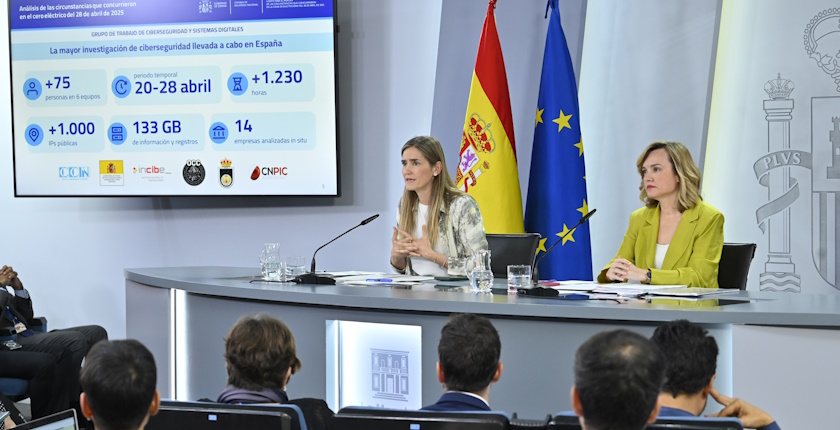
The Government of Spain said the total blackout in the Iberian Peninsula, which occurred on April 28, was caused by overvoltage, with several factors contributing to the crash. Notably, the system run by the country’s TSO Red Eléctrica de España lacked sufficient voltage control. Deputy Prime Minister Sara Aagesen even said the point of no return could have been avoided if voltage control action had been taken earlier.

In a long-awaited document, a government committee that investigated the April 28 collapse of the Iberian electricity network ruled out that a cyberattack caused it. The panel analyzed more than 300 gigabytes of data related to the total blackout, which was one of the worst ever in Europe.

“In 49 days, practically half the timeframe established by the EU, the committee has provided a rigorous and verified diagnosis that will allow us to strengthen the electricity system, a solid foundation on which we can work to design rapid responses to prevent this from happening again. Next week’s Council of Ministers will approve several relevant measures,” said Third Vice-President of the Government of Spain and Minister for Ecological Transition and Demographic Challenge Sara Aagesen.

The cybersecurity investigation, the largest ever undertaken in the country, did identify vulnerabilities that could expose networks or systems to future risks, she asserted.

The blame game is continuing as citizens and businesses are demanding accountability for the massive damage. The European Network of Transmission System Operators for Electricity (ENTSO-E) issued a preliminary report two weeks after the incident.

Overvoltage caused the blackout, according to the new analysis. The committee attributed it to multiple factors. The system had insufficient voltage control capacity, there were frequency oscillations, and power plants were disconnected, “in some cases in an apparently improper manner,” the document reads.

Renewables accounted for 82% of power generation mix just before blackout

The Iberian grid crashed at 12:33. Restoration began with energy from France and Morocco and with self-starting hydroelectric plants in the Duero basin and other locations, which formed energy islands. By 22:00, nearly 50% of demand in Spain was met, reaching 99.95% by 7:00 the next day.

At 12:30 on April 28, renewable energy sources accounted for 82% of the electricity generation mix, followed by nuclear power (10%). Gas plants had a 3% share, coal contributed 1%, while cogeneration and waste amounted to a combined 4%.

Data show a drop in solar generation as prices at the power exchange were going negative, and it coincided with a rise in voltages

There was significant voltage volatility in the transmission system in the morning on the day of the blackout, the document’s authors noted, pointing out that such a situation was also registered on April 22 and 24.

The rise in voltages between 10:30 and 11:10 coincided with a drop in solar generation, probably due to the power market signals, as wholesale prices went negative, the report adds. At the same time, the direction of the exchange with France switched from exports to imports.

Voltage control fleet failed to contain chain reaction

At 12:03, there was an atypical frequency oscillation, by 0.6 hertz, causing large voltage fluctuations for 4.42 minutes. Another one, of 0.2 hertz, occurred at 12:16, followed by an equivalent one at 12:19.

Red Eléctrica de España, the transmission system operator (TSO), conducted mitigation measures, which contributed to the rise in voltages, the committee underscored.

Aagesen said the point of no return could have been avoided if voltage control action had been taken earlier. The government controls 20% of the company, which is listed on the Bolsa de Madrid stock exchange.

At 12:32, voltage began to rise rapidly and steadily, and numerous progressive disconnections of generation facilities were recorded. The names of all power plants in the document are blacked out.

A number of units responsible for voltage control produced reactive power, the opposite of what they were supposed to

The chain reaction could not be contained, as each disconnection contributed to further voltage increases, the analysis showed. A drop in frequency resulted in the loss of synchronization with France, tripping the interconnection with the rest of the continent.

The committee stressed that the number of synchronous plants regulating voltage on the day of the incident was the lowest since the beginning of the year. One of the 10 units that Red Eléctrica scheduled the day before experienced an outage on the same afternoon, and the TSO didn’t replace it in time, the analysis reveals.

Moreover, several units in the group did not respond adequately to the TSO’s instructions to reduce the voltage. Some even produced reactive power, the opposite of what was required, contributing to the issue, the committee added.

Some power plants went offline too early

There were disconnections of the generating power plants that occurred before the voltage thresholds in the 400 kV system were exceeded (380 kV and 435 kV), the report finds.

Among the committee’s recommendations is to allow asynchronous installations to apply power electronics solutions to manage voltage fluctuations. The panel proposed boosting demand, flexibility, storage and interconnection capacities.

Photovoltaics with grid-forming inverters, storage can contribute to voltage control

Photovoltaics are already capable of controlling voltage, but regulations did not allow the application of the technology, according to the Spanish Photovoltaic Union (UNEF), Portuguese Renewable Energy Association (APREN), SolarPower Europe, Global Solar Council and Global Renewables Alliance.

In a joint statement that they issued as a reaction to the report, they called for accelerated investment in grid resilience and system flexibility – especially through grid-forming inverters and battery storage.

The associations recalled that Spain ranked 14th last year in Europe in new battery capacity. Less than 250 MWh came online and nearly all were smaller-scale batteries, not at a utility level. It compares to 9 GW of solar power capacity that the country added in 2024.

by in News

Just Transition Young Voices Award: Empowering youth champions in the clean energy transition

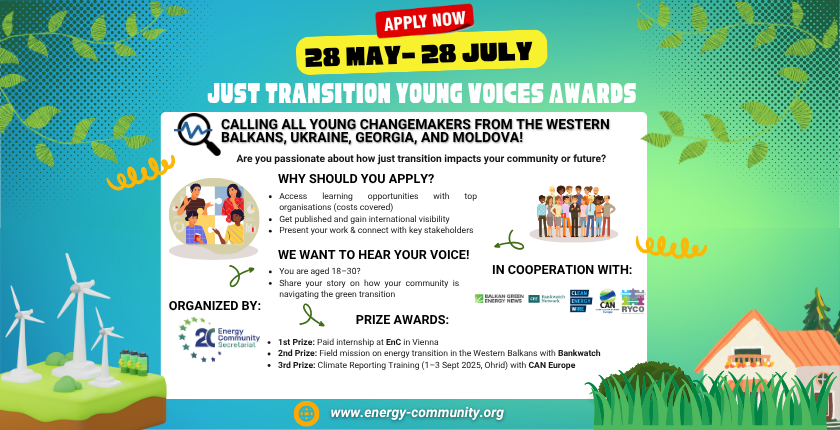
In a celebration of youth-led climate action, the Energy Community Secretariat, together with Bankwatch, CAN Europe, RYCO, and CLEW, has launched the Just Transition Young Voices Award, spotlighting the importance of young people’s voices in shaping a just, equitable, and sustainable energy future. Balkan Green Energy News is an official media partner of the initiative.

Young people aged 18 to 30 from the Western Balkans (Albania, Bosnia and Herzegovina, Kosovo*, Montenegro, North Macedonia, Serbia), Ukraine, Georgia, and Moldova are invited to submit original, fact-based articles that explore how their communities are navigating the shift away from fossil fuels. Recognizing that youth are essential agents of change, the award provides a platform for creative and solution-oriented journalism addressing the challenges and opportunities of a just transition.

Applications are open until 28 July 2025. The competition aims to showcase innovative thinking and concrete solutions developed by young people who are actively engaging in climate and energy issues.

Foto: Energy Community Secretariat

The award framework

The Just Transition Young Voices Award aims to inspire and support young people with an interest in energy and climate journalism to explore and report on just transition topics. Submissions should be original, fact-based articles in English, between 700 and 1,100 words. Stories may highlight real people, places, or initiatives that reflect the challenges, opportunities, and solutions involved in just transition, particularly in sectors or regions impacted by the green shift.

Three prizes will be awarded:

  • A one-month paid internship at the Energy Community Secretariat in Vienna;
  • A field mission on energy transition in the Western Balkans with Bankwatch;
  • Participation in the Climate Reporting Training with CAN Europe in Ohrid (1–3 September 2025).

Winning pieces will be published on Balkan Green Energy News and other partner platforms, as well as presented at the Energy Community Just Transition Forum. Applications will be evaluated by a jury comprising representatives from Bankwatch, CLEW Network, RYCO, and the Energy Community Secretariat.

The Just Transition Young Voices Award reaffirms a simple truth: meaningful system change requires the leadership of those who will live with its consequences.

* This designation is without prejudice to positions onstatus and is in line with UNSCR 1244/99 and the ICJ Opinion on the Kosovo declaration of independence.
by in News

Đukanović: EPCG is implementing three key strategic policies

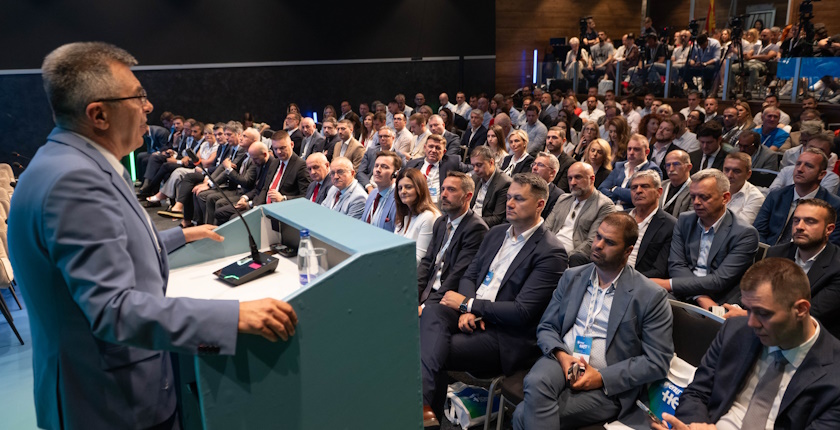
State-owned power company Elektroprivreda Crne Gore is currently implementing three key strategic policies: producing energy at the point of consumption, utilizing existing hydropower infrastructure to connect solar power plants, and developing battery energy storage systems, the President of EPCG’s Board of Directors, Milutin Đukanović, said at the EPCG NET conference.

EPCG NET is organized by Elektroprivreda Crne Gore (EPCG) and its partners. At the event’s opening in Budva, Milutin Đukanović announced the start of trial operations at the Gvozd wind farm and the launch of tendering to install battery energy storage systems (BESS).

“Our ‘produce where you consume’ policy is, in our view, the winner of the energy transition. At the same time, hydropower infrastructure provides technical and meteorological compatibility for connecting solar power plants. However, these activities will have their full impact only with the development of BESS,” Đukanović noted.

The 10,000+ solar project is expected to begin in mid-2026

He also said that numerous investments are underway. By the end of the year, the 55 MW Gvozd wind farm, an EUR 82 million investment backed by KfW, will enter trial operation. Early next year, the company expects to start construction on the second phase of the project – Gvozd 2, with a capacity of 21–22 MW.

A few days ago, tendering was completed for the installation of the eighth unit at the Perućica hydropower plant, with a capacity of 58 MW. The new unit is expected to be online in 2027.

Đukanović recalled that the 3000+ project, featuring 35 MW of solar capacity across 3,500 facilities, has been completed, while the 5000+ project is halfway through, with 40 MW and over 4,000 consumers involved. The 10,000+ project is expected to start in mid-2026, he added.

Preparations are ongoing for the construction of several solar power plants: Krupac (50 MW), Štedim (150 MW), four plants at Kapino Polje (totaling 50 MW), as well as facilities in the Željezara Nikšić industrial complex, where 10 MW of the planned 30 MW has already been installed.

The first tendering for procuring BESS will be launched soon, covering two systems with a capacity of 30 MW each (120 MWh). By the end of 2027, EPCG plans five such systems, with a combined capacity of 600 MWh.

The energy transition is a great opportunity for progress

Đukanović also announced an upcoming call for bids for the construction of a tunnel that will connect the Krupac and Slano reservoirs, valued at EUR 12 million, as part of a broader plan to enhance the utilization of the water resources of Nikšićko polje, Montenegro’s largest karst field. Additionally, plans are underway to develop Lake Liverovići and underground waters in the Nikšićko polje, with total investments potentially exceeding EUR 1 billion and a projected capacity reaching 700 MW, he added.

“The energy transition is a great opportunity for progress, but also a serious threat if risks are overlooked. Time is of the essence – we must act immediately,” Đukanović urged, calling on forum participants to focus their discussions on concrete solutions and offer ideas for improving existing policies.

The two-day forum has brought together numerous experts, investors, and representatives of institutions from the energy sector across the region and Europe.