by in News

Hungary’s MAVIR commissions 60 MWh battery energy storage system

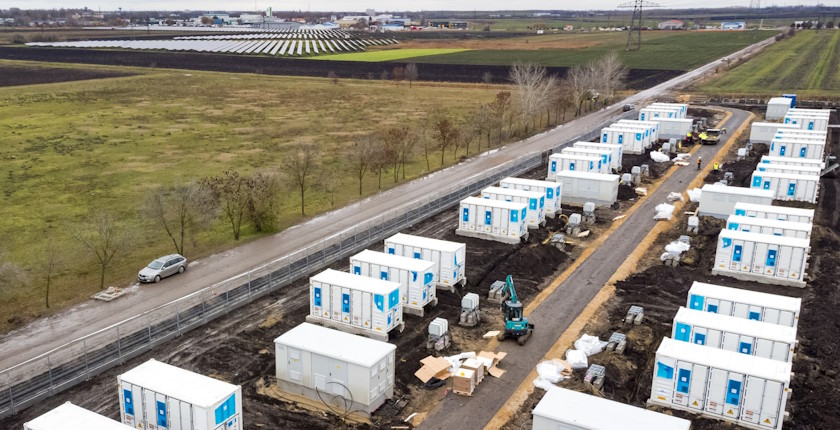
MAVIR, the Hungarian electricity transmission system operator (TSO), put into operation a battery energy storage system, BESS, of 20 MW in capability and a three-hour cycle. It will help grid security and the integration of renewable energy sources.

After entering the world’s top ten in photovoltaic capacity per capita, Hungary is picking up pace in terms of batteries as well. Energy storage units are coming online to maintain grid stability and bridge the hours between the peaks of daily solar power production and electricity consumption. Transmission system operator MAVIR commissioned a BESS of 20 MW in operating power and a three-hour cycle, translating to 60 MWh in capacity.

The EUR 20.3 million project received support in the form of a grant via the European Union. MET Group also put into operation a similarly-sized BESS last month in Hungary, while MOL Group launched construction of another one.

MAVIR’s battery energy storage system is in Szolnok, southeast from the capital Budapest. The company picked Forest-Vill as the contractor in late 2023. They signed the contract in February 2024. The same firm built MET Group’s BESS and also used equipment from Huawei Technologies.

Investors in BESS in Hungary are benefiting from EU grants

MAVIR’s new facility will contribute to grid security and a more efficient integration of renewable energy sources and support a sustainable, green future, said Deputy Minister of Energy and Parliamentary State Secretary of the Ministry of Energy Gábor Czepek.

The government’s EUR 45.1 million subsidy program for residential and corporate investments resulted in the installation of 12,000 batteries in households of 109 MWh in total, the official pointed out. Hungary now hosts 114 MW in battery capability.

Czepek estimated that the grants would bring 1 GW online by 2030, as targeted. Another call, of EUR 12.5 million, will soon be launched for energy storage for the industrial sector, he stressed.

Notably, the Ministry of Energy said solar power production reached 6.25 GW around noon on June 25. It was more than the country’s entire electricity demand at the time, it added.

by in News

Montenegro publishes NECP for public consultation – sole coal plant planned for shutdown in 2041

State institutions, companies, organizations, and individuals have until August 6 to deliver their suggestions and comments about the draft National Energy and Climate Plan of Montenegro. It sets the provisional date for taking the Pljevlja coal power plant, the only one in the country, at 2041, but the authors pointed out that it primarily depends on a just transition and the security of electricity supply.

Montenegro’s long-awaited draft National Energy and Climate Plan (NECP) sets out the key 2030 targets for greenhouse gas emission cuts, share of renewable energy sources in gross final energy consumption, and energy efficiency.

The document, also known for its acronym INECP, in which the first letter stands for integrated, was published for the public consultation phase. It lasts until August 6. The Ministry of Energy and Mining called on the interested public – local authorities and other state institutions, the expert and scientific communities, associations, organizations, companies and individuals, to send their comments and suggestions.

“The energy and climate policy isn’t just a task for the government – it is a joint responsibility. That is why I am inviting all stakeholders, and especially nongovernmental organizations, to use this opportunity and contribute to the creation of a realistic, ambitious and just plan,” Minister Admir Šahmanović stated.

Renewables target can be surpassed

National goals match the ones adopted within the Energy Community. The targeted primary energy consumption in 2030 amounts to 0.92 million tons of oil equivalent. Under the business-as-usual scenario (with existing measures – WEM), the benchmark is expected to land at 1.04 million. With additional measures (WEM), the trajectory moves closer to the objective, projected at 0.97 million tons of oil equivalent.

The goal for final energy consumption is 0.73 million tons of oil equivalent. Existing measures result in 0.82 million, and added ones in 0.77 million tons of oil equivalent.

The share of renewable sources in transportation could reach 24.4% instead of only 7.2%

Montenegro fares better with its expected share of renewables in gross final energy consumption, against the 50% target. In the WEM scenario, it reaches 42.5%, and the WAM projection is 53.3%.

Without additional measures, renewable sources have a 66.3% share in electricity production. The document’s authors calculated that it could grow to 79.4%. As for transportation, the range is from 7.2% to 24.4%. In heating and cooling, the possible progress from the results of current measures is only 0.4 percentage points, reaching 49.2%.

The targeted reduction in emissions is 55%, the same as in the European Union. It translates to 2.42 million tons of carbon dioxide equivalent in the final year of the current decade. With existing measures, the curve touches 3.06 million in 2030, and with added ones the result is 2.4 million tons of CO2 equivalent.

Retirement of Pljevlja coal plant depends on socio-economic situation in northern region

Oil derivatives, which are all imported, participated in the 2022 final energy consumption with 47.3%, followed by electricity, 33.3%. Wood fuel is the next item, with 18.7%. The share of coal is only 0.7%, because almost the entire output goes to thermal power plant Pljevlja, the only such facility in Montenegro.

The overall electricity production capacity at the end of 2023 was 1.07 GW. The Pljevlja coal plant, which is currently under reconstruction, has 225 MW.

According to the projection, the Pljevlja coal plant is in cold reserve after 2040

The provisional date for its shutdown is 2041, but it primarily depends on the success of the just transition process and maintaining the security of electricity supply, the NECP reads. It also shows the Pljevlja coal plant in cold reserve after 2040.

In addition, taking it offline requires supplying end consumers under favorable conditions, while minding the overall socio-economic situation in the country’s northern region, where the coal mines and the power plant are, the authors explained. They noted as well that an energy storage pilot project is under consideration for the site of the Pljevlja facility.

Electricity sector’s self-sufficiency varying due to dependence on hydrological conditions

The country’s two large hydropower plants Piva and Perućica have 342 MW and 307 MW in capacity, respectively.

There are 38 other hydroelectric units in Montenegro, of which the smallest one is 200 kW. The biggest facility, Vrbnica (6.75 MW), is owned by a firm with the same name, registered in the capital Podgorica.

The high share of hydropower plants in electricity production, implying dependence on hydrology, is the main reason of the variability of the level of self-sufficiency of the national energy balance year after year, the NECP says.

There are two wind power plants on the grid: Krnovo (72 MW) and Možura (46 MW), while the third one, called Gvozd, is under construction. The project envisages 54.6 MW in the first phase.

There are only five independent solar power plants. The biggest one, Čevo, has 4.4 MW in nominal capacity and a 3.25 MW connection. Nevertheless, units operated by prosumers reached 75 MW altogether, according to one entry, though the numbers are lower in other parts of the NECP.

by in News

Energy storage in focus: How custom insurance solutions are fueling Southeast Europe’s green transition

Battery energy storage is becoming increasingly central to the energy transition in Southeast Europe and beyond, thanks to its key role in enabling renewables integration while ensuring grid flexibility and resilience. However, as battery energy storage systems (BESS) become more advanced and technologically complex, the risks involved exceed those of traditional renewable energy projects, making tailor-made insurance vital to their bankability, safety, and profitability. We discuss the importance of energy storage for the region’s green transition, as well as the critical role of custom-made insurance solutions in the success of BESS projects, with Delyan Iliev, Managing Director of Renewable Energy Insurance Broker (REIB), a market leader in BESS insurance in Southeast Europe.

Why storage is becoming central to Europe’s energy strategy

As Europe accelerates its energy transition, solar is leading the charge. In 2024 alone, 21.9 GWh of new battery energy storage systems (BESS) were installed across the continent, marking a 15% year-on-year growth. With storage now considered essential for grid flexibility, market stability, and renewable integration, Southeast Europe is beginning to recognize its strategic value.

“Energy storage is not a side note anymore, it’s quickly becoming a pillar of the energy system,” says Delyan Iliev, Managing Director of Renewable Energy Insurance Broker (REIB). “We’re proud to help accelerate that shift. In the first half of 2025, we’ve already insured over 5 GWh of battery projects across Europe – including in Bulgaria, Germany, and the UK. That scale shows how far the market has come, and how much trust there is in high-quality insurance.”

In Serbia, solar deployment is gaining pace, and developers are preparing for large-scale projects. Regulatory frameworks are evolving to support hybrid models that combine generation with storage. BESS is no longer just a technical upgrade; it’s a strategic enabler for grid stability, revenue optimization, and investor confidence.

What makes BESS riskier than traditional energy projects?

As storage projects become more complex, so do the risks. Unlike conventional solar or wind installations, BESS introduces specific technical and operational challenges—from thermal runaway and fire risk to cyber threats, component failure, and yield degradation. These are real risks requiring serious attention from insurers and developers alike.

Poor system design, such as insufficient spacing between battery units and PV modules, can also trigger insurance exclusions or delay permitting. “In emerging markets like Serbia, where regulations are still catching up with technology, project design and compliance can make or break an investment,” says Iliev.

This is why traditional, off-the-shelf insurance is no longer adequate. Storage requires a more nuanced approach – one that aligns with each project’s structure, revenue model, and operational realities.

REIB’s approach: Insurance that mirrors project reality

Recognizing this need, Renewable Energy Insurance Broker has created tailor-made insurance solutions designed specifically for energy storage systems. A cornerstone of its model is Business Interruption (BI) insurance – not a standard add-on, but a fully customized product. Rather than applying generic compensation formulas, REIB designs the BI structure around how each project actually earns revenue, whether through tolling agreements, profit-share arrangements, or hybrid mechanisms.

This precision ensures fair and effective compensation, not only when a system completely fails, but also when partial degradation or performance issues occur. Furthermore, the BI coverage accounts for income loss, not just profit, delivering significantly higher payouts in case of disruption. Indemnity periods can be extended up to 18 months, supporting the financial stability of a project well beyond initial damage control.

Why early-stage insurance is so critical for BESS

One of the most critical features in REIB’s offering is early-stage protection. The company insures storage projects from the installation phase, well before grid connection. This phase, often excluded by traditional policies, is one of the riskiest stages in a project’s lifecycle. By covering this early gap, REIB offers peace of mind to both developers and investors.

In addition, REIB’s policies include protection against underperformance (reduced yield), cyber risk coverage for systems managed via EMS or SCADA, and third-party liability, including sudden environmental pollution, which is increasingly relevant for permitting and compliance in European markets.

Applicable to co-located and stand-alone storage

While co-located solar + storage projects dominate the market, stand-alone BESS is gaining traction in Serbia and other Southeast European countries. These projects play a crucial role in grid balancing, frequency regulation, and capacity markets, especially in areas where renewable generation is unevenly distributed.

REIB’s insurance framework applies to both co-located and stand-alone BESS systems, adjusting coverage parameters to meet the distinct operational and revenue profiles of each. Whether tied to a solar plant or operating independently, these assets face risks that must be managed holistically.

What gives REIB its unique market perspective?

REIB is more than a broker, it’s also an investor. The company is directly involved in PV+BESS projects like the 4.1 MWp solar plant with 4MW/8 MWh BESS in Nikolichevtsi and the 5 MWp + 6MW/12 MWh BESS in Bagrentsi. “We don’t just assess risk from a distance,” says Iliev. “We experience it firsthand, and that’s what helps us design smarter coverage.”

How insurance can drive the BESS market forward

For REIB, insurance is not just a regulatory requirement; it’s a strategic lever. “Well-structured insurance improves bankability, secures investor confidence, and unlocks access to financing,” says Iliev. “In a sector like BESS, that can be the difference between stalled progress and market leadership.”

As Serbia and its neighbors move toward a new energy reality, battery systems will be central to the equation. Making them bankable, and insurable is where REIB steps in, helping to turn risk into resilience and innovation into long-term value.

For more information about tailor-made insurance solutions for BESS projects, contact the REIB team to explore how they can support your next project.

by in News

Satellite dishes get new life, hosting solar panels for data center

A Swiss telecom service provider converted unused satellite dishes into solar dishes, powering its data center’s rising energy needs. Smart energy tech firm SolarEdge provided its DC-optimized inverter solution, overcoming the challenge of shading.

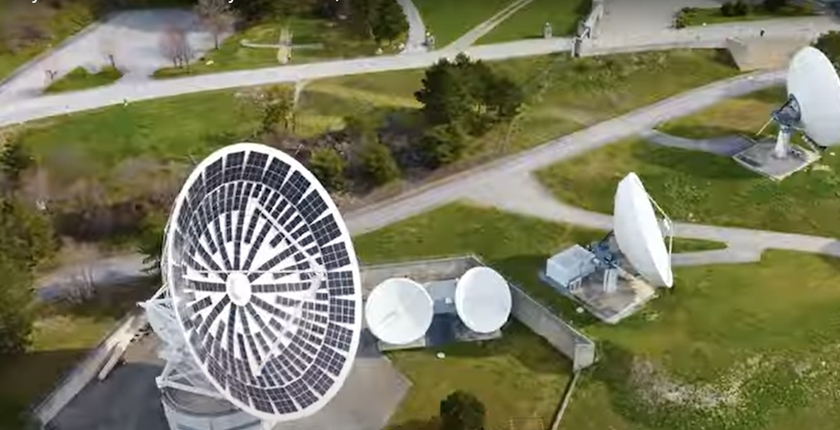
CKW, a Swiss provider of integrated energy and building technology solutions, has transformed disused satellite dishes located on the premises of telecom service provider Leuk TDC. The project was developed in collaboration with smart energy technology company SolarEdge, highlighting the potential of repurposing infrastructure for solar.

Instead of disposing of the parabolic antennas, they now host photovoltaic systems. Axpo’s subsidiary CKW fitted two satellite dishes in Leuk, Switzerland, with 307 solar panels each.

The new design for the complex, constructed in 1972, enables meeting the energy requirements of Leuk TDC’s power-hungry data centre. Each dish generates an estimated 110 MWh of clean energy per year. The telecommunications firm has also installed a rooftop solar system on the main building of the computing and data centre, for a further 555 MWh.

The data centre is powered by hydroelectric plants as well, so its electricity demand is covered with 100% renewable energy.

[wpcc-iframe title=”Case study: Satellite Dish to PV System – Leuk, Switzerland” width=”500″ height=”281″ src=”https://www.youtube.com/embed/dR2ETrx3aJ0?feature=oembed” frameborder=”0″ allow=”accelerometer; autoplay; clipboard-write; encrypted-media; gyroscope; picture-in-picture; web-share” referrerpolicy=”strict-origin-when-cross-origin” allowfullscreen=””]

SolarEdge systems maximizing output of each pair of PV panels in satellite dishes

Given the complex orientation and inclination of the solar panels on the satellite dishes, shadows threatened to reduce the efficiency of the solar system. With traditional string solar inverters, they reduce the overall performance of the solar array to match the weakest-performing panel on the string, meaning one shaded panel could reduce energy yield considerably.

In a string structure, a photovoltaic unit in a satellite dish wouldn’t be cost-effective

SolarEdge’s DC-optimized inverter solution was used with Power Optimizers, attached to the underside of every pair of solar panels. It enables the solar system to mitigate the impact of module mismatch on the satellite dishes. Inverters turn the direct current (DC) from PV panels into alternating current (AC).

“Having design flexibility with a solar installation is a huge benefit for installers. In complex cases such as these, with uneven surfaces, without the use of power optimizers we simply would not have been able to achieve anywhere close to the level of energy being produced today. I recommend that others planning similar solar installations allocate sufficient time for planning and collaborate with trusted personnel to overcome any technical challenges,” said CKW’s Deputy Head of Solar Technology for Central Switzerland Manuel Jossi.

Making use of existing ability to track sun’s movement

The combination of PV and hydropower provides Leuk TDC with more financial stability by reducing its dependency on variable grid electricity costs. “The satellite dishes were becoming obsolete, so we always knew we wanted to make use of them in some way or another,” the company’s Chief Executive Officer John Harris explained.

One other advantage is that the parabolic antennas follow the sun’s path throughout the day, maximizing the solar power output.

by in News

Solar power exceeds Bulgaria’s entire electricity demand for first time

For the first time, photovoltaic production alone surpassed power consumption in Bulgaria – for two hours. Interestingly, even more electricity was exported at the same time.

On Friday, June 20, the active photovoltaic capacity in Bulgaria between 10:00 and 11:00 before noon was 2,935 MW, and in the following hour it grew to 3,230 MW, state news agency BTA reported. According to data from the Electricity System Operator (ESO) and the European Network of Transmission System Operators for Electricity (ENTSO-E), it exceeded the country’s entire consumption for the first time ever, by 17 MW and 313 MW, respectively.

Even more electricity was exported at the same time, as total domestic production amounted to 6,567 MW and 6,736 MW.

Of note, not all solar power went to Bulgarian consumers, given that some traders and customers have long-term contracts with other suppliers, like the National Electricity Co. (NEK) and nuclear power plant Kozloduy, the article adds.

“This is a significant event and a great success for Bulgaria and the Bulgarian energy sector. Positioning us this way – as a leading country in the production of photovoltaic energy – not only supports the implementation and fulfillment of the commitments that Bulgaria has made for decarbonization, but it also has a positive effect on the country’s investment climate. Thanks to the solar energy that we transform into electricity, we are modernizing the entire Bulgarian energy sector,” Chairwoman of the Bulgarian Photovoltaic Association Meglena Rusenova commented.

Photovoltaics are perhaps the fastest-growing private investment sector in Bulgaria, she said.

Photovoltaics are biggest factor lowering prices at the electricity exchange

Over the past two years, over EUR 2 billion have been invested in electricity production, according to Rusenova. On top of that there are capital investments in energy storage and infrastructure, she pointed out.

Solar energy contributes to reducing prices for end users, and in practice, photovoltaics are the most significant factor for lower prices on the Independent Bulgarian Energy Exchange (IBEX), Rusenova underscored.

According to ESO, a total of 3.5 GW of photovoltaic capacity has been connected in the last three years, bringing the total to 4.7 GW.

by in News

Grants for public institutions’ solar projects in Romania top EUR 500 million

The Romanian Ministry of Energy has signed 29 more grants to public entities for investments in solar power plants for self-consumption, bringing the total number of projects under the program to 1,046. The latest round of grants is worth EUR 11.3 million, putting the total sum approved so far at EUR 502 million.

The 29 grants, financed from the European Union’s Modernisation Fund, will help build solar power plants with a total installed capacity of 9.13 MW at schools, hospitals, city halls, and other institutions across Romania. It brings the total installed capacity supported under the program to over 403 MW, according to a press release from the Ministry of Energy.

The latest batch of projects puts the total planned capacity at over 403 MW

In many cases, installed renewable capacities cover up to 70% of the energy needs of public institutions, the ministry noted.

Romania’s outgoing Minister of Energy Sebastian Burduja hailed the program as a “paradigm shift,” noting that Romania was already in a new energy era, with local communities no longer just consumers, but active participants.

“Over the past two years, the Ministry of Energy has consistently provided support to local public authorities that understood the importance of investing in energy production for their own consumption. We have made funds available, simplified procedures, and worked side by side with beneficiaries so that the projects move forward quickly,” Burduja stated in a Facebook post.

The latest round of contracts covers public entities in 18 counties across the country: Arad, Argeș, Bacău, Brăila, Călărași, Constanța, Dâmbovița, Galați, Brașov, Gorj, Hunedoara, Maramureș, Mehedinți, Olt, Sibiu, Suceava, Teleorman, and Timiș.

The number of contracts has increased from 633 in March

In March, the ministry said it had signed 633 contracts, worth a combined EUR 339 million, of which EUR 294 million was from the Modernisation Fund. Total planned capacity at the time was 237.4 MW.

by in News

Greece to rely on carbon price, renewables potential in green hydrogen development

Despite early efforts to develop green hydrogen and its first regulatory framework, Greece finds itself on a steep curve.

The government has presented the first law on hydrogen and renewable gases in parliament. At the same time, refineries and other industries are working on projects that will determine green hydrogen’s cost-effectiveness.

However, a significant obstacle is the government’s unwillingness to support the new technology, either through subsidies or other financial instruments. The Ministry of Environment and Energy has specified that no upcoming technology would benefit from public funds. The goal is to maintain a low cost for the consumer during the energy transition.

According to Professor Pantelis Kapros from the National Technical University of Athens (NTUA), it means hydrogen will have to rely almost exclusively on the price of carbon. As the European Union’s European Trading System (EU ETS) is about to enter its second phase in 2026, the price of carbon allowances is projected to rise steeply.

Even so, market participants estimate that a ton of carbon dioxide equivalent would need to cost EUR 140, two times more than today, to make green hydrogen competitive against grey hydrogen, which is produced from natural gas.

Exports and power prices added to the equation

Regardless, Greece sees an opportunity to produce and export green hydrogen. The reason is its high renewables potential and production. The ever-increasing photovoltaic capacity has caused an overabundance of energy during the day. More demand is needed to balance the system and hydrogen can provide a way out.

Tsafos: We want to become a supplier

The hope is that the low renewable energy cost, combined with potential interest in shipping hydrogen abroad, will justify long-term investments.

“Our view is that as long as the market is interested, we want to become a supplier,” Deputy Minister of Environment and Energy Nikos Tsafos said at the Hydrogen & Green Gases Forum in Athens.

A potential problem is that green hydrogen plants are not expected to be viable if they only produce during the day, when renewable energy prices are usually lower. “Ten hours of operation are not enough to support producers and there are also technical issues to solve,” said Dimitris Kardomateas, head of the Center for Renewable Energy Sources and Saving (CRES).

He also pointed to the average daily wholesale power price, as it is higher in Greece than in most other European markets. It should be noted that electricity makes up about 70% of the total operating cost of electrolyzers.

Biomethane considered more mature

On the other hand, biomethane is considered much easier to develop.  The technology depends less on power prices and also faces fewer technical hurdles. “Biomethane has a clear role, especially through its ability to enter the gas network, and we want to utilize it”, said Tsafos.

Gas distribution company Enaon EDA emphasized its readiness to include biomethane in its network. Its CEO Barbara Morgante noted that a study is underway to pinpoint the various existing and planned biomethane production plants around the country, as well as their proximity to Enaon’s network.

Biomethane is usually obtained by processing biogas to get methane of the same purity as in fossil gas. The renewable fuel can also be produced from clean hydrogen and CO2.

by in News

Ireland ends coal use – Spain, Italy, Greece set to follow

The Moneypoint power plant stopped burning coal, marking the end of Ireland’s coal era. The last such facilities in several other countries in the European Union are operating only barely or occasionally.

Ireland has ended coal power generation. It is the eleventh coal-free country in the European Union and the 15th in Europe overall. Notably, nine countries in total never hosted coal power plants, according to the Beyond Fossil Fuels database.

Slovakia and Spain officially intend to exit coal this year, followed by Greece (2026), France and Hungary (2027) and Denmark (2028). However, the dates could be pushed forward and there is a possibility that more countries will join the group in the meantime. Several of their remaining facilities are active just sporadically – in islands or to cover winter peaks or only until the district heating systems that they supply switch to cleaner sources.

For instance, the share of coal power in Finland is minuscule.

Coal power is already uncompetitive most of the time. Moreover, when such facilities are idle, their costs rise further because of salaries and the complex logistics.

Moneypoint plant switches to backup with heavy fuel oil

The Moneypoint plant in Ireland ceased burning coal last week earlier than planned. Its operator ESB is turning the site into a renewable energy hub.

At the turn of the millennium, wind supplied just 1% of the country’s electricity. Today, it generates more than a third.

“The government’s priority now must be building a power system fit for a renewable future; one with the storage, flexibility, and grid infrastructure needed to run fully on clean, domestic renewable electricity,” said Alexandru Mustață, campaigner on coal and gas at Beyond Fossil Fuels.

Moneypoint will serve a limited backup role until 2029, burning heavy fuel oil under emergency instruction from transmission system operator EirGrid.

Subsea interconnections to enable coal phaseout completion in Spain, Italy

Spain and Italy are set to follow suit, excluding the Balearic Islands and Sardinia, respectively.

Brindisi Sud (2 GW) and Torrevaldaliga Nord (2 GW) are expected to cease regular operations in mid-2025 and are set to be placed into a strategic reserve, pending full decommissioning. Italy’s remaining coal plants, Sulcis (590 MW) and Fiume Santo (640 MW) in Sardinia, are expected to remain online until a second undersea grid cable to the mainland is completed.

Aboño (916 MW) in Spain is being converted from coal to fossil gas. Soto de Ribera (350 MW) and Los Barrios (589 MW), are barely operating. The Alcúdia plant in the island of Mallorca has two coal units of 130 MW each. Its closure depends on the construction of the archipelago’s second interconnection with the mainland.

Slovakia’s coal phaseout was extended for a short while as a smaller unit kept using what it had left in stock

Slovakian energy company Slovenské elektrárne ended production at its combined heat and power (CHP) plant Vojany (220 MW) in March of last year, which was supposed to mark the country’s coal exit. However, the Teko facility of 121 MW continued to operate with its remaining stockpiles to cover the winter season.

The Cordemais coal plant (1.2 GW) in France is designated for closure in 2027. Émile-Huchet (600 MW), the other remaining facility in the country, should be converted to gas by then.

Turkey, Germany, Poland, Slovenia, the Czech Republic, Serbia, Montenegro, Bosnia and Herzegovina and Kosovo* have the largest shares of coal in power production in the European Union and Southeastern Europe.

* This designation is without prejudice to positions onstatus and is in line with UNSCR 1244/99 and the ICJ Opinion on the Kosovo declaration of independence.
by in News

OMV Petrom enters Bulgarian solar power market as partner in one of biggest projects

As part of its decarbonization efforts, Romanian hydrocarbons producer OMV Petrom is strengthening its presence in neighboring Bulgaria. It agreed to buy 50% of the Gabare solar power project, of 400 MW, from its developer Enery Element.

The solar power investment frenzy in most of Southeastern Europe is continuing despite rising curtailments and the frequent occurrence of negative power prices. Major developers and operators are counting on battery storage to gradually close the still widening gap between intraday peak production and consumption in spring and autumn.

Romanian oil and gas company OMV Petrom – a subsidiary of OMV – is acquiring a 50% stake in Bulgarian firm Dunav Solar Plant. It is developing the 400 MW Gabare photovoltaic project in Byala Slatina near Sofia.

Until now, the sole owner was Enery Element, a joint venture between Austrian renewable energy company Enery Development and its Bulgarian partner Element Power Group. The two sides didn’t disclose the amount. They expect to close the transaction later this year, after fulfilling certain conditions.

Partners to invest EUR 200 million in total by production launch in 2027

The solar park is expected to enter commercial operation in 2027. By then, OMV Petrom and Enery plan to invest EUR 200 million, including from external financing. They are targeting their final investment decision before the end of 2025.

Solar trackers will maximize output, which will be equivalent to the consumption of 150,000 domestic households, the Romanian company pointed out. A battery energy storage system (BESS) of up to 600 MWh in capacity is an option for future consideration, OMV Petrom added.

Neel: Natural gas and renewables complement each other

“By investing in one of the largest photovoltaic projects in Bulgaria, we are strengthening our presence on this neighbouring market and are supporting the region’s energy transition. We believe that natural gas and renewables complement each other and play a key role in reducing emissions while ensuring energy stability,” said member of the Executive Board of OMV Petrom Franck Neel, responsible for the Gas and Power division.

He added that the company would also offtake 50% of the generated electricity, through a power purchase agreement (PPA), without revealing further details.

Enery currently generates almost 700 GWh of clean electricity per year from 490 MW in installed capacity. It has 8 GW in the project pipeline in 11 countries.

Permits for PV park secured

The construction permits and the grid connection have already been secured, according to the update. At 400 MW in peak capacity, Apriltsi is the largest solar power plant in the Balkans and Eastern Europe, excluding Turkey.

However, a PV system of 550 MW in Greece is about to be completed.

OMV Petrom is the largest integrated energy producer in Southeastern Europe, with an annual group hydrocarbon production of 40 million barrels of oil equivalent in 2024. In addition, it is expanding in the segments of wind power and photovoltaics, energy storage, alternative fuels including green hydrogen, and chargers for electric vehicles.

OMV earlier expressed interest in renewables in Serbia and Hungary as well

The group has a refining capacity of 4.5 million tons. It operates an 860 MW high-efficiency gas-fired power plant. The group is present in Romania and neighbouring countries through 780 filling stations under the brands OMV and Petrom, of which 93 in Bulgaria.

At the end of last year, Austrian energy giant OMV had a 51.2% stake in OMV Petrom. The Romanian Ministry of Energy controlled 20.7% and pension funds in the country participated with 23.7% in total.

In Bulgaria, OMV Petrom started supplying natural gas to business customers last year. Following the discovery of gas resources in Romania’s Neptun Deep block in the Black Sea, it is now exploring the gas potential in Bulgaria’s Han Asparuh block. In April, the company said it approved an investment budget of EUR 1.6 billion for 2025, or over 20% more than in 2024.

Pparent company OMV, headquartered in Vienna, expressed interest last summer in the wind and solar power potential of Romania, Serbia, Bulgaria and Hungary.

by in News

Alteo building solar park with battery storage for MOL Group

MOL’s 37.4 MW solar power plant with a battery energy storage system (BESS) of 40 MWh will contribute to the energy independence of its oil and gas complex in southern Hungary. Alteo is the contractor building the facility. The battery segment has received grants totaling EUR 20.5 million.

MOL Group marked the start of construction of a solar park and BESS at its Algyő site in Csongrád-Csanád county. The Hungarian company pointed out that smart green transition, reducing external energy consumption, is a key element of its Shape Tomorrow strategy.

The investment will significantly contribute to the energy independence of the oil and gas complex in southern Hungary, improve the flexibility of electricity supply and lower the site’s CO2 emissions by 13,000 tons per year, according to the announcement.

MOL Group hired Alteo, in which it holds minority stake

The photovoltaic plant project is for 37.4 MW and the battery energy storage system would have 40 MWh in capacity. Alteo, listed at the Budapest Stock Exchange, is the contractor for the construction of the facility. MOL Group, which holds a minority stake, controls a total of 73.8% of its shares together with two private equity funds.

The company’s full name is Alteo Energy Services. As an aggregator, it owns or operates gas power plants and renewables, combined with energy storage, while also providing software as a service (SaaS).

Storage is essential for smart energy transition

MOL has won support of EUR 20.5 million in total for the energy storage project in Algyő. A EUR 6.7 million grant came via the European Union’s Recovery and Resilience Facility (RRF) and Hungary’s National Recovery and Resilience Plan (NRRP), while the government secured the remainder.

“Our strategic goal is a smart energy transition, for which energy storage is essential, as it ensures the integration and flexible use of sustainable energy systems. Algyő is a symbolic location for us – it is here that six decades of industrial experience meet the technology of the future,” said Managing Director of MOL Exploration and Production Hungary Péter Archibald Schubert.

Solar power capacity in Hungary has topped 8 GW

The solar power plant’s output is equivalent to the annual consumption of 22,500 households in the county, while the BESS can flexibly cover 7,300 households, he added.

MOL Group operates seven solar parks in Hungary and two in Croatia, of 111 MW altogether. Its goal is to reach 200 MW in renewable energy capacity by the end of next year.

Alteo will operate MOL’s other battery energy storage system, in Tiszaújváros

Of note, the company broke ground in March for a 40 MWh battery system at the MOL Petrochemicals site in Tiszaújváros, in northeastern Hungary. It selected Alteo as its operator. The investment is worth EUR 16.3 million, of which EUR 6.7 million is a grant from NRRP.

As for the PV and battery investment in Algyő, the local authority made the 47-hectare site available to the integrated hydrocarbons producer, Hungarian media reported.

At the ceremony, Deputy State Secretary for Energy Transition at the Ministry of Energy Viktor Horváth said that the country’s solar power capacity has surpassed 8 GW. It is ninth in the world in PV capacity per capita.

In other storage news, MET Group inaugurated the largest BESS in Hungary last week at its gas power plant near Budapest.