by in News

ESM secures EUR 1.5 million grant to accelerate North Macedonia’s energy transition

North Macedonia’s power utility Elektrani na Severna Makedonija has secured a EUR 1.5 million grant to strengthen its capacity and accelerate the energy transition.

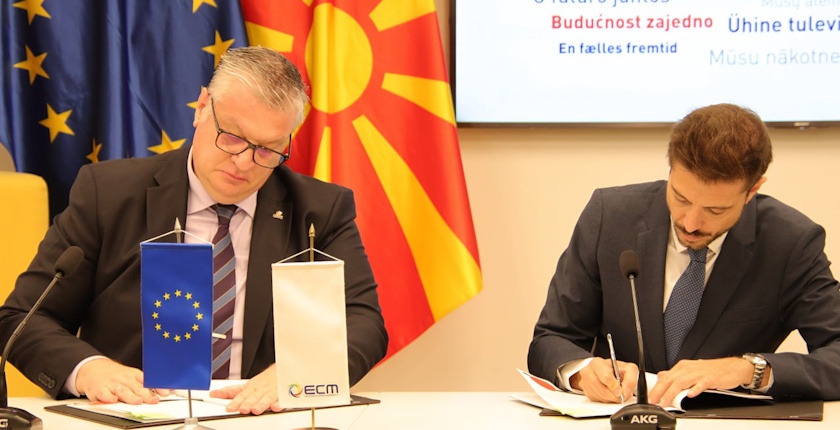
Elektrani na Severna Makedonija (ESM) made a major step toward a market-driven green transformation with a grant implementing agreement with Germany’s KfW Development Bank.

The agreement formalizes a EUR 1.5 million technical assistance grant to boost the state-owned utility’s corporate and green transition processes.

The support will strengthen ESM’s institutional and commercial capacities, enable further investments in renewable energy, and prepare the company for integration into the European energy market, according to a social media post by Steffen Hudolin, Head of Cooperation at the European Union’s Delegation to North Macedonia.

Uzunčev: The grant represents a strategic cornerstone for the company’s institutional transformation

The grant is part of a wider EUR 13 million EU programme supporting the market-oriented green transformation of state-owned energy utilities across the Western Balkans and Eastern Neighbourhood, the post reads.

Lazo Uzunčev, EMS General Manager, said that the grant represents a strategic cornerstone for the company’s institutional transformation to a comprehensive, green, and market-oriented enterprise.

Hudolin, Uzunčev, Obrador (photo: ESM)

For ESM, it is a profound commitment to becoming a modern and commercially competitive force within the European energy market, he underlined.

“The funding will be instrumental in bolstering our internal capacities and corporate governance through the financing of critical modeling and strategic planning initiatives,” Uzunčev asserted.

​Hudolin: Accelerating the green transition has never been so close and so possible

According to Steffen Hudolin, accelerating the green transition has never been so close and so possible.

“With the support of the EU and the European Fund for Sustainable Development Plus (EFSD+) guarantees, the country will receive financial means and technical guidance by our partners in KfW to accelerate the transformation and decarbonisation of the energy sector,” he stated.

Pablo Obrador Alvarez, KfW Head of Division Energy and Transport for Southeast Europe and Türkiye, said the energy transition requires fit energy utilities able to cope with challenging conditions.

“With this project, KfW will support ESM’s transformation that will position and help them improve their performance and market readiness,” he added.
by in News

Croatia discovers series of geothermal sources suitable for heating

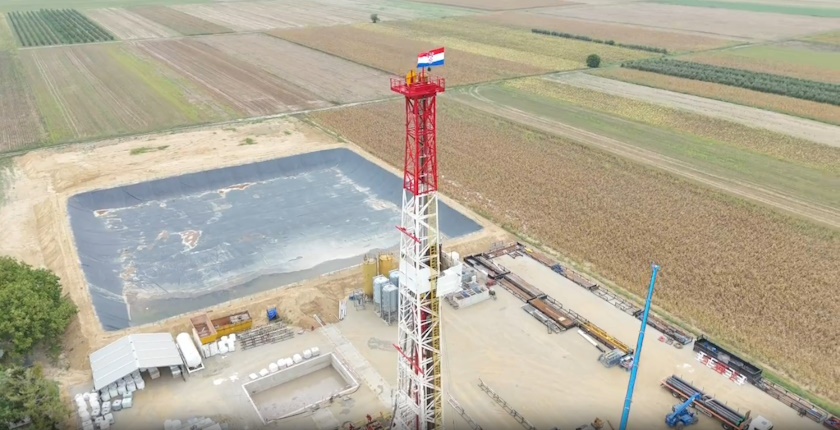
The results of exploration at the Vinkovci GT-1 well have confirmed the area’s significant geothermal potential, Croatian Hydrocarbon Agency said. Maximum temperature is 131 degrees Celsius.

Vinkovci is the third location in Croatia with positive results, as reservoir temperatures exceeding 100 degrees were earlier confirmed in Velika Gorica and Osijek, Croatian Hydrocarbon Agency revealed. The activities are part of a wider project to develop geothermal potential for district heating for six cities and towns.

“The positive findings of the geothermal exploration in Vinkovci, after Velika Gorica and Osijek, are proof that Croatia has significant geothermal potential and the knowledge to use it. Croatian Hydrocarbon Agency is bringing concrete results through its systematic approach and exploration investment, creating the foundations for further projects for renewable energy sources. Namely, geothermal energy is not only a stable and clean source, but a strategic resource that can contribute to the security of energy supply in Croatia. The results show at the same time that Croatian experts can independently and effectively conduct complex energy projects,” President of the Management Board Marijan Krpan said.

Success at 2,700 meters below ground

Crosco naftni servisi (Crosco Integrated Drilling and Well Services), a member of INA Group, ois conducting the works. At a depth of 2,700 meters in the Vinkovci GT-1 exploratory well, an expert team has measured a maximum temperature, 131 degrees, pointing to the possibility of commercial application of geothermal energy in the heating system.

The location is in Croatia’s northeast, in Slavonia area.

“The exploration in Vinkovci has been conducted in line with the highest technical standards and the project’s planned dynamic. Upon the completion of the exploration at the remaining location, in Zaprešić, Croatian Hydrocarbon Agency plans the development of additional wells at sites with confirmed potential. That way we will establish the production-injection pairs required for a secure and long-term geothermal energy use,” the geothermal energy sector’s Director Martina Tuschl stated.

Opportunity for improving local agriculture

Except for heating, access to heat opens up possibilities for companies. Geothermal potential could be used in agricultural production in the municipality of Jarmine, where the exploratory well is located.

The agency is conducting the project with funding from the National Recovery and Resilience Plan (NRRP or, in Croatian, NPOO), within which EUR 50.8 million was secured for exploration in four locations: in Velika Gorica, Osijek, Vinkovci and Zaprešić.

Works at the Zaprešić GT-1 (ZapGT-1) site are underway.

by in News

North Macedonia’s ESM needs investments of EUR 3 billion to replace coal power

Power utility Elektrani na Severna Makedonija estimated that it requires EUR 3 billion by 2040 to replace electricity from its lignite-fired power plants. According to member of the Board of Directors Ivan Stojanovski, the state-owned company is preparing investments in gas power plants, solar, wind, hydropower and energy storage. He highlighted its plans for a 300 MWh battery and the Bogdanci hybrid energy park.

North Macedonia’s utility Elektrani na Severna Makedonija (ESM), the country’s main electricity producer, generated 60% of the 2024 output in the Bitola and Oslomej coal plants.

A rough estimate is that ESM would have to invest around EUR 3 billion in the next 15 years to replace its power production from lignite, which is baseload energy, Ivan Stojanovski, a member of the Board of Directors and the company’s Chief Financial Officer, told Balkan Green Energy News on the sidelines of the International Forum on Energy for Sustainable Development (IFESD-14).

He explained that the transition to green energy is quite expensive. ESM needs to replace the 840 MW in baseload production that the Bitola and Oslomej thermal power plants provide, the executive added.

Hydropower is a domestic electricity source, unlike natural gas

The company opted for investments in diverse energy sources to achieve it, Stojanovski stressed.

Gas power plants provide baseload energy, but at the same time, they turn the spotlight on national security as well as the security of supply, in his words.

Lignite is currently mined in North Macedonia while natural gas must be imported, so gas supply interruption is possible, ESM’s CFO added.

Gas power plants are required, but it is necessary to invest in hydropower as it is a domestic resource, Stojanovski said. On the other hand, hydroelectric plants are more expensive and it takes longer to build them, he noted.

ESM launched the Bitola 3 solar power project

ESM is developing wind and solar power projects as well. Stojanovski highlighted the planned expansion of its Bogdanci wind farm. The European Bank for Reconstruction and Development (EBRD) is participating in the development of the Miravci wind power project, of at least 100 MW, he recalled.

The company is working on solar power projects Oslomej 1 (10 MW), Oslomej 2 (10 MW), Bitola 1 (20 MW) and Bitola 2 (60 MW), Stojanovski asserted. Bitola 3 endeavor is underway, too, and the financing contract is expected to be signed by the end of the year, he revealed.

The photovoltaic system will have at least 100 MW, Stojanovski asserted.

“We plan to sign a contract next year with Agence Française de Développement (AFD) for a solar power plant in Bogdanci of at least 30 MW and to create a hybrid energy park there – wind, solar, and a battery,” he stated.

According to Stojanovski, the company is developing a battery energy storage project with the EBRD, for up to 300 MWh in capacity. The site is within the REK Bitola coal complex and the facility will be a systemic solution for all the solar power plants there, he explained.

Blended financing as a solution

“EUR 1 billion to EUR 1.3 billion is needed just for solar, wind and batteries. We will need between EUR 500 million and EUR 700 million for gas power plants. Another EUR 1 billion to EUR 1.3 billion would be for large hydropower plants such as Čebren and Vardar Valley, and some smaller projects,” Stojanovski explained.

Asked how the company plans to secure financing, he pointed to blended financing – own sources combined with some participation from international financial institutions. It is important to diversify the sources by opening cooperation with as many financial institutions as possible, in Stojanovski’s view.

ESM traditionally cooperates with the EBRD and KfW. Stojanovski announced that the company would diversify financing by launching cooperation with the World Bank, Italy’s development bank Cassa Depositi e Prestiti, and AFD.

“It will enable us to access more sources and complement them with financing from local banks. We also tend to obtain support from the state budget over a longer period, 10-15 years, and state guarantees, but also additional funds. This is a financial model that can secure long-term and sustainable financing of infrastructure projects,” Stojanovski said.

by in News

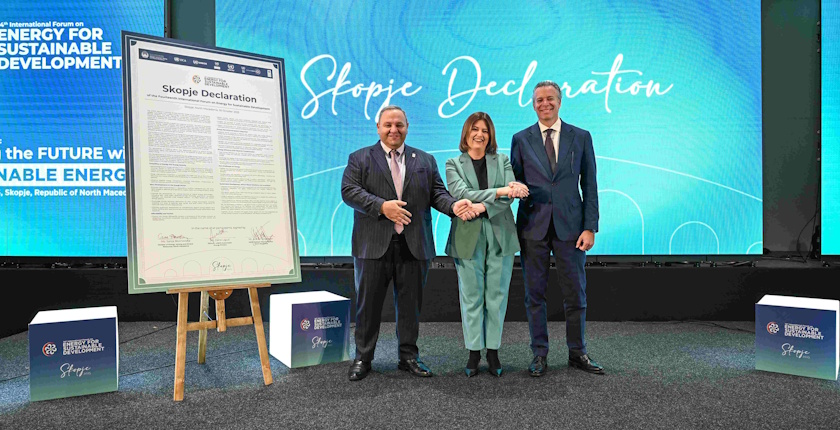
Skopje Declaration signed as International Forum on Energy for Sustainable Development wraps up

The 14th International Forum on Energy for Sustainable Development (IFESD-14) concluded yesterday with the signing of the Skopje Declaration. During the three-day summit, North Macedonia’s capital became a global center of dialogue, ideas, and visions for the future, according to the Ministry of Energy, Mining and Mineral Resources of North Macedonia.

This year’s edition of the International Forum on Energy for Sustainable Development (IFESD-14), themed From Goals to Action: Powering the Future with Sustainable Energy, was closed in Skopje yesterday. The event was organized by the Ministry of Energy, Mining and Mineral Resources of North Macedonia, in cooperation with the United Nations Development Programme (UNDP) and the UN’s five regional commissions – UNECE, UNESCAP, UNECLAC, UNECA, and UNESCWA.

Representatives of the UN and the five regional commissions described the organization of the event as flawless, and praised North Macedonia and Skopje as excellent hosts on the global energy scene, the Ministry pointed out.

The forum brought together over 500 participants from more than 70 countries

The forum brought together over 500 participants from more than 70 countries. Over 150 speakers took part in 35 themed sessions and panels, presenting ideas, solutions, and concrete steps for the future of the global energy transition.

On behalf of all participants, the Declaration was signed by Minister of Energy, Mining and Mineral Resources Sanja Božinovska, UNDP Resident Representative for North Macedonia Armen Grigoryan, and Dario Liguti, Director of the Sustainable Energy Division at UNECE.

The signatories agreed that the way forward requires regional connectivity, smart investments, digital transformation, and an inclusive energy transition that leaves no one behind.

Božinovska: A new impetus for energy cooperation, solidarity, and vision

[wpcc-iframe title=”Sanja Božinovska statement on the occasion of IFEST25 Skopje and signing the Skopje Declaration” width=”500″ height=”281″ src=”https://www.youtube.com/embed/ZgcrsSuNVes?start=1&feature=oembed” frameborder=”0″ allow=”accelerometer; autoplay; clipboard-write; encrypted-media; gyroscope; picture-in-picture; web-share” referrerpolicy=”strict-origin-when-cross-origin” allowfullscreen=””]

In her closing address, Božinovska emphasized that the forum represented a turning point for the region.

“Over the past three days, Skopje has been a global stage for energy vision and dialogue on sustainable development. What we witnessed here was a wave of knowledge, cooperation, and ambition – a forum that demonstrated that when institutions, scientists, businesses, and international partners sit at the same table, change happens,” she stressed.

Božinovska emphasized that the Skopje Declaration sends a strong signal that the Western Balkan region is not just a follower of the global energy transition, but an active driver.

The future was not just discussed, but also set in motion

“I am proud that it is from Skopje, at the heart of the Balkans, that a new impetus for energy cooperation, solidarity, and vision is emerging. This is proof that North Macedonia can be a platform for ideas that will transform the region. The 14th International Forum on Energy for Sustainable Development will be remembered as the place where the future was not just discussed, but also set in motion. Let us continue to build the energy future that our citizens deserve,” said Božinovska.

Grigoryan: Skopje has demonstrated global solidarity in action

[wpcc-iframe title=”Mr Armen Grigoryan, UNDP Resident Representative, statement on IFESD25 Skopje” width=”500″ height=”281″ src=”https://www.youtube.com/embed/uH2-5cr5ju0?feature=oembed” frameborder=”0″ allow=”accelerometer; autoplay; clipboard-write; encrypted-media; gyroscope; picture-in-picture; web-share” referrerpolicy=”strict-origin-when-cross-origin” allowfullscreen=””]

Armen Grigoryan, UNDP Resident Representative for North Macedonia, said that the path to sustainable, reliable, and affordable energy is clear, but that it requires unity and vision.

According to him, it requires political will, global solidarity, and commitment.

UNDP is pleased to work together with the Government and the Ministry of Mining, Energy and Mineral Resources, as well as regional commissions, on policies, emission reduction solutions, inclusivity, and air quality improvements, according to him. UNDP invests in people and innovation to achieve measurable results that citizens can feel at home, at work, and everywhere, he added.

Liguti: The Skopje Declaration is a signal of the region’s ambition and vision

According to Dario Liguti, Director of the UNECE Sustainable Energy Division, the document signed in Skopje will remain an important reference point in global energy processes.

He said that the Skopje Declaration represents a strong signal of the regional and global cooperation and ambition, confirming the shared commitment to accelerating a just and inclusive energy transition – a transition that delivers real progress for people and the planet.

Conclusion: smart technologies, a just transition, and green investments

Božinovska, Grigorian, and Liguti (phto: Ministry of Mining, Energy and Mineral Resources)

The document states that signatories will work on integrated and inclusive energy policies; the modernization of power grids and digitalization; investments in renewable energy sources and a just transition; and the promotion of green financing and gender equality in energy.

“Together, we can transform the global energy system into one that safeguards our climate, drives innovation, ensures affordability, and delivers prosperity for all,” reads the closing paragraph of the Skopje Declaration.

by in News

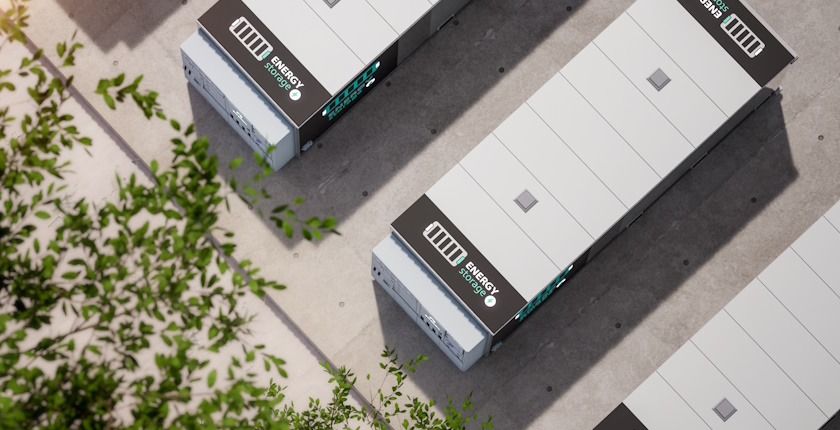
PPC building three battery storage facilities in Greece

PPC Group has launched the construction of a battery energy storage system in the area of its Amyntaio coal plant. The company is also building BESS facilities at its thermal power plants Kardia and Meliti, as it is preparing to end coal use in Greece. One BESS unit is under construction in Bulgaria, as well. In Romania, PPC is expanding its wind park project Deleni, which would bring its operational portfolio in the country to over 1.5 GW.

Public Power Corp. – PPC Group is investing in energy storage in Greece and surrounding countries, complementing its solar and wind power investments and contributing to the transformation of coal regions. The government-controlled utility revealed that its future battery energy storage system near the Amyntaio coal plant in the Western Macedonia region is under construction.

The new station will consist of batteries with 50 MW in operating power and a duration of four hours, translating to a capacity of 200 MWh. Wholly-owned subsidiary PPC Renewables is responsible for the project. It is for liquid-cooled batteries of the LFP (lithium iron phosphate) technology.

The construction of two more electrochemical storage stations is already underway in the same northern region, in the areas of the Kardia and Meliti thermal power plants, the company pointed out. Their combined capability would be 98 MW, for 196 MWh in capacity.

Western Macedonia region to host 860 MW of energy storage

The role of energy storage units for the system is critical, as they aim to support the operation of adjacent photovoltaic power plants and contribute to the stability of the electricity system, PPC Group added. It is planning 860 MW of energy storage in the Western Macedonia coal region. The company said it would create 1,300 jobs in the construction phase and hundreds during operation.

Two pumped storage hydropower projects are included in the portfolio. The one that would transform the Kardia mine is for 320 MW and eight hours, and the facility at the South Field mine would have 240 MW and a 12-hour duration. PPC Group said it has completed the permitting process for the latter.

Solar power plants of 2.13 GW in northern Greece nearing completion

Earlier this month, the utility said its solar power projects in Western Macedonia of 2.13 GW overall are moving ahead at a fast pace and within schedule, in areas around coal plants Ptolemaida, Kardia, Agios Dimitrios and Amyntaio. Overall, upon their completion, the photovoltaic clusters in the region, largest ones in the entire Europe, will generate almost 3.15 TWh of electricity per year, the company added.

Coal land in the Western Macedonia region is turning into endless solar parks

It is equivalent to over 6% of the annual energy consumption in the Greek mainland. Utilising the land of the former lignite mines of Ptolemaida, Kardia, and Agios Dimitrios, PV plants totaling 1.19 GW are being installed, of which 90% is complete and some is in operation.

The clusters include PPC Group’s flagship project, of 550 MW. It would be the biggest facility of its kind in Southeastern Europe excluding Turkey.

In cooperation with the German company RWE, the construction of photovoltaic plants in Amyntaio of 940 MW overall is also advancing rapidly toward completion, the latest update reads.

Advancing investments in Bulgaria, Romania

In addition, the company said it is building a BESS unit of 25 MW and 55 MWh in neighboring Bulgaria.

As for other recent news, PPC said it is expanding its Deleni wind park project in Vaslui county in northwest Romania. The first phase, 140 MW, is supposed to be completed by the end of the year. The addition would amount to 85 MW, consisting of 14 turbines, the Greek company added.

The site is at the Bogdănița commune. With the 225 MW in Deleni, PPC in Romania would reach 1.5 GW in operational capacity.

by in News

Enery, SmartPulse launch regional partnership for multi-market optimization

Austrian green energy producer Enery and Turkish software company SmartPulse have entered a strategic partnership to deliver advanced solutions for the management and trading of renewable energy and storage assets. The collaboration aims to amplify market results for renewable energy producers and battery owners, while strengthening integration into the regional energy markets.

Enery Portfolio Optimization (EPO) – the licensed power trader of Enery managing a portfolio of over 750 MW of renewables assets and 700 MWh of battery capacity, will enhance its services through SmartPulse’s multi-market optimization platform, which automates trading, delivers real-time dispatch, and provides analytics and forecasting. The Turkish software company’s services coupled with EPO’s market know-how accelerate revenue growth and strengthen financial outcomes, according to the announcement.

The combined offering will be available for standalone and co-located storage assets on the Romanian market as part of a wider regional partnership. The platform aims to ensure the highest profitability from day-ahead, intraday and ancillary services markets, while ensuring the optimal physical dispatch of the asset, the Austrian company pointed out.

Balancing group members gain access to market opportunities

The service captures the full spectrum of financial arbitrage opportunities, reserve and balancing energy market participation to maximize revenue potential, Enery added. By joining its balancing group, renewables producers and battery storage owners gain access to all markets opportunities, reduced balancing costs, and 24/7 monitoring and trading through an artificial intelligence–powered platform, the update reads.

The offering in Romania will be part of a wider regional partnership

“Our international expertise in storage and renewables optimisation combined with SmartPulse’s innovative platform allows us to be more flexible and deliver tailored solutions for each asset. This partnership ensures that our Romanian clients will receive the highest quality services and optimised profitability from their assets,” said Enery’s Head of Energy Trading Petya Dimova.

Romania is among most dynamic power markets in Europe

The two companies stressed that they are bringing international experience and know-how in optimizing the value of large-scale renewables and storage assets to the Romanian market. The joint approach ensures clients can focus on business development, operations, and maintenance, while entrusting the financial realization of their electricity to expert hands, they said.

“Romania is one of the most dynamic power markets in Europe, and we are proud to make it a priority in our growth journey. By partnering with Enery, we bring our technology together with their strong local expertise to deliver advanced optimization and trading solutions,” Head of Global Growth at SmartPulse Uygar Yörük stated.

Enery, an independent power producer, operates a diversified portfolio of 511 MW and has 212 MW under construction. Its development pipeline amounts to almost 10 GW across 10 countries in Central and Eastern Europe. In the region that Balkan Green Energy News covers, the company is active in Romania, Bulgaria and Slovenia.

SmartPulse, founded in 2018 in Istanbul, focuses on short-term power trading automation. The firm has just been acquired by Volue.

by in News

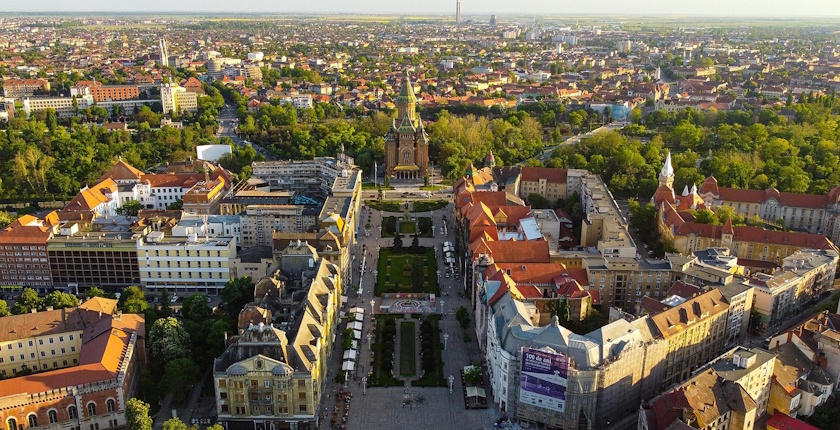
Romanian city of Timișoara nearing construction of its own solar park

Romania is experiencing strong growth in photovoltaic capacity, with 1.7 GW installed in 2024 alone. Local authorities are actively contributing to the energy transition. They include Timișoara, which will soon get its own solar power plant, of 5.6 MW.

According to data from the Romanian Photovoltaic Industry Association (RPIA), solar power plants with a total capacity of 1.7 GW were installed in Romania last year. The expansion is driven by accessible financing, legal reforms, simplified permitting procedures, and auctions for contracts for difference (CfD).

Local authorities, including counties, are one of the pillars of the country’s energy transition. For example, in the small town of Turceni in southwestern Romania, home to only about 7,000 residents, a EUR 380 million project was recently launched. The municipal authority signed an agreement with the European Investment Bank (EIB) for the construction of agrosolar parks, energy storage systems, and facilities for green hydrogen production and storage.

Timișoara is part of a growing group of local authorities developing solar power projects for their own needs

In northern Romania, the municipality of Târgu Lăpuș has established a public-private partnership with a company founded by Turkish and Romanian investors. The goal is to build a 200 MW solar power plant with an energy storage system. The investment is estimated at EUR 100 million.

Timișoara, the capital of Timiș county and the largest city in western Romania, has long been a part of the growing group of municipalities developing solar power projects for their own needs. Mayor Dominic Fritz and Minister of Environment Diana Buzoianu have signed a grant agreement for the construction of the city’s first solar park, of 5.6 MW, marking the start of the investment’s next phase.

The municipality will now launch the tender procedure for design and construction services. The solar power plant is expected to generate an average of 7.8 GWh of green energy annually.

Solar park to deliver direct benefits for the city

The total investment value is RON 32.2 million lei (EUR 6.3 million) including value-added tax. The project is conducted under the European Union’s Modernisation Fund, managed by the Ministry of Energy. The fund supports investments in renewable energy, energy efficiency, storage, grids, and just transition in 13 European Union member states with lower incomes. It uses the proceeds from the sale of greenhouse gas emission allowances under the EU Emissions Trading System (EU ETS).

“The solar park will bring direct benefits to the city – lower costs, reduced emissions, and more sustainable infrastructure. It is just one of the projects through which we are transforming Timișoara into a green and smart city, capable of producing a significant share of the energy it consumes from renewable sources,” said Fritz.

The solar power plant will cover two thirds of public lighting needs

PV panels will be installed near the wastewater treatment plant in the Freidorf district, on 20 hectares. The generated electricity will cover around two thirds of the city’s public lighting consumption. The facility would contribute to lowering greenhouse gas emissions with 4,800 tonnes of CO₂ equivalent annually.

The solar power plant is part of the local administration’s broader plan to switch to renewable energy sources and reduce pollution. Timișoara has also expressed interest in a state aid mechanism for the production and transport of geothermal energy for district heating and cooling systems, worth EUR 300 million, covered from the Modernisation Fund. Last year, the city signed a strategic partnership with OMV Petrom to utilize geothermal energy for district heating.

by in News

Božinovska: Solar overtakes hydro in North Macedonia

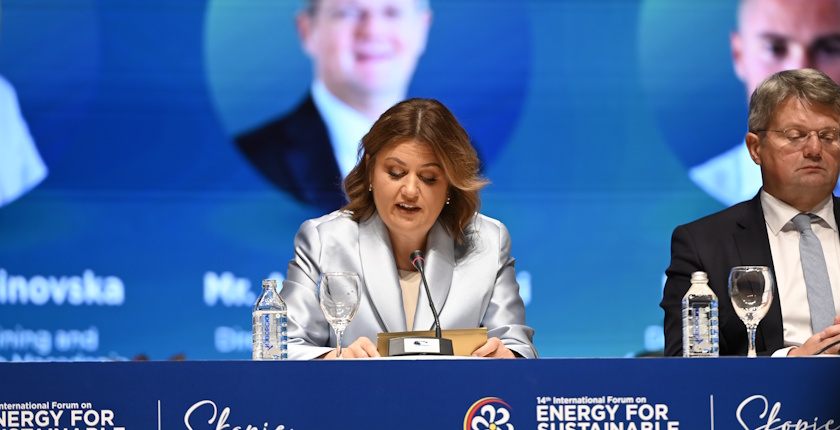
The share of solar power plants’ capacity in North Macedonia has surpassed hydropower plants in 2024, Minister of Energy, Mining and Mineral Resources Sanja Božinovska said at the 14th International Forum on Energy for Sustainable Development in Skopje.

The three-day International Forum on Energy for Sustainable Development (IFESD-14) started yesterday. Its theme is From Goals to Action: Powering the Future with Sustainable Energy. The event was organized by the Ministry of Energy, Mining and Mineral Resources of North Macedonia, in cooperation with the United Nations Development Programme (UNDP) and the UN’s five regional commissions – UNECE, UNESCAP, UNECLAC, UNECA, and UNESCWA.

According to Sanja Božinovska, Minister of Energy, Mining and Mineral Resources, North Macedonia has taken decisive steps in recent years to transform its energy system and align it with the principles of sustainability, security, and affordability.

The reforms are already delivering measurable results, with renewables now accounting for more than half of the country’s total installed electricity capacity – 56% in 2024, she noted.

North Macedonia is moving from goals to action

“The structure of that progress is even more striking. Photovoltaic power plants now represent 28% of installed capacity, surpassing large hydropower, which is at 24%. For the first time in our history, solar has overtaken hydro – a symbolic and practical milestone in our path toward decarbonization,” the minister stated.

In 2024 alone, solar output grew by 186%, she underlined at the first high-level plenary session.

Photo: Ministry of Energy, Mining and Mineral Resources

The numbers speak louder than words: they highlight a nation that is not just planning a transition, but living it, in Božinovska’s view.

Of note, at the end of 2024 the capacity of solar power plants was 848 MW. The year-on-year was higher than 340 MW. Hydropower capacity was 720 MW, at the end of last year.

Božinovska: We are supporting over 5,000 workers and communities affected by the coal phaseout

“The numbers confirm it — North Macedonia is moving from goals to action,” Božinovska stressed.

She added that the country is investing in new solar and wind projects, expanding energy storage, and modernizing the national grid to absorb growing renewable capacity. “These investments are essential for maintaining reliability and flexibility as we integrate more clean energy sources,” she explained.

Božinovska pointed out that the commitment to a just energy transition is equally important.

“We are supporting over 5,000 workers and communities affected by the coal phaseout, helping them to retrain, diversify local economies, and secure green jobs,” she underlined.

Joksimović: Serbia to reach 2030 renewables target

Sanja Božinovska and Jovana Joksimović (photo: Ministry of Energy, Mining and Mineral Resources)

According to Jovana Joksimović, Serbian Assistant Minister of Mining and Energy for International Cooperation and European Integration, coal is still the backbone of the energy system in Serbia, while the share of energy from renewables is significant and growing, and it reached 38% in 2023.

The government plans that one in two megawatt-hours would be produced from renewables by 2030, she underlined.

“Existing valuable resources will need to remain the foundation of Serbia’s electricity sector until renewable energy, transmission and distribution infrastructure, as well as storage capacities and ability to integrate renewables, are sufficiently developed and aligned to reliably and securely replace coal-based electricity generation,” the assistant minister told the audience during the second high-level plenary session.

It is necessary to diversify supply channels but also the energy mix

Joksimović stressed that the increased capacity for clean energy, secured from the two very successful rounds of the auctions, would contribute to reaching 2030 targets.

When it comes to advancing the energy transition and powering the future, it is necessary to think outside the box, she added. Supply channels should be diversified but so does the energy mix, to be as self-sustainable as possible, in Joksimović’s view.

There is huge support for it from relevant international financial institutions – IFIs, but more is needed, in her words.

“If we are going to reach the targets that we set for us, I believe that the European Commission would be partnering with us in all efforts that we are taking,” she concluded.

Photo: Ministry of Energy, Mining and Mineral Resources
by in News

Renewable electricity should not be subject to EU’s CO2 import tax

The European Commission is collecting evidence to come up with solutions for unintended effects of the Carbon Border Adjustment Mechanism (CBAM) on renewable electricity in the Western Balkans, Director of the Energy Community Secretariat Artur Lorkowski pointed out in an interview with Balkan Green Energy News, as one of the most important developments in the sector. Boosting renewable energy development and trade with third countries such as the Western Balkans was supposed to be accelerated by the European Union’s CO2 import tax.

To reduce the payment obligations of EU importers under CBAM, the contracting parties in the region are planning carbon pricing systems, but under different models. The ultimate goal is eventually joining the EU Emissions Trading System, implying the need for coordination and cooperation between the governments in the process, Lorkowski stressed.

Looking back twenty years since the Energy Community Treaty was signed, it proved to be a successful format of cooperation, the Energy Community Secretariat Director Artur Lorkowski said. On the occasion of the anniversary, Balkan Green Energy News sat down with the head of the international organization to speak about the achievements and benefits for the contracting parties, and the remaining milestones that the Western Balkans need to reach in order to integrate with the EU’s energy union.

“Economic growth depends on energy security and fair pricing. There is visible progress in transformation, clearly seen from the 2024 figures. And the final element is the accelerated energy market integration with the EU, and this is what we can be really proud of,” Lorkowski asserted.

Among the segments with tangible improvements, he also highlighted the convergence on the wholesale gas and electricity markets. It is facilitating competitiveness in the Energy Community, the secretariat’s chief added.

Renewables capacity doubled in four years

Fossil fuels used to account for 60% of electricity production in the contracting parties five years ago, compared to 50% now, Lorkowski noted. The significant results in renewables except for large hydro are illustrated by the fact that the overall capacity in the segment has more than doubled between 2020 and 2024, he stressed. More importantly, the carbon footprint – the CO2 emissions per unit of the nominal gross domestic product, fell 11% last year alone.

CO2 emissions per unit of the nominal GDP fell 11% last year in the Energy Community

As for EU integration, electricity market coupling is progressing very well, as a good example, in Lorkowski’s view. The legislation is mostly aligned, so most countries are just waiting for the process to be concluded, the director of the Energy Community Secretariat explained.

“There are operating wholesale markets everywhere in the Western Balkans except in Bosnia and Herzegovina, which is about to adopt the required law. Serbia is at the forefront of that process. North Macedonia and Montenegro are very close, with small elements yet to be achieved. It is a non-reversible point, point of no return on a path towards EU integration,” Lorkowski said. He recalled that when capacity calculations regions (CCRs), operationalization and verification are cleared from the to-do list, it would take 18 months to join the EU’s market coupling project.

Electricity can be exempted from CBAM at later stage

Energy Community contracting parties may become eligible for exemption until 2030 from CBAM in electricity, if they meet the CBAM requirements. However, the EU is starting to charge the CO2 import tax already on January 1.

“I wish the contracting parties followed my messages from the Belgrade Energy Forum in 2023, because you might remember me saying that CBAM is coming and we have to prepare for that. But unfortunately, we have observed a lot of delays and hiccups in the preparatory process. Fair enough, this is the reality we have to face now – no country of the Energy Community will be exempted on 1 January 2026. But we can still work to be exempted at a later stage,” Lorkowski underscored.

Artur Lorkowski was a keynote speaker at Belgrade Energy Forum 2025, organized by Balkan Green Energy News

European Commission expected to clarify rules by end of year

The second part of the story is that CBAM, in addition to its intended impacts, especially on coal power, also has unintended impacts, Lorkowski explained. For example, electricity transit between EU member states through the contracting parties, in practice, may also be subject to the tax, even if it was not intended by the European legislators.

CBAM was intended to provide equal treatment for products produced inside and outside the EU when it comes to carbon payments. “Renewable energy, not being subject to the EU ETS, would – logically – not need to be subject to CBAM, but with the current rules, even EU off-takers with cross-border power purchase agreements (PPAs) may still be subject to payment obligations, as the implementing rules remain overly complex, effectively treating them in the same way as fossil fuel importers. These are real problems that stakeholders have been raising with us in our targeted outreach to power companies, traders, and other stakeholders both from the EU and Energy Community,” Lorkowski added.

Legislative efforts to further improve trade in renewables with the EU continue under the Energy Community

The Energy Community Ministerial Council reported it in Athens to the European Commission and asked it to find a solution.

Lorkowski said he expects the EU’s top executive body to soon issue implementing and delegated acts, by the end of 2025, clarifying the CBAM implementation rules, and to follow it up in 2026 with a targeted amendment proposal on electricity.

Legislative efforts to further improve trade in renewables with the EU continue under the Energy Community. “The European Commission has presented to the contracting parties a draft decision on the mutual recognition of guarantees of origin and is now awaiting their feedback. I hope that in 2026 we can have a decision. But it does not mean that the guarantees of origin can be used as the currency for paying the CBAM fee. That would require amending the CBAM legislation,” he stated.

Carbon pricing systems need to evolve toward matching EU ETS

For a potential reduction of CBAM payments in other areas as well – iron and steel, aluminum, fertilizers, cement and hydrogen – third countries need to introduce carbon pricing systems. Serbia recently drafted legislation for a CO2 tax and for a tax on imports of carbon-intensive products. It is a good step forward, according to Lorkowski.

“We expect each and every country to make a decision on the carbon pricing. All of the countries of the Energy Community, with the exception of Kosovo*, have communicated to the secretariat which model they will implement. And the models vary: from Serbia’s carbon tax to a domestic emissions trading system of Montenegro, which is already in place,” he revealed.

There is no uniform carbon pricing model for the Energy Community

Namely, the Energy Community Ministerial Council decided not to implement a uniform regional carbon pricing mechanism but opted for individual models. They should all be built with the perspective of aligning eventually with the EU Emissions Trading System (EU ETS), Lorkowski said.

“The key challenge now for the Energy Community is how to maintain the integrity of the electricity market between the contracting parties and the European Union after CBAM enters its definitive phase from next January. We need to figure out how to coordinate among the systems. It implies not only the existence of the domestic carbon markets, but also the cooperation within the region,” he pointed out.

Ministerial Council to announce way forward on carbon pricing coordination

The Ministerial Council is due to conclude on carbon pricing at its regular annual meeting in December, Lorkowski said.

“The three critical elements are how much the CO2 will cost, who will pay – which businesses and sectors are in scope – and when those carbon pricing systems will be introduced. They need to maintain the integrity of the market, the level playing field of the market, and avoid market distortions,” the top Energy Community official added.

Practical policies more important than coal phaseout dates alone

Turning to the coal phaseout, essential for the decarbonization of the economy, Lorkowski acknowledged the significance of political declarations such as the Sofia Declaration and commitments from the national energy and climate plans (NECPs).

“That said, it is critically important to anchor the actions for the future with practical policies. The decisions on the establishment of carbon pricing mechanisms are even more important. In addition, we should focus on monitoring, reporting and verification – MRV systems. The contracting parties need to identify emitters and measure quantities,” the director of the Energy Community Secretariat underscored.

* This designation is without prejudice to positions onstatus and is in line with UNSCR 1244/99 and the ICJ Opinion on the Kosovo declaration of independence.
by in News

Bulgaria’s coal regions to get further EUR 808 million for just transition

Bulgaria’s coal regions will receive BGN 1.58 billion (EUR 808 million) through the Just Transition program, under the European Union’s Just Transition Fund (JTF), for energy efficiency, renewable energy, and green hydrogen projects, as well as for converting mining areas for commercial use.

With a EUR 598 million program already underway, total investments in the economic transformation during and after the country’s coal phaseout would reach EUR 1.38 billion. They cover coal regions Stara Zagora, Kyustendil, and Pernik and the municipalities of Nova Zagora, Yambol, Simeonovgrad, Harmanli, Topolovgrad, Dimitrovgrad, Haskovo, Elhovo, Sliven and Tundzha.

Grants from the JTF are intended to help coal regions shut down mines and coal-fired power plants, rehabilitate land, switch to a circular and climate-neutral economy, and lift households out of energy poverty.

By the end of the year, the Bulgarian Ministry of Regional Development and Public Works will launch three new procedures for the allocation of grants, according to Deputy Minister Yura Vitanova.

One, worth EUR 153.4 million, will focus on energy communities and energy efficiency in public buildings. Another, worth EUR 72.6 million, will help small and medium-sized enterprises (SMEs) install solar panels and energy storage systems for both self-consumption and commercial use.

A third call, with a budget of EUR 242.9 million, will support the socio-economic transformation, including projects to convert mining areas into business and industrial zones.

Green hydrogen projects will be backed with EUR 134.5 million

Additionally, EUR 134.5 million will be used to fund the development of hydrogen production and transportation infrastructure in Stara Zagora. It includes the construction of a green hydrogen production complex and hydrogen charging stations, the procurement of hydrogen vehicles and hydrogen trailers, and the construction of supporting infrastructure, including photovoltaic systems and energy storage facilities.

The current JTF program in Bulgaria’s coal regions focuses on renovating residential buildings, supporting SMEs, and developing industrial and logistics parks. It also funds training and retraining programs for workers affected by the energy transition, as well as production investments in large enterprises.