by in News

Eric Scotto: Falling storage and renewables costs will help meet rising electricity demand

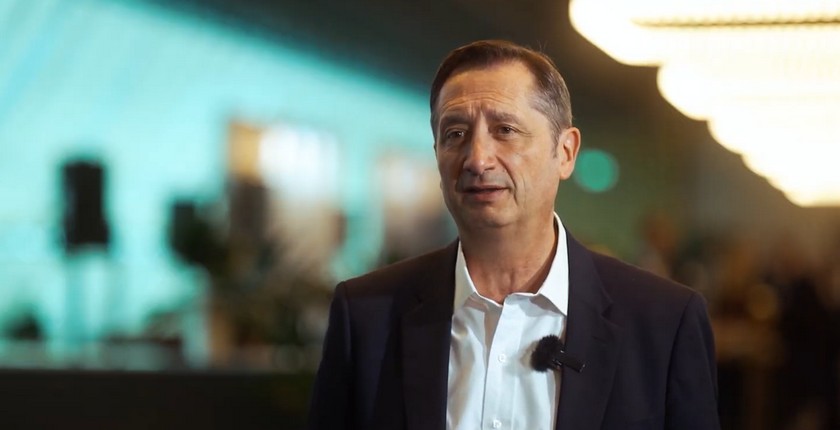
Declining energy storage costs and expanding renewables capacity will enable Europe to meet the challenge of intensified electrification and rising consumption, according to Eric Scotto, CEO of Akuo Energy. Thanks to falling costs, renewable energy has already won the race against nuclear power, he emphasized at Belgrade Energy Forum 2025.

The price of energy storage today is ten times lower than it was ten years ago, and the density of storage has tripled in the last three years, Eric Scotto said. Speaking at a panel on decarbonization in Southeast Europe, he explained that the operating power of a battery system in a standard TEU container, twenty feet or 6.1 meters long, now reaches 6 MW.

“Today, the challenge is flexibility. We know how to produce cheap, but what is important is to reconcile offer and demand… Thanks to storage, we can do that today,” Scotto said on the sidelines of the conference.

Renewables have already won the race against nuclear energy

Talking about the cost of generation from renewable sources and nuclear power, he argued that the race has already been decided. “It’s over. We won the race. Renewable is the cheapest way to produce energy,” he underscored.

[wpcc-iframe title=”Eric Scotto, CEO, Akuo Energy at the Belgrade Energy Forum” width=”500″ height=”281″ src=”https://www.youtube.com/embed/ZVg8ole0VaM?feature=oembed” frameborder=”0″ allow=”accelerometer; autoplay; clipboard-write; encrypted-media; gyroscope; picture-in-picture; web-share” referrerpolicy=”strict-origin-when-cross-origin” allowfullscreen=””]

Scotto emphasized that the Balkan region, which is lagging in the energy transition, can now enjoy the benefits of the latest and cheapest renewable energy and storage technologies. “This morning, some people were saying that we are late in the Balkans, and that’s the best news we could get this morning because renewables are the cheapest way to produce energy, so we’re going to benefit from the latest and most efficient technologies… from solar, from wind, from hydro, and storage,” claims the top man of the French renewable energy company.

The slow energy transition is good news for the Balkans

Scotto stressed the importance of collaboration among Western Balkan countries, adding that he hopes to see more of it in the coming days, weeks, and months. “We have the skills and we have the know-how in those countries. We need to share, we need to work more together, and, of course, we need more international interconnection,” he said.

Akuo Energy has secured a PPA for its Bela Anta 2 wind project in Serbia

Talking about Akuo Energy, Scotto said that it brings to the region its knowledge and experience from numerous project around the world. The France-based independent global renewable energy producer recently signed a power purchase agreement (PPA) with Serbia’s state-owned power utility Elektroprivreda Srbije (EPS) for the Bela Anta 2 wind project.

With a total installed capacity of 80 MW, Bela Anta 2 was among the awarded projects in Serbia’s second round of renewable energy auctions, held in early 2025, securing a contract for difference (CfD).
by in News

Wind power investments in Turkey surge as major plants inaugurated in May

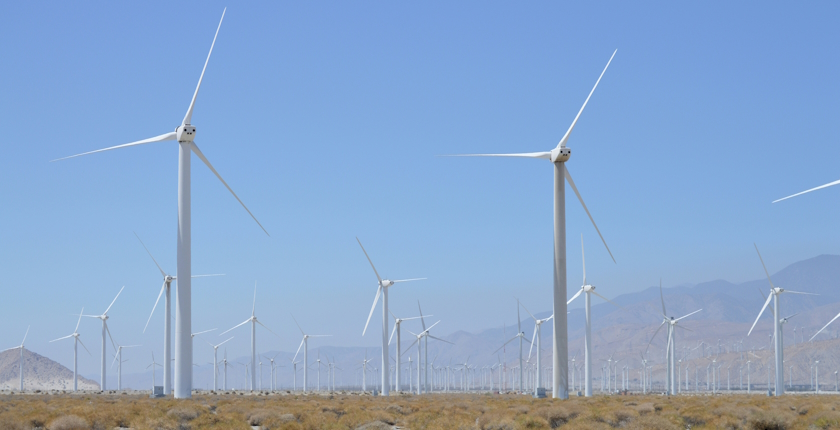
Investments in wind power in Turkey are on an upward trajectory – this year they are expected to surpass USD 1.5 billion, translating to 1.5 GW of new capacity, President of the Turkish Wind Energy Association (TÜREB) Ibrahim Erden estimated. Among other factors, the country has an extensive manufacturing base for the equipment. Several major wind farms were inaugurated last month.

The first wind turbine in Turkey was installed in 1998, and now total capacity is nearing 14 GW. The growth rate is picking up amid administrative reforms and state support through renewable energy auctions, requiring a high rate of domestically sourced equipment.

President of the Turkish Wind Energy Association (TÜREB) Ibrahim Erden said investments last year amounted to USD 1.3 billion, with 1.3 GW installed. The figure will top USD 1.5 billion in 2025, resulting in over 1.5 GW of new capacity, in his view.

Erden attributed the expansion to new licenses for projects with storage and projects from the YEKA mechanism of renewable energy auctions coming online. Investors from the Middle East and China participated in the bidding, he pointed out.

TÜREB’s chief said he expects 2 GW next year and gradual growth to 3.5 GW by 2028 or 2029.

There are 150 manufacturers in Turkish wind industry

There are 150 manufacturers of wind turbine components and accompanying gear in Turkey, covering 65% of the technology. The country reportedly hosts some 380 wind power plants, with more than ten turbines each on average.

The Grand National Assembly is expected to vote soon on legislation aimed at cutting the permitting process by half, to 24 months or less.

Hundreds of megawatts spring up in western provinces

Several big wind farms were inaugurated last month. Atares-2, in the Karacabey district of Bursa in Turkey’s northwest, has 113 MW. It consists of 23 turbines and the investment is worth almost EUR 150 million. CABA, the investor, expects to generate 400 GWh per year.

Eksim expanded its wind power plant in the Geyve district, southeast of Istanbul, in Sakarya province. The original facility had 11 turbines of 52.8 MW in total. The company’s project is for another 14 turbines of 7 MW apiece.

According to Eksim’s website, the combined installed capacity reached 129.8 MW out of 150.8 MW planned overall.

Enerjisa’s Uygar project would at the moment be the second-biggest wind farm in Turkey

Yıldızlar Group and ERN Holding built a 148.8 MW wind farm in Denizgöründü in the Çanakkale district and province. The location is near the Dardanelles Strait, on the country’s Asian side. The companies earlier said the Gülpınar facility would reach 194 MW.

Enerjisa Üretim, which won most of the capacity at the last YEKA auction, launched production at the first part of its 30th power plant. The Uygar wind farm in Balıkesir is set to grow to 250 MW. Currently, it would make it the second-biggest in the country, after Soma.

The Uygar site also spans parts of the neighboring provinces of Manisa, where Soma is located, and Izmir. Its 60 turbines are seen generating 1 TWh per year, according to the project. Enerjisa Üretim is a joint venture between German E.ON and Turkey-based Sabanci.

City of Kayseri builds first municipal wind park in Turkey

In addition, the Kayseri Metropolitan Municipality in central Turkey inaugurated its three wind turbines in Incesu district. They were built to cover the local trams and electric buses, the local authority said.

The municipal transportation firm is operating the 21 MW facility, which will produce 60 GWh per year. It is the first municipal wind farm among 30 largest cities. Kayseri also has its own solar power plants.

by in News

BESS factory of 1.5 GWh per year opening near Sofia in Bulgaria

International Power Supply (IPS), a Bulgarian manufacturer of battery energy storage systems, is about to launch operations at its new facility near Sofia. Its latest model has 8.2 MWh and fits into a standard container. The company plans to double the factory’s annual capacity to 3 GWh already by the end of the year.

IPS, headquartered in Sofia, is automating and scaling its production of battery energy storage systems (BESS). It is counting on growing demand in Europe, including the domestic market. The company already has orders for 7 GWh for the next three years, Chief Executive Officer Alexander Rangelov told the Kapital news website.

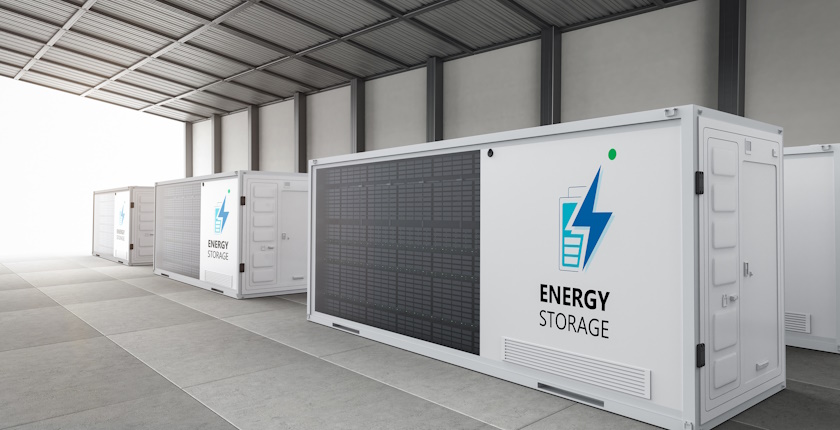
The systems in the new X-BESS line have 8.2 MWh in capacity, fitting into a standard TEU container of 20 feet (6.1 meters). Each consists of seven liquid-cooled modules of 1.17 MWh. The model has inverters of 4 MW, translating to a two-hour duration.

Serial production is about to begin in the Hemus high-tech industrial park near Bulgaria’s capital city. Initially, the annual capacity would be 1.5 GWh, but IPS aims to double it already by the end of the year.

IPS plans another, fully robotic factory

X-BESS started three years ago with a 6.5 MWh version. IPS is currently fulfilling contracts for 670 MWh for projects funded through the country’s National Recovery and Resilience Plan (NRRP or, in Bulgarian, PVU). The company also applied for EUR 150 million from the European Union’s Innovation Fund, for a fully robotic 5 GWh factory.

The majority owner of IPS, with 65.5%, is Power Technology Investment Group. It is controlled by the family of the founder Stoil Rangelov Trifonov. SIL Energy Invest has 31.5%. The Capital Investments Fund (CIFund) of the Bulgarian Development Bank holds the remaining 3%.

X-BESS includes a battery management system developed by IPS

The company mainly uses European parts and the lithium-iron-phosphate (LFP) battery cells are from China. The battery management system (BMS) is proprietary. The project pipeline includes a 5 MW rooftop solar power plant for the new factory, combined with own batteries.

IPS is looking for a strategic partner for further expansion.

Just ten days ago, a BESS facility of 124.1 MW – 496.4 MWh was inaugurated in Lovech in Bulgaria. The Ministry of Energy said it is the biggest in the European Union.

Deal with NEK for BESS at Vacha 1 hydroelectric plant

In consortium with GBS Energy Solutions, IPS recently won a tender for equipping the Vacha 1 hydropower plant with BESS. It is a pilot project of state-owned National Electricity Co. (NEK), which has several such investments underway.

The deal is for a system of at least 5 MW in capability and 10 MWh in capacity. The minimum round-trip efficiency is 85%. At 365 cycles per year, the contractors guarantee at least 60 GWh within the duration the 15-year arrangement. They won the job, which includes maintenance, with a bid of EUR 3.4 million.

NEK is also planning another pumped storage hydropower plant at the Vacha dam

Notably, Minister of Energy Zhecho Stankov said last week that NEK sent applications to the European Commission for four pumped storage hydropower projects. Initially, two facilities were planned, at the Batak and Dospat sites. Stankov revealed there would be two systems at Dospat.

The fourth new pumped storage hydroelectric plant is planned near Ravnogor, he said. The village is right next to Vacha 1 and the existing Orphey pumped storage system. The proposed facility would have some 800 MW in capacity, similar to Chaira, according to Stankov. The three existing pumped storage hydropower plants and the sites for the four projects are all in the Rhodope mountains in the south.

by in News

Global battery storage capacity expands by record 200 GWh in 2024

Global installed energy storage is on a steep rise and is expected to increase ninefold by 2040, to over 4 TW, driven by battery energy storage systems (BESS), which saw record growth in 2024, according to a report by Rystad Energy. In recent years, the cost of storing electricity has dropped significantly thanks to the declining cost of battery projects, coupled with technological advancements.

Last year, a record 200 GWh of new BESS projects came online globally, bringing the world’s total operational battery storage capacity to 375 GWh. China maintained its leading position, with over 100 GWh of new capacity, followed by the United States, which added 35 GWh. Germany, Australia, and the United Kingdom were among the top five.

Energy storage will play a key role in integrating renewables as power demand grows

As power demand is expected to continue its strong growth in 2025 and after, the growth rate of low-carbon energy sources is now close to covering the entire demand increase. Energy storage will play a key role in integrating the increasing share of intermittent renewable energy and providing the needed flexibility for the secure operation of the power systems, according to Rystad’s report.

The increasing share of intermittent renewables, combined with low flexibility in supply and load, creates price volatility in the liberalized power markets, making energy trading (arbitrage) a good source of revenue for BESS, according to the report.

Solar energy is projected to grow more than all other energy sources combined between 2025 and 2050, expanding tenfold over the period, Rystad noted.

The cost of BESS projects has fallen below USD 300 per kWh in recent years

The global average cost of BESS projects fell below USD 300 per kWh in 2024. If it were to decline to USD 250 per kWh, the cost of storing electricity could be as low as USD 60 per MWh, allowing BESS operators to retain a larger portion of the price spread as profit, Rystad said.

The lower costs of electricity storage are also driven by technological advancements, as battery manufacturers currently guarantee over 10,000 charge-discharge cycles and more than 80% battery health during that lifespan.

by in News

CyberGrid is committed to energy transition in SEE with its aggregation solutions

Project Manager and Market Intelligence Specialist Nikolaj Candellari from CyberGrid said at the Belgrade Energy Forum 2025 that the company believes in the energy transition in Southeastern Europe and is contributing with its VPP solutions. The Austrian software developer is open to partnerships with aggregators or future aggregators and the region’s electricity transmission and distribution system operators.

CyberGrid connects different energy resources to different markets. It uses cloud-based flexibility management technology and provides software as a service (SaaS).

“Our core belief is that every energy resource should be renewable, or at least green, and flexible. And to support this transition which we are in at the moment, we have developed our own product called CyberNoc,” Project Manager and Market Intelligence Specialist Nikolaj Candellari said at Belgrade Energy Forum (BEF 2025).

[wpcc-iframe title=”Nikolaj Candellari, Project Manager and Market Intelligence, CyberGrid at Belgrade Energy Forum 2025″ width=”500″ height=”281″ src=”https://www.youtube.com/embed/T_Oy574YR9k?feature=oembed” frameborder=”0″ allow=”accelerometer; autoplay; clipboard-write; encrypted-media; gyroscope; picture-in-picture; web-share” referrerpolicy=”strict-origin-when-cross-origin” allowfullscreen=””]

CyberNoc in real time aggregates the assets – batteries, renewables and even loads and is putting them to the markets, Candellari explained.  In this way, the company supports grid stability and resilience and generates additional revenue streams for owners.

“We are heavily present in the region because we believe in this transition in Southeastern Europe. We helped partners in Croatia, Bulgaria and North Macedonia to connect to different markets,” he stressed and added that the firm has established cooperation in Slovenia and Greece.

Candellari called on aggregators or future aggregators, transition and distribution system operators and all other entities in the electricity system to contact CyberGrid.

The company, founded in 2010 and headquartered in Vienna, is one of the friends of the Belgrade Energy Forum, organized in Serbia’s capital city by Balkan Green Energy News.

CyberNoc enables trading, balancing services

CyberNoc manages battery storage, power plants and consumption, optimizing them in line with market and grid conditions. The platform continuously communicates with the transmission system operator (TSO). It facilitates energy trading as well as the provision of balancing services including frequency control reserve (FCR), automatic frequency restoration reserve (aFRR) and manual frequency restoration reserve (mFRR).

Candellari also participated in a panel discussion at BEF 2025 called Market Flexibility: The Backbone of a Resilient Energy System. He recalled that the market went from 15-minute time intervals all the way down to just two seconds and stressed the significance of real-time data for TSOs and other participants.

“I think we can connect everything, including households,” Candellari underscored.

Notably, CyberGrid is part of the SPRINT project, launched at the beginning of the year, for the development of innovative quasi-solid-state sodium-ion batteries for stationary purposes. The endeavor received funding through the Horizon Europe program.

by in News

ACER’s Zinglersen: Integrate electricity markets to bolster flexibility as new era is already here

The surge in the number of hours with negative wholesale electricity prices in Europe made 2024 the second consecutive record year. According to ACER’s Director Christian Zinglersen, it means a new era is here. Speaking at Belgrade Energy Forum – BEF 2025, he called on governments, regulators and system operators to tackle the issue with more flexibility and reap the benefits of integrated electricity markets.

At EUR 81 per MWh, the average day-ahead power price in the European Union and Norway was lower last year than in 2021, when the energy crisis began. This is good news, but there are significant differences in price averages across the continent, Director of the EU Agency for the Cooperation of Energy Regulators (ACER) Christian Zinglersen asserted.

In a keynote speech at Belgrade Energy Forum, BEF 2025, he also pointed out that the percentage of days with significant price swings remained elevated. “This suggests that we need much more short-term flexibility in the system,” Zinglersen said.

[wpcc-iframe title=”Belgrade Energy Forum 2025 Christian Zinglersen, Director, ACER” width=”500″ height=”281″ src=”https://www.youtube.com/embed/c2JGLvLEInQ?feature=oembed” frameborder=”0″ allow=”accelerometer; autoplay; clipboard-write; encrypted-media; gyroscope; picture-in-picture; web-share” referrerpolicy=”strict-origin-when-cross-origin” allowfullscreen=””]

Prices in Romania, Bulgaria, Greece, Hungary among highest in Europe

In 2024, the share of time when prices were above EUR 150 per MWh landed at 6.1%, compared to 11.3% in the previous year and 66.7% in 2022. The number of days with price swings greater than EUR 50 per MWh accounted for a strong 70.4% of the total, though down from 77.1% in 2023 and 87.8% one year before.

The average price in Romania was virtually unchanged in 2024. It fell only 1% in Bulgaria and 5% in Hungary. Conversely, the drop was the strongest in Sweden, Norway, France and Belgium: 22% to 39%.

The average day-ahead electricity price in Romania was virtually unchanged last year, while in several countries it tumbled by at least 22%

Last year, prices were the highest across Italy, between EUR 106 per MWh and EUR 112 MWh, in Ireland (EUR 109 per MWh), Romania (EUR 104 per MWh), Bulgaria (EUR 103 per MWh) and Greece and Hungary (both EUR 101 per MWh).

Importantly, 2024 was the second consecutive record year in the number of hours with negative wholesale prices. Their share jumped to 2.8% from 1.9%.

“This is very significant and it shows we are already, in my view, in a new era. We’re not just embarking upon it. We’re there,” Zinglersen stressed.

Photo: ACER

Share of very low wholesale prices rallies back to level from 2020

As for the share of time with very low wholesale prices, it surged last year to 8.8%. The level was last seen in 2020, when the pandemic erupted and resulted in an unprecedented demand shock, ACER’s chief noted. He called on governments, regulators and system operators to tackle the issues with more flexibility.

Grid tariffs increasingly need to show what the system needs, in his view: more time nuance and more locational nuance. “That combination of an energy signal and a tariff signal should hopefully enable us to build more of what we need in the right places, as opposed to build what we don’t need, in the wrong places,” Zinglersen stated.

Integrated markets bring benefits

A policy brief that Brussels-based think tank Bruegel published last year pointed to the benefits of the integration of electricity markets. Among other factors, there is more security with fewer backup power plants and more flexibility with less investment in energy storage, together with lower capital costs. In 2022, ACER, based in Ljubljana, estimated benefits from cross-border trade alone at EUR 34 billion in the EU.

“It has very significant security of supply implications as well, to be in a very integrated-type jurisdiction,” Zinglersen underscored. But integrated markets come with tradeoffs, he said.

One of the examples is an incident in 2021 that split the Continental Europe synchronous area into two parts for an hour and reserves were pulled from across the continent. “But you can also bring the system much more quickly back together again,” Zinglersen said at the conference.

The same goes for the June 2024 blackout in the Balkans.

There are many solutions in Europe, but they are not evenly distributed

ACER’s director also recalled the power price decorrelation that affected Southeastern Europe and Hungary from July to September. He attributed some of the spikes in day-ahead prices to the lack of short-term flexibility, for instance batteries.

There are lots of technical solutions and frameworks in place across Europe, but they are not very evenly distributed, he added.

Zinglersen pointed to the opportunities and benefits of further integrating the electricity market of the Western Balkans region and the EU.

by in News

NGEN showcases solutions at BEF 2025 for decentralized electricity grid of tomorrow

Slovenia-based NGEN, widely regarded as the most innovative energy company in the SEE region, is expanding throughout Europe with its software platforms and equipment, as well as battery energy storage systems for decentralized grids that enable scaling up the decarbonization of the electricity sector. Co-Founder and CEO Roman Bernard said at the Belgrade Energy Forum 2025 that the company is establishing a digital endpoint for every network element. It enables real-time control over production and consumption, preventing blackouts and providing cybersecurity. At the conference, NGEN presented its services for the construction and operation of BESS and access to all segments of the electricity market.

In NGEN’s vision, the electricity system becomes fully digital and decentralized, with every house and business taking an active part in it.

Grid congestion is becoming more frequent, limiting the current rapid deployment of renewables. Most of Europe has centralized networks, where energy flows in one direction, from large power plants to consumers. Grid balancing is still conducted on a 15-minute basis, which is too slow for real-time demand.

NGEN has created platforms for energy that is produced, stored and consumed locally. It is developing a more efficient and reliable environment that can keep up with the scaling up of renewable energy technologies.

Photo: NGEN

NGEN has answers for all challenges of power system

The Slovenia-based company is tackling all current challenges that the power system is facing, Co-founder and Chief Executive Officer Roman Bernard said at Belgrade Energy Forum – BEF 2025. NGEN, the technology sponsor of this year’s conference, operates in nine European countries.

[wpcc-iframe title=”Roman Bernard, Co founder & CEO, Ngen at the Belgrade Energy Forum 2025″ width=”500″ height=”281″ src=”https://www.youtube.com/embed/BchbVdSzoMo?feature=oembed” frameborder=”0″ allow=”accelerometer; autoplay; clipboard-write; encrypted-media; gyroscope; picture-in-picture; web-share” referrerpolicy=”strict-origin-when-cross-origin” allowfullscreen=””]

Pointing to the pace of increase in solar and wind power plant capacity over the past years, Bernard said a centralized system wouldn’t be able to support the overall production and consumption anymore. “We want to make a digital endpoint for every unit that is included in the network. Through it we can communicate and raise or decrease consumption or production,” he explained.

Bernard: Cybersecurity is the most important part of digitalization

It enables control over the system, as otherwise it is in risk of blackouts, while such a transformation also brings significant savings in infrastructure, according to Bernard. He also stressed cybersecurity as the most important part of digitalization.

The CEO of NGEN, which stands for next generation, added that the sector needs to be further regulated across Europe to facilitate the construction of a new kind of infrastructure, as well as to motivate the corporate sector to get involved.

The company’s representatives Marco Scholz and Patrick Simon held a presentation at BEF 2025

Instant frequency response preventing cascading blackouts

In Bernard’s view, now is the time for battery energy storage systems (BESS), after a massive renewables capacity was added to the system in the last seven or eight years. The CEO was one of the panelists at BEF 2025 in a session on flexibility services called Market Flexibility: The Backbone of a Resilient Energy System.

NGEN developed its own software as well as hardware for running decentralized systems, cybersecurity and access to all segments of the energy market. The software has never gone down so far, its representatives said during their presentation at the conference. The firm is a contractor for engineering, procurement and construction (EPC) of BESS, also providing maintenance and operation.

[wpcc-iframe title=”BEF 2025, Grid Intelligence for energy security how NGEN Synaptic prevents systmatic blackouts” width=”500″ height=”281″ src=”https://www.youtube.com/embed/kcm6UtVTcpA?feature=oembed” frameborder=”0″ allow=”accelerometer; autoplay; clipboard-write; encrypted-media; gyroscope; picture-in-picture; web-share” referrerpolicy=”strict-origin-when-cross-origin” allowfullscreen=””]

Its intelligent software ESGP, Energy Smart Grid Platform, provides instant frequency response preventing cascading blackouts. NGEN’s digital platform, called SG Connect, reacts automatically, providing backup in the event of a failure in under 20 milliseconds, enabling real-time grid balancing. At the same time, it monitors and manages in two-second intervals, through the NGEN Synaptic artificial intelligence (AI controller).

It is a plug-and-play module, installed at energy assets, connecting them to ESGP, the transmission system operator (TSO) and all relevant markets, the company said. On the customer side is the SG Connect application.

NGEN has projects of 2 GWh in Europe under development or in construction. As for notable operational facilities, it installed a BESS in Kidričevo in Slovenia, with 35 MW in operating power and 70 MWh in capacity. The facility is about to get an extension of 70 MW – 140 MWh.

by in News

Velimir Gavrilović, Fortis Energy: We are developing huge portfolio in SEE

Fortis Energy is working on renewable energy projects of 2 GW altogether in Southeast Europe. One half of the planned capacity is for solar and wind power plants in Serbia, Chief Operational Officer Velimir Gavrilović said at Belgrade Energy Forum (BEF 2025).

Turkey-based Fortis Energy’s projects Noćaj 1 and Noćaj 2 in Serbia for solar power plants with battery energy storage systems (BESS) is nearing a ready-to-build status. They are part of its 2 GW under development in the region. “We are developing a huge portfolio of different renewable energy sources in whole Southeast Europe. This is predominantly in Serbia,” COO Velimir Gavrilović said at Belgrade Energy Forum (BEF 2025).

He addded that one half is for photovoltaic plants and the other for wind parks in the country. Gavrilović revealed that the company is investing in 600 MW in Albania, mainly photovoltaics, together with endeavors in Bosnia and Herzegovina and North Macedonia.

Fortis Energy is exploring new projects in Spain and Italy as well. It also operates biogas power plants in Turkey and Serbia, Gavrilović noted.

[wpcc-iframe title=”Velimir Gavrilović, Fortis Energy at the Belgrade Energy Forum 2025″ width=”500″ height=”281″ src=”https://www.youtube.com/embed/ohliuXIzeko?feature=oembed” frameborder=”0″ allow=”accelerometer; autoplay; clipboard-write; encrypted-media; gyroscope; picture-in-picture; web-share” referrerpolicy=”strict-origin-when-cross-origin” allowfullscreen=””]

CBAM’s impact still unclear

Among the challenges for investors in the sector, he pointed to the Carbon Border Adjustment Mechanism (CBAM), the European Union’s CO2 tax. Gavrilović stressed that the exact effect on electricity producers remains to be seen, as well as for the consumers of electricity in industrial production in the region.

Fortis Energy’s COO recalled that investors in renewables in Serbia are obligated to secure energy storage to get grid connection and said there are still some bylaws missing to complete the legal framework.

Grid connection contract signed for 110 MW solar power plant with batteries in Serbia

Earlier this month, the company signed a grid connection contract for its Erdevik solar park in Šid, Serbia, of 110 MW in peak capacity. It is planned to include a BESS facility of 31.2 MWh.

The Turkish developer and engineering, procurement and construction (EPC) operator has three wind power projects in the pipeline in the country: Vranje, Gornjak and Juhor.

Fortis Energy has a 79.9 MW solar power plant in operation in Oslomej in North Macedonia, commissioned last year. The connection capacity is 68.7 MW. In February, the company said it contracted a lithium ion BESS facility to be added, with 62 MW in operating power and a two-hour duration.

by in News

Largest battery storage system in Balkans commissioned in Bulgaria

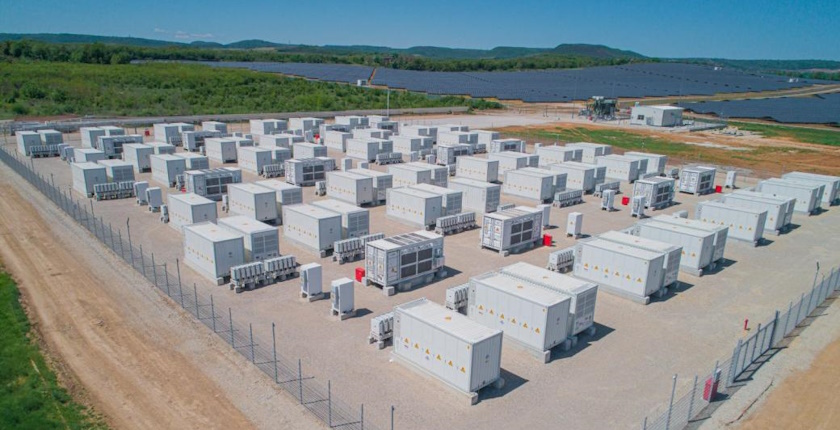
A BESS facility of 124.1 MW in operating power was inaugurated in Lovech in Bulgaria. Located next to a photovoltaic park within Balkan Industrial Park, it is part of the country’s first closed licensed power distribution system.

The Bulgarian city of Lovech, northeast of Sofia, hosts the strongest battery energy storage system (BESS) in the Balkans. The Ministry of Energy even said the new facility, with a capability of 124.1 MW and 496.4 MWh in capacity, is the biggest in the European Union.

It is located in the local industrial zone, which also features a photovoltaic park of 106.2 MW in peak capacity and an 86.2 MW connection. The energy systems are part of Bulgaria’s first and only closed licensed distribution network.

Balkan Industrial Zone, with the solar power plant and BESS facility, is controlled by brothers Kiril and Georgi Domuschiev. The two entrepreneurs intend to charge the batteries when the price of electricity is low and use them in peak periods.

Developer won subsidy at tender for standalone energy storage systems

The investment in the energy storage facility, worth EUR 75 million, was conducted by Advance Green Energy. Notably, last month, at the RESTORE tender for standalone BESS, the company won a EUR 29.6 million government subsidy for a EUR 45.5 million project.

The construction took only six months. The facility, which is marking a new stage in Bulgaria’s infrastructure development, consists of lithium iron phosphate (LFP) devices in 16 modules.

Lovech Mayor Stratsimir Petkov claimed the BESS is the fifth-biggest in the world. He said it would contribute to the development of the industrial park.

Minister Stankov wants 10 GWh of batteries online by end of next year

At the inauguration, Minister of Energy Zhecho Stankov stressed that the investment is a step toward reaching 10 GWh in operating battery storage capacity by the end of next year. He added it is significant for flexibility, predictability and balancing of the electricity system in Bulgaria.

“The facility, built from 111 battery containers on the territory of Lovech, will help Bulgaria’s energy system remain the most stable in the region. We are the pillar in the Balkans and in Southeastern Europe that balances electricity systems and we have proven this with actions,” the minister stated. BESS guarantee system security and price stability for households and businesses, providing affordable energy, Stankov asserted.

The solar park of two units, operating since May 2023, is one of the biggest in Bulgaria. The investment was worth EUR 51.2 million. The PV system spans almost 72 hectares, while the industrial park has 131.5 hectares.

In another recent update relevant for the future of the country’s energy storage sector, Stankov revealed there is a third pumped storage hydropower project under development. The sites are in the Rhodope mountains.

by in News

Decarbonization of Southeastern European region: both renewables and nuclear are speeding up

Energy transition in Southeastern Europe is accelerating, and the progress depends on individual countries’ strategies and legal frameworks. At the Belgrade Energy Forum (BEF 2025), representatives of state-owned power utilities and private producers discussed the different approaches to decarbonization. The domination of investments in renewable energy is unquestionable, but there are also ambitions to develop nuclear capacities, spearheaded by Slovenia. The country is already operating one nuclear reactor and is developing a project for another one.

The electricity sector in Southeast Europe still depends for a large part on thermal power plants that burn fossil fuels. In 2023, they accounted for 43% of overall output, of which two-thirds were from lignite and the rest from gas. There is a need for accelerated decarbonization, and the speed of the transition will depend on financial possibilities and the political will and decisions, said the panel’s moderator and Director of Zagreb-based Energy Institute Hrvoje Požar Dražen Jakšić.

The acceleration trend in decarbonization is also evident in the electricity market projections for the region until 2030. The plans for the period until the end of the decade include shutting down 6.2 GW of thermal power plant capacity and installing 42.3 GW from renewable sources. Greece, Romania, Serbia and Bulgaria are expected to add the most.

Top executives of state-owned utilities in Serbia, Slovenia and Montenegro and independent power producers that invest in renewables in the region gathered at a panel called Decarbonisation strategies for power generation in Southeast Europe 2040/2050 at Belgrade Energy Forum 2025.

They agreed that decarbonization is well underway and an unstoppable process already speeding up significantly. The participants in the discussion presented the different strategies their companies will act upon in the following years and decades, leading the process to fulfilment.

Among the messages that they shared is that they expect each government to promote investments and make the legal framework clear and certain, while the countries strengthen their ties and exchange experiences. Green energy is the pillar of the energy transition and decarbonization in the region, but several states are also interested in building their first nuclear power plants—conventional ones or small modular reactors (SMRs)—or expanding the existing capacity.

EPS’s Živković: Decarbonization requires energy storage, nuclear plants

Chief Executive Officer of Serbia’s Elektroprivreda Srbije (EPS) Dušan Živković pointed out that the state-controlled electricity producer is committed to its goals regarding green energy and emission reductions as well as to the country’s targets. “We will work on that, of course, believing in these objectives, but without compromising energy security and the energy sovereignty of Serbia. It was proven to be the only sustainable path,” he asserted.

The company particularly counts on the project for solar power plants with a total connection capacity of 1 GW, with batteries of 200 MW in combined capability. The investment is conducted through a strategic partnership with Hyundai Engineering and UGT Renewables (UGTR).

A study is underway in Serbia on the potential for the construction of large nuclear power plants and small modular reactors

The decarbonization process won’t be easily feasible without serious energy storage capacity, Živković warned and added that nuclear energy wouldn’t be unrealistic. A study is underway on the possibilities of building large nuclear plants and small modular reactors in Serbia.

The head of EPS expressed the belief that “the quality of that energy needs to be visualized” for citizens of every country and that they should be explained that it is necessary to provide energy for the economy and its security.

CEOs Dejan Paravan of GEN energija, Dušan Živković of EPS and Eric Scotto of Akuo

No dilemma in Serbia about energy transition

Country Manager of WV-International in Serbia Neda Lazendić highlighted the said strategic partnership for solar power plants with battery energy storage systems (BESS), saying Hyundai Engineering is a world-renowned company.

In her view, the endeavor will be a milestone for the entire region and it is exceptionally important for gaining experience at the domestic level.

The recent second round of auctions for electricity from renewable sources showed that Serbia opted for the energy transition “and there is not any dilemma about it anymore,” Lazendić stressed and said the country is an example for the region. The prices from the bidding that were accepted are appealing and they match European trends, she noted.

Country Manager of WV-International Neda Lazendić

Lignite is highly unprofitable

Slovenia and GEN energija, one of the state-owned power utilities, are relying on both renewable sources and nuclear energy in their decarbonization investments, the company’s CEO Dejan Paravan pointed out.

“We want to get rid of coal as soon as possible. And in the short term, renewables are the only option. Why get rid of coal? The current production of domestic lignite is highly unprofitable, and because of climate goals,” he explained.

Nevertheless, it is exceptionally complicated to get permits for renewables and place them in the environment, Paravan added. On the other hand, nuclear energy is emissions-free and very stable and reliable, he asserted. The technology takes up the least space and enables the production of huge amounts of electricity, the head of GEN energija said.

Nuclear power plant Krško 2 could come online in 2040

Paravan recalled that two years ago nuclear power plant Krško marked four decades since it was commissioned and that its operating life was extended by 20 years. GEN energija is working on the Krško 2 project. The chief executive expects construction to begin in 2022 or 2023 and that the reactor could be connected to the grid in 2040.

In parallel, the company is studying SMRs. Still, the development of the technology will take a long time and, importantly, such facilities won’t have the advantage of scale like large reactors, he said. One who expects electricity from SMRs to be cheaper than from big nuclear plants is wrong, in Paravan’s view.

As for the dilemma between renewable sources and nuclear energy, he expressed the belief that they are not mutually exclusive. “We need renewables and they can provide us a lot of CO2-free electricity in the short run. But let’s make it clear that once we come to 70%, 80%, 90% based on renewables, that we have a problem of seasonal storage, that things will get very difficult,” Paravan stated.

Batteries are ten times cheaper than ten years ago

Conversely, Akuo Energy’s CEO Eric Scotto pointed out that nuclear power is expensive. “It’s over. We won the race. Renewable is the cheapest way to produce energy,” he underscored.

The price of energy storage capacity is ten times lower than ten years ago, the head of the French company noted. Moreover, operating power of a battery system in a standard TEU container, twenty feet or 6.1 meters long, now reaches 6 MW, which is three times more than three years ago, according to Scotto.

To attract investments, stability is necessary, he stressed. Scotto went on to highlight some “simple things” that could help Akuo, which was one of the winners at the last auction round in Serbia, to materialize its projects for two wind parks. He mentioned the speed of permitting for telecommunication systems and road construction, for power plants.

Turning to the slowness of the energy transition in Balkan countries, he emphasized its positive side. “We are late. Then we will benefit from the cheapest resource, the cheapest way to produce energy,” Scotto concluded.

EPCG’s Solari project kicked off energy transition in Montenegro

Technical Director of Elektroprivreda Crne Gore (EPCG) Ljubiša Đurković called the state-owned power utility’s projects Solari 3000+ and Solari 500+ the start of the energy transition in Montenegro. Since the beginning of 2023 and including Solari 5000+, launched later, the company set up photovoltaic systems on 7,380 structures, he revealed.

Total peak capacity reached 76 MW and another 125 MW will be installed by the end of the year, EPCG’s official said.

Among its projects, the company is building the Gvozd wind farm, and the Kapino polje solar park near Nikšić.

Technical Director of EPCG Ljubiša Đurković

There is already 10 MW on roofs in the former Željezara steel plant in Nikšić, and before the end of the year another 15.5 MW will be connected to the grid, Đurković said. A contract has been signed for the construction of the eighth generator in the Perućica hydropower plant, of 58 MW. It is scheduled for completion in 2027.

Đurković: A realistic date for the closure of the Pljevlja thermal power plant is between 2045 and 2050

The energy transition is about a single and connected system, including storage capacities and measures to improve energy efficiency, he underscored. “You have to create the conditions for a swift integration of renewable energy sources into the distribution and transmission networks. We were supposed to do that already. We didn’t do it, particularly in the Western Balkans. We didn’t reconstruct the distribution and transmission networks,” he stated.

As for the current reconstruction of the coal-fired Pljevlja thermal power plant, the only one in Montenegro, Đurković said the project wouldn’t make sense if the facility were to keep operating only for a short while longer.

žAccording to the National Energy and Climate Plan (NECP), which is almost complete, it will remain active at least until 2041, although the realistic date for its closure is only between 2045 and 2050, in the opinion of EPCG’s technical director. The main phase of the reconstruction began at the end of March.