by in News

Coal power plant Maritsa East 3 plans to build solar plant, 200 MW battery system

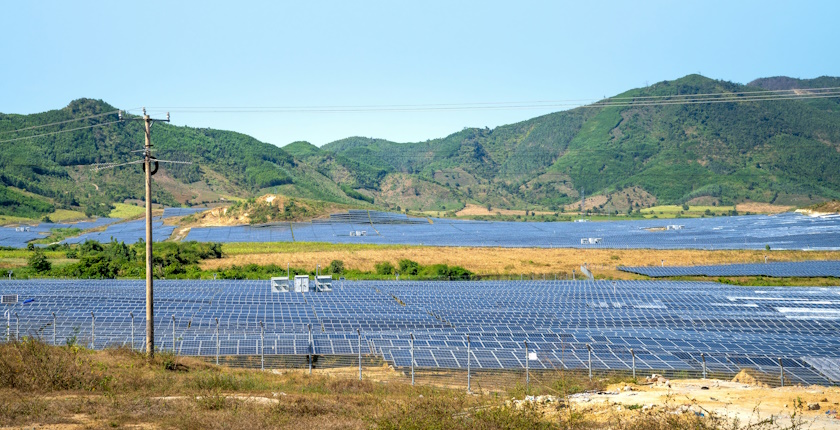
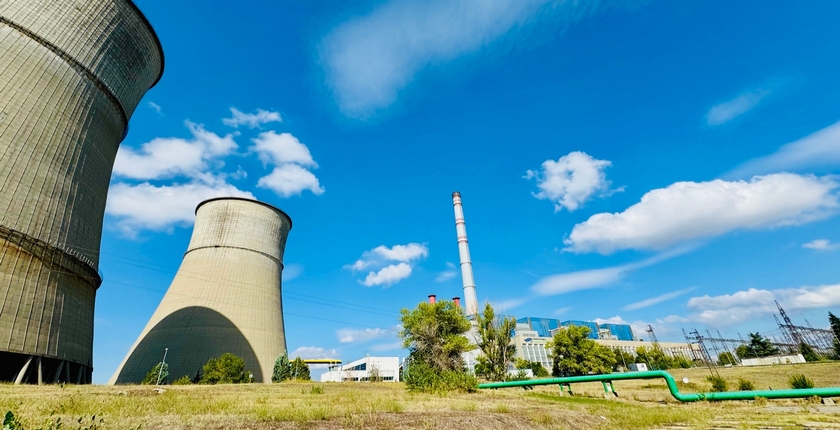
Coal-fired power plant ContourGlobal Maritsa East 3, which operates only sporadically to ensure the stability of supply for Bulgaria’s power system, plans to repurpose the grid infrastructure of its units 1 and 2 for solar and battery storage capacities. Units 3 and 4 will remain on standby to generate electricity during peak demand periods in the summer and winter months, but the plant will need state support to cover maintenance and workforce costs.

Maritsa East 3 (Maritsa iztok 3), majority owned by the US-based ContourGlobal, plans to use the existing grid infrastructure, including transformers and switchgear, to speed up the green energy project within the complex, according to Vassil Shtonov, Executive Director of ContourGlobal Bulgaria.

The central element is a 200 MW standalone battery energy storage system (BESS), the largest of its kind in Bulgaria, which would improve the flexibility and stability of the national power system, Shtonov explained in an interview with Capital.bg.

The project involves a 200 MW standalone battery system and a solar power plant

The planned battery system at Maritsa East 3 was among 82 projects selected to receive a total of EUR 587 million in subsidies from Bulgaria’s Ministry of Energy in April this year.

“In parallel, we are considering the development of an additional hybrid solar park with a battery at the same site,” he said. This will allow for faster deployment of new clean energy capacity, while preserving all options for future use of the coal-fired plant and its original infrastructure, Shtonov added.

ContourGlobal plans to build 400MW to 500 MW of renewable energy capacity combined with batteries

ContourGlobal plans to invest hundreds of millions of euros to develop 400 MW to 500 MW of renewable energy capacity combined with storage systems, he said, adding that nearly half of this target is under construction or final approval. The company’s goal is to phase out coal by 2027 and achieve carbon neutrality by 2040, he stressed, recalling that Bulgaria’s targeted coal phaseout date is 2038.

Keeping coal plants on standby requires state support

Bulgaria’s state-owned National Electricity Co. (NEK) holds a minority stake in Maritsa East 3. After the plant’s 15-year power purchase contract with NEK expired in February 2024, it has only been able to operate on the free market for a few months a year. This year, units 3 and 4 were online from January to the end of March to maintain energy security.

Shtonov: Key coal-fired power plants should get a fixed amount from the state

However, to be on standby for system security, the plant needs to keep workers on the payroll even when it is not operating. For this reason, strategically important coal-fired power plants should receive a fixed amount from the state to cover ongoing personnel and maintenance costs, and then be switched on when necessary to protect consumers from sharp increases in electricity prices, as happened last year in July and November, according to Shtonov.
by in News

Slovenia to subsidize battery storage for businesses with EUR 17 million

Slovenia’s Ministry of the Environment, Climate and Energy, in cooperation with electricity market operator Borzen, has allocated nearly EUR 17 million in grants for businesses planning to install battery storage systems.

The grants are intended for the purchase and installation of battery storage units, hybrid inverters, and electrical installations and equipment. The subsidy can cover up to 45% of eligible investment costs, or a maximum of EUR 225 per kWh of battery storage capacity.

New batteries can be combined with existing energy storage capacities or solar power plants

Eligible applicants are companies, sole proprietors, and cooperatives. Grants can be combined with a solar power plant or existing storage units without restrictions.

The total amount of aid that can be granted to an individual beneficiary may not exceed EUR 300,000 over three years. More information will be available after a public call is announced, the ministry added in a LinkedIn post.

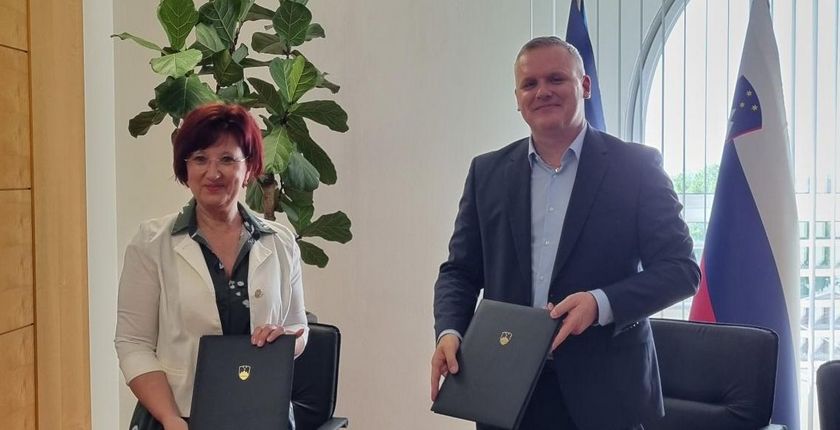
A contract on launching a public call for grants was signed by Minister of the Environment, Climate and Energy Bojan Kumer and Borzen General Manager Mojca Kert.

Slovenia is using EU funds to support new solar and wind projects, including batteries

Slovenia’s Ministry of Cohesion and Regional Development recently approved EUR 63.5 million in European Union funds for co-financing investments in new solar and wind power plants in the period until 2029. The scheme includes the possibility of storing electricity, according to the announcement.

At the same time, the ministry allocated EUR 23.5 million in EU funds for a program to tackle energy poverty in Slovenia in the 2024-2027 period.

by in News

Dimitar Dimitrov: Battery developers should seek insurance in early project stages

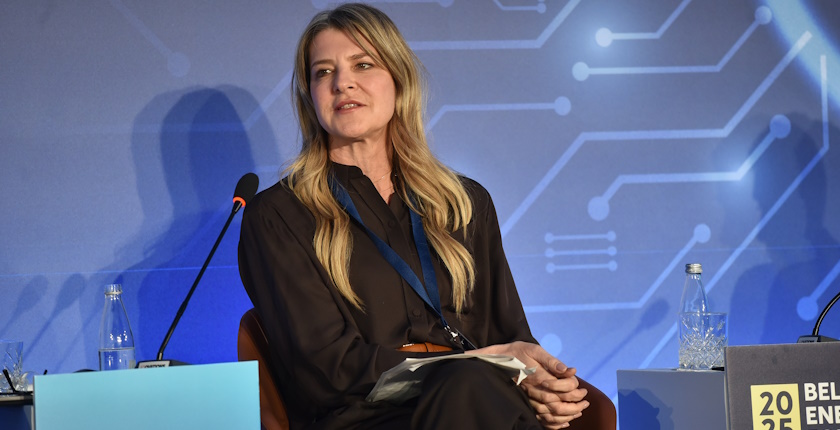
Investors and developers of battery energy storage systems (BESS) should engage with insurers or specialized brokers as early as the development phase to effectively manage risks and ensure bankability, advised Dimitar Dimitrov, Business Development Manager at Renewable Energy Insurance Broker (REIB), during Belgrade Energy Forum 2025.

With over 4 GWh of energy storage systems across four continents, REIB offers bespoke insurance solutions tailored to the needs of utility-scale developments. Dimitrov emphasized that REIB’s portfolio includes dedicated products for BESS, covering business interruption, cyber threats, and technical malfunctions.

Speaking at the storage panel, Dimitrov underscored the importance of insuring against business interruption, especially due to outages that may compromise grid connections. He also highlighted the value of cargo insurance and robust fire protection strategies, noting these are key concerns from the insurer’s standpoint.

[wpcc-iframe title=”Dimitar Dimitrov, Business Development Manager, Renewable Energy Insurance Broker, at BEF 2025″ width=”500″ height=”281″ src=”https://www.youtube.com/embed/obGw8_zdj4U?feature=oembed” frameborder=”0″ allow=”accelerometer; autoplay; clipboard-write; encrypted-media; gyroscope; picture-in-picture; web-share” referrerpolicy=”strict-origin-when-cross-origin” allowfullscreen=””]

“As both a broker and an investor in renewable energy projects, we have first-hand knowledge of what developers go through,” said Dimitrov. “This dual perspective enables us to anticipate risk points during different phases and recommend solutions that align with actual project needs.”

REIB has developed specialized insurance products for BESS projects

REIB offers specialized insurance coverage for renewable energy and BESS projects, including tailor-made solutions for Business Interruption, Reduced Yield Coverage, Cyber Risk, and Third-Party Liability.

The company has more than 14 years of experience in renewable energy and currently insures over 60% of the PV market and more than 80% of BESS projects (installed and under construction) in Bulgaria, and cover more than 30% of the solar sector in Romania.

As an investor, REIB is familiar with all the requirements developers and contractors should meet

Having gone through the procedures of installing solar power plans and battery storage systems as an investor, REIB is familiar with all the requirements that developers, power producers, and contractors should meet. “In this way, we definitely can give the right recommendations to companies,” Dimitrov asserted.

REIB partners exclusively with A+ rated insurance companies, recognized as market leaders in both the US and Europe. This strategic approach ensures that all coverage options meet the highest standards of reliability and financial strength.

“The company also has strong exposure in the European Union market, which allows us to secure A-rated insurance policies that are fully aligned with bank requirements and enhance project bankability,” Dimitrov emphasized.

by in News

MET Group inaugurates Hungary’s largest battery energy storage system

MET Group installed a battery energy storage system of 40 MW and a two-hour duration at its gas power plant Dunamenti near Budapest. The company said it is the largest BESS in Hungary.

Hungary’s largest standalone battery energy storage system (BESS) has been inaugurated today. MET Group put into operation a facility of 40 MW in nominal operating power and a two-hour cycle, translating to 80 MWh in capacity. The Switzerland-based company said it is part of a series of its investments in BESS throughout Europe.

MET already installed a 4 MW / 8 MWh demonstrator unit in 2022, also at its gas-fired Dunamenti Power Station in Százhalombatta, in Pest county. It is based on Tesla Megapack 2 batteries.

The combined capacity would be sufficient to supply the entire decorative and public lighting needs of Budapest for four hours, the energy company pointed out. The supplier of the new equipment is Huawei Technologies and the main contractor is Forest-Vill, MET Group added.

BESS is essential for energy transition

Battery energy storage systems are a key element for the energy transition, as they allow greater penetration of renewable sources into the power grid, Dunamenti’s Chief Executive Officer Péter Horváth said at the inauguration ceremony.

“We must strive by all possible means to exploit Hungary’s renewable energy sources as extensively as possible, using well-established, cost-effective technologies. Therefore, the Hungarian Battery Association supports the efforts of the Hungarian energy policy, which deals with the green energy transition as a top priority,” the association’s President Péter Kaderják stated.

MET Group investing in batteries colocated with solar power plants

MET Group said that with its ongoing investments in BESS projects across Europe, it aims to address the increasing need of balancing technologies to support the energy transition. The company acquired French battery storage operator and developer Comax in 2024.

A significant part of the investments is for storage facilities colocated with solar parks, the update reads.

MET is present in 17 countries, 32 national gas markets and 44 international energy trading hubs. It has more than 1,100 employees. The company’s consolidated sales revenue amounted to EUR 17.9 billion last year, with a total traded volume of natural gas amounting to 140 billion cubic meters and total traded electricity of 76 TWh.

by in News

Spain’s voltage control was insufficient at time of April blackout

The Government of Spain said the total blackout in the Iberian Peninsula, which occurred on April 28, was caused by overvoltage, with several factors contributing to the crash. Notably, the system run by the country’s TSO Red Eléctrica de España lacked sufficient voltage control. Deputy Prime Minister Sara Aagesen even said the point of no return could have been avoided if voltage control action had been taken earlier.

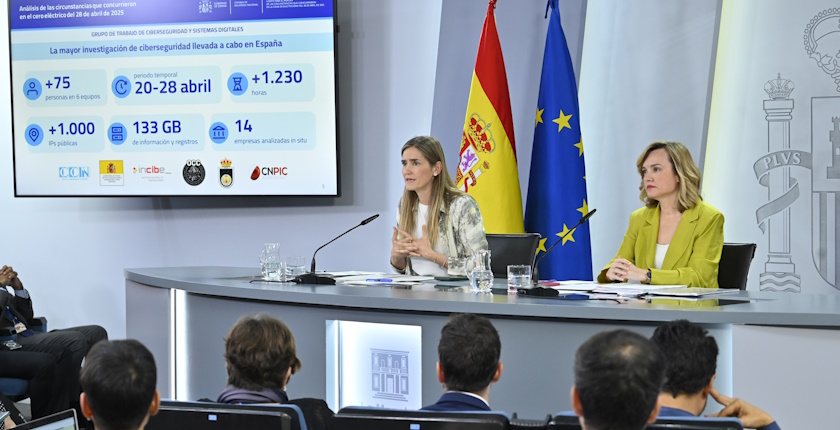
In a long-awaited document, a government committee that investigated the April 28 collapse of the Iberian electricity network ruled out that a cyberattack caused it. The panel analyzed more than 300 gigabytes of data related to the total blackout, which was one of the worst ever in Europe.

“In 49 days, practically half the timeframe established by the EU, the committee has provided a rigorous and verified diagnosis that will allow us to strengthen the electricity system, a solid foundation on which we can work to design rapid responses to prevent this from happening again. Next week’s Council of Ministers will approve several relevant measures,” said Third Vice-President of the Government of Spain and Minister for Ecological Transition and Demographic Challenge Sara Aagesen.

The cybersecurity investigation, the largest ever undertaken in the country, did identify vulnerabilities that could expose networks or systems to future risks, she asserted.

The blame game is continuing as citizens and businesses are demanding accountability for the massive damage. The European Network of Transmission System Operators for Electricity (ENTSO-E) issued a preliminary report two weeks after the incident.

Overvoltage caused the blackout, according to the new analysis. The committee attributed it to multiple factors. The system had insufficient voltage control capacity, there were frequency oscillations, and power plants were disconnected, “in some cases in an apparently improper manner,” the document reads.

Renewables accounted for 82% of power generation mix just before blackout

The Iberian grid crashed at 12:33. Restoration began with energy from France and Morocco and with self-starting hydroelectric plants in the Duero basin and other locations, which formed energy islands. By 22:00, nearly 50% of demand in Spain was met, reaching 99.95% by 7:00 the next day.

At 12:30 on April 28, renewable energy sources accounted for 82% of the electricity generation mix, followed by nuclear power (10%). Gas plants had a 3% share, coal contributed 1%, while cogeneration and waste amounted to a combined 4%.

Data show a drop in solar generation as prices at the power exchange were going negative, and it coincided with a rise in voltages

There was significant voltage volatility in the transmission system in the morning on the day of the blackout, the document’s authors noted, pointing out that such a situation was also registered on April 22 and 24.

The rise in voltages between 10:30 and 11:10 coincided with a drop in solar generation, probably due to the power market signals, as wholesale prices went negative, the report adds. At the same time, the direction of the exchange with France switched from exports to imports.

Voltage control fleet failed to contain chain reaction

At 12:03, there was an atypical frequency oscillation, by 0.6 hertz, causing large voltage fluctuations for 4.42 minutes. Another one, of 0.2 hertz, occurred at 12:16, followed by an equivalent one at 12:19.

Red Eléctrica de España, the transmission system operator (TSO), conducted mitigation measures, which contributed to the rise in voltages, the committee underscored.

Aagesen said the point of no return could have been avoided if voltage control action had been taken earlier. The government controls 20% of the company, which is listed on the Bolsa de Madrid stock exchange.

At 12:32, voltage began to rise rapidly and steadily, and numerous progressive disconnections of generation facilities were recorded. The names of all power plants in the document are blacked out.

A number of units responsible for voltage control produced reactive power, the opposite of what they were supposed to

The chain reaction could not be contained, as each disconnection contributed to further voltage increases, the analysis showed. A drop in frequency resulted in the loss of synchronization with France, tripping the interconnection with the rest of the continent.

The committee stressed that the number of synchronous plants regulating voltage on the day of the incident was the lowest since the beginning of the year. One of the 10 units that Red Eléctrica scheduled the day before experienced an outage on the same afternoon, and the TSO didn’t replace it in time, the analysis reveals.

Moreover, several units in the group did not respond adequately to the TSO’s instructions to reduce the voltage. Some even produced reactive power, the opposite of what was required, contributing to the issue, the committee added.

Some power plants went offline too early

There were disconnections of the generating power plants that occurred before the voltage thresholds in the 400 kV system were exceeded (380 kV and 435 kV), the report finds.

Among the committee’s recommendations is to allow asynchronous installations to apply power electronics solutions to manage voltage fluctuations. The panel proposed boosting demand, flexibility, storage and interconnection capacities.

Photovoltaics with grid-forming inverters, storage can contribute to voltage control

Photovoltaics are already capable of controlling voltage, but regulations did not allow the application of the technology, according to the Spanish Photovoltaic Union (UNEF), Portuguese Renewable Energy Association (APREN), SolarPower Europe, Global Solar Council and Global Renewables Alliance.

In a joint statement that they issued as a reaction to the report, they called for accelerated investment in grid resilience and system flexibility – especially through grid-forming inverters and battery storage.

The associations recalled that Spain ranked 14th last year in Europe in new battery capacity. Less than 250 MWh came online and nearly all were smaller-scale batteries, not at a utility level. It compares to 9 GW of solar power capacity that the country added in 2024.

by in News

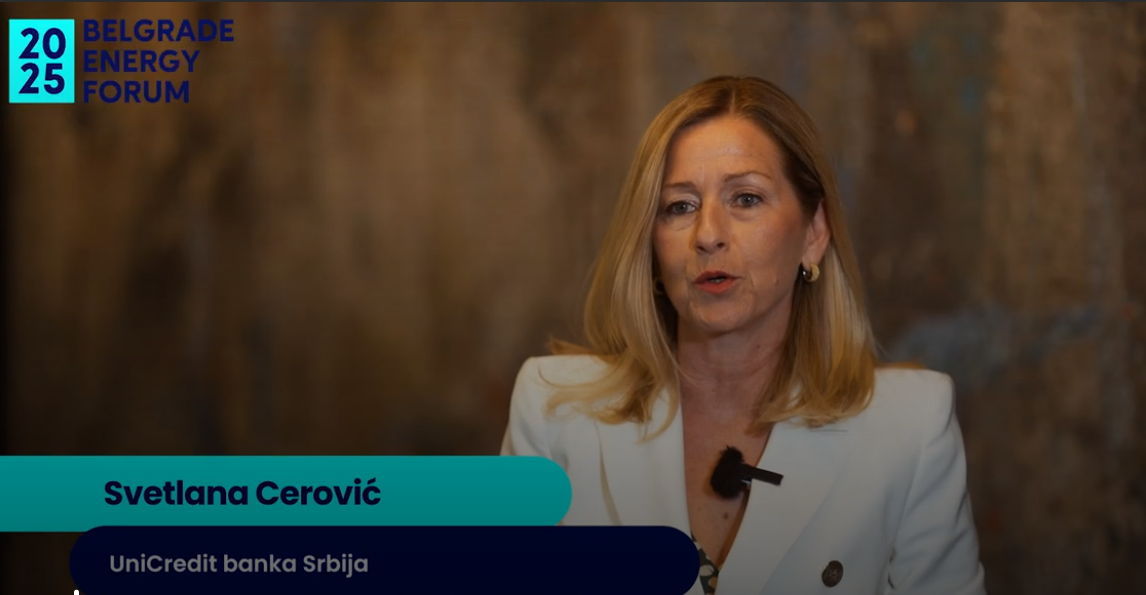
Svetlana Cerović: Serbia should consider the role of batteries in next renewables auction

Serbia is expected to finish drafting its energy storage regulations by the end of the year, completing its already strong regulatory framework for renewables, according to Svetlana Cerović, Head of Specialized Lending at UniCredit Bank Serbia. In the next auction for market premiums, Serbia should consider recognizing the contribution of projects involving energy storage, she said at Belgrade Energy Forum 2025.

The two renewable energy auctions Serbia has held so far have shown that its regulatory framework is exceptionally good, Svetlana Cerović said on the sidelines of BEF 2025, adding that it is very important for a third auction to take place to ensure the development of additional renewable energy capacities.

[wpcc-iframe title=”Svetlana Cerovic, Head of specialized lending, UniCredit Bank Serbia, at Belgrade Energy Forum 2025″ width=”500″ height=”281″ src=”https://www.youtube.com/embed/014aj5PLOx0?feature=oembed” frameborder=”0″ allow=”accelerometer; autoplay; clipboard-write; encrypted-media; gyroscope; picture-in-picture; web-share” referrerpolicy=”strict-origin-when-cross-origin” allowfullscreen=””]

Initiating and financing investments in renewable energy requires a stable, predictable, and transparent regulatory framework, she stressed.

When it comes to regulations covering energy storage, Cerović said she was encouraged to hear that they were being drafted quickly and could be finalized before the end of this year.

“When we talk about renewable energy sources, we talk about long-term financing. Most of these projects are financed through project financing without the right of recourse, and in this sense, the regulatory framework and the predictability of cash flows are very important,” she reiterated.

UniCredit, as a pioneer in the field of renewable energy financing, offers various types of services and has already supported several projects that have been awarded market premiums and guarantees, according to Cerović. “We continue to actively finance these projects and remain open to dialogue,” she said.

UniCredit has financed several projects that have won market premiums

Speaking at a panel on energy storage in Southeast Europe, Cerović said that Serbia should consider involving energy storage in the next auction for market premiums and facilitate flexibility services, adding that the first renewables projects in Serbia that are required to include energy storage are already negotiating financing.

Cerović: The state should subsidize batteries for prosumers and back smaller renewables projects

She also recommended subsidizing battery storage for prosumers as an energy efficiency measure and allocating part of the auction quota for smaller renewables projects, which find it difficult to secure long-term power purchase agreements (PPA).

Talking about BEF 2025, she said the forum had demonstrated its exceptional significance and relevance by bringing together key players in the financing and development of energy projects. The conference was extremely useful for UniCredit, allowing it to make important contacts and initiate potential partnerships, according to her.

by in News

Winners of EUSEW Awards announced

Stella Tsani is this year’s winner of the EUSEW Woman in Energy Award. The Innovation Award went to the Dutch company AquaBattery, while the initiative Community Energy for Social Housing in Otterbeek won in the Local Energy Action category.

EUSEW Awards honor outstanding individuals and projects for their innovation and efforts in energy efficiency and renewable energy. After a high-level jury selected nine finalists, the winners were chosen through online public voting in three categories: Innovation, Local Energy Action, and Woman in Energy.

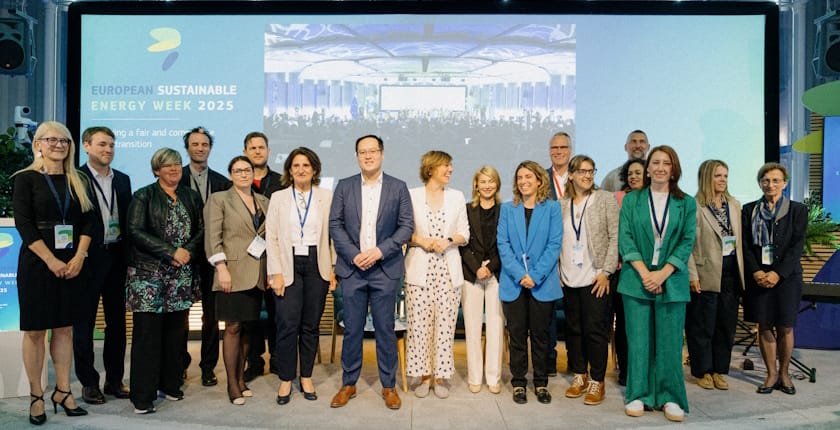
The award ceremony took place on the first day of the European Sustainable Energy Week (EUSEW) in Brussels. This year’s winners are Stella Tsani, AquaBattery, and Community Energy for Social Housing in Otterbeek.

EUSEW, the largest event in Europe dedicated to sustainable energy, was opened by European Commissioner for Energy and Housing Dan Jørgensen. In his speech, he stressed the European Union would need to become fully independent from Russian energy. “The way we will do it is by banning the import of gas. By the end of this year, we plan to ban spot market gas purchases, and by the end of 2027, we will also ban long-term contracts,” he stated.

The European Union imports fossil fuels worth EUR 400 billion annually, which, according to Jørgensen, is neither economically nor environmentally sustainable.

“Instead of constantly buying expensive energy, we must start producing our own sustainable and renewable energy,” he stressed.

Climate change is here and now

Jørgensen noted that in addition to the energy crisis, Europe is now facing a climate crisis.

“Climate change is here. It’s not something that might happen in the future. It’s not something that we fear could be a prospect. It’s here and now”, he emphasized, adding that Europe has a moral responsibility to combat climate change because, historically, the West, including Europe, has polluted for more than a hundred years.

The third crisis Europe faces, according to the commissioner, is a competitiveness crisis. He pointed out that energy in Europe is two to three times more expensive than in the United States or China, and that last year, 47 million Europeans were unable to adequately heat their homes.

“To address these three challenges, security, climate change, and competitiveness, we need to stay on track. The green transition is not the reason for these problems. The green transition is the answer for these challenges”, Jørgensen concluded.

Energy produced in Europe is always better and more competitive than imported energy

Poland’s Secretary of State at the Ministry of Climate and Environment, Krzysztof Bolesta, also spoke at the opening. He highlighted three key elements for a successful energy transition: affordable energy, fairness, and sustainable energy independence.

Bolesta stressed that citizens must feel tangible benefits from the energy transition through more affordable energy. He also underlined the importance of a just transition, particularly for workers in hard-to-decarbonize industries.

According to him, energy produced in Europe is always better and more competitive than imported energy. “We don’t want to swap one dependency on Russian oil, say, with tech import dependency from Asia. So let’s not swap oil for batteries. Let’s try to bring as much of the value chain to Europe as possible,” the Polish official said.

Woman in Energy – Stella Tsani

Stella Tsani, a scientist and associate professor at the University of Athens, is this year’s winner of the EUSEW Woman in Energy Award. She combines scientific research in energy transition with active participation in high-level policymaking, contributing to practical progress through evidence-based recommendations.

Through work with organisations such as the United Nations Environment Programme (UNEP) and the Intergovernmental Panel on Climate Change (IPCC), her research informs policies that balance economic growth with environmental protection. She is also dedicated to empowering young women in the energy sector through mentorship and education, believing that future female leaders are key to achieving the EU’s climate goals.

In her speech at the award ceremony, Tsani highlighted her belief in the vast, untapped potential of youth. “That’s what I’m trying to do at the University of Athens support all future leaders, the future changemakers. So I truly believe in you and I urge everyone in this room, the European Commission, to support young people,” she stated.

[wpcc-iframe title=”EUSEW2025 Finalist | Greek academic driving country’s energy transition” width=”500″ height=”281″ src=”https://www.youtube.com/embed/YIizBrFETqc?feature=oembed” frameborder=”0″ allow=”accelerometer; autoplay; clipboard-write; encrypted-media; gyroscope; picture-in-picture; web-share” referrerpolicy=”strict-origin-when-cross-origin” allowfullscreen=””]

Innovation category – AquaBattery

The Innovation Award recognises outstanding projects funded by the European Union that are ongoing or recently completed, demonstrating original and innovative approaches to the energy transition and delivering tangible results.

This year’s winner is AquaBattery from the Netherlands. Its pilot project in Delft could soon commercialize a sustainable and affordable solution for long-duration energy storage based on kitchen salt and water. The unique innovation, using widely available and environmentally friendly materials, could help Europe reduce its reliance on critical raw materials and develop better energy storage solutions.

[wpcc-iframe title=”EUSEW2025 Finalist | Dutch saltwater battery commercialises groundbreaking energy storage solution” src=”https://www.youtube.com/embed/1xs2khpQB2k?list=PLMKHMvnaraHMd4y5rZuvjnnW1veToA8qm” width=”500″ height=”281″ frameborder=”0″ allowfullscreen=”allowfullscreen” data-mce-fragment=”1″]

Local Energy Action – Community Energy for Social Housing in Otterbeek

The Local Energy Action category highlights citizen or consumer-led initiatives at the local level that contribute to the energy transition in their communities. Such initiatives are meant to inspire others across the EU by demonstrating both economic and environmental benefits.

This year’s winner is Community Energy for Social Housing in Otterbeek, based in the city of Mechelen, Belgium. The project provides socially vulnerable tenants with access to renewable energy. Two hundred households in the Otterbeek social housing district have been equipped with solar panels, receiving green energy at a fixed rate below market prices.

Supported by the EU under the TANDEMS project, the initiative has developed a EUR 1 million investment model funded through citizen contributions, showcasing the power of community-driven change.

“By demonstrating how social inclusion can accelerate the clean energy transition, we advocate policies that support energy sharing, community-driven renewable projects, and affordable access to clean energy for low-income households,” says Bart De Bruyne, Energy Sharing Expert at the City of Mechelen.

[wpcc-iframe title=”EUSEW2025 Finalist | Belgian social housing energy initiative” width=”500″ height=”281″ src=”https://www.youtube.com/embed/Q30AOi-58ck?list=PLMKHMvnaraHMd4y5rZuvjnnW1veToA8qm” frameborder=”0″ allow=”accelerometer; autoplay; clipboard-write; encrypted-media; gyroscope; picture-in-picture; web-share” referrerpolicy=”strict-origin-when-cross-origin” allowfullscreen=””]

by in News

Serbia’s EMS starts construction of third section of Trans-Balkan Corridor

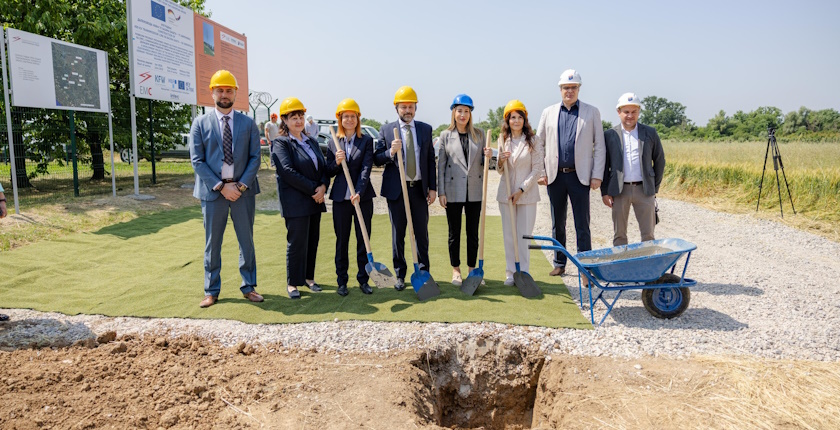
The foundation stone was laid today in Serbia for the third section of the Trans-Balkan Electricity Corridor. The investment amounts to EUR 100 million. It entails a high-voltage overhead power line of 109 kilometers between Obrenovac and Bajina Bašta, equipping two new switchyards in the Obrenovac transformer substation and upgrading the Bajina Bašta substation to 400 kV. The fourth and last section, with the interconnections with Bosnia and Herzegovina and Montenegro, is planned to be completed in 2028.

Serbian Minister of Mining and Energy Dubravka Đedović Handanović said at the groundbreaking ceremony for the third section of the Trans-Balkan Corridor that it is the most important project for the transmission system not only in the country but in Southeastern Europe.

“What highways are for transportation, high-voltage power lines are for energy, and today we are beginning the works on the new part of the most important energy highway,” she said in Obrenovac and added that the segment would enhance the security of supply for consumers in western Serbia.

The third section of the Trans-Balkan Electricity Corridor involves the construction of an overhead power line of 109 kilometers on 309 towers, equipping two new switchyards in the Obrenovac substation and lifting the voltage level in the Bajina Bašta substation to 400 kV.

The project is financed with a EUR 64.5 million loan from Germany’s KfW Development Bank, a grant from the European Union via its Western Balkans Investment Framework (WBIF) of approximately EUR 21 million, and own funds of the Serbian transmission system operator Elektromreža Srbije (EMS), according to the state-owned company’s announcement. The third section is worth EUR 100 million, of which EUR 71 million is for the overhead power line.

“With the completion of the entire project, we will additionally strengthen the links with Bosnia and Herzegovina and Montenegro and beyond, with Italy,” Đedović Handanović stated.

She recalled that significant transmission grid investments are planned in the next five years, including the construction of the Pannonian Corridor toward neighboring Hungary. The priority projects in the segment are worth EUR 500 million in total, the minister revealed.

“I expect the contractors not to be late with the works, so that the project is completed within two and a half years, as it is planned,” Đedović Handanović stressed.

Matejić: Final section to be finished in 2028

General Manager of EMS Jelena Matejić said the construction of the entire Trans-Balkan Corridor is worth more than EUR 200 million. She noted that it includes 323 kilometers of 400 kV power lines, voltage level upgrades for two transformer stations and switchyards in three of them.

The investments in the Trans-Balkan Corridor are estimated at more than EUR 200 million altogether

“Except this section, the third one, we will also have the fourth, for which the funds have been secured, and it will be finished in 2028,” Matejević asserted.

The old lines in western Serbia of 220 kV will be replaced with new, 400 kV systems, which will create possibilities for connecting the planned Bistrica pumped storage hydropower plant to the grid, according to EMS. The contractor is Kodar Energomontaža, and the works are expected to be completed by 2027.

EU donated EUR 38.3 million for Trans-Balkan Electricity Corridor

Head of the EU Delegation in Serbia Emanuele Giaufret pointed out that the funds the EU has earmarked for the current section are part of wider support.

“The EU has secured a EUR 38.3 million donation for the whole Trans-Balkan Corridor, together with KfW’s favorable loans. Over the years, the EU has earmarked more than EUR 1 billion for the energy sector in Serbia. This project is important for the rest of Europe as well, because it will contribute to the creation of a wider, integrated system, which will enable a more stable supply to consumers on the entire continent, as well as to avoid problems in the future,” he stated, as quoted by EMS.

The first section of the Trans-Balkan Corridor, from the city of Pančevo near Belgrade to the Romanian border, was finished in 2017. The second one, between Kragujevac and Kraljevo in central Serbia, is operational since 2022. It included substation upgrades in the two cities. The fourth section needs to connect Bajina Bašta with nearby Višegrad in Bosnia and Herzegovina, and with Pljevlja in Montenegro.

by in News

TotalEnergies to build 100 MW solar power plant with energy storage in Cyprus

TotalEnergies is betting big on the solar power market in Cyprus. It won the environmental approval for a photovoltaic park of 100 MW in peak capacity, with energy storage. It intends to build it in an area previously designated for a golf course.

France-based TotalEnergies is an oil supermajor, but also one of the world’s largest renewable energy developers. The company is planning to build a photovoltaic system in Cyprus equivalent to a quarter of all the current capacity in larger solar power units in the country, even though the competition in the segment is enormous.

At the same time, grid stability in the island state is under jeopardy given the surge in PV investments and the lack of energy storage. According to a recent statistical report, Cyprus hosted almost 850 MW of solar power, of which less than 400 MW was in commercial photovoltaic plants. Prosumers operated the rest. Licensed projects amounted to 2.8 GW.

In the first five months of the year, according to the CyprusGrid tracker, 58% of green electricity production was curtailed, out of a potential 251 GWh, pv magazine reported. It compares to 29% in all of 2024, 13.4% the year before and 3.3% in 2022.

The Department of Environment has issued consent for TotalEnergies’ solar power project of 100 MW in peak capacity, Philenews reported. The company is conducting it in cooperation with Universal Green Energies. It is a subsidiary of Universal Golf Enterprises, the owner of the land.

The environmental authority’s positive opinion is valid for the duration of urban planning and other permits.

Environmental approval conditioned on wildlife protection, reforesting

The area of 200 hectares was originally intended for a golf course. It is on the territory of the villages of Vasa Kellakiou, Asgata and Sanida in the Limassol district.

The photovoltaic park would cover 83 hectares, of which 44 hectares would be under solar panels. The plan includes a substation and energy storage. Annual output is estimated at 160 GWh, equivalent to the electricity needs of 33,000 households.

The PV park would generate an estimated 160 GWh per year

TotalEnergies and its partner are obligated to protect fauna and flora and exclude water streams and protected zones from construction works. They are not allowed to install solar panels on land with a slope higher than 25%. The companies especially need to preserve the habitats of protected species, including the Bonelli eagle.

The environmental approval was issued with a condition to plant trees and shrubs instead of the ones that would be removed during construction.

Villagers concerned about environmental, economic impact

Some representatives of the local population in Sanida expressed concern, among other matters, over the effect of the planned solar park on the air temperature in the area. Residents of Asgata argued that the local community would benefit more from a golf course.

At the end of the first quarter, TotalEnergies had 28 GW of gross renewable electricity capacity installed worldwide. It aims to reach 35 GW by the end of the year and 100 GW in 2030.

by in News

Maja Turković: Technology is our strongest card

The technological solutions needed to increase the share of renewable sources in Southeast Europe are already available and accessible, according to Maja Turković, Senior Vice President of CWP Europe. Countries in the region now need to adopt regulations to boost the deployment of battery storage and hybrid power plants, she said on the sidelines of Belgrade Energy Forum 2025.

“I believe that technology is our strongest card,” said Maja Turković, adding that its cost is decreasing, as are financing costs. Speaking at the panel on the ongoing energy revolution, she suggested that more financial resources are available than there are eligible projects.

The cost of technologies is decreasing, as are financing costs

Prices of solar panels have dropped 60% over the last two years, while battery costs fell by 40% by the end of 2024 and by a further 5% this year, to under EUR 100,000 per MWh, Turković pointed out at the panel, titled Energy revolution underway – uniting efforts to deliver green, intelligent and sustainable energy solutions.

[wpcc-iframe title=”Maja Turkovic, Executive Vice President, CWP Europe at Belgrade Energy Forum 2025″ width=”500″ height=”281″ src=”https://www.youtube.com/embed/qp8wwaYre0g?feature=oembed” frameborder=”0″ allow=”accelerometer; autoplay; clipboard-write; encrypted-media; gyroscope; picture-in-picture; web-share” referrerpolicy=”strict-origin-when-cross-origin” allowfullscreen=””]

She said that integrating batteries with solar power plants is the latest trend, but that transmission system operators in the region still do not allow it. However, in some countries, a grid connection approved for solar can also be used for batteries, she noted.

Integrating solar with batteries is the latest trend

Turković expressed the hope that regulations in the region will follow the technological evolution. “We hope to improve the preparedness of countries in the region to adopt appropriate regulations and to increase the capacity of battery storage and hybrid power plants in general, which are far more desirable for the system itself,” she stressed.

Talking about CWP Europe, Turković recalled that the company is developing projects for wind power plants, solar power plants, and battery storage in nine countries, and that it has also begun diversifying into hybrid power plants. She added that the company is also developing its own battery management software for short-term power markets.

CWP Europe recently signed the largest single power purchase agreement (PPA) for a solar project with Serbia’s state-owned power utility Elektroprivreda Srbije (EPS), marking a major milestone in the country’s energy transition. The PPA was signed for the 150 MW Solarina photovoltaic park that CWP Europe is developing in eastern Serbia.