by in News

Europe has record battery storage capacity growth in 2024 but expansion slows

New battery storage installations last year in Europe came in at an all-time high 21.9 GWh in capacity, though the leap wasn’t as impressive as in the previous years. The total reached 61.1 GWh. “If Europe has already entered the solar age, the battery storage age is just beginning,” said Walburga Hemetsberger, CEO of SolarPower Europe, which issued the annual report.

Europe marked the eleventh consecutive year of record-breaking battery storage installations – in capacity terms, the addition was 21.9 GWh. According to SolarPower Europe’s update, the new capacity was 15% bigger than in 2023, after effectively doubling for several years in a row.

The battery fleet ended December at 61.1 GWh. The growth rate in 2024 was 56%, compared to the 94% registered one year before.

The region that was tracked consists of the European Union, United Kingdom and Switzerland. The EU alone closed 2024 with 18.5 GWh in newly installed battery storage capacity.

“If Europe has already entered the solar age, the battery storage age is just beginning. With solar energy mainstreaming across the continent, now is the time for European decision makers to put batteries at the centre of a flexible, electrified energy system,” the organization’s Chief Executive Officer Walburga Hemetsberger stated.

She urged the European Commission to double down on its efforts and adopt an action plan as part of a broader energy system flexibility package. “The recent electricity outage in the Iberian Peninsula is a stark reminder of why this is important,” Hemetsberger pointed out.

BESS projection puts EU likely below 2030 target

In the most likely scenario, 29.7 GWh of battery storage will be installed this year, translating to a 36% annual growth in new capacity and 49% in total. The report anticipates a sixfold increase to 118 GWh added in 2029. It would bring the entirety of battery energy storage systems (BESS) to 399 GWh, of which 334 GWh in the EU.

However, it is far below the levels required to meet flexibility needs in a renewables-driven energy system, the annual report’s authors warned. A study showed that the EU needs 780 GWh by 2030 to fully support the transition.

This year the share of the new front-of-meter BESS, in the utility scale segment, is seen at 55%, against last year’s 40%. The absolute level would nearly double. As for behind the meter, commercial and industrial (C&I) systems grow to 12% from 10% of the new fleet while residential installations decline from 50% to 33% in 2025.

Drop in power prices from crisis levels faded appeal of battery storage capacity

Residential battery deployment declined by 11% in 2024 after years of rapid growth. The report attributes it to the drop in electricity prices when the energy crisis subsided, the removal or reduction of subsidies in key markets and a parallel decline in the deployment of residential solar power units.

Home batteries account for 57% of the whole cumulative level.

New large-scale grid batteries surged 79% against 2023, marking a turning point for utility-scale storage.

Last year new C&I installations were 17% bigger, remain below their potential and holding at one tenth of the whole capacity for several years now, the document shows. Companies in the segment generally invest in battery storage to maximize self-consumption from on-site photovoltaics, avoid peak demand charges and reduce reliance on backup diesel generators.

Additionally, solar and storage allow businesses to meet corporate sustainability targets by reducing carbon footprint of operations. Lastly, the electrification of production processes, heating, and transport fleets is driving unique use cases and a need for storage.

Spain lags but seen rebounding, reaching top five in 2025

The top growers and their positions in the chart were the same as in 2023: Germany (6.2 GWh), Italy (6 GWh), the United Kingdom (2.9 GWh), Austria (1.1 GWh) and Sweden (1 GWh). Together they had a 78% share in both new and cumulative installations.

Germany added slightly less on an annual scale than in 2023 amid a drop in newly installed residential units. Italy’s home battery segment also decreased, but the large-scale segment’s capacity surge brought the market to new heights. The UK experienced a temporary slump due to project delays at the large-scale level.

Last year Spain added less than 250 MWh in battery storage capacity, making it the 14th-biggest market in Europe. Overall it reached 1.7 GWh, of which 90% were small-scale systems.

The country’s new battery installations were 41% lower than in 2023. The Spanish market has been declining since 2022, but it is expected to enter the top five this year, with 1.3 GWh, amid a utility-scale segment’s revival.

BESS market requires level playing field

SolarPower Europe said the authorities need to encourage the participation of hybrid projects of solar and BESS in renewable energy auctions.

“Contracts for difference must be settled based on energy production rather than energy injection. This will allow the asset operator to receive the CfD for the PV asset while generating additional market-based revenues from the BESS. These extra revenues will eventually lead to lower bids from developers and reduce the support costs for society,” the document reads.

The EU must ensure transmission system operators (TSOs) procure balancing services in market-based procedures in which batteries can compete on a level playing field, the organization added. Some EU markets still rely on bilateral contracts that limit fair competition and exclude smaller storage assets, it underscored.
by in News

Investors in BiH developing 3,800 MW of wind, 12,500 MW of solar

Wind farms with a capacity of 3,800 MW and solar power plants with a capacity of 12,500 MW are currently in various stages of development in Bosnia and Herzegovina, according to the indicative plan for the development of production  2026-2035, published by the Independent System Operator in Bosnia and Herzegovina.

The goal of the ten-year plan is to provide information on projects initiated for the construction of new production capacities to be connected to the transmission system, according to the transmission system operator (TSO), Independent System Operator in Bosnia and Herzegovina (NOSBiH).

The plan is supposed to prioritize covering domestic consumption and capacity needs with domestic resources.

NOSBiH said investors continued in 2024 to apply with their renewable energy projects. The interest in grid connections wasn’t affected by the significant reduction in electricity purchase prices, especially for the hours when solar power plants typically produce, it added in the plan

A lack of transmission capacities could become an obstacle to the export of electricity

According to the register of the applications for grid connections, which Elektroprenos BiH manages, there are about 3,800 MW of proposed wind farms and 12,500 MW of photovoltaic facilities in various stages of development, NOSBiH underlined.

Results of an adequacy assessment showed that increasing production makes it possible to increase exports. BiH’s TSO warned that in such a scenario, the currently planned transmission capacity expansion wouldn’t be sufficient.

Another 100 MW of solar is seen coming online in BiH by the end of 2025

With the current production development plans, the system could be left without sufficient balancing capacities. NOSBiH therefore called for developing balancing capacities in parallel.

The document shows that four solar power plants of 206 MW in total were added last year to the transmission network in BiH: FNE Zvizdan (28.5 MW), SE Bileća (55 MW), FNE Hodovo (92.47 MW), and FNE Deling invest 1 (29.75 MW), together with one wind farm, VE Ivovik, of 84 MW. In February of this year, the Ivan Sedlo wind farm (25 MW) was also put online.

By the end of 2025, the start of trial operation of another five PV plants is expected, the plan showed. They would have 100 MW altogether: FNE Hodovo F1-F4 (11.96 MW), FNE Brotnjo (9.98 MW), FNE Polog 1-8 (7.99 MW), FNE Plavo Sunce 1-2 (40 MW) and FNE Livno 1-6 (27.6 MW).

Batteries can bridge the period until the transmission grid capacity becomes adequate

The plan anticipates a similar tempo of grid connections for 2026, too.

In that case, along with the integration of renewables into the distribution network and similar power plants coming online in neighboring countries, a congestion can appear in the transmission network, together with complications in operating the country’s transmission system from a regulatory point of view, NOSBiH said.

Battery energy storage systems can solve both potential issues in the medium term, until investments get the transmission grid to an adequate level, it suggested.

BiH needs battery capability of 225 MW and 450 MWh in total capacity

The company recalled that a year ago it produced a study, together with the Deutsche Gesellschaft für Internationale Zusammenarbeit (GIZ), provisionally called Operational Models for Battery Energy Storage Systems in the Balancing Market of NOS BiH.

They estimated the need for additional balancing based on hour-by-hour production profiles for facilities of 1,500 MW in total photovoltaic capacity and 1,000 MW of wind. The authors said a combined 225 MW in battery operating power is required and an overall capacity of 450 MWh.

The study also explored revenue generation opportunities for BESS, particularly through participation in the ancillary services market.

by in News

Episodes of negative power prices in Slovenia, Romania spread to workdays

Romania registered the first negative day-ahead electricity price for a workday. The phenomenon, which only used to occur on holidays and weekends, has emerged in Slovenia as well.

In spring and autumn, most of Europe occasionally faces periods of excessive power grid loads. The rapid rise in solar and wind power production and the lack of accompanying energy storage and flexibility capabilities are straining the system at times when demand is low. Advanced electricity markets countered the issue by introducing negative prices.

When prices hit zero or go below zero, the seller delivers electricity without compensation or even has to pay to the buyer, respectively. The phenomenon was normally reserved for holidays and weekends, but more day-ahead markets are now experiencing it for workdays as well.

Downward pressure in Romania from strong inflow of negatively priced electricity via Hungary

Romania saw its first such episode yesterday, on Sunday, in the session for today, Profit.ro reported. Prices in its day-ahead market are negative in five out of 24 periods of one hour, between 11:00 and 16:00.

The country is importing at almost 2 GW via Hungary and exporting at up to 1.5 GW to Bulgaria, the news website added. The article notes that renewable energy producers, especially in Germany, where prices are also negative, are exporting to other markets to ease the impact. They usually benefit from subsidies, so generating electricity isn’t necessarily unprofitable even when they sell at a loss.

In addition, shutting down and restarting power plants can be more costly than paying the other side to take excess output.

The level in Romania went to as low as EUR 6.18 per MWh below zero. But the daily average is EUR 76.54 per MWh. The peak, is EUR 198.16 per MWh, between 20:00 and 21:00, when there is no sunlight and prosumers only consume.

Negative prices turn Slovenia’s HSE into electricity consumer

Prices in Slovenia for today also came in negative between 11:00 and 16:oo, which is very rare for a workday, Naš stik reported. Among other factors, the two-day May 1 holiday shortens the current workweek. The lowest, between 14:00 and 15:00, is EUR 6.18 euros per MWh below zero.

In comparison, the lowest price for Sunday on the BSP Southpool exchange was EUR 104 per MWh under zero.

At one point during the Easter holiday, virtually all HSE’s production capacities were offline and the Avče pumped storage hydropower plant was storing electricity from the grid

“Last year, we had 219 hours in Slovenia when prices were negative. This year, we are already at number 72, and we have only just entered the critical period,” said Deputy Director of System Operations of ELES Aleš Donko. The company is Slovenia’s transmission and distribution system operator.

State-owned power utility Holding Slovenske elektrarne (HSE) found itself in an unusual situation during the Easter holidays because of negative prices.

“For a while, we were actually an energy consumer, not a producer, which is our core mission… Virtually all our power plants were shut down, and the Avče pumped storage hydropower plant was pumping water into the upper reservoir at full capacity,” Head of Operation Planning and Management Jernej Brglez said.

Portugal and Spain, which suffered major outages today together with France, both registered negative prices every day in the third week of April.

Also of note, Greece is preparing to introduce negative prices in the balancing market.

by in News

CATL: World’s first mass-produced sodium ion battery is here

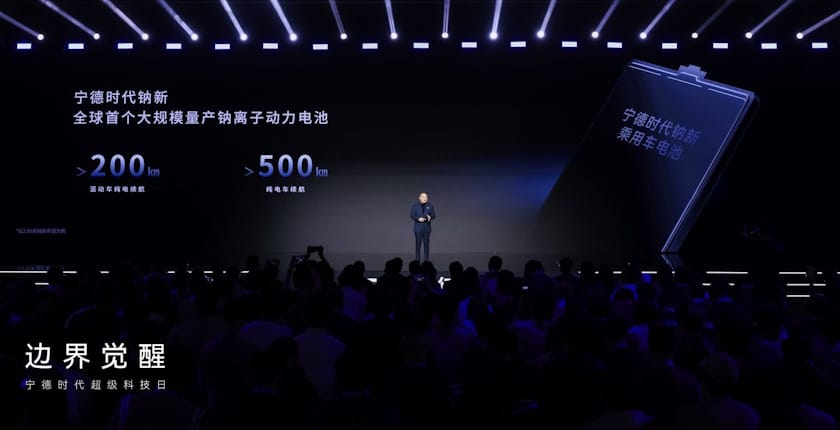
Chinese battery producer CATL has unveiled Naxtra, claiming it is the world’s first mass-produced sodium ion battery. At its inaugural Super Tech Day, the company also showcased a battery that sets a new global record for superfast charging technology.

Naxtra breaks resource constraints and strengthens the foundation of the new energy industry, according to Contemporary Amperex Technology Co. Ltd. (CATL), one of the world’s biggest battery producers. Back in 2021 the company presented first generation of sodium ion batteries.

Batteries for electric vehicles and energy storage systems are predominantly made using lithium ion technology. However, the technical solution comes with environmental risks because of lithium production in mines and salt flats. The race is on to find a better one and sodium ion could be the winner.

CATL underlined that Naxtra Battery breaks through the performance boundaries of the material itself, allowing mass production of sodium ion batteries for the first time.

Naxtra Battery product line has two units

“With sodium’s inherent safety and abundant reserves, it efficiently reduces dependence on lithium resources and strengthens the foundation of new energy technologies, while promoting energy utilization from single resource dependence to energy freedom,” the press release reads.

Naxtra passenger EV Battery (photo: CATL)

The Naxtra Battery product line has two units: the Naxtra passenger EV Battery and the Naxtra 24V Heavy-Duty Truck Integrated Start-Stop Battery. Both are capable of performing across the full temperature range from minus 40 to as high as 70 degrees Celsius, redefining the extreme temperature limitations of batteries, CATL said.

The Naxtra passenger EV Battery retains 90% usable power at minus 40 degrees and achieves an energy density of 175 Wh per kilogram, the highest among sodium ion batteries worldwide, and comparable to LFP batteries, the update reads.

In terms of safety, it is a transformative breakthrough

CATL said the system provides a 500-kilometer range and that it can achieve over 10,000 cycles, significantly reducing maintenance costs. In terms of safety, it is a transformative breakthrough from “passive defense” to “intrinsic safety,” the manufacturer claimed.

According to the company, Naxtra 24V Heavy-Duty Truck Integrated Start-Stop Battery boasts over eight years of service life and reduces total lifecycle costs by 61% from the level in traditional lead-acid batteries.

Compared to lead-acid batteries, it is more efficient, eco-friendly, and economical, driving commercial vehicles into a lead-free era where vehicles and batteries age as one, the company claims.

Shenxing Superfast Charging Battery offers robust power across all temperature ranges

On the same occasion, the company presented two more “groundbreaking EV battery products,” as it called them.

The Freevoy Dual-Power Battery introduces a pioneering cross-chemistry system design that transcends the limitations of single technology paths to meet customized user needs. The second-generation Shenxing Superfast Charging Battery, with its peak 12C charging rate, sets a new global record for superfast charging technology, according to CATL.

The company stressed that Shenxing Superfast Charging Battery is the world’s first LFP system featuring both an 800-kilometer range and a 12C peak charging rate. With a peak charging power of 1.3 MW, it achieves 2.5 kilometers of range per second of charging, virtually eliminating the frustration of waiting, according to the press release.

Additionally, the device provides robust power across all temperature ranges and states of charge.

by in News

Turkey to manufacture green hydrogen, nuclear, CCS equipment

The 2030 Industry and Technology Strategy includes setting up industrial facilities in Turkey for nuclear energy, green hydrogen, battery storage and carbon capture and storage (CCS). The country is planning to establish a value chain for critical raw materials. The government vowed to support the development of semiconductor technology, autonomous and flying vehicles and cybersecurity solutions, alongside innovations for electric vehicles and solar and wind power.

With its recently unveiled 2030 Industry and Technology Strategy, Turkey announced the ambition to upgrade its industrial production to one of the most advanced in the world. As Russia’s Rosatom is completing the country’s first nuclear reactor in Akkuyu, the government is planning to develop its own technology in the segment.

The strategy involves setting up industrial clusters for equipment and infrastructure. Among the possible technologies are molten salt reactors. The Scientific and Technological Research Council of Türkiye (TÜBİTAK), Turkish Energy, Nuclear and Mineral Research Agency (TENMAK) and Istanbul Technical University (İTÜ) are tasked with establishing a nuclear tech park.

Green hydrogen mostly needed for decarbonizing hard-to-abate industrial production

TÜBİTAK is responsible for developing domestic electrolyzers as well. The national hydrogen program is set to bring support for integrating the production of green hydrogen, storage, transportation and consumption. The last of the four is especially focused on energy-intensive industries such as steel, petrochemicals and fertilizers.

Another segment that would get incentives is the use of hydrogen in fuel cell vehicles including heavy vehicles. The strategy envisages setting up pilot zones for green hydrogen production, with electrolyzers powered by wind and solar energy.

Turkey has high ambitions for high-tech exports

Turkey has revealed the goal of tripling its high-tech exports to USD 30 billion by the end of the decade. It is part of an ambition to lift industrial exports to USD 400 billion from last year’s USD 247 billion. At the same time, the government’s target for the overall valuation of domestic tech startups is USD 100 billion.

The 2030 Industry and Technology Strategy has other chapters, too, like carbon capture, utilization and storage (CCUS or just CCS), access to critical raw materials, semiconductor and battery manufacturing and cybersecurity. Officials vowed to continue prioritizing domestic electric vehicles, but with investments in autonomous operation systems and even flying cars.

Cybersecurity solar and wind turbine technologies. Turkey apparently remains dedicated to expanding the industrial base for solar panels and wind turbines as well.

by in News

Terna Energy to make pumped storage, wind power hybrid in Amari in Crete

Greek renewable energy company Terna Energy, recently acquired by Masdar, made a step forward in its Amari hybrid power plant project in Crete.

The facility in the country’s largest island would comprise two wind farms with a total capacity of 81.6 MW and a pumped storage hydropower station, at the Amari dam reservoir, of 50 MW. The Ministry of Environment and Energy approved a construction site study, advancing the investment.

It should be noted that the project has been plagued by delays. The initial environmental license was published back in 2019. The total planned capacity has been reduced from 161.1 MW to 131.6 MW.

The pumped storage system would consist of two turbines and four pumps, the update shows. The sites for the wind farms are in the municipality of Sitia.

Terna Energy has said it would be the largest hybrid power plant in Europe, valuing the investment at EUR 280 million. Masdar’s subsidiary is also building its Amfilochia pumped storage hydropower plant in mainland Greece, which will have a capacity of 680 MW.

Investors mainly interested in standalone storage, not hybrids

Interest in hybrid power plants has been low in Greece, as there are only a few small investment proposals per licensing cycle.

But companies are keen on building standalone pumped hydropower units. In the April round, Freenergy submitted seven proposals of 80 MW apiece. It follows 14 applications in March by various groups, each for more than 100 MW.

Greek authorities are eager to facilitate the first standalone storage projects, including batteries. The country faced a grid overload issue during the Easter holiday, as electricity from photovoltaics far exceeded demand and it had to be heavily curtailed. The first storage installations are expected this year. The technology is seen gradually easing the curtailments and allowing further renewable energy penetration.

by in News

Two PV parks of 117 MW in total coming online near Bucharest

Eximprod Grup is about to commission a 65 MW photovoltaic facility in Prahova county, north of Bucharest, before adding a battery system, and Simtel obtained financing for the completion of a 52 MW solar power plant in Giurgiu, south of Romania’s capital city. Additionally, the developer of a project of a similar size in Alba county in Transylvania, including energy storage, applied for an environmental permit.

Eximprod Group said it completed a solar park of 49.5 MW in connection capacity in Ciorani, Prahova county, north of Bucharest. Commissioning and grid integration are underway.

According to its documentation, the facility has 65 MW in peak capacity. It consists of five units with 9.9 MW in grid connections each.

The PV plant is coming online through a 20/110 kV power station and a single metering point. Eximprod, controlled by investors Manole Gheorghe and Vasile Domente, thanked Transelectrica, DEER, Ostenweg Sysplan SRL and Alive Capital for cooperation in the project. The company bought 590 W solar panels.

Eximprod has won a EUR 13.4 million grant for the Ciorani project from NRRP

The EUR 56.2 million endeavor includes a grant of EUR 13.4 million from the National Recovery and Resilience Plan (NRRP or, in Romanian, PNRR). It is part of the European Union’s Recovery and Resilience Facility (RRF).

Eximprod invested in the solar park, which features trackers, through its project firm Solar System Project. The facility was built on an 89-hectare land plot. It is located next to a solar power plant of the same owners, with a 15.5 MW connection and 20 MW in peak capacity.

The company plans to add a 21 MW battery energy storage system to the Ciorani PV park. Eximprod recently completed the first of seven foundations of a 38.4 MW wind park in Galați county in the region of Western Moldavia.

Banca Transilvania approves loans for large solar power project in Giurgiu

The Giurgiu county, west and south of Romania’s capital city, is emerging as one of the country’s solar power and energy storage hubs. Major projects are being materialized in other areas around Bucharest as well. Engineering company Simtelhttps://balkangreenenergynews.com/imports-from-china-dont-exceed-26-of-pv-project-costs-in-romania/ said it has signed financing contracts for a PV plant of 52 MW in peak capacity, which is 80% finished.

Annual output is estimated at 69 GWh.

Banca Transilvania, Romania’s largest, has approved a ten-year investment loan of EUR 16 million and a bridge loan of EUR 12.2 million. The latter is denominated in local currency and matures in March 2026.

Simtel has completed its first three smaller PV plants

“Since 2023, with the completion of our first proprietary photovoltaic park in Pleșoiu, our company has entered a new stage of development, becoming an electricity producer. The Giurgiu project represents an important step in this direction, as it covers more than half of the total capacity we aim to have completed and operational in our portfolio by mid-2026,” said Simtel Team’s Chief Executive Officer Mihai Tudor.

Romania has supported the investment in Giurgiu through NRRP. The bridge loan covers the financing needs before the company collects the grant.

Simtel, which is also a contractor, has completed three of its PV projects – in Pleșoiu, Salonta, and Iacobeni. Four others are in various stages of construction or permitting – in Anina, Ianca, Mangalia, and Movilița. Together with the facility in Giurgiu, their combined peak capacity is above 83 MW. The eight units will generate an estimated 111 GWh per year.

The company is listed on the main market of the Bucharest Stock Exchange (BSE). Simtel offers consultancy services, authorization, design, engineering, construction, maintenance, operation, measurement, control, and energy supply. It was founded in 2010 by Iulian Nedea, Sergiu Bazarciuc and Radu Vilău.

Solar-BESS hybrid power plant project on monastery land in Alba is worth EUR 53.1 million

As for other relevant news in Romania, Bucharest-based Ponor Energy requested an environmental approval for a solar power project of 56.7 MW in peak capacity, which would include batteries. The site is in Ponor commune in Transylvania’s Alba county, spanning 48.6 hectares. The firm leased monastery land for 25 years.

The facility would consist of 166 Huawei inverters of 49.8 MW in total and Trina Solar’s 85,852 bifacial panels of 660 W. The battery segment would have 81.5 MWh in capacity.

Excluding value-added tax, the investment is worth an estimated EUR 53.1 million.

by in News

Bulgaria grants EUR 587 million to 82 battery storage projects

Developers of 82 standalone battery storage projects in Bulgaria, for an overall 9.71 GWh in capacity, got approval for EUR 587 million in subsidies from the Ministry of Energy. Another 30 landed below the line, but the government intends to boost the program by EUR 120 million.

More than four months after the deadline for applications, the Ministry of Energy of Bulgaria ranked 112 projects for standalone battery energy storage systems (BESS). Through the RESTORE call for grants, it approved EUR 587 million for 82 of them, exhausting the budget.

The scheme is part of the National Recovery and Resilience Plan (NRRP), under the Recovery and Resilience Facility (RRF), which the European Commission controls.

The selected investments envisage an overall 9.71 GWh of storage capacity, compared to the target of at least 3 GWh. The aim is to provide balancing to enable a significant increase in the share of wind and solar power in the energy mix, as well as to ensure the security and stability of the country’s electricity system. The facilities will be connected to the grid at both the transmission and distribution levels.

Notably, Bulgaria is struggling to meet the conditions and deadlines for NRRP funding, including for battery projects. Moreover, the ministry apparently decided not to move forward with a second call for subsidies for households for solar panels with or without batteries, and for solar collectors. It risks losing the European Union’s funding.

Project underway for 125 MW battery system in Burgas

The largest selected investment is BESS Burgas. The project is worth EUR 90 million, of which the grant would cover 26.5%. The proposed facility would have 125 MW in operating power and a four-hour duration, translating to 500 MWh.

The list lacks data on planned capacities for many of the projects. Among them is the one from ContourGlobal Maritsa East 3 (Maritsa iztok 3), the operator of a coal power plant that recently ceased operations. The company intends to invest EUR 74.5 million, the fifth-highest amount. The ministry said it would provide 40% of the total.

The owner of the recently closed Maritsa East 3 coal power plant won a 40% subsidy for its EUR 74.5 million BESS proposal

Weapons and ammunition producer Arsenal 2000 won a 44% subsidy for its EUR 48.9 million project. It intends to install a BESS of 80 MW and 350 MWh. One of the selected proposals is called Verila Solar Park 2. The share of the approved grant in the EUR 65.7 million investment is 32%.

Toki Storage stands out among the beneficiaries with 11 approved projects of the same size and valuation: 10 MW, 40 MWh and EUR 6 million each. The grants would cover 30% to 39.3%.

NEK fails to qualify with its project for battery system at Topolnitsa hydropower plant

Out of 151 applications, 118 initially passed to the ranking stage. The ministry said they were worth a combined EUR 838 million. The 30 projects in reserve are worth EUR 212 million, it added.

They include proposals from coal plant operators Toplofikatsiya Pernik and Bobov Dol. The ministry rejected four projects, of which one from state-owned National Electricity Co. (NEK), for a 20 MWh battery unit at its Topolnitsa hydropower plant.

According to consulting firm New I, involved in more than 40% of the winners in the call, they are worth EUR 1.59 billion altogether, Bulgarian language EU Funds website reported. Requested support ranges between just below EUR 40,000 per MWh and EUR 80,000 per MWh, and the weighted average came in at EUR 60,000 per MWh, it revealed.

Many of the 151 projects were duplicated, the article adds.

Importantly, the government has proposed increasing the RESTORE program by EUR 120.6 million, which would be sufficient for at least 20 projects in the reserve group.

The ministry was supposed to select the beneficiaries by January. The deadline for drawing the EU funds is June next year, so the developers must rush to install their battery systems – but first they need to sign contracts with the government.

by in News

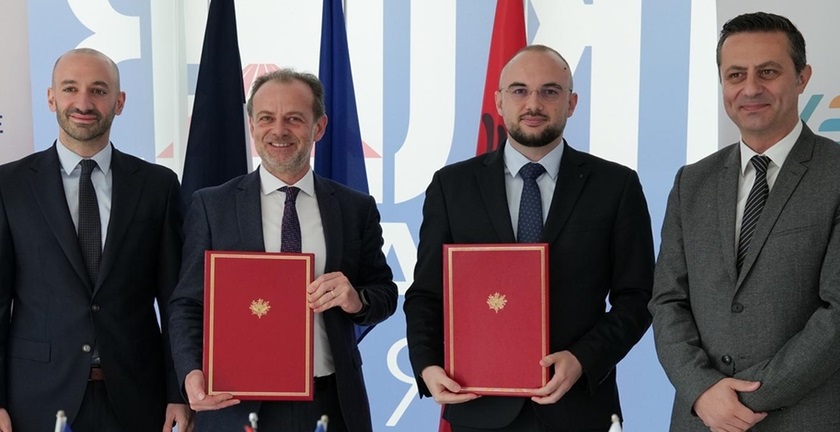
Albania’s KESH, France’s AFD sign MoU on hydropower management, energy storage 

Albania’s state-owned power company, KESH, and France’s development agency, Agence Française de Développement (AFD), have signed a memorandum of understanding on the Drin river cascade management and advanced energy storage planning.

Albania’s three biggest hydropower plants, with a combined capacity of 1.35 GW, are located on the Drin (Drim) river. The Drin cascade consists of the Fierza Hydropower Plant (500 MW), the Koman Hydropower Plant (600 MW), and the Vau i Dejës Hydropower Plant (250 MW).

As part of French Minister for Europe Benjamin Haddad’s visit to Tirana, Albania and France have solidified their action-oriented partnership in the energy sector, agreeing on AFD’s support to KESH in line with Albania’s priorities under its Green Agenda and EU accession roadmap, according to AFD.

With EUR 800,000 in financial support, AFD will mobilize French technical expertise in hydropower infrastructure modernization and digitalization and initiate a peer-to-peer exchange between KESH and Electricité de France (EDF), its French counterpart.

The technical assistance will help upgrade and digitalize KESH’s discharge management

Cooperation between KESH and French hydropower experts sets the stage for cutting-edge cooperation in energy storage and digital modeling, reads the press release.

AFD explained that the technical assistance would support the improvement and digitalization of KESH’s discharge management.

This will optimize electricity generation, mitigate flooding risks in the lower part of the Drin cascade, and develop storage capacity through the assessment and identification of the most suitable energy storage technologies for integration within the existing infrastructure, the agency added.

Haddad: the MoU demonstrates that Albania is a priority for France

Haddad underlined that the MoU demonstrates that Albania is a priority for France, but also the French government’s willingness to mobilize all its operators and financing tools to help the country in its European convergence and EU integration process, he noted.

According to Albania’s Deputy Minister of Infrastructure and Energy, Ceno Klosi, France’s support in the energy sector has been steadily growing over the past five years. It already encompasses both structural reforms and flagship projects with different power utilities, he stressed.

The signing was attended by Erald Elezi, Administrator of KESH, Arnaud Dauphin, Director of AFD’s Western Balkans Regional Office, and Catherine Suard, France’s Ambassador to Albania.

In June 2023, Albania’s government signed a EUR 100 million loan agreement for energy sector reforms with AFD and German development bank KfW. Lately, AFD has been very active in the region. In November 2024, it signed agreements in Montenegro, and in August 2024 in Serbia.

by in News

Solar park of 46.6 MW integrated with Turkey’s fifth-largest wind farm

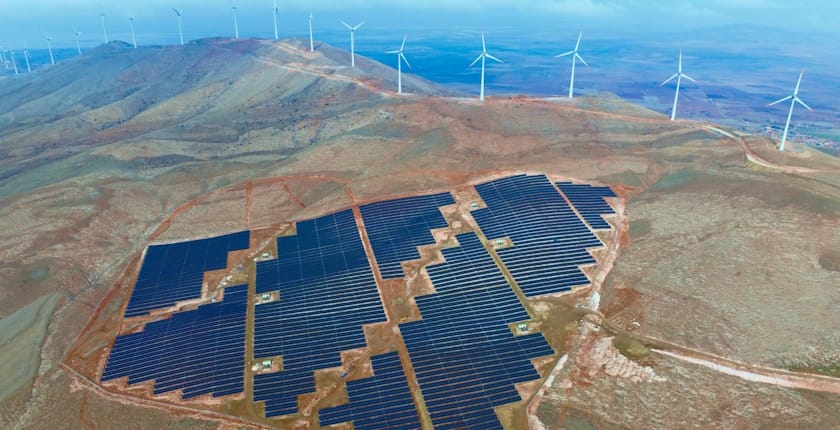
The newest hybrid power plant in Turkey consists of wind turbines of 168 MW and a solar park with 46.6 MW in capacity. Polat Enerji is about to expand the Geycek facility with a 10 MW battery energy storage system.

Hybrid power plants are all the rage in Turkey and the ones coming online are bigger and bigger. The latest addition to the fleet is Polat Enerji’s Geycek facility. It is the country’s fifth-largest wind park, and now it also features a 46.6 MW photovoltaic unit. It is classified as an auxiliary source in domestic law.

That’s not all. The company, which has been pioneering the technology in Turkey, contracted a battery energy storage system (BESS) two months ago. T Dinamik Enerji’s subsidiary Tegnatia is tasked with installing a Sungrow unit with 10 MW in operating power and 13.4 MWh in capacity.

Polat Enerji is turning Geycek into Turkey’s first utility-scale hybrid of wind, solar power and BESS

It would be the country’s first wind-solar-battery hybrid on a utility scale. Polat Enerji said it would be commissioned “in the near future.”

Geycek is in Mucur district in the province of Kırşehir, southeast of Ankara. The wind park has 168 MW.

The contractor for the solar power segment was SPI (Schmid Pekintaş Investments) Energy Solutions. The Schmid Pekintaş joint venture supplied the PV panels.

Polat also operates Turkey’s largest wind power plant – Soma. It recently expanded it by 8.4 MW in nameplate capacity, or 8 MW effectively, reaching 328.9 MW and 304.1 MW, respectively. It is the first such facility in the country with over 300 MW on the grid.

The Soma wind park includes a small BESS unit – 4 MW of capability and a one-hour duration, translating to 4 MWh.

Polat Enerji is a joint venture of Polat Holding and İş Enerji Yatirimlari, each holding 50%. The latter is a subsidiary of Türkiye İş Bankası, the largest private sector bank in Turkey.